
The pointless killing of elephants for their ivory, funded largely by dealers in the Far East needs to stop!
Author: Tish Farrell
Witch-catching in the Shropshire wilds
Naturally, suffering as I do from Out-of-Africa-itis (some of you may just have noticed this) any mention of ‘wild’ instantly conjures the sweeping Mara grasslands and herds of wildebeeste. Or scenes of Zambia’s South Luangwa as featured in the last post (here). But then I thought it was time I took more joy in the place where I actually live and, indeed, grew up – the wonderfully rural county of Shropshire. And for those of you who do not know England, Shropshire is in the Midlands, along the border with Wales. Also as I have mentioned in other posts, this segment of Great Britain was once (400 million years ago) to be found somewhere off East Africa. Shropshire’s rocks are thus among the world’s oldest, and its hills a magnet for geologists from all over the planet.
My home county, then, is largely farming country – dairy, sheep, and arable – the population living in scattered small settlements and market towns, many dating back to Roman times and the early Middle Ages. But there are also many wild places, especially up in the hill country overlooking Wales. One such place is Mitchell’s Fold, a Bronze Age stone circle.
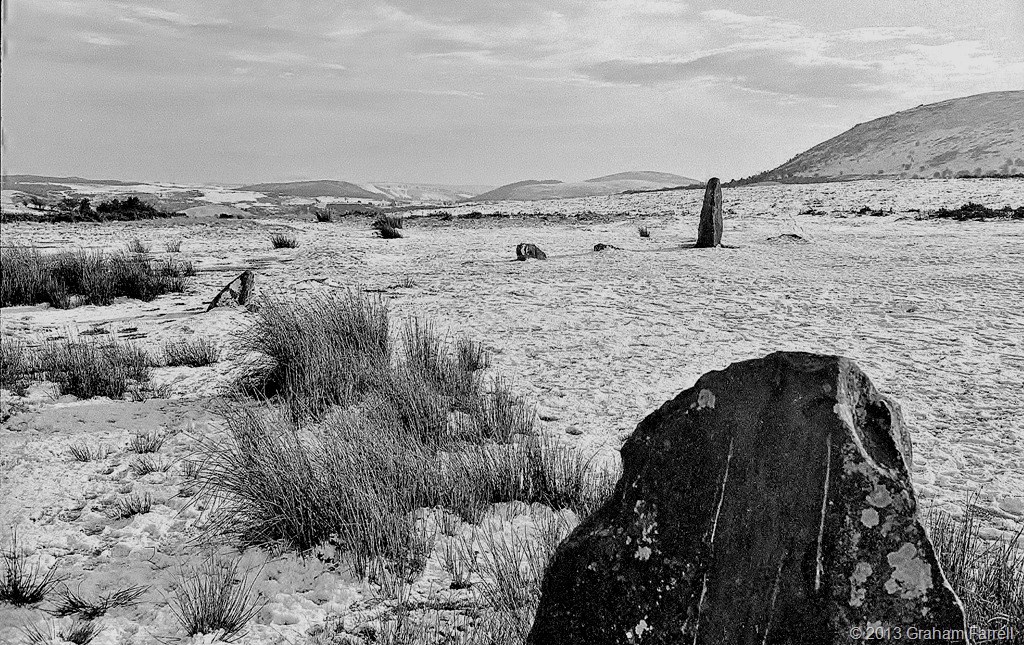
This bleakly sited monument comes with a strange legend attached – the tale of a wicked witch and a fairy cow. And so one December day Nosy Writer and the Team Leader set off to explore. Winter seemed a good time to go searching for the spirits of the past. The photographs, by the way, are all Graham’s. Nosy Writer said she could not possibly take her gloves off in such frigid conditions.
The site itself is near the Welsh Border on Stapeley Hill, south west Shropshire. The stone circle was created between three and four thousand years ago, and originally comprised thirty stones of local dolerite. Today, only fifteen are visible. Some were perhaps re-purposed by subsequent generations; others buried. Often such circles were regarded with superstitious dread, particularly during the Middle Ages.
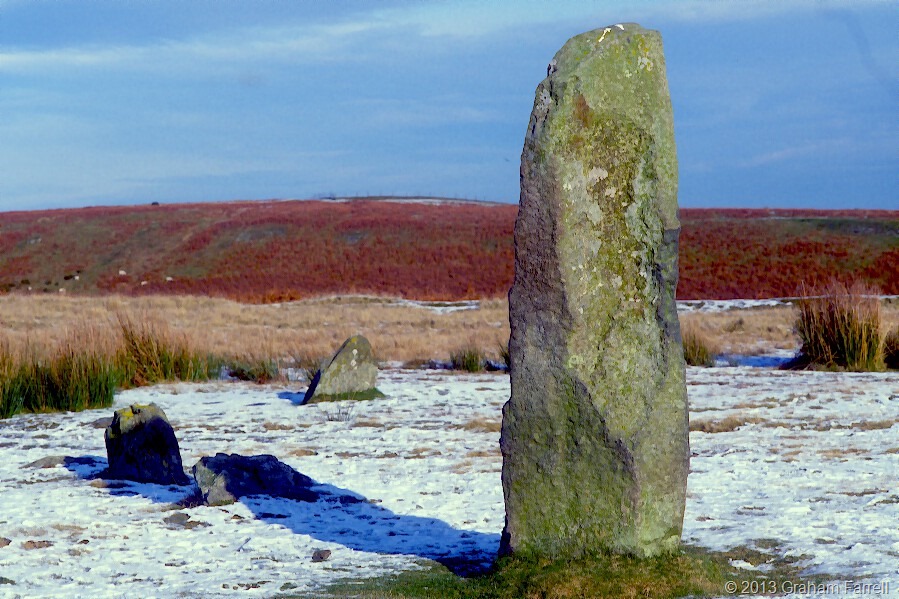
In the prehistoric past, though, the place was not so isolated as it appears today. In the vicinity are two other stone circles, although one of these, known as Whetstones was blown up in the 1860s. The other, Hoarstones, was said by locals to be a fairy ring, where on moonlit nights, six ‘fairesses’ would dance. There are also numerous cairns and a long barrow, and, not too far away, the Bronze Age stone axe factory of Cwm Mawr whose finely carved mace heads were traded far and wide across England and Wales. Of the reasons for this and the other circles, all is shrouded in mystery. All that may be said is that once these upland places were of great importance to the people who laboured to make them.

But what about the witch-catching story, I hear you ask. Well that I can tell you. It goes like this.
Once, when there was a terrible famine in the district, the fairies took pity on the starving peasants and sent them a snow-white cow. The cow was kept in a circle of stones on Stapeley Hill, and, as with all such gifts, there were strict conditions as to usage. Every person was allowed to milk the cow by turns, but only so long as the cow was never milked dry, and each person took no more than one pail full.
Everyone followed these instructions, and all went well until the wicked old witch who lived nearby grew envious of the peoples’ good fortune. Why had they not called on her to solve their problems? Her name was Mitchell, and out of sheer spite, she thought up an evil plan.
And so one night, when all honest folks were asleep in their cottages, she approached the cow and began to milk it. The only thing was, the bottom of her bucket was full of holes. She milked and milked until the cow was dry, thus breaking the fairy charm. At once the cow sank into the ground, never to be seen again. But Mitchell did not escape either. She had challenged the forces of good too far and found herself trapped inside the stones. And when the people came next day and saw their fairy cow gone, and they saw the false pail and pool of wasted milk, they knew exactly what the witch had done. So just to make sure she never escaped, they walled up old Mitchell inside the stone circle, where she was said to have finally starved to death.

And just in case you are wondering, no, this is not Mitchell’s ghost in the photo, but me, wrapped up in many post-Africa layers. And beyond me, the Welsh hills.
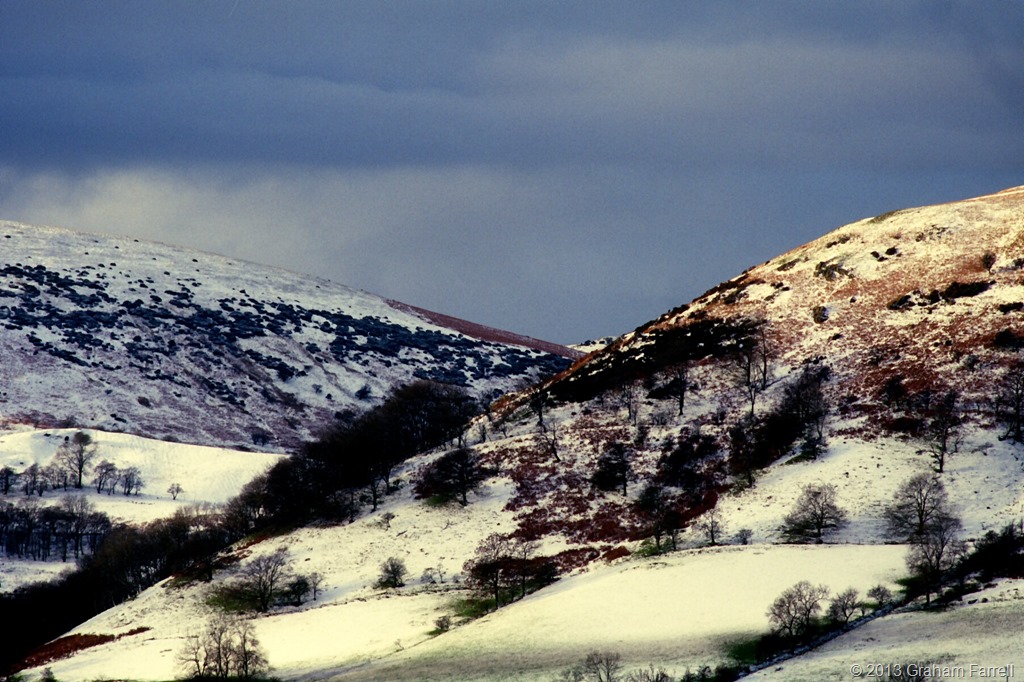
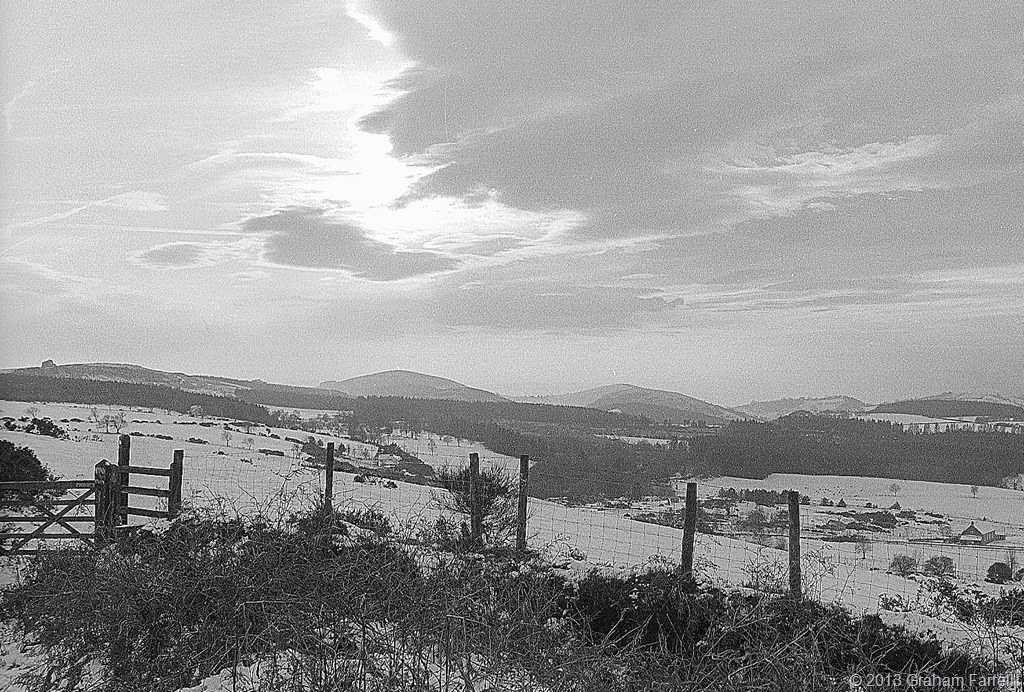
Finally, here are more scenes of Wild Shropshire – in particular, the hills known as the Stiperstones, which featured often in the novels of Shropshire writer, Mary Webb. The last photograph shows one of the Stiperstones’ natural ‘cairns’, just visible from Mitchell’s Fold. These bleak hills also feature in many local legends, but they will have to wait for another post.

Elephants, E-books and Enticing Reluctant Readers
Two at once challenge – DP : Reel Talk and Frizztext’s EEE
Everyone who comes to this page is a reader. Bloggers love to read as well as write: poems, flash-fiction, memoir, novel excerpts, reportage, long pieces, short pieces; it’s how the blogweb works: exchanges to entertain, enchant, enthuse, encourage and elucidate.
Some of my stalwart followers and followees boldly read and create in second and third languages, which for me who only has proficiency in English is a great source of admiration and envy. And if that’s not enough ‘Es’ already, I have some more. But first a question: what about those (old and young) who find reading a struggle? What about those who find a page loaded with text a total turn-off, or the average sized paperback too daunting in scale to broach?
And to answer my own questions, this is where the book cover below comes in, because one of the things I do besides loitering in cyberspace is to write good stories for unkeen teen readers, (or for anyone else I can corner for that matter).
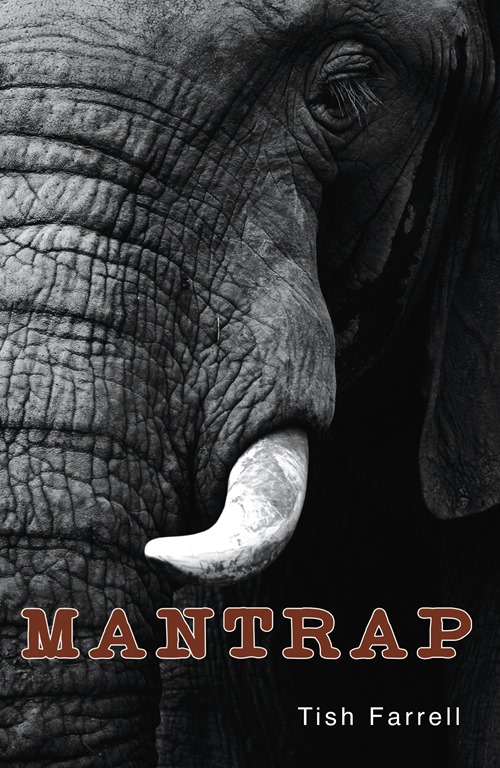
Cover: copyright 2013 Ransom Publishing.
The title of this new edition of my very short book Mantrap clearly begins with ‘M’ ( which means you can look forward to more mentions further down Frizz’s alphabet.) So what is it doing here now? The elephant is of course the excuse I needed to write this piece, also the fact that Ransom Publishing will shortly be bringing out an e-book version for Amazon Kindle and Apple, as well as a paperback edition. It is part of their Shades series. Full details of this and other books in the series can be found HERE. The series is being printed as I write this and will be launched in August.
Interest-wise, the stories are aimed at readers of twelve years and upwards, but whose reading ability is deemed to be a few years younger. The text is a piece of short fiction but presented in a novel format i.e. 6,000 words divided into several chapters, and over 64 pages. There is plenty of white space on the page.

Ransom publishes a wide range of fiction and non-fiction for all ages. Personally, I think the Shades’ quick-read formats are ideal for just about anyone who wants a good story, but has limited time to read it. You can slip these nice little books into your pocket. However, this is not so much a sales pitch as an explanation: the why, where and how this story about ivory poaching came into being. There’ll be an excerpt at the end.
I can also tell you precisely where the Mantrap story began – under a baobab tree. And here it is, the very one:
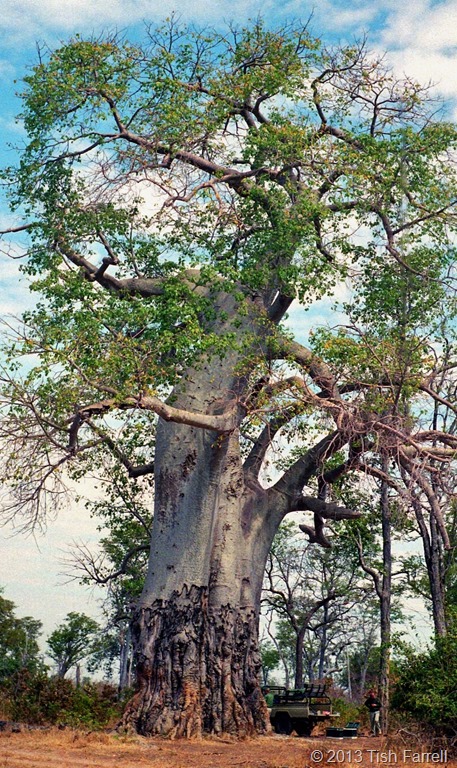
The fact that it was in leaf at the time was perhaps auspicious. Baobabs are usually bare. This one could be a thousand years old. We stopped under it for a noonday picnic after a get-up-while-still-asleep and go on a dawn game drive. The location is South Luangwa National Park in Zambia. It is a glorious place with parkland vistas, much shaped by the local elephants who knock down the thorn trees, but rarely the baobabs, to encourage the growth of their favourite food – grass.
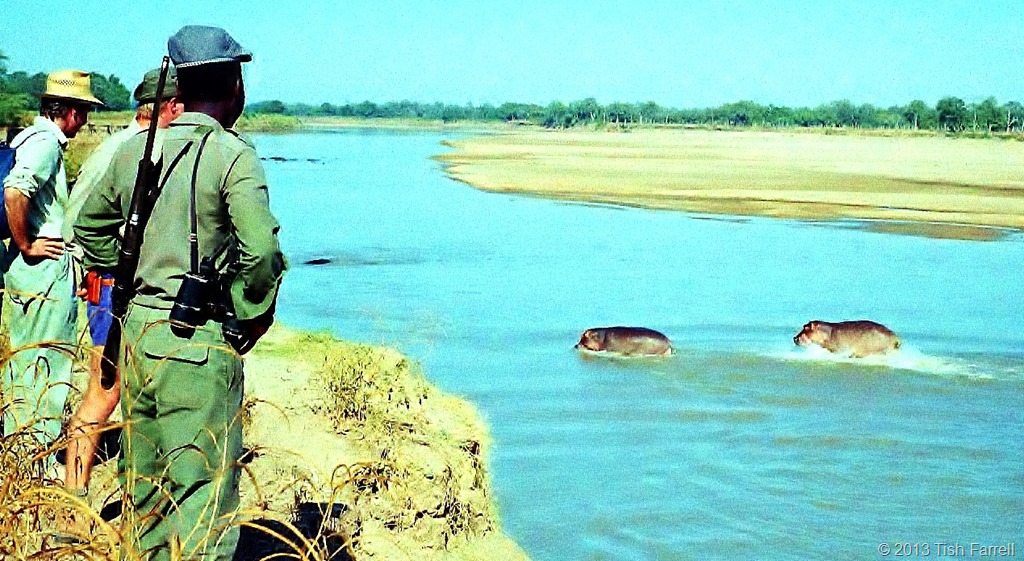
The other great shaper of the territory is the mighty Luangwa River as it endlessly carves new meanders through the bush country.
*
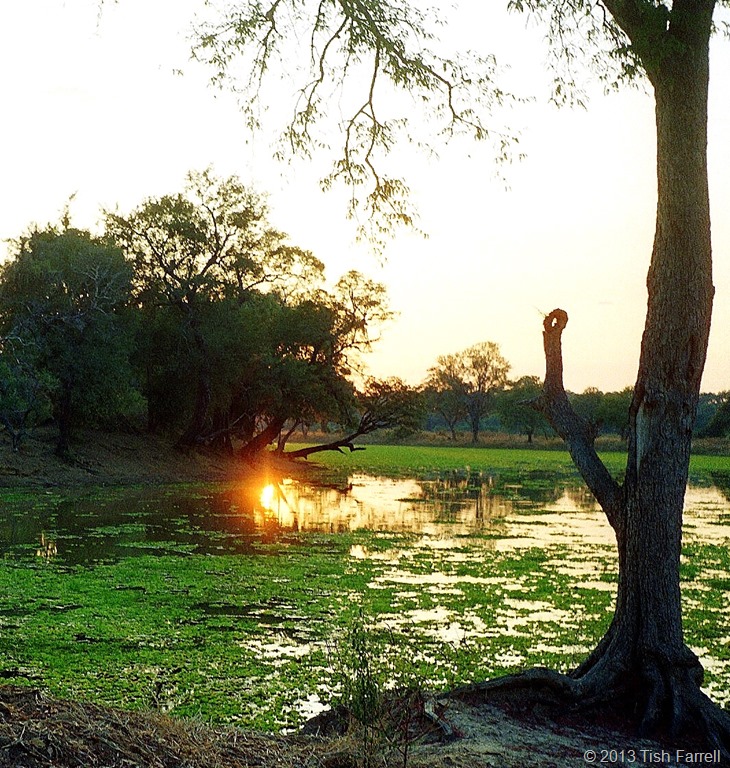
As the river shapes a new channel, so the old meanders are left behind, some becoming stagnant lagoons where hippos wallow amongst the cabbage weed. The local people call such places Luangwa waffa or Dead Luangwa.
But back to Mantrap. It was while I was standing under the baobab, and peeling a very English hard-boiled egg, that our guide happened to point out the narrow strips of wood that had been driven unobtrusively into the tree’s hard, smooth trunk.
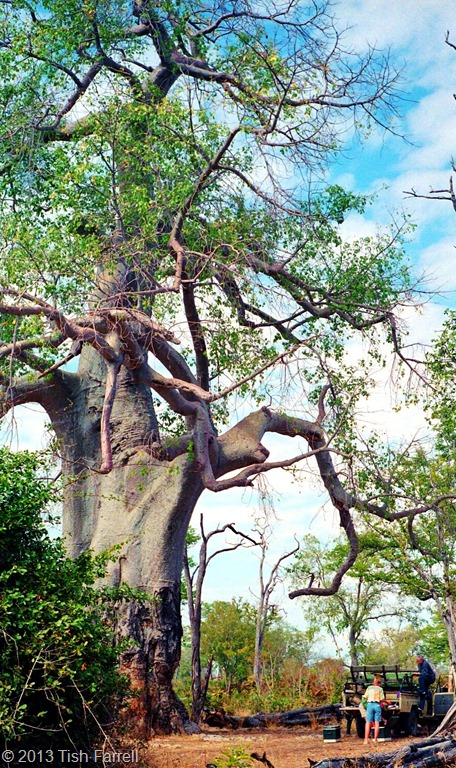
“It’s a poachers’ ladder,” the guide told me. “Ivory poachers. This tree has been a look-out post for years.” He went on to tell me how earlier that week an elephant had been killed nearby. The tusks had been taken, but then later, when the coast was clear of poachers, the local villagers had come to grab the meat.
My spine tingled: horror and pity, and not only for the elephant. I knew that rural Zambians were in a poor state. This was the reason why we had come to Zambia. Team Leader Graham was responsible for the logistics of delivering EU food aid to drought-stricken villagers. (See Letters from Lusaka.) Also, elephants and other game can destroy a farmer’s whole crop in a single night. The conservation of wild game, then, and the protection of neighbouring people’s livelihoods are matters not easily resolved. Game parks across Africa generally do not have fences. Animals move about at will, and many farmers are maimed or killed by buffalo, crocodiles, hyenas and elephants. Their families rarely receive compensation.
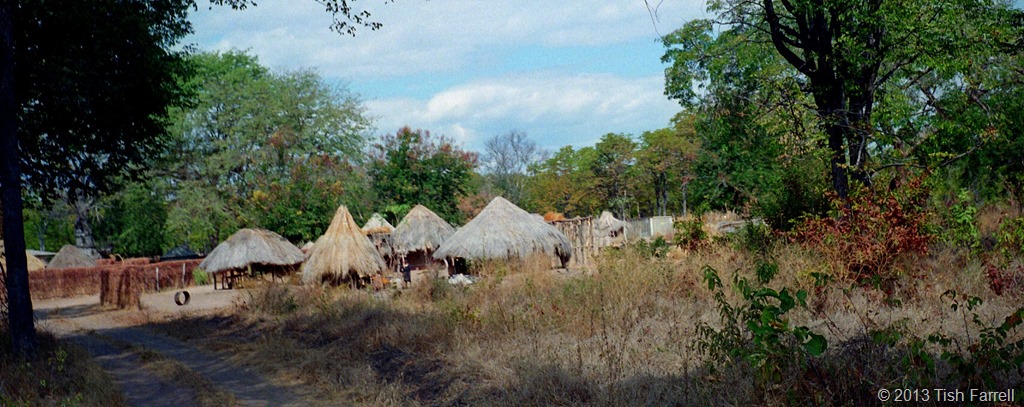
We, however, belonged to the fortunate segment of the world’s population that had no shortage of food and also the leisure to take a few days holiday, staying in a small tented camp run by Robin Pope Safaris. On the way to our campsite from Mufuwe airstrip we crossed a dried up river where a girl was digging deep into the sandy bed in hopes of scooping out some water. In the gardens of a nearby farmstead, the maize was blown to dust. It was hardly surprising that there was a poaching problem in the district. People were starving.
But then to my mind, there’s a big difference between hunting antelope and small game for the pot, and particularly when the park and surrounding licensed hunting blocks occupy the local people’s former hunting territory, and the obscene and pointless slaughter of elephants solely for their ivory.
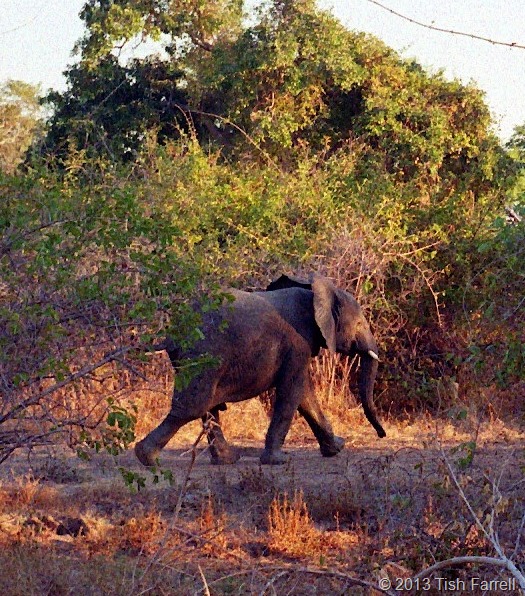
Yet the temptation to some locals must be enormous. They have families to support, children to send to school, medicine to buy. Big business cartels, especially in the Far East, are apparently more than glad to arm and fund local hunters in the pursuit of ivory and rhino horn. This means that park rangers are at great peril. Many are murdered in their attempts to protect wildlife so tourists like us may come and stare, and snap away.
One way to combat poaching is to give people good reasons to protect the game. Robin Pope’s Safaris have pioneered schemes to involve local communities in conservation.
Helping communities to gain from tourism
*
So these, then, were some of the things I wanted to explore in my story. What emerged was a life-and-death adventure that had its beginning the moment my fingers touched the rungs of the poachers’ ladder.
Here then is an excerpt – the opening scene. It is dawn in Luangwa. Hunger has finally driven Danny and his father, Jacob, into the National Park to hunt antelope. But Danny is a schoolboy, not a hunter; it is not surprising that, in his panic, he makes a mistake – a mistake that lands them in the clutches of a corrupt ranger who has a far more dangerous quarry in mind.
Chapter One: The Kill
“Impala. A small herd among the sausage trees. Jacob stopped dead and held up a warning hand. Danny froze on the spot and this time, without a sound, dropped behind a potato bush. He peered through the leaves, fixing on a big ram. He was about twenty paces away, grazing the yellow grasses, his harem of females all round. Danny’s eyes stung with longing. There was that beautiful ram. So near, and yet so far. The smallest sound might send him bolting. Out of reach!
Danny willed Jacob to shoot. Now, Dadda, now. Then nearly howled when the ram raised his lyre-shaped horns and sniffed the breeze nervously. The ram had scented them. He had. Danny prayed and prayed. Please let our luck change. Please let Dadda shoot. Then we can get out of here. Before the sun comes up. Before the park rangers start their patrol. Before we’re caught and sent to jail…
And finally, here’s a short clip that shows Luangwa in all its rain-soaked glory. One of the earth’s most beautiful places, and over four hundred species of birds.
© 2013 Tish Farrell
Links:
http://dailypost.wordpress.com/2013/07/29/reel-talk-writing-challenge/
http://flickrcomments.wordpress.com/2013/07/30/eee-challenge/
Fresh strawberry and rhubarb cordial
WP weekly photo challenge: fresh

Fresh to me means produce straight from my allotment, pesticide-free and naturally fed plants. I’ll give you the recipe for the cordial at the end, but first I’m going to show off some of my harvest, which despite the burning heat-wave we’ve been having, and my erratic watering, seems to be doing pretty well. The strawberries have been delicious – warm off the stem, or made into ice cream. We even outfaced the heat by having some in a crumble (i.e. baked with a butter-sugar-flour crumb crust) and served with some Greek yoghourt.

And now the raspberries and blackcurrants are beginning to ripen which means it’s time to make jam with the raspberries and coulis with the currants, or Summer Pudding with both.


And then there are gooseberries to make into gooseberry and ginger chutney, and gooseberry fool, or gooseberry sauce to have with grilled mackerel.

On Saturday night, after a hard day’s picking, weeding and sowing, we had steamed artichokes served with crushed garlic in melted goat’s butter.

And on Sunday night, after digging up some Charlotte and Red Duke of York potatoes, picking French and broad beans and broccoli, I steamed the vegetables and dished them up with salsa verde and a few grilled rashers of Wenlock Edge Farm bacon. Bliss.


And now I’ve teased your taste buds to extremes, here is the recipe I promised you:
Strawberry and Rhubarb Cordial
4 sticks of rhubarb chopped
300 gm/10 oz ripe strawberries, hulled and cut in half
320gm/11oz caster sugar
1 litre/1.75 water
juice of 2 lemons
Place fruit in heavy based pan, add sugar and simmer on low heat for 10 minutes. Add water and increase heat slightly. Cook for a further 15 minutes until the fruit is soft.
Leave to cool then strain through a sieve, pressing the pulp into the syrup. Add lemon juice and store in the fridge. To serve, dilute with chilled sparkling water, and add a sprig of mint if this appeals.
OR make a damn fine cocktail with some prosecco or other dry sparkling wine. I haven’t tried this myself yet, but I just know it will be wonderful – bellinis with bells on.
*
And finally a shot of the marigolds and sweet peas that I grow amongst my vegetables to make the bees happy, and me happy when they have pollinated everything else.

Happy summer to everyone who takes the
time to read my blog – lovely
people all of you.
Carnations, crooks and colobus at Lake Naivasha
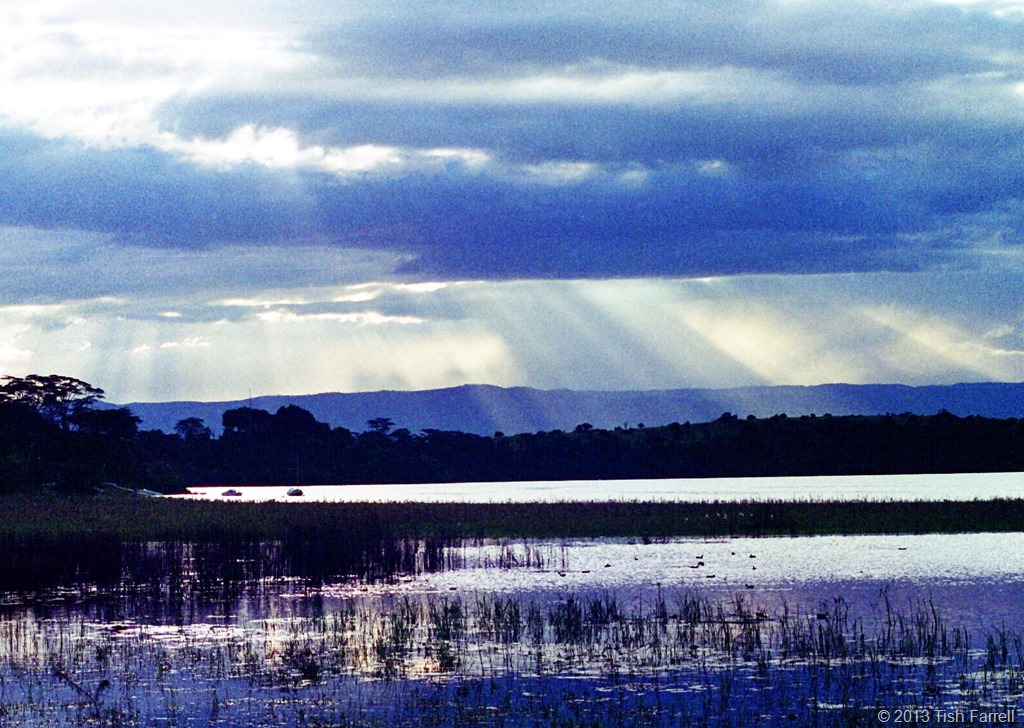
Even locals told us that anything could happen in Kenya. And so one Lake Naivasha morning, when I thought I was alone in the grounds of an old safari lodge, I was both surprised and unsuprised when a young man suddenly stepped out from the papyrus swamp clutching two bunches of carnations. Fifty bob, madame, he said after the customary greeting. He seemed nonplussed when I started to laugh.
“Do you always keep your carnations in the papyrus,” I asked.
“Yes,” he said.
“What, waiting for people like me?”
“Yes,” he said.
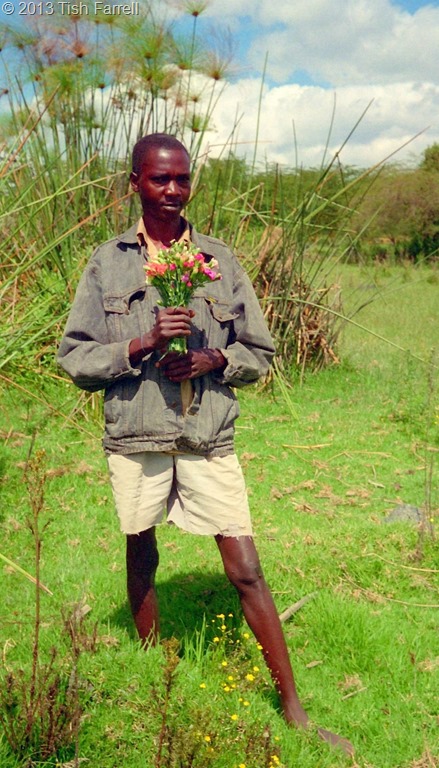
This exchange seemed to seal the deal. I didn’t even bother to haggle. And although I have no idea why I would have 50 bob on me in such a place, I bought a bunch. Given the general lack of wazungu humanity in that particular location, I also wondered how long he had been waiting for the likes of me to come along; or how long he would have been prepared to wait for a customer. Or if I was just the unexpected thing that happened to him, rather than he to me. (You could tie yourself in knots second guessing). The rest of the lodge guests, I knew, were male entomologists, engaged all day in seminars and workshops; only I was free to wander about the hotel’s straggling grounds buying flowers for which I had no particular need.
*
*
We had driven up the Rift from Nairobi the day before. Team Leader Graham was to attend a four-day international conference on the Larger Grain Borer. Along with his Kenyan colleagues there were some forty delegates from such places as Honduras, Mozambique, Italy, UK, Benin, Zimbabwe. Anyone who has read my post, Letters from Lusaka Part 1,will know that this small maize-grinding beetle, aka LGB, was introduced into Africa in a consignment of US food aid in the 1980s. Its natural habitat is in South and Middle America where it also has natural predators to keep it in check. In Africa it has no natural enemies and can thus eat itself silly while villagers, deprived of their staple crop, starve. Seventeen years on from this conference, it is still a problem.
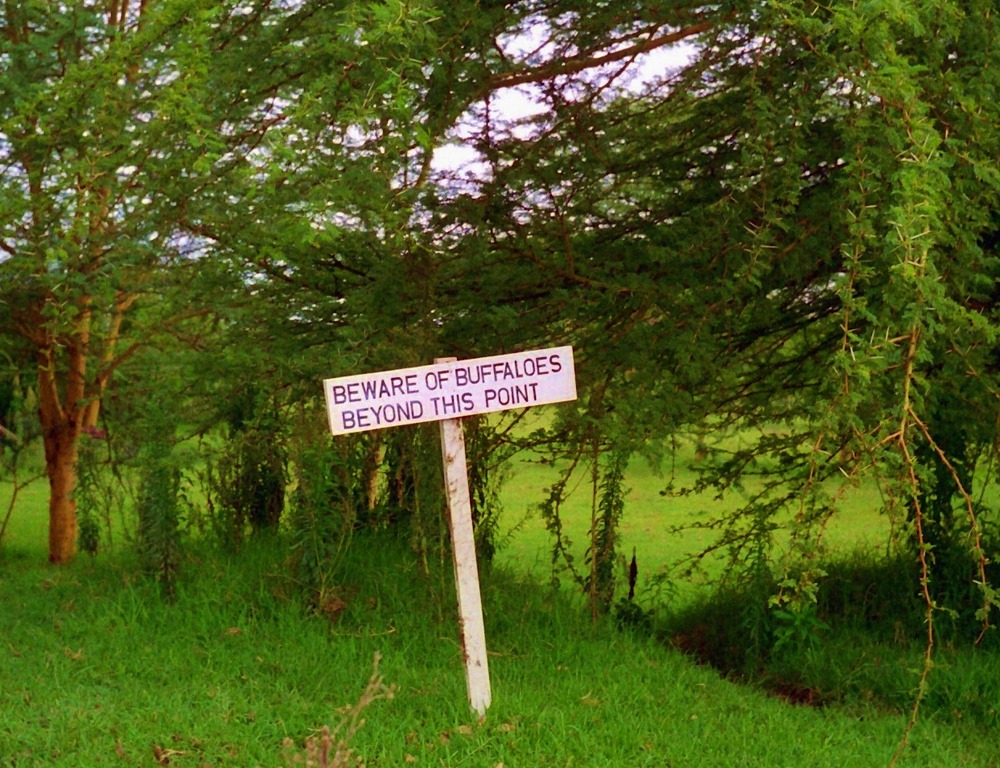
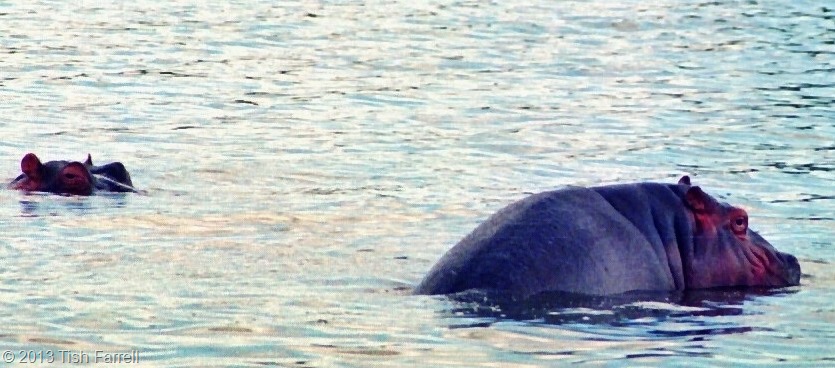
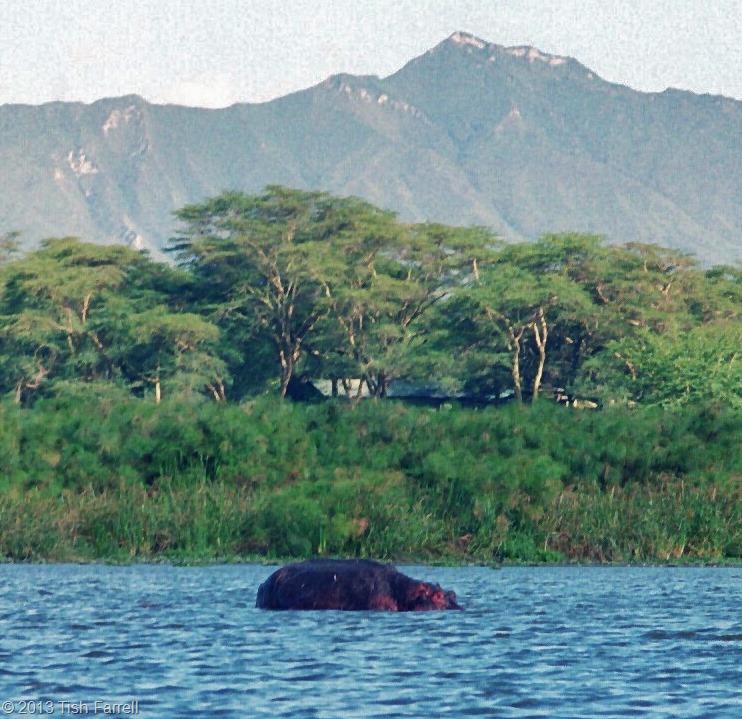
So: while delegates debated what might be done about the ravages of this particular storage pest, Nosy Writer, like some latter-day colonial ‘mem’, dilly-dallied about the lake shore and its hinterland. At the time I was recovering from some strange digestive malady, so wandering and bird watching were all I could cope with. When the young man popped out of the papyrus I was still weighing up whether or not I should be deterred by the sign I had just read amongst the fever trees. I could anyway hear the hippo grunting, and having once been charged by a big angry bull in Zambia was already a little wary. The appearance of a boy with a bouquet, then, seemed like a piece of magic.
When I asked him where he got the flowers, he told me there was a flower factory ‘next door’. (Many international growers have their flower factories around the lake. There are strawberry and asparagus growers there too). At the factory (think acres of pink poly-tunnels under the tropical sun) he gathered the discarded side stems and inferior blooms from the refuse heap and made them up into bunches. Later, when I told this to Graham’s Kenyan boss, Gilbert, he told me that export stems had to be between 70-100 cm long, which meant there were probably plenty of rejects.
He also told me that the factory ‘next door’ was reputed to be owned by one of Kenya’s top crooks, a notorious Kenyan-Asian wheeler-dealer. Gilbert then added that he also owned the safari lodge where we were all staying. I could only blink in response. It seemed like another of those ‘anything can happen in Kenya’ moments; another of the endless moral conflicts. Here were a bunch of diligent, respectable scientists all funded by international development money patronizing the establishment of a member of the criminal elite who, from behind a front of untouchable respectability, was bleeding the nation on breathtakingly colossal proportions.
It’s the moment when you say, oh, bloody hell, I can’t cope with this, and go back to reading a book or bird watching, or listening to the plaintive call of a pair of fish eagles resounding off the water, or to the companionable grunting of hippos.
I also tried to distract myself from thoughts of the flower factories around the lake. There was talk of them abstracting too much water, and polluting the only freshwater lake in Kenya’s Rift with pesticide residue – all so the citizens of London, Paris, Amsterdam can buy the perfect, but scentless, long-stemmed rose, or metre-long carnations. Of course these places provide work for scores of labourers, and increasingly there are well qualified Africans in managerial positions.
The companies probably provide clinics and primary schools too, but the bulk of the profits from these huge concerns go to Europe and to their shareholders, not to Kenya whose human and natural resources are being exploited in the meantime. Then there’s the row about multi-nationals not paying local taxes. It’s the same old story – colonialism in a new form – the need for cheap labour to justify the cost of the daily absurdity of flying fresh-cut flowers out of Africa.
How do you begin to unpick all this. I can’t. It is easier to bird watch, and there are hundreds of species around the lake to look out for.
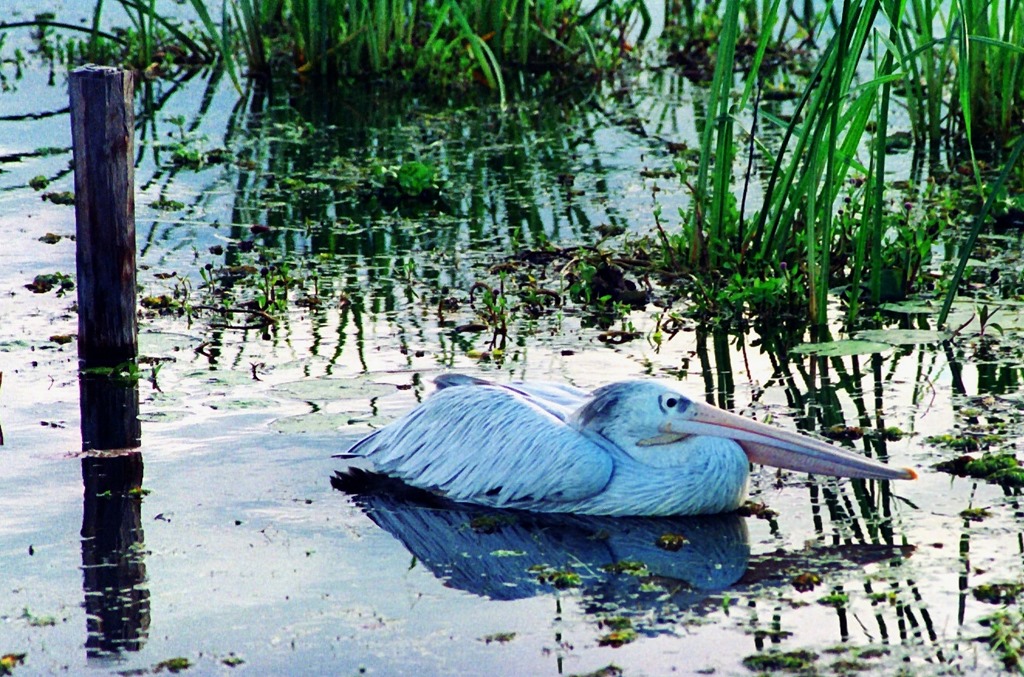
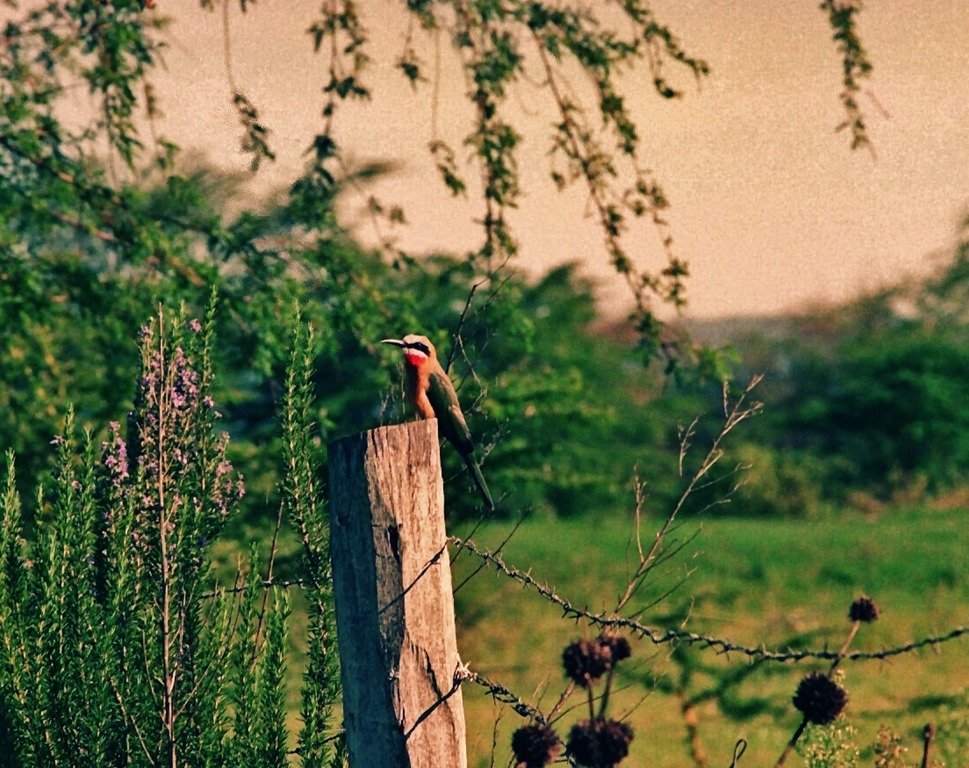
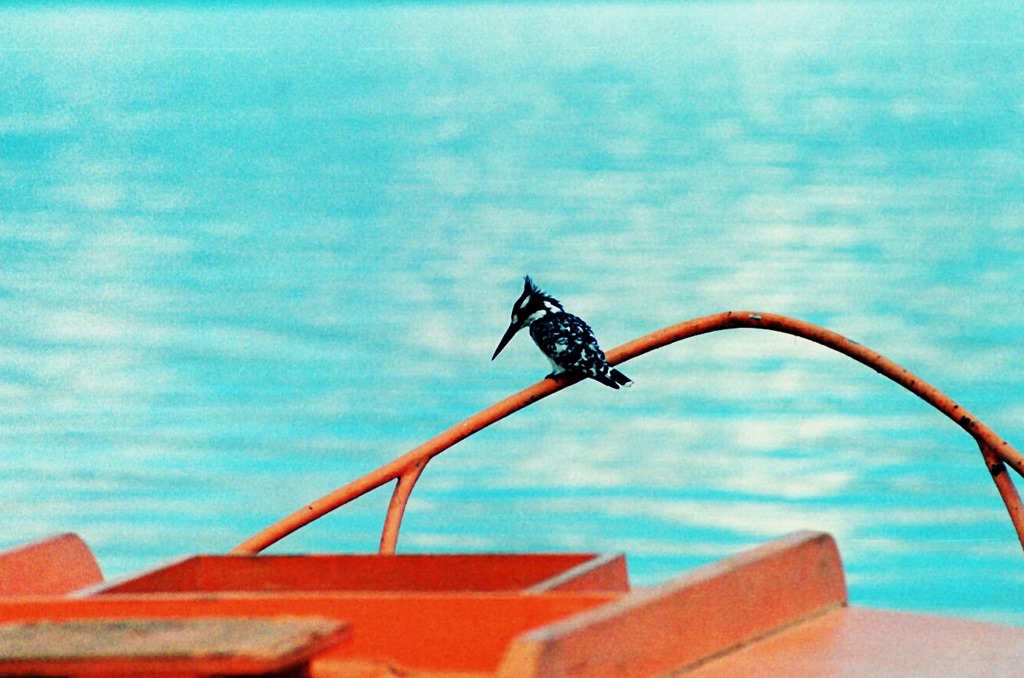
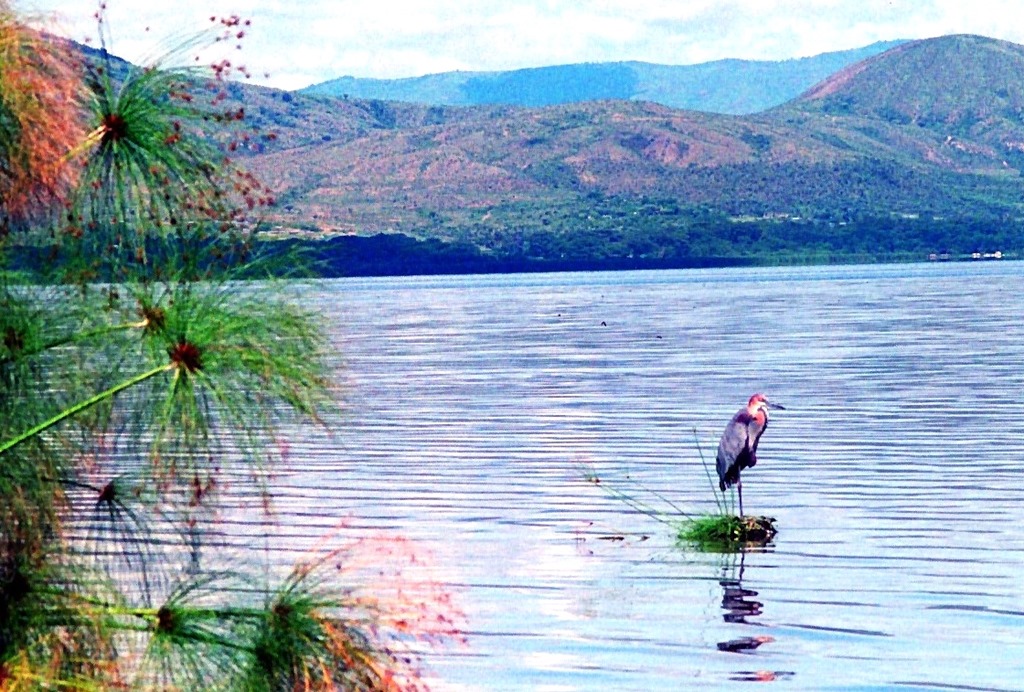
From the top down: pelican, bee eater, pied kingfisher, goliath heron – just a few of the 400 bird species around the lake.
*
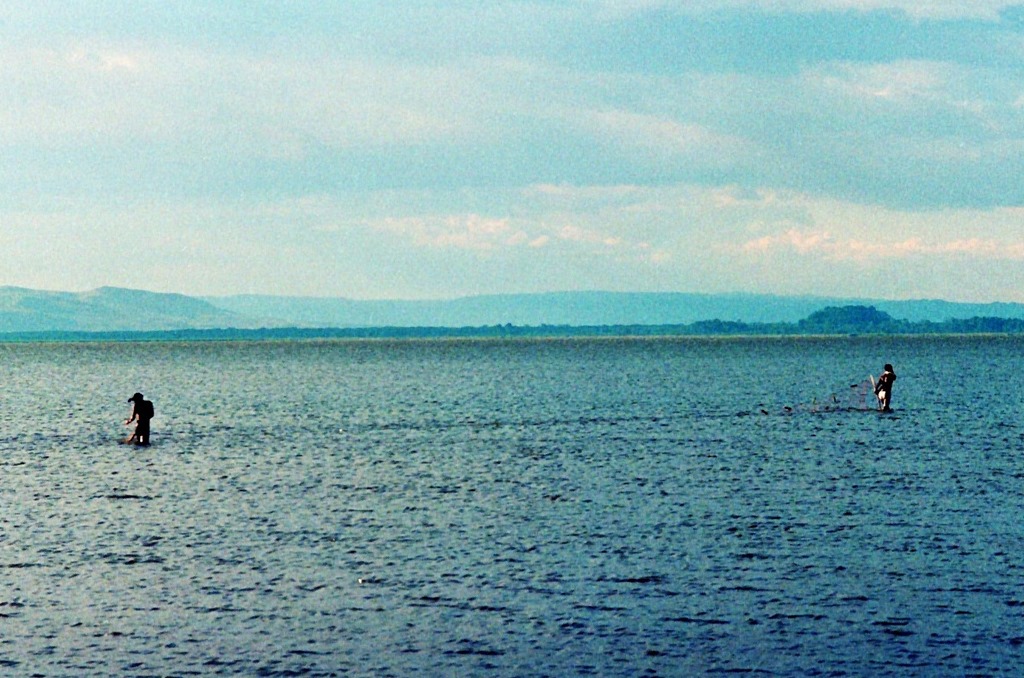
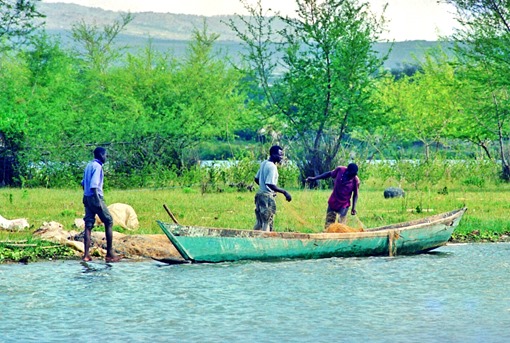
There are the fishermen too, seine netting and scooping up buckets of freshwater crayfish, although accidentally introduced carp is now the dominant fish species.
*
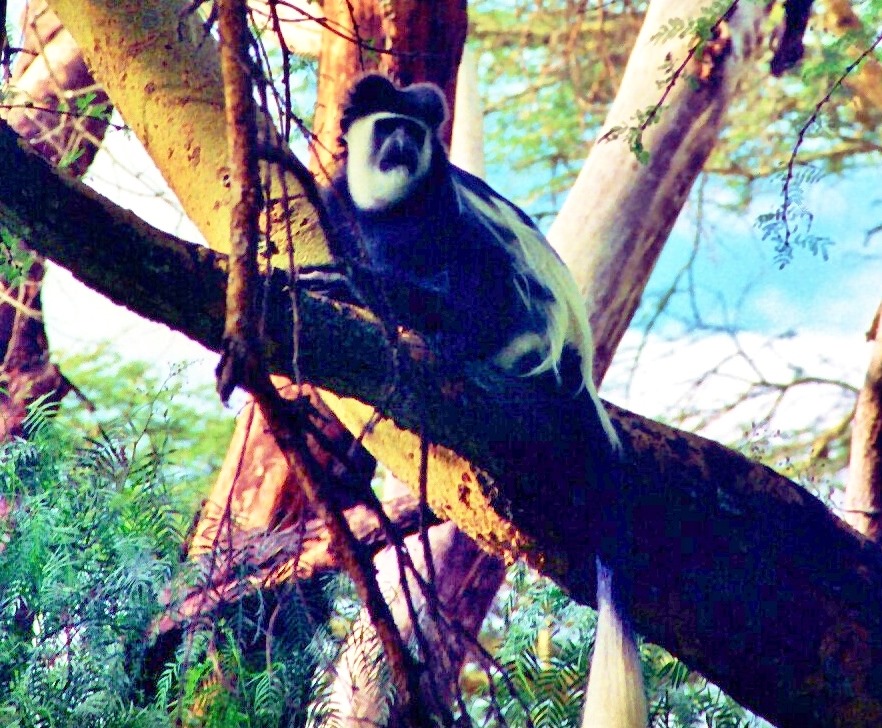
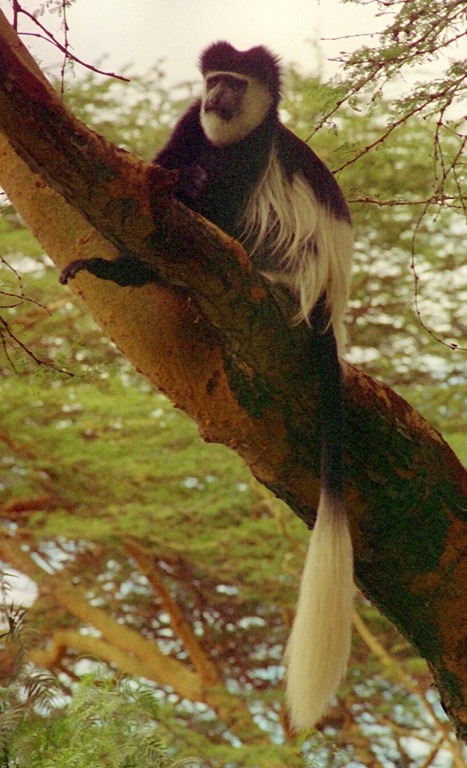
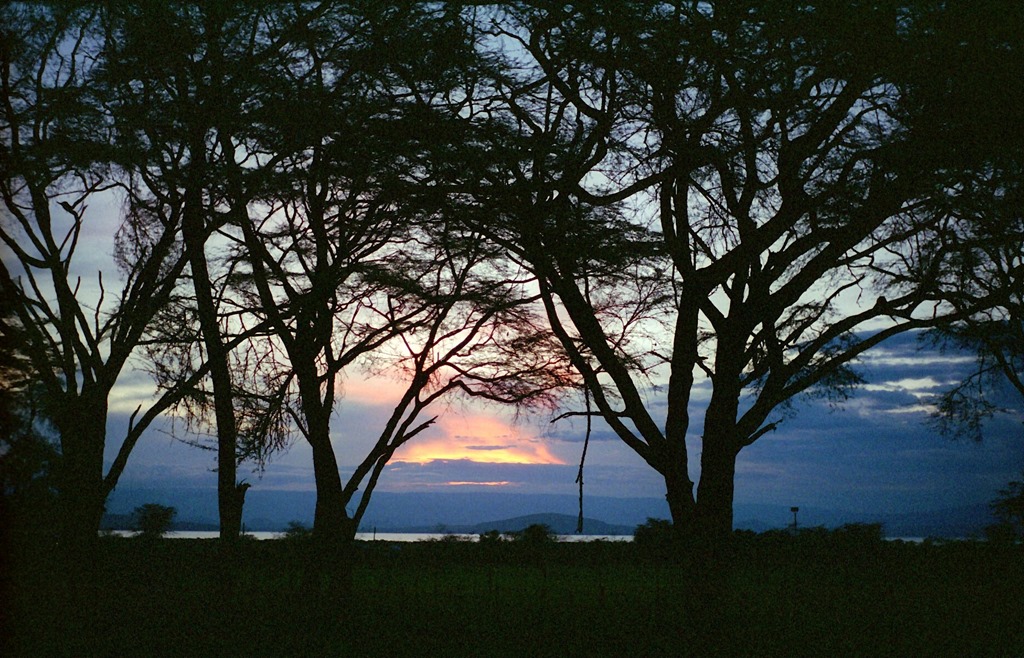
And finally every afternoon around four, a family of colobus monkeys come to the lodge garden and play on the guest cottage roofs. It’s easy to tell yourself that this is paradise.
Refs:
Urban society and the fishery of Lake Naivasha, Kenya – Balancing ecosystem and stakeholder demands by Phil Hickley, Mucai Muchiri & Ros Boar
Flower power keeps Kenya’s Lake Naivasha blossoming – video Guardian 2012
Kenyan flower industry’s taxing question Guardian 2011
P.S. I took the carnations home to Nairobi where they lasted a further ten days. Excellent rejects.
© 2013 Tish Farrell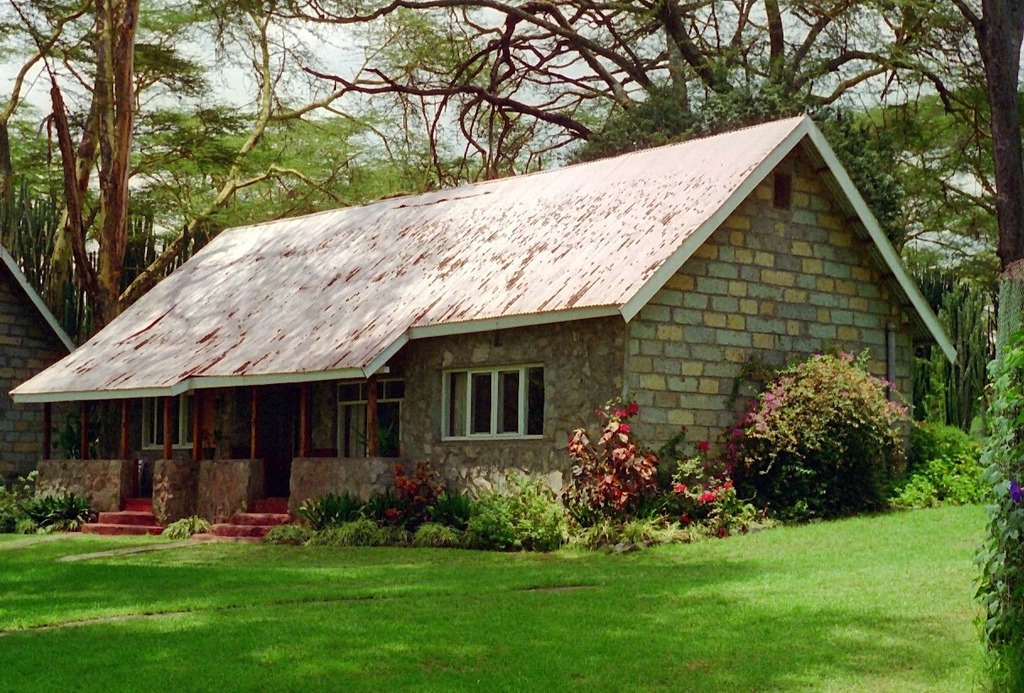


The Golden Hour on the Rift Plains
First off, before the best bits, I should say that there’s a bug in the Word Press system, so dear followers and followees, please check your SPAM for any comments from me or other afflicted bloggers and (only if you want to of course) upspam them. Otherwise, on most blogs, my comments are currently going straight to SPAM. It’s a cunning way to stop us from talking to each other. Curses on the joyless little bug that is doing this.
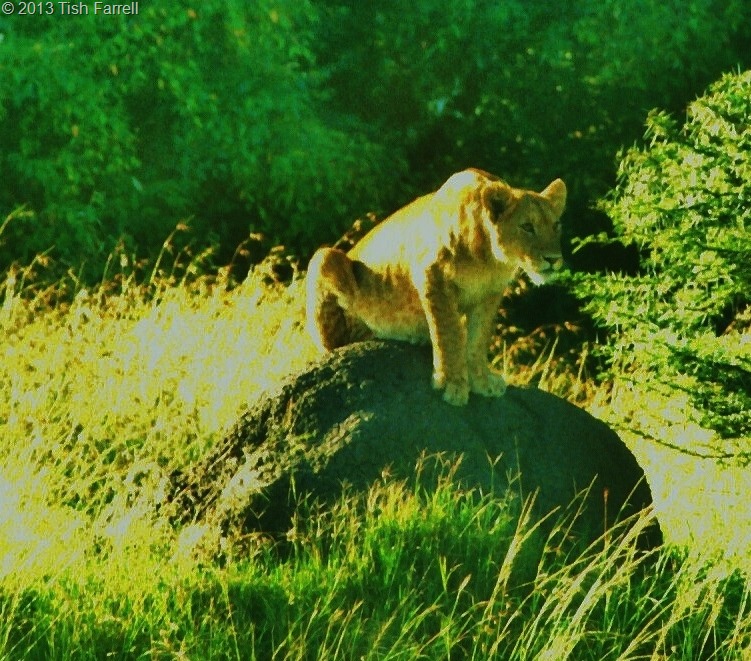
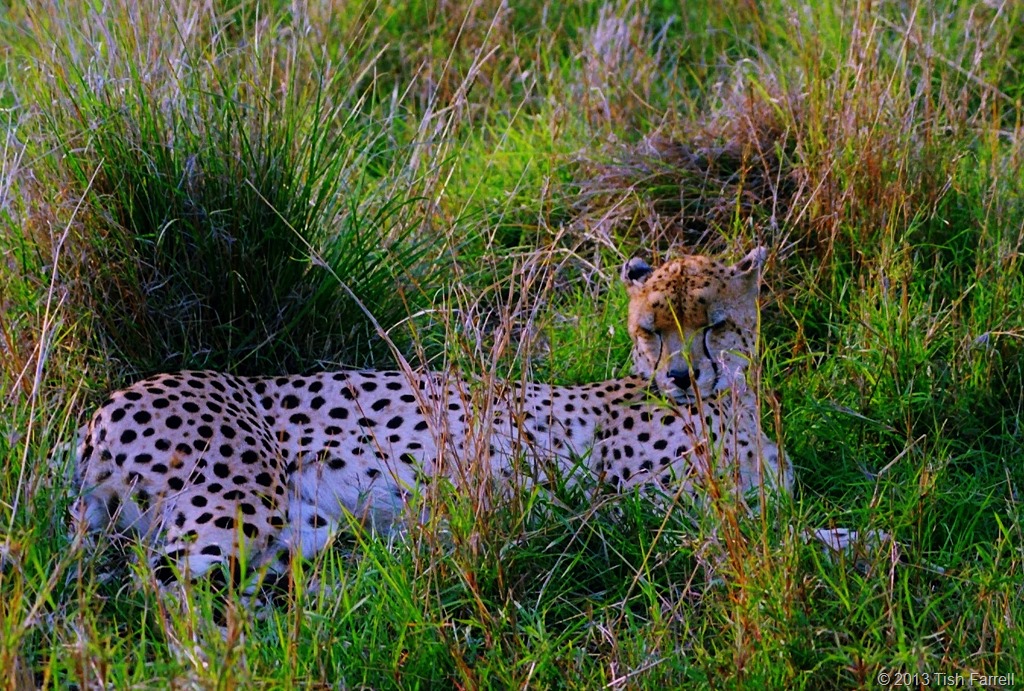
Now for some late afternoon views of big cats and other animals in the Maasai Mara. This photo shows just how easily lion conceal themselves in quite short grass. Here, as sunset approaches they are becoming watchful, although they could scarcely care less about us watching them. Soon it will be time to go hunting.

*

Just to the right of the lioness is another lion. It makes you appreciate how intrepid are the Maasai who daily have to graze their herds, and also fetch firewood and water out on these plains. (For more about this you can read my short story ‘Flight’ HERE. It was one of the Bath Short Story Award winners and tells the story of a Maasai girl’s life in this extraordinary land.) Doubtless the herders keep an eye on where particular prides are spending their sleeping hours, but even so, walking into a laid-out lion seems a distinct and chilling possibility.
*



Which Way in Africa: It’s Often Hard to Know
http://www.ceephotography.com/2013/07/10/cees-which-way-challenge-week-1/
More views from our time living in Africa. For more of the stories behind the photos, you can follow the links.
*
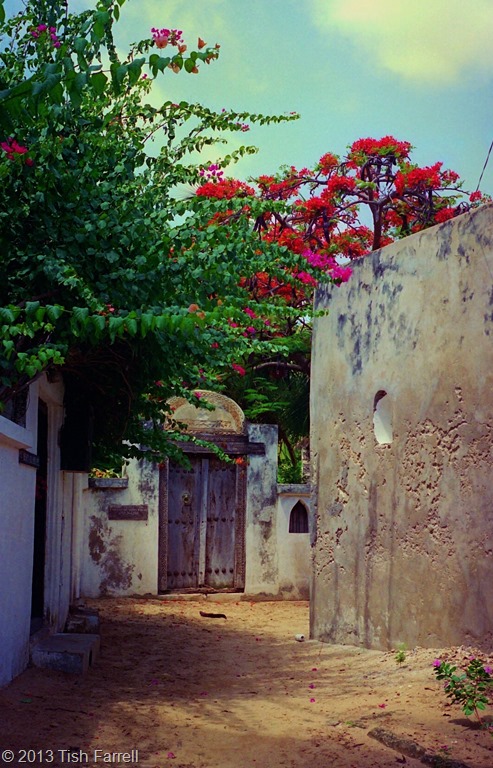
Village path, Shela, Lamu Island, Kenya
*
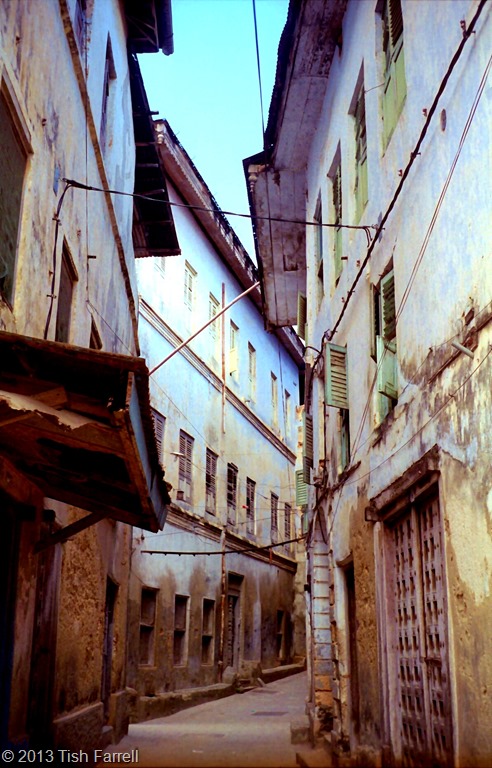
It is easy to get totally lost in the by-ways of Stone Town, Zanzibar
*
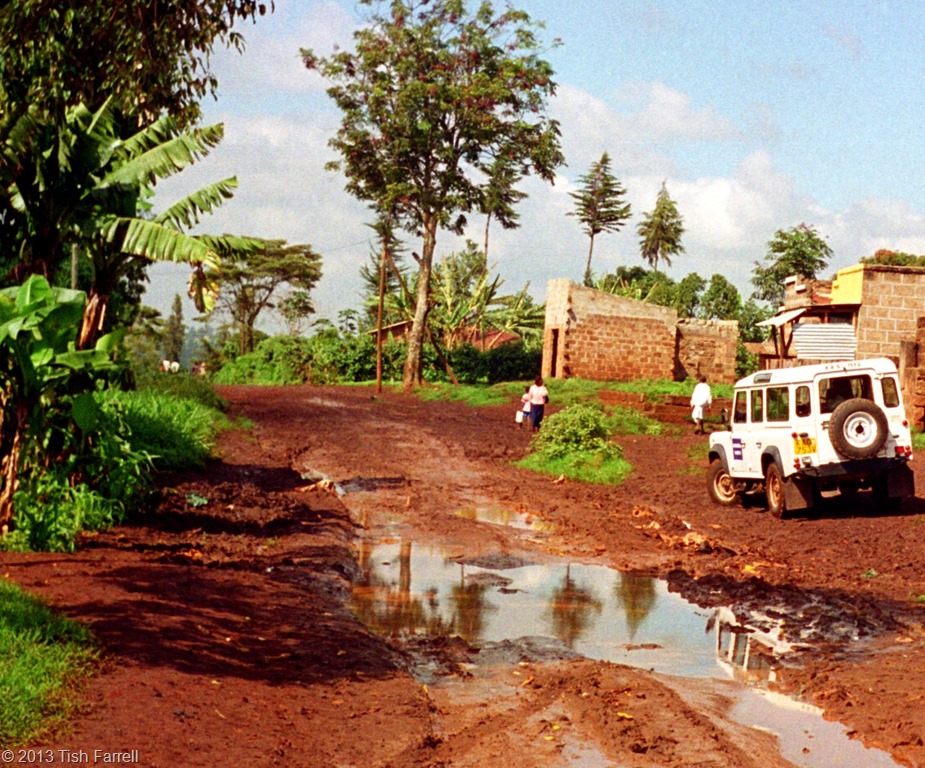
Or totally bogged down during the rains. This road is in Kenya’s highlands in Central Province, taken when we were out on the farms surveying crops for smut fungus.
*
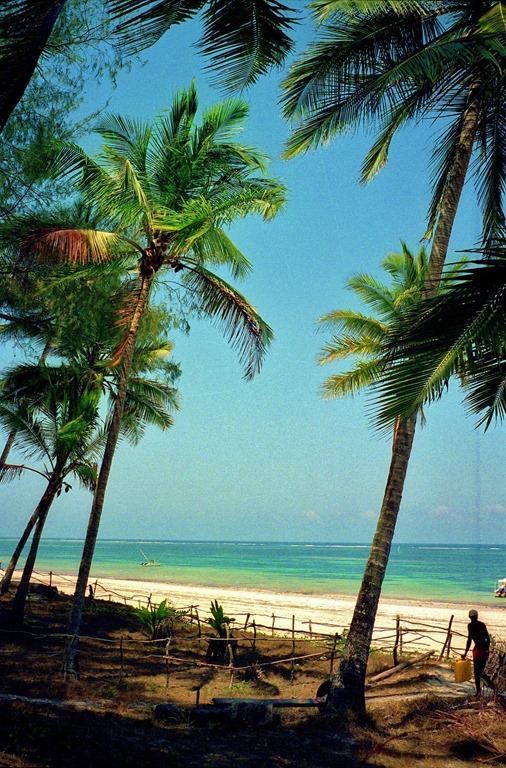
Village path down to Tiwi Beach, Mombasa, Kenya
*
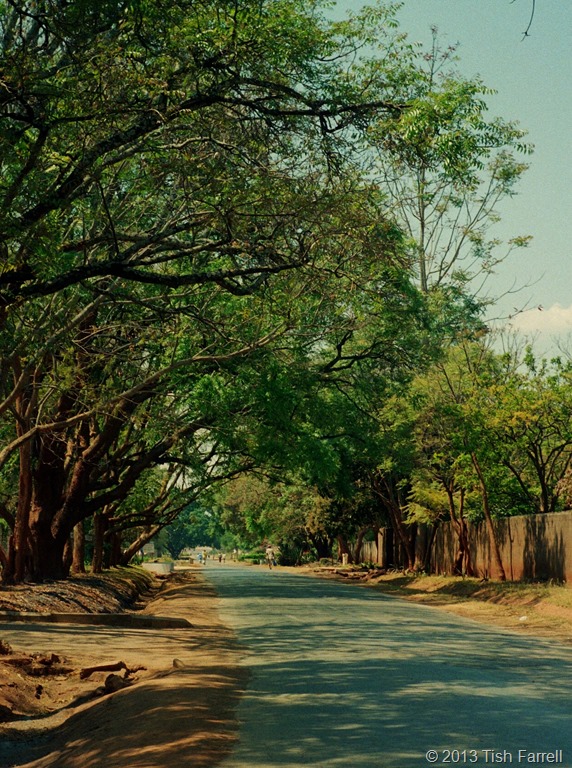
Sable Road, Lusaka, Zambia, where we lived in 1992-3. This was taken in the dry season.
*
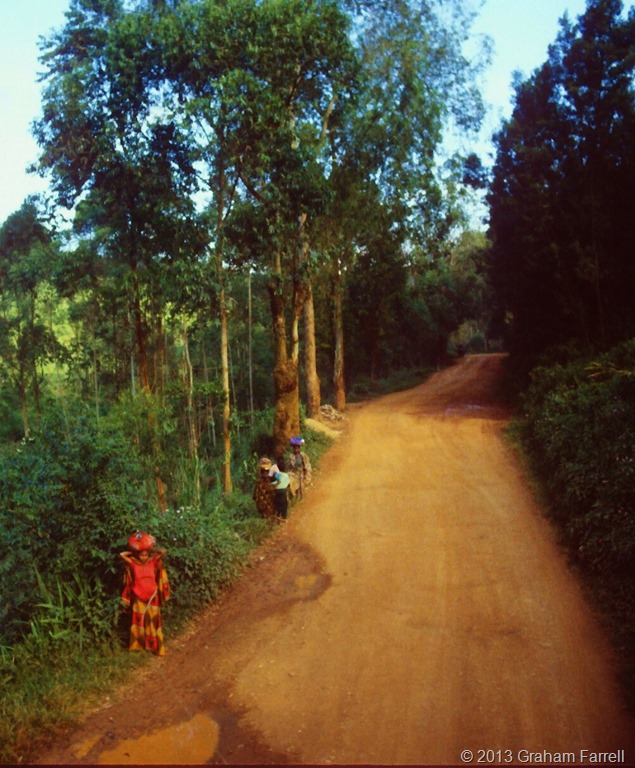
Heading for Uganda from DR Congo. Or maybe not…
http://www.ceephotography.com/2013/07/10/cees-which-way-challenge-week-1/
Letters from Lusaka Part 1
Notes from an aid nomad’s life in Zambia
October 1992 and I’m expecting to start a new life in Medway, Kent, but instead I find we are off to Lusaka. It is hard to take in. I am barely back in England after nine months in Kenya where we lived out of a Land Rover, plying the Mombasa Highway. My heart is still in the Ngong Hills, the knuckle-shaped peaks that were my last view of East Africa before the plane rose through the clouds and headed for London via Bahrain. In that moment I find myself weeping for the loss of the Ngongs, recognising, with a twinge of shame, I would never weep like this for my homeland.
Due to ticket problems I have to travel back to the UK alone. G will follow the day after. When we say goodbye at Nairobi airport there is no inkling of another overseas contract. Yet two days later when we meet up in England, the first thing G says is: how would you like to go to Zambia?
Zambia, I echo blankly. How would I know if I want to go there? But with barely a pause, I say yes; I’m up for it. I’ll find out later if I’m going to like the place. Besides, whatever happens, it’s bound to be interesting.
When we tell friends and family where we are going, they also look blank. Zambia, they say. What did it used to be? It is only months afterwards that I see how loaded is this seemingly simple question, how unfathomable the answer. What indeed did Zambia used to be – before it was Northern Rhodesia – before David Livingstone passed through it in search of lost souls and the Nile’s source, and claimed the falls known as Mosi oa Tunya (The Smoke that Thunders) for Queen Victoria; before the south’s Zulu Wars that pushed many displaced communities across the Zambezi?
We’re expected to leave within the month, but due to various administrative foul-ups, this stretches to two. It gives us time to unpack our Kenya life, catch up on dental work, have the jabs we have not already had, say hello and goodbye to relatives, and to get married. This last event takes place briefly before a handful of guests in a Bridgnorth building society office where the registrar has occasional premises. Our little marriage party finds itself queuing for attention alongside Friday morning withdrawers and depositors. It all seems fittingly bizarre for a life that no longer fits the norm.
At this point I am still no wiser about our destination. In these pre-Google days there is little time for research. To my annoyance, too, I find there are no handy books on Zambia, not in the public library, nor in the bookshops. By the time we come to leave, we have only the sparse Foreign Office briefing notes to go on. They speak of the climate and the kind of clothing we will need, and of the possibility of having to take a driving test if we want to drive in Zambia. No clear picture of the country emerges. I am becoming increasingly irritated at the lack of information, as well as at my own ignorance. How can I, an English woman, not know a thing about a land that Britain ruled and exploited for over sixty years, a land we only quitted in 1964 while I was in still at school? Why wasn’t it on the curriculum along with Cicero and Chekhov? How can the existence of a former protectorate pass so swiftly from the protecting nation’s consciousness? How can it become so very unimportant?
Then suddenly it’s too late for righteous indignation; it’s all down to family farewells, and wondering if the right things have been packed, when there is no way of knowing what the right things should be. Of necessity, it becomes a matter of travelling hopefully and telling ourselves that the contract is for ten months only. And ten months isn’t long, is it?
*
So, November 1992 and we fly into Lusaka with the rains. It seems like a good omen – to arrive with rain. There has been severe drought over southern Africa for at least a year. Crops have blown to dust, rivers run to sand, and the granaries lie empty. In remote districts, we later learn, villagers have been surviving on a diet of wild mangoes. To add to their misery, the wildlife is hungry too. In one district villagers have been barricading themselves into their homes. The local lions have developed a taste for canine flesh and are breaking down house doors at night in order to snatch the dogs from the midst of their terrified human families.
And of course, this is why we are going to Zambia; famine is taking us there. G has been seconded from the Natural Resources Institute in Kent to the E. U. Delegation in Lusaka to supervise the distribution of European Union food aid to starving Zambians. The country’s then new President, Frederick Chiluba, tells the Head of Delegation that he does not trust his ministers to do the job. The consignments of maize meal and cooking oil must therefore be distributed through church missions and the Red Cross. Zambia is a big country, the size of France and the Low Countries combined. G will be in charge of logistics: checking the contents of grain stores, getting trucks on the road and ensuring that loads reach their intended destination. His boss at NRI is sure he is fitted for the task, although he has never done anything like it before.
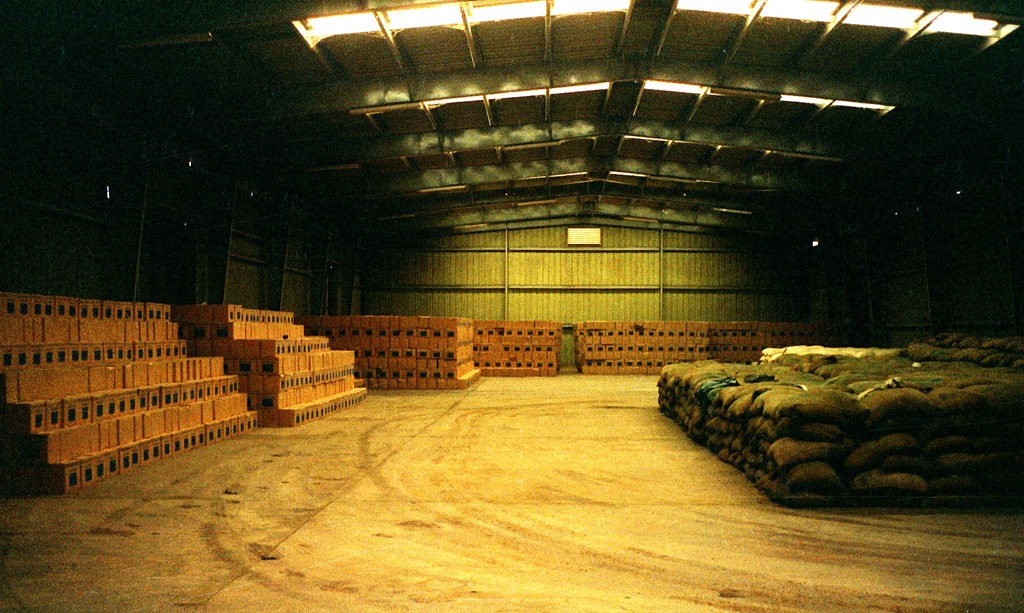
Food aid awaiting distribution in a Zambian warehouse.
*
In Kenya, as a crop storage specialist, he had been dealing with another kind of food crisis – the spread of a voracious pest that gobbles up maize – the Larger Grain Borer. This beetle is a native of South and Central America, and (ironically) came to Africa in the 1980s in a food aid consignment from the United States. It has no natural predators in its new homeland and, across a continent where maize is many peoples’ staple crop, it also has all the food it can eat. If a grain store is infested you can hear the jaws of these tiny creatures gnawing the cobs to dust. In Zambia we find the beetles are already there too, spreading out into villages along the line of the Tazara Railway that links land-locked Zambia to the port of Dar es Salaam. The Chinese built the line in the 1970s to provide Zambia with an external trade route through Tanzania after Ian Smith’s Unilateral Declaration of Independence in Southern Rhodesia cut the country off from all points south. Now the Tanzam is a handy vector for crop pests and thus, through such unintended consequences, is the frequent folly of donor good intention compounded. It is the sort of thing that happens in African countries all the time. It makes us question then (as we will do many times over the next few years) the ethics of our presence on the continent.
*
That November morning, then, as we make our descent through grey skies into Lusaka International Airport, I note only how flat and tamed the landscape looks: large square fields of European-owned ranches (Lonrho, for one, is a big player here); service roads and farm buildings laid out in orderly grid patterns. It is also very green and looks more like France than the Africa I have come to know. I suppose I feel a little disappointed. It is bush country that I have fallen in love with, the smell of it triggering some ancient genetic memory that tells me that such landscapes mean home.
Once down on the tarmac, and as a matter of courtesy so we will not get wet in this welcome downpour, a bus arrives to ferry us the short distance to the low white terminal building. Our fellow travellers are European businessmen, each shouldering his laptop bag. By contrast, a tall African in a well-cut suit emerges from the First Class cabin wielding only a shiny new golf club. It seems utterly incongruous, as if he has just stepped out of a London taxi after visiting a golfing shop rather than flying half way across the world. It crosses my mind that I like his style.
By now I am both jet-lagged and deeply anxious about the forthcoming immigration process. Still fresh in my mind is the stony-faced inscrutability of Kenyan officialdom when I twice visited the notorious Nyayo House immigration department to extend my three-month travel visa; I recall the hours left in limbo, sitting amongst distressed Somalis and Ethiopians, all trying to secure sanctuary away from troubled homelands. But suddenly I see it’s not going to be like this. The officers, as they take their seats at the immigration desks are all smart young women. They are laughing and chatting and, when we hand them our passports and paperwork, they are still smiling, and at us.
Next we have our first, but fleeting taste of the diplomatic life, as G’s new boss steps up and introduces himself. His name is Bernard. He is French, frenetic and instantly engaging. He whisks away our paperwork and deals with it in minutes. There is then a worrying delay before we can claim our bags. Bernard tells us that British Airways on this route are well known for leaving cases behind in London. Finally, though, we have our luggage and are propelled into Bernard’s Peugeot, Bernard talking non-stop. He apologises for his poor English, saying that this is his first posting to an English-speaking country. Mauretania and Madagascar were his previous postings. Worryingly, he adds that he hopes we will speak some French. Beside me, looking wan, G winces; he does not fly well. He can barely speak. When he does, it is to utter a customary response in KiSwahili. I’m beginning to feel hysterical.
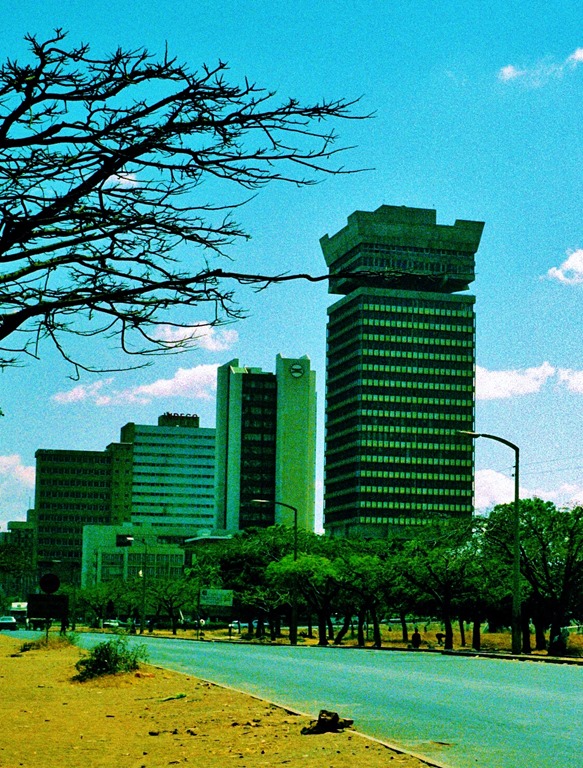
Soon, though, all smooths out as we cruise along the Great East Road into Lusaka. There is little traffic (not like Nairobi), and the place has a small-town provincial air – wide streets lined with jacarandas shedding mauve petals and acacias with russet coloured flowers, red-roofed villas. We pass the turn to the University of Zambia, the entrance to Lusaka’s agricultural show ground. The side walks are filled with people walking – young men in loose shirts and smart front-pleated pants striding out, country women in ankle-length chitenge wraps, city girls in high heels and sleekly cut frocks, and who seem to flow along the street. There are roadside stalls selling garden surplus – mangoes, tomatoes, okra, spinach.

EU Delegation, Lusaka
*
And I am just thinking that I can cope with this when we swing into the grounds of the five-star Pomodzi Hotel, and Bernard’s car is instantly lassoed in chains whose ends the hotel porter quickly padlocks to an adjacent post. I have never seen nor imagined anything like this. Bernard explains that this is a necessary procedure even though it will only take a few minutes to escort us to reception. I see that other guests’ cars are similarly chained. It is then that my one sure piece of Zambia information surfaces. All along we have been ignoring it, that in that year of 1992 the country has a big security problem. Some months later the reasons for this become clear, but for now I am struggling to absorb this apparent evidence of an expected car-jacking – in broad daylight, and in such orderly and upmarket surroundings. I gaze, bemused, at the tail-coated porter who is now ushering us into the hotel foyer. After the humid warmth of outside, the hotel is frigid with air conditioning. The reception area is cavernous, all grey-white marble. A trolley appears and our cases are stacked upon it. They look shamefully shabby in these austerely smart surroundings. The porter politely motions me towards a comfortable armchair while G registers. This always takes ages, and by now it is lunchtime and I am hungry and yet too tired to want to eat. Then suddenly there are Englishmen everywhere. They seem to issue as one from the lift.
“Hello. I’m David…Peter…Tim…Paul…Alan. We’ve not been introduced but…”
As welcoming committees go, it is well meant but too much, and I wonder if I’m responding sensibly. They turn out to be G’s fellow consultants from the Natural Resources Institute, out on short-term missions relating to crop storage and food security. They include G’s head of section, the man who seconded him to the E.U. Delegation. He’s just off to Zimbabwe, and hardly have we reached our room than the phone rings, and G is summoned to an impromptu meeting and a trip round a Lusaka grain store that has flooded, none of which has anything to do with his present posting. He goes off looking terrible while I collapse on the bed, trying to come to terms with my new surroundings.
Here we are back in Africa, back in the so-called developing world, here to help deal with a food crisis. Yet now I find myself in a room that has more of comfort and opulence than I’m used to in England. There is a huge colour television that shows American and British world service programmes. There is a telephone by the bed and another beside the lavatory. The ivory tiled bathroom has abundant hot, clean water and piles of soft white towels. The flask of drinking water is chilled. We have our own veranda. The room service menu offers club sandwiches, burgers and steaks. A polite notice on the writing desk requests guests not to tempt the staff by leaving their valuables unattended.
This is a hotel designed not so much for travellers and tourists, but to cater for the expectations of international entrepreneurs. Its luxury is hard to reconcile with the hardship that G has been brought here to relieve. This is only the first of the multiple contradictions that we will encounter over the next ten months. We learn not to dwell on them, and so become part of the contradictions.
*
Now in Lusaka, we find ourselves dropped into a diplomatic no-man’s-land. Although G works for a British government institution and has been deployed by them on official business, neither the EU nor the British High Commission want to altogether acknowledge our presence in the country. We gather that the BHC has some bee in its bonnet about the cost of air-lifting us back to the UK in the event of some great ill befalling us. This is a puzzling response when all G asks for is some anti-malarial pills. They are not keen to give us any, since this establishes responsibility.
There is also a problem about finding us somewhere to live, this despite the fact that both missions have their own staff accommodation. We have been sent out with a stash of travellers’ cheques to pay for ten months’ rent and to buy a car, but house rents in Lusaka are twice the allowance we have been given. A Delegation secretary, a white Zambian, takes pity on us and directs us to a small company compound of eight houses where local Zambian Europeans and Asians live.
There is one house vacant, and we can just about afford it. The accommodation is very lowly by diplomatic standards, and full of dog-haired furniture, but we still manage to upset BHC consular etiquette because the compound has a swimming pool. Only officials of the higher orders may be allocated houses with pools. BHC staff kindly let us know of our gaff at social functions, although we wonder what it has to do with them since they were so unwilling to acknowledge our existence. Clearly the swimming pool has got under somebody’s skin.
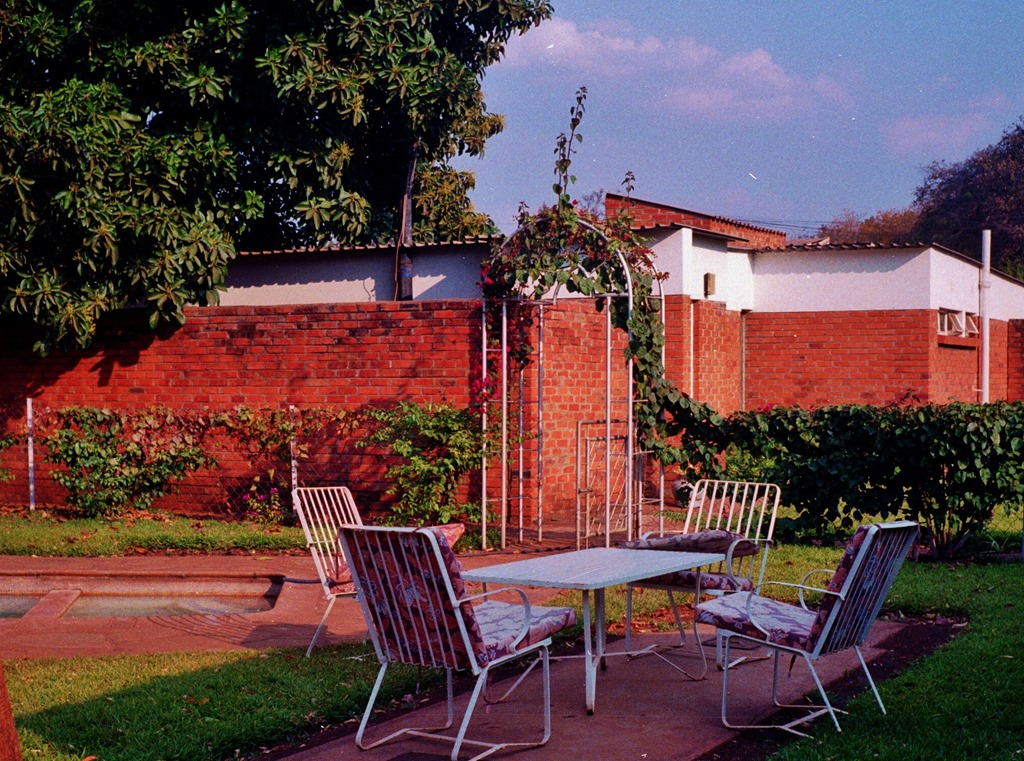
Home on the Sable Road compound.
*
Then, when we are among EU Delegation officials and their white Zambian staff, we are constantly regaled with tales of car-jackings, house break-ins, muggings and murder. At his house, Bernard has been newly issued with a gun and a short-wave radio to summon security in case of attacks by the locals. We presume that we are not important enough to warrant this scale of protection. When, after some weeks, I return to Zambian Immigration to renew my passport, and once more am treated with only good-hearted African courtesy, I consider switching my nationality to Zambian.
To be continued…
http://dailypost.wordpress.com/2013/07/07/daily-prompt-travel/ Daily Prompt: Rolling Stone
© 2013 Tish Farrell
A Word A Week: Boat (Up the Congo)
http://suellewellyn2011.wordpress.com/2013/07/02/a-word-a-week-challenge-boat/
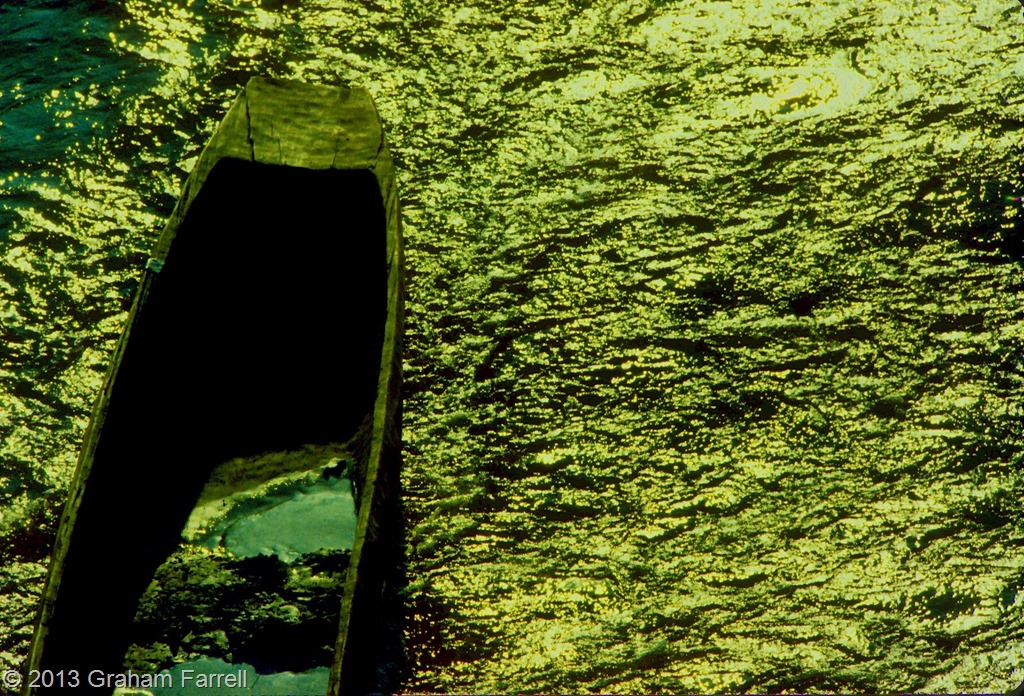
Pirogue on the Congo River
Long ago before Team Farrell was an entity, Team Leader Graham went on an overland trip. This six-month journey across Africa included a voyage on the Kinshasa-Kisangani ferry, which ever since has been a big source of envy for Nosy Writer. Out of sheer spite then, I have stolen some of Graham’s photographs for this post.
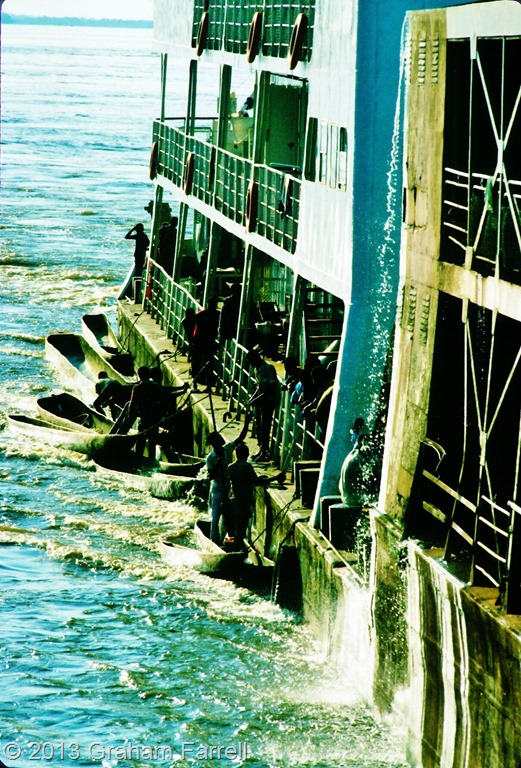
The slab-sided ferries that ply the thousand miles along this, the Democratic Republic of Congo’s super highway, provides motive power for all manner of other vessels which hitch a ride, lashing themselves alongside. The ferries have often been described as a floating cities or, more rudely, as floating slums. Along the route, traders from riverside villages paddle out to sell passengers their produce: monkey meat, crocodiles, fish and fruit, soap and palm oil.

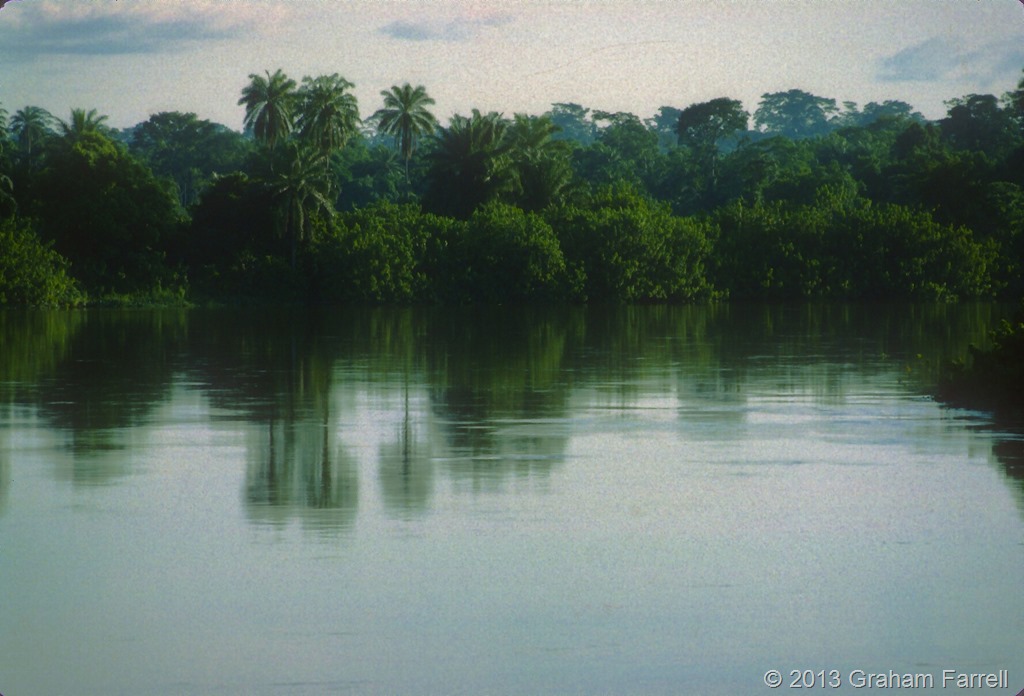
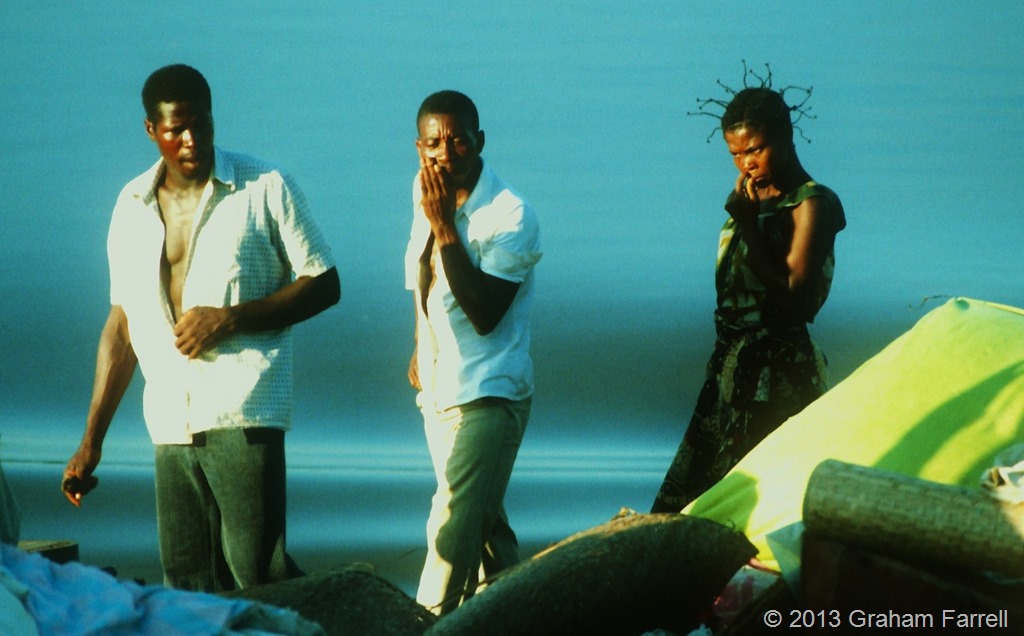
But I’m afraid I have a more serious motive for posting these photos. Say the word Congo, and it inevitably invokes the overdone journalistic cliché that is used to “explain” every crisis on the African continent. Yes, hear it comes – the Heart of Darkness. Of course I would hope that when Joseph Conrad gave his novella this title in 1902, he was not meaning to cause further injury to the peoples of this afflicted region. Because the fact is, this trotted out phrase does injure them. It injures because it gives non-Africans a quick and dirty explanation for everything that goes wrong in African countries. It also casts the blame firmly on the inhabitants, and so distracts us from the grave assaults that outsiders inflict, and have inflicted, on Central Africa for the past four hundred years.
The problems in the Congo have always been about resources, the longstanding assumption held by the get-rich nations that the whole African continent is there purely for the purposes of pillage. Better still, what has been, and is still perpetrated there, largely goes unseen by citizens of the outside world. All is wrapped up in company names that have some very serious investors, people whose names you would not expect to see there.
So first, from the 16th century, there were the Atlantic slavers, in order of importance – the Portuguese, British, French, Spanish, Dutch, and Americans. Their human cargo was snatched from hearth and home in millions – and all so traders and plantation owners might grow rich from their captives’ labour.
Added to this was the elephant slaughter – the tusks hacked out for piano keys and billiard balls, or for some exotic display by the rich. Then there was the added advantage that slaves captured for sale could also be used to carry ivory out of the forest.
By the 1870s the Congo had become the private colony of King Leopold II of Belgium, this act of unbridled piracy courtesy of Welsh-born Henry Morton Stanley, whom the King then commissioned to secure the region for his sole exploitation and rapine. During Leopold’s rule, the world demand for rubber rocketed. Leopold’s private police force – Force Publique – was used to create terror among the Congo villages, beating, killing, cutting off limbs if the locals did not keep up their deliveries of wild rubber. (There are photographs). In an essay called Geography and Some Explorers, Conrad comments on what he himself saw in 1890 when he captained a company steamship; on what went on under the royal patronage of the so-called International Association for the Exploration and Civilisation of the Congo. He calls it
“the vilest scramble for loot that ever disfigured the history of human conscience and geographical exploration.”
In his book King Leopold’s Ghost, Adam Hochschild discusses evidence that suggests that around half the Congo Free State’s population died during Leopold’s rule, that is around 10 million people. Also it should be remembered that while the Atlantic Slave Trade had ended, the Congo was still being plundered from the east by the notorious Swahili-Omani slaver, Tippu Tib (see my post on the Swahili here). Slavery did not end in East Africa until the beginning of the 20th century.
Finally, though, the barbarity of Leopold’s regime was exposed. The campaign begun by American Civil War veteran, historian and minister, George Washington Williams in 1889 was taken up later by Irish born, British diplomat, Roger Casement and E.D. Morel, an activist and journalist who had first learned of the atrocities while working as a shipping clerk for a Liverpool company. In 1908, Leopold was forced to relinquish his money-making empire, and the Congo Free State became a Belgian colony.
That period of colonial history does not have a specially elevating history either. In 1961 it drew to a close with the assassination of the first Prime Minister of the newly independent state, Patrice Lumumba, this apparently with CIA support. There then followed the decades of unchecked resource looting, by the army officer who had captured Lumumba, and who was surprisingly promoted to President, a position that was backed thereafter by the US and Britain.
Today, the plunder for Congo’s resources goes on. Throughout Eastern Congo there has been fighting ever since the Rwanda’s Hutu massacres of the Tutsi in 1994. Several million Congolese have died during this last decade. The aftermath of the genocide that spilled over into DR Congo has simply gone from bad to worse, as one war lord succeeds another.
And it is still all about controlling country’s resources. The CIA fact book lists the following:
cobalt, copper, niobium, tantalum, petroleum, industrial and gem diamonds, gold, silver, zinc, manganese, tin, uranium, coal, hydropower, timber.
In its D R Congo profile, the BBC blandly observes alongside a photo of toiling Congolese miners:
“A contest for DR Congo’s vast mineral wealth has fuelled the fighting in the country.”
It does not observe that these resources are fuelling conflict solely because they are in huge demand outside Africa. Nor does it mention that the weapons and aircraft used in these conflicts are made outside Africa, and have been peddled in there by European arms dealers, for example, apparently by one Viktor Bout. This particular purveyor of death was convicted in the US in 2011, although not for the havoc he has probably wrought in DRC, but for endangering US citizens by arming Columbian fighters who might injure or kill US military.
It is also interesting that the CIA list of Congo’s resources does not include coltan (columbite-tantalite), the major conflict resource after diamonds. This is used to make capacitors, the essential components of mobile phones, laptop computers and play stations. Currently there is a ‘No blood in my cell phone’ campaign in the Democratic Republic of Congo, to persuade consumers to put pressure on cell phone manufacturers not to use resources from conflict zones. That is one approach, but also what the Congo needs is fair pay for all its resources, from international conglomerates downwards. In recent times, farmers in the Eastern Congo war zones have not been able to farm because of marauding militias. Their one way to make a living is to grub up coltan and sell it to middle men who then sell to western markets. The proceeds are used to buy more western arms.
And so when it comes down to it, whether we know it or not, we all risk being complicit in the Congo mayhem. You could argue that independent nation states should take responsibility for their own problems, but then the Congo has never, ever been independent – at least not from outside vested interests. Much of the country is still hugely impenetrable, with the capital Kinshasa a long way from most of it. So it is that the potentially richest state on earth, has the poorest people struggling there to make a living. And where there is endemic poverty, there will always be gross exploitation. It is also impossible to assess the traumatizing effects of centuries of people-theft, or of the atrocities wrought by other agencies on those left behind. It is also impossible to comprehend the full extent of the brutality that ordinary men, women and children have had to endure.
As the Congolese priest-activist, Abbé Jean Bosco, says in the Blood Coltan film cited at the end, it’s as if the Congo has been trapped by God’s gift of natural resources. Other people come and take them, and so instead of improving Congolese lives, the resources bring only unhappiness. He says stop the piracy, and let the world AND the Congo benefit from this mineral wealth.
So where then is the Heart of Darkness? I let you decide.
© 2013 Tish Farrell
For more on the Congo:
Tim Butcher Blood River
Adam Hochschild King Leopold’s Ghost
Lieve Joris Back to the Congo
Henry Morton Stanley In Darkest Africa
Michela Wrong In the Footsteps of Mr Kurtz
Fiction:
Barbara Kingsolver The Poisonwood Bible
Film:
Blood Coltan http://youtu.be/in0A8SFL3XM
Thierry Michel Congo River (in French and English)
Frank Piasecki Poulsen Blood in the Mobile
AAA Challenge: A For Allotments
http://flickrcomments.wordpress.com/2013/07/02/aaa-challenge/
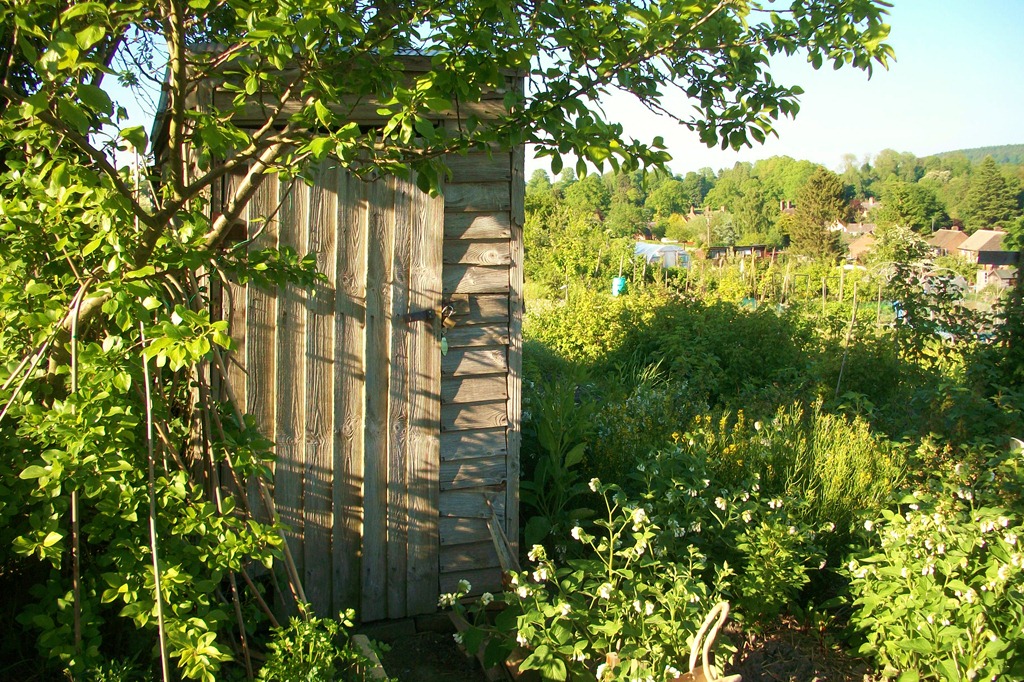
A is for Allotment, and here is mine. I inherited the shed from previous allotmenteers. It leans and snails roost in it. Last year I found a 1725 halfpenny in front of the door. The Team Leader has to come at regular intervals, armed with hammer and electric screwdriver, to keep the old place upright. He does the same for the tenant – me that is, not the snails.
When I’m not writing, this is where you’re most likely to find me, so thank you, Frizz, for your ‘A’ prompt. I’ve been toiling on this plot for around six years now, and when I first started, the soil was as heavy as lead. Gardening on the shores of the Silurian Sea is hard work. In between the layers of soil from a decaying tropical sea (c. 400 million years ago) is bentonite clay. As a substance this may have many useful properties. In the allotment, it is a guaranteed pain in the back. When remotely damp, it clings to the bottom of your wellies until you have giant’s feet. In dry weather, it goes crusty and it’s like digging through bricks.
I have learned recently that this unappealing greyish clag is formed from volcanic ash. Sometime when Much Wenlock was lying down on the Equator, all those aeons ago as our world was shaping itself, there was a volcanic eruption of unimaginable proportions. I now grow my beans and peas its degraded outpourings. Below are some pickings from last year’s crop, so you can see it does work – with effort.
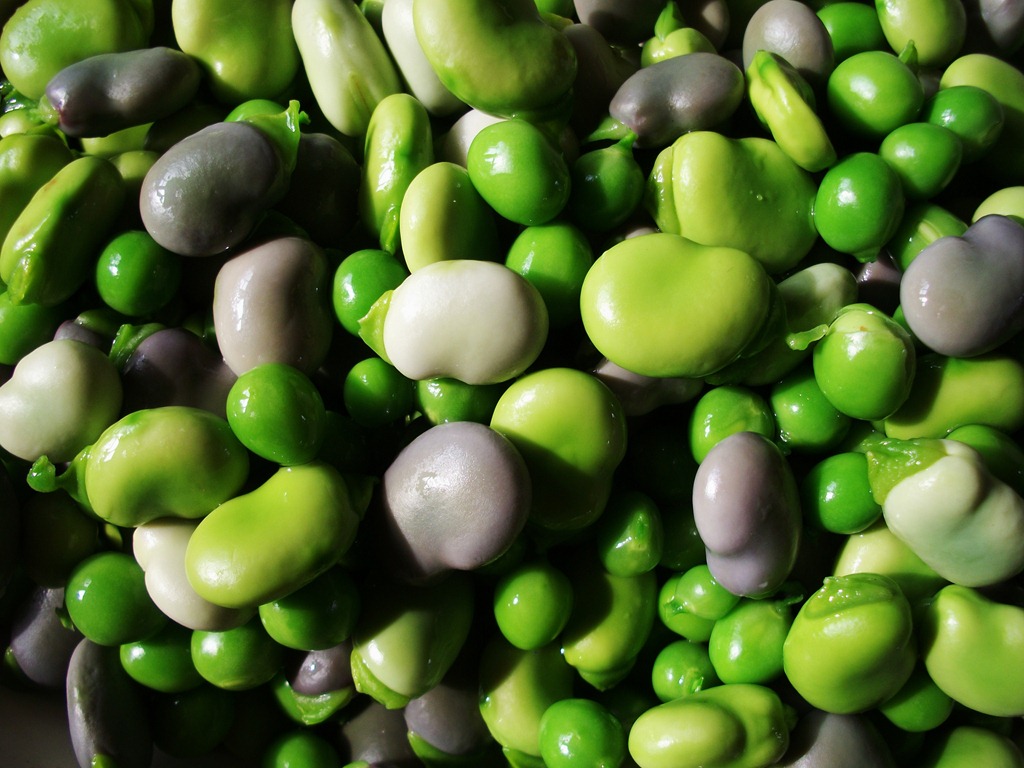
I grow several varieties of broad bean including the lovely rose coloured ones which go pale mauve when lightly steamed. They don’t seem to mind growing in the heavy soil.
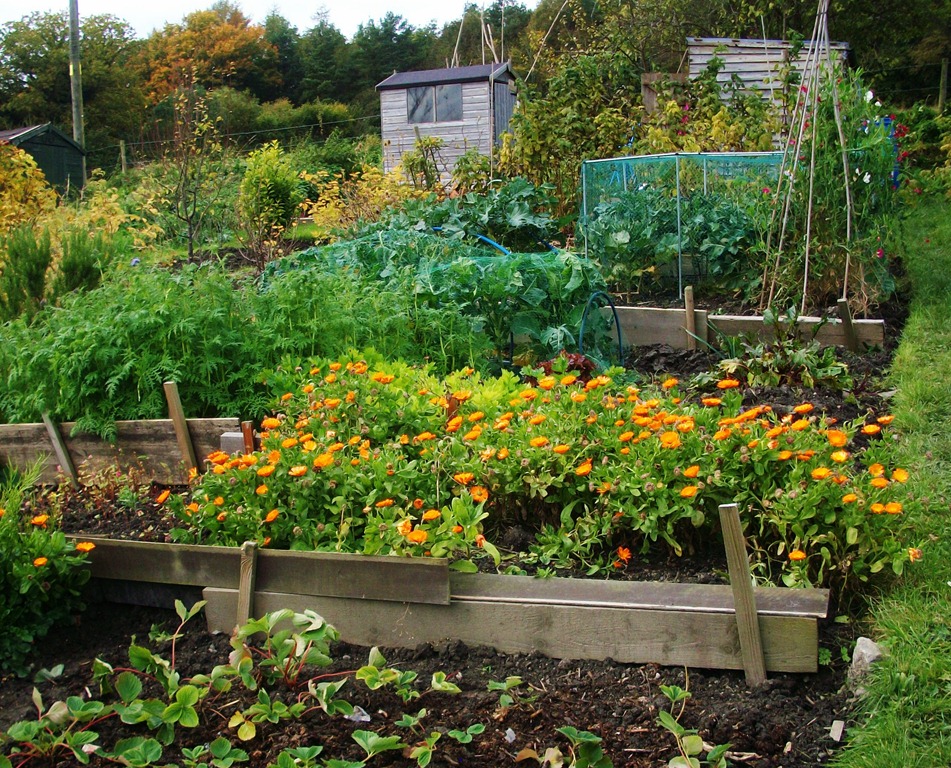
I’m afraid my plot looks a bit rackety, tidiness being sacrificed to the time needed to dig, weed, and keep the wretched pigeons away. Almost everything has to be netted or covered with enviromesh at some stage during its growing. Recently I have been following ‘Garden of Eve’ and suffering severe poly-tunnel envy.

To improve the soil, I grow areas of green manure, in this case mustard, but also phaecelia, buckwheat and alfalfa. It can be sown late summer or early spring and then dug in before it goes to seed. The difference in the soil afterwards is truly remarkable.

Comfrey grows itself all over my plot. I tear it up and use it to protect seedlings or newly planted young plants. I also fill old compost bags with it, cut the corner off the bags seal up the top with a peg, and balance them over buckets lined up inside my leaning shed. As the leaves rot down the resultant brown gunky liquid collects in the bucket. It can then be diluted with water – 15 parts water to 1 part comfrey to make a really good crop feed. Comfrey also has valuable therapeutic properties, and has been used to mend injuries for centuries, hence the folk name ‘knit bone’. The bees like it too.
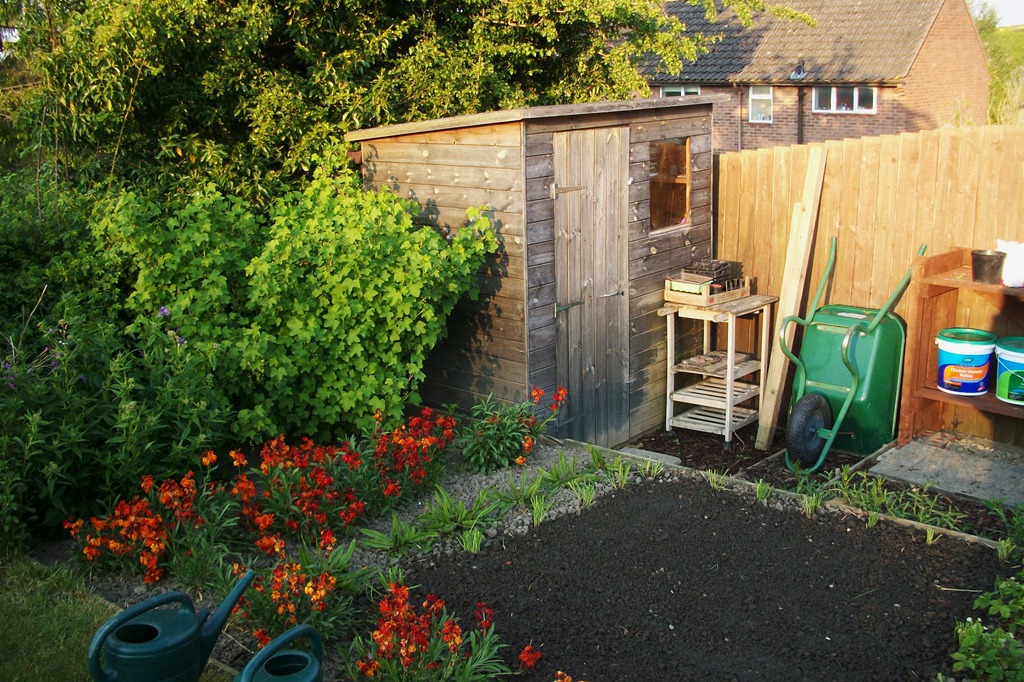
Unlike me, my fellow grower, Phoebe, has a beautifully neat plot. She also kindly mows my path. And that’s one of the wonderful things about allotments, not only can you grow delicious food (pigeons willing) but you meet such lovely, generous and creative souls up there.
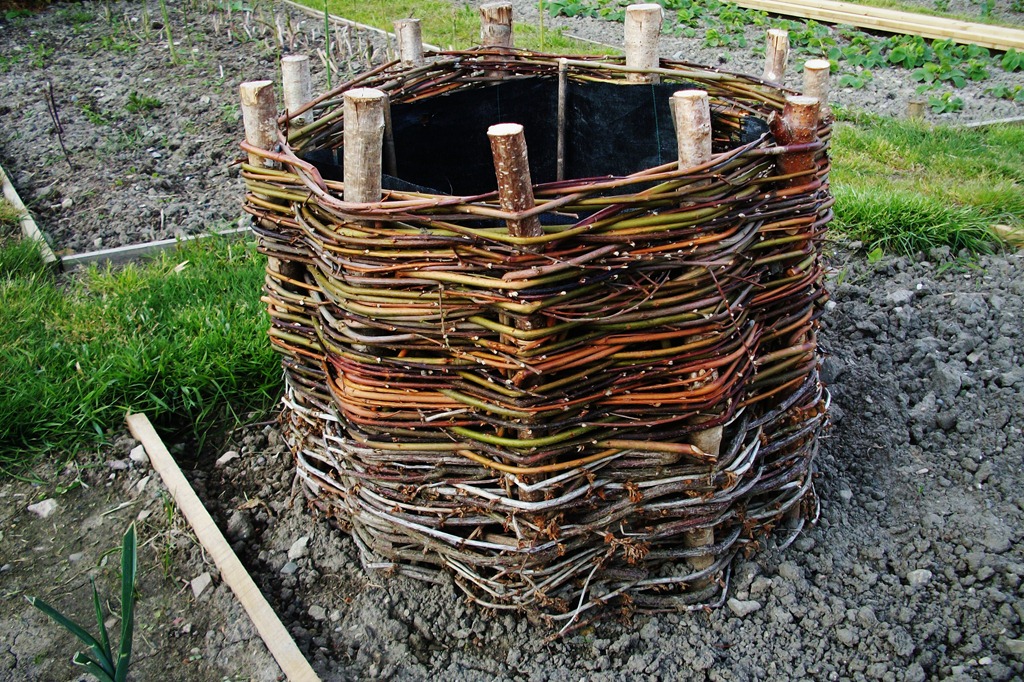
Phoebe has created these simple baskets across her plots at intervals. The uprights are embedded directly in the soil and the sides made with dogwood and hazel whips. Her aim is to use them for the rotting down of pernicious weeds like dandelion and couch grass, and then grow marigolds on top while this is all happening underneath. Gardening artistically.
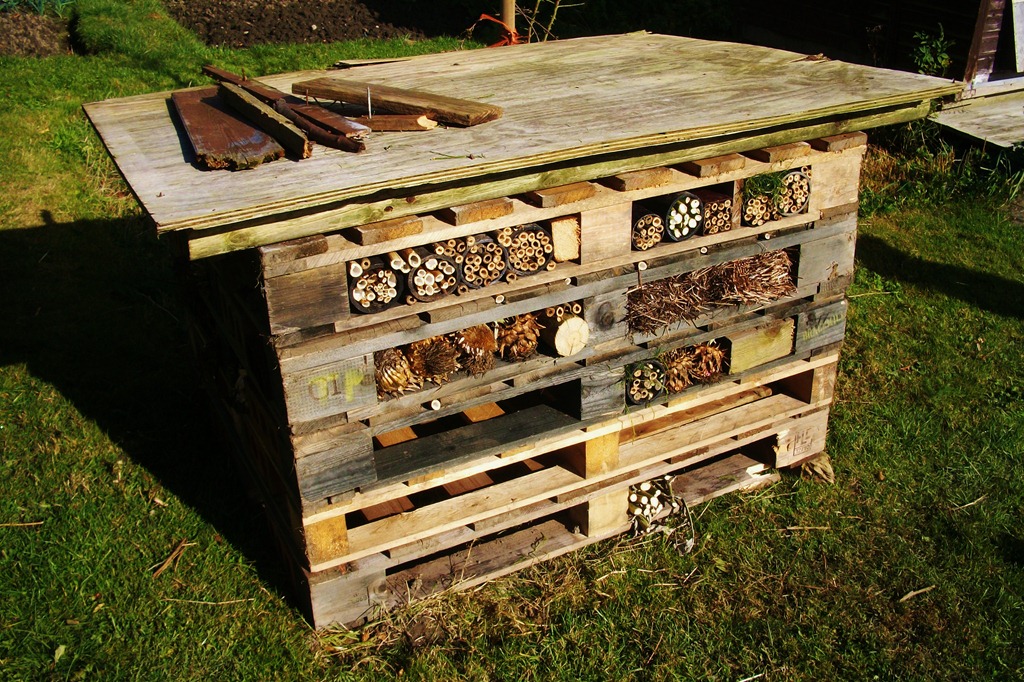
This is the allotment’s insect hotel to provide attractive accommodation for over-wintering insects. Also courtesy of Phoebe who begged some pallets from the local timber merchant. When he knew what they were for, he delivered them free to the allotment.
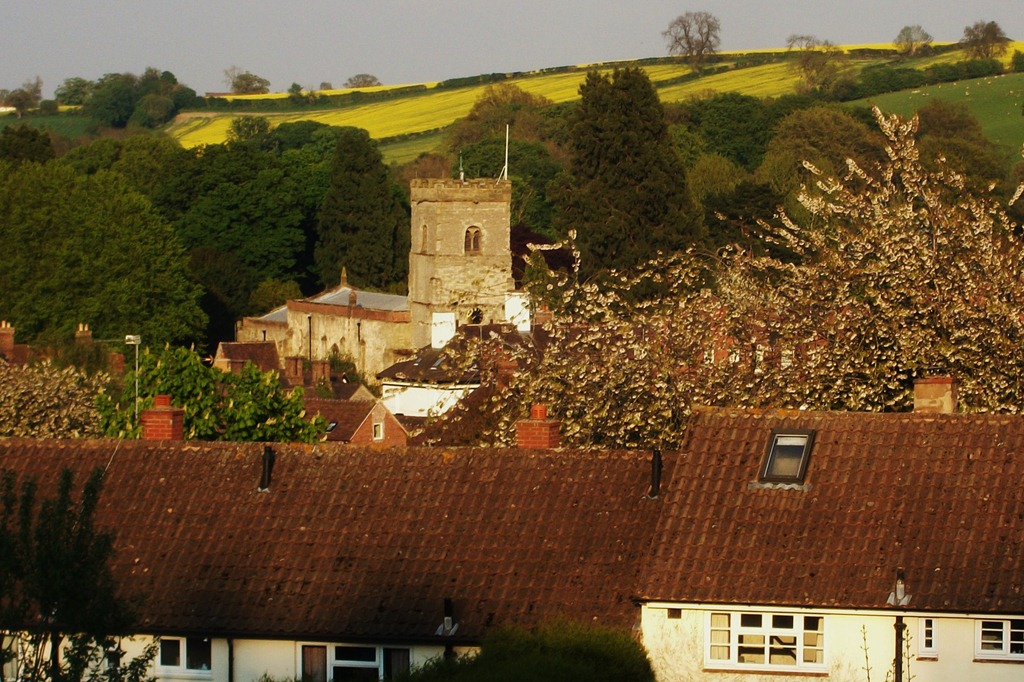
This is the view from my plot. I can hear the clock of Trinity Church chime as I work, and the mewing of honey buzzards over the fields behind.
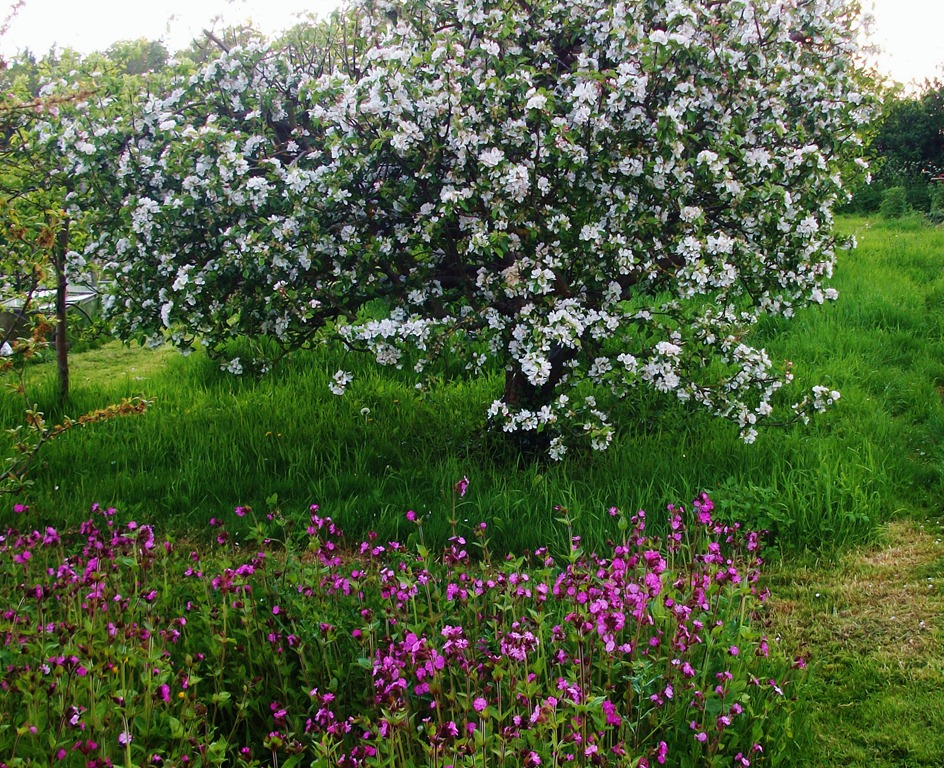
I call this the Garden of Eden tree, also The Tree of Life, because it has gloriously red apples in September. Phoebe created the wild flower garden in the foreground – lots of pink campion this year.
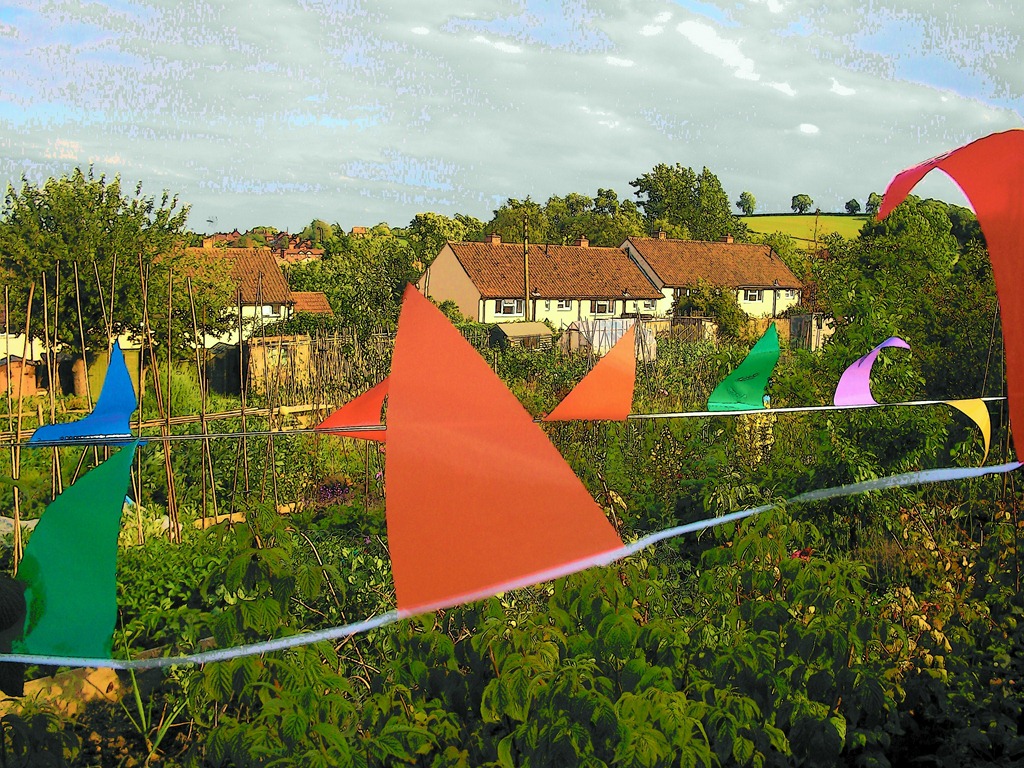
The bunting makes the raspberries look very festive and sees off the birds.
Below are two blogs that are well worth following for lots of useful gardening advice.
http://gardenofyvonne.wordpress.com/ Garden of Eve
http://peopleexcitedaboutcoexistence.com/ People Excited About Co-Existence
And when you’ve grown the produce, here are two great cooking blogs. ENJOY!
http://fromthebartolinikitchens.com/ From the Bartolini Kitchens
http://nourishingchow.wordpress.com/ Nourishing Chow
http://flickrcomments.wordpress.com/2013/07/02/aaa-challenge/
© 2013 Tish Farrell

