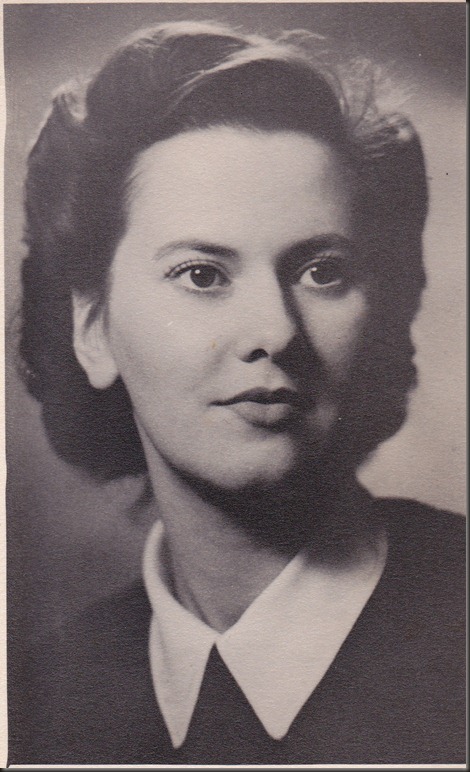
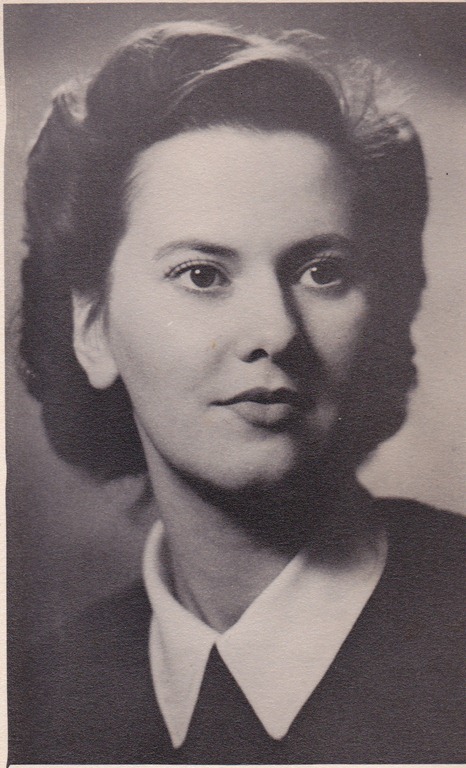
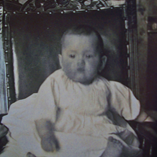
What does this face say to you? Naivety. Candour. Wistful intelligence. Vulnerability. A time long past?
It is clearly an ‘old photo’, a studio shot. I also happen to know that it was made for wide circulation, part of the subject’s own personal war effort during the early 1940s when she tirelessly wrote cheering letters to numerous servicemen fighting overseas. This is my aunt, Evelyn Mary Ashford, my father’s little sister, thirteen years his junior. In a few weeks time it will be her ninetieth birthday, and although many who know her will mark this day with cards and kind words, it is unlikely that she will fully understand; these days her mind quite inhabits another zone.
Her corporal self, however, lives in a nursing home in rural Wales where she is well cared for. Hers is a strong old body. She has survived a Luftwaffe bombing, diabetes, breast cancer, strokes, repeated acts of medical negligence and, most recently, recovered from a broken hip.
Like many women of her generation, her spirit has also borne years of thwarted ambition, the denial of the higher education that her village school essays prove she deserved. As a country girl she has believed herself socially inferior. As a childless woman she has felt a misfit. As a daughter she has sacrificed her own longings to ‘be someone’ , first to leave school at fourteen years old to care for an invalid mother, later to take in a domineering old father whose presence further blighted the first fifteen years of her marriage. And while the physical wounds of the 1942 bomb blast were exquitisitely repaired – her face was miraculously re-constructed over four years by Professor T P Kilner, a pioneer in Plastic Surgery for disfigured service personnel – the psychological effects of her experience were never addressed.
In the end, you could hardly see the scars as the later photographs below clearly show. But for years afterwards Evelyn reported the emergence of glass shards from all parts of her body. Also there were the years of disfigurement between admissions for plastic surgery to St. Thomas’s Hospital, London, and later to Stoke Mandeville (then a military hospital) where she received her final round of surgery alongside service amputees and burns victims. It was while she was here that she read letters to a young Canadian from the Royal Canadian Engineers. A landmine explosion had blown off his right leg and arm and left him partially blind. She and other patients were also shocked to see the arrival of the first victims released from the Belsen concentration camp. This is how she describes the scene in some lecture notes:
“All along the wall of the Main Hall there were stretchers lined up. Each one carried a skeletal form covered in a grey army blanket which barely disguised the fact that there was very little flesh on brittle bones. Gaunt, hollow eyes turned to look at us. ‘How are they ever going to put those poor souls right again,’ someone said.”
***
I of course have only known the older Evelyn, so I cannot say what it would have been like for her to suffer multiple facial injuries – to effectively ‘lose face’ in all senses. She was nineteen when it first happened, in love, the shining light of her village, and she also earned a living in a very public place as an assistant in Whites, a big Guildford department store.
The effects, though must have been devastating. But then how do you begin to come to terms with your own injuries when you know that others were suffering far worse, or were dead, or that your particular wounds were considered a civilian casualty, and not the product of heroic self-sacrifice in action? Self pity, then, was not only NOT ALLOWED. It was seen as positively unpatriotic. These were the years of the ‘stiff upper lip’, ‘grinning and bearing it’, both hard to pull off with glass-torn flesh. There are, though, some later passing references to unresolved issues. After the bomb blast Evelyn suffered from blistering rages which only her husband, Geoffrey Gibbings, was later to help her to overcome.
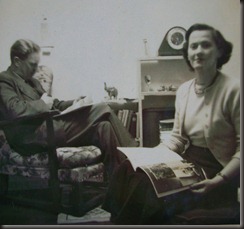
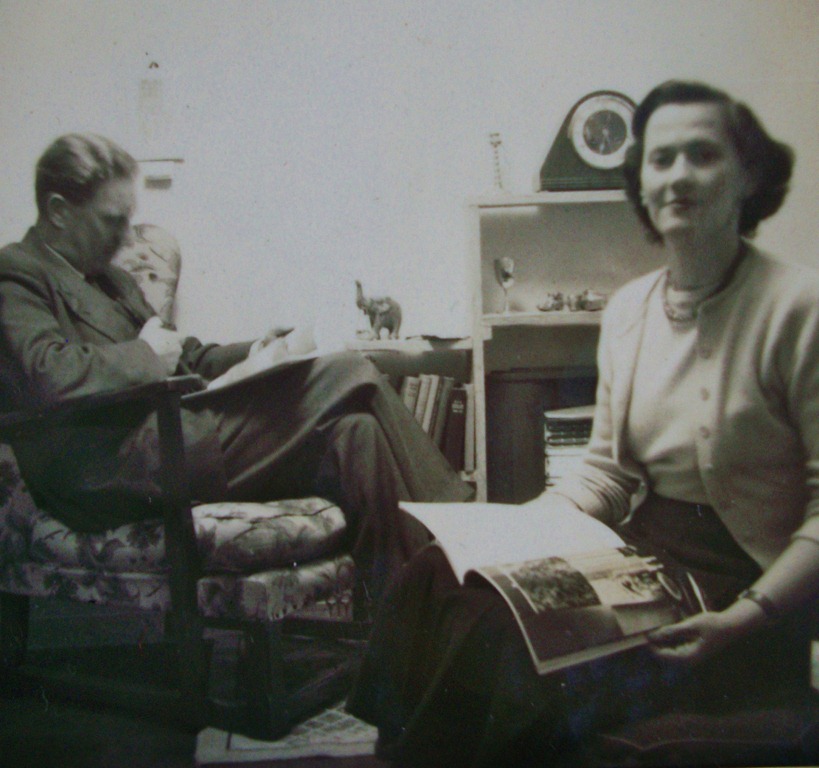
Married life c.1953
***
It was December 16th 1942 when the German pilot of the Dornier 217 strafed and then dropped three bombs beside the 1.34 pm Guildford to Cranleigh train. It must have been half-day closing because Evelyn’s account, written a month afterwards, says it was a Wednesday and she was going home from work. The train on this line comprised only two carriages, and she and two other White’s girls, Marjorie and Avis, were the only ones in their compartment.
Evelyn remembered the greyness of the day, the black silhouettes of trees across the farm fields, a swirling misty rain as they approached Bramley. She also said she felt an unaccountable depression. Avis was reading a book, The Sun is My Undoing, and Marjorie was leafing through Evelyn’s copy of the London Illustrated News. Suddenly, as she and Marjorie were chatting, there was a terrific clatter along the train roof – like a shower of hail. Next she says it was
as if someone had given me a crack on the head with a giant hammer and I was going down and down, then round and round into eternity.
When she came to, she found herself hanging out of the corridor window with the remains of the door hung around her shoulders. Through the glassless window she first thing she saw was the three Canadian soldiers who had got on the train with her at Guildford. They were beside the track. One was badly cut and his clothes were in shreds. He held his companion as they sobbed together like children. The third soldier was dead, lying against their knees with a handkerchief over his face. In her muddled state, and before she passed out, Evelyn remembered thinking that they must have been in an accident, and that one of the soldiers was dead. Poor things, she thought.
When she surfaced again it was to find that her own clothes in shreds and that the valise she had put on the seat beside her was pierced through by a shaft of wood. Marjorie had disappeared completely, and Avis lay under the debris, apparently unscathed but dead, with the usual quiet smile on her face. Later, it transpired that Marjorie had been blown out of the carriage. She had lost an eye.
In a 1944 letter to one of her many war-time pen-pals, a young American trainee pilot, Evelyn describes what happened next:
at last I ended up in hospital with no face or clothes to speak of…I opened my one good eye and saw a handsome face smiling down at me. This boy, as he looked to me, was in shirt sleeves and I, thinking he was a student, and being very light-headed…reached up and patted his face saying, “Hello, Sunshine” with the result that he had a lovely blood-stained cheek. He turned out to be the hospital’s leading surgeon and ever afterwards was known as Sunshine Allen.
Seventy years on, there is no way of knowing if Evelyn remembers any of this. Over the past few years she has grown increasingly confused, and after several strokes has been unable to speak very well – a declining state generally described as ‘having dementia’. I know it is said that unresolved anger is a feature of dementia, and there may be a big element of this in Evelyn’s mental retreat – years of repressed frustration perhaps. But wherever her mind is now, I feel it is there, somewhere, tracking in a parallel universe. It is our loss that we can no longer communicate with her in this new world.
As the keeper of her notebooks and letters, the fragments of her life, I now find myself the custodian of her memories. This of course is flawed in many ways. A long family feud meant that I did not really get to know Evelyn until later years. We wrote to one another while I was in Africa, and I knew she always led a hectically busy life within whichever community she and my uncle had made their home. I never had the chance, or even thought to ask her about her life; how it had really been. I knew her only in the present where she was an expert horticulturalist, seamstress, good cook, great reader, great letter writer, dedicated Women’s Institute judge and committee member, animal lover, church goer, former small-time sheep farmer and generous friend to anyone need. I also knew that my mother had been deeply jealous of her.
Evelyn’s archive is not extensive. It includes some of her village school essays from 1936-7, notes for lectures given to her gardening club and the W.I, and a fraction of her lifetime’s correspondence with friends around the world. There are also two day-books of newspaper cuttings and her commentaries upon current affairs dating from the late 1940s to the 1960s. Finally there is a notebook of creative writing pieces.
My aunt wanted to be a writer; was so thrilled when my own work began to be published. All her life she strove to cultivate herself, and on all fronts. There appeared to be no subject that did not interest her. Coming from a background with a Victorian father who thought it more important that his daughter be apprenticed to a draper’s than to go on to high school, and then marrying a stalwartly middle class man who thought wives should stay at home, she later sought her educational opportunities within the seemingly unchallenging sphere of the Women’s Institute’s Denman College. Here she attended all manner of courses whenever the chance arose, then passed on her knowledge wherever she could. At seventy nine, and much to her husband’s bemused irritation, she went to word processing classes so she could write up her lecture notes in a more orderly fashion. Clearing her home, I found her notes on the letters I had written from Africa. Naturally she had turned them into one of her talks.
But perhaps in the end it is best to let the photographs of Evelyn tell their own story. Here, then, are some of the many faces of Evelyn Mary Ashford, glimpses of a life well lived. She truly is an inspiration to all who have had the pleasure to know her.
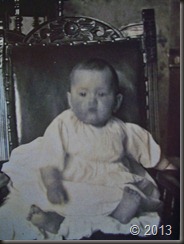
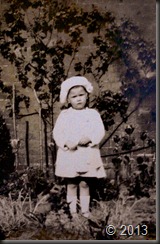
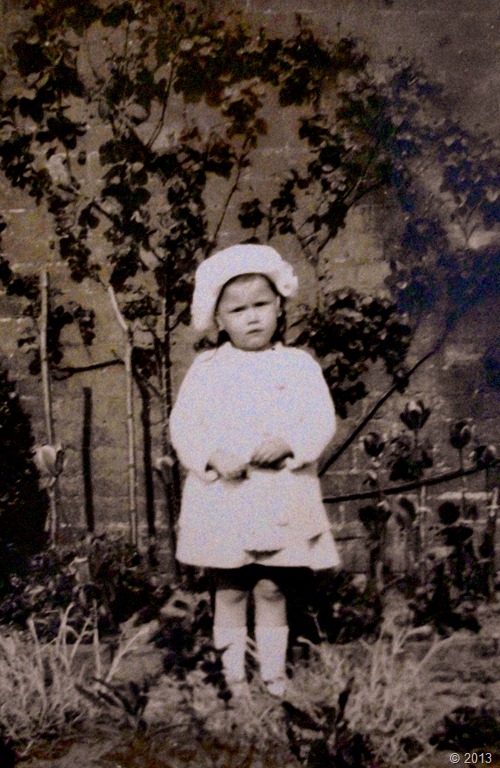
Evelyn around a year old. She was born at Redhurst Cottages, Cranleigh, Surrey in 1923. Her mother Alice, was a Streatham girl and former cashier for Sainsbury’s. Her father Charles Ashford was Head Gardener at Redhurst Manor. (Below) Aged three, in the walled garden at Redhurst. Her life-long interest in horticulture began in this garden, listening to her father’s instructions to his men.
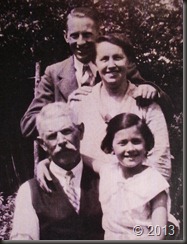
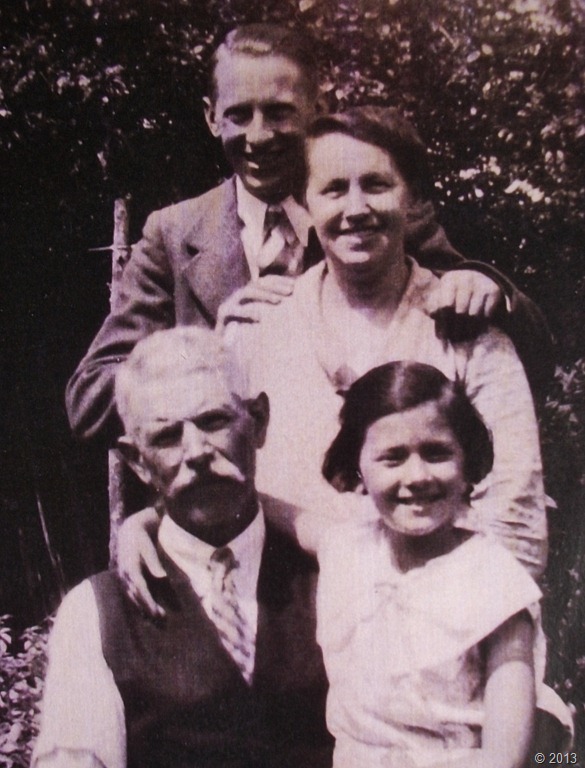
The Ashford Family, my father Alex at the rear c. 1930
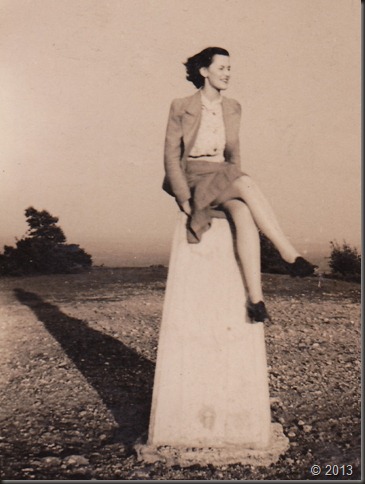
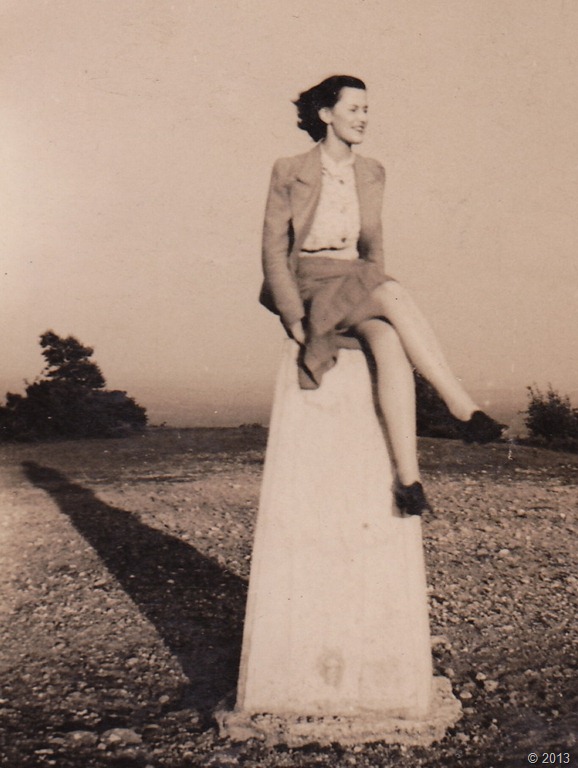
At Pitch Hill, aged around fourteen (1937). This was her last year at school. In an English exercise of that year she wrote: “These are the things that I want in life: 1. A library of my own; 2. All Rudyard Kipling’s Works; 3) lots of money so that I can make poor people happy.” She also wanted to have lots of REAL friends and play Madame Defarge in a stage version of Tale of Two Cities. The people she most wanted to meet included Jean Batten, famous New Zealand aviator, H.G. Wells and Alfred Hitchcock.
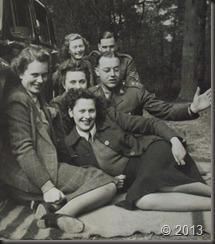
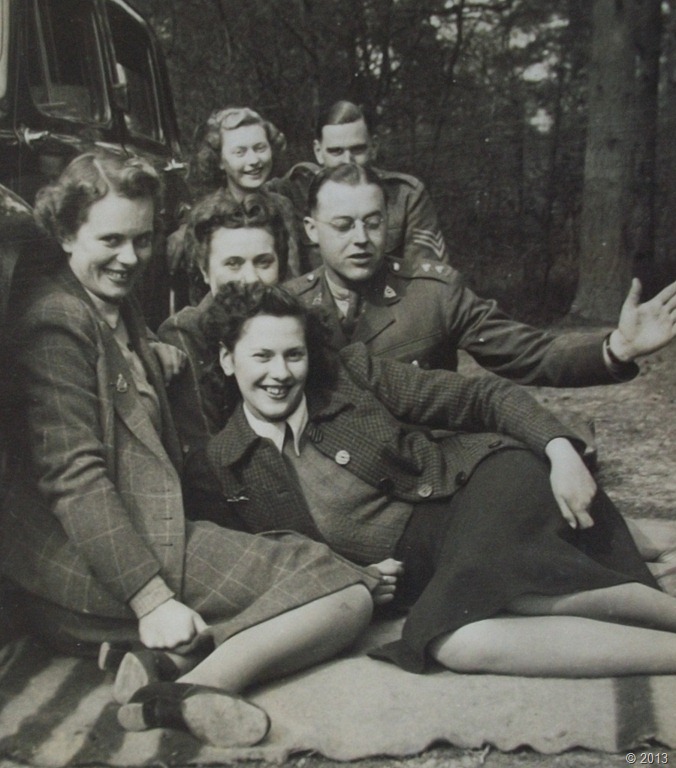
In 1941 the 2nd Royal Gloucester Hussars were billeted in Cranleigh where Evelyn’s family lived. This is how Evelyn met her future husband Geoffrey Gibbings. He is taking the photograph of this, the ‘Hoy Gang’ picnic on Pitch Hill. Later that year the 2nd RGH was posted to Libya to fight in the North African Campaign. Evelyn did not see Geoff again until the end of the war.
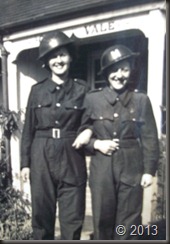
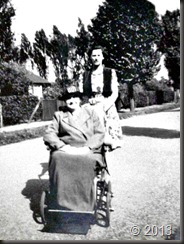
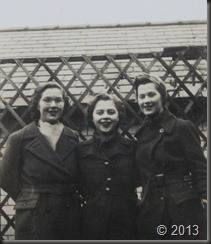
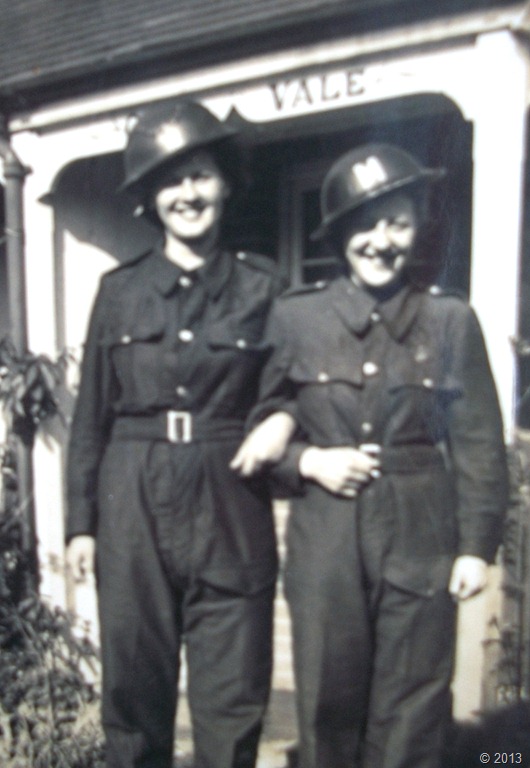
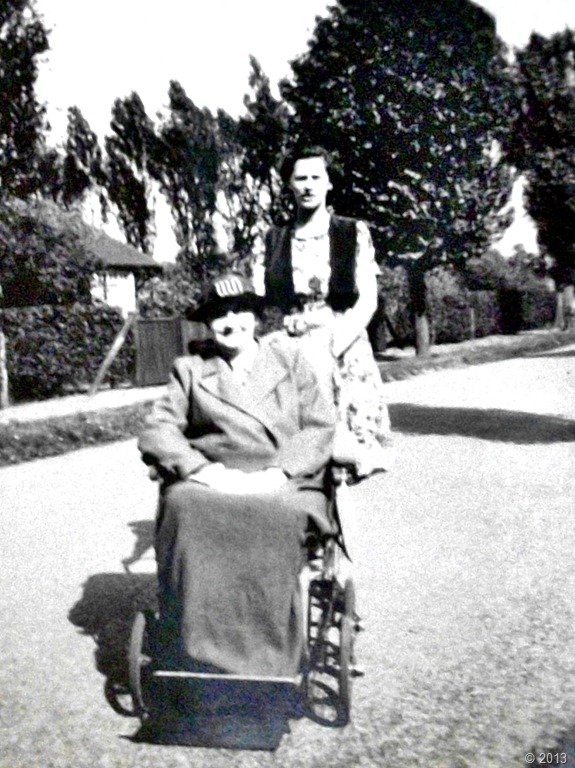
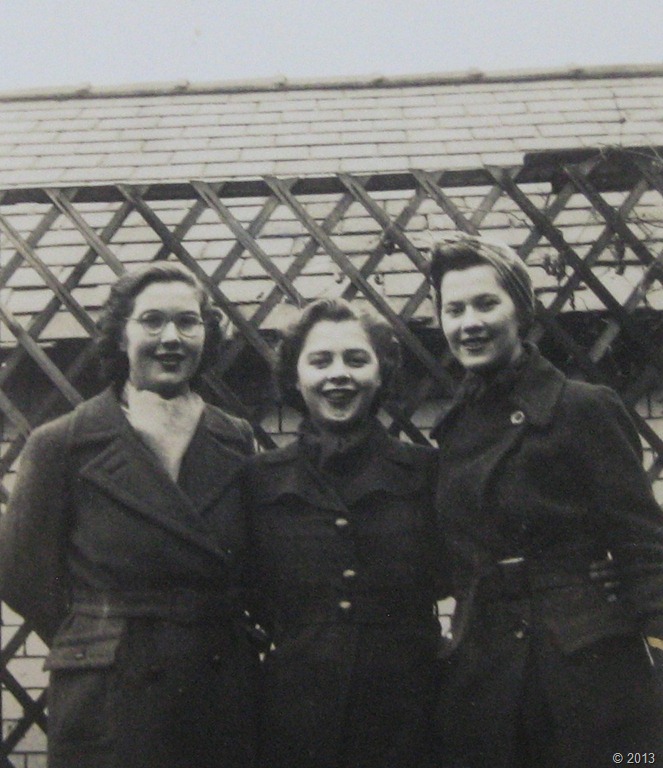
Evelyn as an ARP (air raid protection) volunteer (left). Looking after mother (right). On the roof of White’s department store with her fellow assistants (bottom).

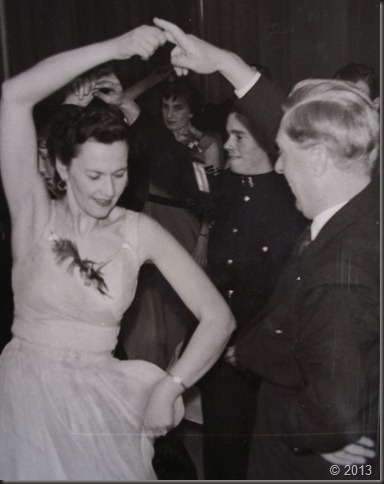
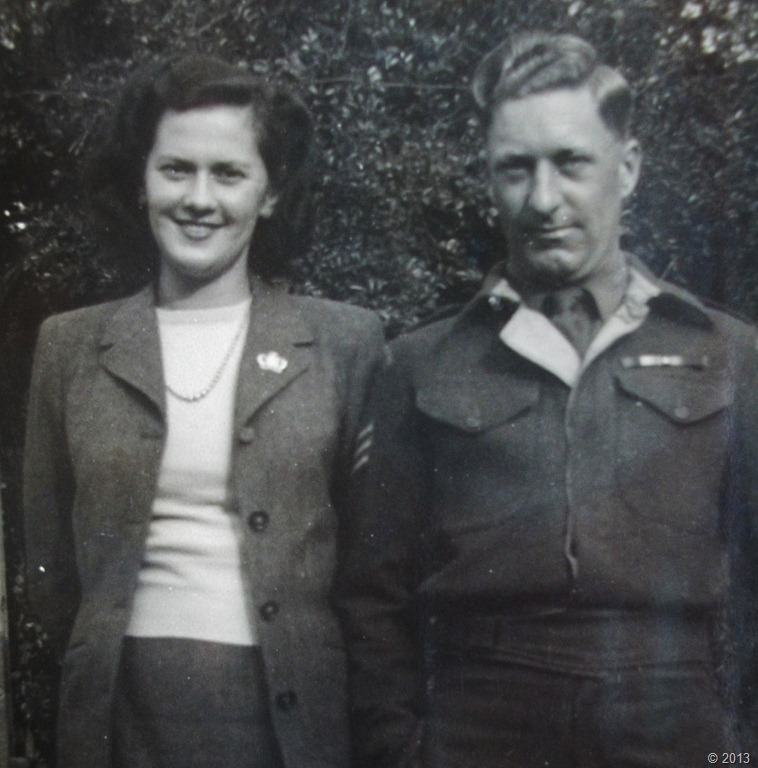
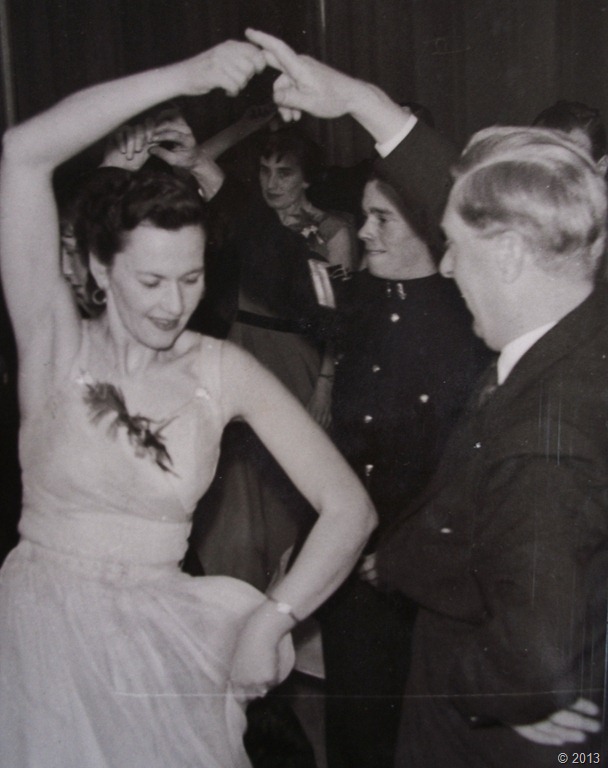
War’s end and engagement to Geoffrey Scott Gibbings. He twice escaped capture by the Germans while fighting in the desert. (Below) At the New Year’s Eve Southampton Motor Club dance c.1955. After the war, Geoff worked in the motor trade for the rest of his working life. Somehow this last photo tells you everything you need to know about Evelyn. May her dance go on in some part of her mind.
a-word-a-week-challenge-face/
And many thanks to Su Leslie for her inspiring Shaking the Tree blog on her family history.
©2013 Tish Farrell
















![Celtic_gold_stater_Durotriges_tribe[1]](https://tishfarrell.com/wp-content/uploads/2013/06/celtic_gold_stater_durotriges_tribe1.jpg "Celtic_gold_stater_Durotriges_tribe[1]")
![iron_age_bury_ditches_cpat_470_470x300[1]](https://tishfarrell.com/wp-content/uploads/2013/06/iron_age_bury_ditches_cpat_470_470x3001.jpg)




















![shropshire-uk-map[1]](https://tishfarrell.com/wp-content/uploads/2013/05/shropshire-uk-map1.gif "shropshire-uk-map[1]")



![1024px-Marshall's_flax-mill,_Holbeck,_Leeds_-_interior_-_c.1800[1]](https://tishfarrell.com/wp-content/uploads/2013/05/1024px-marshalls_flax-mill_holbeck_leeds_-_interior_-_c-18001.jpg "1024px-Marshall's_flax-mill,_Holbeck,_Leeds_-_interior_-_c.1800[1]")
![294451593_fd23d0623b_z[1]](https://tishfarrell.com/wp-content/uploads/2013/05/294451593_fd23d0623b_z1.jpg "294451593_fd23d0623b_z[1]")