Obsessive Compulsive Compost Disorder and why you should have it, or at least help someone who does (and that would be me)

100_4954

I truly cannot help it. I gather anything and everything that will go into my allotment compost bins. This includes not only our vegetable waste, but other people’s. My neighbours along Sheinton Street may indeed wonder how it is that the garden mowings and clippings that they throw over their back hedges can disappear so fast. I don’t really want to go round to their front doors and discuss it with them on the basis that my perceived eccentricity quotient in the town is already quite high enough. But they clearly don’t want the stuff, and they leave it in such handy piles beside the field path. I simply scoop them up on my way to the vegetable plot.

Compost foraging, however, does have its small hazards. It can, for instance, involve a close encounter with a slow worm – a copper and black snakish looking reptile that is actually a limbless lizard. They are quite harmless, but I still leap back in alarm when I touch one unexpectedly. I ought to know by now. They love warm piles of things to bask in during the day. They are to be treasured too, since they eat slugs. And yes I know that in the cycle of things slugs have their good points, and probably are useful in compost heaps, but I am utterly prejudiced against them, and admire anything that disposes of them. Toads are thus also heroes, though sadly in rather short supply.

P1010390

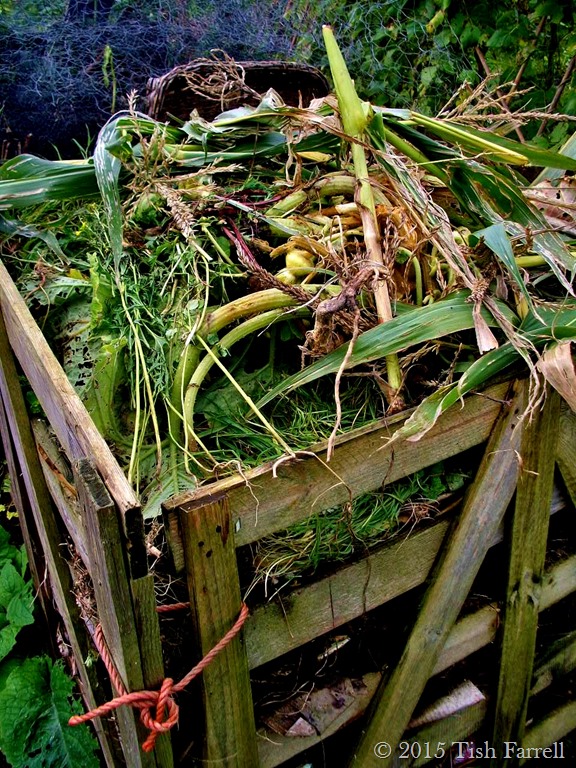
The manner of composting as formerly done by me, and displayed in the first photo is not to be emulated. A dedicated composter, and I am now trying to do this, chops big stems and stalks into short lengths to speed up the rotting down process.  It is also good have mixed layers e.g. brown, dry matter such as scrunched up pieces of brown corrugated cardboard, paper, wood shavings, leaves and small twigs. The aim is about 50:50 brown to green matter. This allows air into the mix, and so prevents a sour and smelly squidge.

Grass  mowings and animal manure will heat things up, and also aid decomposition. The heat kills any weed seedlings.  Other additives in my compost include tea bags, egg shells, vegetable parings, allotment weeds, turves from ground clearing, wood ash, hoover contents, and brown paper carriers. Every now and then I also add a layer of comfrey since it also a good compost activator.

*

IMG_1138

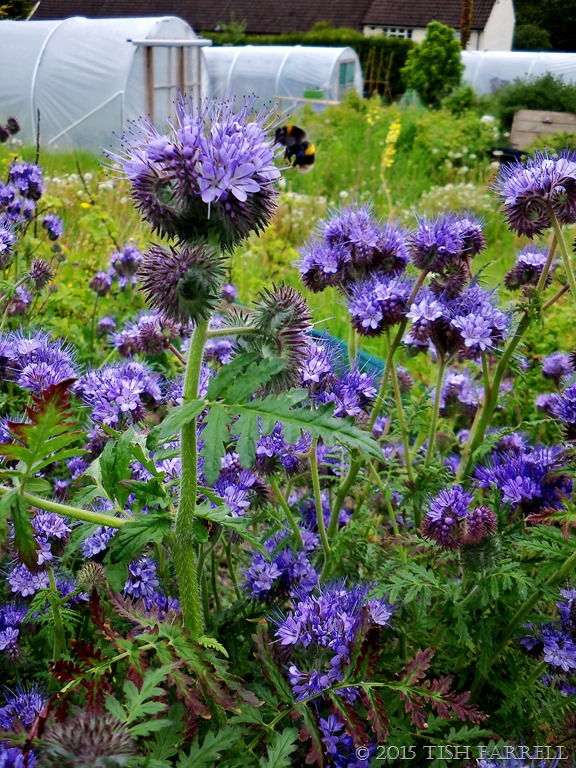
Comfrey is a good compost activator. It also makes an excellent plant food, keeps the bees happy, and helps mend human bones and inflamed tissues. The leaves can be made into tea or added to soup. The flowering tops contain vitamin B12 (source: Herbal Therapy for Women by Elisabeth Brooke MNIMH). Can you spot the bumble bee in the top photo? (Just testing).

100_5359

*

Ideally, the contents of the compost bin should be turned over during the growing season to aerate them, but if this is too daunting a task, and if there’s space, then three or four bins are the answer. The rotting down process will be slower, but when full, the first one is  simply left for a couple of years while the others are being filled. It’s also common practice to put a piece of old carpet over the top to help things along. My largest bin is made of four wooden pallets tied together.  It is easy to open once full, and the contents can be tipped out and turned over.

And why am I so keen on compost? Well, apart from the obvious that it feeds and improves the soil, it is also useful as a mulch, and MULCHING is my current theory on how to deal with  our increasingly ERRATIC WEATHER systems. The only problem is you need masses of it.

But applying a good deep layer around plants and between rows of crops, not only nurtures the plants, it gives them some protection in heavy rain, and stops the soil drying out in times of drought. To retain moisture it should thus be applied after watering/rain, and it will then reduce the amount of watering needed in the future. Strong, healthy, UNSTRESSED plants mean less pests and diseases. A sturdy cabbage will even withstand some slug damage.  For added protection, cover the lot with enviromesh.

My objectives for composting, however, are small potatoes compared with the goals of The Global Compost Project. Scientists involved with this brilliant initiative believe composting can mend the mess we’ve made of the planet, AND help reduce climate change. Here’s what they have to say:

“It also turns out that one easy, natural human invention is very important to boosting photosynthesis and cleaning up the mess we created.  It is Composting!

Fertilizer feeds plants nitrogen and compost feeds soil carbon.

According to Lawrence Berkeley National Laboratory and Marin Carbon Project, by spreading just 1/2 inch (1 cm) of compost on grazed rangelands, soil naturally starts to sequester more carbon out of the air via renewed photosynthesis at the rate of 1 ton per acre per year for up to 30 years.  This study was performed jointly by both organizations over a 7-year period, which clearly demonstrated proof of concept.

The results are delighting water conservationists, microbiologists, and climate change scientists around the world.  Compost replenishes the soil carbon  to balanced levels.  It is as if the eco-systems are rebooted, and within one year native grasses and wildlife rebound.  The carbon intake,  forage capacity, and water retention all fall into normal rhythms.”

For more about The Global Compost Project go HERE. And HERE for info on domestic composting from the Royal Horticultural Society.

*

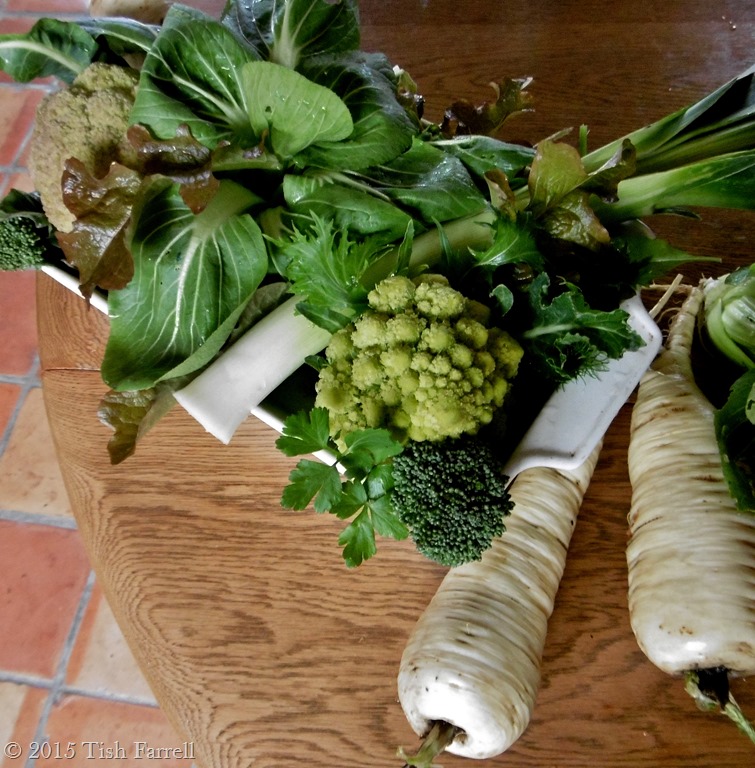
And now excuse me while I go off to do some more compost foraging. Perhaps, after all, I should be enlisting my neighbours’ help. They might chuck me more stuff over their hedges instead of putting it in their recycling bins. But either way, recycling is good. So: Obsessive Compulsive Composting anyone? Just to encourage you, and to show off, here’s some of my last year’s summer and winter produce:

100_4197

P1000281

copyright 2015 Tish Farrell
Bee-ing Bee-Minded

100_6630

An old meaning of the word vivid is lively and vigorous. And what can be more lively and vigorous than foraging bees? They and their produce are life-enhancing too, and in elemental ways. Their importance in the human life-cycle, for one, is marked in an old Shropshire custom of ‘telling the bees’ when someone dies. So it is my belief that we can’t think too much, or too often about bees. Not only do nearly three quarters of our food crops depend on them for pollination, but the natural environment needs them too – those plants and trees whose flowers are also pollinated by them.

Up at the allotment we are very lucky. We seem to have plenty of bees, and many varieties too, but then most of the allotment gardeners rarely use pesticides apart from the odd slug pellet. Yesterday when I was there, my raspberry patch was thrumming with bee-hum. It was mesmeric. They also love my neighbours’ phaecelia which is grown as a green manure. Pete and Kate decided to leave theirs standing just for the bees. The flowers are beautiful anyway.

100_5529

My field beans are another favourite. Again these beans, a relation of the broad bean, are usually grown to dig in before flowering and fruiting. But courtesy of the bees, I leave mine to produce masses of pea pod sized pods. The beans are small, and more delicious versions of broad beans. So thank you, bees. Also the bean blossom has a blissful scent. It’s a win-win-win situation.

100_5619

The debate over whether neonicotinoid pesticides are responsible for the massive bee deaths across the globe wrangles on. You can follow some of the arguments in the two BBC Science reports at the links below. One recent startling discovery by a study at Newcastle University, is that bees are attracted to the pesticides. They seem to like the nicotine in much the same way humans do. Researchers have yet to discover if bees also get hooked on the stuff.

So why do we need pesticides? The actual fact is that any large-scale, mono-crop production will attract, in huge numbers, the pests that use that crop for their food and reproductive cycle. Monoculture environments also lack the kind of predator insect diversity, that would, in a naturally diverse ecosystem, keep such crop pests under control.

So the demand for pesticides is created, and the drive for profit, and for the production of cheap food keeps us locked into pesticide dependence. It’s not hard to see why we seem stuck with this system. The economics of unpicking it look impossible to broach.

Here’s another thought though. Mono-crop systems are also vulnerable to new pests whose advent is ever more likely, either through accidental imports, or by climate-shift trans-located pests that may have no natural predators in their new-found homeland.

I have personal experience of what happens when dependence on one particular crop meets an alien pest. In the 1980s the Central American Larger Grain Borer beetle was introduced into Africa in a consignment of food aid maize, and once there, spread up the continent like wildfire, chomping the contents of village grain stores to dust. (And being faced with such a pest, who would knowingly want to put insecticide directly onto their food before eating it?).  This infestation is what took us to Africa in 1992 where Graham was working on a project to introduce a natural predator to check the LGB spread. (See Carnations, crooks and colobus at Lake Naivasha, and Letters from Lusaka part I ).

The consequences of this particular dudu’s arrival  were compounded by the fact that, since colonial times, maize had become a staple in many African countries (European settlers doled it out as rations in part payment to their African labour), so largely replacing the local cultivation of a wide range of native, more nutritious small-grain crops. Maize is also a hungry, water-demanding plant that can easily fail if there is insufficient rain. And, if repeatedly grown on the same ground, it will soon deplete fragile volcanic soils and contribute to erosion. This happened on Kenya’s native reserves during the World War 2 when Western Province farmers were encouraged to grow maize for export to Europe to support the war effort. They grew bumper harvests, but the land suffered, and probably has never recovered.

So we see in just one example the kind of vicious downward spiral of impoverishment that can result when humans think they know better, and don’t consider the consequences of tinkering with an existing system.

In fact when we left Kenya in 2000, German agricultural aid workers were advising rural farmers to go back to cottage garden farming methods, mixing different crops up together to fool the pests, and so avoid the need to buy expensive pesticides. i.e. advocating precisely what Bantu farmers had been doing for a couple of thousand years before colonial agricultural officers told them that inter-cropping was bad practice, and that they  needed to adopt European cash-crop methods in order to grow export-worthy produce.

All of which is to say, we all of us need biodiversity for our well being, if not for our survival. With climate change, we cannot afford to limit options in food production by remaining in thrall to the reductionist models perpetuated by factory farming, supermarket buying power, genetic engineering that reduces native crop diversity, and by the pesticide hegemony in general. At the very least we need the bees. Anything that threatens them, threatens to seriously limit our good food choices. The health of humanity and the planet’s ecosystems depends on them.

As consumers we have buying power. It is perhaps the one real power we do have, otherwise corporations would not spend so much money trying to persuade us to buy their goods. If we are able, we can support small local producers who do not use pesticides. We can say no to genetically modified crops that have caused their producers to give up, or lose their native crop varieties. We can grow bee-friendly plants, and if we can afford to, buy only organically cultivated produce. We can grow as much of our own food as possible. It’s amazing what can be grown in containers if garden space is in short supply, and sprouted seeds can be  grown in the kitchen all year round. So let’s keep our bees vigorous and lively, in whatever way we can.

100_4200

copyright 2015 Tish Farrell
 

Bees get a buzz from pesticides

Widespread impacts of neonicotinoids ‘impossible to deny’
Vivid

Seeking Spring ~ A Walk on Wenlock’s Wild Side

100_5445

I knew there was only a small window of opportunity. At nine thirty yesterday morning there was sunshine. Go out there at once, I told myself. The way the weather is these days, it might be the last you see of it. Carpe diem and all that.

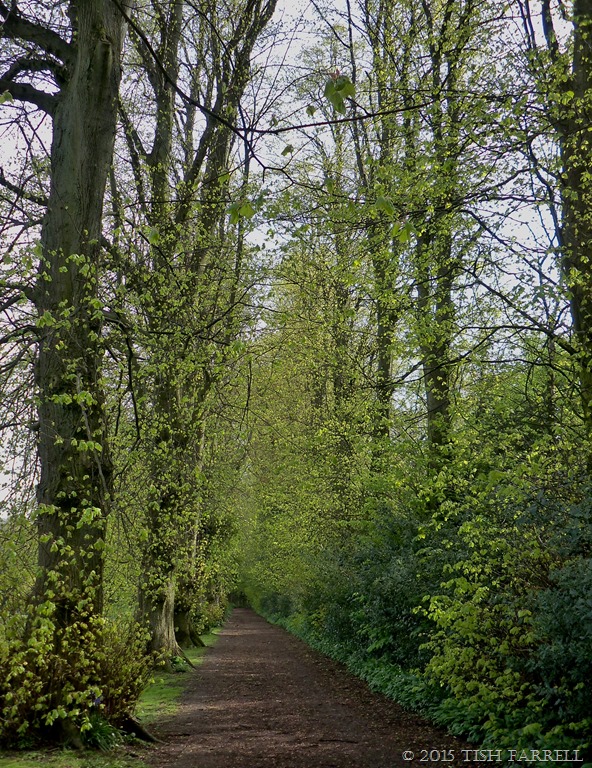
So seized it I did, and it was certainly warmer to the touch than it has been for many days, and as you can see from the above photo, the ancient, and thus arboreally wise lime trees on the Linden Walk definitely think it is spring.  Drifts of green. Blissful.

P1010309

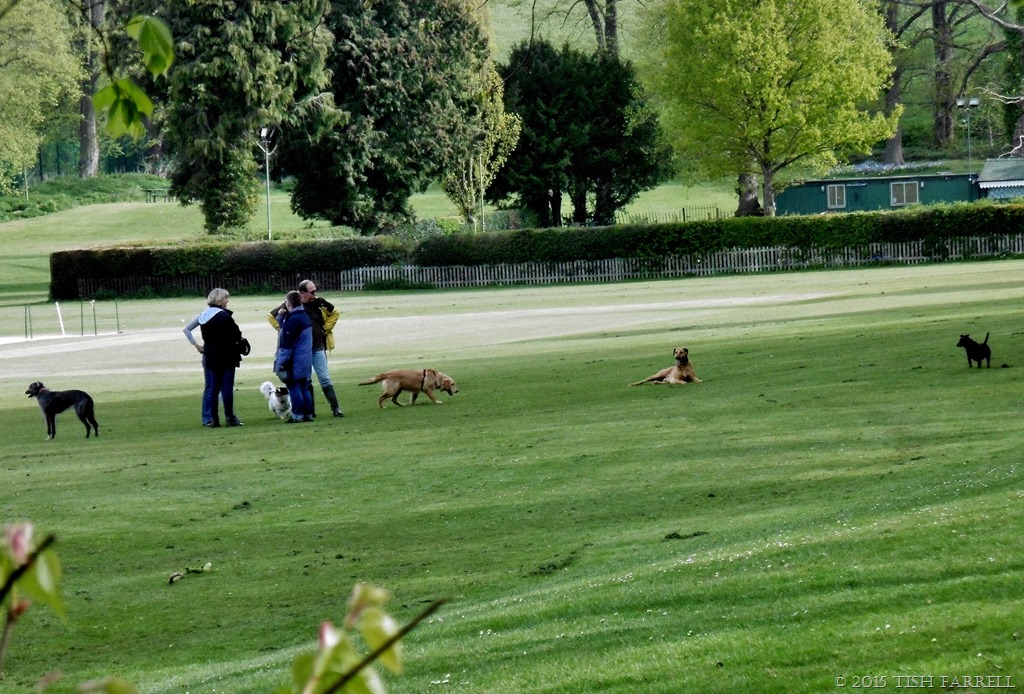
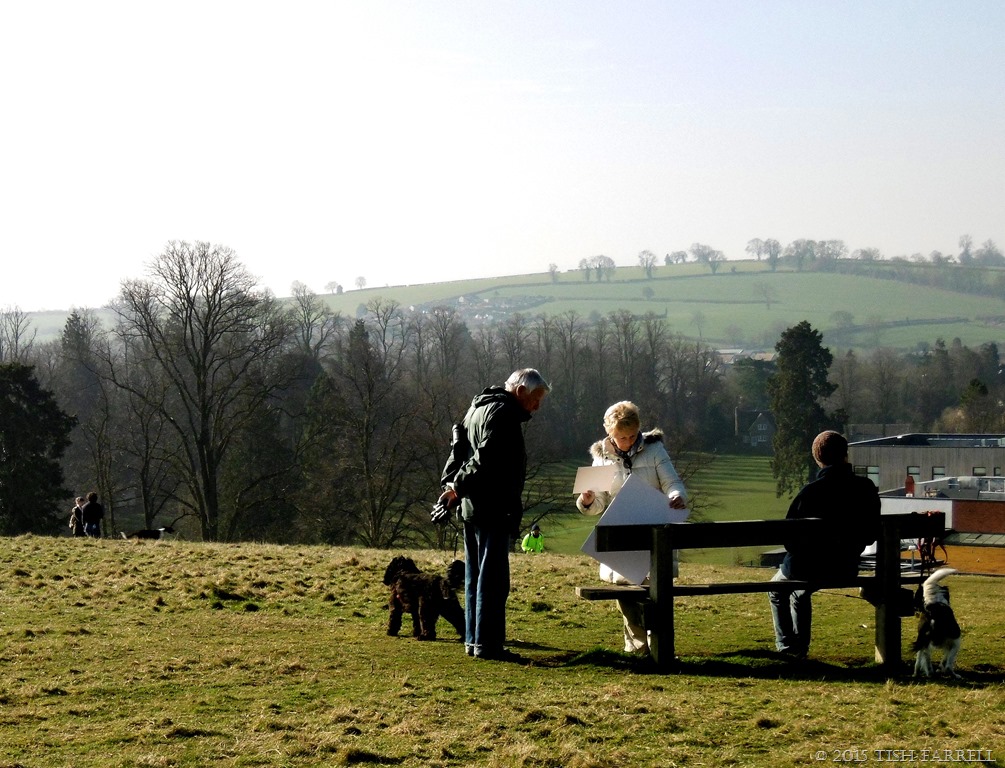
The dog walkers, too, were out en masse, owners chatting amiably on the Linden Field quite as if it were – well, spring. And despite Thursday’s appalling election results (Scots Nationalists excepted) and the return of a government that treats food banks as something to be proud of, and regards the nation as a resource for unbounded fracking, everyone I met seemed pretty cheerful. I will thus make no further mention of Tory attrition and spoil the moment.

The little green building you can see in the background behind the dog walkers is Much Wenlock’s Bowling Club HQ. It occupies a re-cycled railway carriage, a relic from our erstwhile lovely railway that once ran beside the Linden Walk and, until the 1960s, when the wretched Dr. Beeching axed thousands of miles of Britain’s railways, linked Much Wenlock to the outside world. But enough! Too much negativity already.

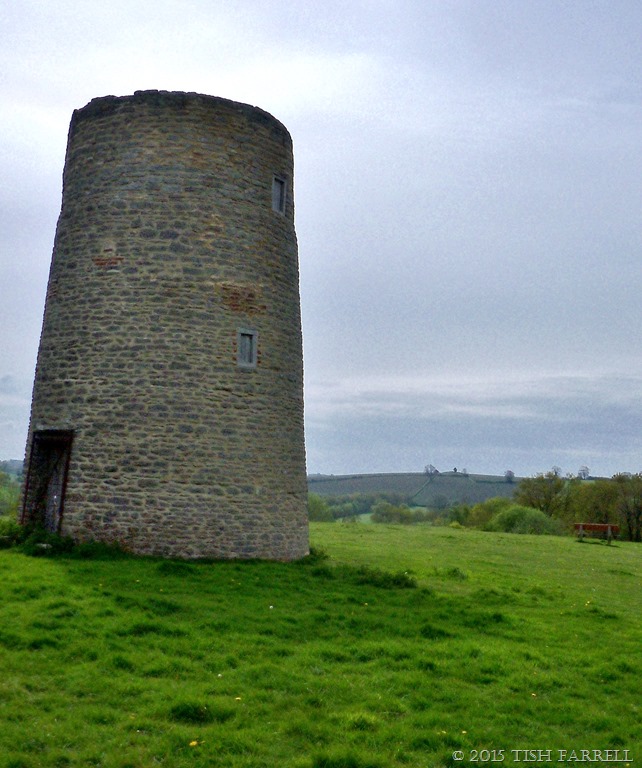
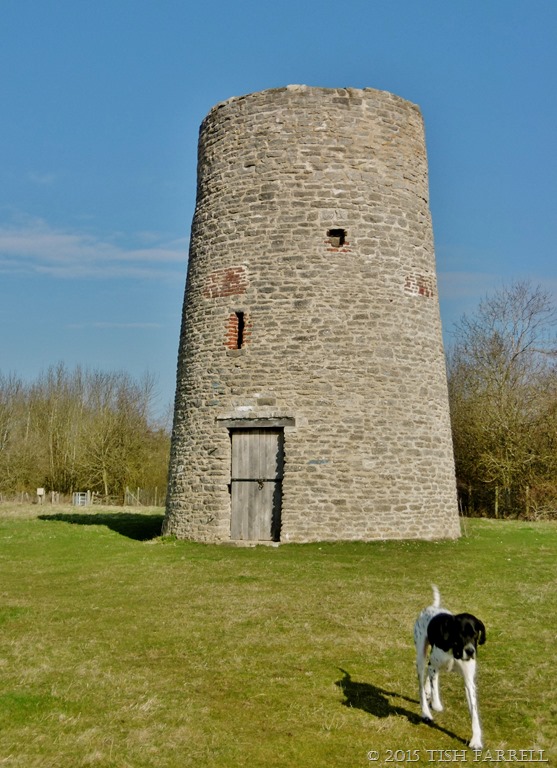
I headed off behind the Bowling Green to see what was growing on Windmill Hill. This quest was motivated by Meg at Snippetsandsnaps. In response to an earlier post here, she said she would like to see more of what happens on the old limestone pasture on which the windmill stands. I’d mentioned the wild orchids for one thing, so I thought  (given our erratic climate) I’d better go and check if they were flowering yet.

100_5459

They weren’t. Still too early. But the first thing I spotted were the cowslips, also known in Olde Shropshire as cowslops. The richly eggy coloured clumps were growing here and there. In the past they would have grown in yellow meadowsful all around Much Wenlock. I even remember them. When I was a child, my parents would make a point of driving out from Shrewsbury where we lived, simply to visit them. We’d have picnics amongst them.

P1010322

Once, too, cowslips were an important resource. In the days before modern farming methods seriously reduced their habitat, Wenlock’s school children would absent themselves from class at the National School in order to help with the annual gathering. The flowers were used to make herbal infusions to combat coughs and bronchitis, and in a town regularly doused in limestone dust from the quarries, bad chests would have been a common problem.

Doubtless, too, the town’s doctor, William Penny Brookes, (he who inspired the modern Olympics and planted the avenue of lime trees that we have just walked along), supported such an activity. He practised for the last fifty years of the 19th century and, as well as being a physician, he was also a highly knowledgeable herbalist, having trained both in medicine in London and herbalism at the renowned University of Padua.

And this was by no means quackery in action as some are wont to call herbal medicine. After all, from where does Big Pharma get so many of its notions if  not from trying to concoct synthetic (patentable) analogues of the deemed active chemicals teased from botanical compounds? All of which is to say, we lose our plant heritage at great cost to our future well being, to say nothing of the planet’s well being.

Besides which, flowers can mean fun and festivities. Cowslips were also used to make wine, and to strew the paths of spring brides. Mm. Just think of the air filled with their subtle, sunny scent in times when May was WARM.

And talking of warmth and nuptial pursuits, the next thing I came across while snapping cowslips, was a pair of mating molluscs, also known Cepaea nemoralis (Linnaeus, 1758), Britain’s commonest snails. Spring has certainly made this pair frisky, but I will spare you the more intimate shots, and leave you with their rather pleasing  Northamptonshire dialect name of pooties. Canoodling pooties then.

100_5452

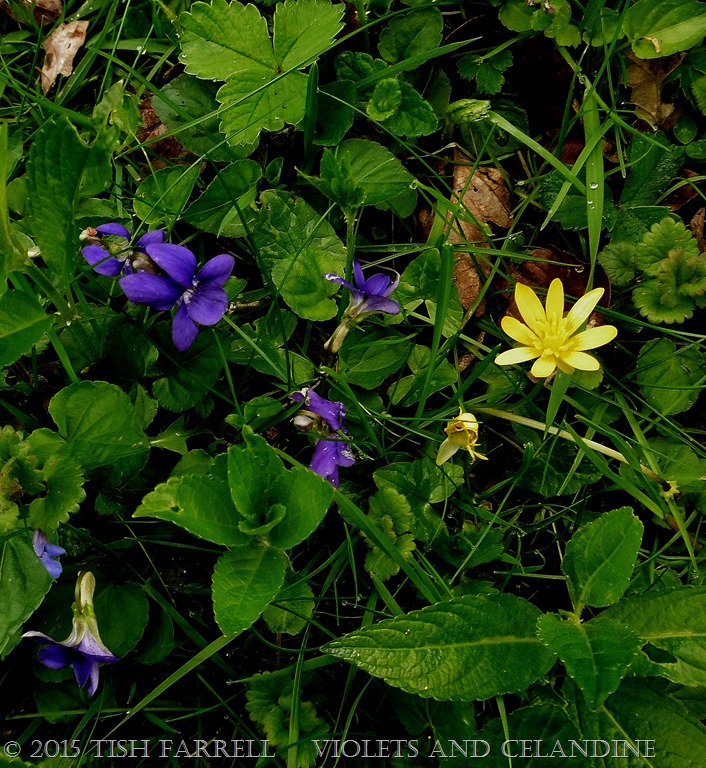
Windmill Hill has more than its open, calcareous pasture. There are wooded flanks to the north and south and here, beneath the trees, I found violets and celandines. You can also see leaves of tiny wild strawberry plants (north of violets), germander speedwell (northeast of the celandine), and sprigs of Dog’s Mercury at the bottom of the shot.

P1010366

*

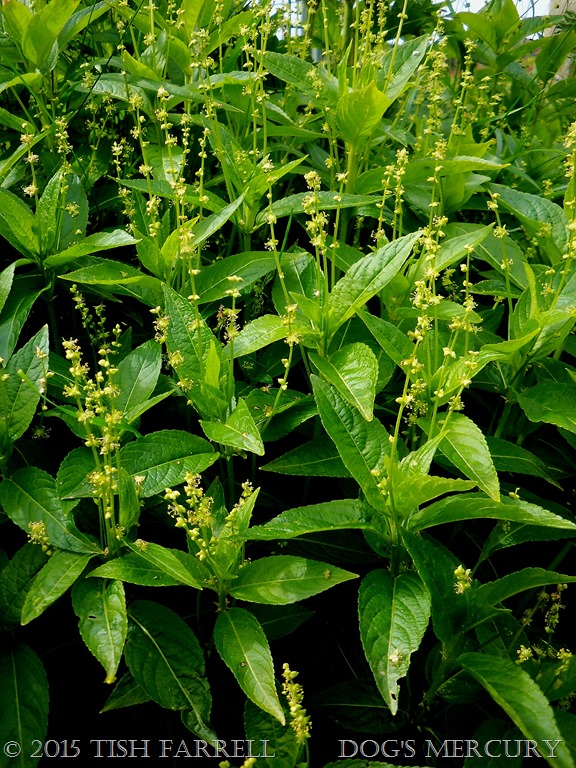
And coming up is Dog’s Mercury (Mercurialis  perennis  or Boggard Posy) in full flush. This unremarkable looking plant is a member of the spurge family and very toxic, a fact reported in a letter from Shropshire in 1693 and published that year in the Philosophical Transactions of the  Royal Society, 203 VIII. The letter gave a detailed account of how one  Mrs. Matthews had gathered, boiled and then fried the herb with bacon for her family’s supper. Two hours later there was much purging and vomiting followed by heavy sleeping. Sadly one of her children died after remaining unconscious for several days. Mr. Matthews, however, reported going to work the next day three hours late, but feeling as if “his Chin had bin all Day in the Fire.” He had therefore been forced keep his hat at his side as he worked, filled with water, so he could keep dipping his chin in it.

100_5469

*

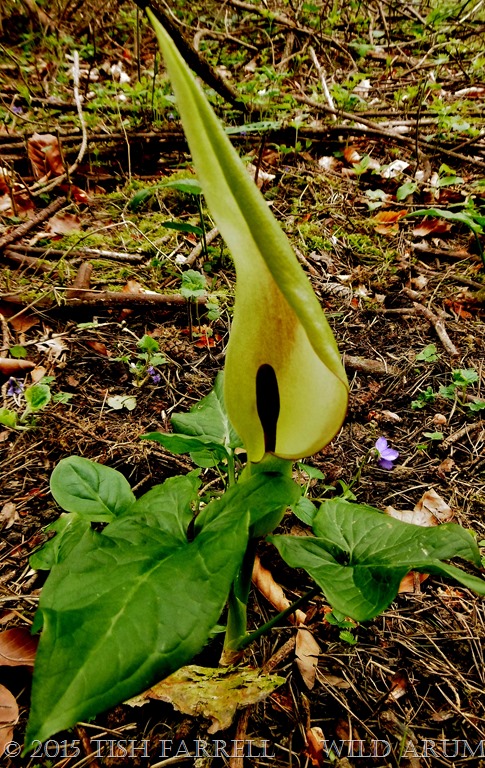
This next plant, Arum maculatum,  also has toxic characteristics. And it has a host of intriguing country names, some of them certainly alluding to what William Shakespeare referred to in Hamlet as ‘country matters’. For instance we have Lords-and-ladies, Ladies and Gentlemen (Shropshire version), Devils and Angels, Willy Lily, Cows and bulls, Red-hot-poker. Then there are the more curious Jack in the Pulpit, Cuckoo-pint, Fairy Lamps and Shiners. Its hooded sheaths (spathes) do glow in a faintly sinister, not to say priapic fashion in the shadiest spots. When done flowering, and presumably duly fertilised, the sheath collapses in a disturbing manner. In the autumn, though, there are spires of fire-red berries that light up gloomy days.

As to usage, in the times when people still wore lacy ruffs, the arum roots were crushed to make starch, although the processing apparently gave the launderers nasty blisters on their hands. It presumably did not do much for the ruff-wearers’ necks and faces either. So yes, it’s also good to remember the toxic properties of plants along with their more healthful aspects.

P1010337

*

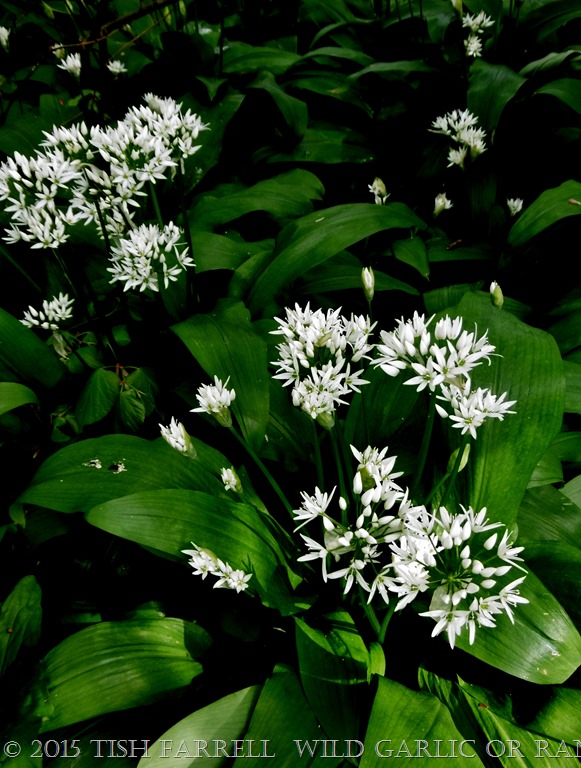
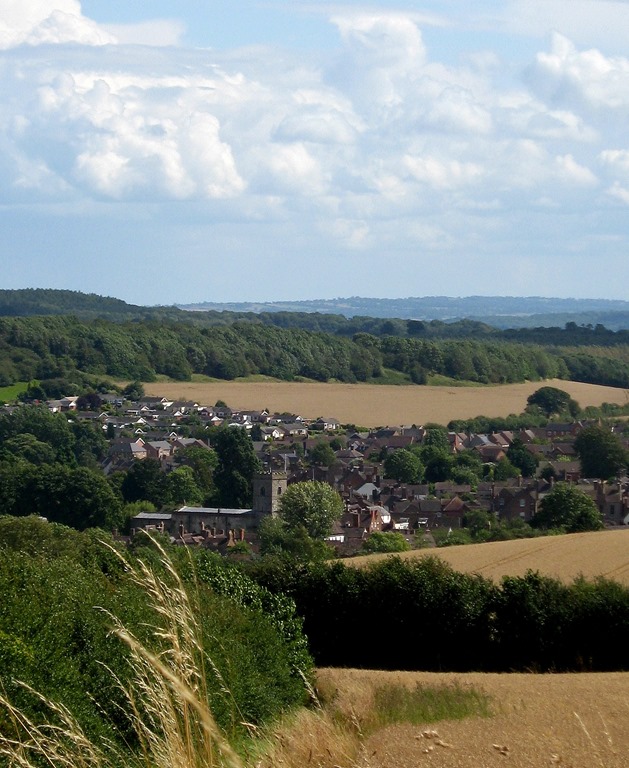
And now for something seriously edible, if you like garlic and onions, that is. The Wild Garlic or Ransoms (Allium ursinum) grows in profusion at the foot of Windmill Hill, and especially along the banks of the old railway line. Those who don’t care for the smell will appreciate its vernacular names of Stink Bombs and Stinking Nanny.

P1010304

But you can certainly cook, or add to salads, both the leaves and the flowers, and their flavour is not as strong as the smell suggests. Excellent wilted in olive oil with pasta, for instance, or in soups – cream of potato and wild garlic say.

This wild garlic photo was taken while the sun was still shining, and as I said at the start, I knew it wasn’t going to last. Even if I hadn’t read the Friday forecast of rain by noon, followed by more rain all day, the green woodpeckers would have warned me. As I headed down the hill and along the old railway line their cries, known as yaffling, dogged my footsteps. It’s interesting how this member of the woodpecker family likes to alert everyone to a coming downpour. In Africa it is the red-chested cuckoo that performs reliable rainbird duty.

100_5494

Those yafflers were dead right too. As I turned for home, the sky was leaden, and the first drifts of rain were falling through the trees. Bye bye sun!  But then the old railway line is a good place to be whatever the weather. It is one of the town’s most popular footpaths, and it is hard to imagine that along it the Great Western steam engines once came rattling into Wenlock – the Olympic special bringing thousands of spectators to the annual Wenlock Olympian Games on the next-door Linden Field; goods trains from South Wales coming to collect limestone from Shadwell Quarry behind Windmill Hill. These days, then, there a trees as well as leaves on the line (NB for those living outside the UK,  ‘leaves on the line’ has long been the old British Rail’s excuse for non-arriving trains.)

Finally, I’ll leave you with a few more shots of botanical specimens discovered round Windmill Hill and along the railway line. Clearly the natural world is busy cracking on – full of vim and vigour – even as I shiver in the cold wind, and hang on to my much layered clothing. That’s good to know though – that nature will out, even if, as time goes on, it may not quite do what we expect.

100_5488

100_5483

100_5490

copyright 2015 Tish Farrell
Reference: Richard Mabey Flora Britannica

Forces of Nature

This post was also inspired by Jo’s Monday Walk at restlessjo, a great venue for walkers, whether in body, mind or spirit.


An Intricate Mind: Alan Turing 1912-1954

100_5256

100_5248

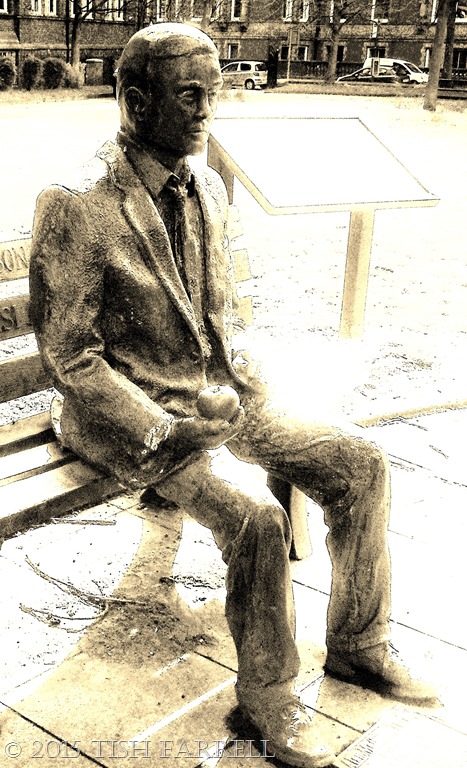
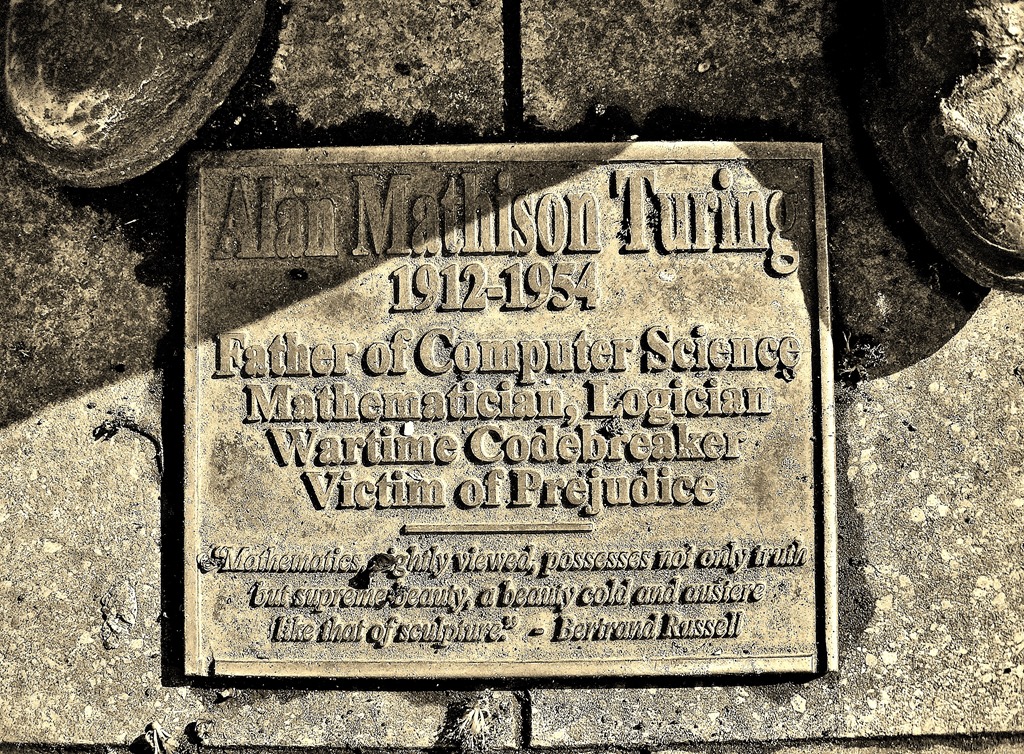
Alan Turing Memorial, Sackville Gardens, Manchester: sculptor Glyn Hughes

*

Here is the statue of man whose decoding of German Enigma Code is credited with shortening World War 2 by two years, and so saving thousands of lives. After the war, working in Manchester, he played a key role in developing ‘Baby’, the first digital computer. He had the brilliance of intellect and foresight that should have been considered a national treasure. Yet in 1952 he was charged with engaging in homosexual acts, tried and convicted of gross indecency. The penalty was prison or chemical castration through the administration of oestrogen. He chose the latter. But because homosexuals were considered security risks, he forfeited his security clearance. In 1954 he was found dead. At the inquest the coroner concluded he had committed suicide by taking potassium cyanide. He was forty two.

There have various theories about his death: that he staged it to look like an accident; that it was in fact an accident; that he was assassinated. In any event we can only guess at the scale of his future contributions to the domains of science, mathematics, and computer technology had he lived. In 1950, concluding his article in the journal Mind, Computing Machinery and Intelligence, he himself said:

We can see only a short distance ahead, but we can see plenty there that needs to be done.


In 2013 Turing was granted a royal pardon, and British Prime Minister, Gordon Brown, expressed his regret at the way the eminent mathematician had been treated. Today, Turing’s great-niece, Rachel Barnes is lending her support to the campaign Turing’s Law that wishes to see 49,000 others given posthumous pardons. She says that while the Turing family was delighted by Alan Turning’s pardon, they felt it unfair that it was not extended to others similarly convicted.

Turing relative demands pardons for gay men convicted under outdated laws

And all I can say is: see where bigotry takes us. And if you want to see what kind of funny, humane man Alan Turing was, and discover something of his intricate thinking, then read the article Computing Machinery and Intelligence at the link above. It begins with the words:

I propose to consider the question, “Can machines think?”

Intricate

Eclipsed in Much Wenlock on World Happiness Day and Taking a Solar Selfie

100_5065 Here I am on top of Windmill Hill, Much Wenlock’s landscape landmark, and this is the only way I could see the partial eclipse – with my back to it, and camera at the ready. We had such clear skies, and the sun was so bright that we remained bathed in sunshine throughout this cosmic event, although it did seem very cold. Lots of people who were out walking their dogs had gathered  at the windmill too, one lady monitoring the process through a pin-hole viewer. This is the scene before me as I take the photo over my shoulder: windmill and pointer. Had the eclipse actually happened? P1000779 P1000764 P1000788 Aftermath. I caught the sun in the trees as I walked home across the Linden Field. This, incidentally, was the place where the Much Wenlock Olympian games were, and are still held every year. They were devised in 1850 by the town’s physician and herbalist, Doctor William Penny Brookes, and went on to inspire the founding of the modern Olympic Movement. Windmill Hill provided the natural viewing platform where spectators sat to watch the events. See how this little town of ours spread its good hearted influence around the world. Wishing everyone joy on this, International Day of Happiness   #eclipse #International Day of Happiness

International Cheetah Day

016

Scan-140728-0020

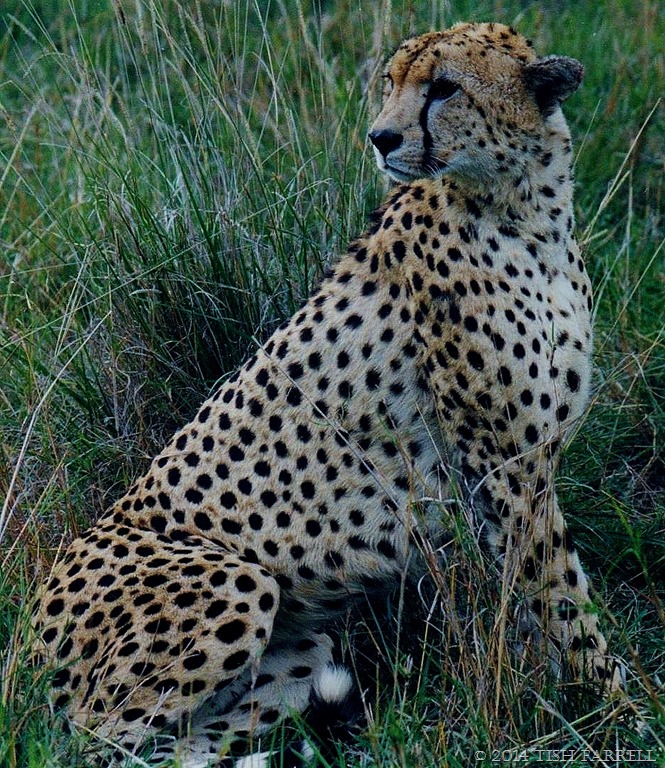
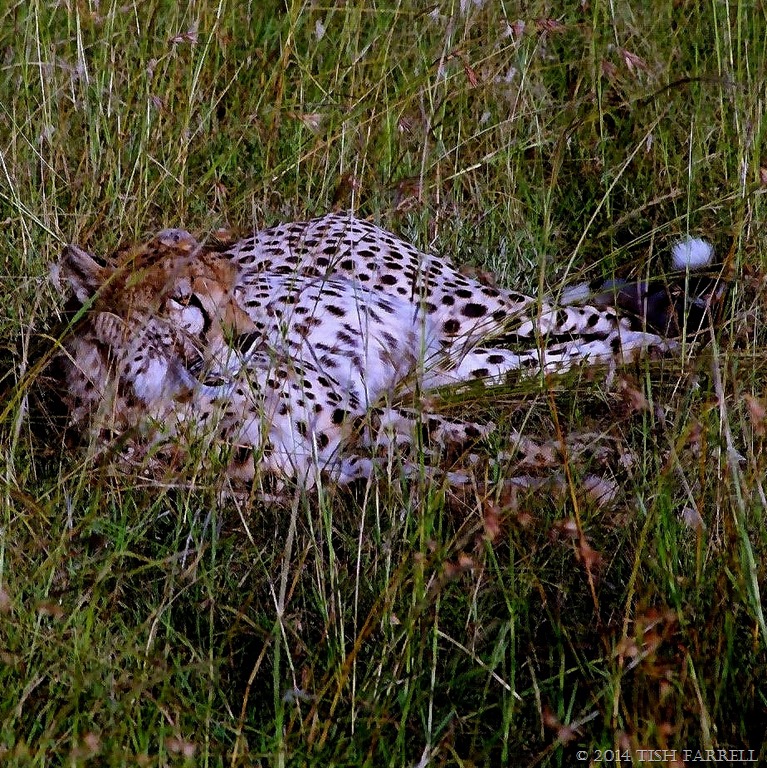
Three cheers for the cheetah. We need to protect their habitat if we want to keep them. Take a look at the Cheetah Conservation Fund site if you would like to help. This organisation, based in Namibia, tries to improve habitat for both animals and humans. You can visit, or go work as a volunteer. Check them out.


Also please visit International Cheetah Day  for wildlife photographer, Paul Goldstein’s gallery of stunning cheetah photos


#PaulGoldstein #InternationalCheetahDay

Let’s Hear It For The Bees ~ Three Big Cheers

100_3915

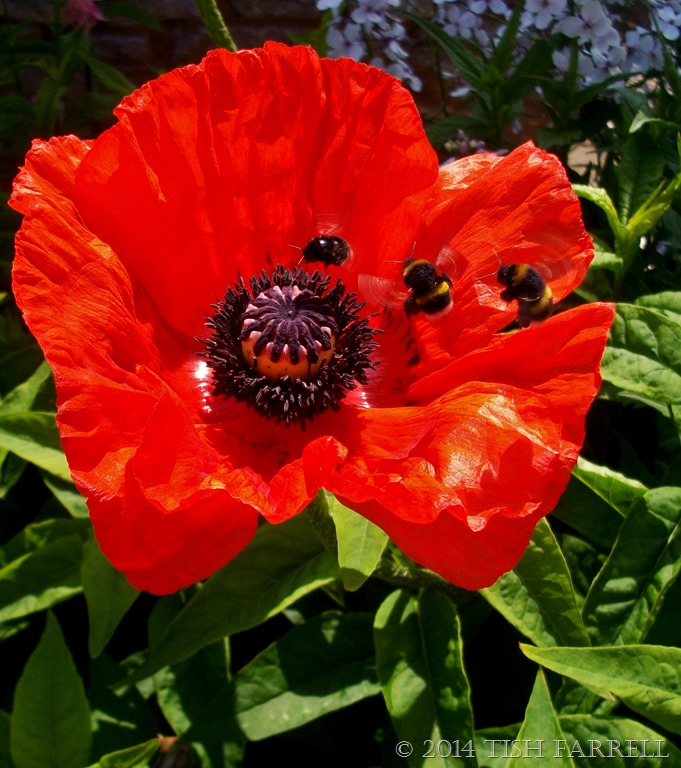
There are different kinds of achievement in this shot. The first is that I managed to capture it at all, teetering in a flower bed with my Kodak Easyshare. The sun was full on too so I could not see the camera screen. But by far the biggest achievement is the presence of three bumble bees all at once.

All over the world bee numbers have been declining. Swarms in the US have been especially hit. Over the last few decades many factors have played a part, including habitat erosion, lack of quality forage and disease. But in 2006 honey bee keepers began to report dramatic losses. It involved the deaths of whole hives and has been dubbed colony collapse disorder.

Environmentalists believe the cause to be the neonicotinoids in the new generation of pesticides. They want them banned until unbiased research proves otherwise. It is a sobering thought that without bees to pollinate fruit and vegetables, the US would be left with only three staples that do not require insect pollination: wheat, rice and corn.

To find out more, please visit Dear Kitty. Some Blog.  She has posted a good video that covers this topic. In the meantime, everyone needs to think about what they can do to encourage bees, including growing some bee-friendly plants. We also need to be prepared to pay a little more for organic produce, or to do what we can to grow our own food, WITHOUT chemicals.

This would be a real achievement – not only good for bees, but for us, the soil, and other wildlife besides.

copyright 2014 Tish Farrell


Seeking silence in the making of BBC Radio’s Soul Music: Remembrance

100_5858

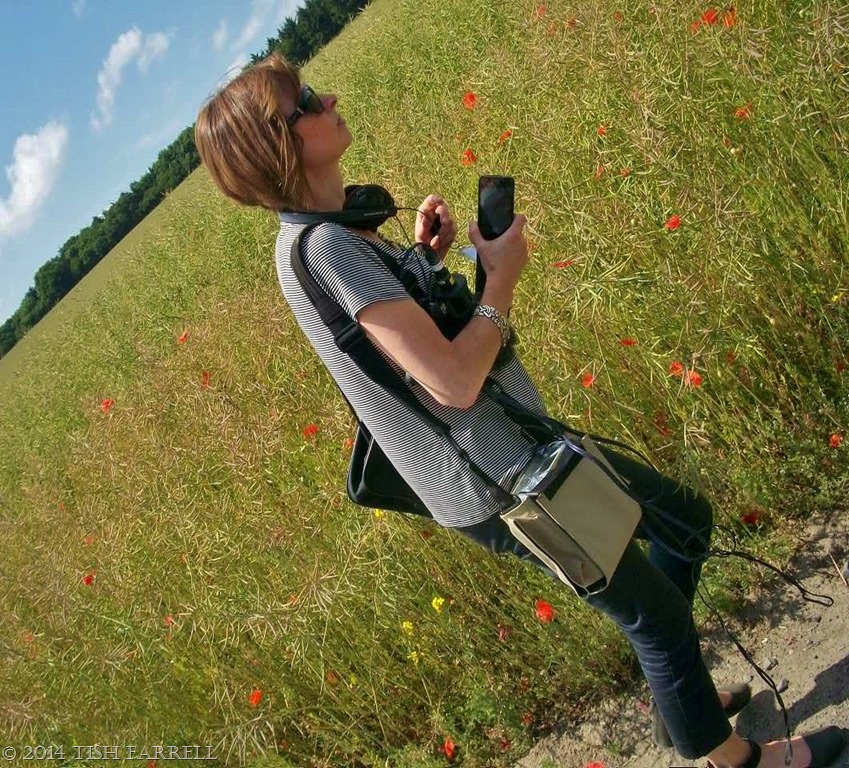
Out in the Shropshire fields below Wenlock Edge with Maggie Ayre, BBC Radio 4 Producer of Soul Music, and the Armistice Day 2014 edition A Shropshire Lad

*

So what is this all about? What has this writer to do with the making of a Radio 4 programme, broadcast today at 11.30 am? You  may well ask. It is one of those situations where one thing leads to another, and this in itself is apt, given the topic of the blog post that prompted my connection with the programme.

Last November I wrote a piece called  Songs from an Inland Sea: “On Wenlock Edge”.  It looked at the way the work of one artist can inspire the works of other artists. It was also about the place where I live, Wenlock Edge, the twenty miles of upflung fossil sea that features in the poems of A E Housman’s A Shropshire Lad.

This cycle of 63 ballad type poems, first published in 1896, has indeed inspired other works, in particular the music of composers Vaughan Williams  and George Butterworth. (You can hear excerpts of their works, and download a Guttenberg Press copy of A Shropshire Lad  on the link above.)

IMG_1373

Tis time, I think by Wenlock town/The golden broom should blow…”  ASL XXXIX

*

Last spring Maggie Ayre contacted me, saying she had read my post and was struck by the connections I had made with the Shropshire landscape. She said she was researching a programme that would possibly feature George Butterworth’s  Rhapsody, an orchestral work that expands his song version of the Housman poem Loveliest of Trees. She wondered if I would like to take part in the programme should it go ahead. Struck by a fit of ‘writer’s recluse’, I replied rather doubtfully that I might.

Soul Music is a long-standing Radio 4 series. Each programme usually features one piece of music, its performance intercut with the stories of several people for whom the work has special resonance. Today’s broadcast has further meaning, one that touches all of us: it commemorates Armistice Day.

I have written elsewhere about A E Housman and George Butterworth – Quoting Creatively: the “Out of Africa” Connection – but today, on 11th November, the connections are war-specific. Many of the Housman poems relate to the loss of young men going to war, of promising youth cut short. Indeed, sales of the work took off because of this, first during the Boer War, which in 1901 claimed the life of Housman’s younger brother, Herbert, and again during World War 1 when copies went to the front with many a recruit. Butterworth was one of those recruits. In 1911-1912 he had set eleven of the poems to music, and in 1913 seen the premier of the Rhapsody at the Leeds Festival. But by August 1916 the composer was dead, just another of the millions of casualties of World War 1. He was killed at Pozières, on the Somme, aged 31, his creative promise cut off in its prime.

073_001[1]

But back to Soul Music. I did not hear again from Maggie Ayre until the summer. Then in June, on a hot summer’s day, she came to my house in Much Wenlock and, since the rumble of traffic on Sheinton Street is ever intrusive, she suggested we drive up on to Wenlock Edge, and find a quiet spot to talk about Butterworth’s Rhapsody while looking out across the Shropshire landscape. It seemed a lovely idea.

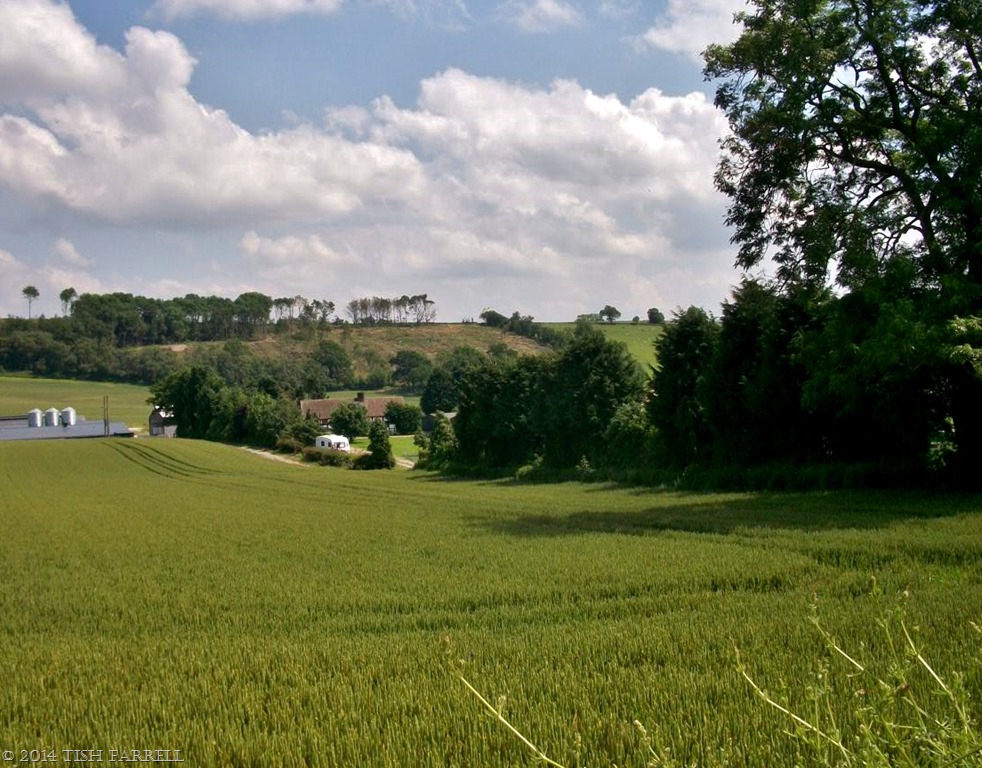
And so began our pursuit of silence across the countryside – silence, that is, from traffic, aircraft, chain saws and farm machinery. Who would have thought it would be so hard? It was not even harvest time. We drove over and behind the Edge and into the valley you can see in the next photo. We walked along farm tracks, and up and down fields of wheat. It was very hot. Always there was the grind of something mechanical resounding off the hillsides. Of course there would have been plenty of rural noise in Housman’s day – the rattle of carts, shouts of many farm labourers, the blasting of limestone at Wenlock Edge’s great quarries, but by now our pursuit of quietness was beginning to emulate A Shropshire Lad’s most poignant theme: the longing for the unobtainable, “the land of lost content.”

100_5856

Finally there was silence, apart that is from a buzzard’s call and the humming of bees, and so we sat down on the sun-baked ruts of a wheat field path, and Maggie put that big microphone near my nose and we began. By which time of course, my mind was in a whirl, and everything I’d thought to say dispersed to the four quarters. But in the end, enough was apparently said for Maggie’s purposes. (I should add that I was only one of several participants who include students from Bromsgrove School, where Housman was a pupil; they had recently been performing the Butterworth-Housman songs for a school concert.)

As we tramped back along the farm lane to the car, the quietness was broken by a bird singing in an ash tree. I think is was a robin. It stopped us in our tracks. We listened as it sang and sang. It was a moment of true remembrance: the notion of peace when the bombardment ceases. It is something we need to hang on to, and hang on to for dear life. It is the best and only reason why all European countries, or all humanity for that matter, should stand together, and stop pursuing pointless, ruinous, life-wasting conflicts.

copyright 2014 Tish Farrell
100_6893

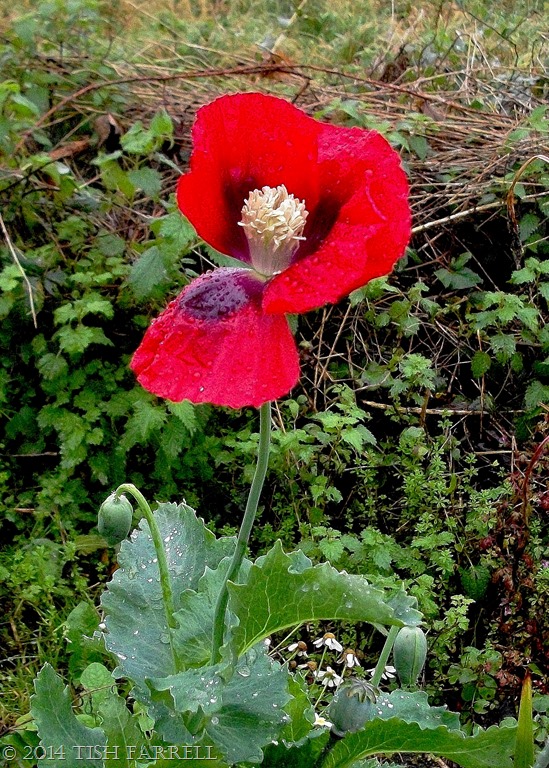
Not a Flanders poppy, but a wild poppy nonetheless, and quite extraordinarily it is flowering today, 11th November, in the field behind our house.

Remembering my own Great Uncle, Private Giles (Victor)  Rowles, who died at Gallipoli, aged 19 years and was buried at sea off Mudros Harbour in August 1915.

https://tishfarrell.com/2013/09/15/looking-for-giles-aka-private-victor-rowles-1896-1915/

https://tishfarrell.com/2013/11/11/thinking-of-gallipoli/  

*

Soul Music BBC Radio 4  A Shropshire Lad

The Housman Society

#nogloryinwar

Endurance in Central African Republic

Scan-140829-0058jpeg - Copy

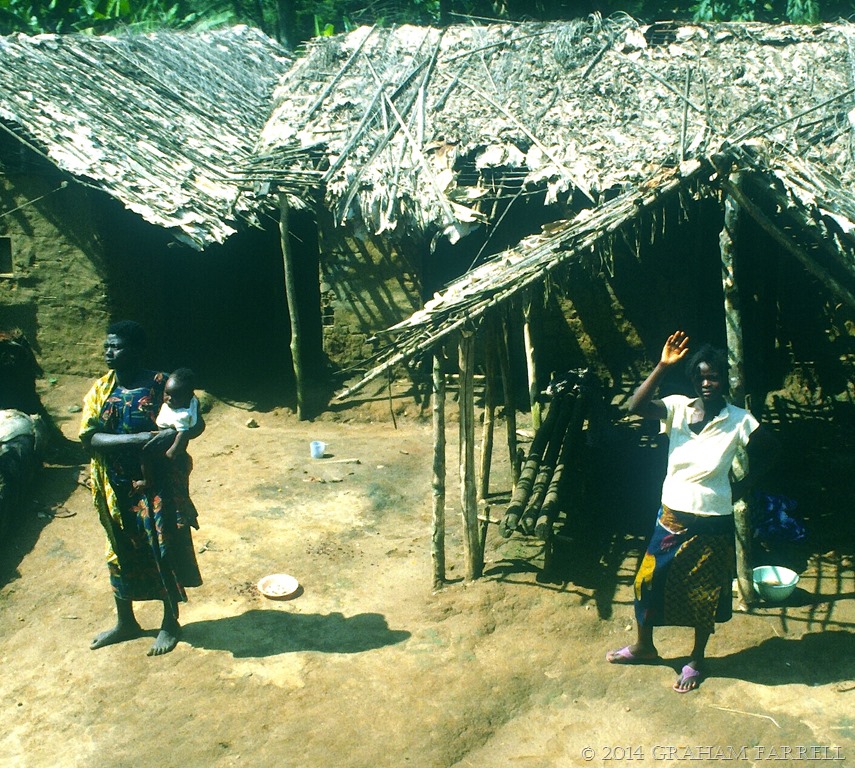
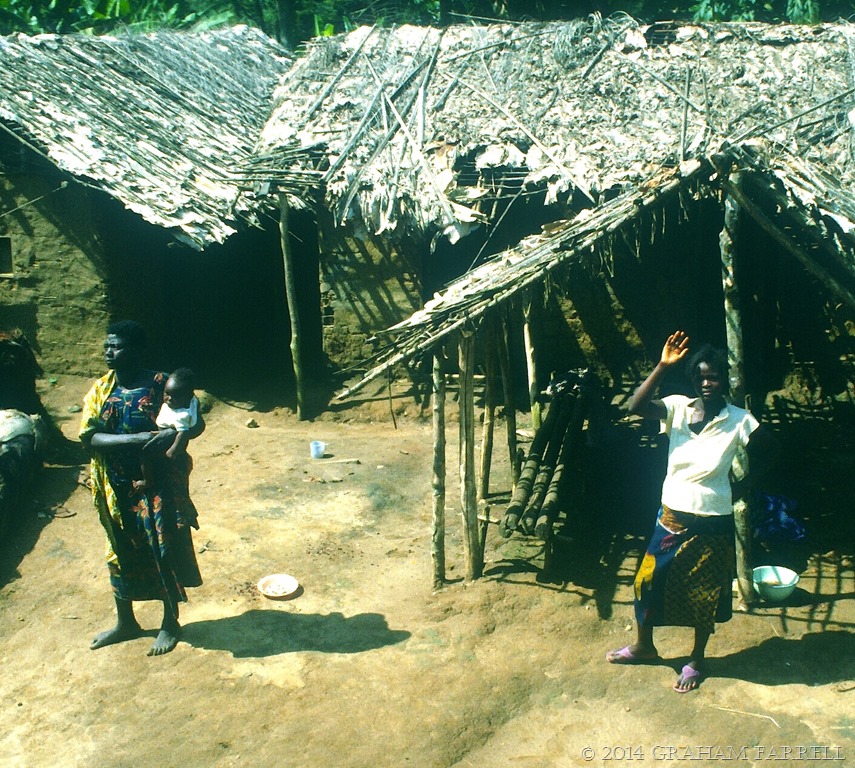
There’s a story here. You have to look carefully though. This is very much a happenstance shot, taken by Graham from a moving overland truck many years ago. In the truck, alongside him, were a bunch of young Australians and New Zealanders. You may picture a row of enquiring, youthful, fair-skinned faces looking out on this scene. It is hard to imagine what the locals made of this passing vision of alien hobo humanity. The Central African Republic (CAR) has never been a common tourist destination. It certainly is not these days.

In  the late nineteenth century occupying French colonisers apparently tried to turn the country into a cotton plantation. It did not work. Ever since independence in 1960, all has been shaky. For the past decade the people of CAR have been caught up in bloody bush wars, these apparently ethnic based and factional: Christian versus Muslim. Neighbouring Chad to the north is implicated. As in the Democratic Republic of Congo, CAR’s neighbour to the south, this is a beautiful land stuffed with riches: uranium, crude oil, gold, diamonds, and valuable hardwoods. There is also good farm land and hydro-power potential. Yet its people are also among the world’s poorest. As in DRC, it is necessary to ask the question ‘Who benefits?’ to find out exactly why this state of things persists in the 21st century.


…forest either side the red dirt road, rolling hills, coffee bushes, pawpaw tees, kapok trees, bananas, innumerable  mangoes and desolate villages…people waving  and smiling, but also some half-heartedly thrown stones and raised fists from the kids…

from G’s Overland Diary

*

You can make a guess that a good part of the answer will involve a chain of traded commodities that reaches us in the industrialized nations, for we are the end-users and buyers. By some means or other, arms will be going the other way. For this is the nature of the rich world’s (largely unseen) relationship with African territories. In the past it was the cropping of humans for slaves, and the cropping of elephants for tusks to make drawing-room piano keys, and balls for the billiard table games of civilized gentlemen. Today, it is the minerals that are craved, and at any cost. The trade keeps unscrupulous African potentates in power. They pillage resources from neighbouring countries to sell to the so-called developed world (is this us?). And so we have the carnage.

Until 1997 France maintained a military force in CAR; senior French politicians are said to have acquired diamond and gold interests in the country during the ‘80s and ‘90s. Thereafter, fearing a power vacuum, Paris funded French-speaking African nations to provide a peacekeeping force there (BBC news page). Today, French forces are back as part of the UN peacekeeping mission. Their fellow peacekeepers are Rwandans, and these two forces do not see eye to eye either (The New Republic). However you look at it, the country is a bloody  mess. Once the Pandora’s Box of vested interest by multiple players has been opened, it is hard work to restore any vestige of order. We see this in the Middle East too.

Scan-140829-0058jpeg - Copy

And so back to this photograph. The girl’s wave is wistful as she looks directly at us. Frozen in the moment is her wondering about life elsewhere. The mother, though, knows better. She looks steadfastly away, eyes focused on some other reality. Her stance suggests proud forbearance, feet planted firmly on the earth, her piece of earth, weight evenly distributed. The arms that encircle the baby are sure, composed, protecting, not clinging. She is doing what women do in Africa – endure. Perhaps she is enduring still. Most likely not.

copyright 2014 Tish Farrell

DP photo challenge: endurance

For more about conflict resources

Floating not flooding: Adeyemi’s ‘Ark-ademy’


Makokos-Floating-School-NLE-2[1]

Photos © 2014 NLÉ

Makoko_approach-960x550[1]

And what is this extraordinary structure?

Why, a floating school of course. It is also a prototype building created by Nigerian-born architect, Kunle Adeyemi  and his Amsterdam-based company NLÉ. Adeyemi has more plans too, ones that will relieve the dire conditions for the 100,000 people who currently live in this, Nigeria’s Makoko slum. The fishing settlement in Lagos Lagoon has been there since the 18th century. To cope with changing tidal levels, the shanties are built on stilts, rising from the lagoon mud; the main way to get around is by boat. There is zero sanitation, and consequently much disease. Life expectancy is reckoned to be less than 40 years.

For the past two centuries Makoko slum dwellers have adapted to tidal changes, but now climate change, with rising sea levels and increasingly extreme weather events, is putting them at grave risk.

Recently the Nigerian authorities have addressed their plight by demolishing many of the stilt-built dwellings, making the inhabitants homeless. There will be re-development  naturally – not for the poor who have long lived there, but to replace their community with flashy lagoon-view high rises. Makoko as it stands is deemed a blot that must be erased. It is an interesting approach to social deprivation: to make it worse.

_61618156_a1zaixbb[1]

*

See instead Adeyemi’s vision:

NLEs-floating-school-casts-anchor-in-Lagos-Lagoon_dezeen_14[1]

Now doesn’t this make your heart sing? Homes to live for.

And here is where it begins:

ml_schoolatSea_Makoko_d2_600[1]

Diagram courtesy of NLÉ.


Makoko floating school, then, is literally the flagship of NLÉ’s proposed waterborne city. The structure was designed and built in collaboration with the Makoko Waterfront Community and with input from Dutch naval architect, Erik Wassen. It is movable, and capable of dealing with storm surges and flooding. The triangular frame which is mounted on 256 floating plastic barrels makes it very stable and with a capacity to keep 100 people safe in storm conditions. PV cells on the apex generate solar power, and there are facilities to recycle organic waste and harvest rainwater. Most importantly of all, it was built using the techniques and skills of local craftspeople. It is a building that fits with people’s view of themselves. And it is beautiful.


Makoko-Floating-School-5-606x400[1]

Photo © 2014 NLÉ

The school has three levels with a capacity for 60 -100 pupils. The 1st level is an open play area for breaks and assembly. Out of school hours this space may be used by the community. Level 2 is an enclosed space for 2-4 classrooms, and Level 3 has a partially enclosed workshop space.

The only fly in the ointment of NLÉ’s scheme for Makoko’s regeneration is the fact that Nigerian authorities say the floating school is an illegal structure, and should not be there. NLÉ are currently in negotiation with Lagos state government and are said to be optimistic that no immediate action will be taken.

I for one hope that this African solution to an African problem will be seen for what it is – an amazingly wonderful, life-giving, life-enhancing scheme of which Nigeria should be heartily proud. The floating school addresses both present need and future uncertainty, and in ways that its community can reproduce and embrace. It has inherent sustainability. It is a pattern to build on, adapt, develop, replicate, but on an individual human scale that everyone can understand. And as time goes on, we may all have need to tap into some of NLÉ’s ingenuity if we wish to continue living well and safely on our home planet. Town Planning that gladdens my heart and gives me hope, and believe me, that does not often happen.

text copyright 2014 Tish Farrell


Further info:

Kunlé Adeyemi Founder NLÉ

Kunlé-Adeyemi_1c_Photo-by-Reze-Bonna-293x400[1]

The Architectural Review Jan 2014

http://www.nleworks.com/case/makoko-floating-school/


Flickr Comments F – archive