Many Reflections On The Iron Bridge

P1060572

Last week we were in Ironbridge inspecting the restoration works on the C18th cast iron bridge that gave the town its name. People come from all over the world to see the bridge, so to find most of it shrouded in plastic would doubtless be a big disappointment. English Heritage, the conservation body whose engineers are carrying out the repairs over the next few months, thoughtfully decided to make a spectacle of their operations. Just beneath the main span they have constructed a walkway with perspex covered viewing portholes along its length. Now visitors have once-in-a-lifetime access to view the structural parts at close quarters.

And while doing this I happened to notice that, at certain angles, the portholes and their surrounds created multiple reflections. Suddenly the town appeared meshed in the dove-tailed struts and roundels of the bridge supports. It seemed fitting somehow – the town within the bridge that gave rise to it; a glimpse of the Gorge whose lucky combination of natural resources: iron ore, coal, fire clay, limestone, made the construction of the world’s first cast iron bridge in this location possible: the now quiet resort place that some call the crucible of Britain’s Industrial Revolution, a once horrifying hell-hole of pounding steam hammers, sulphurous fumes, and streams of white-hot iron.

Thursday’s Special: reflective

copyright 2018 Tish Farrell

P.S. Click on the English Heritage link above for more about the restoration project and a very good short video.

Full Frontal Privies And Still Time For The Chelsea Chop

Reading Ali’s recent post at The Mindful Gardener reminded me that I meant to write about the Chelsea Chop. As Ali says, this somewhat alarming sounding garden procedure is more than dead-heading spent flowers to encourage further blooming, or cutting to the roots plants that will have a second flush in late summer (e.g. oriental poppies).

The Chelsea Chop is scheduled for late May – early June around the time of the annual Royal Horticultural Society’s Chelsea Flower Show. It involves using sharp shears to cut back later flowering herbaceous perennials by one third to a half. The plant will then grow vigorously, but flower later, so extending the flowering season.

This of course can work very well in large borders as part of a complex growing scheme – and especially in public gardens where the floral show must go on through the summer-into-autumn season. But  in my small garden I would end up with gaps. I was therefore very pleased to hear TV gardener, Monty Don, say you can have the best of both worlds by some judicious cutting into a potential flower clump.

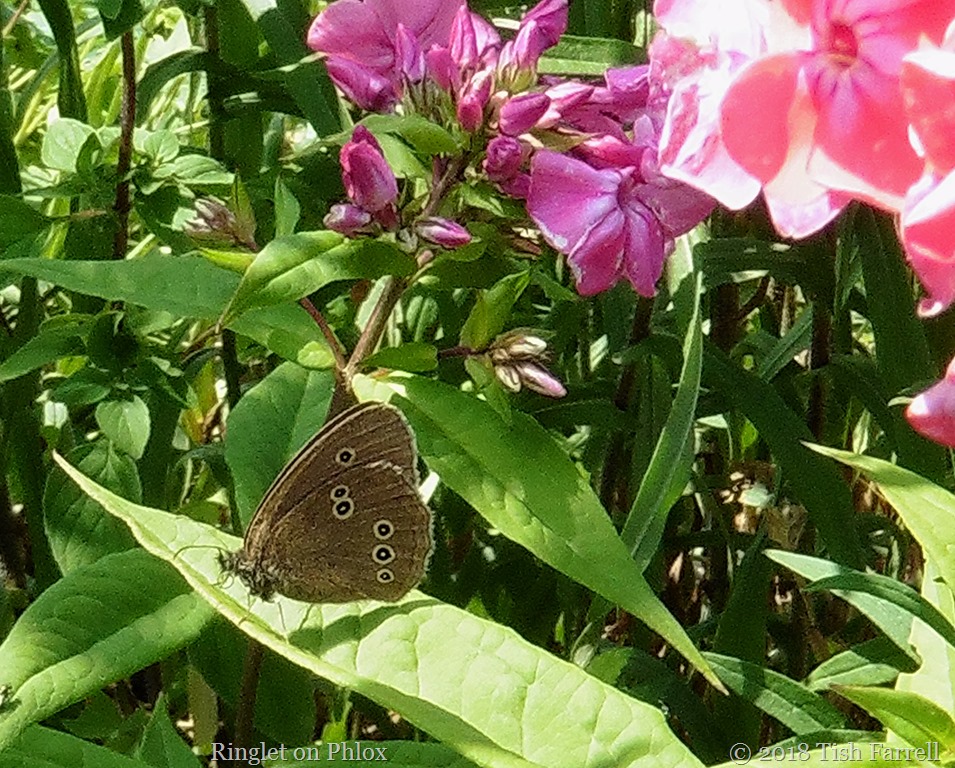
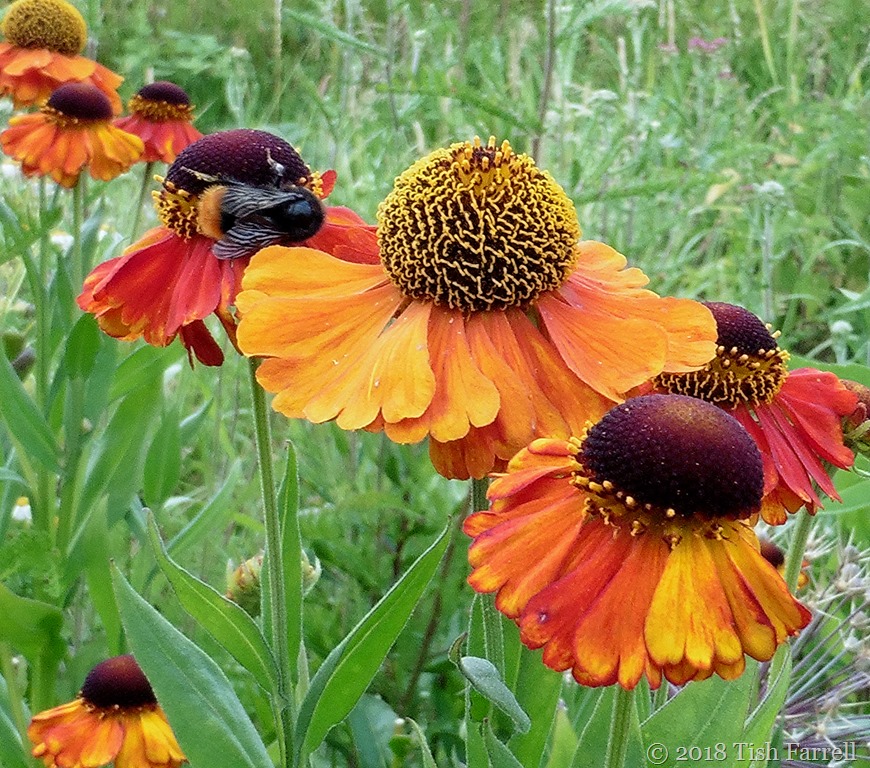
This means reducing only some of the growing stems.  Phlox, Helenium, Golden Rod, Echinacea, Rudbeckia, Sedums and Anthemis  all respond well to this treatment. You can also do the same with mint and other herbs, so keeping some stems for cooking, while letting others flower. The bees will definitely be happy with this arrangement.

Meanwhile in this morning’s garden, the oriental poppies are on the wane, the foxgloves are still flowering, and rose Teasing Georgia is bursting out all over and giving us a lovely bowery vista from the kitchen door. Oh yes, and the pink-mauve shaded aquilegias have given way to yellow ones that look like garden sprites with their little wings:

P1060477

IMG_3702

IMG_3681

IMG_3687

Roof Squares

Some Ironbridge Towers ~ The River Between

P1060599sq

Following on from yesterday’s Iron Bridge visit, this first photo is for Jude. She wanted to know if the Ironbridge cooling towers still existed. The power station, just upstream from the Iron Bridge, has been recently decommissioned. There are plans for demolition, and the site to be developed for housing.

There are four cooling towers, and if you walk along the river they loom dramatically above you. Love them or hate them,  Jude and I are for them. They are anyway part of our industrial heritage, though mainly I like them because they look like giant flower pots. And I like them even more now they aren’t giving off dirty-coal fumes.

Across the river, just downstream of the cooling towers is the Severn Warehouse – now part of the Ironbridge Gorge Museum (where I used to work). This building has much smaller towers, but they are impressive in their own way. Built in the gothic style by the Coalbrookdale Company in 1834, it was used to store the factory’s iron goods until they could be shipped by barge to Bristol and thence out to the wide world. You can see the tramway down to the wharfage (bottom left). A veritable citadel of industry then, though a spot of weeding looks to be called for up in the castellations:

P1060617sq

If you would like to take a very interesting walk around the Ironbridge Gorge there is an excellent trail guide HERE


Roof Squares  See Becky’s very unusual Portuguese bread oven

Six Word Saturday  And some marvellously commemorative artwork from Debbie

Rooftops Galore In The Severn Gorge ~ Even The World’s First Cast Iron Bridge Has One

Yesterday we treated ourselves to a Big Day Out, and on our own doorstep. We went to Ironbridge – all of five miles from the Farrell domain. We wanted to see what English Heritage was up to with Abraham Darby III’s monumental bridge – the high-tech PR stunt of 1779 in which a Coalbrookdale ironmaster set out to demonstrate that cast iron was the building material of the future.

He built a single arch bridge at the site of a notoriously dangerous ferry crossing, over a river prone to massive flooding while also accommodating the passage (without de-masting) of the large sailing barges (trows) that plied the Severn from Worcester.  All the numerous other Severn bridges required the trows to lower their masts. Doubtless this novel feature alone would have made the new bridge the talk of the river.

P1060556sq

P1060590sq

*

Here’s a pre-wrapped winter view, glimpse of the toll house on the far right (since the Iron Bridge was always intended to make money too):

P1000831sq

Interestingly though, and here’s where the new ‘roof’ comes in, while Darby’s construction was daring in its vision and materials, its design has distinctly retro features – the  cast iron components were fabricated and assembled according to tried and tested carpentry methods with lots of dove-tail joints. On top of that, there has been much ground movement, general wear and tear and even structural shrinkage, so now the bridge is in serious need of restoration. While the work is underway, much of the bridge is shrouded in plastic. A walkway has been constructed along the north side of the bridge with viewing windows created at various points  so visitors can view the underbelly of the bridge at close quarters and see the restoration work in progress. It is one stunning enterprise.

P1060562

There may well be some controversy ahead though. Once the work is done, the bridge will be repainted – in its original colour on the opening day of 1781: a reddish-brown research has shown. For decades the bridge has been black or slate grey. Reddish-brown will be a real turn-up for the Severn Gorge location and doubtless a shock to some people’s systems. I can’t wait to see it – completion date is set for November just in time for a pleasing backdrop of autumn leaves.

P1060582

Here’s a view of the Wharfage from the Iron Bridge. The town of Ironbridge owes its existence to the bridge, which attracted tourists right from its opening in 1781. In 1784 the handsome Tontine Hotel was built overlooking bridge, and today is still a popular place to stay. The Severn Gorge is now a World Heritage Site.

P1020855sq

For more about the restoration project including a brilliant short video see:

English Heritage Saving The Iron Bridge


Roof Squares 8  Please pop over the Becky’s to join in the June Roof Extravaganza

Welcome To The Sunset Garden With Privy View

sunset sq

Here’s a side glimpse of one of our C19th privies. I’m guessing the little aperture above the brick pile was there to provide some light on the situation. The adjoining facility also has one on the farther side. The privies share an internal wall – limestone – a good half metre wide, which seems a bit over-engineered to us, and at present stops short of supporting the roof rafters. He Who Builds Sheds is therefore wondering if he might remove it to make one useful shed instead of two impossible sheds, and all without altering the outside.

Meanwhile here’s the other shed, 2017 vintage, designed and built from scratch – with rubber roof. The double-glazed windows and door were cast offs from chums:P1060456 sunset sq2

And now the garden full of early evening sunshine plus a few roof glimpses:

Roof Squares


Last Night In Downtown Oakengates, Looking For Roofs, Real Ale, And Having A Slight Fit Of The Edward Hoppers

Just in case you think Shropshire is all ‘blue remembered hills’, we do have our urban quarters. Oakengates in Telford (New Town) to the east of the county has ancient roots. The Romans came marching through these parts in their bid to quell the Welsh, leaving us the remains of a military fort – that’s to say an on-the-hoof marcher camp (nicely squared earthen ramparts reduced to a field crop mark). Then there was a lot of monkish settlement (physical evidence obliterated), but it was during the C19th that the town truly came to prominence and prosperity, its coal and clay deposits making it one of the key settlements of Shropshire’s Industrial Revolution.

Since then, though, the once traditional street scene has somehow had its heart ripped out. Well, mostly. There are still some good old pubs. In particular the  Crown InnTHE watering hole for real ale lovers, and the place where we were heading last night to meet good chum Andy. And just by chance I had taken my camera, and I was struck by the evening light, and the strangely compelling surrealism of the streets that someone had kindly tried to prettify with bunting, and there were a few rooftops too and I had that feeling that I get when I look at Edward Hopper’s paintings: a spinal twinge of fascinated  displacement and disquiet (for his work is nothing if not about light and shadow in all connotations) – hence this set of photos, taken before and after a glass of good Mild Ale…

P1060516 sq

P1060517sq

P1060518sq

P1060515sq

P1060522sq

Roof Squares

All Bee Hum And Bee Bums In The Raspberries

P1060324

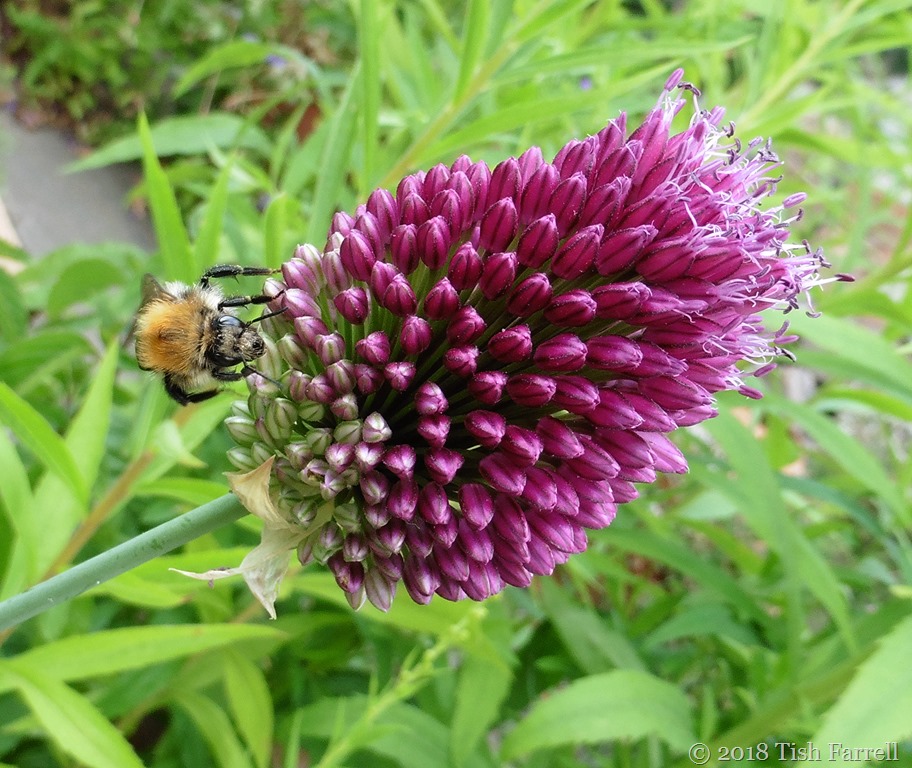
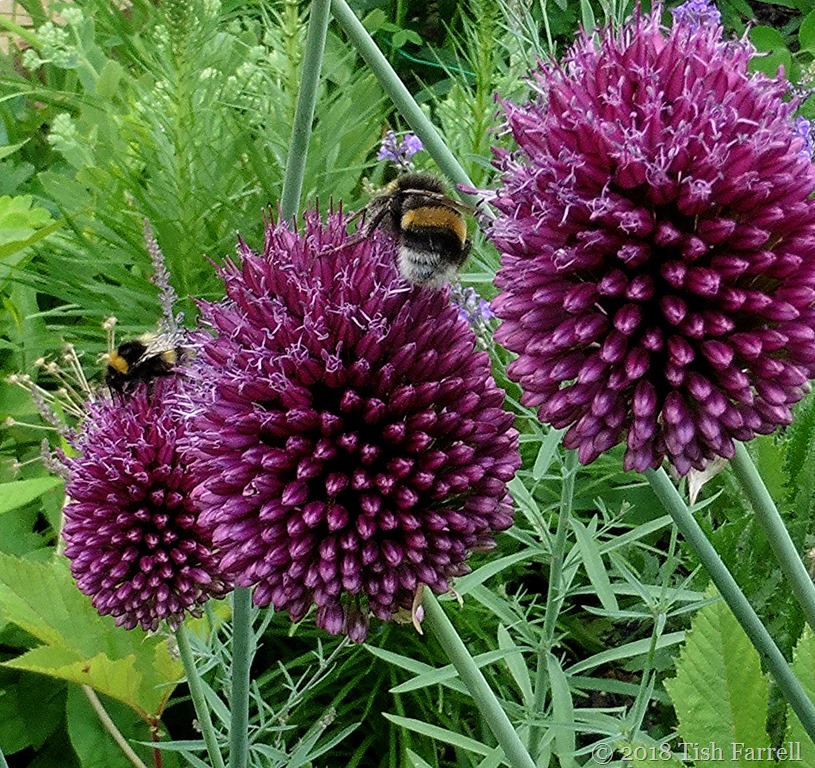
I’ve written quite a lot about bees on this blog, and in particular the threat of neonicotinoid pesticides to which, researchers suggest, bees become addicted (see Bee-ing Bee-Minded), so I am hugely pleased to find so many bees feeding on my untainted raspberry flowers. Nothing like the sound of happy, busy bees and the sight of all those raspberries in the making.  Thank you bees.

P1060334

P1060329

P1060355

P1060358

copyright 2018 Tish Farrell

Of Sunset Over The Rooftops From The Allotment And Much Toiling On The Plot (As In Gardening Not Writing)

All of a sudden we’re having summer here in Shropshire, and it’s a case of catch-up at the allotment – not only with the jobs that could not be done over the cold, wet thrice snowy winter, but also trying to keep up with spring-sown plants that are romping every which way and need to be put somewhere. The ‘somewhere’ inevitably needs more preparation than I’d realised, and more digging than I’d hoped to do, given my no-dig pipe dream objectives. I’m beginning to think our Silurian Clag really needs total soil replacement – as in complete interment by a foot of decent loamy earth. And if that’s down to me, then that means making humungous quantities of compost. It could take years.

Yesterday I did five solid hours of labouring under the sun. The new plot by the polytunnel was alive with bee-hum. The bees were whizzing by with such greedy intent among the raspberry flowers, I could actually feel the air move as they passed me. Bbbzzzzzzzzoom. And then the birds were singing their hearts out – loud, louder, loudest – especially the blackbirds. Which reminded me to put netting over the strawberries. I ate my first sun-warmed strawberry yesterday – the best strawberry of all – that first one.

The five hours slipped away. Gardener’s time is of course quite different from everyone else’s. He Who Waits At The Farrell Establishment never knows when supper is happening. Also when I do decide to head for home the light is usually so diverting that I have to start taking photos. Besides, the raggedy old allotments are a wonderful place to be at sundown – when you have put the spade away and shut up the shed – the wide views over Wenlock; the scents of growing; the quietness of plants.

Much Wenlock from the allotment 2018 sq

copyright 2018 Tish Farrell

Roof Squares #4

On the Path To Harakopio ~ The Putative Roof

pantiles sq

I’ve had a passion for pantiles since childhood when they appeared in a storybook I was reading. The story was set in Spain, and I have absolutely no memory of what it was about. Only the pantiles stuck. Once I had discovered what they were, and that they were made of terracotta, and so were red like clay flower pots, and nothing like the boring, dun-coloured slates on my own house, they gave me my first magical sense of ‘the foreign’ – of lands and peoples beyond my island. But perhaps more than that, they suggested new horizons, and new possibilities; only in my imagination though. My family was not one that ‘went abroad’.

And so this pile of tiles simply had to be recorded on our walk to the supermarket in Harakopio. It is hard to say whether they are leftovers from a past project and thus spares for an existing roof, or if they are a roof in-waiting. Or being Greece, if they are simply there, stacked up under an olive tree.

Here’s an actual Harakopio village roof: interesting compilation of new and old.

IMG_2470sq

And a roof with a very nice datura, the spitting image of the one I once planted in my front garden in Nairobi, bought from a roadside nurseryman.

IMG_2468sq

For more of the walk in words and pix see On the path to Harakopio

Roof Squares #3 Now over to Becky

Greek Tortoise ~ Own Roof, Will Travel

P1020442sq

The path to Peroulia Beach from Harakopio takes you down winding lanes and through olive groves. On one such expedition we met a tortoise. A fine specimen it was too and so, still with notions of living roofs in mind, I’m posting it for today’s offering at Becky’s month of roof photos. And also for Debbie’s 6WS.

June Squares: roofs

Six Word Saturday