Serenity ~ Inside And Out

P1060459 - serenity

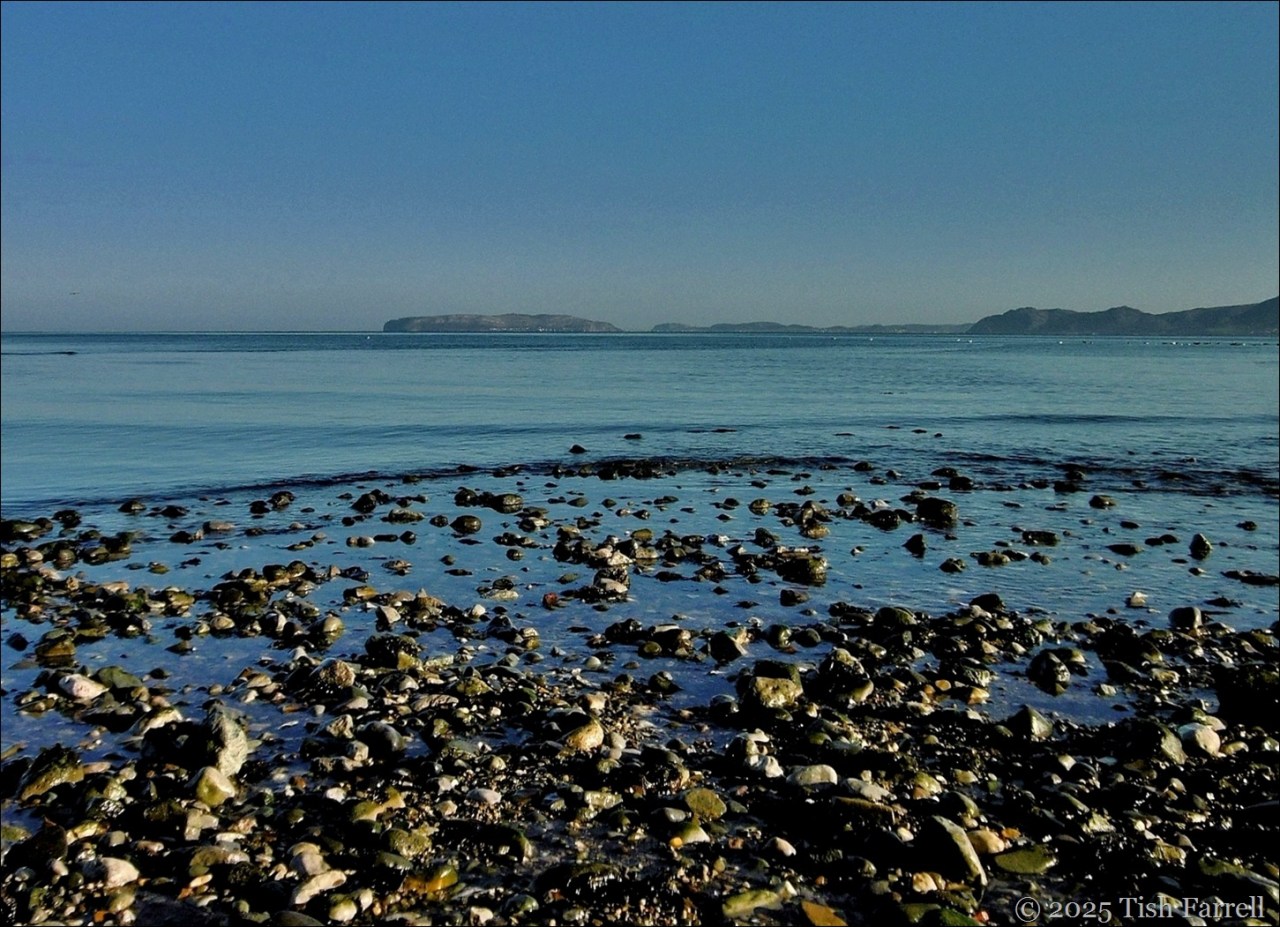
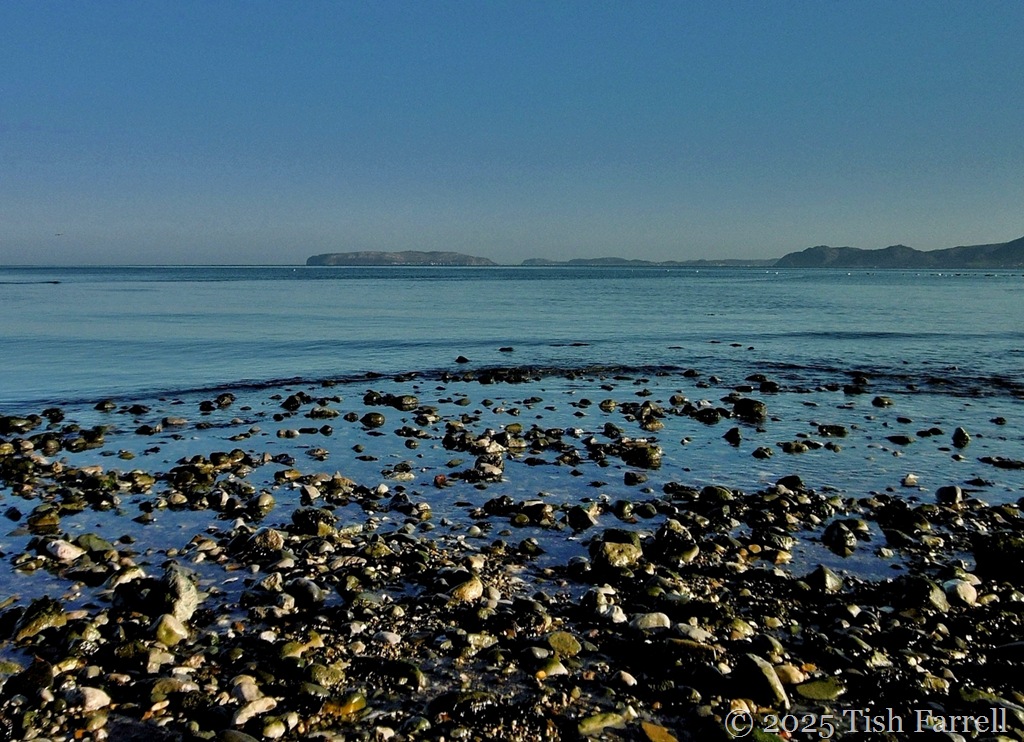
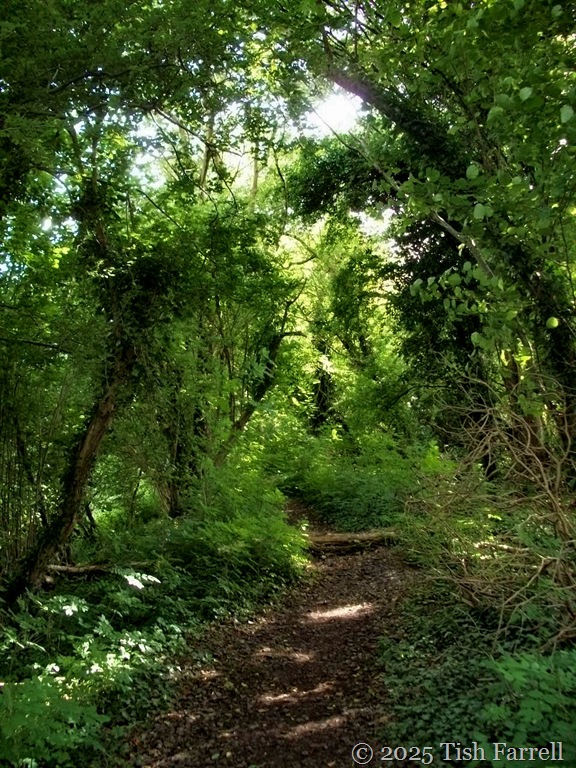
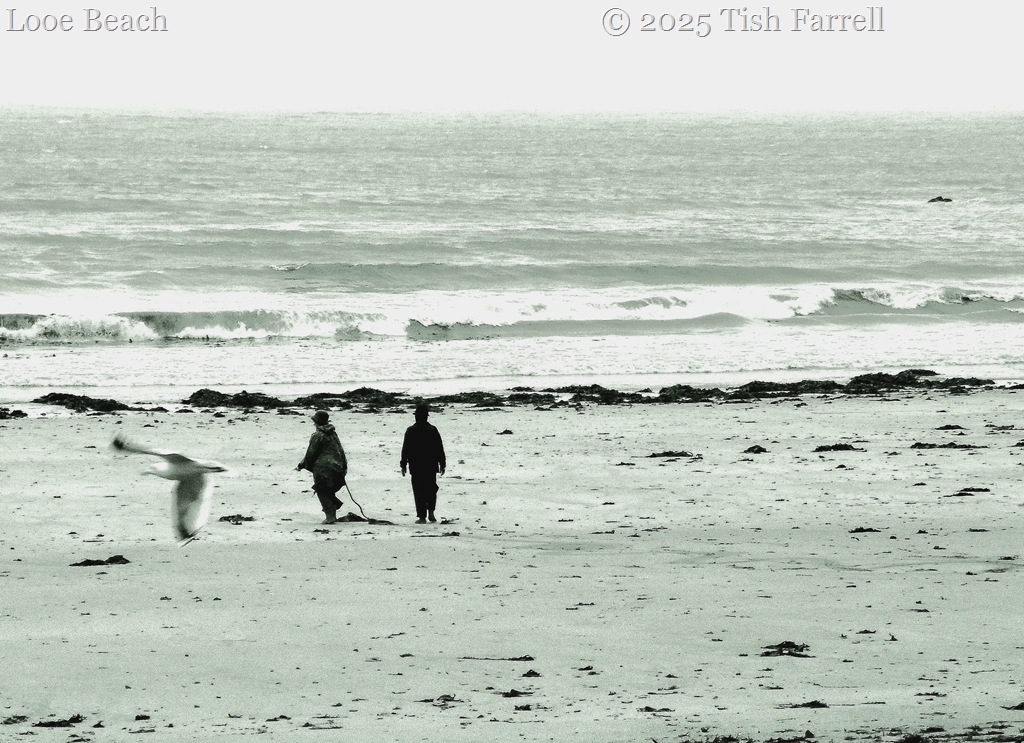
There are vistas that manifest serenity – at least as seen through human eyes. (I mean who knows what fervid biological imperatives are playing out beneath the calm surfaces of things).

This distant view of the Great Orme from Anglesey was shot on a late December day, the air so still there is barely the hint of a tide. No clouds either, and the sun warm enough to go coatless and believe the seasons have fast-forwarded to June.

*

Another ‘still waters’ scene. An end-of-summer sunset in Kalamata. I watch a naked man wade into the rose-tinted shallows of the Messenian Gulf, talking on his cell phone.

serenity

*

And a third sea-serenity scene: another December, this time long ago, a tropic summer afternoon on the Manda Strait; Lamu, dhow captain Mzee Lali dreams.

Scan-140801-0001serenity

*

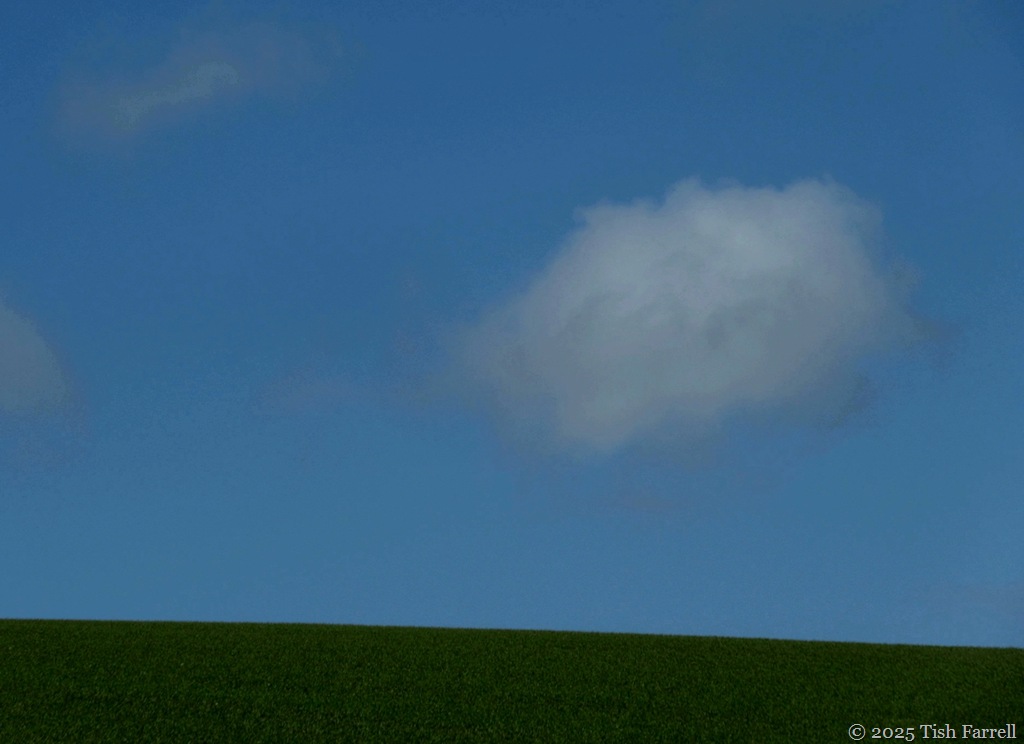
Then there are things that induce a sense of serenity in me. This unruffled cloud for instance…

IMG_6932

*

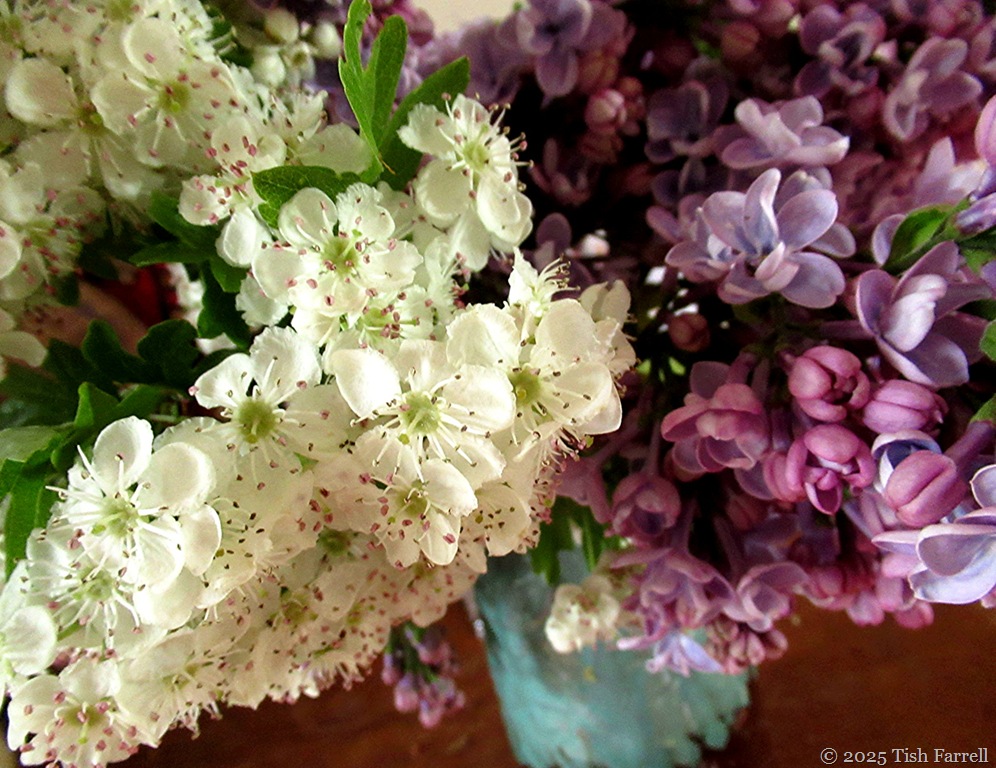
The close-up view of hawthorn blossom and the scent of lilac…

IMG_7582

*

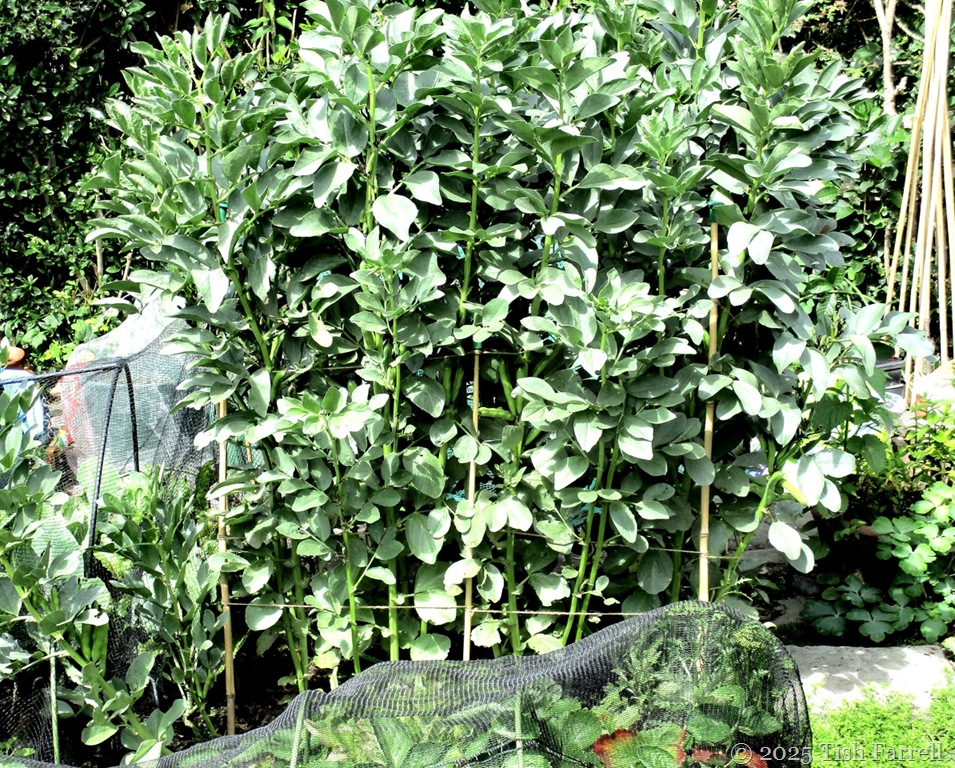
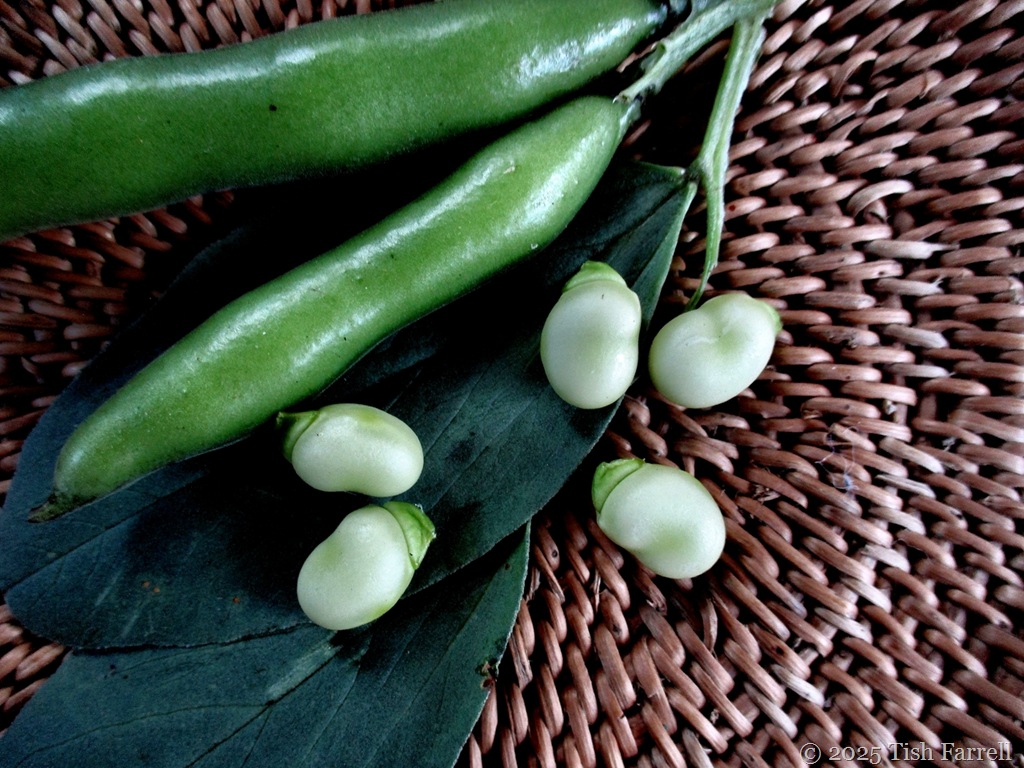
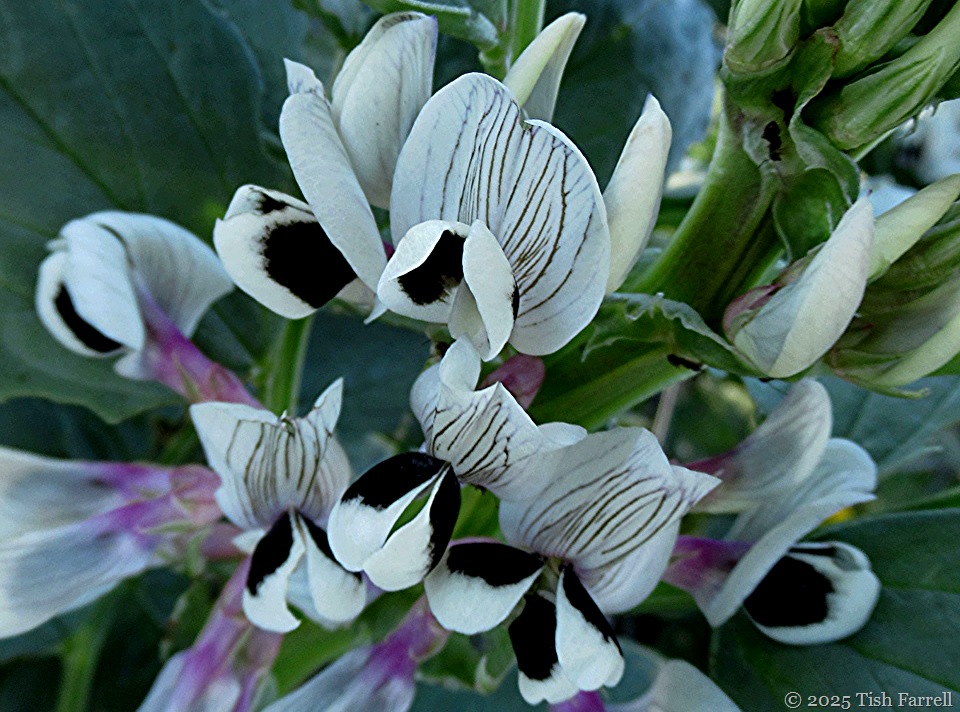
The gentle fragrance of bean flowers and pleasing thoughts of beans to come…

IMG_7640

*

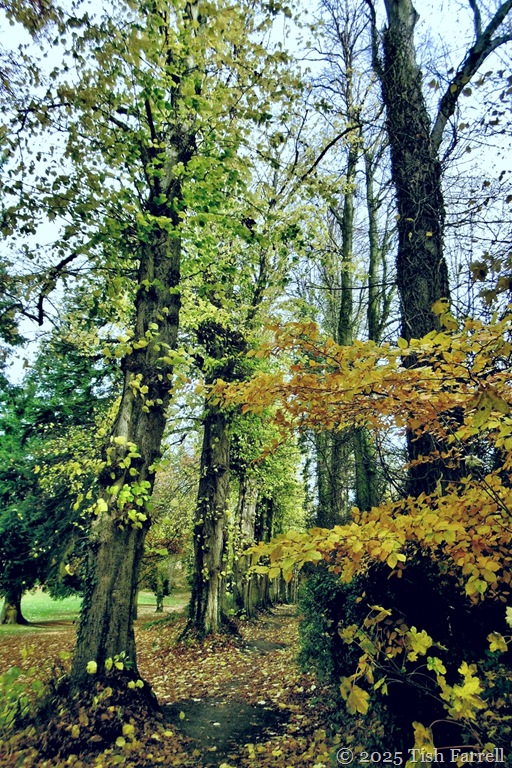
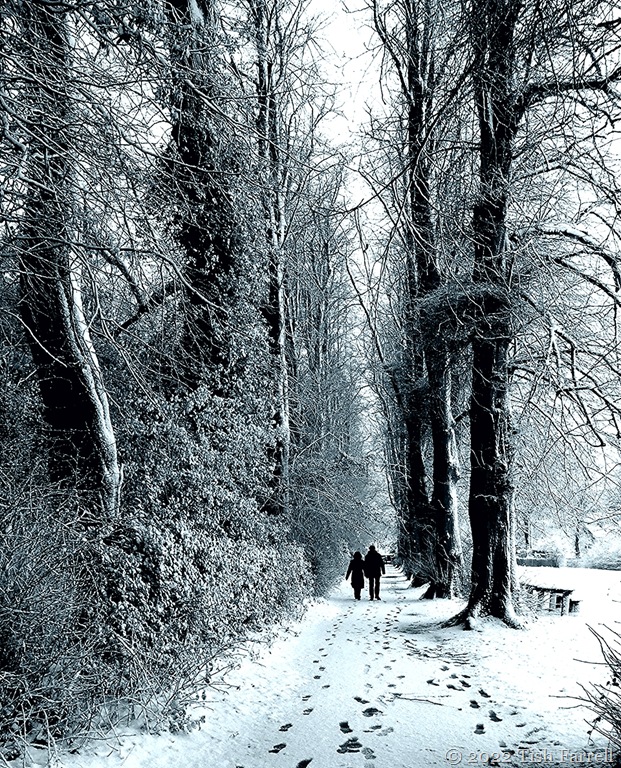
And the all embracing company of trees…

100_5864ed

*

…whatever the season…

P1050998ed

P1030637

Lens-Artists: Serenity  This week Egidio at Through Brazilian Eyes sets the theme. Please pay him a visit.
Breaking the rules: more by accident than on purpose…

P1060350ed

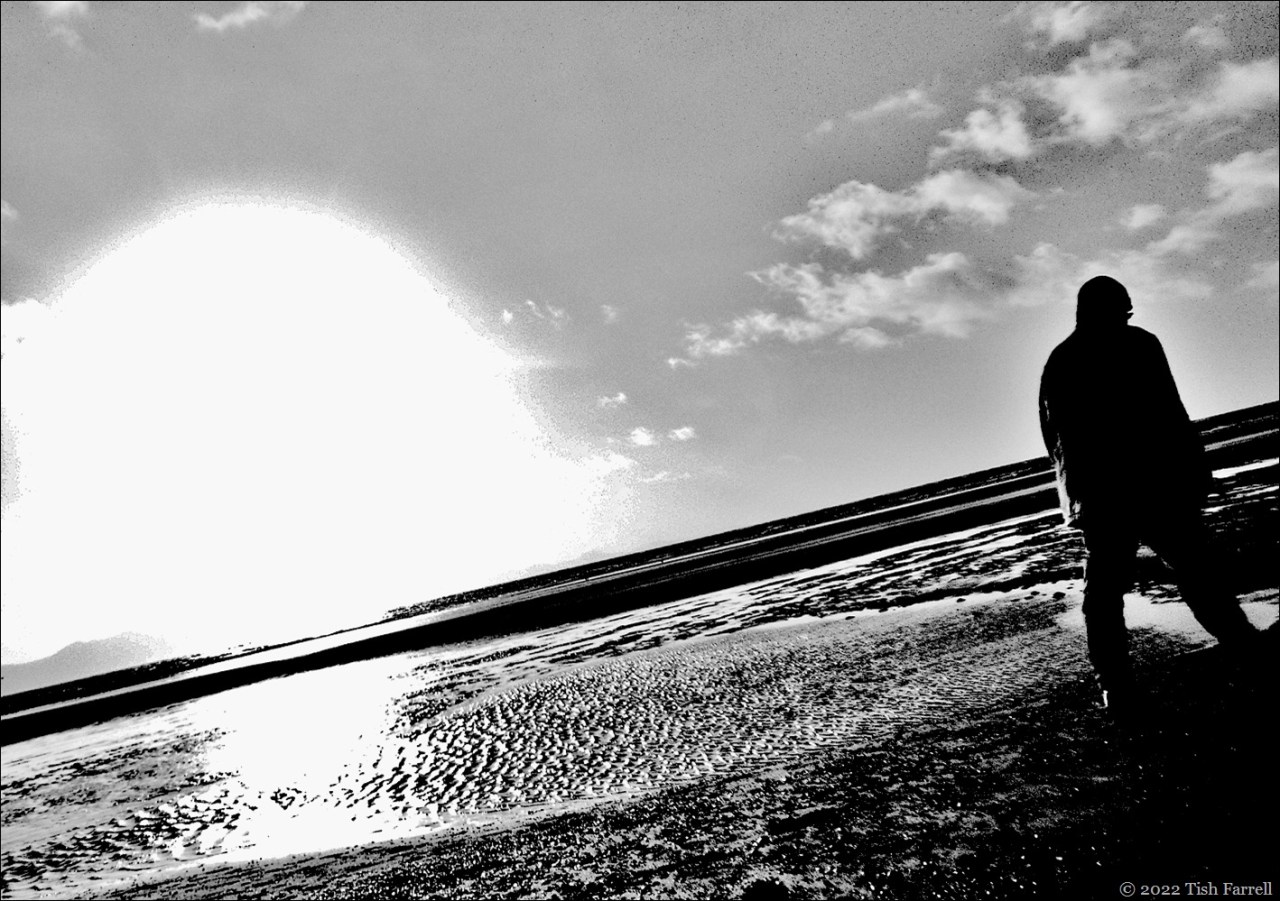
I’m not sure what was going on when I took this photo. An unintended composition, methinks: camera aslant; subject leaving the scene; shooting into the sun.  An all round combination of errors, but then I also quite like the end result.

*

P1060737 (2)n

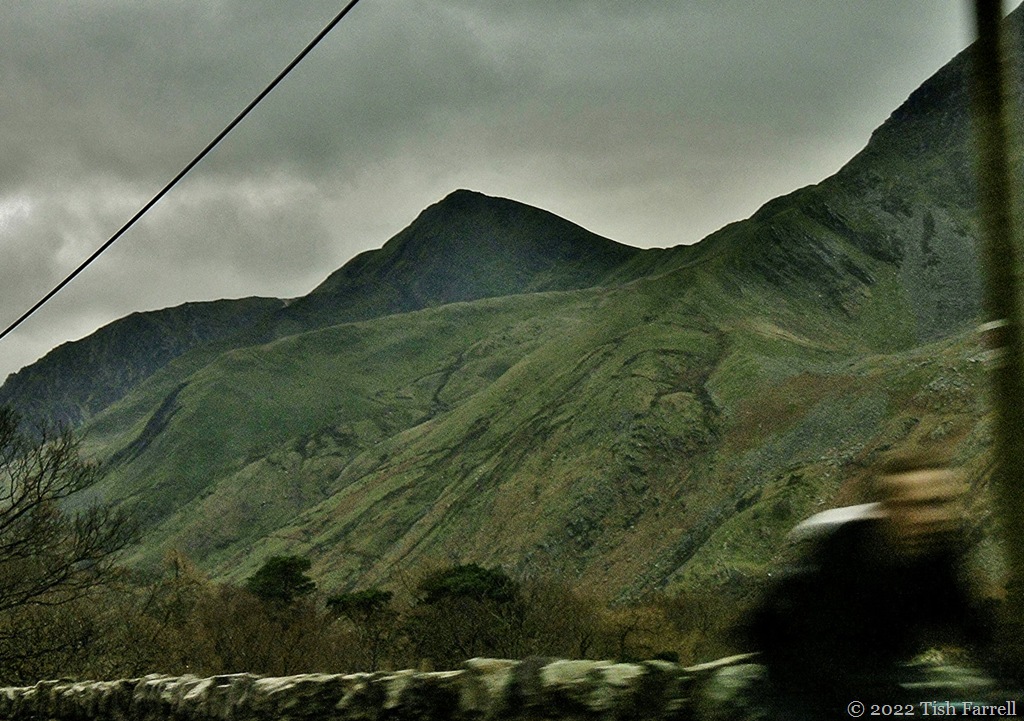
Here both the camera person and the subject were on the move, in other words, me snatching this shot of an uphill cyclist through the car windscreen; caught on a bend in the  Llanberis Pass, North Wales.

*

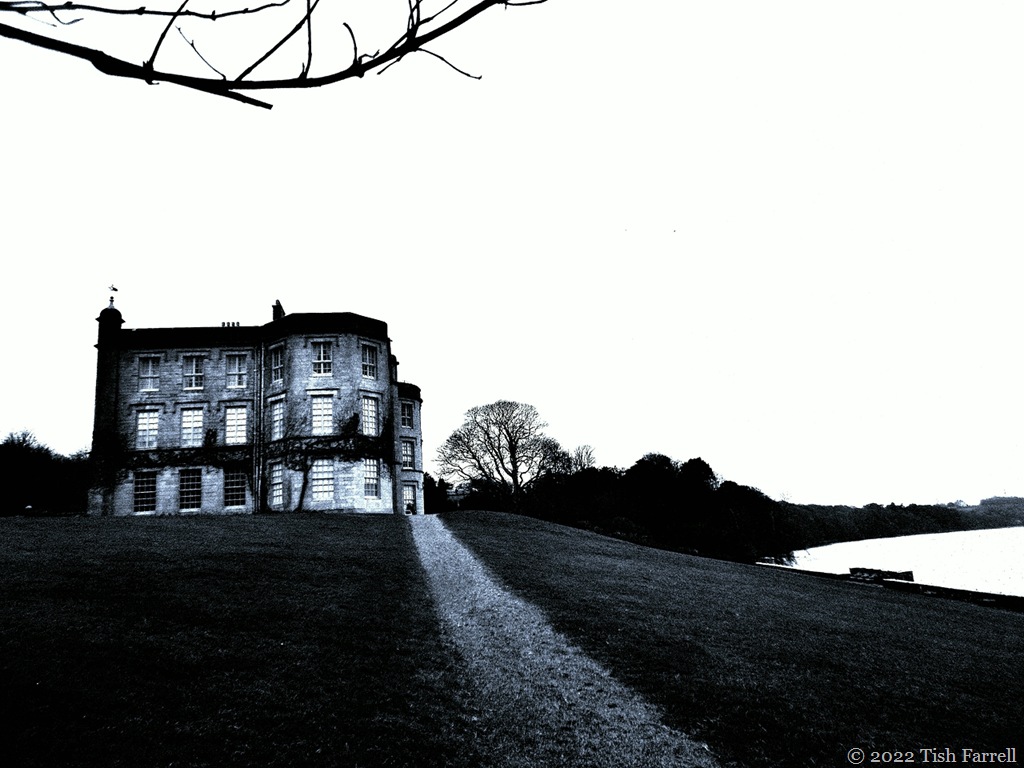
Next at Plas Newydd, Anglesey in late December, taking a photo when there wasn’t enough light and leaving a twig in the way:

P1060709

*

IMG_7108

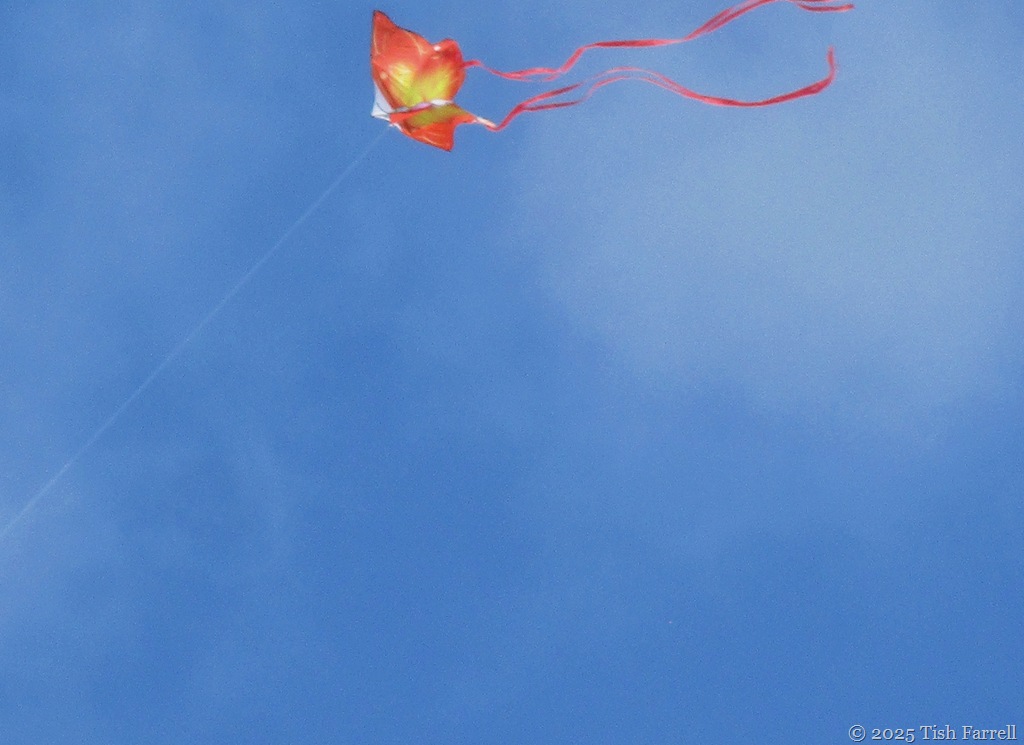
Taken on Newborough Beach back in March: too much negatives space; subject out of focus and also leaving the frame. But then that’s kite-flying for you.

*

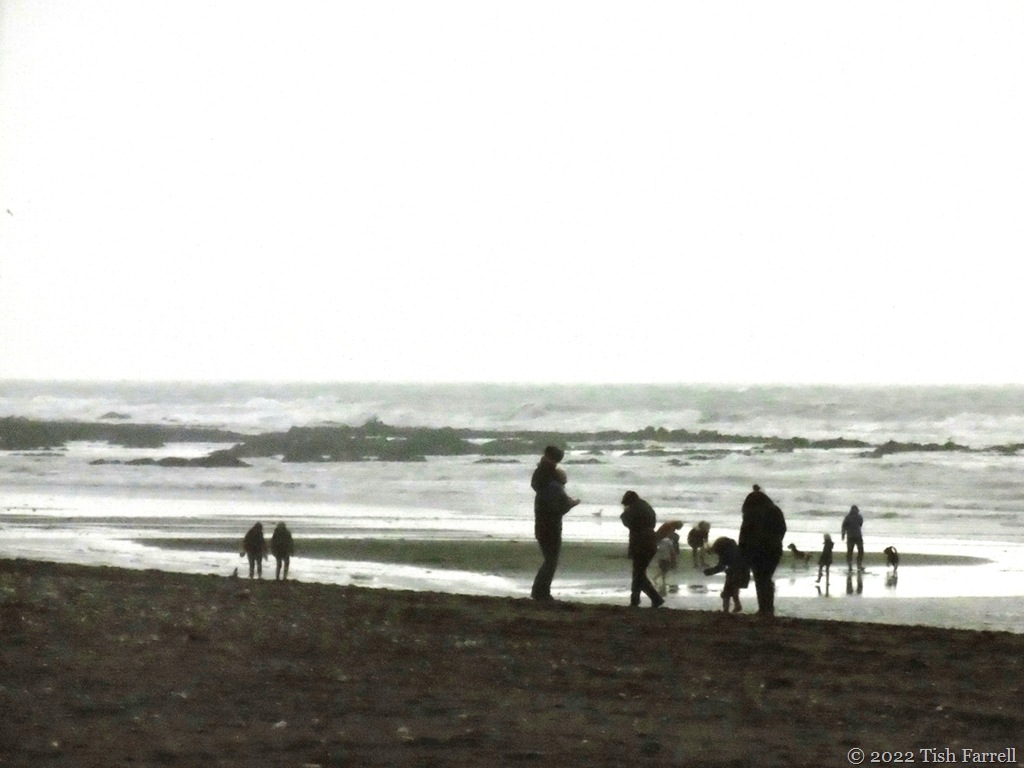
And camera on the wrong setting for a winter’s day on Seaton Beach, Cornwall. It seems to have created an oil painting effect:

P1020711ed

And last but not least of strange creations:

IMG_2134ed

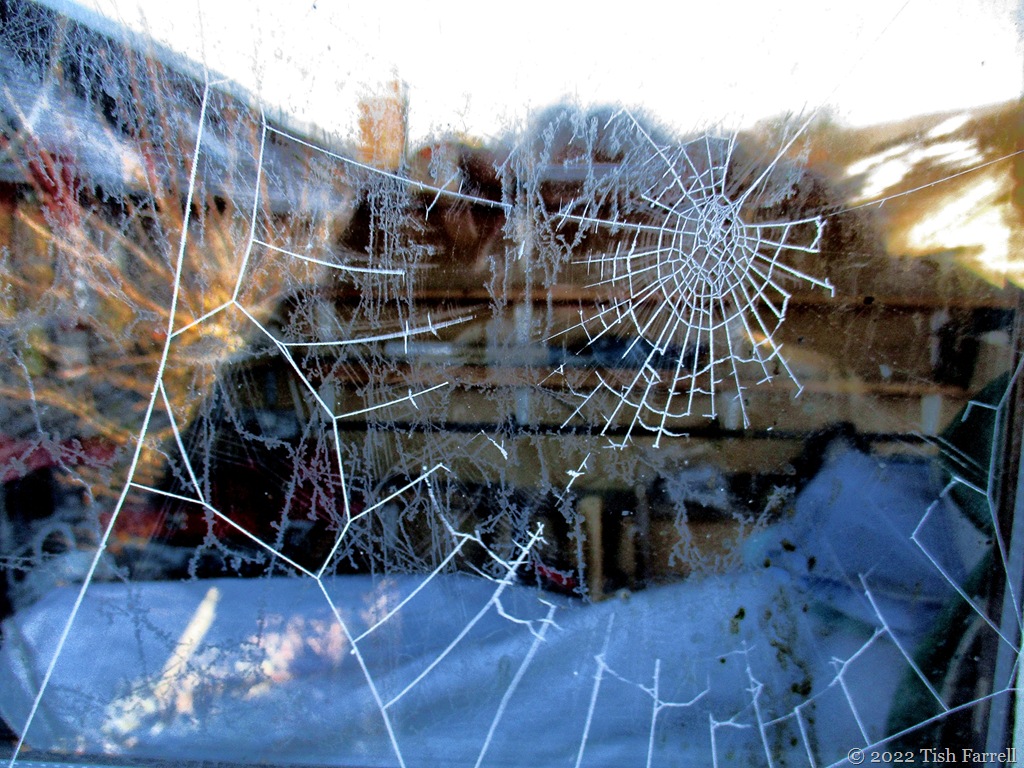
It took me a while to work out what I’d done here. Basically it’s a photo of a frosted spider’s web stretched outside the window of other half’s old Wenlock shed. But you can see both the shed interior and the reflection off the window which seems to show neighbouring rooftops and some of the garden.

Lens-Artists: Break the rules  This week Ritva tells us to break the rules. See her post for some inspiration.

Cinematically Cornish

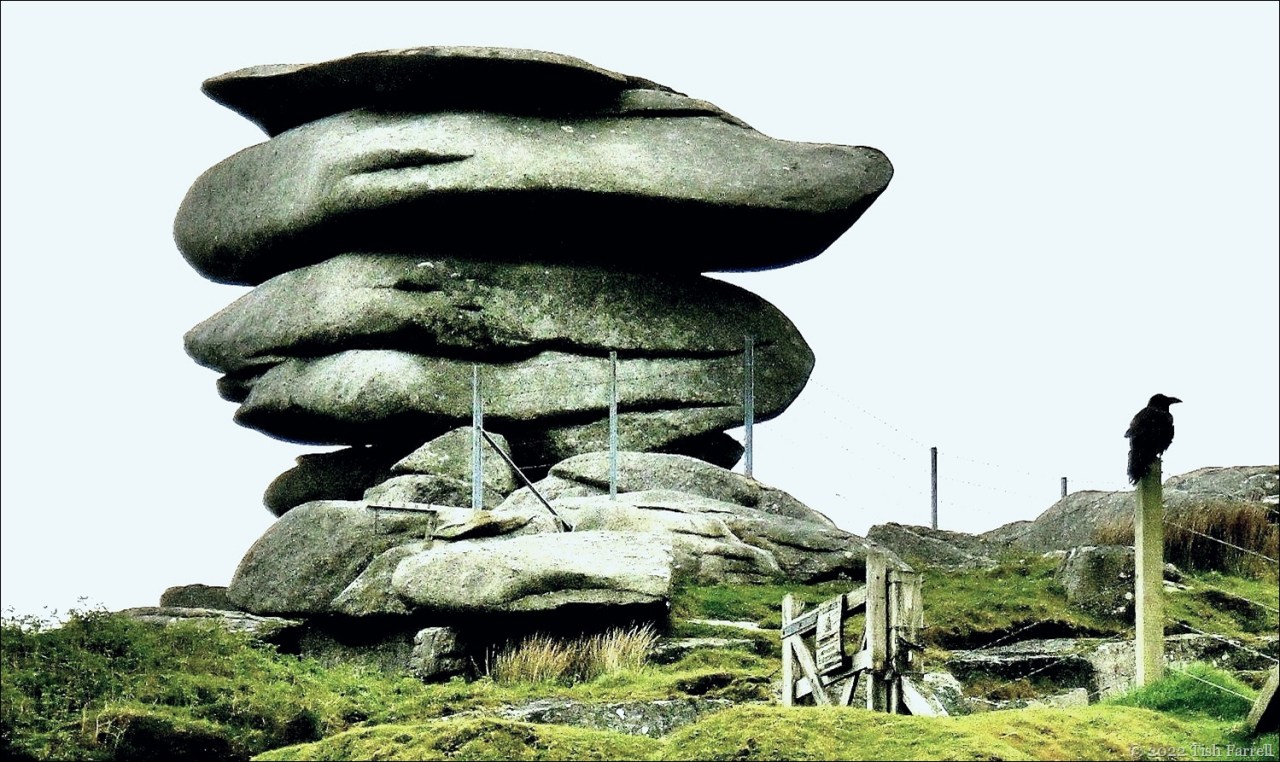
P1080012cheesewring Bodmin

This week at Lens-Artists Sofia calls for a cinematic approach to our photography.

This is what she says:

“There are a few things that give a photo that cinematic feel: camera angles, bold and high-contrast colours, light, locations, just to name a few. The main objective is to take a shot that is part of a story, there’s mood and a sense of location; our image is but a snapshot of a much wider situation.”

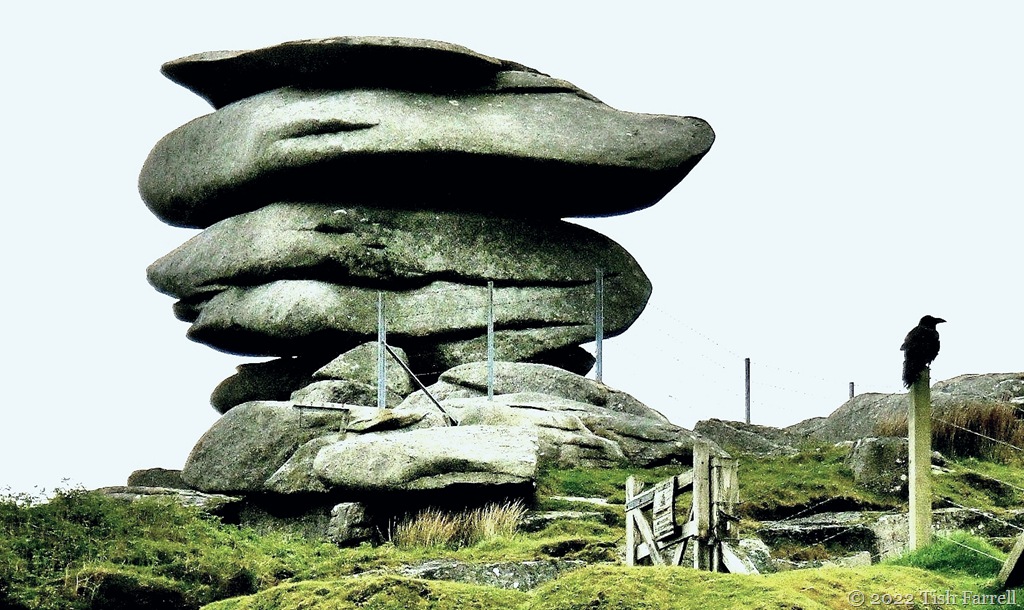
The first four photos here were taken one bleak spring day on the edge of Bodmin Moor near Minions in Cornwall. This, Great Britain’s most south-westerly county is a land of dramatic vistas: of high moors and rugged shore-lines. There are stories everywhere, layered through time like the ‘pillows’ of this granite tor, known locally as the Cheesewring.

The tor has its own stories of course. The first is one of weathering over millions of years, wind and rain driving into its crevices. Then there is the Dark Ages tale, from the post-Roman times when Christian missionaries  were beginning to make their presence felt. The proponents of new faith were not always welcomed, and so the formation of the Cheesewring is explained as the result a quoit-throwing contest between Uther the giant and a saintly missionary named Tue. If Uther won, then the Christian must go. Th giant lost of course.

The Cheesewring name itself has different derivations – either a straining device for making cheese, or else relating to cider brewing wherein the press of apples to a pulp is referred to as cheese.

There also some mystical notions, for it’s said that if you come to the Cheesewring as day dawns you will see the top ring turn three times. Which makes me wonder if that crow might have something to say on the matter.

*

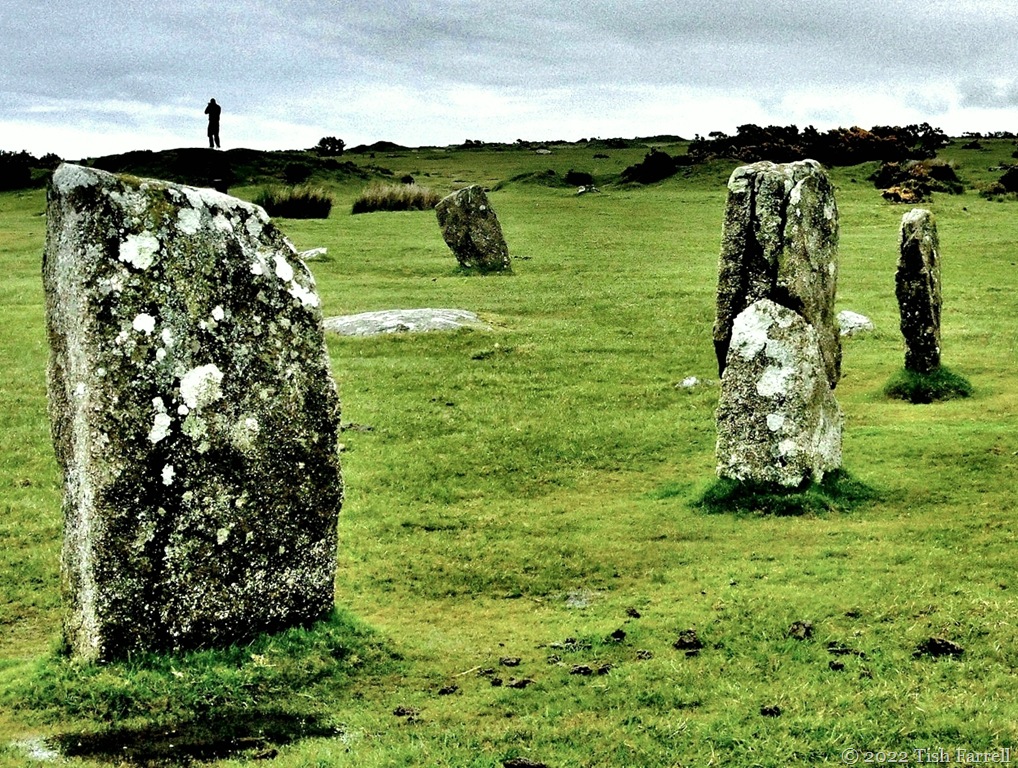
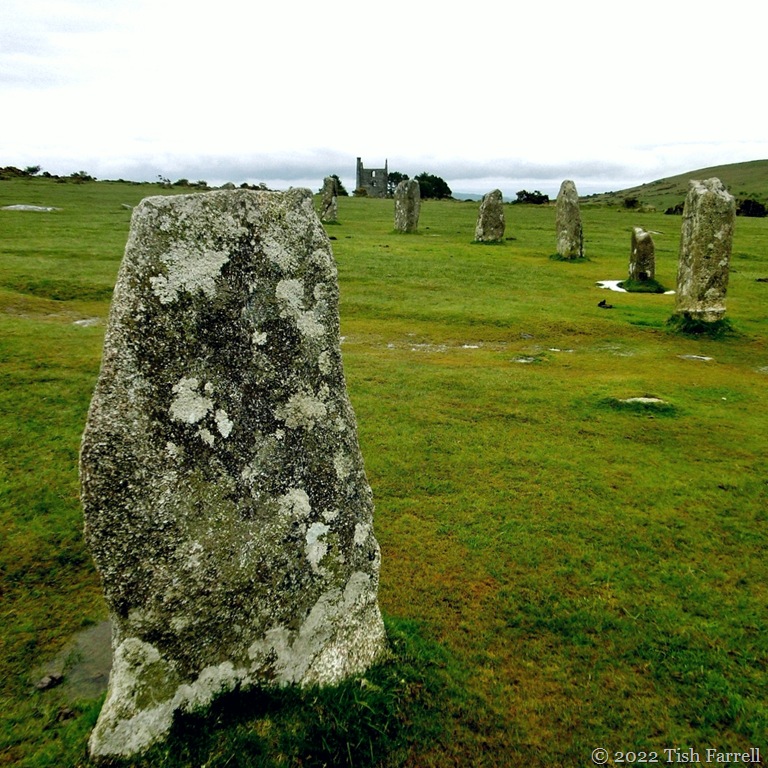
Below the Cheesewring we step back into the remnants of a prehistoric landscape: three Neolithic stone circles called the Hurlers. But as to that figure apparently hovering on the horizon – who knows what time stratum he belongs to.

P1070982ed

P1080022ed

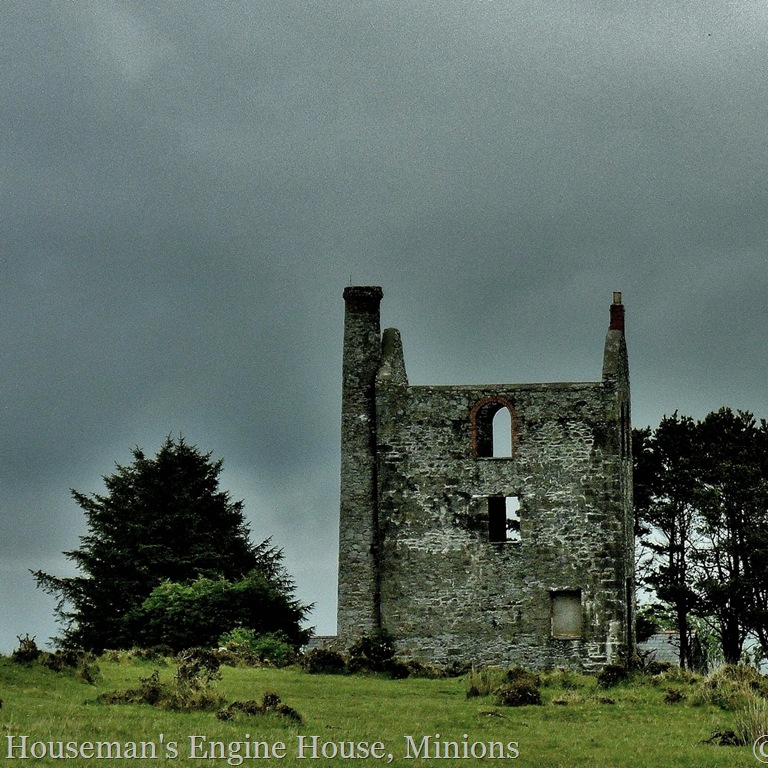
Looking through the Neolithic circle we come to another narrative: one belonging to the 1850s – 1890s when the South Phoenix Mine was churning out train loads of copper, a time when over 3,000 people were employed here – women and children included.

P1070983ed

There is more about these stories at an earlier post: ‘Hurlers and Miners: 6,000 years of heritage on Bodmin Moor’ HERE.

*

Cornwall does have its own cinematic history. Several Cornish based novels by Daphne du Maurier have made it to the big screen, some in duplicate versions – Rebecca, Frenchman’s Creek, Jamaica Inn, My Cousin Rachel. Her deeply disturbing short story,The Birds, is also set in Cornwall, although Hitchcock chose to transpose it to San Francisco. Du Maurier’s works are usually classed as romances, but they also have dark undercurrents, sometimes touching on the paranormal, their settings the wilds of Bodmin Moor, brooding mansions, sheer-drop sea cliffs, rocky coves and crashing surf.

So here are some more Cornish photos, taken one gloomy December, and with a little nod to Daphne du Maurier’s sensibilities.

P1020701ed

*

P1020927 ed

*

P1020611ed

Lens-Artists: Cinematic This week Sofia at Photographias sets the theme.

It’s All Birds And Bees In Our ‘Castle’ Garden

IMG_7447ed

Well, they do say an Englishman’s home is his castle. And for this English woman, this stronghold must obviously include the garden. At least I like to think the garden is my domain; my own small fiefdom.

The wildlife, of course, has other notions. This mama blackbird, for instance, is quite sure my purpose in life is to provide her with fresh feeding stations. As soon as I begin work in the garden she’s there, poised to snatch a worm or grub. If I do not provide quickly enough, she fixes me with that beady eye, and starts her own digging.  This has led to us falling out somewhat. I’ve had to net all my vegetable beds to stop her rooting out my seedlings.

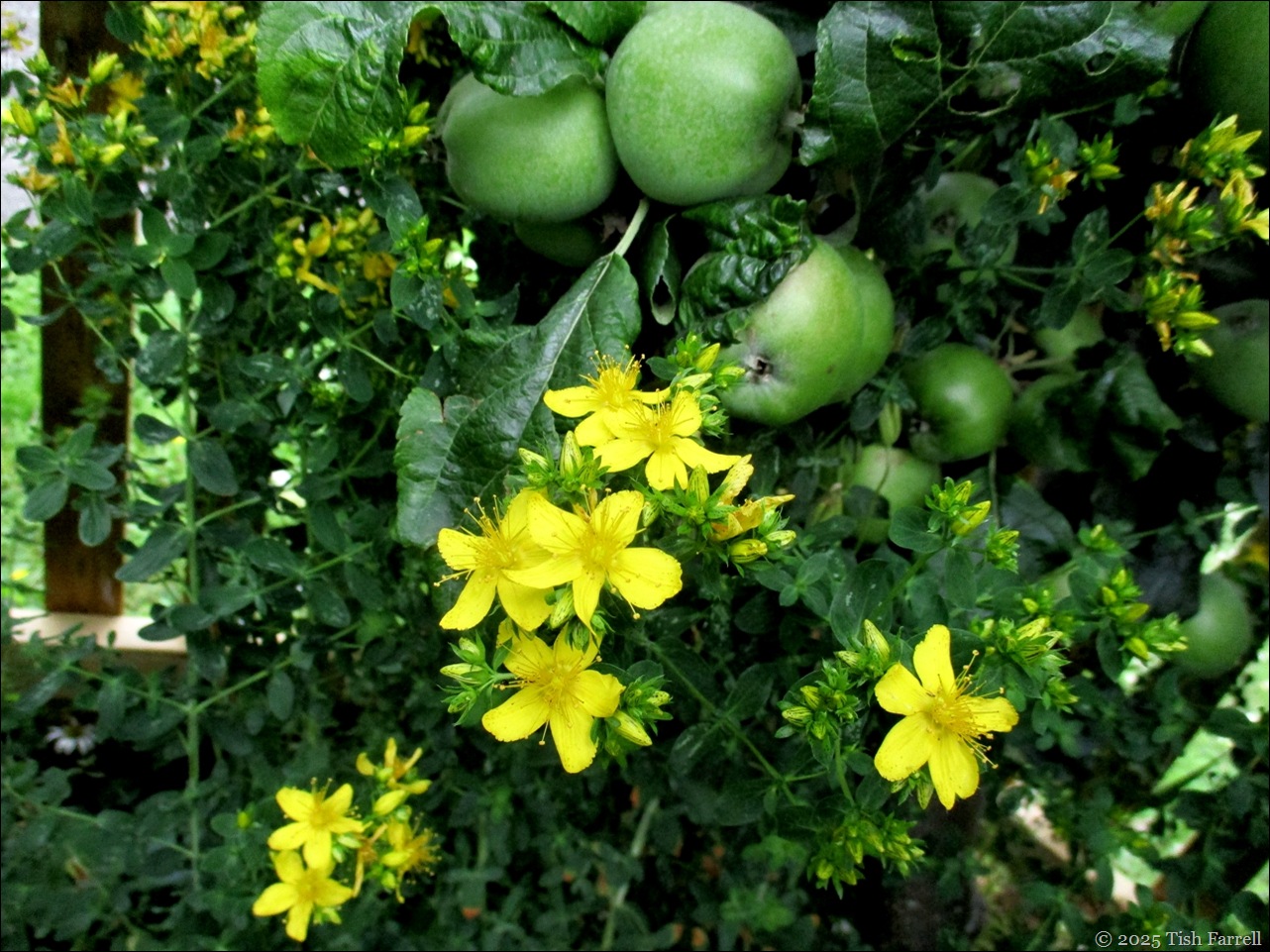
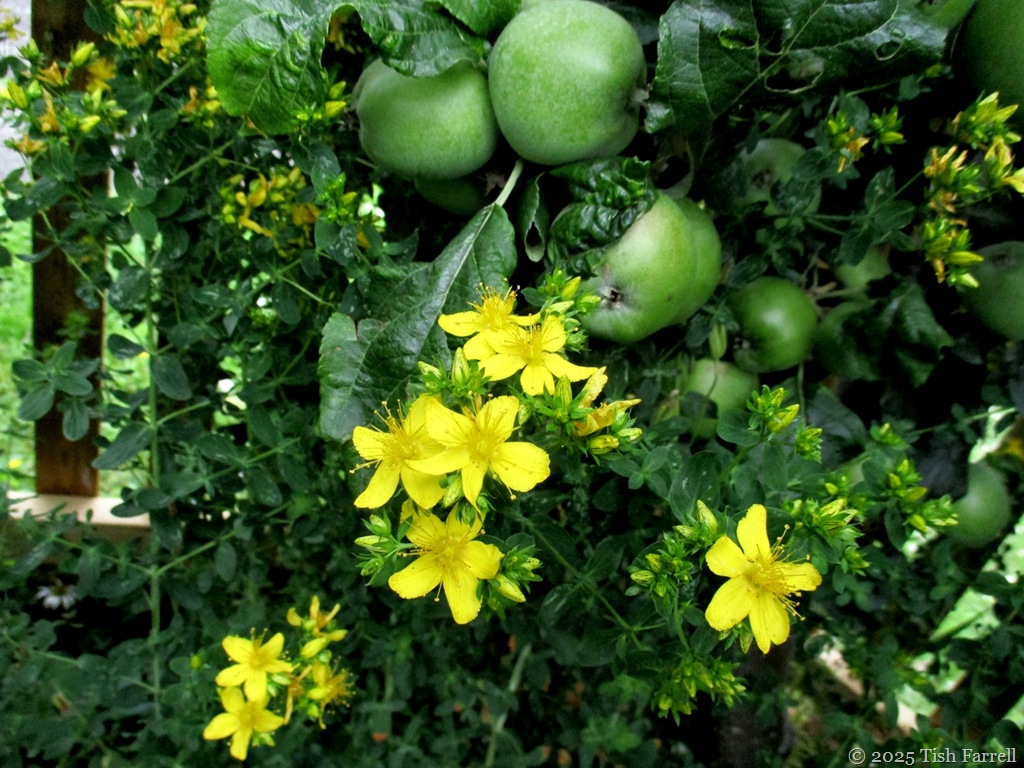
But she did keep me company while I cleared the boundary wall with our neighbour’s garage. It was a horrendous job, hacking out ingrowing and overgrowing hypericum (Rose of Sharon) that years ago had been planted along the top of the wall, and since turned itself into a stretch of brutal anti-tank wire, while inviting Spanish bluebells, ash trees and willow herb to join in the fray.

IMG_7328 ed

I’d been tackling the job on and off since last summer. But now it’s done.

IMG_7332 ed

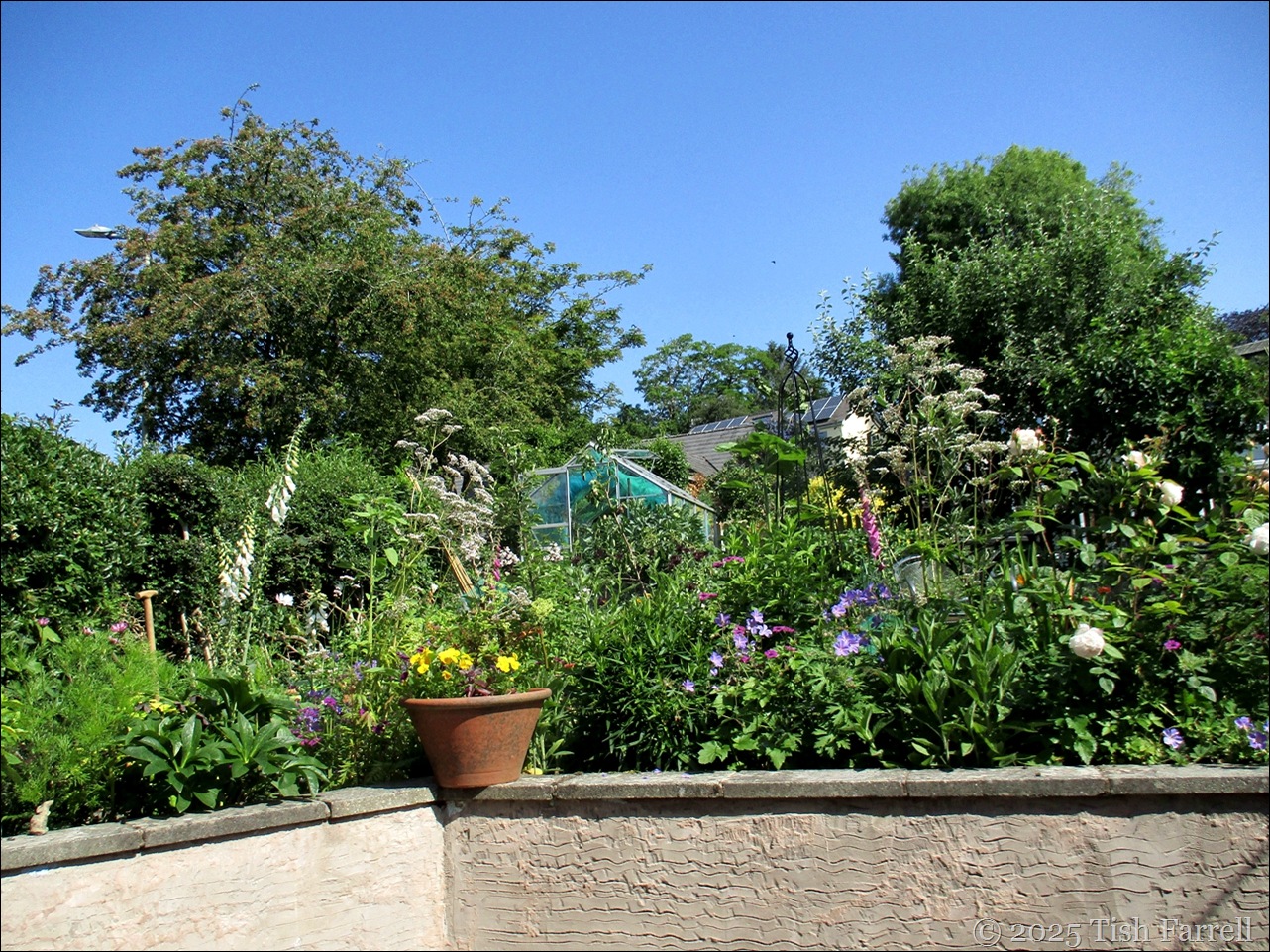
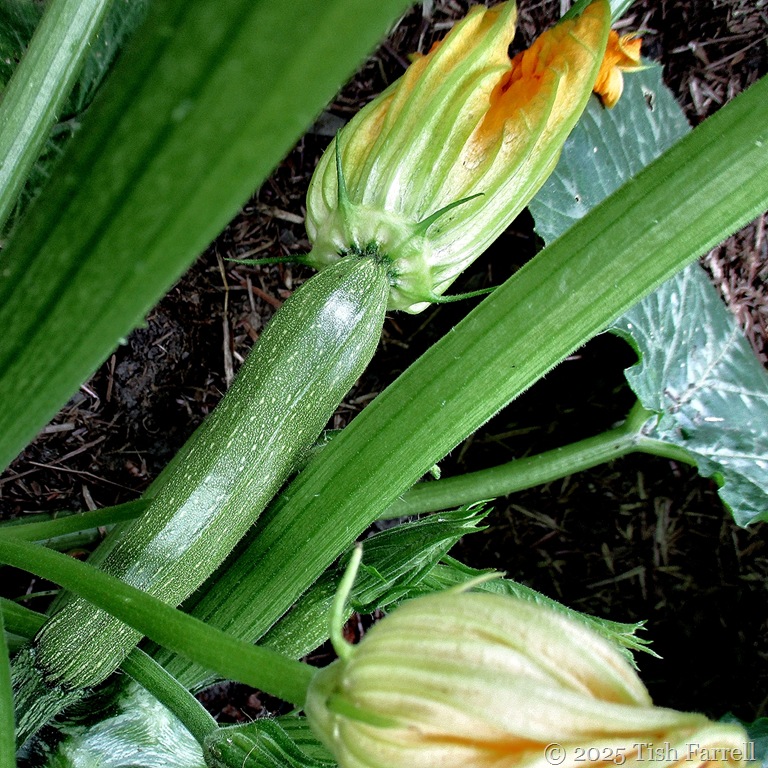
I’ve planted the road end with a couple of trailing blackberries designed for hanging baskets and also some foxgloves which had grown themselves in the back garden. As for the rest, for this year I’m thinking of putting in various kales and perhaps courgettes; nothing permanent in other words. I’ve discovered that hypericum shoots and roots from the tiniest scrap of itself, so it will probably take a few seasons to clear the bed.

Meanwhile mama blackbird has been well fed, and the feeding clearly paying off. Two days ago, while planting a hornbeam sapling to fill a gap in our rear hedge of horrors, I had the sense of being watched. When I peered into the tangle of privet, holly and sycamore, there she was, sitting still as stone, on a very neat nest, looking straight back at me. I left her in peace.

As blackbirds go, I suspect she is rather elderly. Her tail feathers look more than a touch bedraggled. But she has us weighed up as non-threatening entities, choosing to nest right by the path that we use all the time. She is not afraid to leave it either, when she sees me with a spade. Yesterday,  when I was unearthing some ash tree saplings further down the hedge, she was right there, just in time to gobble up a big juicy worm.

IMG_7417

Male blackbirds don’t do nest duty, but I’m assuming this is papa. He’s taken to singing sweetly in the hawthorn tree just over the hedge. He shows up when I’m digging too, but not if mama is around. (She sees him off). He actually comes very close and tweets at me, if I’m not providing worms.

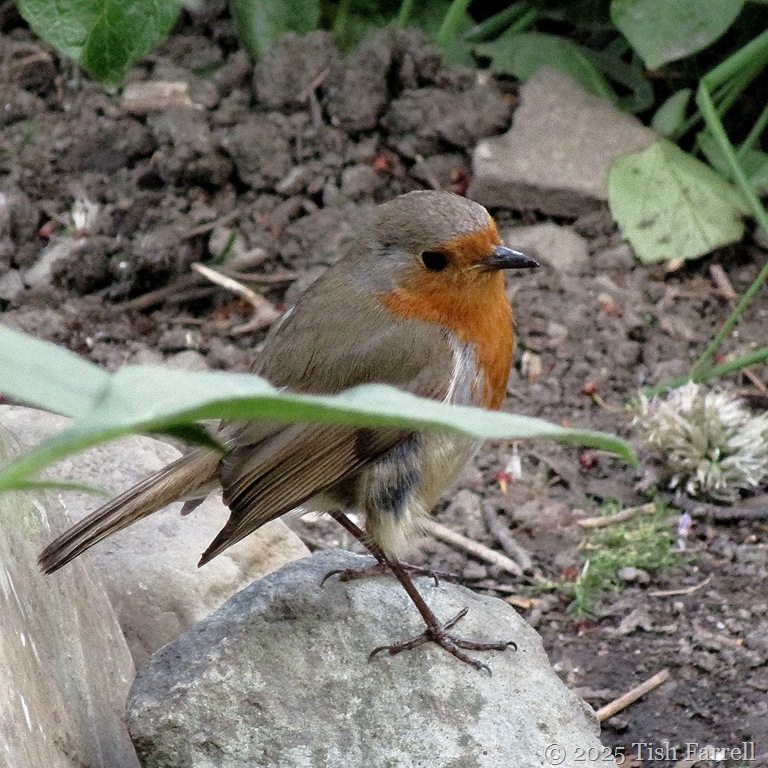
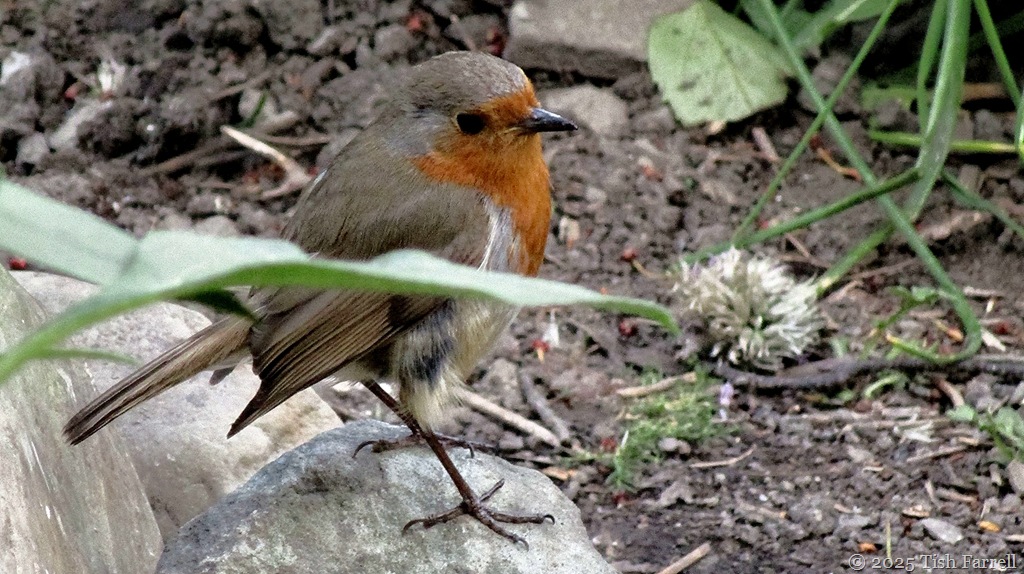
Earlier in the year it was the robin who would come nagging as soon as I set foot in the garden. He/she was especially pleased with operation dig-out-compost-bin, but now is perhaps too busy with egg minding to be around so much.

IMG_6911ed

IMG_6843

*

Other birdlife, as in pigeons, I’m not so pleased to see. They’re another reason for having netting all over the vegetable plots, though it doesn’t stop them from nibbling through the fine mesh if the plants grow too close to the edge. They like spinach, brassicas, chard, chicory, beetroot leaves, lettuce, young field bean leaves and lemon sorrel.

IMG_7437

IMG_7434

IMG_7508

The garden is very much ‘a first draft’; there’s much to sort out (tidy) and much trial and error (given the lack of an actual plan). Next week a paling fence will start going up around the perimeter (from behind the greenhouse and round). It won’t be too tall but will create a boundary for fresh planting which might help focus this gardener’s mind.

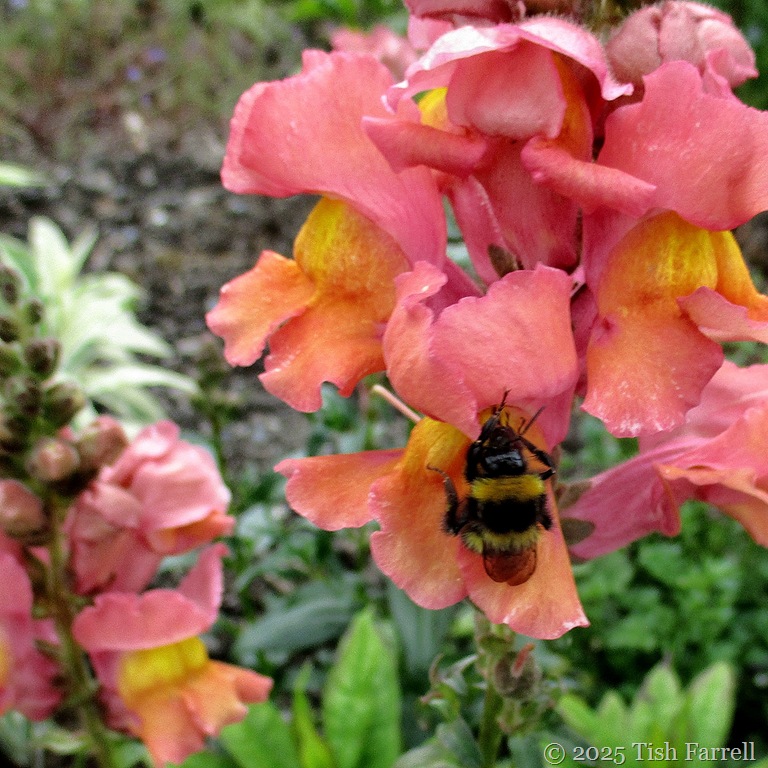
For now we are enjoying the apple blossom, and especially the little tree which is flourishing between the compost bins, one open, one hot. I think it’s a Crispin. The black hot bin is not a pretty sight, but the mass of flowers is lovely and, in a spot of warmish afternoon sun, is alive with bee hum. Just look at the pollen sacs on the bees’ legs.

IMG_7478

IMG_7474sq

IMG_7427

*

And there’s not only apple blossom. On the terrace wall we have tulips. They are presently looking rather glamorous:

IMG_7426ed

IMG_7425

So: spring is here in the Farrell domain aka Castle (also the locals’ name for the town), and in moments when the wind drops and you stand in the sun where the air is less frigid, it feels like it too. Cheers, fellow gardeners! Happy planting!

Six on Saturday: blackbirds, robins, bird defences, apple blossom, bees and tulips

copyrithg 2025 Tish Farrell

We’ve Been Having Blue Sky Days…

IMG_7302 blue

*

They arrived with the spring equinox on March 20th…

IMG_7303 blue

*

… days hot in the sun, but ice-cold in shade, as if the air came straight off a snow field…

IMG_7307 blue

*

…yet so enlivening, it had us one day walking (instead of driving) to the builders’ merchants on the edge of town…

…spotting, as we went, wild cherry blossom, the bright white blackthorn that is everywhere in drifts on farm hedgerows, and then the distant green of wheat fields and fresh grassland.

IMG_7311 blue

*

Meanwhile, the town lanes and gardens have been aglow with magnolias, daffodils, pussy willow, forsythia, camellias, fire-red japonica…

IMG_7300 blue

IMG_7284

IMG_7287 blue

IMG_7326 blue

…and the cherry plum by the house has day by day been turning from pink to bronze, as blossom flutters off and gives way to leaves.

*

And so the Shropshire countryside has been drowsing in a haze of vernal glamour: an earth dream of a perfect spring come to life.

The blue sky days turned into weeks, three to be exact. Long enough for us to grow used to blissful weather, to think it ours forever.

In the garden, our faces turned often to the sun, we noted the little pear tree begin to flower…

IMG_7317 blue

*

…and the old apple tree by the compost bin burst with buds…

IMG_7361

…that then begin to open…

IMG_7366

*

…just in time for Sunday’s full moon and a complete change in the weather…

IMG_7372

*

Today there is grey sky, racing rain clouds and a piercing wind that gusts down the chimneys. It feels like winter when we walk to the shops, clad in sweaters, quilted coats and woolly hats. We’re cast adrift in seasonal confusion. Bereft. Abandoned by spring. How could she do this when we so loved the sun, the light, the crisp air?

Ah, well.  The weather people say the wind should lessen tomorrow, all but doubling temperatures from 6 to a soaring 11 degrees C. There might also be a view of the sun on Easter Sunday morning, but little to see in the following week. Instead, there will be rain, of which this gardener and the nation’s farmers are much in need. So it goes. All chop and change. Perhaps blue sky spring will be back in May.

copyright 2025 Tish Farrell

Lens-Artists: abandoned  This week Anne sets us the topic ‘abandoned’. Please see her post for more serious cases of abandonment.

Weather’s Untamed Ways…

IMG_6969 ed

…from heavenly ethereal to eerily supernatural:

IMG_7161ed

Herewith some recent views across the Menai Strait – from the island of Anglesey above Beaumaris to the Welsh mainland.

We’ve just returned from a week’s stay on Ynys Mon. It was our first March visit to the island, our usual time-slot being late December, and our arrival coincided with both the spring equinox and a spring tide. In fact we had never seen the low tides so low. When the sea went out, sand banks never glimpsed before, became exposed.

You can just make them out in the first photo.  This reminded me of the tales of the Roman invasion of Anglesey around 60 CE and how Governor Suetonius Paulinus equipped his army with flat bottomed boats to deal with the uncertain depths across the strait. But it is possible, too, that there are/were low-tide paths, known only to locals. Perhaps Suetonius Paulinus found himself an informer. The conquest anyway was bloody: the object to smash the power of the Celtic tribes’ druid priests who made their last stand on the island.
There’s more about this at an earlier post: Island of Old Ghosts.

For the mystically or meditatively inclined, you can see how weather watching can enthral; you never know what may happen next; all the elemental forces conspiring: the ever changing light, coastal winds, cycles of convection and condensation, the lunar-solar ebb and flow of tidal waters.

So much weather in a week on this tiny corner of the planet. We had hot sun, biting winds, cloudless blue skies, deep gloom, rain (though not so much for Wales), drizzle, mist, stormy and glass glittering seas.
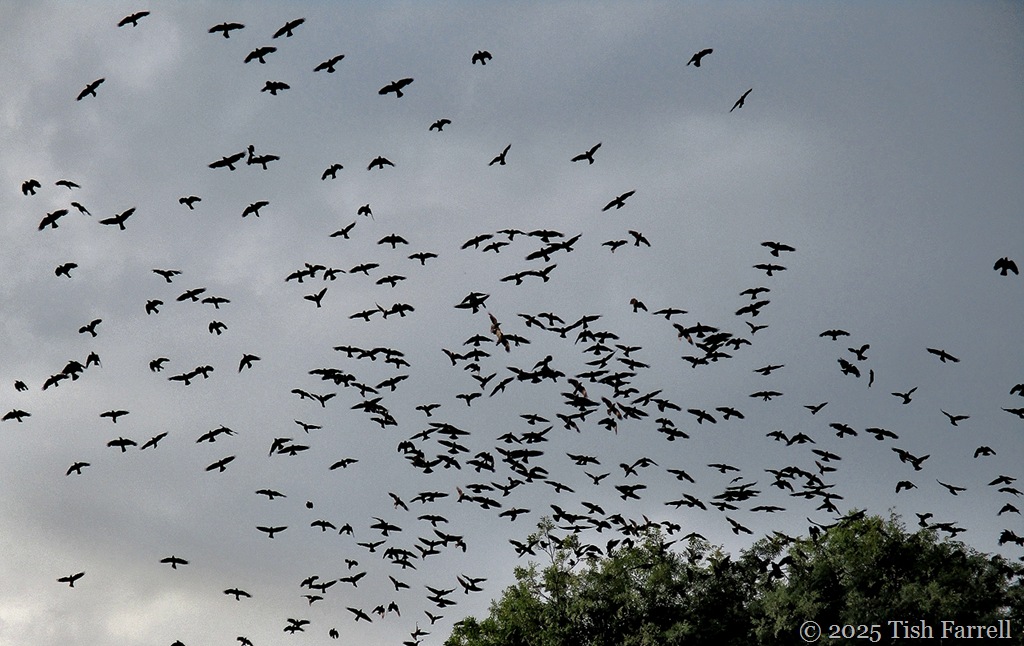
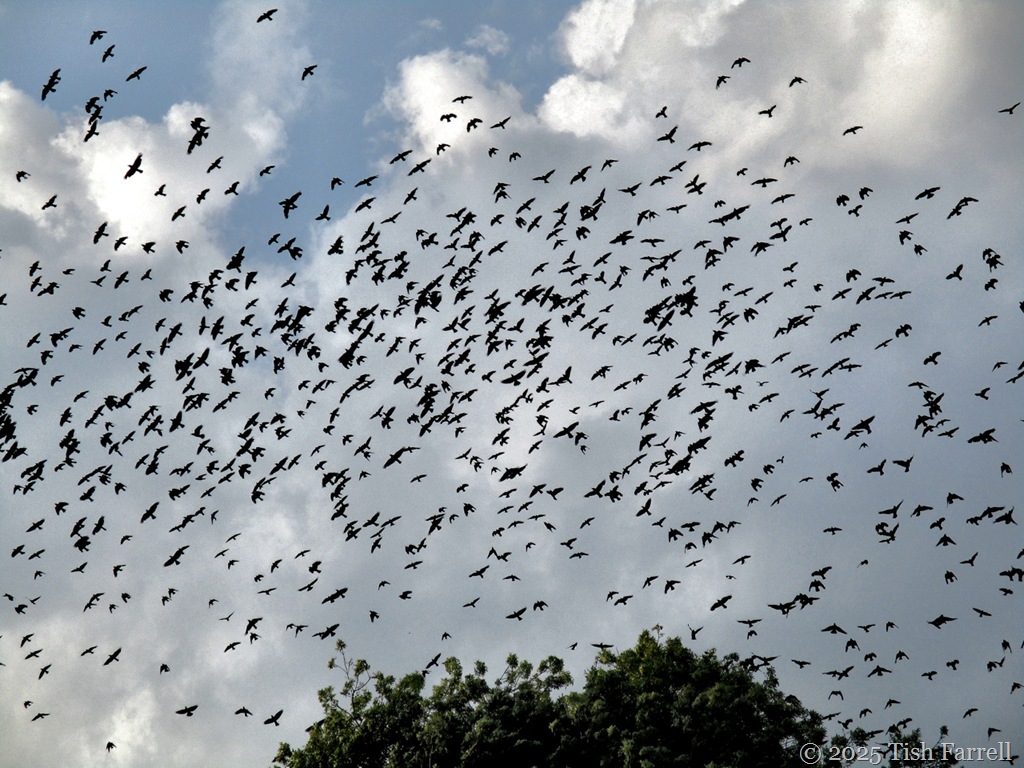
IMG_7159ed

Late one afternoon we watched, with some sense of awe, as this white cloud moved low along the mainland shore, spilling out like dry ice till it reached the Great Orme headland.

And then one evening…

IMG_6971ed2

*

At other times the mainland looked gauzy. It could be a mirage. Or there again it reminded me of the magic painting books we had as children – the wash of colours emerging from the empty page.

IMG_6967ed

IMG_7184ed

Copyright 2025 Tish Farrell


Lens-Artists: Wild  This week Egidio at Through Brazilian Eyes wants to know what wild means to us. Go see what wild means to him.

Catching The Light And Finding Home

IMG_6923 cherry plum sunset

I took the header photo on March 11th, the last rays of sun over Shropshire-out-of-Wales, lighting up the first sprigs of cherry plum blossom. I have only recently identified this tree: Prunus cerasifera nigra – a native species that lives just over the hedge outside our kitchen window. Every day now, and especially when we sit down to eat, we are watching it with special attention. For it seems this tree, which I had started off disliking (for reasons explained below) has become a household treasure, albeit one ‘borrowed’ from the roadside verge next door.

When we planned the kitchen extension (to replace an ageing conservatory attached to our newly bought old house) we did not think too much about the view. The site was tight, constrained by planning regulations, conservation area considerations and an overgrown hedge (although it has been cut back), and so we assumed our new big window would mostly look out on sprawling holly and hawthorn.

But now we find we also have a tree-view. And though I’m not so keen on pink, I cannot deny its loveliness, and especially at sunset. For this was another unplanned aspect: the only possible position for the window meant it faces due west.

IMG_6907ed

Two weeks ago the branches were still black and bare, a skeleton mesh against wintery skies. One week ago, with the sudden sunny spell, if we looked hard, we could spot tiny slivers of pink on breaking buds. This week we have the first blossom, a good two weeks later than last year, when our February 24th view through the landing window looked like this:

IMG_4676

So much for all the talk of this spring being sooner and warmer etc etc than other springs. Not so in Bishop’s Castle. After the week of warmish weather, the polar vortex is now rolling out cold, cold air day after day, and the cherry plum’s impulse to flower feels arrested somehow. But then that’s alright. A slow flowering will be just fine.

*

Last spring, as the building work progressed we watched the blossom cloud give way to foliage production. Next we had a dense, dark, rustling canopy, the leaves almost black at first sight, and not very pleasing. When viewed from outside, the tree cast a pool of deep gloom over the garden steps which  I found depressing. But then come August and the kitchen all but done, we found ourselves sitting down to supper with an unexpected light show.

IMG_6006

kitchen window

*

Two months on – and another unexpected view – a November snowfall and an abstract work that made me think of Jackson Pollock’s  Autumn Rhythm, which I think we once encountered in the New York Met, where we’d gone to escape an unanticipated May heatwave.

IMG_6474ed

And so in our new home, with passing moments, hours, days, and months, (two years in August), we are coming to know our closest neighbour, the cherry plum. Its fruits are said to be edible and good for jam. I managed to discover a single one last year. It was deep red and round, bigger than a cherry, with a firm skin that seemed to scrunch when I bit into it. It had a sweet-and-sour taste that made me think of Chinese plum sauce. Back then I did not know about its eating potential, and anyway I think the tree has grown too tall for elder scrumping  forays.

But never mind. It has anyway inspired me to think more kindly about our horrid hedge, and how to deal with some ugly gaps just beyond the window. I’ve discovered cherry plums are good for hedging so I’ve recently planted three white flowered saplings, hoping that (in the not too distant future?) the blossom will cheer both us and passing neighbours. And maybe there’ll be fruit too – for us and the birds.

There are other bonuses of course. When I was out on the far side of the hedge preparing the ground for planting, there was much chatting with locals who wanted to know what I was up to. And indeed, why I’d come to live in Bishop’s Castle, and where was I before. All good questions and a good start too to feeling, after a few unsettled years, that we’ve at last come home.

IMG_6902ed

Lens-Artists: Life’s Changes This week Anne sets us a theme rich in possibility. Interpret it as you may, but first see her post for an inspiring tale of personal development.

Spring!

IMG_6806ed

Or is it?

February in Britain often teases, bringing us a sudden mild and sunny day, as it did last Saturday, followed by bone biting winds (today). Countryman poet, John Clare 1793-1864, wrote a poem about February fickleness. I probably mentioned this time last year. It’s worth a read.

So: we have crocus and snowdrops, and the odd daffodil. Also hellebores, both waning and waxing. On the garden steps the winter pansies still thrive, although all but blustered out of their pot.

IMG_6787ed

IMG_6795

We have only a small scatter of snowdrops in the Farrell domain, but everywhere else about the town, in gardens, under lane-side walls and hedges there are drifts and drifts. Reinforcements, then, needed at The Gables for next year.

IMG_6822ed

At the top of the garden steps the dark hellebore has just begun to flower. Very striking when the sun catches it. Meanwhile, in the pot below, Hellebore Christmas Carol is winding down after a three month performance. Although having said that, this morning I noticed there are new buds forming beneath the gone-to-seed blooms.

IMG_6832

*

The clump of tiny crocus at the top of this post popped up this week by the front gate. Most welcoming of them. This particular variety also seems to be growing in every Bishop’s Castle garden. And of course there are the chunkier sorts too, a whole host in fact spotted in the grounds of the Wintles eco-houses:

IMG_6796

IMG_6801ed

*

Outside the kitchen window (on the far side of our horrid hedge) the ornamental cherry tree is now displaying the faintest haze of plum coloured buds. They will be candy floss pink when they open. Not a favourite colour, but still a sight to look forward to against a blue spring sky.

IMG_6808

And talking of the horrid hedge, those of you who follow my gardening pursuits will know that last year I was doing battle with it: untangling swathes of ivy, pulling out decayed hawthorn branches, unpicking very prickly vegetation that had knitted itself into a chicken wire fence running the length of the back garden, whingeing about the forest of saplings – ash, sycamore and elder that had grown amongst the holly, privet, weigela and hawthorn, all of which meaning you pretty much need a chainsaw to keep it in check.

In an ideal world I would have it dug out and replanted with wildlife-human friendly species. In fact, looking at 1990s photos of it, I don’t think it was ever deliberately planted as a hedge: more a case of boundary holly trees and shrubs suckering up together with arboreal interlopers and encasing a very rotten field fence.

But then a few weeks ago I had a notion. I discovered I could buy individual wild hedging plants and so fill in gaps between existing thickets. We have now popped in bird cherry, field maple and briar rose whips. We also have a more substantial hornbeam still to plant on the sunny side of the biggest gap created by our recent building work.

My hope is that, as the new plants become established (well trained of course), we can then cut back the main stems of the ash, sycamore and overgrown weigela, encouraging them to sprout more usefully (and manageably) from the base. That’s the plan anyway. One for the long term, methinks.

And apart from this, and in rare dry spells, my other betwixt-winter-spring gardening pursuit has involved digging out the compost bin. Last year I’d filled it with dug up lawn. And oh, what lovely stuff it’s become. I can’t tell you how happy it makes me – a lovely big pile of crumbly dirt. Perhaps enough for two raised beds.

Time to start some seed sowing then…

IMG_6809

copyright 2025 Tish Farrell

*

IMG_6807header

The Tenacity Of Small Things

IMG_6788

*

A persistency of pansies

I am truly astonished by the hardiness of pansies. They must have been bred with anti-freeze in their roots and shoots. Their structure is anyway so puny and fleshy; easily crushed by clumsy humans. So how can they still be flowering?

The pansy in the photo is much tinier in real life, less than one inch across, and so tending more towards the wild heartsease, Viola tricolor ,  which grows in upland summer meadows.

Sister Jo gave me three little pots around the end of September. I planted them out in a larger pot and they have been sitting on the garden steps ever since, already into their fifth month of flowering. And not once have they failed. Not when they were buried in snow for several days. Or subjected to hard January frosts night after night. Or buffeted by gale force winds. Or beaten by downpours.

It’s true they look mangled after a frost, but as the day warms, they perk themselves up as if it had never happened. Bless their little pansy faces.

IMG_6597 ed

After the December snow and frost

*

A hurrah of hellebores

And cheering on the pansies comes the hellebore – a Christmas Carol gift from best chum Les. Since mid December it too has flowered its socks off in a pot by the back door where we can see it. So heartening on dull winter days when it’s too icy to venture outside: there it’s been, day after day. And according to the horticultural sites on the internet, it may well carry on till spring, which at the moment it looks like doing.

IMG_6596

*

And now in the front garden, pushing up through frosty soil come miniature crocus, their stems no thicker than a darning needle. They are scattered everywhere and seem to be tiny seedlings rather than the offspring of corms; not a garden phenomenon I’d come across before we moved into The Gables. On gloomy days when they are closed up tight, you can hardly see them. But when the sun shines, the little flowers open wide. Spring is on the way, they say.

They’re nothing if not optimistic little specimens.

 IMG_6777

A cheerfulness of crocuses. Or maybe croculetti.


Swahili Geometry: Once In Lamu’s Stone Town

img479sq

Long ago when we lived in Kenya, we spent one Christmas on the Indian Ocean island of Lamu – a never-to-be forgotten, all too brief safari.  We stayed in the roof-top quarters of an ancient merchant’s house in Shela Village, a thatched eyrie that, being open on three sides, allowed to us eavesdrop on all our neighbours. It was breezy too, the natural air conditioning more than welcome in December’s steamy heat.

Our first view of Stone Town, Lamu’s main settlement, was on Boxing Day when we were taken on a dhow trip out to the reef. It was a good introduction, sailing along the entire quay, hints of Sinbad magic.

img483 ed

img469ed

Lamu’s Stone Town is one of the best preserved Swahili towns on the East African coast, lived in for over 700 years. It is not one of the earliest by any means, nor the finest, but it has its own particular history as a one-time city state, ruled by its own sultan. Its wealth back then was built on the seasonal dhow trade with Arab seafarers. Now its residents make their living from tourism, fishing, boat building and farming. It is also a place of pilgrimage. Lamu is devoutly Muslim, and each year holds a five-day Maulid festival, celebrating the birth of the prophet, Muhammad.

For more about the Swahili people here’s a segment from an earlier post:

“You could say that Swahili culture was born of the monsoon winds, from the human drive to trade and of prevailing weather. For two thousand years Arab merchants plied East Africa’s Indian Ocean shores, from Mogadishu (Somalia) to the mouth of the Limpopo River (Mozambique), arriving with the north easterly Kaskazi, departing on the south easterly Kusi. They came in great wooden cargo dhows, bringing dates, frankincense, wheat, dried fish, Persian chests, rugs, silks and jewels which they traded with Bantu farmers in exchange for the treasures of Africa: ivory, leopard skins, rhinoceros horn, ambergris, tortoise shell, mangrove poles and gold.

By 700 AD many Arab merchants  were beginning to settle permanently on the East African seaboard, and the earliest mosques so far discovered date from around this time. These new colonists would have married the daughters of their Bantu trading hosts and doubtless used these new local connections to expand their trading opportunities. Soon the African farming settlements were expanding into cosmopolitan port towns. Itinerant merchants and their crews would also have had plenty of chances to get to know the local girls. The weather served this purpose too. Between August and November the trade winds fail. Voyaging captains would thus put in to a known safe haven to wait for good winds. And while this was not a time to be idle, since boats had to be beached and the crew put to cleaning and sealing the underwater timbers with a paste of beef fat and lime, three months was a long time to be ashore and far from home… continues HERE

img595sq

Main Street, Stone Town

*

#GeometricJanuary

img479 header