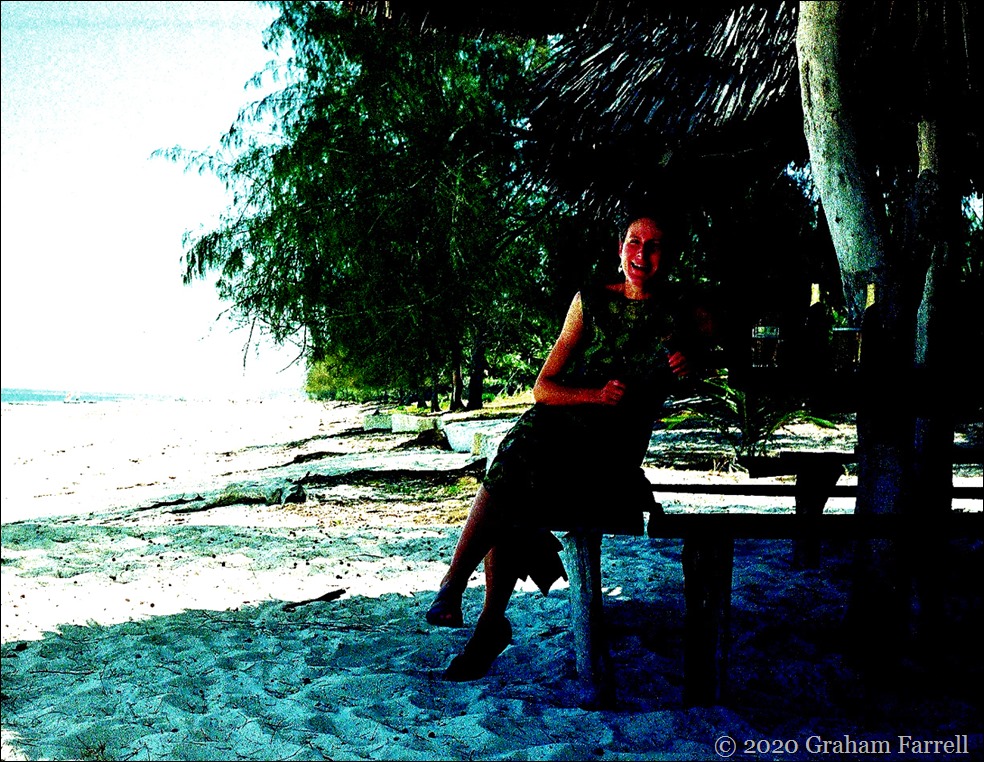
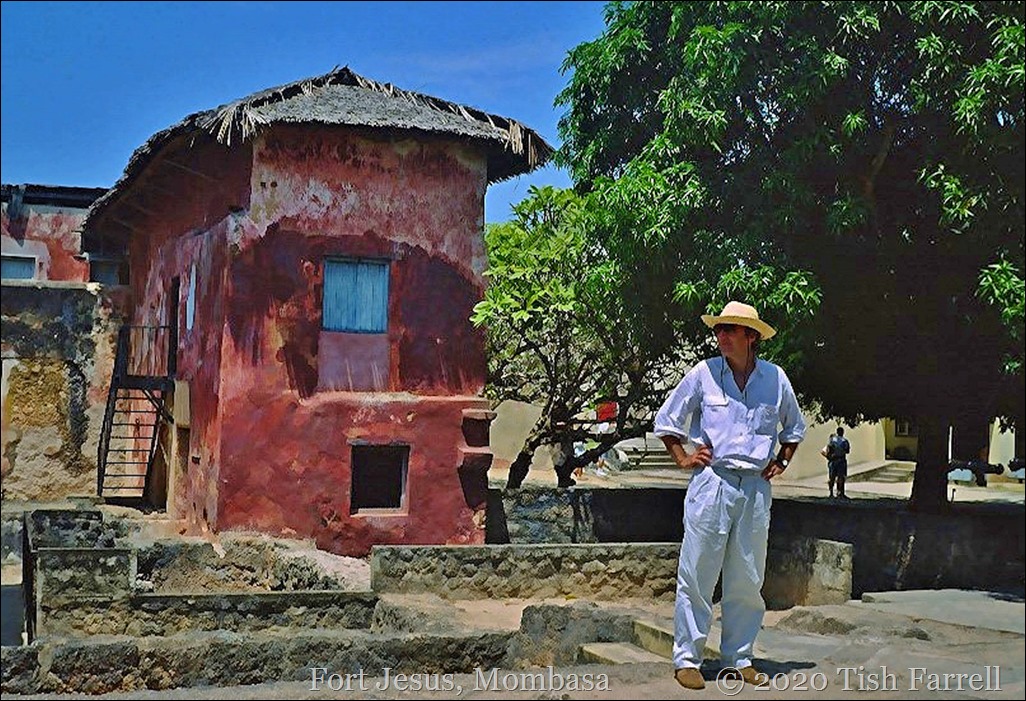
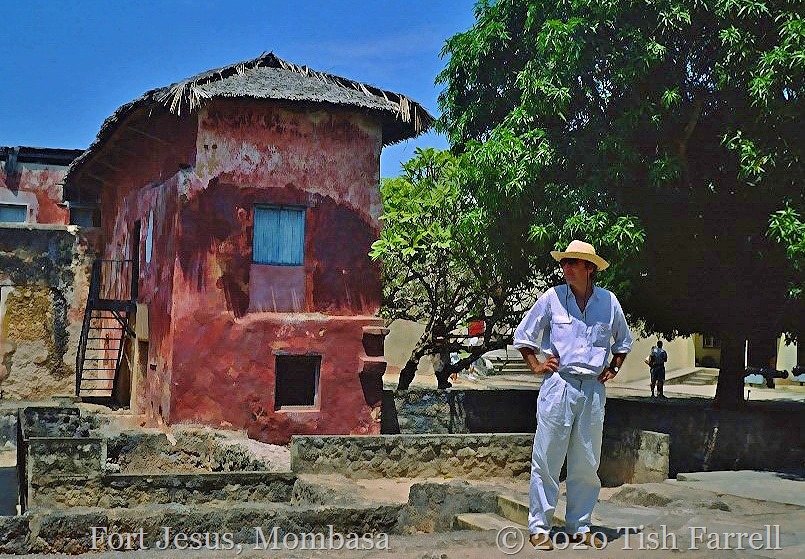
Goodness, was this us – a seeming lifetime ago and half a world away from the present Sheinton Street homestead? Here’s Graham managing to look so unruffled in the steamy, sun-baked precincts of the old Portuguese fort in Mombasa. And there’s me perched on a rustic stool at a Tiwi Beach beach bar, a cooling Tusker beer to hand, a refreshing breeze off the reef. I’d not long run away from Shropshire with hardly a thing to my name. You could call it a mid-life caper; it was supposed to last three months, but somehow stretched into eight years. By the time I resumed permanent occupation of home territory, I did not recognise the place; it took us a lot of adjusting. These days I’m not recognising it either.
Back then Graham had not long completed his Masters field work on the Larger Grain Borer in Mexico. This tiny beetle of Central American origin is a voracious pest of maize, though it started out as a wood borer before it developed a taste for corn. If a grain store is badly infected you can hear it grinding its way through the cobs. Oh yes, it also likes another food staple of particular importance in West Africa: dried cassava. In the 1970s it was imported into Africa in a consignment of food aid and has invaded much of the continent since, most notably spreading along the line of rail. (A grim, if non-intentional “Beware of Greeks bearing gifts” situation).
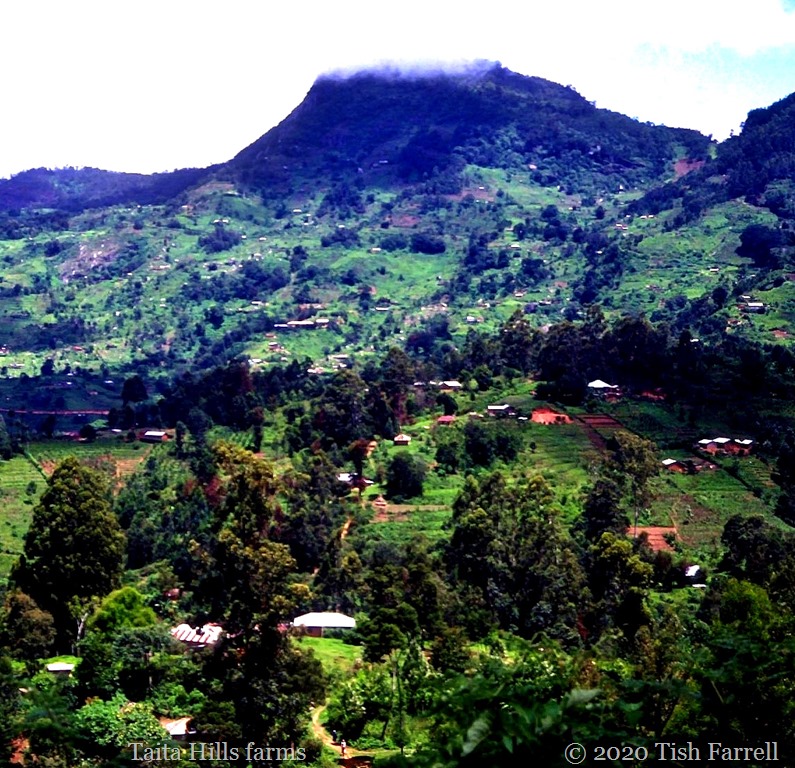
In its home territory LGB is prey to another beetle Teretrius nigrescens, TN for short, which keeps it in check. In Africa, though, the alien invader had no controlling predator. And so in 1992 Graham went out to Kenya on a 3-month consultancy project to work with farmers in affected areas: the Taita Hills near the Tanzanian border and Ukambani just north of the Tsavo national parks. The aim was to enlist their help in field trials to release stocks of TN which had been screened and bred by a British agricultural research institute. The three months extended to nine, and so began a series of contracts that took us next to Zambia, then back to Kenya until 2000.
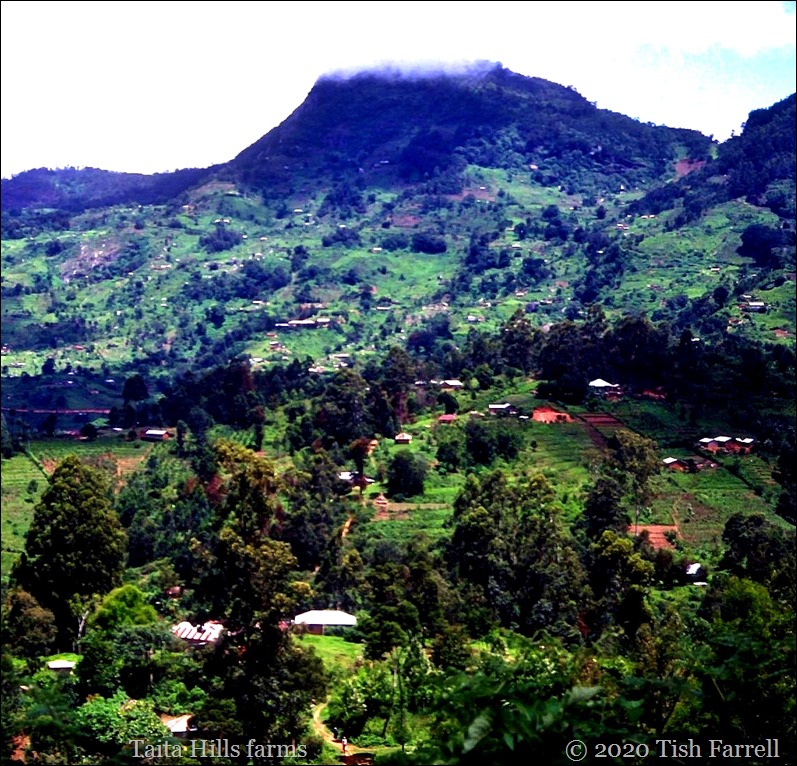
Our homes in Lusaka and Nairobi were way-stations for itinerant British crop scientists and socio-economists; the expatriates we mixed with were all aid gypsies who had roamed the globe from the Falkland Islands to Uzbekistan and Outer Mongolia; the Kenyan crop scientists Graham worked with were generous and welcoming; they had their own research projects that were dependent on UK funding; but some of them too had their own views about the value of foreign aid, and the abject dependency it too often created.
We were all caught up in the ‘development’ paradigm: the givers and receivers; a mindset predicated on notions of indigenous people’s ignorance and incompetence, while actually serving donor interests in other peoples’ lands. Our next door neighbour, a Kenyan human rights lawyer, put it bluntly: all aid should end. We’ll go back to ground zero, he said; it will be painful, but we will develop on our own terms. His wife was running a Nairobi slum project, set on undoing all the years of imported misinformation about infant feeding, and helping poor urban mothers to return to breast feeding their babies. On our late afternoon walks she would tell me the stories of her daily encounters. It didn’t take me long to fathom that in colonial and post-colonial Kenya things had been, and still were, going badly awry. Unpicking it was quite another matter.
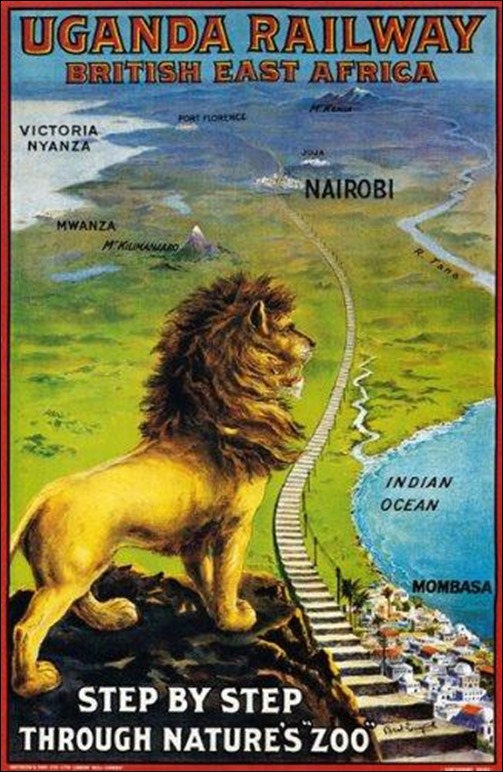
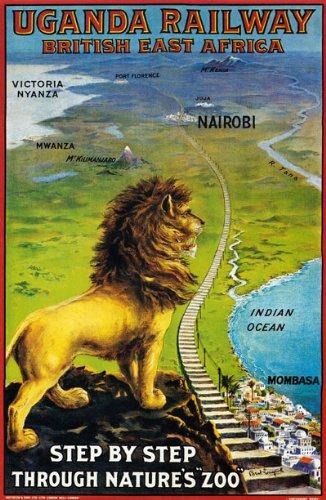
We British have our great explorers, Speke, Burton, Stanley et al to thank for informing us of East and Central Africa’s potential for exploitation and domination. In the late 1880s Britain’s invasion of East Africa was in the form of a military backed corporate enterprise: the Imperial British East Africa Company. They established their foothold in a series of small forts across the territory we now know as Kenya. They did business by treaties, whose insidious long-term conditions the local people did not grasp until it was too late. When talking failed, military operations followed, targeting especially recalcitrant communities with punitive campaigns. This continued until 1914. The IBEAC’s interest was in the potential plantation wealth of landlocked Uganda to the north west. But to reap any rewards there they would need to build a 650-mile railway from Mombasa port, at that time a possession of the Sultan of Zanzibar.
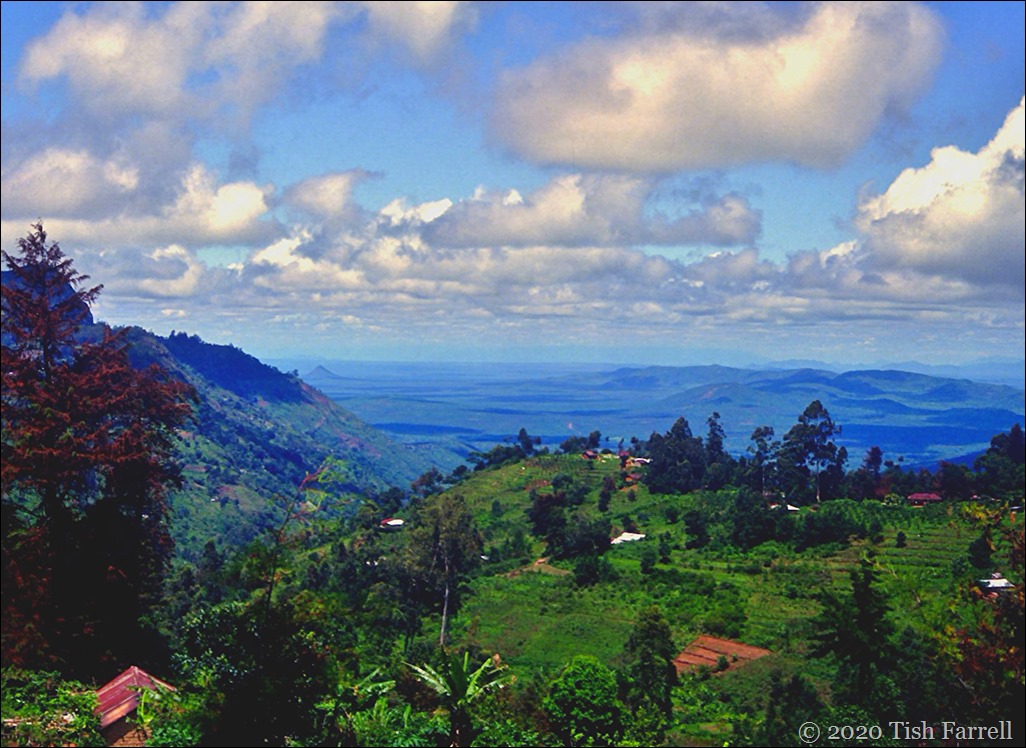
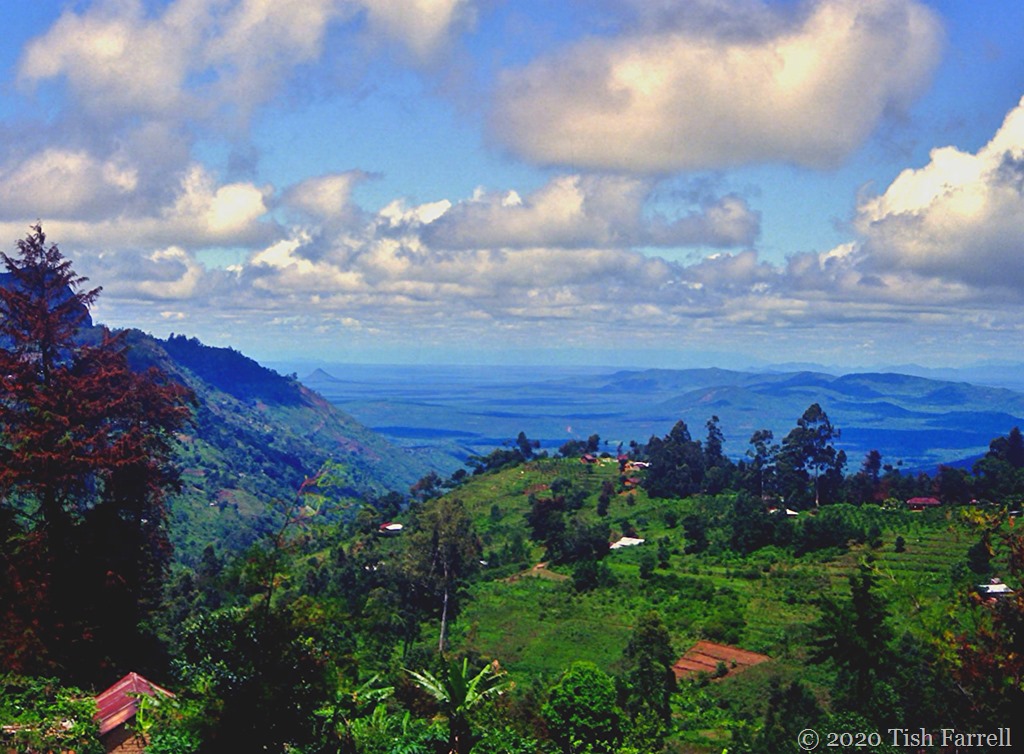
Shimba Hills smallholdings, southern Kenya
*
In 1895 after the IBEAC went bankrupt, the line of rail surveyed but barely begun, the British Government proclaimed the territory a protectorate. The railway project was approved by Parliament in 1896, for by then thoughts of war with Germany were to the fore, and it was believed, if the territory were not secured, the enemy could sabotage the Nile headwaters in Uganda and so drain the distant Suez Canal dry, thereby strangling British trade with its other key occupied territory, India. And so the building of the Uganda Railway (using many thousand imported Indian labourers) began. Among disgruntled Members of Parliament back in London it came to be dubbed the Lunatic Line.
(Which is making me think: never was a lyric more apt: “mad dogs and Englishmen go out in the midday sun.”)
At the time when all these plans were simmering, Uganda was described as a powerful and highly developed feudal state:
The country was populous, productive and highly cultivated. (Permanent Way vol 1 M F Hill p 25).
This image ‘populous, productive, highly cultivated’ is worth fixing in the mind’s eye. I think I can be pretty sure that this is not how most people think of any African nation, past or present.
The 1892 reports of the IBEAC railway surveyors who trekked up from Mombasa in a caravan comprising 7 Europeans, 41 Indian surveyors, 7 Swahili headmen-interpreters, 40 African soldiers (askari), 270 porters, 24 cooks, servants and gun-bearers, 60 donkeys, also described the farming communities they traded with for supplies:
When they reached Ukambani (one of the areas later involved in the LGB-TN release project) the survey report states:
All about here large supplies are obtainable, as much as 4,000 lb of flour can be bought in one day by a passing caravan. The people (Akamba) are industrious and thriving, good cultivators, and possess large herds of goats and sheep. (Permanent Way vol 1 M F Hill p72).
And then when the expedition reached the Central Highlands near present-day Nairobi, the Kikuyu settlements within the forest fringes are described as follows:
For the last few miles the path up to the Company’s post lies entirely through fields of grain and sweet potatoes…Long tapering spurs and narrow valleys, covered alike with waving cornfields. Clumps of graceful plantains and sugar cane, endless acres of sweet potatoes. (ibid p 74)
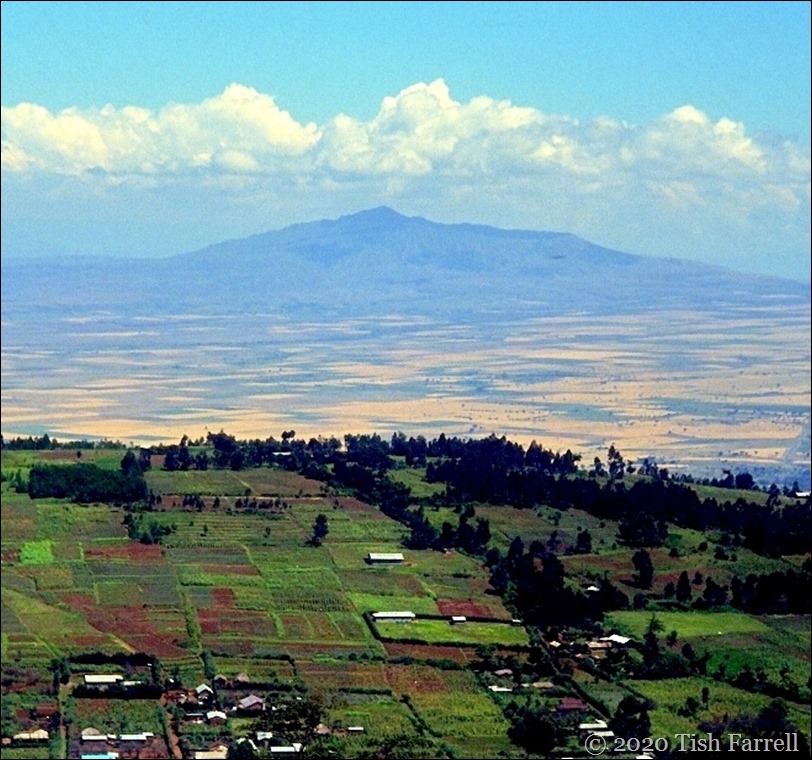
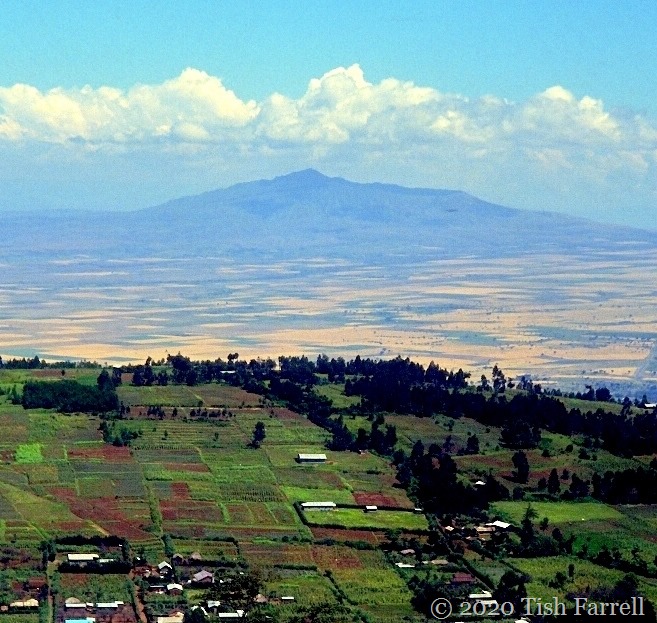
Smallholder farms, Escarpment, the Rift Valley just north of Nairobi, taken around 1997.
*
So: you may wonder, what happened to all this local prosperity and know-how? And it’s a question I am leaving with you. There are many answers and angles. Some of them I found in my readings of fifty years’ worth of Kenya colony’s agriculture reports, wherein I discovered that many traditional, long tried cultivation practices were actively discouraged by agriculture officers since they did not yield produce of export quality. It was a situation of totally conflicting interests. Ironically too, about the time we were leaving Kenya in 2000 I heard that German agricultural consultants there were advocating that smallholder farmers should return to mixed crop planting strategies, this to reduce the need for pesticides. Re-inventing wheels is a significant characteristic of foreign aid projects.
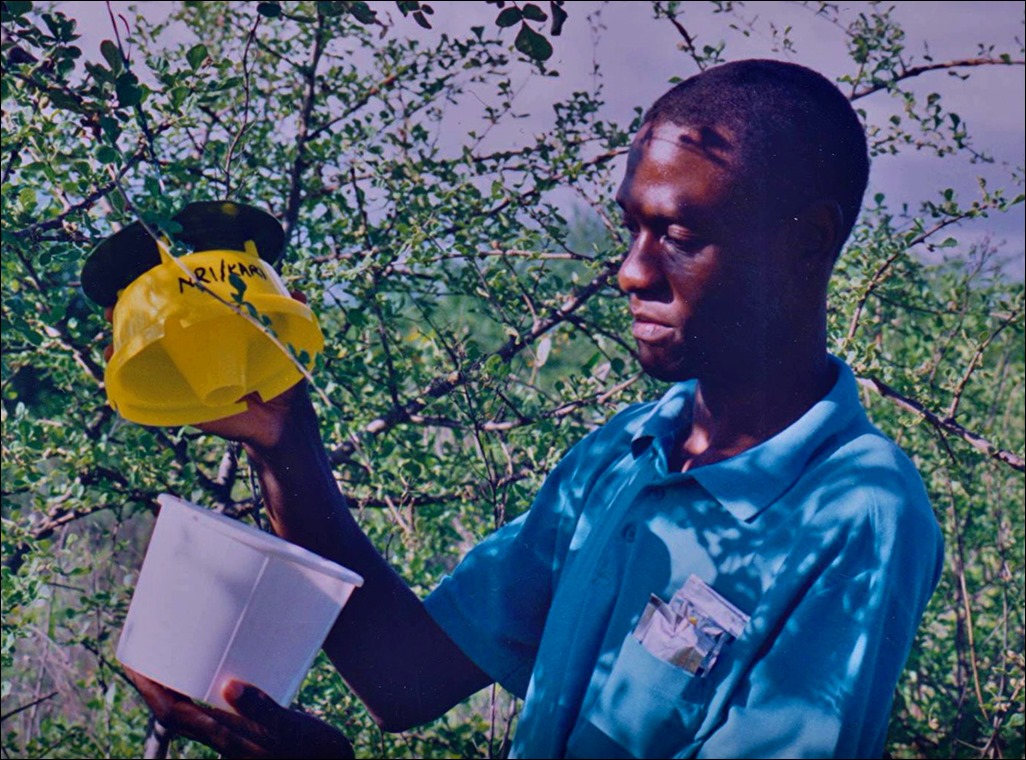
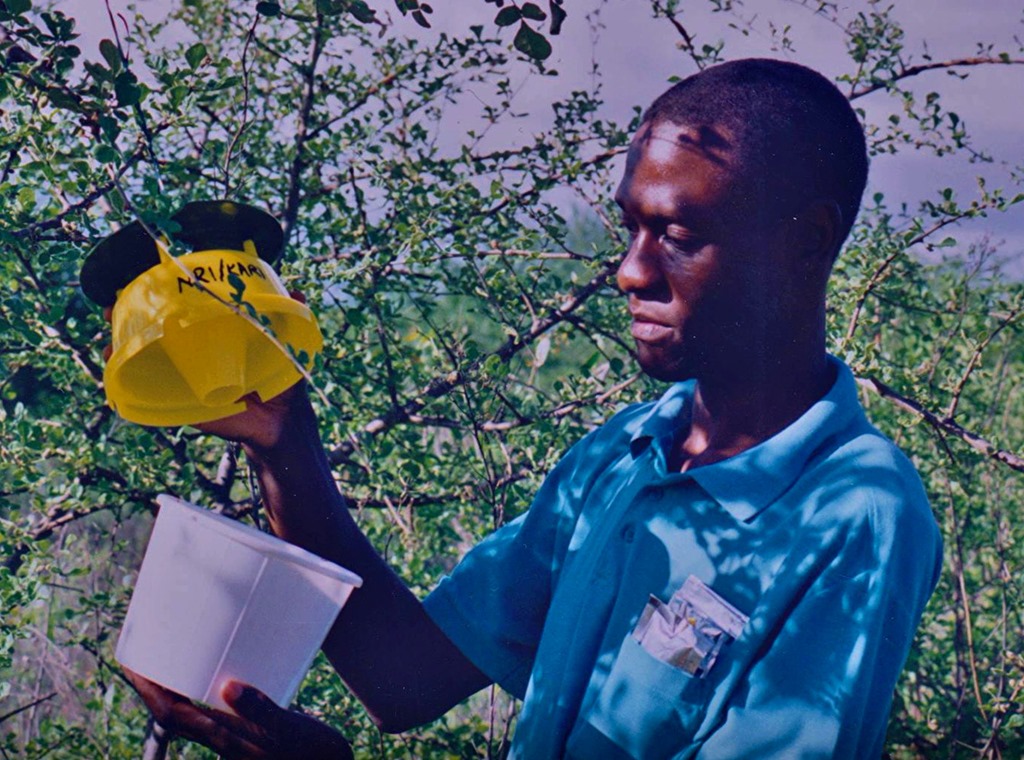
Kenya Agriculture Research Institute entomologist, Paddy Likhayo, using a pheromone trap to monitor insect numbers around Kiboko, Ukambani.
*
While Graham pursued food-decimating beetles and smut fungus on fodder grass, I wrote fiction: three short novels for the African children’s literature market, a picture book, Flame Tree Market, that won first prize at the Zimbabwe International Book Fair in 1995, and many short stories for the US children’s magazines produced by Carus Publishing, Spider, Cricket and Cicada. The first of the short stories, Dudus, (Swahili for insects) made use of Graham’s LGB-TN project in the storyline.
I suppose at heart my aim was to explode that development paradigm that keeps us in the rich world seeing receivers as beholden and incapable of helping themselves, and donors as those who know what’s best for so-called undeveloped nations. It touches me more than anything that my story book Jessicah, about a street girl, originally published as Jessicah the Mountain Slayer by Zimbabwe Publishing House, and Flame Tree Market have continued to be published by Phoenix Publishers in Nairobi for the last 24 years. And yes, they do pay me royalties.
*
By now you may be wondering about the success or not of the TN-LGB control project. Did it work? When I searched the available on-line literature this week, it seems that while TN has been exerting some control on LGB numbers in West Africa, the East African releases have ‘gone extinct’. It is thought TN prefers the humid tropics over the semi-arid tropics. LGB on the other hand, is utterly adaptable and has increased its menu to include plastic, soap, wooden domestic utensils and small-grained millet. Over a third of stored crops may be lost in 6 months.
All very dispiriting: a seeming charitable donation to relieve a famine situation delivered fifty years ago to a Tanzanian port, creating the never-ending likelihood of significant food loss across East and Southern Africa. The upside is that the LGB project enabled the training of Kenyan researchers who are still on the front line, trying to improve the lot of pest-beleaguered smallholders. It’s something. Quite a big something.
Lens-Artists: under the sun


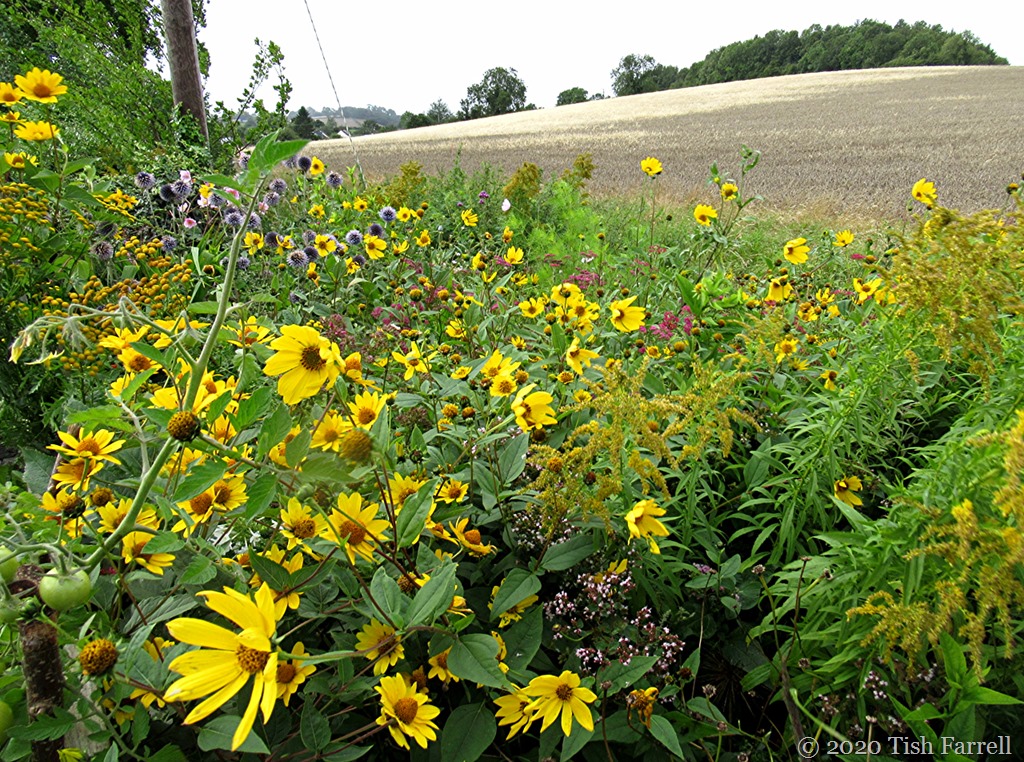



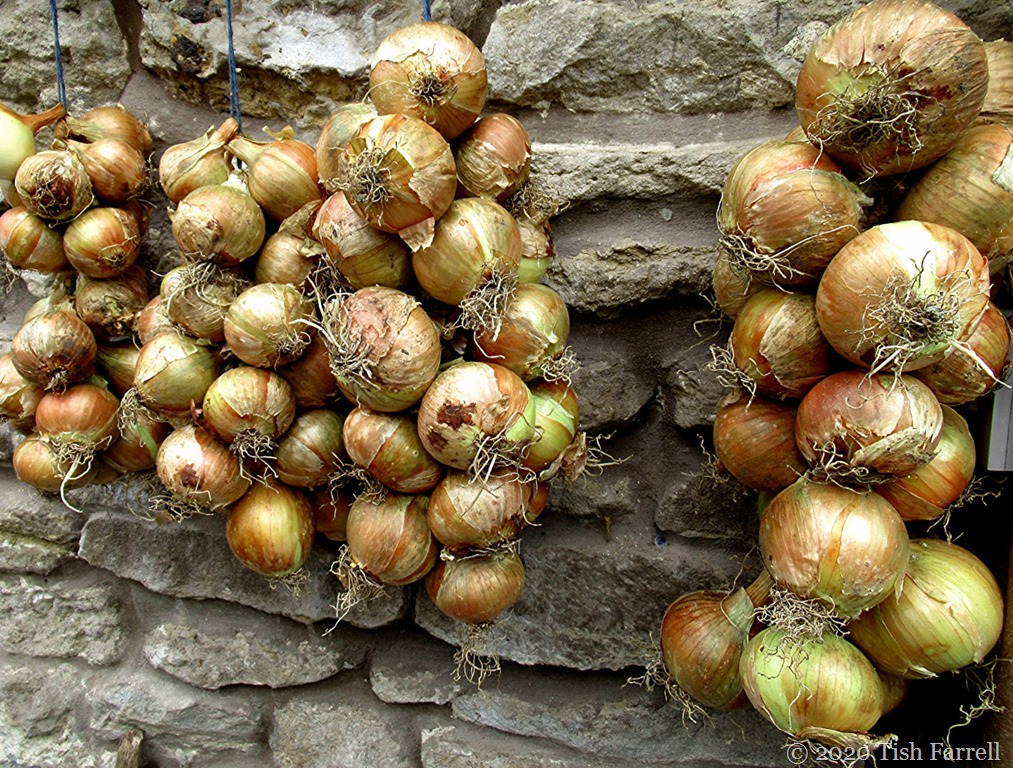


















 .
.