Winterscapes on Wenlock Edge: Thursday’s Special

P1000361

I have said elsewhere (In the old stones of Wenlock) how our cottage in Much Wenlock is built from a recycled fossil sea bed – the stony remnants of the 400 million year old Silurian Sea that once lay in the tropics off East Africa. If you want to know more of this extraordinary geological phenomenon, please follow the link.

Here in the midst of northern hemisphere weather, a warm sea in Shropshire is a hard concept to grasp, but then Shropshire was south of the equator back then. All the same, I would give much at this moment to soak myself in clear tropical waters – as long as giant Silurian water scorpions are not included.

Anyway, this is the rear view from our cottage window. At the front we look at oversized passing heavy goods vehicles. In some ways I like the ambiguity of our position, poised between the rush and rumble of commercial imperative, and the monumental  immanence of Wenlock Edge – between the speeding trucks and a hard, quiet place. The Edge of course  is mostly made of limestone – the compressed remains dead sea creatures. At some point the sea bed was shunted upwards to make the long escarpment that is now a striking landmark across the south east of the county.
P1000378

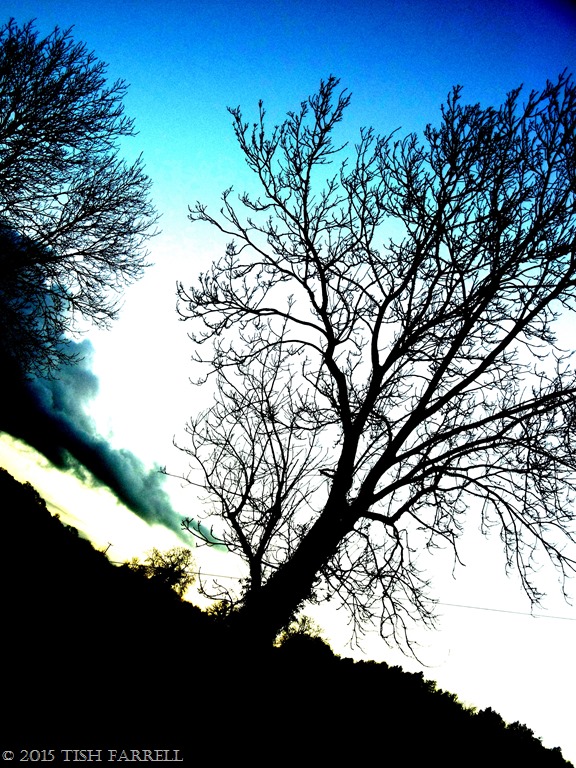
From our house we look towards the back of the Edge. Some undulating ‘foothills’ obscure an actual view of it, but we see the big sky above the  escarpment, and have a sense of weather always moving behind the horizon. The cottage, then, is not only on the Edge and of the Edge, the Edge is the reason why it is here at all.

So far our researches have been rather patchy, but we think the house was built around 1830. It was probably a squatter cottage, meaning that  it was built on the local landowner’s property, and a rent or fine was paid to him by the inhabitants. The first occupants appear to have been lime burners, working at nearby limekilns. The limestone was burned to make quick lime that was used for fertilizer, for building mortar, and for lime wash for walls inside and out . It was an immensely important commodity.

It is hard to imagine, though, what the atmosphere of Much Wenlock would have been like in lime burning days. The town sits in a hollow, a frost pocket. On cold winter’s days one imagines a fog of fumes from roasted limestone shrouding the rooftops. Doubtless it would have been corrosive on the lungs too.

P1000297 - Copy

This last shot was taken in January from the top of Wenlock Edge. Here we have the cooling towers of Ironbridge coal-fired Power Station (its days are numbered), and the Ironbridge Gorge beyond. Limestone once played a crucial role in that locality too, used as a flux in the iron masters’ blast furnaces in Coalbrookdale. Along the River Severn just south of these steaming towers, the Industrial Revolution began with the first casting of iron using coke as a fuel. It is hard to picture I know, much like a fossil tropical ocean in Shropshire, but the technological breakthroughs made in this English backwater spurred on the world’s drive to industrialisation.

It would seem that the Silurian Sea and its petrified molluscs and sea lilies have much to answer for.

copyright 2015 Tish Farrell

Inspired by Paula’s Thursday’s Special: cold
Thinking of Zanzibar

Scan-130429-0049

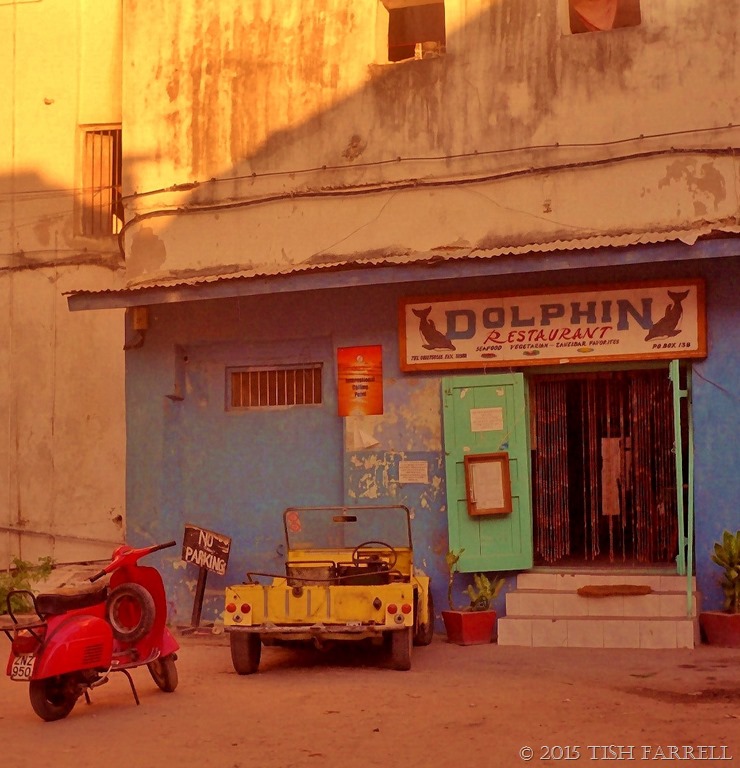
Zanzibar is of course famous as a spice island. The Omani Sultans once made fortunes from their clove plantations there. And while saffron, I am sure, is not one of the local commodities, Stone Town at sunset seems bathed in a saffron light. It is the kind of light that makes you wonder if you are awake or dreaming.

Scan-130429-0129

Scan-130429-0125


I have written more about the island HERE and Swahili Culture HERE


*

Jennifer Nichole Wells One Word Photo Challenge: Saffron

Black & White Sunday: Lining up in NYC

Grand central

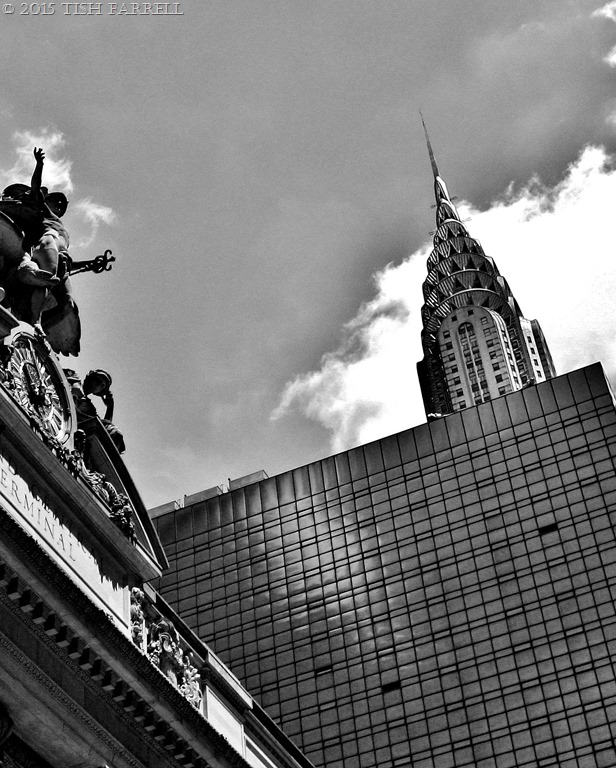
It was just pure chance that made me look up as we were heading into Grand Central Terminal en route for the subterranean Oyster Bar. I was thus able to snap two landmarks in one – both the Terminal’s pediment and the top of the Chrysler Building. Between the two is the glassy face of the Grand Hyatt Hotel. We were not staying there I hasten to add,  but at the upcycled Beaux Arts Hotel Belleclaire on Broadway in Upper Westwide. I can recommend it. I can recommend the Oyster Bar too. On the day I took the photo it proved a haven in more ways that one. The sea food and Brooklyn beer were not only delicious, but the place was so COOL. Out on the streets there was May heat-wave going on with temperatures of  over 100 degrees. We had already spent most of our few days in the city sticking to the  shade in Central Park, and drinking copious glasses of iced coffee at the Loeb Boathouse cafe. Very good it was too, but there’s only so much of this you can do when you have come thousands of miles to see Manhattan. Finally we forced ourselves out into the baking streets …

By the way, this reflected framing of the shot is a feature of Windows Photo Gallery which I use for writing my blog posts. I thought I would try it out for Paula’s challenge.

copyright 2015 Tish Farrell

Paula’s Black & White Sunday: Lines

Going All Symmetrical At Portmeirion

100_4692

100_4667

100_4694

100_4693

Surely only a wizard could have conjured this  place – or so I thought, aged six, when we, the Ashford family first made pilgrimage to Portmeirion on the North Wales coast.

Story continues with more photos at Arch Wizard of Wales: Clough Williams-Ellis “Architect Errant”
Symmetry

Thursday’s Special: Seeing Red

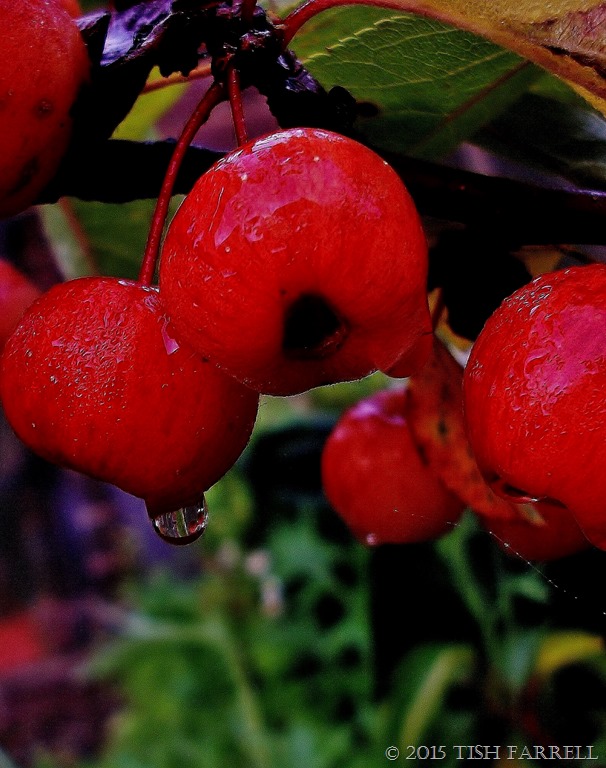
I’m in love with the Japanese crab apple tree in my garden at Sheinton Street. There is hardly a moment in the year when it does not give pleasure. Even now in February there are still a few tiny apples on its bare branches – minimally disposed like a left over Christmas tree that someone forgot to undress. The black bird still visits, although by now the apples have been frosted and lost their bloom.

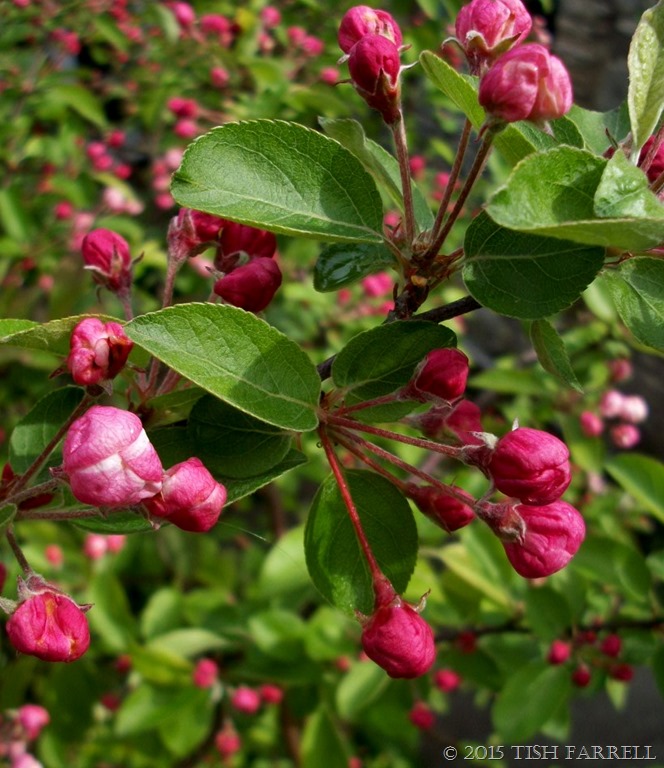
But then I also know that by the time the last one has fallen, there will be tight rosy-red buds bursting to make the next crop, bees permitting. And while I think of it, I’m grateful to fellow blogger, Mélanie at Mon Terrain de Jeux who tells me that crab apples sound much lovelier in French, and I agree – pommes sauvages.

On the other hand, my little tree is so finely wrought and well bred, and its fruit so exquisite, that I can imagine no situation when it might be tempted to wildness – unlike its large, unruly English cousins that grow in our farm hedgerows. Those I raid in October for their not so pretty fruit to make jars of crab apple jelly. (How could I possibly pick my own pommes sauvages?). The jelly is delicious on toast and croissants, and the jars glow like jewels as the hot jelly is poured into them. Mmmm.

More things to look forward to then: blossom, bees, pommes sauvages, toast…

100_5546

For Paula’s Thursday’s Special challenge ‘Red’ at Lost in Translation

“Tell my wife I am trolling Atlantis…


…and I still have my hands at the wheel.”

 *

My mind seems to be drawn to the sea just now, hence the posting of this video. But what a line this is – “Tell my wife I am trolling Atlantis…” As a writer and teller of tales, I have a huge admiration for the storytelling talents of songwriter, Billy Joel. He is a troubadour of our times (well of mine anyway); a poet, musician and social commentator. So I hope you enjoy this multi-stranded creation, musical flash-fiction if you like, and so well constructed. Please do look at the full lyrics too, at the link below.

The Downeaster Alexa by Billy Joel

Full lyrics HERE

One Word Photo Challenge: Seafoam

Scan-130428-0024

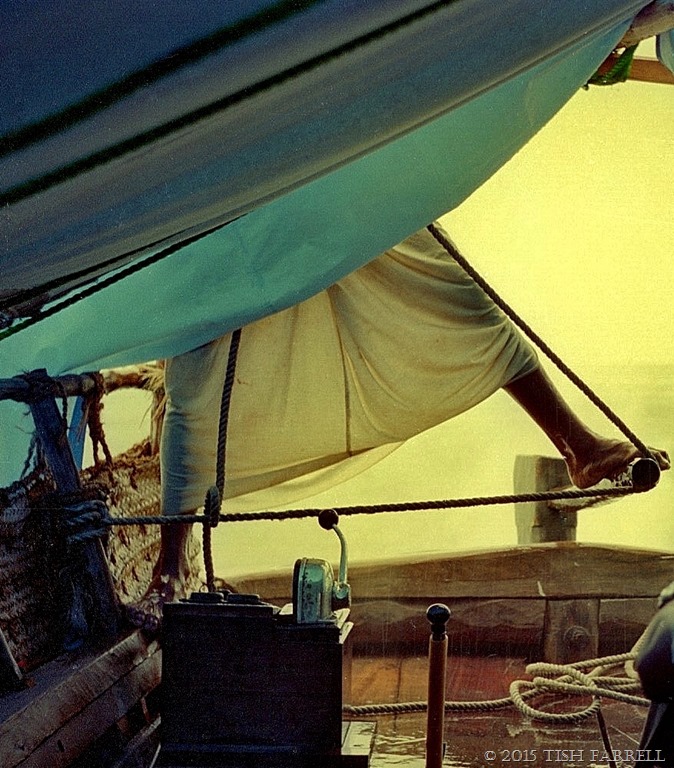
Here are some more Lamu photos (see previous post). Some of you will have seen the top one before, but it is one of my favourites, and I thought the colour of awning fits with Jennifer Nichole Wells’ one word seafoam challenge. It is a colour that I anyway associate with the Indian Ocean. This shot was taken on a dhow taxi in the middle of a tropical downpour. It was December, the monsoon season, and we had just flown in to the little local airport on Manda Island. The strait between the two islands looked suddenly grey and forbidding. It seemed strangely cold too in the midst of the hot season, and not the best start to our four-day Christmas break from Nairobi.

195

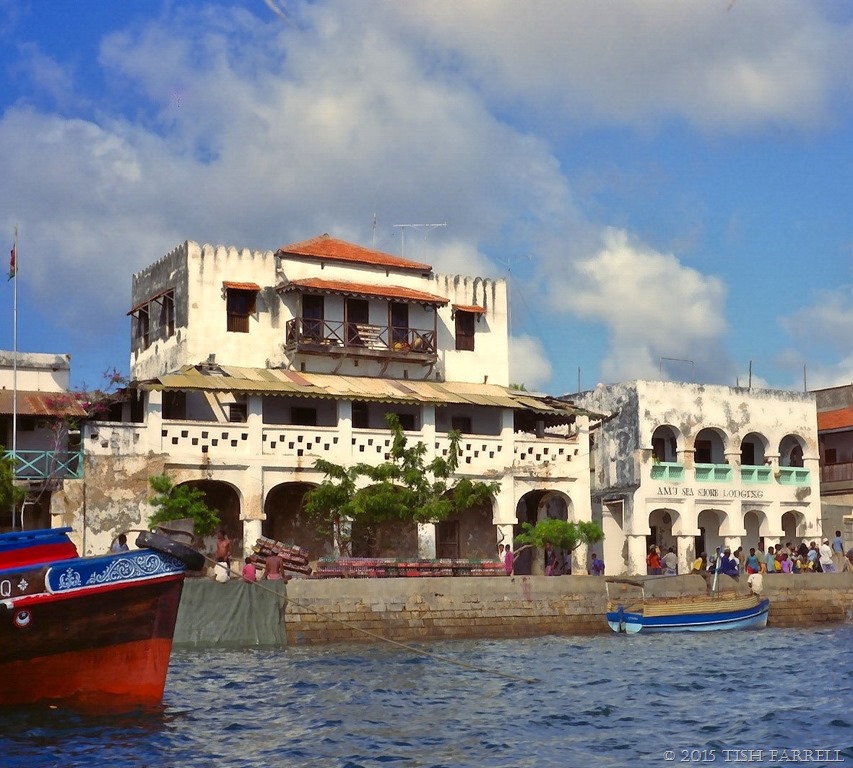
But then the rain passed. This is the waterfront of Lamu stone town, one of the best surviving Swahili settlements on the Indian Ocean seaboard, and a world heritage site. You will have to look harder here for the gentle shade of seafoam.

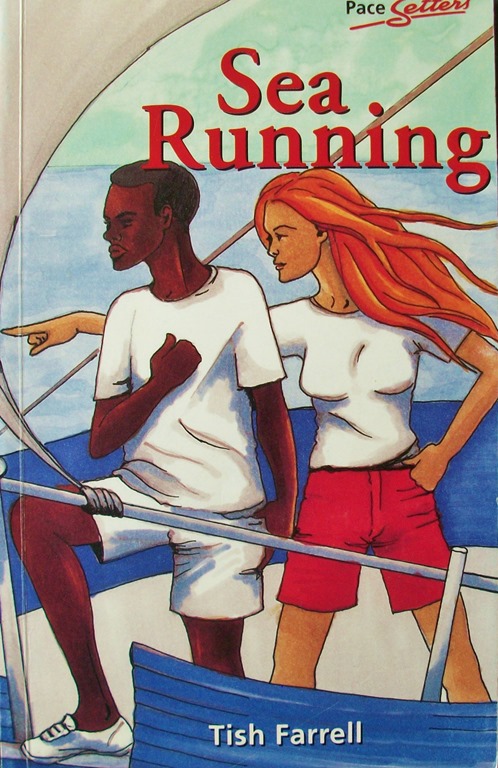
Lamu is a captivating place. I was so impressed by our four days there that I wrote a teen novel, Sea Running,  published by Macmillan Pacesetters for the African children’s literature market. It’s a good yarn about drug runners and first love. It also has a splash of seafoam on the cover.

100_3649 - Copy

For more posts on Lamu:

Dhow-dreaming

The Swahili

Christmas on Lamu

Black & White Sunday

Scan-140801-0010

Today Paula’s guest blogger over at Lost in Translation is Debbie Smyth who many will know from her own blog Travel with Intent. Today she is setting us the challenge to ‘let the shapes shine through’. This is what she says:


For me the most important point about monochrome is that by removing the distraction of colour, the photographer is able to direct the viewer to the key elements of the image.  Going monochrome is one of several tools we have as a photographer that allows us to provide focus.

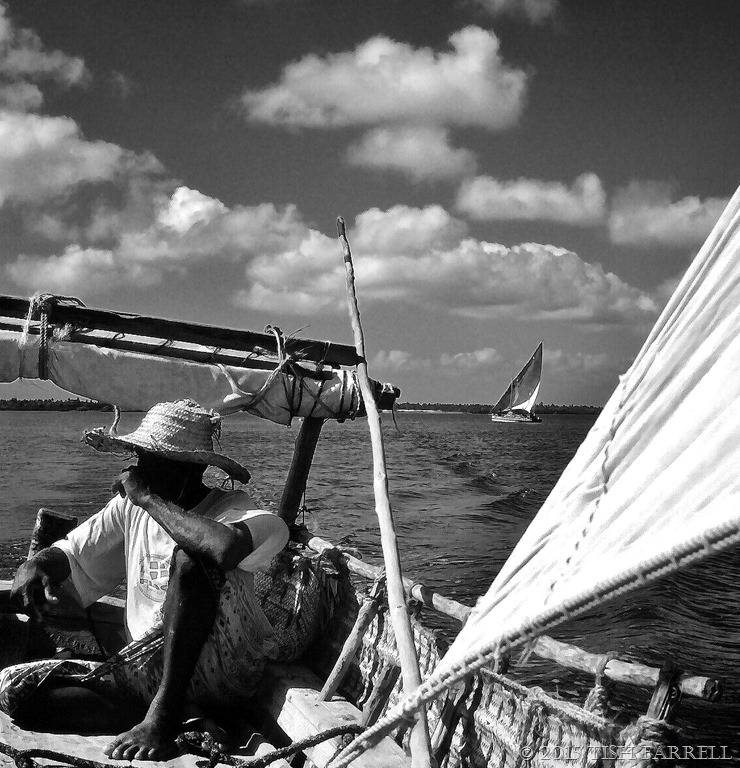
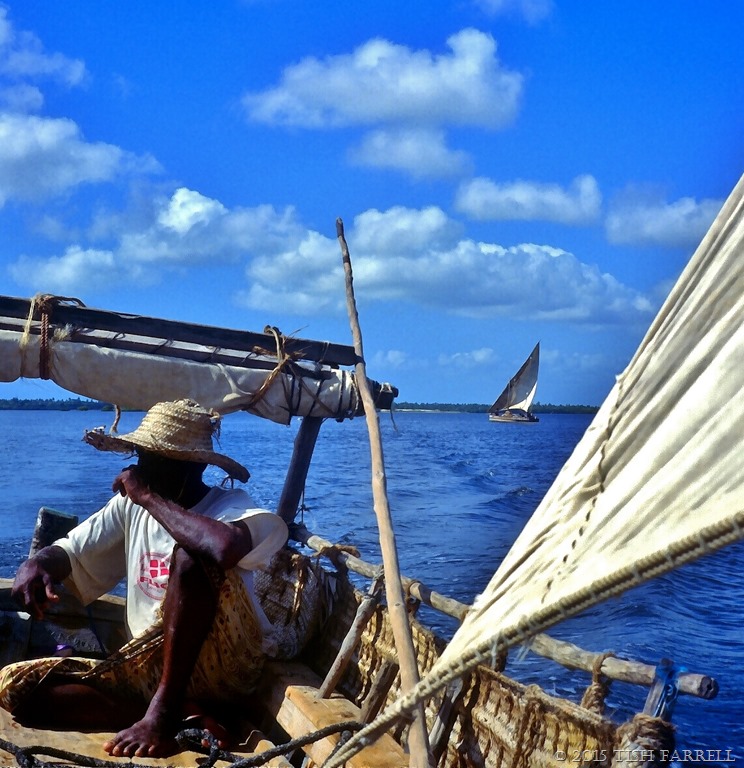
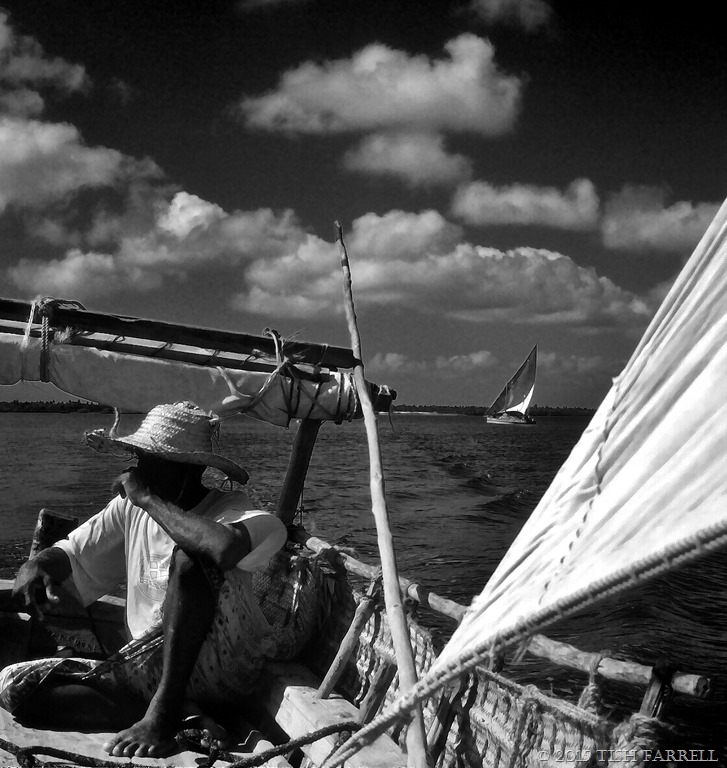
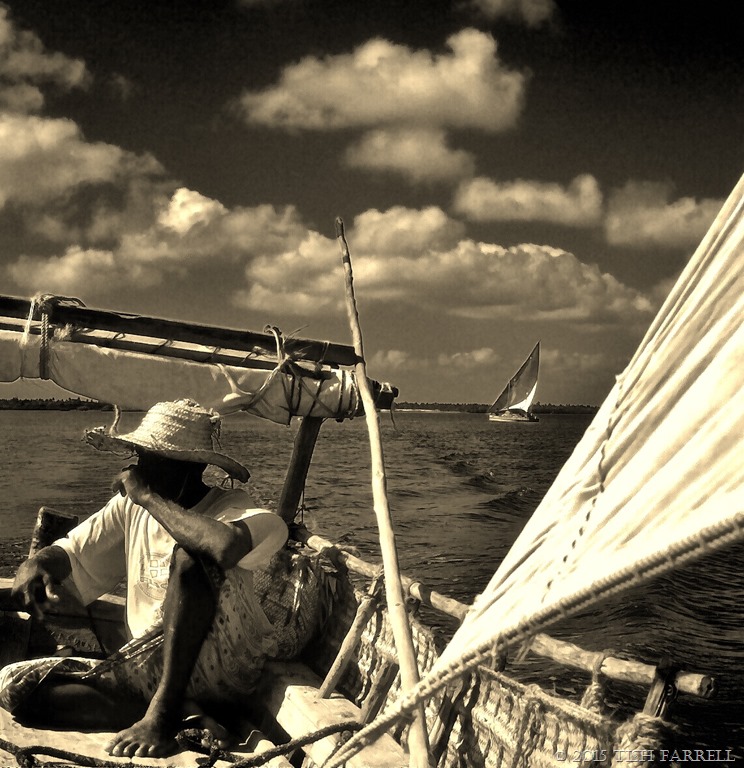
The composition of my own photo is perhaps a little ‘busy’ in this B & W version (it could have done without the pole), but I like the play of light on the dhow sails, the clouds, and Lali’s straw hat. It was taken in Manda Strait, in Kenya’s Lamu archipelago.

For the story behind the photo, please go HERE. But now here are more versions. The second one down is a ‘red filter’ edit, followed by sepia. Let me know what you think.

Scan-140801-0010 - Copy (2)

Scan-140801-0010 - Copy (2)

Scan-140801-0010 - Copy (2)

Scaling the Heights: Great Zimbabwe

Great Zimbabwe -Tish inside the walls of Great Zimbabwe

Between the walls of the Great Enclosure. The wall behind me dates from the 1400s, the one in front with its less skilled brickwork dates from the 1200s AD.

For more about the amazing Middle Ages kingdoms of Southern Africa please see:

Abandoned: Great Zimbabwe


Scale