Wild orchids for Meg, meeting Marathon Man, then elderflower sorbet to finish

100_5645

In case you don’t know Meg she is presently in Warsaw, and if you want to get in lots of vicarious walking with fascinating things to see (and sometimes eat) please join her there. Anyway, this wild orchid is for her, and so is this walk, since it took me back to Windmill Hill (which is actually only across the road from my house), to search once more for signs of spring.

At least last Friday the sun was out, but we still have a continuous chilling wind. As I may have said elsewhere, it feels as if it has blown across an ice sheet before ending up in Shropshire. Brrr. So far it looks as though ‘clouts’ will not be cast in June, never mind in May. I, for one, am sticking to my many garment layers, which may or may not include a vest.

But back to the orchids. This one took some finding, but I had promised Meg I would look. She had read my mention of limestone-meadow plants in an earlier post about Windmill Hill, and wanted to see more. This lovely little plant, about a hand’s span tall, has the plain name of Common spotted orchid. It was growing at the foot of the hill, and I had seen the darkly spotted leaves a week or so before. They are definitely being slow to flower this year. They probably don’t like the wind either.

To find them I went the long way round, once more up the Linden Walk whose ancient limes are now bursting into juicy green clouds. Soon (I hope) they will be flowering, and then I can get high on the scent, as well as on the sight of them. (Herbalists use lime flowers as a sedative, quite a strong one, so don’t use the flowers without expert guidance). Good old Dr. William Penny Brookes, Much Wenlock’s erstwhile physician, and the man who planted this avenue over a hundred years ago, knew what he was at on the life-enhancing front. Bravo Dr. Brookes.

P1010454

Once out of the Linden Field and onto the hill, I’m taking the low path around the bottom when along comes octogenarian, Jimmy Moore, our local marathon man. He’s out on his morning run – an example to us all. He’s raised over £30,000 for charity. Seeing him approach in his buttercup yellow shirt is enough to lift the spirits sky-high. Keep on running, Jimmy.

P1010423

As he passes me, he still has breath to crack a joke, and to say my photo of him will doubltless be worth a fortune. He speeds away, and I meander on, peering into the meadow grass.

The cowslips are over, but there are low growing clumps of Common bird’s foot trefoil, Lotus  corniculatus if I am not mistaken in my identification from the classic Keble Martin work on British flora. As you can see from its pea-like flowers, it belongs to the legume family.

100_5572

Up the hill to the windmill and there are carpets of buttercups, and a little family pretending the windmill is a castle. I like overhearing their interpretation of these remains. I shall think of them differently from now on:

P1010446

The search for orchids next takes me along the hedge line where the open meadow becomes woodland. And here I find the first elderflowers of the year. I love their creamy colours, and they make the most delicious sorbet (recipe at the end).

100_5667

The flowers also make a fragrant tea that is anti-catarrhal, and when mixed with peppermint is a good remedy for colds and flu.  The elder tree itself has magical connotations, and features in many traditions of indigenous peoples around the world, including North America’s First Nations’ tales. The dark purple berries are of course now used in a commonly available anti-viral that goes under various names that derive from its botanical name Sambucus. The berries’ efficacy was trialled some years ago by Israeli scientists, if I remember rightly, and used to treat HIV- patients. They are thus, not by any means, ‘a quack cure’.

Into the wood, and the flowers of my earlier spring walk (which you can find HERE) the arum lilies, violets and wild garlic, are over and, beyond a few tiny wild strawberry flowers, there’s not much to be seen until I reach the roadside verge. First the Oxeye daisies…
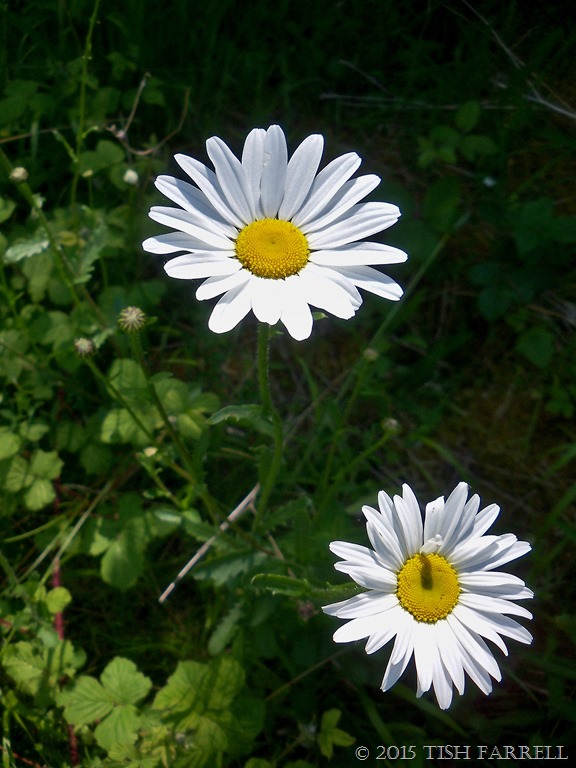
100_5644

And then the orchids, although so far only a handful are in flower. Here’s what they look like before they bloom, along with a glimpse of a wild strawberry flower at 3 o’clock:

P1010434

And now as promised a recipe:


Elderflower Sorbet

8oz /1 cup/ 250 gm  fair trade unbleached granulated sugar

1 pint/0.5 litre  water

2 lemons

2/3 big heads of elderflowers


First pick the elderflowers  when they are freshly open , and on a dry day. Shake out the bugs but  do not wash. Keep the heads intact.

Pare the rind finely from the lemons, and squeeze out the juice.

Heat the water and sugar in a pan, starting gently until the sugar has dissolved,  add the lemon rind and then boil briskly for 5 minutes.

Remove from the heat. Add lemon juice and elderflower heads. Leave to cool.

Strain  into a suitable container and freeze. After an hour or so,  when the sorbet is slushy and starting to set , you can give it a good mash with a fork to break up any crystals, and return  it to the freezer.

Alternatively, strain and churn in an ice cream maker.

This sorbet is delicious with  fresh strawberries.


And guess what, as I finish writing this post the wind has dropped, and it is suddenly HOT.  Just the weather for sorbet. Hurrah!

P.S. It didn’t last, so we had broad bean soup instead.

copyright 2015 Tish Farrell


Please do drop in on Jo’s Monday Walk and Meg’s Warsaw2015 if you are up for some more interesting excursions.



Bee-ing Bee-Minded

100_6630

An old meaning of the word vivid is lively and vigorous. And what can be more lively and vigorous than foraging bees? They and their produce are life-enhancing too, and in elemental ways. Their importance in the human life-cycle, for one, is marked in an old Shropshire custom of ‘telling the bees’ when someone dies. So it is my belief that we can’t think too much, or too often about bees. Not only do nearly three quarters of our food crops depend on them for pollination, but the natural environment needs them too – those plants and trees whose flowers are also pollinated by them.

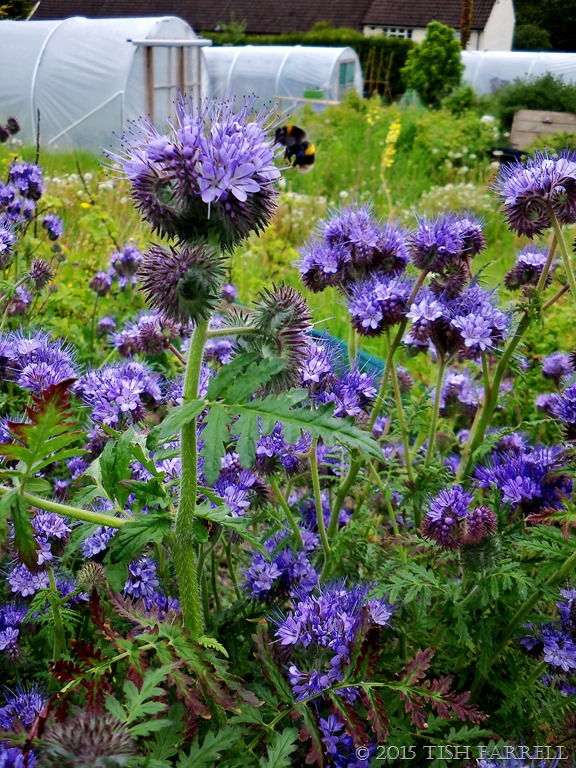
Up at the allotment we are very lucky. We seem to have plenty of bees, and many varieties too, but then most of the allotment gardeners rarely use pesticides apart from the odd slug pellet. Yesterday when I was there, my raspberry patch was thrumming with bee-hum. It was mesmeric. They also love my neighbours’ phaecelia which is grown as a green manure. Pete and Kate decided to leave theirs standing just for the bees. The flowers are beautiful anyway.

100_5529

My field beans are another favourite. Again these beans, a relation of the broad bean, are usually grown to dig in before flowering and fruiting. But courtesy of the bees, I leave mine to produce masses of pea pod sized pods. The beans are small, and more delicious versions of broad beans. So thank you, bees. Also the bean blossom has a blissful scent. It’s a win-win-win situation.

100_5619

The debate over whether neonicotinoid pesticides are responsible for the massive bee deaths across the globe wrangles on. You can follow some of the arguments in the two BBC Science reports at the links below. One recent startling discovery by a study at Newcastle University, is that bees are attracted to the pesticides. They seem to like the nicotine in much the same way humans do. Researchers have yet to discover if bees also get hooked on the stuff.

So why do we need pesticides? The actual fact is that any large-scale, mono-crop production will attract, in huge numbers, the pests that use that crop for their food and reproductive cycle. Monoculture environments also lack the kind of predator insect diversity, that would, in a naturally diverse ecosystem, keep such crop pests under control.

So the demand for pesticides is created, and the drive for profit, and for the production of cheap food keeps us locked into pesticide dependence. It’s not hard to see why we seem stuck with this system. The economics of unpicking it look impossible to broach.

Here’s another thought though. Mono-crop systems are also vulnerable to new pests whose advent is ever more likely, either through accidental imports, or by climate-shift trans-located pests that may have no natural predators in their new-found homeland.

I have personal experience of what happens when dependence on one particular crop meets an alien pest. In the 1980s the Central American Larger Grain Borer beetle was introduced into Africa in a consignment of food aid maize, and once there, spread up the continent like wildfire, chomping the contents of village grain stores to dust. (And being faced with such a pest, who would knowingly want to put insecticide directly onto their food before eating it?).  This infestation is what took us to Africa in 1992 where Graham was working on a project to introduce a natural predator to check the LGB spread. (See Carnations, crooks and colobus at Lake Naivasha, and Letters from Lusaka part I ).

The consequences of this particular dudu’s arrival  were compounded by the fact that, since colonial times, maize had become a staple in many African countries (European settlers doled it out as rations in part payment to their African labour), so largely replacing the local cultivation of a wide range of native, more nutritious small-grain crops. Maize is also a hungry, water-demanding plant that can easily fail if there is insufficient rain. And, if repeatedly grown on the same ground, it will soon deplete fragile volcanic soils and contribute to erosion. This happened on Kenya’s native reserves during the World War 2 when Western Province farmers were encouraged to grow maize for export to Europe to support the war effort. They grew bumper harvests, but the land suffered, and probably has never recovered.

So we see in just one example the kind of vicious downward spiral of impoverishment that can result when humans think they know better, and don’t consider the consequences of tinkering with an existing system.

In fact when we left Kenya in 2000, German agricultural aid workers were advising rural farmers to go back to cottage garden farming methods, mixing different crops up together to fool the pests, and so avoid the need to buy expensive pesticides. i.e. advocating precisely what Bantu farmers had been doing for a couple of thousand years before colonial agricultural officers told them that inter-cropping was bad practice, and that they  needed to adopt European cash-crop methods in order to grow export-worthy produce.

All of which is to say, we all of us need biodiversity for our well being, if not for our survival. With climate change, we cannot afford to limit options in food production by remaining in thrall to the reductionist models perpetuated by factory farming, supermarket buying power, genetic engineering that reduces native crop diversity, and by the pesticide hegemony in general. At the very least we need the bees. Anything that threatens them, threatens to seriously limit our good food choices. The health of humanity and the planet’s ecosystems depends on them.

As consumers we have buying power. It is perhaps the one real power we do have, otherwise corporations would not spend so much money trying to persuade us to buy their goods. If we are able, we can support small local producers who do not use pesticides. We can say no to genetically modified crops that have caused their producers to give up, or lose their native crop varieties. We can grow bee-friendly plants, and if we can afford to, buy only organically cultivated produce. We can grow as much of our own food as possible. It’s amazing what can be grown in containers if garden space is in short supply, and sprouted seeds can be  grown in the kitchen all year round. So let’s keep our bees vigorous and lively, in whatever way we can.

100_4200

copyright 2015 Tish Farrell


Bees get a buzz from pesticides

Widespread impacts of neonicotinoids ‘impossible to deny’
Vivid

On Edge With Stormy Weather Over Wenlock

IMG_1390 (2)

Before and after last summer’s wheat harvest.

100_6323

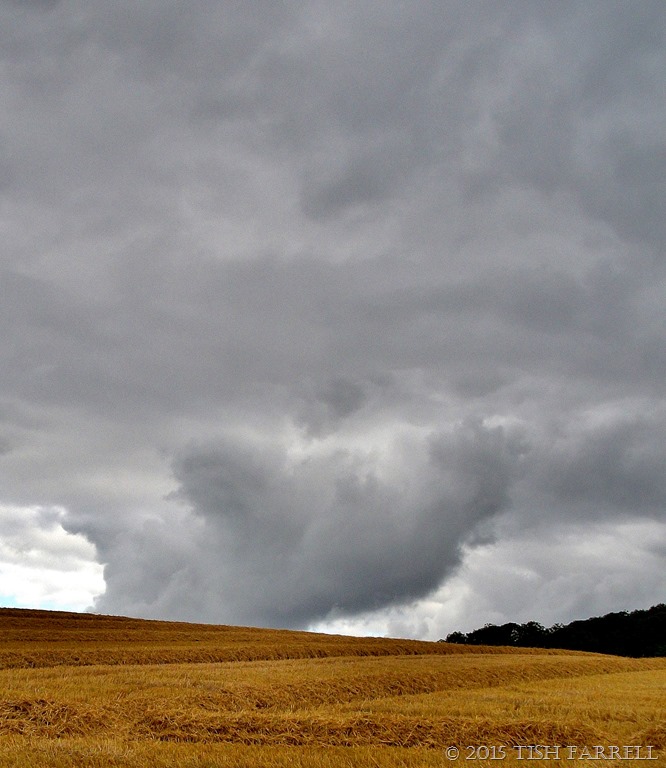
As I’ve mentioned once or several times, I spend much time watching the sky behind our house. I never cease to be fascinated by the false horizon created by this low hill. Behind it is a another false horizon created by Wenlock Edge which lies a half mile further on.  Here in Wenlock, then, we see the movement of clouds in the westerly sky  several hundred feet higher than do our neighbours below the Edge. It is a piece of geographic happenstance that makes for dramatic skyscapes. It’s a bit like watching a moving stage set.

I justify the time spent sky watching on the grounds that I need to make the most of this view. Doubtless the local landowner will get his way and one day build a sprawling housing estate here, this despite the fact the town has a Victorian drainage system that cannot cope with any more human effluent. Already, just to add an off-colour atmosphere to the scene, our sewage works is licensed to dump excess untreated waste into the stream which thence flows into the River Severn and through the World Heritage Site of the Ironbridge Gorge. This is clearly what is meant in England when certain politicians bang on about Victorian Values.  Sometimes I wonder how, as a nation, we can be so very smug about ourselves.

The poor drains of course add to the town’s flash flooding risk, and to replace them would cost many millions. We do not appear to have a planning system in this country that says NO to development, even though there is insufficient infra-structure to support it. Developers of course pay a pro rata community levy on the number of houses built, but such amounts could not begin to cover the cost of the kind of remedial work that is necessary. When Wenlock’s population is less than 3,000, why would a water company spend 10 million pounds on such a venture?

The main problem is that the town sits in a hollow behind the summit of Wenlock Edge. The town centre is at the lowest point and thus one of the most vulnerable areas. In 2007 over fifty houses were damaged. Many afflicted families were still trying to restore their homes up to a year later. And while insurance cover may make good the bricks and mortar, it does not bring back the personal belongings that were lost, or quickly eradicate the memory of having a metre high flood rushing through your house.

Mostly of course, the town does not flood, although parts of it are prone to run-off from surrounding hills in times of prolonged wet weather. As far as we know, our house has never flooded, although given its position, built into the bottom of the hill, this is in some ways surprising. There is anyway a low earth bund along the back boundary and, after earlier flood incidents lower down the street, the landowner’s tenant farmer continues to leave a broad swathe of uncultivated ground behind our houses, and then ploughs  in line with it.

In fact to create real problems it takes a certain kind of storm to hit our catchment area. But when it comes there is less than 20 minutes warning before a flash flood. The roads into the town become rivers. Every hard surface speeds up the flow, and given our antiquated system, all the storm water goes into the foul sewer. All of which is to say, as one of the flood alert wardens with the brief of forewarning elderly neighbours, I also have more pressing reasons for watching the sky, and keeping an eye on any storms brewing.

copyright 2015 Tish Farrell

Related:

In Much Wenlock An Inspector Calls

Please visit Paula’s place at Lost in Translation for more fascinating cloudscape photographs.

Autumn weather in June? What’s going on?

IMG_1709

For those like me, who live in the northern hemisphere, it might seem a touch perverse to post a photo of autumn leaves just as summer is expected. But then, of course, so many fellow bloggers south of the equator are heading into winter, so this is for you. Seasons greetings and all that.

Besides which, here in the UK most of us have been having autumn, if not downright winter weather for weeks now. June arrived with Met Office warnings of gales, plus torrential downpours. As I write,  the sky is filling again with fat rain clouds…

Enough already. Feelings of dryness are definitely required at Sheinton Street. I anyway love the spicy scent of autumn leaves, and especially crispy sweet chestnut ones, which these mostly are.

There is something mesmerizing about that sundried smell that opens up pathways to the past: forgotten houses, empty rooms, sun bleached floorboards, old cupboards and drawers exhaling remnant whiffs of their former contents, the sweet odour of decay. It’s all most beguiling, and hard to know if these are shreds of a remembered past, or some parallel universe barely glimpsed. Shall we take a ‘leaf’ from Alice Through the Looking Glass, and step through…?

Perhaps another day. The leaves are Welsh ones by the way. There were caught last year on a gloriously dry September afternoon, as we walked in a dream on the Dol Idris Path below the great  mountain of Cader Idris.  You can read about that walk here.

But now for the soundtrack to the photo, a song that I’ve loved since my first years on the planet Autumn Leaves/ Les feuilles mortes  sung here by the one and only Yves Montand. Oh, the tristesse:

https://www.youtube.com/watch?v=nRJn0hnIyyc

Related: Now that summer’s done, we take the Dol Idris Path…

Jennifer Nichole Wells OWPC: dry   Go here for some more dry posts

To And From the Allotment: Seeing Things In Black & White

Last week Cee at Cee’s Photography challenged us to go out and take some new black & white photos. This happened to coincide with my notion of doing a series of  ‘to and from the allotment’ posts, since at some point in the day you will see me trailing through the field on the back route path to my vegetable plot. And then the Daily Post’s ‘on the way’ prompt seemed to fit as well.

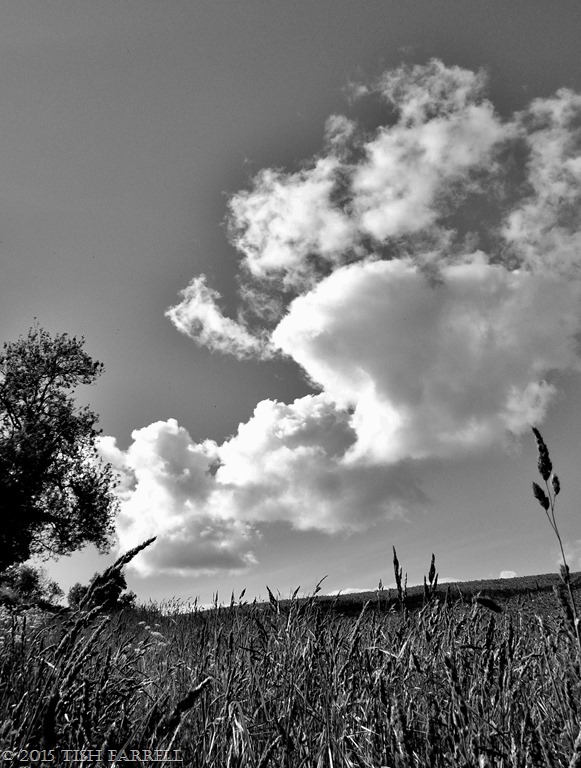
Given that everywhere is now bursting with sap-filled greenness, and we’ve waited a long time to see it, it is perhaps perverse to snap it in black & white. On the other hand, doesn’t it make you see things with a fresh eye? These photos were all taken in the early evening, when the sky over Wenlock Edge is always interesting, and the allotment gardens take on an abandoned and mysterious air. Even the plant life looks other-worldly. See what you think.

*

The bean field…

P1010481


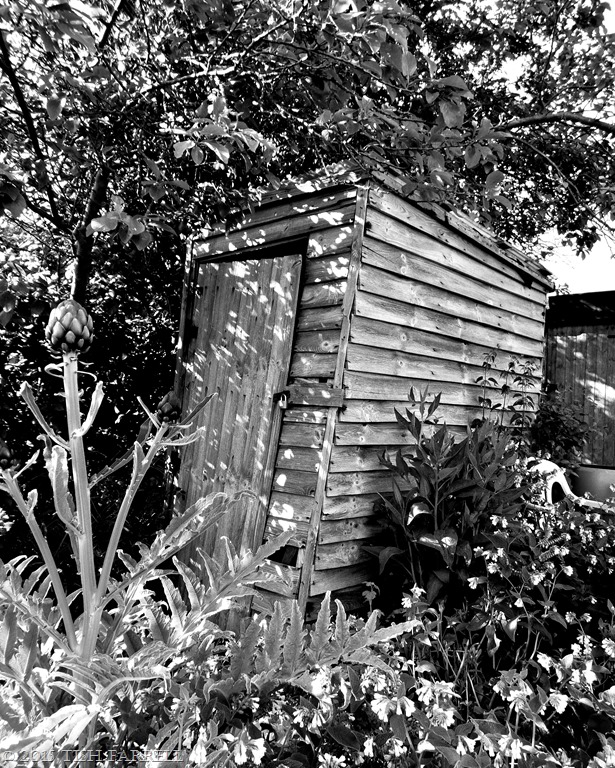
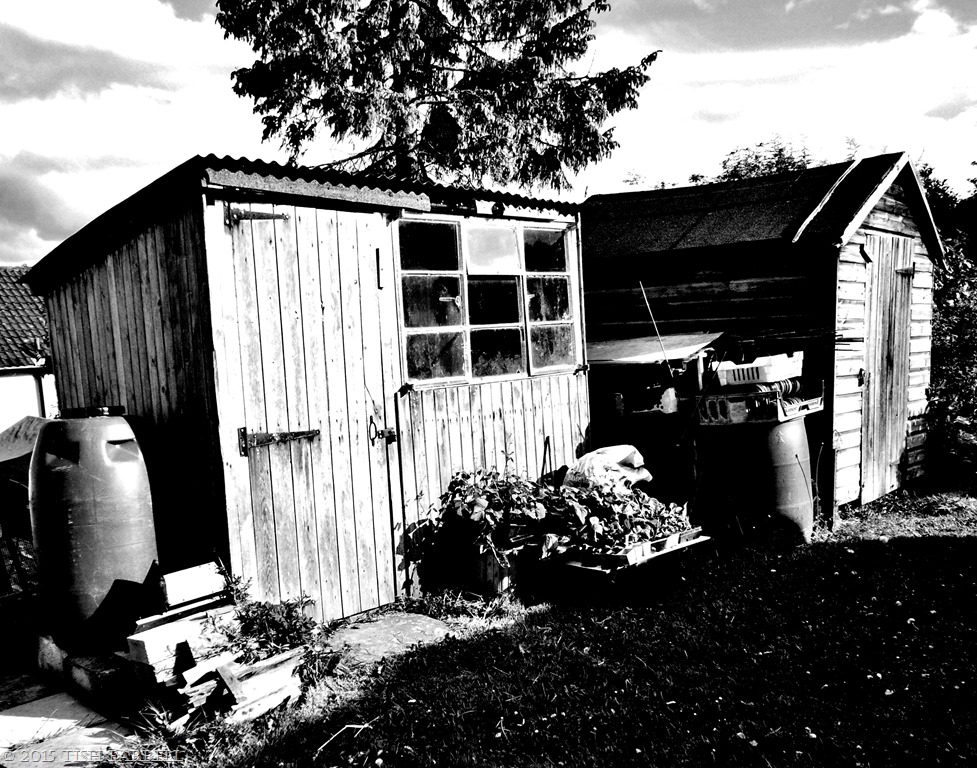
My old shed under the greengage tree with sunbeams and artichoke…

P1010485


Dandelion clock by the shed…

P1010464


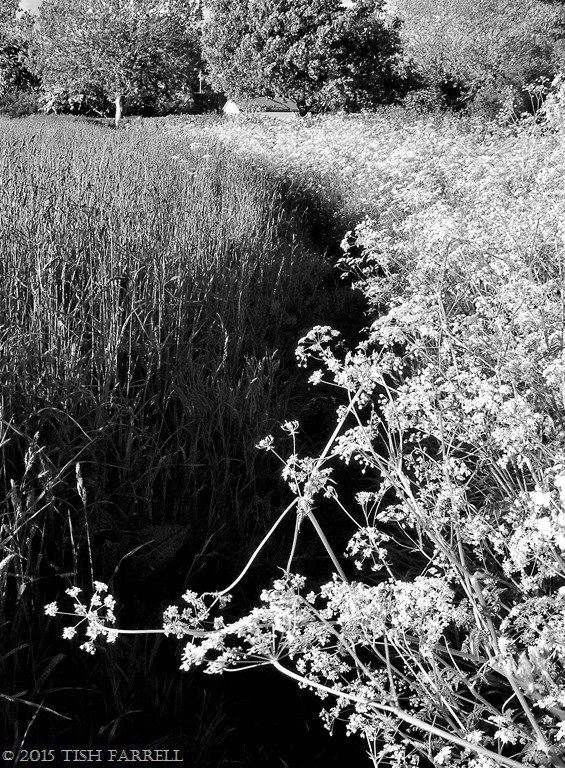
Wreath of barbed wire and Queen Anne’s Lace…

100_5606


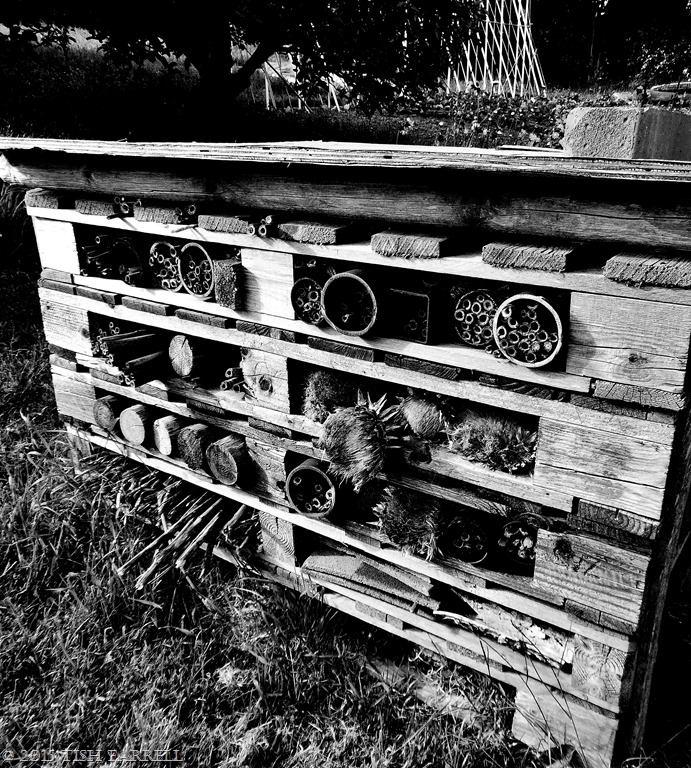
Phoebe’s insect motel for overwintering bees and bugs…

P1010505


Shed with a view…

P1010501


Welsh onion flowers and globe artichokes…

P1010497


Sheds and allotments go together…

P1010506


The path home by a sea of Queen Anne’s Lace…

100_5622
Cee’s Black & White Photo Challenge

On the Way

To And From The Allotment: Finding A Beautiful Blue

100_5558

Readers who have been visiting my Edge for a while will know that at Christmas I mourned the loss of my Kodak EasyShare point-and-shoot. It died on a beach in Anglesey, and its last image was of me peering into the lens, though I’m not sure what good I thought that would do. Anyway Santa Graham had bought me a Lumix replacement, so I wasn’t without a camera for long, and I was quickly enamoured of its dynamic monochrome facility.

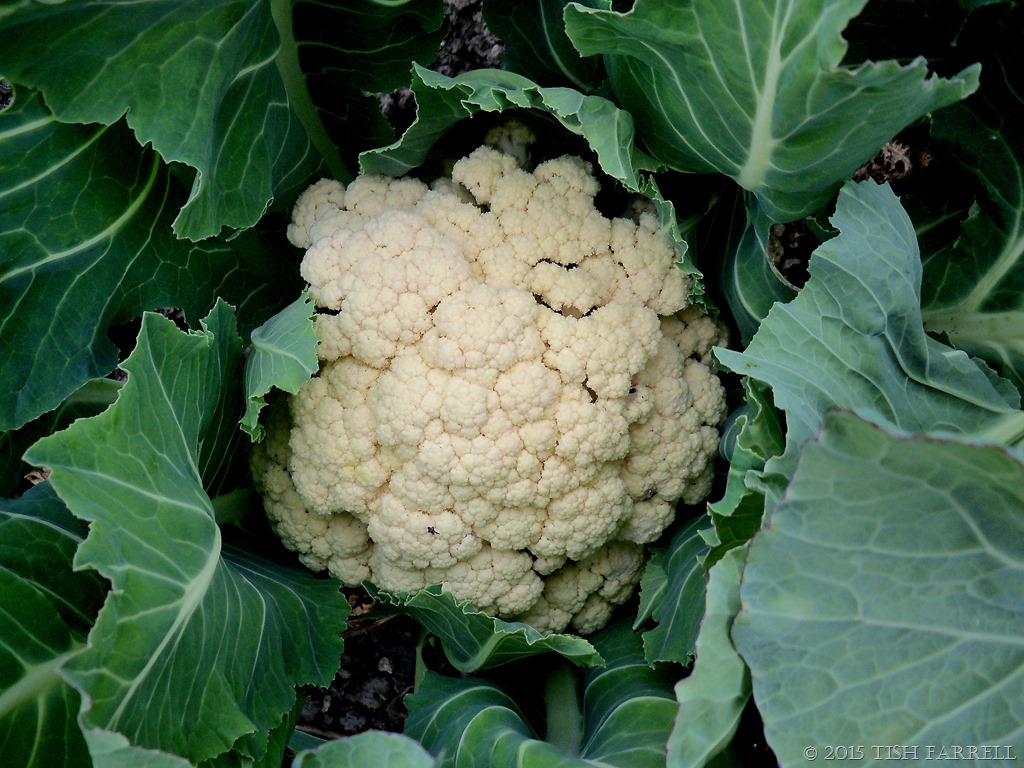
But then some people are never satisfied. And the thing was, not to be ungrateful, I still missed my Kodak. And since the Kodak company is no more, this led to a little trawl on Ebay, and the purchase of a rehabilitated, slightly upgraded version of my original digital (more zoom), and all for the princely sum of £17.50. It is thus the camera I mostly take to the allotment, because you never do know when you might want to snap the portrait of an especially fine cauliflower, or record progress of the lettuce in the polytunnel. (I am not joking. Just you wait).

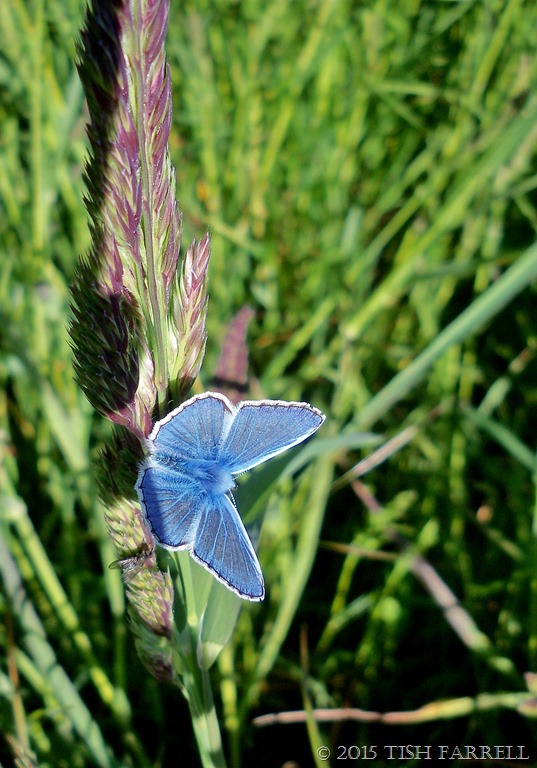
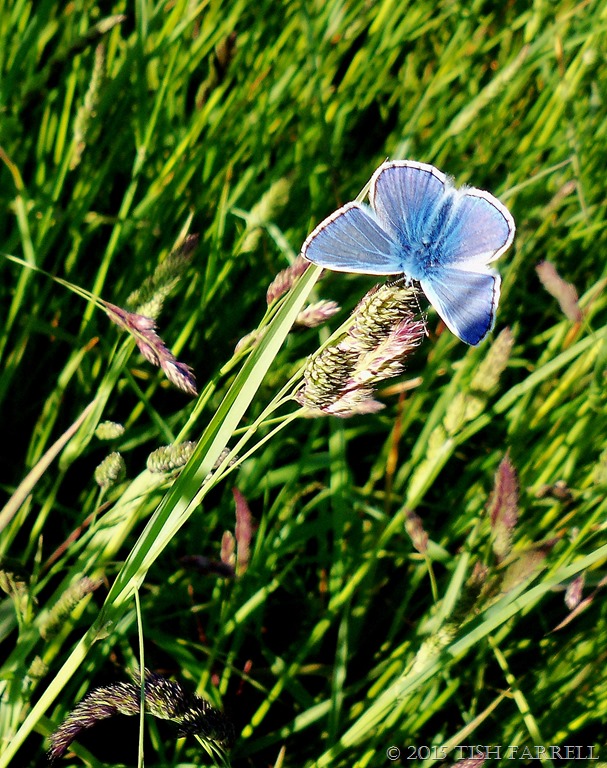
But first things first. The butterfly. This was spotted yesterday in the corner of field between our house and the allotment. I was carrying a big blue IKEA shopping bag of kitchen waste for the compost heap and a bunch of 6 foot bean poles, and it was very windy. Nonetheless, despite all these handicaps, trusty Kodak captured this gorgeous, if tiny, Common Blue butterfly. In real life it is probably less than half the size of the first photo image. You can see it more in context of this next shot. It is about 1”/2.5 cm across:

100_5553

See how wonderfully it posed, and with great gusts of wind too. Here’s a shot with  breezy blast thrown in:

100_5567

I thus dedicate this post to blogging chum, Ark, at A Tale Unfolds. In his Leading you up the garden path posts, he has been treating us (among other things) to dramatic entomological scenes of ambush and slaughter inside a yellow gazania; and all from his garden in Johannesburg. At different times he has also captured some splendid shots of butterflies, birds, more spiders and several praying mantis. He apparently does this while roaming his domain with a mug of coffee in one hand. For some reason this makes me think of the Mad Hatter, though I don’t think he wears a hat, and certainly not a topper. Or do you, Ark?

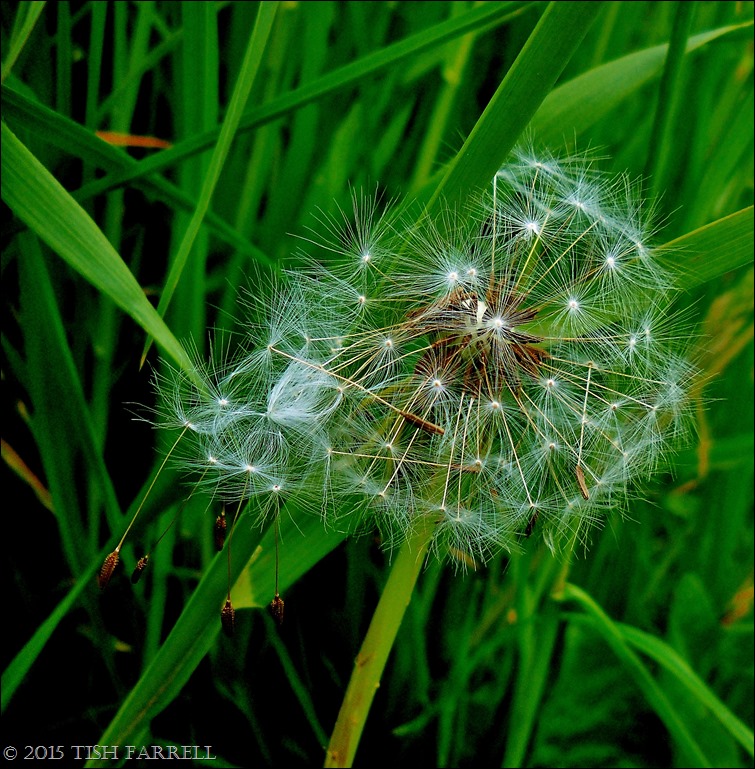
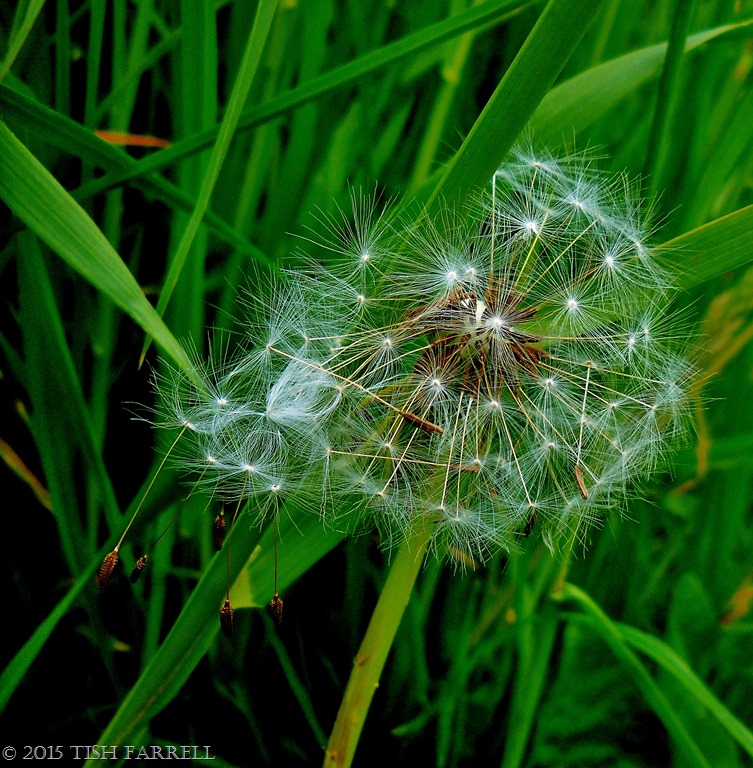
And now to conclude this inaugural series of to-and-from-the-allotment, here are some more dandelion clocks (broken and intact) because I’ve decided to consider them wonderful instead of a curse on my plot:

100_5540

and followed by the cauliflower, which is what I really wanted to show you all along, and is also a thing of beauty, produced on my plot without pesticides, but overwintered under enviromesh. And just to boast, it was at least twice the size of the photo, and tasted delicious with kamut pasta in a goat’s cheese, parsley and onion sauce. And no, I do not do takeaways. Sorry. Though I do share excess, uncooked veggies, but you  need to come to Much Wenlock to get them.

100_5524

copyright 2015 Tish Farrell

B & W Sunday ~ Stronghold ~ The Telling Of Family Tales

P1000972

Most families tell tales about their origins: legends of high-born connections, of inheritances lost or missed-out on, of forebears famous or notorious somewhere in the family tree. These stories, the ideas of who we are become strongholds of sorts; a defence against times when others make us feel ‘not good enough’, or just plain dull.

I seem to remember when I was eight or nine telling one very competitive school friend, and as a piece of deliberate one-upmanship on my part, that one of my ancestors was a well known poet and buried in Poets’ Corner in Westminster Abbey. Mother had told me so.

Indeed, Mother told me lots of family stories about her Derbyshire Fox and Bennett antecedents, and because a) she still had her own childhood interpretation of what her own mother had said, and b) was framing them in a way she thought I would also understand, the ensuing narrative, much like Chinese Whispers, came out more than a little garbled. In other words, our family connection to the poet ancestor is probably so much tosh.

From time to time I have little delving sessions on the internet in a bid to clear up the maternal myths, and last year came across two fellow searchers into the Fox family of Derbyshire’s High Peak. It turned out we were each descended from three siblings William, Robert and Deborah Fox, all born at Callow Farm in the manor of Highlow, in the 1770s. And it’s odd, but I find I treasure this present-day, albeit tenuous blood connection, almost more than anything I might find out about our mutual family past. I mean, well, who would have thought it; without the internet, we never would have found each other.

The Fox siblings’ father, George Fox, came from many generations of farmers. Over the years the family appears to have owned several pieces of land in the parishes of Hathersage, Longshaw, Eyam and Abney (one was a sheep run, others were possibly both farms and lead mine workings), but the Foxes, certainly in recent centuries, were mostly the tenants, first of the Eyres at Highlow Hall (pictured above), and later of the Dukes of Devonshire who came to rule much of Derbyshire from their own dynastic stronghold of Chatsworth.

If the Eyre name rings bells, well it is true (just to add another story thread) that Charlotte Bronte was staying with her friend Ellen Nussey in Hathersage in 1845, around the time she was writing Jane Eyre. Mr. Rochester’s Thornfield Hall is said to be drawn from another Eyre family stronghold, North Lees Hall. She and Ellen went visiting there. Other local features are also present in the book, including Hathersage itself, which was apparently the model for Morton, the village where Jane Eyre ends up after running away from Edward Rochester.

My Fox ancestors, it seems, were also good storytellers – fact mixed seamlessly with fiction. When Robert Fox’s son, my great, great grandfather George Brayley Fox was forced to sell up his possessions at Callow Farm in 1892, this piece appeared in the Derbyshire Courier:

Derbyshire Courier 25 March 1893

My own feeling about this ancestral yarn is that it was a bit of a face-saving exercise for a family that had indeed been part of the local scene for generations. Some of the details may well be based on some misremembered version of reality. Early medieval charters of the 12th and 13th centuries certainly have Foxes farming in pretty much the same location. Now, I and my two fellow Fox hunters are trying to tease the facts from the myths.

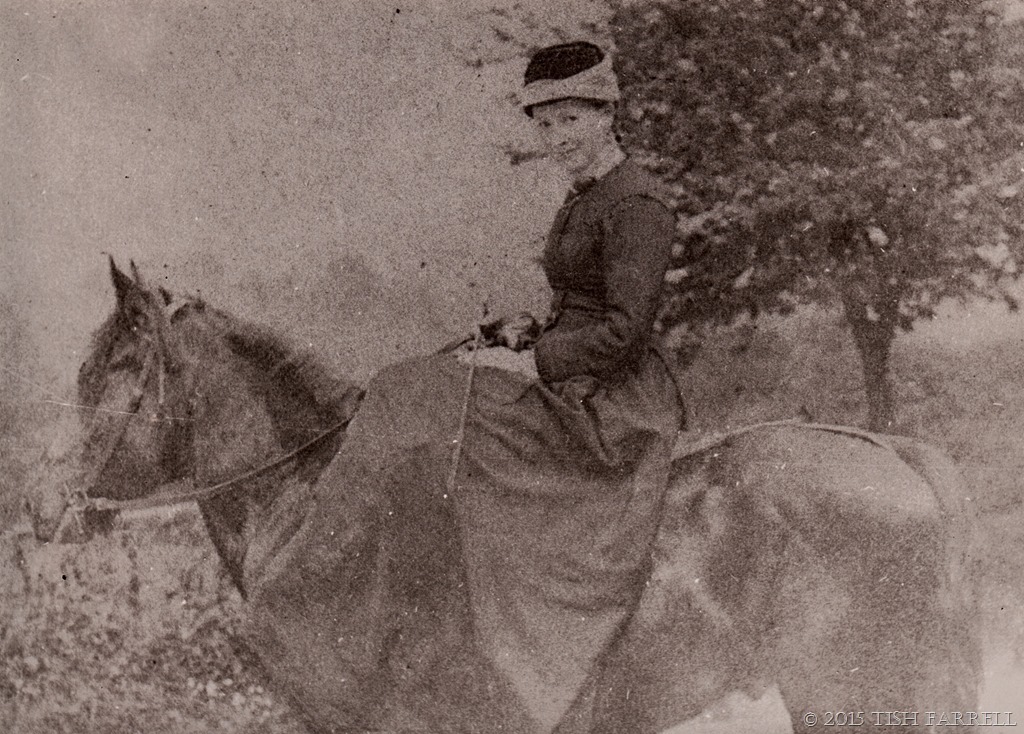
But one thing I do know (because I have the photo), my great grandmother, Mary Ann Fox, rode her pony along the winding lane from Callow Farm. She would have ridden past Highlow Hall on one of her regular missions. Grandmother said she went to Chatsworth Hall to deliver the farm tithe in eggs to the Duke of Devonshire. Here she is c1880s in her late teens, before she was silly enough to run off with a Manchester spindle manufacturer and, at thirty, end up the widow of a bankrupt with three young children and a stepson to support:

IMG

And here is Callow farmhouse, the photo taken by a family researcher in the 1970s. It sits on a hillside below Highlow Hall, and looks down on the River Derwent and the small town of Hathersage. If there is a house of 1391 here, as the newspaper article suggests, then it is very well hidden inside a very much later exterior:

Callow Farm, Hathersage c 1970s

But if I said that these images and family tales have not affected how I see myself, then this would not be true, although it is only recently that I have seen this. For some reason, too, in my later years, these particular maternal ancestors seem to mean more to me.

The thing that speaks most loudly is not so much the gentry connections – real or imagined – but the sense of landscape, of the bleak uplands, the rugged scarps of millstone grit, the arcane, but tough world of lead-mining in which all classes toiled from the Eyres downwards; the fact that men and women worked so hard in this land, lived on oat cakes and homemade butter, cheese and ale, reared often very large families, and (in a surprising number of cases) lived into their eighties and nineties.

Somehow the more I uncover of my ancestors’ world, the more it becomes my stronghold, the mental hinterland wherein I am truly rooted.  I stand up more strongly, look out across those moors with their prehistoric stone circles, and ancient burial cairns, the stone walls, and the sheep fields. The wind is in my face. My gaze broadens and lengthens. It is like standing on top of the world, looking down the endless spiral of time of which I am a part, and forever will be.

copyright 2015 Tish Farrell

Reference: For more about the Peak District

Black & White Sunday: Stronghold  Go here to Paula’s to her and others’ strongholds

5 Photos 5 Stories: Hidden Wenlock #4

100_7003 - Copy

As I’ve been writing these pieces about the less obviously seen quarters of my home town, I’ve been aware that there is a danger of casting all in a glow of antique glamour.

It’s true that these days Much Wenlock is a very attractive place to visit. For a small town, the range of architecture (representing as it does a thousand years of continuous human habitation), is fascinating. There are grand medieval mansions, and  small stone cottages, and many quirky vernacular details. The magnificent timbered Guild Hall glimpsed below, and dating from 1540, is still the town’s council chamber, and with seats that feel like the rock of ages to those of us who have sat through many a council meeting.

P1000406

But this is all very well. For centuries, life for the labouring people of Wenlock must have been pretty grim, and one of the grimmest places to work must surely have been in the town’s many quarries, known locally as ‘the Rocks’, which I think says it all.

I’ve explained elsewhere how the town sits beneath the twenty-mile limestone scarp of Wenlock Edge, an up-thrust fossilised, tropical seabed. I’ve written, too, of how the limestone has been exploited for centuries, and at least since Roman times. Milburga’s Saxon monastery, parts of which survive beneath the parish church, was built of local stone, as was the grand Norman priory that superseded it. Later, after the Dissolution, much of the stone was re-purposed in many of the town’s buildings, and often used to clad earlier  timber-framed buildings. So it is that many of the town’s oldest surviving dwellings, including a medieval hall or two, are quite hidden from view behind much later stone facades.

100_5025

Other key uses for the quarried limestone were as a flux in the growing iron industry (i.e. from at least the late 17th century) and for lime burning to make fertiliser and building mortar.

For centuries quarrying would have been a manual task with heavy hammers, rammer bars, stone rakes and barrows as the quarrymen’s main tools. The use of black powder explosives, and then gelignite for blasting, was a much more recent practice, and not without its own serious hazards.

Lime-burners also had their kilns near the quarries, but operations were seasonal, and lime-burners did not appear to make much of a living despite the demand for their products.

The quarry featured in this post is Shadwell or Shady Well Quarry. It lies directly behind Windmill Hill, and is the nearest one to our house.

100_6671

P1000654

Workings here seem to have begun only in 1849 when Francis and John Yates of Ironbridge took a 14-year lease of a new quarry in Windmill Hill field, later called Shadwell Rock. They expected to dig 9,000 tons a year ( Glyn Williams Much Wenlock’s Limestone Quarries). In the 1860s the arrival of the railway plus the provision of a dedicated siding, saw Shadwell develop into an industrial operation. The South Wales & Cannock Chase Coal & Coke Company took over the lease, and in 1873 despatched 22,500 tons of iron fluxing stone to the Black Country in England’s industrial Midlands.

The quarry continued to be worked until 1996. Since then it has been left amid growing desolation. A few years ago there were plans to open a diving school with fifty cabins in the woods below the windmiill, but nothing came of it. The water has a strange blue-green hue which makes me think of Andrei Tarkovsky’s film Solaris. The pool is said to be over 70 feet deep and, from time to time, daft young men who have had too much cider, film themselves diving off one of the cliffs. There have been a few near misses survival-wise.

But at least some life forms have been making good use of the cliff faces. Since the blasting stopped peregrine falcons have begun to nest here. The same is apparently true for the other abandoned quarries along the Edge. There are ravens there too, although not yet at Shadwell. Perhaps they will come. It’s a pleasing thought: a case of positive re-purposing.

copyright 2015 Tish Farrell


Related:

Sun setting over Wenlock Edge: Or did the earth move?

Old stones of Wenlock: repurposing the Silurian Sea


5 Photos 5 Stories Challenge

Pauline at Memories Are Made of This nominated me to take up this challenge. The idea is to  “post a photo each day for five consecutive days and attach a story to the photo. It can be fiction or non-fiction, a poem or a short paragraph, and each day nominate another blogger for the challenge”.

So today I would like to nominate Hanne T Fisker. She takes stunning photographs. Her blog is called Simplicity of Being, but her compositions brim with textural drama, and the light-and-shade complexities of the natural world. Please take a look at her work.