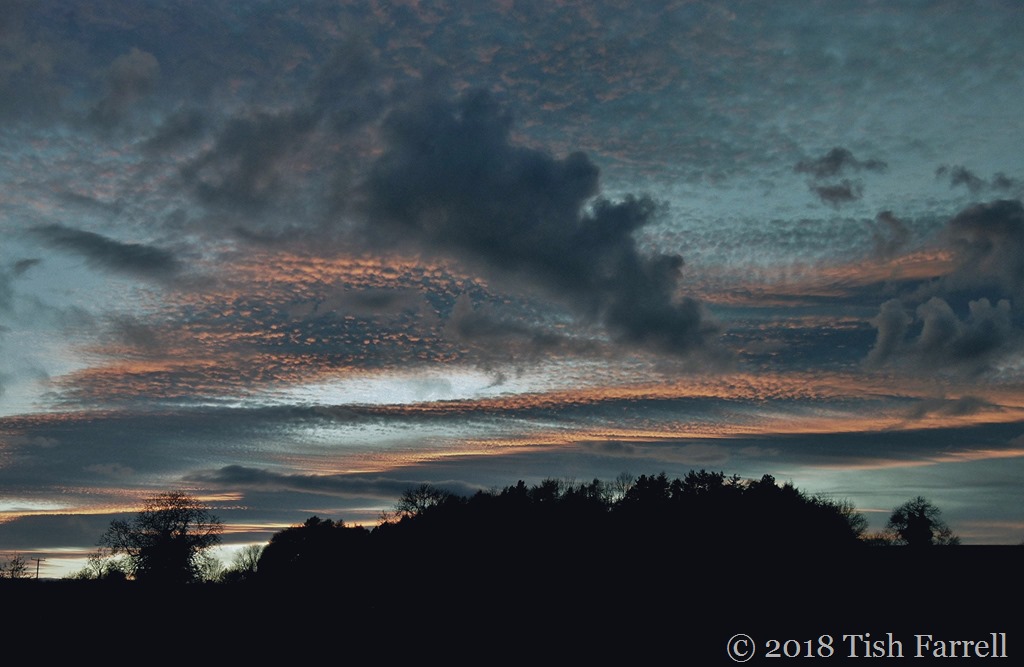
This month Paula has given us 5 words to spark our photographic imaginations: dawning, condensed, coalescing, verdant and sempiternal. This skyscape view from our house on Wenlock Edge says everlasting (sempiternal) to me, though that could be wishful thinking on my part – to think the world as I know it will always remain the same. I think, with the different cloud formations, this image also covers condensed and coalescing. No hidden verdant though, for this is a winter scene – the big bare ash tree in the corner of the allotment. And it was definitely taken at sunset and not at dawn.
Thursday’s Special
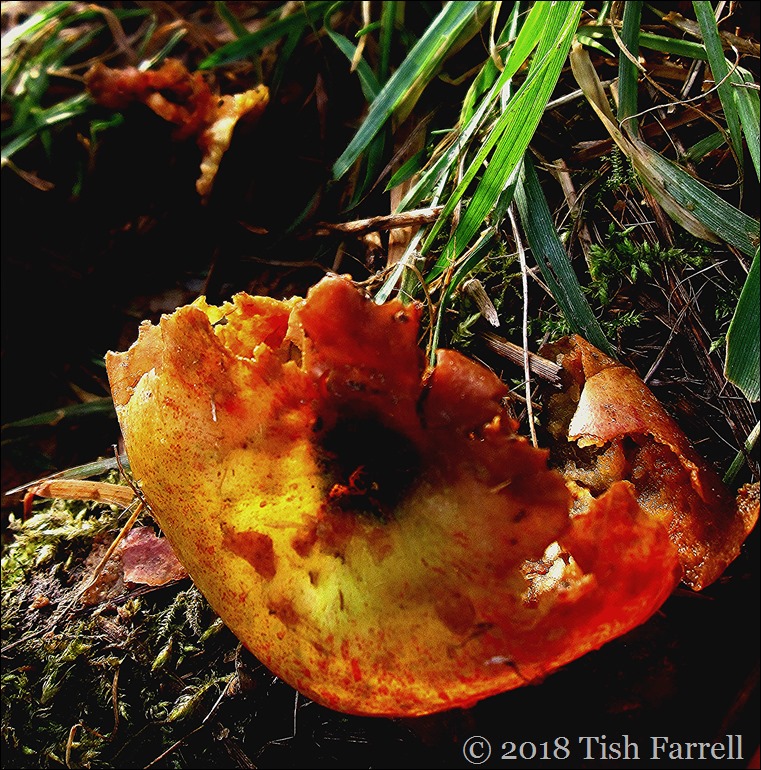
Solar-Powered Apple Lanterns As Repurposed By Blackbirds ~ Thursday’s Special
Sometimes it takes me a long time to reach the allotment. I set off with great purpose, shouldering a big bag of vegetable waste for the the compost heap. It is only a short hike across the field, although after rain it can be treacherously slithery, thus requiring due care and attention to avoid all outbreaks of undignified slippage. And then there are the distractions. And if I happen to have a camera in my pocket: well then, gardening must wait.
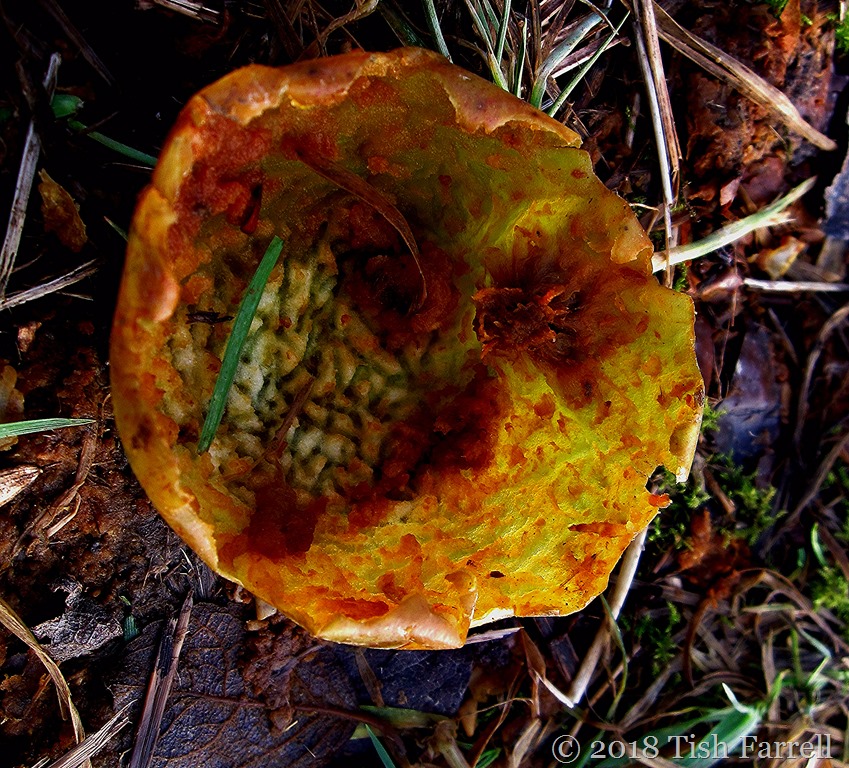
So that’s what happened when I spotted these apples that someone had slung over their hedge in the autumn. During the winter the blackbirds had nibbled the insides so neatly that only the skins remained. Not only that, the delicate apple ‘shells’ had now accrued quite new and surprising properties. Lying scattered in downtrodden grass and browning leaves, they were now capturing and emitting that too rare glow of winter sunshine. Thank you, blackbirds. A fine light show.
copyright 2018 Tish Farrell
On The Way To Marloes Sands
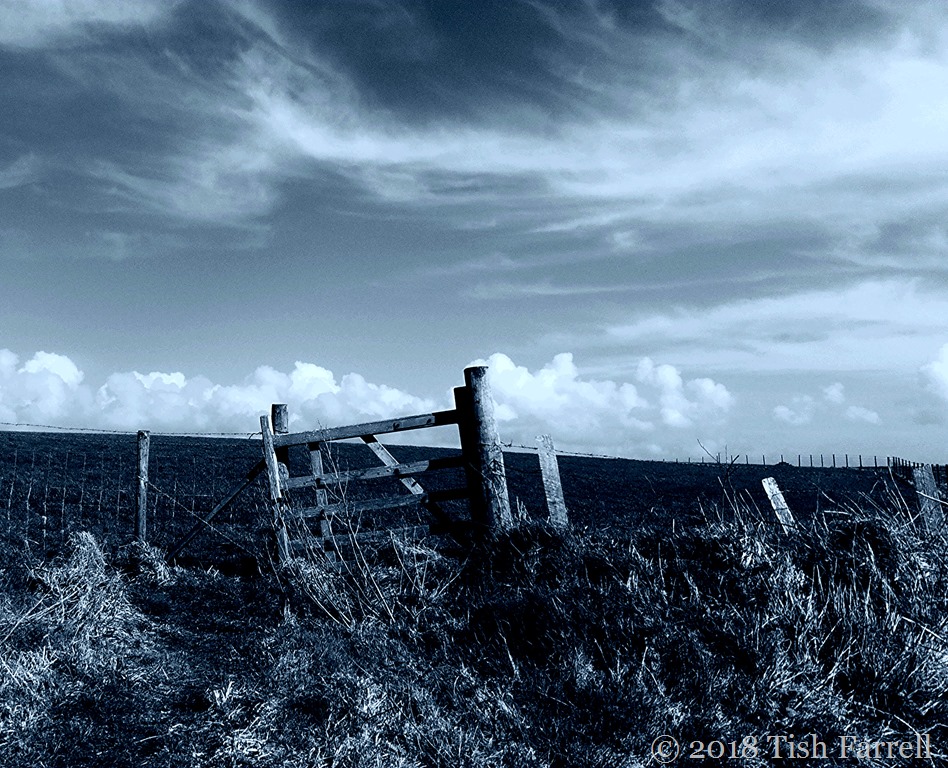
This gateway stands beside the path to Marloes Sands in Pembrokeshire – a scene captured during one of our best outings on a recent family holiday at St. Bride’s. I included the image in my March Changing Seasons gallery, but as several of you good followers remarked on it, I thought I’d give it a ‘featured image’ opportunity. I also thought it fits with Paula’s ‘Way’ theme at this week’s Thursday’s Special.
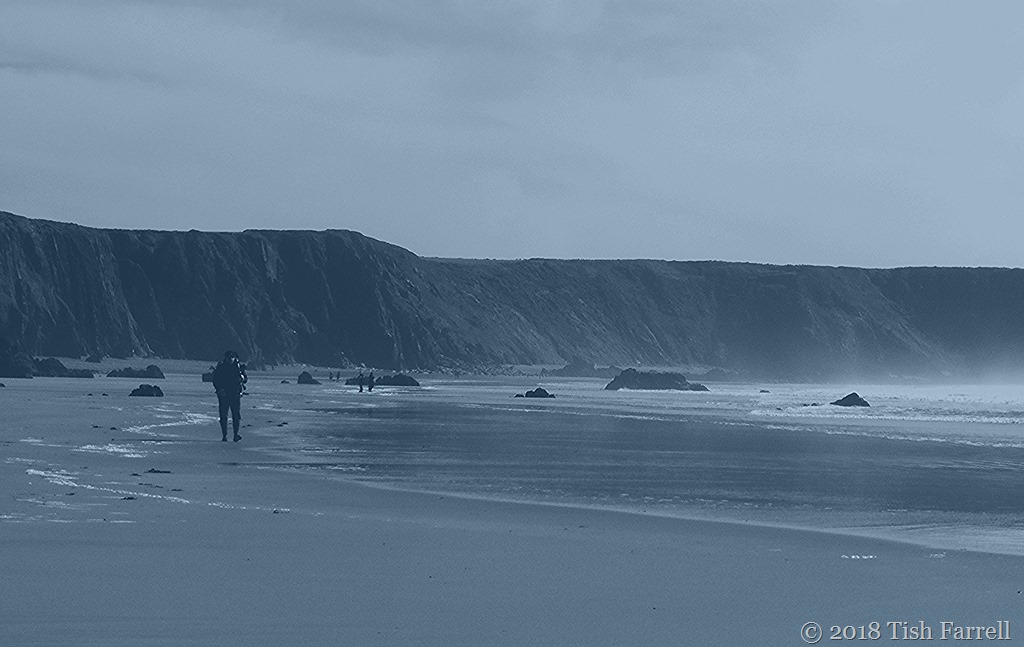
Marloes Sands must count among the world’s stunning beaches, and it is good to know that it, and its approaches are safely in the care of the National Trust. The beach features in my new header photo, taken by he who builds sheds and binds books and only sometimes gets his camera out. His photo is responsible for my theme’s new cool blue look. I pressed the ‘match the header photo’ button in the WP customize menu, and hey presto! It is now causing me to try out my monochrome shots with a ‘blue rinse’ edit.
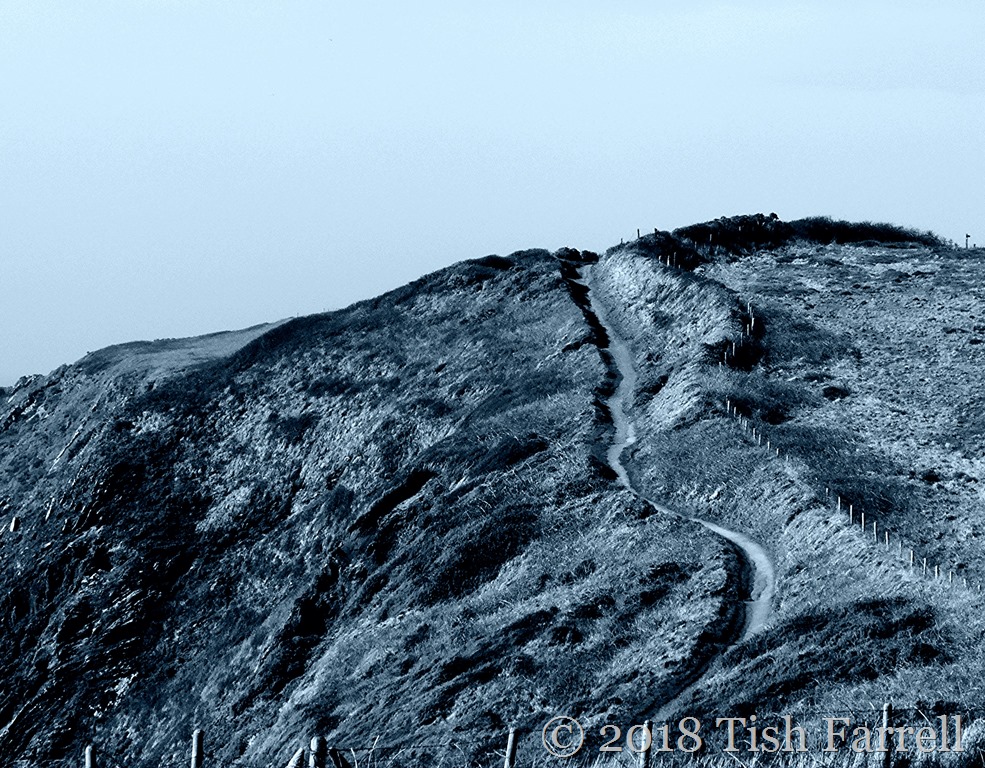
Coming up next is the clifftop path to the beach:
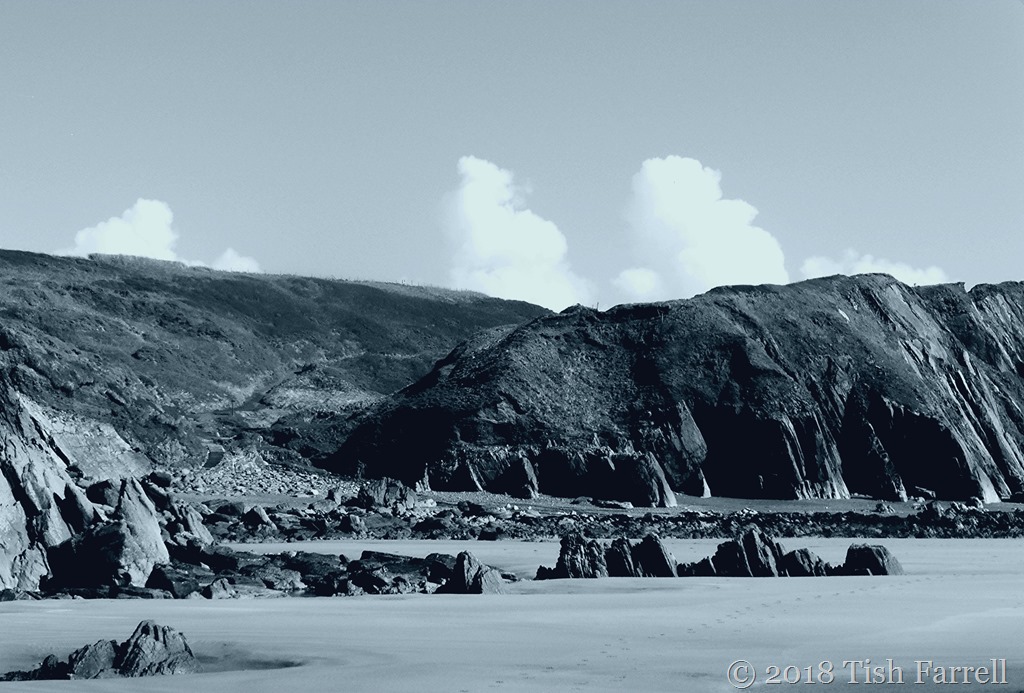
Marloes is best visited on an outgoing tide, because only then are the sands exposed. At high tide you have to scramble around on very big boulders, and it all becomes quickly undignified, if not downright perilous. On the other hand, the beach-side cliffs are always astonishing, their geology monumental and otherworldly, and therefore difficult to capture in their full grandeur.
This is the path down to the beach. You can just make it out left of centre:
And out on the sands, definitely the best way to explore:
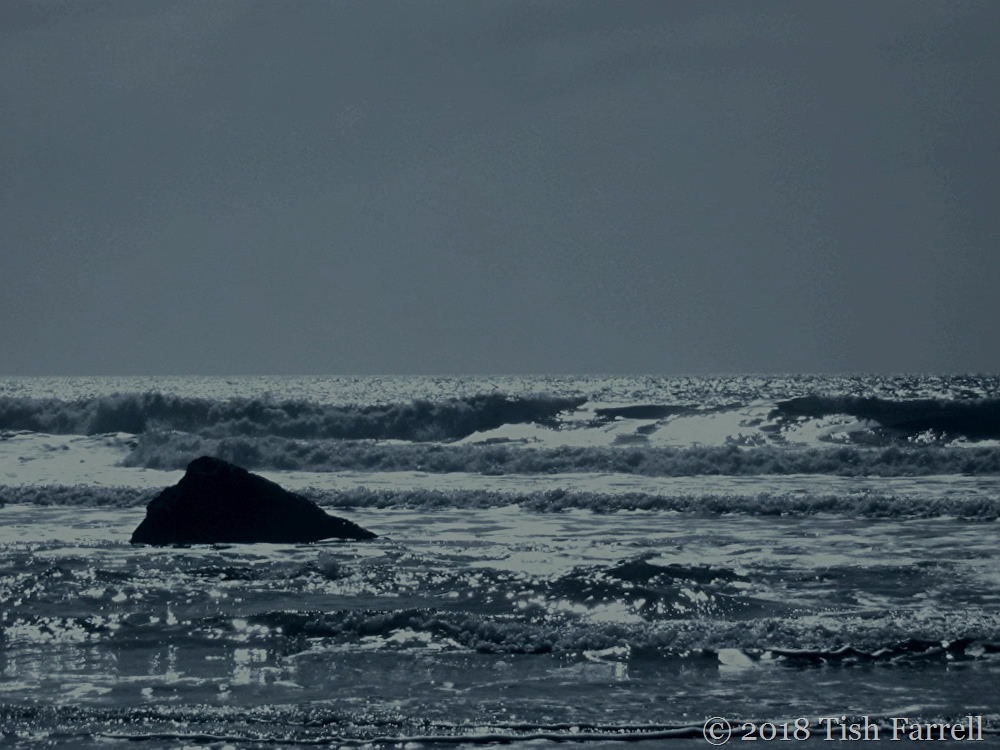
And out at sea:
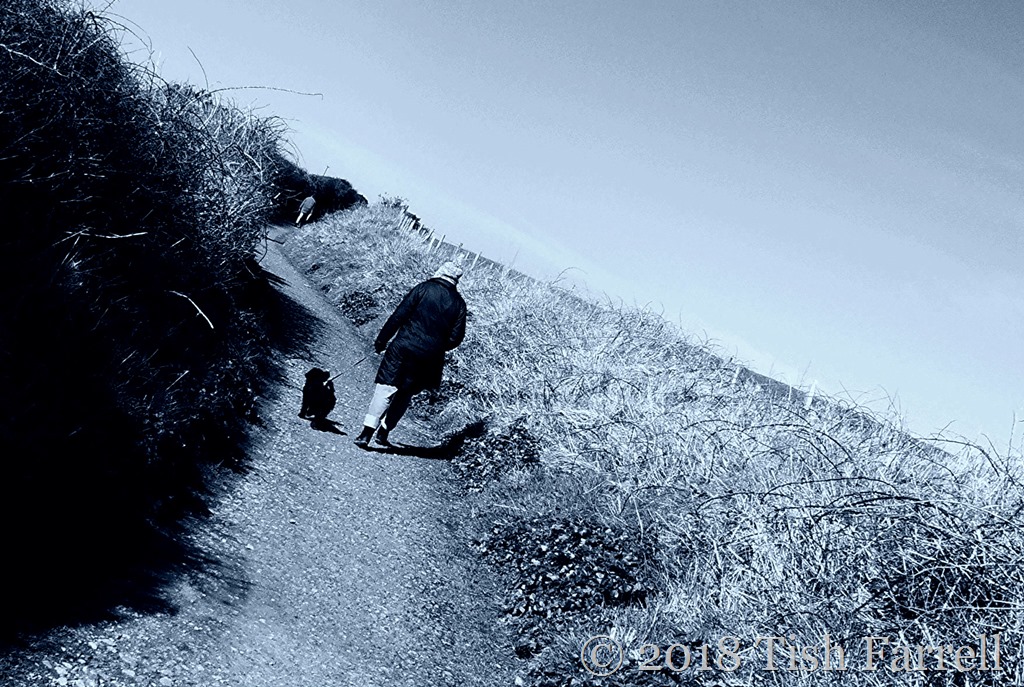
And the path back:
In which Six Go Potty In Pembroke With Cockapoo Puppy – holiday snaps #5
St David’s Cathedral ~ Thursday’s Special
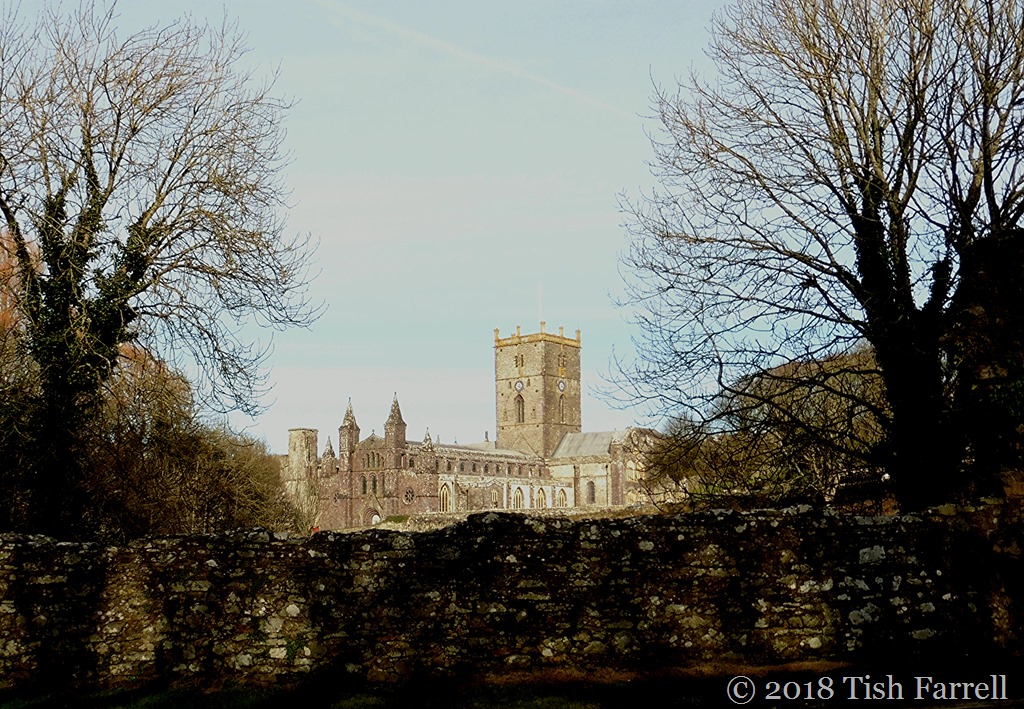
These ruins of the Bishop’s Palace at St. David’s Cathedral in Pembrokeshire, South Wales stand on the site of the monastery of Menevia founded in the 6th century by St. David, patron saint of Wales (500-589 CE). The nearby cathedral (coming up below) was consecrated in 1131, but has undergone many phases of re-building, including major remedial work, first after an earthquake c 1247, and then after the devastation wrought under Cromwell’s Commonwealth of the 1650s. Welsh architect John Nash oversaw extensive repairs in 1793, but his work, proving substandard, made it necessary for the whole cathedral to undergo complete restoration by George Gilbert Scott in the late 19th century. A bit of a mash-up then, architecturally speaking – Gothic and Perpendicular not the least of it – but still an imposingly handsome building. It also hosts a very excellent cafeteria.
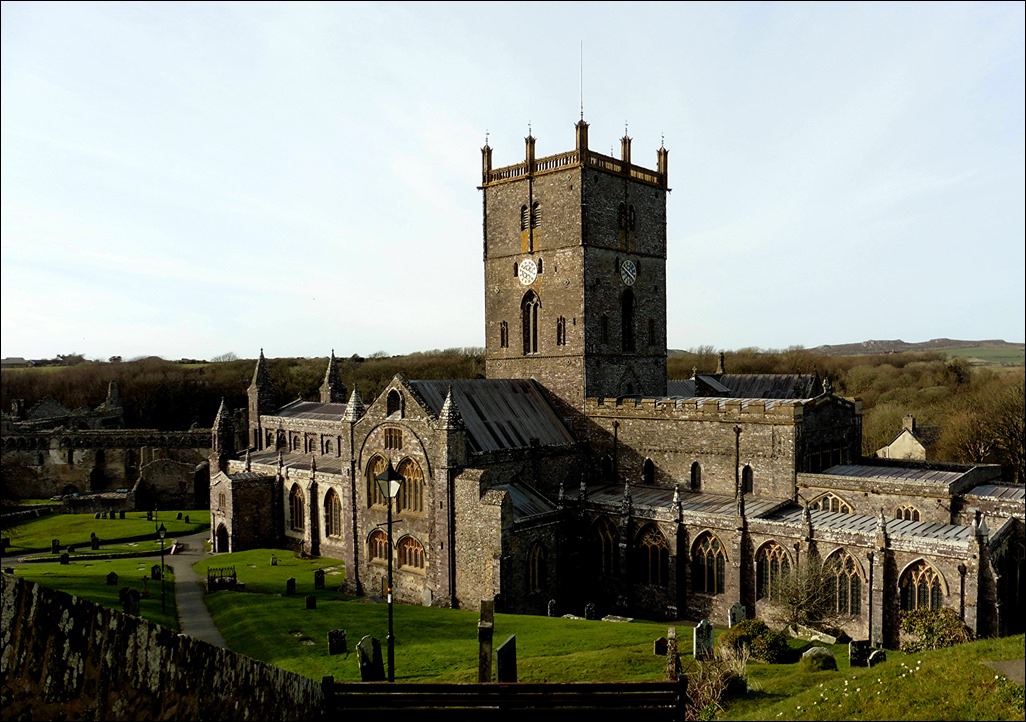
St. David’s has long been a place of pilgrimage, papal decree stating in 1123 that two pilgrimages to St. David’s was the equivalent of one to Rome. England’s monarchs from William the Conqueror onwards hot-footed here, which probably accounts for the increasing grandeur of the Bishop’s Palace, still apparent today despite its ruinous state. After confession comfortable lodgings and some fine dining would doubtless be the next royal requirements.
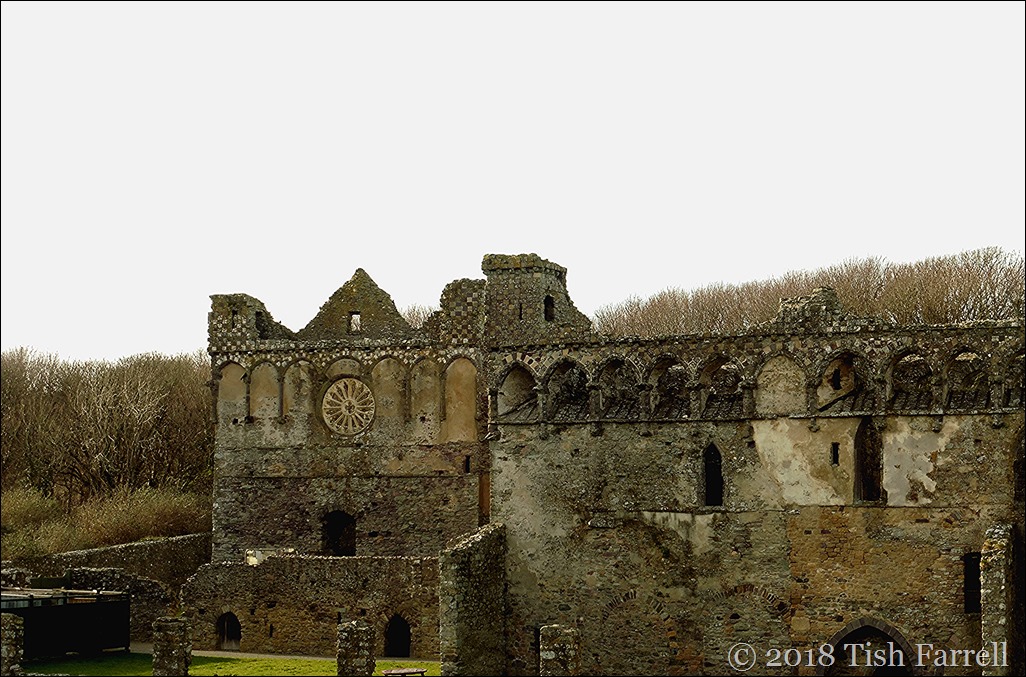
The cathedral’s presence confers city status on the community of St. David’s. This may seem a trifle curious for a place scarcely larger than a village. With a population of less than 2,000, it thus has the distinction of being the United Kingdom’s smallest city, and so by default the loveliest – its peninsula siting bounded by scenic coastlines west, north and south and its hinterland composed of rolling Pembrokeshire farmland. A good place to visit then, although perhaps best done out of season.
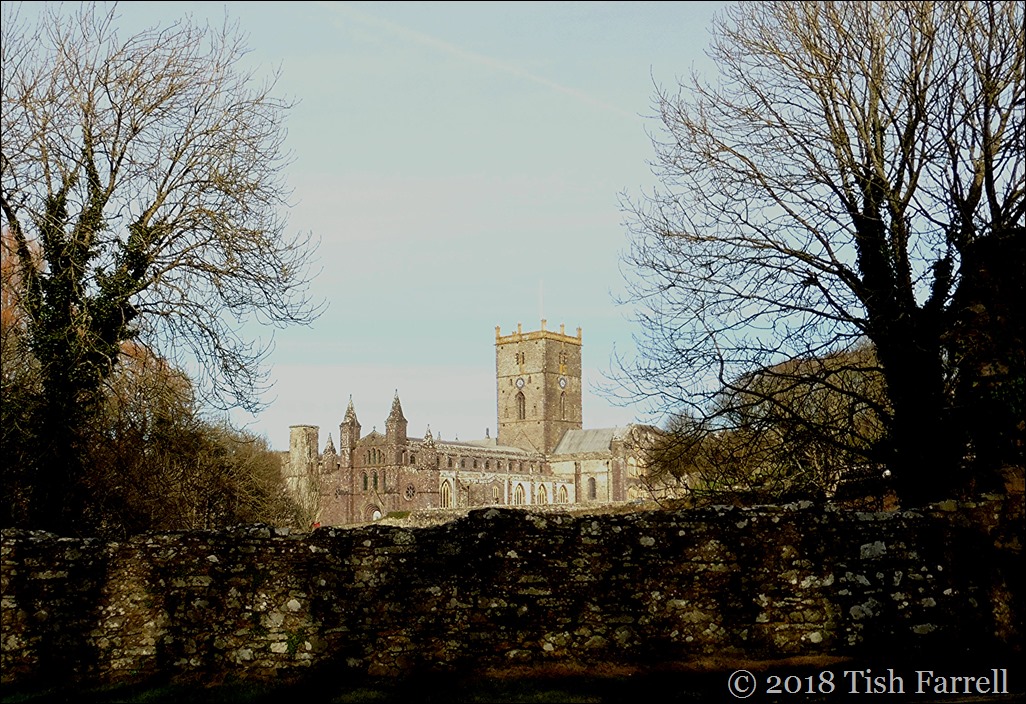
P.S. The daffodils on the cusp of opening in the header photo are the national flower of Wales and worn on St. David’s Day on the 1st of March.
It’s Been A Long Winter ~ Thursday’s Special
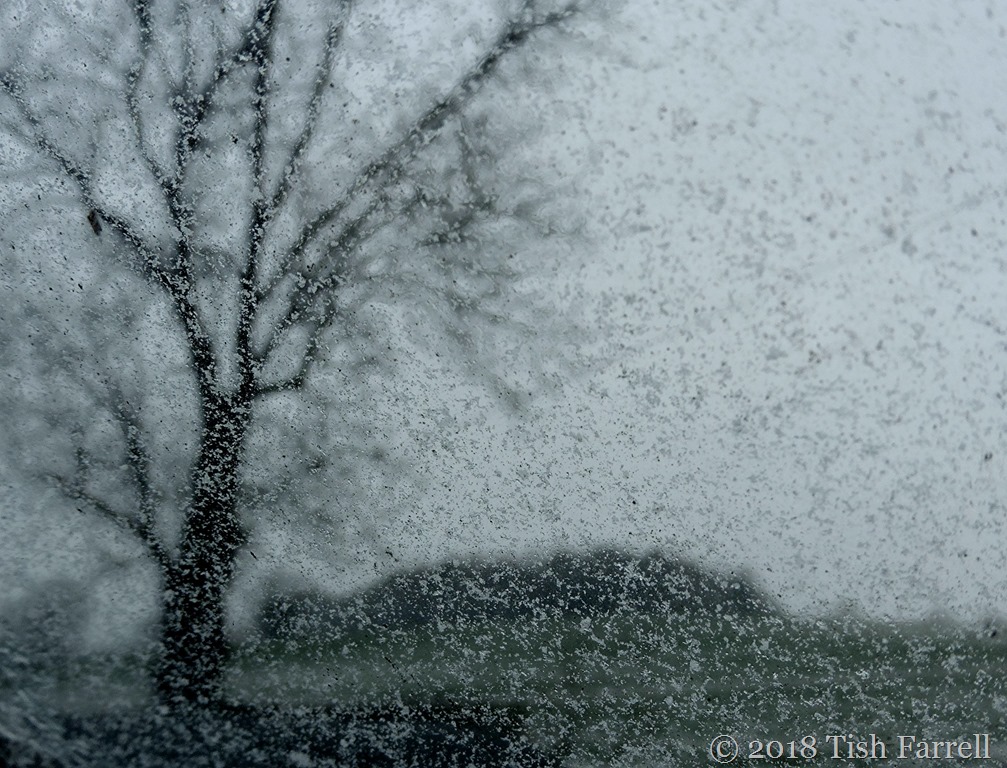
At least this morning we have bright sunshine, although even before I looked out of the window I could tell from the clarity of light there would be frost too. There is. Indoors, I keep peering at my tomato seedlings and thinking, ‘why did I start you off so soon?’ They say they don’t know either. Ah well, when it comes to gardening, as with much else, all one can do is travel hopefully. Meanwhile, fingers crossed, we’ve seen the back of these wintry scenes. You can click on an image to also see these in carousel format.
“Just Make Sure You Get My Best Side” ~ Ovine Vanity On This Week’s Thursday’s Special
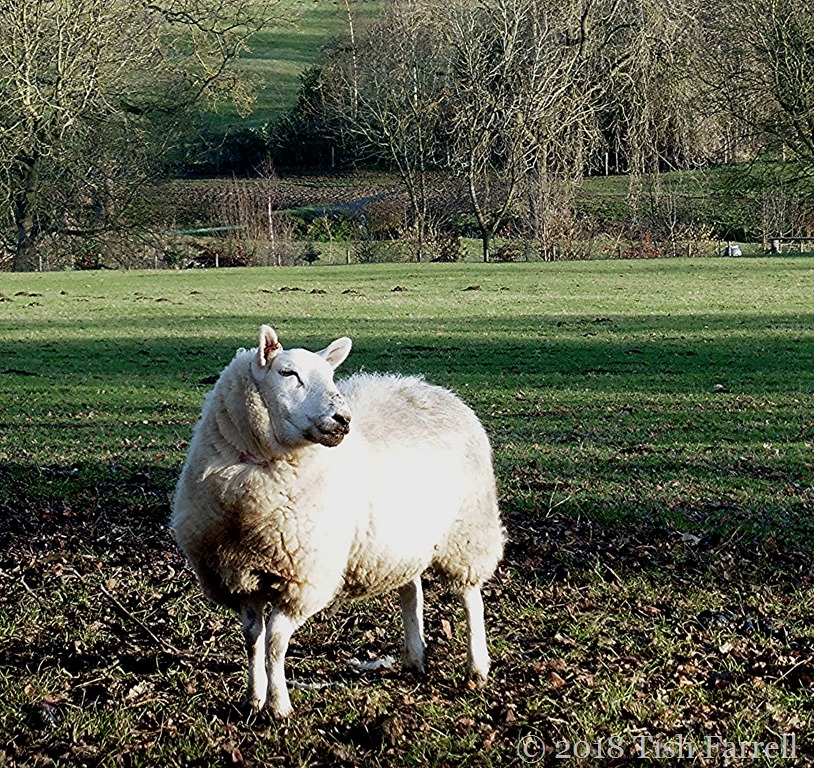
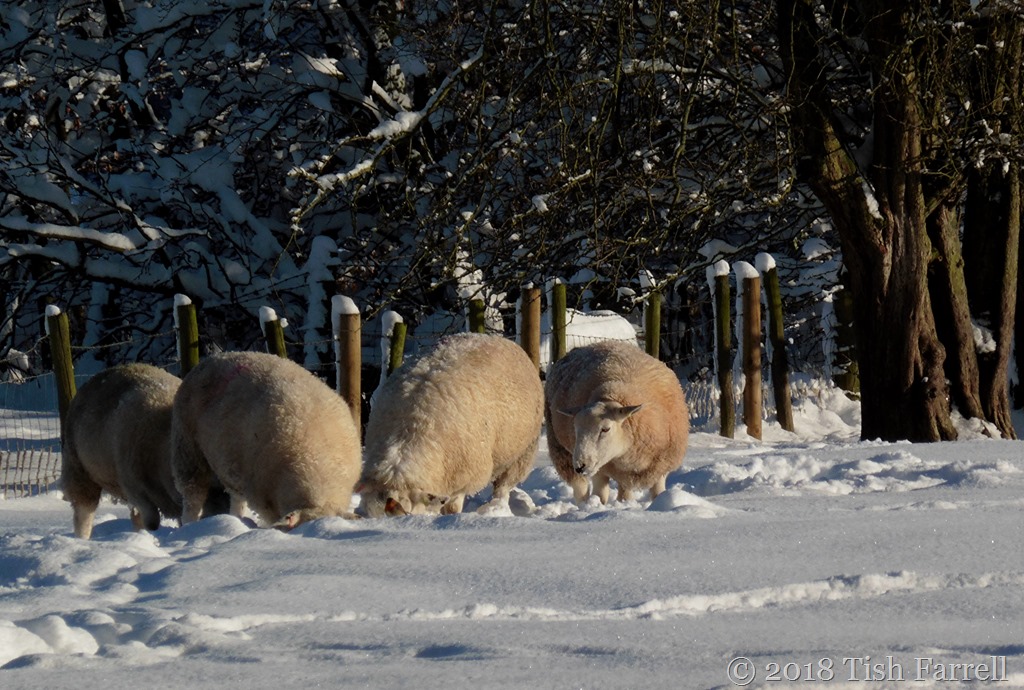
Sheep posing in Much Wenlock’s former Priory parkland
*
Thursday’s Special: Pick A Word in March Ovine is only one of Paula’s word prompts this month. Pop over to her place to see the rest and be inspired. You have a week to post your own interpretations.
On Windmill Hill ~ Thursday’s Special
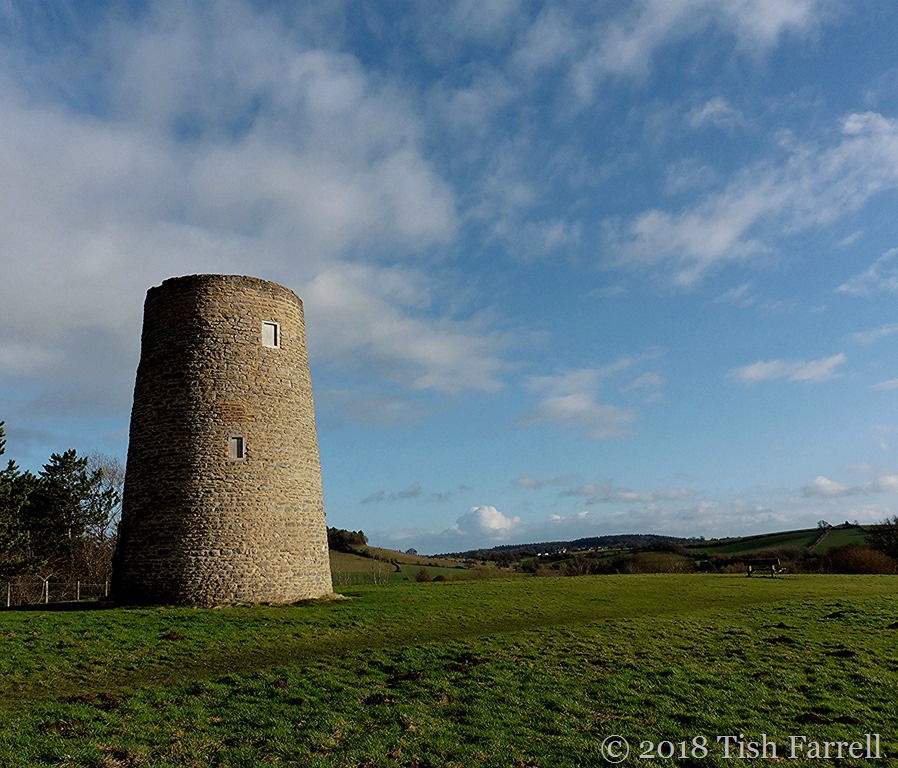
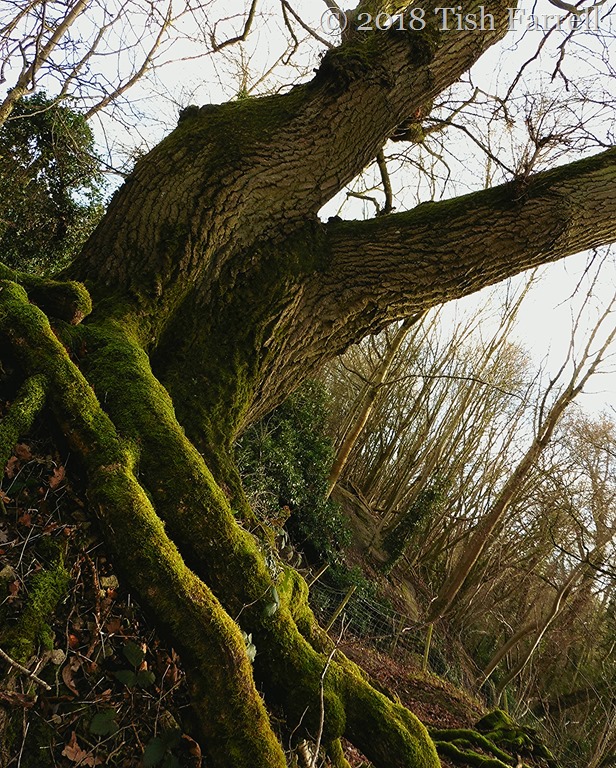
Yesterday the wind was whistling into Shropshire through the Cheshire Gap, and despite the apparent stillness and bright sunshine in this photograph, it was one big icy blast up on Windmill Hill. I did not stay long. But in the shelter of the woods, lower down the hill, I did stop to catch these mossy tree roots:
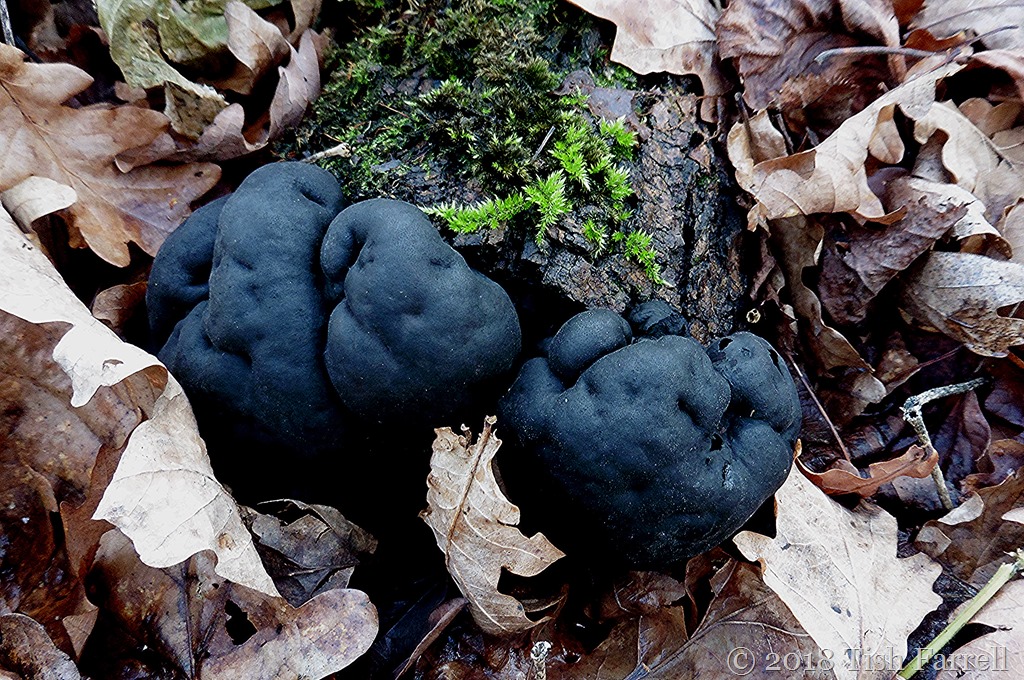
And then among the fallen leaves I found this very strange fungus:
This week at Thursday’s Special Paula has given us five word prompts to choose from. My choice for these photos is protuberant. Pop over to Paula’s to join in.
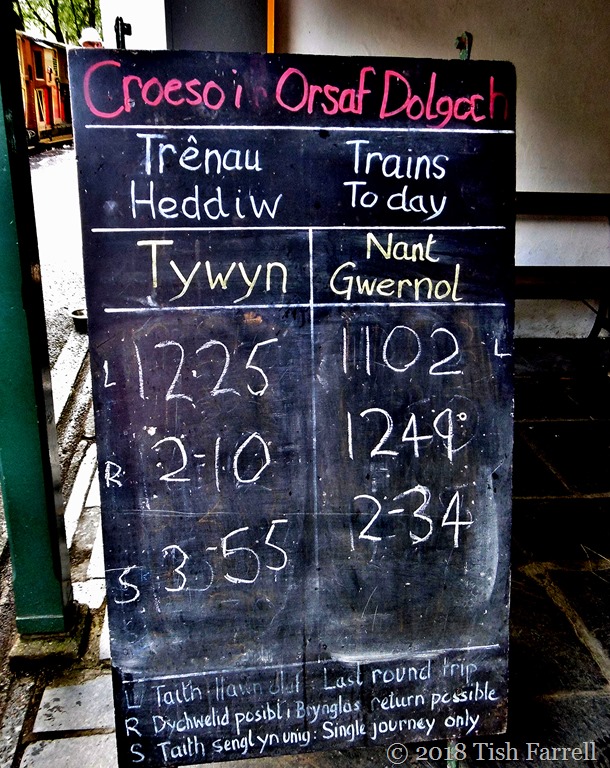
Getting The Message On The Talyllyn Railway ~ Thursday’s Special
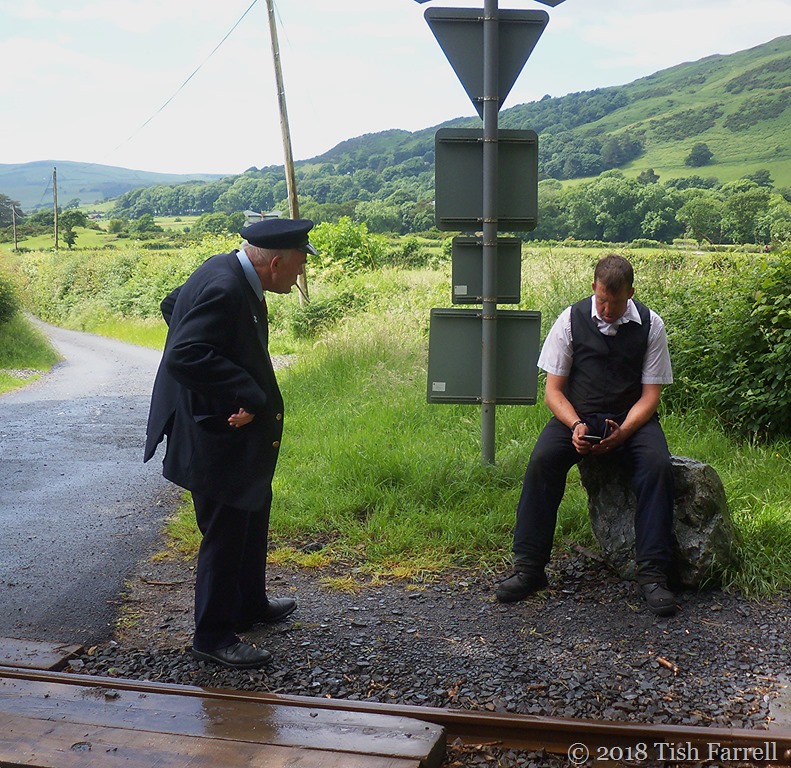
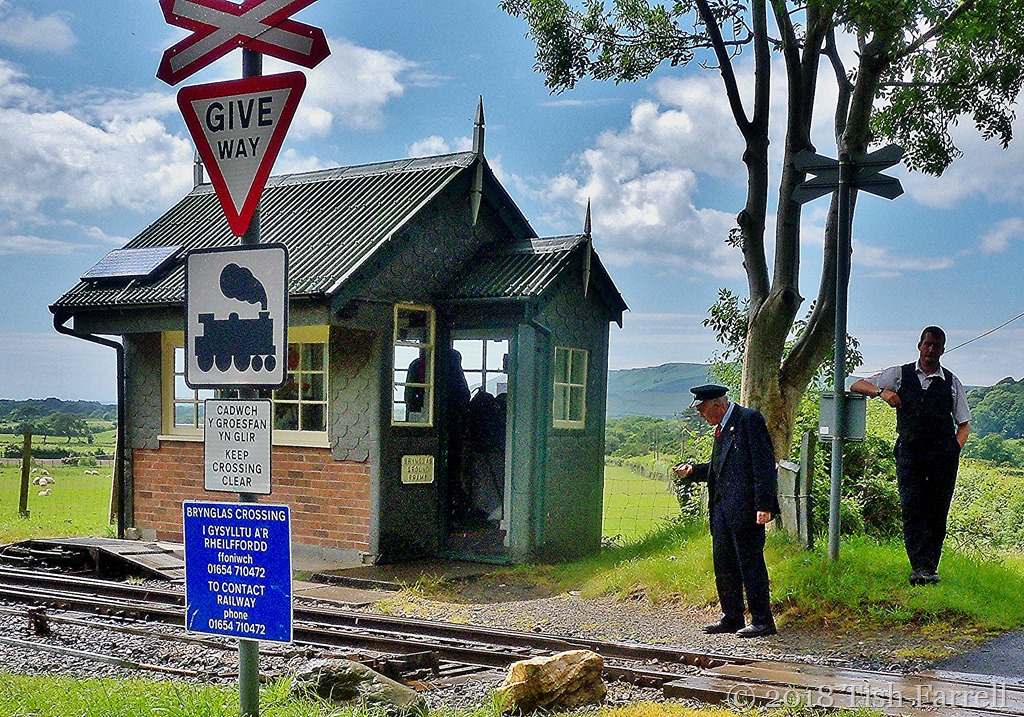
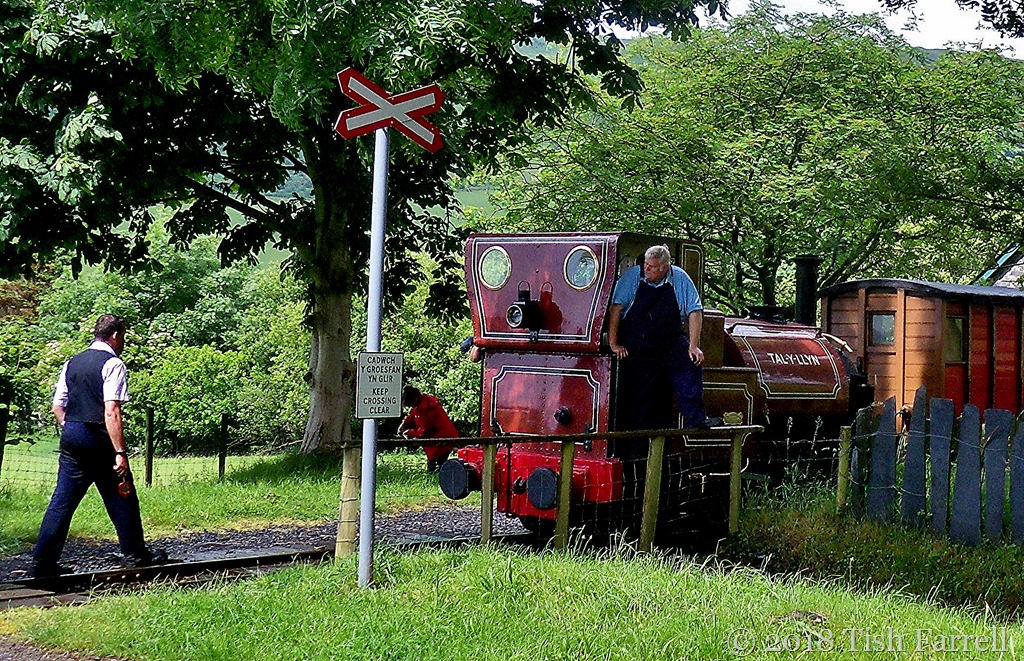
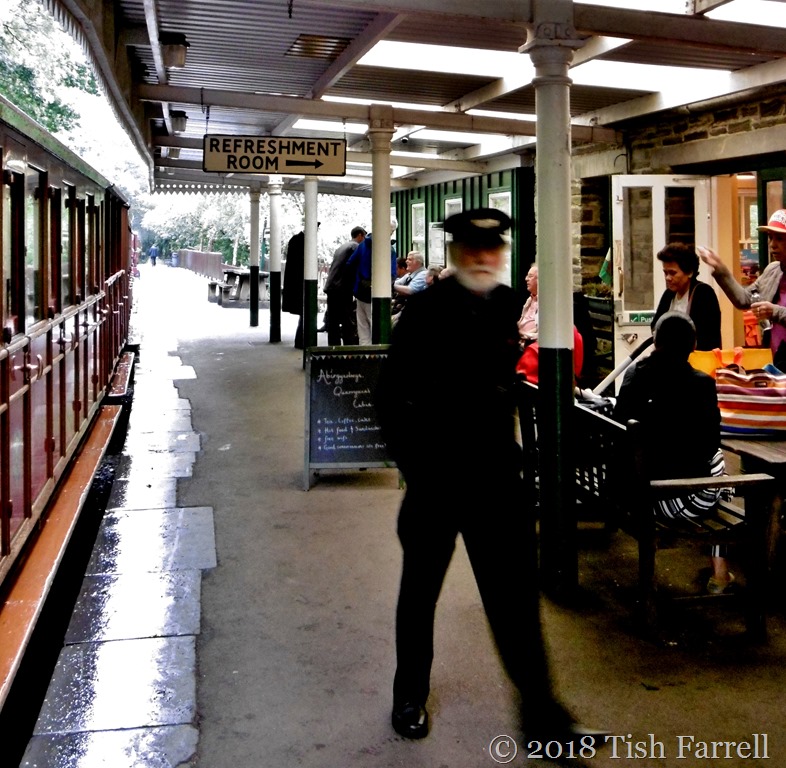
Our day out on the Talyllyn Preserved Steam Railway a year or so ago is high on the list of the Farrells’ jolliest excursions. Further details and more train photos HERE
Meanwhile more Talyllyn takes on Paula’s ‘message’ challenge at this Thursday’s Lost in Translation
Koroni Castle ~Thursday’s Special
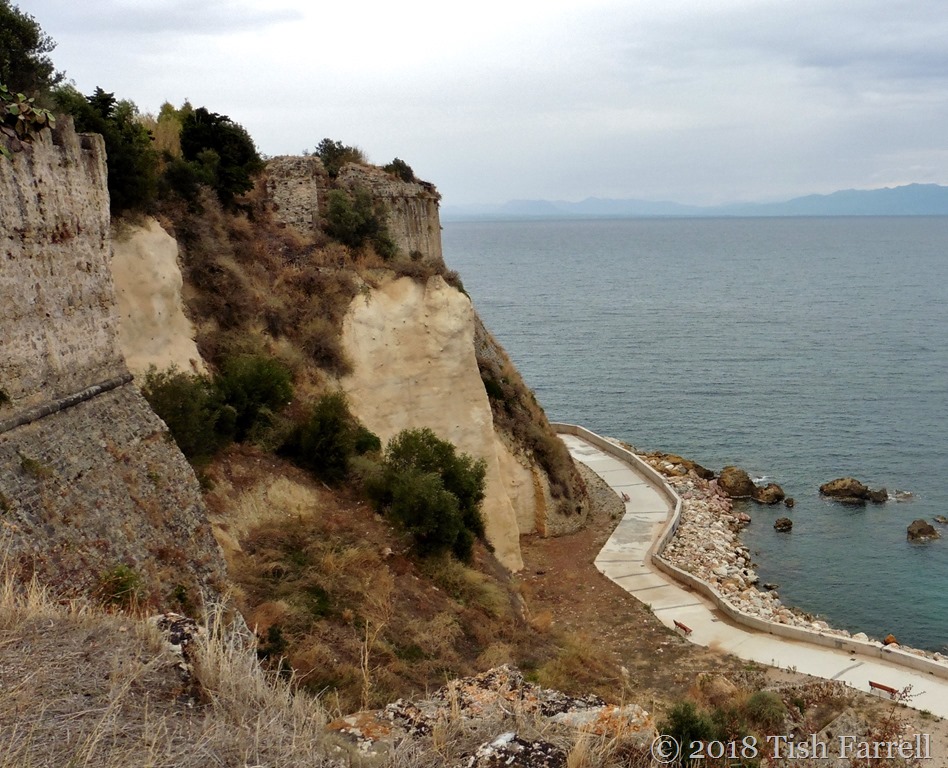
This view across the Gulf of Messinia to the Mani peninsula was taken from one of the bastions of Koroni Castle in the Messinian Peloponnese. This part of Greece has a coastline dominated by several of these great Venetian strongholds begun in the 12th century and expanded through several centuries of repeated Venetian-Ottoman conflict.
You can find more of the castle’s history HERE
As you can see, our visit coincided with the sudden arrival of autumn, which perhaps adds to the overbearing broodingness of the place. But when I looked at the photos later I was intrigued by the accidental ‘tromp l’oeil’ effect in the header shot – that apparently displaced, more brightly lit view through the arched aperture. It’s a trick of the geography – a spit of land jutting out into the sea way below the castle.
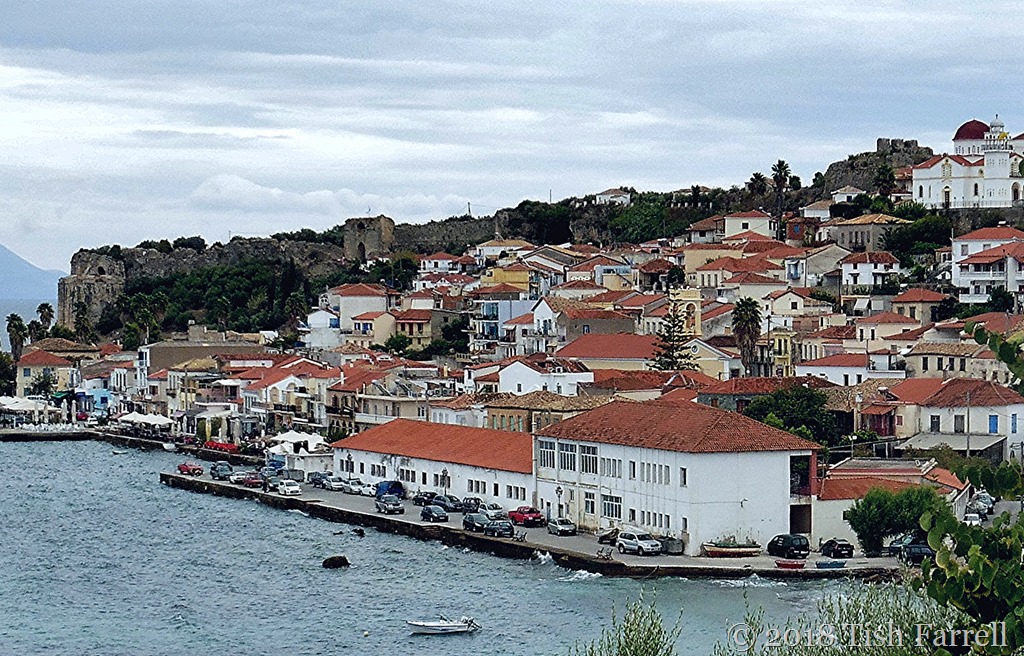
The town of Koroni had its trading heyday in the 13th century. You can see here how it hugs up against the battlement for the full width of the photo, up to and beyond the church in the top right corner. Within the castle there is the town cemetery, several churches, a convent and a number of cottages with gardens and small holdings where people still live. It is a fascinating place, the past somehow still marching on with the present.![]()
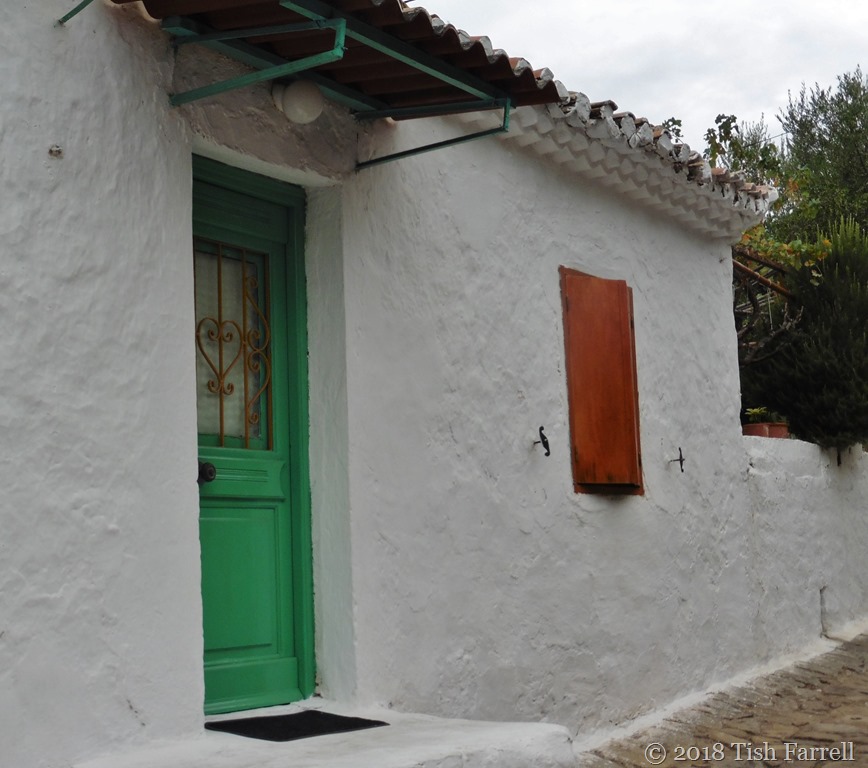
One of the cottages inside the castle.
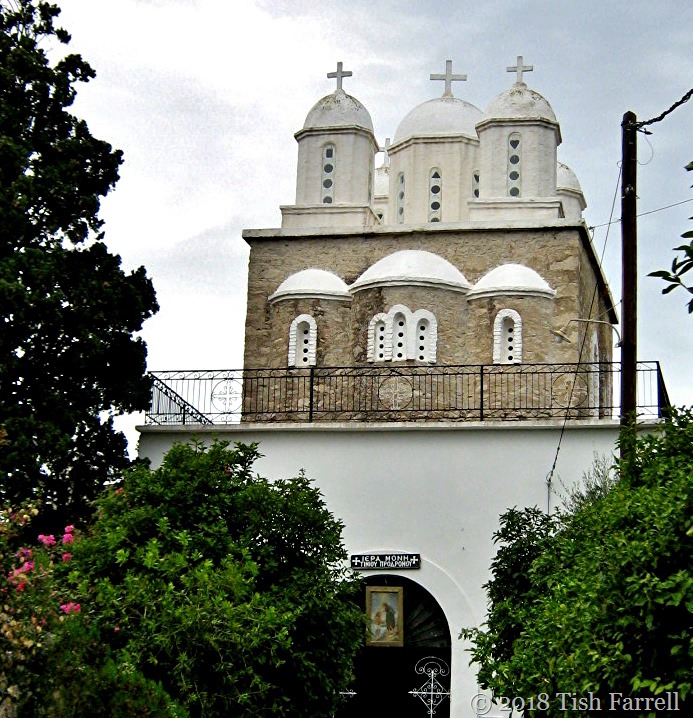
Inside the convent garden and the convent entrance (below).
Brrrr…Or Do I Mean Baaaa?
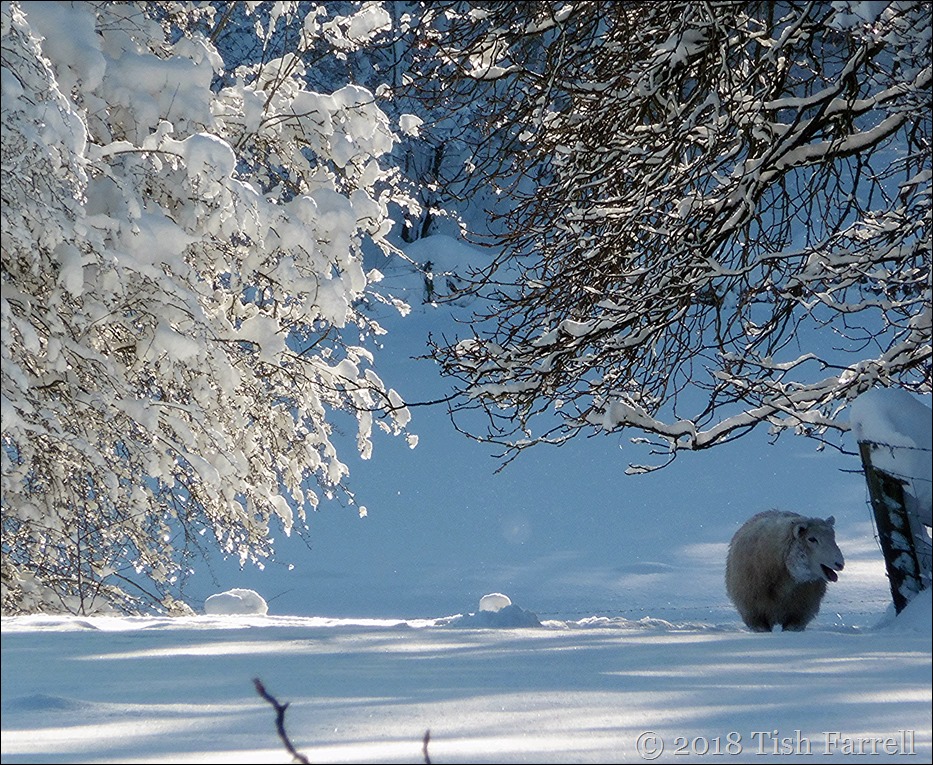
This sheep was having a lot to say for herself as she crossed the Priory parkland. Not a call of distress, more of a bad-mood grumble. Perhaps she was fed up with the snow covering her grass.
Meanwhile on the far side of the field her fellows seemed to have found something more to their liking.

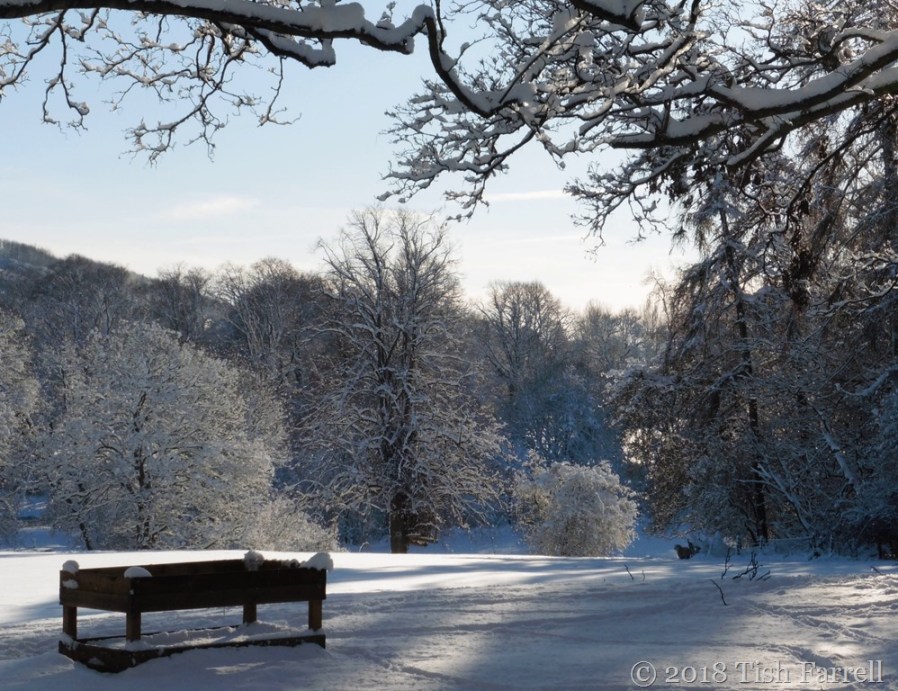
And now here’s a better view of the old parkland behind Wenlock Priory – once the domain of jolly, hunting monks, and believe me, hunting was among the least of their reputed bad habits.
Thursday’s Special In the first challenge of 2018, Paula is definitely giving our little grey cells a post-Christmas shake-up. Algid was a new word for me. So here it is: cold and chilly. Now please visit Paula for the other options and some very fine photos.