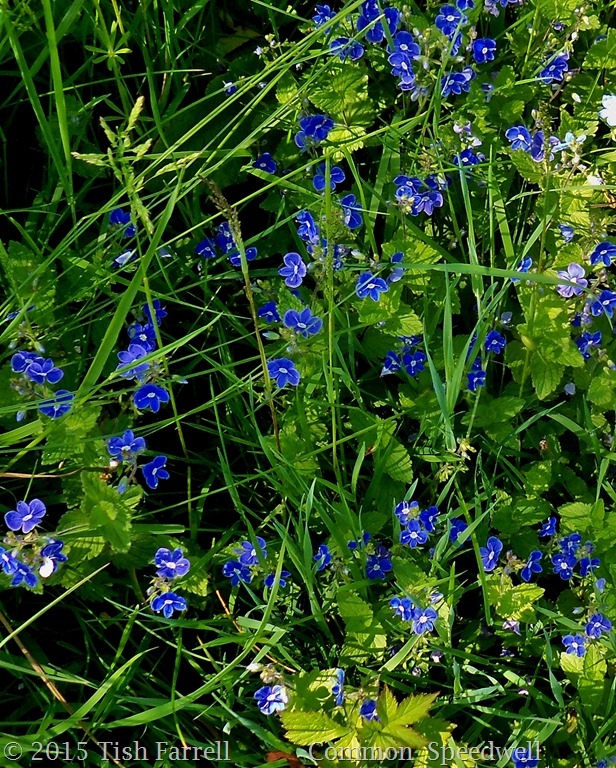
Getting down and dirty in a Shropshire meadow

100_5683

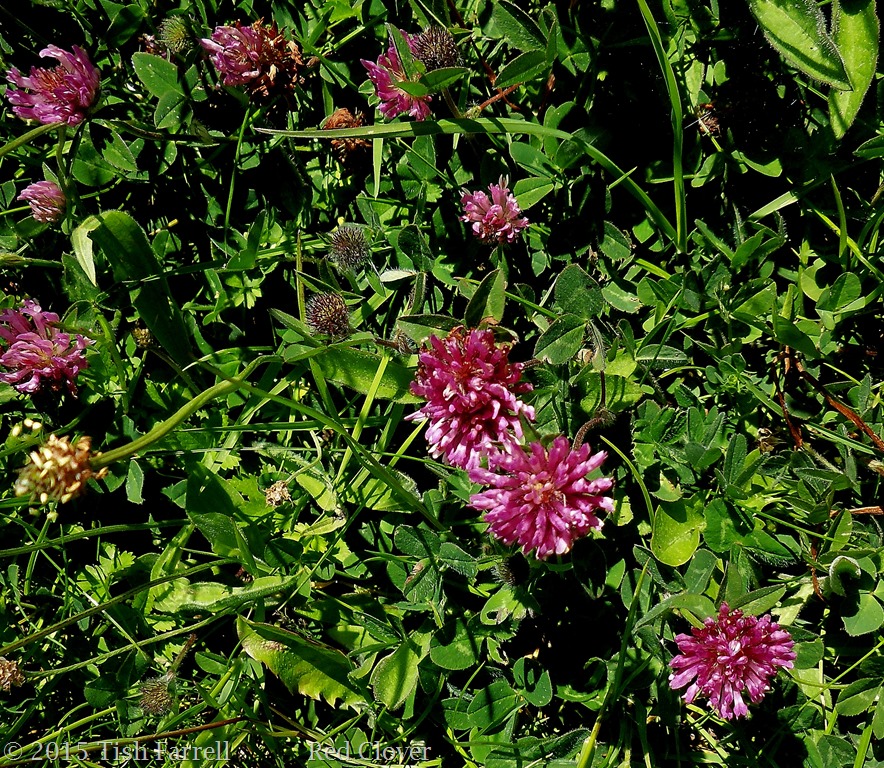
So much goes on beneath our feet, and beneath our gaze. For instance, if you want to find out what is going on in an English meadow, then you need to get down and in amongst it. There’s a whole other world down there, or maybe a thousand tiny universes. On the other hand, finding a meadow in the first place could well be a challenge. They have been dwindling since the 1920s. Mechanisation – bigger machines and bigger fields – plus a continuous drenching of agrichemicals has done for most of them. (One local landowner once told me he had to give his brussels sprout crop 14 separate dressings of pesticide).

Of course we have to be fed, but I often wonder if mass-production monoculture is the only way. I also wonder if there are perhaps still unrecognised consequences of us so radically down-sizing our natural biodiversity, and that what currently seems advanced, scientifically devised, and wealth-creating might in the end prove ill-conceived and ultimately impoverishing. But then perhaps we do not think it matters to lose potentially useful medicinal plants, or rich habitats that support a host of insects and other life forms, or to fail to rear our stock on the best and most varied herbage, both for their good and for ours.

In  Much Wenlock we are lucky to still have several limestone meadows; fortunate too that they have been officially designated Sites of Special Scientific Interest, which gives them some protection. They do need to be managed however. A meadow does not just keep itself. My father used to talk of being roped in as a lad to help with mowing the hay in his village. He said the menfolk would walk in step, spread out across the field, each swinging his scythe with an easy, even rhythm.

These days how many people know how to use a scythe without cutting themselves off at the ankles? Our surviving meadows thus require the seasonal addition of grazing animals to keep them in some sort of order, usually after the summer wild flowers are over. And of course, in the past, the hay from a wildflower meadow would have provided farm animals with a wealth of mineral nutrients and vitamins, dietary additions that humans, too, would have benefitted from, particularly in the milk they drank.

Even back in Shakespeare’s time, the consquences of mismanaged land were well understood. The following passage from Henry V  Act V Scene II is thus much cited by meadow management proponents:

The even mead that erst brought sweetly forth
The freckled cowslip, burnet and green clover
Wanting the scythe, all uncorrected, rank
Conceives by idleness, and nothing teems
But hateful docks, rough thistles, keksies, burs,
Losing both beauty and utility.

In fact the whole of Burgundy’s speech in this scene is a condemnation of bad agricultural practices – “husbandry doth lie on heaps, corrupting in its own fertility.”

All of which is to say, wherever we live in the world, we would do well to pay attention to the ground beneath our feet and to what is going on there. Our long-term health, the health of every living thing, depends on the quality of the soil. Right now most of it needs some concentrated TLC.

My home county of Shropshire is one of England’s biggest agricultural counties, with many large gentry-owned estates of ten thousand acres and more. And so, apart from the upland sheep grazing of the hill country, most farming here is highly mechanised. Of the few exceptions that still practice traditional mixed farming, Pimhill Farm is one of the most noteworthy. It has been managed organically by the Mayall family since 1949 – wheat, oats and dairy – so it proves it can be done. Their oat products are fantastic. Even their humble, savoury oatmeal biscuits taste out of this world, and porridge made from their oats is unbelievably creamy (no milk needed). You can read the Pimhill story by following the link.

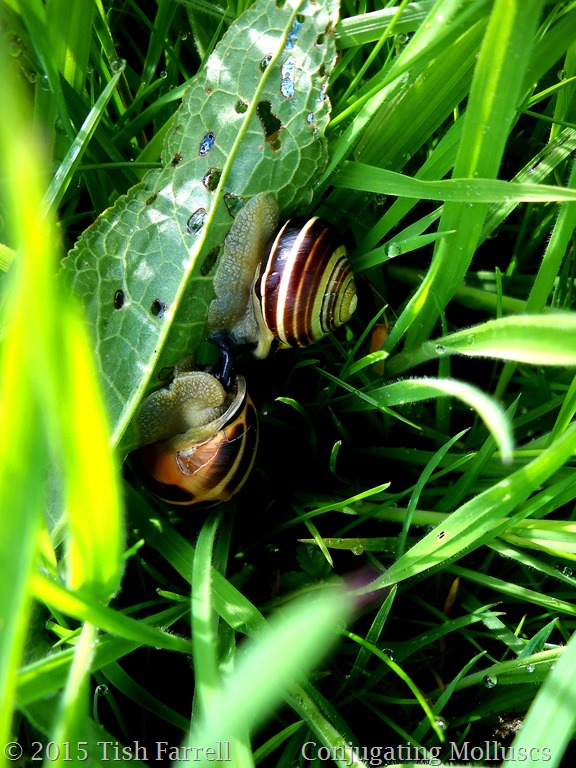
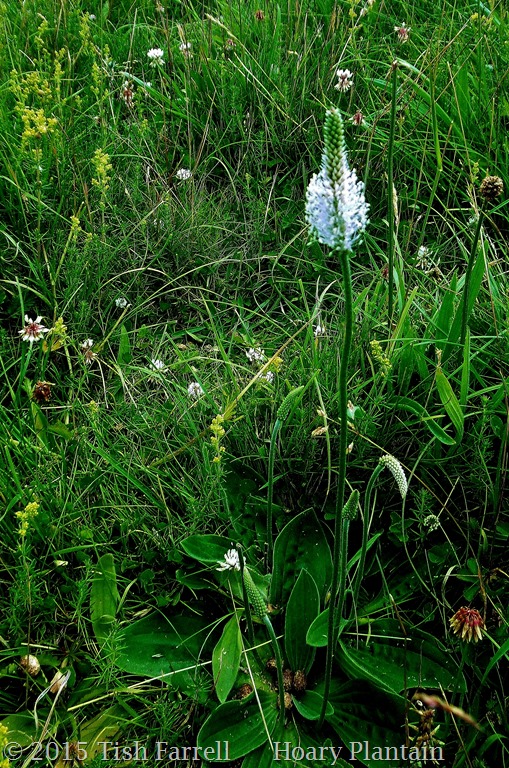
And now I’m putting my soap box away in order to get down in the dirt in my local meadow on Windmill Hill. Please also imagine the sweet and subtle scents of grasses, thyme and Lady’s Bedstraw that may only be fully savoured by lying down with them. First, though, look out for the snails:
100_5451

P1010617

100_5651

100_5460

100_5985

100_5950

copyright 2015 Tish Farrell

Beneath Your Feet

#PimhillFarm #organicfarming

Seeing My Town In Black & White: 1

P1010625

In this week’s Black & White Challenge, Cee is asking us to focus on subjects that are more than fifty years old. I’m pretty confident, then, that my home town of Much Wenlock more than fits the bill. As a settlement, it has been continuously occupied for the last thousand years.

The town windmill (seen above) is not quite that old. I’ve begun with it because it is the oldest structure near my house. It  was busy grinding corn from around 1655. Then a lightning bolt struck it in 1850, and it has remained sail-less ever since – either a pity or not, depending on your views on historic conservation.

IMG_1185

On the other hand, I perhaps needn’t have gone as far as the windmill. You might say my own house is something of a minor monument age-wise, much like its inhabitants (?).  It’s original half dates from the 1830s. In the living room there’s a massive inglenook fireplace complete with bread oven that defies my attempts to photograph it well, so you’ll have to imagine it. Instead I’ll take you on a walk down Sheinton Street to see a few of the other sights.

P1010161

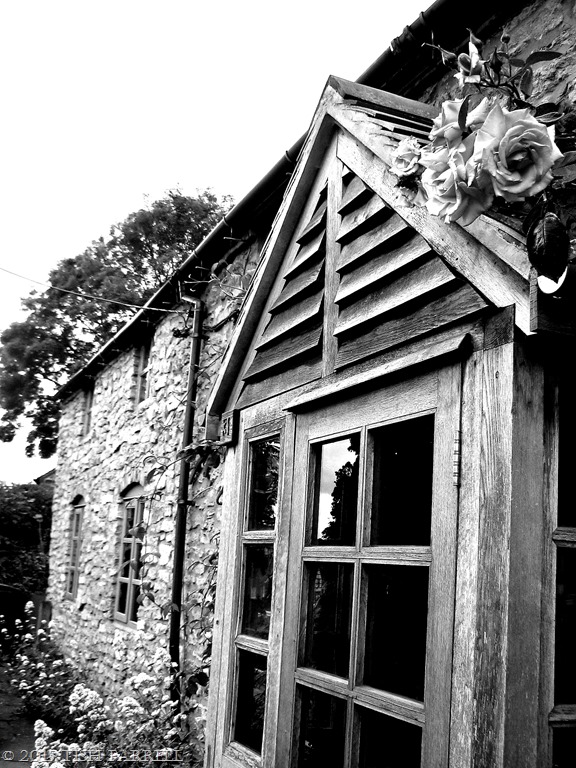
Heading into town, there are here-and-there signs of the medieval origins of many of the cottages, their timber frames concealed or disguised by brick and stone exteriors that have been added in more recent centuries.

Most of these cottages would have once housed artisans, their workshops opening directly onto the street to catch the eye of potential customers. The living quarters, and gardens would have been behind the workshops. In fact, the layout of long medieval burgage plots behind these Sheinton Street properties, and now pretty gardens, are still visible from the field path.

Today, Much Wenlock is a sleepy sort of place, much gentrified, and up-marketed. But step back a couple of hundred years, and much of it would have been grimy and industrial. Not only was there quarrying and limestone burning going on around the town, but within it were once the smoking kilns of the clay tobacco pipe manufacturers, stinking pits for the curing and tanning of hides for leather working, horses and carts churning up the dirt. Brewing was  also a big local trade, as were slaughtering, pewtering, smithing, weaving, and hat and shoe making. The unmade streets were alive with taverns to wet the throats of dusty quarrymen, and the final touch, ambiance-wise, would have been provided by the malodourous effluvia of the Schetbroke, an open sewer of a stream which ran through the town (but now happily culverted).

100_4963

I don’t know the particular history of this rather grand cottage seen above, but it’s a good example of a later stone frontage added to a much older building. Most of the town’s stonework has in fact been recycled from its medieval priory, dissolved by Henry VIII in 1540.

100_6033

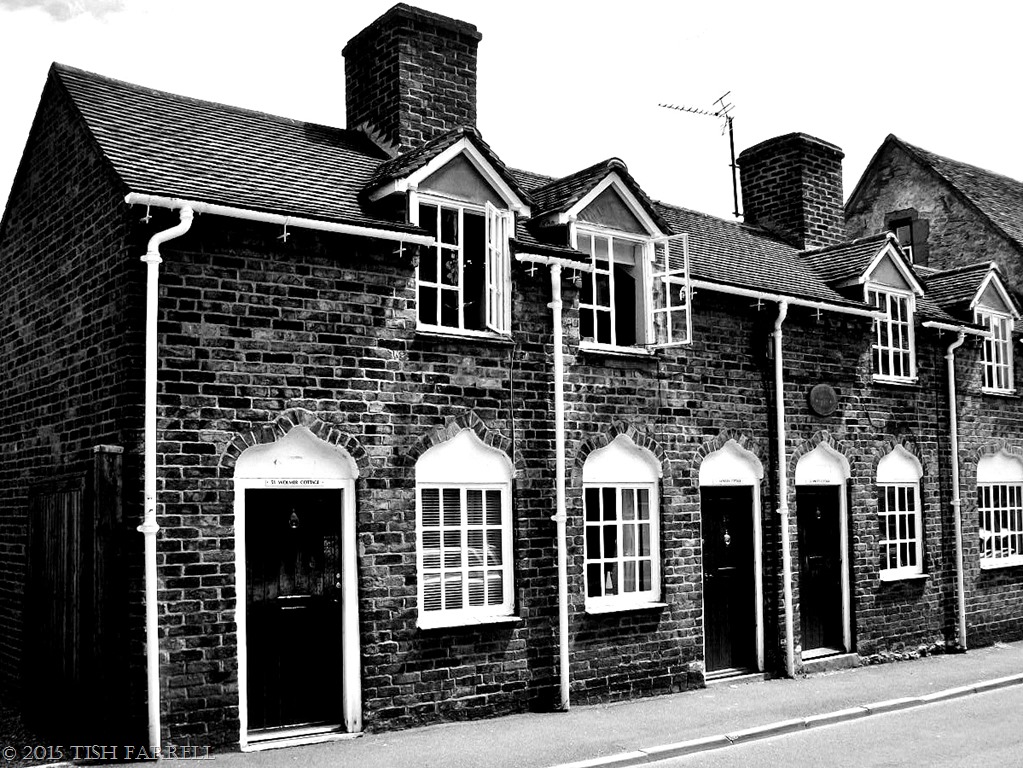
In amongst the antiquity we can also find more recent buildings. For instance, in the space between  medieval neighbours is this little set of picturesque alms houses built in 1810. They are known as Wolmer’s Alms Houses, a charity founded in the town in 1485. They are still operated on a charitable basis for the elderly. I love the brick ogival arches over the doors and windows.

P1010156

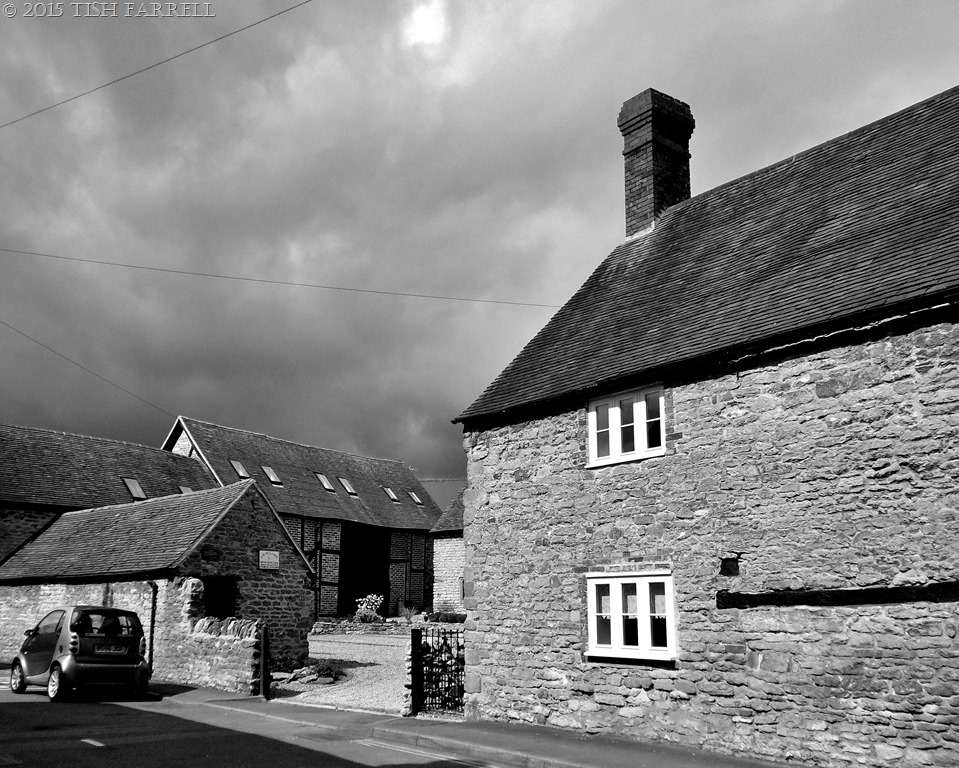
At the end of Sheinton Street is Brookhouse Farm. It is now a residential enclave of smart barn conversions, but until fairly recently was one of the last surviving examples of England’s town farms.  I can still remember it in the 1990s as a very rustic farmyard with cattle in the barns. The farmhouse in the foreground was stone-clad in the early 1700s, and is one of several Much Wenlock houses with a medieval hall concealed within it. You might call this the Chinese Box school of architecture.

Then on the opposite corner from the farm is the Bull Ring…

P1000621

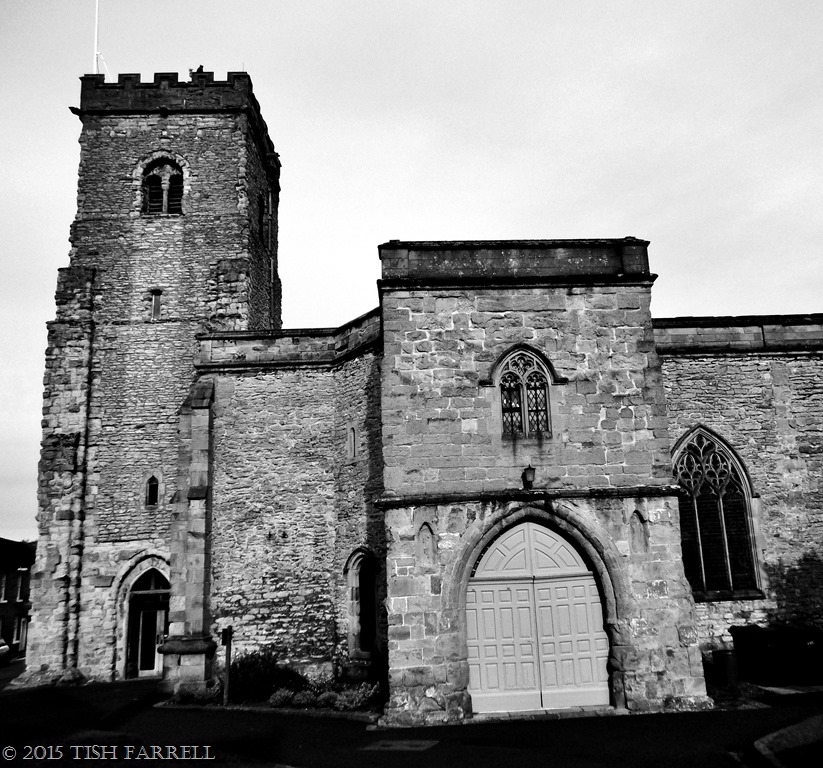
…so named after the unsavoury pursuit of bull-baiting that went on here until the early 1800s. By then the timber-framed building  had stood for some 200 years, while Holy Trinity Church, seen behind and in the next photo, stands on the site the Saxon women’s church of St Milburga’s Abbey, founded in c.680 AD as a religious house for both nuns and monks. The oldest part of the present church is the nave which dates from 1150. Other parts were constructed in the 14th and 15th centuries.

P1000408

During monastic times, Much Wenlock was ruled by the Prior under ecclesiastical law. After the dissolution in 1540 a new civil courthouse had to be built. It stands just across the Church Green, and marks the centre of the town. These days the ground floor is the venue for our various markets, while upstairs houses the original law court (now a gallery) and the council chamber which is still used for all Town Council meetings, and has to be one of the most uncomfortable, if august, venues in the whole town.

100_5540

And now we’ll double back on ourselves. Please head under the arch (look out for the man with a camera) and cut across the Church Green for our last stop on this tour – a quick look at Much Wenlock Priory.

P1000494

This is the view from the lane, where the site’s perimeter is shaded by soaring Corsican Pines. We’ll need more time to make it worthwhile buying a ticket to go inside, so I’ll leave you with a photo from one of my earlier visits: a close-up of the monks’ lavabo where they used to wash before entering the refectory to take their meals.

The carved panel dates from c.1180, which is odd, actually. I could swear one of the saints is on his cell phone.  Not so much religious texts, as a direct call to the Almighty?

100_5799

In Part 2 I’ll take you on a black and white stroll up the High Street.

copyright 2015 Tish Farrell

Related:

5 Photos 5 Stories Hidden Wenlock #1

Cee’s Black & White Photo Challenge: over fifty years old

Last Night From My Garden: A Fire Rainbow ~ Or Is It?

100_5851

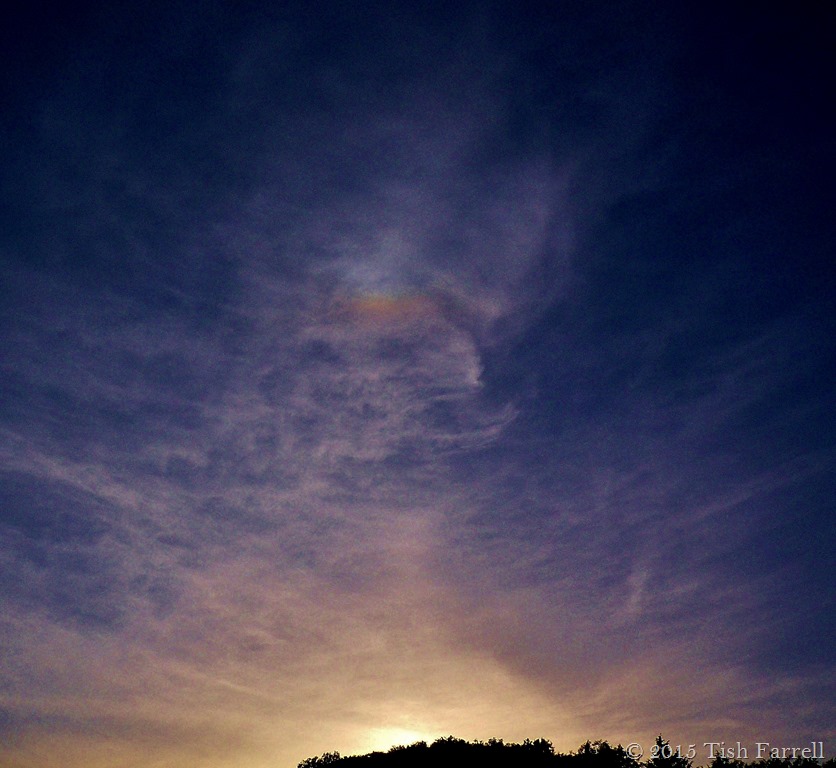
There’s clearly something in the air over Wenlock Edge. Last night as we were sitting on the garden bench watching the sun go down – with our glass of wine and pot of olives – there it was. A rainbow. And it had absolutely nothing to do with rain. Most of the day had been hot and fine.

Fire rainbows are rare and technically called circumhorizontal arcs, and thus they are HORIZONTAL. i.e. More like this one, faintly seen, a little later and slightly north of the first iridescent cloud.

100_5859

But if this isn’t a ‘fire rainbow’, but part of an ordinary rainbow, then the colours are the back to front, more as if this is part of a double rainbow, but with only the reflection visible. Curiouser and curiouser, but a wonder to see over one’s garden fence. Perhaps it is a Wenlock Edge phenomenon, the angle of the setting sun in relation to the cloud above it.  Anyway, this is what was going on in the rest of the sky over the bean field. Someone has clearly been sky painting.

Happy Monday everyone.

100_5858

The Leaning Tower of…er…Bridgnorth?

100_6830

100_6829

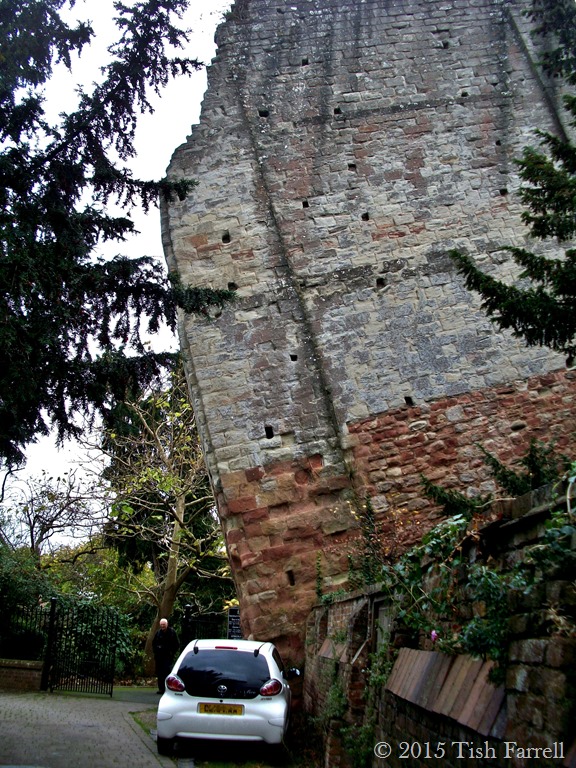
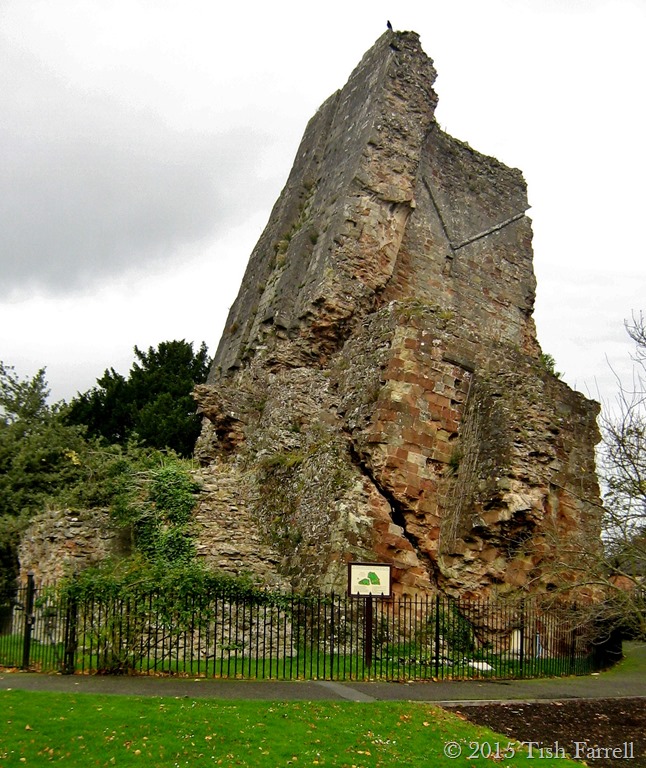
At 15 degrees this castle has ‘more lean’ than the leaning Tower of Pisa, although all that remains of this 900-year-old Norman castle is this blown up tower. It is now now a feature in the sedate Castle Gardens  in Bridgnorth, Shropshire, my nearest market town.

The ruins have been in this state since Britain’s Civil War in the 1640s, when Oliver Cromwell’s Parliamentarian forces laid siege to this key Royalist stronghold. The Royalists meanwhile had set fire to the town before retreating into the castle. The fire then reached the Roundheads’ gunpowder store just outside the castle wall. This duly exploded, and the upshot of all the firing and blasting was that the Royalists surrendered, and Oliver Cromwell ordered the complete destruction of the castle. As you can see, the tower defeated the demolition gang, and so there it stands, apparently defying gravity for the last 368 years.

IMG_1870

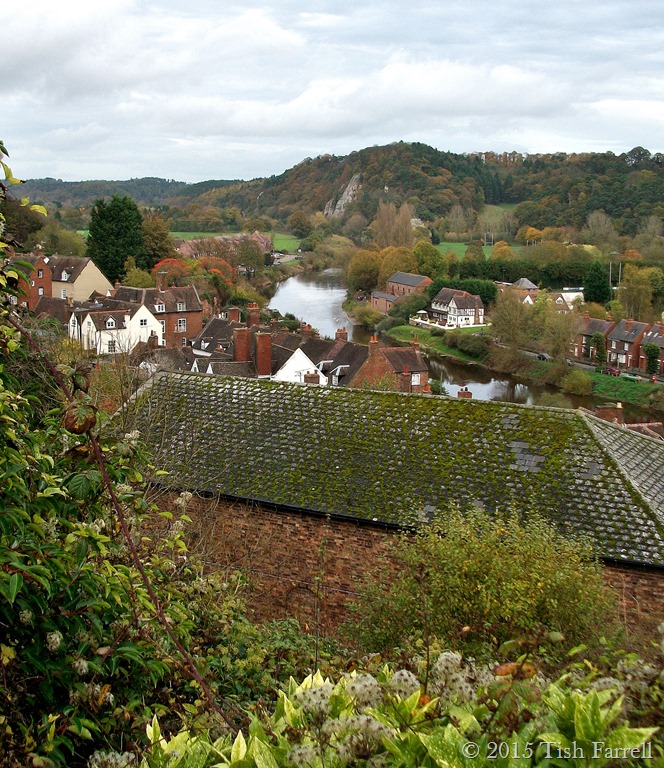
Below is the view over the River Severn that you  might once have had from the castle keep. When Charles I first visited the place, he is reputed to have pronounced it “the finest view in all my Kingdom.” Sadly for him, he did not live too much longer to enjoy either the view or the kingdom.

100_6848

copyright 2015 Tish Farrell


This week at Paula’s Thursday’s Special, she is inviting us to share Traces of the Past. She has a truly impressive castle to show us, one that was being built at much the same time as the Bridgnorth stronghold.

5 Photos 5 Stories: Hidden Wenlock #5

100_3612

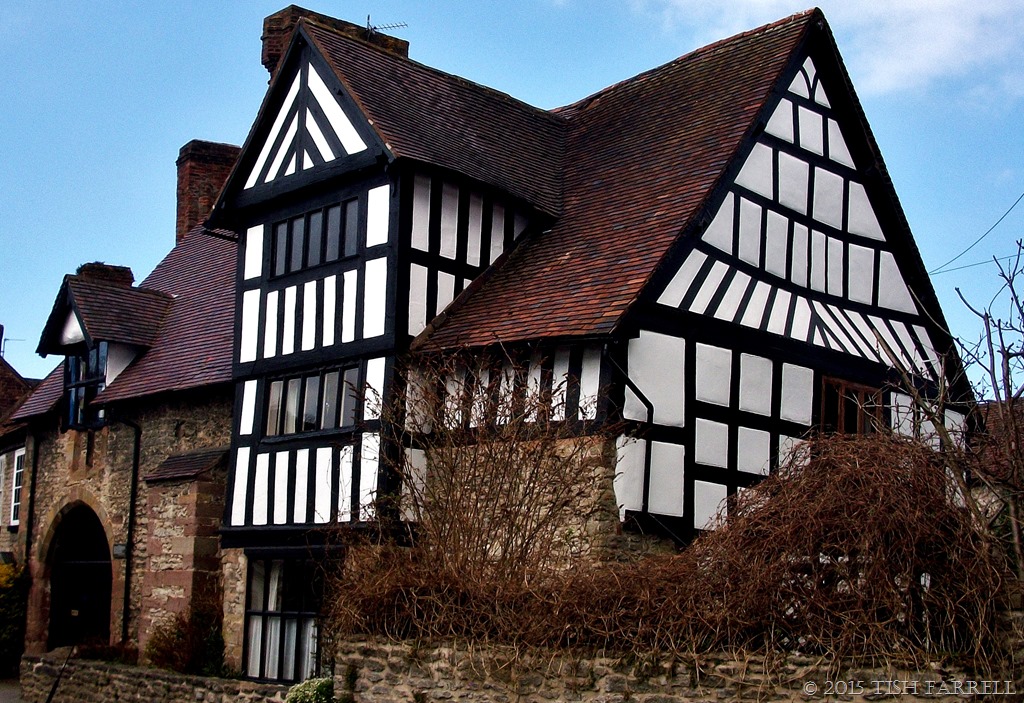
For the final post in this Hidden Wenlock series I thought I’d show you Ashfield Hall, one of the most impressive houses on the High Street. Yesterday I said how many of the town’s ancient timber-framed buildings had become hidden within later stone exteriors. With this house it was rather different.

The left-hand wing with the arch was built some time between 1396 and 1421 by one William Ashfield, a town resident. The impressive timbered wing was added in the 1550s for Richard Lawley. He and his brother, Thomas, were members of a leading local family, and it was they who, after the Dissolution of the Monasteries, bought the Priory and its estate from Henry VIII’s physician, the Venetian, Augustino Augustini.

Augustino seems to have been a slippery type, always short of money. He had been Cardinal Wolsey’s physician before Wolsey lost royal favour. He then became embroiled in the intrigues of King Henry’s ‘fixer’, Thomas Cromwell, who had also been  a Wolsey retainer. One of Augustino’s missions was to go to Germany to lobby support for Henry’s divorce from Catherine of Aragon. The Priory was thus his reward for services rendered. He wasted little time in selling it off, and the Lawleys paid him £1,606 6 shillings  8 pence for it. On the proceeds of the deal he then headed home to Italy.

In the 17th century Ashfield Hall became the Blue Bridge Inn, named after the bridge that crossed the malodorous stream, the town’s open sewer that ran down the main street, and was known for good reason as the ‘Schet Brok’.

Despite the insalubrious quarter, legend has it that King Charles I stayed at the Blue Bridge in 1642, en route for Oxford and the Battle of Edgehill. Thereafter, the place went seriously downhill, and became a lodging for itinerant labourers.

But there are earlier stories than these relating to Ashfield Hall. The High Street used to be called Spital (Hospital) Street, and it is believed that the archway probably gave access to the Hospital of St. John whose existence is first documented in 1267. In 1275 an appeal went out for the Master and Brethren of the hostel “to which lost and naked beggars are frequently admitted for their relief, the house being in great poverty.” Merchants coming to town with grain and other goods to trade were called on to give some assistance. By 1329 the Priory was taking over the premises, although it is not known if they continued to run the charity.

This reminds me, though, of a statistic I read years ago in an economic history of Medieval Europe. It shocked me at the time, but it seems it was the norm pretty much everywhere in the Middle Ages for 20% of the population to be beggars (professional or otherwise) and living off lordly charity. Giving to the poor was apparently an important means by which the rich got over their guilt at being rich, and so gained grace. It was how society worked.

100_4920

By the 18th century, we have a different story. Much Wenlock has some of the most comprehensive pre-1834 English Poor Law records still surviving. The dismal picture they paint is more about local bureaucrats trying to save the town from the expense of supporting any more poor than it absolutely has to.  The destitute were mostly women and children. The women, often no more than girls who had been sent off as apprenticed labour and returned, impregnated by their overseers and masters, were subjected to pre-birth, and post-birth bastardy examinations to determine their right to stay in the parish. If churchwardens and overseers found against them, they were subject to removal orders. Pauper children were sent as indentured apprentices to anyone in need of cheap labour. I have a copy of a Much Wenlock churchwardens’ indenture of 1805 which places

Thomas Williams aged eight years or thereabouts, a poor Child of the said Parish ~ Apprentice to James Barker of Madeley Wood, Whitesmith…with him to dwell and serve…until the said Apprentice shall accomplish his full Age of twenty one years ~

In return, James Barker is to train the lad in the business of a whitesmith (tin working), and give him “sufficient (the quantity is unspecified) meat, drink, apparel, lodging, washing and other things necessary and fit for an apprentice.”

It’s a sobering glimpse of life for the powerless and underprivileged. It shows, too, the disparities between rich and poor, the respectable and socially unacceptable in a small, but  largely prosperous town like Much Wenlock.

Which rather brings me back to the Schet Brok, the town’s once infamous open sewer. In fact it was not until Victorian times that the stream was finally enclosed and culverted, and a proper sewerage system installed. These improvements were down to the town’s good physician, Dr William Brookes, he who also masterminded the Wenlock Olympian Games and inspired the modern Olympic  movement.

The brook still causes the town problems, even though (mostly) we can no longer see it. Come heavy storms on Wenlock Edge, and the culvert has been known to cause terrible flooding, the last event being in 2007. But that, as they say, is another story, although I’ll leave you with some pictures courtesy of Much Wenlock’s Flood Action Group. It is a good example of how the doings of the past, hidden though they may be, can be very much with us.

copyright 2015 Tish Farrell

collagehighst[1]


5 Photos 5 Stories Challenge

Pauline at Memories Are Made of This nominated me to take up this challenge. The idea is to  “post a photo each day for five consecutive days and attach a story to the photo. It can be fiction or non-fiction, a poem or a short paragraph, and each day nominate another blogger for the challenge”.

So today I would like to nominate Anke at Life in Baku. She has been living and working in the capital of Azebaijan since 2012. Her blog is an on-going quest to reveal in words and photos, places and people, their ways of life. Join her on this fascinating journey. 

P.S. To those who are taking up my challenges, I gather from Jo at Restless Jo (who is also doing it this week) that it should be ONE photo. Oh well.

Hidden Wenlock #1

Hidden Wenlock #2

Hidden Wenlock #3

Hidden Wenlock #4


Reference: W F Mumford Wenlock in the Middle Ages

5 Photos 5 Stories: Hidden Wenlock #3

P1000386

Saint Milburga’s Well is my choice for Day 3 of Hidden Wenlock. (Again thanks to Pauline at Memories Are Made Of This.)  It can be found just off Barrow Street, not far from the back gate to The Abbey which featured yesterday.

There are many strange myths associated with this particular saint, and her affinity with wells and springs: remnant (or not so remnant) pagan beliefs interwoven with notions of Christian miracles. But first some facts.

St. Milburga was a Saxon princess, daughter of the Mercian King, Merewalh, who held sway over much of the English Midlands during the 7th century.  These were turbulent times – the spread of Christianity going hand in hand with securing territory. And Merewalh was a man with a plan. Instead of arranging dynastic marriages for his three daughters, he made them rulers of new religious houses across his kingdom. In this way Merewalh consolidated spiritual and political prestige, commanding both bodies and souls.

According to Milburga’s contemporary, the historian Saint Bede, she was educated for her religious life at the monastery of Chelles in Paris. Then around 690 AD she returned to England and took charge of an abbey in Much Wenlock. It was a community of both monks and nuns, although they worshipped separately. There Milburga presided for the next thirty seven years, ministering to the people of her extensive domain lands.

As I said, there are hosts of legends about her, her healing powers and her ability to strike springs from the ground, and bring winter-sown barley from seed to harvest in the course of one day. There are also tales of her fierce resistance to male suitors, and rivers rising up to thwart her pursuers. After her bones were rediscovered in 1101, the cult of Milburga continued to grow over succeeding centuries. It was said, among much else, that she brought several people back from the dead.

The water from her well was also supposed to have very special powers, curing even blindness. Something of this belief persisted into the last century. Lady Catherine Milnes Gaskell, chatelaine of The Abbey until 1935, relates a conversation with a Wenlock girl, Fanny Milner. Her granny had sent her to fetch some water from the well  so she would be able to read her Sunday scripture, “glasses or no glasses”. This is what Fanny tells Lady Catherine:

“It be blessed water, grandam says, and was washed in by a saint – and when saints meddle with water, they makes, grandam says, a better job of it than any doctor, let him be fit to burst with learning.”


Lady Catherine also relates how the well  had once been long associated with rather less sacred pursuits:

It is said that at Much Wenlock on “Holy Thursday”, high revels were held formerly at St. Milburgha’s Well; that the young men after service in church bore green branches round the town, and that they stopped at last before St. Milburgha’s Well. There, it is alleged, the maidens threw in crooked pins and “wished” for sweethearts. Round the well, young men drank toasts in beer brewed from water collected from the church roof, while the women sipped sugar and water, and ate cakes. After many songs and much merriment, the day ended with games such as “Pop the Green Man down”, “Sally Water”, and “The Bull in the Ring”, which games were followed by country dances such as “The Merry Millers of Ludlow”, “John, come and kiss me”, “Tom Tizler”, “Put your smock o’ Monday”…

Catherine Milnes Gaskell Spring in a Shropshire Abbey

*


These days it is hard to imagine this gloomy and mysterious well being the focus of so much racy celebration. The well’s spring has anyway been capped, so there is no longer any holy water inside. But it might be nice to throw it a good party and wake it up, though I’m not sure about beer brewed from church roof water. Mm. Essence of mossy slates and lead guttering at the very least.

Now here’s a photo of the church in question. It stands on its green in the heart of the town. It was originally part of the Priory, and is said to be on the site of Milburga’s nuns’ church. If you look hard, you will see the plastic owl on the tower parapet. It’s there to discourage the pigeons, although I’m not sure if it works. From what I have seen of them on my allotment, Wenlock’s wily pigeons would know a plastic owl when they saw one.

IMG_1338

copyright 2015 Tish Farrell


5 Photos 5 Stories Challenge

The idea of this challenge is to  “post a photo each day for five consecutive days and attach a story to the photo. It can be fiction or non-fiction, a poem or a short paragraph, and each day nominate another blogger for the challenge”.

So today I would like to nominate Janet Weight Reed at My Life As An Artist. For one thing she is a magical water colourist. For another, she is so very generous with her artist’s knowledge and techniques. One of her specialities is humming birds. Go and see. Believe me, they will fly out of your screen.

Bridge, what bridge? Only the world’s first cast iron one

P1000838

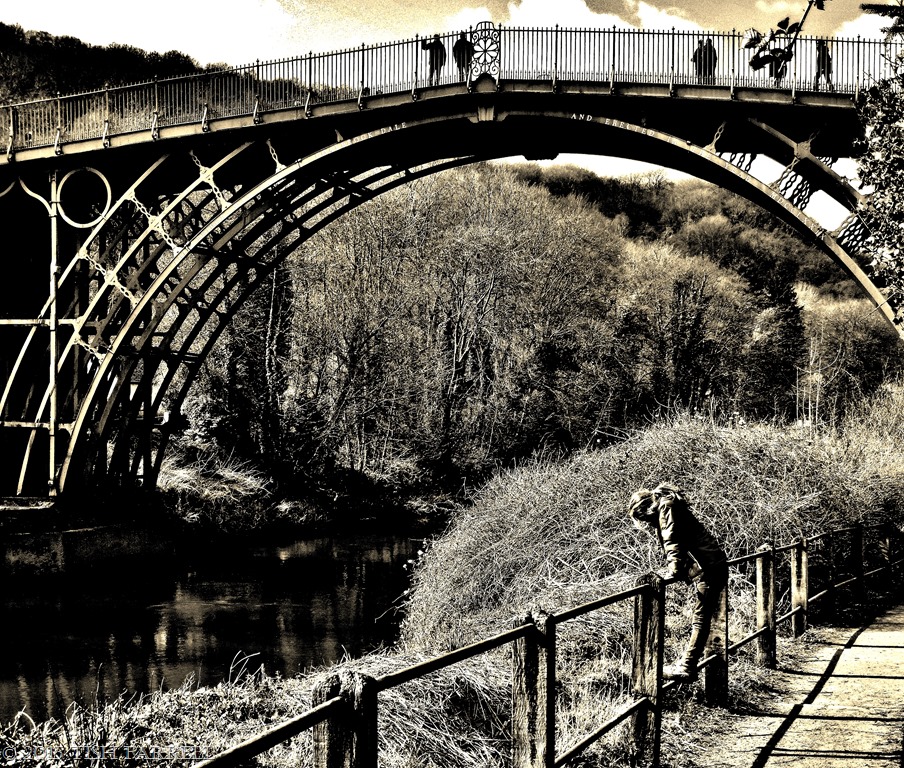
I love the way this little girl is much happier to play on  the railings than notice the wonder of this bridge,  a bridge that in its day was considered a world wonder. Nothing like it had been constructed before. It was opened to the public on New Year’s Day 1781, and right from the start was a visitor attraction, seized on by both coach operators and hotel proprietors to boost their trade. In the summer of that year The Swan Inn (which is still in business today, and for much the same reason) pronounced in an advertisement that is was:

situate near the most incomparable piece of architecture, the Iron Bridge.

One of the companies for the Shrewsbury to London route also made much of the fact that travellers would be passing:

that striking specimen of Art and so much admired object of travellers.

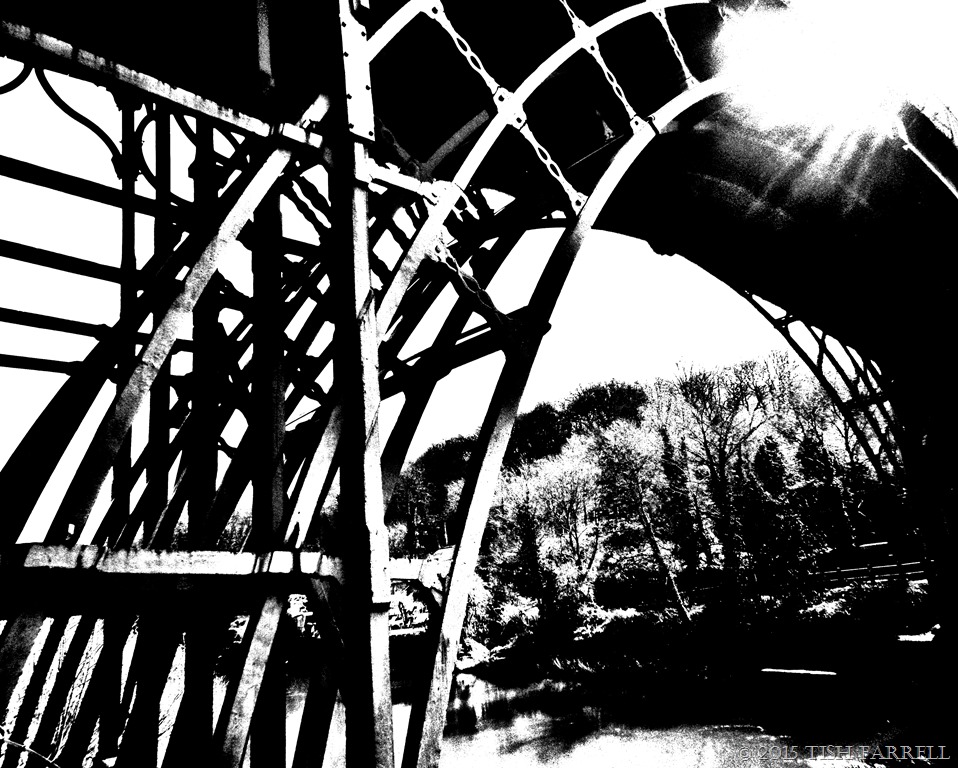
Today the bridge may seem quaint, and the manner of its construction somewhat bizarre, since it utilises wood joinery techniques in its iron rib-work.  But for all that, we are talking major, life-changing innovation: something akin to the technology boot-up begun in Silicon Valley. Here, though, we have a rural Shropshire valley, otherwise known as the Severn or Ironbridge Gorge in Coabrookdale. It is just a few miles from my house and, with its steep banks of hanging woodlands, and the mostly tranquil river below, it seems an unlikely location for epoch-changing events.

Yet this bridge was the first of its kind in the world, and thus a proving ground for what could be achieved with hitherto untried applications of cast iron.  It led to the iron framed factories of the Industrial Revolution, and was a step on the way to the sky scraper. The growth in demand for iron and steel products for shipping and steam engines and weapons put the great in Great Britain. Iron made the country rich, and gave it the wherewithal to set off conquering the planet.

P1000838

From the outset then, the Iron Bridge was very much as a PR stunt, and although there were practical considerations – including replacing a very dangerous ferry crossing wherein Severn coracles were used to transport people (mostly large numbers of workers) between the town of Broseley on one bank and Coalbrookdale on the other, the main object was to prove the worth and usefulness of cast iron. Its builder was Abraham Darby III, the third generation of the Quaker iron founding dynasty that operated in Coalbrookdale from the early 1700s . The other Darby family claim to fame was Abraham I’s discovery of how to cast iron using coke instead of charcoal, which did much to halt the decimation of the nation’s forests, and was a piece of technological mastery that had been called for back in the reign of Queen Elizabeth I. In fact she offered a prize for anyone who could do it. She needed timber for her navy. She did not want it going up in smoke in furnaces and forges.

But back to the Iron Bridge. The design was roughly based on drawings by Shropshire architect Thomas Farnolls Pritchard, but there were many changes in the course of construction, and he did not live to see the finished project.  The site was not only difficult, but the bridge builders had further set themselves the task of creating a single span that was high enough to allow large Severn sailing trows to pass beneath without the nuisance of lowering their masts as they had to do for all the River Severn’s other bridges. This objective alone could have scuppered the project. The raising of the iron ribs proved an epic undertaking on a river that is prone to massive floods, and whose banks are not stable.

Visitors came from all over Europe to see the finished product. They included artists, princes and Swedish industrial spies. The Severn Gorge was likened to Hell with its burning lime and coke kilns, furnaces and forges. The eighteenth century tourists came and gawped with horrid fascination. I will leave you with one such response made in 1801 by popular song writer, Charles Dibdin:

…if an atheist , who had never heard of Colebrook Dale, could be transported there in a dream, and left to wake at the mouth of one of those furnaces, surrounded on all sides by such infernal objects, though he has been all his life the most profligate unbeliever that ever added blasphemy to incredulity, he would infallibly tremble at the last judgment that in imagination would appear to await him.

P1000838 - Copy - Copy


P1000846 - Copy

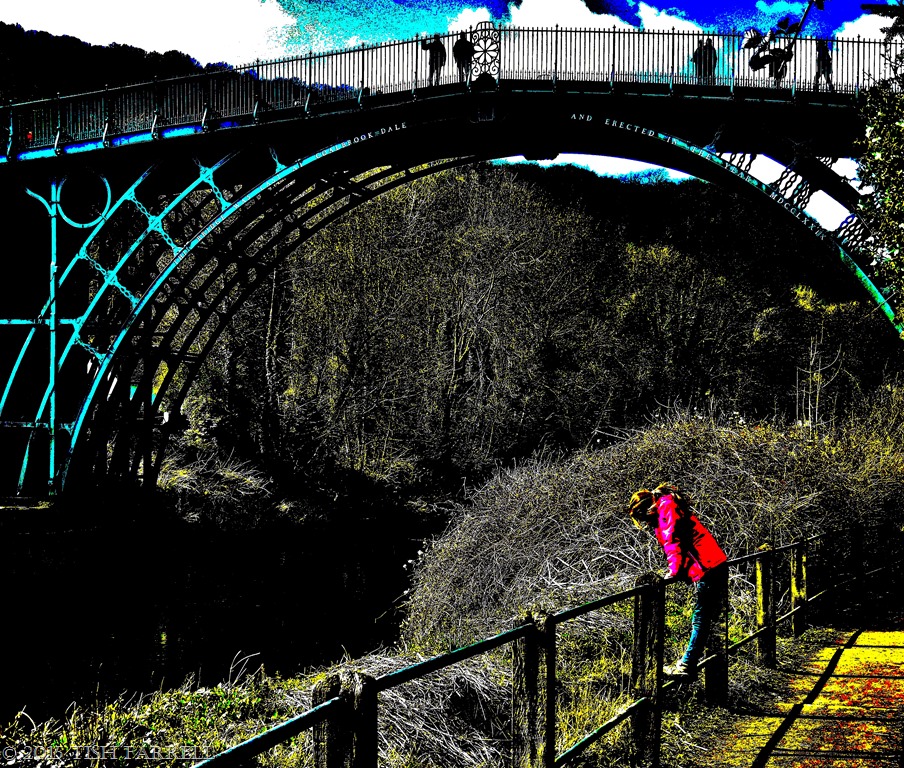
This post was prompted by Sally at Lens and Pens Phoneography & Non-SLR Digital Devices Challenge. Week 5 of any given month is about editing/processing images on a theme of choice, in this case architecture. The first image was cropped and  then played with in Windows Photo Gallery. I rather like the sepia version. I included the final image to show the construction techniques in more detail. It was taken in ‘Dynamic Monochrome’ on my  Lumix point and shoot, and then cropped and histogrammed to achieve this final look. Given the subject, it thus makes a virtue, I think, of the sunburst on the bridge parapet. It makes me think of blast furnaces and the way the iron was produced.

copyright 2015 Tish Farrell

Life Imitating Art Imitating Life…?

P1000380 - Copy (2)

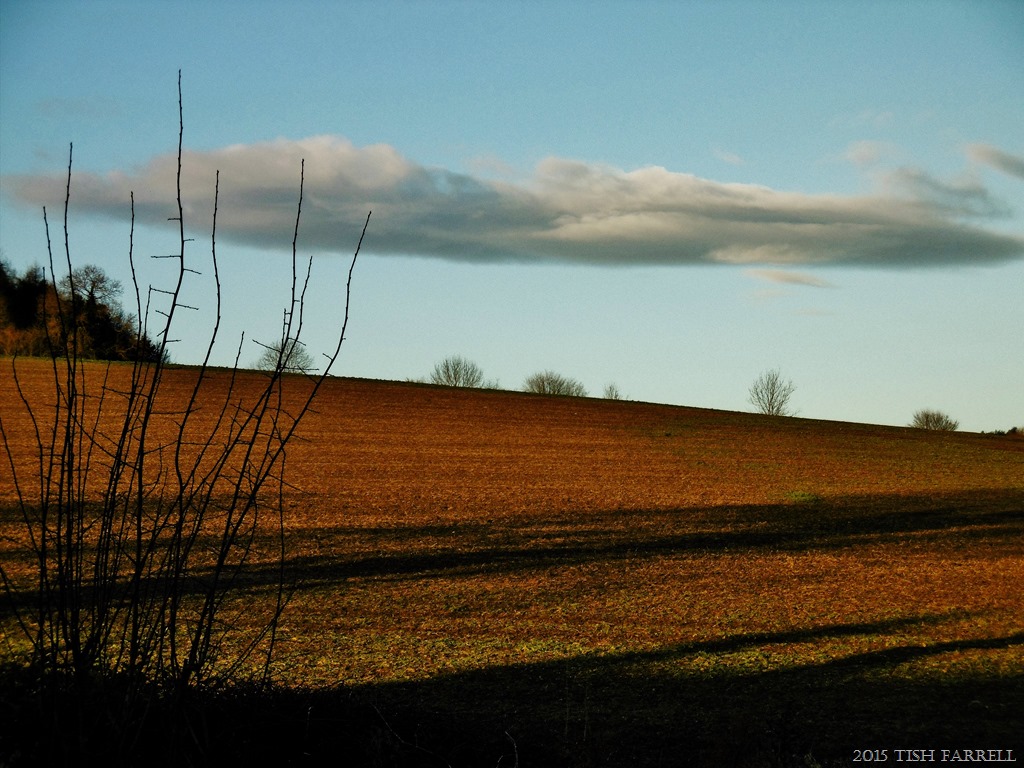
I snapped this the other morning with my little Lumix ‘point and shoot’. It’s the view from our bedroom window. The light was extraordinary, and when I looked at the image again it reminded me of  René Magritte’s The Golden Legend  –  also a view from a window, although with the interesting addition of flying baguettes. What do you think?

René Magritte

You can find out more about Magritte HERE. I like the way he challenges our ingrained perceptions.


DES RES ~ Nouveau Roman Anyone?

100_3730

I think I may have mentioned somewhere on this blog that, a few miles up the road from Wenlock, we have the remains of Wroxeter Roman City aka Viroconium aka Uriconium. In its day it was one of the largest urban settlements in Europe (AD 47 – AD 650). Most of it still lies under farm fields within the broad sweep of the River Severn, although the outlines of houses and roads have been eerily revealed in aerial photos and  LADAR surveys.

For centuries, too, farmers at their  ploughs have turned up marvellous Roman artefacts. Even now, if you walk the fields after harvest you can easily spot the polished terracotta shards of fine Samian pottery among the wheat stubble. Archaeological excavations have been on-going for decades. I dug there myself aeons ago, as an undergraduate archaeology student who needed to rack up some fieldwork  experience. The exposed remains are now in the care of English Heritage, and many of the finds are on display in the site’s small museum. More of the collection has been recently re-displayed at the county’s new Shrewsbury Museum.

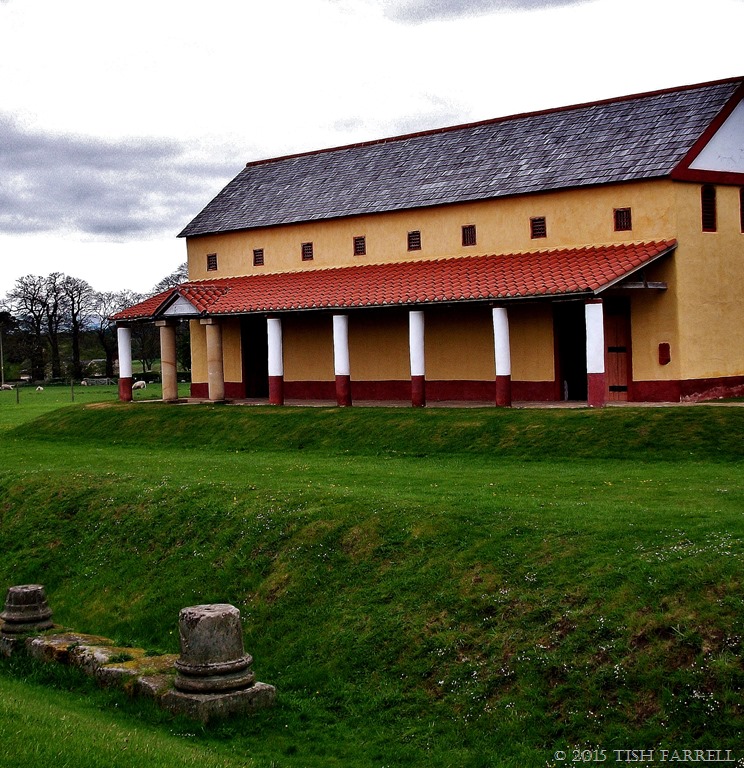
But now we come to the Roman Villa in the photo – this ‘desirable town residence’. Its appearance here was prompted by Jo’s ‘restoration’ challenge. Strictly speaking, this is not so much a restoration as a  reconstruction. Although on the other hand, you could say that its builders did attempt to use only Roman construction methods – thus ensuring the restoration of long-lost skills. They did, however, have to apply for present day planning permission before they could start work.

And the whole project came about as part of a TV series on UK’s Channel 4 – Rome wasn’t built in a day. You can have virtual tour of the villa HERE

*

Of the original city, there is not a great deal to see, although the remaining high-standing basilica wall is pretty impressive, and did feature rather splendidly in Simon Schama’s epic A History of Britain TV series. You can see the first episode in which it and the surrounding remains feature at 40 minutes in:

Simon Schama’s A History of Britain


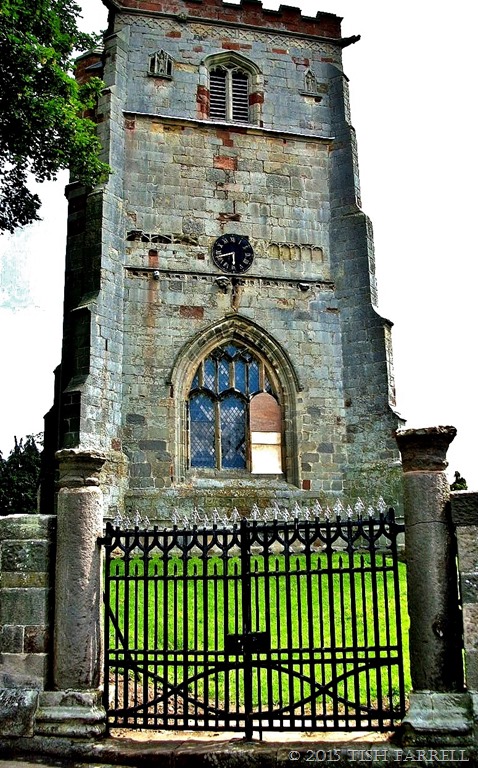
One of the reasons why the physical remains of this large and long-lived city are so few is because the building stone was recycled through the ages. If you walk down the lane to Wroxeter Church you will find that Roman pillars have been used to make the gateposts. Doubtless much more of the Roman stonework found its way into the body of the original Anglo-Saxon, later Gothic church. The church is redundant now, and looking rather sad.

100_5808

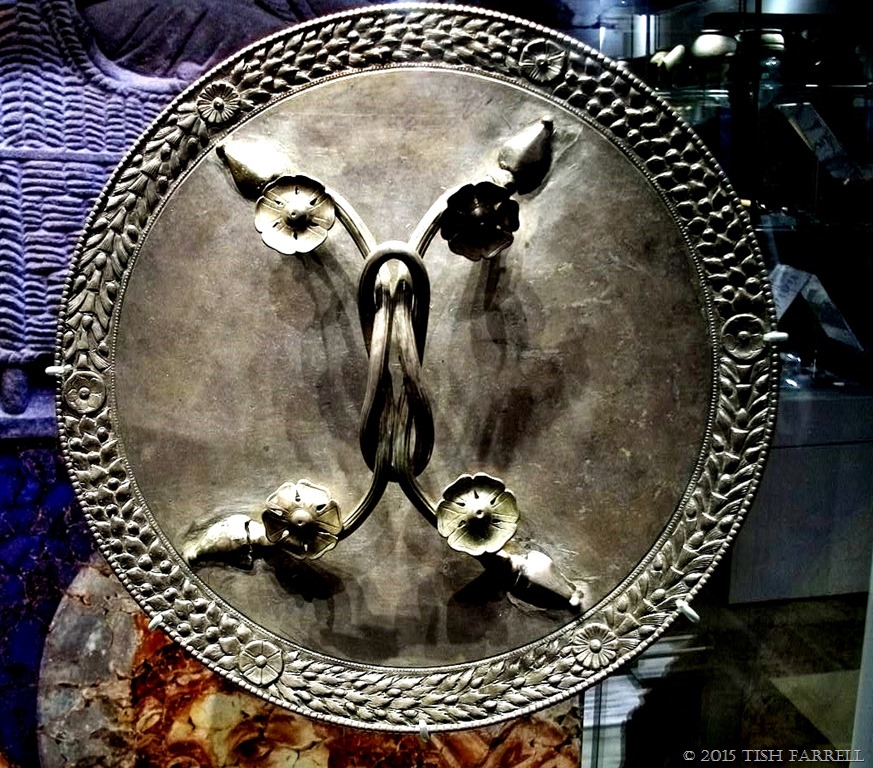
And finally, I can’t leave you without showing off some more Roman treasures that may be found in Shrewsbury Museum’s Roman gallery. The finest object of all is a polished silver mirror, made in the Rhineland but found in Wroxeter forum’s courtyard. It dates from the AD 2oos. Its convex design, and the weight of the silver suggests it would have been held by a slave or servant so ‘my lady’ could admire her latest hair-do. Enjoy!

100_5426

Back of a convex silver mirror, circa 3rd century AD, Shrewsbury Museum.

*

100_5423

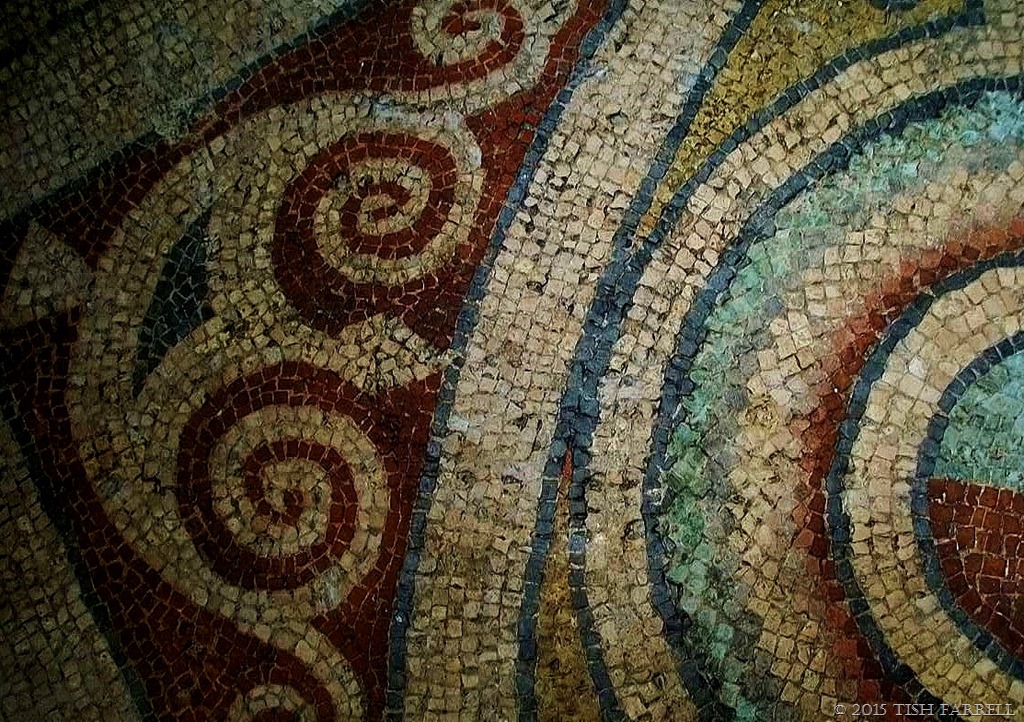
Restored section of Roman mosaic floor from Whitley Grange Roman Villa, near Shrewsbury.

*

100_5424

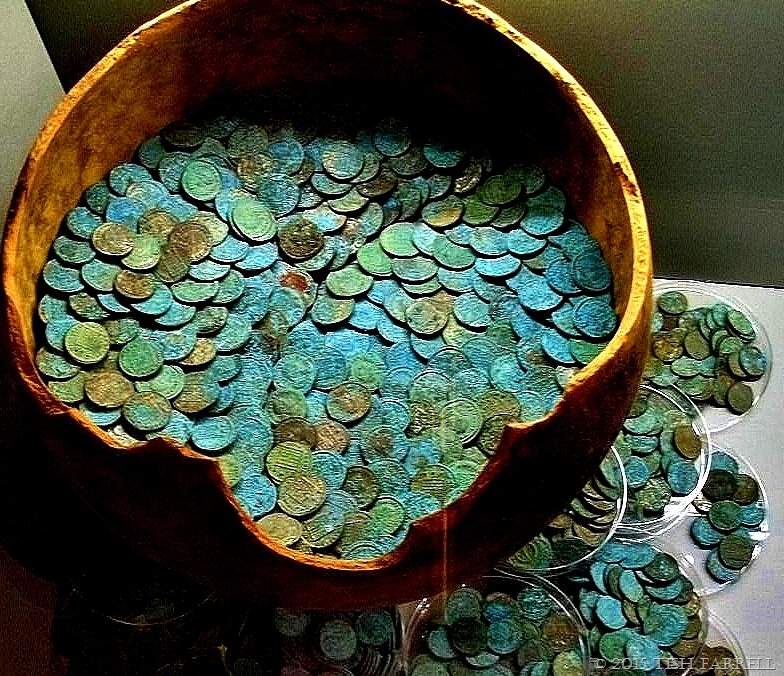
The Shrewsbury Hoard: over 9,000 coins dating from 280 AD to the following century. The coins were wrapped in cloth bags and buried in a big storage jar.

*

copyright 2015 Tish Farrell


For more restored pieces go to: Jo’s guest challenge ‘restoration’. Also check in at Paula’s response at Lost in Translation Thursday’s Special