Return To Windmill Hill: Black & White Sunday

P1010981

This week at Black & White Sunday Paula says choose our own topic. So here is one of my favourite subjects, and one that I realize has been totally neglected for ages and ages. (Meg at Twelve Months in Warsaw  has pointed out – once or twice – that my penchant for snapping this particular local Wenlock landmark is somewhat akin to Monet’s repetitive haystack renditions). Ah well. Another OCD trait to admit to – along with obsessive compulsive compost-making. Also my other slight obsession is to use my camera’s monochrome setting in poor light conditions just to see what will happen. Here I was lucky to catch the last gasp of sunset before it slipped behind Wenlock Edge.

Black & White Sunday

Today In My Wenlock Garden: Thursday’s Special

IMG_3637

This oriental poppy has been unfurling its petals for the last couple of days – never mind the fierce squalls and sudden Arctic blasts. Never mind that it is NOVEMBER. This morning she finally opened into sunshine. Still a little crumpled in the frock department, but what chutzpah, eh, and for a flower that looks so intrinsically delicate.

Anyway, she is my offering for Paula’s Thursday’s Special challenge. Today she has given us five cue words to choose from: ascending, idleness, jaunty, whiff and luminosity. So here we have poppy luminosity. With a touch of jauntiness thrown in.

Come to think of it, to find something so lovely in the garden at this time of year, also has my spirits lifting sky-high, so I’ll throw in ‘ascending’ too. Hope she brightens your day too. Many of us could do with a good gloom antidote, mentioning no ‘T’ words.


copyright 2016 Tish Farrell

Two Being Nosy On The High Street ~ As Caught By Nosy Writer ~ (That Would Be Me)

100_6264

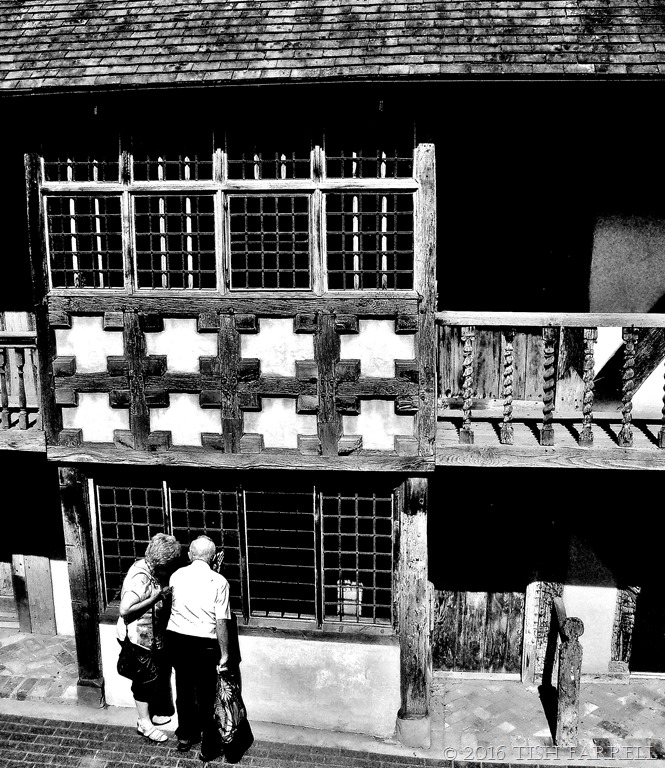
I do it myself of course when I’m walking along Much Wenlock High Street. The windows of Raynald’s Mansion are just too tempting for those disposed to be nosy. There are always interesting artifacts and pieces of unusual antique furniture inside. The place appears to be some kind of shop, but it is never open. The extraordinary timbered facade, built in 1682, was apparently a later addition to a fifteenth century hall. The Victoria County History for Shropshire rather sniffily suggests that this kind of construction was both crude and ‘old hat’ for a time when everyone who had money was going in for smart townhouse frontages in brick and stone. But  never mind the architectural snobbery. It is still one of the town’s most picturesque buildings. There are also said to be ghostly apparitions at these windows. Just the job for Halloween. I must look out for them the next time I’m out and about on the High Street.

 copyright 2016 Tish Farrell

Black & White Sunday: Couple(s)

The Local Garage, Much Wenlock

P1050141

As you drive over Wenlock Edge and descend into Much Wenlock town, this is one of our first eye-catching local landmarks. I don’t know when it was last open for business, but the blurb on the poster now seems a touch ironic:

The more we progress the further you go                                                                                                                   The Michelin Man

I should perhaps say we do still have a fully functioning motor repairs place, but it obviously isn’t here.

Daily Post Photo Challenge: Local

Changing Seasons: September And The Rook Ballet

101_0365

No one quite knows why they do it. Or they didn’t the last time I pursued the matter. But as summer ends so the rooks begin their twilight dancing. There is a large rookery in the wood behind the house. Many scores of birds. Jackdaws live there too. Now each evening, as the sun slips behind Wenlock Edge we watch the rook and jackdaw ballet. Flock after flock flies in, flies out, sweeps up, round, back, spirals, dives in sequences so swift and coordinated that there must surely be some corvid dance-master somewhere orchestrating the moves. The show may last for many minutes, subside into the treetops, then burst out and start all over again. Finally, as the light goes, every bird finds its perch, and the wood subsides into companionable darkness and gentle rook chatter.

 *

To join in this challenge please visit Changing Seasons Monthly Challenge over at Cardinal Guzman’s

TheChangingSeasons_6367

Nightfall Over Wenlock Edge

100_5021

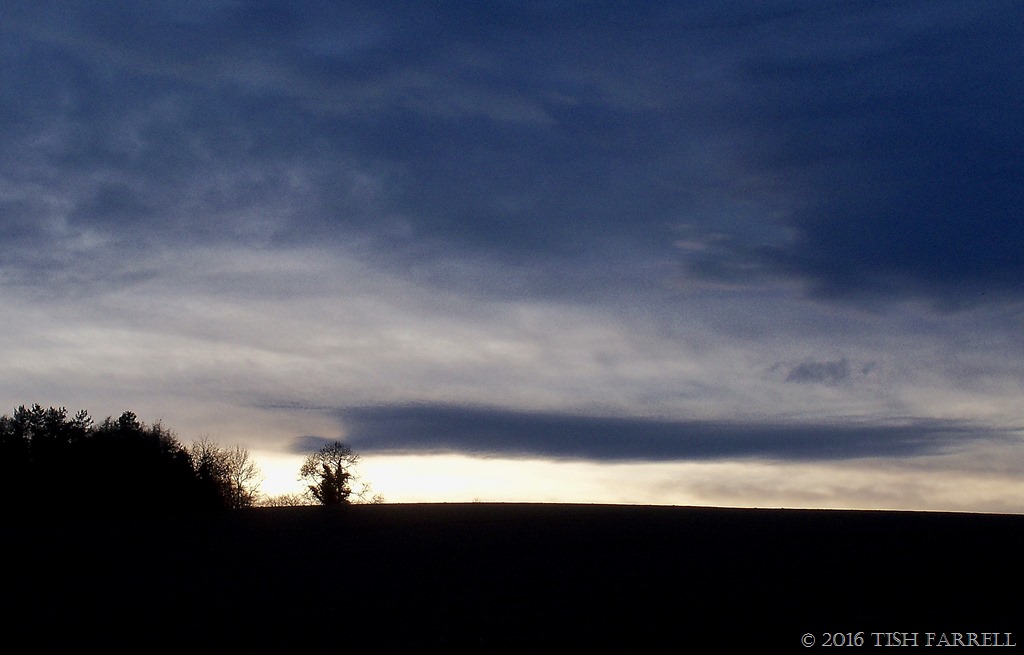
This photo was taken from the field path in Townsend Meadow behind our house, a scene captured one day last winter when I was late home from the allotment. I often stop at this  point on the path to take photos. The ash tree silhouette always catches my eye, whatever the season, and I love the way the day seems to slip behind the hill as night shuts down on top and shadows creep up to meet it. It’s a bit like a stage set. Or it could be Rip Van Winkle Land.

*

Be inspired by things of the night over at Paula’s Thursday’s Special: Nocturnal


This Morning Over My Garden Wall: Still Life

IMG_2868

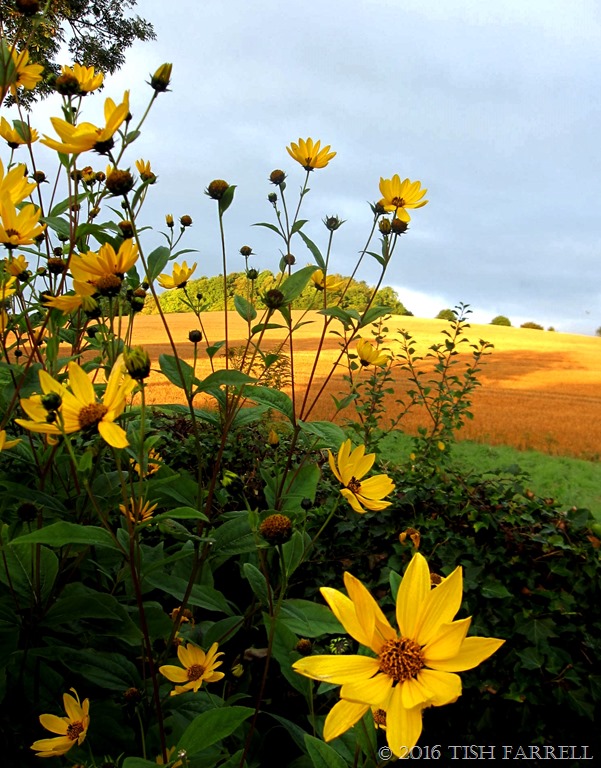
The wheat field behind the house has been harvested leaving us with a yellow stubble carpet to look at. At least for now. Doubtless it will soon be ploughed and re-sown. This morning I watched the early morning sun spread down the hill. Liquid amber. The garden was still in deep shadow, but even so, the rudbeckia were not to be outdone,  making their own sunshine.

IMG_2886

Today In My Garden

IMG_2646

IMG_2644

IMG_2662

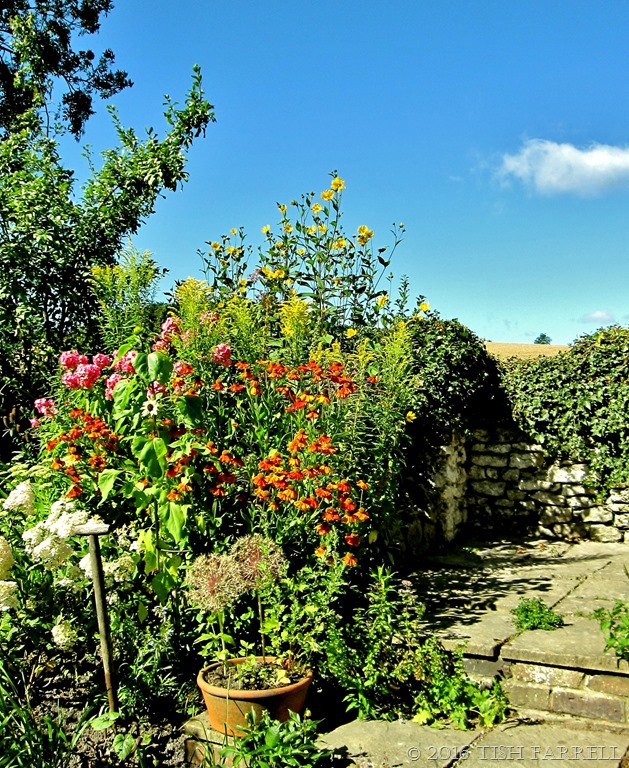
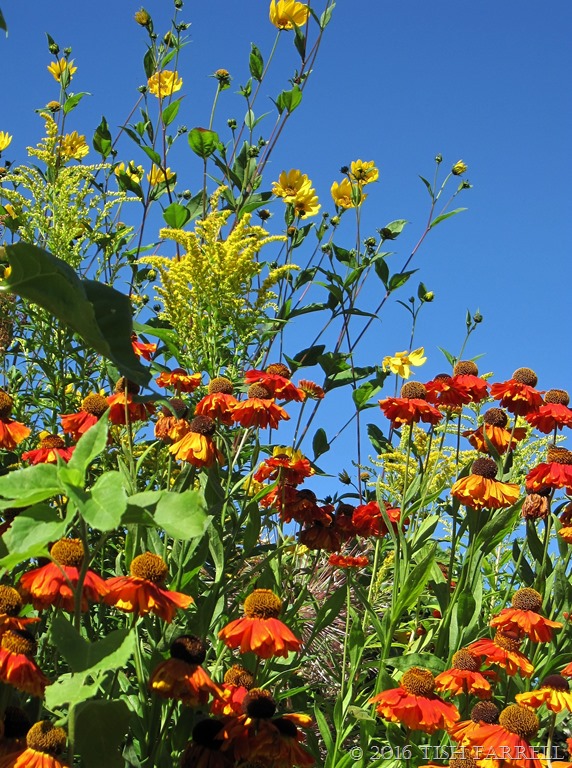
Never mind the Olympics, it’s all gold in and out of the garden on Sheinton Street. Over in the field the wheat is  ready to  harvest, and inside the hedge  the  Rudbeckia is towering up a good six feet tall. This morning it is rather windswept, but the yellow flowers look good against the blue.

Its parent plant once grew in my Aunt Miriam’s much loved Devon garden. That’s her fork in the first photo. The tines are twisted, making it unfit for gardening, but we keep it permanently planted as a keepsake and also as a perch for the local robin.

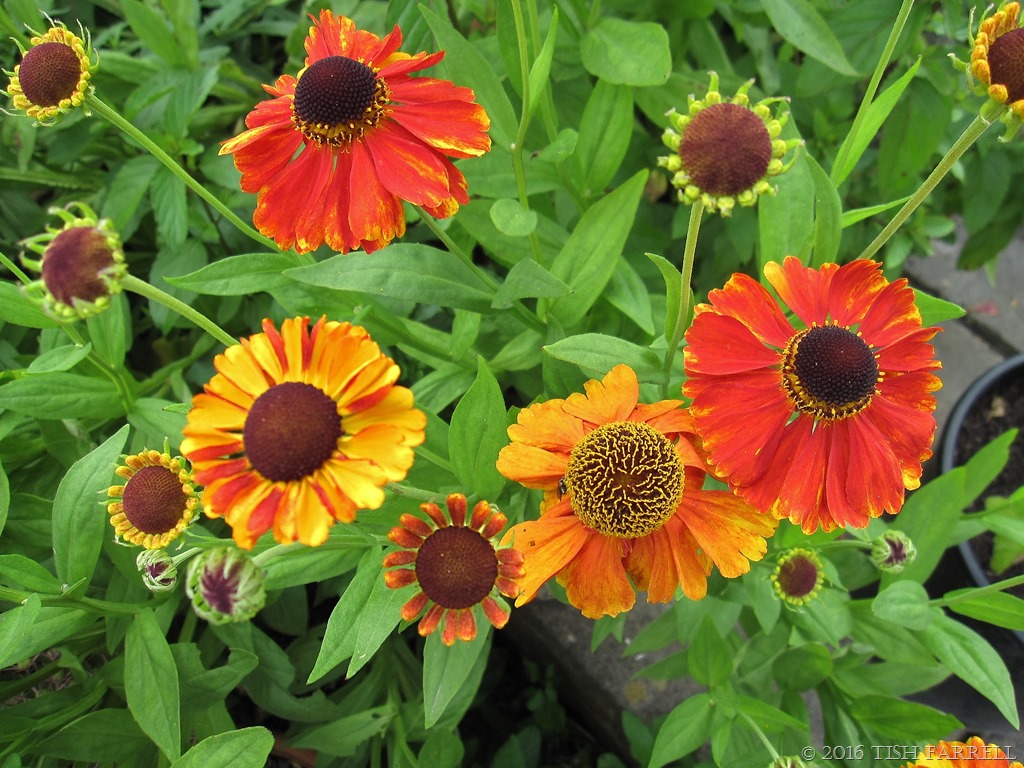
Beneath the Rudbeckia the feathery plumes of Golden Rod have just started to flower, and below them the red hot flowers of Helenium  are making their own carnival parade. All the stems (below and above) belong to a single plant. They pretty much have the red end of the spectrum covered. The bees love them too.

IMG_2504

Happy weekend everyone!

Sun And Shadows On The Linden Walk And Olympic Games Connections

P1040386

The Olympic Games begin in Rio today – cue views of Copacabana Beach and Corcovado Mountain with its astonishing statue of Christ the Redeemer. Now switch scenes to a small town in rural England, to a meadow in Much Wenlock, and turn back the clock to 1850, for this is where it began – the source and the inspiration for the modern Olympic Movement.

The town’s physician, Dr William Penny Brookes was the man behind the revival of the ancient Athenian games. His objective was clear:

for the promotion of the moral, physical and intellectual improvement of the inhabitants of the town & neighbourhood of Wenlock and especially of the working classes, by the encouragement of out-door recreation, and by the award of prizes annually at public meetings for skill in athletic exercise and proficiency in intellectual and industrial attainments.

He had already started the Agricultural Reading Society and been hard at work raising funds from Shropshire’s gentry to establish a working man’s reading room, while lobbying every famous writer of the day to donate copies of their works to the cause. Much of the library still exists in the town’s archives and includes some heavy-going and esoteric histories of far-flung lands. It is hard to guess the appeal of such books to farm hands and quarrymen after their long day’s labours, but at least they would have had decent light to read by. Brookes was also behind the founding of the town’s gas works.

Wenlock’s Olympian Society grew out of the Agricultural Reading Society. The very first games were held on the town’s race course but in later years took place (as they still do every year) on the field below Windmill Hill, now known as the Gaskell Recreation Ground, or as Penny Brookes himself called it, the Linden Field.

Nor was it any rustic village fete affair. The local MP J M Gaskell provided seating on Windmill Hill to give everyone a fine view, and the event was heralded with much ceremony, the town streets decked out from end to end, a parade of competitors, flag bearers and officials all marching with the local band. From the start, then, pageantry was a key part of the games, lifting people from their humdrum, hardworking existences. And although there were many fun contests and traditional country sports, the athletic events were taken seriously, and attracted competitors from all over the country. Prizes included silver cups and ink stands presented by local worthies and Penny Brookes designed elaborate medals – gold, silver, bronze, and had them made at his own expense.

News of the games spread far and wide, and indeed were spoken of in very high places. In 1890, when the French aristocrat Baron Pierre de Courbetin had been charged with finding ways to improve the fitness of the French Army, he was advised to go and see the Wenlock games. He stayed in Brookes’ house on Wilmore Street during his visit, and what he saw and also learned from Brookes inspired him to found the International Olympic Committee. The IOC held their first games in Athens in 1896, and although Brookes did not live long enough to see the extent of his influence, de Courbetin gave him due recognition:

If the Olympic Games which modern Greece did not know how to establish again is revived today, it is not to a Greek that one is indebted, but to Dr. W P Brookes.

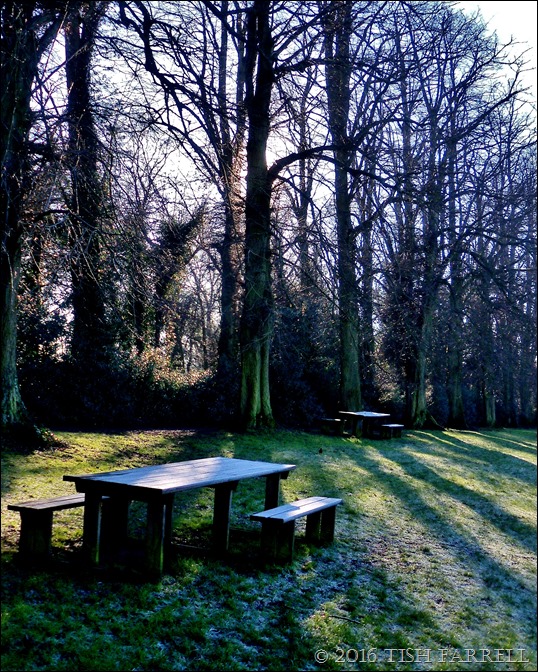
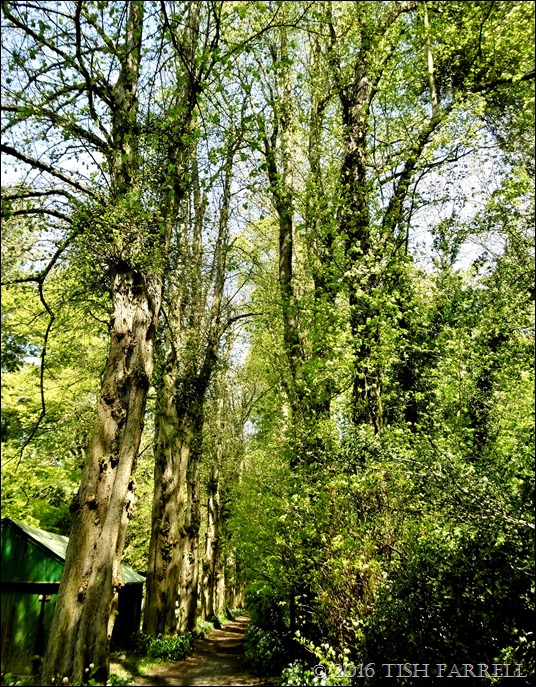
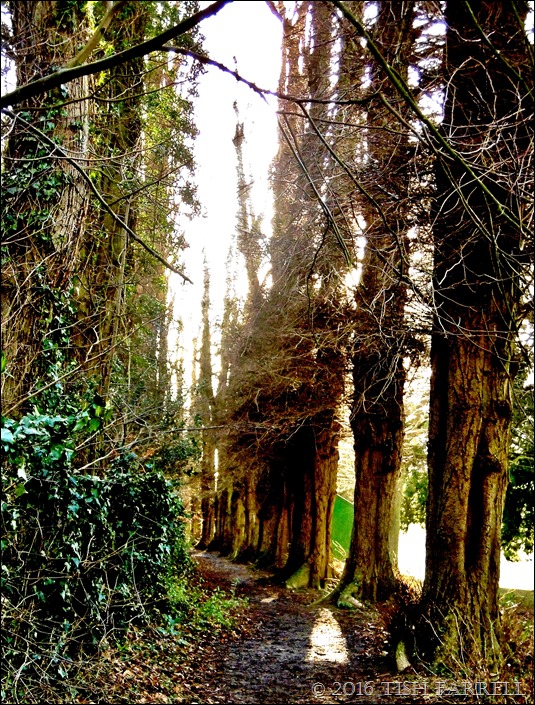
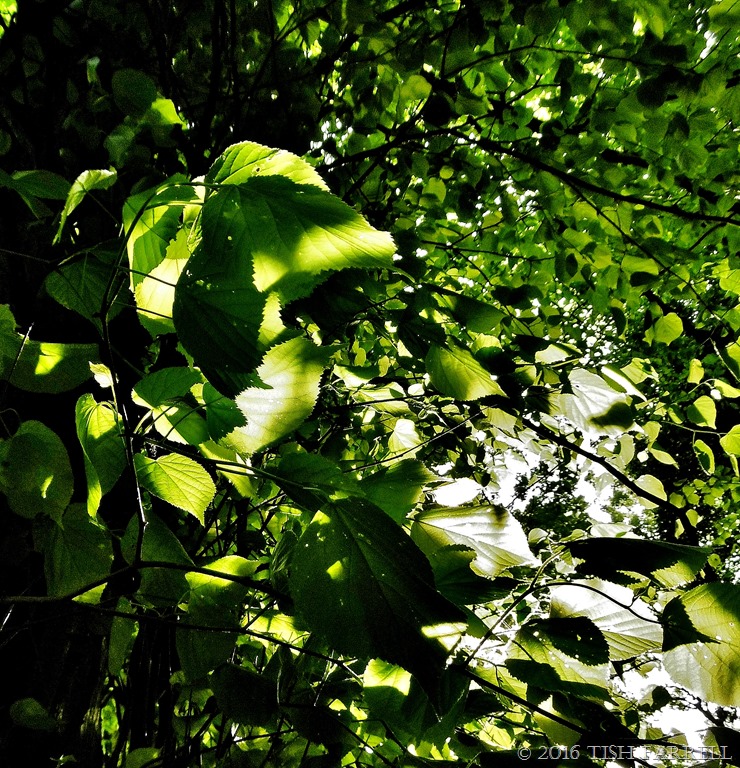
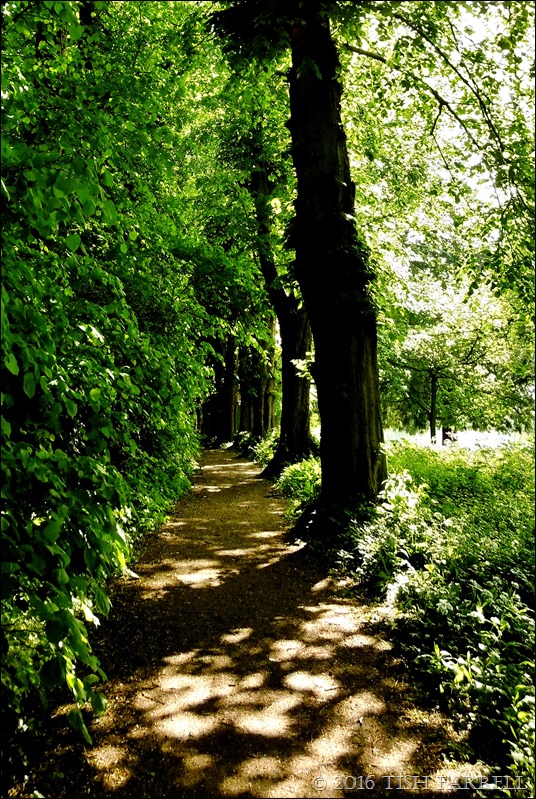
We the people of Much Wenlock are also indebted to Dr. Brookes for his planting of the lime tree avenue alongside the Linden Field where the games took place. As I’ve said before, it is one of the town’s enduring treasures. The trees are over 150 years old, and still in fine form. There is no time of the year when this avenue is not beautiful. In winter it is deeply mysterious, a colonnade to another reality. But whatever the season, there is always a play of light and shadow. And there is windrush in the high canopies, and crow call. And in summer the soporific scents of tiny green lime tree flowers.

Here, then, are a few more views, and so when you see the grand and glamorous opening of the Rio Olympics, give a thought also to this place and the Shropshire doctor, who with the well being of his townspeople in mind, inspired the modern Olympic Movement:
P1040407

101_0301

100_8822

P1040025

P1000514


This post was inspired by Paula’s Thursday’s Special theme ‘shadow’. Please visit her blog and join in this week’s challenge.

#2016OlympicGames