Foxgloves Over The Garden Fence ~ After And Before


100_5911 - Copy (2)

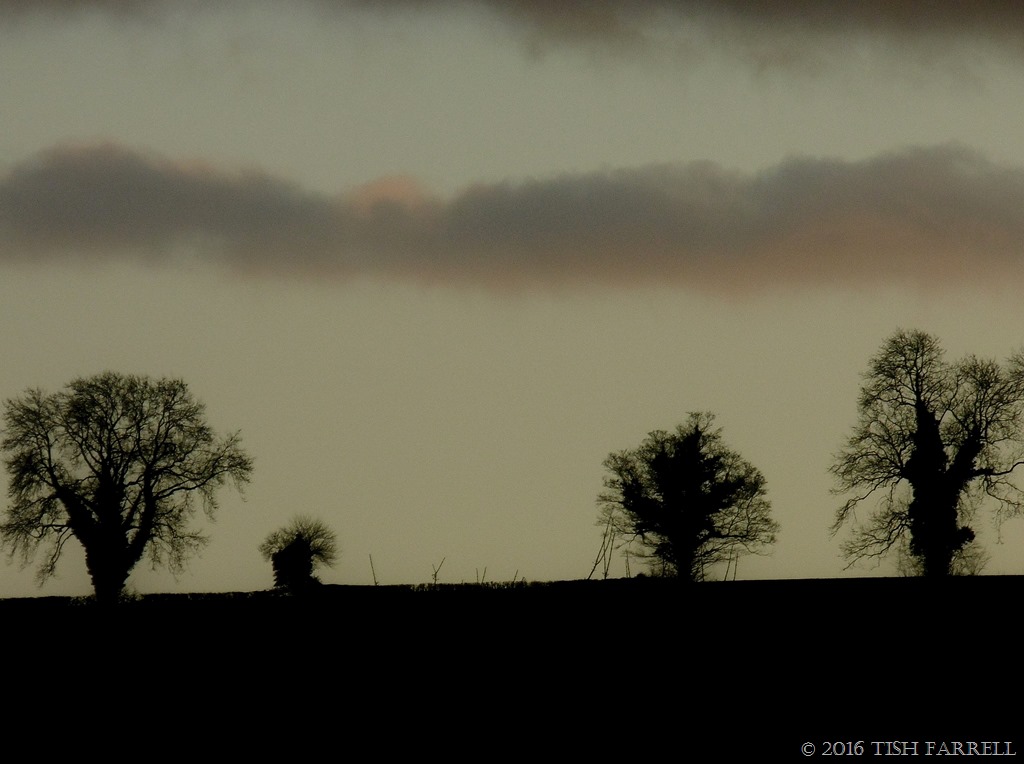
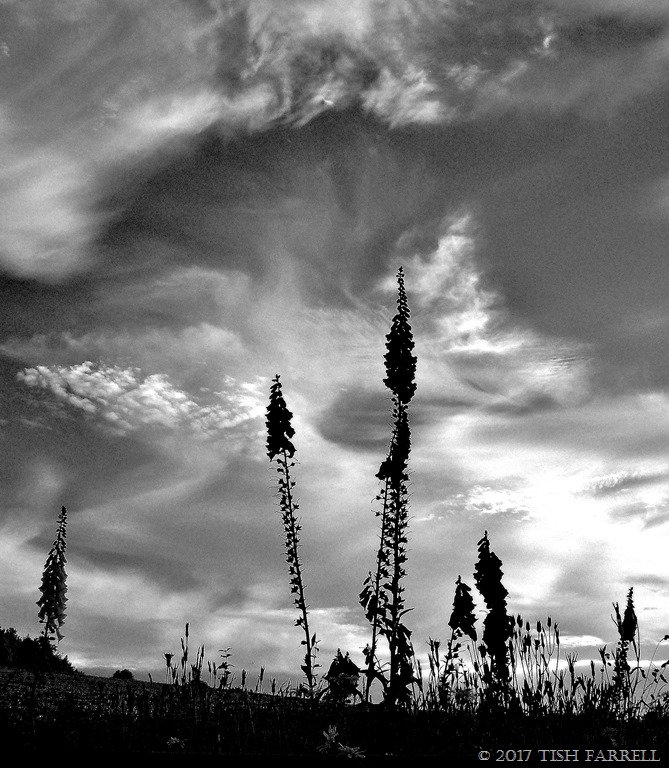
This Sunday at Lost in Translation, Paula asks us to show her a black and white version of a colour original. This summer shot was taken from the back of our house looking towards Wenlock Edge as the sun  was going down.

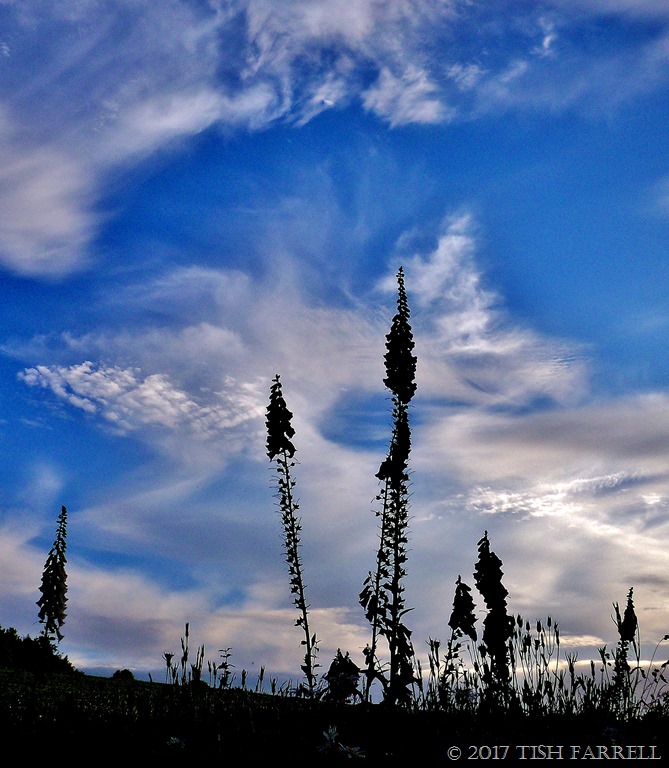
Just over the garden fence we have a strip of ground that grows itself each year – mostly self-seeded foxgloves, columbine, corn cockle, moon daisies and opium poppies along with some perennial lemon balm, spearmint and oregano. It’s a treat waiting to see what will happen there every summer. Just thinking of this brightens a rather gloomy January day here in Shropshire.

Now here’s the original colour shot:100_5911 - Copy (2) - Copy
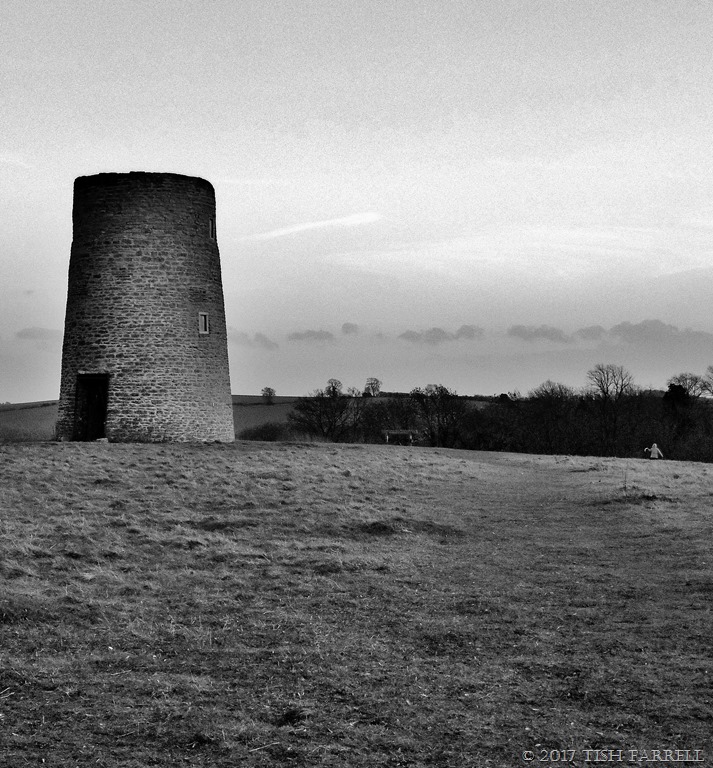
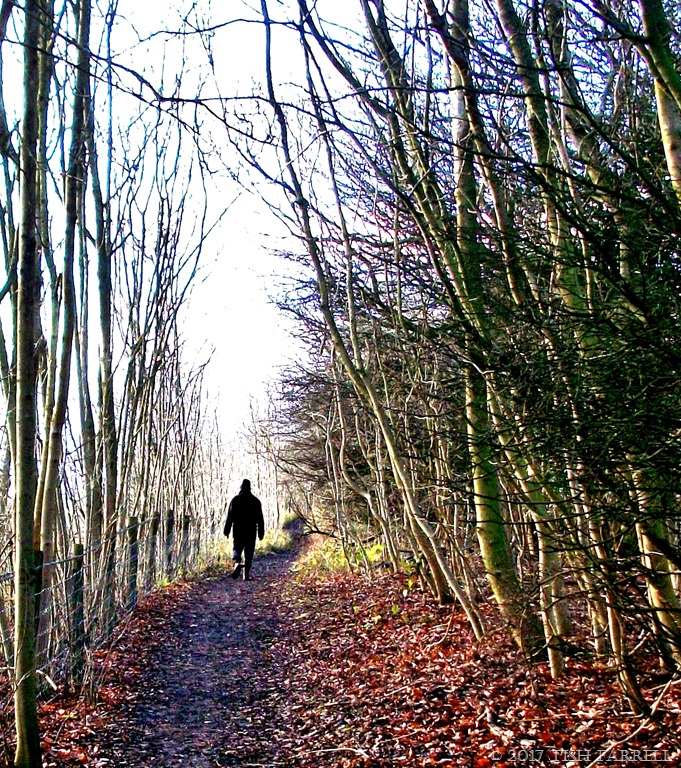
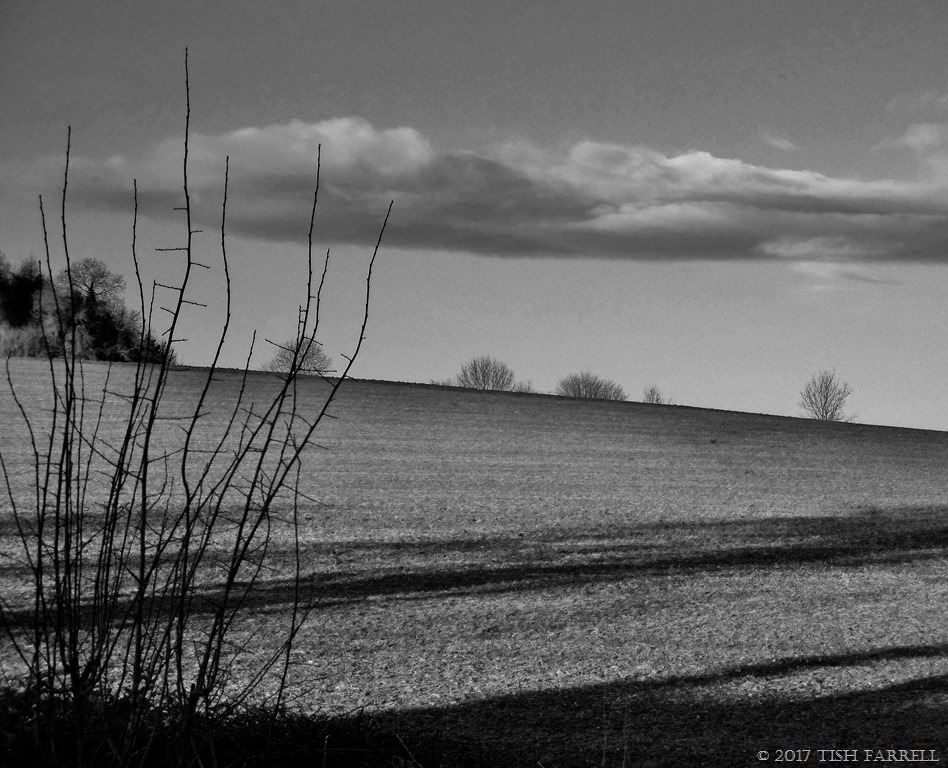
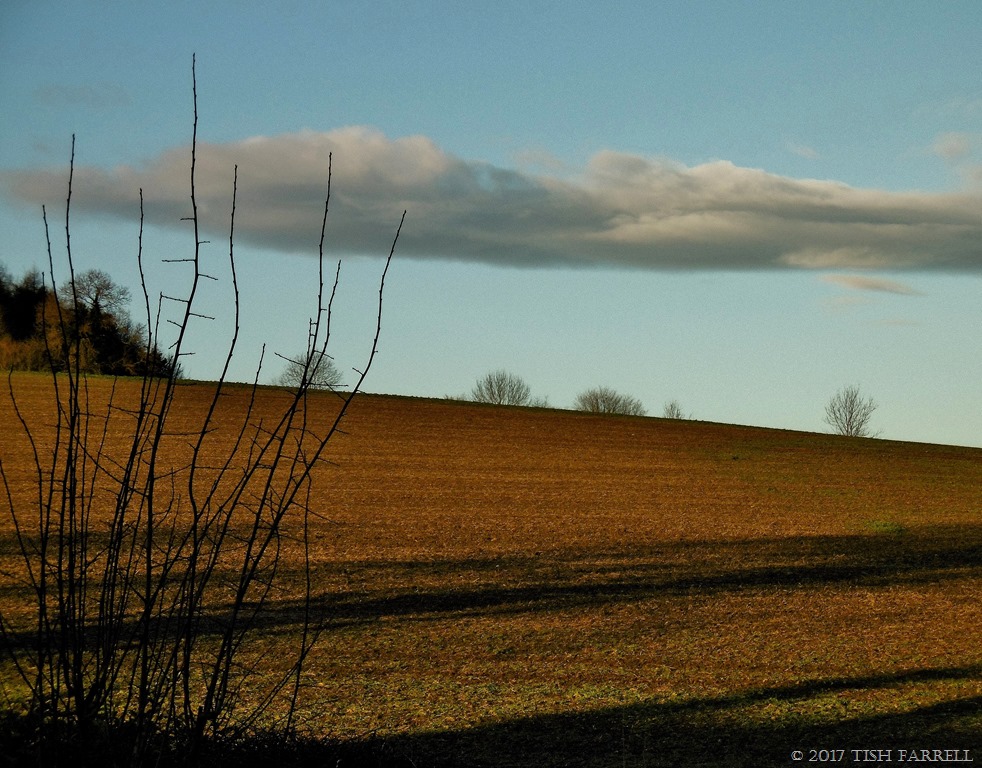
And now I can’t resist posting some more transformations in and around Much Wenlock. Clearly, some work better than others, but in any event, as Paula says, it helps one to see with fresh eyes:
P1000380 - Copy

P1000380 - Copy (2)

P1030046 (2)

P1030046 (2) - Copy

100_7046 - Copy

100_7046 - Copy

Last Year At The Allotment ~ Seasonal Highlights

Now is the time of year when gardeners head for their seed catalogues and start making plans for the growing season ahead. Seed potatoes must be ordered, and preparations made (i.e. brain put in gear so as not to miss appropriate time slots) for crops that must be sown early. It is also a good moment to review which of the last year’s crops grew best, and most importantly, which we most enjoyed eating.

Actually all the produce was delicious. We had loads of Early Onward peas, courgettes and salad greens. Beans thrived – French, borlotti, fava, runners, and Cherokee, as did the globe artichokes, raspberries and Swift sweet corn. In the polytunnel the Black Russian tomatoes, and yellow cherry variety were the most prolific. I also grew some very good pink onions in there, and thus saved them from alium beetle attack which did a lot of damage in the outdoor crop.

There’s still stuff to eat on the plot too – Brussels sprouts, Italian broccoli, Tuscan kale, parsnips, and early purple sprouting to come.

And now as I look at these photos, I sense the horticultural sap rising. Soon it will be time to go out and get growing – all over again. For the gardener’s work is never done. Yippeeeeee!

 copyright 2017 Tish Farrell

Thursday’s Special: 2016 Retrospective   Please visit Paula for her own fine retrospective, and be inspired.

Solstice Sky And A Fine Quotation To Match

P1060302

I dashed up to the allotment this afternoon while it was still fine. The weather forecast is promising us storms tomorrow so I thought I’d better get the Christmas parsnips dug up fast, and the Brussels sprouts and red cabbage gathered in.  The ground was very water-logged and the plots looked dreary, and naturally there were no other mad gardeners around but me. But as the sun went down, just a fraction later after the shortest day, the light over the town was magical.

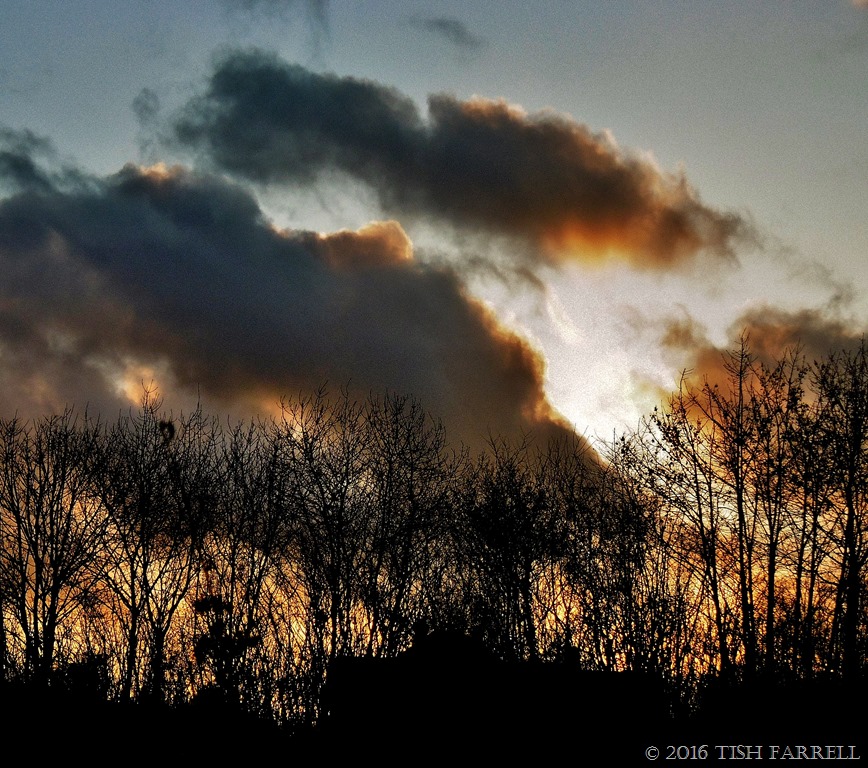
These photos were taken with lots of zoom, and in the next one the sky looks to be on fire.

P1060297

All of which reminded me of an Albert Camus quote which I read on a writing blog earlier this week. It was so hope-inducing I thought I’d pass it on at the first opportunity. It’s especially apt for all you creative people out there, which would be every man Jack and Jill of you. More power to your making in 2017:

 In the depth of winter, I finally learned that within me there lay an invincible summer.

Albert Camus

All Things Must Change ~ Frosted Lily

IMG_3738

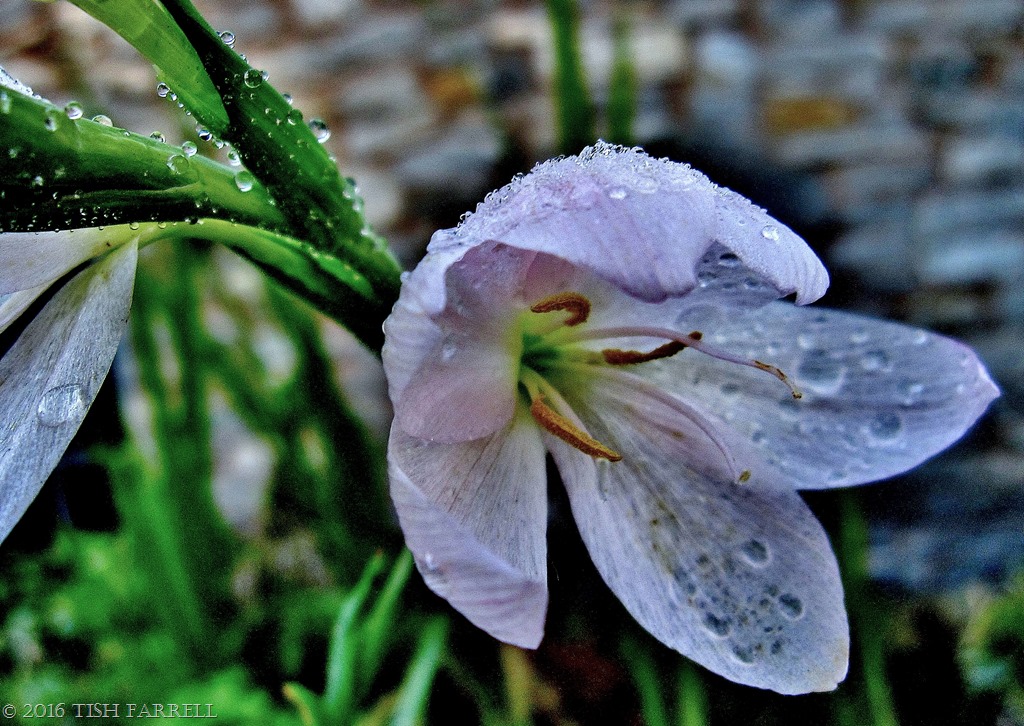
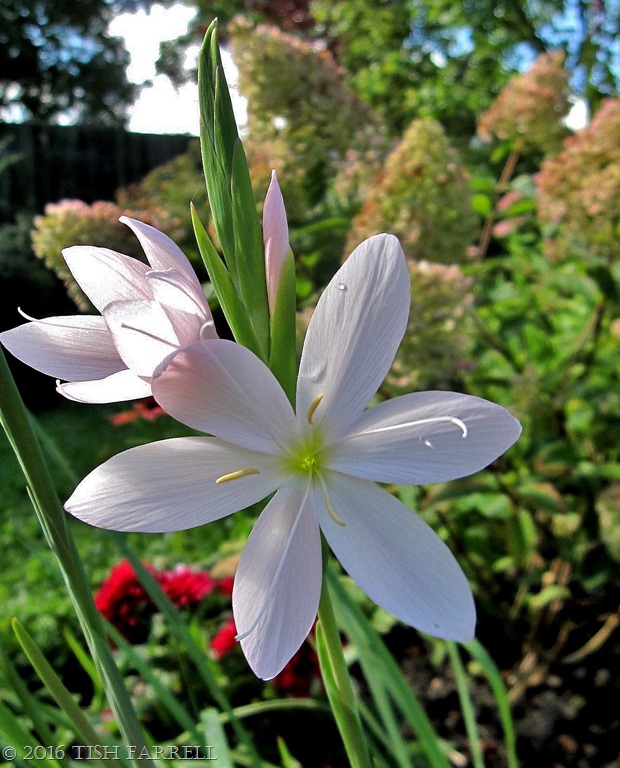
Only on December 11th did I cut down the last of these lovely shell-pink lilies. They have been putting on a good show since September, the flowers opening day after day, and new buds forming. This is pretty impressive for a plant that is native to southern Africa where its red version goes by the name of Crimson River Lily.

Schizostylis coccinea was its botanical name, but it has now been reclassified as Hesperantha coccinea.  Go to this link if you want more information on how to grow it. I have found it a most obliging plant, requiring little attention, though I gather it likes to be moved around the garden every few years. It comes in a range of coral and pink shades, and makes very pleasing clumps that can be easily divided in spring.

Here’s how it will look next September. Doesn’t it make you smile?

IMG_3116


Cee’s Flower of the Day Please visit Cee for more blooming marvels. Or go there to post a floral link to your own.

November Sky With Crab Apples

IMG_3726

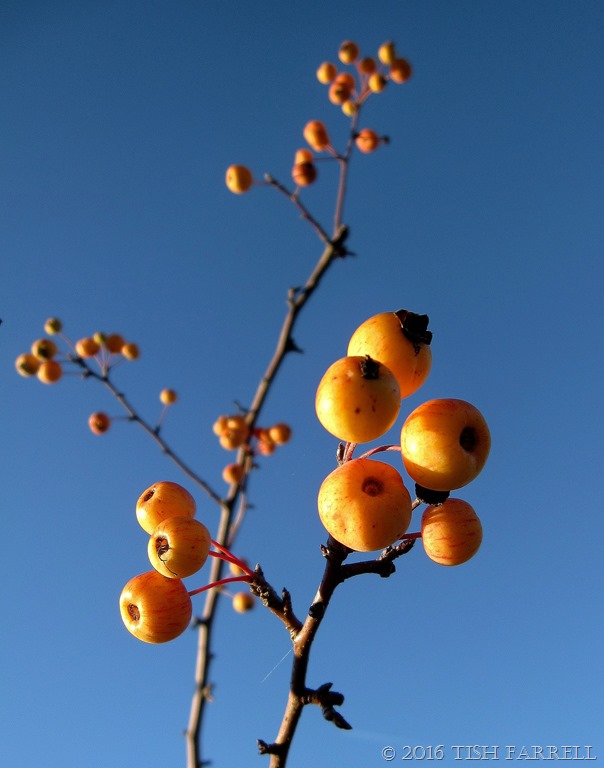
Crab apples as caught in yesterday’s afternoon sun. There’s a bit of story here too. This year the fruit on our Evereste crab apple tree is absolutely tiny, nothing like the giant size suggested by the photo. But this is good, because it makes us think that the tree has survived  being moved back in the early summer. Hurrah! It has produced fruit, albeit apples of elfin proportions.

All through last winter we had ummed and ah-ed about doing something so rash and ruthless as digging up this lovely little tree. I had planted it not long after we moved to  Much Wenlock ten years ago. It was the star of an ugly and awkwardly large, raised bed at the back of the house. (You’ve probably seen the crab apple/blossom photos in earlier posts).

In the end we decided to risk it. Graham pruned back much of the  top growth, and then effectively dismantled the flower bed around the roots while I dug a big hole at the top of the garden.  The transplanting all had to be done double-quick. Then we firmed it in, stamped on the soil to get rid of any air pockets, and gave it lots of water. The final proof of success will be next spring. Will it ever flower again? I think it will.


Watching The Clock: Black & White Sunday

100_5549

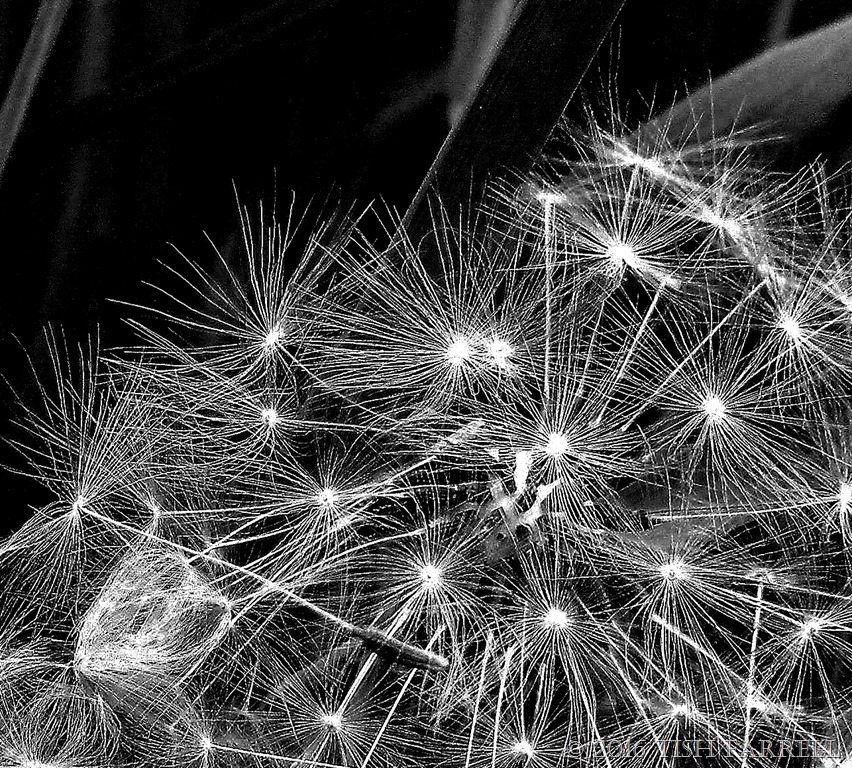
Talk about conflicting interests. When I’m at work on my allotment I continuously wage war on dandelions. They are shown no mercy, bar resorting to pesticides. And yes, I know they are very helpful plants – the roots plunging deep into the soil strata and releasing otherwise inaccessible nutrients into the topsoil.

On the other hand, on the way to the allotment, camera to hand, I have a lot of time for them. They are of course in the farmer’s field, and not on my plot, which helps to foster a little appreciation. I find their seed-head ‘clocks’ endlessly photogenic. Looked at closely, they have a mysterious and mesmerizing quality: the perfect design of their parachutes, each one programmed for relentlessly unavoidable procreation.

And so, even as I feel my spade-hand twitching towards a ruthless uprooting, I’m also thinking ‘live and let live’. There are other good reasons to love dandelions. I’ve mentioned in earlier posts that these plants possess great therapeutic qualities. Herbalists have long used the roots for healing liver conditions, while the leaves and flowers act more on the kidneys (not for nothing is the dandelion’s country name piss-in-the-bed.) You can use the young leaves in salads, while the roasted roots make a passable coffee. Meanwhile, the dandelion in the photo is also auditioning for a special effects role in Star Trek.

Black & White Sunday

Does My Beehind Look Big in this?

IMG_2690

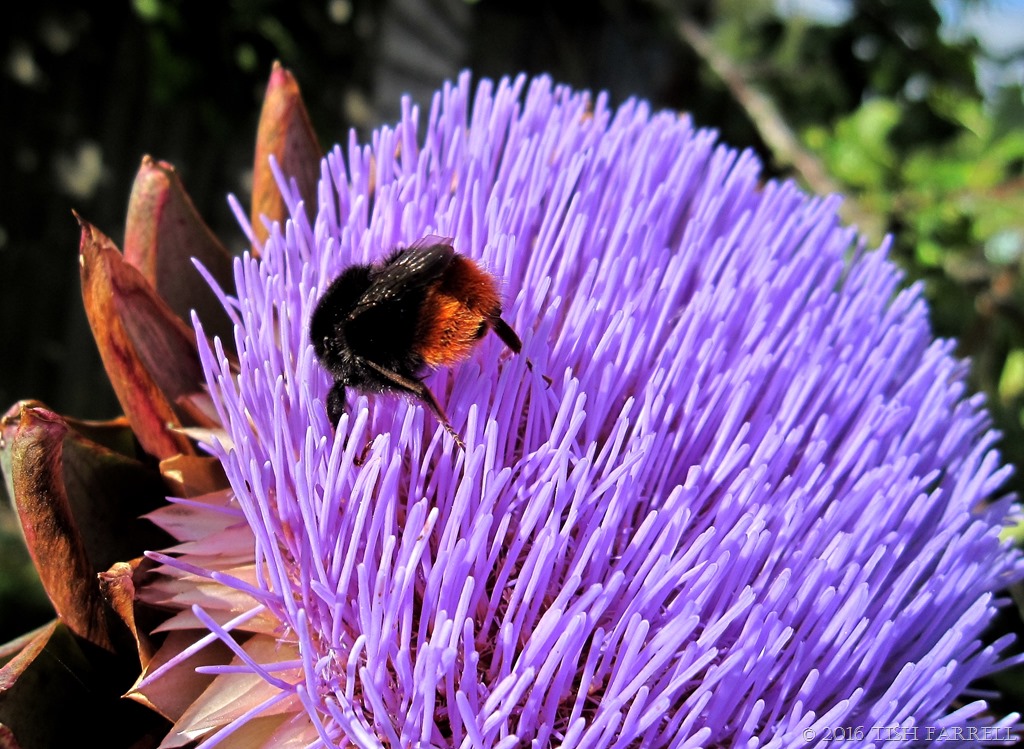
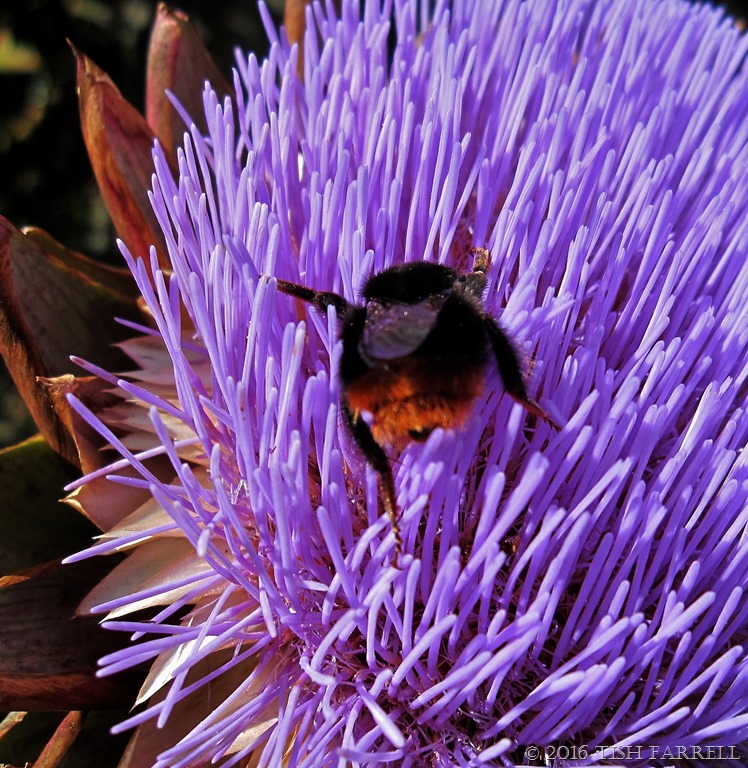
Up at the allotment the globe artichokes we did not eat earlier in the summer are flowering, and the Red-tailed Bumblebees think all their breakfasts have come at once. In fact they’re trying to scoff them all at once too. The flower, after all, is a VERY BIG thistle. This makes me wonder if the huge expanse of ultra-violet attractant doesn’t over-stimulate the foraging impulse, thus explaining the manic bee rootling  that has them scrabbling, bottoms up, through the petal forest to reach the sweet stuff beneath.

P1050342

Those with longer legs seem to cope best, but I’ve already had to rescue two. They seem to become mired in the petals. Either that or they’re simply spaced out on the sugar rush.

IMG_2686


Macro Monday over at Jude’s

Today In My Garden

IMG_2646

IMG_2644

IMG_2662

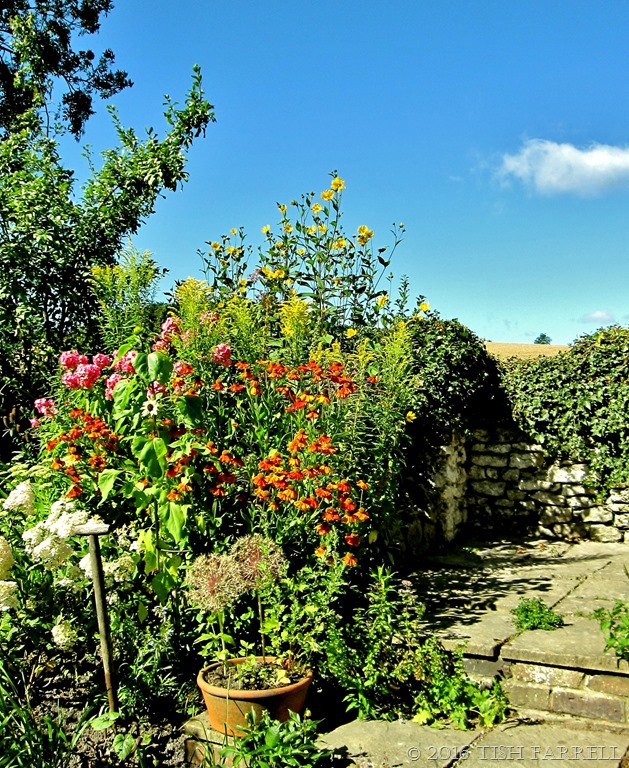
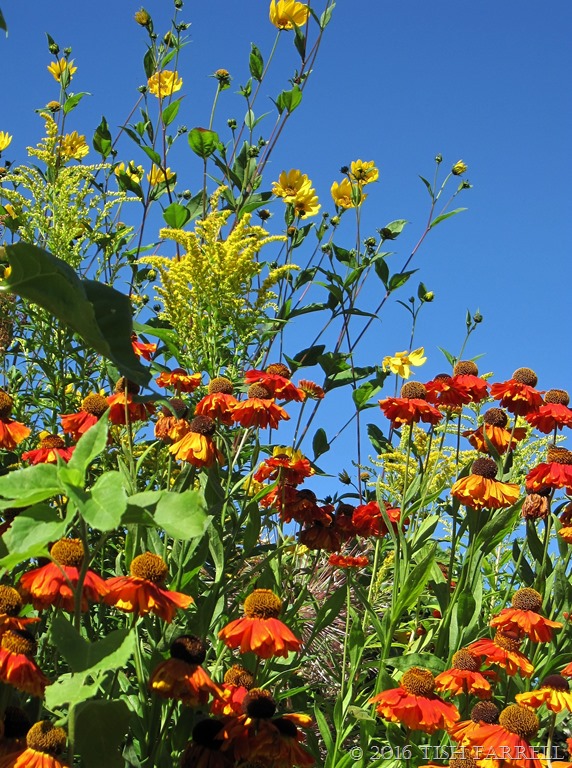
Never mind the Olympics, it’s all gold in and out of the garden on Sheinton Street. Over in the field the wheat is  ready to  harvest, and inside the hedge  the  Rudbeckia is towering up a good six feet tall. This morning it is rather windswept, but the yellow flowers look good against the blue.

Its parent plant once grew in my Aunt Miriam’s much loved Devon garden. That’s her fork in the first photo. The tines are twisted, making it unfit for gardening, but we keep it permanently planted as a keepsake and also as a perch for the local robin.

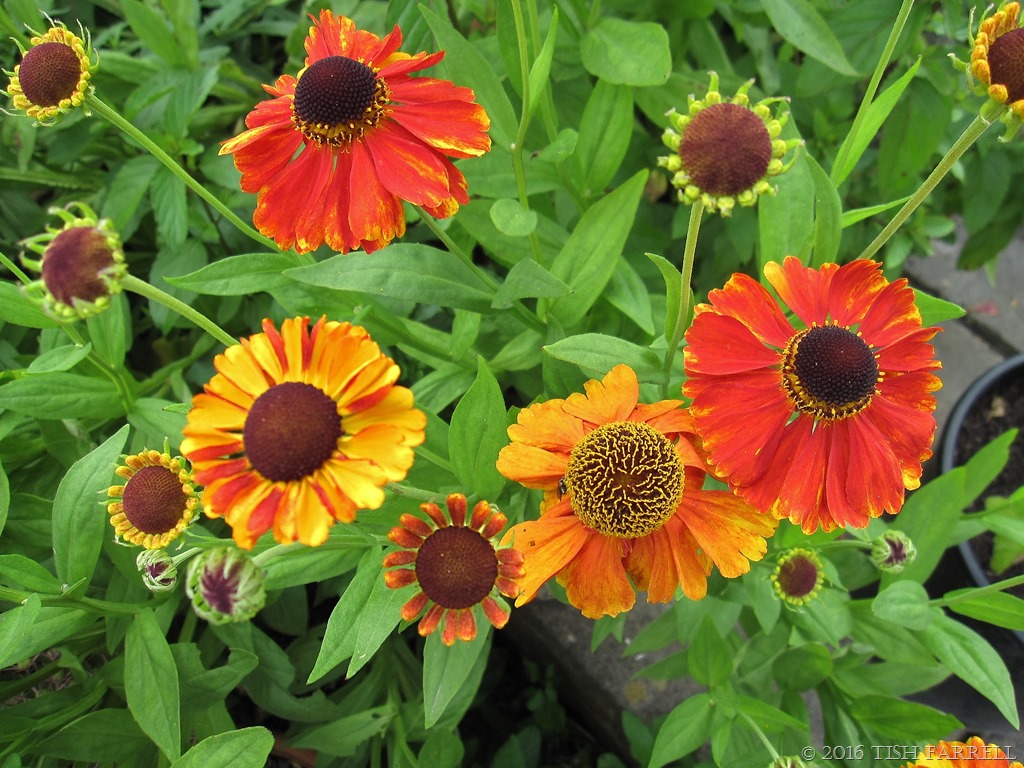
Beneath the Rudbeckia the feathery plumes of Golden Rod have just started to flower, and below them the red hot flowers of Helenium  are making their own carnival parade. All the stems (below and above) belong to a single plant. They pretty much have the red end of the spectrum covered. The bees love them too.

IMG_2504

Happy weekend everyone!

Oh, my love’s like a red, red…radish? Or the joy of growing one’s own dinner

IMG_2099

Even if I say so myself, with radishes as beautiful as these, you can see why Mother of Rapunzel so craved them that she sent poor Father of Rapunzel scrabbling over the witch woman’s garden wall on nightly radish-scrumping missions.

We all know what trouble that led to, and hopefully there will be no similar repercussions (whether the enforced letting down of over-long hair from tall towers or the scratching out of princely eyes ) from eating these dear little Cherry Belle radishes. Because eaten them we have. They took pride of place in the salad that accompanied Friday night’s dinner.

And the secret of this particularly successful, if small-scale production, was to grow them in a large plastic flower pot inside my allotment polytunnel. You can see them growing in the bottom left-hand corner, along with the component parts of many other future dinners:

IMG_2105


This week at the Daily Post photo challenge the theme is:
Dinnertime

Apologies to Robert Burns for the radish intrusion.

Also I don’t think Jude has yet featured radishes in her April garden close-ups challenge.