Early Edition: Mau Mau Brother

Shades FINAL COVERS Set 3_Layout 1


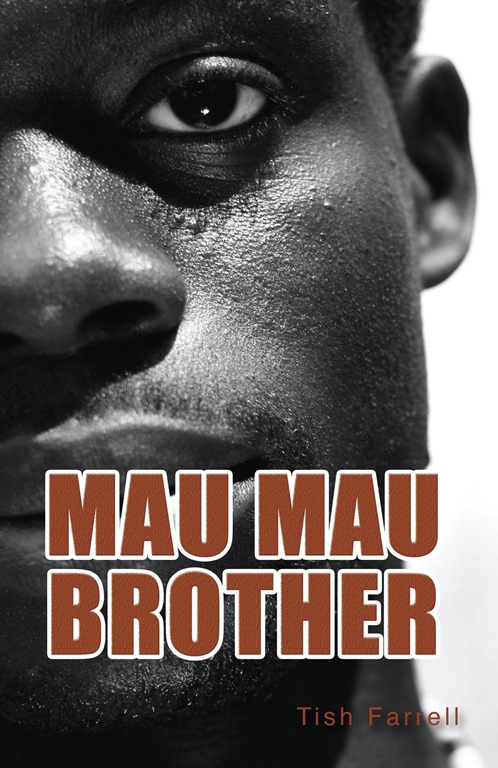
An exciting little parcel arrived last week – copies of my latest quick-read for teens (or even for adults) in Ransom’s Shades 2.0 series. It’s a small, neat book. Pocket sized. As per the Shades’ format, it is a novelised short story, the text broken down into brief chapters, the whole designed for readers who find bigger books, and dense text too daunting to tackle. The pages have much white space, and the story’s 5,000 words are spread over 64 pages, which of course makes it easier for anyone to read. The aim is to build reading muscles and so (hopefully) nurture a love of books.

But if the books are small-scale, there is nothing ‘slight’ about their content. Their themes are of adult interest too. As a writer I can think of no bigger challenge than to woo readers who would probably rather not read. It unavoidably demands your crispest most affecting prose.

I knew, too, that historical fiction can be off-putting to many teen boys. In Mau Mau Brother, then,  I used first person, present-tense narrative to make events more immediate. The story tells of the 1950s uprising against British rule in Kenya as seen through the eyes of fifteen-year-old Thuo. This perspective on what happened is not widely known outside Kenya; the British authorities deliberately destroyed many records.  But for Thuo there many kinds of war – not only with the British, but also with the African Home Guard, and even with his own freedom fighter brother whom he blames for all his troubles. But in the end, the biggest war he  has to fight is with himself.

And now for an extract:

The British are bombing Kenya’s highland forests to flush out the freedom fighters. Thuo and his family have been driven off their farms and made to live under curfew in a fortified village. Their every move is ruled by the African Home Guard. Then one night Thuo’s elder brother, Kungu,  a seasoned fighter, finds his way to Thuo’s hut. He is wounded, and sick, and  Thuo is faced with the starkest choice – to inform on his brother, or risk detention and death to help him.


After the plane goes, Njonjo whispers that he’s overheard the Home Guards talking.

‘They know Kungu is near,’ he hisses. ‘Tomorrow the British soldiers will sweep this part of the Reserve.’

That night we sit in our hut ,weighed down with fear, expecting the worst. I am stunned when Kungu says, ‘I must leave now.’

‘But how?’ I cry.

This time I am more scared for him than for me. His brow glows with sweat. He still cannot walk properly.

‘The way I came, through the barbed wire.’

‘But the ditch. The stakes.’

‘I will roll down. Crawl out. Like a cockroach. Have no fear, little brother.’

‘But where will you go?’

‘A cave I know. I once shared it with a she-leopard.’

I shiver. A window on hell has just swung wide. I see the big cat’s yellow eyes, the white fangs. Then I see the falling bombs, hear elephants screaming, the rifles’ crack-crack, feel the breath of a pseudo-gangster on my neck.

The words fly from my mouth before I can stop them. But, once said, I cannot take them back.

‘I’m coming too.’

AVAILABLE ON AMAZON


 Flickr Comments: E words

FOR MORE ‘E’ WORDS STORIES

copyright 2014 Tish Farrell

Sundown in the Maasai Mara

Scan-140726-0025


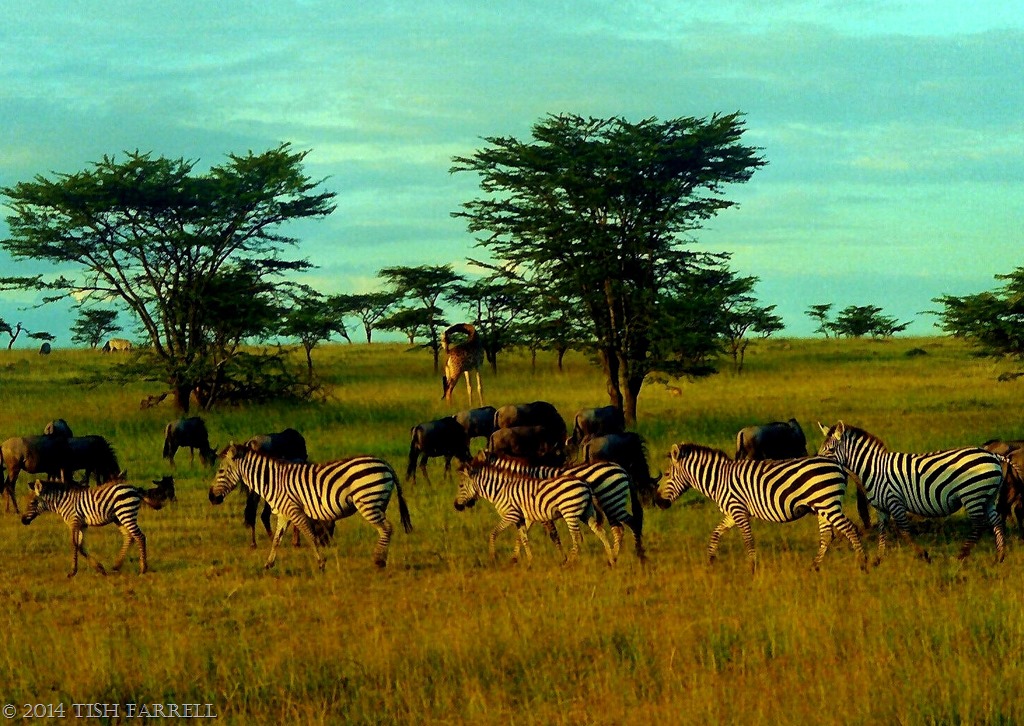
Night comes swiftly at the equator, usually at 6 to 6.30 pm. But around 5 pm there is that perfect moment when the light is like molten honey.  This shot was only a quick snap, taken after a game drive, and as we were heading back to camp on the Mara River. Our driver-guide was intent on one last go at spotting a leopard. For our part, we were simply entranced by this scene. Even at the time it seemed as if we had stepped into an oil painting. Besides, this was the most game we’d seen in one place all afternoon. Because that is something that wild life films tend not to show you: that you can drive for hours across the African bush and not see a single animal.


There is also more going on in this scene than is immediately obvious. Behind the zebra are some wildebeest; then the giraffe between the thorns. I’m not sure what the pale animal is on the top left horizon, but from its size I’d say  it is probably an eland. Then if you look carefully  just below the right hand bough of the right hand thorn tree, you might make out a brown dog-like shape. Hyena. There will doubtless be others in the grass. Once it was thought they were only scavengers, moving in on big cats’ kills. But now they are known to be hunters too. They prey on gazelles and larger antelope. Even a lone hyena can bring down a full-grown wildebeest, and pack away 15 kilos of meat at one sitting. They have jaws like industrial meat grinders, and believe me, to come upon one at close quarters, is not recommended.


Sunday Stills: Crowd Work

copyright 2014 Tish Farrell

Transported on Lamu


Scan-140801-0001


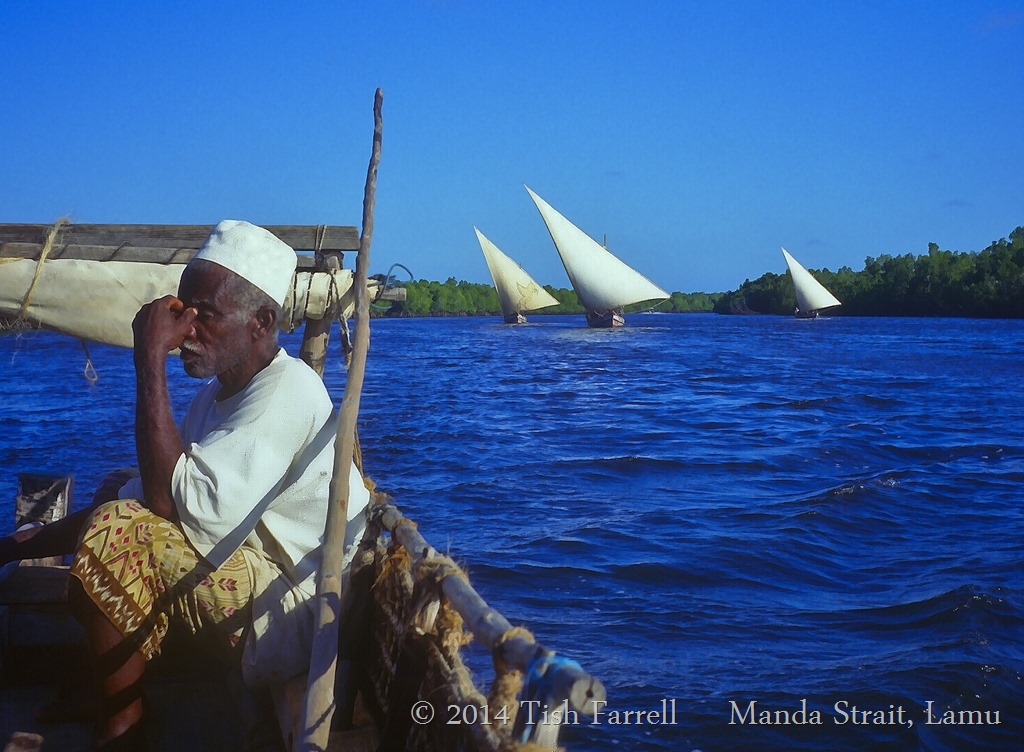
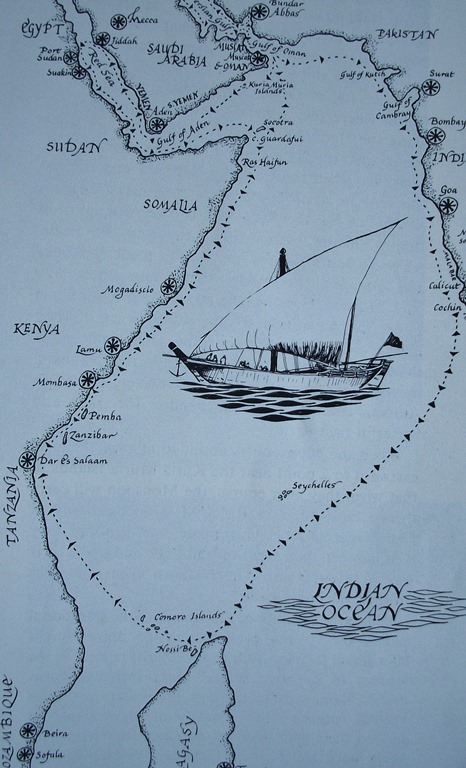
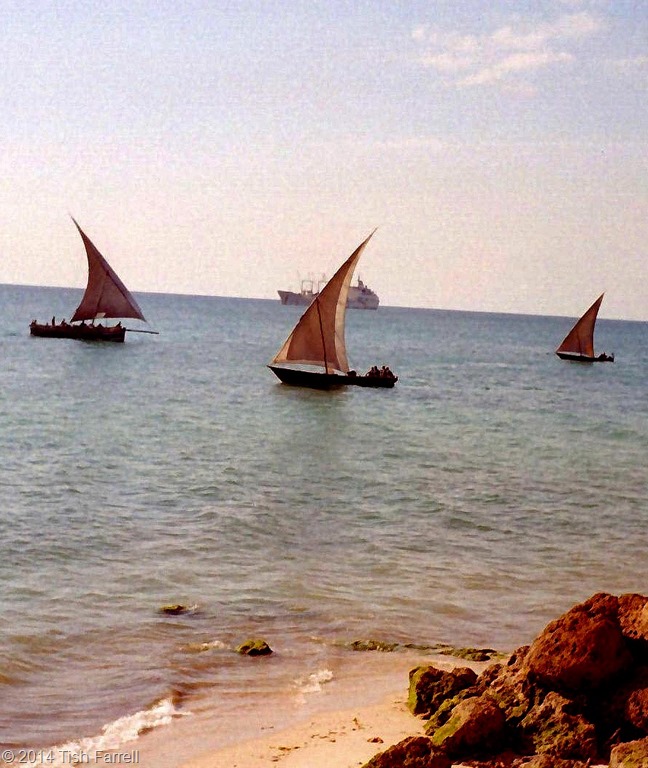
There came a time when Sendibada signed on with a strange sea captain. The next day, as dawn was breaking, the ship cast off, a strong breeze filling the lateen sails, and bearing them swiftly out to sea. But towards noon the wind died, and the boat drifted, becalmed, on still waters.

At this the captain strode out on the bridge, and began to utter words that Sendibada could not fathom. He stared and stared for, to his astonishment, the ship began to rise, graceful as an egret taking flight. Sendibada grinned. He liked a good adventure, and now it seemed this strange captain of his was none other than the most powerful magician.

Up into the clouds they soared, flying, flying until at last they saw a faraway red spot. But little by little the spot grew, until at last Sendibada saw it was a city in the sky, and that every house there was made of copper. Soon they set down in the harbour and, as the crew made to go ashore, from every quarter, lovely girls came out to greet them, bearing on their heads copper trays laden with the most delicious fruits and sweetmeats and tender roasted morsels.

And so it was that much time passed, the ship’s crew enjoying month after month of this most gracious hospitality. Sendibada, though, was growing homesick, and said as much. Now the magician gave him a round mat and told him how to use it.

Sendibada followed the instructions, placing the mat on the ground and seating himself upon it so that he faced the direction of his home town. Then he spoke the foreign words that meant: Behold! We shall all return to it . And at once the mat rose into the clouds, and faster than a diving hawk, set Sendibada back on the beach just outside his home town.

 copyright 2014 Tish Farrell

The Copper City  retold from a translated text in Jan Knappert’s Myths and Legends of the Swahili


P.S. In case you hadn’t guessed, Sendibada is the Swahili version of Sinbad.


A Word A Week challenge: transport

“Wheat…fields of wheat…” Musings on the path to the allotment


100_5994

Okay, who knows which film this quote comes from? As an extra clue I give you the line in ‘full’: “Wheat… lots of wheat… fields of wheat… a tremendous amount of wheat…”

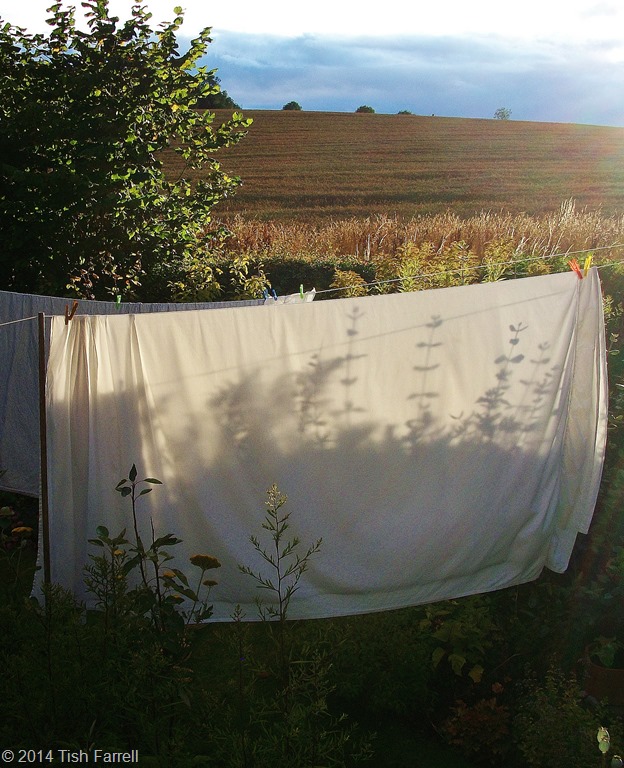
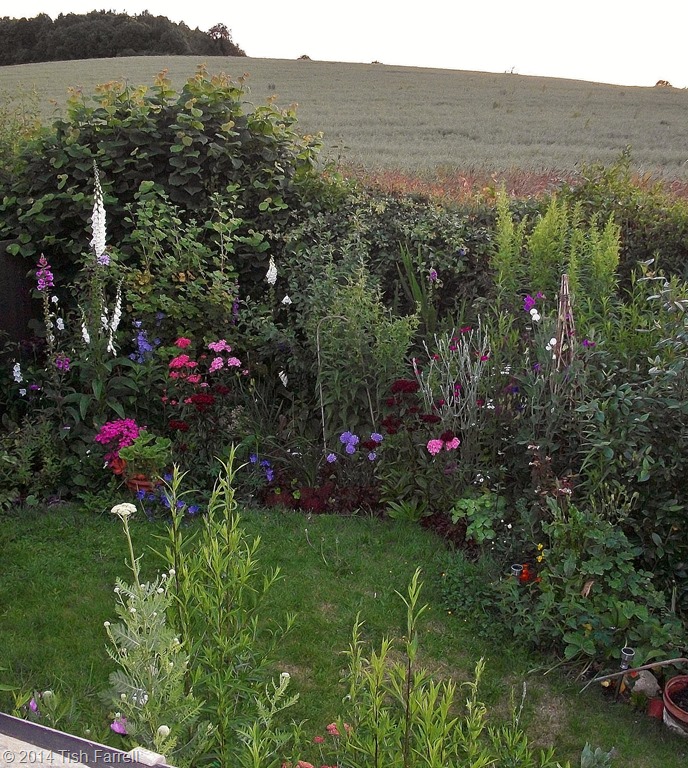
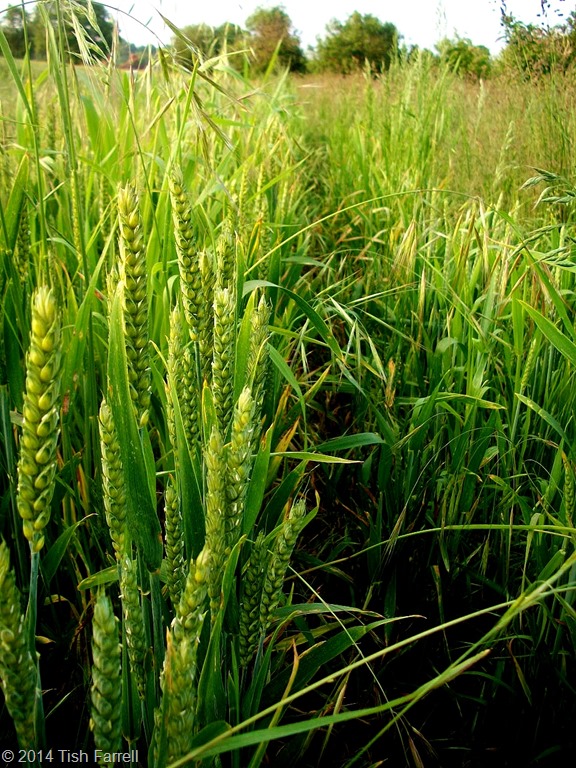
For some reason I cannot explain, this particular exhortation is rather popular in the Farrell household.  The Team Leader is wont to deliver it at unexpected  intervals and with some vigour. This habit even predates the time when we actually came to live beside  a field that often has wheat growing in it. So here is it. The field behind our house. And while I admit it might overstep the bounds of propriety to share my washing with the world, here is another view of the wheat field from our garden. I also think the flower shadows on the sheet rather fine: housework turned artwork?

077 (2)

I have written in earlier posts how our house lies on the edge of Wenlock Edge, a twenty-mile scarp formed from the upthrust bed of a tropical sea – the Silurian Sea in fact. This geological formation is a breath-taking 400  million years old – a place once inhabited by trilobites, and molluscs, and sponges and corals, although it should be made clear that when these creatures lived, the shallow sea in question was not in the northern hemisphere.  No indeed. In its tropical heyday Shropshire lay off equatorial East Africa. We are thus, for all our rustic appearance, a well-travelled county. We also have lots of geology of international importance, but  which I cannot begin to describe because the terminology and chronological expanses confound even me, a prehistorian. The Shropshire Geological Society have  a good site HERE should you wish to know more.

100_2077

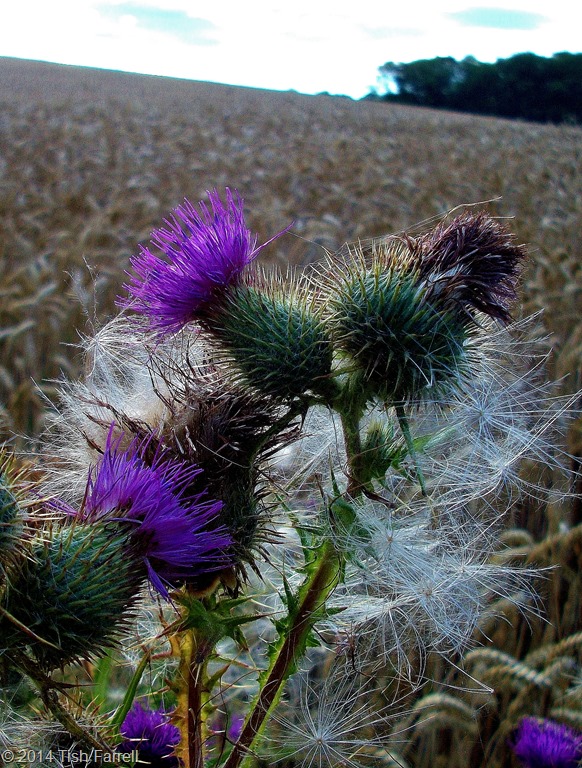
The reason I’m showing you the wheat field is because my path to the allotment runs along the edge of it. I walk back and forth at least once a day. And so when I’m not writing blog posts or fiddling with my novel, this is one of the places where I’m likely to be. There is always something that catches my eye – thistles, the light, clouds, buzzards, the rooks and jackdaws, a neighbour’s three white ducks that regularly escape from their pen to eat slugs along the path, cats on the prowl, pretending I can’t see them.

Even the wheat is quite interesting. It amazes me how it manages to force its way up through a cloddy layer of grey clay that bakes to concrete after a few days with no rain. This soil, too, is a product of a geological event – a deluge of  volcanic ash from aeons ago and that has now broken down into bentonite clay.  It is the same soil in the allotment. Soft fruits seem to thrive on it. Everything else is a challenge. Wheat, though, has apparently been grown along the slopes above the town for generations, hence the name The Wheatlands for some of our now built-upon areas.

100_5840

100_5839

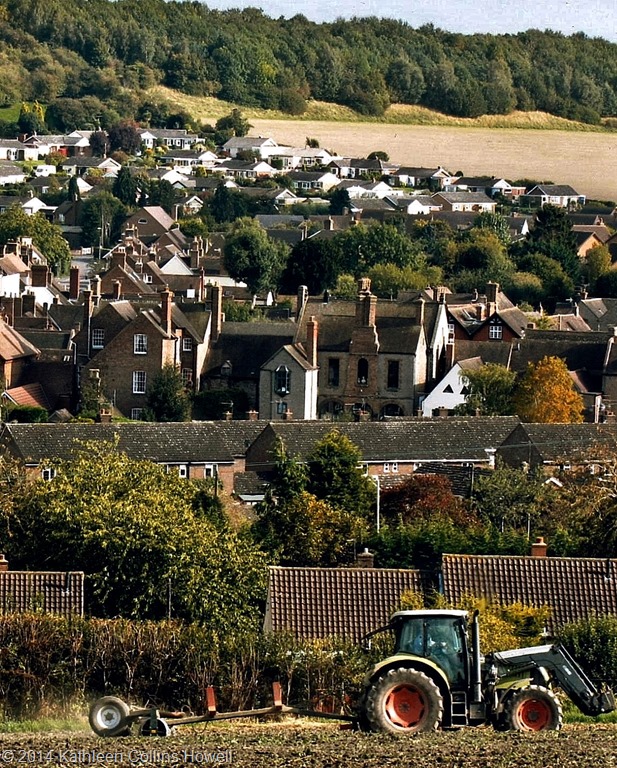
And talking of building, a couple of years ago when the Local Authority called for landowners to put forward development land, our local landowner proposed  this and most of the fields on the Edge side of the town, including the allotments too, gardens  that have been there since the 1940s.  Development on this scale is something that most town residents fervently  hope will not happen. We have already been threatened with up to 500 houses over the next 11 years. This in a town with antiquated drainage, severe traffic congestion, few jobs, poor public transport, and inflated house prices, and one that has seen several new developments of upmarket houses in the last few years.  More crucially, the town sits in a bowl below the Edge and has recently been designated a rapid response flood risk area by the Environment Agency.

001 (2)

More tarmac, roofs and roads that speed up run off from the hills above our homes are the last thing we need.  Some of the newest developments in the town are themselves subject to flooding.

100_5849

 100_5995

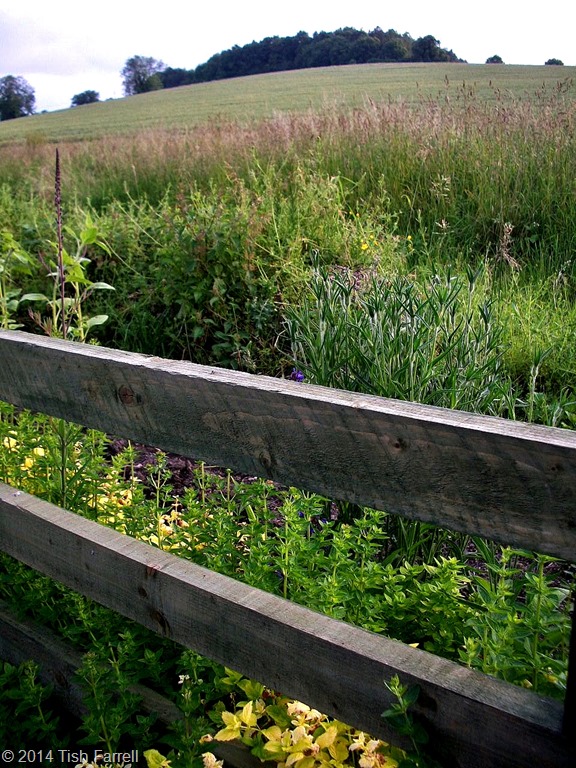
All right, I admit it. The landscape behind our house is perhaps not particularly noteworthy of itself, but the light and sky above it are. The uptilted scarp of Wenlock Edge forms a false horizon, so there is always much weather to watch. It changes every second. One day we saw a fire rainbow which we gather is quite rare.

Ironically, it it perhaps because this view from our house is ever under threat, that makes us look at it and appreciate it all the more. But it makes me angry too. I am not opposed to development, but it should be well planned, and enhance the locality, not cause problems for other people’s homes. There appears to be no mechanism in English planning that can ensure the provision of good quality housing at prices people can afford. Density seems to be the only planning criterion, not  homes with green spaces around them, and places for community orchards and gardens, footpaths and cycle tracks and areas where people of all ages can play. All things that boost wellbeing. You would wonder why it is so hard to do.

It is true that  Much Wenlock people have recently voted to have the Local Authority  accept their Neighbourhood Plan, a community compiled document that reflects our aspirations and plans for the foreseeable future. Our Conservative Party MP, Philip Dunne, tells us the Plan will deliver localism to our door, that is, we will have a say in the kind and scale of development that is proposed for our town and parish, development that will protect landscapes, open spaces and heritage while improving the quality of life for everyone. Whether it will, or not remains to be seen, particularly under a government whose recently sacked Secretary for the Environment apparently allowed for the destruction of ancient woodland as long as developers replanted elsewhere.  Bio-diversity anyone?

Which I suppose brings me back to the quote; “Wheat…fields of wheat…” You can’t get more of a monoculture than that. Hey ho. So many things to unpick. Think I’ll trundle up the path to the allotment and pick raspberries.

copyright 2014 Tish Farrell

Related:

…of Silurian Shores

Old Stones of Wenlock: repurposing the Silurian Sea

In Much Wenlock an Inspector Calls

100_4193

P.S. The quote is from Woody Allen’s Love and Death


Basket case? Tales of bravery and betrayal


100_6059

100_6050

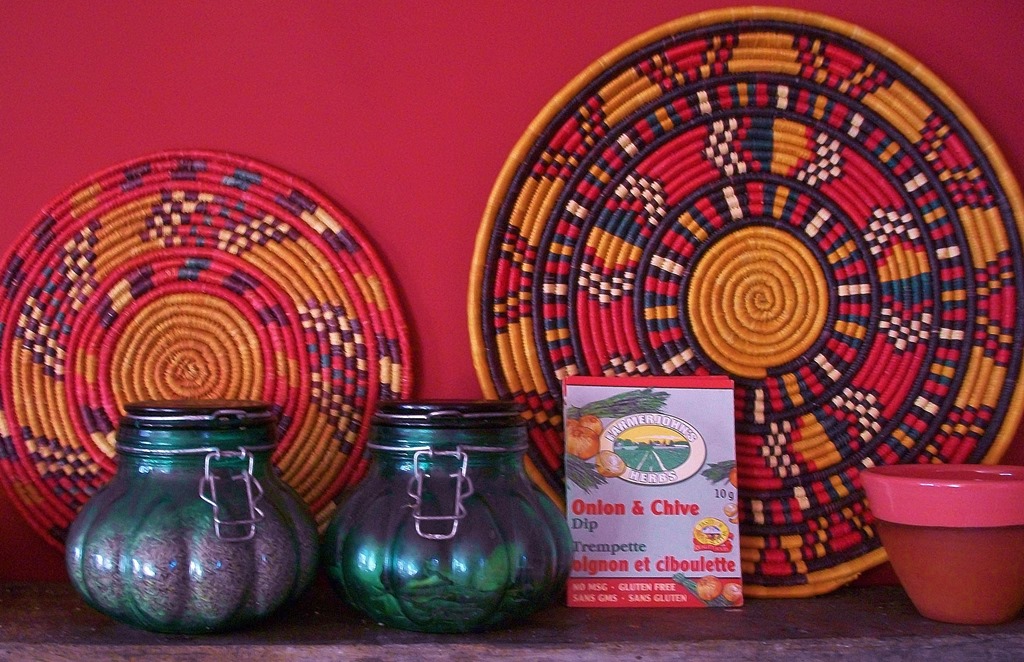
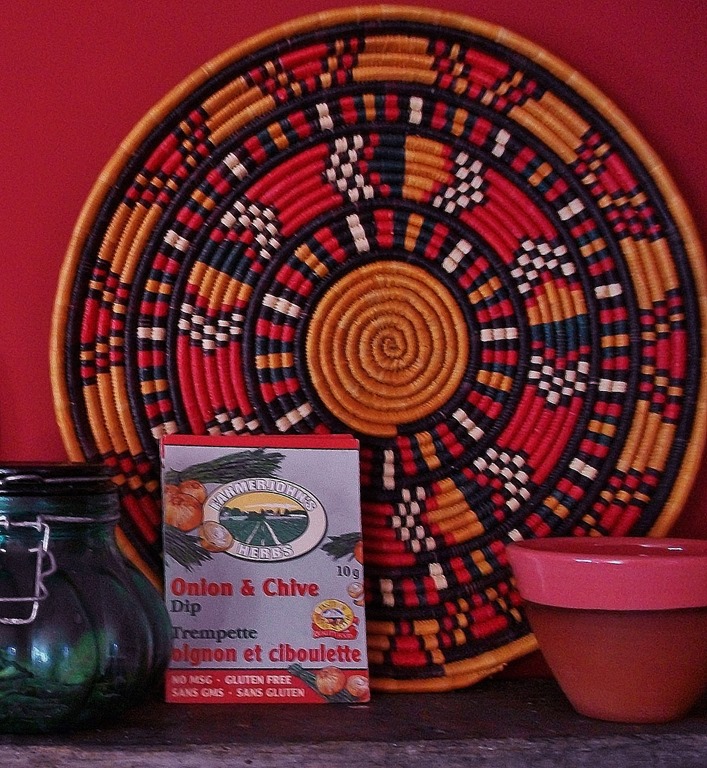
These glorious Nubian mats adorn my kitchen. They decorate our every day, their colours radiating like mini-suns however dull the weather. It is hard to imagine, then, that there is a dark tale behind their creation, a tale of statelessness and discrimination.

The makers of the mats are women from the Nubian community of Kibera, in Nairobi (Kenya). They, their parents and grandparents before them, were born in this quarter of the city suburbs. This has been the case since the early 1900s, when British colonial authorities gazetted an area of land for settlement by Sudanese Nubian soldiers of the British Army, men who had first been recruited during the 1890s when Britain was trying to establish control over the peoples and territories of East Africa.

This next photo thus shows another form of decoration – a Nubian KAR officer’s chest adorned with medals that attest to years of brave service in the cause of the British Empire.

kenyas-nubians-officer-mw19-910[1]

Copyright Kenya Nubian Council of Elders

This photo was taken in 1956, during the British colonial era. The officer is showing his invitation to a garden party at Nairobi’s Government House. The gathering was in honour of the visit to Kenya by HRH Princess Margaret of England (Kenya’s Nubians: Then and Now, Open Society Foundations).

*

The Nubian people (also known in the distant past as Kushites) have a long, long history, their homeland once stretching along the upper reaches of the River Nile in North Sudan and into southern Egypt. Much of their territory was taken in the 1960s for the building of the Aswan Dam by the Egyptians, and this was another cause of displacement. But way back in time, the Nubians were a people to be reckoned with. The earliest evidence of a metropolitan culture  (the Kingdom of Kerma) has a date contemporary with neighbouring Ancient Egypt.  Nubia was the gateway to the African hinterland, and a great trading nexus.

Dr Stuart Tyson Smith (University of California, Santa Barbara) says the Kerma culture evolved out of the Neolithic around 2400 BC. The Kushite rulers of Kerma profited from the trading such luxury goods as gold, ivory, ebony, incense, and even live animals to the Egyptian Pharaohs. By 1650 BC, Kerma had become a densely occupied urban center overseeing a centralized state stretching from at least the 1st Cataract to the 4th, rivaling ancient Egypt. Kerma was sacked in c. 1500 BC, when the entire region was incorporated into the Egyptian New Kingdom empire.” 

The Nubians and Egyptians traded, intermarried and warred with one another over many centuries, the Nubians finally ruling Egypt for half a century during the 25th dynasty (c. 750–655 B.C.E.) And though it may be a big surprise for some people to know this, there were Nubian, black African pharaohs, Nubian pyramids, and a Nubian form of hieroglyphics that were later developed into a 23-letter alphabet (yet to be deciphered). Clearly as time went on, Nubian culture was influenced by Ancient Egypt (though why not the other way around?), yet it also evolved in its own very characteristic ways.

The strikingly tall Nubian pyramids below were built at the time when Britain was a land of Iron Age farmers who lived in thatched round houses and constructed hill forts of earthen banks and ditches.

Sudan_Meroe_Pyramids_30sep2005_2[1]

Fabrizio Demartis Creative Commons

The Nubian Meriotic kingdom developed from the 25th Dynasty when Nubia ruled Ancient Egypt. It is named after its capital Meroë (begun c 800 BCE). Over 255 pyramids belonging to the Meroitic period have so far been discovered.

*

But back to more recent times, and the story behind my lovely mats. In World War 1, Sudanese Nubian forces were deployed in  defence of British-ruled Kenya along the border with  German controlled Tanganyika. This East African campaign was a brutal affair, fought over waterless, disease-ridden bush, as British forces attempted to thwart Count Von Lettow-Vorbeck’s ingenious guerrilla tactics, carried out by other Africans – the Count’s highly trained  askaris from German East Africa (now Tanzania).

The British Army, with a few exceptions late in the war, did not allow the native peoples of Kenya to carry arms at this time, so it was the Nubians who were the main combatants. Kenyans were instead conscripted into the Carrier Corps to transport army provisions since mules and horses could not survive in tsetse infested bush country.  Tens of thousands of young men died of starvation and disease in the British cause, their families often never hearing what had happened to their sons. They simply never returned from the war with Jerimani.

(For a vivid fictional version of this conflict see William Boyd’s An Ice-cream War).

In 1912 the British colonial administration in Nairobi gazetted 4,197 acres near the city for the settlement of Nubian soldiers and their families who could not be repatriated to Sudan. The Nubians called this place Kibra, the forest land.

kenyas-nubians-family-formal-mw19-910[1]

Nubian Family c1940s, photographer unknown. Copyright Kenya Nubian Council of Elders. For more wonderful photos see Kenya’s Nubians: Then and Now, Open Society Foundations

*

By this time, all British East African (Kenyan) tribes had been categorized, and the land they occupied, at the point of British incursion, designated as native reserves. Africans were not allowed to have title deeds to their own and and, in theory, European settlers (who did have title to vast acreages) were not allowed to encroach on the reserves.

The Nubians, however,  were specifically categorized by colonial authorities as ‘Detribalized Natives’, and non-natives of British East Africa. This meant they could not claim any rights to have their land made into a reserve, nor could they build permanent structures on the land.  The community, however, continued to provide further generations of soldiers who would serve in the King’s African Rifles. 

During WW2  Nubian soldiers fought for Britain, alongside other black Kenyan recruits, in Somalia, Abyssinia and in the terrifying war against the Japanese in the jungles of Burma. It is another little remembered  fact that the African troops of the King’s African Rifles played a determining role in the winning of the Burma campaign.

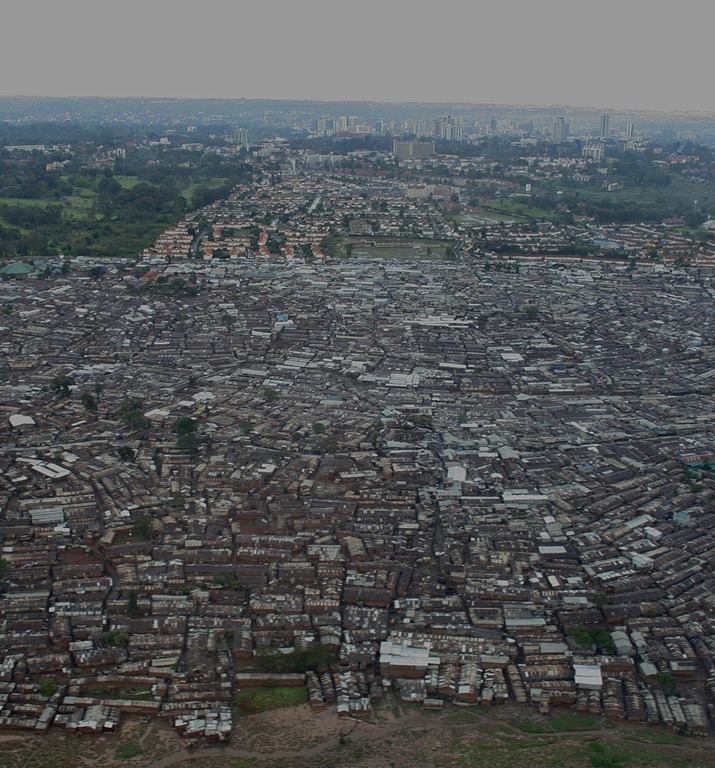
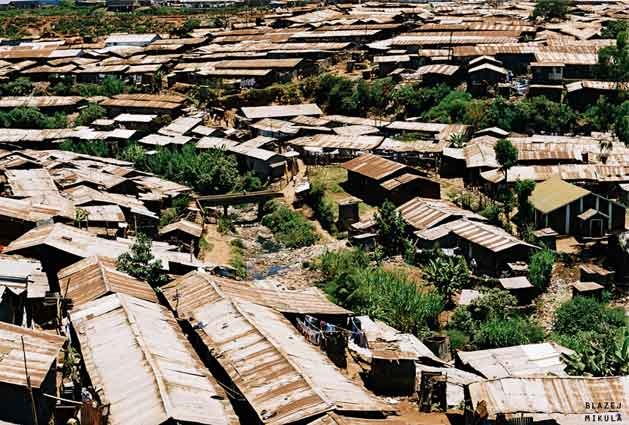
By 1955 the Nubian community of Kibra numbered 3,000. Back then it was an attractive rural village, the houses surrounded by large gardens. But in successive decades as Nairobi grew into a city, hundreds of thousands of rural Kenyans, seeking work, invaded Kibra, putting up  shanty dwellings. Kibera, as it is currently known, is now one of the biggest slums in Africa.

Kibera Schreibkraft cc

A cropped image of Kibera, Nairobi. Photo CC 2014 Schreibkraft

Kibera cc Blazej Mikula

Photo: CC Blazej Mikula

*

During colonial times, Kibra land remained the property of the British Crown. At Independence in 1963, ownership of Crown Land passed to the new government, and so became state-owned land. The new state also inherited an administration that was still largely operating under State of Emergency regulations from the 1950s Mau Mau uprising. Being able to prove  who your tribe was and the associated right to domicile were essential proofs of citizenship. The Nubians’ former colonial categorization denied them on both fronts.

From 1963 until 2009, when the Nubian community in Kenya was finally accorded official existence as a Kenyan tribe, the Nubians of Kibera and elsewhere in Kenya had been stateless. While the colonial generation did have identity cards, the post-independence generations could only acquire them, if at all, with great difficulty, and after many years of persistence.

This meant they could not be formally employed, open bank accounts, acquire title deeds, participate in the affairs of their country of birth, vote, or even leave their own homes safely, since to be caught without an identity card is a criminal offence.  The only opportunities to earn a living were in the informal sector, and for women, this included/still includes making baskets for sale through non-governmental trading operations, and Nairobi’s tourist curio shops. Hopefully now, with official recognition, the fortunes of the Nubian people will change  for the better, but there is still much ground to make up, and in all senses. For more of these people’s story see the excellent short videos below, and also the full length BBC programme about Ancient Nubia at the end.

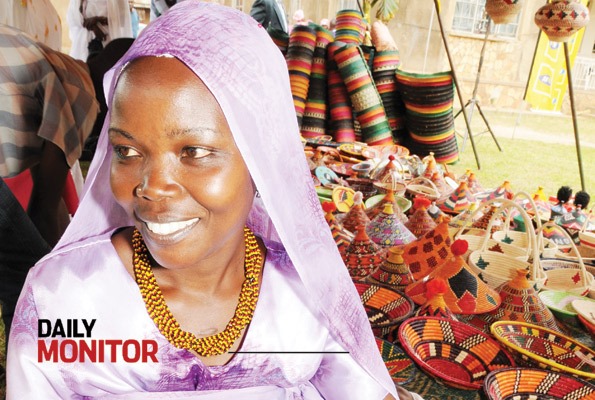
In the meantime, back to the beautiful baskets, and a Nubian woman at work. The method of construction involves coiling lengths of papyrus stems or dried grasses then wrapping them round with coloured and natural palm leaf strips. Truly great works of decorative art, and not only that, but life-enhancingly useful too. Expressions of spirit undaunted despite lives of grave hardship unimaginable to most of us?

A-Nubian-woman[1]

Photo: http://in2eastafrica.net/home-stays-growing-ugandas-tourism/


Flavia Lanyero 2011 Uganda

Article on Nubians of Uganda: Flavia Lanyero 2011 Daily Monitor

*

text copyright 2014 Tish Farrell

Greg Constanine’s video explains the Kenyan Nubian dilemma


This brief film explains the history of Nubian statelessness in Kenya


Recent archaeological discoveries of the ‘lost’ Nubian civilization


Ailsa’s Challenge: Decoration – Go here for more bloggers’ decorative posts

A Long Time Ago in Africa


Scan-130520-0013 (2)

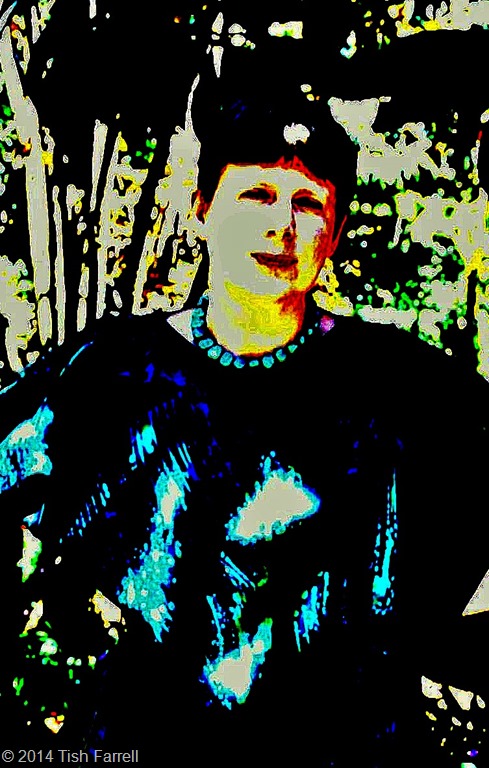
Well this is what happens when you fiddle about in Windows Live Picture Gallery. I rather like the effect – posterized for posterity, an arty rendition of UK expatriate in 1990s Kenya. The original shot is thus pretty old, just like me. I was standing in the back garden of our house in Mbabane Road, in Nairobi’s leafy Lavington district, under the loquat trees. The house is gone now, and I can see from Google Earth that Madison Insurance who owned the compound, have given it over to some development of upscale townhouses. Across the road was  the run-down state primary school. I imagine it is still run down. My days back then had a daily soundtrack of children’s voices – chanting times tables mostly.

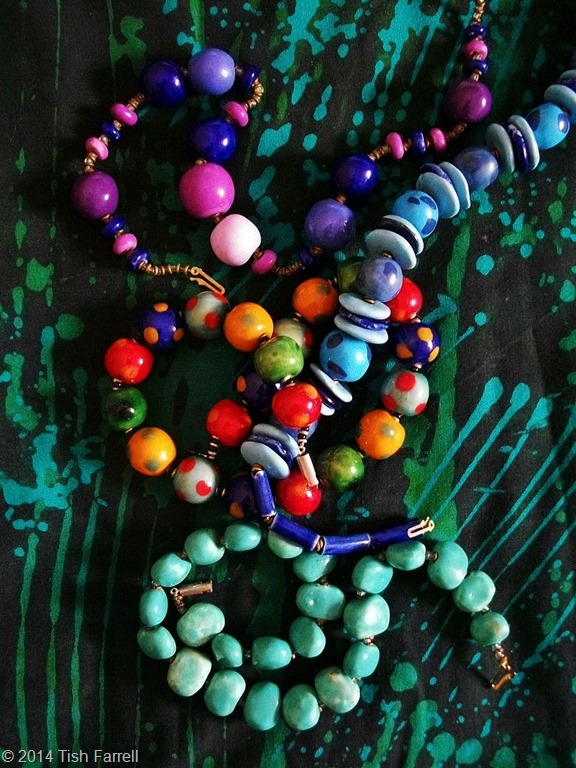
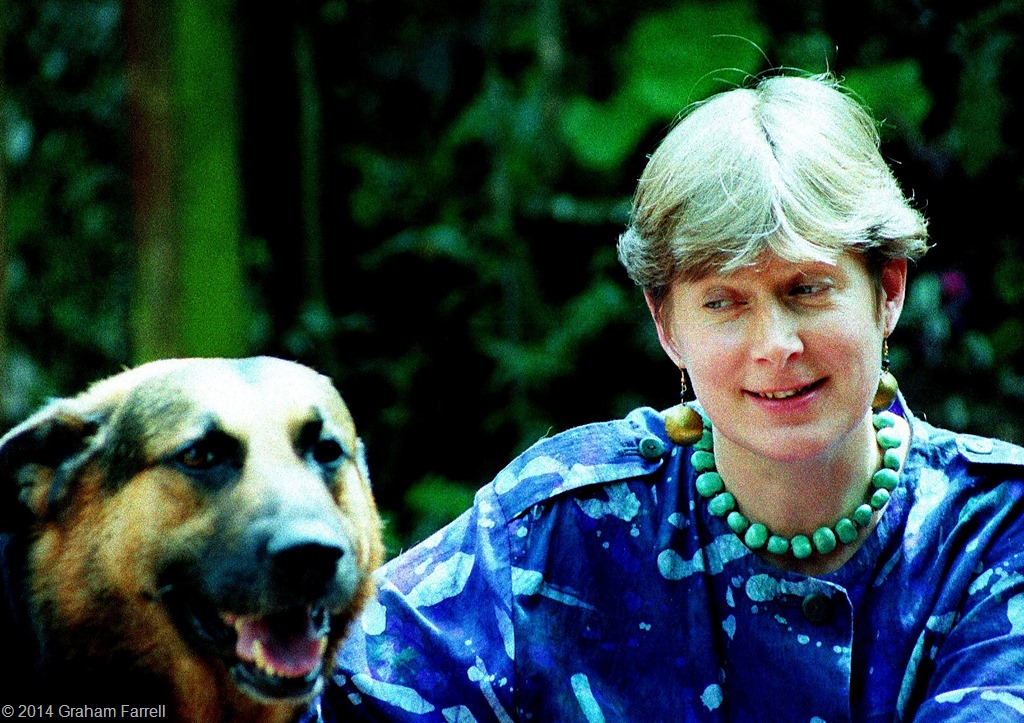
In the photo I’m wearing a self-made suit (tunic and pants) of batik cloth created at a workshop by street boys trying to get their lives together. And I’m wearing a string of Kazuri Beads, glazed ceramic beads, made by women trying build themselves and their kids a future. Kazuri means small and beautiful. The little factory in Karen, Nairobi was a joy to visit. The workshop shelves were lined with glass jars of bright beads, rather like a picture book sweet shop, while at benches in the the airy room, women created beads and threaded necklaces in colour schemes of their choosing. I’m only sorry that I seem to have no photos, but if you go to the link you can see the factory today – much expanded and employing men too.

100_5882

I still have the beads and the suit, and still wear them too, although the batik cloth is a little thin, while I, sadly, am not.

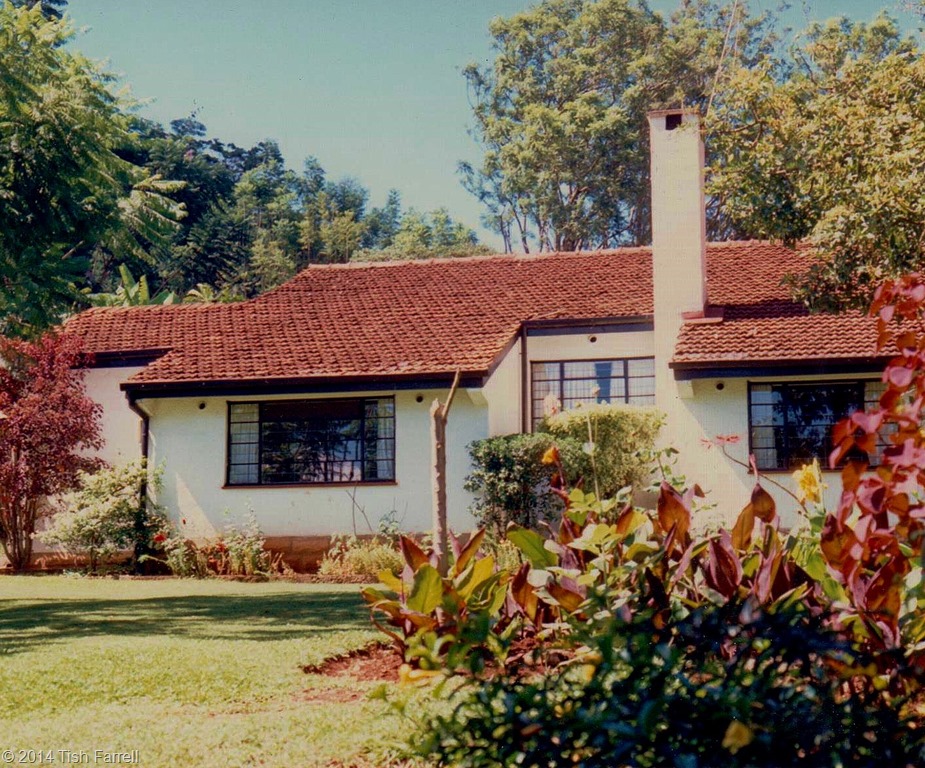
And now here’s a picture of our house – home for seven years.

003 (2)

It came with the usual services that accompany the living quarters of TCOs (Technical Cooperation Officers) working for Her Majesty’s Department for International Development. These included a well secured compound perimeter with lights, a 24/7 security guard, house alarms (checked monthly), internal security gate, barred windows, guard dog, and regular applications of pesticide by Rentokil. Phew. We did not like any of  this much, although we did like Patrick, our day guard, such a tall and gentle man. It was hard to imagine him fending off intruders. He had a farm back home in Western Kenya where his wife stayed in the good stone house he had built for her, along with their three children. He used to go home twice a year to plant or harvest his maize crop.

011

To make up for all the oppressive security, during the day I used to walk around the district on foot, roaming along the avenues. I wasn’t sure what it was I supposed to afraid of, although I did know that people did have their homes broken into, and that expats who insisted on driving large new Land Cruisers were often relieved of them (on their own compounds) by guys with AK47s, and strangely enough, soon after said expats (usually diplomats) had arrived in country and taken possession of the new vehicles via customs and imports at Mombasa port. The word on the street was that these robbers were highly connected. Very highly connected. This situation frequently reminded me of one of my father’s favourite sayings: the fish goes rotten from the head, although one would have been foolish to say this too loudly, or even at all back then.

Farrell Team Leader, Graham, had a works Land Rover for work, but otherwise we drove a battered Suzuki jeep. It had some interesting features. A previous owner had cut a hatch over the back seats, and made a fibre glass lid to go over the top. For game viewing you could simply unclip it. I didn’t drive it much, because that was the really scary thing – Nairobi driving. I often used to ponder if I could get to places by driving on the very wide pavements. Once when I forgot I was in Kenya and slowed at a zebra crossing on a city highway to let a pedestrian cross, the poor woman looked as if she would faint. I was lucky that  the Suzuki and I didn’t get flattened by a Tusker beer truck, while I and the woman stared at one other in a state of frozen confusion, neither of us able to move.

The other thing that used to scare me about driving was that parts used to fall off the Suzuki. G’s nonchalant response to my concern was, ‘Well if you were still going, you obviously did not need it, whatever it was.’

On the whole, then, it was better walking. I could peep through the cracks in the big steel gates that protected ambassadorial and diplomatic residences, and count the excessive number of garbage bags put out for BINS, the private refuse removal company. I’d see street kids and Maasai, greet the security guards who sat out on the neatly trimmed verges and chatted house to house. I was intrigued by the barber who had turned a fallen flame tree into a salon, and  I liked the smells of all the garden trees – cypress, frangipani, the warm musky smell of fever trees. When the rains came the streets would be filled with silvery clouds of termites on their nuptial flight. At dusk, the frogs in the Nairobi River way below our house would strike up frog songs that resounded across the valley. The crescent that adjoined Mbabane Road was called Applecross – a bizarrely English name that evoked pastoral perfection of the sort that had never existed outside colonial settlers’ minds.

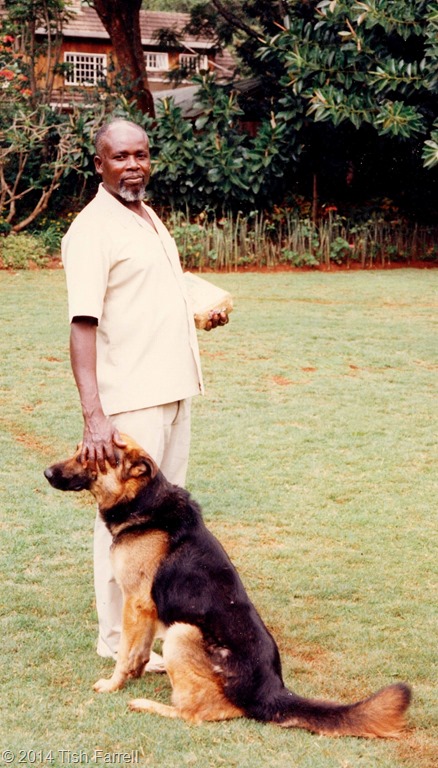
When we took over the house from G’s predecessor we also took on the resident house steward, Sam, whose homeland was in Maragoli in Western Kenya. He had long worked for expatriates, but back home and also on the borders of Nandi he had small farms – three in all. His first wife lived on his ancestral land in what had been the Maragoli tribal reserve in colonial times. He still called it ‘the reserve’. He said he had poor relations on the other smallholdings, but they were not looking after the land properly and this caused him much concern. Apart from home leave, he stayed in Nairobi with his second wife, living in the servants’ quarters at the bottom of the garden. One reason for staying in Nairobi was so his three youngest children and a grandchild who had come to live with him could go to school across the road.

Now meet Sam, with guard dog Kim. We eventually had to hand Kim over to a vet, this after he started attacking children who came to play with Sam’s children on our compound. The vet told us that some German Shepherds were prone to this behaviour, and once begun, this was not a habit that could be broken. She told us she would try to send him to a rescue centre that kept such dogs, but otherwise he must be destroyed.

002 (2)

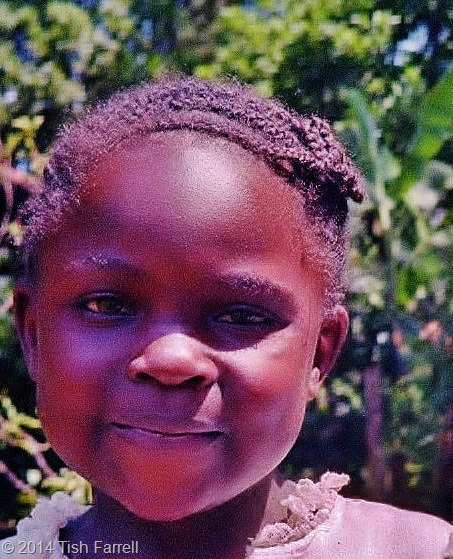
We did not ask which of these had been the outcome, but after having one sweet little girl’s face stitched up at the hospital we could not risk it happening again. Luckily the dog missed the child’s eye and the wound healed well. Here she is then, Sera, fully recovered with only a hint of a scar under the right eye.Zaina and Sera 2

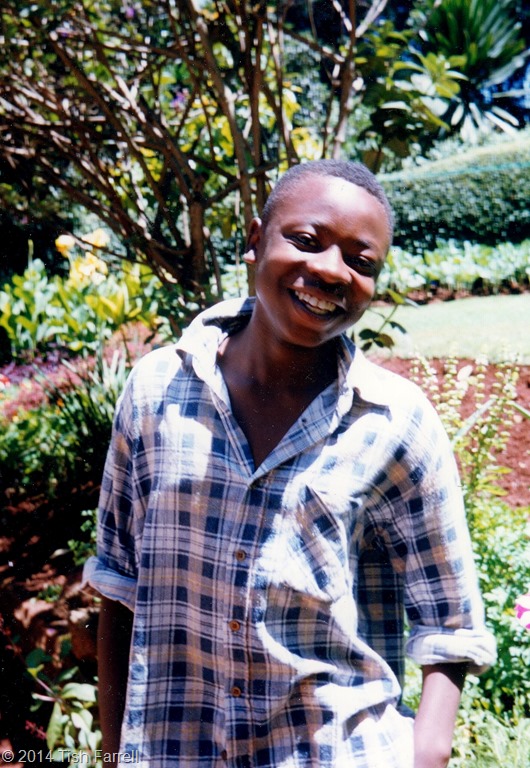
And next comes Silas, Sam’s youngest son.

012 (2)

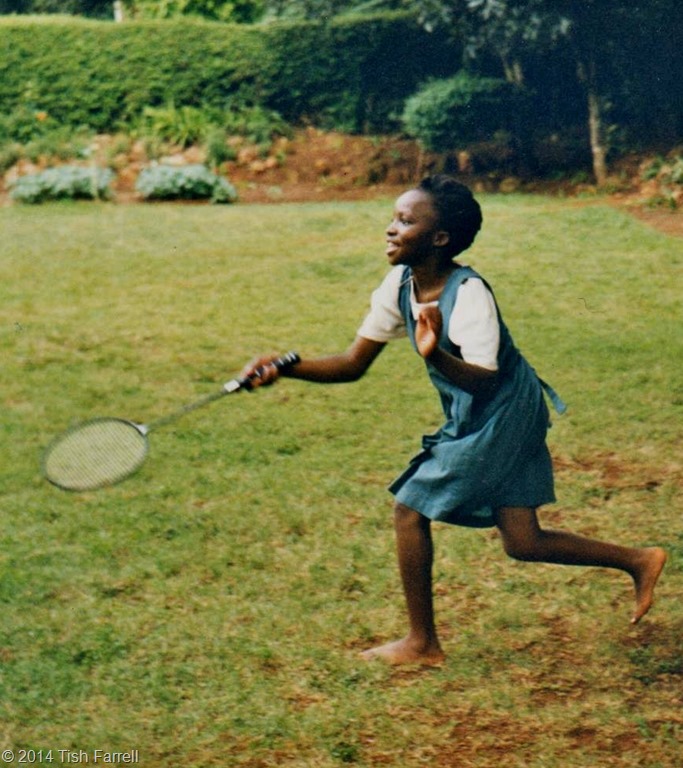
And Sam’s grand daughter, Zaina playing badminton with Silas on the back lawn.

002

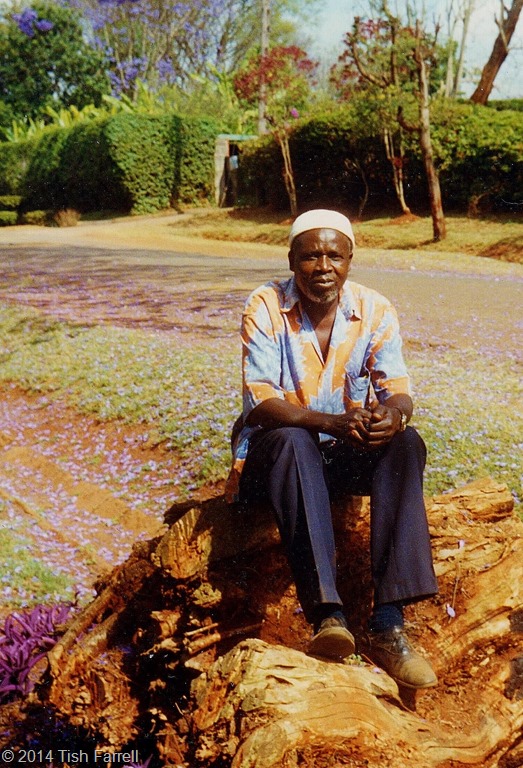
Then Sam off-duty out on Mbabane Road. He only worked half days as we didn’t have enough house work.

010

*

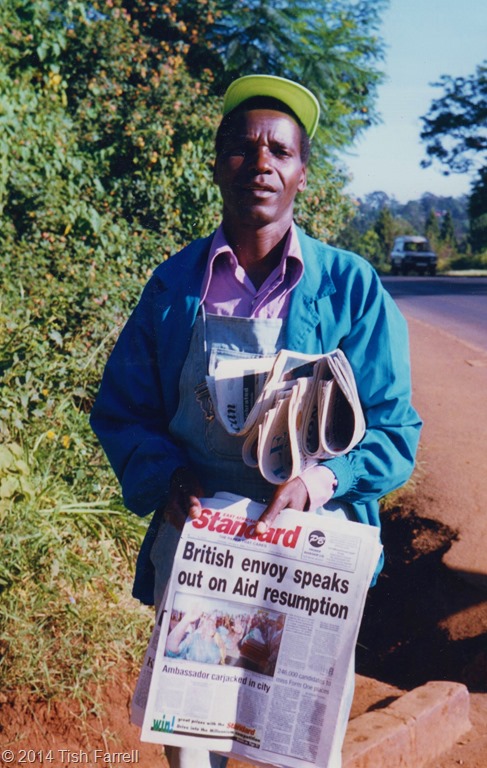
And  this is Francis, who stood every day on the corner of Mbabane and James Gichuru and sold us The Standard and Nation newspapers. He turned the newspaper round deliberately because it was featuring the British envoy, a man somewhat outspoken on Moi regime corruption.

007 (2)

And finally me again, not looking quite so postered  (but oh, so much younger) with poor old Kim, and those Kazuri beads again. Interesting days.

Tish and Kim the dog

copyright 2014 Tish Farrell


Related:

Looking for Smut: Work on Kenya’s Highland Farms

Valentine’s Day Runaway


Flickr Comments ‘A’ words – go here for more bloggers’ ‘A’ tales and photos

Zanzibar: time’s twists and turns


…a gateway to Africa. Through its portals passed not only slaves, spices and ivory, but also missionaries, explorers and conquerors.  

Abdul Sheriff, Professor of History, Dar es Salaam University

Scan-130429-0054

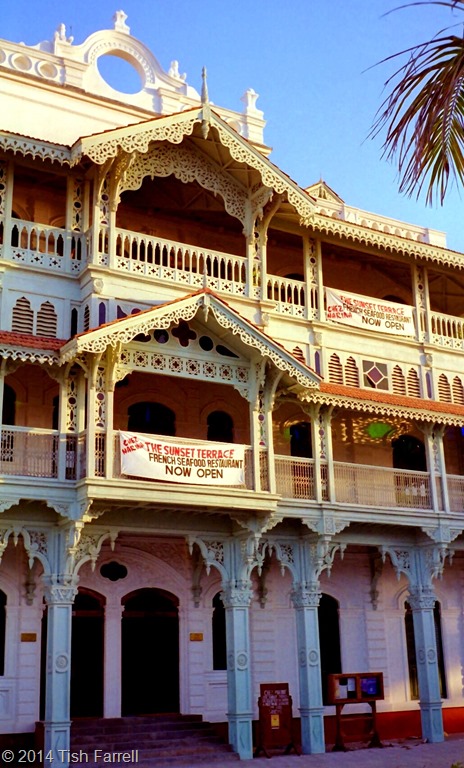
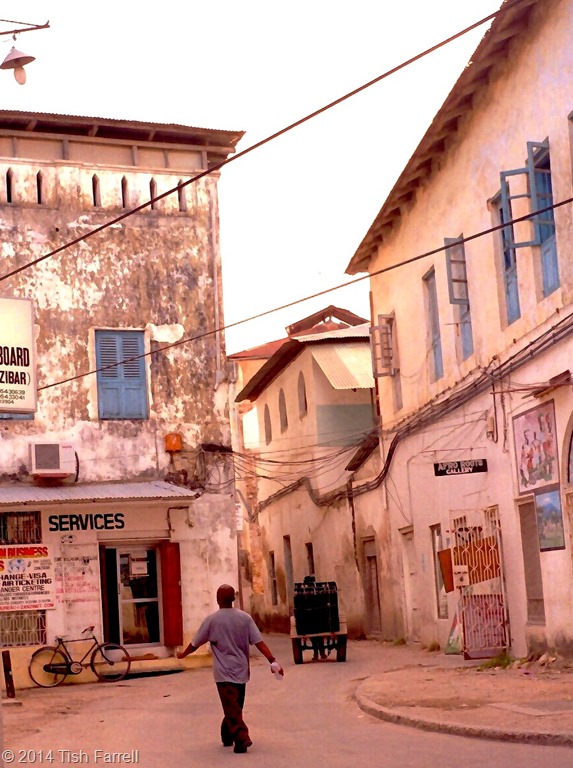
Zanzibar  – it’s all in the name – the Indian Ocean shores where Arab merchants met with African farmers and created a new people: the Swahili. In the Arabic Kilwa chronicles of the Middle Ages, the word Zanj denotes non-Muslim black people, and the word bar means coast, and the term back then referred to much of the East African seaboard – to wherever the dhow traders seasonally put in to haggle with Bantu farmers for ivory, leopard skins, rhino horn, iron, ambergris and mangrove poles.  These, then,  are the shores of the Sindbad (Sendebada) tales, but today the term ‘coast of the blacks’ survives only in the name of the Zanzibar archipelago (Unguja and Pemba Islands), now part of Tanzania.

These days too, Zanzibar Island, more properly known as Unguja, is seen as the heartland of Swahili culture, and the place where the purest form of KiSwahili is spoken. Once, though, there were many other powerful Swahili centres – independent city states that included Manda, Lamu, Malindi and Mombasa in Kenya, and Sofala far to the south in Mozambique. Such states, with stone towns built of coral rag, began evolving from at least the early 800s CE (Manda),  by which time KiSwahili was already a fully developed language, albeit with many regional forms.

100_3629

*

In fact the trade along East Africa had been going on from well before the 9th century. The Periplus of the Erythraean Sea, a Greek account of Indian Ocean trade written around 60 CE, indicates that the people of the kingdoms of Yemen and Arabia already had well established trade routes as far south as Mozambique. The Romans had also been here, doubtless making use – as all the seafarers did – of monsoon winds that in season carried them south down the African coast, or east to India, and then, with the change in the wind,s northwards and homewards to the Gulf.

Scan-130510-0008

*

The earliest traces of a stone town  on Unguja date from the 12th century when merchant princes from Shiraz in Persia settled on the island.  Over successive centuries this settlement  was destroyed twice by the Portuguese (who, after Vasco Da Gama discovered  he could sail round Africa in 1498, seized control of the Indian Ocean trade) and once by the Omani  Arabs whom the Swahili sultans of the Kenya coast called in on several occasions to help rid them of the European tyrants. The Portuguese were ousted from Zanzibar and the Swahili mainland at the close of the 17th century, and thereafter, until the British declared Zanzibar a protectorate in 1890, it was the Omani Arabs who controlled the surviving Swahili states.

Scan-130429-0102

Scan-130429-0095


The Stone Town we see today dates mostly from the nineteenth century when the place was at its most prosperous. Abdul Sheriff describes the scene:

“Zanzibar was then a cosmopolitan metropolis. Its harbour teemed with square-rigged ships from the West and oriental dhows with their lateen sails from many countries in the East, carrying all the colours of the rainbow. Here Yankee merchants from New England drove a hard bargain with Hindu traders in their large crimson turbans or  Khojas in their long coats, exchanging ivory for American cloth; the Marseillais haggled with the Somali for hides and sesame seeds from Benadir; Hamburg entrepreneurs shipped tons of cowrie shells to West Africa, where they served as currency; and Arab caravans rubbed shoulders with their African counterparts from the Mountains of the Moon.”  (The History and Conservation of Zanzibar Stone Town 1995).

Scan-130429-0027

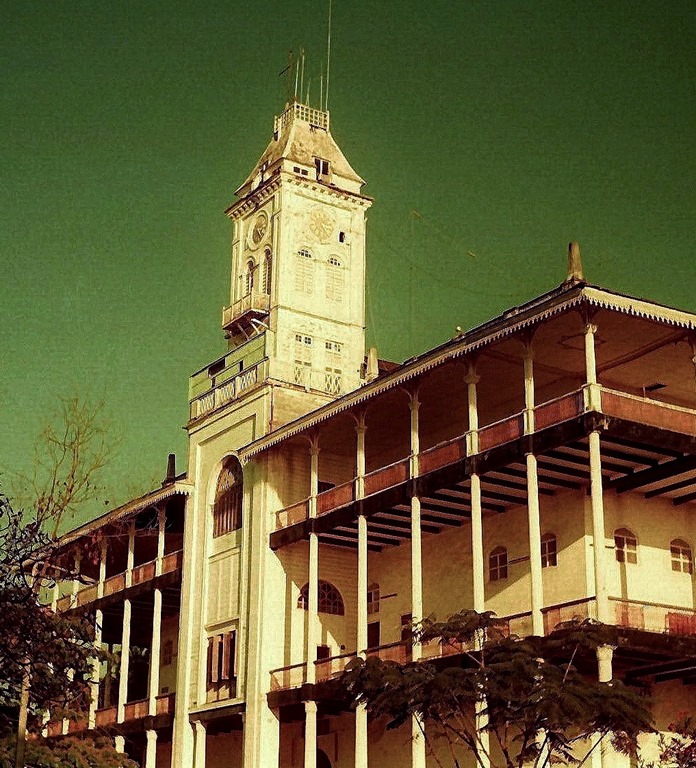
Beit al-Ajaib, The House of Wonders, was built by Sultan Barghash in 1883 to host ceremonial events. He was an extravagant man and, before his death in 1888, built 6 palaces across the island of Unguja. After the 1964 Zanzibar Revolution when the Omanis, along with many Indian residents, were killed or expelled, the building was used as government offices. When we visited in 1999 it was abandoned, but for one of the last sultan’s  cars (candy pink in colour) parked inside the atrium near the front door. A good friend who visited the House of Wonders recently tells me it is still there.

*

Trade was given much impetus in 1830 when the Sultans of Oman moved their capital to Zanzibar to oversee what turned out to the short-lived boom in clove production.  They and other Indian and Arab landowners owned many clove and coconut plantations  on the archipelago, and these were worked by African slaves.

The slave trade, then, was another source of the island’s prosperity. By 1860 the archipelago had some 60,000 slaves, not only working the plantations, but also fulfilling domestic and labouring tasks, and providing new wives for the sultan’s harem. And it is worth noting here that the slaves in Zanzibar were not generally ill treated in the way they were in the Americas; it was not unknown, after long service, for them to inherit their master’s land and property. The children of the harem slaves were also acknowledged by the sultans who fathered them, and treated as royal children with appropriate titles.

During the 19th century it is reckoned that some 50,000 slaves a year were being sold in the Zanzibar slave market. It was only in 1873 that the slaving was abolished, this after much pressure from the British who had first made a treaty with the Sultan Said in 1822 in an  attempt to kerb the trade. That treaty had produced little effect. There was too much demand. The French, in particular, needed slaves for their tropic island plantations.

And to meet the demand the Swahili and Arab slaving expeditions would set off from Zanzibar for the African mainland, taking their caravans of porters along well-walked slave paths through Tabora in Tanzania, and down into Zambia, or travelling up present day Kenya to the Great Lakes regions. The notorious Swahili slaver, and plantation owner, Tipu Tip, roved as far as the Congo , terrorizing villages across the territory.

Scan-130429-0020

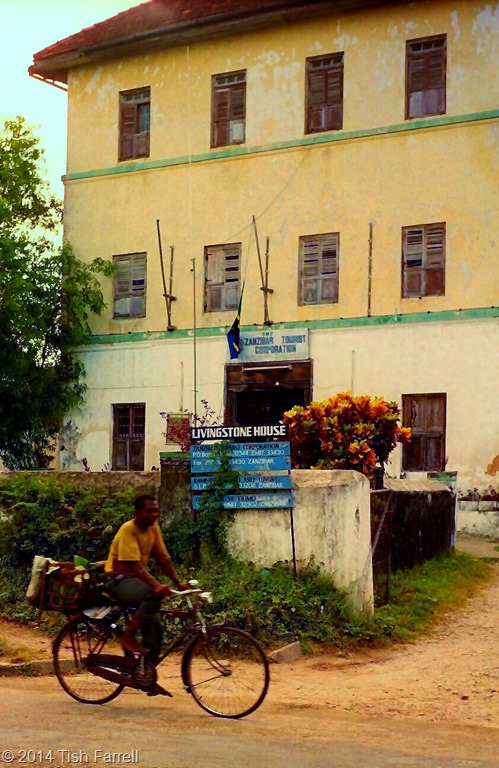
Finding some way to end the trade was one of the motivations that drove the missionary-explorer David Livingstone ever onwards on his gruelling explorations across Africa. It was thought that if the continent was opened up to civilizing Europeans, then the ‘filthy trade’ could be stopped.  But then like the slavers, he and other European explorers (Burton, Speke, Stanley, Cameron, Thomson) started their journeys from Zanzibar. All such travellers, including  missionaries, relied on  the expertise of porters and seasoned safari guides who otherwise worked on the slave caravans.  In 1866, before his last expedition, Livingstone stayed at the house above. It had not long been built by Sultan Majid. Now it is the office of the Zanzibar Tourist Corporation.

001 (2)

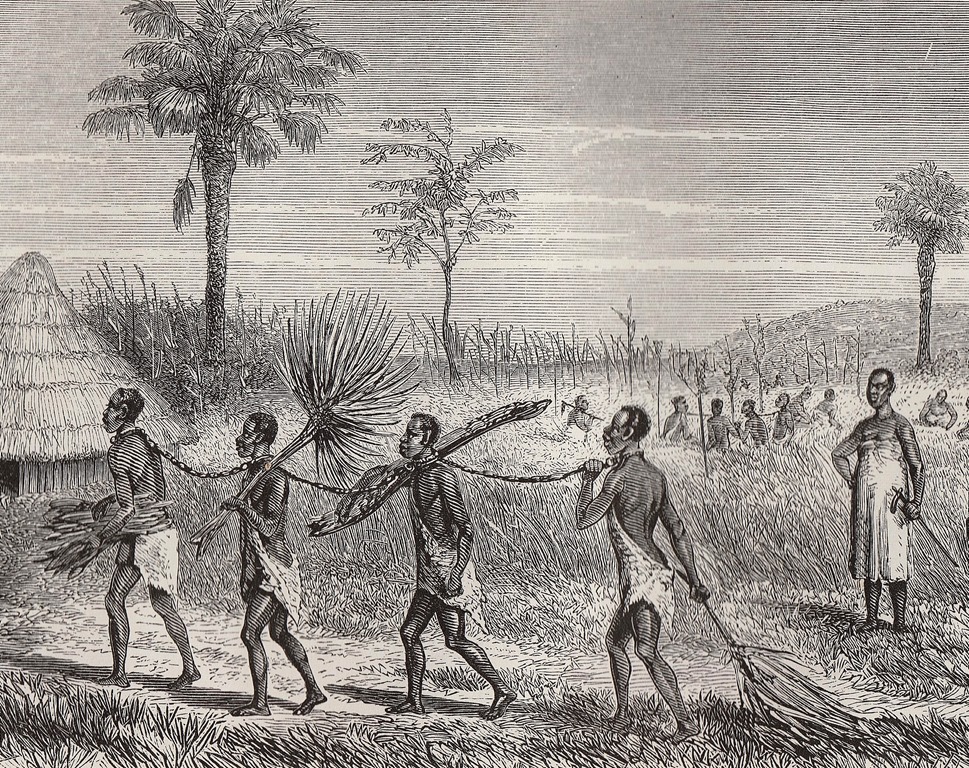
From John Hanning Speke’s Journal of the Discovery of the Nile 1863

*

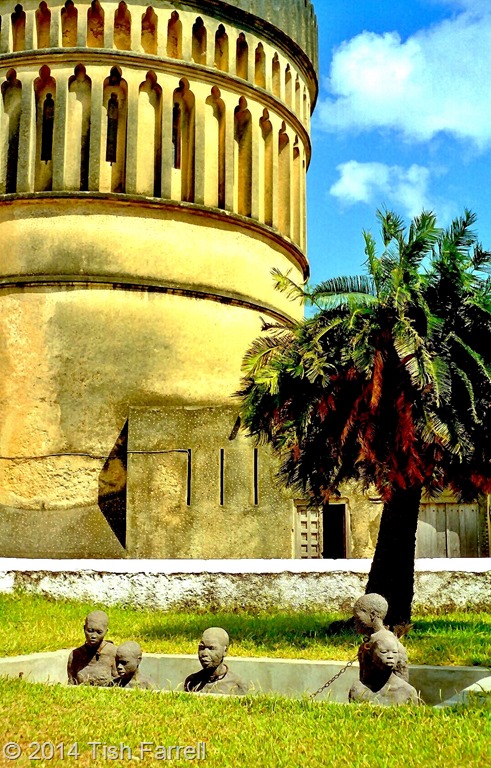
The slaving and ivory  trades worked in tandem. Newly captured slaves were not only driven on forced marches across the continent to the coast, but they were also made to carry supplies, and these included any elephant tusks that the slavers had procured – ivory destined for the production of piano keys and billiard balls for the European market.  It was only in 1897 that all slaves on Zanzibar were given their freedom. The Anglican church stands on the site of the slave market, beside the now famous sculptures commemorating the years of abuse. It is horrifying to consider what the cost of this trade has been for Africa: generation upon generation of  the strongest, brightest and  most  beautiful young people robbed from their communities.

Scan-130429-0005

Naturally the British could congratulate themselves on finally stopping the trade on Zanzibar, although I believe it continued well  into the 2oth century at Lamu. Today, too, slave mongering thrives, and under our very noses in Europe, only now the abused are not necessarily black, so perhaps we don’t think it’s the same thing – the brutal deprivation of liberty and dignity, along with forced labour?

But back to 1890, the end of the Sultans’ control and Britain’s laying claim to Zanzibar. Because now we come to a whole new angle. For this was also the year of the Heligoland-Zanzibar Treaty, an agreement between the Germans and the British, whereby (in return for Heligoland, the strategic North Sea island), the Germans waived rights to Zanzibar, Witu on the mainland coast, and to the territory now known as Kenya across which the British were planning to build the Uganda Railway. (Bismarck apparently called this deal swapping the trousers for a button). 

Suddenly, then, Zanzibar has a very particular purpose for the British Empire. It will become the spring board for the claiming of extensive East African territory, and it will start with that mad, mad railway from Mombasa to Lake Victoria. Of course, with slavery being outlawed, some new mechanism of harnessing native power will need to be thought up. Something civilized and civilizing. I know – we’ll call it colonialism, and enclose indigenous people in their own territory, make reserves of their own homes, which they can’t leave unless they have a pass. Then we’ll introduce hut and poll taxes so forcing them to work for Europeans…

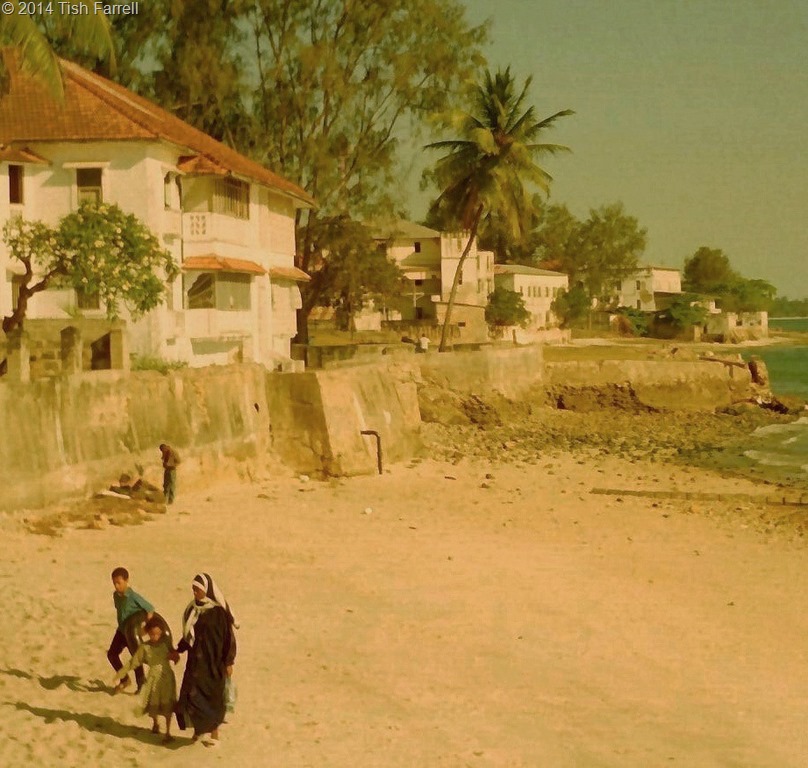
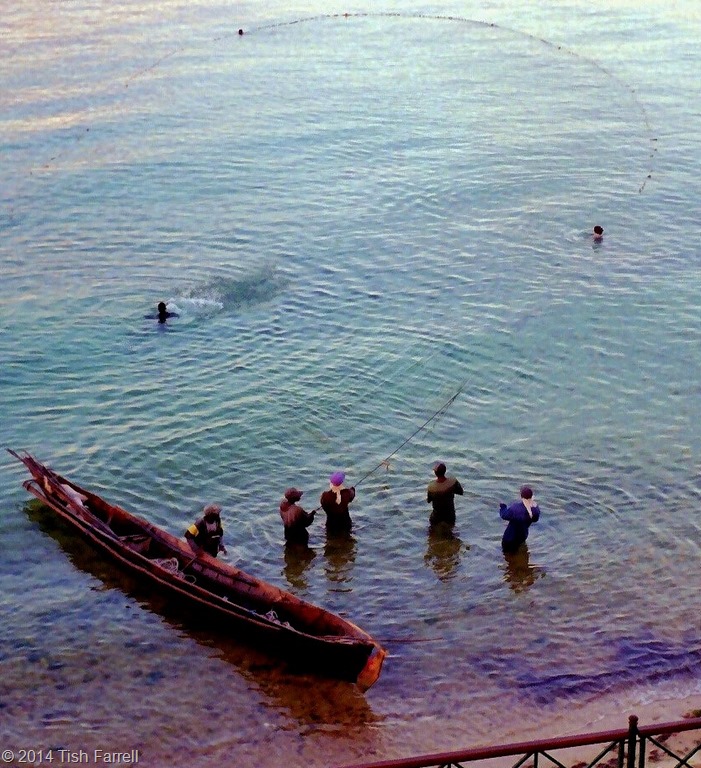
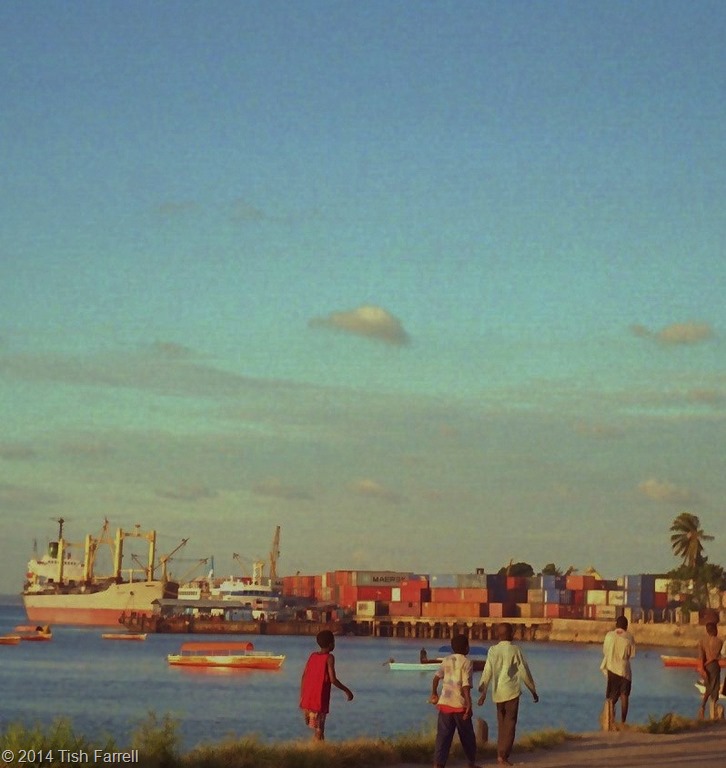
For more of the colonial story go to an earlier post Vulcanicity HERE. In the meantime below are some more soothing views in and around Stone Town, now a World Heritage site. Life is not so grand as it was in the days of the finely robed Omanis. Fishing, ferrying, farming (growing spices, coconuts and vegetables), curio trading, boat building, mangrove pole harvesting and tourism are the main sources of income. As in all African countries, people work hard to educate their children, and this is their number one priority.

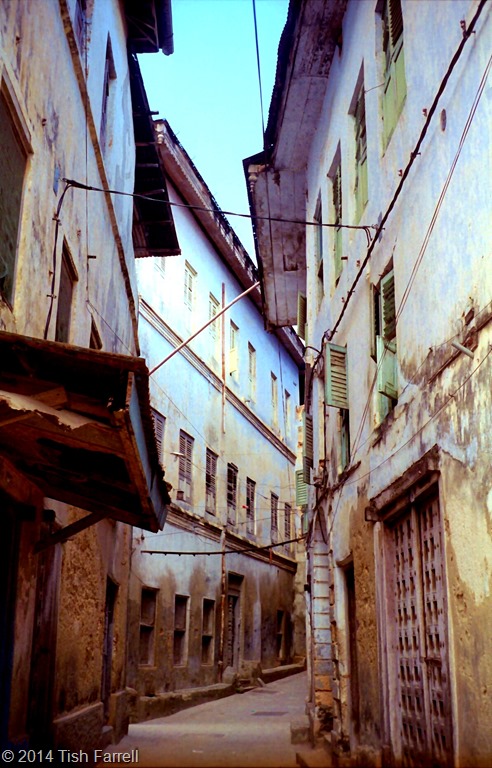
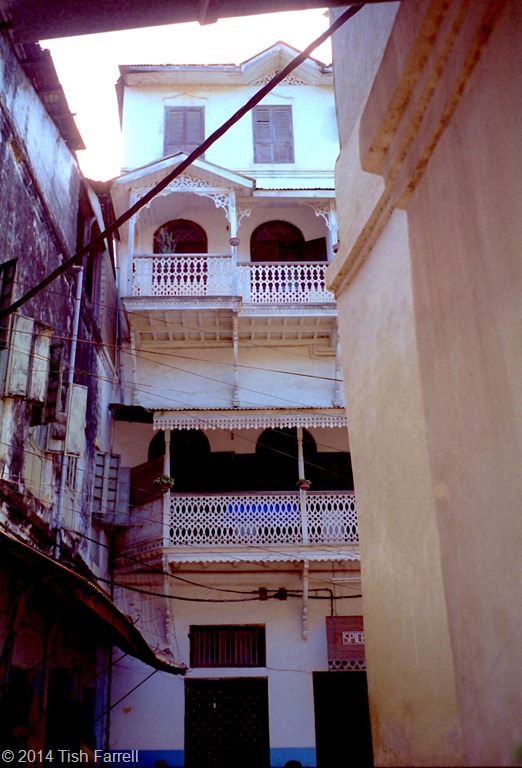
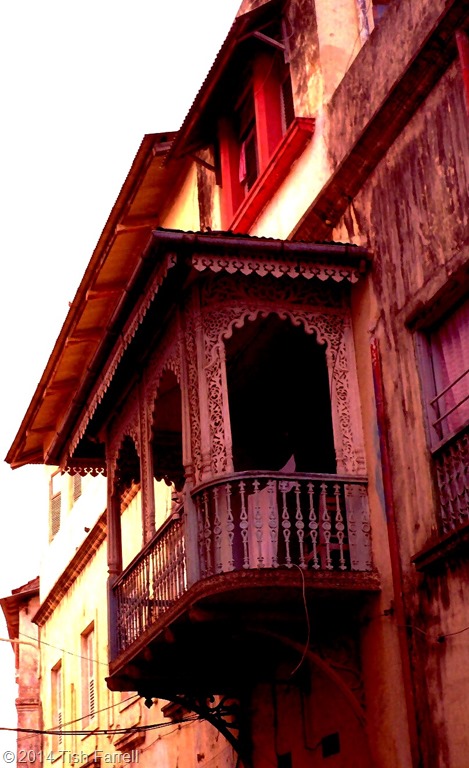
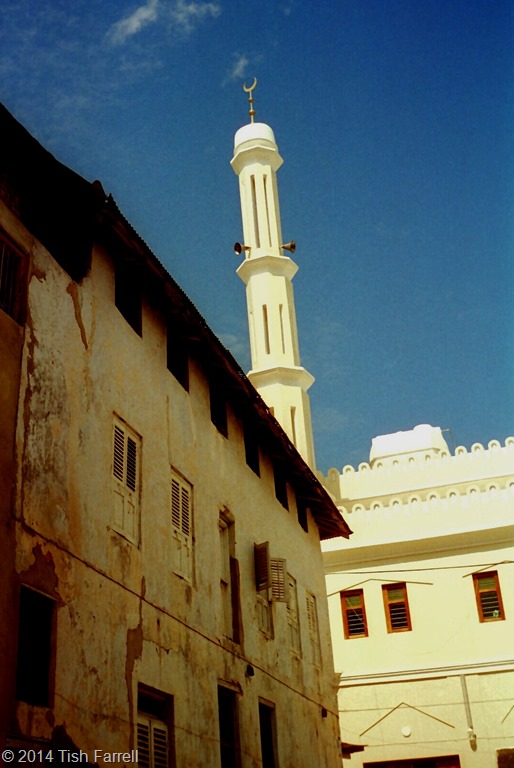
Stone Town is also a devoutly Muslim community, and sometimes this does not sit well with tourist inclinations to behave in ways not considered either respectful or respectable by Zanzibaris. There are over 50 mosques of several different Muslim persuasions, but most are unobtrusive buildings without minarets, and are scarcely noticeable among the domestic dwellings. There is also a Catholic cathedral as well as the Anglican church. The streets are maze-like and shadowy, but we met with nothing but gracious hospitality when we wandered along them.  The place may seem run down (although here and there restoration is in progress), but in the sudden whiffs of jasmine the Sinbad romance lingers on…

(For more about the Swahili see an earlier post HERE.)

Scan-130429-0110

Scan-130429-0129

Scan-130429-0149

Scan-130429-0131

Scan-130429-0046

Scan-130510-0002

Scan-130429-0123

Scan-130429-0081

Scan-130429-0122


AILSA’S TRAVEL CHALLENGE: TWIST

FLICKR COMMENTS TAGGED ‘Z’

copyright 2014 Tish Farrell


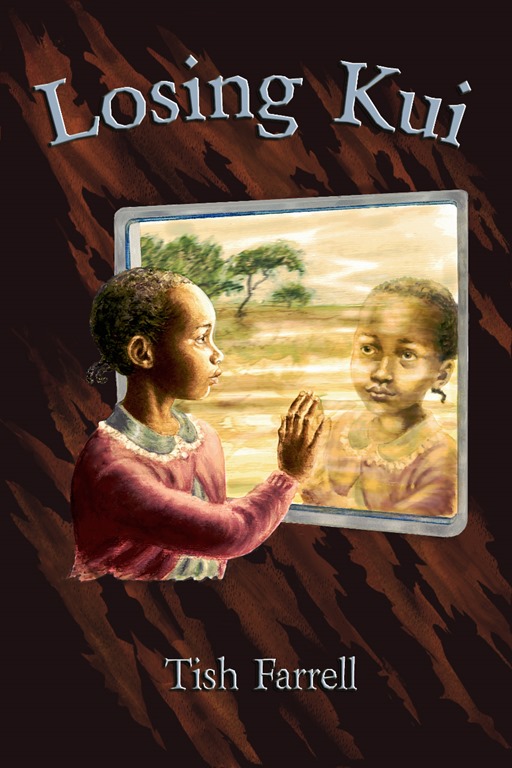
Unveiling ‘Losing Kui’: the story of the story, or how writers need good editors

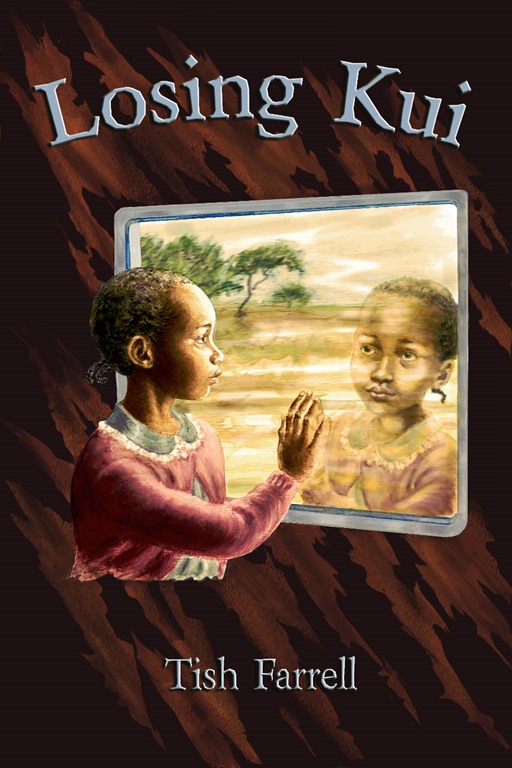
Losing Kui -Final

Cover: Kathleen Collins Howell

YOU CAN READ AN EXTRACT HERE

*


I am trusting that this is the final version of this novella. But then with stories you never do know. It’s  both the pleasure and the pain of e-publishing: you can tinker with your text until the end of time, re-posting the updated versions. I anyway have a tendency to re-make earlier works: putting them into new forms, re-shaping them for different audiences and purposes.  With this story, though, only length and title have changed, oh yes, and  in this final version I have started at a different point from two earlier versions.

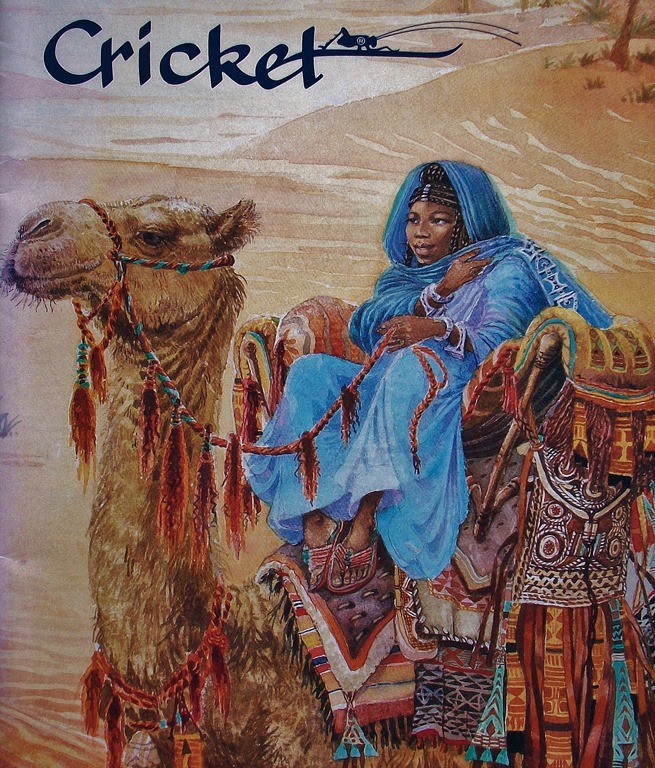
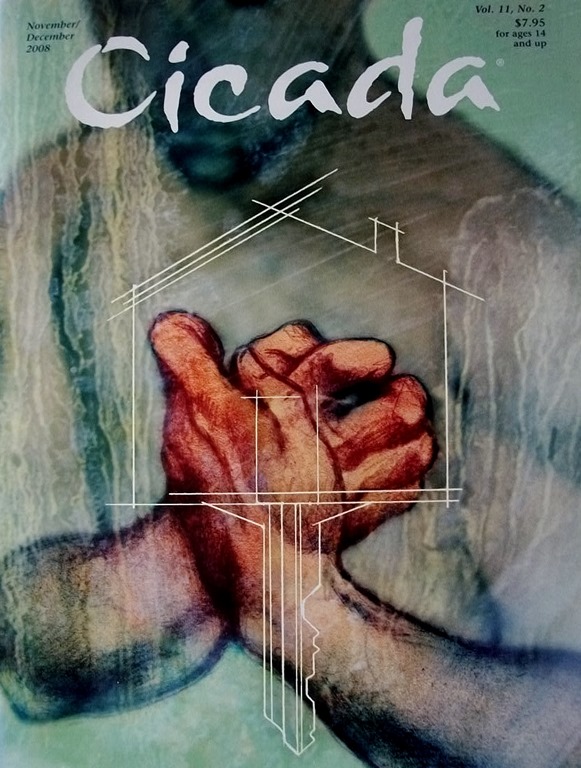
The first published version came out in 2008, in the  Nov/Dec issue of Cicada, a US literary magazine for teens to adults. The title then was El Nino and the Bomb. For those of you writers who do not know  about Carus Publishing/Cricket Magazine Group (founded by Marianne Carus in 1973 and “won more awards than any other children’s publisher”) you can find out more HERE. If you are learning your craft as a writer or illustrator, and have an interest in children’s and teen publishing, then you can learn a lot from these magazines. The general ethos is multicultural, and each  title – Babybug, Ladybug, Spider, Cricket, Cicada caters for a specific age group, thus nurturing a life-time’s habit of good reading.

100_3668

Cricket Feb 2001 vol 28 no 6;  Art: Ann Strugnell

*

Cicada have published a number of my short stories over the years, works that started off as 5,000-word entries for adult short story competitions. This was how Losing Kui began, although back in the early 2000s the title was Material Days. In this form it was short-listed in  Carve Magazine’s Raymond Carver Short Story  Contest. The then editor, Melvin Sterne, sent me a very sweet email, saying he was sorry that it did not make it to that year’s anthology. 

I still like the Material Days title, although it perhaps means more to me that to anyone else. When I was living in Kenya it was a phrase I read often in newspaper crime reports. At the time it chimed with my sense of indignation at the then government: the way it abused its people, and the poverty it so wilfully inflicted upon them.

And so, spurred on by Melvin Sterne’s email, and still nursing that sense of indignation over the state of things in East Africa (a situation that Great Britain and other donor nations have long had a hand in), I began an expanded version of the story with the idea of submitting it for Cicada’s novella slot. They accepted it too, although there was a wait of several years before it was actually published. In that long interval I was fortunate to work with Cicada’s then Senior Editor, Tracy C  Schoenle, and Executive Editor, Deborah Vetter. I learned a lot from their thoughtful and  respectful editing.

100_5686

Cicada Nov/Dec 2008 vol 11 no: 2.  Art: Home by Eamonn Donnelly

*

But there was a bigger lesson in store than seeing how best to trim excess words, or make meaning sharper. It was Marianne Carus, Editor in Chief, who was responsible for a major change in the story. She suggested, very delicately, that I had left the protagonist  Kui in too bleak a place and wondered if I might consider a more positive ending. At first I huffed to myself: I liked my ending. But then once I was over my fit of writer’s pique, I knew she was right. The last third of the story was thus written in response to Ms Carus’s comment. I remember it flowed out at some speed, as if my subconscious had also known that I had not finished the story. 

Time of course had passed by then, and I wasn’t quite so angry. Instead of hopelessness (relieved by elements of dark comedy) I saw possibilities for redemption; my characters began to take charge of their lives, and rise above their misfortunes. And that was the moment when I truly understood just how much writers can learn if they have the chance to work with a good editor.

More recently when I was working on cover ideas with my good friend, and illustrator Kathleen Collins Howell (Associate Professor of Art, Emeritus SUNY at Buffalo), I also began to see the story in quite a new way. I suddenly understood that the lost child Kui represents something far bigger than her own self. She is far from home, frightened and abused and yet…and yet…

Here’s the blurb:

Things are going from bad to worse in Ingigi village. No one knows why five-year old Kui has gone missing. Nor does Sergeant Njau want to find out. He has his own problems, pressing matters that are far from legal. Then there is the endless rain. Will it never stop? Some Ingigi folk think it means the end of the world. Old man, Winston Kiarie, has other ideas. He senses some man-made disaster, and when it happens, it is worse than his worst imaginings. The fierce storms are causing landslides and throwing up British bombs, unexploded for forty years. Their discovery is giving the Assistant Chief ideas: how to make himself very rich. And then there’s young Joseph Maina and the primary school drop-outs thinking they have found treasure, and about to do something very, very foolish. Meanwhile, is anyone looking for Kui?

Losing Kui -Final

READ AN EXTRACT HERE

Losing Kui by Tish Farrell

Out on Amazon Kindle

Available also on ePub Bud for Nook, iPod/iPhone etc HERE 

Frizz’s tagged ‘U’ for more bloggers’ stories

Taking the slow road ~ tarrying not typing(#mywritingprocess)

Scan-130703-0009

On the road at #mywritingprocess with thanks to Tiny at tinylessonsblog.com

*

As others on this writerly blog tour have said, some writers are the bees’ knees at doing anything but write. I would be one of them. When the time comes to sit down at the desk there is the sudden compulsion to go somewhere else – anywhere else. This morning I left the computer to scrub the grout between the bathroom tiles. (So absorbing). Later I mooned over pots of recently sown runner beans, and what? Waited for them to grow? Of course. No writing skills needed in Beanstalk Land, only nifty footwork to elude man-eating giants. (Hm. And I could pick up a golden harp while I was there; learn to play, might inspire me to…) You get the picture.

So what is this doing something else all about? OCDD – obsessive compulsive displacement disorder? Why do we put ourselves through this? It was the first question I asked myself when Helen Kuusela aka Tiny at www.tinylessonsblog.com invited me to join this blog tour. I was so busy asking it, I forgot to thank her. So thank you again, Tiny, and hello to everyone on this fascinating writing safari. I forgive you, one and serially, for putting me on the spot.

As to the OCDD, I have a theory, one based on extensive personal observation. When procrastination sets in, and especially after an early full-of-promise burst, your inner truth-teller is trying to make contact with your writing brain. Something is not quite adding up. This is the moment for some pointed self-examination: are you writing yourself into a dead end? Have you started in the right place? Do the voice/situation/setting ring true? Is your plot/concept/premise sound, and does it truly have sufficient substance and energy to become the story/novel/poem you envisaged? Are you writing from within, or only from the surface?

These can be very painful questions and, rather than rolling them around your mind, I find asking them outright and OUT LOUD has better results. The inner truth-teller seems to respond better to vocalized interrogation. Also, the process of outlining the work to an audience, and by that I mean a willing listener who does not interrupt, can reveal both the intrinsic problems and the possible solutions. As you talk, the remedies to stuckness will likely pop out of your mouth. Listen out for them. A passive listening post is thus an essential aid. Your dog, cat or canary would be a good choice. Successful children’s writer, Michael Morpurgo, says he first outlines his stories to his sheep. And as I write this, I’m thinking that a Dictaphone could be a good idea too. If anyone has other notions on this, please tell me.

And now for THE questions:

1) What am I working on right now? In my head, filing cabinets and paper piles I have many works in various stages of creation: picture book scripts, teen novels, a grandiose scheme (possibly two novels for adults) set in colonial East Africa. This last project I’ve been working on for several years – stalled at various points by doubt; then by the annoying tick that says I need to do more research. (This can be another OCDD trap, so it’s wise to keep checking). I am heartened, though, when I hear writers such as Barbara Kingsolver say that it took her nearly thirty years to acquire the wisdom to write the magnificent Poisonwood Bible, or that Tolkein found himself stuck in the Mines of Moria for a whole year, wondering how to write his way out. Such admissions remind me (once I have checked back with myself AGAIN) that the time it takes to finish a piece of work, is the time it takes to finish it. Not everyone can write a book a year. And now I think of it, I’m sure I read  that the marvellous short story writer, Alice Munro, takes eighteen months to write a single story. And when you read her, you know why. She distils whole novels into her short form.

For now, I’m recycling my ‘back catalogue’ of published short stories, creating new editions as Kindle e-books. I have just kindled Losing Kui, a novella originally published by Cicada Magazine in the U.S. a few years ago. On one level it is a tragi-comedic view of everyday life in a fictitious East African country during the late ‘90s. On another, you might call it an allegory, but I leave it to readers to decide what I mean by that.

2) How does my work differ from others of its genre? I am truly not a fan of categories, although I know marketing persons insist on them. What matters to me as a reader and writer is a well-crafted story, whether it is a 300-word picture book, Hilary Mantel’s Booker winning Wolf Hall or a Lee Child thriller. Most of my published work comprises short stories/novellas that are accessible to both adults and teens, and so I suppose you could call them crossover literature. Books for young people are anyway not so hide-bound, and may combine several so-called genres: real-life and historical narrative inter-threading with fantasy/magic realism. I find myself increasingly attracted to this combination.

3) Why do I write what I do? I had always meant to be a writer, but it was only when I went to live in Africa during the 1990s that I found a REASON to become one. In Kenya I was confronted with big landscapes and big human issues in which my own country had long played a questionable part. Suddenly I had a viewpoint and a focus and a territory. I was incensed too, by the wholesale imposition of western ‘values’ that left young Africans thinking it uncivilised that their forebears lived in mud and thatch homes. That’s one of the things that spurred me to write contemporary fiction for African young people. See (Latest books).

Some 14 years after returning to the UK, I’m still teasing out stories begun in Africa. I keep meaning to head for other lands, and one of my Ransom quick-reads for teens, Stone Robbers, is set in Guatemala. I suppose I am driven by the desire to tell stories about people who do not have a voice in the wider world, or who live in ways that are fast disappearing. In the margins between tradition and consumer modernity there are the kinds of drama and conflict that every story needs to make it work.

4) How does my writing process work? My people always arrive first. Even if I can’t clearly visualise them, I have a strong sense of them and their particular dilemma. After nearly 20 years of writing I have amassed quite a crowd, all waiting for their stories to happen/move on/finish. To discover what their stories may be, I always do a lot of research – too much probably. But without fail, the ‘what happens’ always emerges from this reading. In that sense, I do not make things up. How the works come together thereafter depends on finding some sort of imperative. This could be a writing competition deadline, or a publisher’s call for a certain kind of work. As Tiny says in her post, you do need deadlines. And perhaps, to come full circle, a lot of writer’s OCDD is also down to not knowing who will want to read/publish the work once it is done. While it remains unfinished, both failure and success are forever postponed. Keeping to your chosen path is hard to do, and I’ve written more on this HERE. But now please meet Celestine Nudana from Ghana, West Africa. clip_image002 She will be heading out on the next leg of  the #mywritingprocess tour (26 May).  She has been blogging at Reading Pleasure since 2012: http://readinpleasure.wordpress.com/  and believe me it is always a pleasure to visit her there. 

Celestine is Senior Assistant Registrar at the University of Professional Studies, Accra, Ghana. She is married and has three boys. She attended the University of Ghana, Legon, where she read English and Theatre Arts, majoring in play writing. She also has a Masters in International Affairs. As well as being a passionate reader and book reviewer, she has also developed a special talent for writing haiku, although she says she is still at the learning stage. Even so, her work has been included in two recent anthologies: Western Haiku: A Collection, and Ballads, bothproduced by Dagda Publishing UK, an  independent publisher who aims to show-case the freshest poetry and literature by new writers from around the world. The works are available as e-books. She has also had her flash fiction published in1 Photo 50 Authors 100 Words edited by Madison Woods.

She says of herself, “I am a romantic at heart, and love a good romance story, though I shy away from erotica. Almost all my poems focus on love, or aspects of it.” Celestine has written romantic fiction for serialization in several Ghanaian newspapers, and deployed her play writing skills to produce radio serial dramas that deal with topics including child health and female sexual reproductive health. So here is a woman who writes on many fronts. I’m looking forward to hearing what she has to say about her writing life.

*

Now here is my second writer introduction. She was a bit held up, so this is a last minute addition. I’ll let her speak for herself:


Hello! My name is Vashti Quiroz-Vega. I’m a writer of Suspense, Fantasy and Horror. I also enjoy mixing in some Humour and Romance into my stories. From the time I was a young kid, writing has been my passion. I’ve always been a writer; I just didn’t know it until  much later. For me, it is easier to express my thoughts on paper than with the spoken word. I enjoy making people feel an array of emotions with my writing. I like my audience to laugh one moment, cry the next and clench their jaws after that. My love of animals and nature are often incorporated in my stories. You’ll read intriguing things about various animals, nature and natural disasters commingled with my character-driven novels. I love to read almost as much as I love to write. Some of my favourite authors are Stephen King, M. Night Shyamalan, Michael Crichton, Anne Rice, J. R. R. Tolkein, J. K. Rowling and Dan Brown.

Vashti's Web Photo (361x640)

http://vashtiqvega.wordpress.com

 *

RELATED POSTS:

This fiction writer’s path: five things learned along the way

Writing tips: Knowing your place

Errant muse? There’s still life at the allotment

TO SEE OTHER WRITERS’ POSTS IN THIS TOUR, GO TO THE READER AND USE THE SEARCH TAG: #mywritingprocess

On watch at Elmenteita–the lake that blows away

003 - Copy

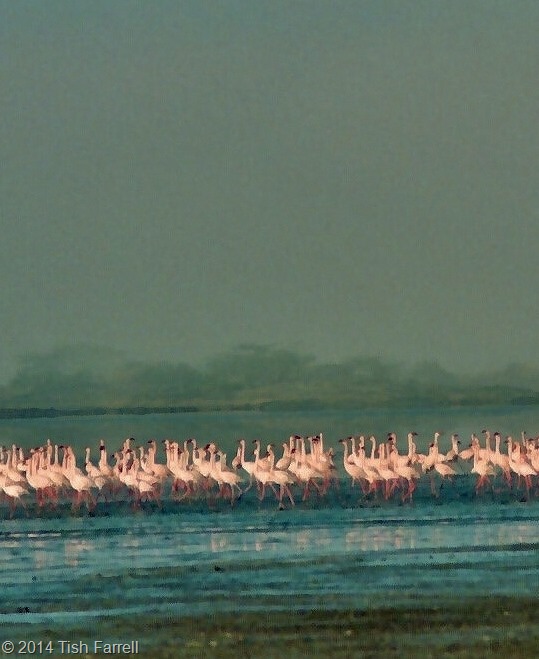
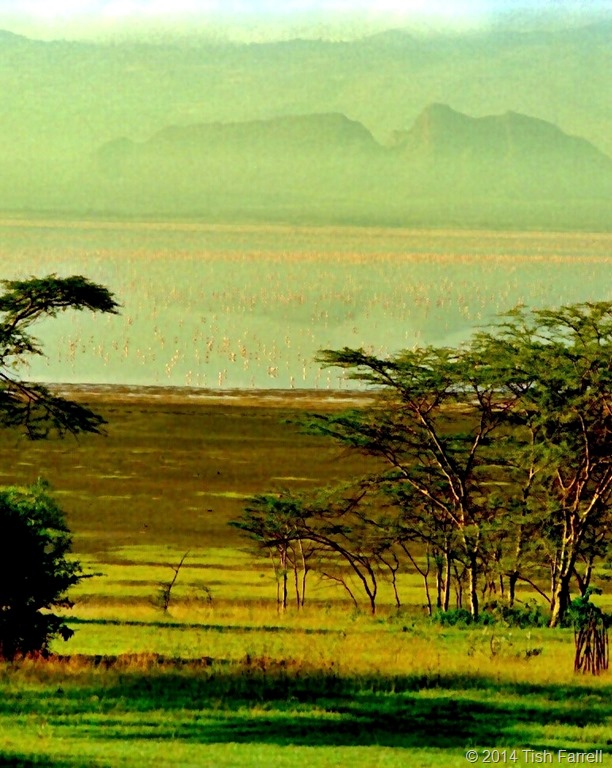
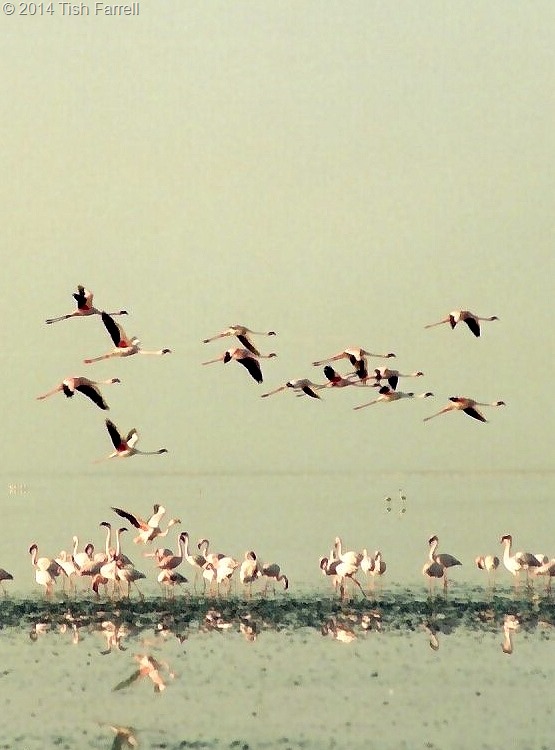
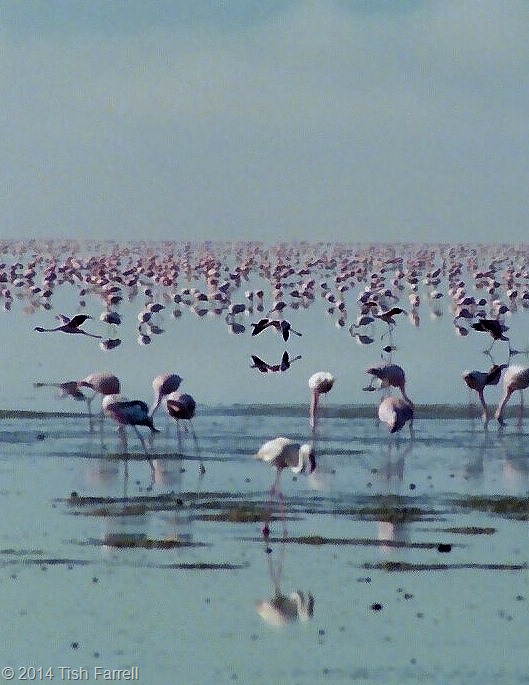
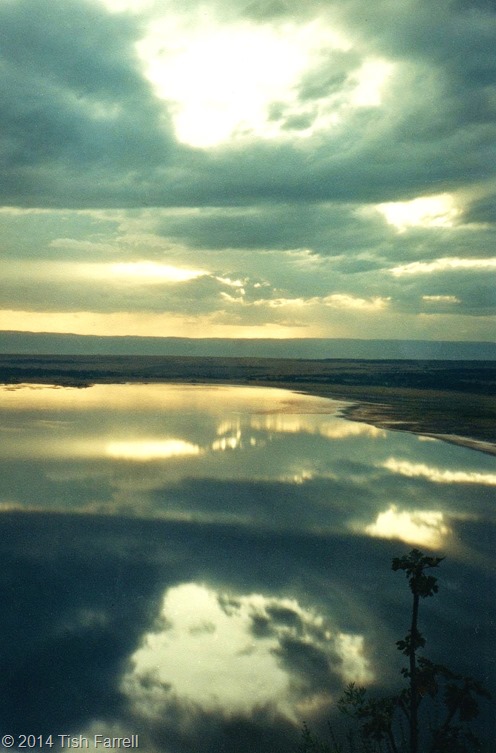
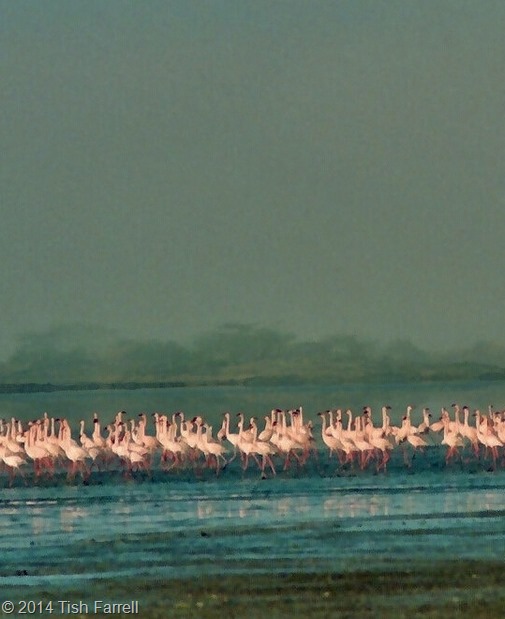
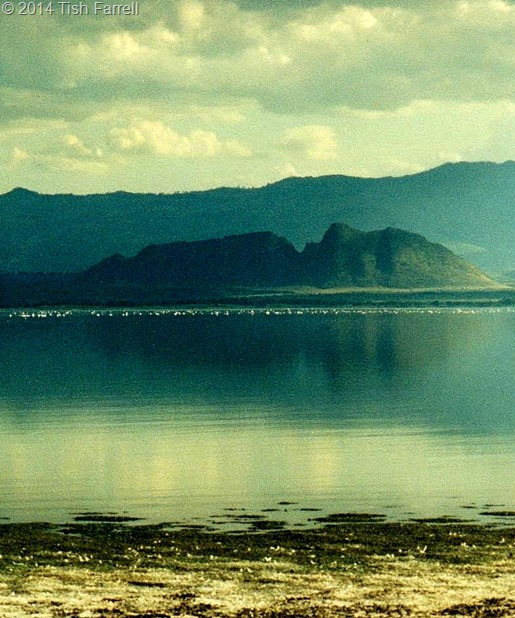
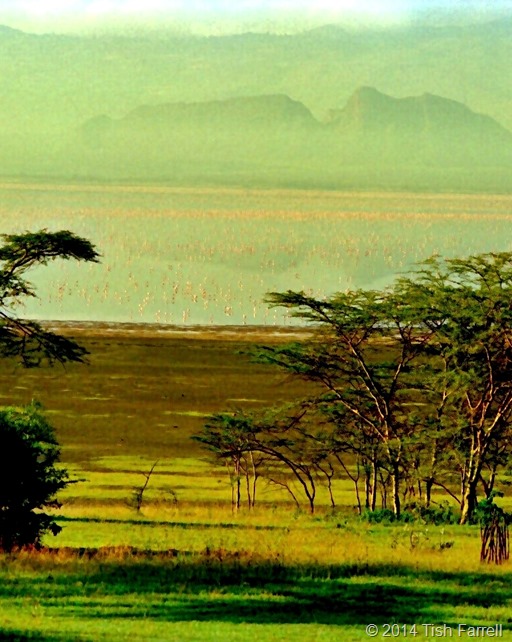
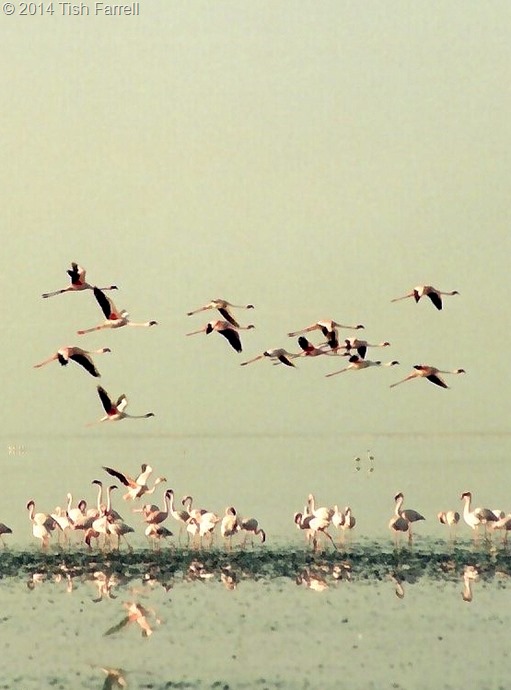
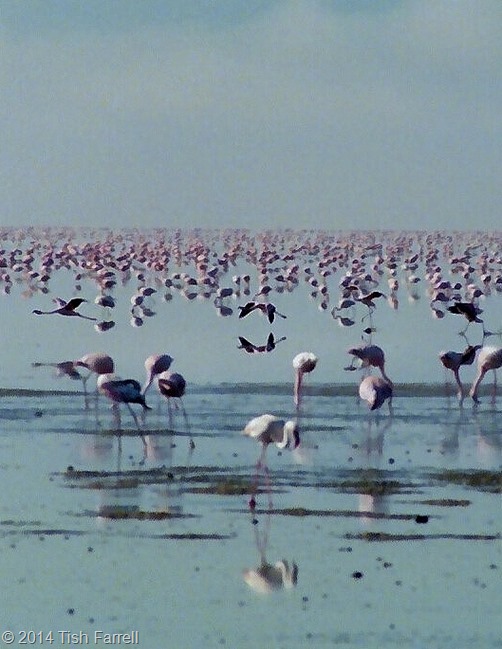
The light changes every second across the lake. From dawn till dusk there is always something to watch at Elmenteita in Kenya’s Great Rift. There are over 400 species of birds to spot for one thing – among them the endangered white pelican that breeds there. The main stars, though, are the surely the huge flocks of flamingos, both lesser and greater varieties, that turn swathes of the lake to rose-petal  pink. Even a passing glimpse  from the nearby  Rift highway  is enough to catch the breath. A pink lake – how can that be?
Scan-140503-0002

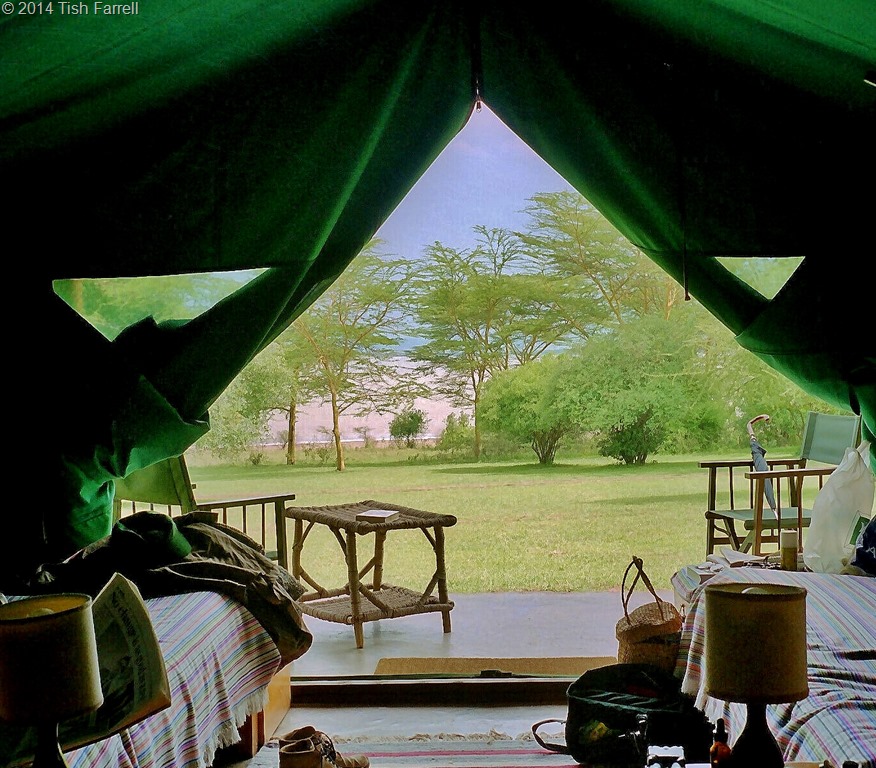
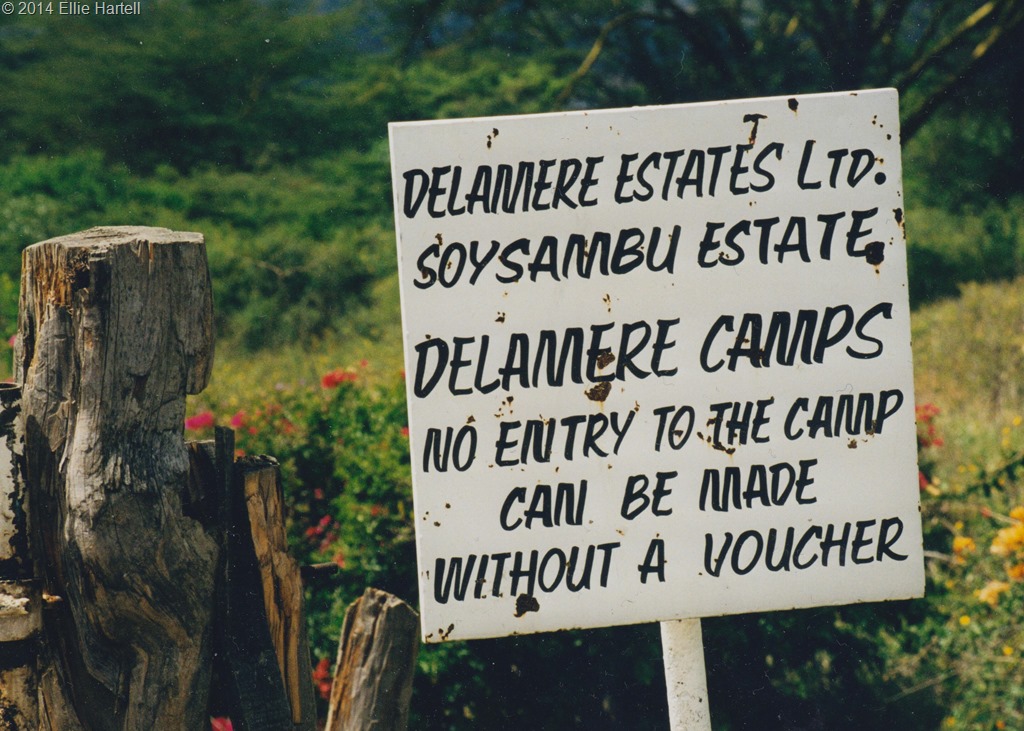
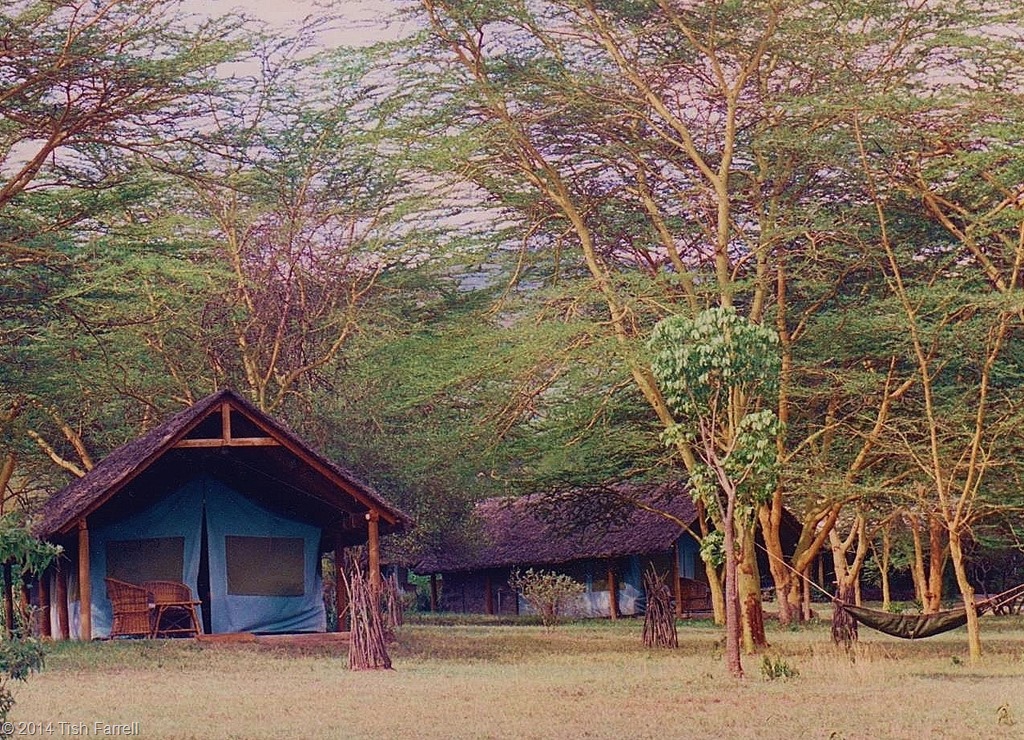
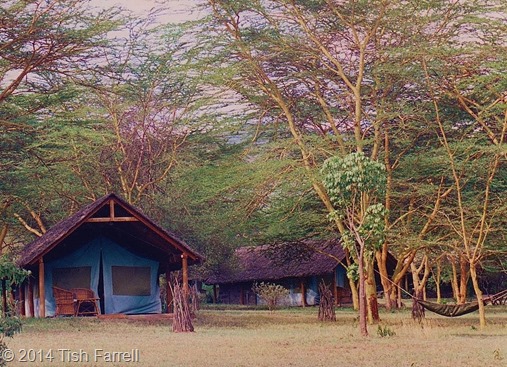
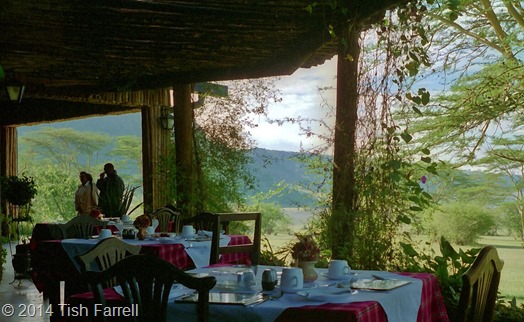
We came here often while we lived in Nairobi, staying at Delamere tented camp on the lake shore – a quirky, step-back-in-time establishment within its own nature reserve. The camp, itself was wholly unobtrusive -16 large tents, each sheltered by a thatched canopy and set out beneath fever trees that, here and there, hosted a sturdy canvas hammock.

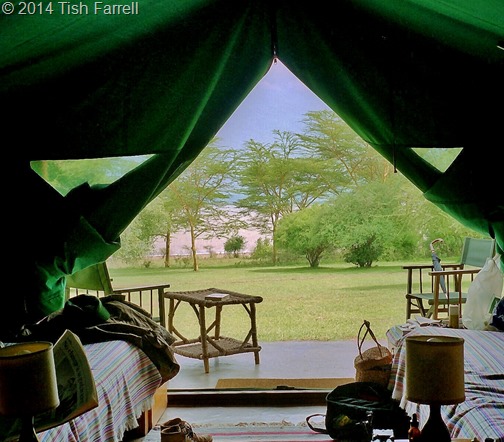
The tents were functional – two wood-framed beds, simple cupboards, rattan chairs all locally made. They came, too, with a plain little bathroom attached out back – running water, flush loo and shower – all facilities that would still be an unobtain-able luxury to millions of Kenyans. Inevitably, knowing this added to the discomforting ‘them and us’  awareness that accompanied us pretty much everywhere. 
005

For us wazungu, then, Delamere Camp was an idyllic spot. I once spent a week here by myself while G was at a conference. There were no other guests for most of that time, external and internal tourism having been hit both by El Nino rains that had caused weeks of havoc, and by widely reported bouts of pre-election violence.  Manager, Godfrey Mwirigi, treated me as if I were his personal house guest.

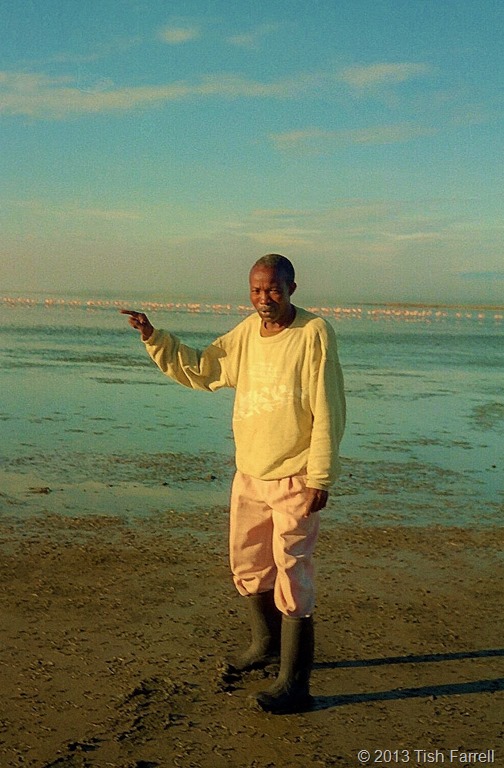
I thus spent my days and nights being driven around Soysambu nature reserve in a safari truck with zoologist, Michael Kahiga as my expert guide, or taken on early morning bird walks through  the bush, or on late afternoon hikes up through the sage-scented leleshwa brush to Sogonoi cliff-top to watch the sun set over the lake with a glass of wine in my hand. This, the daily late afternoon pilgrimage to the sun-downer cliff, was a pleasing piece of  hospitality thought up by  Paul Kabochi, the camp’s ethno-botanist. I have written about him in an earlier post, but here he is again on the lake shore at dawn.
Scan-130602-0001

On this solitary sojourn I was sorry to find that he was away setting up another camp. He is a man whose great fund of knowledge is sadly missed, and I would have been glad to have had another chance to speak with him.  Instead, I talked to Godfrey about tourism. He kindly ate his meals with me so that I did not have to  sit in the dining room alone.

Between times, hot water bottles and extra blankets appeared like magic in my bed, or indeed in the truck for the evening game drives. (Nights in the Rift can feel frosty). And all the time I watched and watched until my brain ached with sensory overload.
Scan-140502-0013

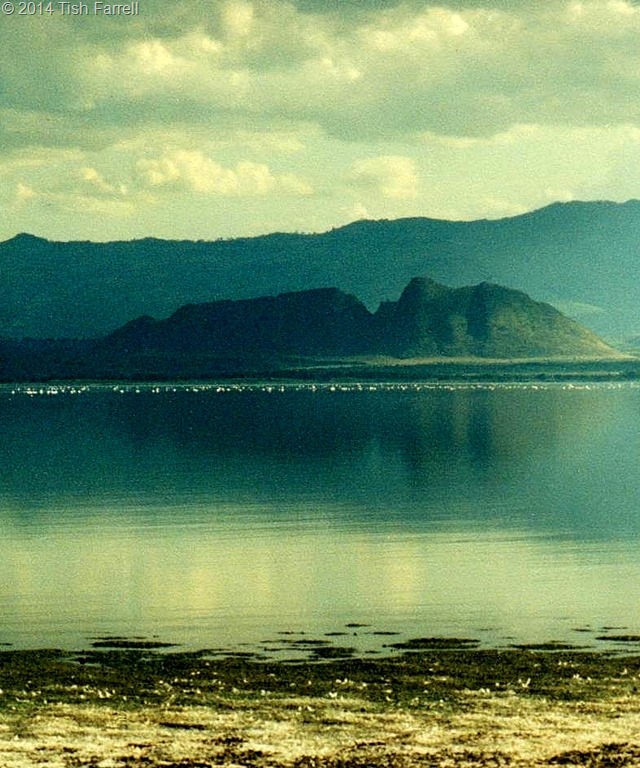
The camp overlooked the lake and the remnant volcanic cone that has long been known by the Maasai as the Elngiragata Olmorani, the Sleeping Warrior.  During colonial times it acquired a further name – Lord Delamere’s Nose, this apparently in tribute to the impressive dynastic proboscis of the third baron Delamere who, in the early 1900s, and as one of the first pioneer colonists, acquired  19 hectares (46,000 acres) of shore-land around the  the east, north and west of the lake.

His brother-in-law, Galbraith Cole, son of the Earl of Enniskillen, farmed the southerly shores at Kekopey. He was a man who was later exiled from British East Africa because he shot dead one of his labourers for stealing a favourite sheep. He later sneaked back to Kekopey disguised as a Somali, and his mother, Countess of Enniskillen successfully pleaded his cause. At the age of 48, and looking out over the lake, he shot himself, unable to bear the constant pain of his rheumatoid arthritis.
001

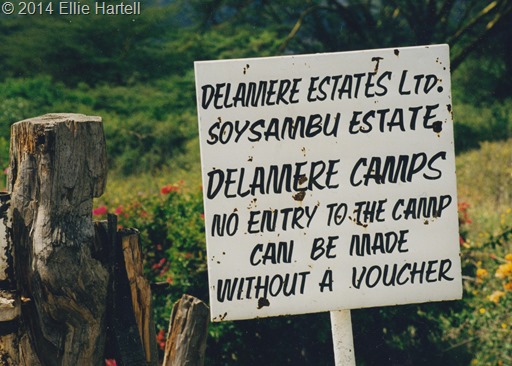
The descendants of these early settlers still live and retain most of their lands (including estates at nearby Lake Naivasha). In fact the only way to gain access to Elmenteita is to book into one of the exclusive safari lodges that now stand on the land that belongs to these old colonial families. This sense of British aristocratic exclusivity inevitably strikes a sour note. Doubtless these landowners will say they are custodians and that, without their dutiful care, the place would be wrecked by ramshackle trading operations and squatters, and the wildlife decimated.
001

Even in my home town in Shropshire we are still ruled by such feudal argument. ‘Keep Out’ signs exclude the people of Much Wenlock from the ancient Priory parkland that is  now owned by one family. In Great Britain we take for granted (or are even unaware of) the power of the self-appointed, self-aggrandizing elite who own most of our countries’ lands.  I imagine, though, that many people would be surprised to know that super-squiredom is also alive and well  in East Africa.
Scan-140502-0023

Before the British annexed East Africa in the 1890s, and all the (deemed) unoccupied territory became the property of the British Crown, and the locals obliged to stay forever  on the land where the British happened to find them,  land usage and territorial ownership was a much more fluid affair. For instance, up in the Rift highlands, and going back hundreds of years, the Kikuyu farmers had negotiated the legal acquisition of new land with the indigenous Okiek hunters, whom the Kikuyu judged to be the land’s original owners. Over the centuries this process of colonisation caused an occupational creep: as land became exhausted or overcrowded, so clan scions left their fathers’ homesteads and sought out fresh territories for their own families to cultivate. It is a similar story over much of the continent as the Bantu agriculturalists sought fresh ground.

As the boundaries of  allotted farm and pastureland nudged further into the Rift, so there was competition and conflict with the pastoral Maasai. The herders anyway believed themselves masters of the Rift, shifting up and down it as need for fresh grazing and water dictated. The farming communities with whom they traded and inter-married also at times presented an alluring target. This was inspired by the cattle herders’ belief that Enkai, the creator, had bequeathed all the cattle on earth to the Maasai. For young warriors intent on proving their courage and amassing cattle to augment family honour, armed cattle raids on their farming neighbours were a matter of necessity.

It is interesting, then, that colonial aristocrats such as Delamere, who established large stock ranches in the Rift, were inordinately admiring of the Maasai, seeing them as nature’s aristocrats. It is also tempting to put this down to a congruence of world vision: recognition of a mutual case of droit du seigneur? In fact in those early days, Delamere was the only white man for whom the Maasai would deign to work, although this did not stop them from making off with large numbers of his sheep and cattle.
Scan-140502-0067

That the Rift was once Maasai territory is indicated by the many place names – Naivasha, Nakuru included – that are European renderings of Maa originals. Elmenteita derives from  ol muteita,  meaning  “place of dust” and, from time to time, this shallow soda lake does turn to dust.  At the best of times it is only around 1 metre deep. It shrinks and expands depending on the rains. But when not blowing away to dust, it extends over some 19-22 square kilometres.

The alkaline waters are rich in the crustacea and larvae that the greater flamingos feed on, and in the blue-green algae that the lesser flamingos syphon up through the top of their bills. The former have white plumage with a pink wash; the latter are more the colour of strawberry ice cream. Both honk, and grunt and mutter in a continuously shifting mass. All night you can hear them as you lie awake in your tent.
Scan-140503-0058

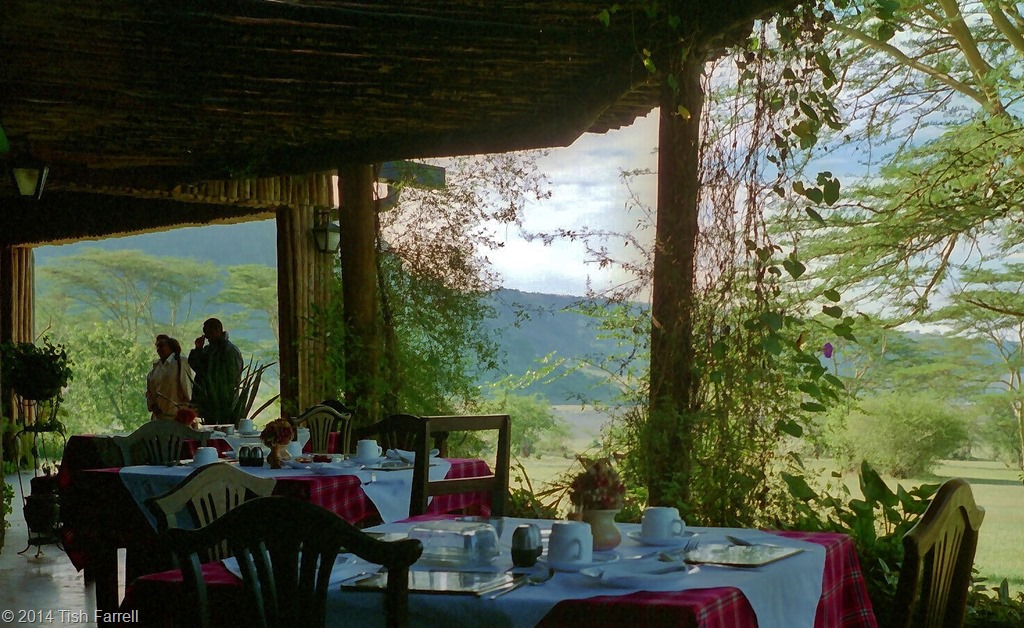
A view to dine for: Losogonoi Escarpment and the lake shore

*

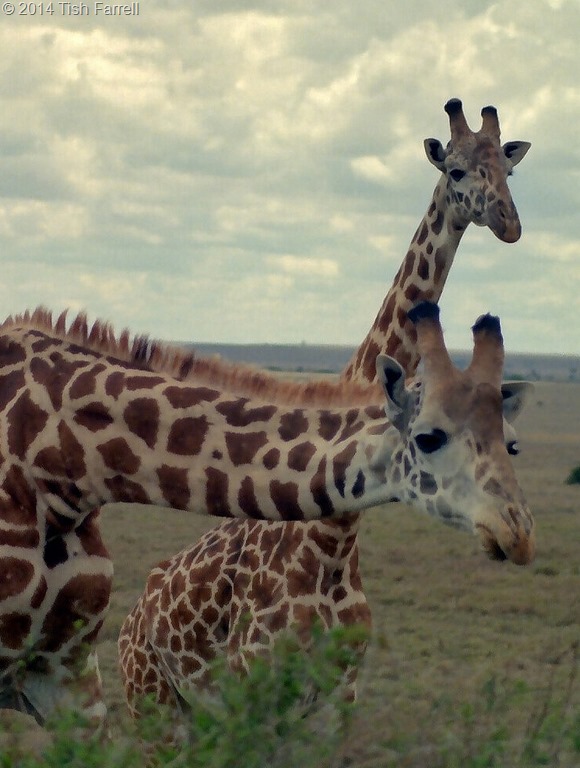
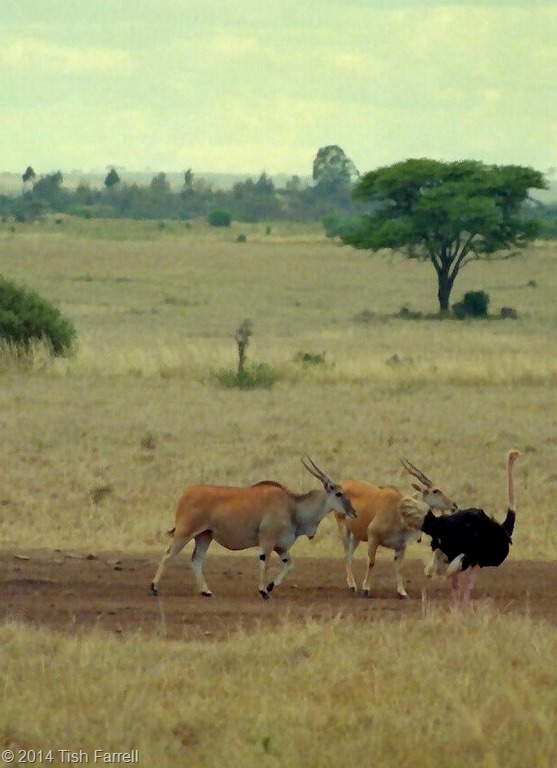
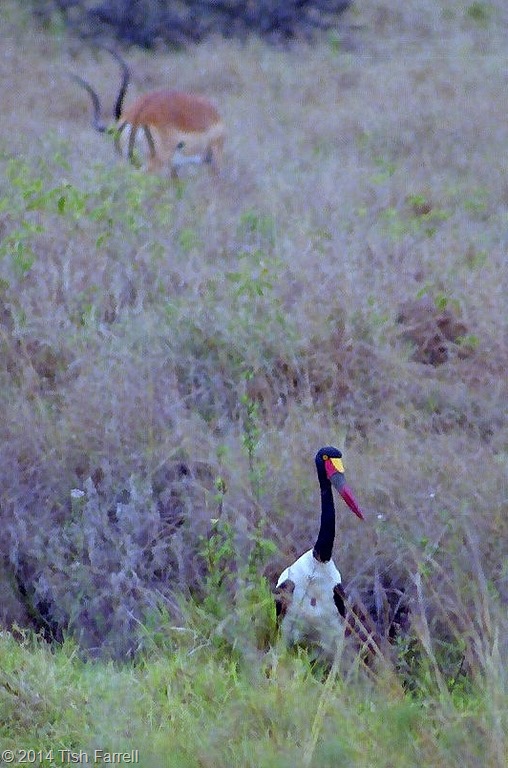
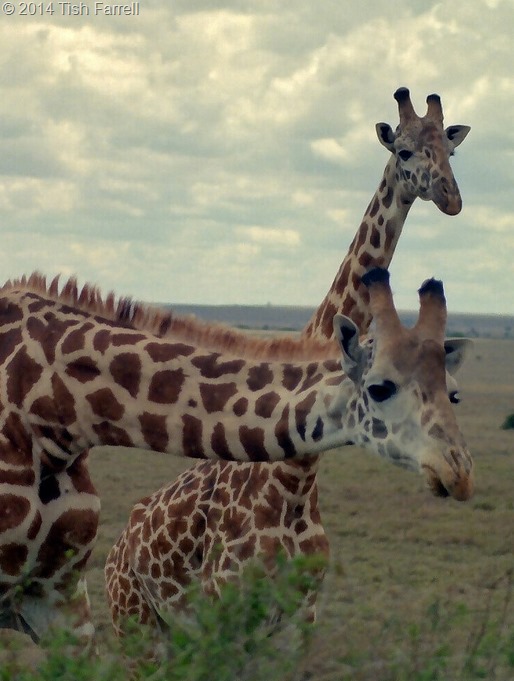
But it is not only the bird life that make this place so special. The traditional ‘big five’ may be lacking in this part of the Rift, but it is still home to Rothschild giraffe, eland, buffalo, zebra, ostrich, impala, gazelle and a host of smaller game – aardvark, zorilla, porcupine, African wildcat. Since our time in Kenya much has changed at Soysambu. In 2007 the private Delamere Estate began operating as a not-for-profit conservation organi-zation called Soysambu Conservancy.

Delamere Camp has long gone. In its place is a new enterprise, the very expensive Serena Elmenteita Luxury Camp, a sort of out-of-Africa manifestation with bells on, the kind of set-up that intrudes a different kind of exclusivity on this piece of Kenya. But then of course there’s always the usual argument: that the provision of luxury on this scale does at least provide many, many jobs for Kenyans. Across the lake, however, something of the original Delamere Camp ethos has been re-created at the Sleeping Warrior Eco Lodge and Tented Camp – all within the Soysambu Conservancy.

In fact things have not been going well with the Delamere family. The sheer mention of the name has been enough to evoke great fury among many Kenyans. In 2005 and again in 2006, Thomas Cholmondeley, sole heir of the 5th Baron and Soysambu’s manager, admitted to shooting dead an African. The first case involved a plain clothes officer working for the Kenya Wildlife Service, apparently on the Soysambu farm to investigate a poaching incident. Cholmondeley says he thought the man was robbing his staff. Action against him was dropped.

In the second case, he caught a group of poachers with a dead impala, and said he was shooting at their dog when he fatally wounded one of the men. Later he claimed it was his friend, Carl Tundo, who had shot the poacher, and that he was covering for him. The whole sorry story was featured in the BBC Storyville film Last White Man Standing. Later the charge of murder was changed to manslaughter, and in any event Cholmondeley spent 3 years in Kamiti Maximum Security Prison, Kenya’s toughest jail. To many, though, it was thought to be far too lenient a sentence. The high profile media coverage also  reminded  millions of landless Kenyans that certain individuals had in their sole possession unimaginably vast estates. The old skeletons of racism and colonial oppression came rattling out of the cupboard to fuel the general furore, as the poacher’s widow asked for justice.

And so what in the end are we left with – a beautiful place enmeshed in tales of human intrigue, slaughter and misadventure.

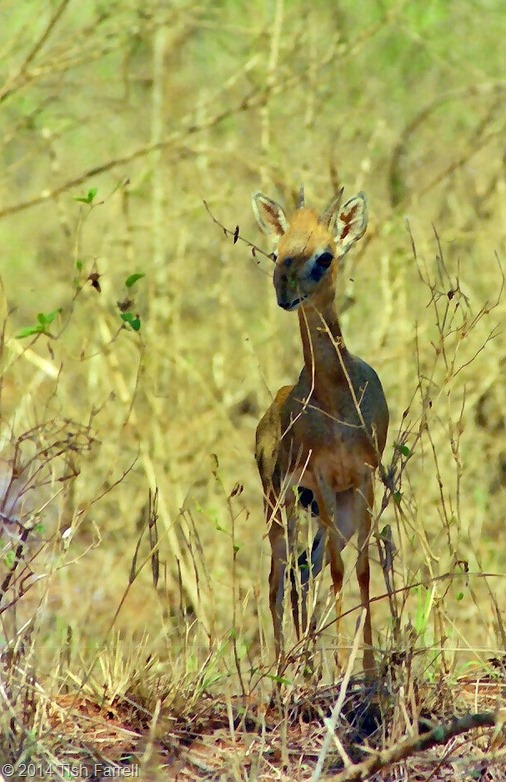
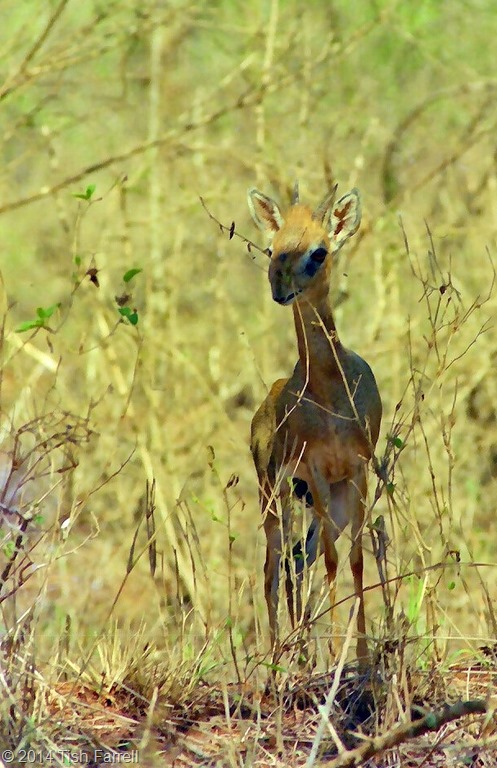
I know I was lucky to spend so much time there when I did, and to see it through the eyes of the Kenyan naturalists who were my guides. I hope that many of them still work there – for Serena or Soysambu. They taught me how to watch out in that landscape: to recognize tracks of genet cat and mongoose, to poke through the little piles of dik dik droppings that marked this tiny antelope’s territory, to identify a black-breasted apalis or shy tchagra, to listen for the calls of the red-fronted tinkerbird, to know that an infusion of bark from the muthiga or Kenya Greenheart tree is good for toothache and stomach upsets, and most especially not to fall into aardvark holes as I was walking through the thornscrub.

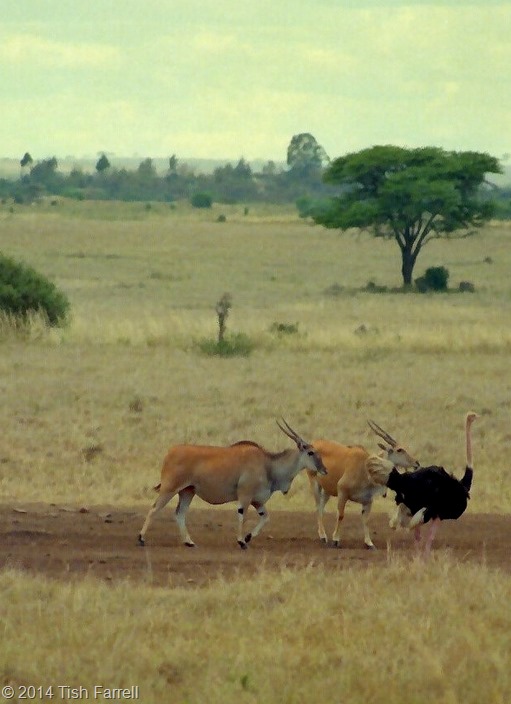
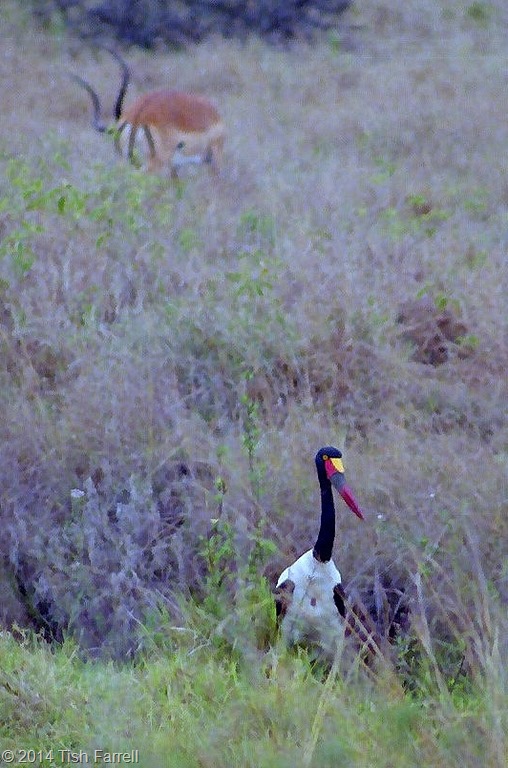
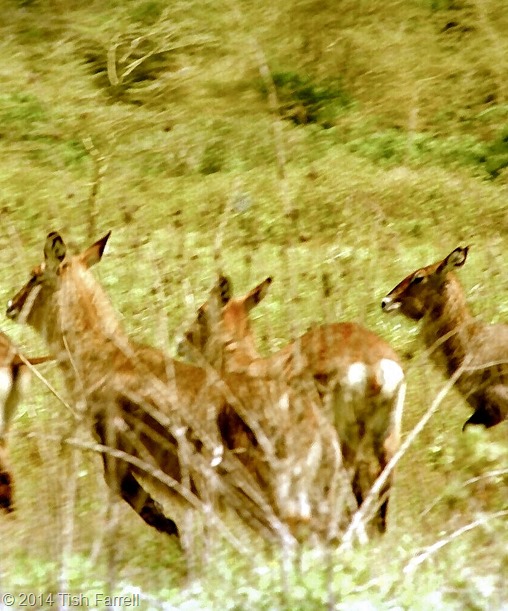
Finally then, a few glimpses of Soysambu’s beautiful creatures.
Scan-140502-0042

Scan-140504-0002

Scan-140504-0003

Scan-140504-0004

Scan-140504-0005

Scan-140504-0009

Scan-140503-0036

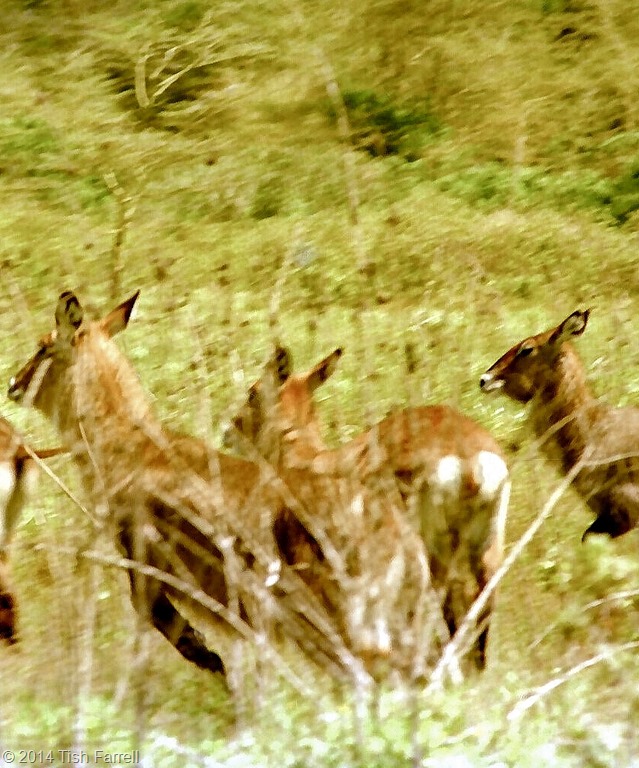
Photos from bottom up:

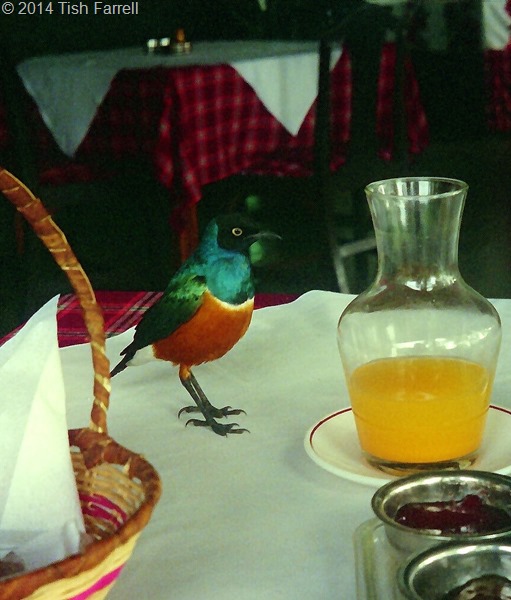
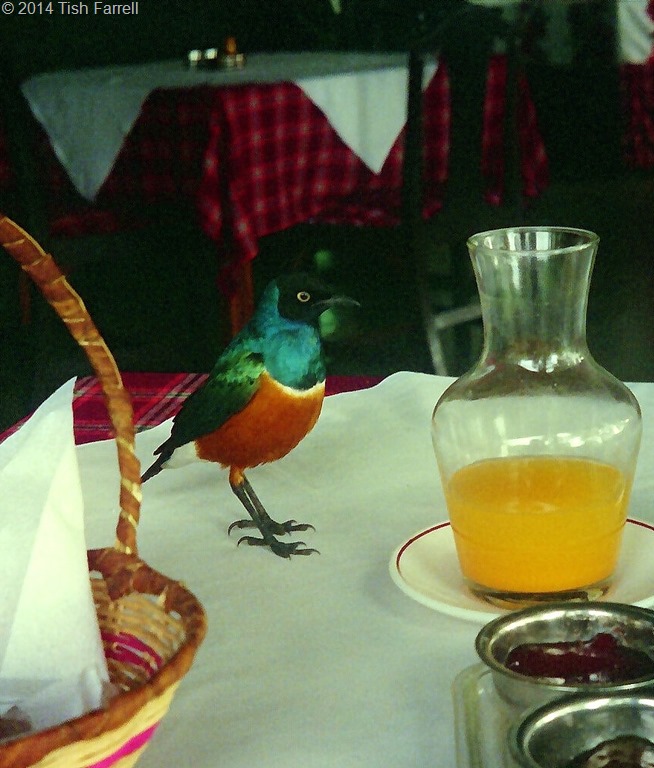
Superb starling comes to breakfast

Waterbuck females

Dik Dik (one of the smallest antelopes, slightly larger than a hare)

Saddlebill stork, impala in the background

Eland (the largest of Africa’s antelope) and ostrich

Burchell’s zebra

Rothschild giraffe
Scan-140502-0046

© 2014 Tish Farrell

A Word A Week Challenge for more stories