In The Frame ~ A Garden Treasure Trove

IMG_3469

We’re back in Corvedale, the lovely valley that lies between Wenlock Edge and the Clee Hills, not far from the ancient Heath Chapel that featured in Over the Edge and faraway.

Wildegoose Nursery is a plants persons’ dream, conjured within an old Victorian kitchen garden. The owners lease the walled garden from Millichope Park and, over the last few years, have transformed decades of dereliction into a magnificent showpiece for uncommon varieties of herbaceous plants. We went there because my sister Jo kept saying we should.  You’d love it, she said.

She was right. We did.

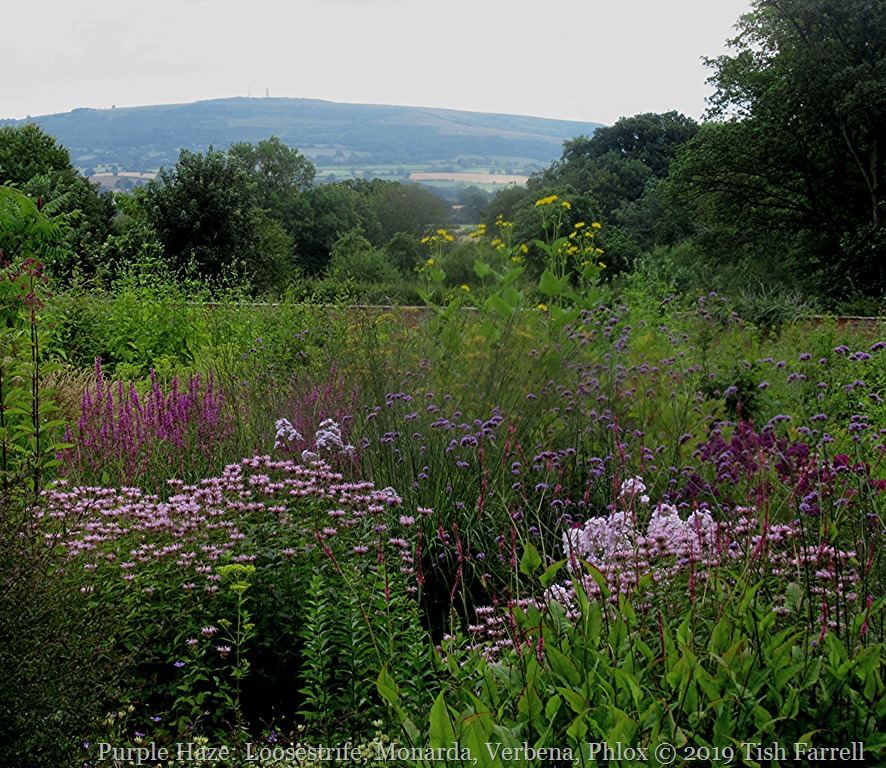
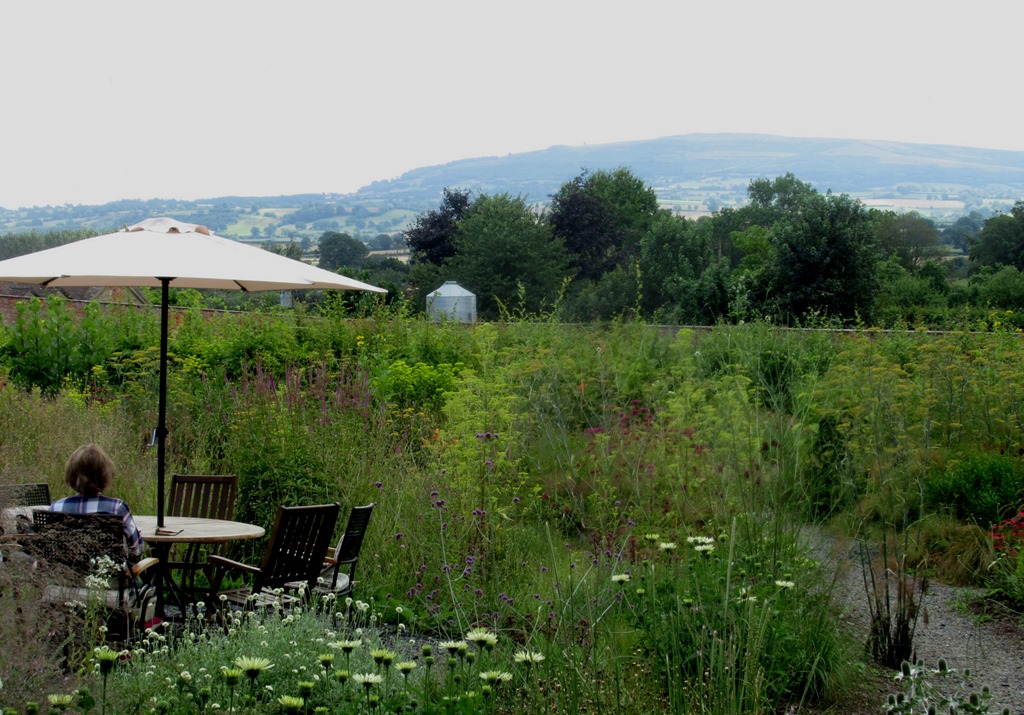
So: I’m posting this set of photos in response to Lens-Artists’ weekly theme. This week Amy asks us to think about how we frame our shots, and as this happened to be my particular challenge during our garden ramble: how to capture the essence of the whole, as well as the particular, it seemed a good opportunity to post them.

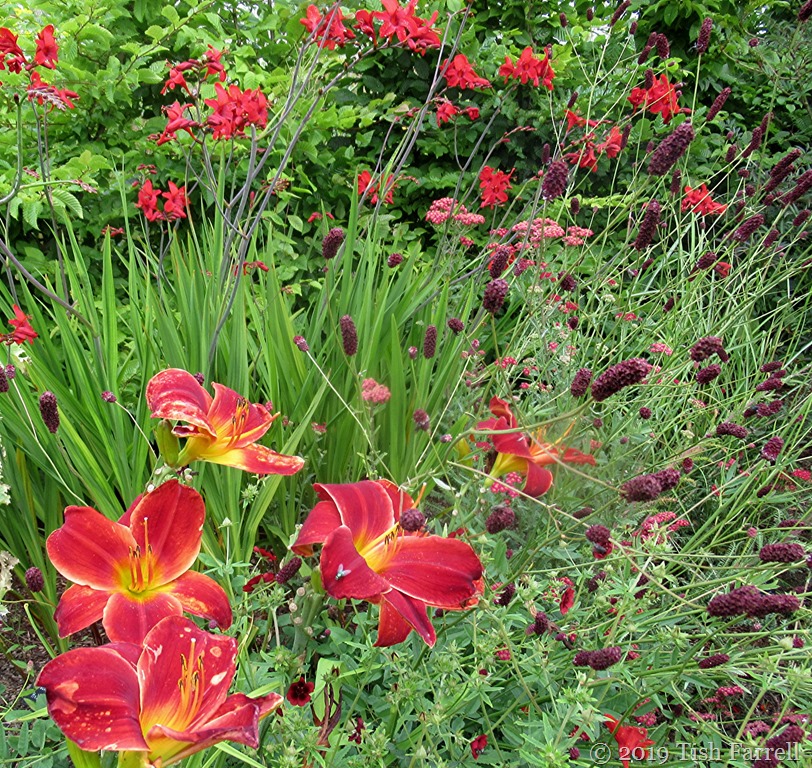
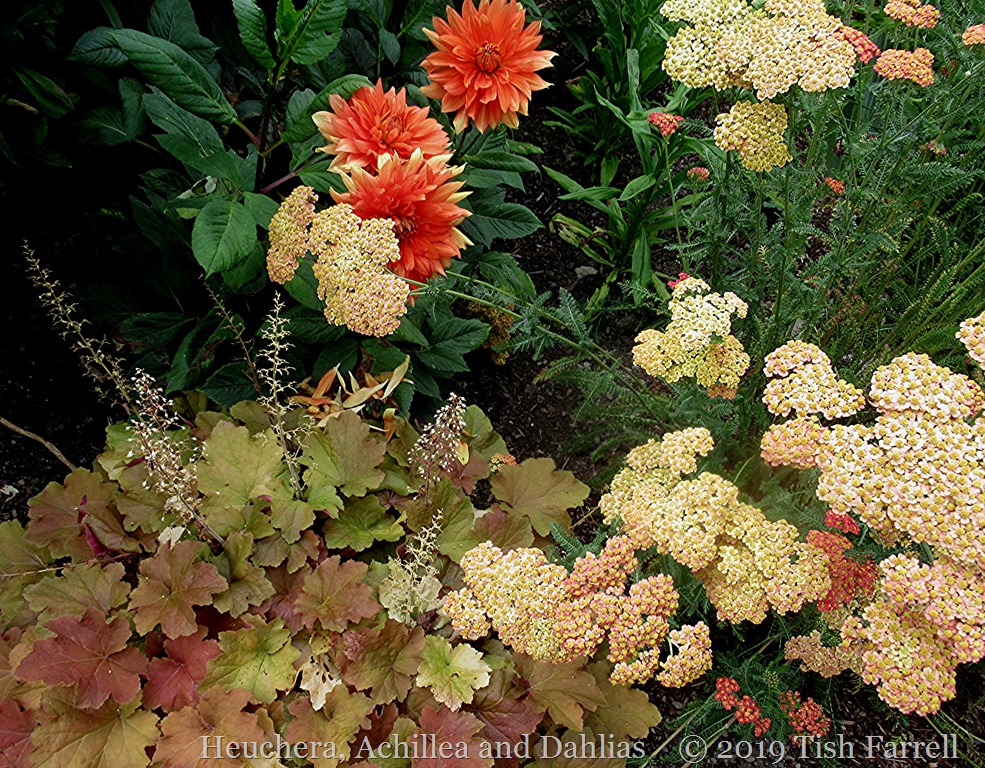
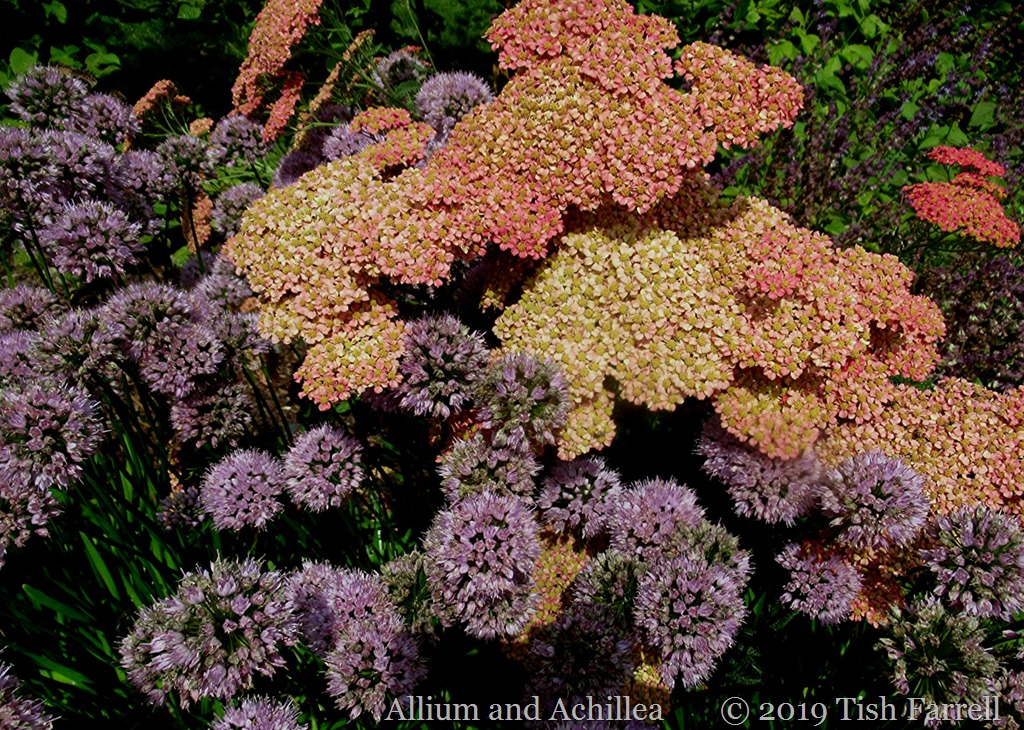
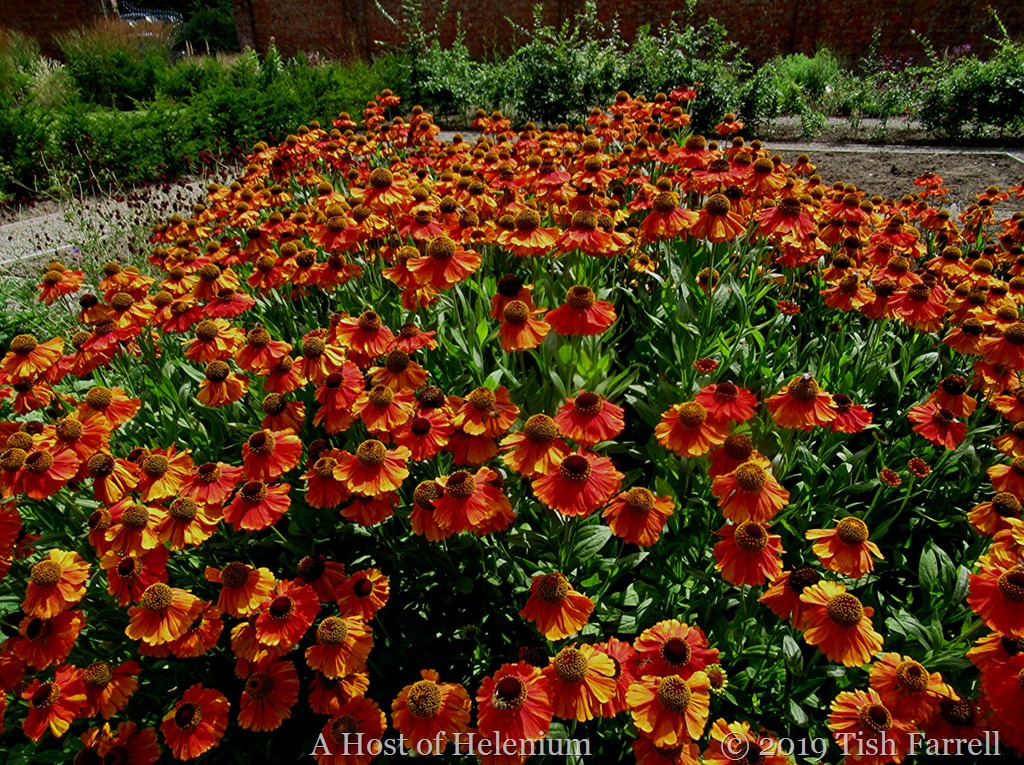
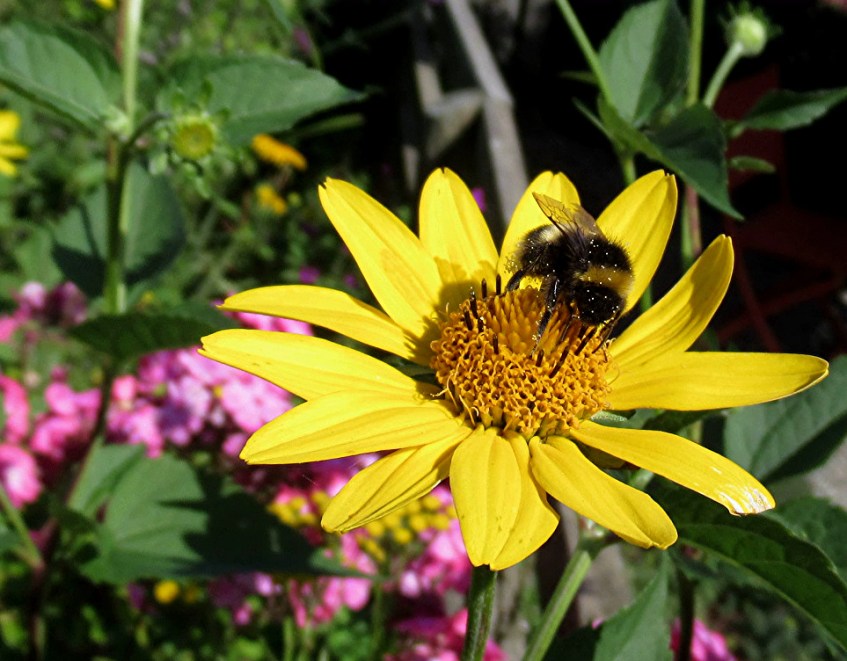
The colourways and combinations of the Wildegoose planting schemes are captivating, painterly, often flamboyantly informal, sometimes riotous.

IMG_3358

IMG_3357

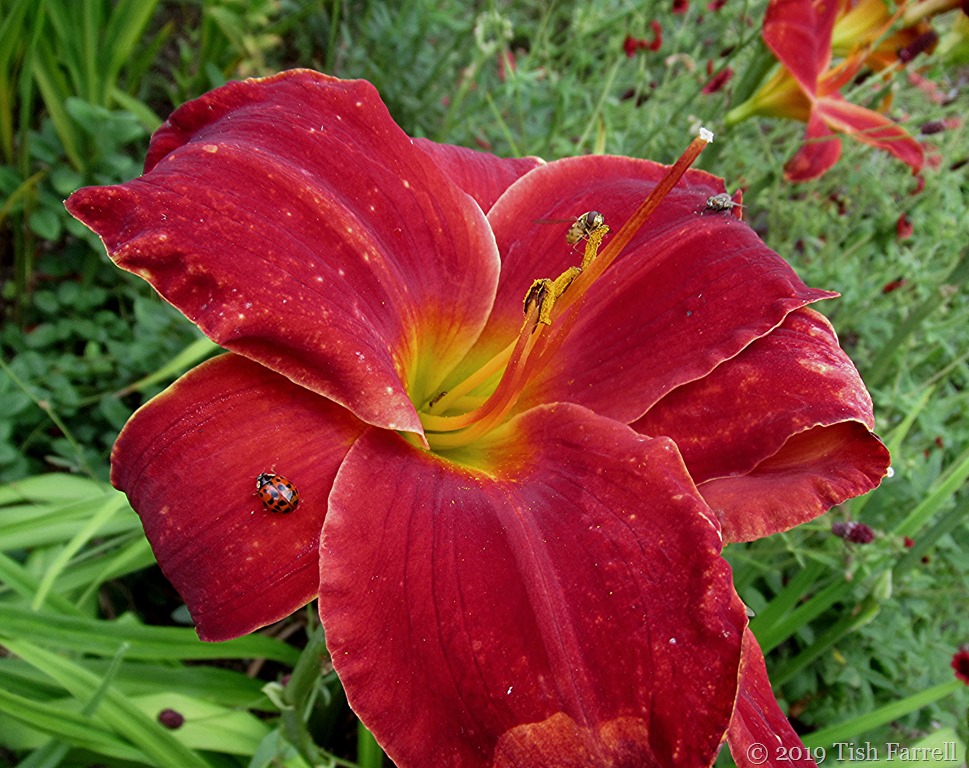
Incidentally, I think this lily is hosting an invader harlequin ladybird. They originate in Japan and according the Royal Horticultural Society, were deliberately spread about the planet as a biocontrol for aphids, though not in Britain, whence they came of their own accord. They began arriving here in 2004. Unfortunately they also eat butterfly and moth eggs and our native ladybirds, and there are fears they will outstrip our native strains.

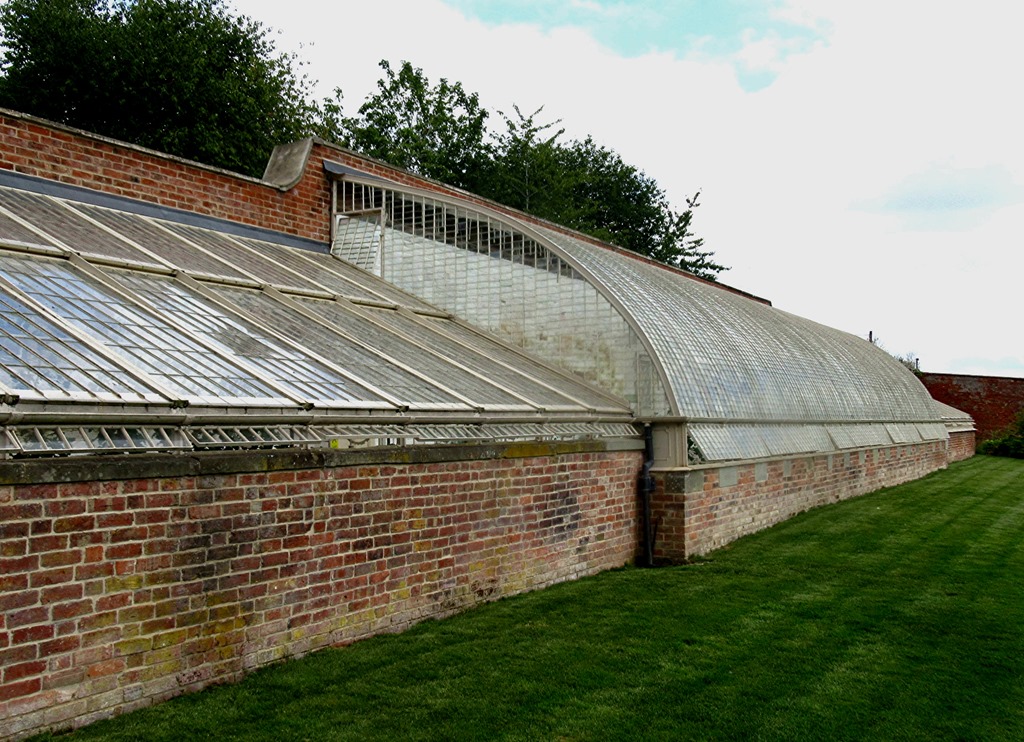
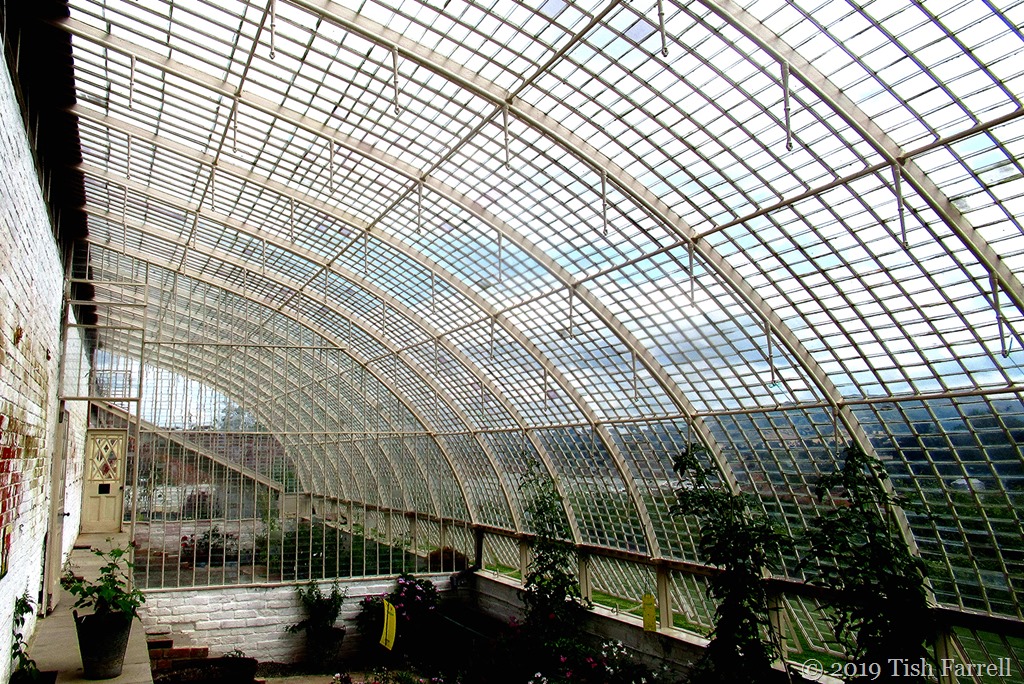
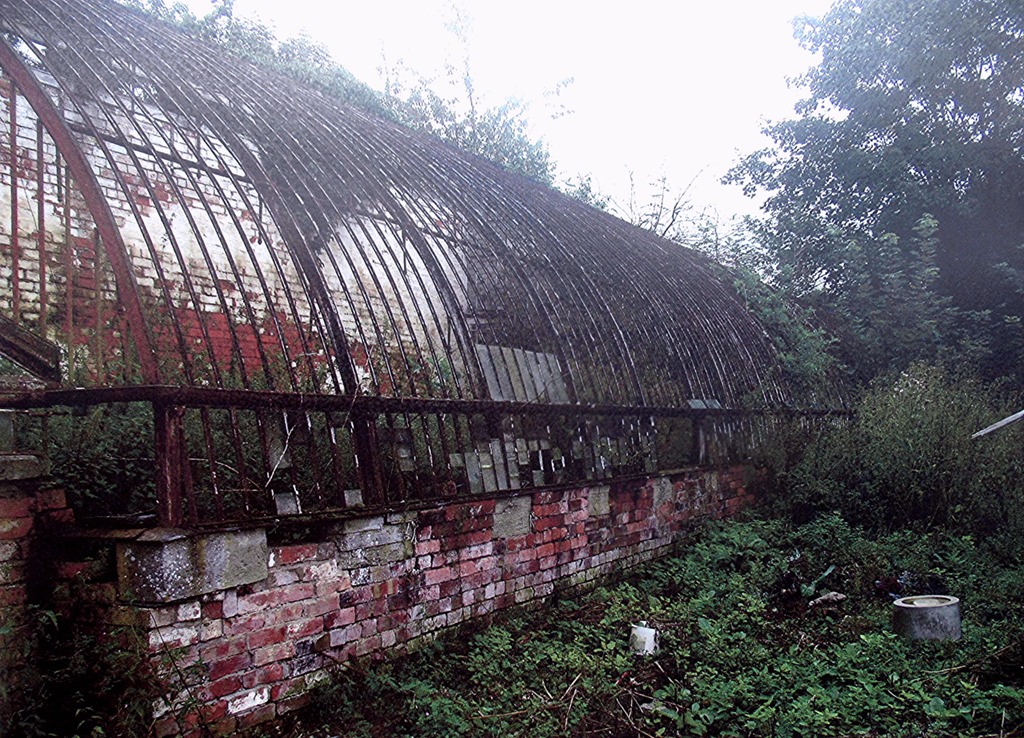
One particular challenge camera-wise was how best to photograph the astonishing Millichope Glasshouse. This too had been restored, all 12,500 postcard sized hand-made glass overlapping panels replaced. The glasshouse dates from around the 1830s and is highly unusual with its curved profile.

IMG_3409

IMG_3426

IMG_3446

Restored from this:

IMG_3331

Originally a Victorian kitchen garden such as this would have been cultivated by a small army of garden men and boys, all under the stern eye of a head gardener like Charles Ashford, my own grandfather. The glasshouses would have been devoted to producing exotic fruit, tropical plants for table and drawing room display; the garden walls used to support espaliered fruit trees – peaches, apricots, cherries, apples of many varieties, pears, each sited according to the most beneficial aspect. There would have been hot beds for melons and cucumbers and for forcing early crops, strawberry and asparagus beds, salad crops and vegetables of every kind, and also borders for cut flowers. Such production units were very expensive to run and by the interwar period most big gardens like that were beginning to be abandoned.

Wildegoose Nursery does have some vegetable beds, but mostly the garden is given over to exuberant herbaceous planting. There is also a small, beautifully arranged plant sales area, and a very welcoming tearoom which served such lovely food, we forced ourselves to stay for lunch, even though we’d not long sampled their coffee and cake for a late elevenses.

IMG_3438

*

And here are some planting schemes that especially caught my eye:

IMG_3366

IMG_3377

IMG_3368

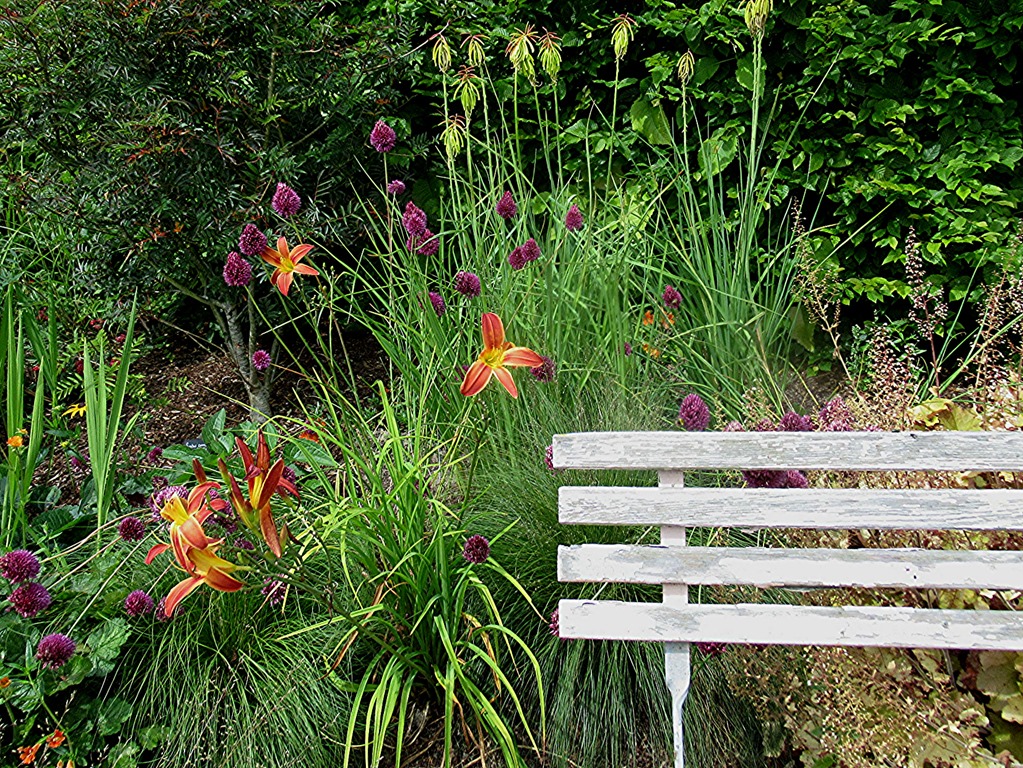
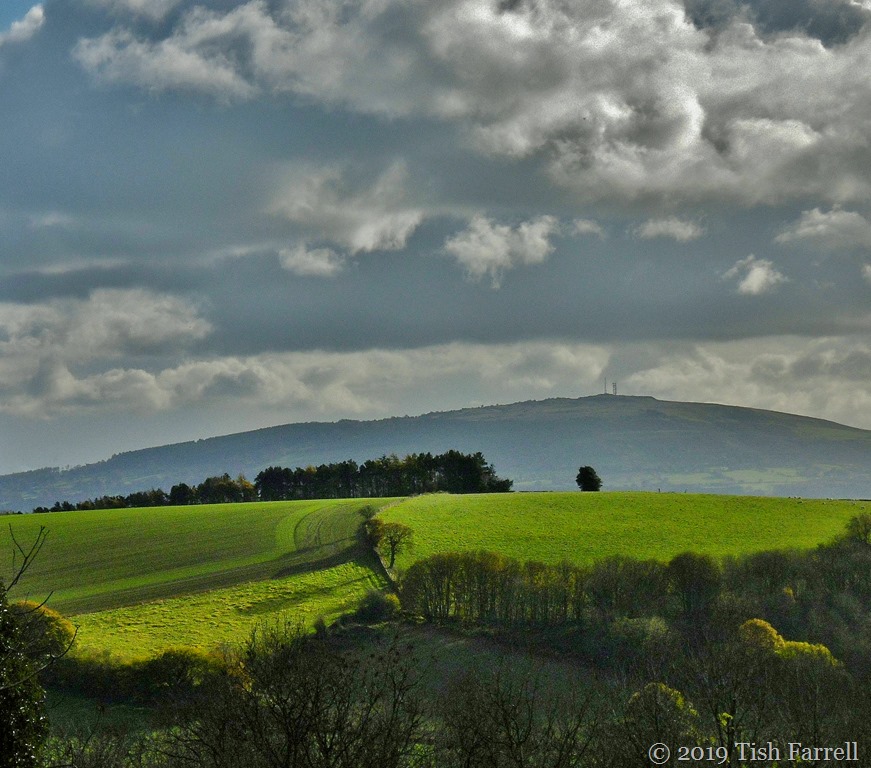
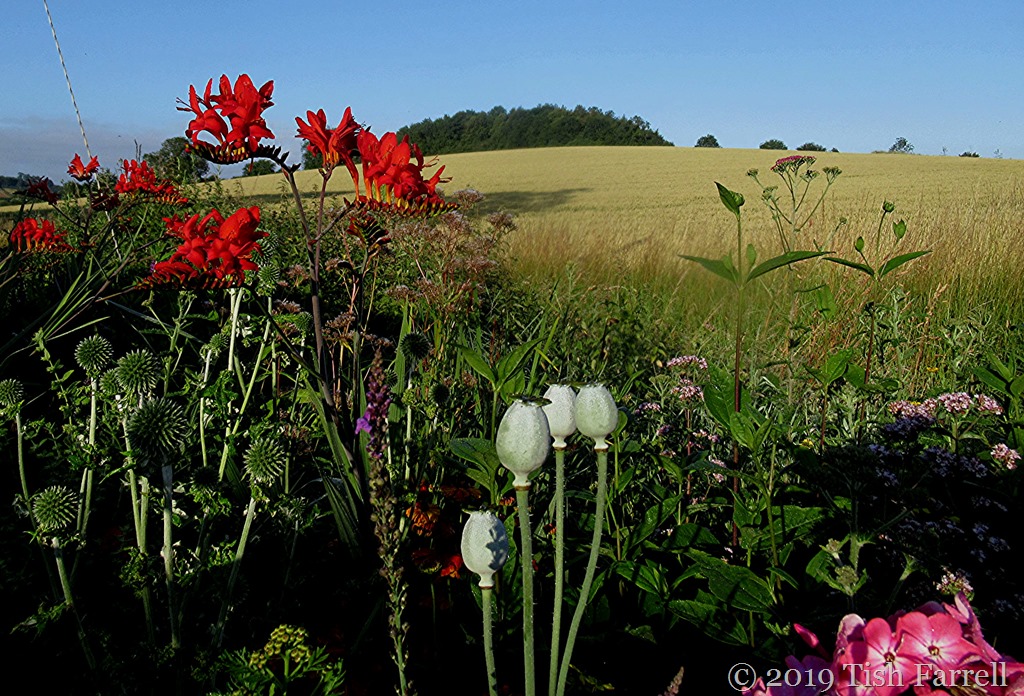
And here are some general garden views with Clee Hill in the background. I should add there was also a particular soundtrack to these scenes: above the hum of a million pollinators and the soft chatter of garden volunteers, the thrum of combine harvesters in nearby fields, and overhead, the plaintive mew of buzzards.

IMG_3434

IMG_3328

IMG_3410

P.S. There is a fee for going round the garden, but we thought it worth every penny.

Lens-Artists: Framing the shot

Monday Musings: A World Worth Saving? And Why Aren’t Our Leaders Taking Action NOW?

IMG_2791

And so asks Greta Thunberg:


Because there’s so much we could be doing and now. See the UN’s Climate Action site: https://www.un.org/en/climatechange/climate-action-areas.shtml

Meanwhile this is what the Secretary-General of the UN Intergovernmental Panel on Climate Change, António Guterres was saying a year ago when he called for global action:

https://www.youtube.com/watch?v=VNe-jBVij-g

The Intergovernmental Panel on Climate Change (IPCC) is the United Nations body for assessing the science related to climate change. You can find all the scientific reports Here, including the special report on global warming Here.

None of us wants to think about this, but there are things we can do, beginning with our own community leaders. For instance the council of my  county town of Shrewsbury has declared a climate emergency and a 2030 net carbon neurtral target, this after energetic campaiging by residents and members of Extinction Rebellion.

Many other councils across the country have done likewise. You can see the UK map at climateemergency.uk

However, our county council leaders are dragging their heels. Under public pressure, they declared the climate emergency but seem unprepared to take action if it will upset economic interests. They further appeared not to know of the many innovative business initiatives (especially in biogas generation) already taking place in Shropshire. At the parliamentary level, only one of our 5 county all Tory MPs, Philip Dunne, has acknowledged the crisis and said he will do all he can to change resistant attitudes. Last week I wrote to ask him how he meant to do this, though I’ve since noticed that he has been pressing Government for zero road emissions. All in all though, there are still monumental obstacles to shift, and here in the UK we’re still stuck in the 3 year Brexit Effect – tactic of mass distraction.

So time for every one of us to get snapping at the heels of our local representatives/councillors/senators/MPs/ministers. Use their social media sites. Join or support a campaign group. Government inertia will take a lot of shifting. E.g. The oil men have known about the effect of carbon emissions on the climate since the 1970s yet, as Greta Thunberg states, still we use 100 million barrels a day. A staggering amount – and all those oil dollars into somebody’s pockets; all the wars and regime-change invasions involving oil. And it’s not just oil; it’s all the waste from the by-products of oil. Even the deniers of manmade climate change cannot deny the mess we’ve made of the planet.

And if this is leaving you feeling depressed then check out what the small ‘negative carbon’ nation of Bhutan has been doing to protect itself and help out its neighbouring countries, and indeed provide a wellbeing pattern for global action, and for all of us.

An Elephant In The Garden?

IMG_3103

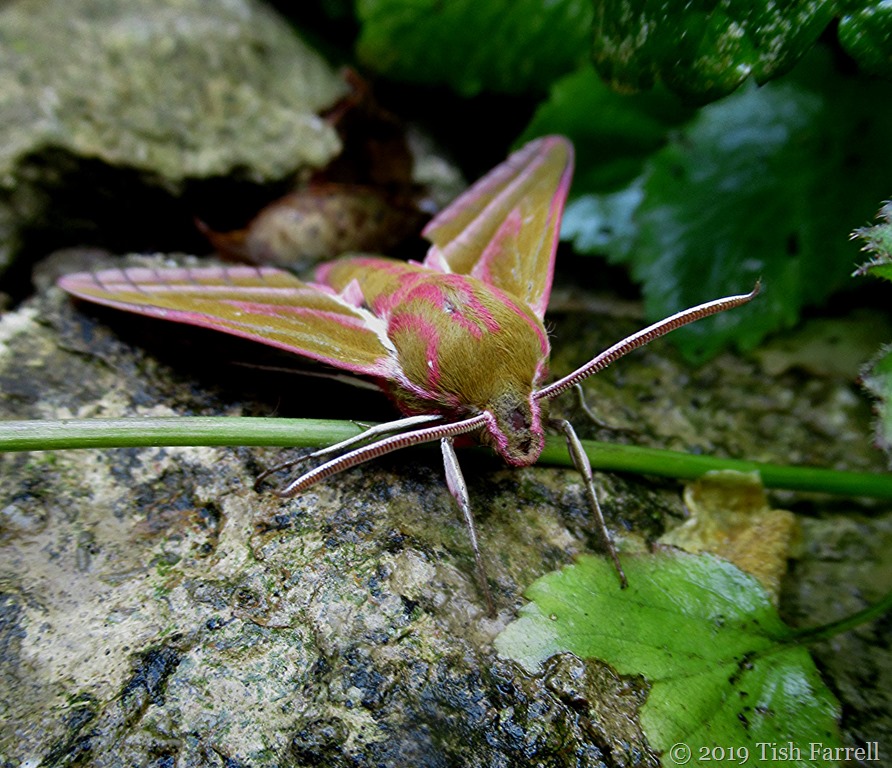
That would be of the hawk-moth variety, Deilephila elpenor. The elephant in the name is not due to its size, though with a wingspan of one and half to two and half inches (45-60mm) it is quite large, but to the appearance of its caterpillar which has a trunk-like protuberance. The caterpillars like to feed on Rosebay Willowherb and bedstraws found in rough grassland, while the moth prefers to sup on the wing, from dusk till dawn, feeding at tubular flowers such as honeysuckle.

Before this particular Elephant hawk-moth was in the garden, it was in the utility room. We found it on the window blind, but decided it would be better off outside with the honeysuckle. It did not react to being moved or having its photo taken. In fact I think it was asleep. A very striking livery though, as moth colour schemes go.

IMG_3107

Over The Edge And Far Away ~ In Search Of Heath Chapel Beneath The Clee

crop Clee

Between Wenlock Edge and Clee Hill.

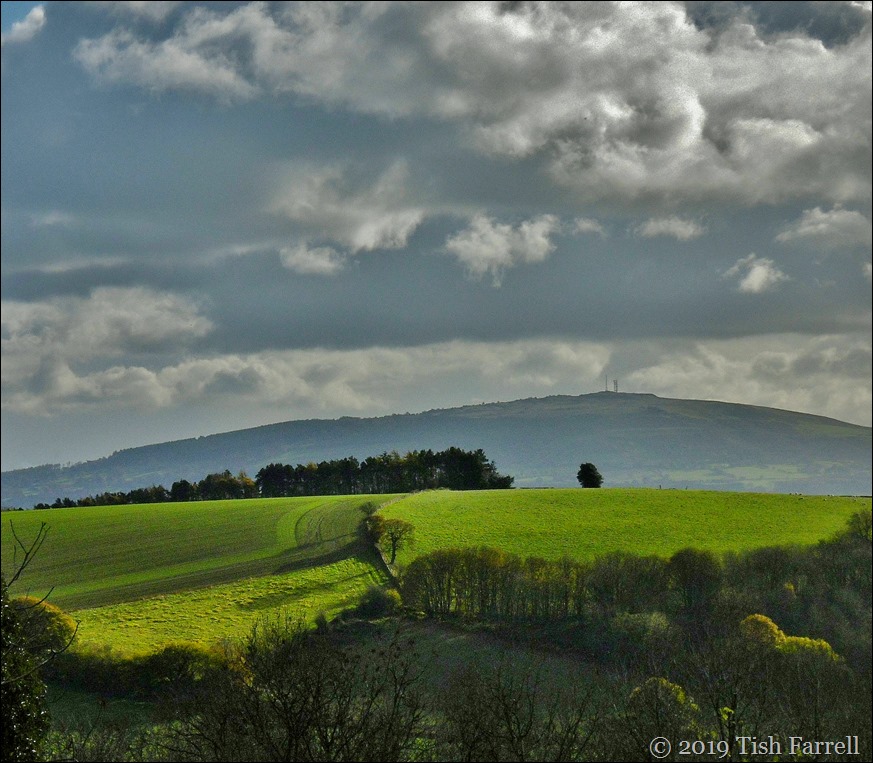
[This photo is by way of a prologue, just to give you a gist of place – a glimpse of the ‘lost world’ where we found ourselves last Friday. This is actually an autumn scene taken from the Wenlock Edge viewpoint, the freshly sown winter wheat just sprouting in the field to the left. Beyond the middle horizon lies Corvedale, one of the loveliest valleys of the Shropshire uplands. Today this country is mainly agricultural land, arable and pasture, but back in the Middle Ages coal was mined on the Clee Hills and the valley then would have gushed with fumes and smoke from blast furnaces and iron foundries – an industrial scene then, and well before the actual  Industrial Revolution of centuries later. And generations before the fumes, in 7th century Saxon Mercia, all this land was a small part of the domain held by Milburga, a Saxon princess and abbess of Much Wenlock’s first convent – a double house for both nuns and monks. Doubtless the Saxon villagers who farmed this land back then would have paid tribute to Milburga’s establishment, or to one of its daughter houses.]

*

If in a madcap moment you turn off the Craven Arms-Ludlow road that runs out of Wenlock and along Corvedale, and then head down one of the many side-lanes, you will soon find yourself meandering through tiny hamlets of old stone cottages, farmhouses and the occasional manor with surrounding parkland. Oaks and ash trees shade the narrow byways that dogleg round wheat fields and cattle and sheep meadows, nudge between tall hedgerows of wild flowers, scuttle across farmyards, elbow their way in and out of cramped cottage-clusters where the signpost to the place you are seeking is hidden by trees. Progress, then, can be slow and also nerve-wracking. Mostly the road is only wide enough for one vehicle, and passing places, by way of field gateways, are sometimes scarce. One may spend much time going backwards.

There are no shops or inns and and, now and then, only the sight of an isolated notice board at a crossroads alerts you to the fact of a community’s existence, somewhere behind all the greenery. Of course there are old churches whose towers you may glimpse as you wend and bend through the hinterland. And then there are VERY old churches, and it was the pursuit of one particular ancient chapel that last Friday had lured us into uncharted territory (for us that is), if barely a dozen miles from home.

In short, we were having ‘a day out’, a break from the ongoing domestic chaos that had begun with exchanging an old bathroom for a new one, but then morphed into an unexpected schedule of re-decorating – one big mess somehow multiplying into several others. Also, after last Thursday’s 24 hours of rain, we had seen more than enough of the chaos in particular and of indoors in general.

The road out of Wenlock and into Corvedale is narrow and steep, and as main roads go, is more of a lane to begin with. It wanders up and down through Bourton, Brockton and Shipton, then straightens and widens through Broadstone and Hungerford. But before we reached Munslow we left it, turning off at the staggered crossroads where there’s a sign for Wildgoose Nursery (more of which in another post), zigzagging through Baucott down Sandy Lane, skirting Bouldon (though it looked beguiling), taking a sharp left to Heath, peering through overgrown hedgerows.

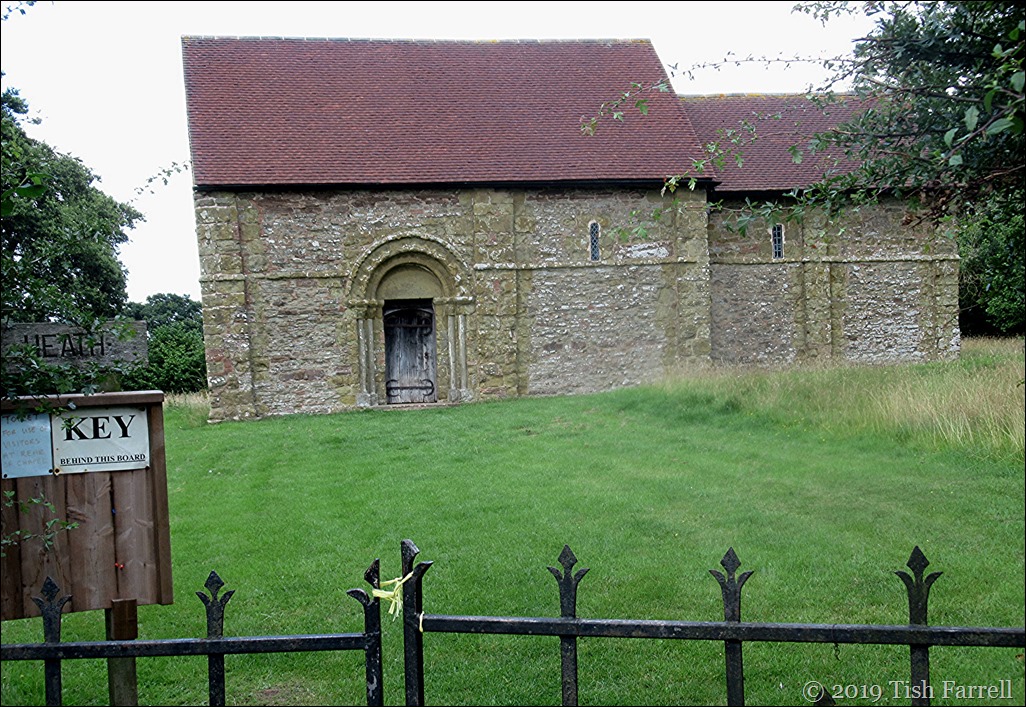
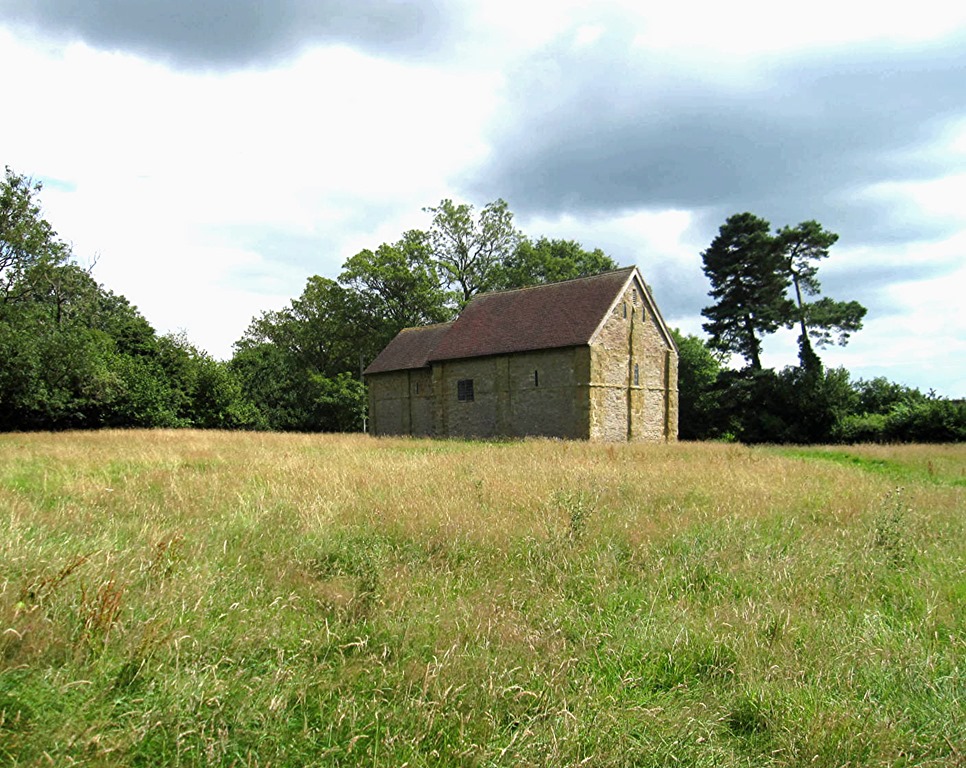
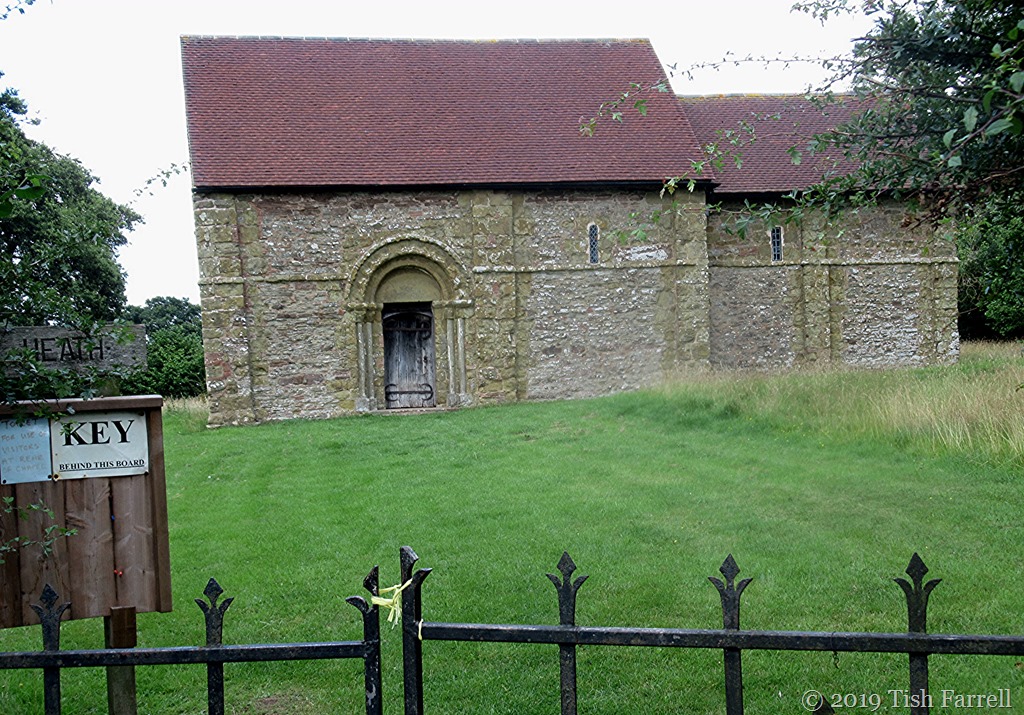
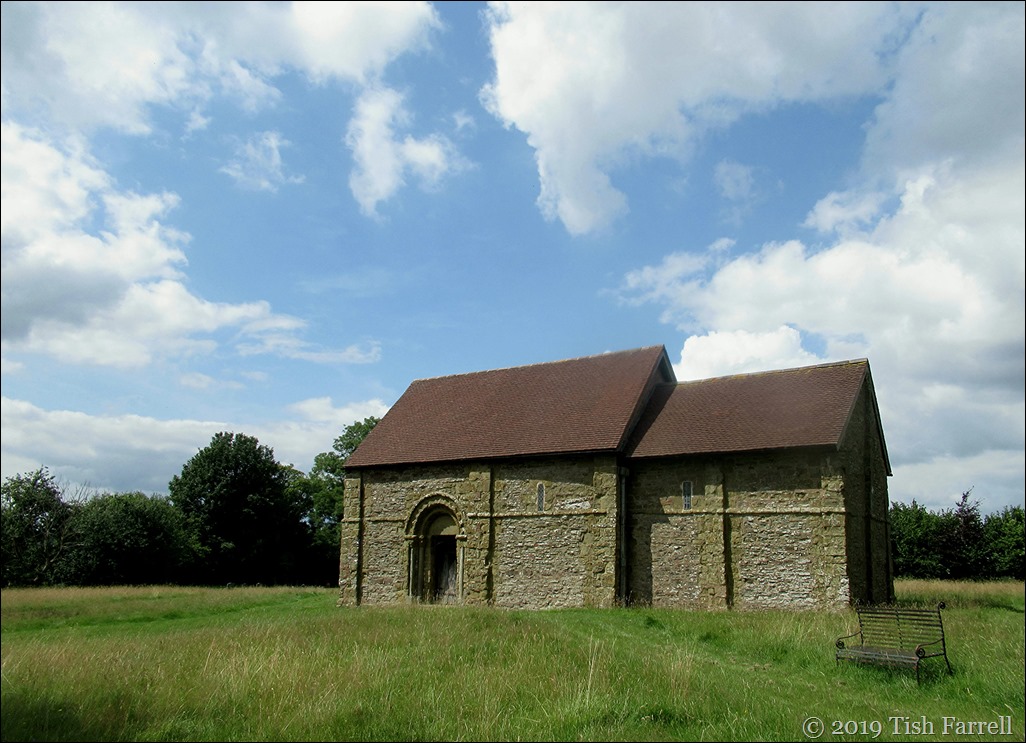
And suddenly there it was, alone in its field – and looking just like the Shropshire guide book photos – Heath Chapel built around 1150 CE, and at some point in the late Middle Ages left high and dry by its community which, for reasons unknown, simply ceased to be. In a nearby field you can see the humps and bumps of house platforms that were once its village. In fact the map shows a number of deserted medieval village sites along the dale. All rather mysterious.
IMG_3587

*

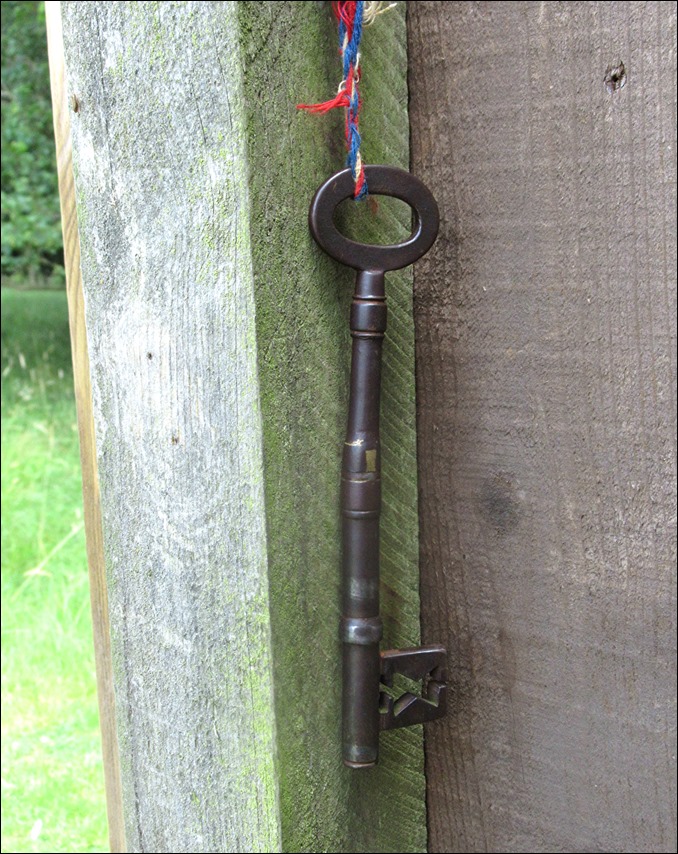
The notice board at the chapel gate tells you that key is hanging behind it. At first I was sceptical. But here it was. A good 10 inches of it.
IMG_3500

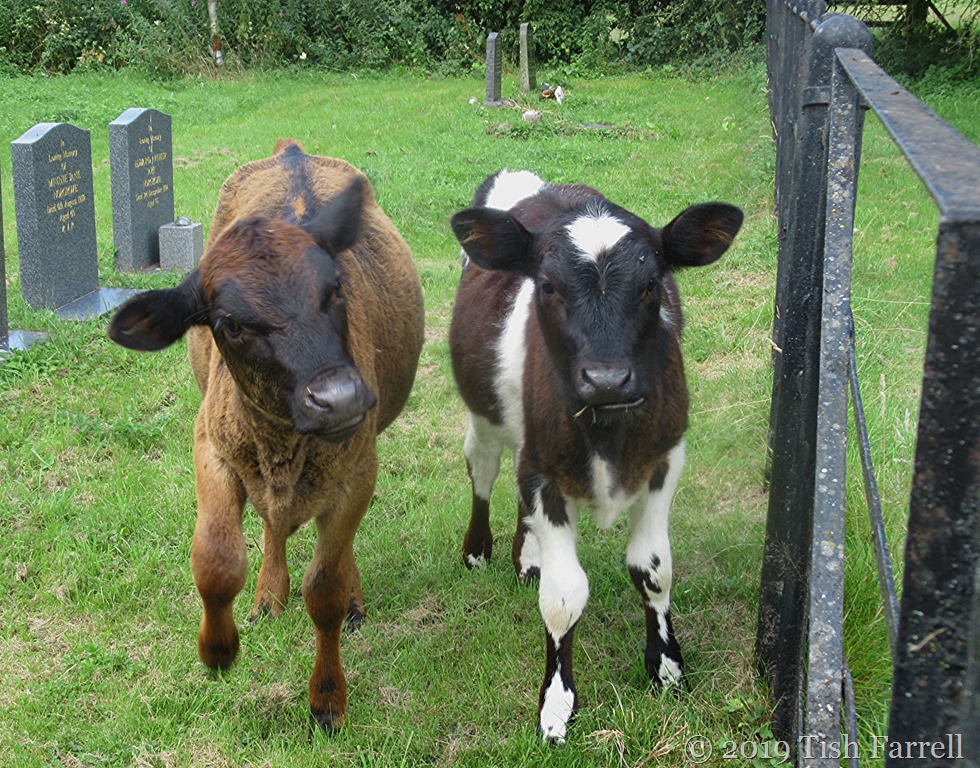
I was further surprised to learn from the board that loo facilities are available behind the chapel, along with car parking. I also noted the paths that have been mown across the meadow, and the wrought iron seats placed for quiet contemplation in this secluded spot. Although I soon saw we were not quite alone. Across the field I spotted a small graveyard where three young calves were grazing. While Graham manhandled the huge key to open the chapel I went over to say hello to them.
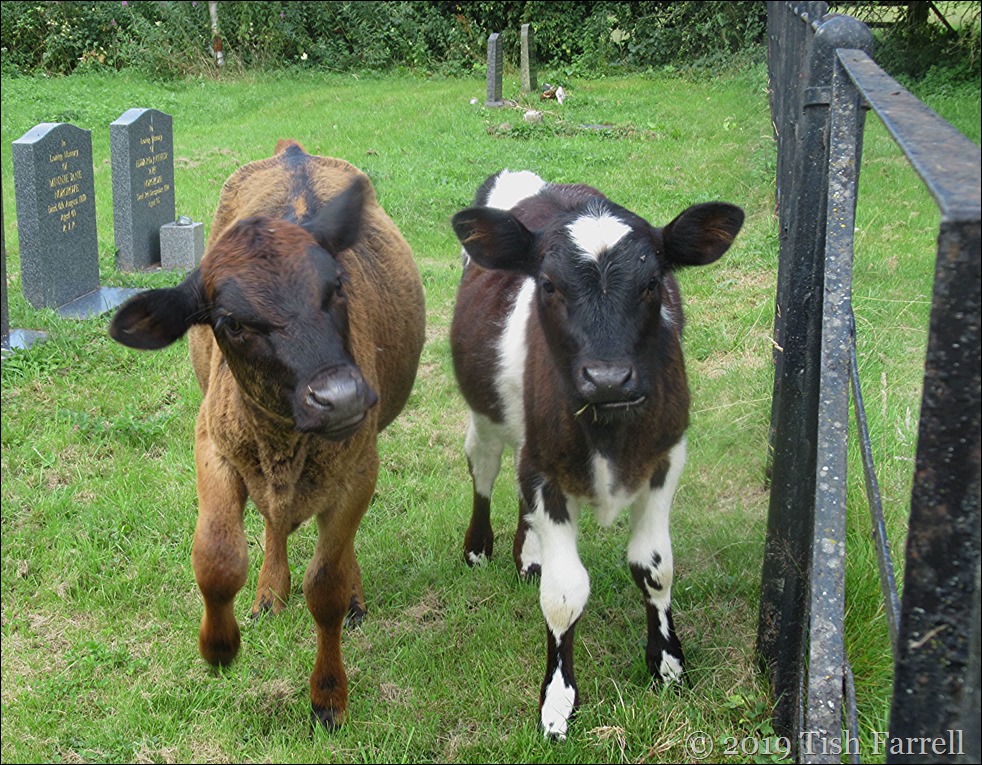
IMG_3504

*

IMG_3510

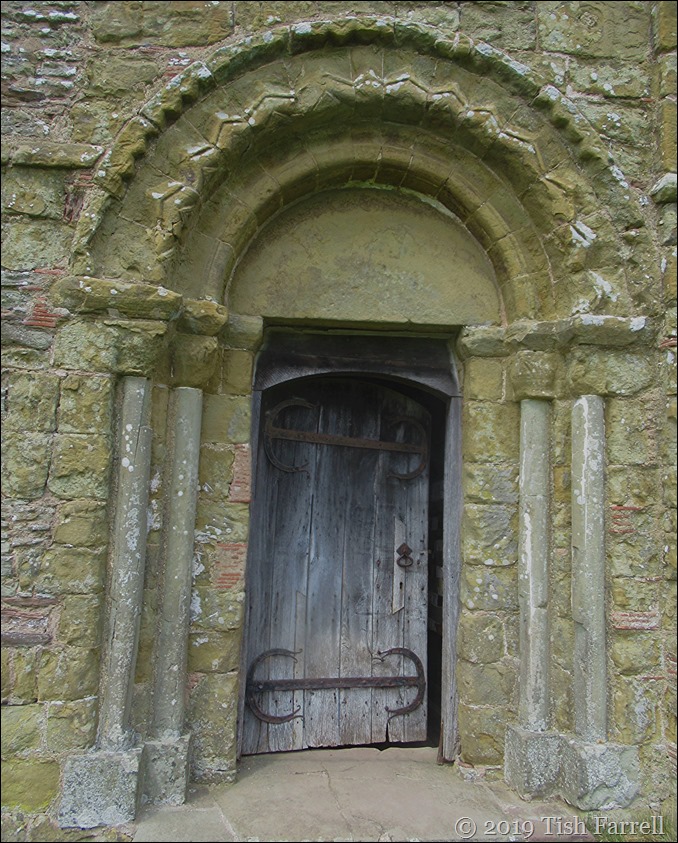
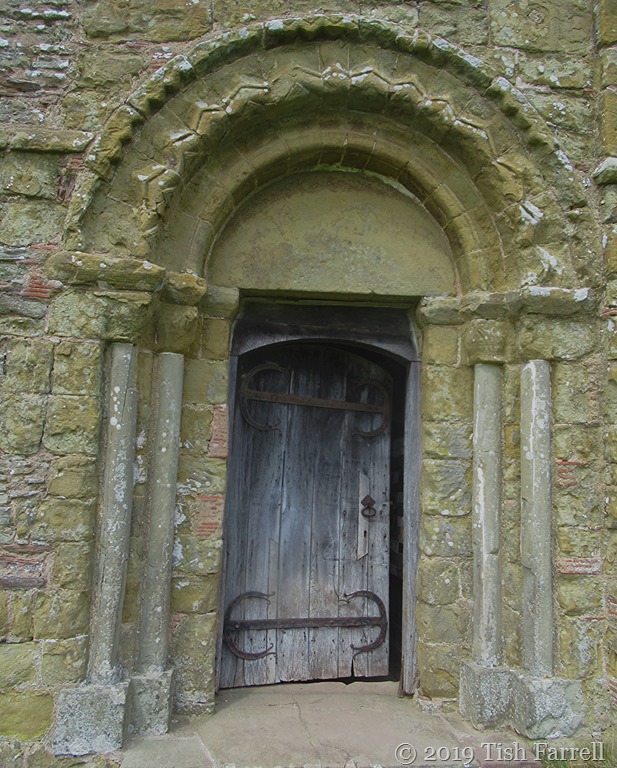
Back at the chapel door I considered its rustic Norman arch and the time-line progress of humanity that has passed beneath it: the Saxon serfs of some local Norman overlord, monastic labourers perhaps, since the reach of Wenlock Priory under the rule of the French-speaking Cluniac monks was long, and they had diverse money-making projects, most especially in sheep wool. Later, after 1540 when monastic rule was broken, and Wenlock Borough managed by burgesses, town worthies of the rising merchant classes, perhaps the manor’s lord and lady and their retinue worshipped here. No one knows. The chapel is simply there, silent about its history although there are some tantalizing hints inside.

And inside it was dark, dank and musty, though apparently still sometimes used for worship. Only by holding the door wide open was there enough light to photograph the font.

I weighed up the box pews and thought they would have been little defence against the cold rising from the stone flag floor, or a winter’s wind under the door. But I also noticed something else. Here and there, where the white plasterwork had fallen damply from the walls, there were faint outlines of Gothic text and more besides.

It seems there were once religious texts illuminating the walls above the pews. Later I discovered these were added in the 1600s, inscribed atop the whitewash that had blotted out the earlier medieval wall paintings. And then astonishingly up on the south wall there is the ghost of such a painting, and said to be the image of Saint George. It is a full-scale work, and even these faint vestiges suggest that this modest little chapel was once very grandly adorned. But by whom and why here?
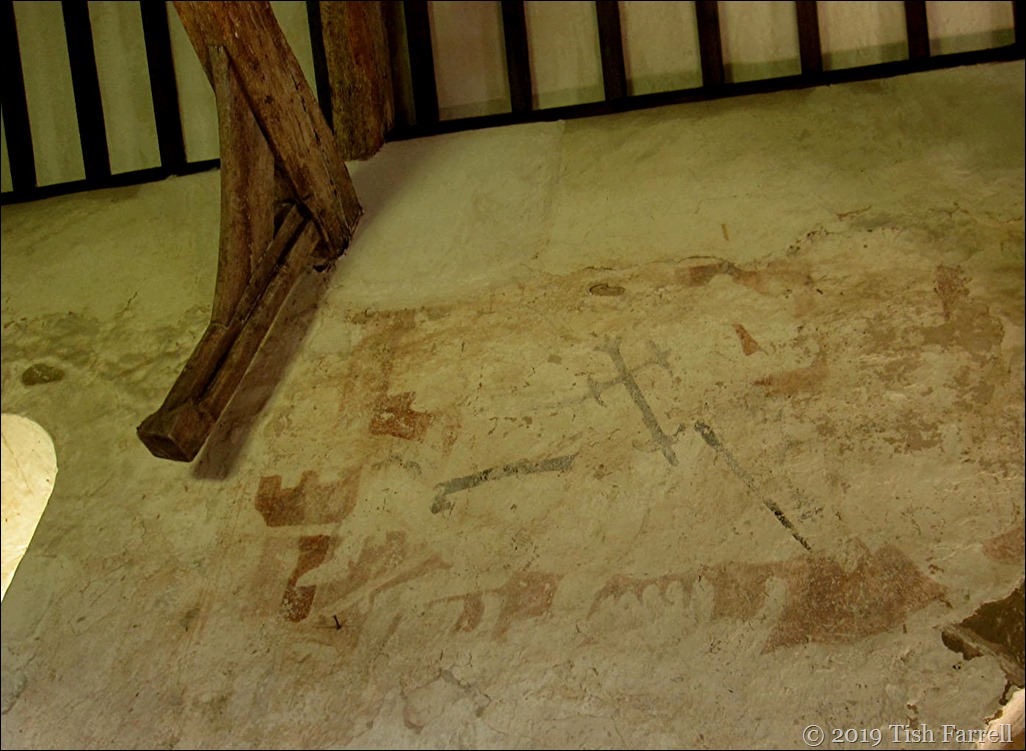
IMG_8521

*

It was good to step back out into the sunshine. Graham locked the door and the chapel continued to keep its secrets. We walked around the field perimeter and, under a large tree at the furthest point from the chapel, we found a small, and discreetly placed garden shed. The loo. There really was one and provided there by the thoughtful chapel custodians. It also proved an attraction of sorts in its own right and made us laugh when we looked inside.

A valuable introduction into compost toileting arrangements then. The same kindly people who created these facilities presumably had also put a pack of bottled water in the chapel. Heath is in on a popular walkers’ route, and so if you’d forgotten, or finished your own water, you could help yourself to a bottle and drop a donation in the box. It was all so heartening; a piece of English heritage that was well loved and cherished and generously shared by unseen souls.
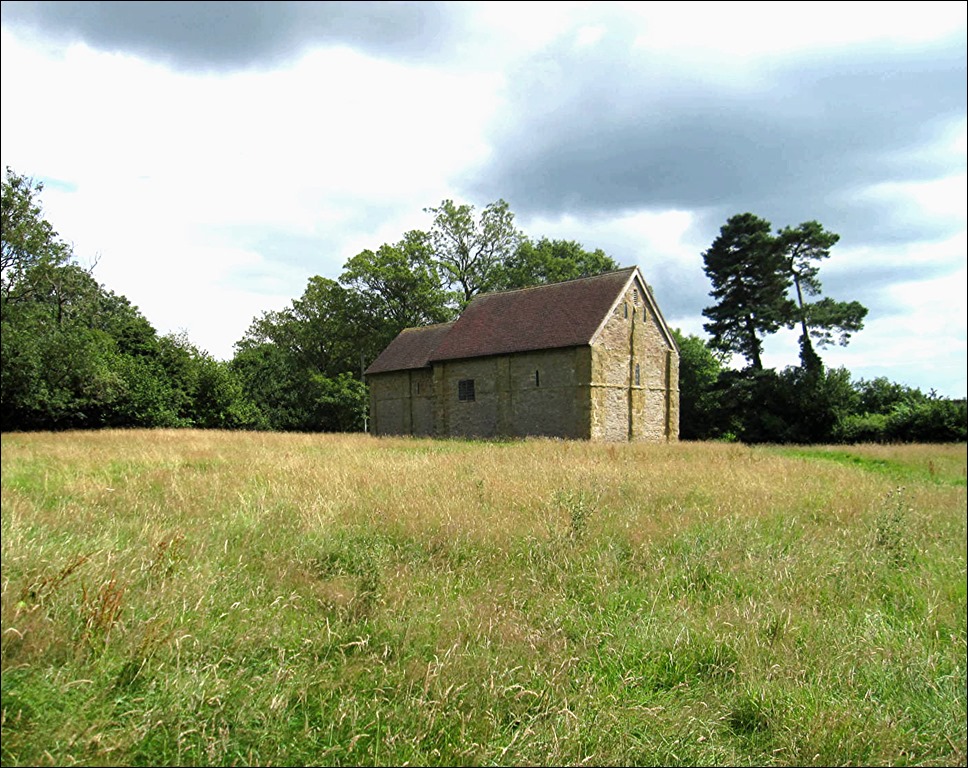
IMG_8532

View from the loo

*

IMG_3499

The key re-hung and the gate string re-looped, we returned to the car that Graham had parked tidily in a hedge, and meandered on. More narrow winding lanes – more unfamiliar terrain with Clee Hill now looming on our right, more searching for signposts in the overgrowth which involved a U-turn or two. We headed for Abdon, then Tugford, inching past farm vehicles, slowing for a girl on a horse, narrowly missing being run over by a speeding parcel delivery van, admiring picturesque stone houses with pretty gardens, the well farmed fields, and at last regaining the road home at Broadstone.

Back in Wenlock, we felt we’d been a long way away, and for a very long time. It was that well known Rip Van Winkle effect that often happens in Shropshire if, in a madcap moment, you choose to leave the main road.

copyright 2019 Tish Farrell

Lens-Artists ~ Taking A Break  This week we’ve followed Tina’s wise advice.

The Changing Seasons ~ July’s High-Summer Gold

IMG_3126

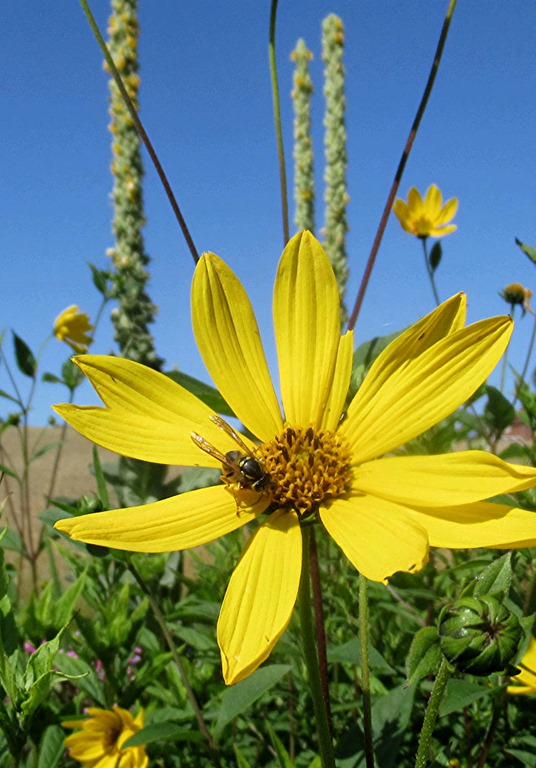
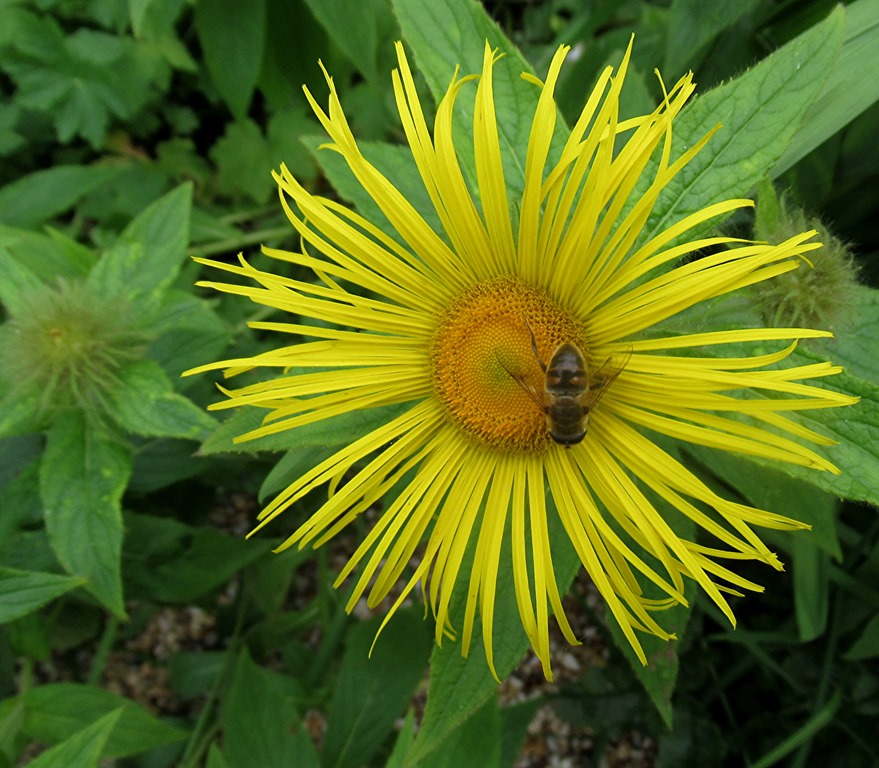
Without a doubt July’s stars in the-garden-over-the-fence are the Dyer’s Chamomile daisies, also known as Golden Marguerite (Anthemis tinctoria). They have flowered and flowered for weeks now, spilling out on to field path behind the house, tumbling into the garden through the fence. So much gold from a small packet of seeds bought from Jekka’s Herb Farm.

In fact some of you may remember that back in the winter I was worried about the plants’ survival. Some started flowering late last autumn and were still going in December. I was afraid that after such an untimely show, they would keel over and die. I needn’t have worried. I think they have magic powers, though they do have their foibles. For one thing, they are not early risers, and if you catch them too soon in the day, they will not be properly dressed. Each night as the sun goes down they fold back their petals, tight to the stem so they look like a crowd of golden lollipops. Now there’s a thought to ponder on. It makes me wonder if they do this to attract particular  night-time pollinators.

IMG_2977

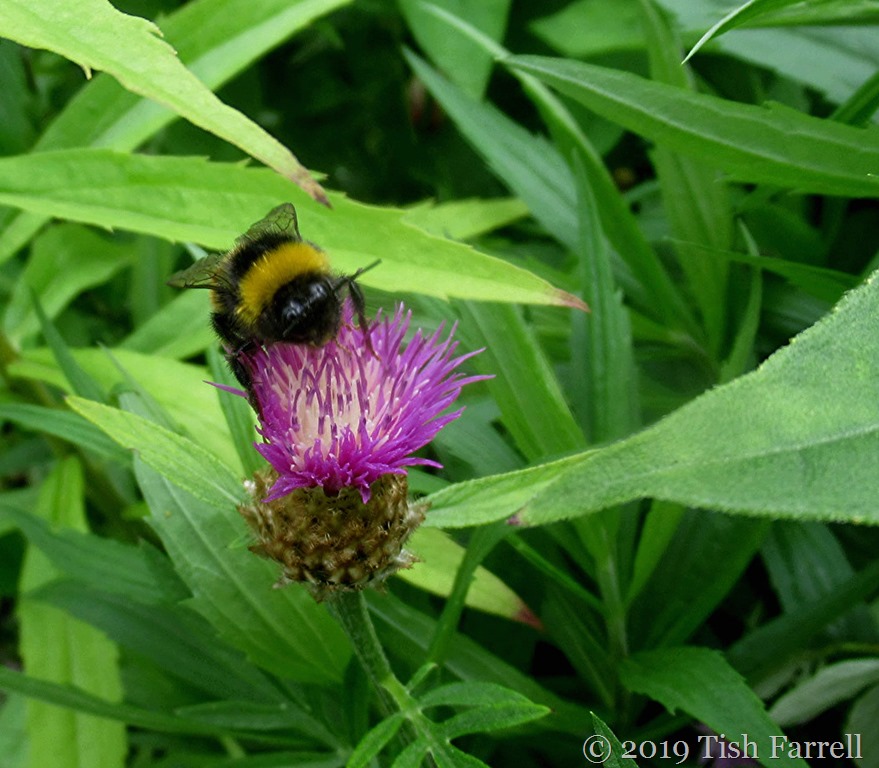
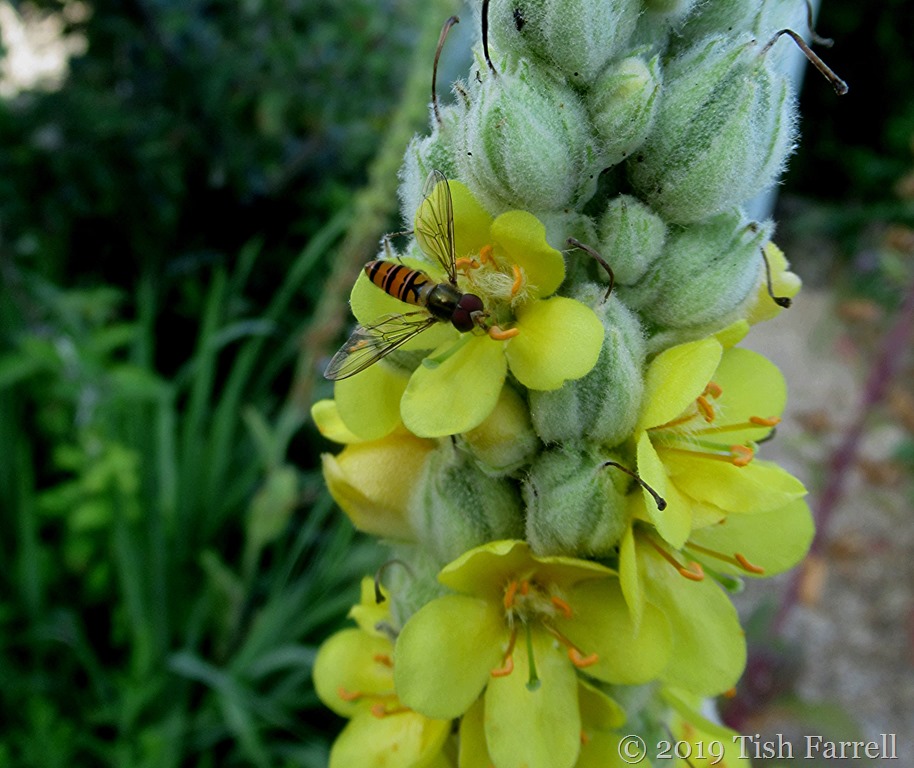
And talking of pollinators the garden has been humming with hoverflies, bumbles and honey bees. And now as the month draws to a close, hot on Marguerite’s sunshine heels come Helianthus, Doronicum, Golden Rod, while among them, dots of mauve and purple from Centaurea, Phlox and Drumstick Allium add a touch of flair. What a happy garden. Which of course makes us happy too. So I’m passing it on Sun even though today it is raining here in Shropshire.
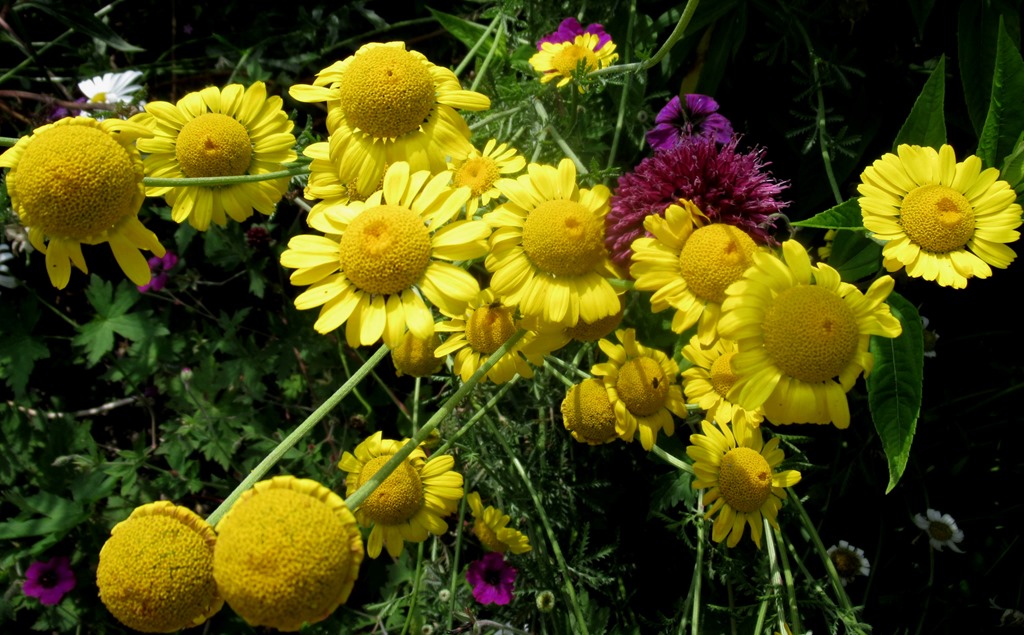
IMG_3137

IMG_3194IMG_3267

IMG_3185

IMG_3258

IMG_3273

IMG_3268

IMG_3007

IMG_2961

The Changing Seasons ~ July 2019

Please pop over to Su’s to see her changing seasons in the southern hemisphere.


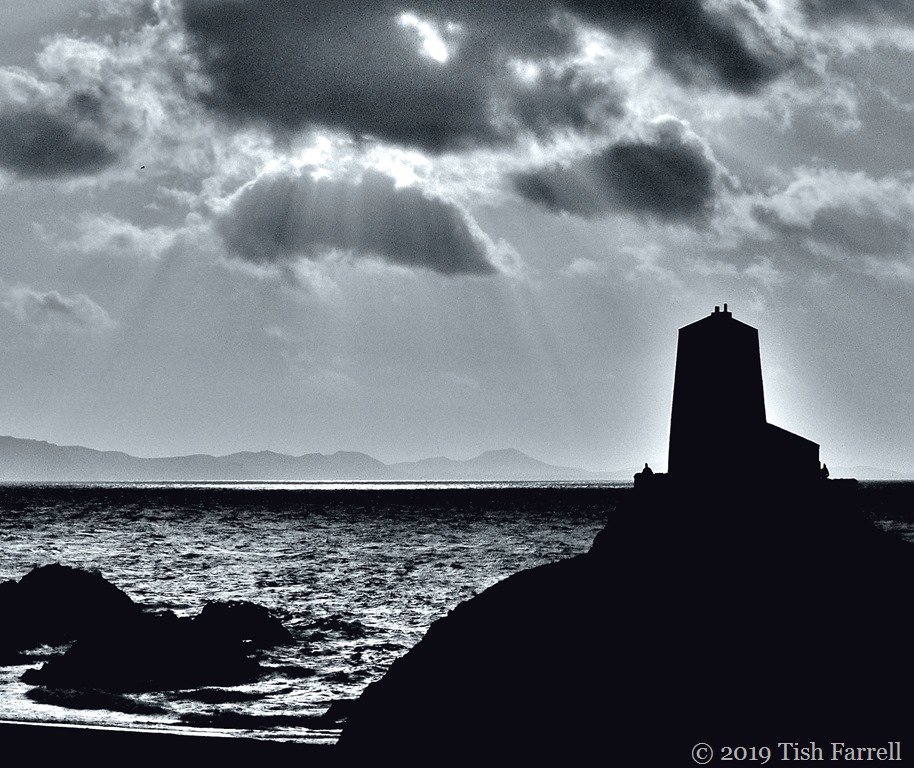
Twr Mawr Lighthouse On Llanddwyn Island

P1060377

Llanddwyn Island on Anglesey is only an island at high tide. Mostly it is a narrow spit reaching out across Llanddwyn Bay to the mountains of the Welsh mainland. It is named after the early 5th century Christian mystic, Dwynwen who, unhappy in love, is said to have retreated to the island, living out her days there alone. Later she became known as the Welsh patron saint of lovers, and in medieval times pilgrims would flock to the island in hopes of divining the faithfulness of their own loves at Dwynwen’s well. In fact so much revenue was raised from the pilgrims’ quest for true love that in the 16th century a substantial chapel was built on what was believed to be Dwynwen’s own place of sanctuary. You see the chapel ruins if you go there today.

The lighthouse was built in 1845 to guide shipping entering the Menai Strait from the south. Now it serves mostly as a very striking landmark, viewed here on a blustery Christmas morning a few years ago.

Lens-Artists ~ Seascapes

Bugs In My Borders And More About Climate Change

IMG_3216

It’s cool today after yesterday’s roasting, and thinking is easier. I’m still brooding on Boris Johnson’s climate change contentions (quote and article link in previous post) and it occurs to me that when an issue becomes polarized between sceptics and supporters, more energy goes into the argument than the resolution. In other words, nothing gets done and the conflict becomes an end in itself.

A poor end, I might add; the kind that happens in marriages, between nations, in neighbour feuds. And so when it comes to the climate-change sceptics, those cash-loaded, vested-interest, shadowy entities who fund political campaigns, and infiltrate their agendas across our mass media through advertising and sponsorship, then such wily bodies with share-holders to appease are sure to understand this very well. Distract. Confuse. Immobilize.

In some ways, then, whether rapid climate change is caused by humans or is the product of the planet’s own cycles, isn’t the point. The point is we need to act, because we’ve known for decades that environmental degradation affects the climate. If you cut down a forest, there will be less rainfall and more soil erosion. If you overgraze grassland you will create a desert. If you crop, mine or drill for natural resources and leave a wasteland of pollution you threaten the lives of the locals and their resulting survival tactics may only add to the problem.

Another fact: humans have been radically changing the natural environment for 10,000 years, ever since they took up cultivation and herding for a living. There is absolutely no doubt that these events happened. Environmental degradation creates and accelerates human poverty in a multiplier vortex of deprivation. Those of us who live in more privileged conditions may then be alarmed by the threat of arriving migrants, and this in turn starts colouring the complexion of a receiving nation’s politics – and not for the better for any of us.

But many of these things can be fixed. If we want to fix them. And since thinking globally is too big ‘a think’ for most of us, then there is much that can be done on local and regional levels. Here is a stunning example from China. Watch the video and be heartened and amazed. This is what it says about itself:

In 2005, the Chinese government, in cooperation with the World Bank, completed the world’s largest watershed restoration on the upper banks of the Yellow River. Woefully under-publicized, the $500 million enterprise transformed an area of 35,000 square kilometers on the Loess Plateau — roughly the area of Belgium — from dusty wasteland to a verdant agricultural center.

https://www.youtube.com/watch?v=8QUSIJ80n50&t=1810s

The further good news is, the Loess Plateau model is now being used to tackle desertification in other parts of the world. So you see we CAN do it. Acting locally, regionally, nationally can go global.

IMG_2928

copyright 2019 Tish Farrell


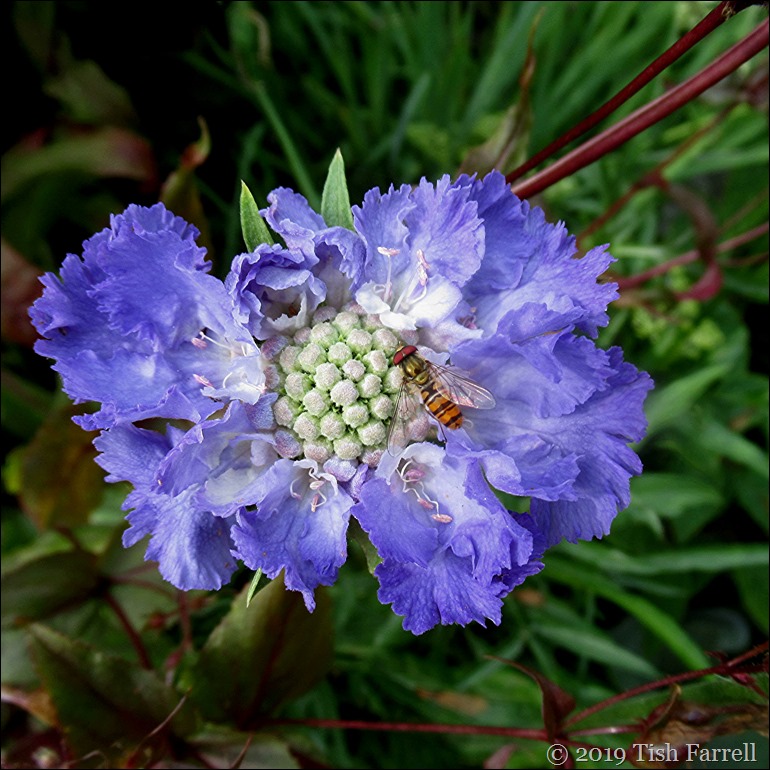
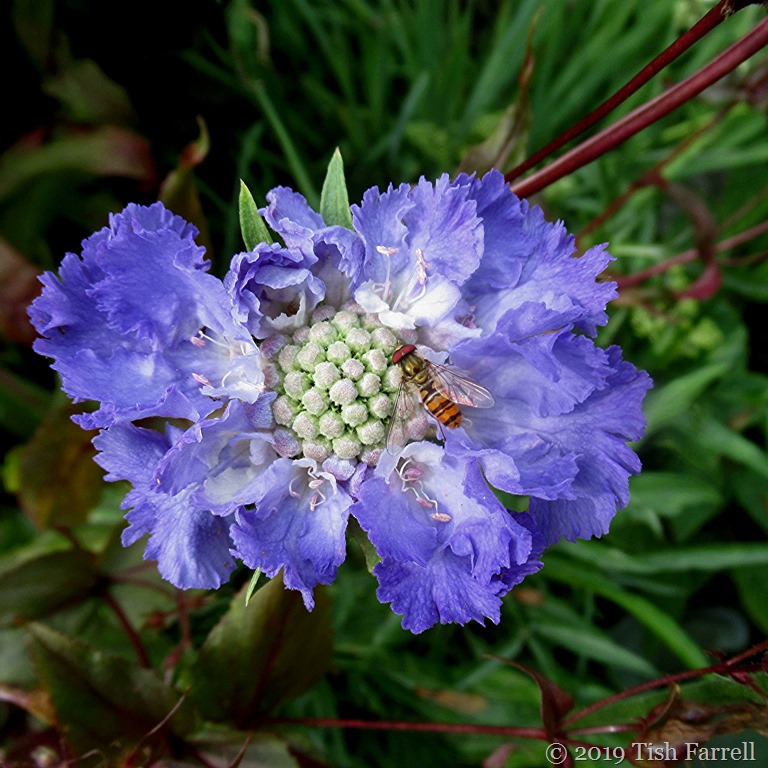
July Squares #26