Passing On The Saxon Past: Some Mystifying Fragments

Wirksworth Saxon carvings

Here’s a fine thing: Saxon carvings some 1,300 years old, but recycled in the 13th century when Wirksworth’s ancient church was being rebuilt. The curious fragments have been popped into one of the main inside walls, a cobbled assemblage of ram’s head, a wolf (or boar?), a leopard-like creature, a horse, and in their midst, a royal couple (?).

It is thought the carvings came from an early Christian building or Saxon cross. Wirksworth, in Derbyshire’s Peak District (England’s East Midlands) was once part of the great Saxon kingdom of Mercia, whose kings and sub-kings held sway over much of England from CE 600 to 900.

Christianity was established there in the mid 7th century as a condition of a peace treaty between pagan Mercia and neighbouring Christian Northumbria. Northumbrian Princess Elchfrida travelled south into Mercia to marry Peada, son of Penda, the last great pagan king of Mercia. She brought with her an entourage of missionary priests, one of whom, Betti, founded the church at Wirksworth in CE 653.

So could the couple be Elchfrida and Peada? We’ll never know. Though we do know from Bede that the real-life Elchfrida later betrayed Paeda, which led to his death and the reassertion of Mercian supremacy under his brother, King Wulfhere.

*

Wirksworth coffin lid

*

The church has another mysterious Saxon treasure, known as The Wirksworth Stone. It is a coffin lid dating to around CE 800, found a thousand years later during building work. The lid covered a large skeleton whose burial position under the floor close to the altar suggests a person of high religious status, an abbot perhaps.

Wirksworth Saxon coffin lid

But looking now at these curious works, and pondering, too, on my likely Anglo-Saxon origins, I can’t help but think of the opening line from L.P. Hartley’s novel The Go-Between:

The past is a foreign country; they do things differently there.

Wirksworth St Mary's

St. Mary’s, Wirksworth

Cee’s Black & White Photo Challenge: statues, sculptures and carvings

Days Of Frost And Sun And More Upended Reflections

IMG_2534ed2a

This week the weather gods are treating us to hoar frosty nights and chilled, sun-filled days. The wind has dropped too – ideal conditions, then, for watery reflections. So here’s a flipped image of the River Severn, and a mysteriously vivid mirror-world that, in this photo at least, looks more real than reality. Strange how that can happen.

*

The photo was taken yesterday afternoon on a trip into Shrewsbury, our county town. Here it is restored to uprightness.

IMG_2534ed2

*

And now the upstream view, showing off the Welsh Bridge, the town’s westerly exit. (There is also an English Bridge over the easterly stretch):

IMG_2538ed

The Severn is Britain’s longest river (220 miles). It rises in the mid-Wales mountains and then meanders down England to the Bristol Channel and thence into the Celtic Sea. At Shrewsbury it all but encircles the town centre, a hilltop settlement of ancient Saxon origins and ever a busy centre for trade and manufacturing. The river was once its super highway, woollen cloth and wool being  key export commodities from which great fortunes could be made. These days the riverside parks and walks are a precious resort for tranquil pursuits (and reflection) away from nose-to-tail traffic that clog up the mediaeval streets. Interesting the ways things change.

More sun and frost promised tomorrow.

The Day The Sun Fell Into Henllys Woods And Other Light Shows

Henllys Woods

It is said that the Druids faced their final battle with the Roman Army on the North Wales island of Anglesey in 60-61 AD. According to Tacitus, things did not end well for them and their sacred oak groves. [See my earlier post Island Of Old Ghosts]. Early on in the invasion of Britain, the island had become a refuge for resisting Celtic warriors, doubtless assuming that the Menai Strait would present an obstacle to the legions. (It didn’t).

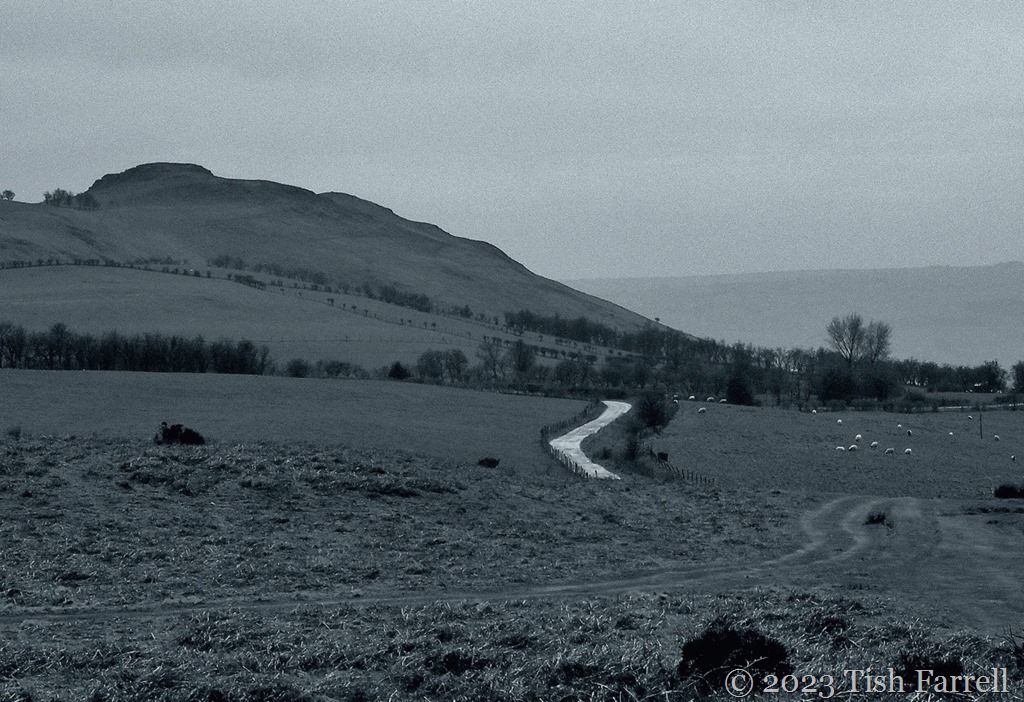
But for the Druids – the seer-diviner-lore-keeper-law-makers of the community, I tend to wonder if it wasn’t the island’s more extraordinary characteristics that they drew on. The quality of the light for one, and especially in winter when the sun over sea and strait and mainland mountains creates some mesmerizing effects, even when caught in monochrome.

P1060396 - Copyc

P1060522sep

100_5262

Henlyss Woods 2

Cee’s Black & White Photo Challenge: Light

Over The Garden Fence ~ News From The Crab Apple Fly-By

IMG_2475ed1

Well, haven’t the birds tucked in well over the past few weeks. I have to say, though, I rather begrudge the number of pigeons who’ve come scoffing at our little Evereste tree. But still, the blackbirds have had their fair share too.

Here’s how the tree looked in early October, aglow in late-day light:

IMG_1890ed

*

And in no time at all it will look like this:

IMG_0297re

*

And like this:

IMG_0366re

*

And so the gyre of life, loss and renewal endures; never mind the doom-mongers.

IMG_2123ed

Looking Back: The Old Stones Of Din Lligwy

IMG_2317ed

We came here last week, Monday 2nd January 2023. I’d been here before – the north-easterly corner of Ynys Mon (Anglesey) and to this field above the sea, where there are ruins of a Norman chapel (12th century) and a Romano-Celtic settlement of the late 300s AD.

And with all these chronological markers in place, I should perhaps add one more and say that it was probably 60 years since I was last here. Sixty years. Ye gods! How time does fly.

Back then, we were visiting what my mother mistakenly called ‘a stone age village’. It was one of my big holiday excitements whenever we came to Anglesey.

IMG_2329ed

Above and below are the settlement’s two circular houses, inhabited during the later Roman era, but abandoned by 400 AD when the legions departed. So, mummy dear, not a Stone Age village at all, though unknown to me at the time of those childhood visits, there is in fact an impressive Stone Age monument very close by.
IMG_2327ed

*

As you can see, the stone houses have massively constructed walls, faced inside and out with huge slabs, and the space between packed with rubble. They probably supported conical, timber-framed and thatched roofs. (A reconstruction HERE)

IMG_2335ed

There are also at least 7 rectangular buildings associated with the houses. Two of these contained several smelting hearths and were probably iron-making workshops supplying the local Roman legions with tools and weapons. The whole site was then bounded by a pentagonal wall, well over a metre thick, and entered via a gatehouse. There were also further house remains outside the boundary wall.

To me it has the looks of a secure unit. Perhaps with workshops under direct Roman control. By the 4th century the locals could well have been growing restive; itching to arm themselves. This is just my hypothesis. Other interpretations are that the outer wall was for keeping cattle in, and that the defences were considered ‘light’.

*

But now a step back in more recent times and the way things were for the Ashford family circa 1960:

Din Lligwy

*

And finally a giant’s leap back – some 5, 000 years:

IMG_2367ed

It’s only a short walk from the Romano-Celtic settlement, and barely a stone’s throw behind a field hedge, but here we have a Stone Age cromlech, the burial place of some thirty Neolithic farmers, men, women and children. Among their remains archaeologists also found animal bones, flint tools and pottery.

The hugeness of the capstone is breath-taking. It’s reckoned to weigh 25 tons and, in consequence, it’s also thought that the stone was already in situ at the time of construction (a handy glacial delivery?) and that the tomb builders excavated underneath, wedging it on boulders to create the chamber. The whole was then probably covered with turves and soil, and as with similar monuments that were in use over a period of time, may also have included some kind of ceremonial forecourt. But however it was constructed, it surely took a massively concerted effort.

IMG_2358ed

*

Our visit over, we turned back to the car. Back to the present. Across the lane from the tomb was the misty view of the Great Orme on the mainland (named by the Vikings during the next invasion phase). Behind us was the  small place called Din Lligwy  – five millennia of human history documented in stone.

On my personal time-scale, I’d like to say I’ll be back there in another sixty years, but it seems unlikely. Still, you never know…

Lens-Artists: Looking Back This week Sofia sets the challenge.

copyright 2023 Tish Farrell

A Curious Rendition?

Elvised

Well, it is surprising, isn’t it – to find this Elvis artwork at the head of the grand staircase at Chatsworth House, Chatsworth being one of England’s most prestigious stately homes and the country seat of the Dukes of Devonshire.

Elvis

Here’s more of the art work. It is pretty surreal, however it comes: whether in the original technicolour or in monochrome.  (I’m afraid I omitted to make a note of its creator). But now I discover that the likely reason for its presence is that the late Dowager Duchess of Devonshire, otherwise known as Debo to her friends, was a huge Elvis Presley fan and had a fondly kept signed photo of him on her wall.

Also when the Duchess died in 2014 at the age of 94, he was to play a big part in her simple funeral service, held in the Chatsworth estate church. She had chosen his recording of ‘How Great Thou Art’ to play her out as she was borne aloft in her woven wicker coffin stranded with ivy and autumnal hawthorn berry sprays. A surprising soundtrack perhaps in rural gentrified Derbyshire.

P1080752 monchrome

Debo was the last surviving Mitford sister, a notorious brood of five ‘gels’, several of whom, in pursuit of love, bolted from deemed acceptable aristocratic marriages in order (between them) to embrace the full spectrum of political persuasion. Jessica was a communist; Diana ran off with fascist Sir Oswald Mosley; Unity pursued Hitler; novelist Nancy was a socialist and left her husband for a protracted affair with a French statesman; Pamela left her husband to live with an Italian horsewoman, while Deborah, in true English gentry style, married a future duke and spent her life developing Chatsworth House as a premier visitor attraction, including the pioneering of heritage shopping and the marketing of local produce.

You can find her final accompaniment ‘How Great Thou Art’ on YouTube.

Cee’s Black & White Photo Challenge: things musical

The Best Of All Seasons 2022

IMG_9280 - Copy

New Year on Newborough Beach, Anglesey –  mainland Wales in the mist

*

We began and ended 2022 on the island of Anglesey in North Wales. In between there were meanderings to favourite spots in Shropshire and around and about the town of Much Wenlock.So here we have a random selection of a year’s happy moments and things that caught my eye.

IMG_0067cr

January walk on Wenlock Edge – looking down on Much Wenlock

*

IMG_0099

On the Cutlins in February

And finding aconites: first signs of spring

IMG_0101

*

IMG_0147ed

The Linden Walk in early March

And alder catkins in the Linden Field

IMG_0150cr

*

IMG_0366re

April over the garden fence

Oil Seed Rape in full flourish in the Corve Valley

IMG_0388re

*

IMG_0442re

May on the Linden Walk

And on Windmill Hill

IMG_0634

*

IMG_0775ed

June on Wenlock’s old railway line

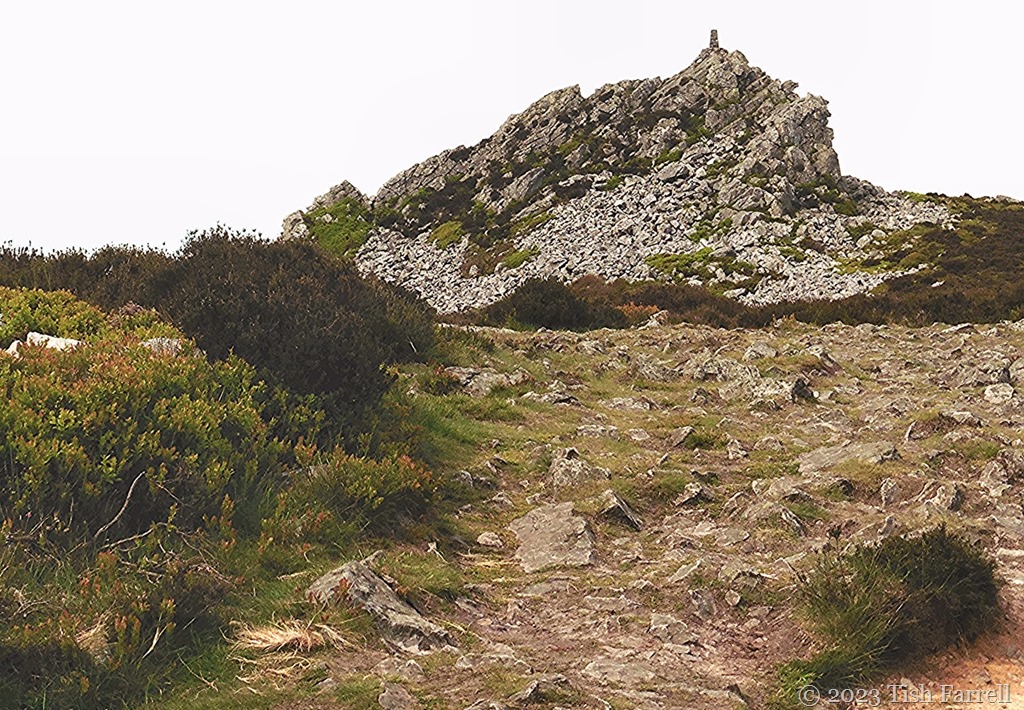
And on the Stiperstones viewing the Devil’s Chair from a respectful distance

IMG_0540ed

*

IMG_0799ed

June in the garden

And on the Bull Ring, Much Wenlock

IMG_0809

*

IMG_0969

July in the garden

And in the Shropshire Hills at Mitchell’s Fold

IMG_0862ed

*

IMG_1035

August over the garden fence

And with the Cutlins MacMoos during the two-day heatwave

IMG_1174

IMG_1235ed

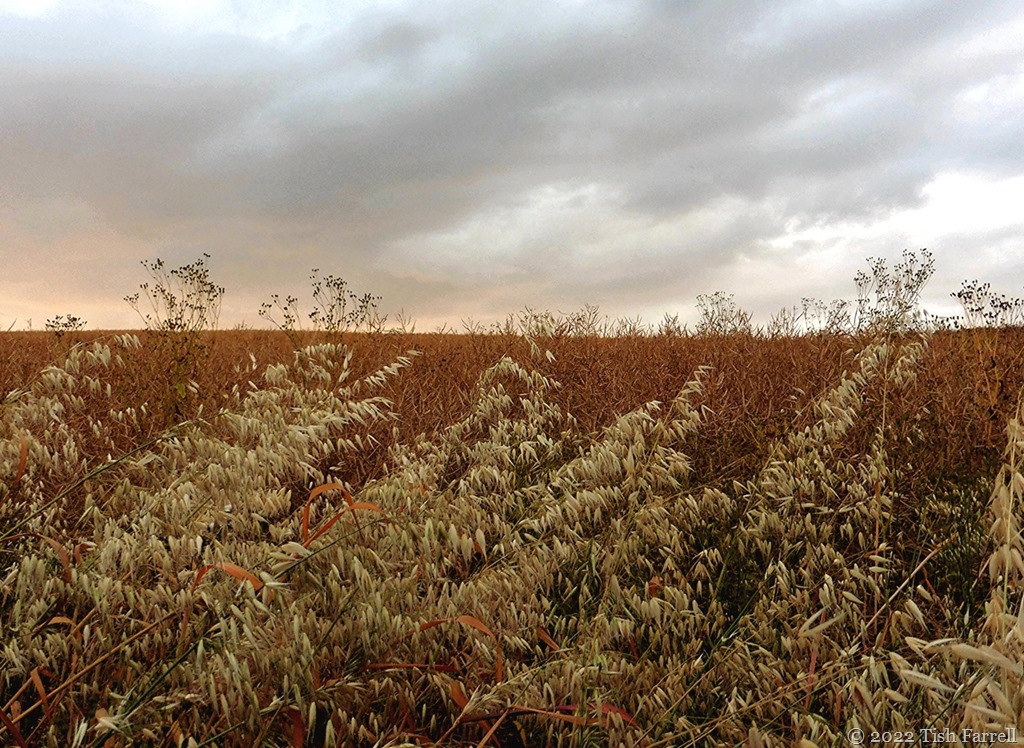
And after the wheat harvest on Callaughton Ash

*

IMG_1382ed

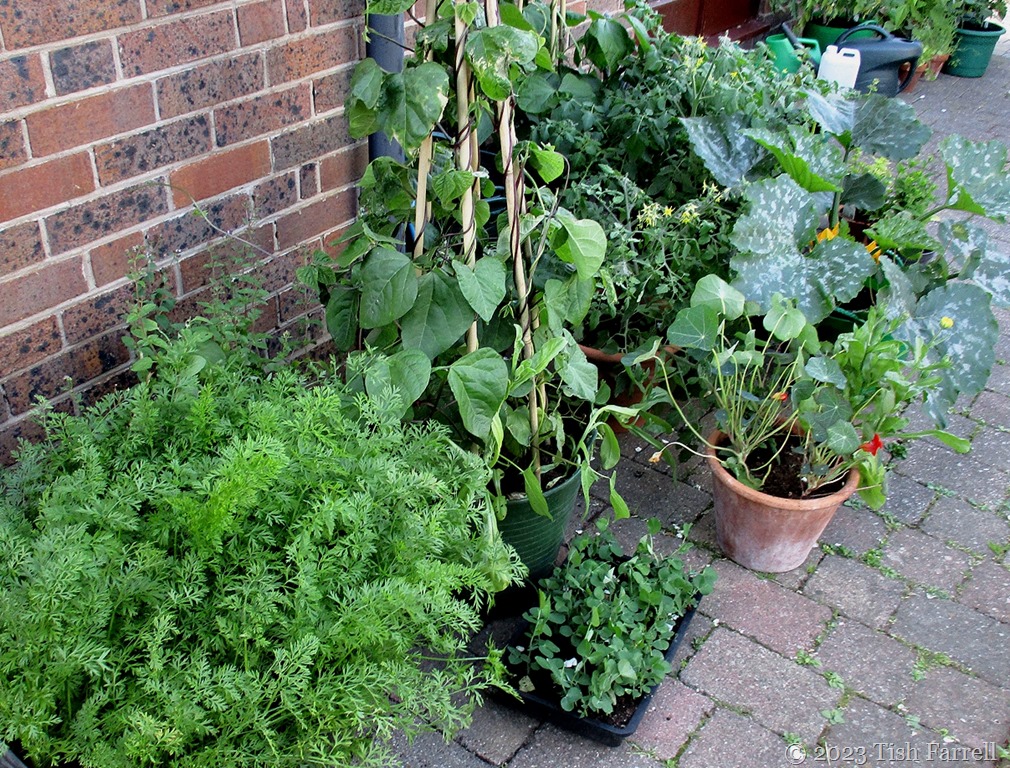
September: harvesting the field beans in Townsend Meadow

Gathering storm clouds, but no rain

IMG_1453ed

*

26

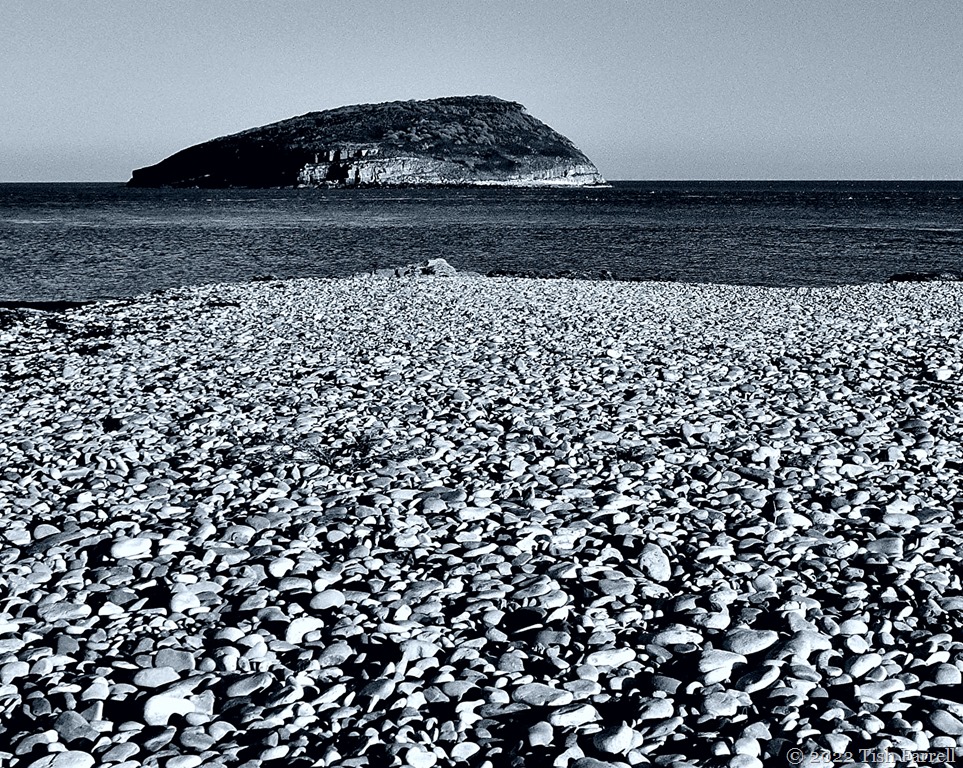
Early October and back to Wales: Barmouth Beach

And October’s end in Ludlow

IMG_1975ed

*

IMG_1994

November: windfall quinces at the allotment

And a sundowner stroll on Windmill Hill

IMG_2049sq

*

IMG_2147ed

December over the garden fence

And on hoar-frosty Downs Hill

IMG_2173ed

*

IMG_2284ed

And so back to the beach, Lligwy, Anglesey, January 2023

*

Lens-Artists: Favourite 2022 images John at Journeys with Johnbo sets the theme for this week.

The Shortest Day And A Trip To Ironbridge

IMG_2185edIt seemed like a good way for the Farrells to mark the winter solstice – a little wander through Ironbridge town and over the bridge itself. It was anyway a glorious day, and the bridge was looking its festive best in its ochre-red livery.

A fine exemplar of Shropshire’s heritage.

Those of you who come here often will know that this is reputedly the world’s first cast iron bridge, built by Abraham Darby III and opened for the carriage trade and other toll paying traffic in the New Year of 1781.

Of course, as was intended all along, it became the sightseeing phenomenon of the age. Everyone who was anyone had to come, look and pronounce on this pioneering wonder. The Coalbrookdale Company of ironmasters were naturally well prepared. They had also built the Tontine inn, a smart hostelry at the foot of the bridge.

Here it is with its mint green shutters, and still open for business. Also if you squint, you can ‘see’ the church clock is just striking noon. Can  you hear the chimes ringing out on the cold December air?

IMG_2192ed

*

The middle of the bridge is a good spot to stop for views of the Severn Gorge, now a World Heritage Site.

IMG_2195ed

Once, this upstream view would have been filled with busyness. There were boat builders’ yards along the left bank. Then there was the river traffic itself, Severn trows, the great sailing barges up from Gloucester and Bristol, putting in at the Coalbrookdale Company’s warehouse, just visible at the river’s vanishing point. The trows brought in luxury goods: fine glassware, casks of port, Madeira, Spanish wines, sugar, molasses, serge cloth, the latest hats and bonnets, peach wood for cabinet making, blocks of marble, tobacco, salt fish.

On the return voyage the trows took on consignments of pig iron and castings of every kind, in particular the iron cauldrons, latterly known as missionary pots. They came in all sizes from the family porridge pot to large scale containers for industrial processes. They were rarely, if ever, deployed for the braising of missionaries.

IMG_2197ed

This downstream view suggests unchanging tranquillity, but think again. Come the February flood season, the force of water rushing down from Wales and through the Gorge can be devastating. Even these days, with flood defences in place, there can be extensive overflow.  The Great  Flood of 1795 saw every Severn bridge damaged or taken out. Only the Iron Bridge remained unscathed.

Times of drought brought other perils. Large sandbanks formed and well loaded barges could find themselves grounded, often for weeks at a time. Such eventualities were catered for by a string of inns along both banks.  And these were not only places of respite for the stranded. The riverside taverns were also said to be the haunt of industrial spies, out to gather company secrets over a jug or two of ale.

IMG_2193ed

IMG_2184ed

On Wednesday noon, 21st Dec. 2022, the Wharfage slumbered in the winter sunshine. There was barely a sign of a Christmas shopper. No coach and horses clattering up the hill to the Tontine. No carts unloading and loading precious goods in transit. No crowds of merchants’ clerks checking the cargo lists, or shouts of boat masters cajoling their crews. Or the pounding of the steam hammer at the riverside ironworks, that caused the men who worked it to grow deaf; the thud and thud and thud rebounding down the Gorge. Some things change for the better.

Happy New Year One And All

And whatever our beliefs, or lack of them, a strong prayer for more sanity and truth will not come amiss