A Long Time Ago in Africa


Scan-130520-0013 (2)

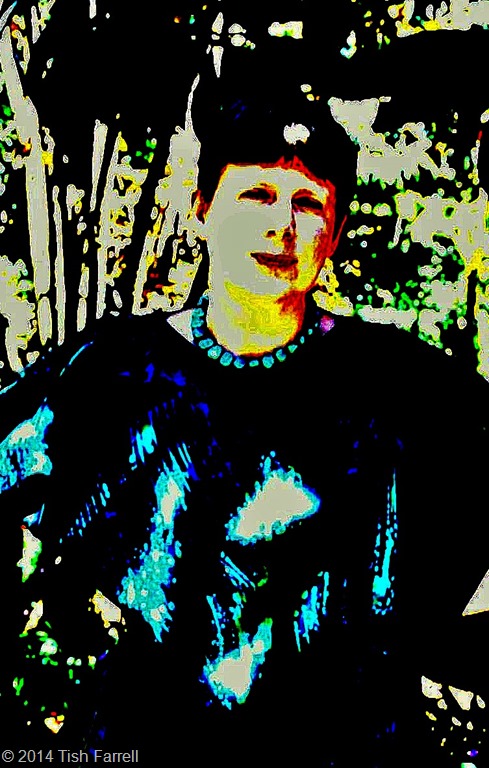
Well this is what happens when you fiddle about in Windows Live Picture Gallery. I rather like the effect – posterized for posterity, an arty rendition of UK expatriate in 1990s Kenya. The original shot is thus pretty old, just like me. I was standing in the back garden of our house in Mbabane Road, in Nairobi’s leafy Lavington district, under the loquat trees. The house is gone now, and I can see from Google Earth that Madison Insurance who owned the compound, have given it over to some development of upscale townhouses. Across the road was  the run-down state primary school. I imagine it is still run down. My days back then had a daily soundtrack of children’s voices – chanting times tables mostly.

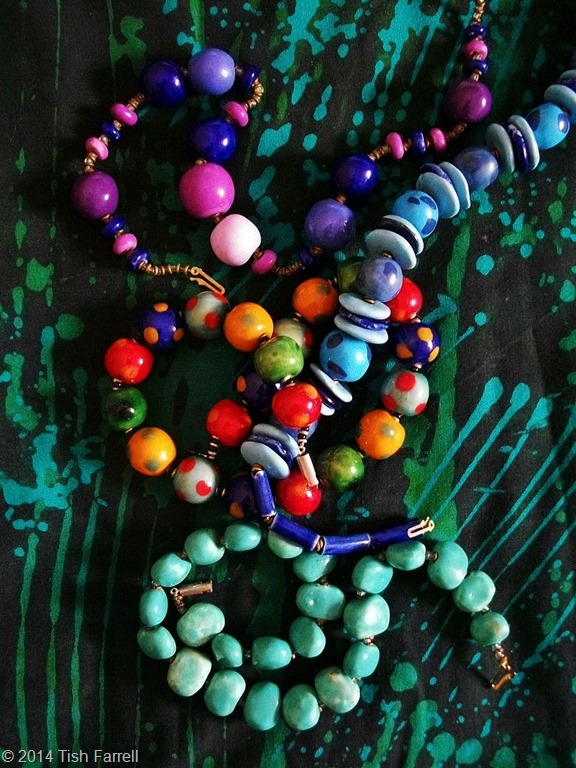
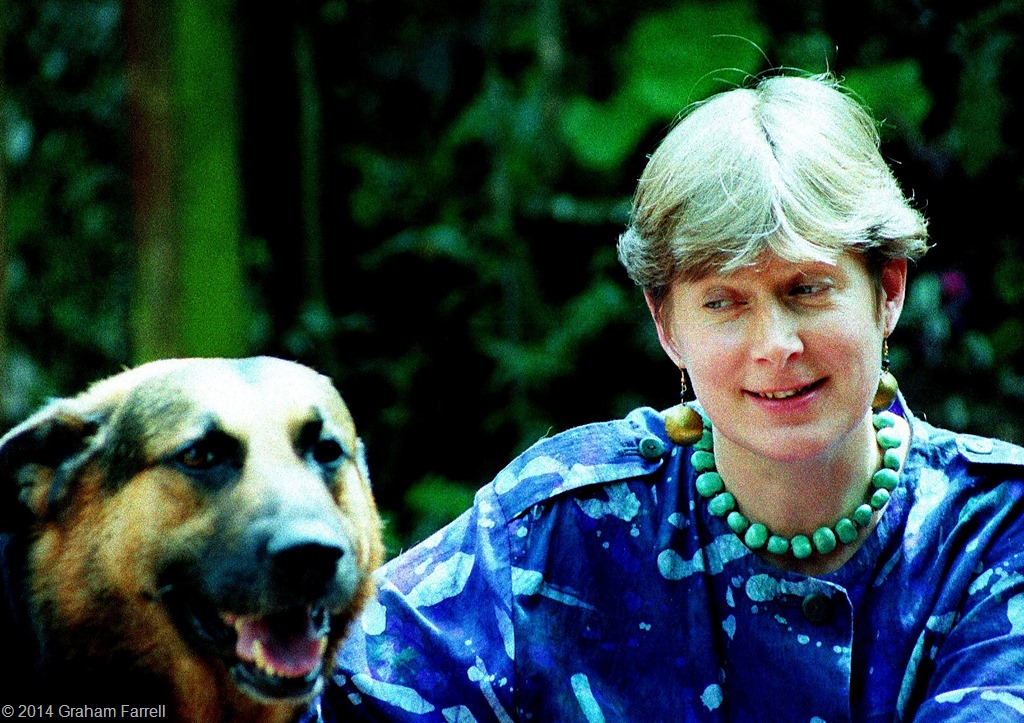
In the photo I’m wearing a self-made suit (tunic and pants) of batik cloth created at a workshop by street boys trying to get their lives together. And I’m wearing a string of Kazuri Beads, glazed ceramic beads, made by women trying build themselves and their kids a future. Kazuri means small and beautiful. The little factory in Karen, Nairobi was a joy to visit. The workshop shelves were lined with glass jars of bright beads, rather like a picture book sweet shop, while at benches in the the airy room, women created beads and threaded necklaces in colour schemes of their choosing. I’m only sorry that I seem to have no photos, but if you go to the link you can see the factory today – much expanded and employing men too.
100_5882

I still have the beads and the suit, and still wear them too, although the batik cloth is a little thin, while I, sadly, am not.

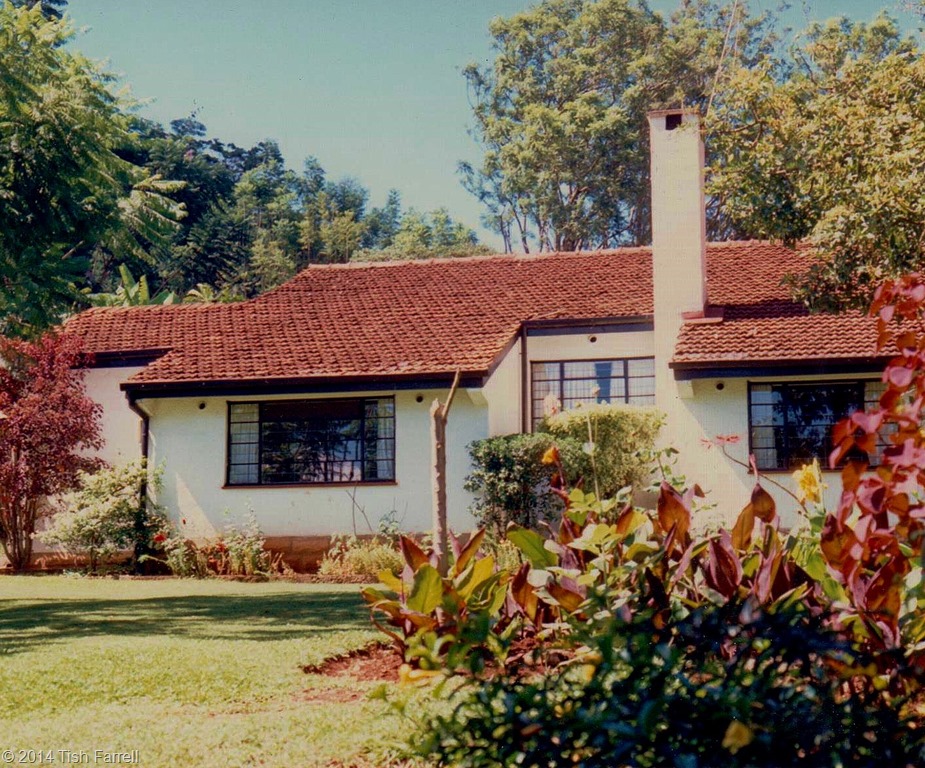
And now here’s a picture of our house – home for seven years.
003 (2)

It came with the usual services that accompany the living quarters of TCOs (Technical Cooperation Officers) working for Her Majesty’s Department for International Development. These included a well secured compound perimeter with lights, a 24/7 security guard, house alarms (checked monthly), internal security gate, barred windows, guard dog, and regular applications of pesticide by Rentokil. Phew. We did not like any of  this much, although we did like Patrick, our day guard, such a tall and gentle man. It was hard to imagine him fending off intruders. He had a farm back home in Western Kenya where his wife stayed in the good stone house he had built for her, along with their three children. He used to go home twice a year to plant or harvest his maize crop.

011

To make up for all the oppressive security, during the day I used to walk around the district on foot, roaming along the avenues. I wasn’t sure what it was I supposed to afraid of, although I did know that people did have their homes broken into, and that expats who insisted on driving large new Land Cruisers were often relieved of them (on their own compounds) by guys with AK47s, and strangely enough, soon after said expats (usually diplomats) had arrived in country and taken possession of the new vehicles via customs and imports at Mombasa port. The word on the street was that these robbers were highly connected. Very highly connected. This situation frequently reminded me of one of my father’s favourite sayings: the fish goes rotten from the head, although one would have been foolish to say this too loudly, or even at all back then.

Farrell Team Leader, Graham, had a works Land Rover for work, but otherwise we drove a battered Suzuki jeep. It had some interesting features. A previous owner had cut a hatch over the back seats, and made a fibre glass lid to go over the top. For game viewing you could simply unclip it. I didn’t drive it much, because that was the really scary thing – Nairobi driving. I often used to ponder if I could get to places by driving on the very wide pavements. Once when I forgot I was in Kenya and slowed at a zebra crossing on a city highway to let a pedestrian cross, the poor woman looked as if she would faint. I was lucky that  the Suzuki and I didn’t get flattened by a Tusker beer truck, while I and the woman stared at one other in a state of frozen confusion, neither of us able to move.

The other thing that used to scare me about driving was that parts used to fall off the Suzuki. G’s nonchalant response to my concern was, ‘Well if you were still going, you obviously did not need it, whatever it was.’

On the whole, then, it was better walking. I could peep through the cracks in the big steel gates that protected ambassadorial and diplomatic residences, and count the excessive number of garbage bags put out for BINS, the private refuse removal company. I’d see street kids and Maasai, greet the security guards who sat out on the neatly trimmed verges and chatted house to house. I was intrigued by the barber who had turned a fallen flame tree into a salon, and  I liked the smells of all the garden trees – cypress, frangipani, the warm musky smell of fever trees. When the rains came the streets would be filled with silvery clouds of termites on their nuptial flight. At dusk, the frogs in the Nairobi River way below our house would strike up frog songs that resounded across the valley. The crescent that adjoined Mbabane Road was called Applecross – a bizarrely English name that evoked pastoral perfection of the sort that had never existed outside colonial settlers’ minds.

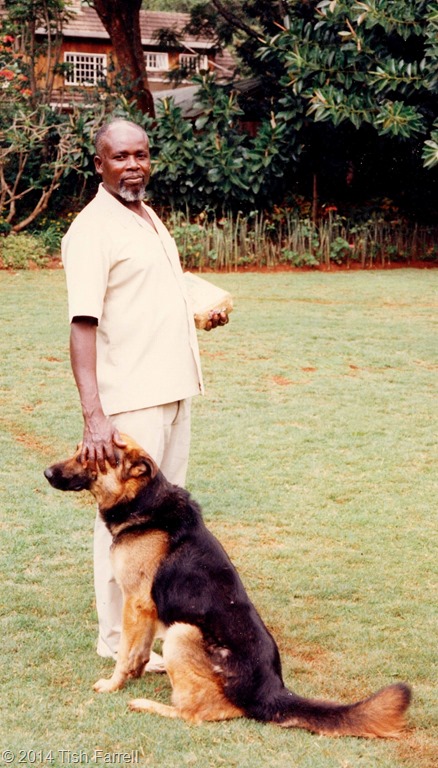
When we took over the house from G’s predecessor we also took on the resident house steward, Sam, whose homeland was in Maragoli in Western Kenya. He had long worked for expatriates, but back home and also on the borders of Nandi he had small farms – three in all. His first wife lived on his ancestral land in what had been the Maragoli tribal reserve in colonial times. He still called it ‘the reserve’. He said he had poor relations on the other smallholdings, but they were not looking after the land properly and this caused him much concern. Apart from home leave, he stayed in Nairobi with his second wife, living in the servants’ quarters at the bottom of the garden. One reason for staying in Nairobi was so his three youngest children and a grandchild who had come to live with him could go to school across the road.

Now meet Sam, with guard dog Kim. We eventually had to hand Kim over to a vet, this after he started attacking children who came to play with Sam’s children on our compound. The vet told us that some German Shepherds were prone to this behaviour, and once begun, this was not a habit that could be broken. She told us she would try to send him to a rescue centre that kept such dogs, but otherwise he must be destroyed.
002 (2)

We did not ask which of these had been the outcome, but after having one sweet little girl’s face stitched up at the hospital we could not risk it happening again. Luckily the dog missed the child’s eye and the wound healed well. Here she is then, Sera, fully recovered with only a hint of a scar under the right eye.Zaina and Sera 2

And next comes Silas, Sam’s youngest son.

012 (2)

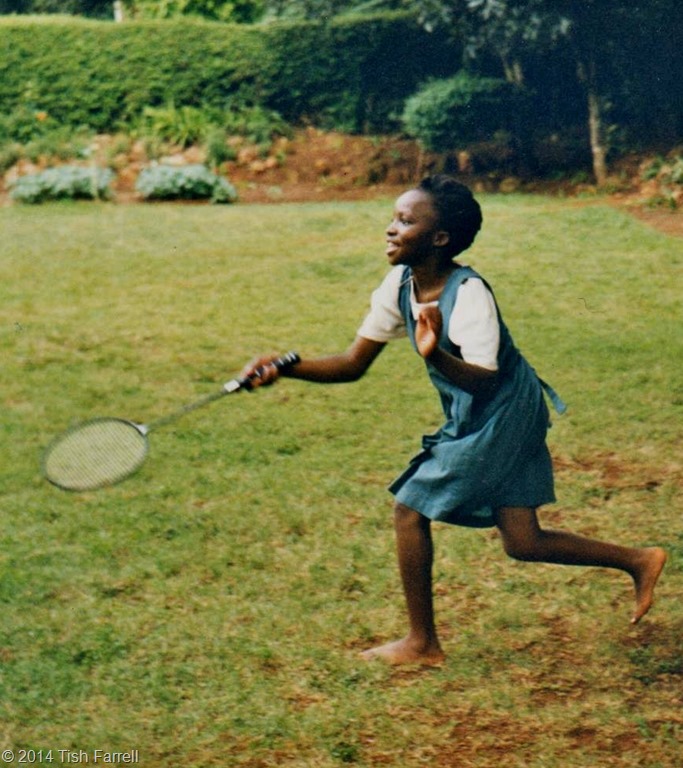
And Sam’s grand daughter, Zaina playing badminton with Silas on the back lawn.
002

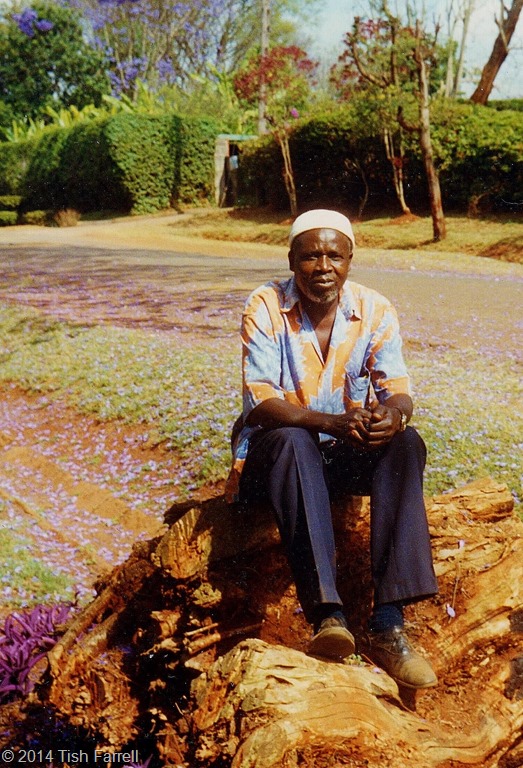
Then Sam off-duty out on Mbabane Road. He only worked half days as we didn’t have enough house work.
010

*

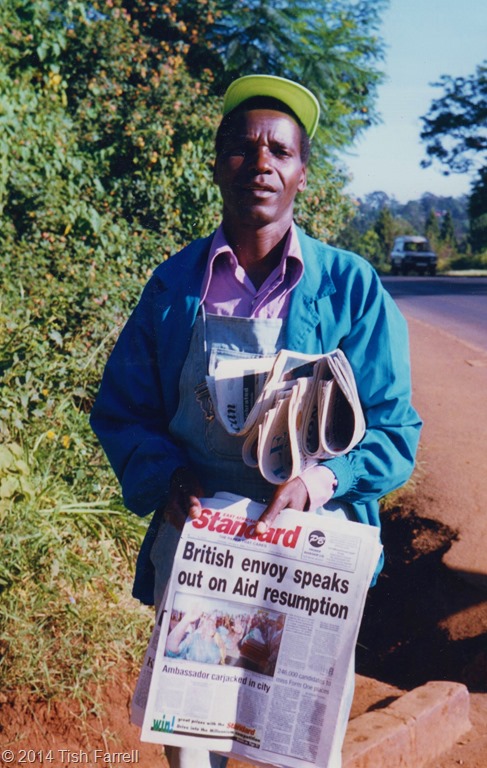
And  this is Francis, who stood every day on the corner of Mbabane and James Gichuru and sold us The Standard and Nation newspapers. He turned the newspaper round deliberately because it was featuring the British envoy, a man somewhat outspoken on Moi regime corruption.
007 (2)

And finally me again, not looking quite so postered  (but oh, so much younger) with poor old Kim, and those Kazuri beads again. Interesting days.
Tish and Kim the dog

copyright 2014 Tish Farrell


Related:

Looking for Smut: Work on Kenya’s Highland Farms

Valentine’s Day Runaway


Flickr Comments ‘A’ words – go here for more bloggers’ ‘A’ tales and photos
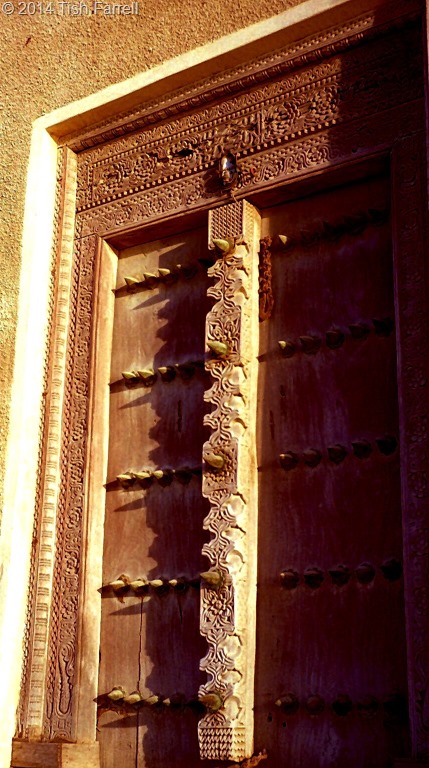
Zanzibar: time’s twists and turns


…a gateway to Africa. Through its portals passed not only slaves, spices and ivory, but also missionaries, explorers and conquerors.  

Abdul Sheriff, Professor of History, Dar es Salaam University

Scan-130429-0054

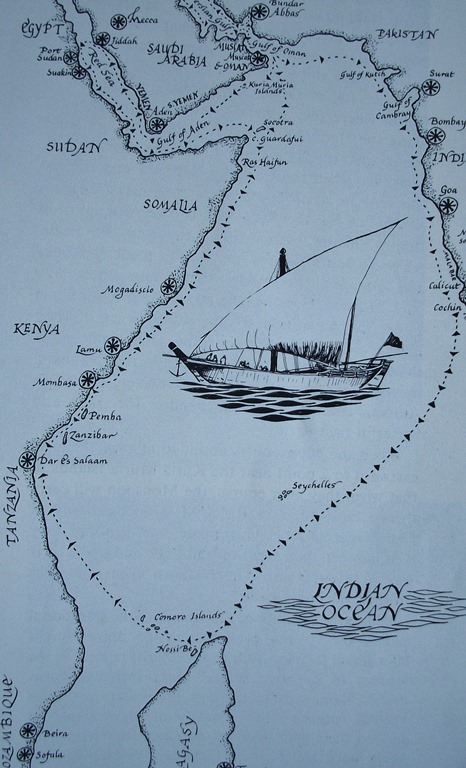
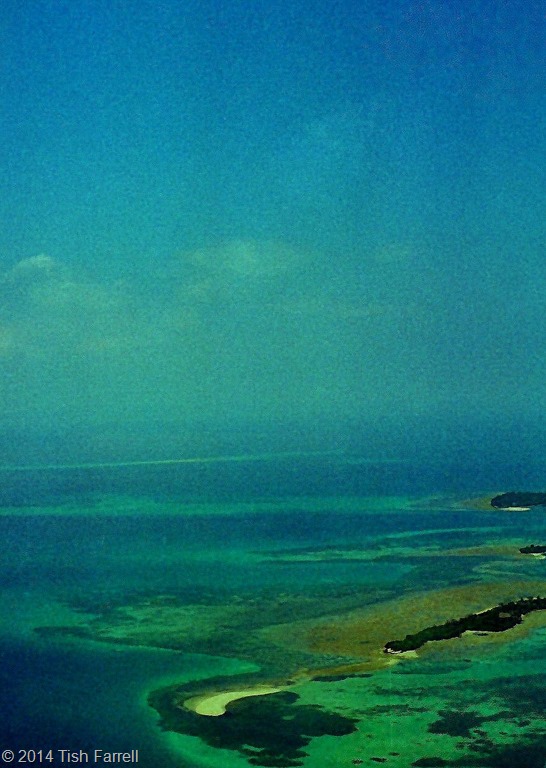
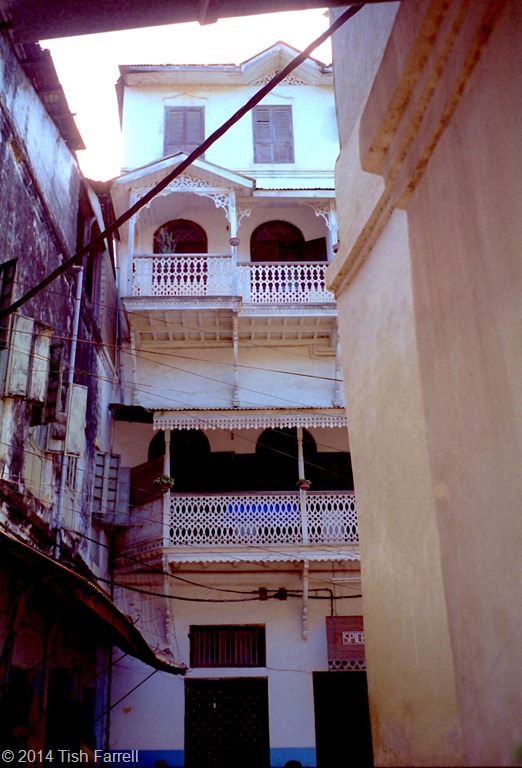
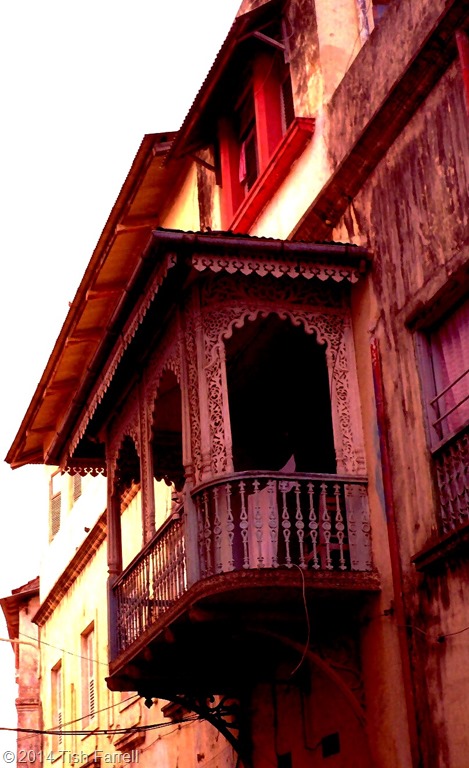
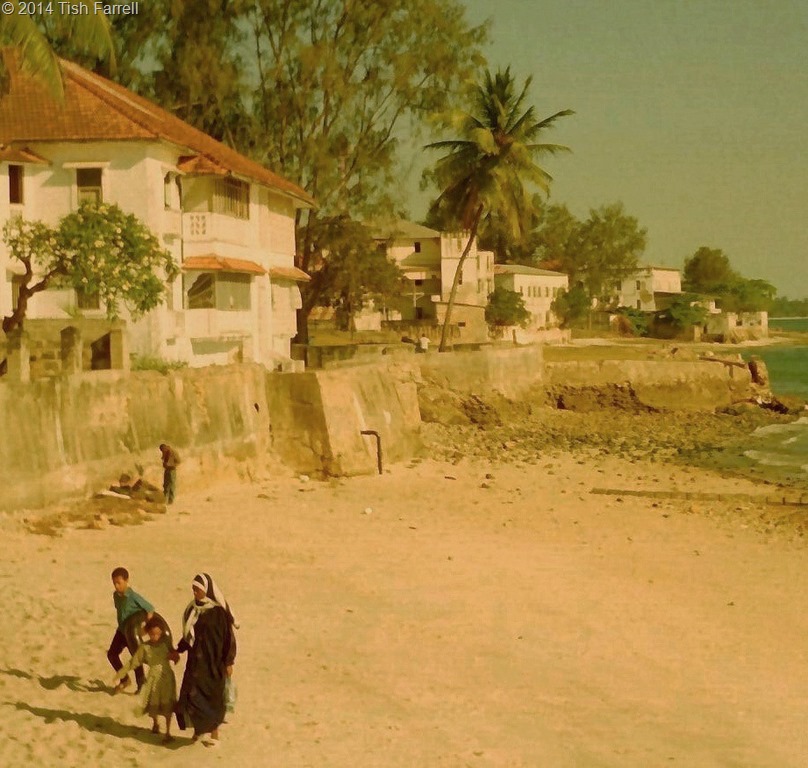
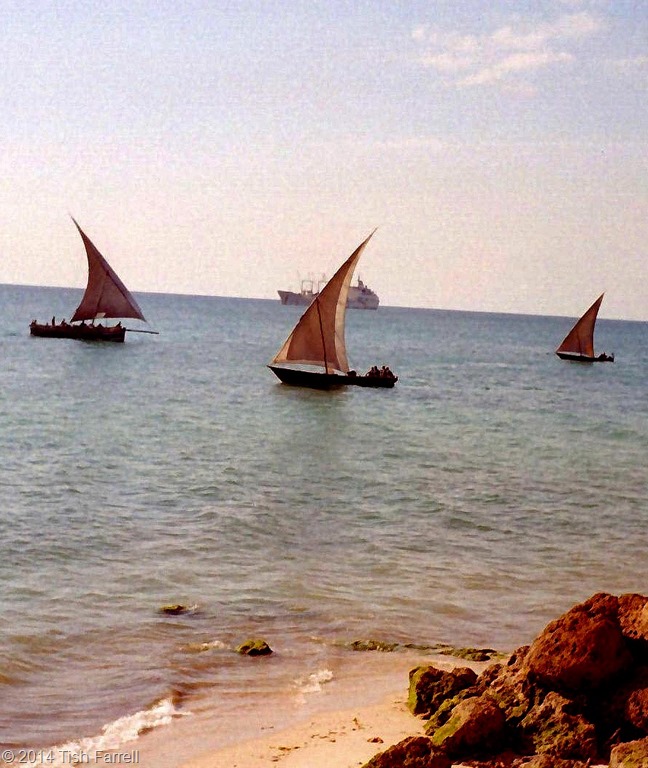
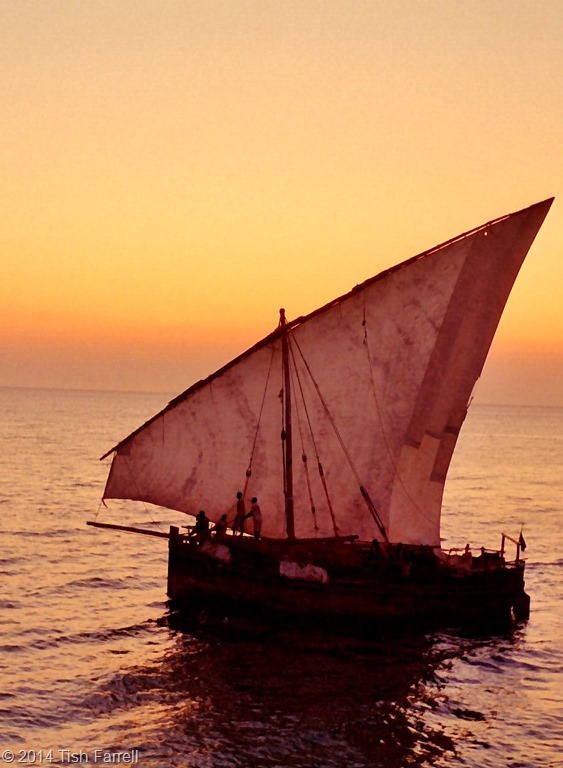
Zanzibar  – it’s all in the name – the Indian Ocean shores where Arab merchants met with African farmers and created a new people: the Swahili. In the Arabic Kilwa chronicles of the Middle Ages, the word Zanj denotes non-Muslim black people, and the word bar means coast, and the term back then referred to much of the East African seaboard – to wherever the dhow traders seasonally put in to haggle with Bantu farmers for ivory, leopard skins, rhino horn, iron, ambergris and mangrove poles.  These, then,  are the shores of the Sindbad (Sendebada) tales, but today the term ‘coast of the blacks’ survives only in the name of the Zanzibar archipelago (Unguja and Pemba Islands), now part of Tanzania.

These days too, Zanzibar Island, more properly known as Unguja, is seen as the heartland of Swahili culture, and the place where the purest form of KiSwahili is spoken. Once, though, there were many other powerful Swahili centres – independent city states that included Manda, Lamu, Malindi and Mombasa in Kenya, and Sofala far to the south in Mozambique. Such states, with stone towns built of coral rag, began evolving from at least the early 800s CE (Manda),  by which time KiSwahili was already a fully developed language, albeit with many regional forms.

100_3629

*

In fact the trade along East Africa had been going on from well before the 9th century. The Periplus of the Erythraean Sea, a Greek account of Indian Ocean trade written around 60 CE, indicates that the people of the kingdoms of Yemen and Arabia already had well established trade routes as far south as Mozambique. The Romans had also been here, doubtless making use – as all the seafarers did – of monsoon winds that in season carried them south down the African coast, or east to India, and then, with the change in the wind,s northwards and homewards to the Gulf.

Scan-130510-0008

*

The earliest traces of a stone town  on Unguja date from the 12th century when merchant princes from Shiraz in Persia settled on the island.  Over successive centuries this settlement  was destroyed twice by the Portuguese (who, after Vasco Da Gama discovered  he could sail round Africa in 1498, seized control of the Indian Ocean trade) and once by the Omani  Arabs whom the Swahili sultans of the Kenya coast called in on several occasions to help rid them of the European tyrants. The Portuguese were ousted from Zanzibar and the Swahili mainland at the close of the 17th century, and thereafter, until the British declared Zanzibar a protectorate in 1890, it was the Omani Arabs who controlled the surviving Swahili states.

Scan-130429-0102

Scan-130429-0095


The Stone Town we see today dates mostly from the nineteenth century when the place was at its most prosperous. Abdul Sheriff describes the scene:

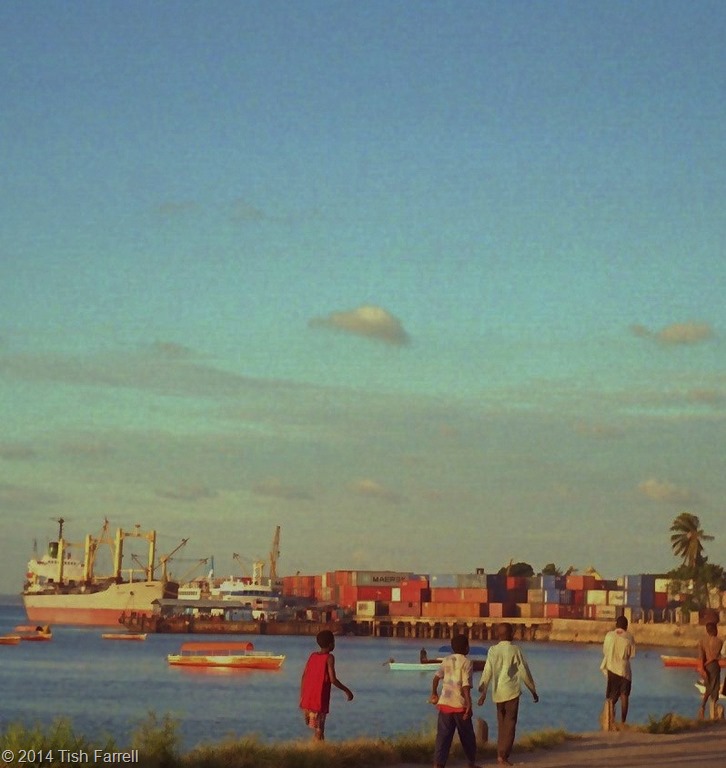
“Zanzibar was then a cosmopolitan metropolis. Its harbour teemed with square-rigged ships from the West and oriental dhows with their lateen sails from many countries in the East, carrying all the colours of the rainbow. Here Yankee merchants from New England drove a hard bargain with Hindu traders in their large crimson turbans or  Khojas in their long coats, exchanging ivory for American cloth; the Marseillais haggled with the Somali for hides and sesame seeds from Benadir; Hamburg entrepreneurs shipped tons of cowrie shells to West Africa, where they served as currency; and Arab caravans rubbed shoulders with their African counterparts from the Mountains of the Moon.”  (The History and Conservation of Zanzibar Stone Town 1995).

Scan-130429-0027

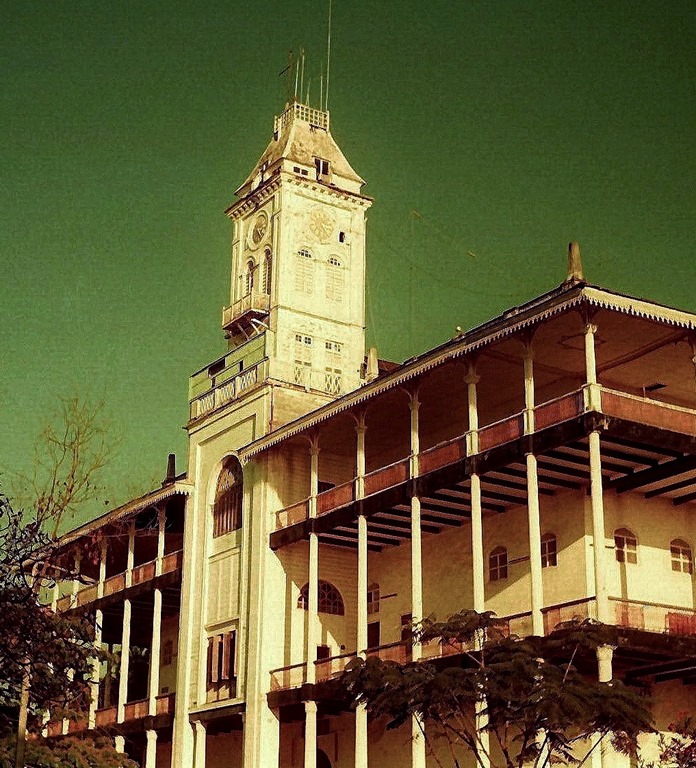
Beit al-Ajaib, The House of Wonders, was built by Sultan Barghash in 1883 to host ceremonial events. He was an extravagant man and, before his death in 1888, built 6 palaces across the island of Unguja. After the 1964 Zanzibar Revolution when the Omanis, along with many Indian residents, were killed or expelled, the building was used as government offices. When we visited in 1999 it was abandoned, but for one of the last sultan’s  cars (candy pink in colour) parked inside the atrium near the front door. A good friend who visited the House of Wonders recently tells me it is still there.

*

Trade was given much impetus in 1830 when the Sultans of Oman moved their capital to Zanzibar to oversee what turned out to the short-lived boom in clove production.  They and other Indian and Arab landowners owned many clove and coconut plantations  on the archipelago, and these were worked by African slaves.

The slave trade, then, was another source of the island’s prosperity. By 1860 the archipelago had some 60,000 slaves, not only working the plantations, but also fulfilling domestic and labouring tasks, and providing new wives for the sultan’s harem. And it is worth noting here that the slaves in Zanzibar were not generally ill treated in the way they were in the Americas; it was not unknown, after long service, for them to inherit their master’s land and property. The children of the harem slaves were also acknowledged by the sultans who fathered them, and treated as royal children with appropriate titles.

During the 19th century it is reckoned that some 50,000 slaves a year were being sold in the Zanzibar slave market. It was only in 1873 that the slaving was abolished, this after much pressure from the British who had first made a treaty with the Sultan Said in 1822 in an  attempt to kerb the trade. That treaty had produced little effect. There was too much demand. The French, in particular, needed slaves for their tropic island plantations.

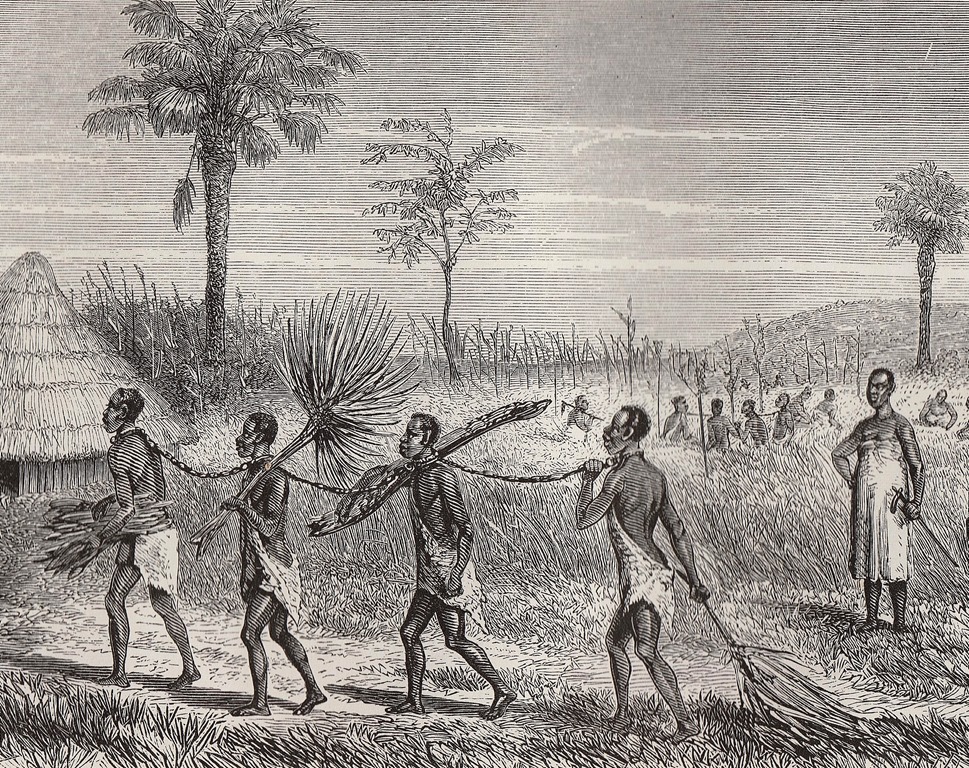
And to meet the demand the Swahili and Arab slaving expeditions would set off from Zanzibar for the African mainland, taking their caravans of porters along well-walked slave paths through Tabora in Tanzania, and down into Zambia, or travelling up present day Kenya to the Great Lakes regions. The notorious Swahili slaver, and plantation owner, Tipu Tip, roved as far as the Congo , terrorizing villages across the territory.

Scan-130429-0020

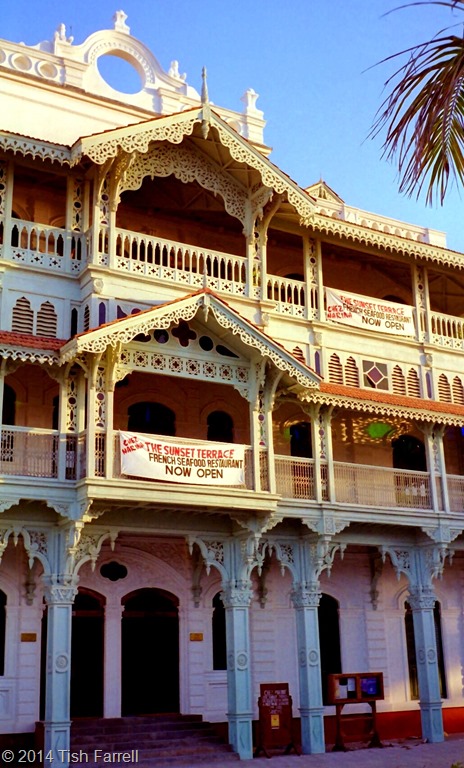
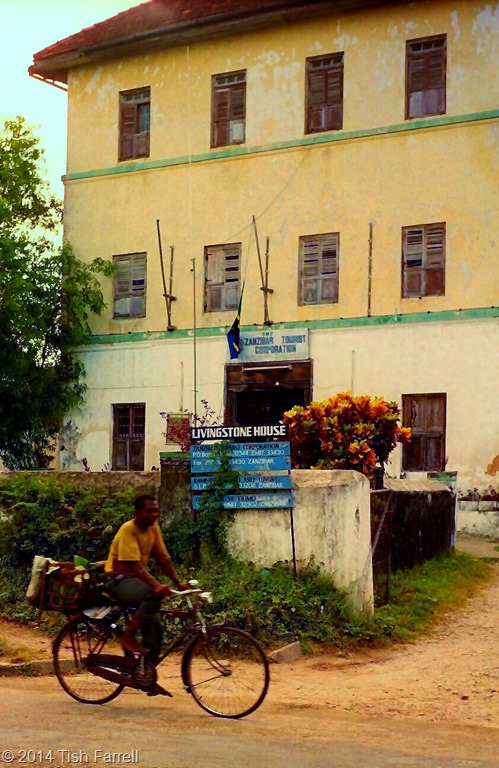
Finding some way to end the trade was one of the motivations that drove the missionary-explorer David Livingstone ever onwards on his gruelling explorations across Africa. It was thought that if the continent was opened up to civilizing Europeans, then the ‘filthy trade’ could be stopped.  But then like the slavers, he and other European explorers (Burton, Speke, Stanley, Cameron, Thomson) started their journeys from Zanzibar. All such travellers, including  missionaries, relied on  the expertise of porters and seasoned safari guides who otherwise worked on the slave caravans.  In 1866, before his last expedition, Livingstone stayed at the house above. It had not long been built by Sultan Majid. Now it is the office of the Zanzibar Tourist Corporation.

001 (2)

From John Hanning Speke’s Journal of the Discovery of the Nile 1863

*

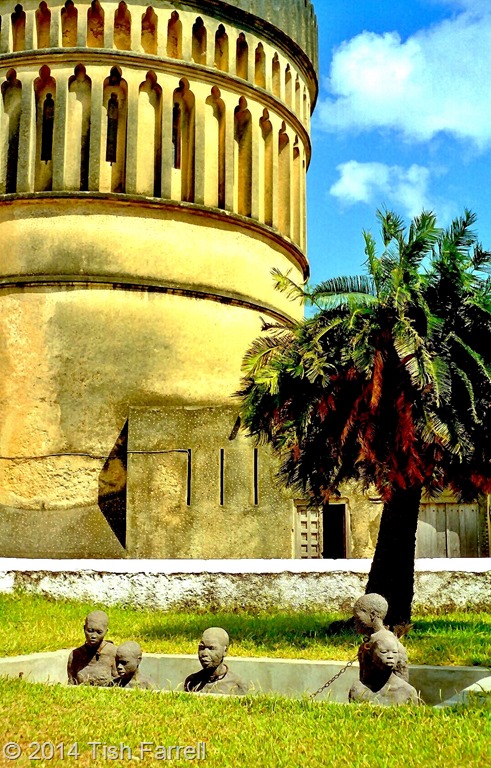
The slaving and ivory  trades worked in tandem. Newly captured slaves were not only driven on forced marches across the continent to the coast, but they were also made to carry supplies, and these included any elephant tusks that the slavers had procured – ivory destined for the production of piano keys and billiard balls for the European market.  It was only in 1897 that all slaves on Zanzibar were given their freedom. The Anglican church stands on the site of the slave market, beside the now famous sculptures commemorating the years of abuse. It is horrifying to consider what the cost of this trade has been for Africa: generation upon generation of  the strongest, brightest and  most  beautiful young people robbed from their communities.

Scan-130429-0005

Naturally the British could congratulate themselves on finally stopping the trade on Zanzibar, although I believe it continued well  into the 2oth century at Lamu. Today, too, slave mongering thrives, and under our very noses in Europe, only now the abused are not necessarily black, so perhaps we don’t think it’s the same thing – the brutal deprivation of liberty and dignity, along with forced labour?

But back to 1890, the end of the Sultans’ control and Britain’s laying claim to Zanzibar. Because now we come to a whole new angle. For this was also the year of the Heligoland-Zanzibar Treaty, an agreement between the Germans and the British, whereby (in return for Heligoland, the strategic North Sea island), the Germans waived rights to Zanzibar, Witu on the mainland coast, and to the territory now known as Kenya across which the British were planning to build the Uganda Railway. (Bismarck apparently called this deal swapping the trousers for a button). 

Suddenly, then, Zanzibar has a very particular purpose for the British Empire. It will become the spring board for the claiming of extensive East African territory, and it will start with that mad, mad railway from Mombasa to Lake Victoria. Of course, with slavery being outlawed, some new mechanism of harnessing native power will need to be thought up. Something civilized and civilizing. I know – we’ll call it colonialism, and enclose indigenous people in their own territory, make reserves of their own homes, which they can’t leave unless they have a pass. Then we’ll introduce hut and poll taxes so forcing them to work for Europeans…

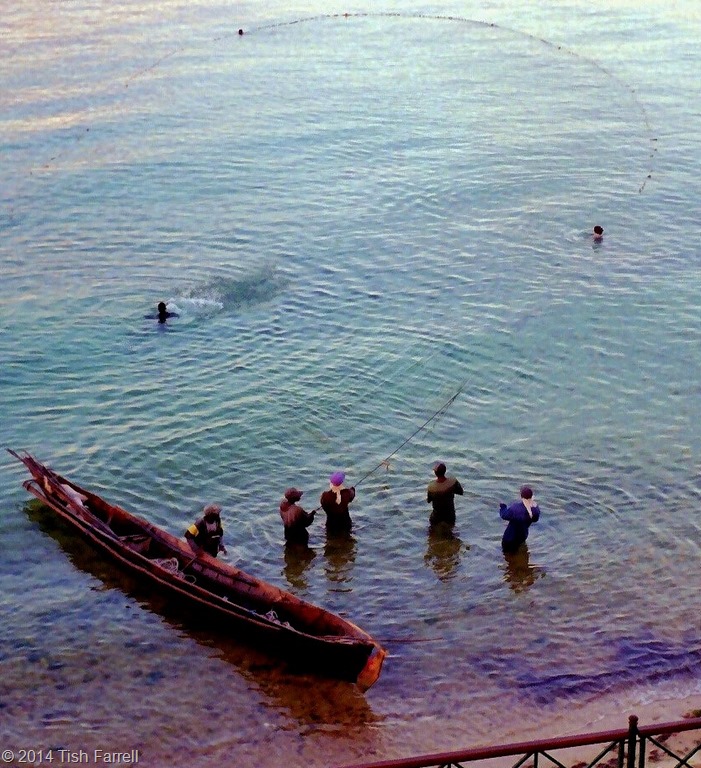
For more of the colonial story go to an earlier post Vulcanicity HERE. In the meantime below are some more soothing views in and around Stone Town, now a World Heritage site. Life is not so grand as it was in the days of the finely robed Omanis. Fishing, ferrying, farming (growing spices, coconuts and vegetables), curio trading, boat building, mangrove pole harvesting and tourism are the main sources of income. As in all African countries, people work hard to educate their children, and this is their number one priority.

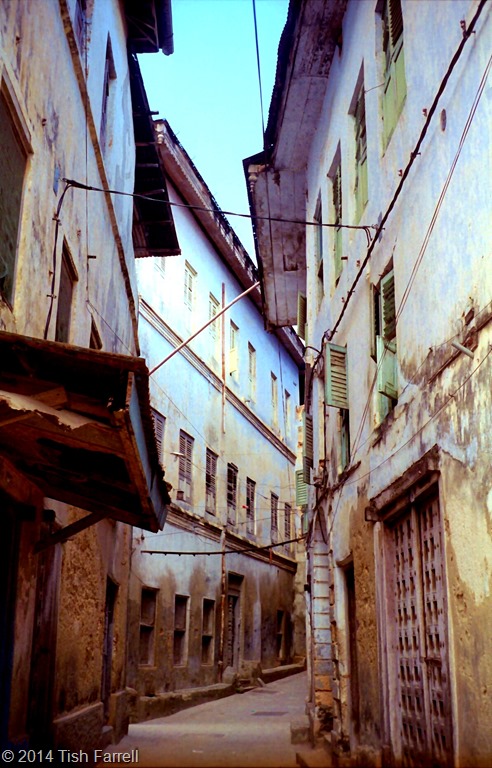
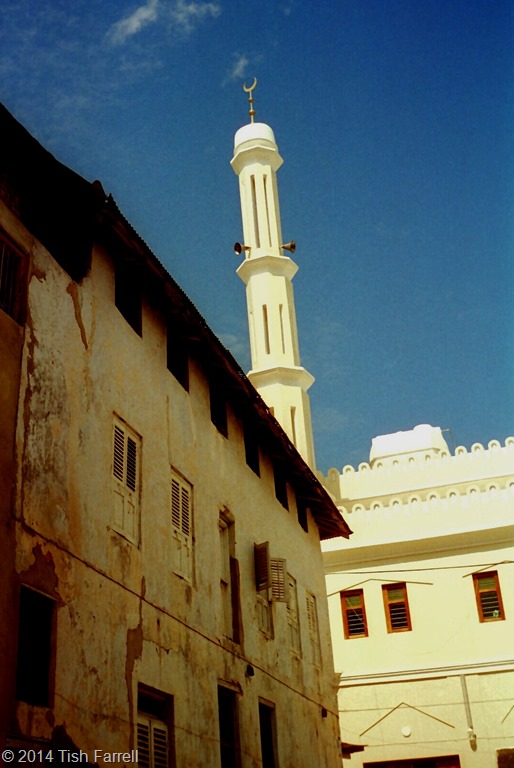
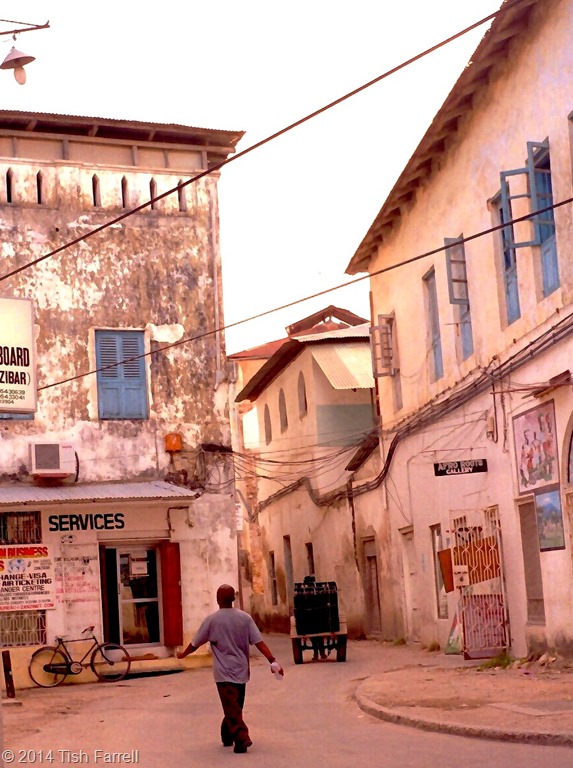
Stone Town is also a devoutly Muslim community, and sometimes this does not sit well with tourist inclinations to behave in ways not considered either respectful or respectable by Zanzibaris. There are over 50 mosques of several different Muslim persuasions, but most are unobtrusive buildings without minarets, and are scarcely noticeable among the domestic dwellings. There is also a Catholic cathedral as well as the Anglican church. The streets are maze-like and shadowy, but we met with nothing but gracious hospitality when we wandered along them.  The place may seem run down (although here and there restoration is in progress), but in the sudden whiffs of jasmine the Sinbad romance lingers on…

(For more about the Swahili see an earlier post HERE.)

Scan-130429-0110

Scan-130429-0129

Scan-130429-0149

Scan-130429-0131

Scan-130429-0046

Scan-130510-0002

Scan-130429-0123

Scan-130429-0081

Scan-130429-0122


AILSA’S TRAVEL CHALLENGE: TWIST

FLICKR COMMENTS TAGGED ‘Z’

copyright 2014 Tish Farrell


Cloud shadow: contrasts II


IMG_0834

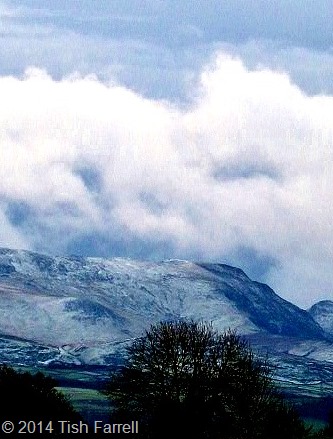
The light, the clouds, the sun do extraordinary things over the Menai Straits, the narrow sea channel between the island of Anglesey, Ynys Môn, and mainland Wales. This photograph was taken at midday in late December.  I was standing on Beaumaris seafront and looking towards the mainland. To the southwest the mountains of Snowdonia were frosted with a light cover of snow. It was all very dreamlike. And it made me think that  it was no accident that the Druid priests of the ancient Celtic tribes made the island their sacred stronghold, or that after the Romans withdrew from Britain, the early Celtic Christian missionaries established their sanctuaries and churches on the island. Whatever your faith, or even if you have none, such glorious vistas surely speak straight to heart, spirit and soul.

For more images of Ynys  Môn see my earlier post Island of Old Ghosts.

100_5196

© 2014 Tish Farrell

Weekly Photo Challenge: Contrasts

Gazing into Hell’s Mouth at Plas yn Rhiw

100_4811

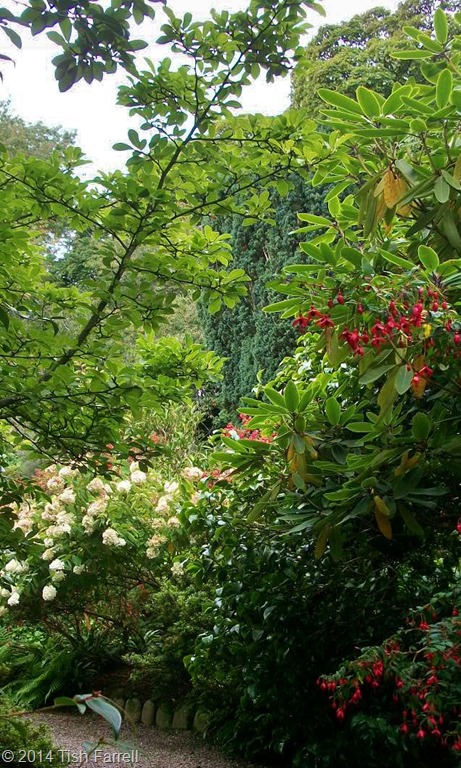
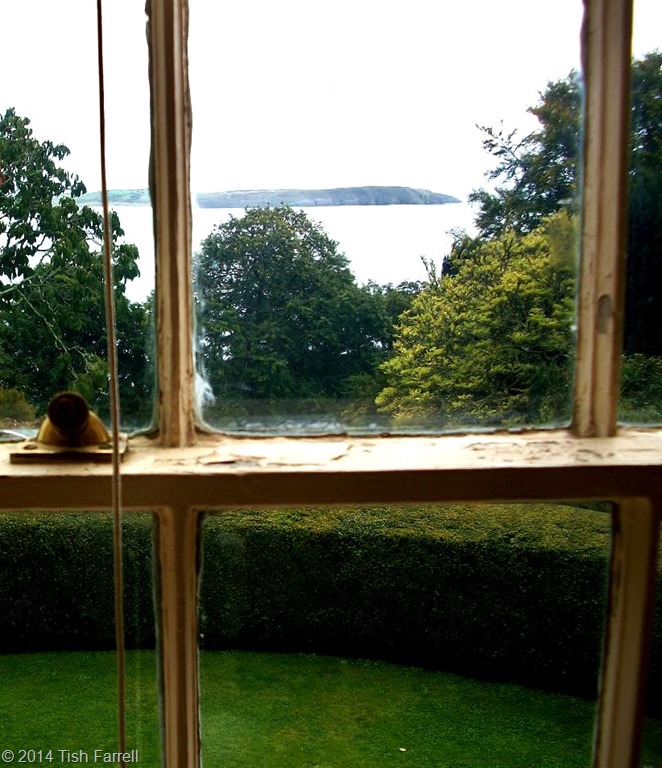
Surely Plas yn Rhiw is too lovely a place for visions of Hell? The ancient Welsh domain  on the road to Aberdaron has a benign and slumbering air; here are  gentle and delicate spirits.And it is not simply in the subtle shapes of the garden’s planting or the soft hues and scents of fading flowers;

100_4861

100_4865

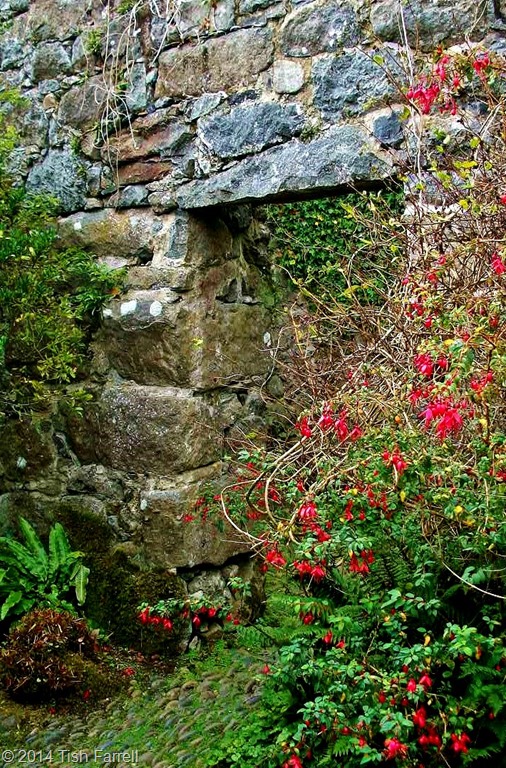
or in the  cobbled paths and woodland walks where wild strawberries and ferns grow alongside fuchsias and hydrangeas;

100_4822

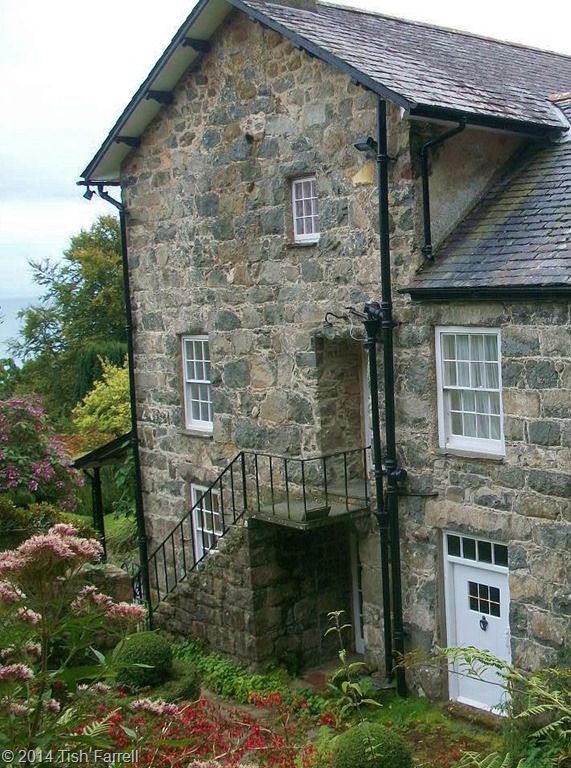
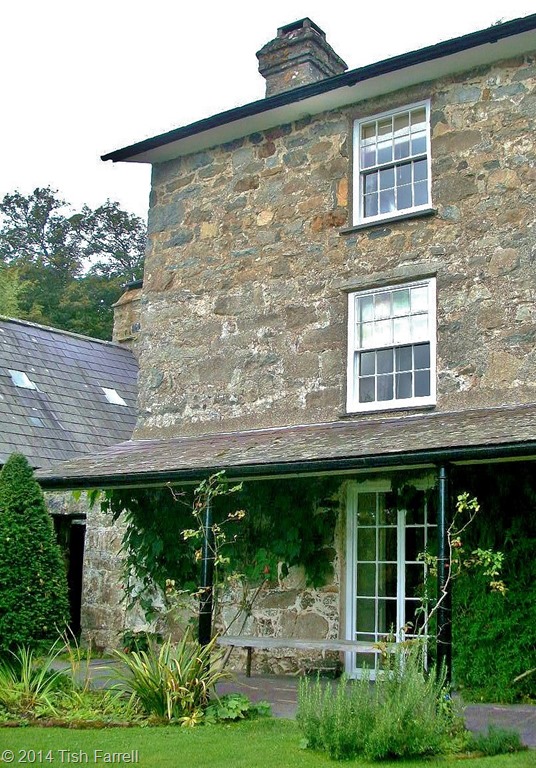
or in the fabric of this old, old house whose stones reflect the end-of-summer sky and the steely blue-greys of the sea below.

100_4824

Even the air around the house feels strangely soft. It is the kind of late September softness that makes you want to lie down in the grass and dream for days and years, listening only to insect hum and the chatter of sparrows.  The setting anyway is blissful; all enclosed by woodland at the foot of Mynyth Rhiw Mountain, and embraced by the seeming sheltering curve of Hell’s Mouth Bay (Porth Neigwl). So now you have it, an inkling that the tranquil surface overlays some deeper, darker currents.

100_4830

Hell’s Mouth lies on the southerly tip of Llyn Peninsula, overlooking the broader sweep of Cardigan Bay. The calm view from Plas yn Rhiw  is transfixing. How can it have such a name? Yet watch this space and see a different scene. For when the south westerly gales come roaring in, this bay becomes a death trap. Over the years it is said that some thirty ships have been run aground, their holdfast anchors dragging before the driving storm. Wrecks include the Transit that foundered with a cargo of cotton in 1839. In 1840 it was the Arfestone carrying gold. An Australian ship was lost there in 1865, and in 1909 the sailing ship Laura Griffith was wrecked. And there is more.

100_4862

Reel back to the 8-900s AD and Llyn was the scene of bloody raids. At this time the Vikings occupied coastal Ireland across the bay. Llyn was then part of the Welsh Kingdom of Gwynedd and  Powys and its prominent position made it seem an easy target from  over the Irish Sea.  The Welsh, under Rhodri Mawr (Rhodri the Great 844-878 AD)  fought valiantly to keep the raiders at bay, although accounts of the time attest to their terrifying attacks. But whatever the truth, the sight of a raiding party,  sixty five ships strong, and coming  fast into  the bay must have truly chilled the blood. By the 10th century Llyn was still holding its own against Viking incursion, but only through constant vigilance. And this is where Plas yn Rhiw comes in. Local history  has it that Meirion Goch, great-grandson of Rhodri Mawr, was instructed to build a fortified house at Rhiw and  hold the coast against invasion. It is also thought that this stronghold occupied the site of the present house, although no provable traces have been yet been found. The descendants from this royal dynasty appear then to have occupied Plas yn Rhiw for the next thousand years, eventually adopting, in  the English fashion, the surname Lewis. IrishSeaReliefmap[1] (2) The Llyn Peninsula is the finger of land above Cardigan Bay. Hell’s Mouth is due north of the ‘d’ in Cardigan. The port of Dublin in Ireland was founded by the Vikings, along with other coastal towns that they used as raiding bases. (Map: Creative Commons).

*

100_4819

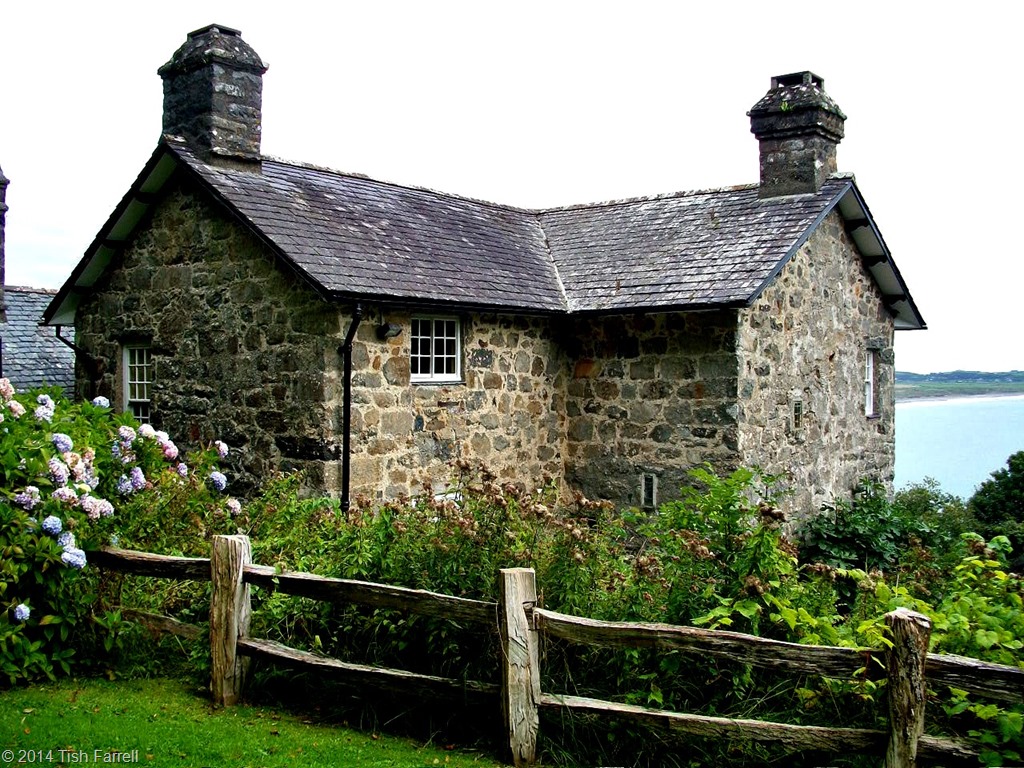
The house we see today, then, has its own stories – cycles of re-building, abandonment, decay, renewal. Now , as a National Trust property, it is frozen in time; as if its last elderly inhabitants, the Keating sisters, have simply popped out to the shops and left you to gaze upon their hats and gloves, and recently received letters. But more of these sisters in moment. First a quick history of the house. The lintel over the French window is carved with the date 1634, which probably marks the re-modelling of an existing medieval house by the then owner John Lewis. In 1820 the house was further extended and the grand Georgian facade and a further storey added. But in 1874 the long connection with the Lewis family ended and the house was sold for the first time in its existence. The new owner then let it to a succession of tenants, and it was possibly one of these, Lady Strickland, who created the gardens. She apparently also introduced the first bath tub to the district. And there is a tale of a ghostly visitation during her tenancy – a drunken squire roaming the house in search of a drink (lost spirits perhaps?). But by 1938, when the house was once more for sale, it was in a sad state of repair. The nearby millstream had left its bed and was running through the hall, rotting the staircase, brambles blocked the front door and the garden was a jungle. Enter the saviours,  Welsh conservationist  and architect, Clough Williams-Ellis (creator of Portmeirion ) and his friends the Keating sisters.

www.rhiw.com

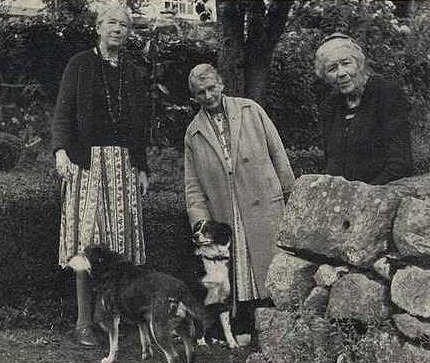
In this newspaper photo of 1960 (www.rhiw.com/) we see Eileen, Lorna and Honora Keating at Plas yn Rhiw. It is down to them that Llyn does not have a nuclear power station. They bought up coastal land to prevent it, and than gave the land to the National Trust. They also opposed overhead power lines and caravan parks, and in 1939 Honora received an OBE for her work for the National Council for Maternity and Child Welfare. They were the daughters of a Nottingham architect who was killed in a traffic accident when they were small. Their 32-year old mother Constance was left to bring them up, and she ensured, among other things, that they received a good education. Every year  from 1904 the family spent their summers in Rhiw. In 1919 they bought a cottage above Hell’s Mouth, and it was from here that they first saw Plas yn Rhiw. In 1934, after Constance became an invalid, the sisters settled permanently with her in Rhiw. There are tales of them shunting mother around the locality in a wheeled bed.  By this time Plas yn Rhiw was abandoned, and although there were hopes of saving it, the owner could not be found. Then in 1938 a FOR SALE notice went up. Six hundred pounds was the asking price, and it was Clough Williams-Ellis who alerted Honora. He sent her a telegram: “Will you invest savings Plas”. She replied: “Yes, but haven’t got much.”

100_4845

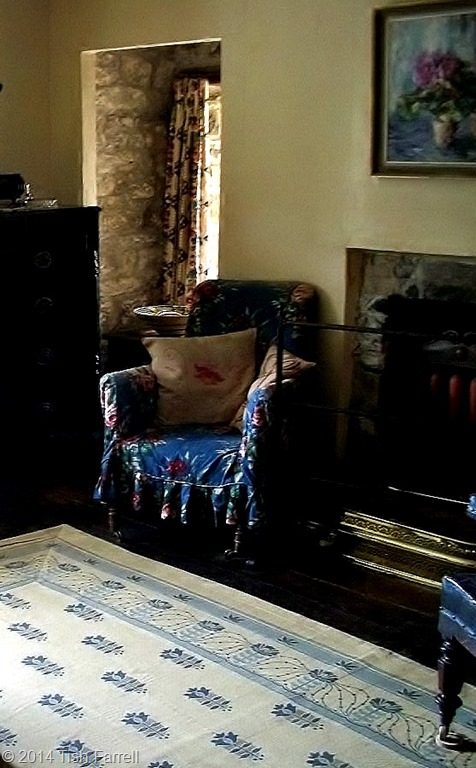
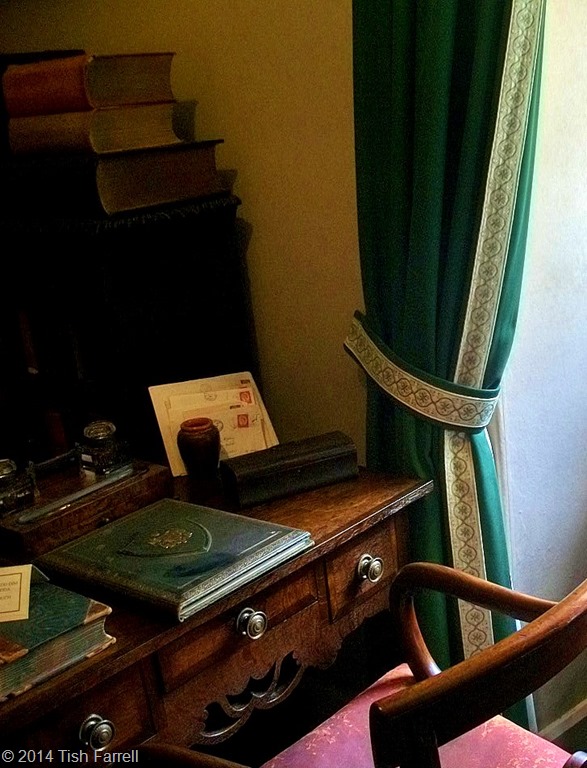
The sisters bought the house, along with 58 acres of land that were all that remained of the original estate. With Clough Williams-Ellis to help and advise, the restoration began, and the following year the Keatings moved into the house. They then set about buying back the estate’s former land, which they gave to the National Trust in 1946 in memory of their parents. The house was donated in 1952, although the sisters lived there for the rest of their lives, the last and youngest sister, Honora, dying in 1981. Inside, the house has no pretensions to grandeur, although it is filled with personal treasures – everything from fine Meissen figures to the cottage vernacular of a Welsh spinning wheel.  Along with the family portraits and antique furniture are paintings by Honora who studied at the Slade, and  also works by M E Eldridge, the often overlooked artist wife of the poet R S Thomas. (When Thomas retired from being parish priest at nearby Aberdaron, the Keatings leased to him Sarn Rhiw, a stone cottage in the grounds below the house).

100_4836

The Yellow Bedroom

100_4827

100_4829

*

100_4838 - Copy

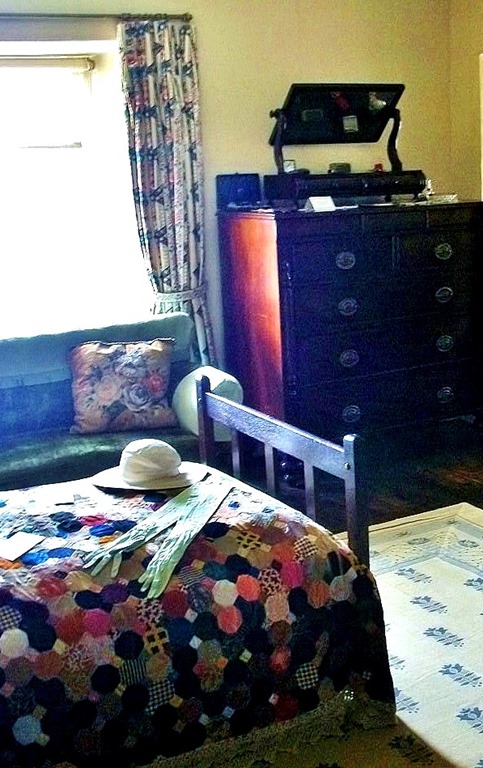
Honora’s room – alongside the Victoriana there is in the fireplace a c.1916 Royal Ediswan electric fire which operated by means of 250-watt bulbs. Beside the bed is an early Pifco Teasmaid.

100_4838

100_4825

*

100_4858

100_4871

100_4823

Today the National Trust is continuing to restore the house while staying true to the Keating sisters’ aesthetic sensibilities and conservation principles. The garden has its striking seasons: carpets of wild snowdrops along the woodland walks in winter, a magnificently flowering Magnolia mollicomata in spring, the early summer azaleas, the September cascades of crimson magnolia fruits and fuchsias. So perhaps the final words should be left to Clough Williams-Ellis. In a letter  that now hangs framed in the hall, he writes to the sisters: “In these serene spring days your little kingdom must be heavenly indeed.”

100_4854

Related: Arch Wizard of Wales: Clough Williams-Ellis Bright Fields on Llyn Warrior Wind-Singer of Llyn   Post inspired by Sue Llewellyn’s A Word A Week: Delicate  

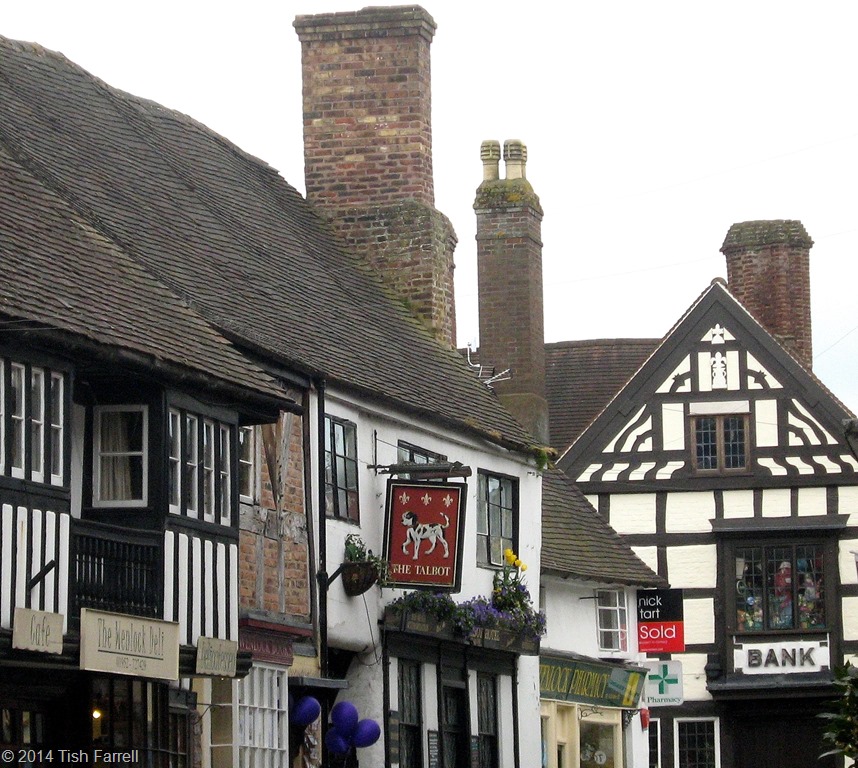
When Henry James came to Wenlock

“If Gaskell asks you to Wenlock don’t for the world fail to go.”

Henry Adams in a letter to Henry James 1877

IMG_0944

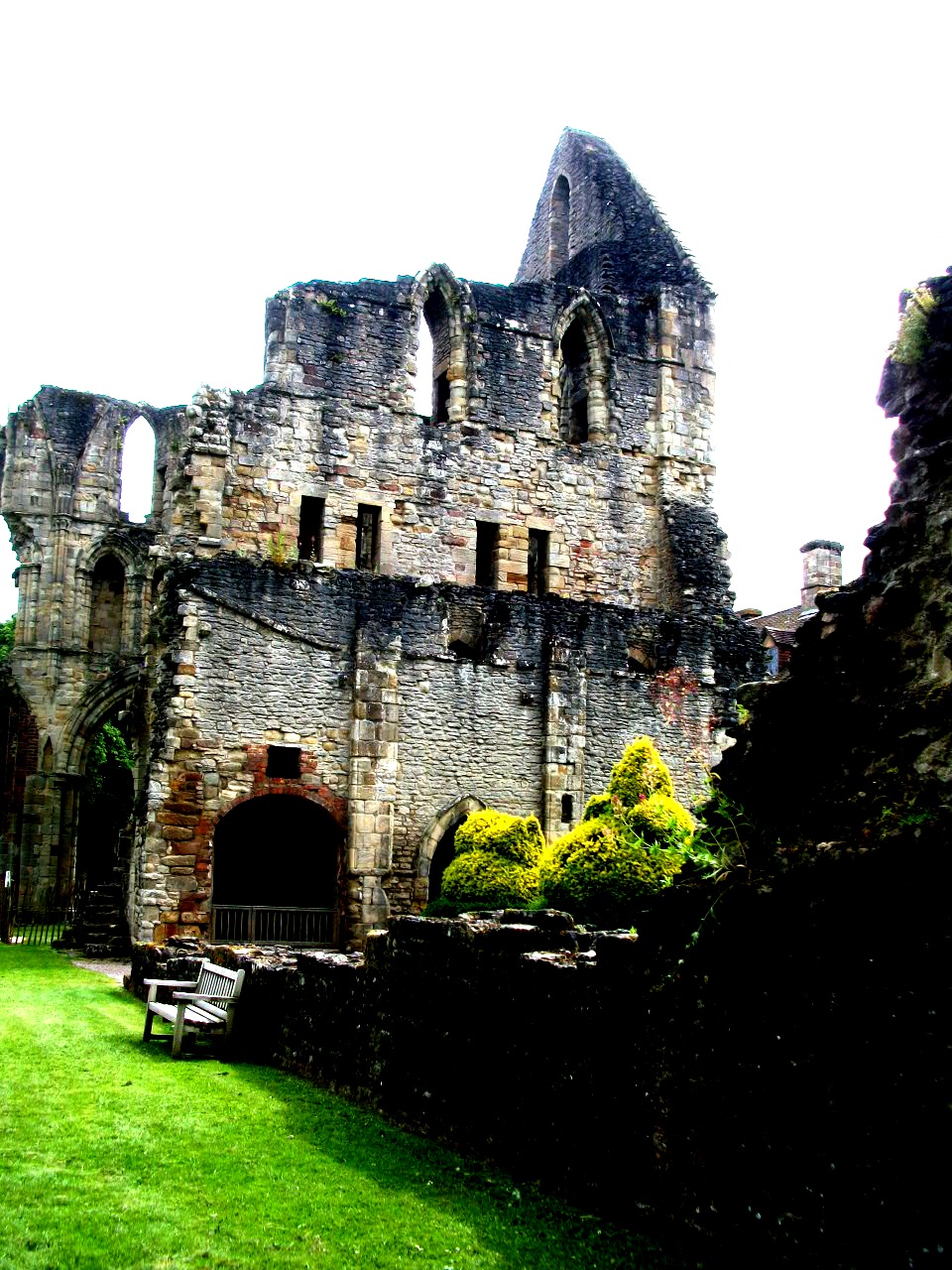
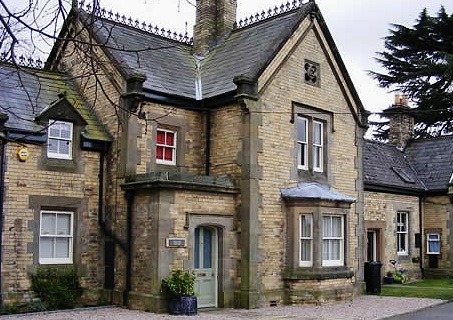
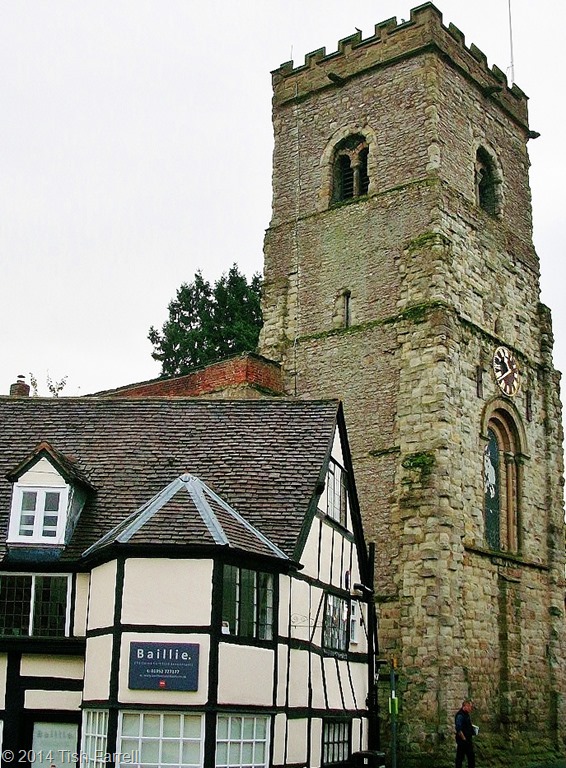
This is the house where Henry James stayed  on his visits to Much Wenlock in 1877, 1878 and 1882. At the time it was known as The  Abbey, but  once it was the Abbot’s House, and part of a great medieval Cluniac priory whose ruins stand beside it. Only the house, and the town’s parish church survived Henry VIII’s great monastic dissolving campaign of 1540.

I’ve recently read, too, that the Dissolution did in fact involve actual structural ‘dissolving’. The first thing King Henry’s agents did in their bid to disempower the clergy and seize their estates was to rip the lead off the monastery roofs. The wear and tear of English weather then did the rest. Since Wenlock Priory was once one of the most imposingly large religious houses in all Europe, you can well see how efficiently the elements did their work.

100_5898

The adjacent small town of Much Wenlock town dates from at least from Saxon times when St. Milburga, daughter of a Mercian king, founded the first religious house here. She was Abbess of Wenlock  between 675-690 AD. The later priory was the work of the invading Normans, who liked to use looming architecture to cow the natives into submission. The monks were brought in from France, but it wasn’t  until end of the 12th century when Bishop Odo, a former Cluniac monk, published his account of the discovery of St.Milburga’s bones (he describes them as “beautiful and luminous”)  that this great house acquired the kind of saintly cachet that ensured serious pilgrim-appeal, and thus brought much prosperity to the town.

After the Dissolution, however, pragmatism ruled, and much of the fallen priory masonry was used to build or expand the town’s homes and businesses. Thereafter, Much Wenlock’s success was based on providing a small but busy mercantile and manufacturing centre for the local agricultural and quarrying community. It even had two Members of Parliament.

But back to  Henry James (1843-1916). What on earth had brought this widely travelled writer to the little town of Much Wenlock? And not once, but three times.

HenryJamesPhotograph[1]

In fact it was only the urging of a friend, Harvard history professor, Henry Brooke Adams, that brought James here at all on that first visit in 1877. He hardly knew his hosts, Charles and Lady Catherine Milnes Gaskell. Charles Milnes Gaskell, rich barrister and landowner, was a close friend of Adams, and it was Adams who indirectly secured the invitation for Henry James. He knew that James would love the Abbey. Hence the exhortation: “If Gaskell asks you to Wenlock don’t for the world fail to go.”

And so, further enticed by “a gracious note from Lady Catherine Gaskell” and armed with a copy of Murray’s Handbook of Shropshire, Cheshire and Lancashire, Henry James left London for deepest Shropshire, travelling by train to Much Wenlock. The details of how he spent his time on his  five-day visit appear in a travel sketch called Abbeys and Castles, later published as part of Portraits of Places (1883).

Railwayramblers.org.uk

At the station (now private houses) he was met by the Gaskell’s coachman, Crawley, driven into the town, passing in sight of Holy Trinity Church (today without the spire shown in the Frith photo). Here they  turned left into the Bull Ring… 

100_4966

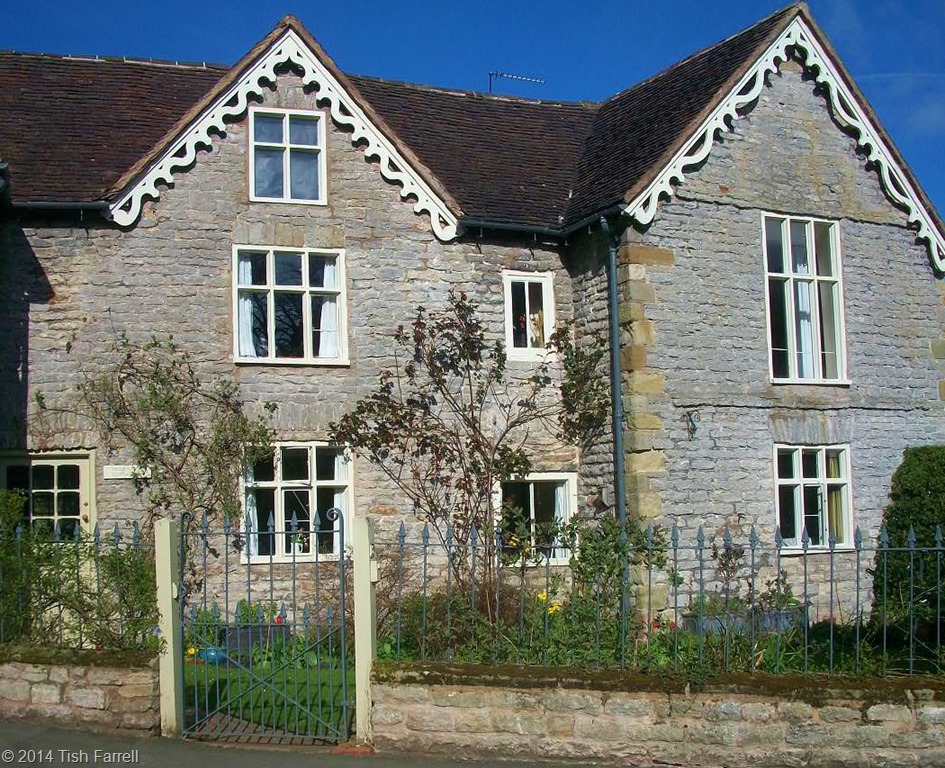
passing Priory Cottage on the left…

100_5338

…the turning right into the Abbey’s winding drive…

100_4997

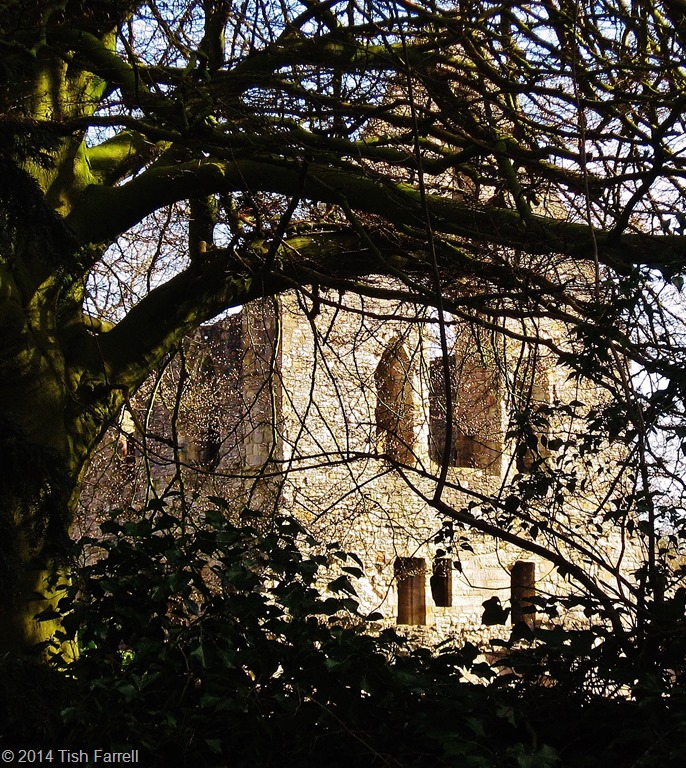
…with the priory ruins on the left.

IMG_0952 - Copy

The carriage would then have swung hard  into the open courtyard of the Abbey, and this would have been Henry James’ first view of his destination. Well-travelled as he was, I think he would have been astonished.

Adams’ certainty that his friend would love the place was spot on. In Portraits and Places (p278)  Henry James says:

“It is not too much to say that after spending twenty four hours in a house that is six hundred years old, you seem yourself to have lived in it for six hundred years. You seem to have hollowed the flags with your tread, and to have polished the oak with your touch. You walk along the little stone gallery where the monks used to pace, looking out of the gothic window places at their beautiful church, and you pause at the big round, rugged doorway that now admits you to the drawing room. The massive step by which you ascend to the threshold is a trifle crooked, as it should be; the lintels are cracked and worn by a myriad-fingered years…it seems wonderfully old and queer. Then you turn into the drawing room, where you find modern conversation and late publications and the prospect of dinner. The new life and the old have melted together; there is no dividing-line.”

In letters James admits to being rather  in love with Lady Catherine, whom he describes as a perfect English rose. She was only twenty years old at the time, and expecting her first child. She apparently put garden flowers in his room and made sure he had plenty of writing paper and pens. But when it came to entertainment, this was down to Charles Gaskell. Despite the rainy weather, he and James appear to have yomped all over the district looking at stately homes and other ruins. They also took the train to extend their excursions to Stokesay Castle and Ludlow. Henry James was clearly enchanted. Of Much Wenlock and its setting he says:

“There is a noiseless little railway running through the valley, and there is an ancient little town lying at the abbey-gates – a town, indeed, with no great din of vehicles, but with goodly brick houses, with a dozen ‘publics’, with tidy, whitewashed cottages, and with little girls…bobbing curtsies in the street. But even now, if one had wound one’s way into the valley by the railroad, it would be rather a surprise to find a small ornamental cathedral in a spot on the whole so natural and pastoral. How impressive then must the beautiful church  have been in the days of its prosperity, when the pilgrim came down to it from the grassy hillside, and its bells made the stillness sensible.”

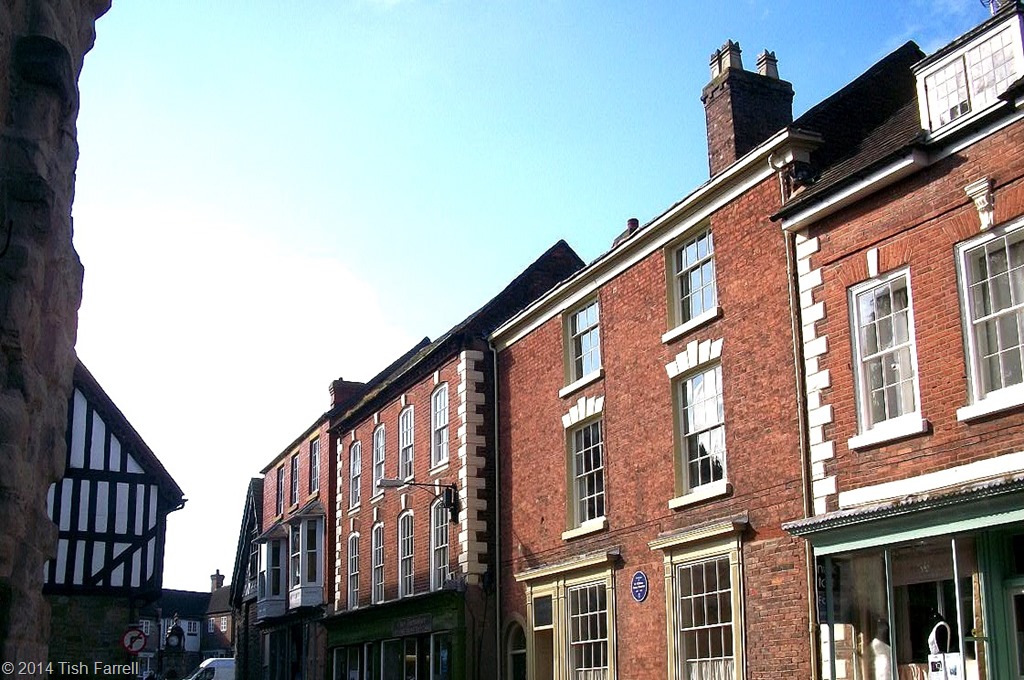
Things have changed of course, although we still have a fair few ‘publics’ for so small a town – five in fact. But there are no longer little girls who curtsey to gentleman, and sadly no railway, which means instead we do now have the inevitable din of vehicles..

100_5337

100_5024

IMG_1074

100_5328

*

An interesting aside to the Henry James’ Shropshire travelogue is that he is said to have been working on his disturbing ghost story The Turn of the Screw while staying at the Abbey. He certainly had the supernatural on his mind during that first visit.

“…there is of course a ghost – a gray friar who is seen in the dusky hours at the end of passages. Sometimes the servants see him; they afterwards go surreptitiously to sleep in the village. Then, when you take your chamber-candle and go wandering bedward by a short cut through empty rooms, you are conscious of a peculiar sentiment toward the gray friar which you hardly know whether to interpret as a hope or a reluctance.”  (Portraits of Places)

And this does rather remind me of a passage in The Turn of the Screw  where the governess narrator describes how her young charge, Flora, takes her on a guided tour through the rambling old mansion at Bly:

“Young as she was, I was struck, throughout our little tour, with her confidence and courage with the way, in empty chambers and dull corridors, on crooked staircases that made me pause and even on the summit of an old machicolated square tower that made me dizzy.”

But then Henry James seems to have made a life’s career of ‘staying’ in, or visiting large country houses. All the same, I like the idea of his brewing this grim tale in Wenlock. Certainly from across the old monastery parkland, the Abbey does have a more brooding and sinister air. And now I’ve sown that notion, I’ll leave you with some more views of undissolved monastic relicts: 

100_5003

100_4984

References:

Cynthia Gamble John Ruskin, Henry James and the Shropshire Lads New European Publications Ltd 2008

Vivien Bellamy  A History of Much Wenlock Shropshire Books 2001

copyright 2014 Tish Farrell

Unexpected with bells, sticks and hankies at the Sweeps Festival


KIF_0196

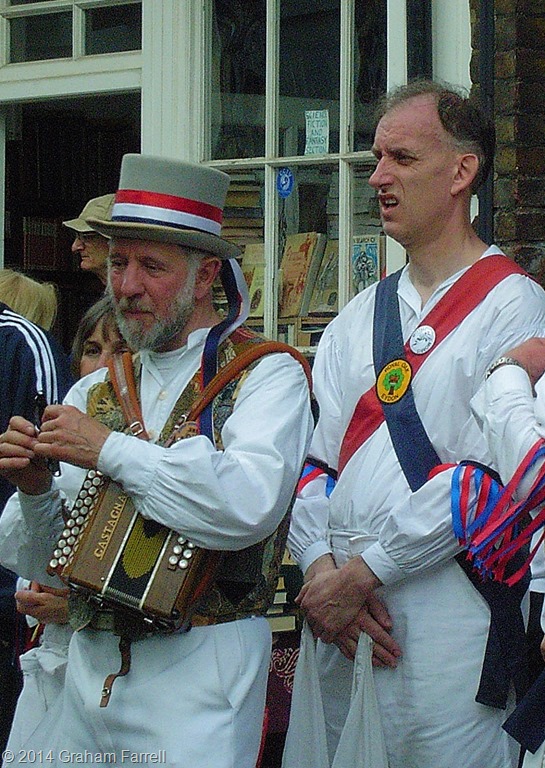
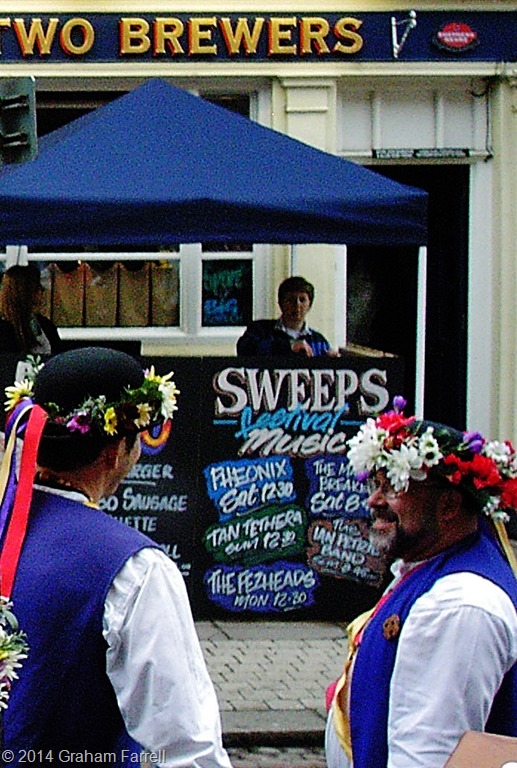
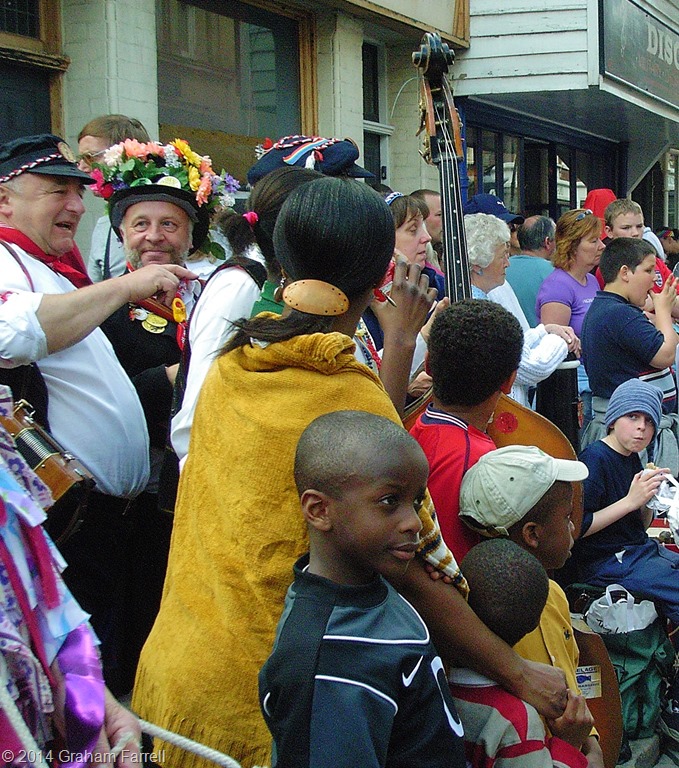
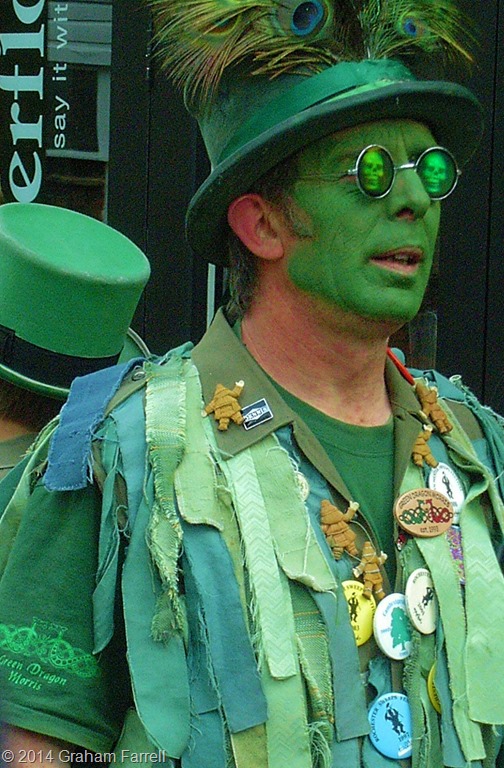
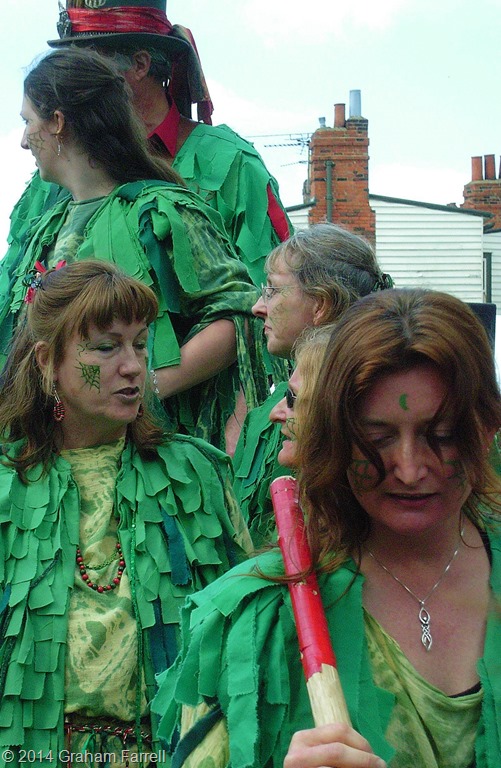
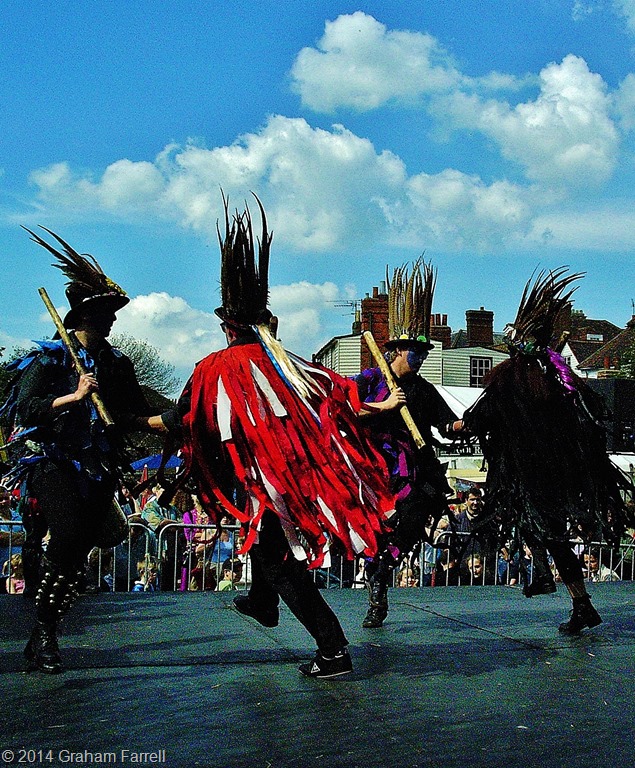
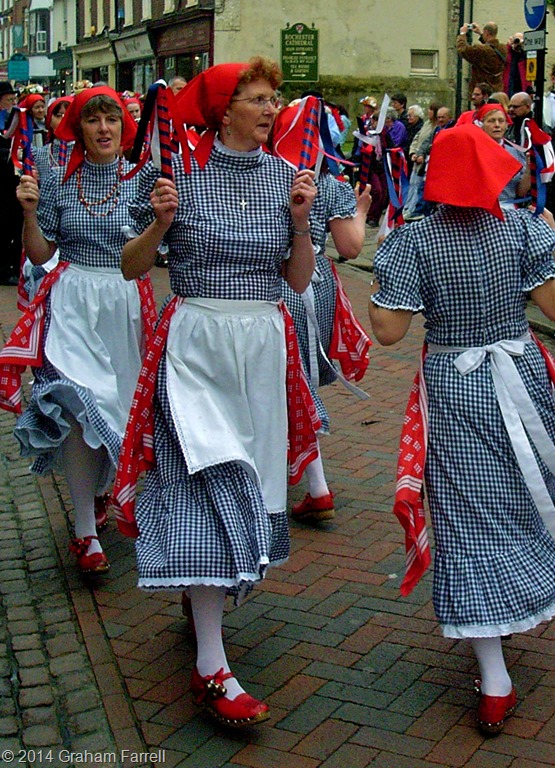
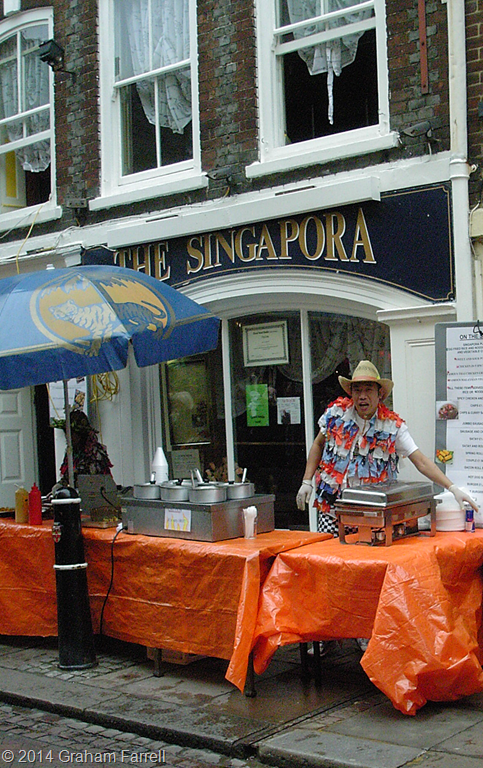
There is much that is unexpected about Rochester’s annual Sweeps Festival, held every May Day for the last thirty four years. It is of course a re-make of a much more ancient festival – one at least 400 years old, and that in turn was probably a re-make of various spring-time rites from distant antiquity. As you scan down the photos you may notice a plethora of cultural references, some of them wholly inexplicable, but all thrown in – in the name of jolly good English fun.

KIF_0216

But first a bit of real history, at least to explain the ‘sweeps’ bit of the proceedings. In Britain chimney sweeping was once big business. Until the Climbing Boys’ Act 1868 which made it illegal, children as young as four were employed by Master Sweeps to clean inside the nation’s chimneys. This practice was even officially sanctioned. The Master was paid by parish officials to take on climbing boys (and sometimes girls) as indentured apprentices. They then underwent a 7-year training, after which,  if they survived, they could become journeymen sweeps and work for a Master of their own choosing. The children were usually workhouse orphans and paupers, and the aim was  to launch as many of them into the trade and up sooty flues so as to reduce their cost to the parish. It was a filthy, dangerous and vicious business, and you can read more about it HERE.

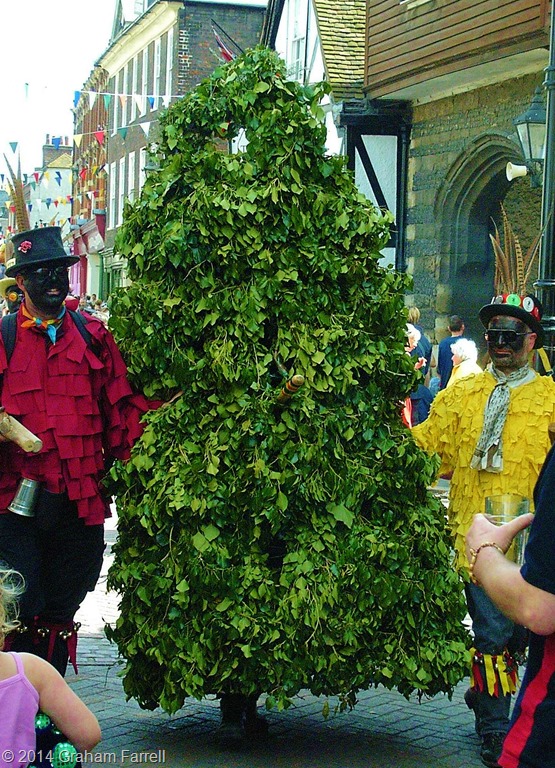
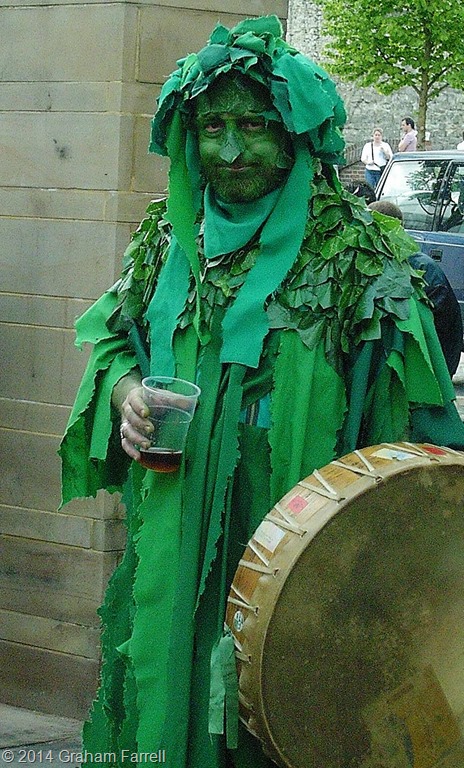
May Day was traditionally the only day of the year that chimney sweeps had as a holiday. Here in Kent the day’s festivities traditionally began on Blue Bell Hill, at Chatham just outside Rochester (a hill also known for its Neolithic chambered tombs). At dawn the merrymakers would awaken the giant Jack-in-the-Green who would then accompany them in the parade.

And here he is, recreated anew – the ‘tree’ between two ‘sweeps’:

KIF_0209a

There are of course obvious references here to the Green Man, the Green Knight and various symbols of tricksterism and fertility. There are also similar festivals involving tree-figures in Europe, particularly Switzerland, and it is possible that some of the notions associated with these carnivals go back to Stone Age times.

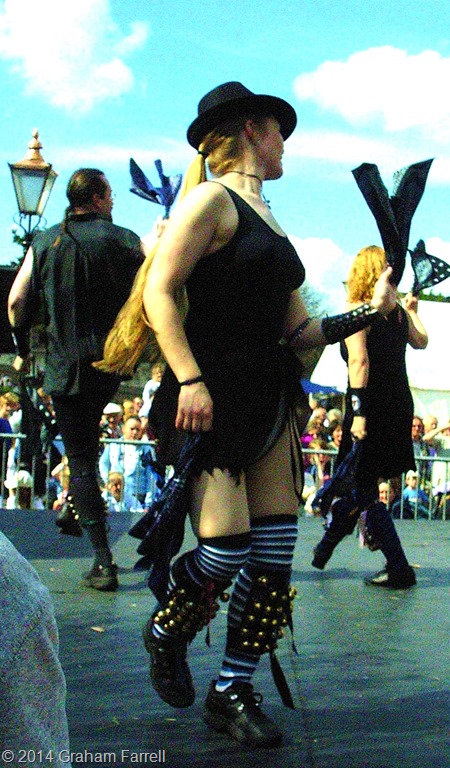
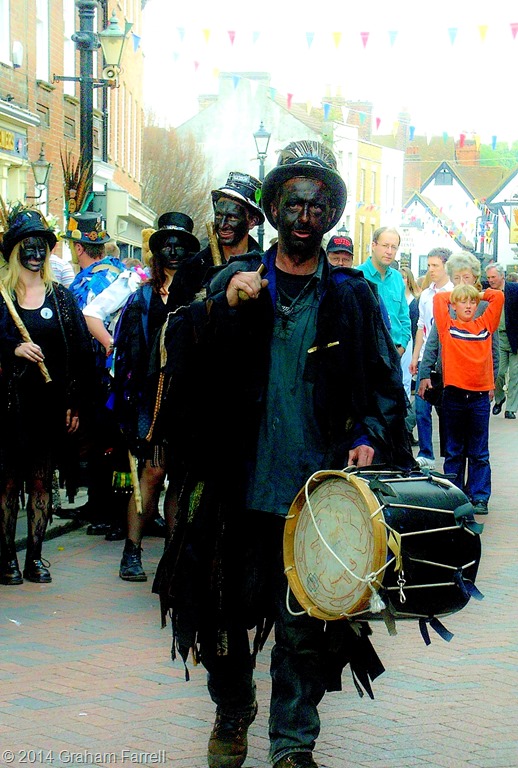
Welded onto all of this is the ancient English pastime of Morris Dancing, a form of folk dancing that has many regional expressions, and dates back to at least the 15th century. It had a great revival at the start of the 20th century when folklorists such as Cecil Sharp set about documenting traditional dancing and music. Below are some ‘traditional’ looking Morris Men. They are members of one of the sixty Morris bands that take part every year at the Sweeps’ Festival.

KIF_0204

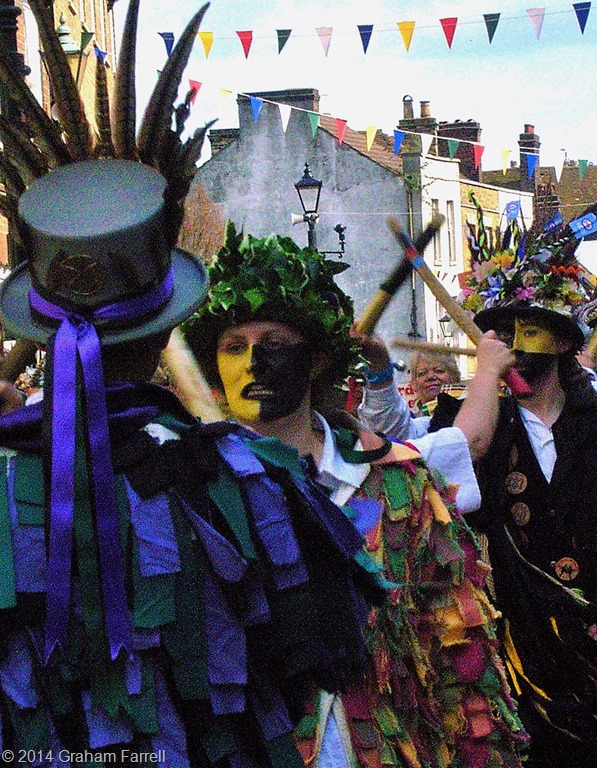
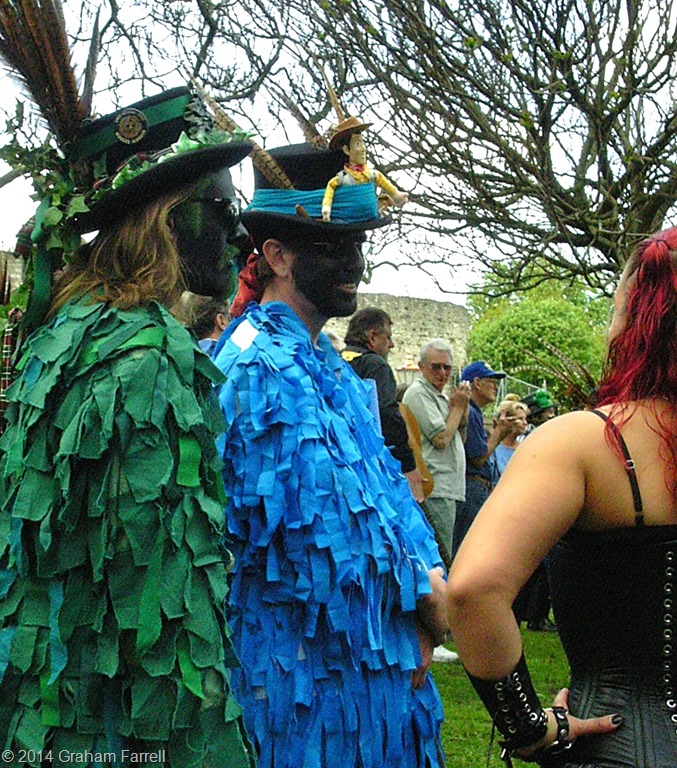
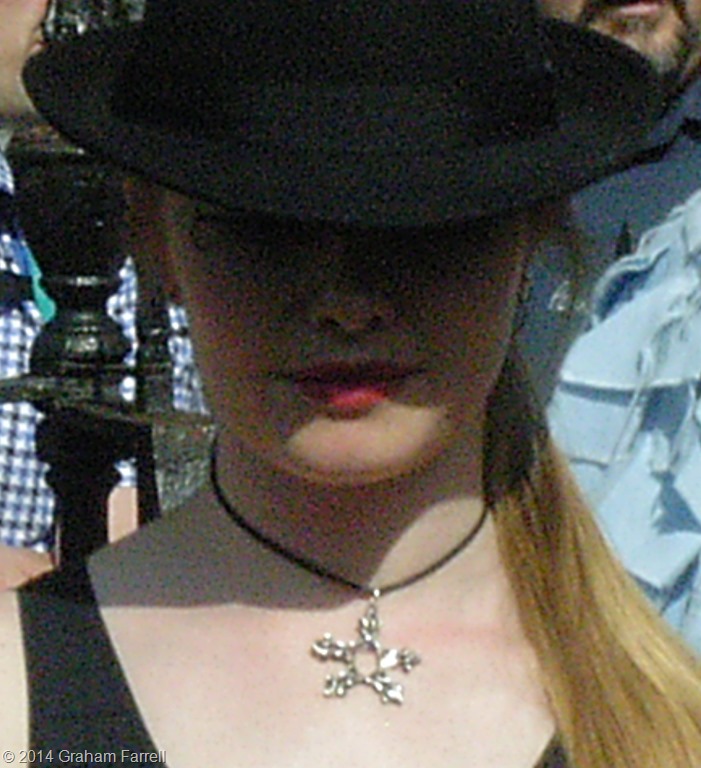
And then there are the black face Morris dancers, the Goths, the Fabulous Fezheads who sand dance, Morris dancers from the US, all women groups, clog and longsword dancers. There are even hints of S & M and nosferatu, or was that just my take on things. In any event, please enjoy the cultural concoction.

KIF_0214


KIF_0143

KIF_0206

KIF_0198

KIF_0172

KIF_0184

KIF_0192

KIF_0189

KIF_0137

KIF_0136

KIF_0170

KIF_0201a

Ailsa’s Travel Theme: unexpected

Vulcanicity ~ Welcome to the hot zone

Scan-130716-0008 (9)

I have long had a fearful fascination with volcanoes – probably ever since, as a young child in the 1950s, I saw a newsreel item of Mount Etna erupting. It seemed like a living nightmare. I remember especially the unstoppable flows of boiling lava that rolled over everything in their path.  Even in places where it had cooled I seem to remember people who walked on it found their shoes smouldering. It was perhaps my first apprehension of the fact that the earth could do things that mankind was incapable dealing with. I remember having a dream afterwards where the ground beneath my feet kept cracking open into ever widening fissures: my first anxiety dream perhaps.

With this in mind, you will understand how very deeply impressed I was when I first set eyes on Africa’s Great Rift Valley.

File:Great Rift Valley NASA.jpg

NASA non-copyright image

*

Here, on the surface of the earth, we have a 4,000 mile chain of connected fissures that extends from Lebanon in the Middle East to Mozambique in south east Africa. It comprises the Jordan Rift Valley, Red Sea Rift and the East African Rift, which itself divides into eastern and western arms with Lake Victoria Nyanza in between. The entire system has been described as a world wonder, the biggest rupture in the planet’s land surface, and the only geological feature that can be seen clearly from the moon. The East African Rift of course includes the great ice-topped volcanoes of Kilimanjaro and Mount Kenya that are mere remnants of their formerly gargantuan fiery selves.

So however you look at it, moon- or otherwise, the Great Rift is definitely a case of EXTREME geology. All that seismic shunt and shift. And it is still happening and at this very moment. One day the Horn of Africa and littoral East Africa will be an island.

*

The East African Rift is thought to have begun to pull apart around 40 million years ago. Scientists surmise that the environmental changes associated with fissuring may have had a significant impact on the evolution of humankind. So far, very many of the earliest fossils of (potential) human ancestors have been found in the Rift – Olduvai Gorge, and in the vicinity of Lakes Baringo, Turkana and Omo. On the other hand, this could simply be a reflection of the  decades of systematic searching in these areas, instigated largely by the Leakey dynasty of palaeontologists. But whether a good case of careful looking or not, I’m still prepared to believe that humans could have evolved here.

*

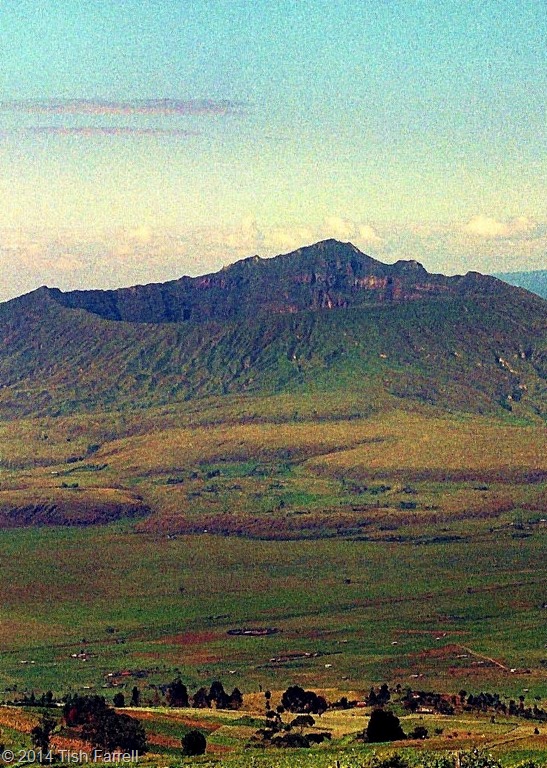
The photograph at the start of this post is of the old volcano, Longonot. It lies in the Rift between Nairobi and Naivasha in Kenya. In the next shot you can see it from Lake Naivasha (hippo added for purposes of scale Smile). Part of this lake is also formed within a submerged crater.
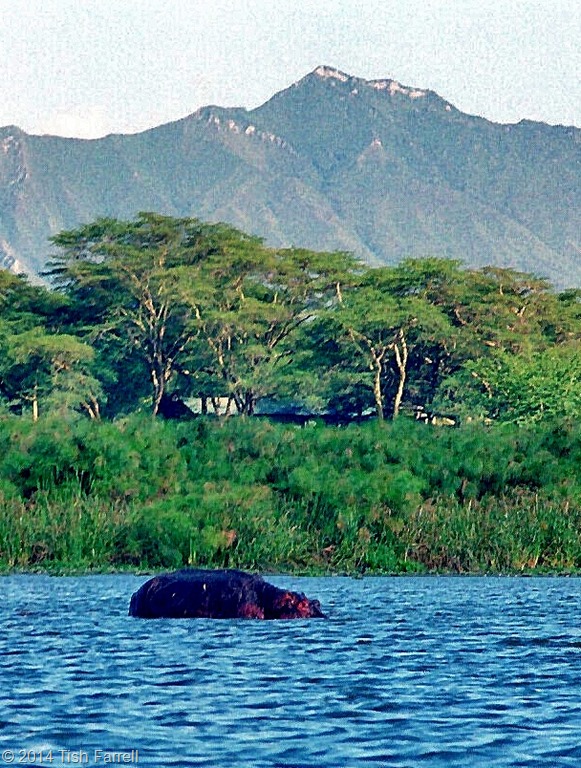
Scan-130716-0010 (2)

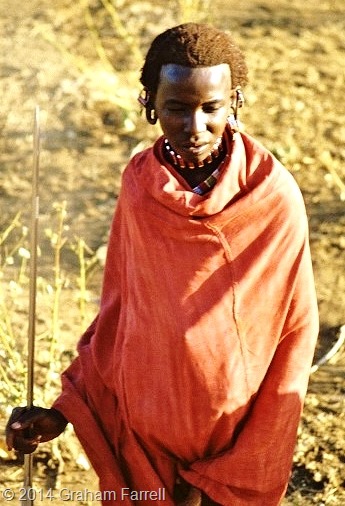
One key side effects of volcanic activity is highly fertile soil. In Kenya and Tanzania the Rift Valley floor supports the Serengeti grasslands that in turn are home to millions of herbivores, their following of big cat predators, and the whole wonderful species-rich eco-system. These plains also have long been the grazing grounds of the best known nomadic pastoralists on the planet, the Maasai.

2 Masai1

Before the British invaded East Africa in the late nineteenth century (intent on setting up the Imperial British East Africa Company) and concluded that any land not occupied by people at that point in time was EMPTY and thus FREELY AVAILABLE, the Maasai ranged over vast tracts of the Rift grassland system. It is believed that their ancestors moved out from the Horn of Africa about four thousand years ago. 

This means that the Maasai lived a life that suited them and apparently with little cost to the environment for 4,000 years before the British came along and herded them into a reserve where the land is least fertile and watered for human purposes, and otherwise known as the Maasai Mara. Europeans then set about destroying the plains’ wildlife on a breathtakingly ugly scale. The invaders, or their activities also became vectors for deadly disease – rinderpest that decimated native cattle, and smallpox and syphilis that took their toll on the human populations.

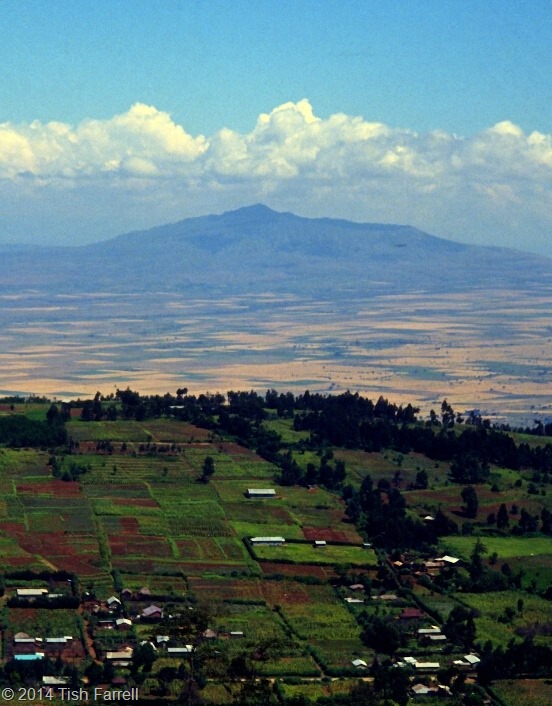
Rift Valley from Escarpment

Smallholder farms at Escarpment just north of Nairobi. Mount Longonot beyond.

*

Once the British had staked their claim in British East Africa, the Bantu farming communities that inhabited the higher hillside zones of Kenya were also enclosed in Reserves. The occupants could only leave to work for Europeans. The justification for creating reserves with designated boundaries (and they were quite large areas) was to protect tribal land holdings from the incoming white settlers.

African farmers, being the successful cultivators they had been for several millennia, were naturally inhabiting the best and most covetable land. So in this sense, the British administration had a point. The early settlers were British aristocrats like Lord Delamere and  the sons of the Earl of Enniskillen, and thus the kind of men who expected to own vast acreages and begin farming/ranching on an industrial/landed gentry scale.

Meanwhile from 1896-1902, and as a result of military paranoia of epic proportions, the British had built a very expensive 600-mile railway  from Mombasa to Lake Victoria. It was called the Lunatic Line even at the time of its building. But as the strategic objective receded in importance during the early 20th century, so the Colonial Office needed settlers – well-heeled, gentlemen of means who would grow produce for export and so help pay for the railway.

colonyinmakingor00cranuoft_0023[1]

First page of Lord Cranworth’s A Colony in the Making: Or Sport and Profit in British East Africa, Macmillan 1912. A guidebook and general sales pitch to attract gentleman settlers. (Out of copyright).

*

Thus, in the wake of the adventure-aristocrats came retired military men, among them individuals who were variously set on nation-building, knocking the natives into shape and, in the process, getting rich from flax, ostrich feathers and coffee. The country’s fine shooting and fishing were definite lures, and made much of in the publicity brochures sent out from British East Africa. Other attractions included the notion of plentiful cheap farm labour and house servants, and thus the preservation of social status that was already well on the wane for the middle classes back in Blighty.

napier grass on the Rift

But now we come to the rub. Or in fact two rubs. Firstly, when the monsoon winds are blowing in the right direction, Kenya has the most benign climate imaginable,  providing two rainy seasons, and thus two and sometimes three growing seasons for some crops. The elevated plateau of Central Province in particular, and its Aberdares highlands are rarely too hot. The beauty of the great forests suggested Scotland or Wales rather than Africa to the newcomers. They set about building mini-baronial lodges and laying out English lawns and rose beds.

But then comes the other rub. The soil. As I’ve said, volcanic soils are very fertile, but they are also very fragile. Wholesale clearance of trees and bush will quickly create desert. The late, great Kenyan environmentalist, Wangari Maathai, has maintained that felling deeply rooting forest trees ultimately leads to desertification for a whole range of reasons. 

The forests not only attract rain but the trees shelter, stabilize and feed the soil (many tropical species fix nitrogen). Most importantly, she pointed out, the deep roots open up underground aquifers to water the land.

Traditional farmers of course made gardens within the forest rather than large fields. They cleared trees certainly, but they did not clear all trees. Some had sacred meaning, like the wild fig, and were protected. Others were valued for cropping purposes – for animal fodder, medicine, bee forage etc.

When the old colonials set out for Africa on a cash-cropping spree, full of the notions that they knew best how to farm, they singularly failed to understand that indigenous peoples, far from being ‘undeveloped’, had very good reasons for doing things the way they did them. Their objectives were more about living well than getting rich.

Pre-colonial accounts by explorers and missionaries show that the Bantu peoples were very successful farmers. They planned their planting to take into account the possible vagaries of climate. For instance, drought resistant millet might be the mainstay crop, and cultivated on the  drier soils in their territory. Squashes and beans would be grown near stream beds, and water-hungry maize would be the risk crop,  planted on a river bank on the off chance that seasonal floods would be small enough not to wash the crop away, but good enough to provide a bonus to the annual harvest.

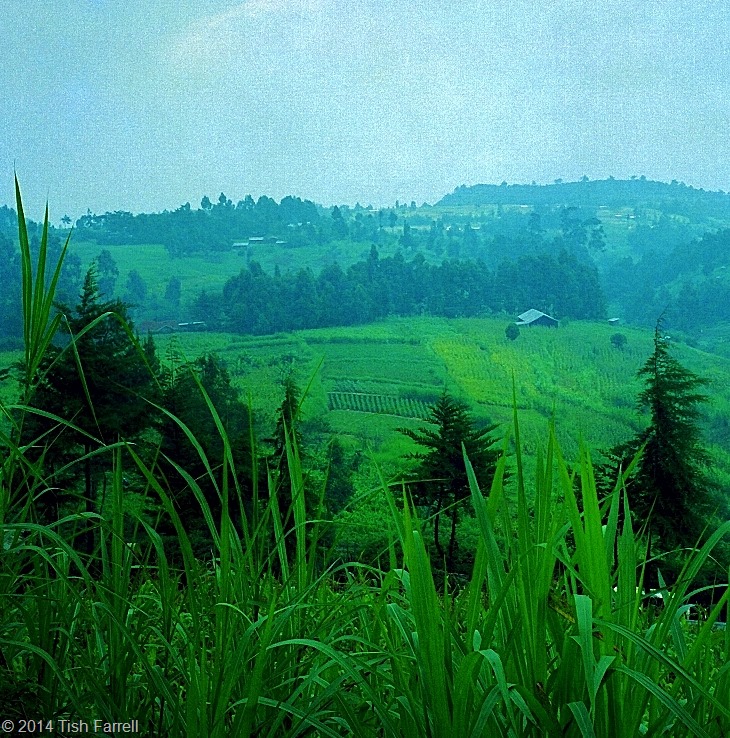
Kikuyu farmer and sugar cane

The other important contingency depended on kinship and clan ties. As the Bantu communities moved out across the African continent over many centuries, pioneering into new territories as population growth or failing soil fertility dictated, networks of clan relationships became extended over quite large territories. If drought, disease or invaders struck, people would take their possessions and seek refuge with distant relatives until the threat had passed.

Pastoralists like the Maasai also relied on being able to move over large distances to secure grazing for their herds in times of drought. But once people were confined to reserves, bound by European constructs of land ownership, they could not move. Land in the Native Reserves where people farmed thus became overcrowded, degraded and overgrazed. Under colonial rule Africans were not allowed to acquire fresh land. This was one of the chief reasons for the uprising in 1950s Kenya when the Land and Freedom Army (dubbed Mau Mau) went to war against British rule.

Then there were the colonial agriculture officers trying to dictate the way the people on the Reserves grew their crops, pressing for mono-culture rather than the traditional way of mixing crops which helps to fool insect pests and utilizes advantages of companion planting.

As we left Kenya in 2000 I was interested to learn that some European agricultural aid project was actually advocating that smallholder farmers (which means most Kenyans) should use ‘kitchen-garden’ planting techniques to reduce crop pest damage and/or the need for pesticides. It had only taken a hundred years for outsiders to teach Africans what they had known all along, but doubtless been told to forget in the interim because their methods were considered primitive.

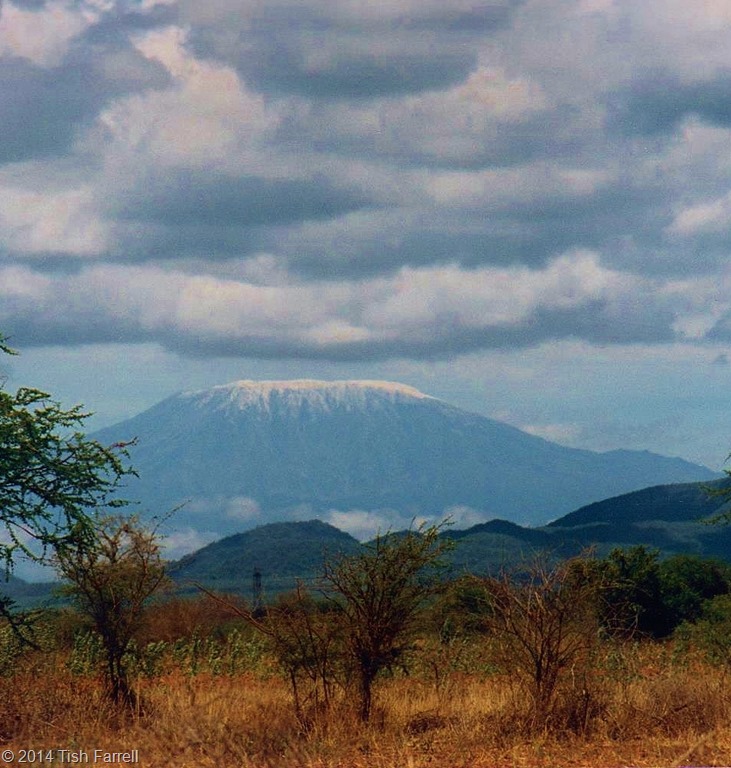
Sometimes the hypocrisy of rich world tinkering is enough to make this particular writer’s blood boil up in seismic fury.  Time to cool down with a view of snow-topped Kilimanjaro. Who’d have thought it: ice on a volcano. When in the 1840s German explorers and missionaries, Johann Ludwig Krapf and Johannes Rebmann, out exploring from their Mombasa mission, claimed to have seen snow-capped mountains at the Equator, no one back home believed them. Thought they were barking. There’s a lot, we outside Africa do not know about this vast, extraordinary continent even though its nations provide us with so many of our essential raw materials, fairly and otherwise; mostly otherwise…

002 (2)

copyright 2014 Tish Farrell


Flickr Comments Tagged ‘V’

Lust to rust: is it a sign?


KIF_0130

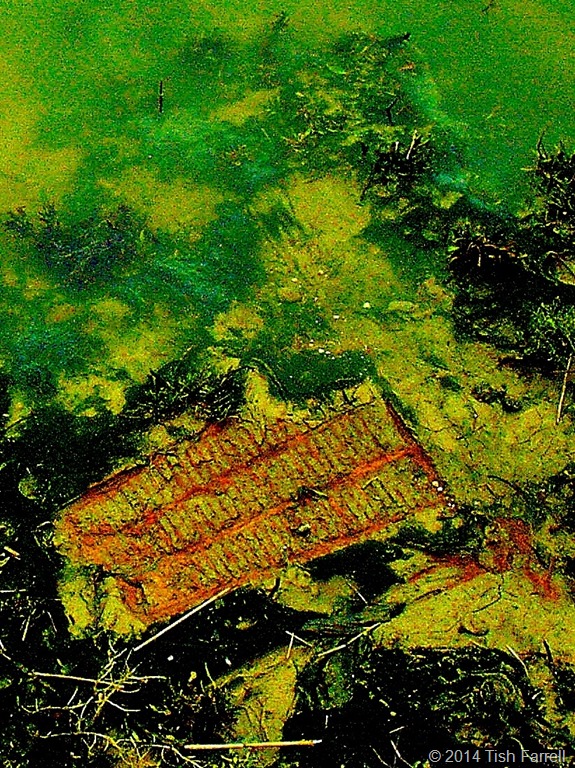
Is it a portent, a glimpse of the future  where the ubiquitous mall/consumer-outoftown-outlet is no more. Gone. No more shops. For here we have a ‘fossilized’ supermarket trolley, aka shopping cart, its erstwhile frame decomposed in a muddy creek beside a Strood retail park. These sorry remains were caught in a happenstance moment – after shopping of course – and just as the tidal River Medway was on the ebb. Poor old trolley. No more two-for-one thrill; no more down-the-aisles rush to load up the sugar-laden cargo. And so, ex-trolley, may Mammon bless your squeaky, little wheels – now sadly dissolved in Kentish coastal effluent…

copyright 2014 Tish Farrell

Cee’s Odd Ball Challenge

Daily Post Photo Challenge: Split-second story

Congo Super Highway


Scan-130703-0003 (3)


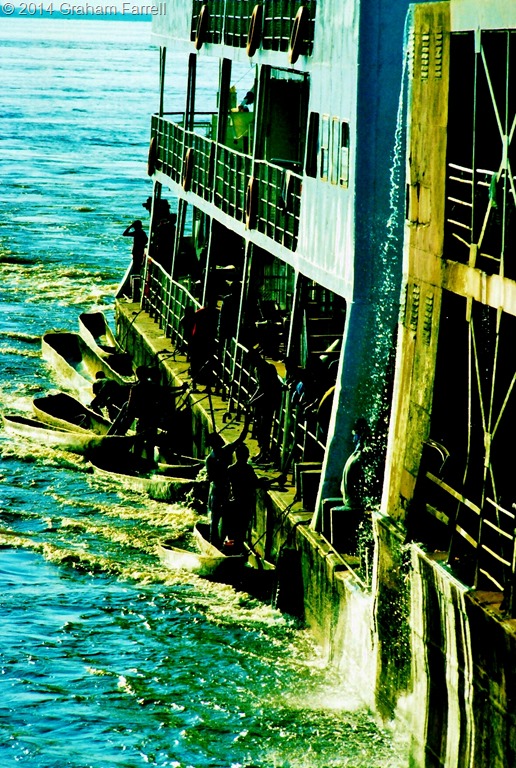
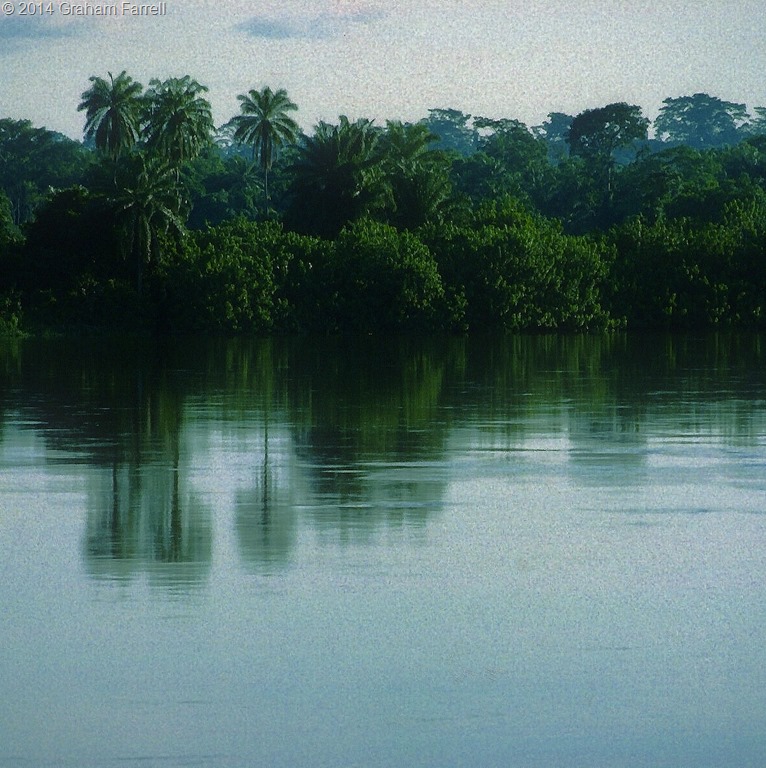
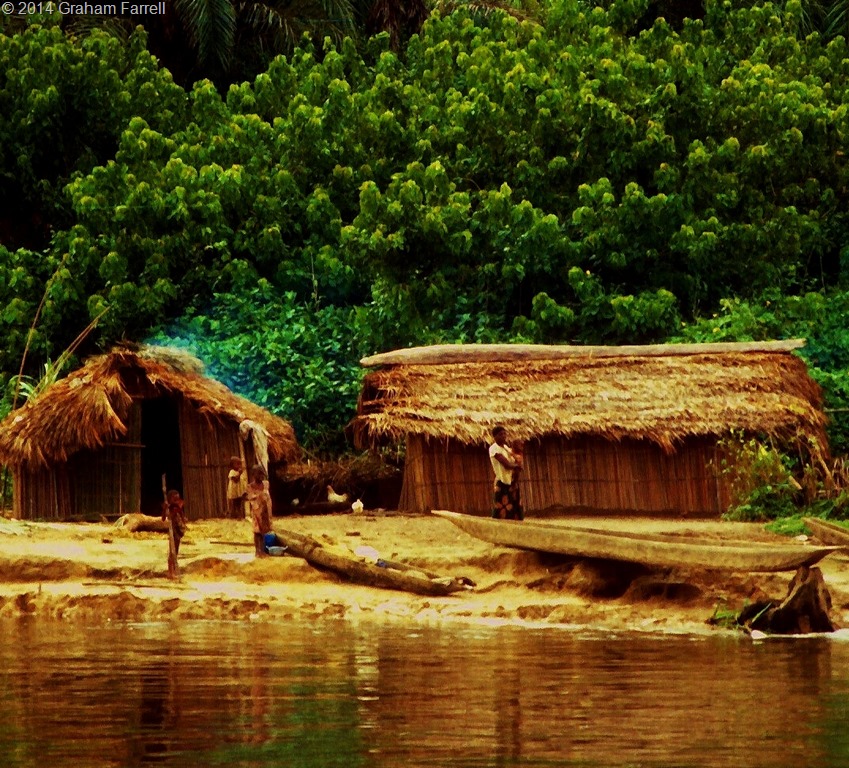
I’ve been on the raid again for these shots for Cee’s watery challenge. They’re from the Team Leader’s photo archive of his Africa overland trip, and were taken from the deck of one of the huge Congo ferries that ply the treacherously shifting waterway between DR Congo’s capital Kinshasa and  the port town of Kisangani, a thousand  kilometres inland.

This vast waterway is one of Africa’s super highways. In a land with few roads or other amenities, the Congo River not only provides the main means of travelling across the country, but is also a continuous marketing opportunity for local farmers, fishermen and traders who deal in just about every imaginable commodity.

Scan-130703-0013

Scan-130703-0003 (2)

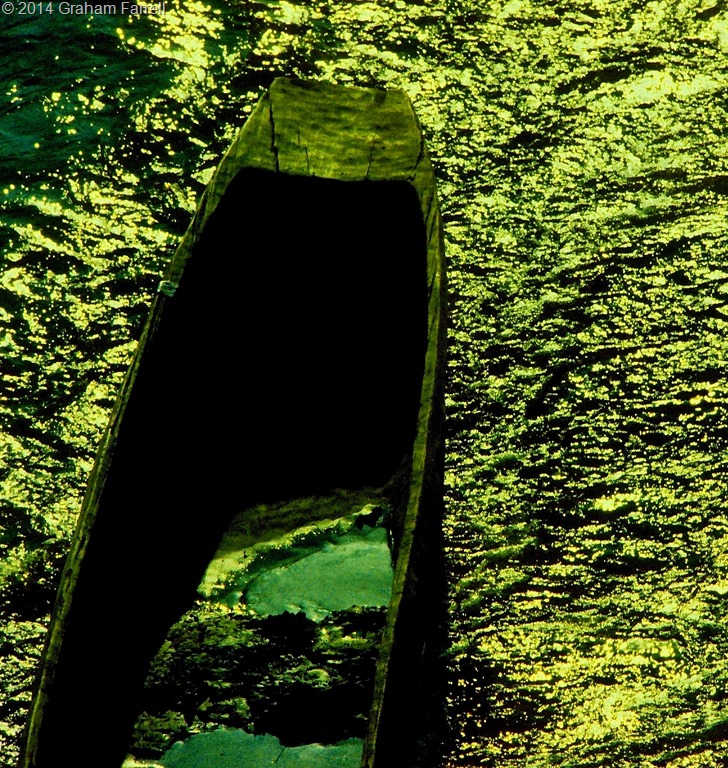
The traders tie up their pirogues alongside the ferry. They come to trade  with passengers and to hitch a ride. At times the ferry looks more like a floating city than a river craft.

Scan-130703-0004 (2)


Scan-130703-0004 (3)

pirogues4 Congo

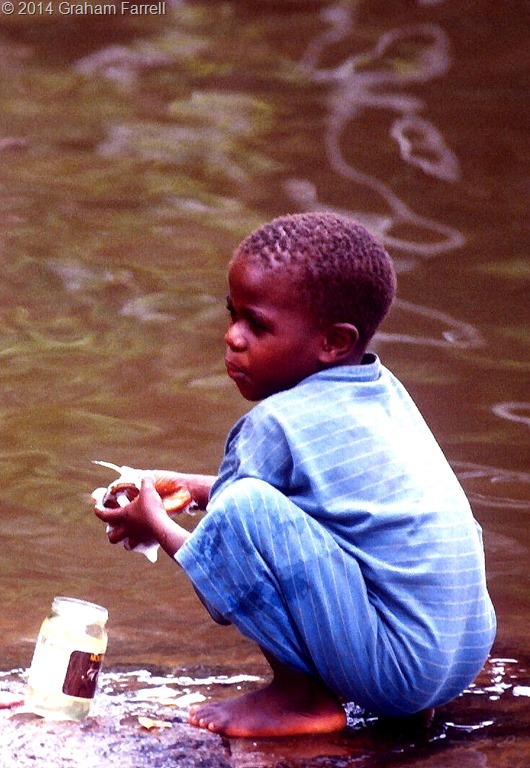
The river of course means  far more than transport and trade to the Congolese who live beside it. It provides fish to eat for one thing. More crucially, it is the main source of drinking, cooking and washing water: in every sense  a river of life.

Scan-130703-0010

Copyright 2014 Tish Farrell


Cee’s Fun Foto Challenge: Water