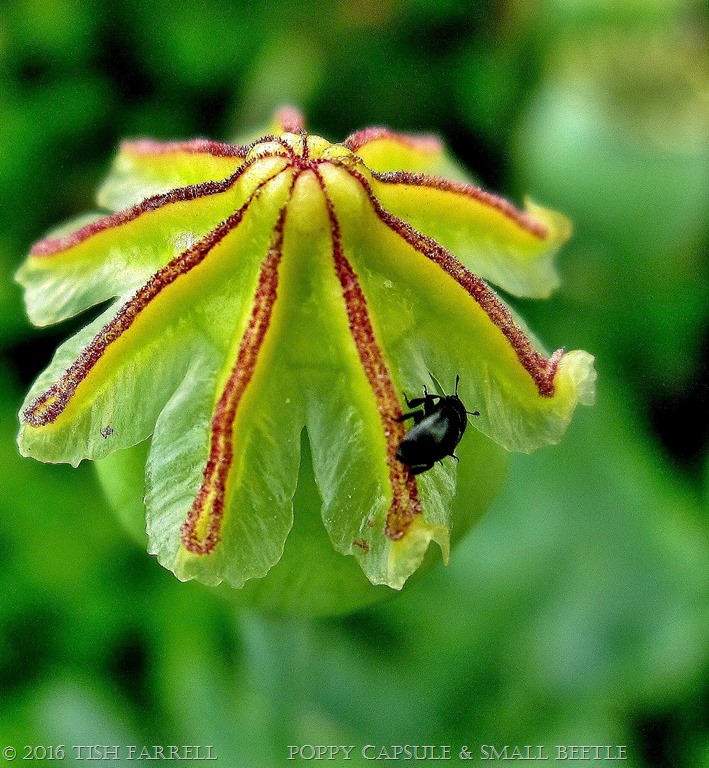



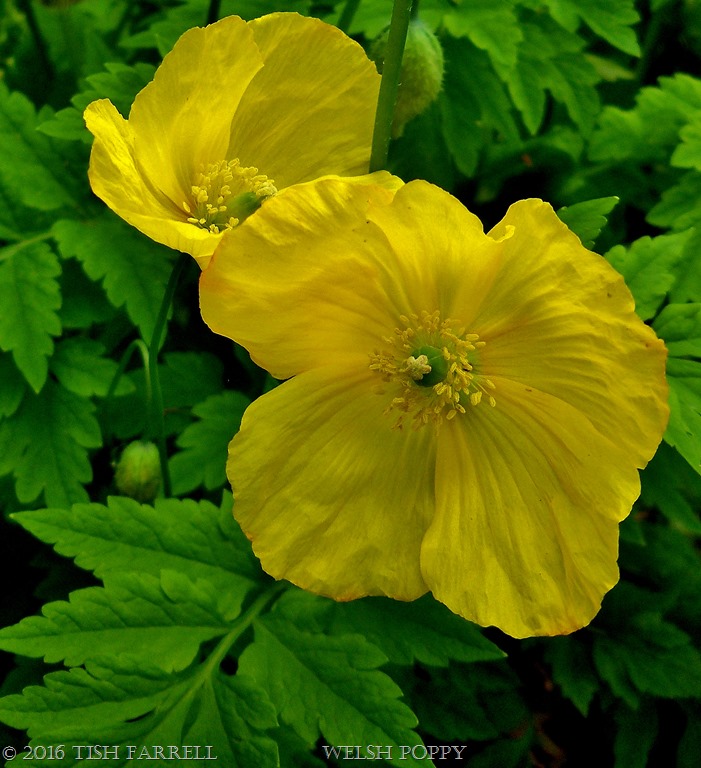
My antidote to some ugly human happenings around the world this year.
From Much Wenlock with love.

My antidote to some ugly human happenings around the world this year.
From Much Wenlock with love.

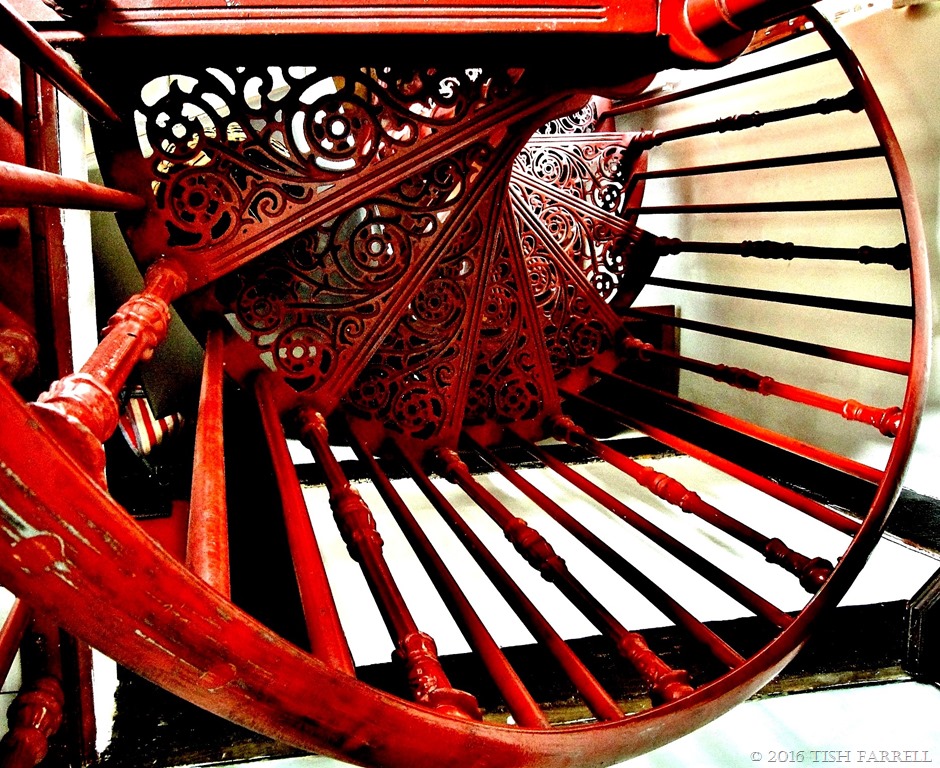
Last Thursday Paula at Lost in Translation gave us two weeks to come up with a conceptual photo. I’m afraid my brain is a bit sluggish at this time of year, so this is the best I could conjure. However, I did enjoy playing on our spiral staircase. Our cottage being an 1830’s square extended into a 2001 rectangle, has two sets of stairs – one either end of the house, and both of them hopeless when it comes to moving items of furniture from one floor to the next. Also Graham and I go round and round the house missing one another. And then, just sometimes, I move so fast, he thinks there are two of me, simultaneously upstairs and downstairs. In fact recently he spotted me in triplicate. I’m not sure which of us should be the most worried by this phenomenon.
The stairs in the photo are in the corner of our kitchen. You might just be able to spot the oven gloves. An unintended inclusion, if matching.
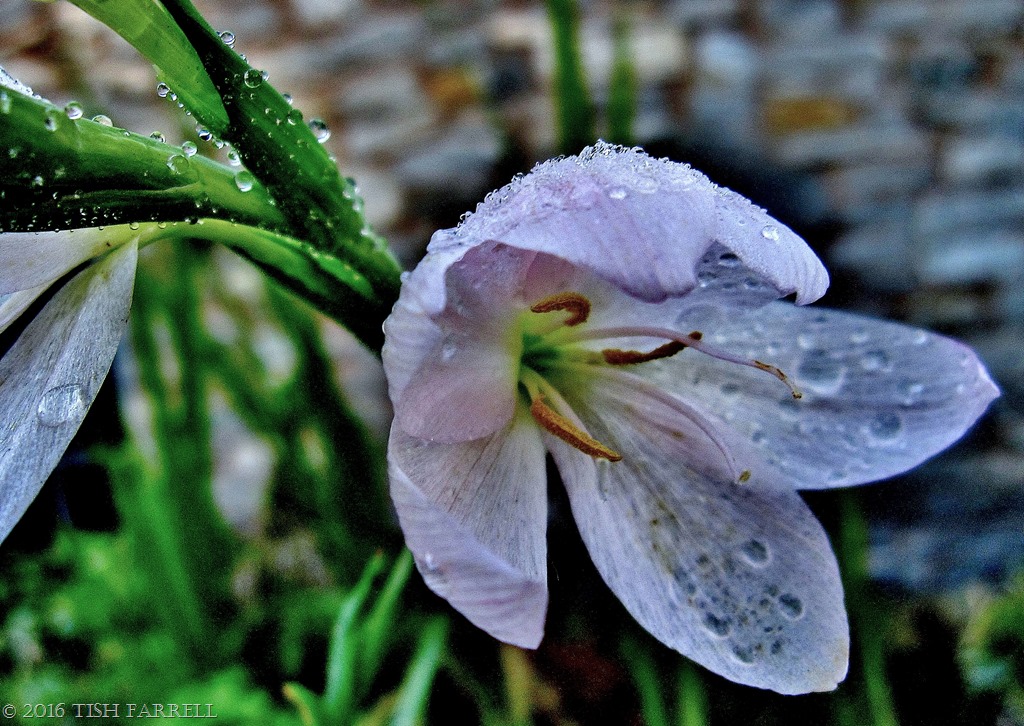
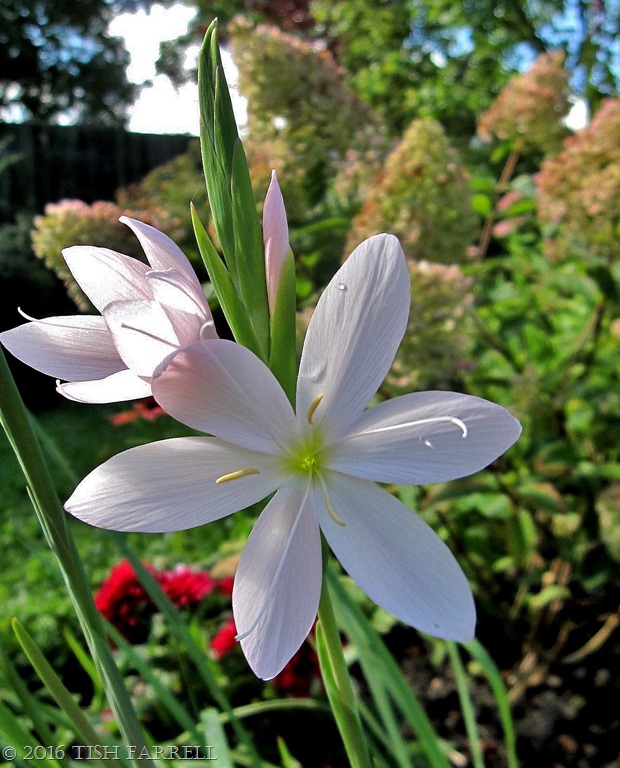
Only on December 11th did I cut down the last of these lovely shell-pink lilies. They have been putting on a good show since September, the flowers opening day after day, and new buds forming. This is pretty impressive for a plant that is native to southern Africa where its red version goes by the name of Crimson River Lily.
Schizostylis coccinea was its botanical name, but it has now been reclassified as Hesperantha coccinea. Go to this link if you want more information on how to grow it. I have found it a most obliging plant, requiring little attention, though I gather it likes to be moved around the garden every few years. It comes in a range of coral and pink shades, and makes very pleasing clumps that can be easily divided in spring.
Here’s how it will look next September. Doesn’t it make you smile?
Cee’s Flower of the Day Please visit Cee for more blooming marvels. Or go there to post a floral link to your own.
These days it is usually dusk as I leave the allotment. I go there late afternoon to pick kale, carrots and parsnips. It has been too wet underfoot to do much work (our soil turns to glue in winter rain) but I have been making paths between the raised beds and behind the polytunnel. For the permanent paths I have laid membrane, for others whose location I may change, I’ve put down recycled cardboard. Then I’ve been covering both with wood chippings.
These last I am currently scavenging from a big heap left by the council beside the footpath not far from the allotment. It means a longer walk from the house. Instead of going south along the field path, I strike out west up the Sytche, where I fill two bags from the heap and then slither my way along a hedgerow track and into the wood before I can turn east and drop down on to the allotment. All a bit daft I know, but you get a fine view of the town along the way.
Back in the summer I was gathering chippings from the Linden Field and using them in a no-dig experiment. When I took over the polytunnel a couple of years ago, I also acquired half a plot that had been neglected for several seasons. Some of it I cleared by digging until I saw the error of my ways. The rest I divided into terraces using old planks, and then instead of hacking at the pernicious weeds (dandelion, buttercup, couch grass), I buried them in cardboard and several inches of chippings.
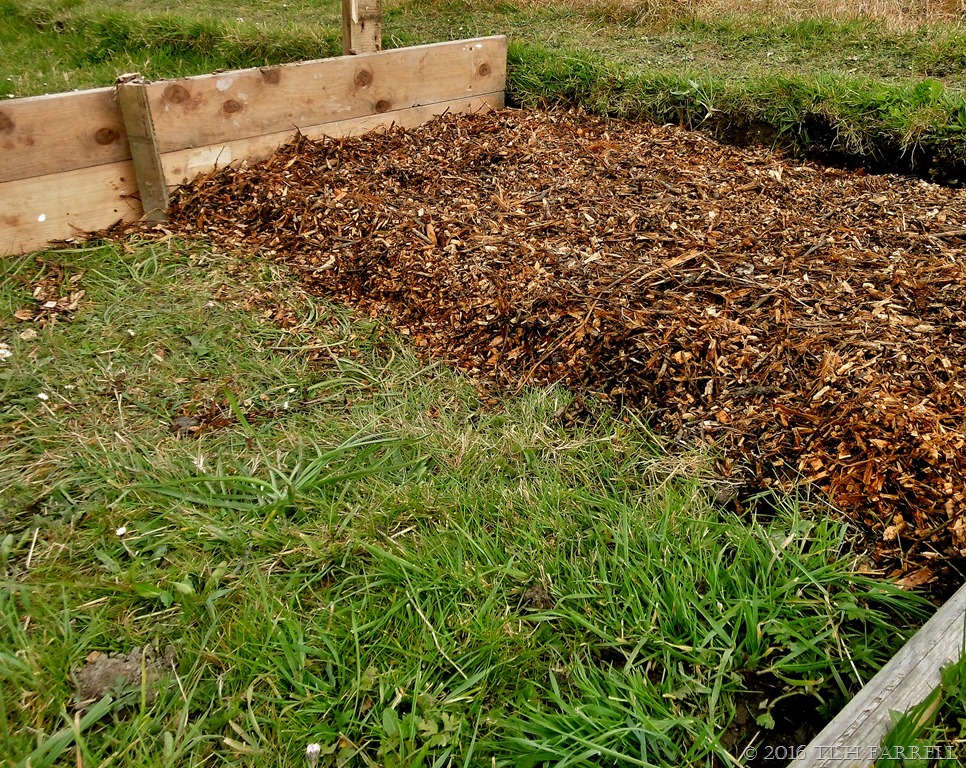
This is not fool-proof. You can’t keep a good weed down. And I’ve had to pull up a few young dandelions since, but they are easier to get a grip on through the chippings.
Eventually, when the worms and fungi have done their work, I should be able to plant into this mulch. Thereafter, it will be a matter of adding more layers of compost. AND NO DIGGING.
Now is also the season of leaf gathering. They do take a good year to eighteen months to rot down, though someone told me you could speed up the process by stirring in some grass mowings. The leaves I gathered last year are already breaking down into lovely crumbly loam which I’ll use for seed sowing in the spring. Leaf mould is low in nutrients, but it can be enriched with the addition of shredded comfrey leaves that rot down very quickly.
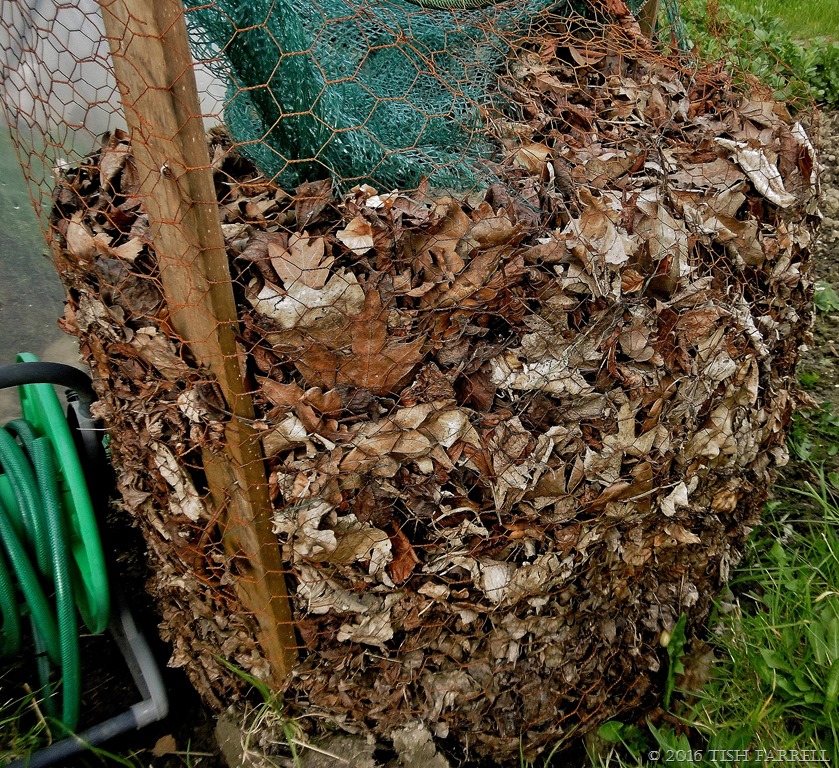
I make simple silos out of a rolls of chicken wire, but you can use black bin bags or leaf sacks.
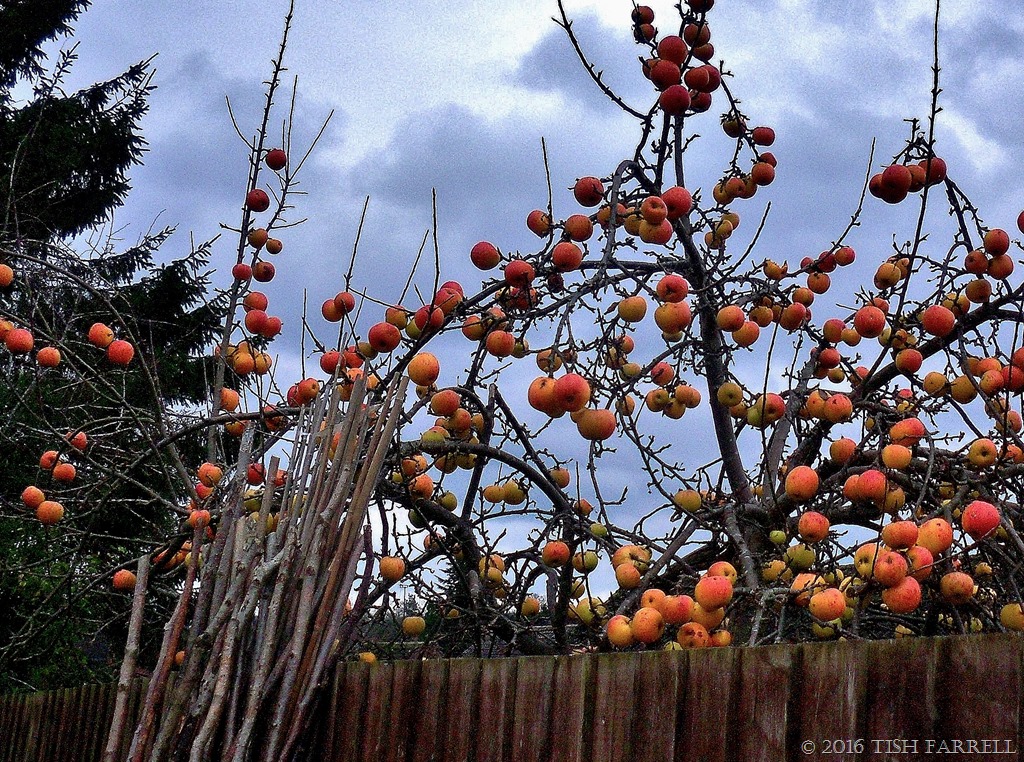
And now I’ve lingered here long enough. The light is going, and it’s time to walk home across the field, the dusk lit by apples like lanterns along the allotment fence.
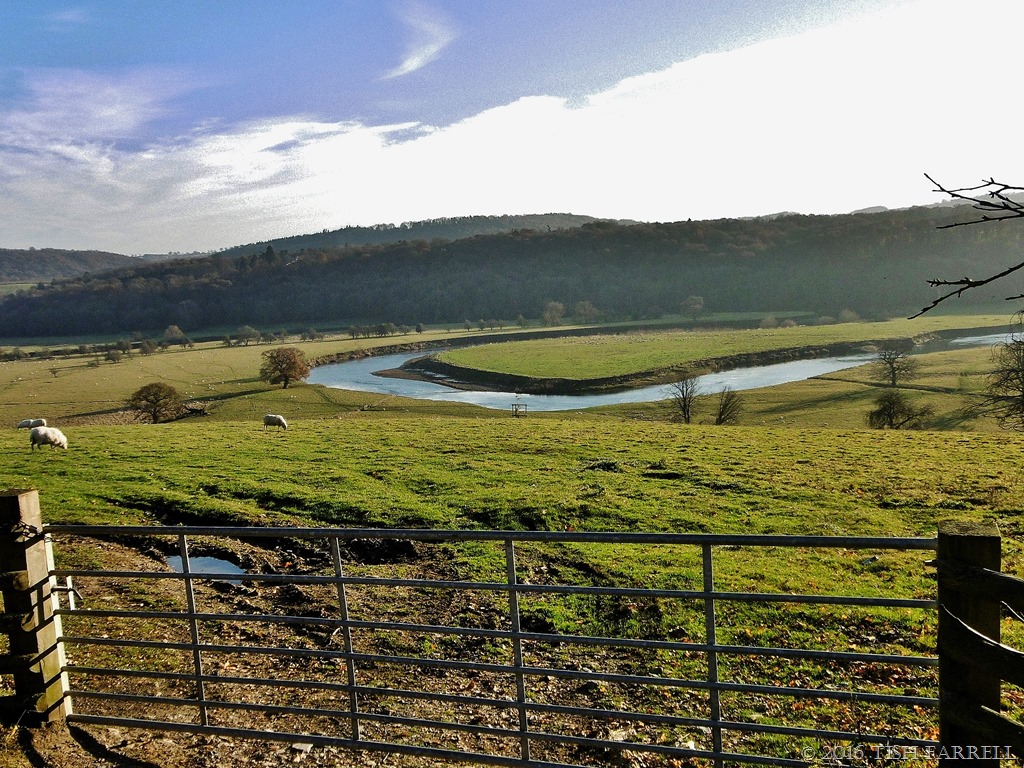
Last week I took you on a walk along Wenlock Edge behind our house, and talked about the melting ice fields of the last Ice Age (around 15,000 years ago), and how the River Severn that once flowed north, started to back up against the limestone ridge of Wenlock Edge and so formed Lake Lapworth. And then I said how the expanding melt waters worked their way through the rock wall, and so formed the Severn Gorge, and at the same time created a whole new southerly course for Britain’s longest river. Well, this is where it all happened – at the northerly end of Wenlock Edge.
Off to the left of the photo, and out of shot, is the old Ironbridge Power Station. It’s coming up next in a ‘zoomed in’ shot.
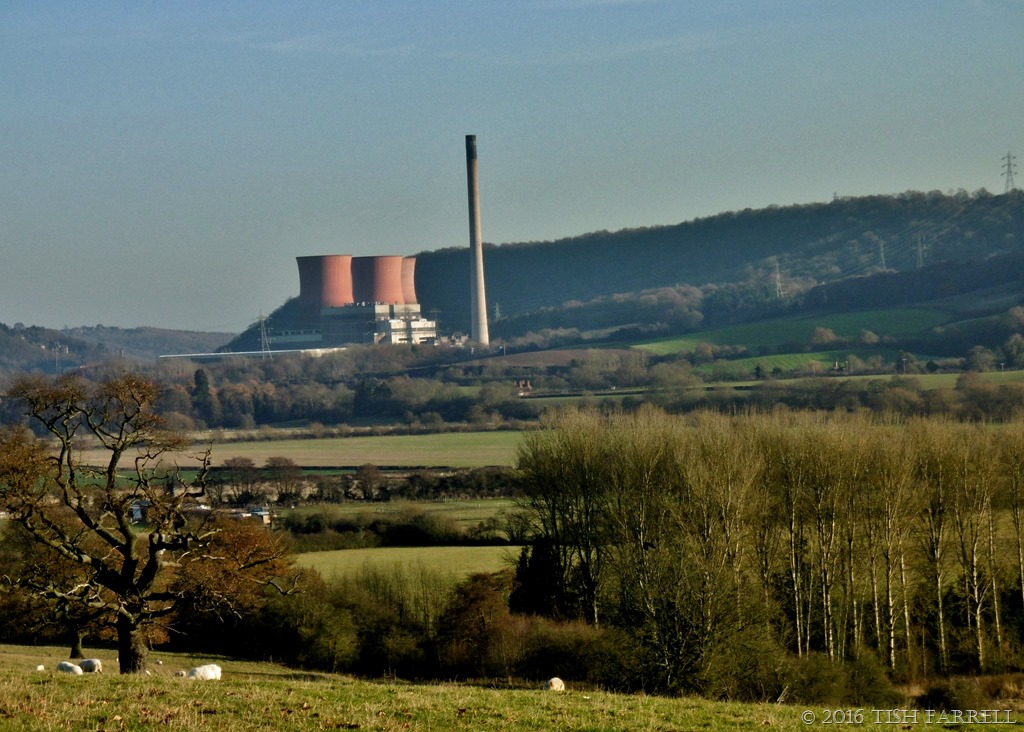
The power station stands on the riverbank at the entrance of the Gorge, and below Benthall Edge, and thus marks the spot where the Severn first headed south. And just to orientate you further, dead ahead to the left of the power station is Ironbridge and Coalbrookdale, and to the right, and below the power station is the road to Much Wenlock. You can just see the house roofs along it. Benthall Edge is thus a southerly spur striking off from Wenlock Edge.
Like Wenlock Edge, Benthall Edge is also composed of limestone strata formed around 400 million years ago when both Edges were part of the Silurian Sea. From the early 1200s the monks of nearby Buildwas Abbey had the rights from Lord Benthall to quarry the limestone, which they burned in kilns to make fertilizer for their farm fields, and lime mortar for building. They also cropped the woodland along Benthall Edge to make charcoal.
In later centuries the Benthall limestone was used in local blast furnaces, tipped in with ironstone, and when fired, acted as a flux which drew impurities from the metal. This was tapped off as slag, and the resulting molten iron cast into ‘pigs’ on the furnace floor. The pig iron was then shipped on to the forge to be worked further into wrought iron, a more durable product than cast iron, which has a tendency to fracture. So now, if you can picture it, see that little stretch of the Gorge by the power station thick with sulphurous smoke, and hear the whole place banging and clanging with forge hammers.
These days Benthall Edge is a tranquil place of hanging woodland and winding paths, although you can still spot the remains of old quarries among the trees. The ‘Lime Trail’ information leaflet of the Severn Gorge Countryside Trust provides an extraordinary statistic about the quarrying. It says that over a period of 750 years an estimated 1.2 million cubic metres of limestone was removed from the Edge. So there we have it: landscape formed both by human and natural agencies – though I’m wondering how that piece of man-made intervention was calculated.
But now to get back to the other feature of note at this spot – the River Severn’s meanders between the villages of Buildwas and Leighton.
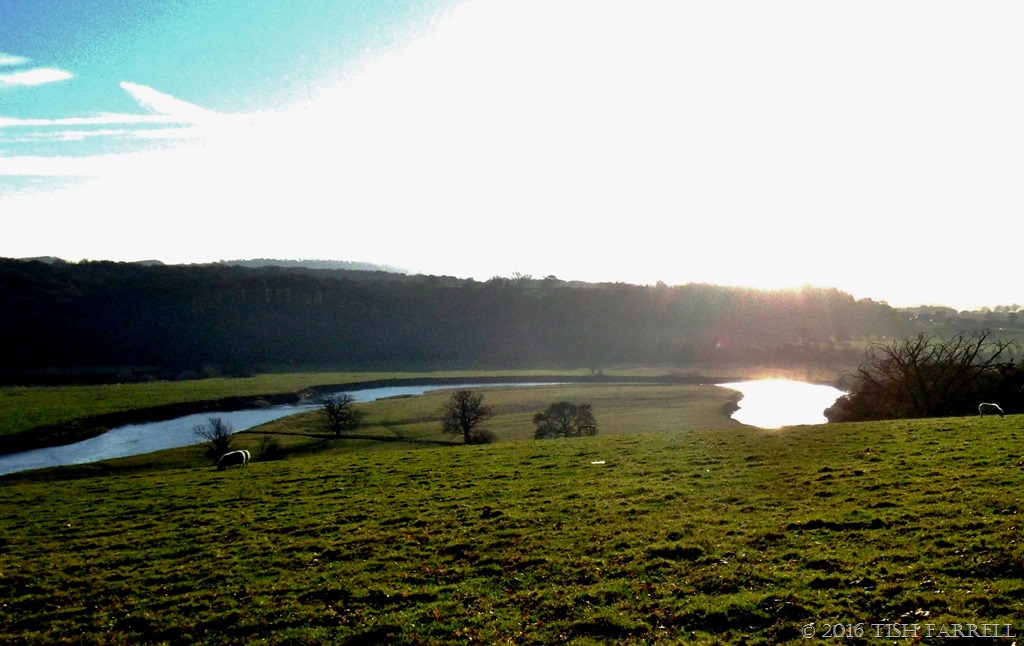
I’ve not really done it justice, this looping riverscape formed by silting on the one hand, and erosion on the other; an oxbow lake in the making. I think I probably needed to climb a tree to achieve a better panorama:
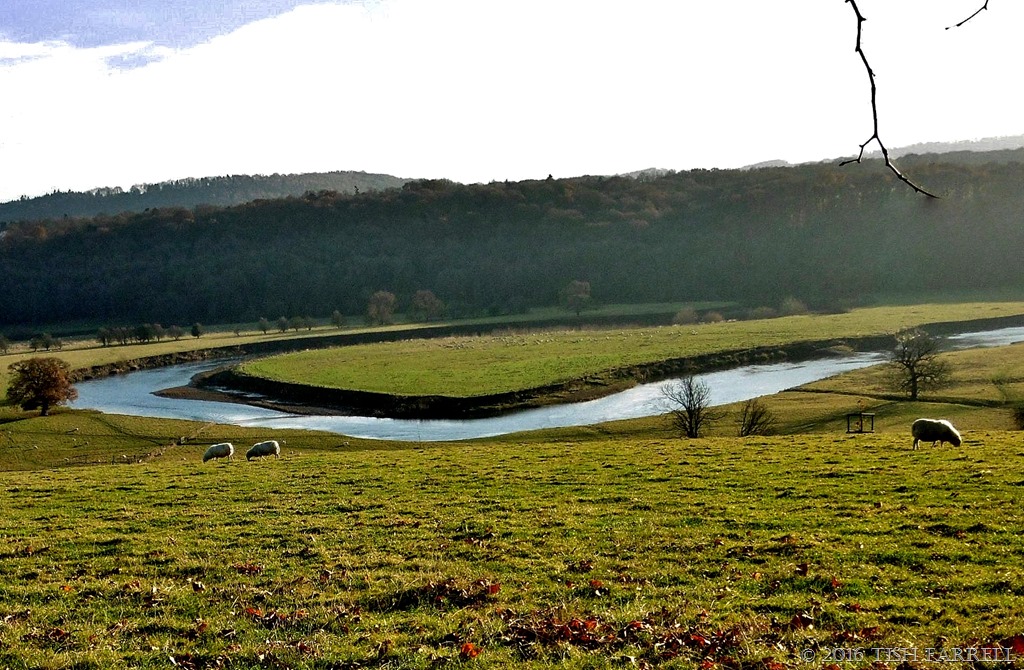
It is of course a favourite viewpoint for geography fieldtrippers, and a very fine place to linger, although not for too long on a winter’s afternoon, however bright and beautiful.
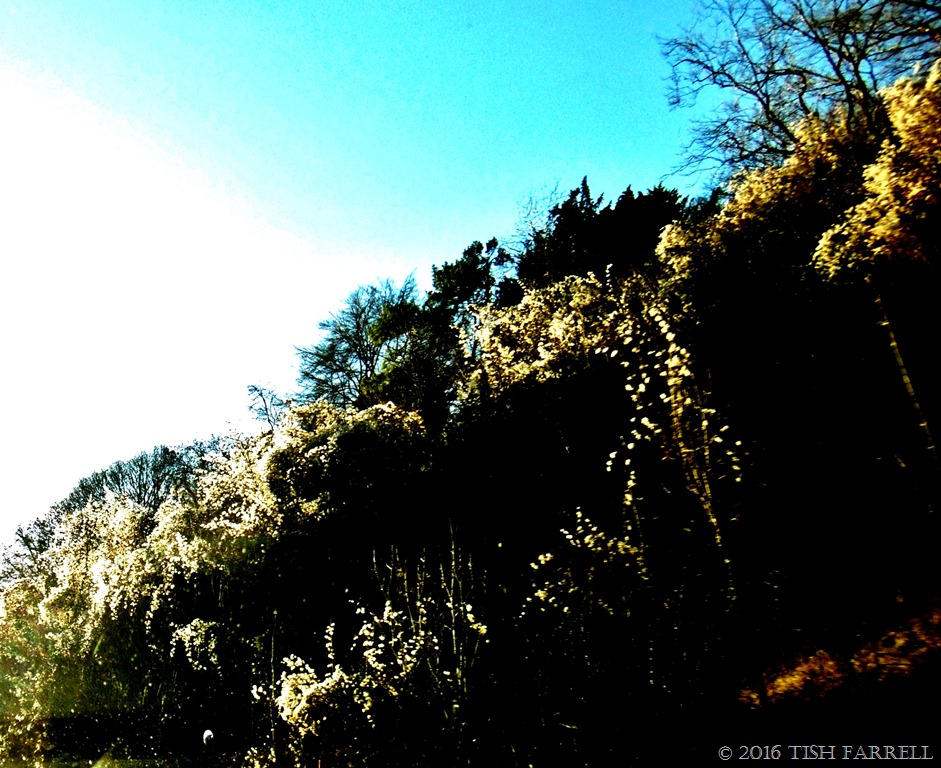
As we headed home, the December sun was lighting up cascades of Old Man’s Beard along the roadside; the trailing seed heads of wild clematis making their own festive streamers. Caught here through the car windscreen. (I wasn’t driving).

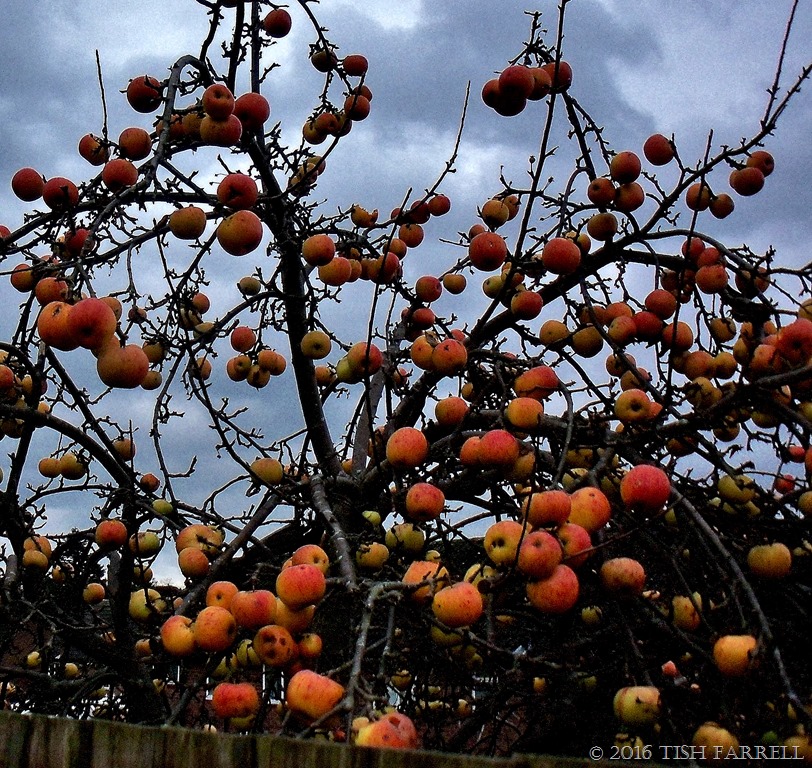
Crab apples as caught in yesterday’s afternoon sun. There’s a bit of story here too. This year the fruit on our Evereste crab apple tree is absolutely tiny, nothing like the giant size suggested by the photo. But this is good, because it makes us think that the tree has survived being moved back in the early summer. Hurrah! It has produced fruit, albeit apples of elfin proportions.
All through last winter we had ummed and ah-ed about doing something so rash and ruthless as digging up this lovely little tree. I had planted it not long after we moved to Much Wenlock ten years ago. It was the star of an ugly and awkwardly large, raised bed at the back of the house. (You’ve probably seen the crab apple/blossom photos in earlier posts).
In the end we decided to risk it. Graham pruned back much of the top growth, and then effectively dismantled the flower bed around the roots while I dug a big hole at the top of the garden. The transplanting all had to be done double-quick. Then we firmed it in, stamped on the soil to get rid of any air pockets, and gave it lots of water. The final proof of success will be next spring. Will it ever flower again? I think it will.

BLUE!
So I’m passing it on: Monday lift-the-spirits blue
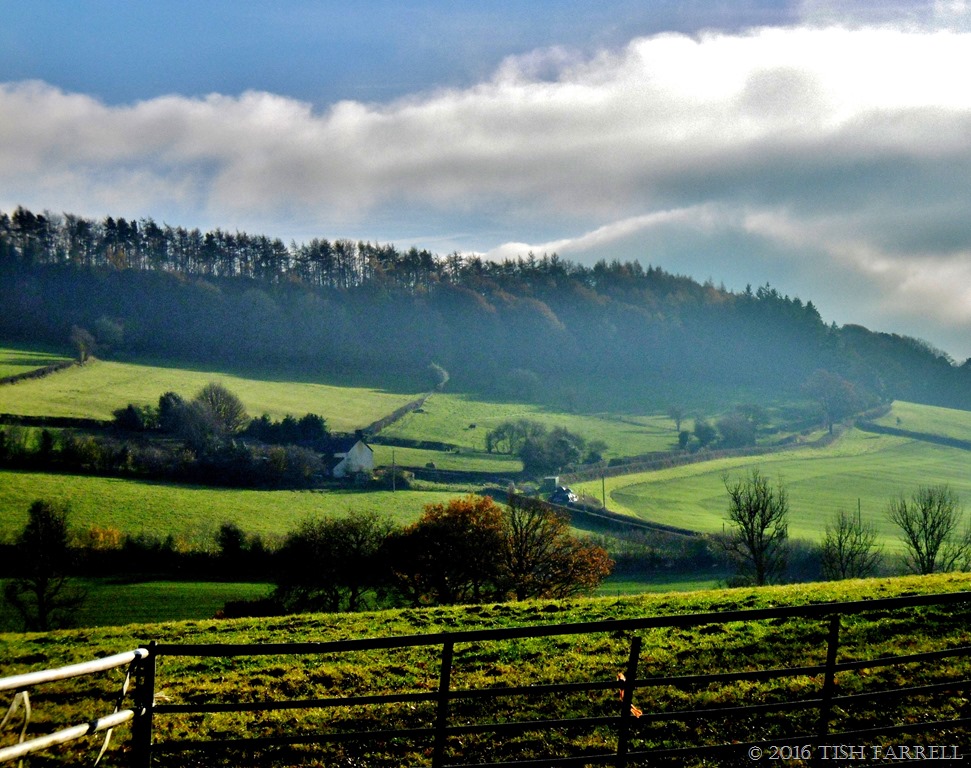
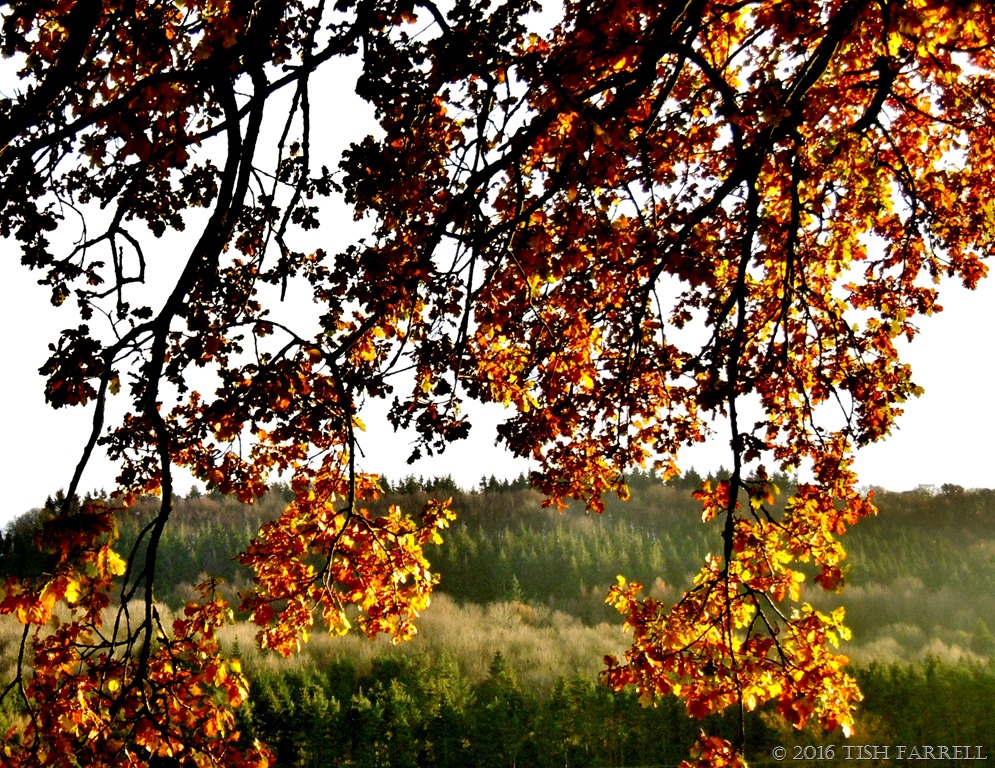
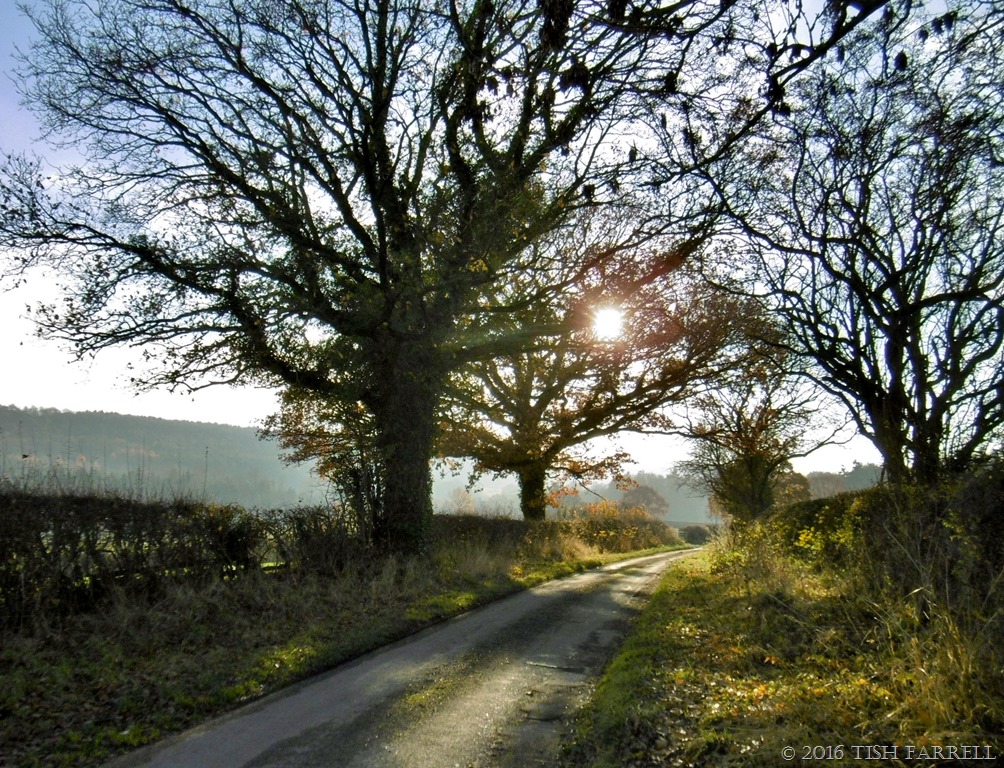
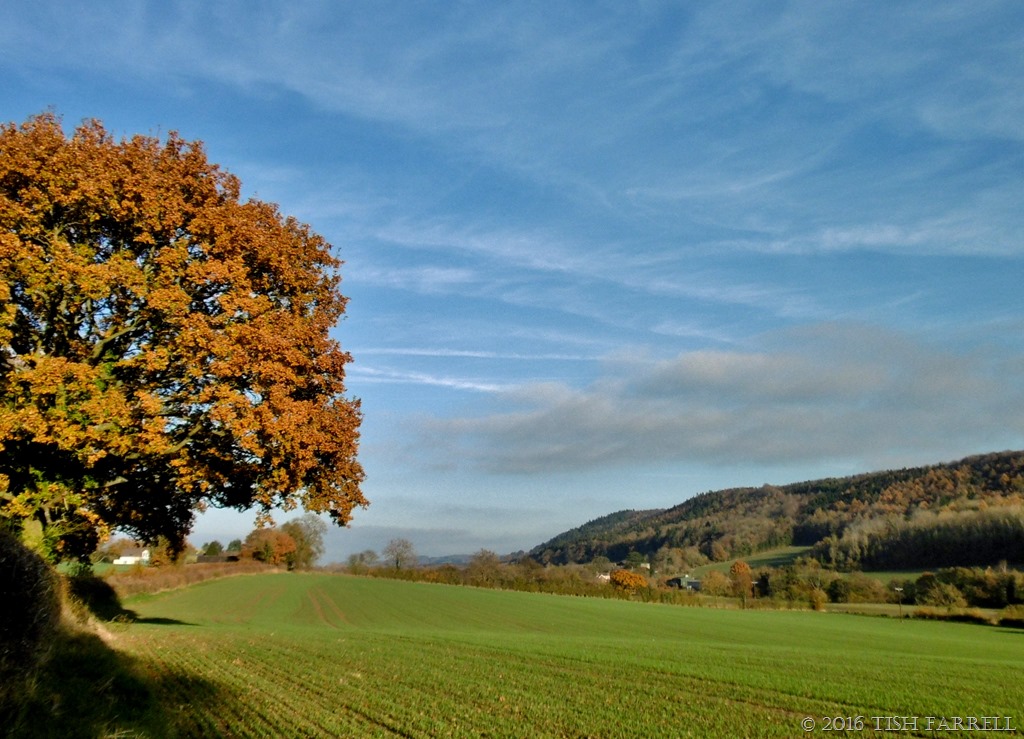
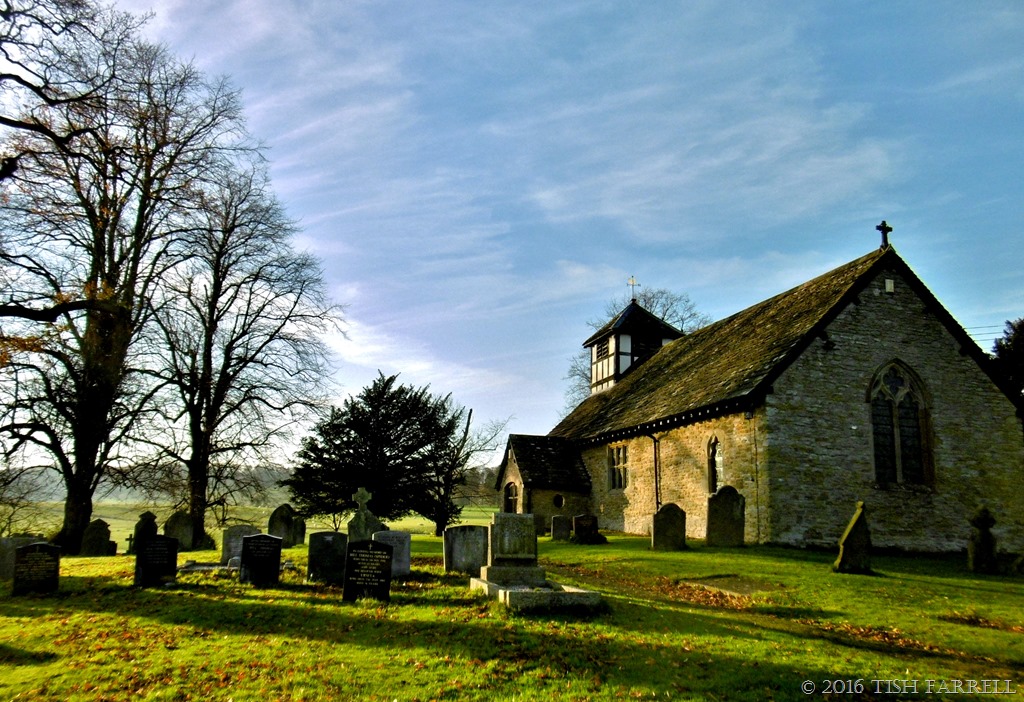
Today was a golden day – not a breath of air and the landscape lit up by the oak trees that still have their leaves. Here are some glimpses, then, of my corner of Shropshire on a late November afternoon.
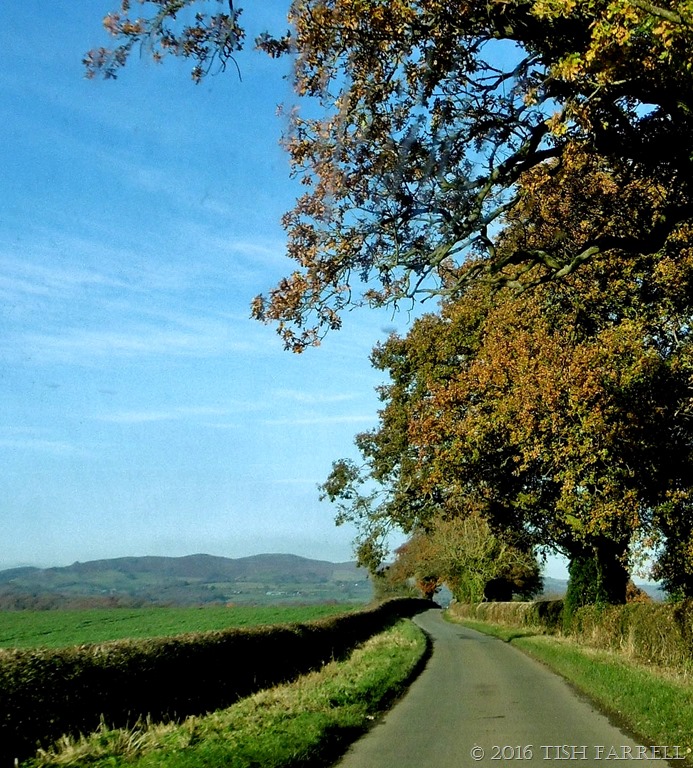
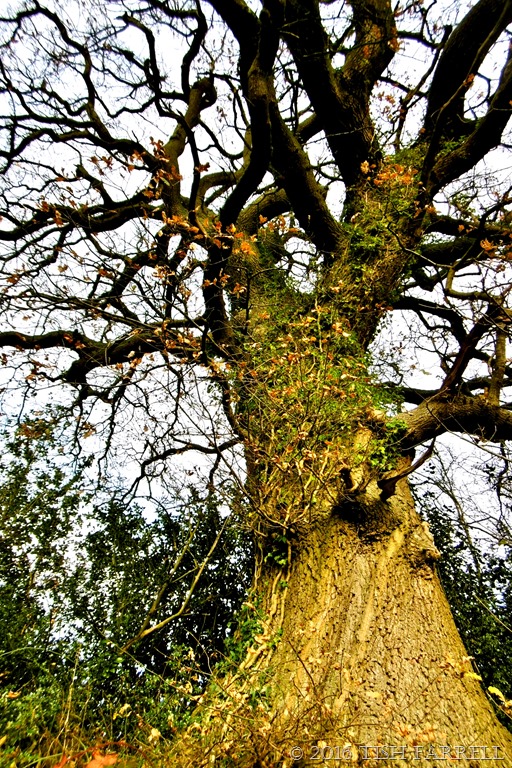
Cardinal Guzman: The Changing Seasons


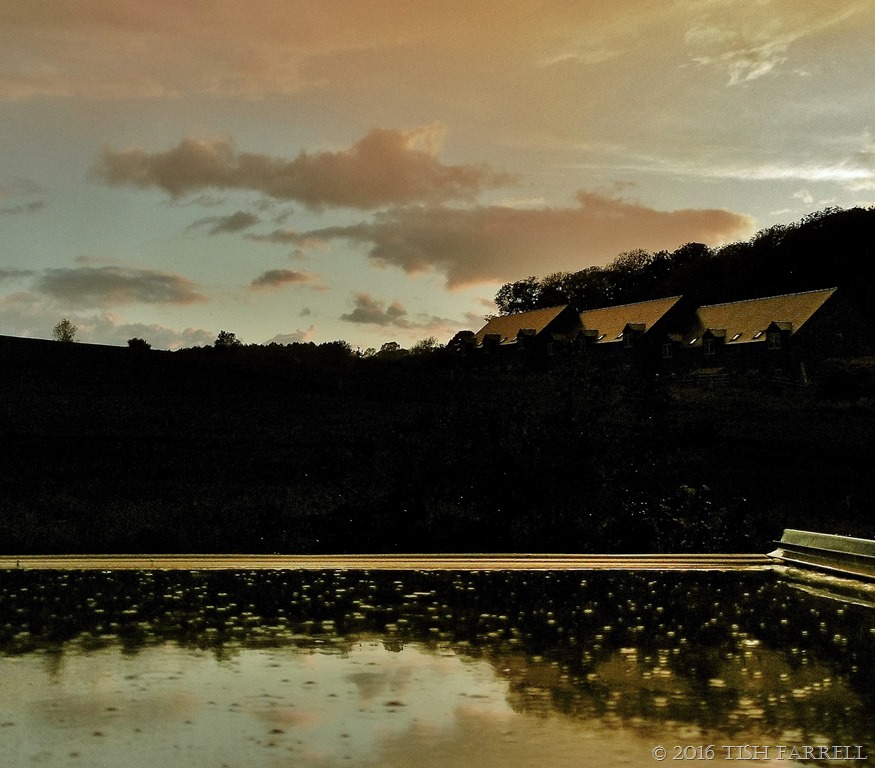
If I stand on the bed in my office, I can open the roof-light and place my digital camera on the glass. It makes for some quite interesting twilight effects, and means I can use zoom and more zoom – i.e. as in playing, not writing. But then all writers/creators need to do lots of playing: it’s all part of nourishing the imagination. The knack, of course, is knowing when to stop, and get down to some hard graft. Not today, I’m afraid.

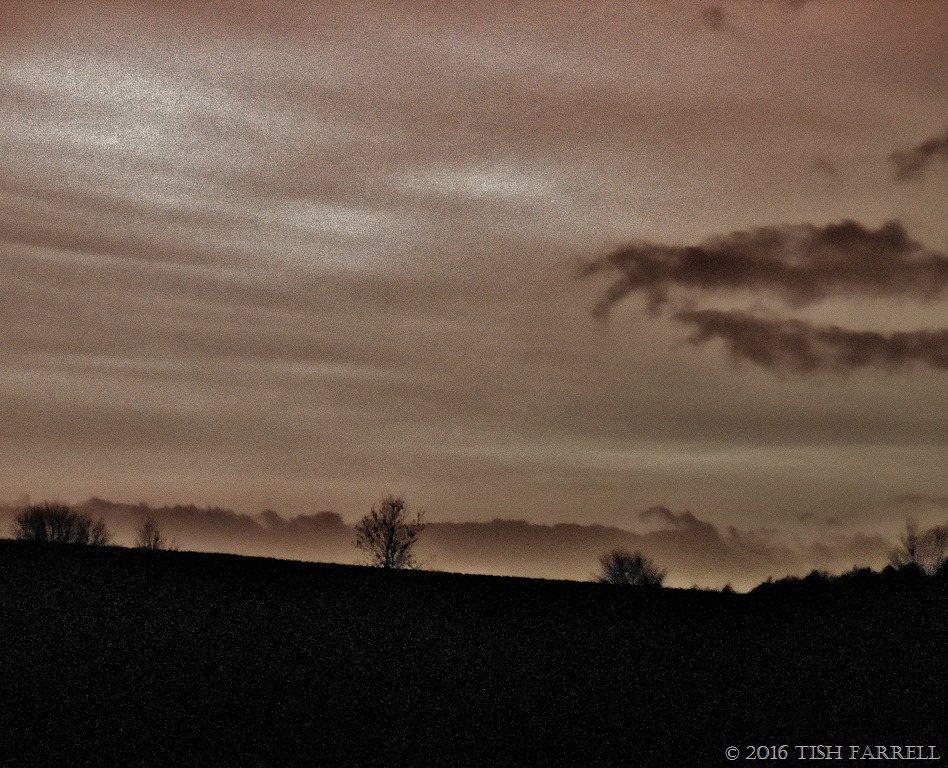
This Thursday at Lost in Translation Paula asks for twilight, and who are we to refuse her.

Talk about conflicting interests. When I’m at work on my allotment I continuously wage war on dandelions. They are shown no mercy, bar resorting to pesticides. And yes, I know they are very helpful plants – the roots plunging deep into the soil strata and releasing otherwise inaccessible nutrients into the topsoil.
On the other hand, on the way to the allotment, camera to hand, I have a lot of time for them. They are of course in the farmer’s field, and not on my plot, which helps to foster a little appreciation. I find their seed-head ‘clocks’ endlessly photogenic. Looked at closely, they have a mysterious and mesmerizing quality: the perfect design of their parachutes, each one programmed for relentlessly unavoidable procreation.
And so, even as I feel my spade-hand twitching towards a ruthless uprooting, I’m also thinking ‘live and let live’. There are other good reasons to love dandelions. I’ve mentioned in earlier posts that these plants possess great therapeutic qualities. Herbalists have long used the roots for healing liver conditions, while the leaves and flowers act more on the kidneys (not for nothing is the dandelion’s country name piss-in-the-bed.) You can use the young leaves in salads, while the roasted roots make a passable coffee. Meanwhile, the dandelion in the photo is also auditioning for a special effects role in Star Trek.
