
As spotted through the blinds of a closed-down man-shop in Shrewsbury’s Darwin Shopping Centre.

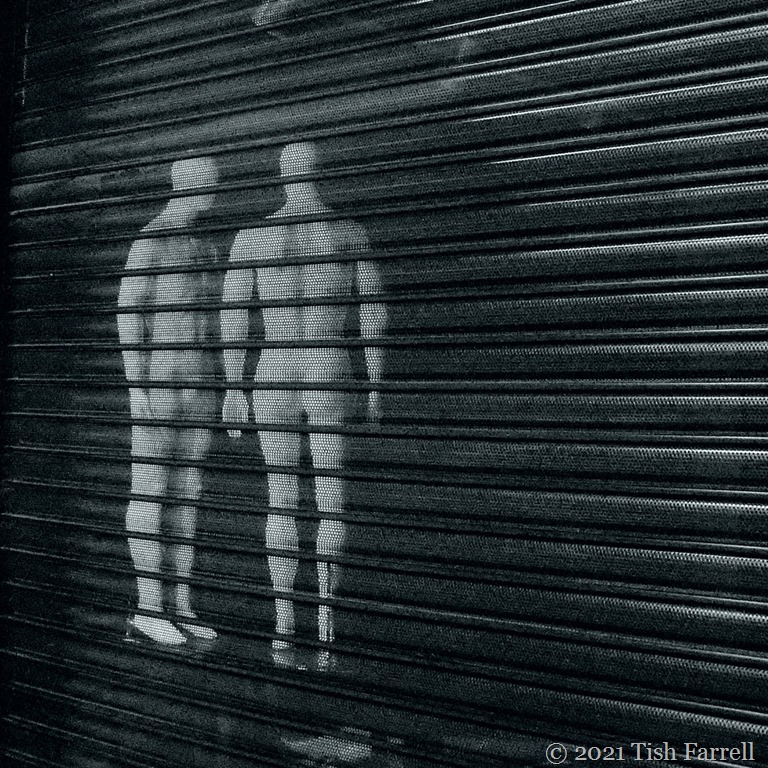
As spotted through the blinds of a closed-down man-shop in Shrewsbury’s Darwin Shopping Centre.


Ostrich and the Ngong Hills
*
Over at Travel Words Jude is running a photo challenge to help us develop our compositional skills. April’s topic is ‘lines’ and each week Jude asks us to consider them in particular ways. This week it is horizontal lines. Here’s what she says:
“This week’s assignment – Look for horizontal lines. In a photograph, horizontal lines in particular need to be completely level across the frame, because your viewer’s eye will perceive even a slightly skewed horizontal line as uncomfortable to look at or just incorrect.”
For obvious reasons I haven’t been out and about finding likely vistas, but as I’ve been rummaging through my old Kenya photos, I’ve noticed that things horizontal feature quite a lot. I don’t actually recall if I was registering this at the time of taking the photos, since apart from the Elmenteita view, the others were happenstance shots. Anyway, I thought I’d post them for interest’s sake.

Impala and rooftops of park rangers’ quarters, Nairobi National Park
*
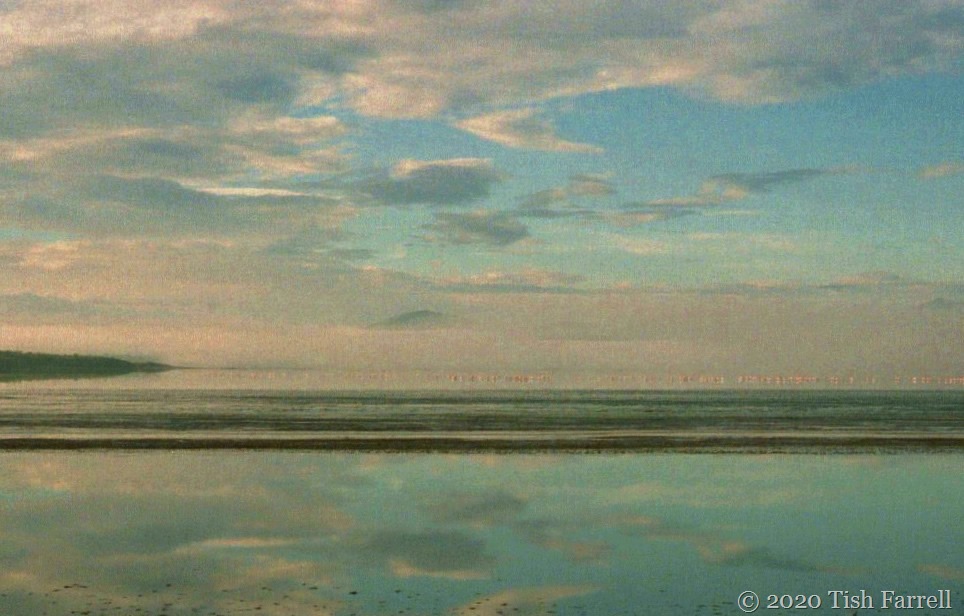
Flamingos at dawn on Lake Elmenteita
*

Hippos going with the flow in Lake Naivasha
*
Travel Words: Photo Challenge April Lines #1 Please visit Jude to see her examples of horizontal framing. Lots of pointers and ideas.
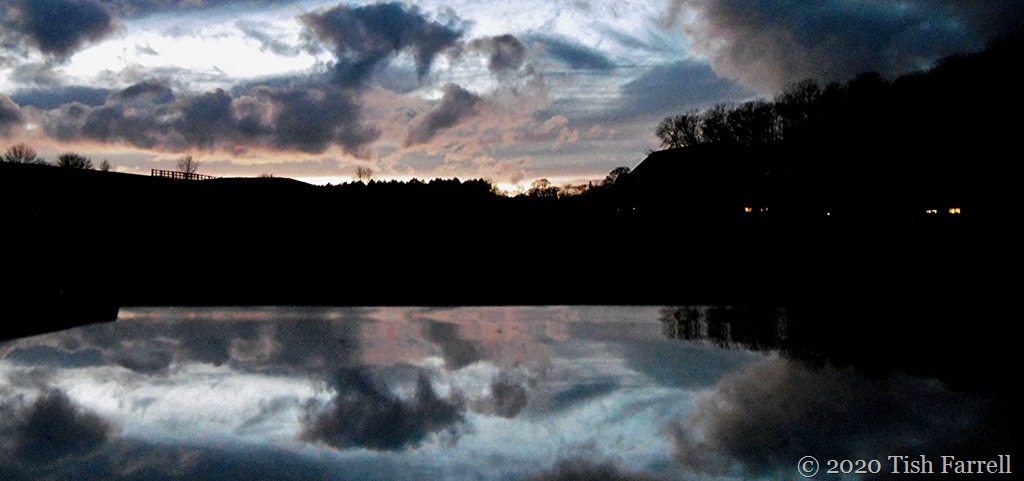
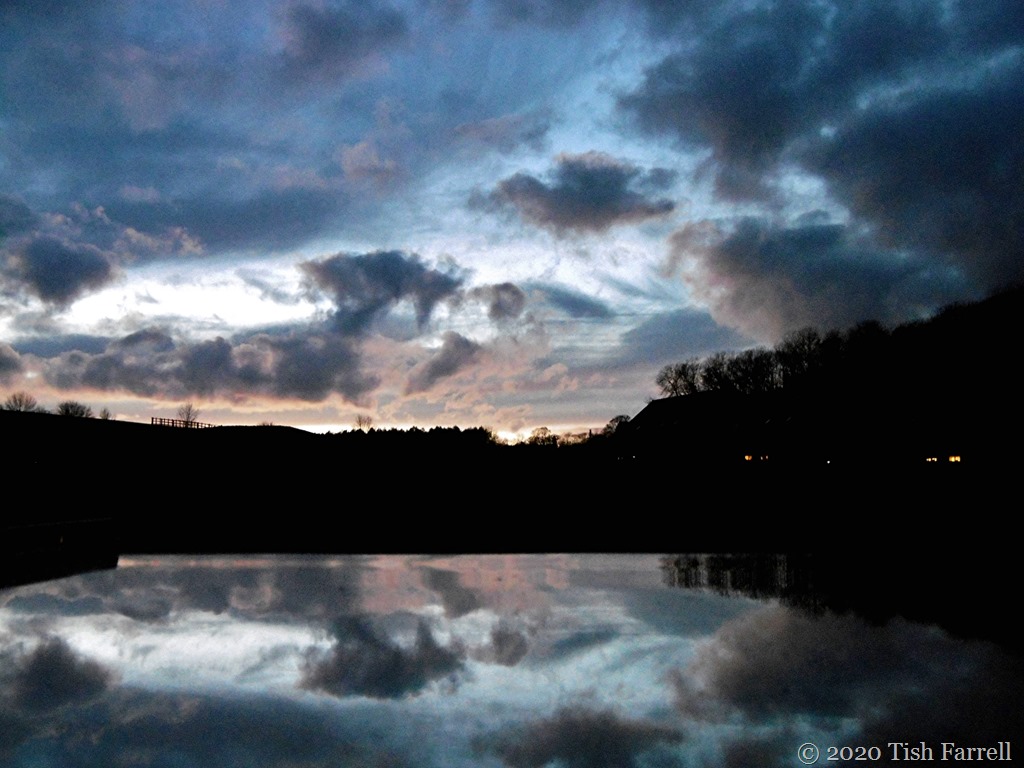
Twilight over Wenlock Edge and in my office roof-light; captured by opening the window to the horizontal and placing my little digital camera on the back of the frame. Click and there you have it – the Edge between two sky-worlds; cat’s-eye watchers looking on?
Lens-Artists: Reflections Thanks to Miriam at The Showers of Blessings for this week’s theme.


‘A good photograph is knowing where to stand ‘ Ansel Adams
This week Patti at Lens-Artists wants us to think about changing our perspective as we compose our shots. She prefaces her post with this very helpful quote from the great Ansel Adams. It’s certainly a tip worth chalking up in VERY BIG letters on the memory blackboard.
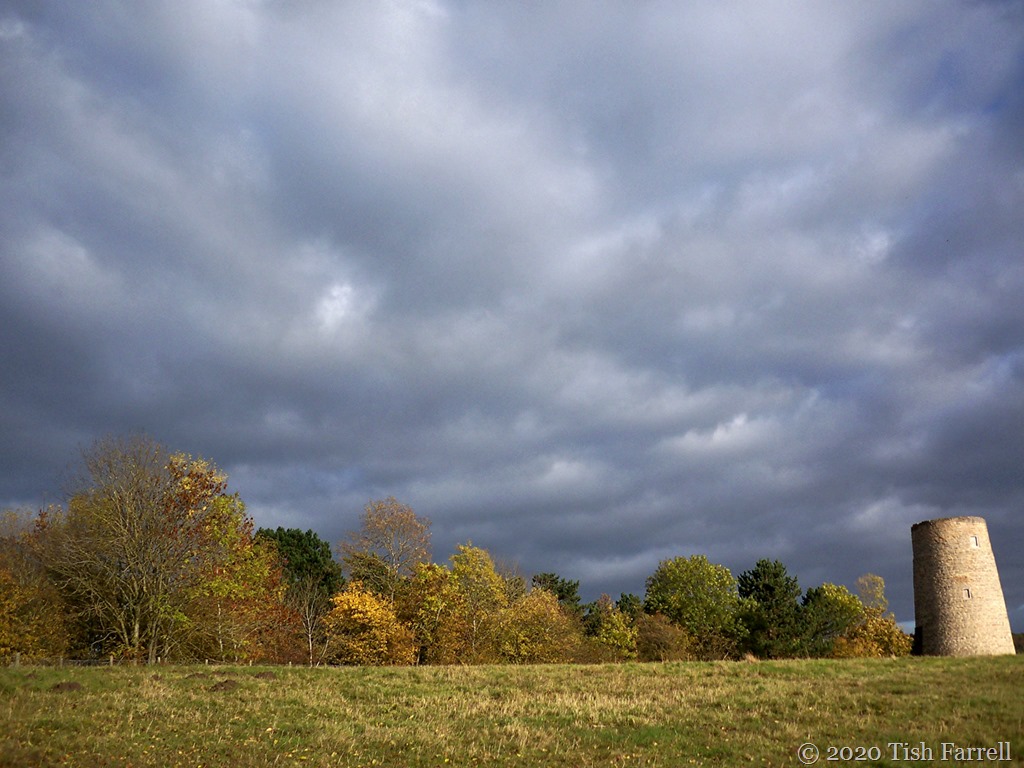
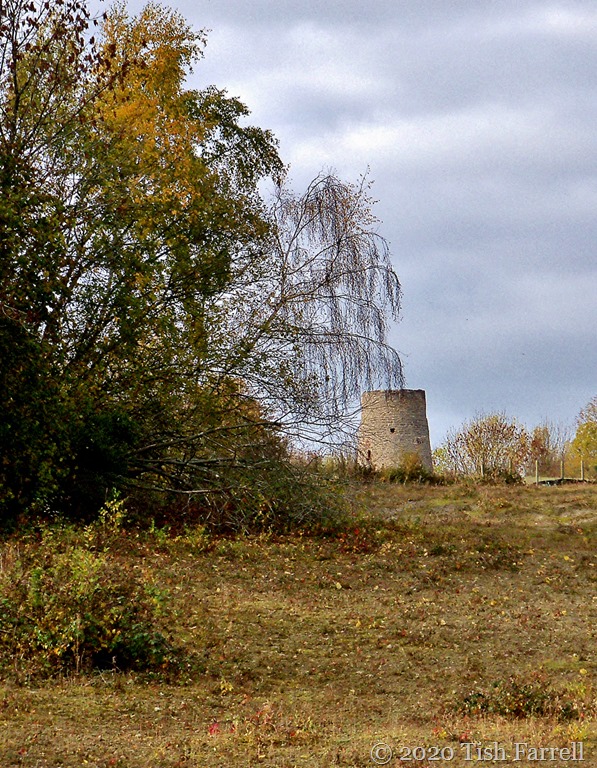
Of course there can be other options – lying down for instance, which is what I was doing to take the header photo. Then there’s the matter of choosing the time of day, which will then affect where you stand (or lie). Different seasons may well provide new angles. And also the setting of your chosen subject. So with these notions in mind I thought I’d post a gathering of my Windmill Hill photos, taken over the last few years.
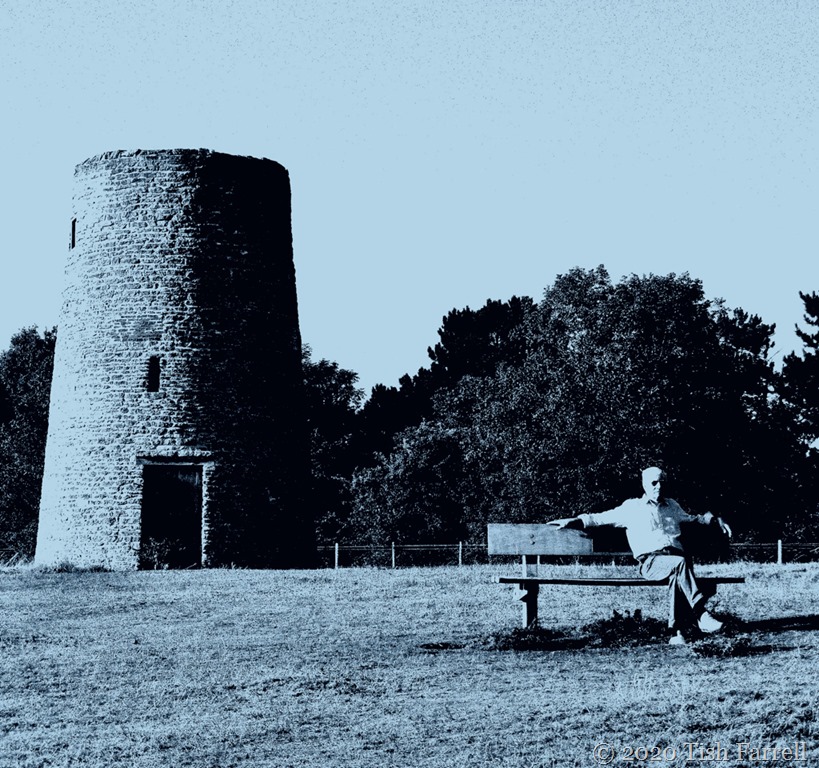
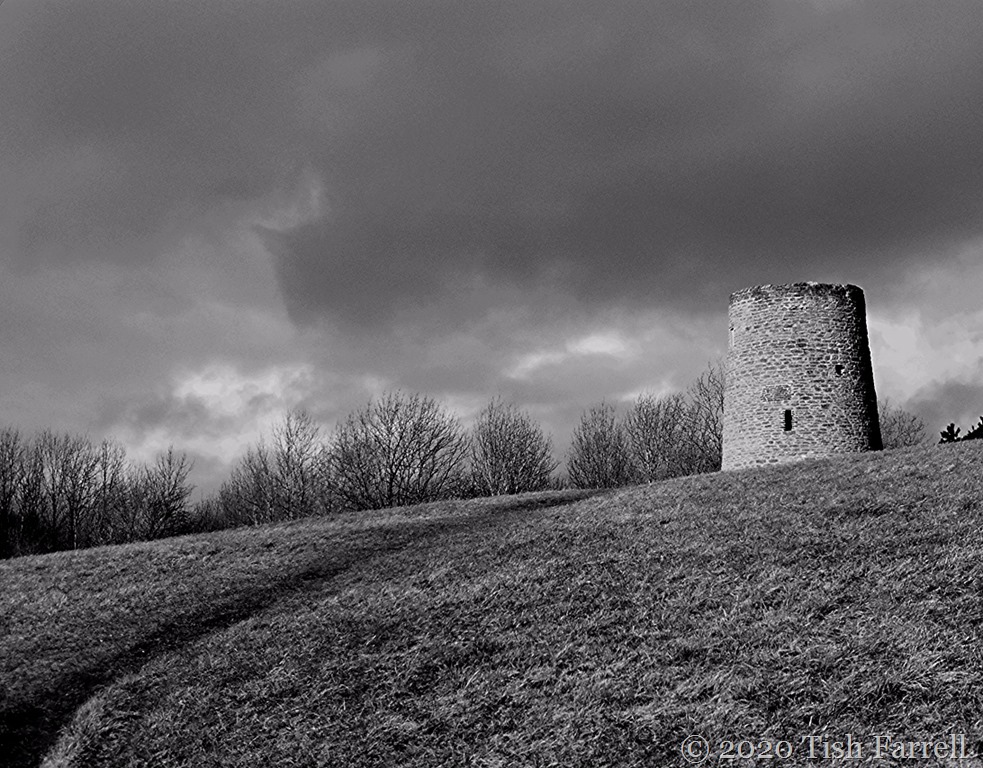
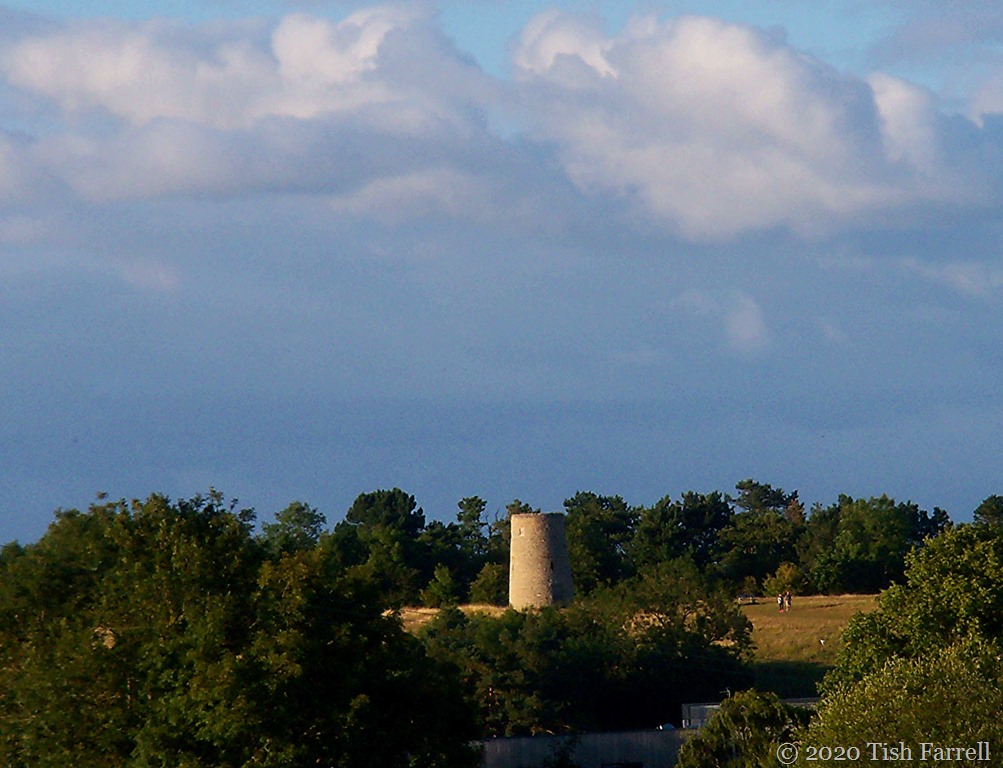
Of itself, the windmill is a rather underwhelming subject, and I have ended up taking masses of very flat looking photos. I have discovered that it helps to get beneath it somewhat, whether lying down or finding a good spot further down the hill. I’ve also found that late afternoon light can produce a bit more interest – even mystery. This next photo is my Wenlock version of Daphne Du Maurier’s thriller tale Don’t Look Now. Who is that swiftly retreating little figure in the gloaming?

*
Here’s one of the more ‘obvious’ shots. The cloudscape and perhaps also the sun/shadow on the stonework add the main interest:
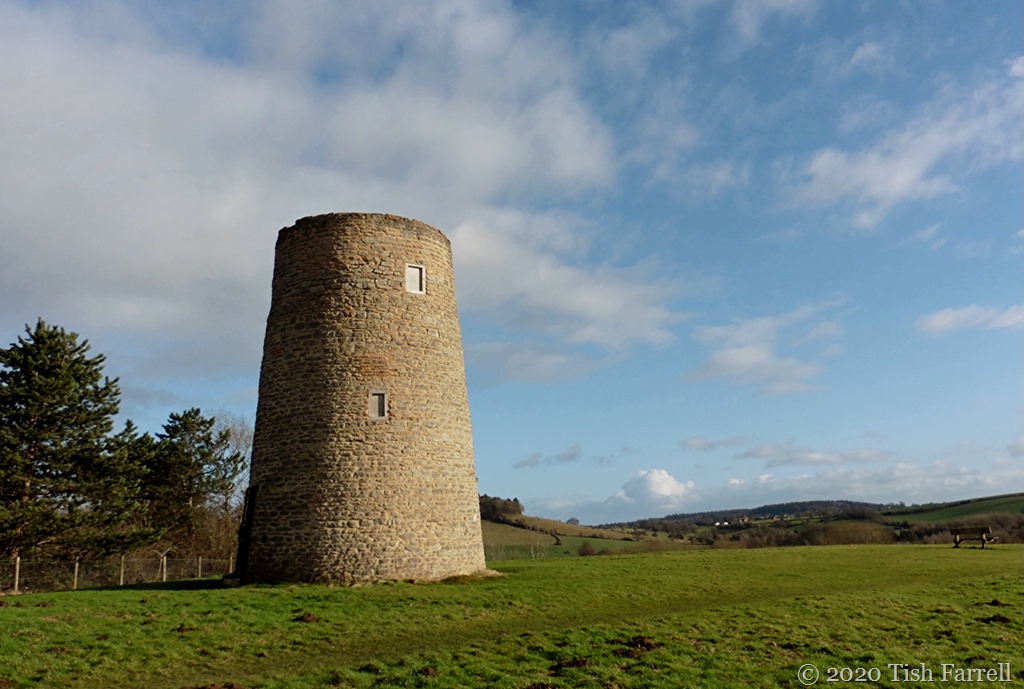
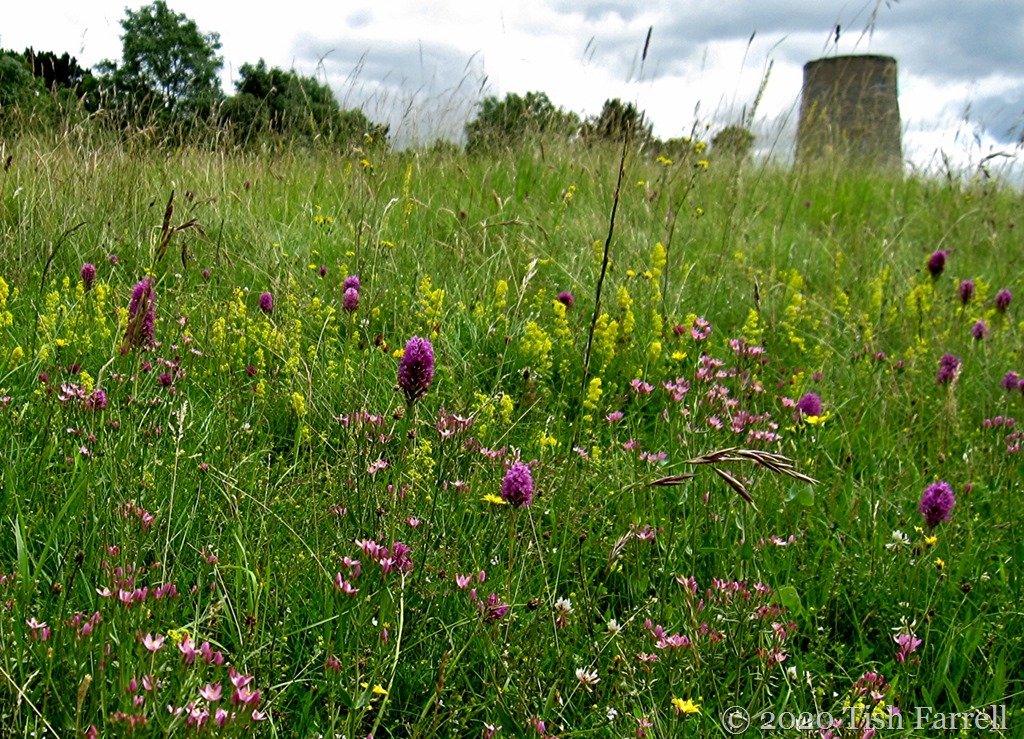
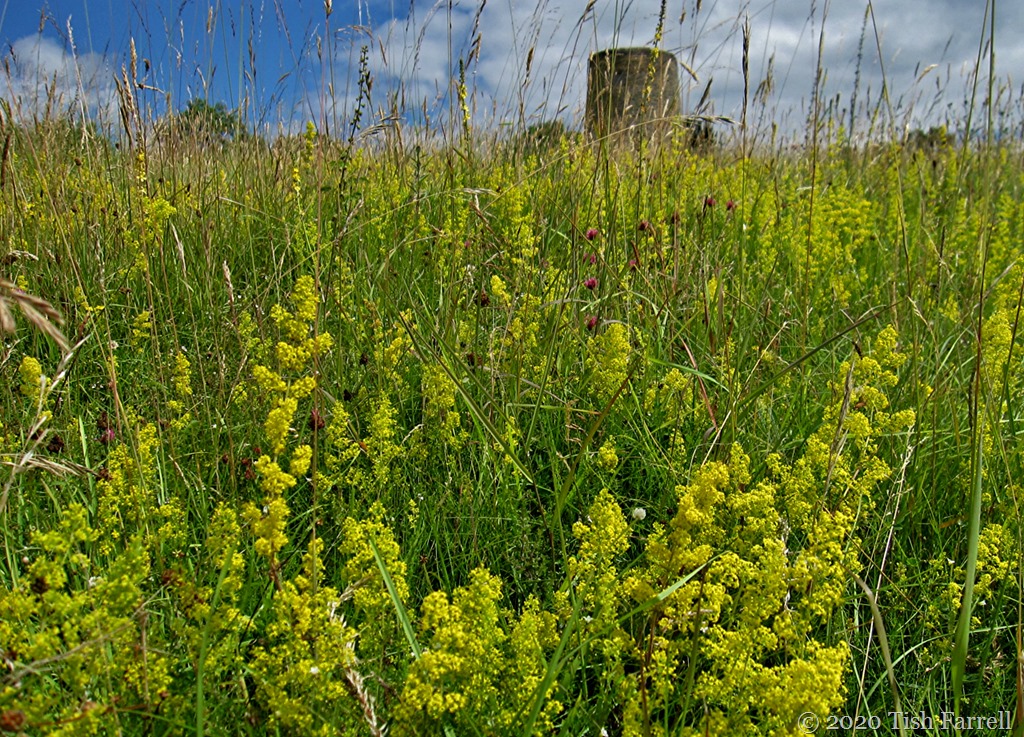
Another thought is that even when you’ve fixed on a particular subject, it’s always good to scout around it, to see what else might catch your eye/have some bearing on the composition. E.g. one of the important things about Windmill Hill, besides the windmill, is the fact its hill is an ancient limestone meadow – a rare escapee from the effects of industrial agriculture. So come early summer I’m often lying down, in the next photo among the pyramid orchids, soapwort, white clover and yellow ladies bedstraw. There’s an added benefit too – the close quarters inhalation of bedstraw fragrance. Aaaah! No wonder it was used in mattresses for women brought to bed during childbirth.
*
And in late summer my eye is on the knapweed and the great array seeding grasses:

Midsummer sundown
*
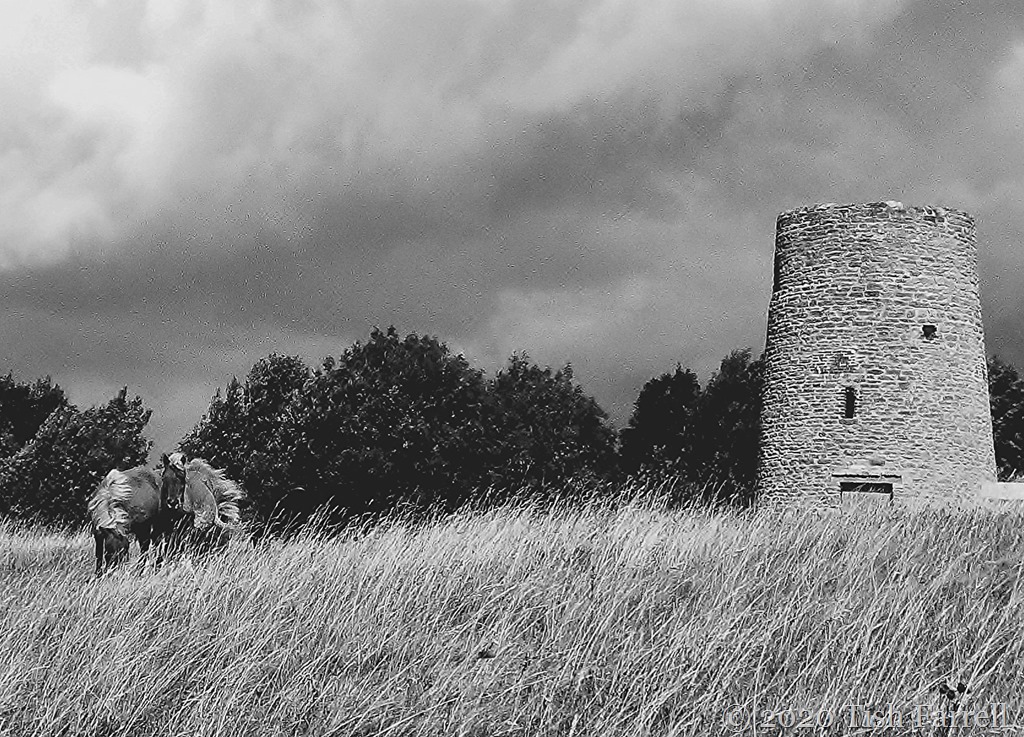
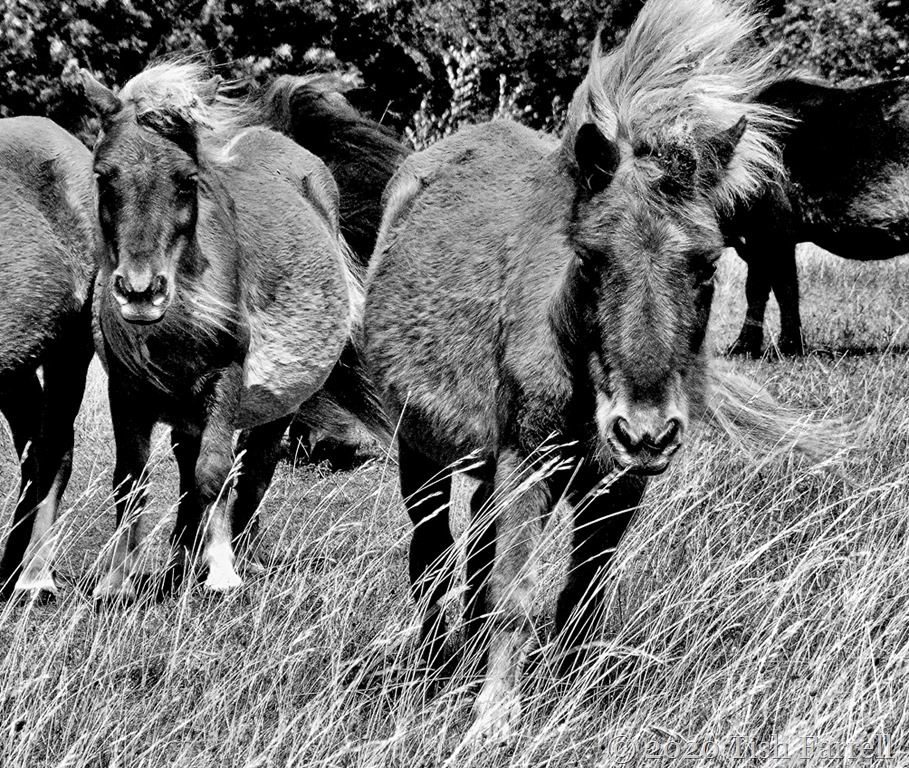
And then there are the autumn shots. A few years ago a bunch of small horses used to be brought in at summer’s end to graze the meadow. Then sadly their owner could no longer keep them and they had to be sold. For the past two years the Windmill Trust has had the hill mown and harrowed instead. This new approach has created a massive increase in orchids:
*
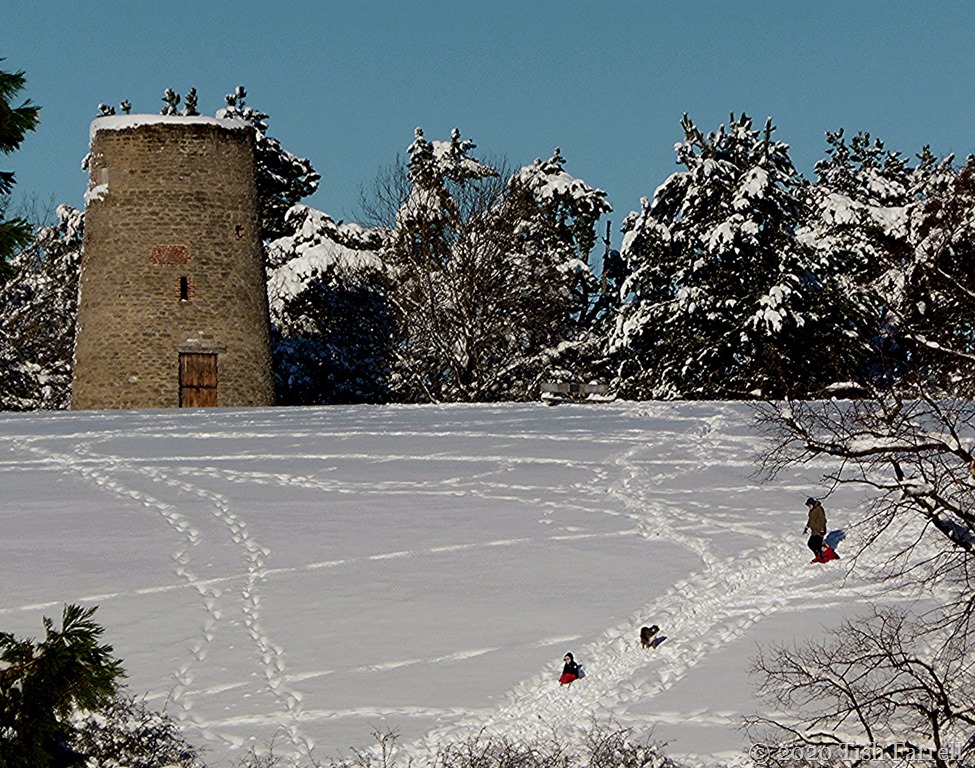
Winter:

*
And then there are the views from Windmill Hill:


Bunking off games? The William Brookes School is at the foot of the hill.
*
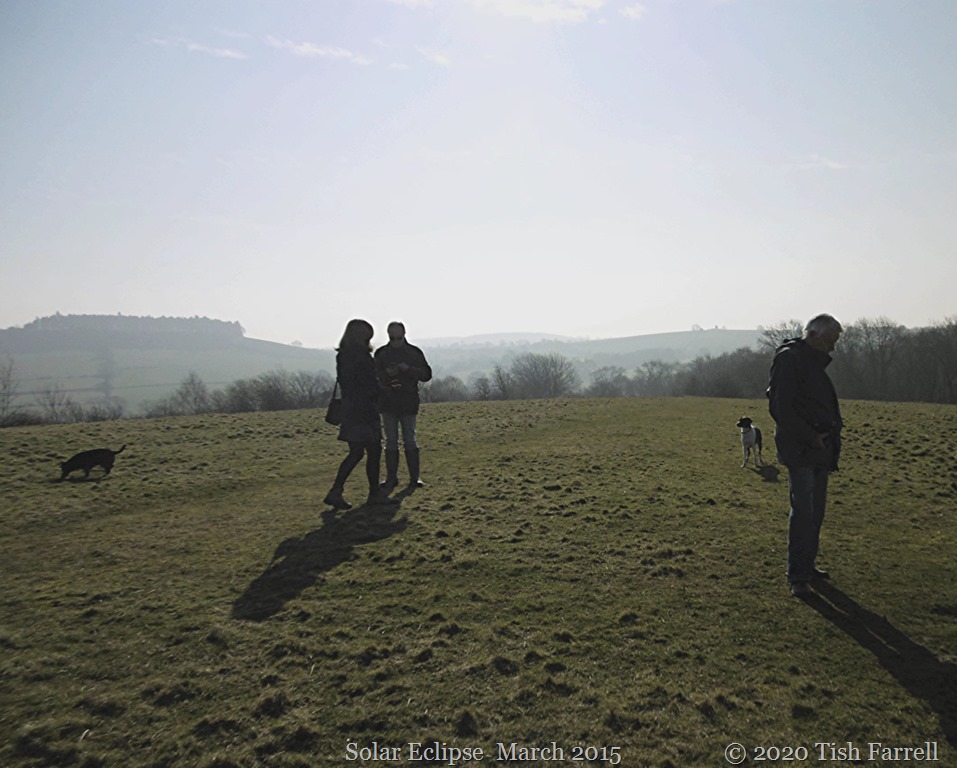
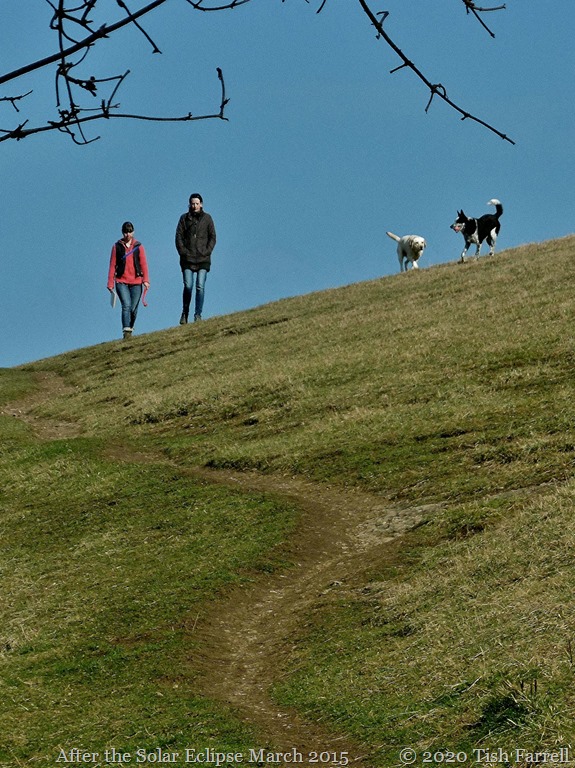
Windmill Hill can be a very sociable place. It’s a favourite spot for Wenlock’s dog walkers. There are other gatherings too: windmill open days, summer orchid counting; and in the next photo we are gathered during a solar eclipse when the world turned very still and cold and ethereal:
Last but not least, here are some long-distance views from Townsend Meadow behind our house. The final photo also shows the oil seed rape in full bloom and a corner of the William Brookes School:

Lens-Artists: Change Your Perspective
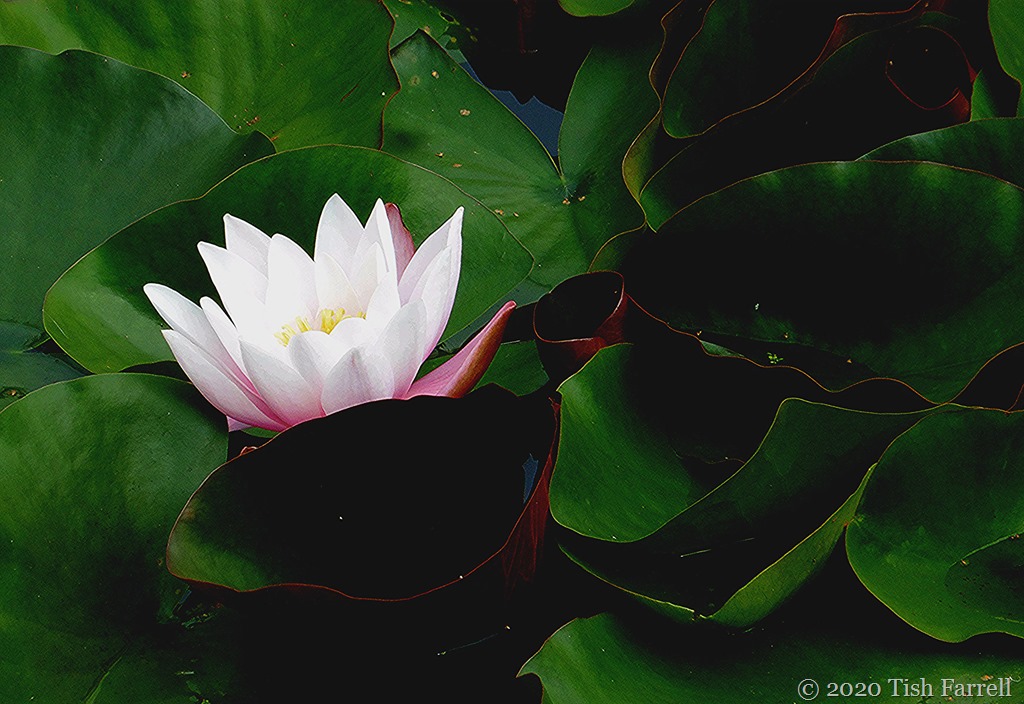
Month by month Jude at Travel Words is challenging us to join her in a mission to improve her and our photography. February’s topic has been about ‘patterns’, and the final assignment (I’m on the last lap here) has been to use pattern as a background for a more substantial subject. She says it isn’t easy, and she’s right! Anyway, here’s my best shot at it, though I’m thinking my background is too much in my foreground. Further pondering required.
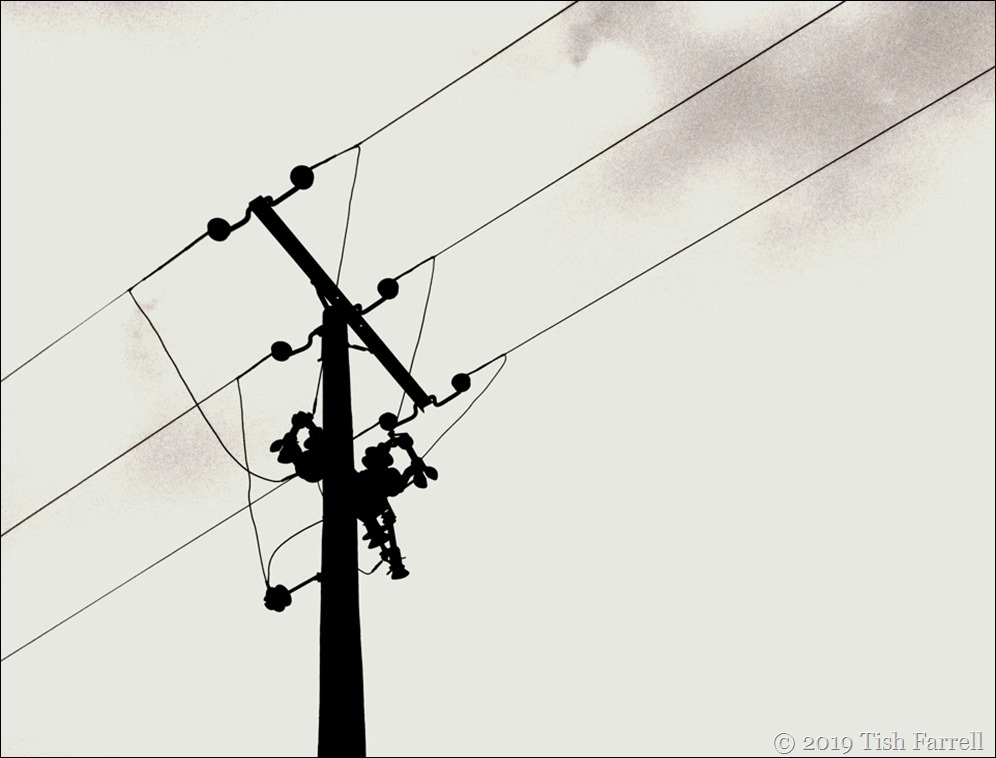
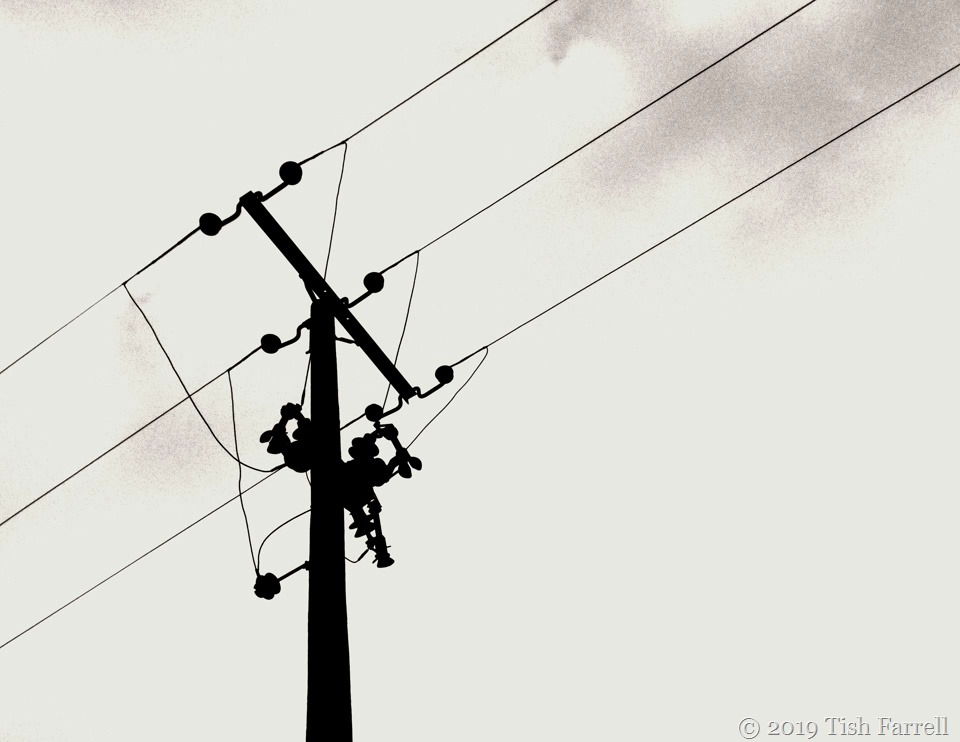


Lens-Artists: Abstract Patti’s set the challenge this week. Please go and view her abstract creations.
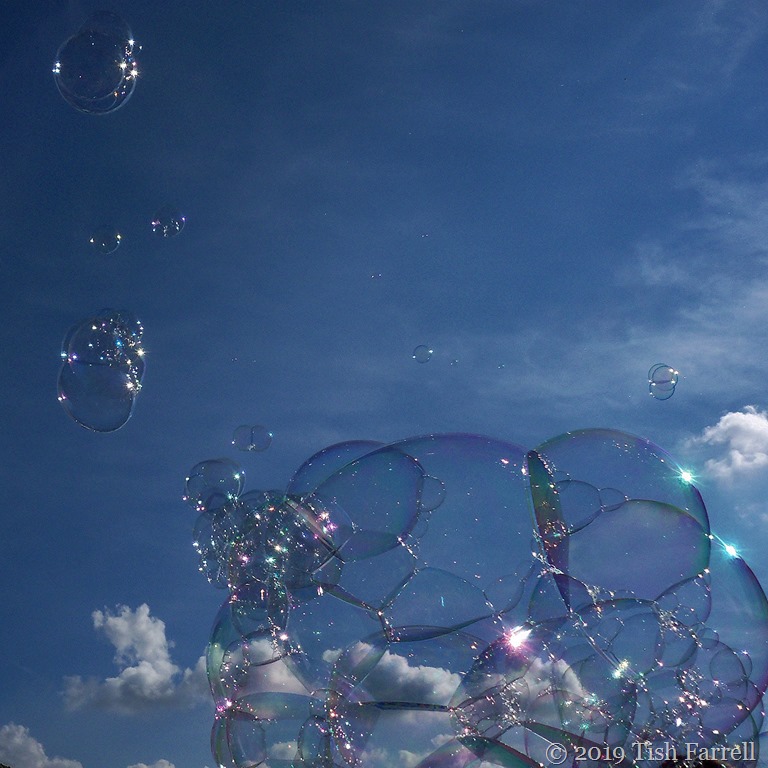

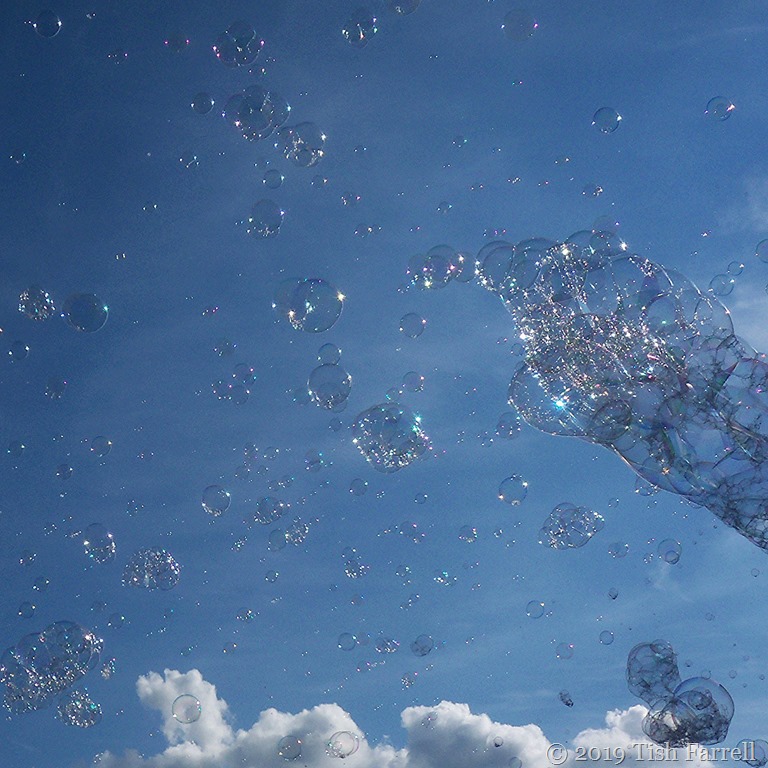
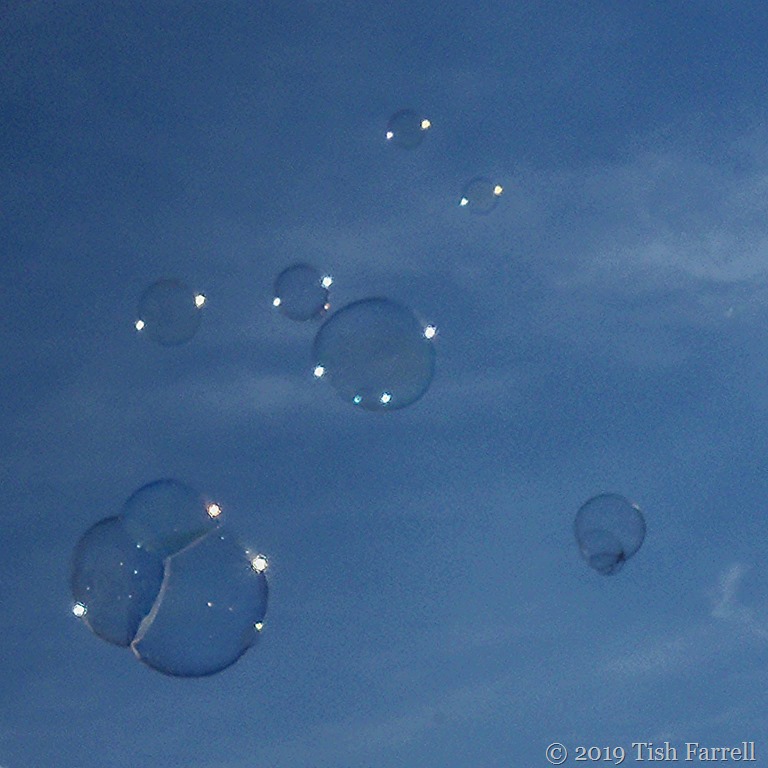
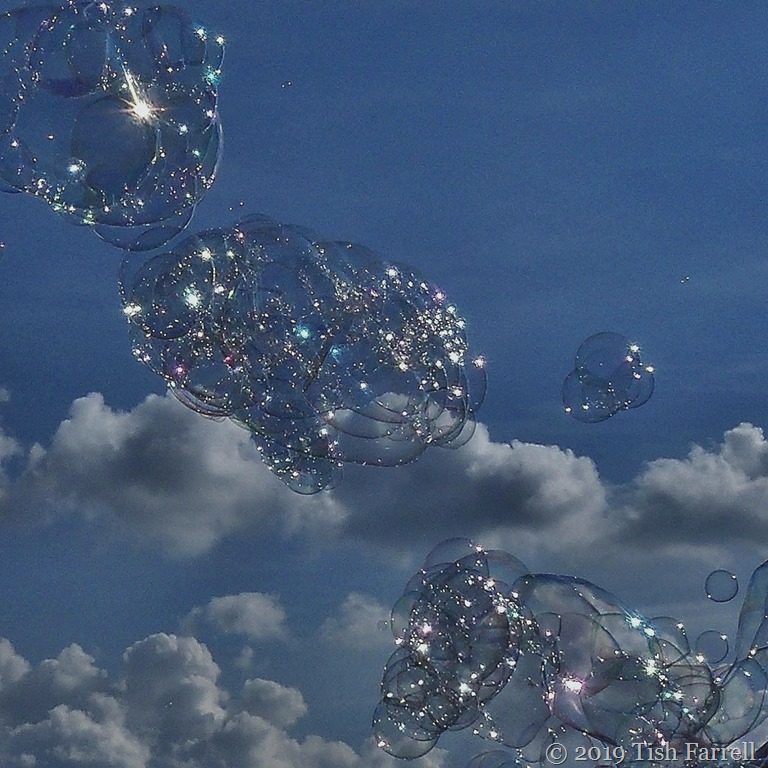
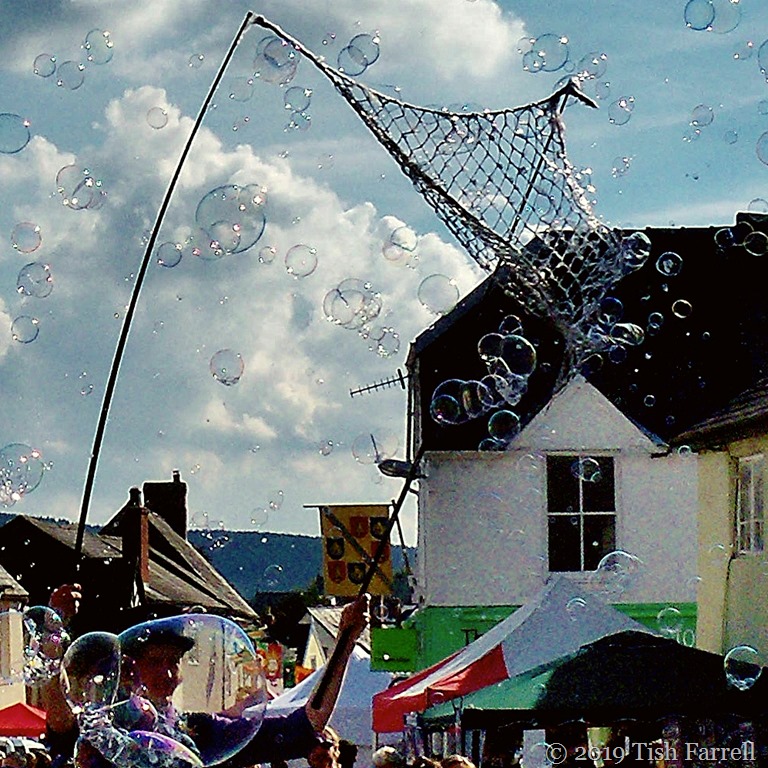
I have never grown out of loving bubbles. As a rural child of the fifties receiving a tin of them complete with a pretty little plastic wand (pale pink or blue) was one of life’s big thrills. And so rather more recently when we came upon the Bubble-Making Man at Bishops Castle Michaelmas Fair it was all I could do to stop myself from joining in with the children’s great bubble chase. Because that’s what you do with bubbles – you try to catch and keep them. You want just one of them to last forever and ever. Anyway, being several decades beyond childhood, I contained my excitement by snapping them instead. Which of course means I do get to keep them. And you get to have them too. And if you’re having a so-so Monday, or even a dreary one, here’s a gift of bubbles to lift the spirits. Who’d’ve thought there was so much magic in a bucket of soapy water and a piece of net. Just goes to show!
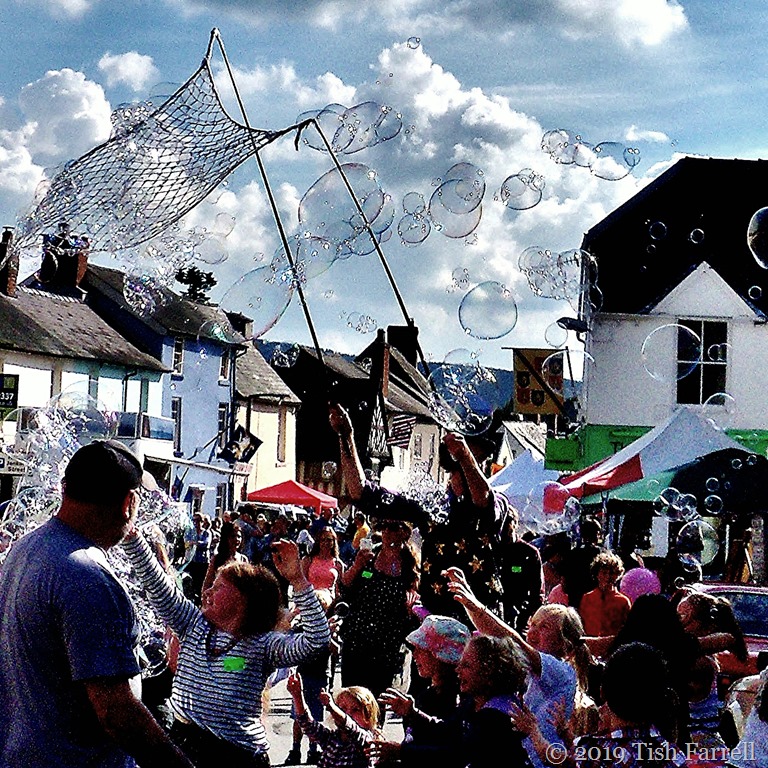
Related post: Summer Came Back On Saturday And Took Us To The Fair
July Squares #1 Every day this month Becky wants us to show her BLUE anyhow we like, so long as it’s SQUARE. Follow the link to join in.
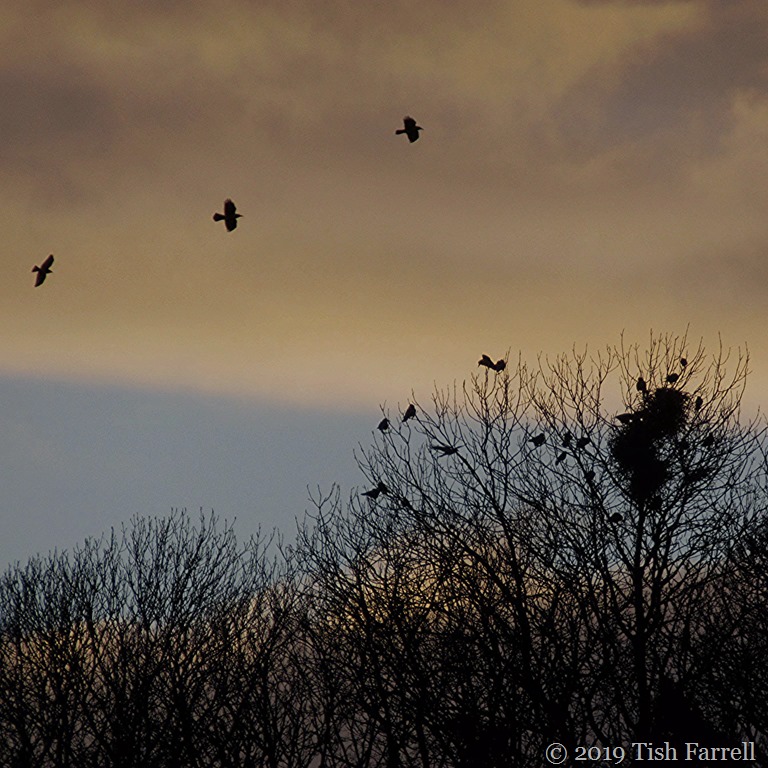
The things I do. Yesterday’s twilight with its magnificent post-storm sky had me standing on the cabin bed in my study and resting my camera on the open rooflight. If I use lots of zoom I can spy on the rooks in the wood on Sytche Lane. At this time of year there’s much to watch. For one thing they are making some serious extensions to their old nests.
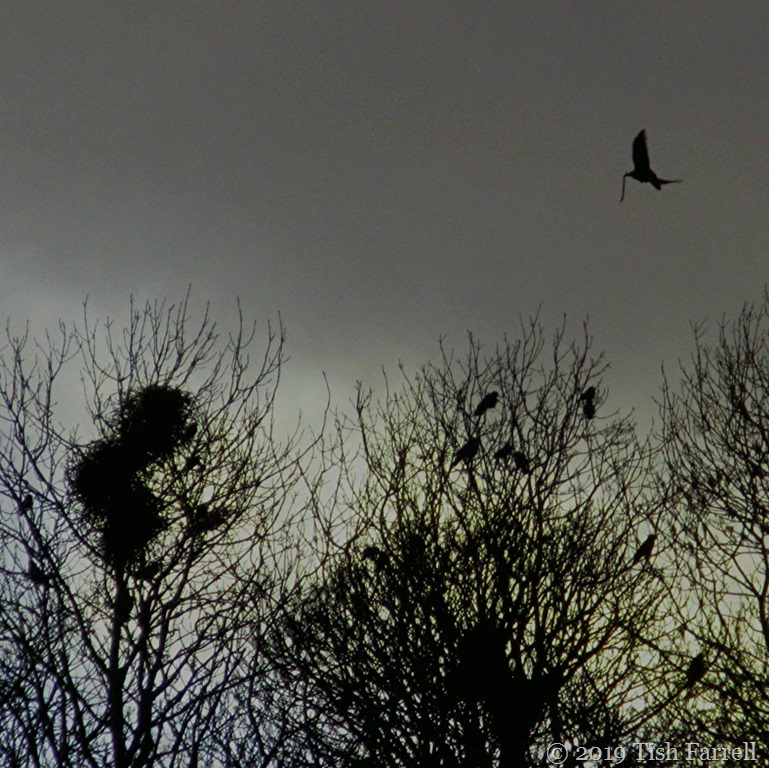
For another, now is the time when the more spectacular ‘fly pasts’ begin. There seem to be two modes. The first kind involves a sudden outburst in the rookery (there are jackdaws in the wood too). For no apparent reason all the roosting birds whoosh out over the meadow, bowl around in a swirling mass and then return to the trees as if nothing had happened. The second kind is a much bigger production and usually happens around sunset or shortly afterwards. It seems to be about a gathering in of rook cohorts from the four quarters, a reconfirmation of rookery membership perhaps (?) – this after their day’s foraging around the fields.
As they return to the rookery so the aerial dance begins: sometimes high above Townsend Meadow, at others in high-speed mass swoops at ground level. It is very exhilarating. And perhaps that’s it. The display is an expression of rookish joi de vivre. And why not? If I were selling my house, I would say the view of rooks from the study rooflight is a very particular asset, though maybe not for the ornithophobic or anyone with a tendency to vertigo.

copyright 2019 Tish Farrell

For the month of March Becky asks us to show her spiky, however we find it. The only rule: the photo must be square. To join in, follow the link:
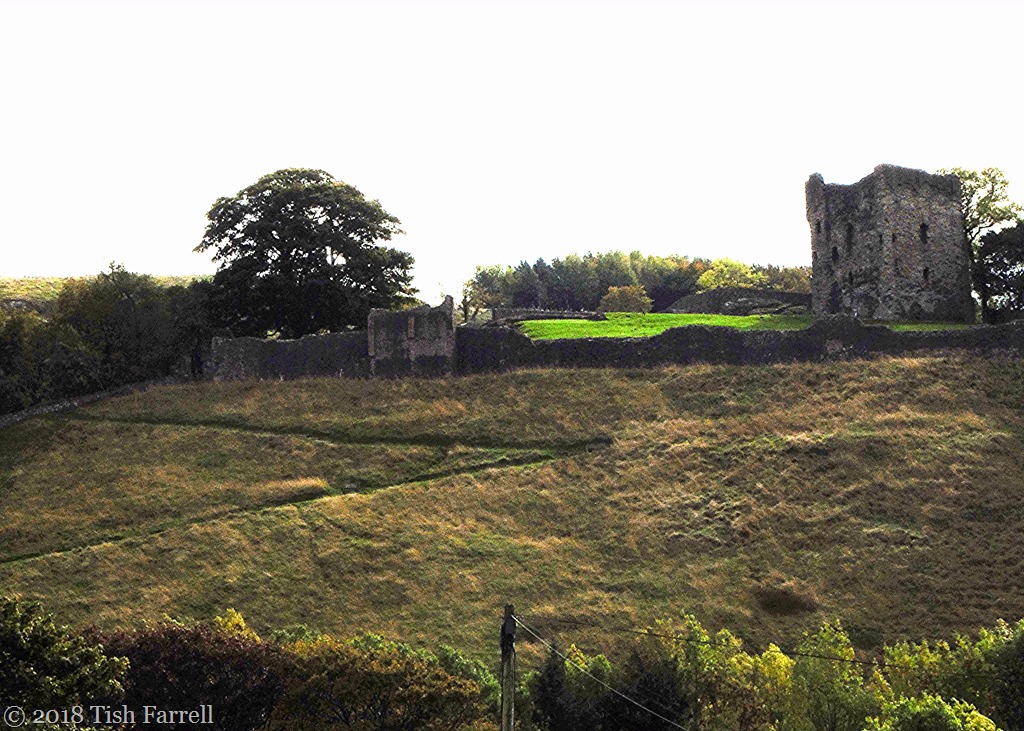
The header photo shows only the topmost portion of the path to the Castle of the High Peak. There were times as I hauled myself up there when I thought expiration – as in breathing my last gasp – was a likely outcome. I had to sit down on every available seat (and thankfully there were several). There were also places along the way that were rather too vertiginous for my liking. On top of this we had been warned by the girl on the reception desk that that castle keep was closed for restoration works – so, you might think, why on earth were we bothering?
Frankly, if the keep had been open to visitors, I don’t think I would have made it up the spiral staircase to the main door. I like to think I’m fairly fit too, but I don’t seem be fit on the vertical. Phew and double phew.
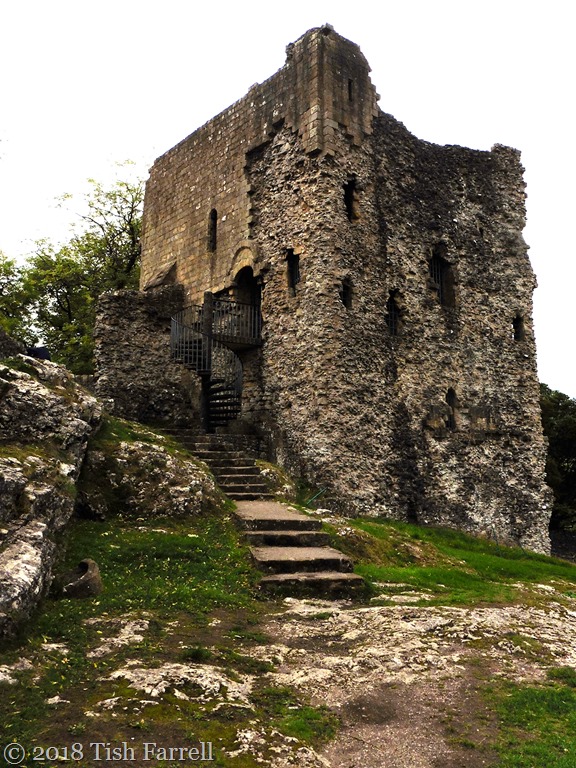
But then once you’re up there and can breathe again…
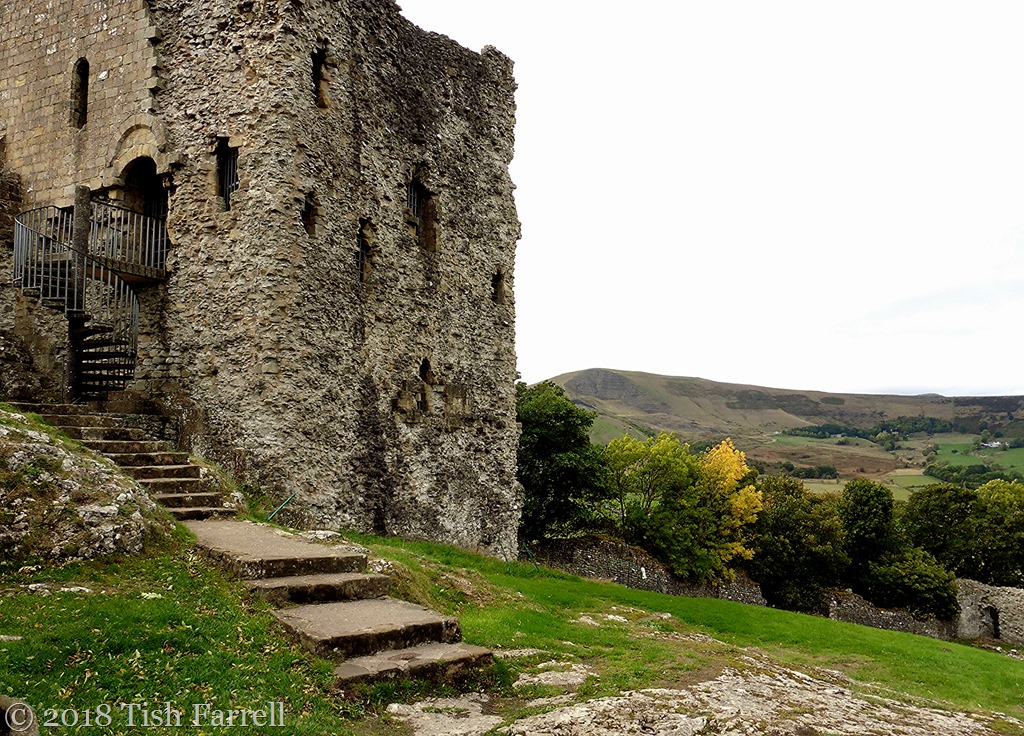
What views of Derbyshire’s Hope Valley:
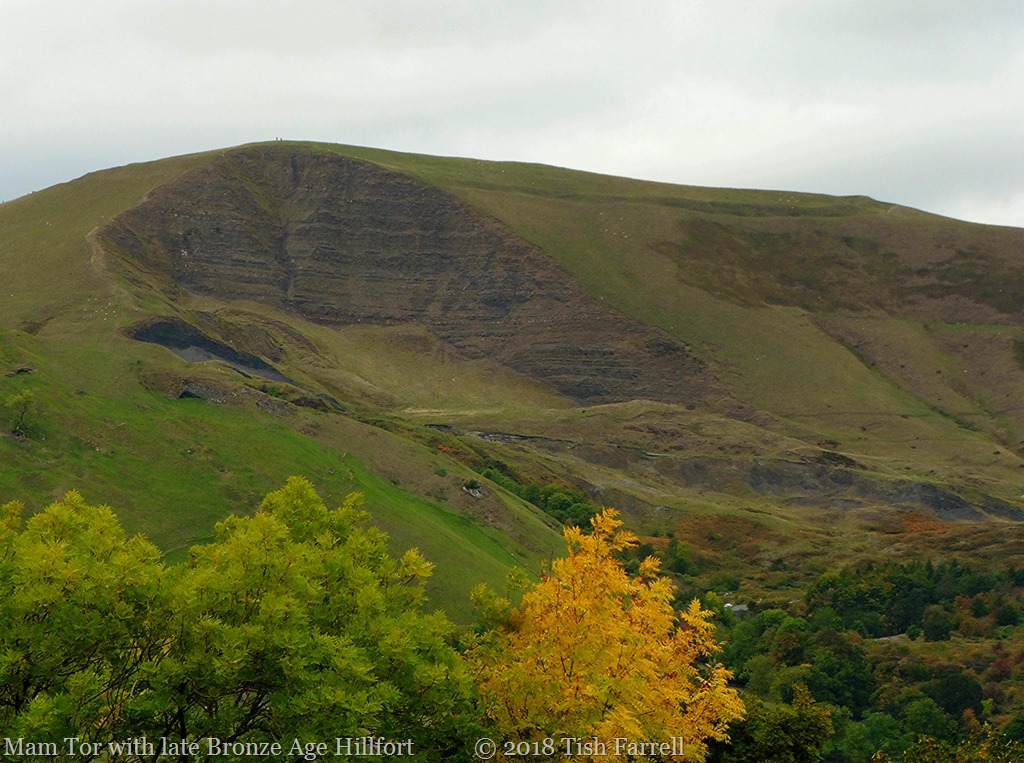
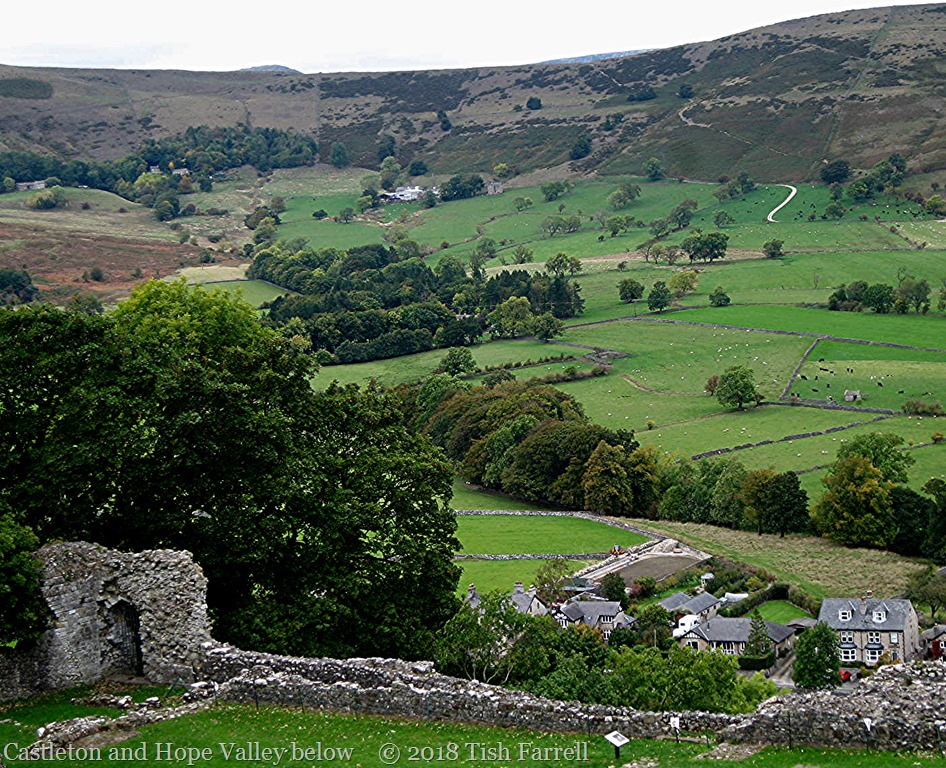

The earliest fortification on the site, i.e. the extensive stone curtain wall, was already in existence in 1086 when it was recorded in the Domesday Book. It was one of the earliest Norman fortresses in England, and held by William Peveril, a follower and so a beneficiary of William the Conqueror when it came to receiving territorial rewards. The castle served as an important administrative centre for extracting taxes from the local Saxon Pecsaetan people of the Hope Valley. At this time Forest Law was also strictly enforced, meaning people were brought before the Forest Court at the castle and fined for deemed infractions of the king’s royal hunting forest that extended over much of the High Peak district. As time went on, and more and more forest was excised for settlement, farming and pasture, the fines for encroachment were seen more as rental payments than as penalties.
But back to the Peverils. Things did not go so well in the next generation. Son of Peveril was accused of plundering and treachery by the soon to be crowned Henry II. On ascending the thrown Henry confiscated the castle and kept it for the particular purpose of overseeing the Forest of the High Peak, his personal royal hunting grounds. This was in 1154. He visited the castle three times in the next ten years. When he was not there, the place was apparently manned by one porter and two watchmen.
This all changed during the 1173-4 uprising when Henry’s three sons, Henry Young King, Richard the Lionheart and John Lackland, along with their mother Eleanor of Aquitaine, rebelled against Henry’s rule – a family argument of epic proportions. Peveril then became a garrison housing 20 knights who roved between the High Peak and Bolsover Castle some miles away. After the uprising in 1176, Henry built the impressive keep at a cost of £184. You can see from the photos above it was originally handsomely finished with dressed stone, an attractive proposition for later stone robbers.
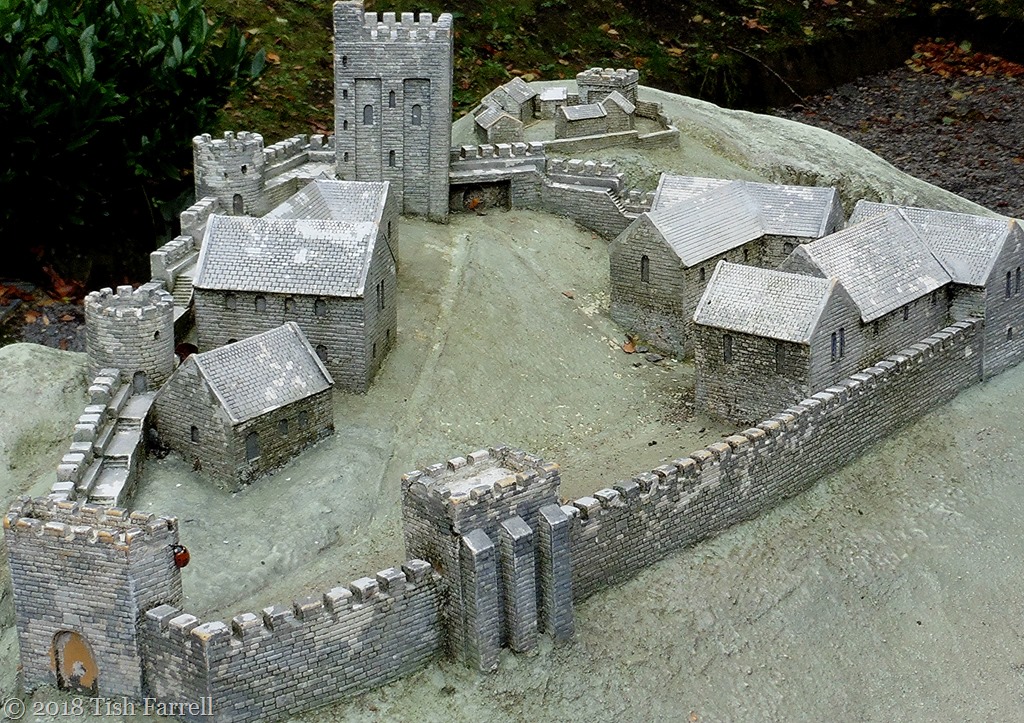
Further improvements were made during the 13th century to cater for royal visits. And a very nice model shows us how things would have looked back then: stables, chapel, workshops, kitchens, bakery, a great hall for entertaining, new high-status apartments – an upscale self-sufficient community in other words, the whole perched atop a beetling limestone eminence and visible for miles around.
The private chambers that backed onto the curtain wall came with their own garderobes or loos. The one in the photo coming up next would have had a wooden seat with a central hole, and waste would have dropped down into the Peak Cavern Gorge beyond the castle wall. The garderobe was also traditionally the place where noble personages kept their clothing, the whiffy draughts therein checking moth predation. Which also reminds me that Voltaire opined that the legendary bad temper of Edward 1, aka Longshanks and prolific builder of Welsh castles, was down to chronic constipation induced by the cold sea wind gusting up Caernarvon Castle’s royal garderobe. I always thought Voltaire might have a point.

*
As time went on, the castle ceased to be of particular strategic importance. In 1374 King John ordered the lead stripped from the roofs for re-use at Pontefract Castle. And although local courts were still held there until 1600, by 1609 it was described as ruinous and serving no use. Thereafter its destiny lay in inspiring Sir Walter Scott’s novel Peveril of the Peak and providing a romantically rugged upland landmark for the first major flushes of tourists to Derbyshire in the 18th and 19th centuries. Oh yes, and for inducing near asphyxia in people not good at hill climbs.
Lens-Artists: Big can be beautiful too
copyright 2018 Tish Farrell
