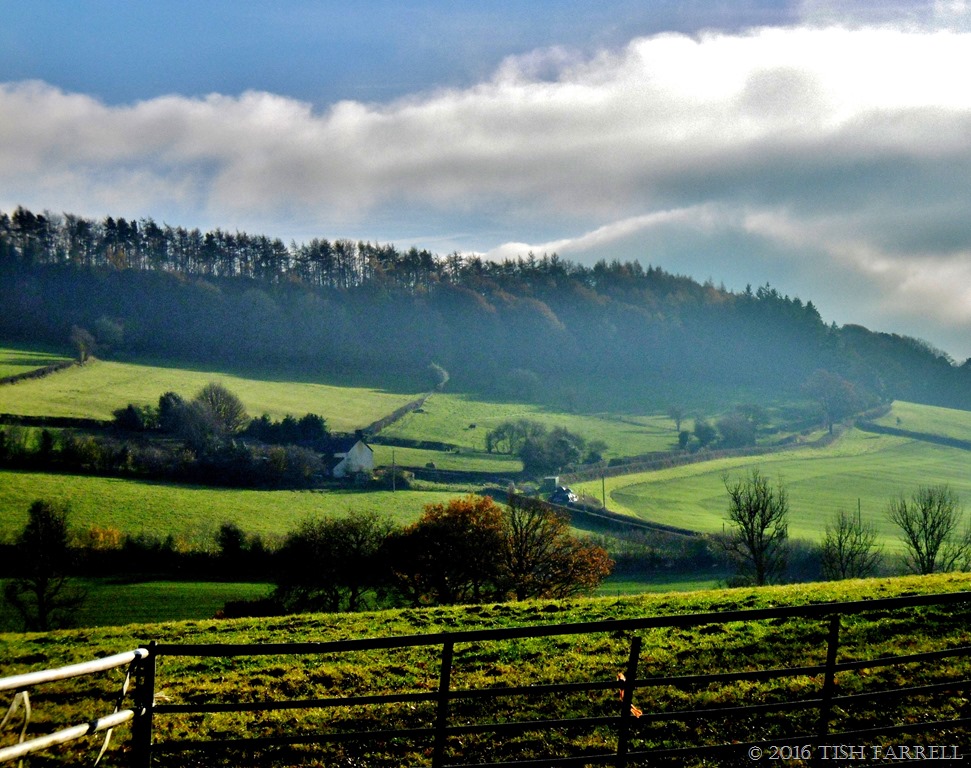
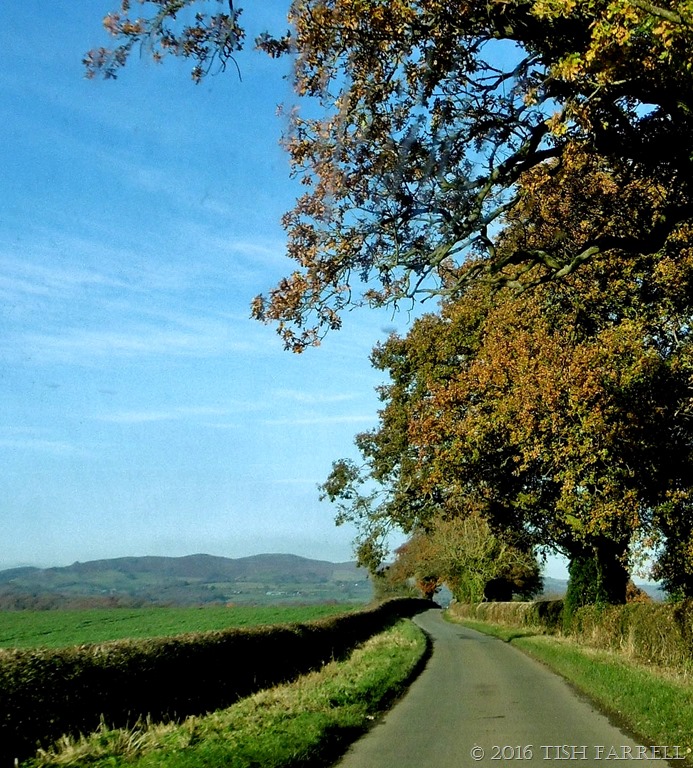
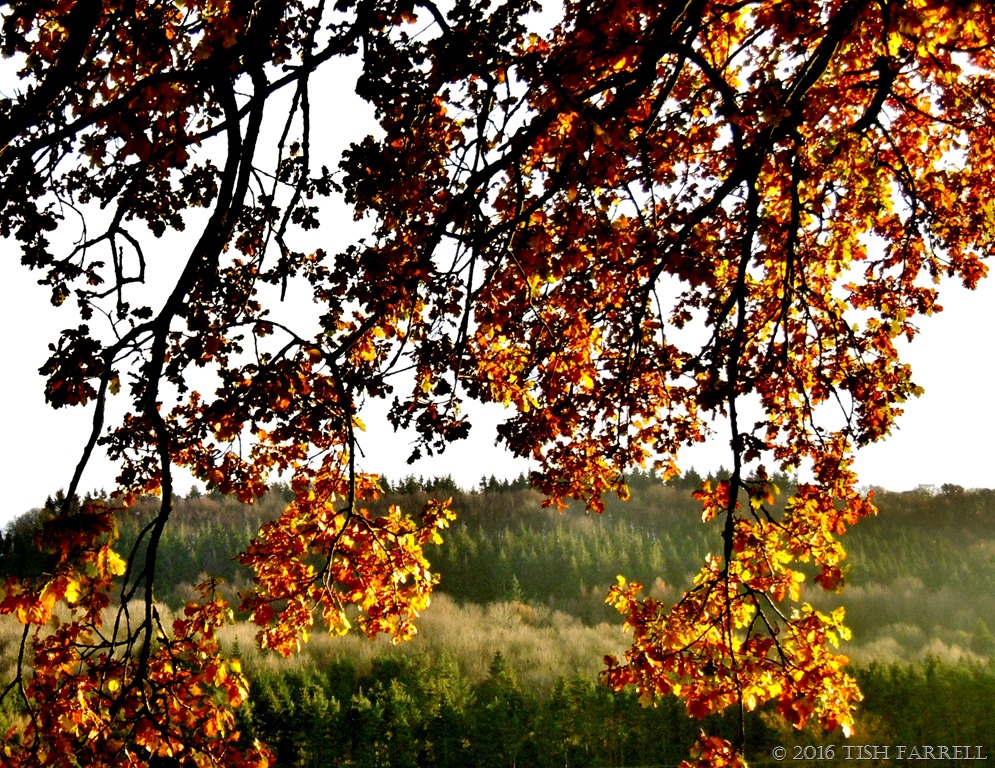
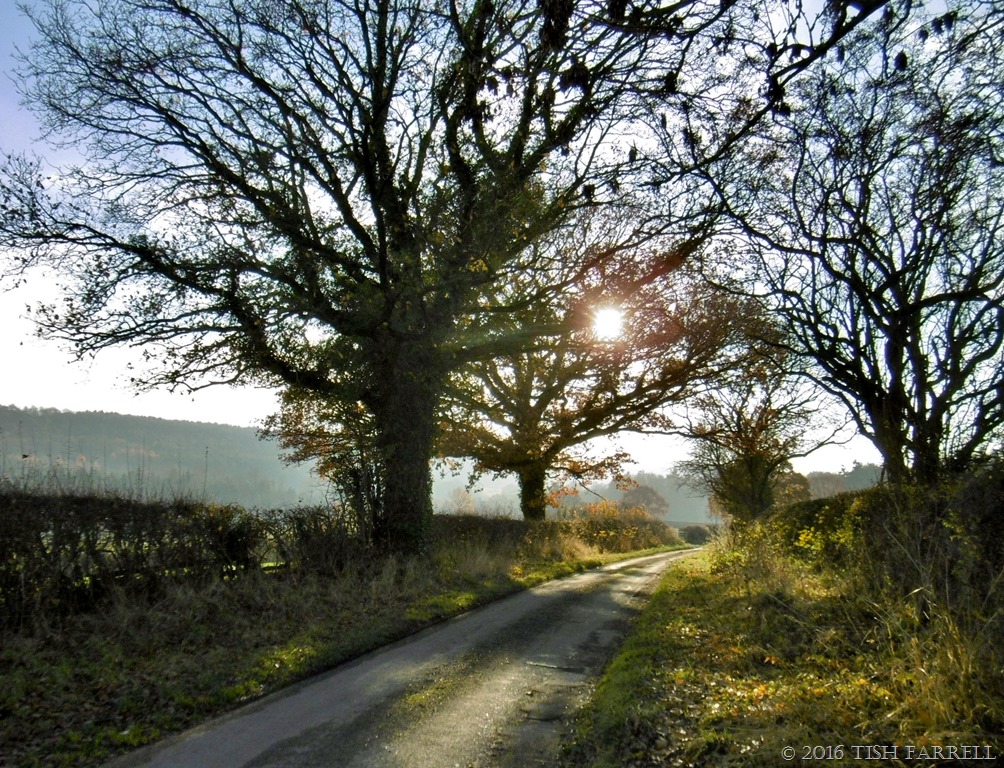
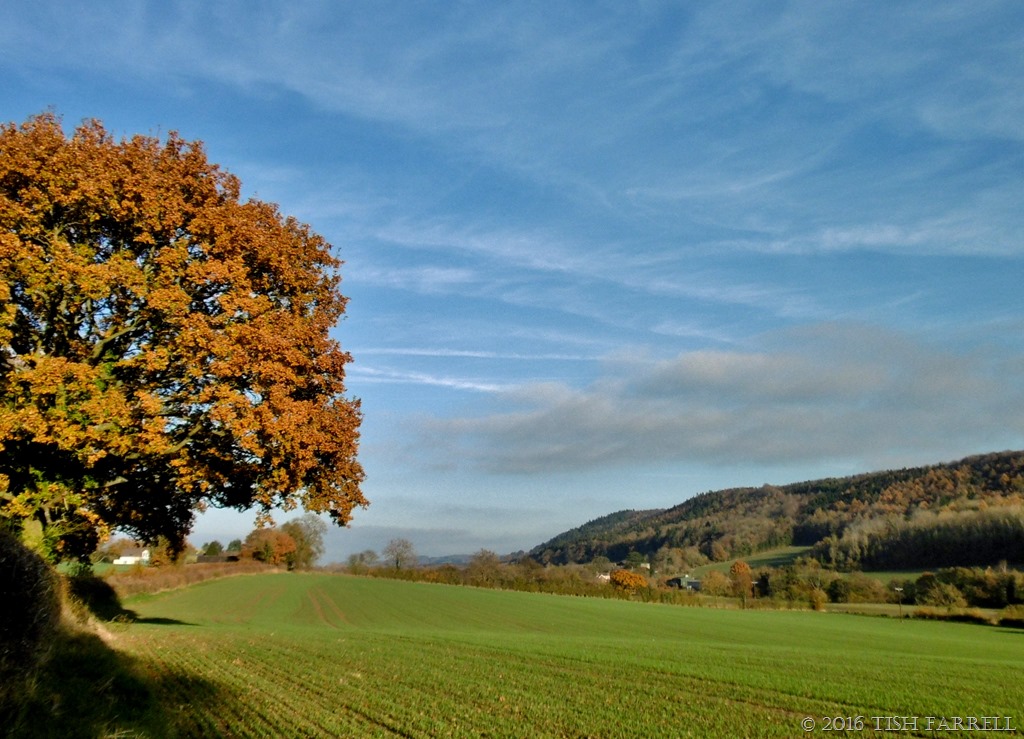
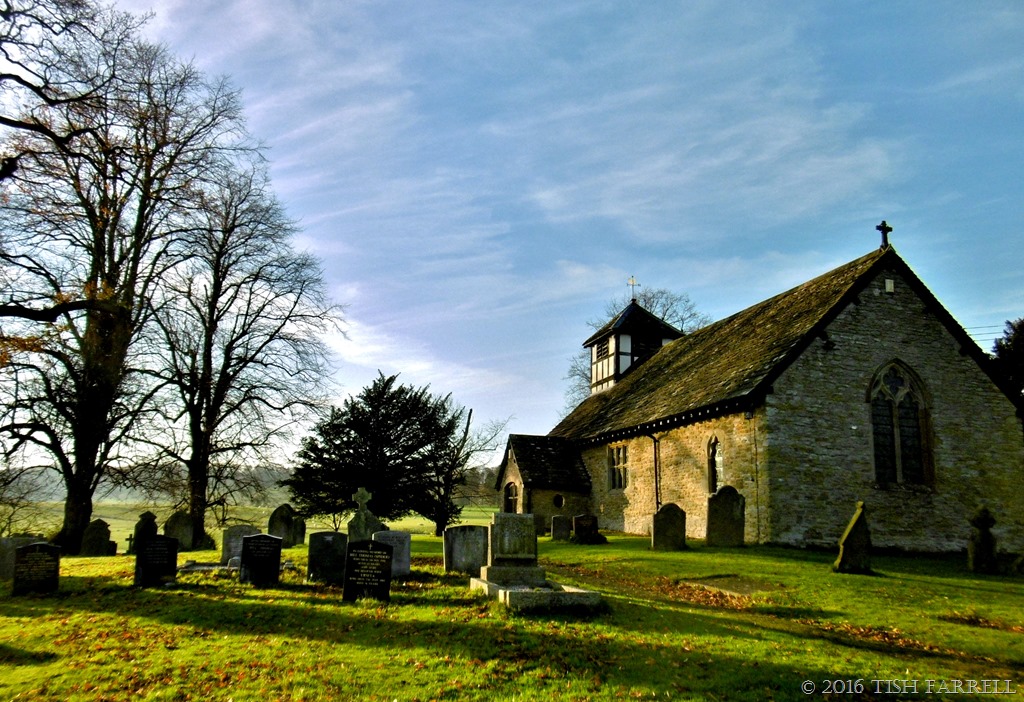
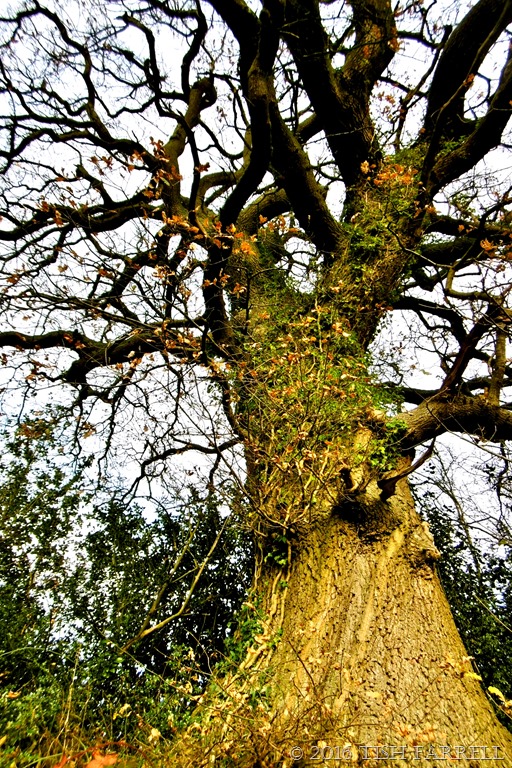
Today was a golden day – not a breath of air and the landscape lit up by the oak trees that still have their leaves. Here are some glimpses, then, of my corner of Shropshire on a late November afternoon.
Cardinal Guzman: The Changing Seasons



Today was a golden day – not a breath of air and the landscape lit up by the oak trees that still have their leaves. Here are some glimpses, then, of my corner of Shropshire on a late November afternoon.
Cardinal Guzman: The Changing Seasons
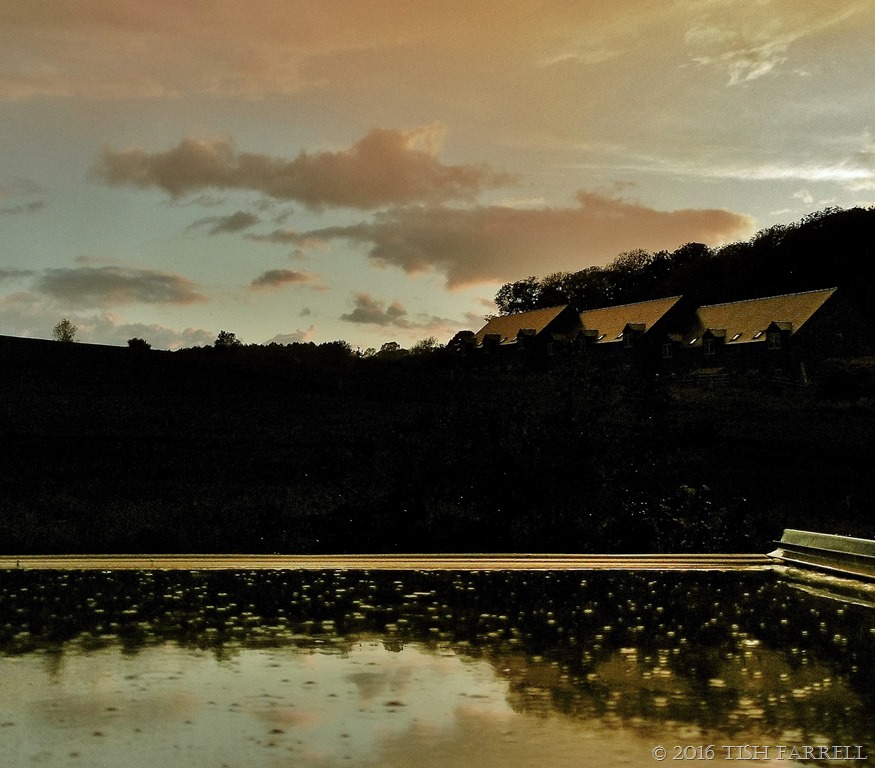
If I stand on the bed in my office, I can open the roof-light and place my digital camera on the glass. It makes for some quite interesting twilight effects, and means I can use zoom and more zoom – i.e. as in playing, not writing. But then all writers/creators need to do lots of playing: it’s all part of nourishing the imagination. The knack, of course, is knowing when to stop, and get down to some hard graft. Not today, I’m afraid.

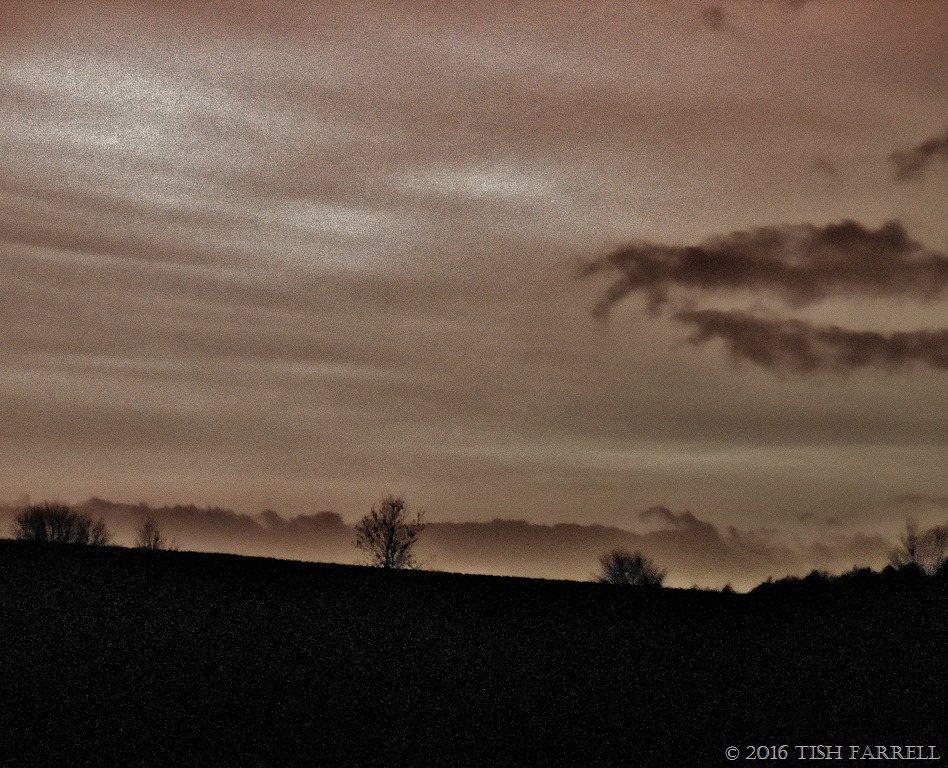
This Thursday at Lost in Translation Paula asks for twilight, and who are we to refuse her.

Here’s another place I never tire of photographing – the Linden Walk. Not only is it lovely of itself, but it also leads to Windmill Hill, that other object of my snapping affections. I took this photo yesterday with the leaves whisking off the trees. It was too windy for those addicting musky smells of autumn leaf litter, and the delicious summer scent of lime tree flowers was only a memory (until next year of course).
But whatever the weather or time of year, this lime tree avenue is always a very soothing place to walk. Its other-worldly quality takes you out of yourself: a pathway to another dimension perhaps? Doubtless the town’s physician, Doctor Penny Brookes, who planted the trees in 1869 was well aware of the calming properties of lime trees since he was also a Padua-trained herbalist.
When made into a tea, the blossoms have a sedative effect. This was a recommended therapy during World War 2 (Richard Mabey Flora Britannica).
But in the absence of linden flower tea, here’s the lovely second movement ‘Petals’ from Takashi Yoshimatsu’s Piano Concerto Memo Flora; Kyoko Tabe piano:
Post inspired as ever by Paula at Lost in Translation Please pay her a visit. CALM is today’s watchword.
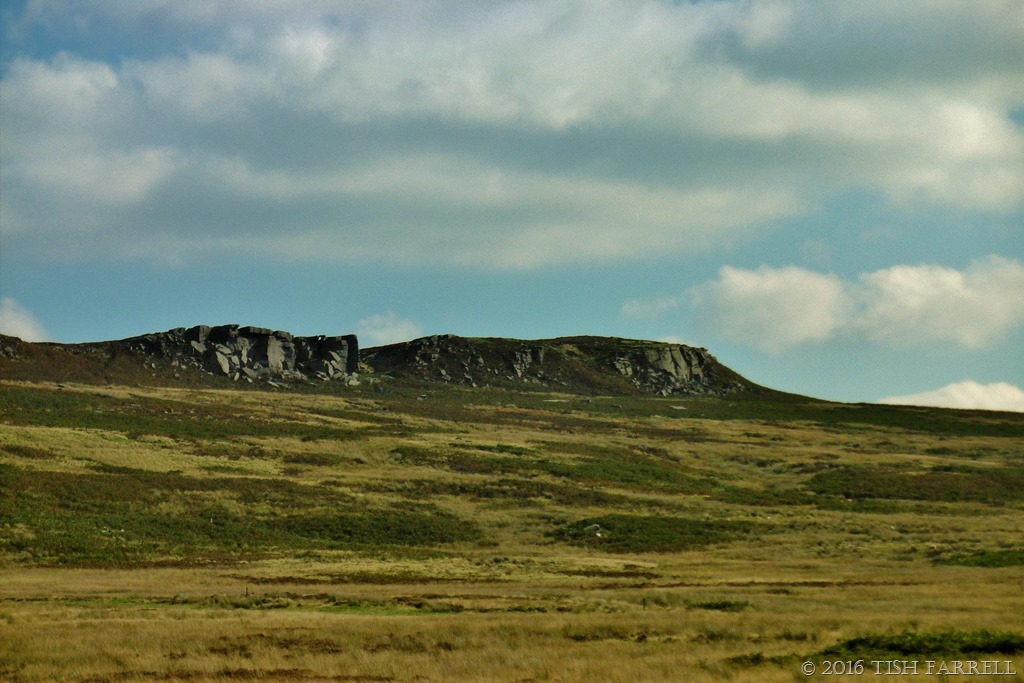
I struck straight into the heath; I held on to a hollow I saw deeply furrowing the brown moorside; I waded knee-deep in its dark growth; I turned with its turnings, and finding a moss-blackened granite crag in a hidden angle, I sat down under it. High banks of moor were about me; the crag protected my head: the sky was over that.
Jane Eyre Charlotte Brontë 1847
Most people, who know anything about the Brontë family, will know that they lived in a gloomy vicarage in Hawarth, West Yorkshire, on the edge of the rugged Pennine uplands. Most of us, too, will have seen the windswept ‘Cathy come home’ film clip renditions of scenes from Emily Brontë’s dark romance Wuthering Heights. And so, if we think of it all, we probably imagine that Charlotte Brontë’s Jane Eyre is set in her home county too.
And we’d probably be wrong. Circumstances and too many clues suggest that it was Hathersage and its environs in Derbyshire’s Dark Peak that informed the landscape of Charlotte Brontë’s imagination as she wrote Jane Eyre.
If you read my last post on the Seven Stones Bronze Age circle on Hordron Edge you will have seen the above vista – Stanage Edge above Moscar Moor. The path to this part of the moor begins at Cutthroat Bridge on the Glossop – Sheffield road just south-west of the old boundary stone at Moscar Cross. From here the hills fall away to the Derwent Valley and the vast Ladybower Reservoir built in the 1930s. You can just see a glimpse of the reservoir in the next photo taken from Hordron Edge. It would have been a steep river valley in Brontë’s time. At the reservoir the road divides – west for Glossop and Manchester, and south for Bamford and Hathersage.
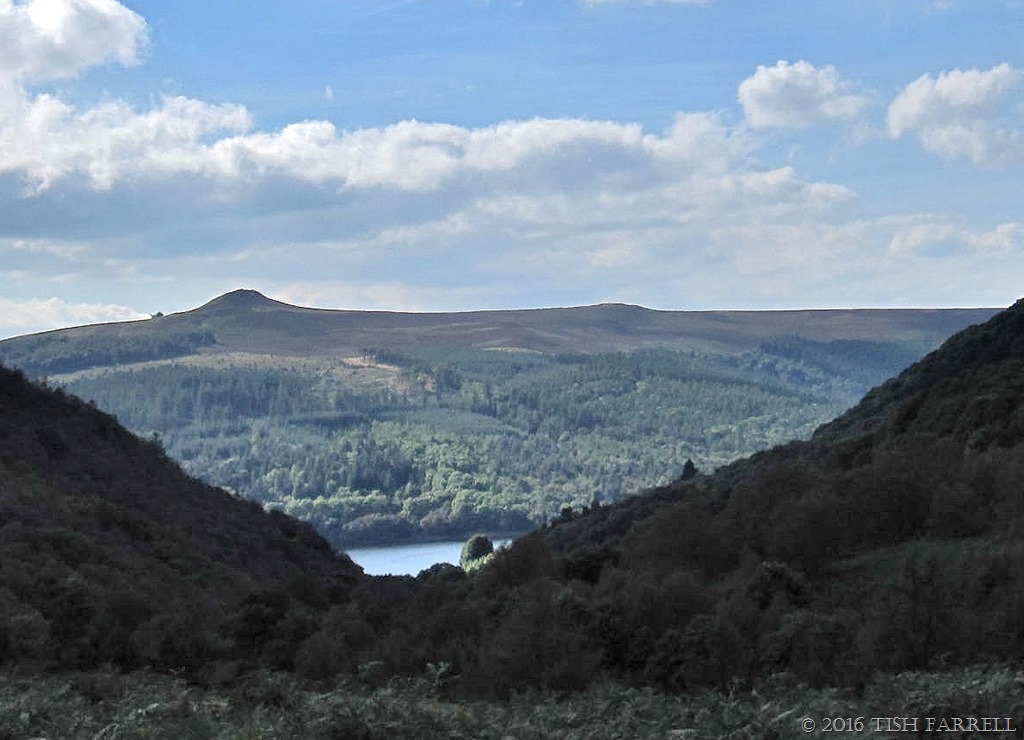
This next quotation is one of the possible ‘real location’ clues. It describes Whitcross, the place that many now identify as Moscar Cross. This isolated spot is where Jane Eyre is dropped by the coachman because she hasn’t enough money to pay for the onward journey. So begins her desperate wandering and lonely night out on the moors. She has just run away from Thornfield Hall and her thwarted marriage plans. Husband to be, Edward Rochester, has been exposed. He is already married to a lunatic wife whom he keeps locked in the attic. Jane’s sense of shock, loss and emotional distress are heightened as she loses herself physically, choosing to walk away from all identifiable landmarks and into the wild unknown:
Whitcross is no town, nor even a hamlet; it is but a stone pillar set up where four roads meet: whitewashed, I suppose, to be more obvious at a distance and in darkness. Four arms spring from its summit: the nearest town to which these point is, according to the inscription, distant ten miles; the farthest, above twenty. From the well-known names of these towns I learn in what county I have lighted; a north-midland shire, dusk with moorland, ridged with mountain: this I see. There are great moors behind and on each hand of me; there are waves of mountains far beyond that deep valley at my feet.
And why, you might ask, are people so keen to think that Whitcross is Moscar Cross? Does it even matter?
Of course it doesn’t. That a writer was drawing on what they knew of actual places when creating their fictional settings doesn’t necessarily add to our enjoyment of the story. On the other hand, to know that they had a definite somewhere in their mind’s eye may offer a few insights into the nature of the creative process.
I’ve written elsewhere about the importance of PLACE in fiction, and that SETTING is more than just a location. In the best stories the evocation of place can be as crucial as the conjuring of believable characters to occupy it.
Writers need to do their world-building homework very carefully – the outcome of which is likely to be more successful if they are summoning places and situations that have already stirred their creative impulses. When they come to write, they are already firing on all senses: can walk in their character’s shoes; feel through their skin; see through their eyes. And if the narrative warrants something more complex, there can be, by way of dramatic or comic irony, further interplay between what the reader may ‘know’ of the place and what the protagonists are seen to experience.
Of course all creative people make up things, but they also start their imagining from what they know: from people, places, things that have struck or affected them.
But to return to the Hathersage connections and Jane Eyre and the real reason why I’m indulging in this piece of literary tourism. For those of you who have read my recent posts you’ll know that the small Peak District town of Hathersage has personal family connections. My ancestors farmed on its outskirts from at least the late 1600s to 1892 (see Stepping Stones Through Time and Ancestor Sleuthing in Derbyshire ).
My great great Fox uncles and aunts of Callow Farm were exact contemporaries of Charlotte Brontë, and some of them would have been around in 1845 when the writer spent three weeks in Hathersage, staying with her very close friend from school days, Ellen Nussey.
Ellen was the vicar’s sister, and he, Henry Nussey had just got married and was away visiting his mother with his new bride. At some stage Charlotte had apparently refused a marriage proposal from Henry (he who apparently liked to draw up lists of attributes for any potential wife) and so his absence was perhaps taken advantage of by Ellen. In any event, the two women spent this time going out and about and visiting local notables.
And while I don’t for a moment think that these outings included afternoon tea at Callow, I am quite enjoying the notion of them sharing the ‘same air’. In fact Callow may well have been a sad place in the summer of 1845. In March of that year, my 3 x Great Grandmother, Mary Ann Fox nee Williamson, had died of ‘general dropsy’ at the age of 57. She is a bit of mystery, possibly ‘a London lady’ who in circumstances unknown became engaged to local bruiser and fist-fighter, Robert Fox of Callow. They were wed by marriage bond in Southwell Minster in 1812. She was anyway survived by four daughters and three sons, and although some of the girls look to have been employed in households outside the area around this time, I’m thinking there may have been Fox family members at Hathersage church on those Sundays in July when Charlotte and Ellen doubtless attended.
One of the places the two women definitely did visit on several occasions was North Lees Hall, below Stanage Edge, near Hathersage. It was lived in at the time by members of the very populous Eyre dynasty whose antecedents had built it in the 1500s.
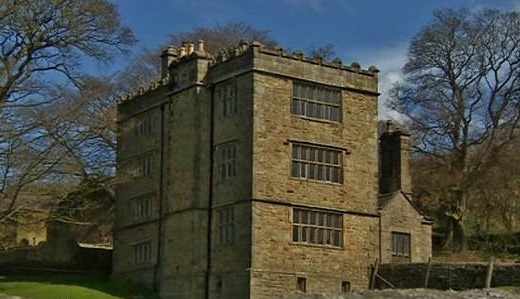 Photo credit: BBC
The Eyres had occupied many such houses in the area over the previous several hundred years. In fact my Fox family legend (totally unsubstantiated) has it that the first ancestral Derbyshire Fox was the steward of the vanquishing Eyre who came to England with William the Conqueror in 1066, and that this relationship continued down the ages – from which you may also surmise that some of my ancestors told rather good, if dodgy tales. In fact they were still telling this one when Great Great Grandfather George sold up at Callow in 1892. I know, because it was picked up at the time and featured by several local and regional newspapers.
Nor was Charlotte apparently averse to recycling tales. North Lees came with its own legend that told of one Agnes Ashurst, a mad woman who was confined to a room on the second floor. This room had padded walls to stop her injuring herself, but like Rochester’s wife, Bertha, she also died in a fire.
Definitely it was too good a yarn not to re-use and develop then. It also well illustrates another aspect of the on-going writerly process – the jackdaw syndrome of gathering in every shiny fragment and titillating curiosity just in case such treasured little nuggets may one day serve some plot.
Anyway, I will finish this present ramble with the Jane Eyre description of Thornfield Hall. Take a look again at the photo of North Lees. What do you think – a convincing source for Rochester’s domain of dark secrets and the scene of Bertha Rochester’s shocking demise?
I stepped over the threshold. It was a fine autumn morning; the early sun shone serenely on embrowned groves and still green fields; advancing on to the lawn, I looked up and surveyed the front of the mansion. It was three storeys high, of proportions not vast, though considerable: a gentleman’s manor-house, not a nobleman’s seat: battlements round the top gave it a picturesque look.
copyright 2016 Tish Farrell

No one quite knows why they do it. Or they didn’t the last time I pursued the matter. But as summer ends so the rooks begin their twilight dancing. There is a large rookery in the wood behind the house. Many scores of birds. Jackdaws live there too. Now each evening, as the sun slips behind Wenlock Edge we watch the rook and jackdaw ballet. Flock after flock flies in, flies out, sweeps up, round, back, spirals, dives in sequences so swift and coordinated that there must surely be some corvid dance-master somewhere orchestrating the moves. The show may last for many minutes, subside into the treetops, then burst out and start all over again. Finally, as the light goes, every bird finds its perch, and the wood subsides into companionable darkness and gentle rook chatter.
*
To join in this challenge please visit Changing Seasons Monthly Challenge over at Cardinal Guzman’s
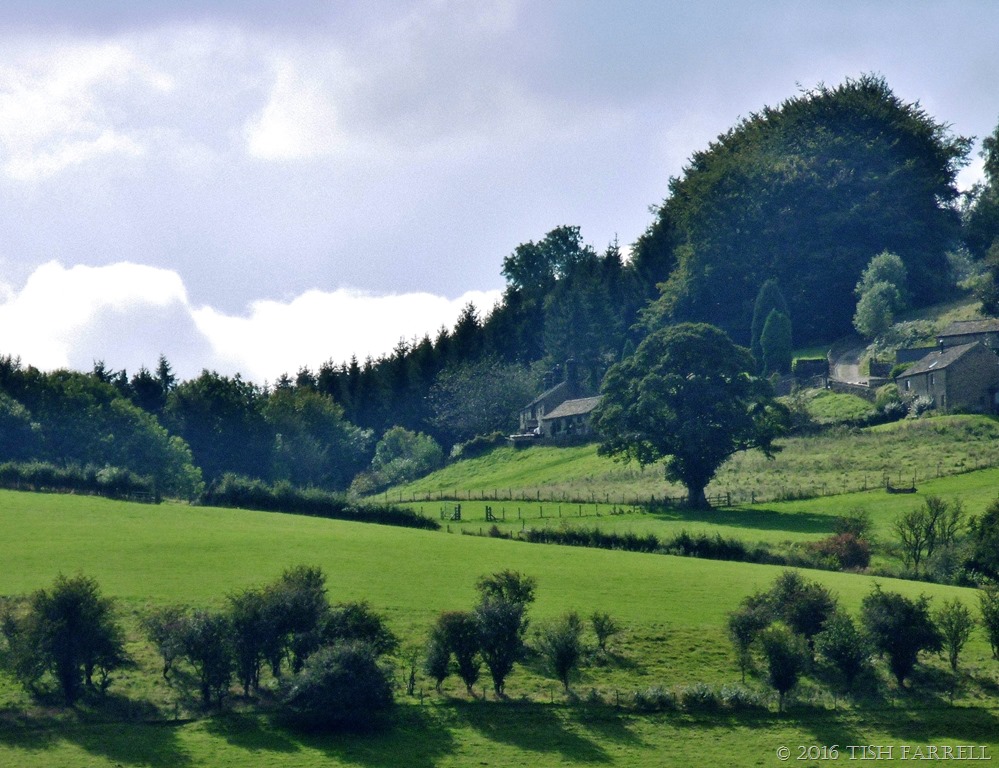
This was where I was last Thursday morning – not posting on Thursday’s Special, but trying to find a good spot on a field path outside Hathersage so I could photograph Callow Farm. This was the place where four generations of my Fox family ancestors were tenant farmers from around 1700 to 1892. Before that, during the late 1600s, they rented another Duke of Devonshire farm, The Oaks, up on the wilder heights of Offerton Moor, not far from Callow.
As you can see, the house (centre) is covertly situated, in the lee of the hill beside the wood. I had to use a lot of zoom, hence the hazy look, though such haziness is perhaps fitting for this piece of ancestral snooping. The more readily visible buildings on the right are the farm’s barns, now an upscale holiday let.
If you go to the previous post Stepping Stones Through Time you’ll find more of the story behind this photo. This was the reason why I had hoped to cross the stepping stones, to achieve a closer view than this one. Ah well. Maybe next time.
*
There’s still time to take part in last week’s Thursday’s Special. Paula says ‘Pick a word in September’. Choose from: populated, time-sensitive, companionable, burgeoning, clandestine, but first go and see her gallery of photos and be inspired.
#thursdaysspecial

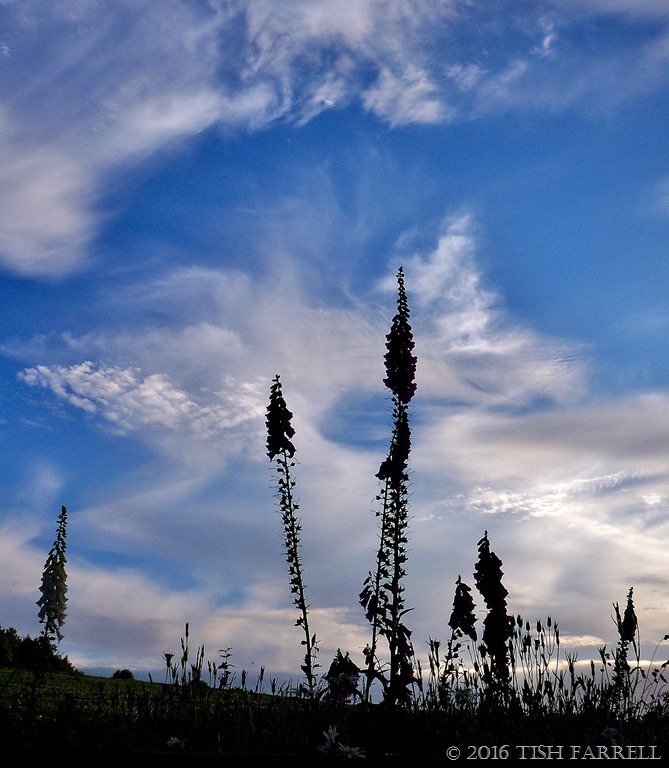
This week Paula’s asks us to show her a black & white photo and the colour original from which is has been converted. This is another ‘over the garden fence and across the field’ shot – sundowner foxgloves and corn cockle seed heads.
#black&whiteSunday
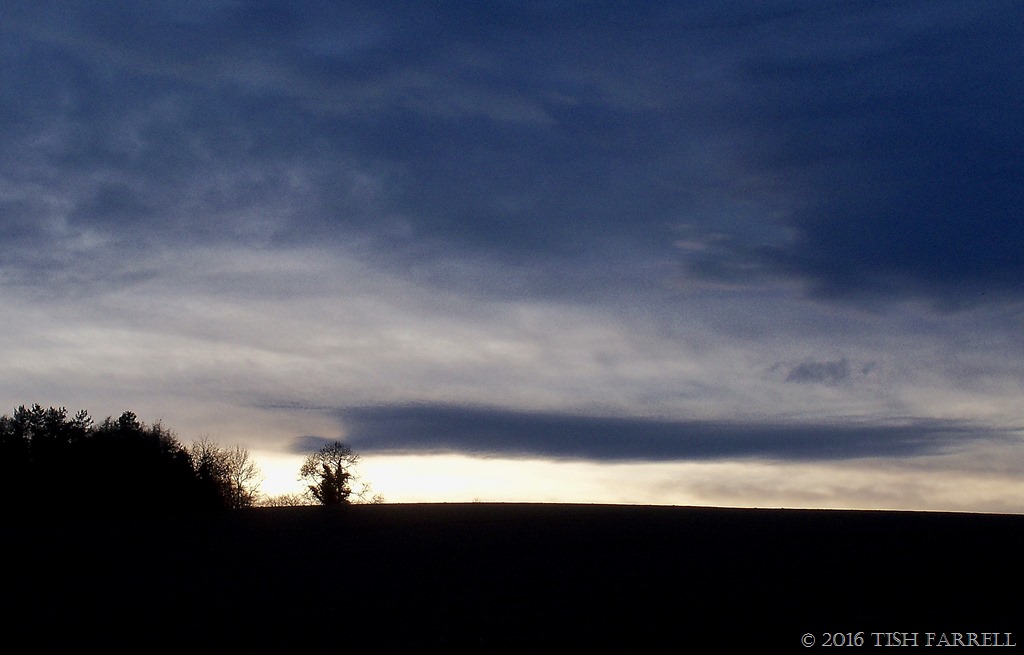
This photo was taken from the field path in Townsend Meadow behind our house, a scene captured one day last winter when I was late home from the allotment. I often stop at this point on the path to take photos. The ash tree silhouette always catches my eye, whatever the season, and I love the way the day seems to slip behind the hill as night shuts down on top and shadows creep up to meet it. It’s a bit like a stage set. Or it could be Rip Van Winkle Land.
*
Be inspired by things of the night over at Paula’s Thursday’s Special: Nocturnal
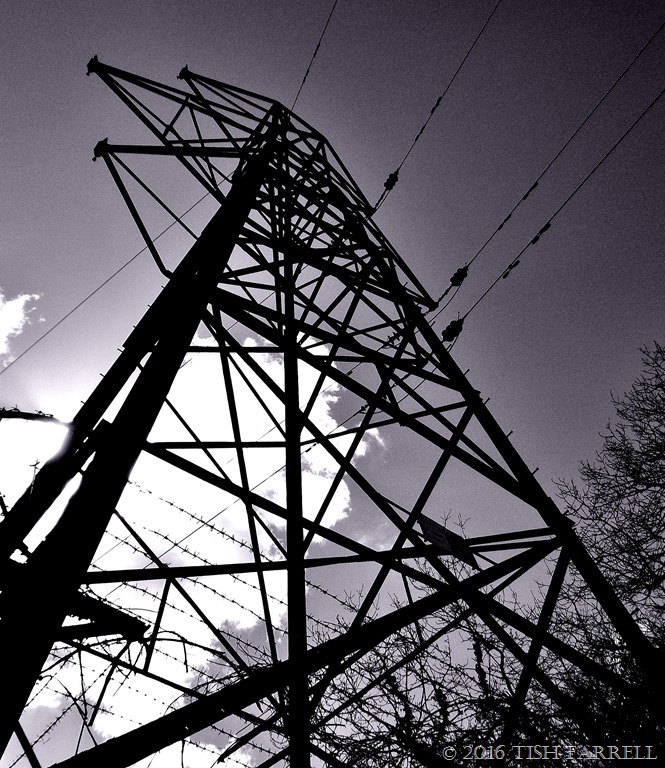

I suppose we English take the presence of electricity pylons for granted. They march across our countryside enabling us to make toast and boil the kettle, watch TV and keep the packs of supermarket frozen peas frozen, to heat our homes and charge the appliances we think we can’t live without – cell phones, tablets, laptops, cameras.
It makes me wonder though – how much power we actually need, and just when we might get around to deploying clean, renewable energy sources. Next stop fracking.
These particular pylons dominate the fields around Benthall Hall above the Severn Gorge, and until last year transmitted energy generated at the now decommissioned Ironbridge Power Station. I’m not sure how our lights stay on these days, or who to ask about it – which to me suggests a worrying situation.
We regard the provision of electricity as our natural right, while at the same time rarely considering how little personal power we have in how it is produced and delivered. We probably don’t know who owns it – this absolutely essential resource. The same applies to that other absolute necessity – the clean water that pours from our taps. So I’m also wondering if we haven’t surrendered too much power – blithely assuming that the corporate owners (whoever and wherever in the world they are) will always act in our best interest and give us what we need?
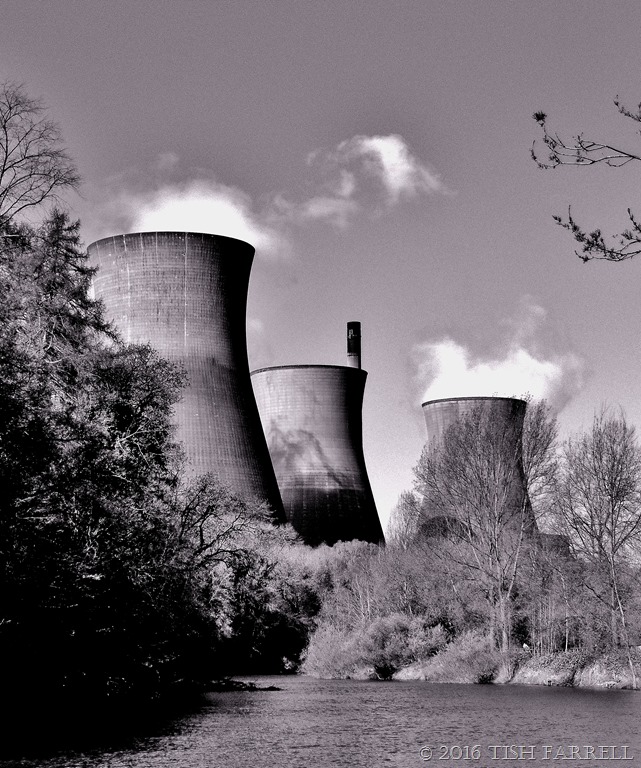
This week at Black & White Sunday Paula asks us to show her ‘towering’.

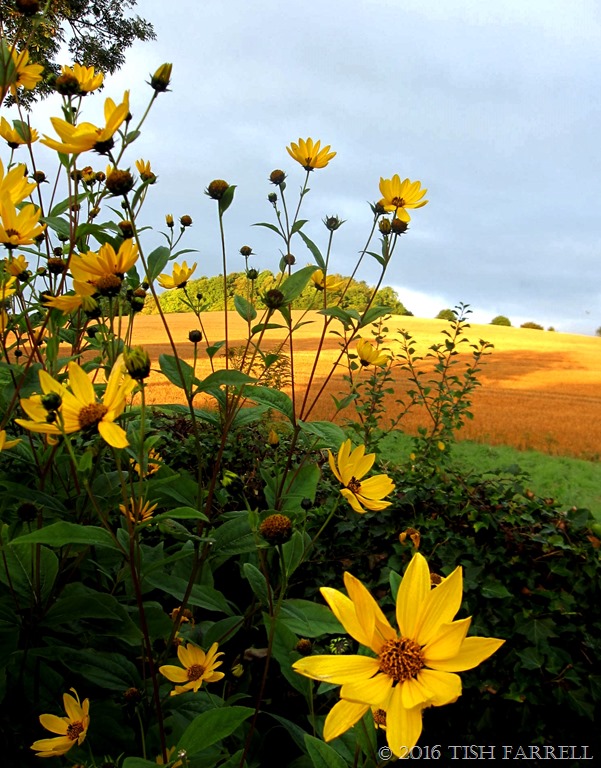
The wheat field behind the house has been harvested leaving us with a yellow stubble carpet to look at. At least for now. Doubtless it will soon be ploughed and re-sown. This morning I watched the early morning sun spread down the hill. Liquid amber. The garden was still in deep shadow, but even so, the rudbeckia were not to be outdone, making their own sunshine.