Bee In My Bonnets, Granny’s That Is

P1010543

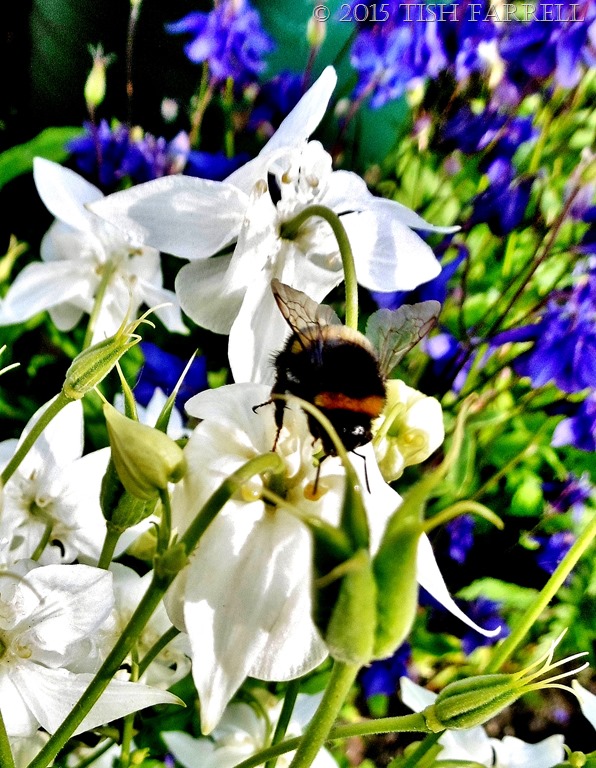
Today over at Lost in Translation, Paula’s Thursday’s Special theme is minuscule, which is a word I often have problems spelling because it comes in two versions, and that then leads me to make up  my own. Anyway, I instantly thought of  pollen grains, which made me think of bees, and of the small busy world of pollen gathering that goes on all spring and summer, mostly unnoticed by us humans. And so since I believe we cannot think of bees too much or too often, given the valuable work they do for us, here’s another bee snap.

I am also grateful to Pauline at Memories Are Made of This, who in today’s post also has bees on her mind, for reminding me a few a weeks ago in one of her comments that Granny’s Bonnets is another name for columbines or  aquilegias. So there you have it – bumble bee in my Granny’s Bonnets, but not in my actual bonnet, although my other half would often beg to differ on that statement.

copyright 2015 Tish Farrell

Thursday’s Special: Minuscule

Love and voyeurism among the thistles, and then some freshly dug potatoes

100_6369

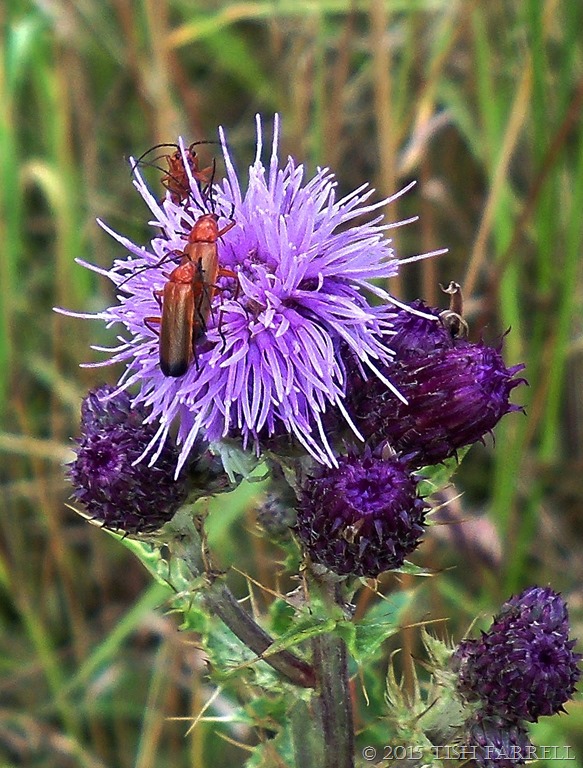
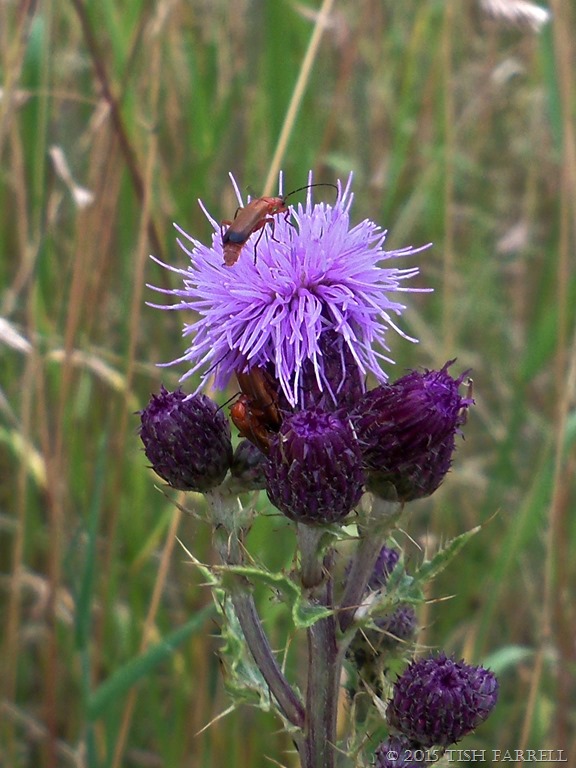
This snapping of bugs is all Ark’s fault at A Tale Unfolds. For some time now he’s been showing us insect life in his South African garden. Then on Friday he set me a challenge to beat his dandelion with four bugs. So here I give you a ménage à trois with some longhorn beetles, caught on my way to the allotment, and as I was actually trying to capture some bee shots. I reckon it trumps Ark’s dandelion, and indeed his jackal flies, on grounds of raciness.

100_6373

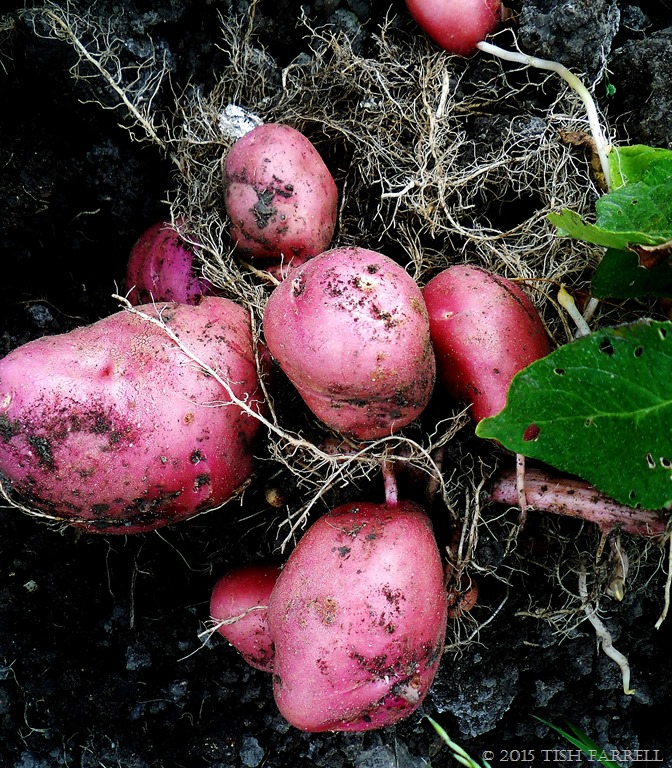
But now here is the close up shot I really wanted to show you, and the reason why I was headed  for the allotment: my first main crop potatoes just released from the earth. These are Desirée, organically grown and most desirable, not only for looks and flavour, but for general resistance to drought, bugs and slugs:

100_6378

Close Up

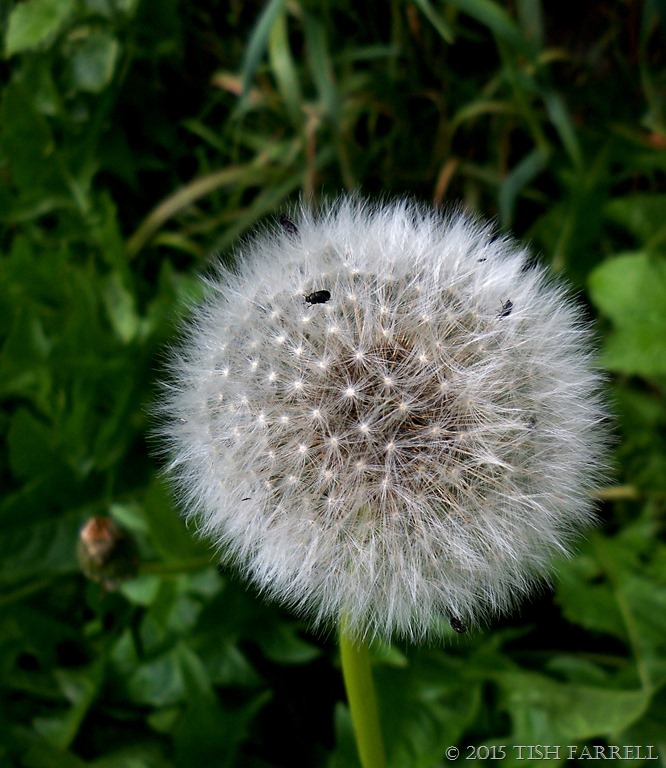
Dandelion Globe: It’s A Small World

100_6105

Things are often small, up-close and entomological over at Ark’s place in South Africa. He’s always leading me up his garden path to take a look  at crab spiders and such like. At least that is his story, and I’m sticking to it. Now he’s led me to Kenneth McMillan’s blog where there are more close-up bugs, this time of the Canadian variety. That is to say in his latest post, Kenneth has a very fine shot of a Bald-faced Hornet heading for the cotoneaster.

I gather that fennel has been featuring in Ark’s and Kenneth’s recent photographic exchanges, but I have no bugs in my fennel, or even bats. Instead, as I was traipsing up the bean field to the allotment,  I caught these very tiny beetles in a dandelion clock. And since Ark said we could join in with the bug shoot, this is my effort. I hope I am not expected to know what these tiny insects are. They are rather cute though.

copyright 2015 Tish Farrell

Seeing My Town In Black & White: 1

P1010625

In this week’s Black & White Challenge, Cee is asking us to focus on subjects that are more than fifty years old. I’m pretty confident, then, that my home town of Much Wenlock more than fits the bill. As a settlement, it has been continuously occupied for the last thousand years.

The town windmill (seen above) is not quite that old. I’ve begun with it because it is the oldest structure near my house. It  was busy grinding corn from around 1655. Then a lightning bolt struck it in 1850, and it has remained sail-less ever since – either a pity or not, depending on your views on historic conservation.
IMG_1185

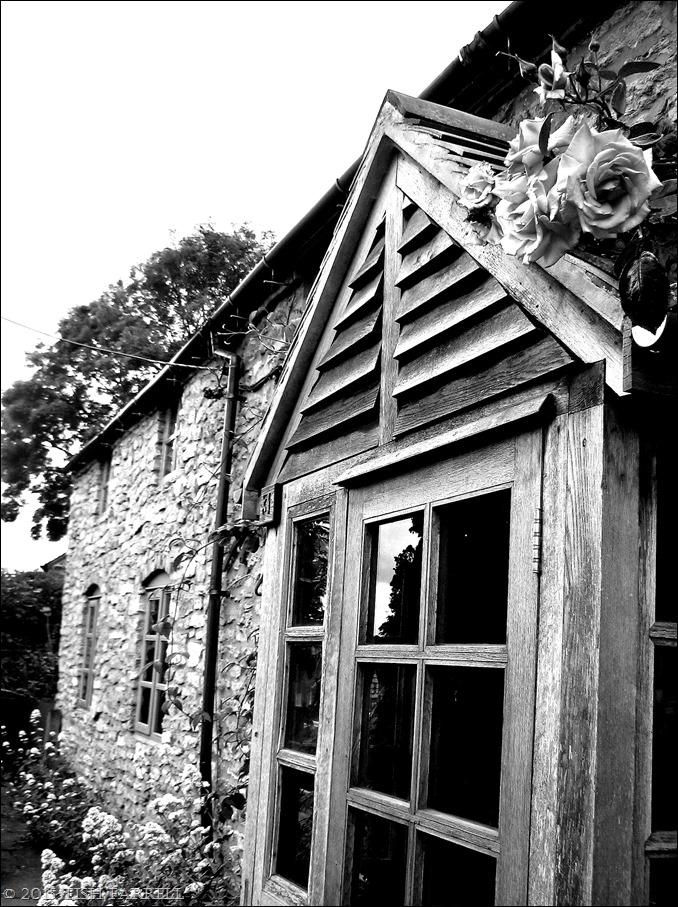
On the other hand, I perhaps needn’t have gone as far as the windmill. You might say my own house is something of a minor monument age-wise, much like its inhabitants (?).  It’s original half dates from the 1830s. In the living room there’s a massive inglenook fireplace complete with bread oven that defies my attempts to photograph it well, so you’ll have to imagine it. Instead I’ll take you on a walk down Sheinton Street to see a few of the other sights.

P1010161

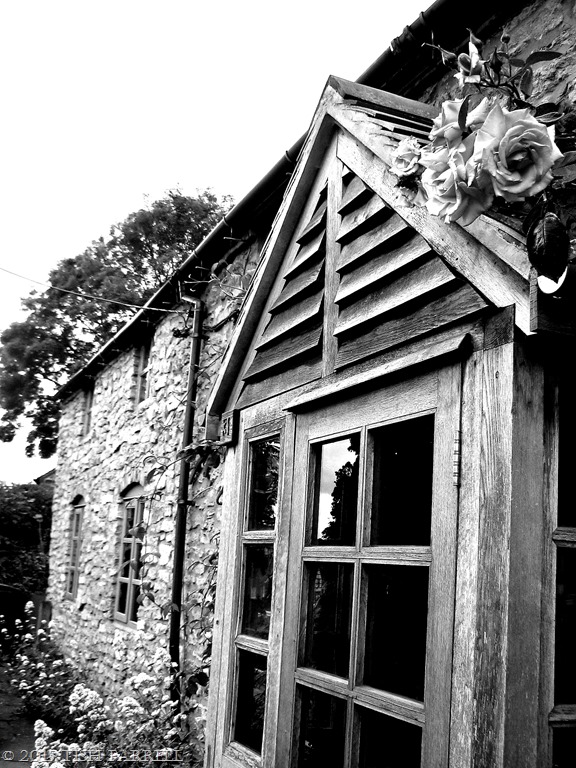
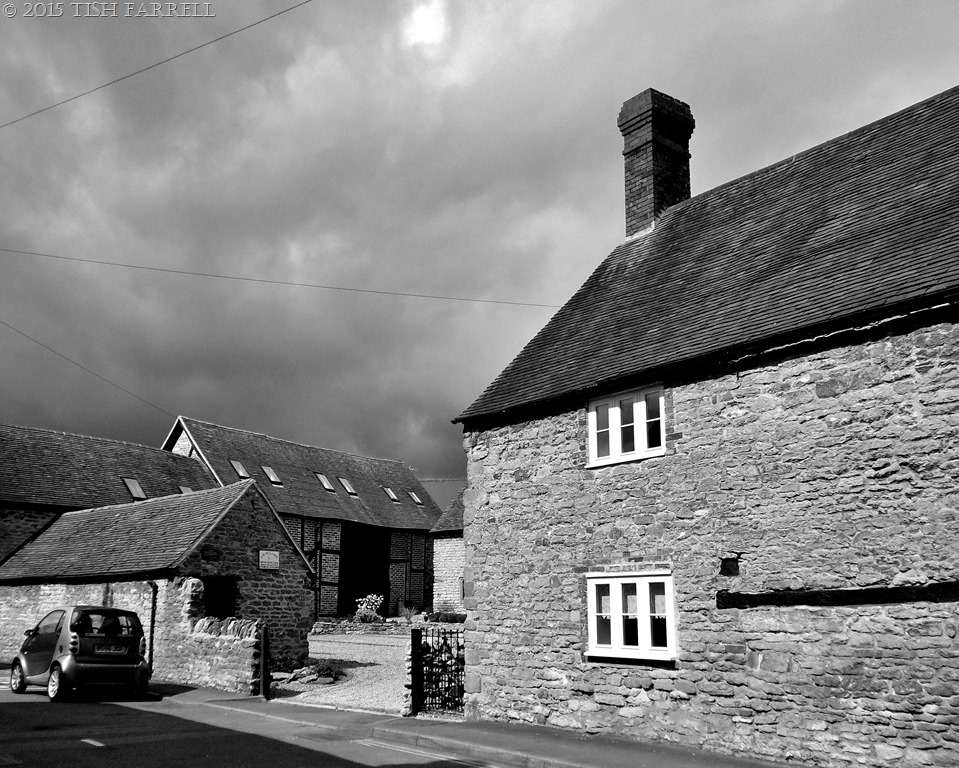
Heading into town, there are here-and-there signs of the medieval origins of many of the cottages, their timber frames concealed or disguised by brick and stone exteriors that have been added in more recent centuries.

Most of these cottages would have once housed artisans, their workshops opening directly onto the street to catch the eye of potential customers. The living quarters, and gardens would have been behind the workshops. In fact, the layout of long medieval burgage plots behind these Sheinton Street properties, and now pretty gardens, are still visible from the field path.

Today, Much Wenlock is a sleepy sort of place, much gentrified, and up-marketed. But step back a couple of hundred years, and much of it would have been grimy and industrial. Not only was there quarrying and limestone burning going on around the town, but within it were once the smoking kilns of the clay tobacco pipe manufacturers, stinking pits for the curing and tanning of hides for leather working, horses and carts churning up the dirt. Brewing was  also a big local trade, as were slaughtering, pewtering, smithing, weaving, and hat and shoe making. The unmade streets were alive with taverns to wet the throats of dusty quarrymen, and the final touch, ambiance-wise, would have been provided by the malodourous effluvia of the Schetbroke, an open sewer of a stream which ran through the town (but now happily culverted).

100_4963

I don’t know the particular history of this rather grand cottage seen above, but it’s a good example of a later stone frontage added to a much older building. Most of the town’s stonework has in fact been recycled from its medieval priory, dissolved by Henry VIII in 1540.

100_6033

In amongst the antiquity we can also find more recent buildings. For instance, in the space between  medieval neighbours is this little set of picturesque alms houses built in 1810. They are known as Wolmer’s Alms Houses, a charity founded in the town in 1485. They are still operated on a charitable basis for the elderly. I love the brick ogival arches over the doors and windows.
P1010156

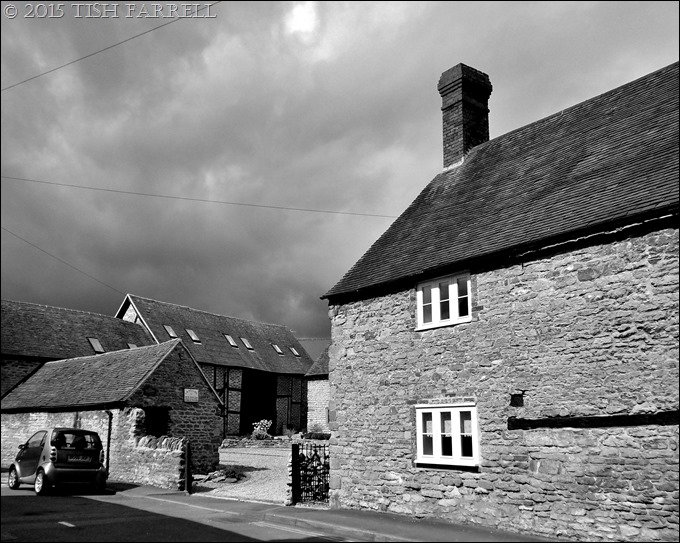
At the end of Sheinton Street is Brookhouse Farm. It is now a residential enclave of smart barn conversions, but until fairly recently was one of the last surviving examples of England’s town farms.  I can still remember it in the 1990s as a very rustic farmyard with cattle in the barns. The farmhouse in the foreground was stone-clad in the early 1700s, and is one of several Much Wenlock houses with a medieval hall concealed within it. You might call this the Chinese Box school of architecture.

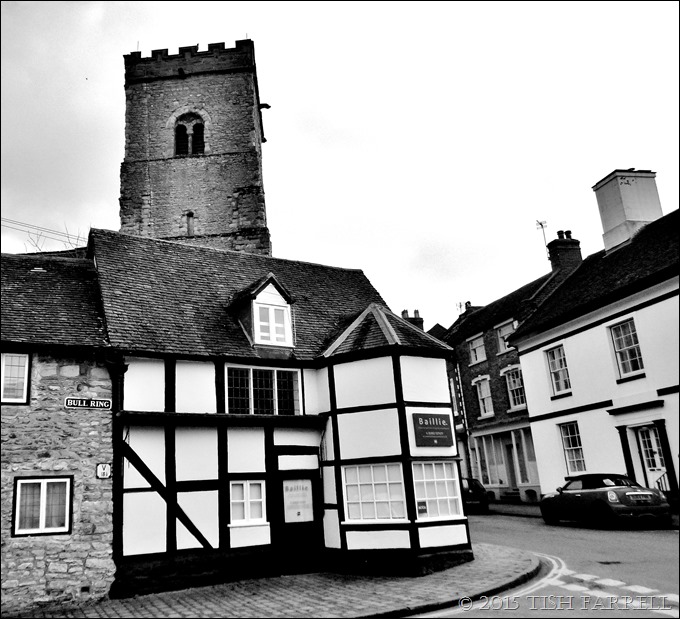
Then on the opposite corner from the farm is the Bull Ring…
P1000621

…so named after the unsavoury pursuit of bull-baiting that went on here until the early 1800s. By then the timber-framed building  had stood for some 200 years, while Holy Trinity Church, seen behind and in the next photo, stands on the site the Saxon women’s church of St Milburga’s Abbey, founded in c.680 AD as a religious house for both nuns and monks. The oldest part of the present church is the nave which dates from 1150. Other parts were constructed in the 14th and 15th centuries.

P1000408

During monastic times, Much Wenlock was ruled by the Prior under ecclesiastical law. After the dissolution in 1540 a new civil courthouse had to be built. It stands just across the Church Green, and marks the centre of the town. These days the ground floor is the venue for our various markets, while upstairs houses the original law court (now a gallery) and the council chamber which is still used for all Town Council meetings, and has to be one of the most uncomfortable, if august, venues in the whole town.

100_5540

And now we’ll double back on ourselves. Please head under the arch (look out for the man with a camera) and cut across the Church Green for our last stop on this tour – a quick look at Much Wenlock Priory.

P1000494

This is the view from the lane, where the site’s perimeter is shaded by soaring Corsican Pines. We’ll need more time to make it worthwhile buying a ticket to go inside, so I’ll leave you with a photo from one of my earlier visits: a close-up of the monks’ lavabo where they used to wash before entering the refectory to take their meals.

The carved panel dates from c.1180, which is odd, actually. I could swear one of the saints is on his cell phone.  Not so much religious texts, as a direct call to the Almighty?

100_5799

In Part 2 I’ll take you on a black and white stroll up the High Street.

copyright 2015 Tish Farrell

Related:

5 Photos 5 Stories Hidden Wenlock #1

Cee’s Black & White Photo Challenge: over fifty years old

Strawberry vodka and the benefits of using a tripod

100_6074

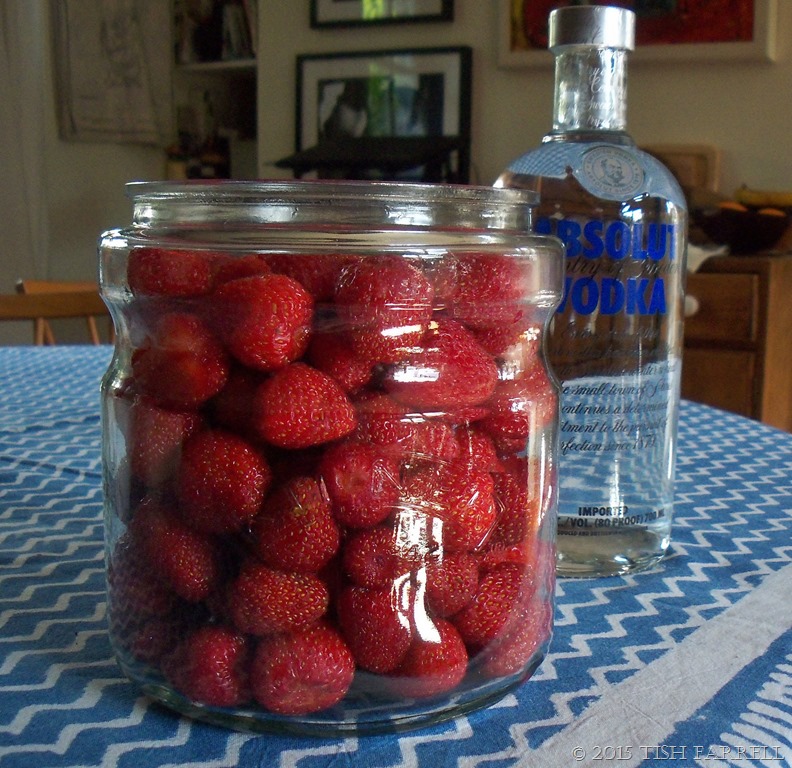
This story doesn’t begin here, although this is my first ever photograph shot using a tripod (plus a Kodak EasyShare M380 on macro setting). You do not, however, need the tripod for the recipe coming up below, although it could come in handy for balance if you’ve sampled too much of the end product some months hence.

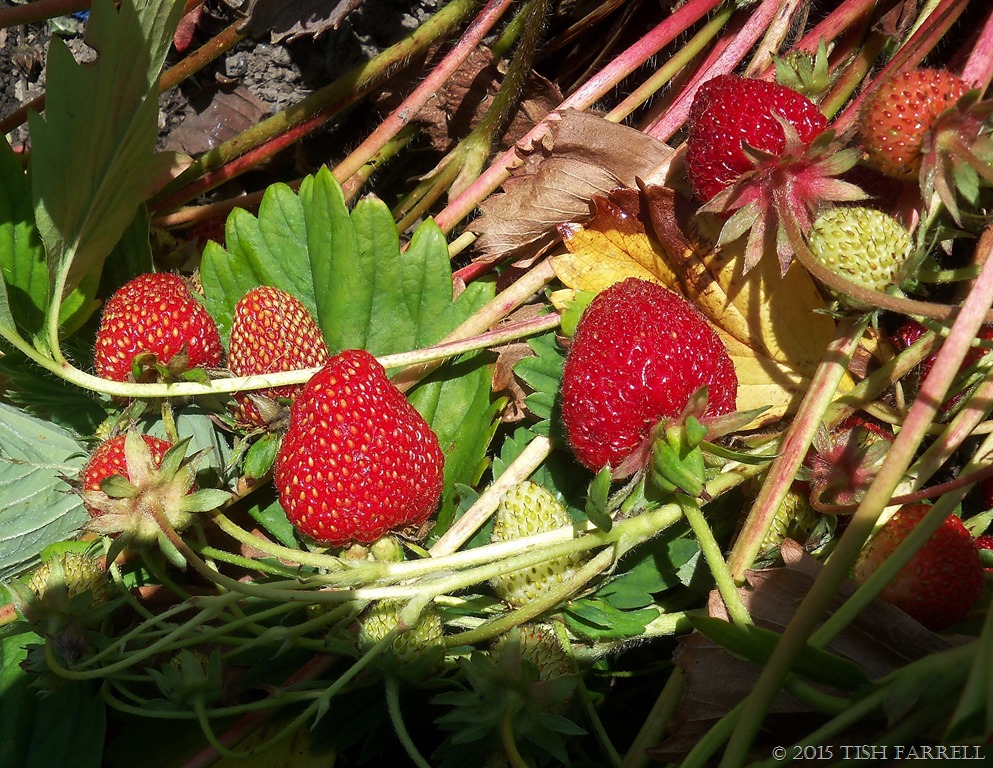
So: the story actually begins at the allotment, and a case of TOO MANY strawberries. Gilly at Lucid Gypsy has also been suffering from the same dilemma. In fact as I was picking all these juicy fruits under a very hot sun, I was wondering if this was indeed a subject for some serious philosophical debate. I mean, can you have too many strawberries?

(N.B. These next two photos did not involve a tripod, only a hot and bothered biped in ‘pick ‘n shoot’ mode.)

100_6032

100_6033

So can you have too many strawberries?

It is the sort of question that inevitably leads me to Jane Grigson’s Fruit Book (the companion to her Vegetable Book). She is just the cookery writer you need when you have any excess produce. And it is thanks to her that I will pass on this morning’s activity at the kitchen table in Sheinton Street.


Strawberry Vodka

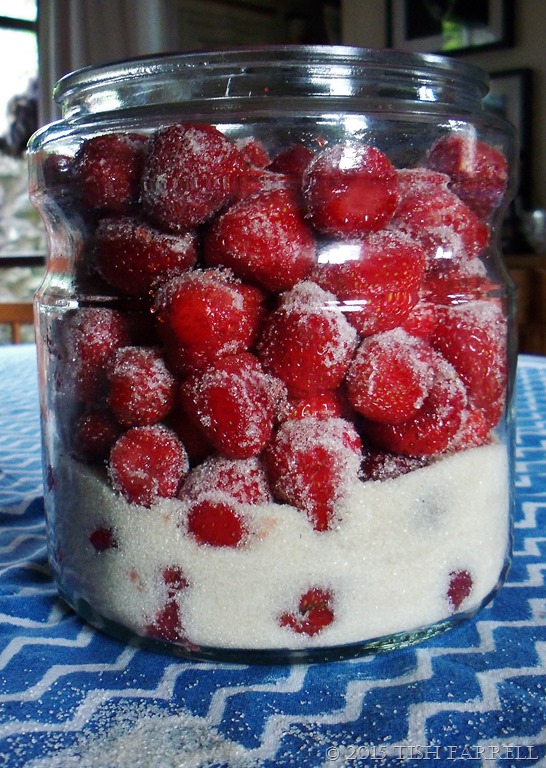
  • You will need strawberries, fair trade unbleached caster sugar, a  bottle of vodka (or gin if you prefer), and a big jar with a lid that seals.
  • Select DRY strawberries that do not need to be washed, and fill your chosen clean, dry vessel. I used a 2 litre kilner jar (4 pints).
  • Then sprinkle in fair trade caster sugar so it comes a third the way up the jar (I used about 150 gms, 2/3 cup).
  • Fill the jar with vodka so that all the fruit is covered and seal.

100_6080

100_6086


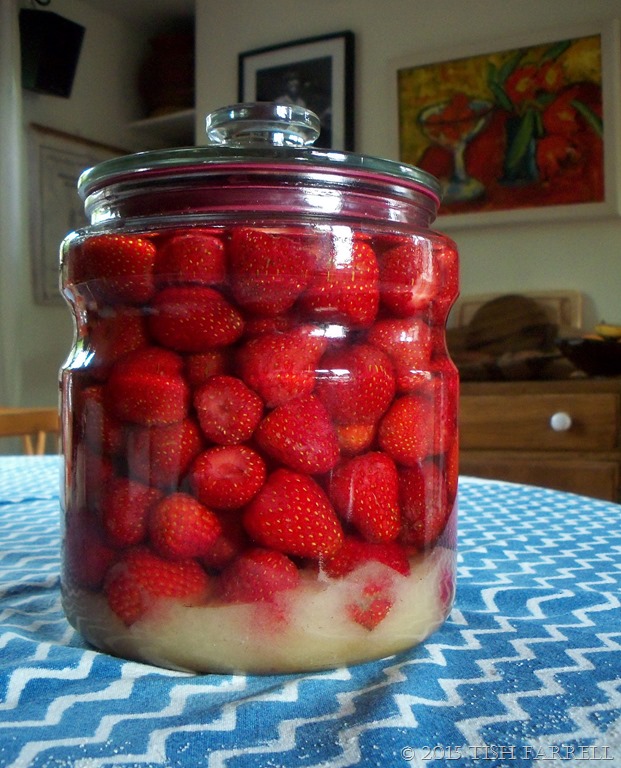
Jane Grigson’s instructions then are that you place the jar in a cool, dark place, and turn it over from time to time. After a month the strawberries will look wan and floppy, and you can then strain the lot into a new jar, using a double layer of muslin. Or you can leave the fruit as it is for several months more.

The resulting cordial can then be drunk as a liqueur, and used to pep up sorbets, fools and mousses. My mind is tending (albeit perversely so on this steamy July day)  towards thoughts of Christmas trifle.

I should add that I have never tried this before, but so far it is looking good, and that’s where the tripod came in. I shall definitely be using it again. As to the strawberry vodka, only time will tell.

copyright 2015 Tish Farrell

Catching the wave: learning to shoot lying down

100_5992

Photography-wise, you could say this is a case of learning from one’s subject.

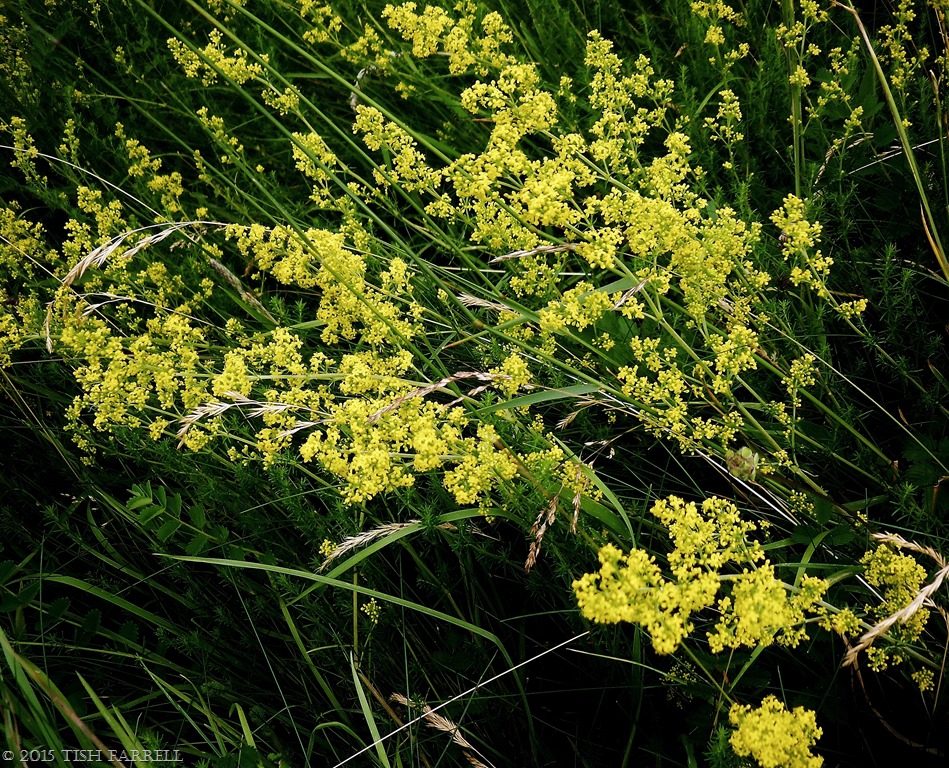
Anyone who joined me on last week’s walk around Windmill Hill, will probably know  that this drift of yellow is commonly known as Lady’s bedstraw or Lady’s tresses (Galium verum). When dried it smells of freshly mown hay, and so was once added to mattresses. Given these supine associations it seemed fitting that the only way to capture its essence was to lie down with it in the grass.

And lying down certainly reduces operator wobble, although there wasn’t much I could do about the summer breeze.  So I caught that too. And since I have yet to devise a ‘scratch and sniff’ widget, you must now use your imagination to summon a fragrance with subtle notes of gardenia plus a dash of fresh acacia honey. Mmmm. I don’t know about you, but I’m feeling a snooze coming on, borne away on a tsunami of sweet, golden, flowers. Happy dreams.

copyright 2015 Tish Farrell

Inspired by Jennifer Nichole Wells One Word Photo Challenge: tsunami  Go here to see Jennifer’s fascinating miniature world, and other bloggers’ interpretations for OWPC.

I’m also linking this to Lucile de Godoy’s Photo Rehab at Bridging Lacunas. Please visit her and her community of photo bloggers for a great boost to your creativity.

Return to Windmill Hill: Of Grasshopper Stalking, Lady’s Bedstraw And Other Random Discoveries

100_6008

Today I thought it was time to check on the floral happenings in our remnant of limestone meadow up on Windmill Hill. It’s a few weeks since I was last up there, and the spring flowers are giving way to summer species. Perhaps one of  the most pleasing finds were these drifts of Lady’s Bedstraw,  seen here below the windmill.

It is also called Lady’s Tresses, and  it smells of honeyed summer pasture. Once it would be gathered and dried and included with the straw that was used to fill mattresses. It was often chosen for the beds of pregnant women, so surrounding those in their confinement with soothing wafts of sweet hay scents.

I think this is a practice we could revive, not that we are allowed to harvest wild flowers. I’m envisaging now a pillow filled  with golden stems. Surely it would be just the thing to send us sleep-fractured souls back to dreamland. And even if it didn’t, it would make being wakeful a pleasure.

100_5898

The spotted orchids  I first found last month for Meg are nearly over (by the way, you should see Meg’s sundews found in Australia’s  Stanthorpe granite country over at Snippetsandsnaps). But following on from the common spotted are the pyramidal orchids, which range in colour from lipstick pink to purple. I also discover from plantlife.org.uk that these, like many orchids, require the presence of a particular fungus in the soil in order to flower.

100_5892

I also discover from Richard Mabey’s treasure of a book, Flora Britannica,  that when the Victorian art critic, John Ruskin, learned that the name orchid derived from the Greek word orkhis  meaning testicle, he urged that the flower’s name be changed to wreathewort. Personally, I don’t think this any sort of improvement. The man was a prude. Besides, the reason that orchids are named after testicles is because their roots’ appearance do a pretty good impersonation of same. Doubtless this was why they were long considered a useful remedy for a lapsed libido – a herbal fancy and fallacy I imagine, so do  not try this at home.

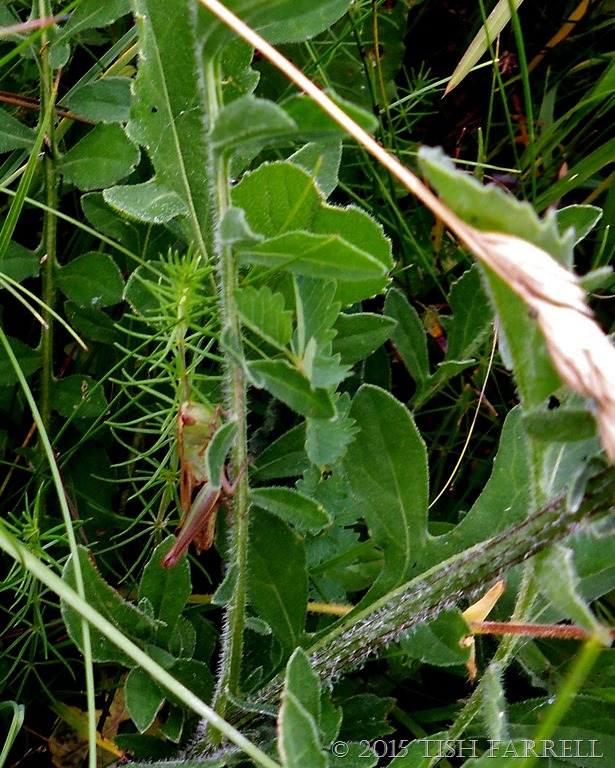
While I was scrabbling around on my knees in the grass, thinking what strange things I have started doing since joining WordPress, I became distracted by a grasshopper. This is not the greatest shot. He is lurking on the leaves of greater knapweed, Centaurea scabiosa. Very well camouflaged I thought.

100_5972

100_5968

While I was down there, because believe me, once you get down on your knees you need to make the most of it, I also discovered some Lady’s Bedstraw caught inside a web. It looks like a shroud. You can just see the tiny spider due south of the flower:

100_5993

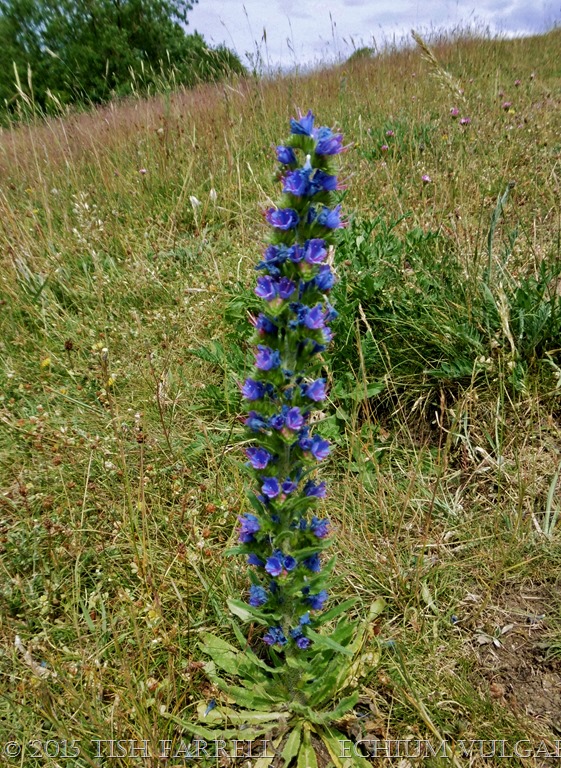
And now here is one of Windmill Hill’s  more sinister-looking plant specimens, – the very upright prickly spires of Viper’s bugloss. Apparently the flower’s fruits resemble adders’ heads, and other names include adderwort and snake flower. As well as colonising limestone areas, you will also find it growing on chalky and industrially contaminated soils. Like other members of the Echium family, which includes borage and comfrey, it is attractive to bees.

P1010611

And here’s another bee favourite – Wild Thyme:

100_5950

Thyme is of course a must in the kitchen. It is also a common medicinal herb. All forms of the plant contain the volatile oil thymol, a powerful antiseptic, which is often included in cough mixtures. I use thyme (fresh or dried) steeped in hot water with honey and fresh lemon juice when I have a cold or cough.

And talking of thyme, it’s time to head for home. So I’ll leave you with one last view of the windmill and some more flowers named after testicles. Not that it’s in any way connected, but I had to lie down in the grass to take this shot – a fine way for the minuting secretary of Much Wenlock Civic Society to conduct herself. It was just as well there were none of the usual walkers and their dogs around for me to frighten:

100_5981

This excursion, but naturally not the bit about the orchid’s etymology, was inspired by Jo’s Monday Walk. Please join her there for some fascinating rambles.

copyright 2105 Tish Farrell

Obsessive Compulsive Compost Disorder and why you should have it, or at least help someone who does (and that would be me)

100_4954

I truly cannot help it. I gather anything and everything that will go into my allotment compost bins. This includes not only our vegetable waste, but other people’s. My neighbours along Sheinton Street may indeed wonder how it is that the garden mowings and clippings that they throw over their back hedges can disappear so fast. I don’t really want to go round to their front doors and discuss it with them on the basis that my perceived eccentricity quotient in the town is already quite high enough. But they clearly don’t want the stuff, and they leave it in such handy piles beside the field path. I simply scoop them up on my way to the vegetable plot.

Compost foraging, however, does have its small hazards. It can, for instance, involve a close encounter with a slow worm – a copper and black snakish looking reptile that is actually a limbless lizard. They are quite harmless, but I still leap back in alarm when I touch one unexpectedly. I ought to know by now. They love warm piles of things to bask in during the day. They are to be treasured too, since they eat slugs. And yes I know that in the cycle of things slugs have their good points, and probably are useful in compost heaps, but I am utterly prejudiced against them, and admire anything that disposes of them. Toads are thus also heroes, though sadly in rather short supply.

P1010390

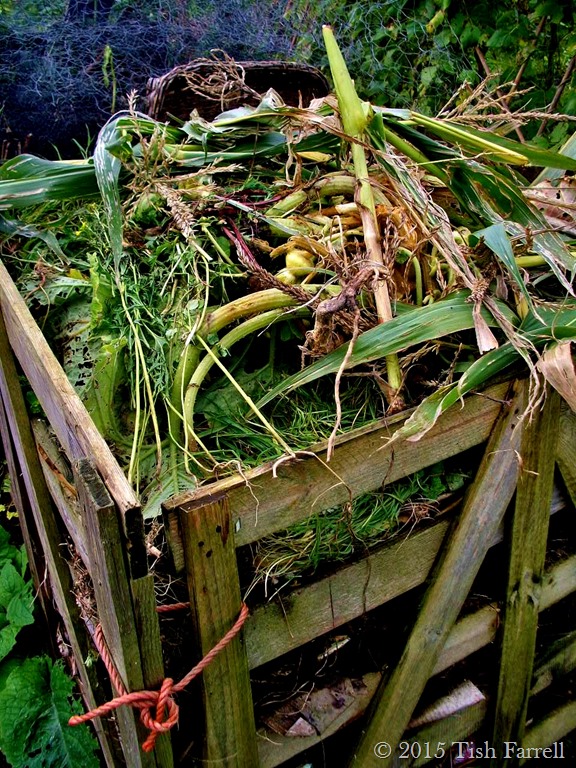
The manner of composting as formerly done by me, and displayed in the first photo is not to be emulated. A dedicated composter, and I am now trying to do this, chops big stems and stalks into short lengths to speed up the rotting down process.  It is also good have mixed layers e.g. brown, dry matter such as scrunched up pieces of brown corrugated cardboard, paper, wood shavings, leaves and small twigs. The aim is about 50:50 brown to green matter. This allows air into the mix, and so prevents a sour and smelly squidge.

Grass  mowings and animal manure will heat things up, and also aid decomposition. The heat kills any weed seedlings.  Other additives in my compost include tea bags, egg shells, vegetable parings, allotment weeds, turves from ground clearing, wood ash, hoover contents, and brown paper carriers. Every now and then I also add a layer of comfrey since it also a good compost activator.

*

IMG_1138

Comfrey is a good compost activator. It also makes an excellent plant food, keeps the bees happy, and helps mend human bones and inflamed tissues. The leaves can be made into tea or added to soup. The flowering tops contain vitamin B12 (source: Herbal Therapy for Women by Elisabeth Brooke MNIMH). Can you spot the bumble bee in the top photo? (Just testing).

100_5359

*

Ideally, the contents of the compost bin should be turned over during the growing season to aerate them, but if this is too daunting a task, and if there’s space, then three or four bins are the answer. The rotting down process will be slower, but when full, the first one is  simply left for a couple of years while the others are being filled. It’s also common practice to put a piece of old carpet over the top to help things along. My largest bin is made of four wooden pallets tied together.  It is easy to open once full, and the contents can be tipped out and turned over.

And why am I so keen on compost? Well, apart from the obvious that it feeds and improves the soil, it is also useful as a mulch, and MULCHING is my current theory on how to deal with  our increasingly ERRATIC WEATHER systems. The only problem is you need masses of it.

But applying a good deep layer around plants and between rows of crops, not only nurtures the plants, it gives them some protection in heavy rain, and stops the soil drying out in times of drought. To retain moisture it should thus be applied after watering/rain, and it will then reduce the amount of watering needed in the future. Strong, healthy, UNSTRESSED plants mean less pests and diseases. A sturdy cabbage will even withstand some slug damage.  For added protection, cover the lot with enviromesh.
My objectives for composting, however, are small potatoes compared with the goals of The Global Compost Project. Scientists involved with this brilliant initiative believe composting can mend the mess we’ve made of the planet, AND help reduce climate change. Here’s what they have to say:

“It also turns out that one easy, natural human invention is very important to boosting photosynthesis and cleaning up the mess we created.  It is Composting!

Fertilizer feeds plants nitrogen and compost feeds soil carbon.

According to Lawrence Berkeley National Laboratory and Marin Carbon Project, by spreading just 1/2 inch (1 cm) of compost on grazed rangelands, soil naturally starts to sequester more carbon out of the air via renewed photosynthesis at the rate of 1 ton per acre per year for up to 30 years.  This study was performed jointly by both organizations over a 7-year period, which clearly demonstrated proof of concept.

The results are delighting water conservationists, microbiologists, and climate change scientists around the world.  Compost replenishes the soil carbon  to balanced levels.  It is as if the eco-systems are rebooted, and within one year native grasses and wildlife rebound.  The carbon intake,  forage capacity, and water retention all fall into normal rhythms.”

For more about The Global Compost Project go HERE. And HERE for info on domestic composting from the Royal Horticultural Society.

*

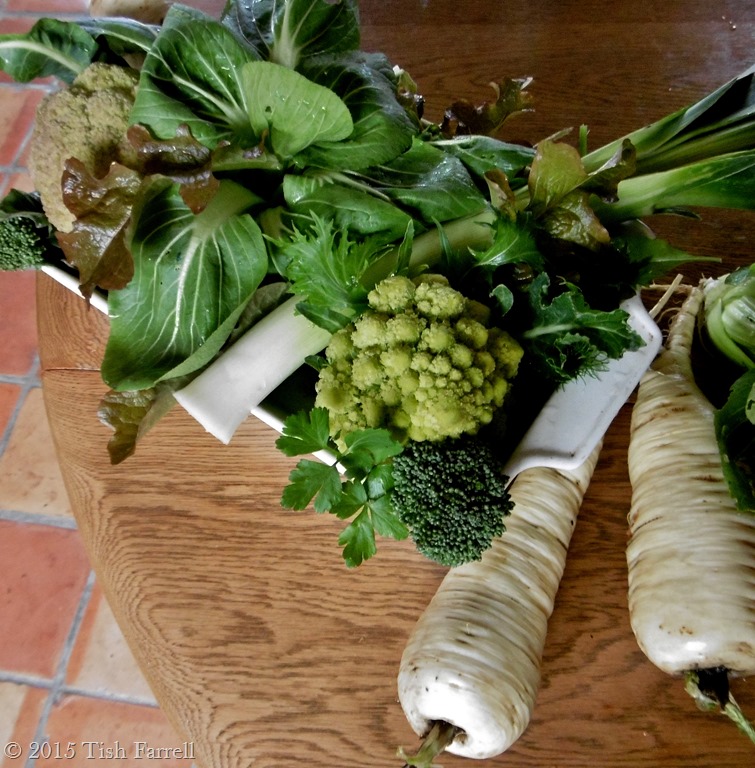
And now excuse me while I go off to do some more compost foraging. Perhaps, after all, I should be enlisting my neighbours’ help. They might chuck me more stuff over their hedges instead of putting it in their recycling bins. But either way, recycling is good. So: Obsessive Compulsive Composting anyone? Just to encourage you, and to show off, here’s some of my last year’s summer and winter produce:

100_4197

P1000281

copyright 2015 Tish Farrell

Some don’t like it wet, and a case of sub-teen rebellion big cat style

Scan-140726-0010 (2)

First off I should say these aren’t the best of  photos. They were taken on a dullish, August day in the Maasai Mara, and out of the back of a dusty Land Rover. But it’s a nice little glimpse of ‘I’m-a-big-boy-now’ rebellion of the lion kind.

It was the she-lion’s odd behaviour that attracted our attention. We drove towards the swamp to see what was going on. The rest of the Marsh Pride was lying up in the long grass a good half mile away, but here was a lone adult female walking about in a distracted manner, and with no attempt at concealment. She was also calling…and looking…

Scan-140726-0012 (2)

And calling…

Scan-140726-0011 (3)

We drove around the swamp. And then we could see what she couldn’t…

Scan-140726-0005 (10)

Junior. He, in fine nonchalant style, was busy exploring. He could hear Mom all right, but he was darned if he would show himself. In fact he just kept going…

Scan-140726-0007

…in the opposite direction…

Scan-140726-0003 (13)

Ooops! Not looking where we were going…

Scan-140726-0002 (4)

But it gave him a good excuse: “Was just getting a drink of water, Mom.”

Scan-140726-0001 (3)

We left them to find one another, although I reckon Junior was in for a big cuff round the ears. Meanwhile, here’s the big lion, he was thinking he already was – Dad.

Marsh Pride male 3


This post was inspired, somewhat tangentially, by Jennifer Nichole Wells One Word Photo Challenge: wet Drop in to her blog to see other bloggers’ responses.

To And From The Allotment: Finding A Beautiful Blue

100_5558

Readers who have been visiting my Edge for a while will know that at Christmas I mourned the loss of my Kodak EasyShare point-and-shoot. It died on a beach in Anglesey, and its last image was of me peering into the lens, though I’m not sure what good I thought that would do. Anyway Santa Graham had bought me a Lumix replacement, so I wasn’t without a camera for long, and I was quickly enamoured of its dynamic monochrome facility.

But then some people are never satisfied. And the thing was, not to be ungrateful, I still missed my Kodak. And since the Kodak company is no more, this led to a little trawl on Ebay, and the purchase of a rehabilitated, slightly upgraded version of my original digital (more zoom), and all for the princely sum of £17.50. It is thus the camera I mostly take to the allotment, because you never do know when you might want to snap the portrait of an especially fine cauliflower, or record progress of the lettuce in the polytunnel. (I am not joking. Just you wait).

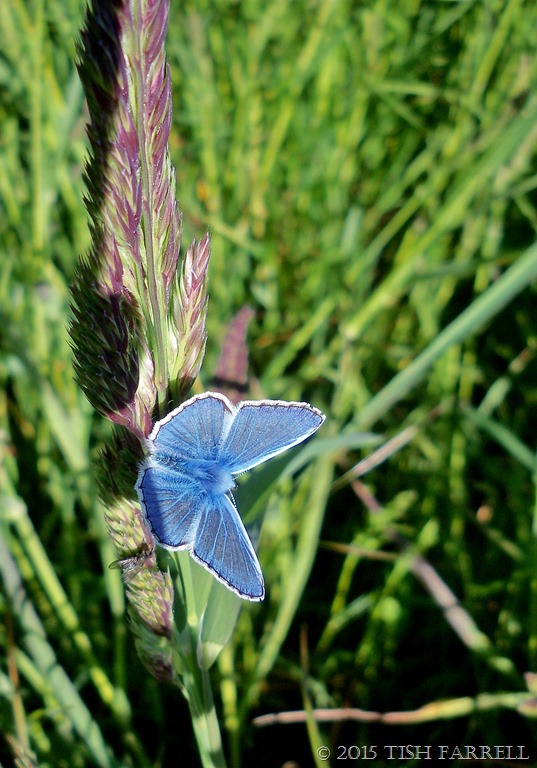
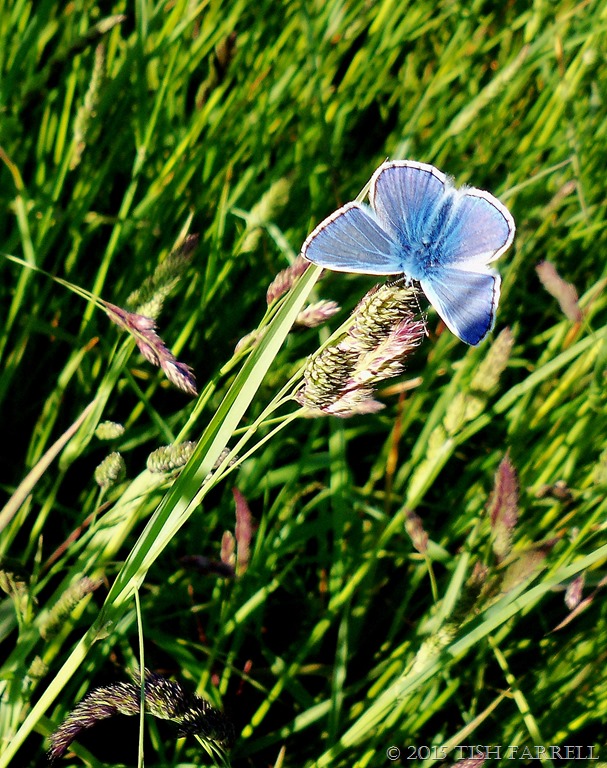
But first things first. The butterfly. This was spotted yesterday in the corner of field between our house and the allotment. I was carrying a big blue IKEA shopping bag of kitchen waste for the compost heap and a bunch of 6 foot bean poles, and it was very windy. Nonetheless, despite all these handicaps, trusty Kodak captured this gorgeous, if tiny, Common Blue butterfly. In real life it is probably less than half the size of the first photo image. You can see it more in context of this next shot. It is about 1”/2.5 cm across:

100_5553

See how wonderfully it posed, and with great gusts of wind too. Here’s a shot with  breezy blast thrown in:

100_5567

I thus dedicate this post to blogging chum, Ark, at A Tale Unfolds. In his Leading you up the garden path posts, he has been treating us (among other things) to dramatic entomological scenes of ambush and slaughter inside a yellow gazania; and all from his garden in Johannesburg. At different times he has also captured some splendid shots of butterflies, birds, more spiders and several praying mantis. He apparently does this while roaming his domain with a mug of coffee in one hand. For some reason this makes me think of the Mad Hatter, though I don’t think he wears a hat, and certainly not a topper. Or do you, Ark?

And now to conclude this inaugural series of to-and-from-the-allotment, here are some more dandelion clocks (broken and intact) because I’ve decided to consider them wonderful instead of a curse on my plot:

100_5540

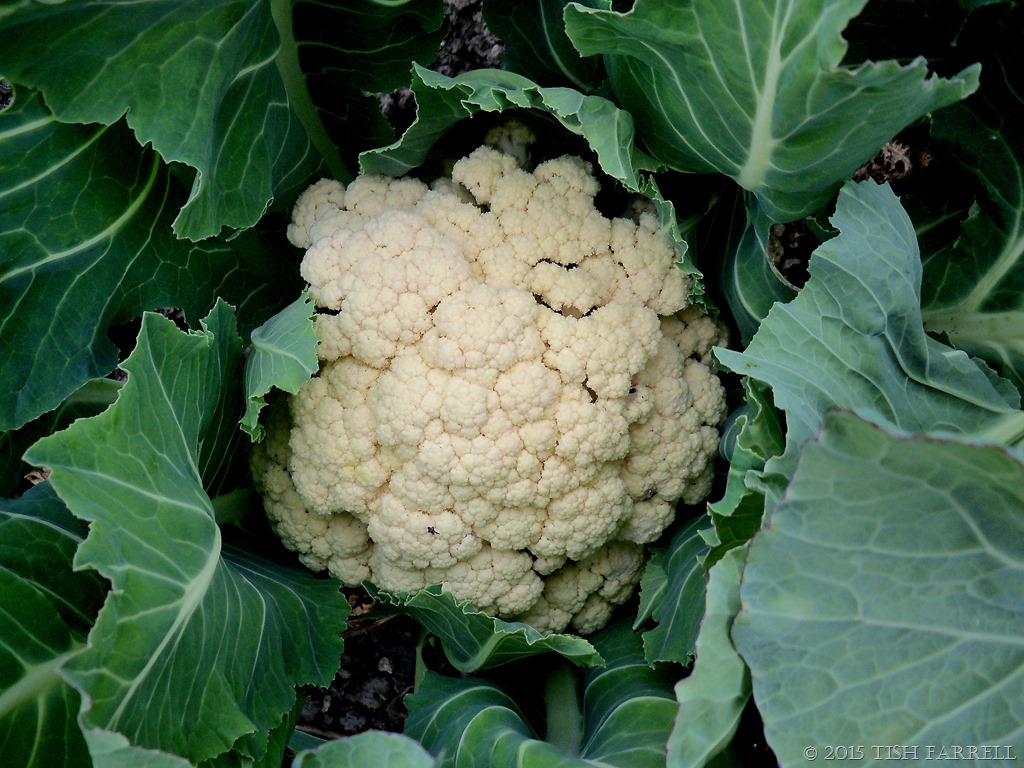
and followed by the cauliflower, which is what I really wanted to show you all along, and is also a thing of beauty, produced on my plot without pesticides, but overwintered under enviromesh. And just to boast, it was at least twice the size of the photo, and tasted delicious with kamut pasta in a goat’s cheese, parsley and onion sauce. And no, I do not do takeaways. Sorry. Though I do share excess, uncooked veggies, but you  need to come to Much Wenlock to get them.

100_5524

copyright 2015 Tish Farrell