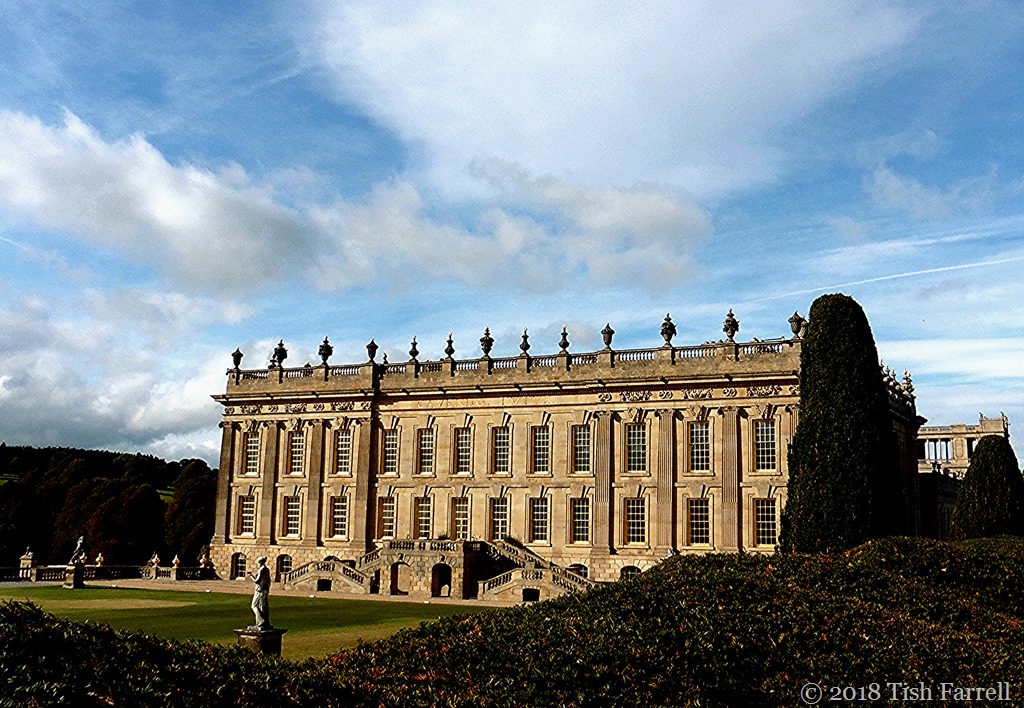
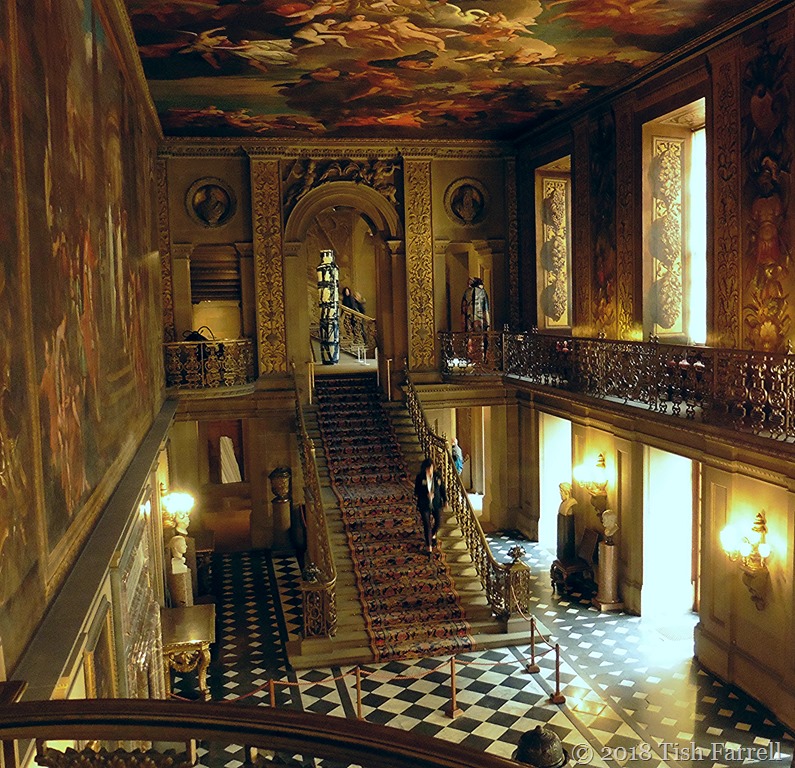
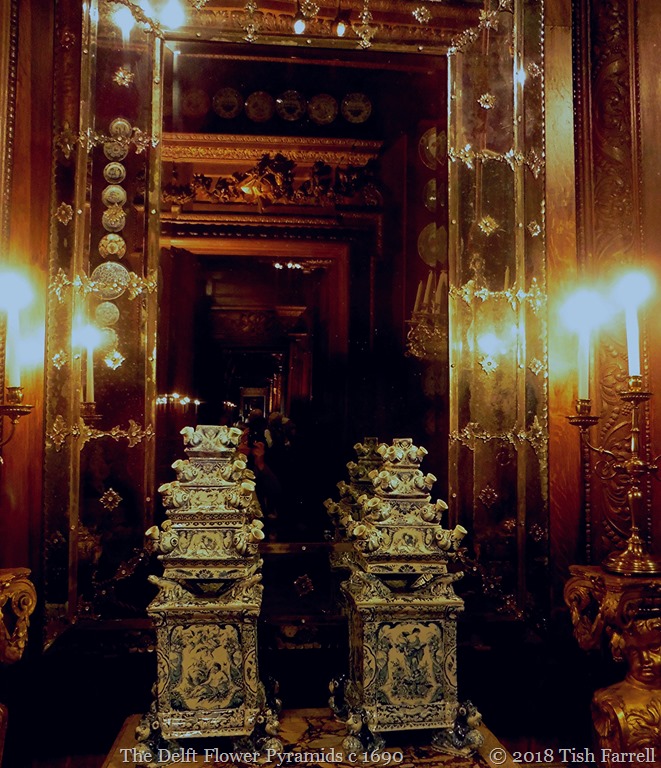
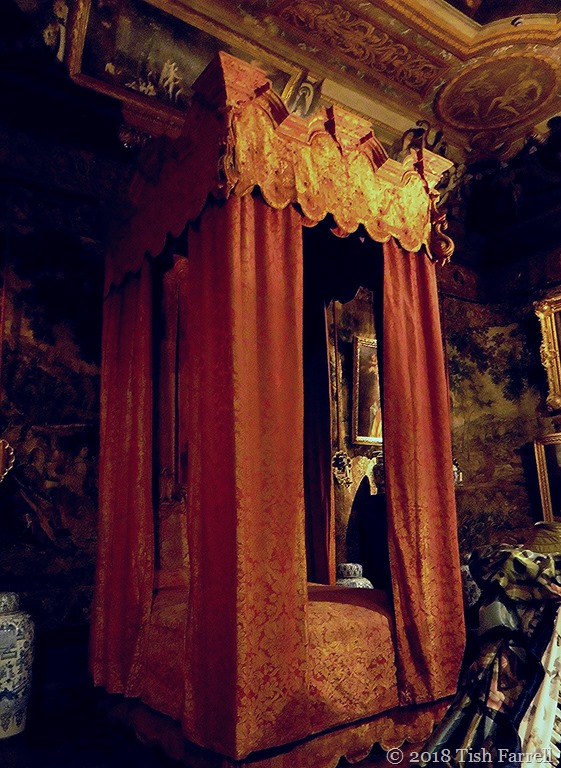
I promised some interior views of Chatsworth. So here they are – not easily taken I might add, what with much penumbral gloom and spot lights where the camera least wanted them. But you will get the idea.
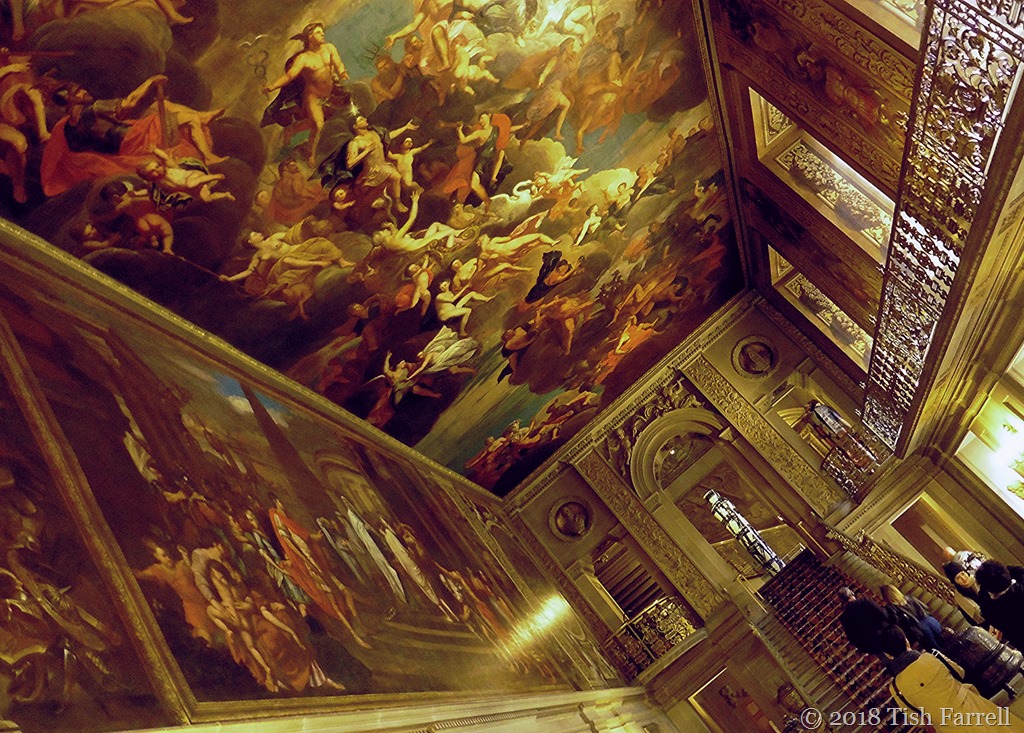
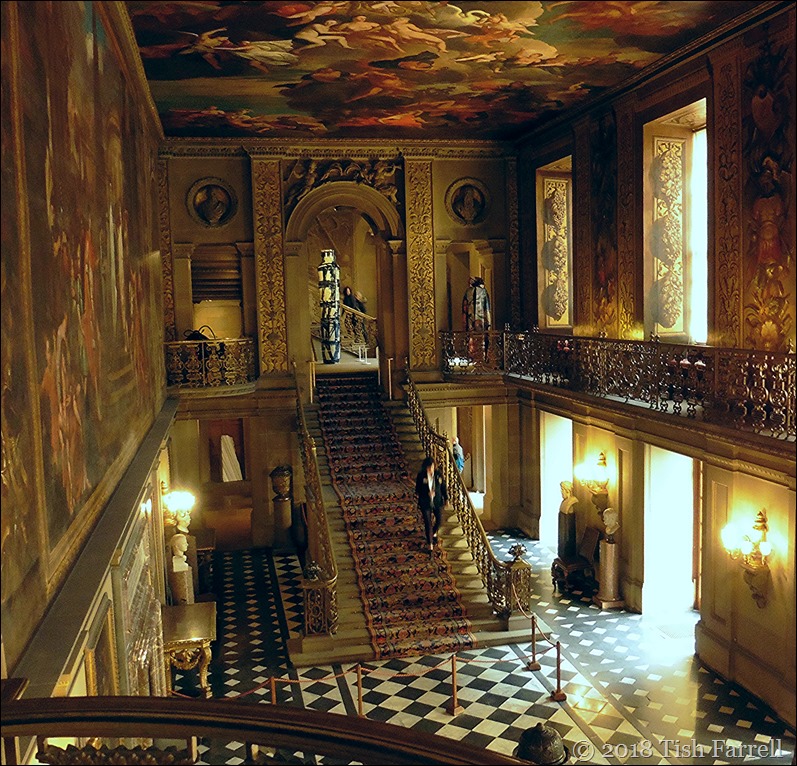
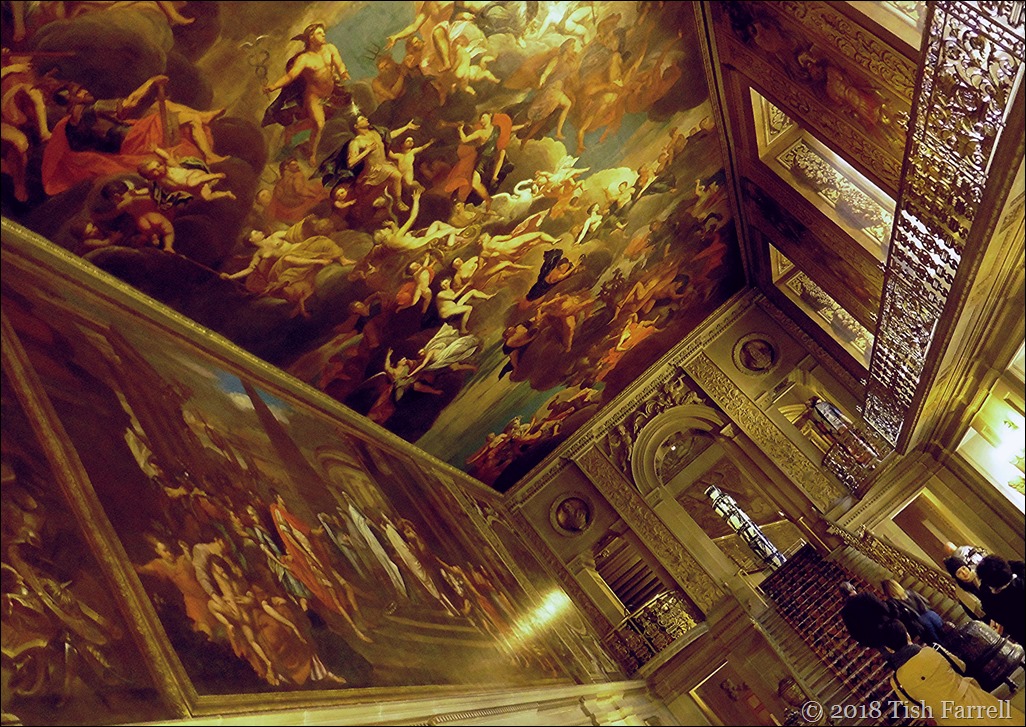
Much of what you will see was the work of the 4th-Earl-made-1st-Duke by the imported protestant regime changees, William and Mary, at the end of the 17th century. The earl certainly forked out for his dukedom. First among his creations to welcome the new monarchs is the Painted Hall. It replaced the original Elizabethan Great Hall, its walls adorned with scenes from the life of Julius Caesar. (Painted by Louis Laguerre who had the Sun King Louis XIV for a godparent.) It seems the intention was to flatter William III, although it is suggested the included scene of Caesar’s murder was a hint for him not to overstep the mark.
*
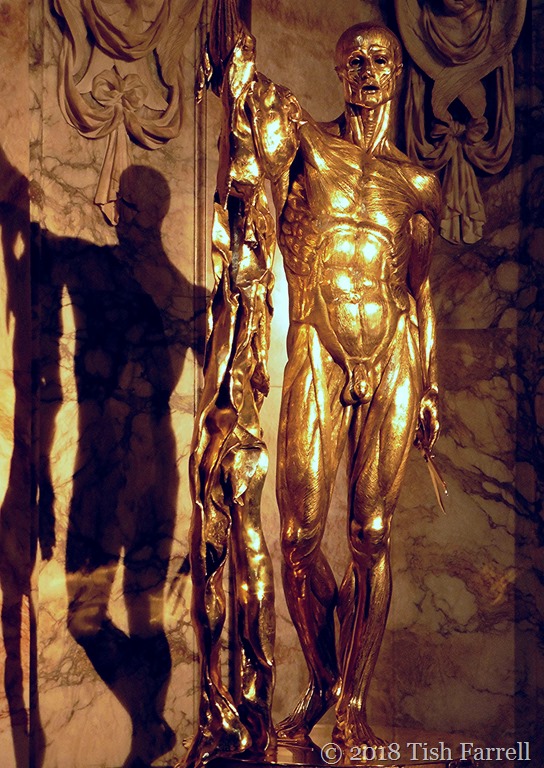
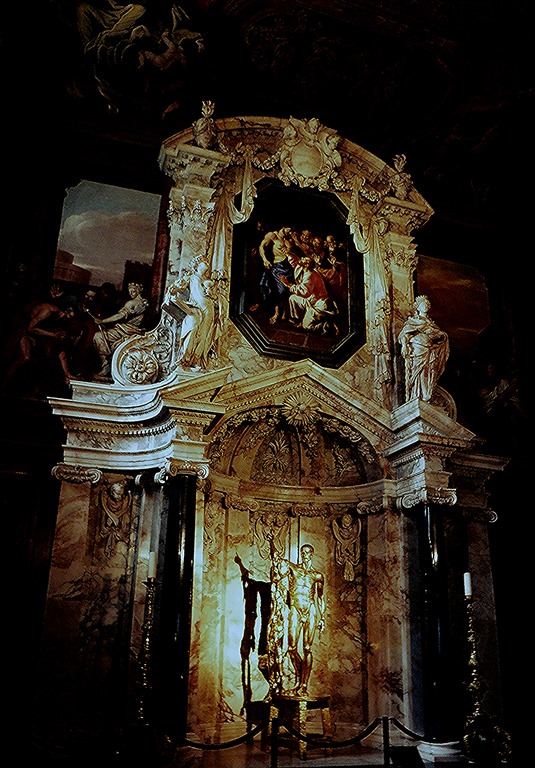
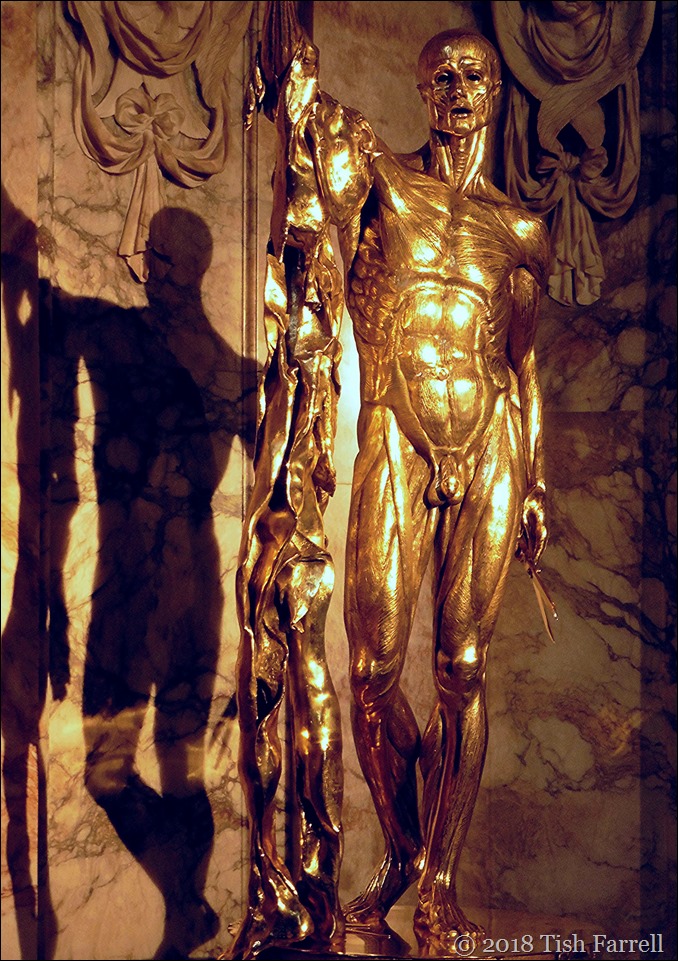
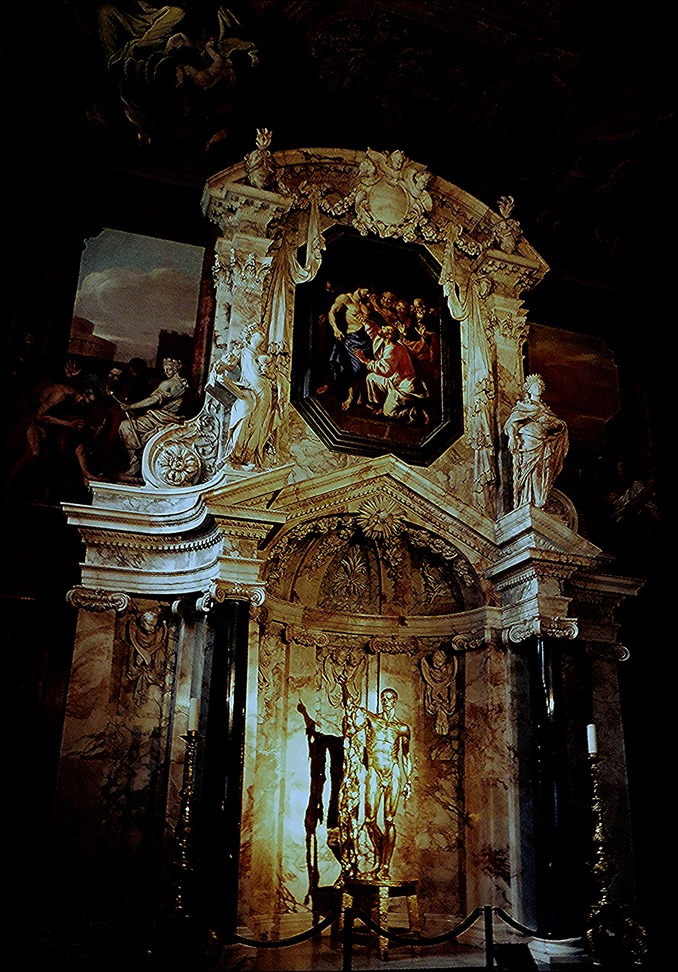
The next glimpse is of The Chapel built between 1688 and 1693, and little changed since then apart from the addition of Damien Hirst’s creation of St Bartholomew, Exquisite Pain – upon which I pass no comment other than to say that the Devonshires continue to take pride in the commissioning of contemporary art for the house. On a general note though, the chapel struck me as a touch lacking in what one might expect of Protestant self-restraint.
*
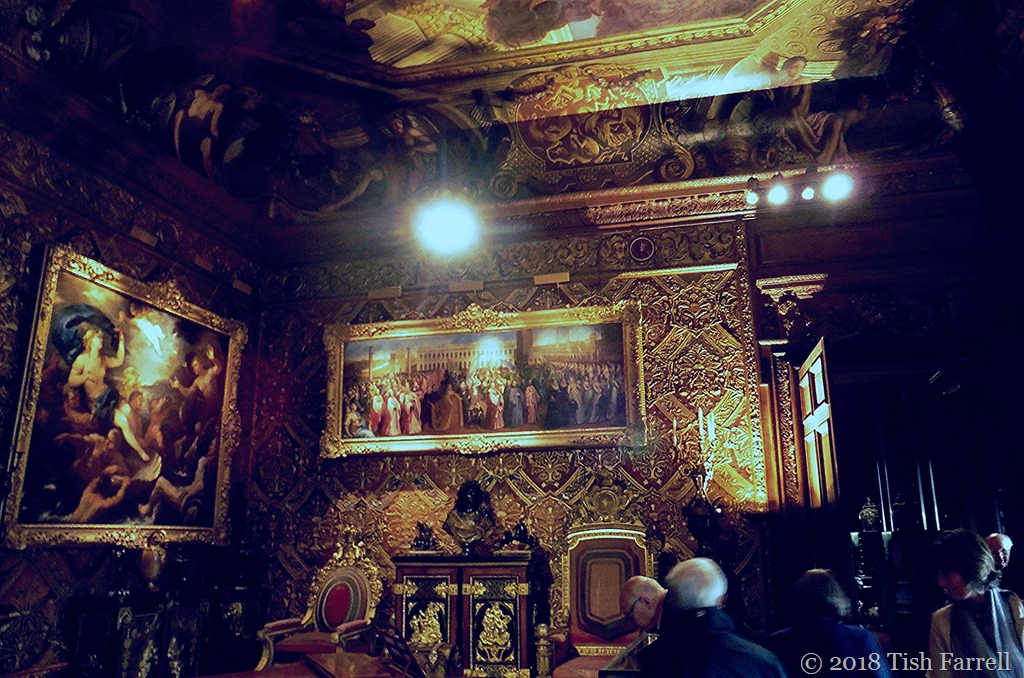
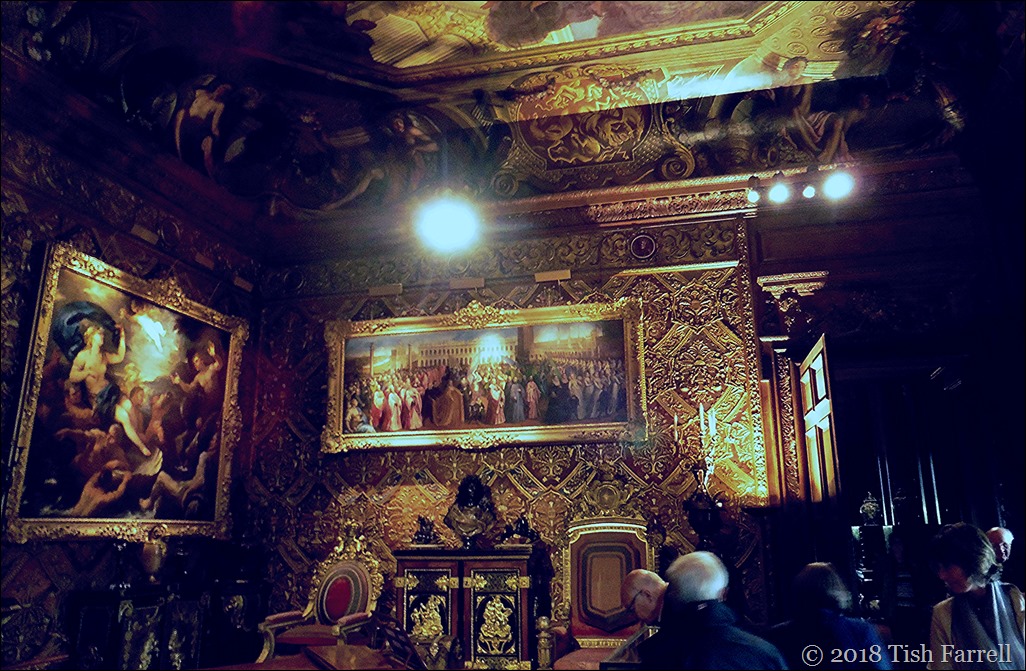
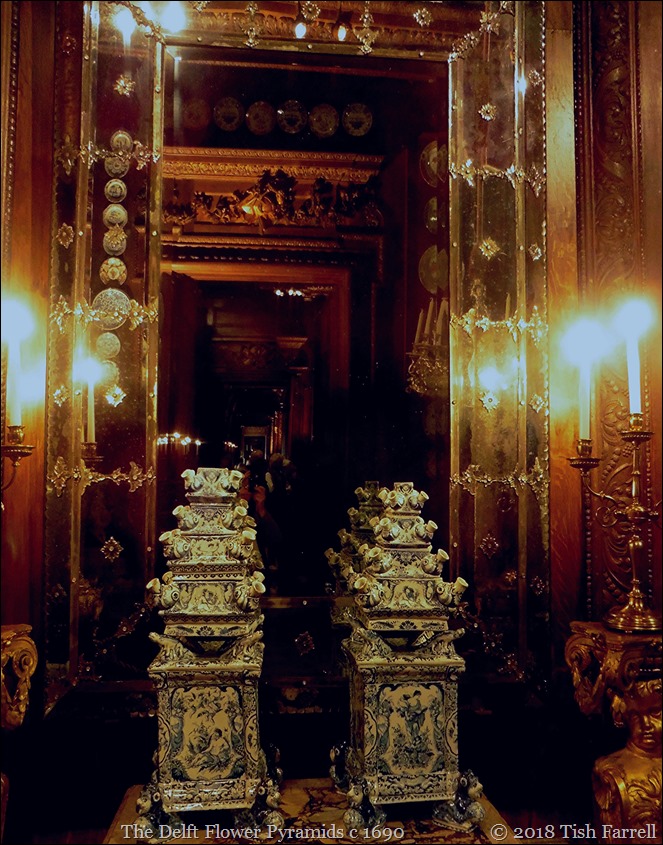
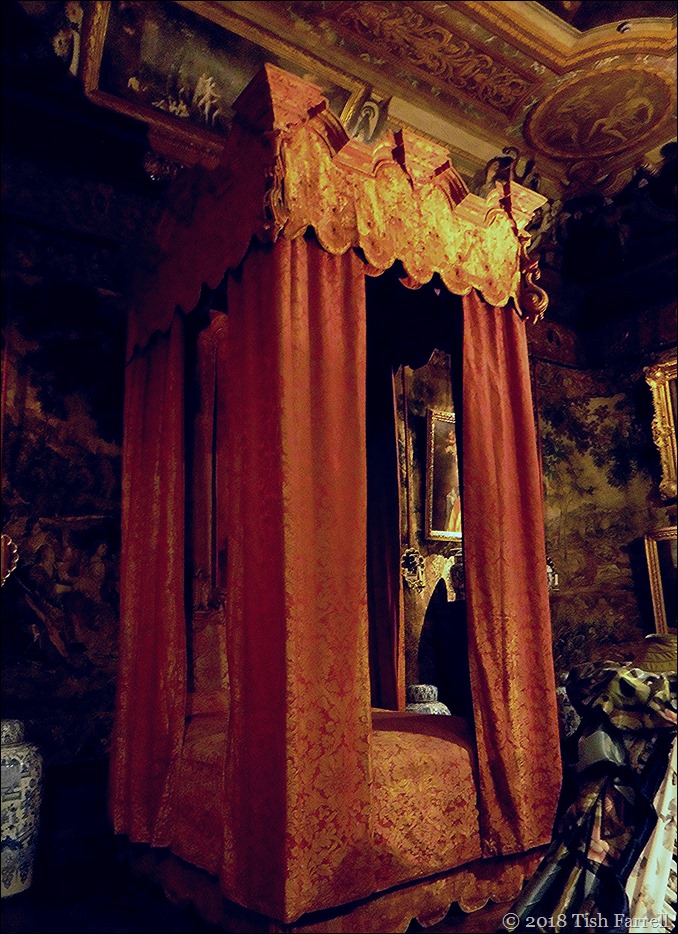
And now for a few hints of grandeur from the State Apartment with its drawing and withdrawing rooms and state bedchamber and closet – all laid on for the monarchs’ great good comfort, with the exception of the gilded leather wall covering (next photo) which was added much later by the 6th Duke during a redecorating spree. (Apologies for the spotlight flares).
*
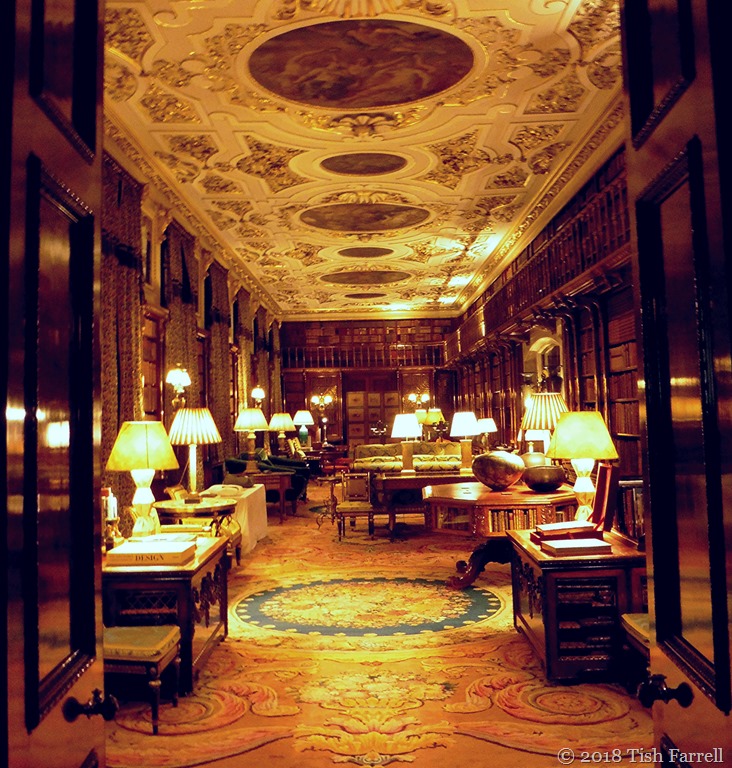
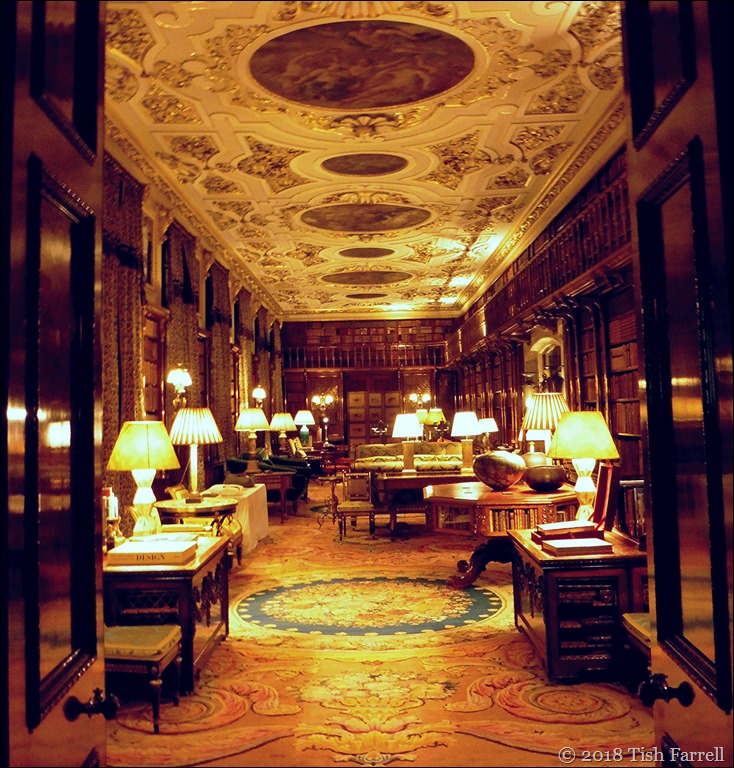
By now I’m overstuffed with the extravagance, and we’ve not even looked properly at the art piled up in every room or reached the Library:
*
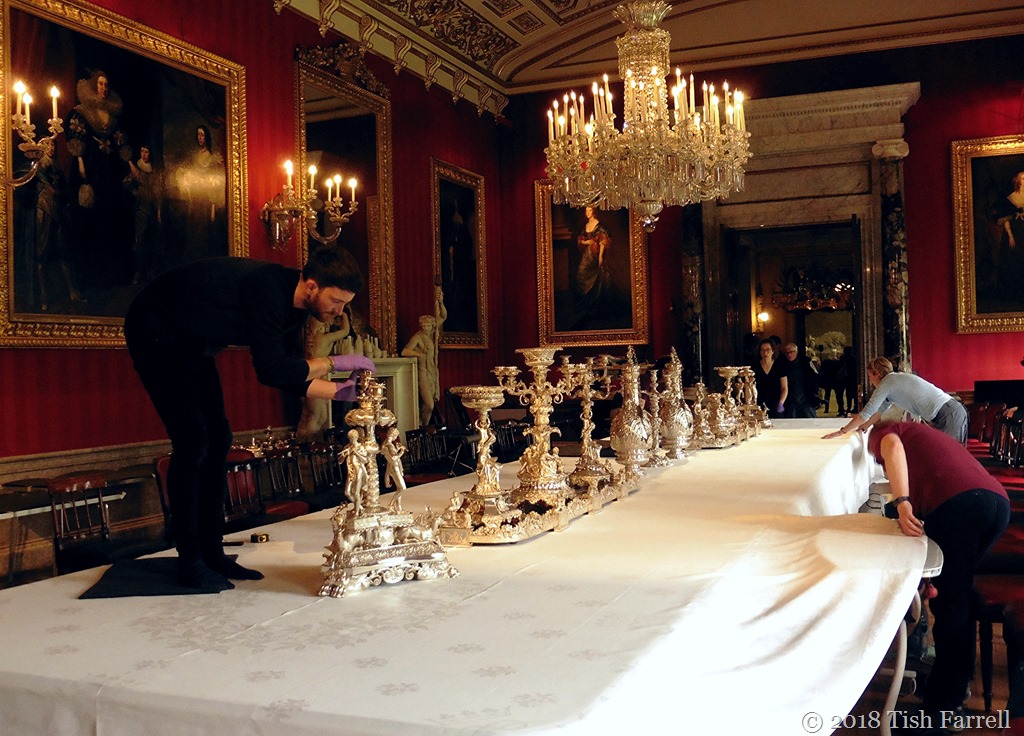
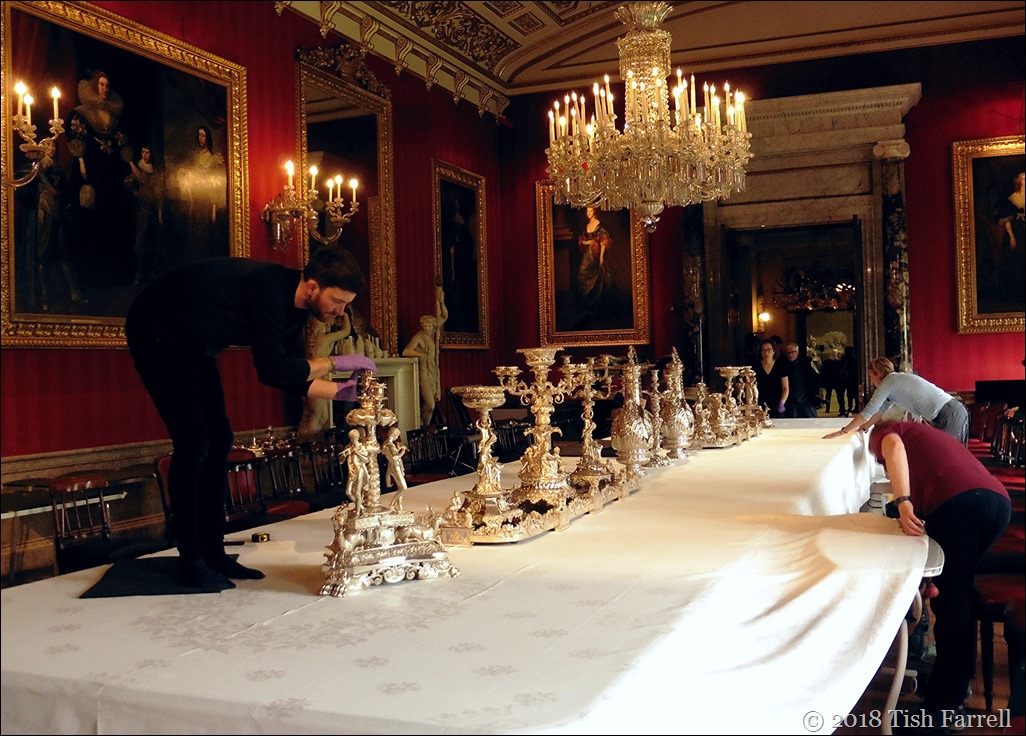
And then there’s still the Great Dining Room to see. It is being set out for a grand private banquet on the day of our visit. The guide book says that until 1939 and the outbreak of war, this room was used by the family whenever there were more than six to dine. A thirteen-year old Princess Victoria also enjoyed her first grown up dinner here. To ensure nothing went wrong, her host, the 6th Duke, ordered a fully cooked banquet dress rehearsal the day before.
As we gawp passingly at the 6th Duke’s silver (the surtout de table commissioned from silversmiths Paul Storr and Robert Garrard) I am amused to see two women pressing the damask cloth’s long skirts over their respective ironing boards.
*
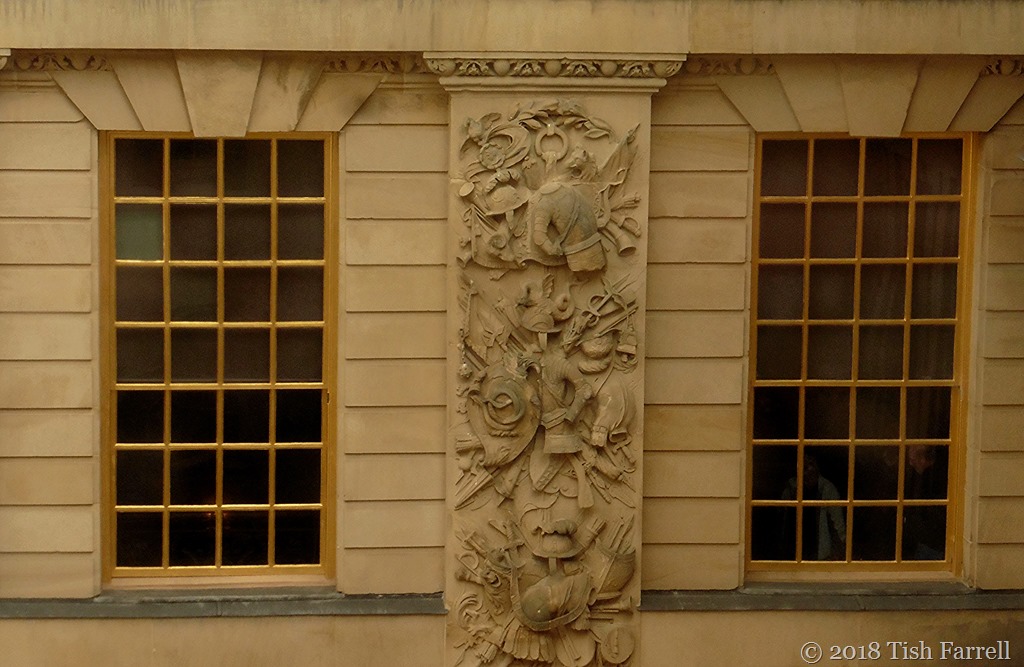
But now for the case of gross over-gilding that caused me much mental frothing at the mouth. Way back in the Chapel Corridor that I haven’t shown you, and where artworks from 4 millennia are displayed, I happened on some notices attached to the windows. They referred to the £32 millions’ worth of renovations carried out at Chatsworth over the last decade.
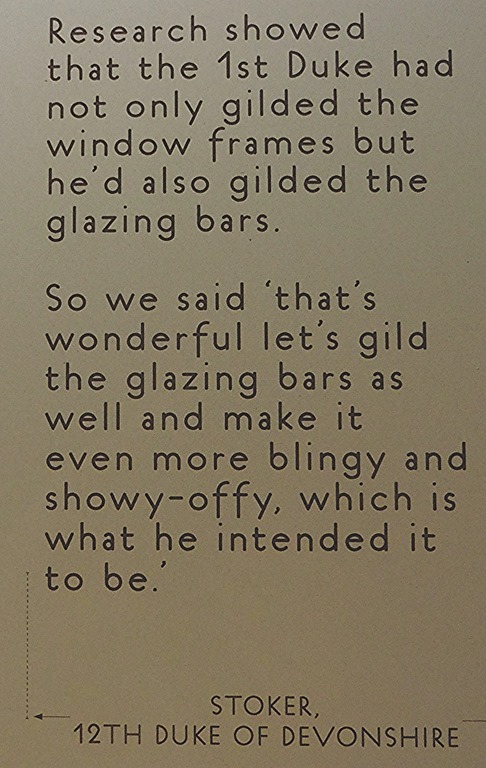
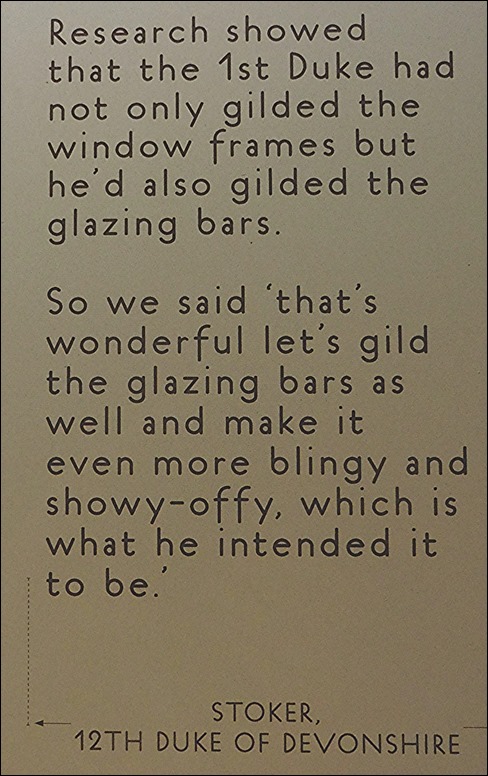
This is what the current Duke, Peregrine known as Stoker’ has to say of one particular restoration venture – the breathtakingly expensive (demented?) gilding of exterior window frames:
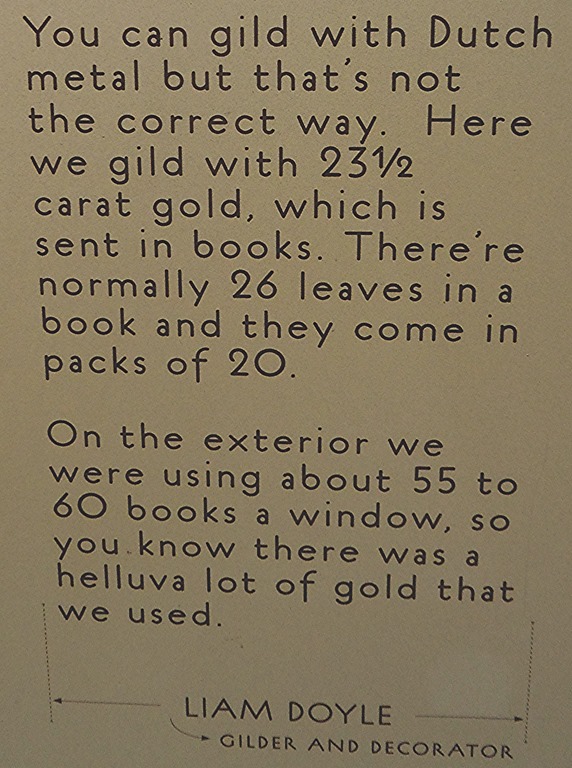
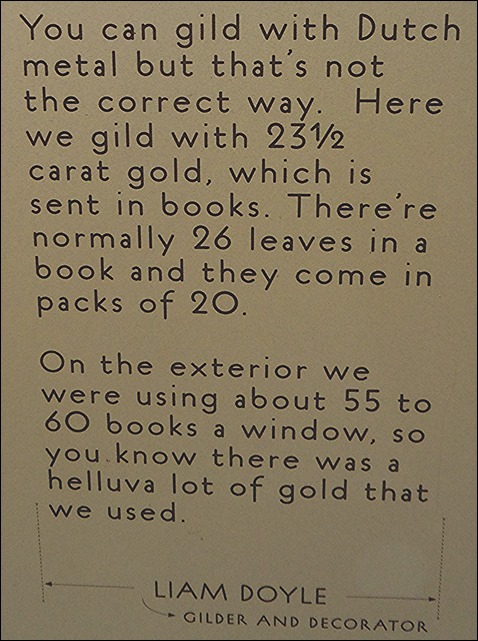
And this is what the gilder had to say:
And here’s a segment of the finished product:
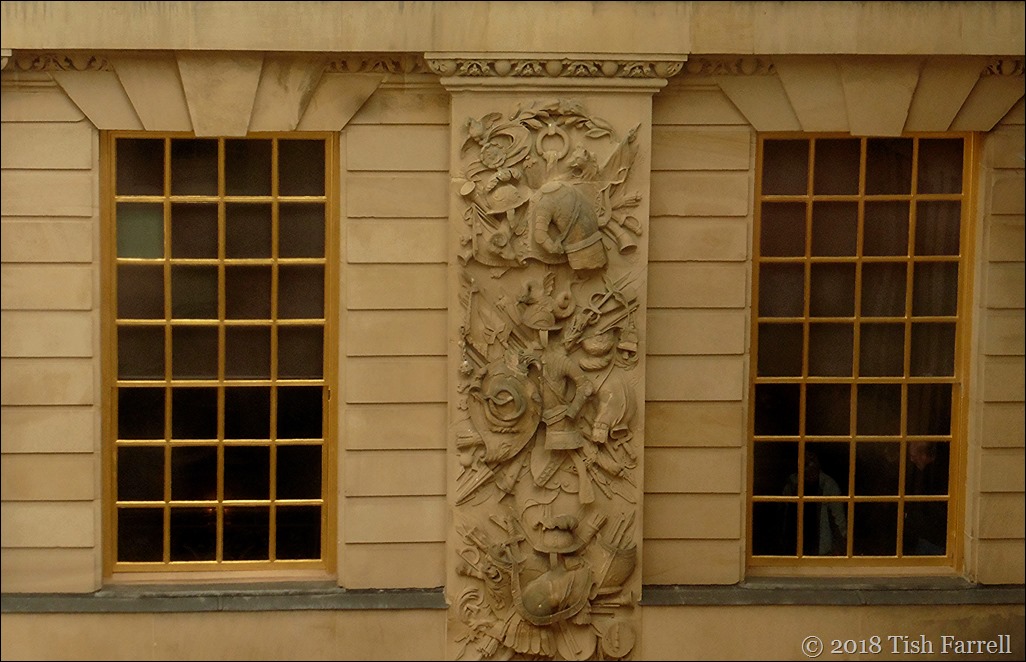
And here’s what was running through my head: What are we doing here, encouraging these people, and paying £21 each, plus parking fee, for the doubtful privilege of witnessing this ludicrous waste of money when an artist’s impression of how the windows once looked would have done just as well?
So: we were more than a bit aggravated after the two-hour-trek wherein we only scratched the surface of the opulence on show, and were further forced to grit our teeth as we were allowed to view the family’s still much used cosy salon, a room where one whole wall was taken up depicting The Rape of the Sabine Women.
Yet it wasn’t all overbearing. There were some things in the ducal collection I did like – Lucien Freud’s portraits of the late duke and duchess, a Clarice Cliff coffee pot, some earthy ceramics, the name of whose maker I could not find, the Cornelis de Vos portrait of his daughter, a monster sized foot belonging to a 3,000 year old Greek goddess, Barry Flanagan’s Leaping Hare in the Inner Court, the silk wall covering in the Duke of Wellington’s bedroom and a fossil fern. And then there was the very nice man, rather surprisingly playing Eric Coates compositions in the Ante Library. He told us the composer was much undervalued:
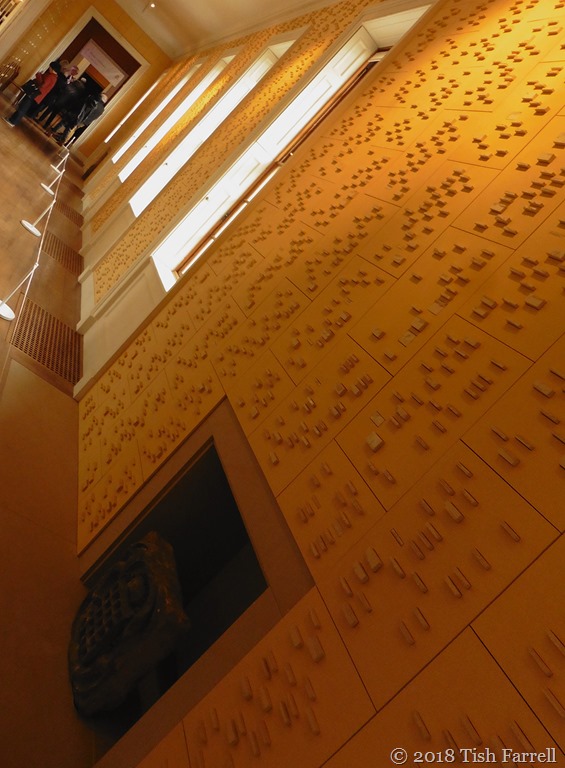
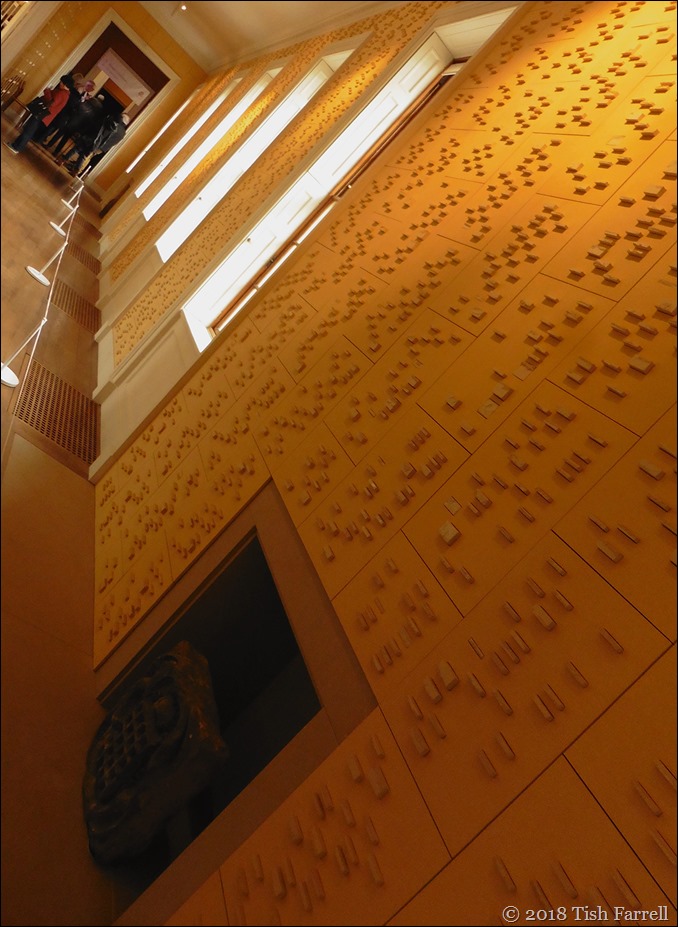
But the undoubted prize for self-regarding humbug has to go – not to the artist Jacob van der Beugel for his extraordinary creation and execution, but to the Cavendish conception of the work in the North Sketch Gallery. The whole corridor is installed with 659 ochre ceramic panels that provide, in abstract form, portraits of the present duke and duchess and their son and his wife, Lord and Lady Burlington. The portraits’ composition derives from the mitochondrial DNA sequences taken in swabs from each of the four individuals. A fifth portrait depicts Everyman, showing the DNA common to all of us. Meanwhile interspersed mirrors allow passing (in our case bemused) visitors to place themselves fleetingly amongst these family ‘portraits’. The whole is described as ‘the most significant single art installation at Chatsworth since the creation of the 6th Duke’s Sculpture Gallery in 1832.’
Or an ill conceived stab at faux inclusiveness?
Phew. Enough already. Time to take a break and go out into the garden – more of which another time.
copyright 2018 Tish Farrell