Hurlers And Miners ~ 6,000 Years Of Heritage On Bodmin Moor

IMG_4690

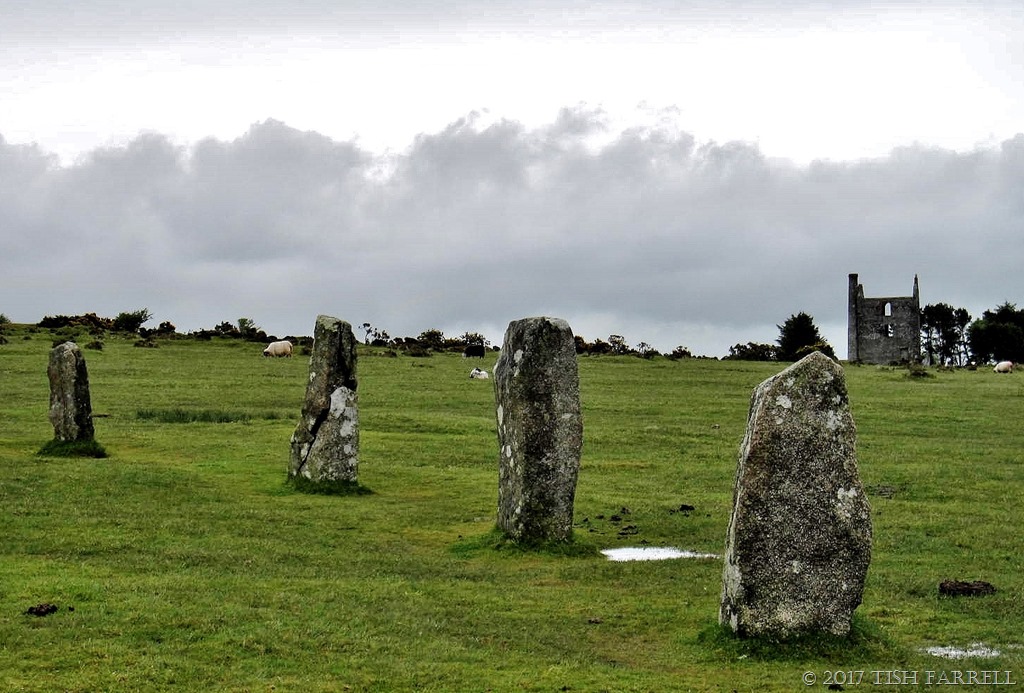
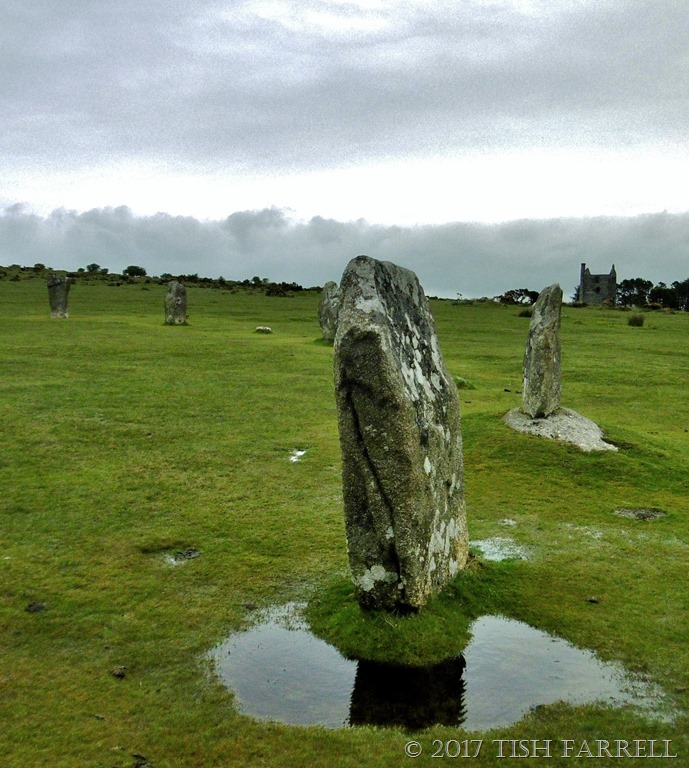
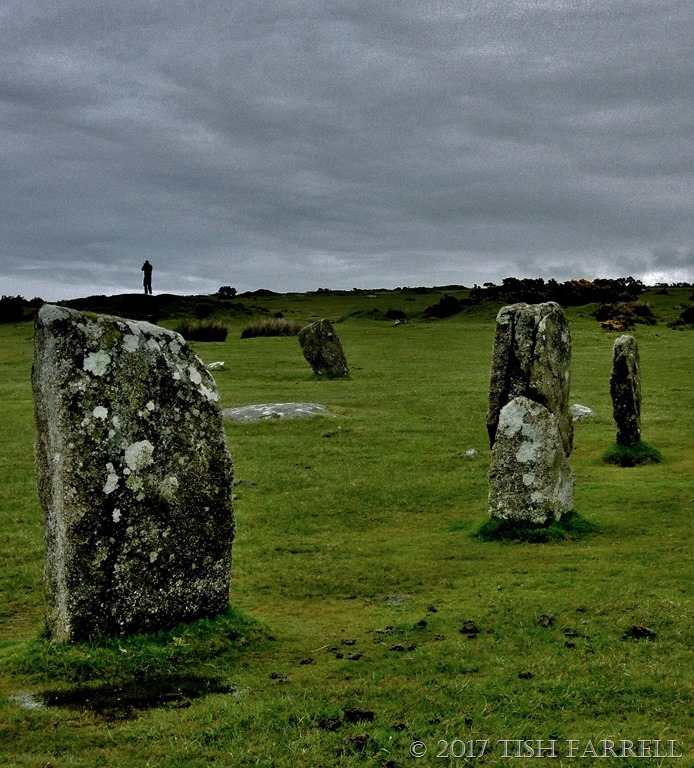
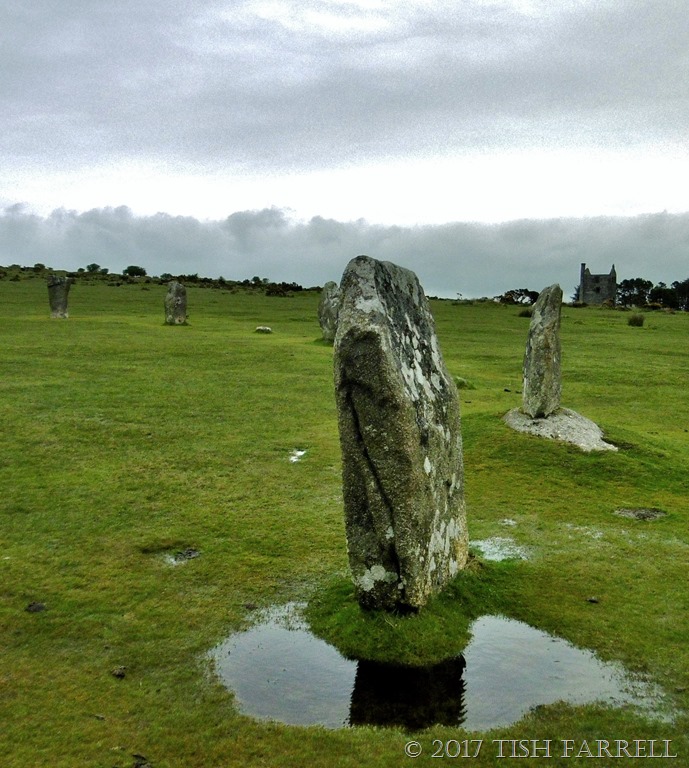
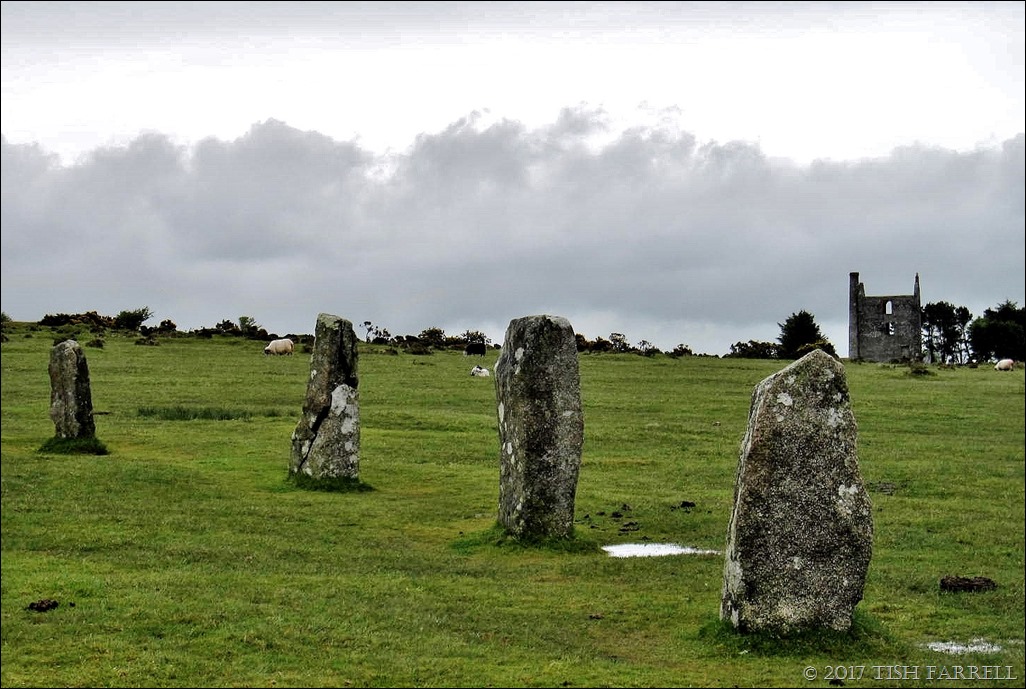
In the last post I featured The Hurlers stone circles  near the Cornish village of Minions on Bodmin Moor. Here they are again, if only a small segment. They date from the late Neolithic or Early Bronze Age, around 2,000 years BCE.

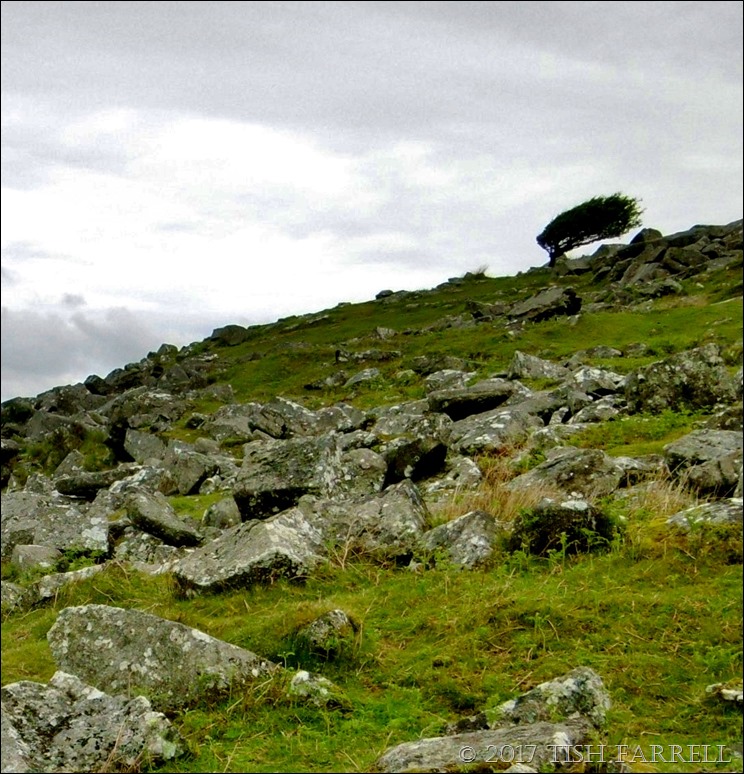
The landscape around is exposed and bleak, itself  a product of the human intervention that began at least 6,000 years ago, when the first Neolithic farmers, equipped only with stone axes, began the systematic clearance of the forested uplands.

It is an arresting thought that, armed only with stone-based technology, we humans were already consciously rearranging the planet’s surface. Early farmers carried out shifting ‘slash and burn’ cultivation, clearing ground, then moving on to virgin territory when the farm plots lost fertility. By such means the earliest farmers cleared great swathes of forest right from one end of Europe to the other. On Bodmin, any chances of forest regeneration were then reduced by stock grazing, which through subsequent millennia finished what Neolithic communities had started, creating the windswept moorland we see today.
P1080009

Of course these days  we know that removing tree cover contributes to climate change and environmental degradation, by altering rainfall patterns, and accelerating soil erosion. But in this case global climate change was also a factor.  During Neolithic-Early Bronze Age times it seems the climate was much warmer, with these uplands offering a more benign environment than today. A quick look at an ordnance survey map shows that Bodmin was a very busy place back then. There are numerous hut circles, burial cairns and tumuli, tor enclosures, stone-walled field systems, ceremonial stone circles and standing stones.

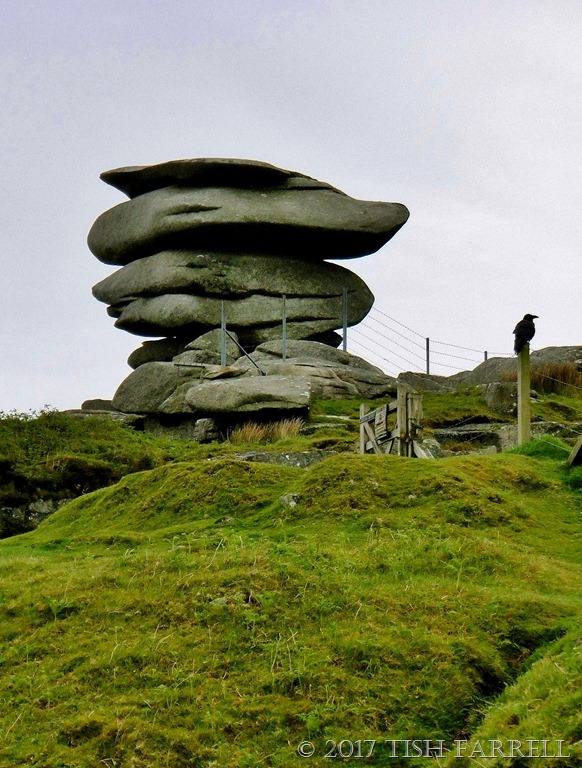
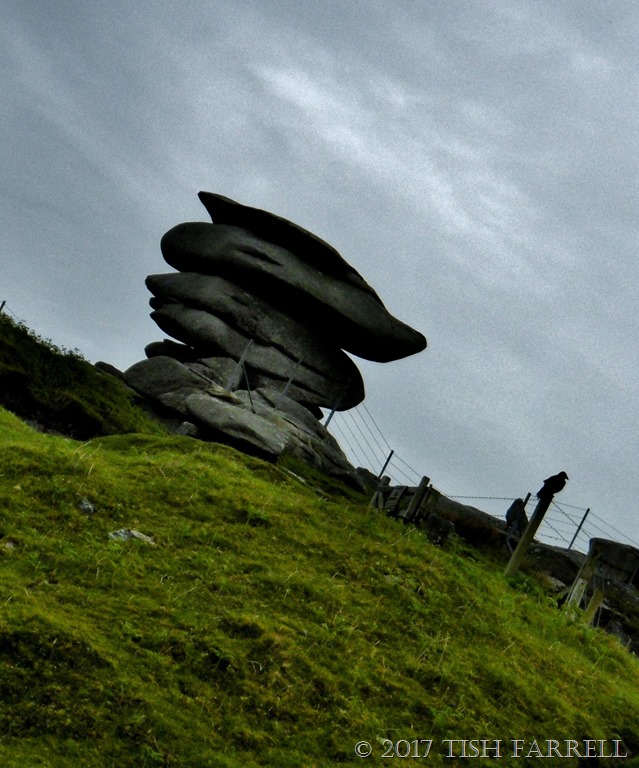
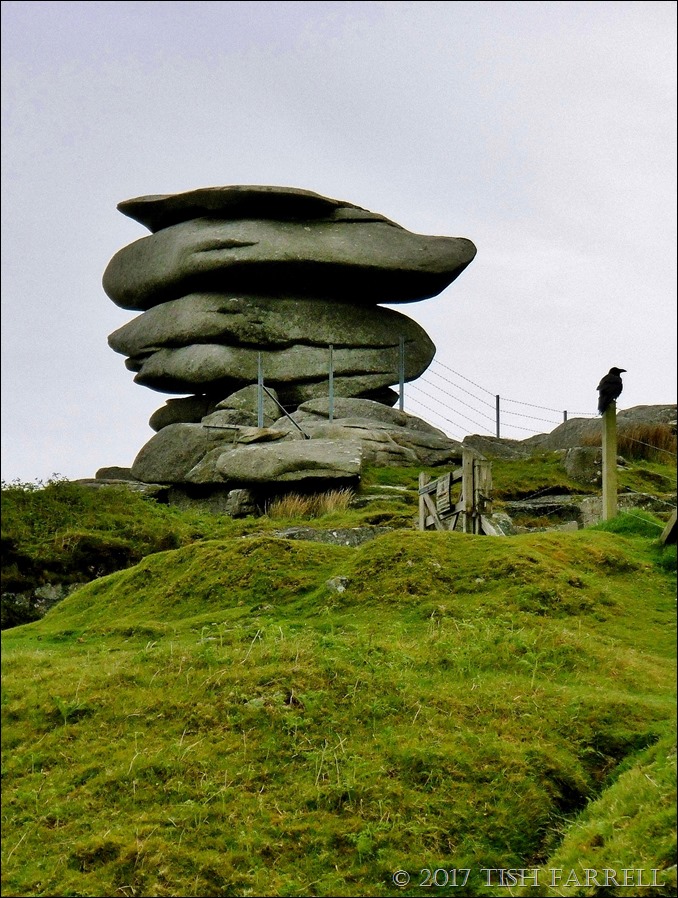
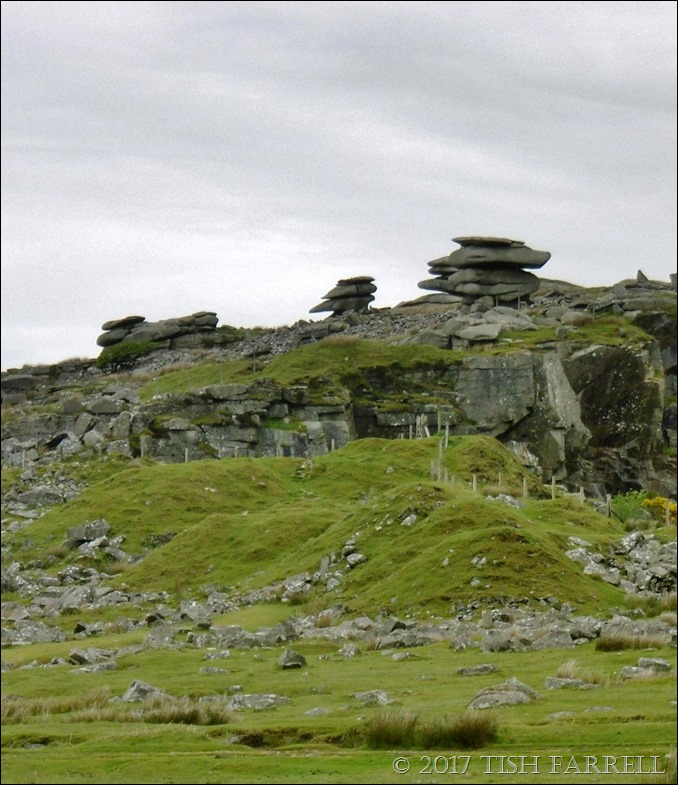
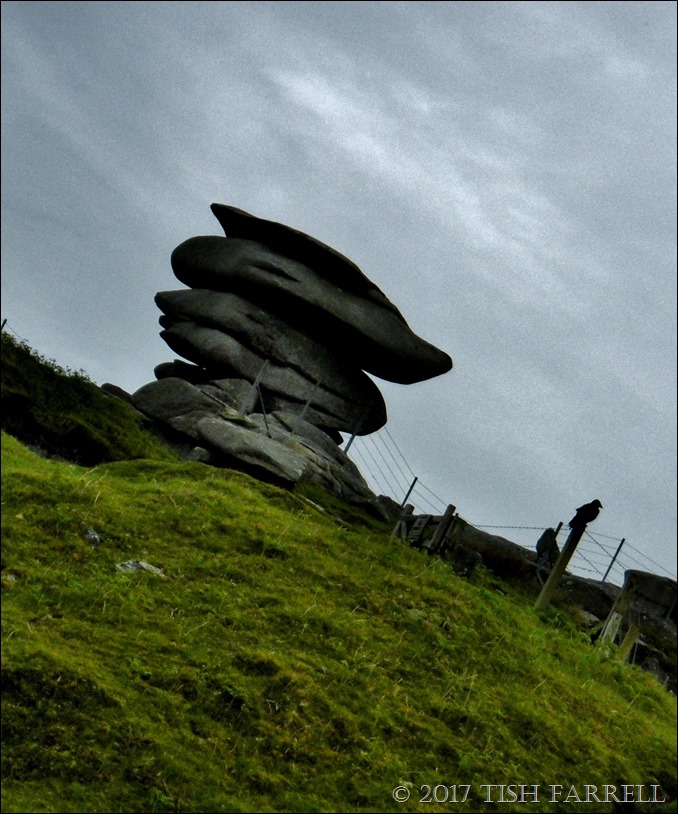
The siting of burial monuments, in particular, was very important – often on the skyline to be seen from one monument to another; or else related to a naturally prominent feature such as one of the stone tors. The Cheesewring Tor is a good example. It lies due north of The Hurlers circles. You will soon see why this weathered granitic pile of rocks captured the imagination of the ancestors, just as it captures ours today.

But there may also have been practical considerations too. When it came to the gathering of clans and families for important occasions, the visibility of man-made and natural features in a landscape without highways would have been the prehistoric equivalent of SatNav.
P1080012

P1070999

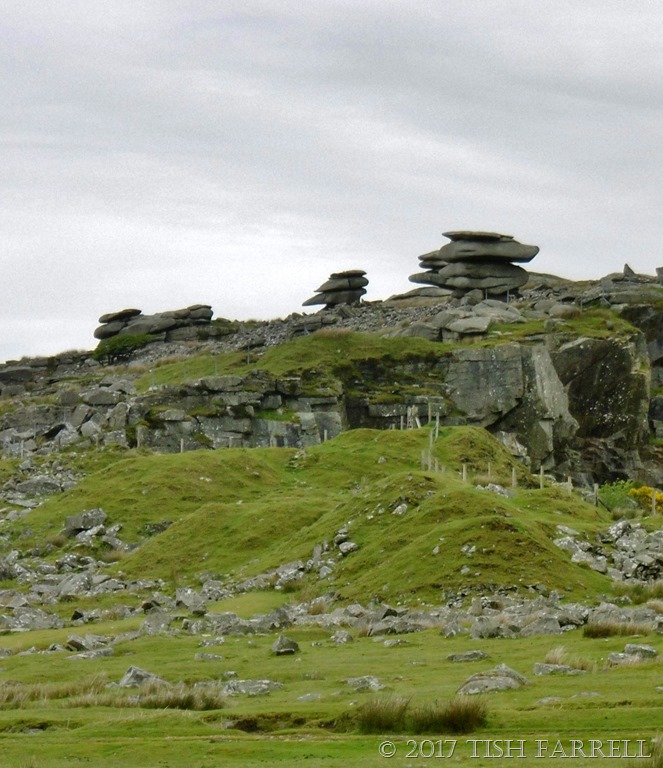
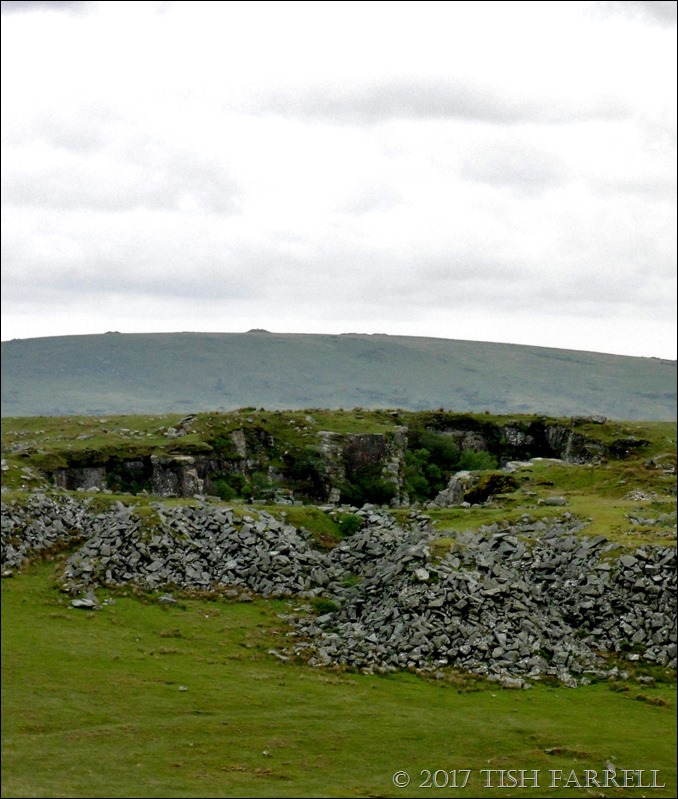
Looking southwest from the Cheesewring this is what you see on the skyline beyond the quarry: a series of round barrows:
P1080013

But sometime around 2000 years BCE, the climate began to deteriorate and humanity moved to settle more low-lying areas. It is an interesting irony that the combination of human action and natural climate change which rendered the abandoned uplands unsuitable for anything other than grazing, thereby led to the survival of so many of the prehistoric remains.

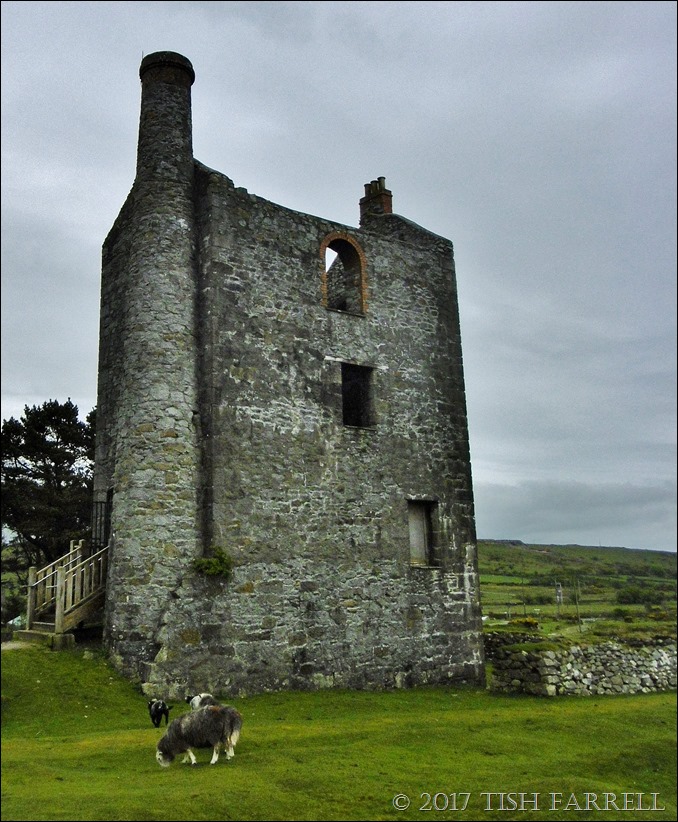
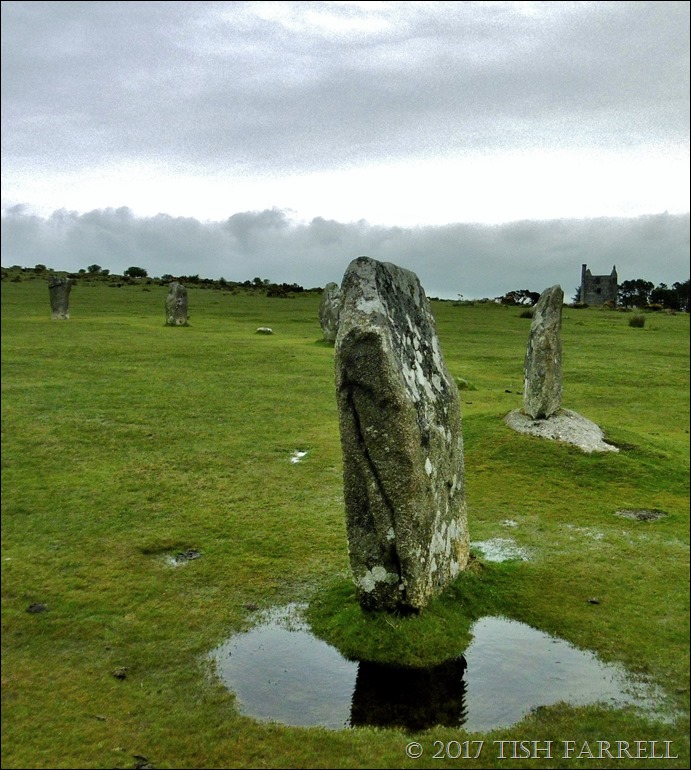
Farming, though, is not the only agency of landscape change in this area. Shunt forward to the mid-nineteenth century and you will spot the evidence for quite a new kind of invasion. There’s a clue in that first photo of The Hurlers. Here’s another glimpse:
P1070972

And closer still:

P1070995

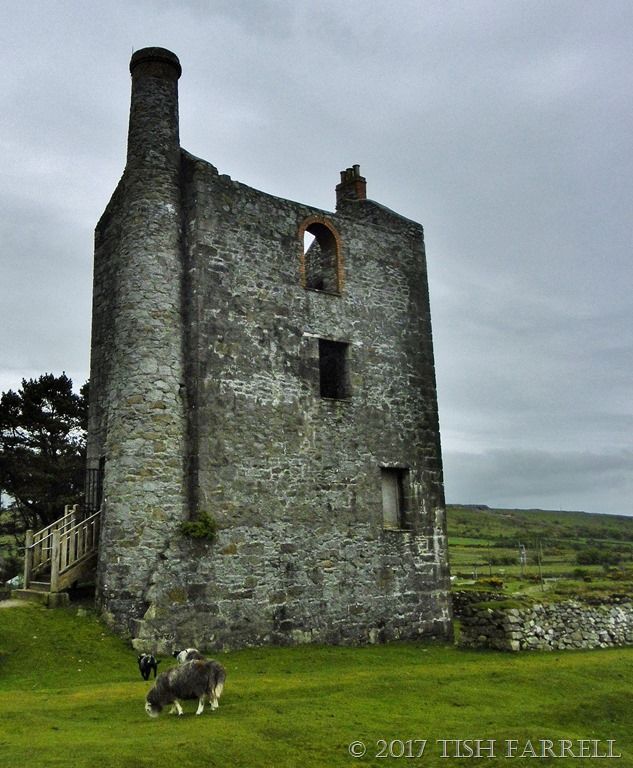
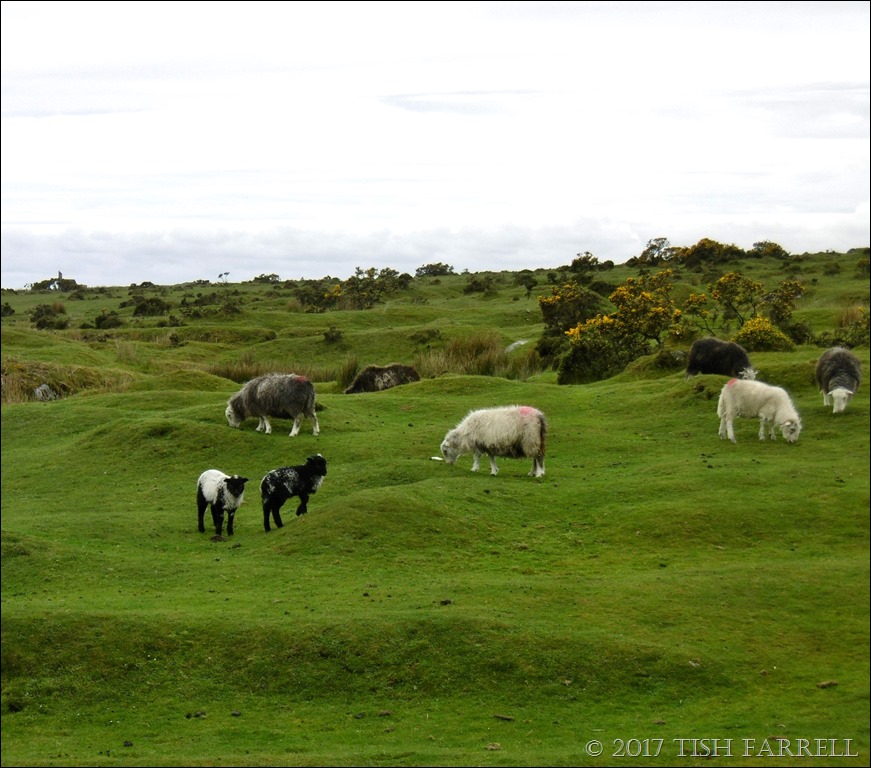
This is the Houseman’s engine house, part of South Phoenix Mine, now partially restored as the Minions Heritage Centre. It one of many such mines in the locality, their ruins as dramatic in their way as the stone circles and tors.  For fifty years, between the 1840s-1890s, Minions was the centre of a booming copper mining industry. Over 3,000 people were employed here, including women and children.

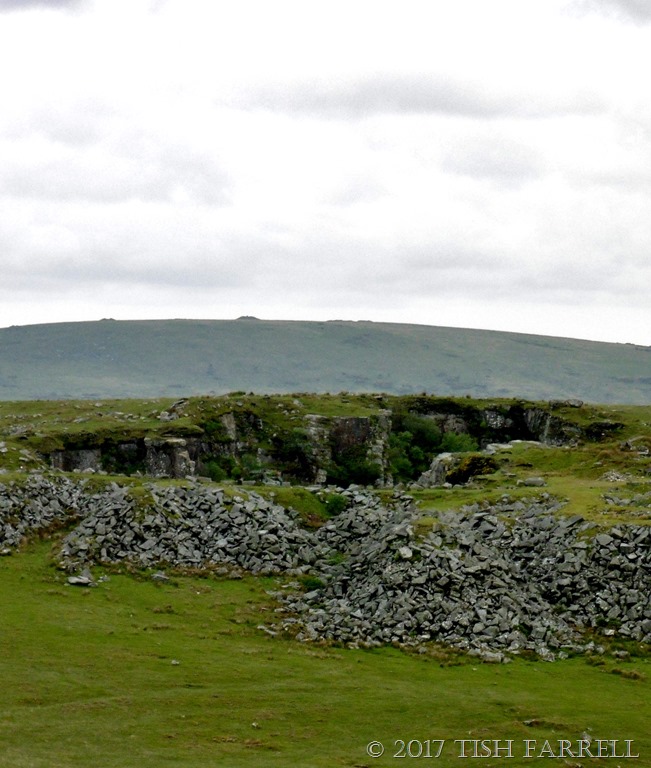
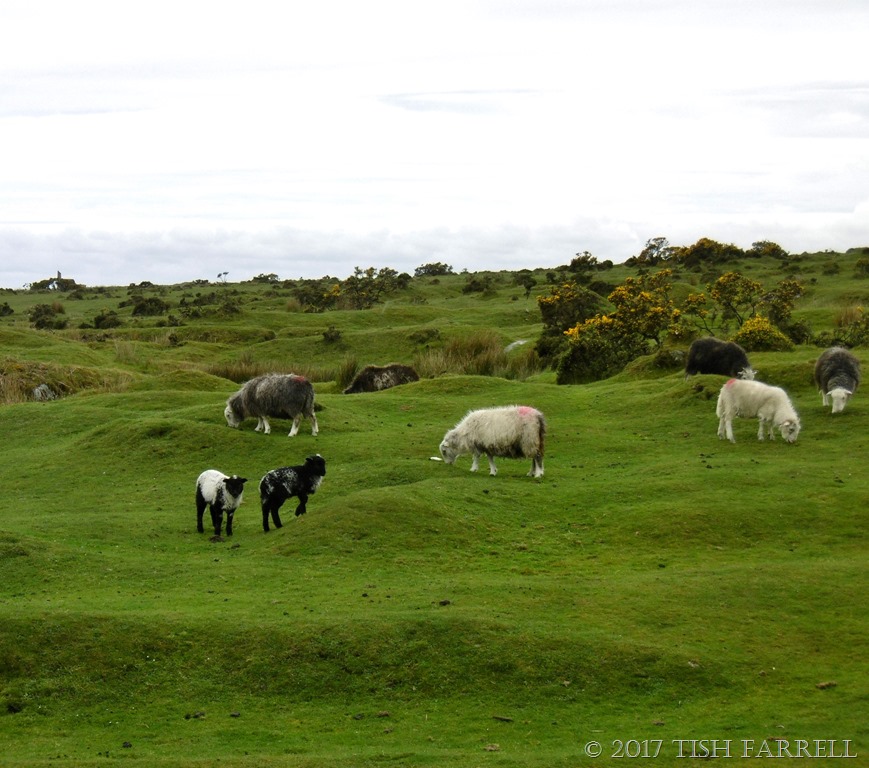
Hundreds and thousands of tons of copper ore was extracted, and exported down to Liskeard and the coast at Looe by means  of the ‘Cheesewring Railway’ otherwise known as the Liskeard & Caradon Railway. It was opened in 1844, operated initially by gravity and horsepower, and also carried granite and tin. You can just see part of the granite quarry below the Cheesewring tor. Other signs of Minions’ industrial heyday of miners, quarrymen and railway workers are the humps and bumps of abandoned spoil heaps. The nearby settlement of Minions is also evidence of the industry – it grew up around the junction of several branch lines to house the influx of workers. It is the highest village in Cornwall, and today has a rather desolate air.
P1070994

And now for another kind of heritage: legend. There are all sorts of stories connected with Bodmin’s man-made and natural features. I mentioned the origin of The Hurlers in the last post. The Cheesewring tor has also inspired all manner of explanations. One story tells how it was created by Giants and Saints at the time in the early Dark Ages when Christianity was spreading through the land.

The Giants, who were used to tramping about their domain, and doing just what they pleased, were fed up with the Christian Saints invading their land, putting up stone crosses, and declaring all the wells holy. They called a council to decide how to rid Cornwall of the nuisance.

And to this council there dared to come the frail St. Tue. He challenged Uther, the strongest of the Giants, to a trial of strength. They would have a rock hurling contest.

Rock hurling was one of the Giants’ favourite pursuits. Also, seeing the slightness of Saint Tue, the Giants were sure they would win.

Saint and Giant thus then took turns to throw six very large quoit shaped rocks across Craddock Moor and onto Stowes Hill, but to Uther’s surprise the little Saint soon proved a formidable opponent. By the time the Giant came to throw his last rock, his strength was failing. To the sounds of much Giantly groaning, his stone tumbled from the pile. Tue then  went to make his final throw. The rock was huge, but just as it seemed that the task was beyond him, an angel appeared and placed the rock on top of the pile. The Giants were so overawed by the sight of angel wings casting their golden glow about the place, they conceded to the Saints, and by this means Cornwall became a Christian land.

Another yarn has it that if you visit the Cheesewring at sunrise, you will see the top stone turn three times. This is more up my street myth-wise, and I truly would like to be there at dawn to see what happens, and also to hear the wind on the stones making them resound and mutter.
P1080008


copyright 2017 Tish Farrell

Daily Post: Heritage


This slideshow requires JavaScript.



Of Men Turned To Stone And A Cup Of Gold

P1070982

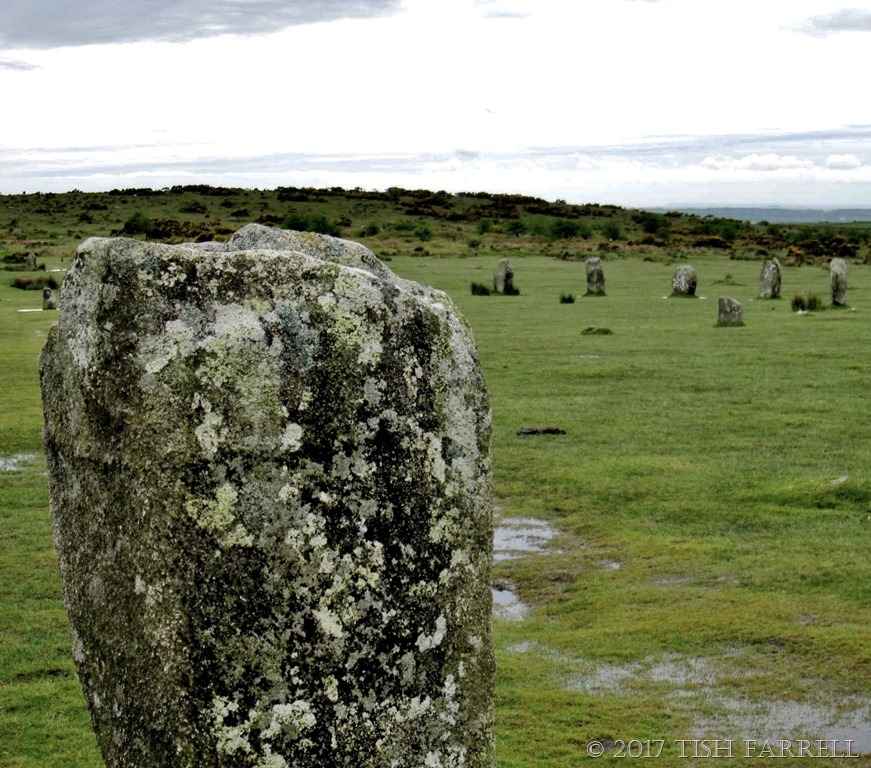
We were spending a few days in south-east Cornwall last week and, in between downpours, we managed a trip up to Bodmin Moor to visit The Hurlers. This unique prehistoric site comprises three stone circles set out in a row, and dating from the Late Neolithic or Early Bronze Age. This would make them around 4,000 years old. It is impossible to capture the full complex without aid of  hot air balloon or hang glider, so here are some piecemeal shots. Also the light, as you can see, was pretty poor.

The local explanation for the origin of these stones is that they are petrified men – turned to stone in punishment for playing hurling on a Sunday. (Cornish hurling is an ancient team game played with a silver ball. See the link for more details. And no, I don’t think that is an ancient hurler on the skyline).

P1070972

IMG_4692

The circles are 33, 42 and 35 metres in diameter (108, 138  and 115 feet respectively), and none have all their stones intact. The central circle is the best preserved with 14 standing stones and 14 marker stones. This circle and the one to the north of it align with the huge Bronze Age Rillaton Barrow, visible on the skyline to the north-east. It was here that one of the British Museum’s most precious treasures, the Rillaton Gold Cup was discovered during excavations in 1837. At that time it was passed as treasure trove to King William IV and so remained in the royal household. It was only a hundred years later, after the death of George V in 1936 that its full historical significance was recognised. HRH had apparently been using it as a receptacle for his shirt and collar studs.

779px-Rillaton_Cup[1]

Photo: Creative Commons      Rillaton Gold Cup circa 1700 BC


Thursdays’ Special: Traces of the Past – Please visit Paula to see her dramatic view of San Geremia church in Venice, plus other bloggers’ posts of relics of times past.

A Good Crop All Round ~ Thursday’s Special At Hopton Castle And Brampton Bryan

P1010224

This week at Lost in Translation Paula asks us to show her photos that we have cropped to reveal detail or improve the composition. I have to say that I crop most of my photos, and certainly architectural subjects almost always benefit from a trim.

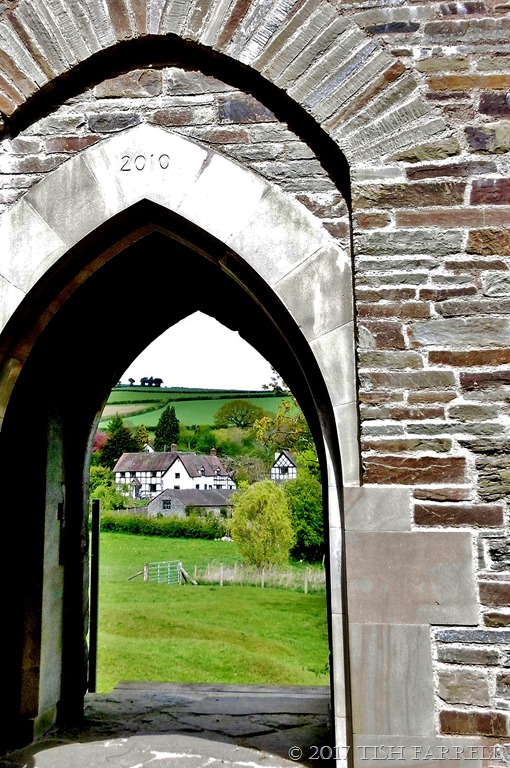
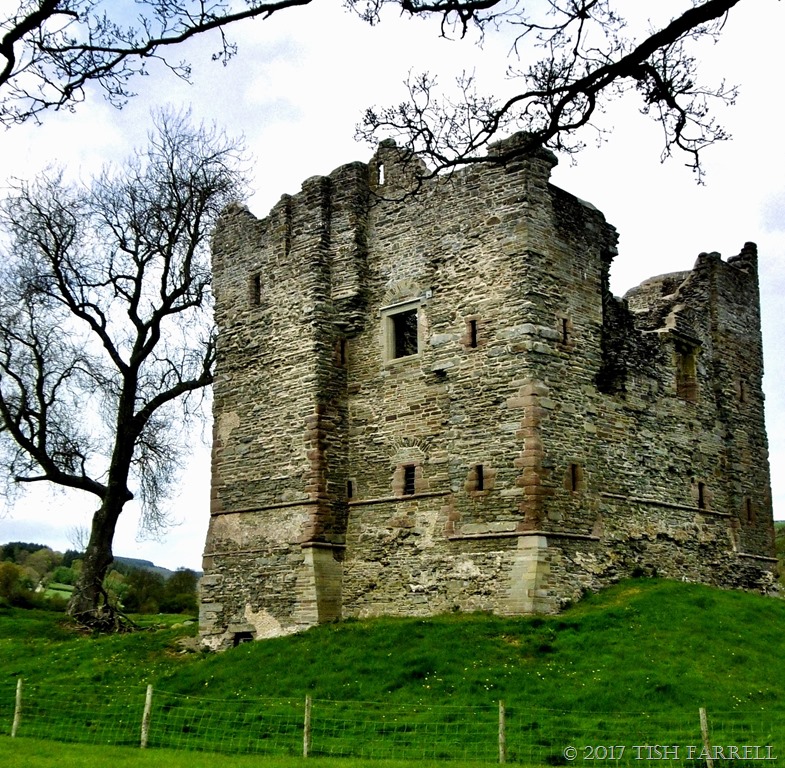
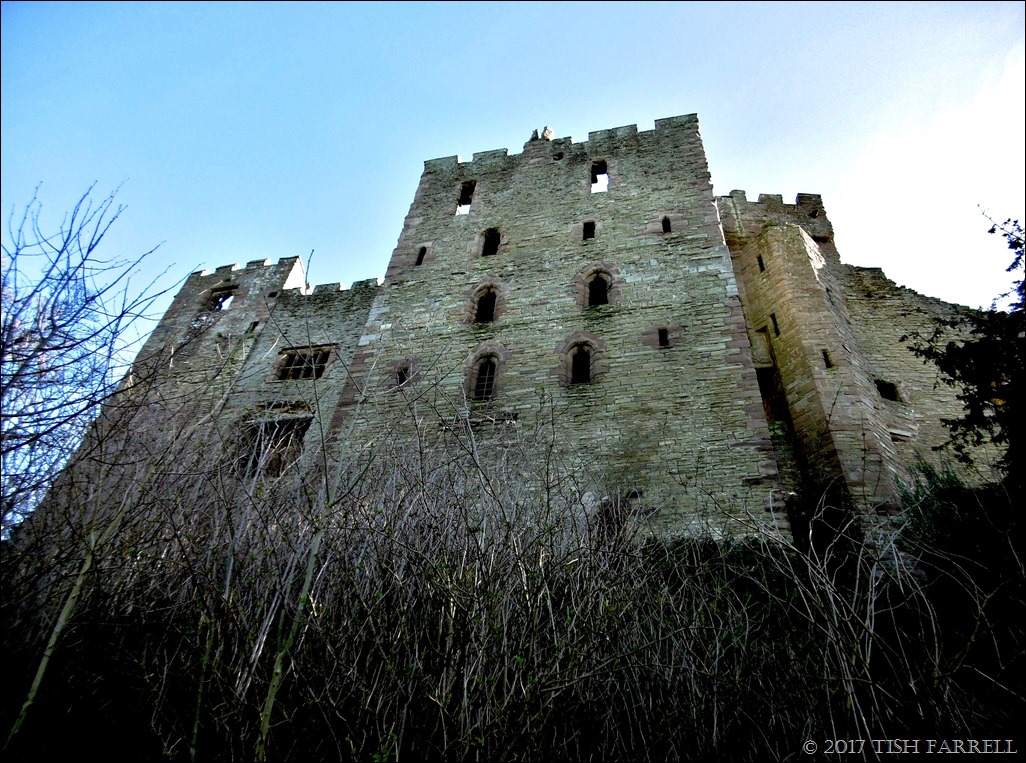
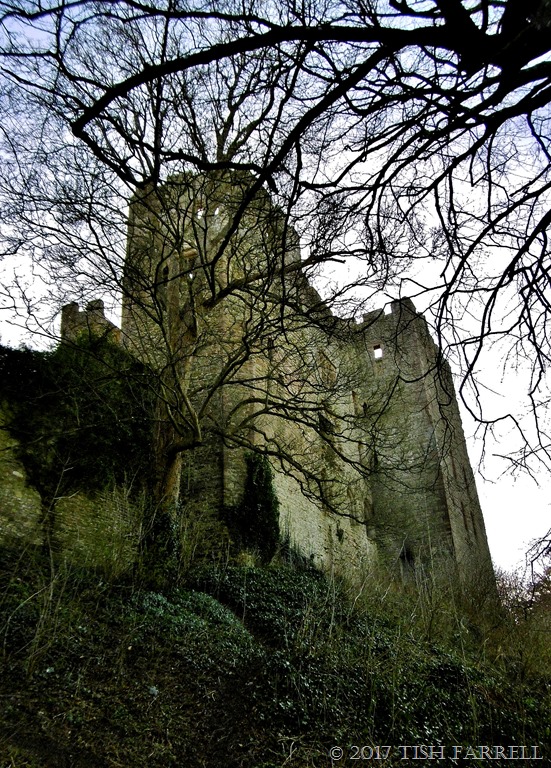
Here are some cropped shots in and around Hopton Castle. This mediaeval ruin stands in a rural and rather remote corner of Shropshire near the Herefordshire border, one of a cluster of castles built either to keep the Welsh neighbours in their place or as a piece of lordly showing off. Today, Hopton is romantically and rustically picturesque, although once it was the site of a bloody Civil War siege.  In one of my earlier Thursday’s Special posts I featured the restoration of the monument.

P1010241

P1010225

*

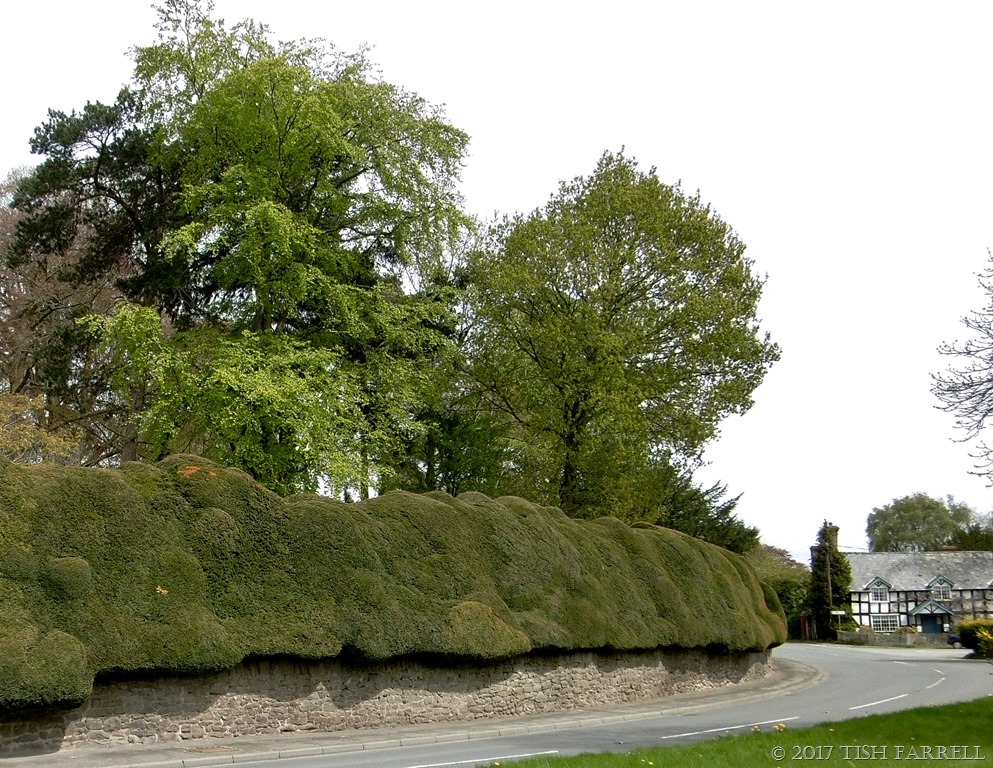
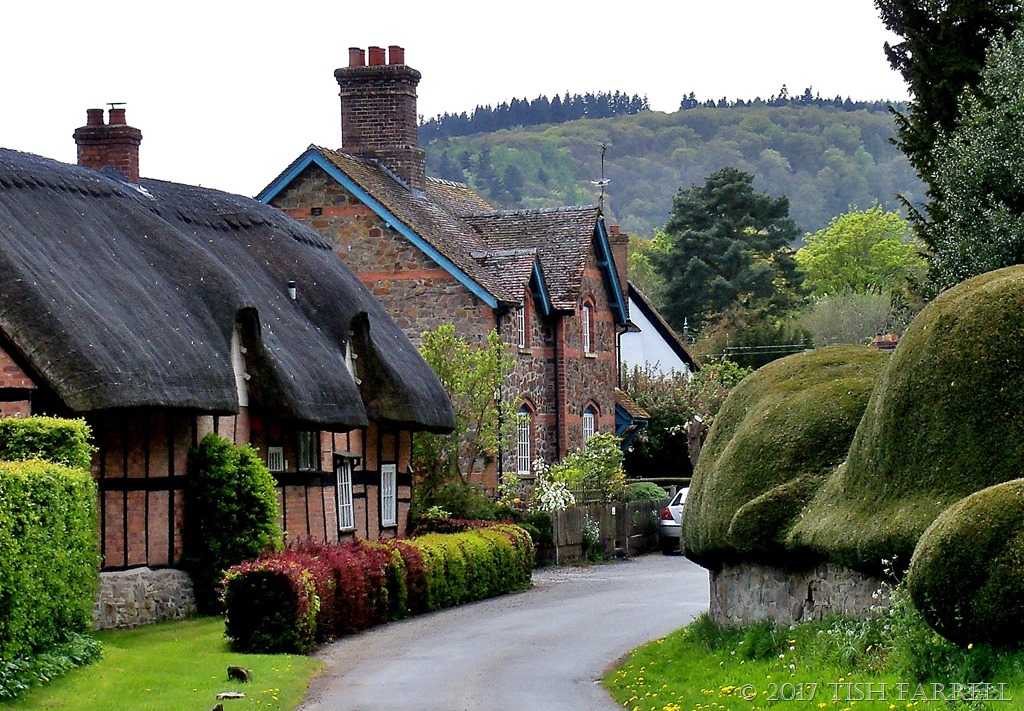
Not far from Hopton and just over the border into Herefordshire is the little village of Brampton Bryan. One of its most noteworthy features is the free-form yew hedge that shelters the owners of Brampton Bryan Hall from the gaze of passing hoi polloi  and the inhabitants of the pretty estate village. The light was not good, but I think cropping the images has made them passable – at least for ‘guided tour’ general nosiness purposes:

100_5423

P1010257

100_5437

100_5421

100_5424

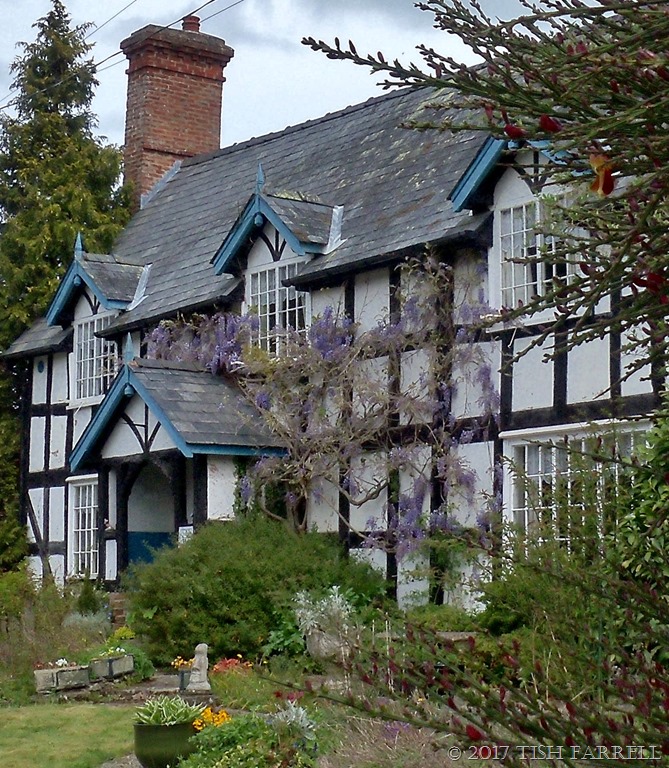
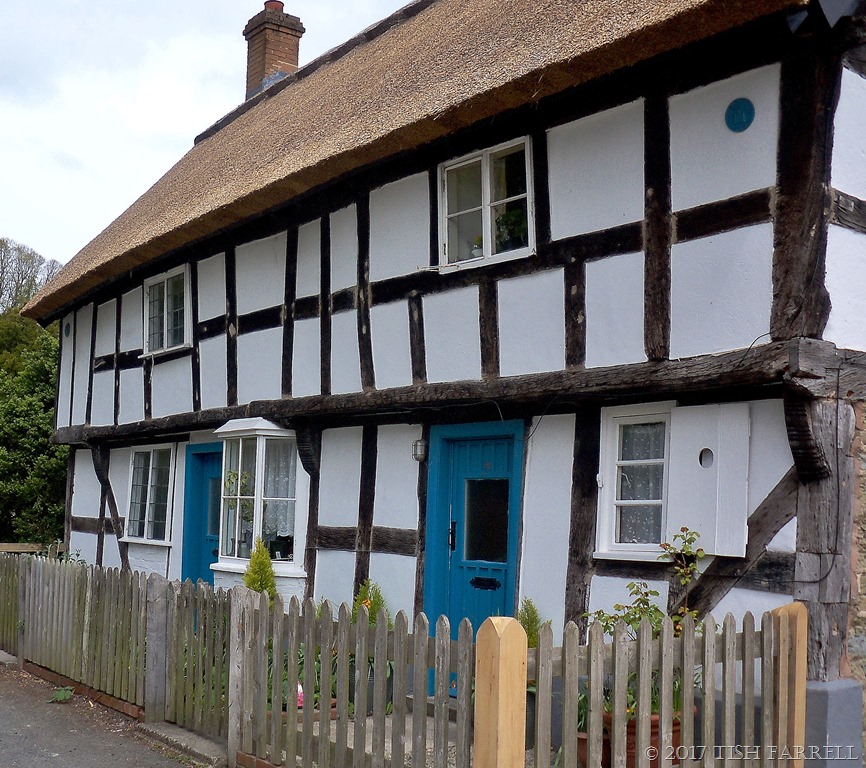
The Harley family who own the estate, including the village properties with their blue doors, has been around the place since Domesday. Their present home behind the hedge was built after the Civil War in 1660, and remodelled in the 18th century. I snatched a glimpse over the rear churchyard wall, but though imposing it was not very captivating, at least not compared with this next view of their own personal castle ruin. It is not open to the public so I couldn’t get a better photo.

100_5431

I can’t help thinking how very wonderful it would be to have one’s own castle ruin out in the apple orchard, never mind the stately pile.

Thursday’s Special: Section

Through Time And Space ~ Black & White Sunday

P1060543

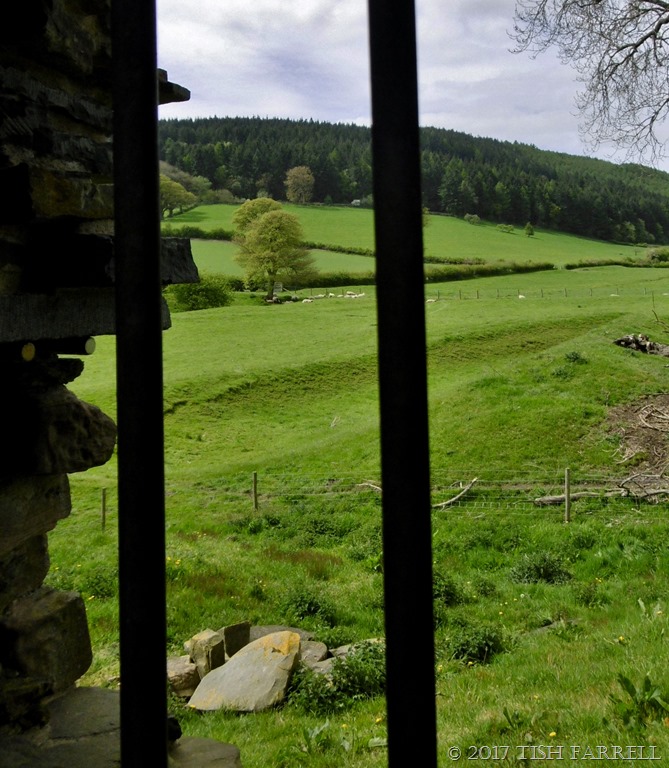
This photo was taken at Penmon Priory on the island of Anglesey. It is a mysterious place, on the shore of the Menai Strait. The stone ruins date from the 12th century, built on the site of St. Seriol’s 6th century hermitage.

The window was in a building beside a dovecote, a much later structure, built by the local lord in 1600, long after the monastic period.

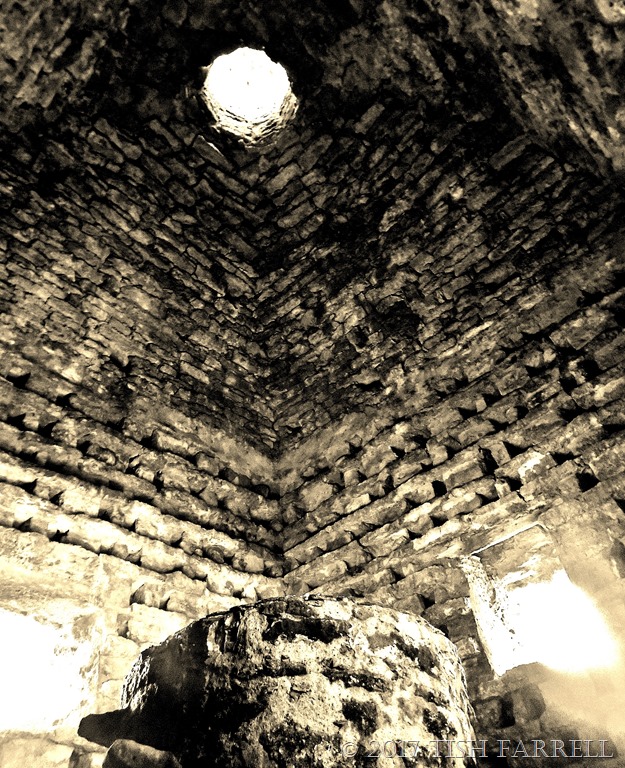
The dovecote’s interior was difficult to snap due to window slots in every quarter, but you get the idea. There are 1,000 nest boxes for pigeons, and both the birds and their eggs were harvested. Originally there would have been a long revolving ladder attached to the central plinth.

P1060541 - Copy

*

And since I know you are curious to see the outside too, here it is  seen through entanglements of Old Man’s Beard – the seed heads of wild clematis which adorn Britain’s winter hedgerows and byways:

017

Black & White Sunday: Through  This week Paula has an especially spectacular interpretation of this week’s challenge. Go see!

Honeymoon Destination Anyone?

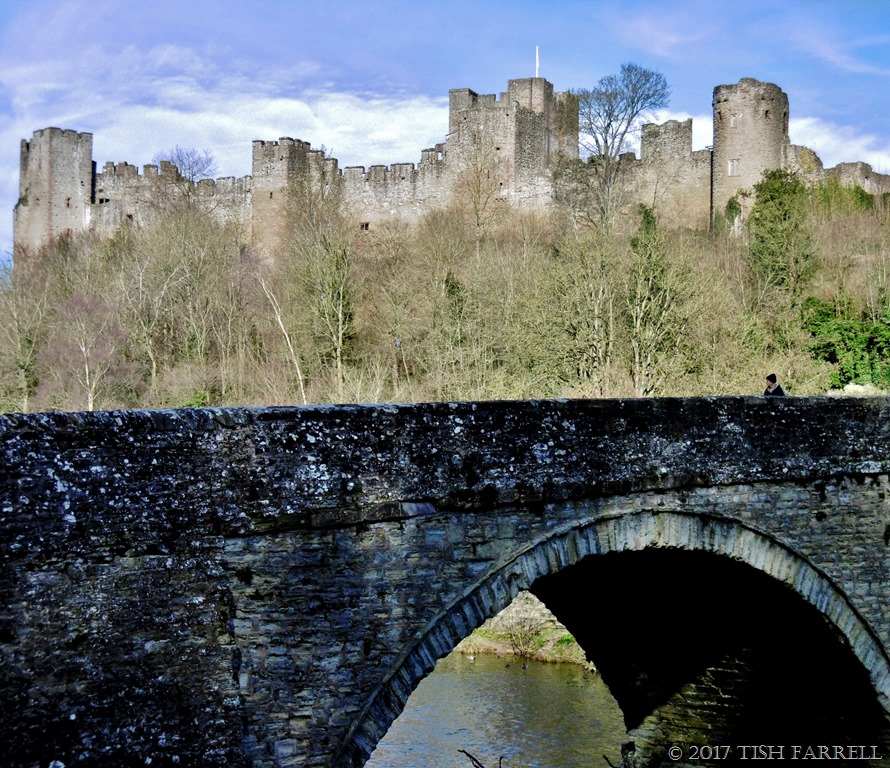
I was thinking of Jude as I took this photo last Thursday. Now she lives under a Cornish sky, but not so long ago this was her stamping ground, and I’m pretty  sure she knows the path I am standing on as I take this photograph. It skirts the cliff beneath the brooding elevation of Ludlow Castle in Shropshire, the River Teme rushing over the weir below.

The other thought that was running through my head was: what a place for a honeymoon. And yes, I’ve mentioned this before. But even with the walls intact, the great hearths lit, and the tapestries well hung and thickly plied, it would have made a daunting venue for post-nuptial celebrations. The bride and groom I am thinking of were only teenagers, and the year was 1501. Fortunately for them, some consideration was given to their comfort and they were lodged, not inside the castle, but just outside the walls in the Castle Lodge.

By then the castle had already been standing for over 400 years. It was built after the Norman Conquest between 1066 and 1085. Its purpose control and domination; its overriding associations with war not love. It had been built on the borderland between England and Wales to keep the Welsh warrior princes in check, and thereafter figured in three civil wars and numerous uprisings. In the 12th century King Stephen and Empress Matilda fought over it. In the 13th century it featured in the Second Barons’ War. In the Wars of the Roses in the 15th century it was a Yorkist stronghold under Richard Duke of York (later Richard III). In fact anyone who was anyone throughout a thousand years of history either pitched up here in person, or had the place in their sights for some political reason or other.

P1070170

And the teenage newly weds? One was Arthur Tudor, Prince of Wales, just fifteen years old, and heir to Henry VII. His bride, a few months older, was Catherine of Aragon, betrothed to him since the age of three. They had been married at St. Paul’s in London on 14 November 1501, only ten days after their first  meeting. Arthur informed Catherine’s parents (Isabella I of Castile and Ferdinand II of Aragon) that he meant to be ‘a true and loving husband’. But from the start there were problems of communication. The couple tried speaking to each other in Latin, but were confounded by their differences in pronunciation.

But then what do such things matter when it comes to state expediency? The marriage was a matter of strategic alliance, and the honeymoon at Ludlow was all about Arthur being seen to stake just claim over Wales.  He was  there on royal business to preside over the Council of Wales and the Marches.

The couple were in Ludlow over the winter months, and one wonders how a girl from the sunny warmth of Spain felt to be despatched  to such a union and to such a place. One hopes they found some joy there, although it would have been all too brief. They both fell ill with the highly contagious ‘sweating sickness’ which was sweeping England at this time.  By April 1502 Arthur was dead, and Catherine swiftly rendered a diplomatically inconvenient widow – a pawn in the foreign alliance game.

Apart from anything else, there were serious financial implications for Henry VII. Ferdinand had only paid half of Catherine’s 200,000 ducat dowry. Now Henry was faced with returning it, and/or suing for the unpaid portion. So it was that Catherine became betrothed to Henry’s second son, Henry, Duke of York, whom she finally married in 1509, thus becoming the first wife of Henry VIII. For 24 years all went well, and then Ann Boleyn came along and it was all damn lies, character assassination, cruel confinement  and social ostracism for Catherine. A sad end indeed for a Spanish princess, our long-time English queen, and Europe’s first woman ambassador.

P1070147

copyright 2017 Tish Farrell

Traces Of The Past ~ And Who Do You Think Lived In This Little House?

P1060173

Well, I’d never seen one of these before.  There it was outside the walled garden at Attingham Park, one of Shropshire’s grandest historic houses.  Closer inspection and the spotting of an information panel inside one of the half-moon ‘windows’ yielded the knowledge that it was in fact the bees knees in accommodation – a grand house commissioned specially for the Second Duke of Berwick’s bees.

The house was originally sited in the Duke’s extensive orchards to encourage the pollination of the fruit trees. Behind each opening there would have been a traditional hive or skep – an upturned, domed basket made from coils of straw. This apian ‘des res’ apparently dates from the early 1800s and is only one of two known Regency examples in the country. The great landscape designer Humphry Repton and architect John Nash were both employed at Attingham around this time, and so either one could be responsible for the design.

The hall and park are in the care of the National Trust, and it is currently one of their most visited properties – over 400,000 visitors last year and growing. Millions have been spent on the house, and the next huge project is the recreation of Lord Berwick’s pleasure grounds. Nor have the bees been forgotten. There are a quarter of a million honey bees in the Park, and the Trust has recently established a large, new apiary in the Deer Park. There is also a National Observation Hive in the orchard where you can watch the bees coming and going. Attingham honey may be going on sale soon. So a big cheer to the National Trust for championing the bee cause, this in the face of determined eradication of the species by the Big Unfriendly Pesticide Giants. We’ll all be very sorry if bees become ‘a thing of the past’.

P1060179

The walled garden in winter: a restoration project in progress. You can just glimpse the orchard beyond the far wall.

Black & White Sunday: Traces of the Past Now visit Paula for her fine entry.

Basket Case ~ How To Make A Bag From A Baobab

IMG_3922

I could have written about my compost heaps, and repurposing of fallen foliage into leaf mould, but I’ve already done that HERE and written the poem. Instead, I’ve chosen an example of some traditional Africa repurposing – far more interesting and pleasing to look at.

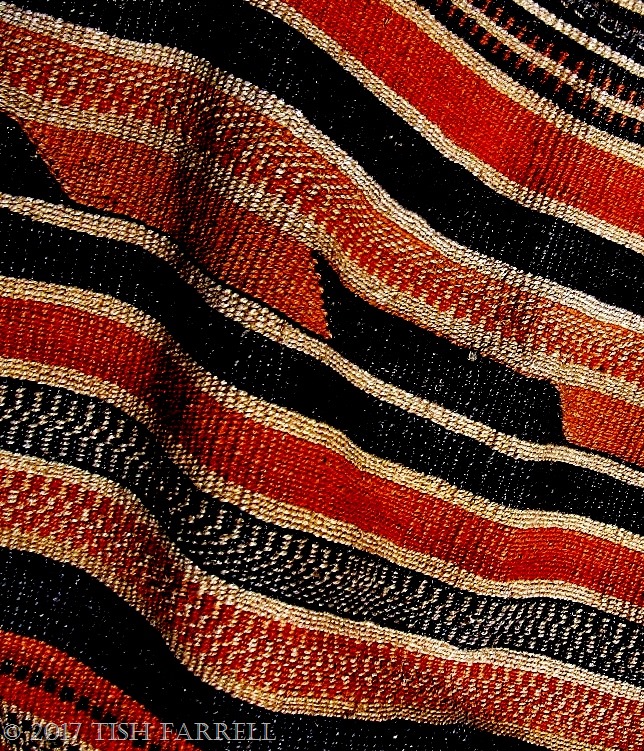
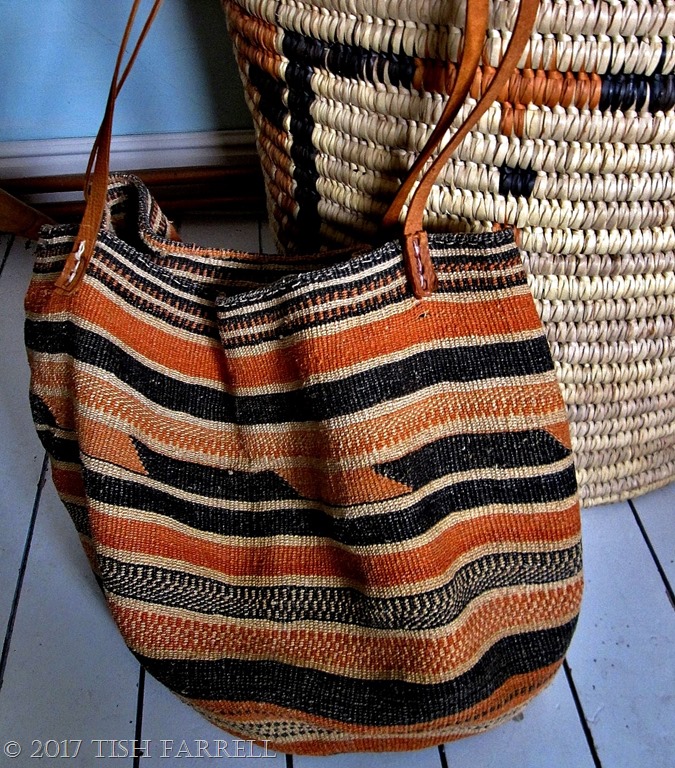
Kenya is famous for its string bags or kiondo. These days they are usually woven from sisal string, the sisal grown on vast plantations. But in the past the twine was much finer and fabricated from baobab and wild fig bark. One of my treasures from our Kenya days then (and as far as the Team Leader is concerned, I have rather too many such treasures) is this more traditional bag made from baobab fibre.  I bought it from a curio seller at the annual Nairobi Agricultural Show in 1997. I think I paid 500 shillings for it, around five pounds at the time.

IMG_3923

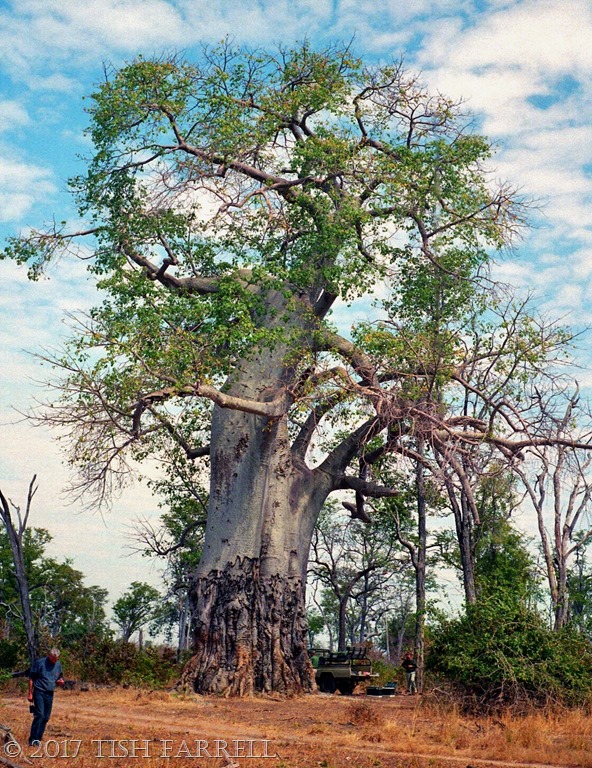
Baobab trees may appear impenetrable entities with iron-like skins, but their trunks are deceptively fibrous, and especially so in old age and after elephants have done some determined shredding work on them.  Even so, the twine to make a bag like this would have taken  much preparation. The main process involved chewing the fibre until it could be rolled out to the required thinness. Two strands would be worked one after another, and then twisted together to produce the final cord. This was then dyed using natural pigments, the cords cut to suitable lengths to create the warp threads, and work begun from base of the bag, moving outwards as the weft thread spirals round.

South Luangwa - mighty poachers' baobab

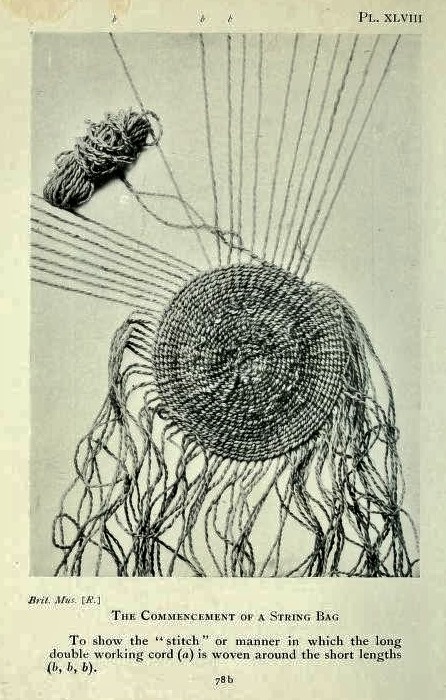
Whether or not the materials have changed, methods of construction  remain much the same. I have seen women striding out along the Mombasa highway, their work in progress flowing from their arms like some giant deconstructed spider’s web. You will see what I mean in the next photo. It was taken in the early 1900s and shows a young Kikuyu woman at work:

withprehistoricp00rout_0187[1]

kiondo

Both images are from what I feel is the inappropriately titled 1910 monograph With A Prehistoric People  by W Scoresby Routledge and Katherine Routledge.

*

And there you have it – a beautiful, but eminently useful bag, painstakingly constructed from baobab parts. I consider it a work of most artful repurposing and, as with many traditionally crafted everyday artefacts, it also strikes  me how  people untouched by western mass-production, daily and routinely  made art out of necessity and utility. There is an intrinsic aesthetic here, which is why I take issue with the term ‘prehistoric’ used in this early twentieth century context. People who work with their hands in this way continuously nurture and exercise  their creative intelligence and powers of discretion and visualization. This also makes me think that one day we technophiles might wake up and regret the loss of such facilities and skills; we might recognize, for instance, that their passing signals a lack of general competency?

copyright 2017 Tish Farrell

Daily Post Photo Challenge: repurpose

Meet T’owd Man ~ AKA The Old Man Of Wirksworth

IMG_3500

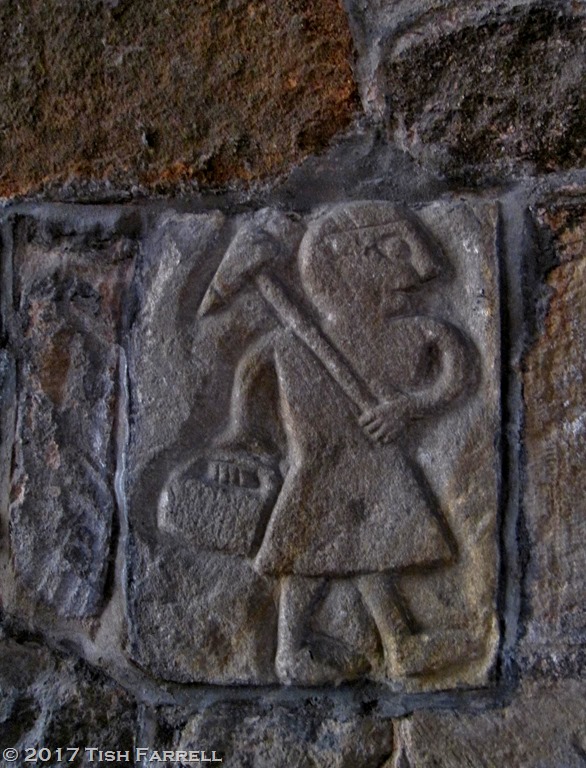
He is said to be 800 years old, or thereabouts, this mythic little figure of a lead miner with his pick and kibble (basket). He is presently to be found embedded in the wall inside St. Mary’s Church in the Derbyshire Peak District town of Wirksworth. But this was not his original home. He once lived in the nearby village of Bonsall, where he was found during the restoration of the 13th century  parish church of St. James. This was in 1863, and it was then that T’owd Man found his way (along with other pieces of interesting medieval stone work) into the garden of one Churchwarden Coates.

This highhanded commandeering of the local lead miners’ talisman did not please the general populace, who wanted him restored to sacred territory. Somehow in the argy bargy he ended up being firmly mortared into the wall of St. Mary’s Church in Wirksworth instead – where he has remained ever since for his own good and general safekeeping. He has also become the town’s ‘unofficial’ symbol, so you can pay him a visit, AND get the tee shirt.

But this story of general displacement is making me wonder. What  if T’owd Man is a good deal older than is currently thought.  I’m assuming his 13th century date was given him because he was found in a church of 13th century origins. But to my eye he could easily be a Saxon carving. What if the medieval builders of the Bonsall church had also recycled him?  (There are in fact many examples of Saxon carving within St. Mary’s, all re-deployed from an earlier church. See my post Expressions of Power  ~ Secular and Spiritual? for more of the background history).

Lead mining was a key industry in the area from at least Roman times. There is also documentary evidence of its importance in Saxon Wirksworth. In 835 the township was ruled by Abbess Cynewaru, and in a missive of that time she states that she was every year sending a gift of lead valued at 300 shillings to Christ Church, Canterbury. Much later in the Domesday Book of 1086 the entry for Wirksworth includes 3 lead works.

Wirksworth was in fact the centre for the trade. It was a hard and dangerous business. The miners were also a maverick lot. Many were yeoman farmers who combined hill farming with lead working, and some grew extremely rich on the trade, although many died from explosions in the mines, and the general toxicity of working with lead.

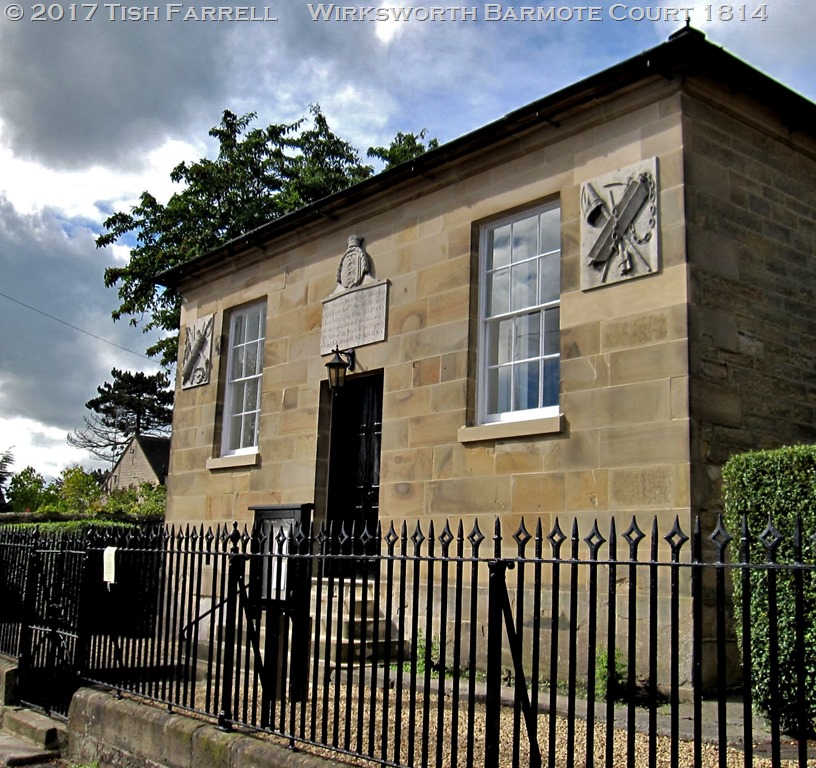
All the miners’ activities were subject to a system of rigorous rules and regulations overseen by the Barmaster of the Barmote Court. This court was held in Wirksworth for at least 7 centuries, and had its origins in Saxon Burg Moots (moot is Saxon for gathering or assembly). The last version of the court or Moot Hall still survives. It was built just out of the town centre in 1814 to replace a grander Moot Hall that stood in the Market Place. It seems the noisy behaviour of the miners, and the congestion they caused in the town centre, led to the earlier building being demolished.

IMG_3436

Wirksworth is a fine town for a visit. Its many surviving seventeenth and eighteenth century houses attest to the general prosperity of the place over many decades.  When the lead ran out in the 19th century, limestone quarrying replaced it. Rivers were harnessed to power cotton mills, and so the industrial age kicked in. And if this smacks too much of ‘dark satanic mills’, don’t you believe it. The town sits in glorious countryside, in the heart of England, in fact at ‘its very navel’ as one-time resident D.H. Lawrence put it. Here, then, are some more views from England’s very green and pleasant navel:

This slideshow requires JavaScript.


copyright 2017 Tish Farrell

Thursday’s Special ~ Traces of the Past Check in here to see what Paula and other bloggers have posted.

Rambling Yesterday On Wenlock Edge ~ “The Holly And The Power Station”?

IMG_3731

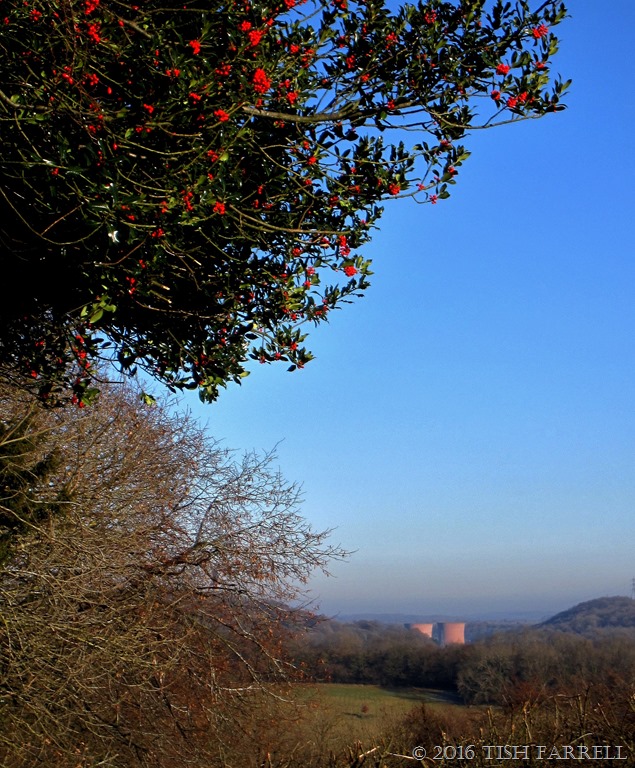
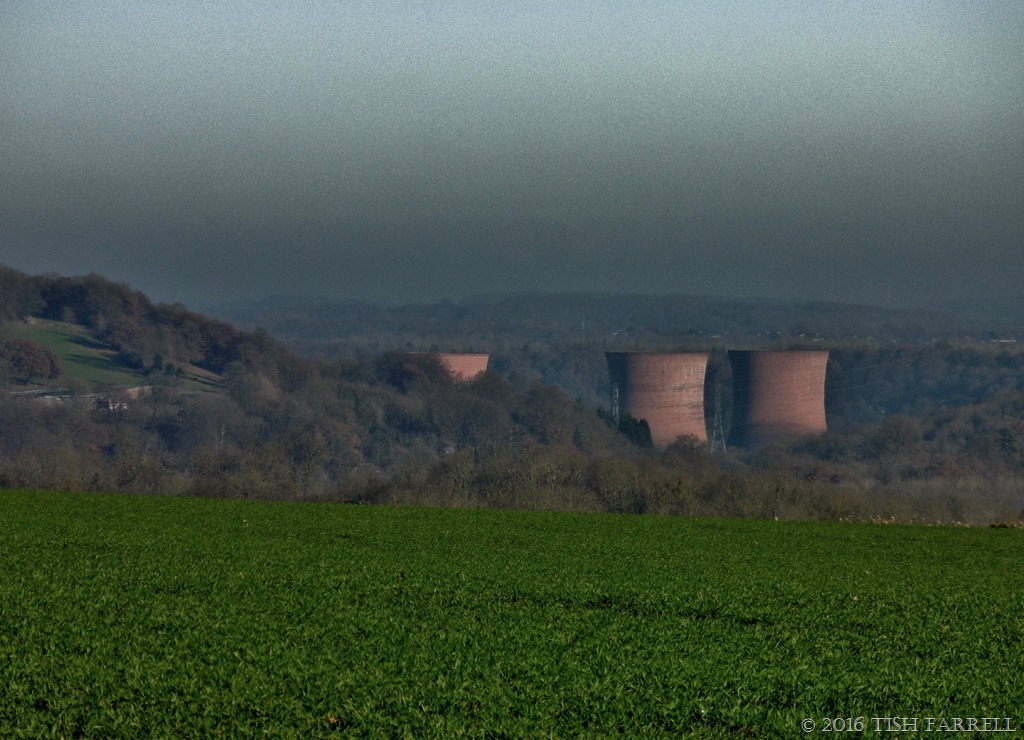
We went for a tramp along the Edge Wood at midday yesterday. It’s three fields up from our back garden and quite a haul to reach it. Once there, a breather is definitely called for, and so it’s a good moment to stop and look at the old Ironbridge Power Station cooling towers.

P1060131

Some find them ugly, but I like them. They are true landmarks – geologically and historically speaking. They stand on the banks of the River Severn, England’s longest river, which rises in the Welsh uplands and descends through the Midlands to the Bristol Channel. The towers stand on a piece of landscape – the Severn Gorge – which was only created 15,000 years ago – a mere nano-second past in Earth History Time.

But the thing that most fascinates me is that the River Severn, presently running south past the towers, once flowed north, so meeting the sea on the coast between North Wales and Chester. This remarkable change of direction is all down to the last Ice Age and the fact that the land was glacier-locked as far south as Shrewsbury, our county town. The Severn’s northern outlet thus became blocked by ice, and so the river backed up, forming a great lake (Lapworth) as the water lay trapped between the ice sheet, and the limestone ridge of Wenlock Edge.

Little by little, as the Ice Age drew to a close, the river wheedled its way through the northerly end of Wenlock Edge and carved a new course, cutting through, and so exposing the Industrial Revolution-making strata of coal, ironstone, fire clay, and limestone. And as I’ve said in other posts, this part of Shropshire lays claim to being ‘the cradle of the Industrial Revolution’, though crucible might be a better metaphor, given the emphasis on iron production.

However, the 18th century pioneering ironmasters of the Severn Gorge were not the first to take advantage of the local geology. Nearly two millennia earlier the Romans were already exploiting these resources. Their military camp of Viroconium (Wroxeter) lay just to the north of the Gorge and, once the locals were suitably subdued, so the camp transformed into a great city, one of the four largest in Britain. There is evidence of glass making and iron working in the area, and local clays would have served for brick and tile production. In fact one of the brick-built basilica walls still rises impressively above the surrounding farmland, a surprising survival when so much of the city fabric was recycled through succeeding centuries.

Back in the Gorge, and many centuries after the end of Roman rule, the mediaeval  monks of Buildwas Abbey and Much Wenlock Priory were also busy making use of local natural resources on an industrial scale. They had mines, decorative tile works, iron-making forges and bloomeries. They also had a thriving export business along the River Severn. There’s a record from around 1200 that states that the Prior of Buildwas was fined because twelve of his barges were blocking the river downstream at Bridgnorth. Probably not your usual vision of what monastic enterprises got up to.

Given so much entrepreneurial and manufacturing business afoot in the Gorge AND a navigable river with access to the great port of Bristol,  it is not surprising that when the monasteries were dissolved in 1540, and their properties distributed to the king’s friends and favourites, that the place should attract a rash of opportunistic London merchants, lawyers and aristocrats, all out to get rich and exploit the former monastic concerns for themselves. Soap  making, cold tar exploitation, coal mining, iron production, steel-making experiments were being conducted by very unlikely people of the well-heeled sort across south-east Shropshire.

Such industrial fervour was further stoked by Queen Elizabeth I (1533-1603) who offered a prize for anyone who could find a way to smelt decent iron using coal instead of charcoal. The loss of the nation’s great trees, needed for naval purposes and the protection of the realm, was causing the monarch much concern. The prize, however, was to remain unclaimed. It would be a good century later before  Abraham Darby arrived in the Gorge and, after remodelling a former monastic iron works in Coalbrookdale, perfected the much sought-after technique.

His discovery helped shape the world we occupy today. See what geology has to answer for.

And here’s some more of quite another sort: the Wrekin. We have the best view of it on our homeward path back down into Wenlock.

P1060146

The plain to the left of the hill was the location of the glacial Lake Lapworth. The Roman city was in that vicinity too. The Severn Gorge is off-screen to the right of the Wrekin.

I’ve written about the Wrekin’s mythological and geological origins HERE, but I may not have mentioned there that it has an Iron Age hillfort on the top. This was a stronghold of the Celtic Cornovii  i.e. those who  were duly subdued and citified by the invading Romans. Under Roman rule Viroconium became the Cornovii regional capital, which they continued to occupy until the late 600s – 700 C.E. when the site was abandoned.

We were always told at school that Viroconium’s last days were due to Saxons or Vikings marauding up the River Severn, but there is no sign that the exit from the city was anything but peaceful. I remember working on the excavation of the presumed road-of-retreat long ago as an archaeology student. I have to say that at the time I wasn’t altogether convinced by the site director’s interpretation of the remains that we were uncovering. At least it made me consider that much depends on the way you excavate a site. This site was being stripped across a whole field, rather than being investigated through the judicious placing of exploratory trenches. It seemed to me that certain trowelling techniques, as applied by willing and enthusiastic novices, might be responsible for creating features that aren’t actually there at all. An interesting thought on how the past might be re-created and invented.

And now just to prove how cold it was on our ramble, and not just gloriously, and so unexpectedly sunny: next some ICE, a phenomenon not witnessed in these parts for several seasons. Which brings me back to the start of this yarn, but hopefully not to the start of a new Ice Age as long predicted by certain climatologists. There have been enough tangents along our path already.

P1060148

copyright 2016 Tish Farrell


Jo’s Monday Walk  Please take a turn in this quarter for another fabulous ramble with Jo in the Algarve.

Who Sells The Pasts-That-Never-Were ~ Are We Seeing The Danger Signals?

100_7809

The past is a foreign country: they do things differently there.

L P Hartley The Go-Between

I’ve cropped and re-cropped this image in hopes you can put yourself right there on this path amid the fallen leaves. I’m hoping, too, your eye will be drawn further down the trail, that you will be wondering what lies beyond: where is this path taking us?

The ash trees and goat willows arching overhead make the path tunnel-like; mysterious, but not threatening. Slashes of light fall in from the right. They relieve the gloom of the overgrown embankment on the left.

Other impressions might occur. That this is a peaceful place: a perfect resort from the technologized maelstrom we have created for ourselves.  That it must be especially lovely in summer: birdsong and windrush through the greenery. Love-sick souls might wander here; those seeking solace from other cares; writers who have lost their plots; small boys intent on secluded thickets for a new den; dog walkers; girls on ponies: all seeking, consciously or not, the perceived restorative, imagining powers of wilderness.

As you take in the scene I might tell you that where you are standing is an ancient green lane, a once busy rustic thoroughfare used for centuries by the lay workers of Much Wenlock Priory. You can imagine them hauling carts of grain to the mill for grinding, or mule trains bringing in bales of wool from a shearing of the Prior’s flocks. I could throw in tales of St. Milburga, the seventh century abbess, who was renowned for striking springs of pure water from bare rock, or tell you that this path was one of the haunts of resistance fighter Wild Edric, the local Saxon lord who challenged Norman rule.

But no. That’s not it at all. Nothing in that last paragraph happened here as far as I know. What a shame. It had all the makings of a good yarn. We were beginning to identify with the characters. We were starting to confer on them certain notions/images/memories, conjuring a past we think we recognize.

Wait though. Here’s another version.

Into this tranquil scene comes what? A TRAIN?  Turn around and you will see what all the din is about. A large locomotive is rumbling out of the railway siding. It is hauling many wagons loaded with limestone from Wenlock’s vast Shadwell Quarry, which lies out of your sight behind the path embankment. The limestone is destined for the furnaces of South Wales and the West Midlands Black Country, used as a flux in the smelting of iron. This scene belongs to the 1860s when the United Kingdom was still a world leader in heavy industry, the monster-offspring of the 18th century Quaker Ironmasters who pioneered iron-making techniques just a mile or two away in Coalbrookdale.

Other scenes can be added: weekly earth-shattering blasts from the quarry; the land, lanes, town in a grey-dust pall; air filled with fumes from lime-burning kilns; a man burned one day in a kiln collapse; Wenlock’s Town Council of the late 1940s complaining that the blasting was shaking stones from the Wenlock Priory ruins; 1981 and rocks from a quarry blasting landing on the neighbouring secondary school, injuring three pupils.

Here then are a few clips from Much Wenlock’s many ‘pasts’; ones that actually happened. The path you are standing on is the track bed of the former Severn Valley Railway branch line. It once linked Much Wenlock to the rest of the world in a way that the River Severn had done in times past. This railway once served the nation’s industrial heartlands. And most of us have forgotten this now. Or never knew it. Looking at it now, it is anyway hard to believe.

In this particular case our forgetfulness or ignorance or disbelief is probably of little consequence. We have a lovely place to walk, and doubtless most of us will protest should anyone try to turn it into a car park or a housing development.

And yet?

I still have a niggling query. Should we not all be a good deal more knowledgeable about own histories, the actual lives of parents, grandparents and great grandparents? Should we not all be well versed in our nation’s last hundred years, including understanding our responsibilities as citizens, and knowing precisely how our land and its people make a living?

I’ll leave these questions with you, because I want to talk about the quotation. It has haunted me for decades, and is the opening line of L P Hartley’s novel The Go-Between. But it was not in the novel where I first read these words. My first encounter was in the title of quite another book. It was 1985 or 1986, and the book in question had not long been published. At the time I was employed as the seemingly grand, if poorly paid Leverhulme Research Fellow at the Ironbridge Gorge Museum Trust. (This being the sprawling Shropshire heritage enterprise that lays claim to protecting and interpreting the ‘birthplace of the Industrial Revolution’ aka the aforementioned Coalbrookdale – a location which thus has a very great deal to answer for).

In those days, the IGMT had recently set up an Institute of Heritage Management offering postgraduate diplomas to professionals in the heritage business. It was at one of the Institute seminars that I encountered David Lowenthal, American historian and geographer, and Professor of Geography at University College London. (He is at UCL still, Emeritus Professor at the age of 93.)

Lowenthal’s book The Past Is A Foreign Country is regarded as one of the classic works of cultural history. It was described by one erudite reviewer at the time as ‘a meditation on misuses of the past in contemporary culture’.

I will repeat that phrase in bold:

‘a meditation on the misuses of the past in contemporary culture’

In the light of recent events – the outcome of the US election and Britain’s Brexit vote wherein proponents’ projection of a perfect national past formed a key part of the ‘sales’ pitch – it seems to me that this is a phenomenon that should worry us all.

The past that was being sold was not an old past either, but one deemed to be within someone’s living memory – you know, that happy land just over the brow of the hill where everyone resides in the rosy glow of unchallenged prosperity and inviolable national sovereignty and with no incomers.

When did that place have its heyday? Can anyone tell me. I’ve been alive quite a long time, and I can’t pinpoint it. When I grew up in the 50s there was still post war rationing. Kids were getting polio. Pregnant unmarried girls were considered the scum of the earth, and hustled into homes. Racist language was the norm. Homosexual acts were criminal offences. There was the Korean War, the Suez Crisis, the Kenya Emergency, the Malayan Emergency, the Cuba Missile Crisis. The Cold War threat of nuclear missile strikes hung over us for decades – fear still lingering until 1989 when the Berlin Wall came down. All local authorities had their nuclear bunkers in place. Some are still extant.

So the golden age must have been earlier then – ‘40s, ‘30s, ‘20s? Surely not. Ah silly me. It was obviously the ‘80s when Thatcher and Reagan let all the bankers off the leash to start wreaking unmitigated financial mayhem across the globe…

Anyway, you get the picture.

It is doubtless a common human affliction to wish to turn back the clock whenever things go badly wrong. It also a well held fallacy that there is some perfect place from which humanity has been excluded – a sort of expulsion-from-Eden syndrome – and that maybe we can get back there?

Lowenthal points up our maladjusted relationship with the past  when he says:

…we also preserve, I suggest, because we are no longer intimate enough with that legacy to rework it creatively. We admire its relics, but they do not inspire our own acts and works.

He suggests too that “the past conjured up is…largely an artefact of the present”, “shaped by today’s predilections, its strangeness domesticated by our preservation of its vestiges.”

The past has become commoditized as escapism, a state endlessly replicated in the kind of costume dramas that lure us into thinking that people back then thought just as we do. It is an on-going process of re-invention that becomes ever more ‘real’ and so I think predisposes many us towards a hankering for a past that contains none of the things that so upset us now. It was so much better then.

Wanting to turn back the clock to a time-that-never-was suggests feelings of helplessness and hopelessness; of depression, hardship and broken spirit. Hanging on to such a notion is obviously not going to help solve any of the problems that face us.  In the short term it leaves us vulnerable to those who would sell fake pasts for our future salvation (and politicians have always manipulated history to confound us – some on a megalomaniac scale). In the longer term, when the lie is exposed, it will bring only further incapacitating disillusionment. It might bring worse too.

And how did we get into this position – we, the rich nations of the northern hemisphere? How did all our great assets reduce us to such impoverished and desperate ways of thinking? Why do we not know enough about ourselves and our nations to see off the self-serving opportunists who feed us fantasies and divisive hate-stories?

These are questions that surely have very many answers, and for now I’m leaving them with you too.

Interestingly, David Lowenthal decided to do a re-write of his book. It came out last year.The Past Is A Foreign Country – Revisited. It earned him the 2016 British Academy Medal, and here’s a nice review by Robert Tombs. The reason he apparently chose to do a new book was because the past he had addressed in 1985 had, over three decades, been so transformed as to be an entirely new realm. Well, who’d have thought it!

I have this mad, optimistic hope that one day we might get some slight grip on reality – before it gets a grip on us. And now it’s clearly time I took a walk. Back up the old railway line then. It is far more peaceful there.

copyright 2016 Tish Farrell

Postscript:

This post was written as a result of recent ‘conversations’ with poet Robyn at Jambo Robyn and scientist Swarn Gill at Cloak Unfurled. Many thanks both for the thought-provoking exchanges.