Gone To Pot…The Backdoor Veggie Plot

IMG_3547ed

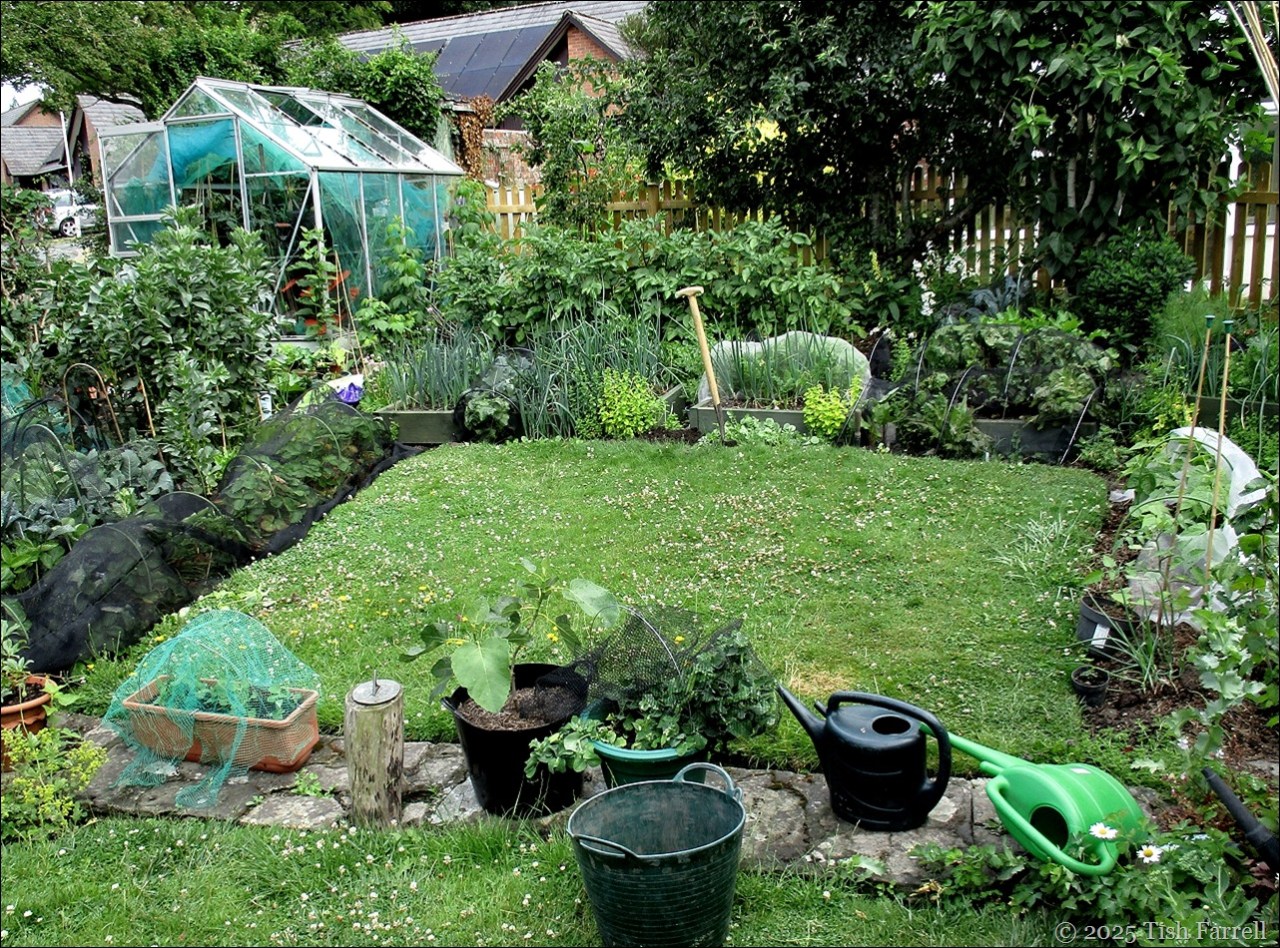
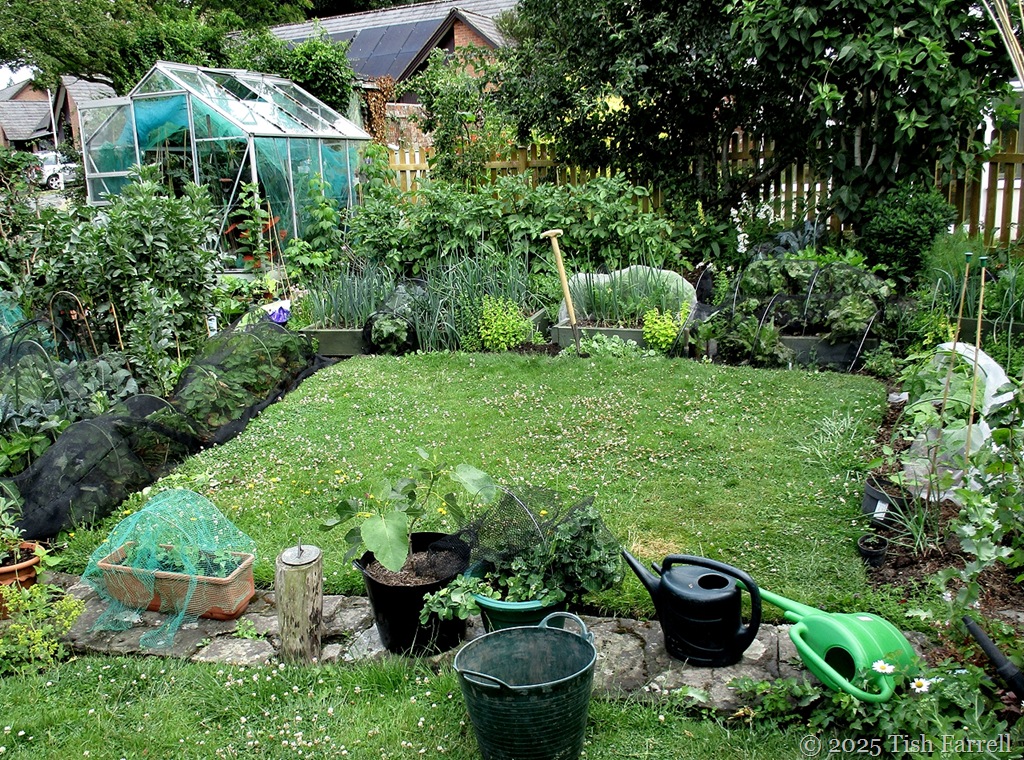
Most of you who come here often know that the Farrells are in transit, currently in a rented house while waiting to buy a new home. To say the process is stressful is an understatement. It’s also meant giving up my allotment plots, so I’ve been very glad to be able to potter about with some container growing.

Because it is true what they say: gardening is good for both mind and body, even in a scaled-down version.

The container approach also proves you can grow fresh vegetables with a fairly small amount of space or physical effort (if these happen to be issues) and any container will do, including small pots which are particularly useful for growing successional salad stuff.

But first, the big pot planting.

IMG_3578ed

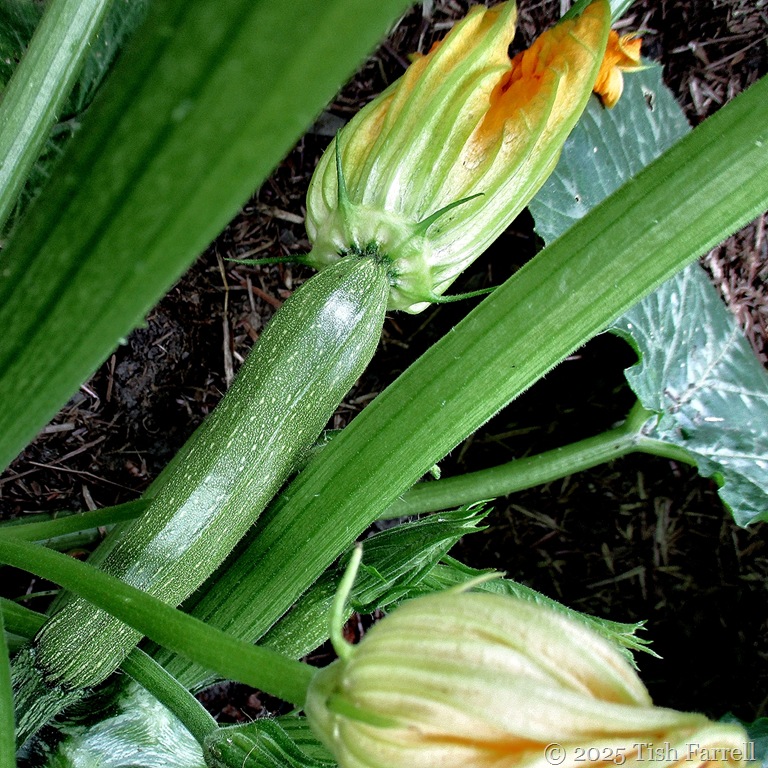
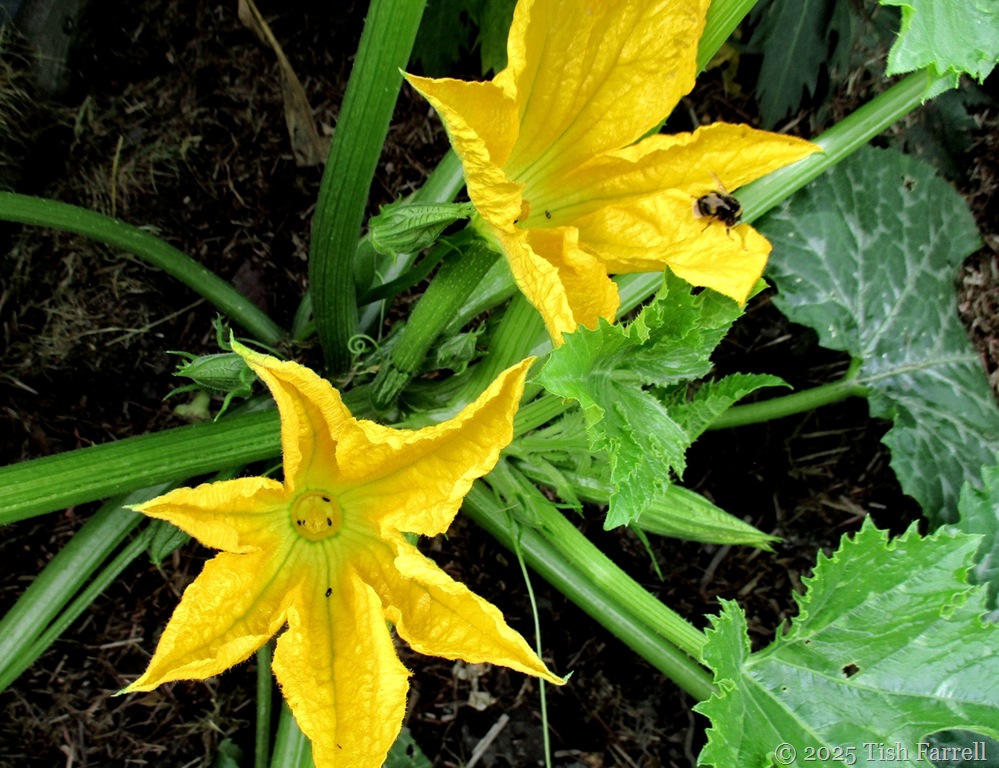
With a further move on the horizon, I did have a very strong motive for resorting to container growing. If a pot is still cropping (or about to crop) when moving day arrives, it will be coming with us. To that end, the yellow courgette plant is in a builders’ two-handled bucket for easier transportation.

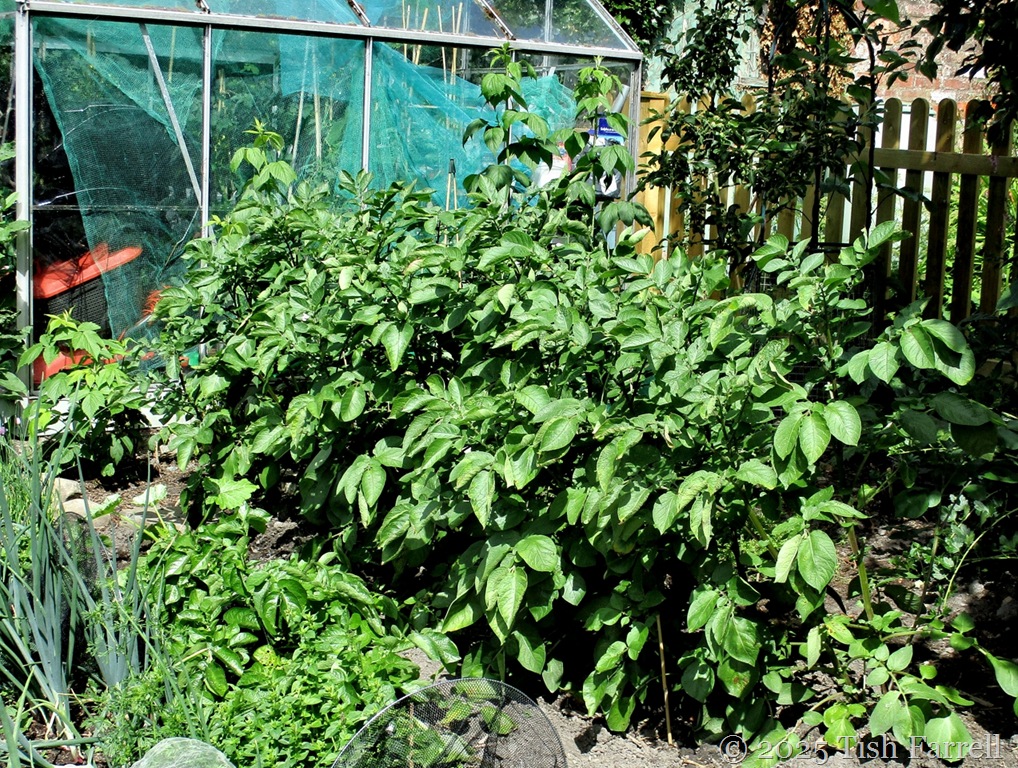
Then I was much perturbed about missing our usual tomato crop. To cover eventualities – as in just in case we’re lingering in Broseley longer than expected, I’ve planted a couple of cherry tomato plants in the garden border – Sungold and Piccolo, but I’ve also put some in large flower pots, two plants to a pot. And I’ve grown Tumbling Tom, which have been bred to dangle from hanging baskets and so don’t need staking.  Again, I have these in transportable builders’ buckets, and despite the ongoing gales, they are growing well with masses of flowers, and showing the first signs of fruiting.

IMG_3591

*

I do have lots of big clay pot, but realizing they would be too heavy and cumbersome to move when filled with compost and plants, I decided to use old compost bags (added drain holes in the bottom), with the tops rolled back to make a firm and grabble edge, and then popped into a clay pot for stability. These have proved excellent for growing successional crops of rocket and spinach. The latter usually bolts quickly in summer weather (not that we’ve had that since our few hot days in June; it’s more like early autumn), but growing it for baby leaf for salads or wilting into casseroles and curries seems to work just fine. It also grows very quickly.

IMG_3475

*

Lettuce can be sown all season, and best done anyway in small-pot, successional sowings. Some I’ve left unthinned, and just cropped the leaves; others I’ve thinned and planted out in compost bags to grow into proper lettuce.

IMG_3478

IMG_3590

*

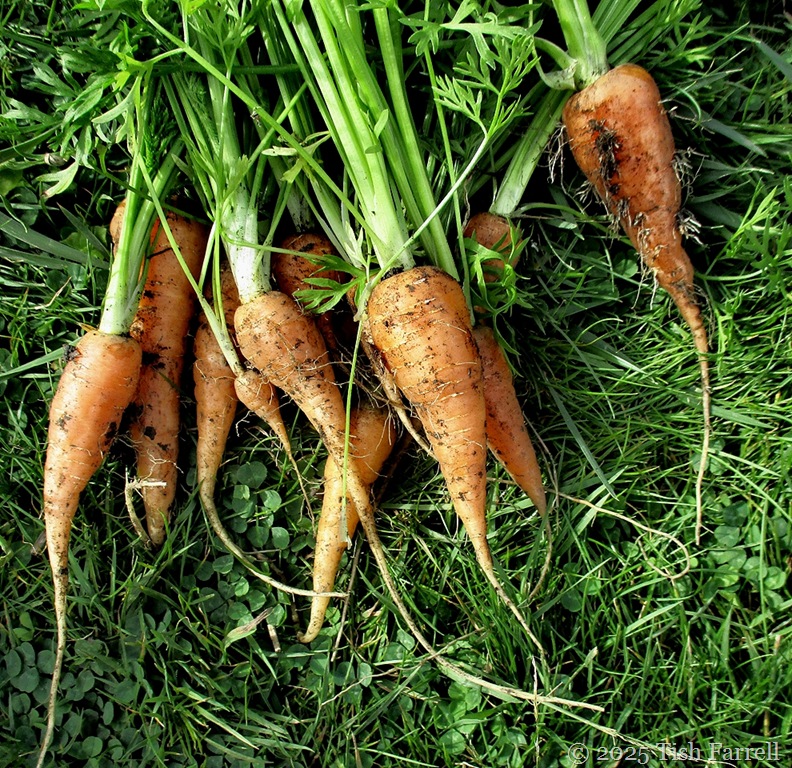
For the last few years I’ve tended to grow carrots in buckets, especially late summer sowings which provide a crop for winter eating. This year I sowed some back in April, and now have a big bucket of carrots seedlings, some of them just big enough to pull. We ate this little bunch steamed with broccoli and tahini lemon sauce.

IMG_3606

*

And now a big shout-out for pea sprouts. This is a first for me, though why I’ve not thought of it before I really don’t know. I was able to use up all my old pea seeds too. Again, these can be grown in a series of 5 inch flower pots, sown successionally, or in standard seed trays (a layer of compost in the bottom, peas popped across the whole surface about an inch apart or a bit closer, and an inch of compost on top).

IMG_3480

This tray has been recently cut  i.e. when the stems are about 4 inches long. If the tray is kept well watered, then there will be further crops, maybe 2 or 3 more cuttings. We use the sprouts both in salads and for cooking.

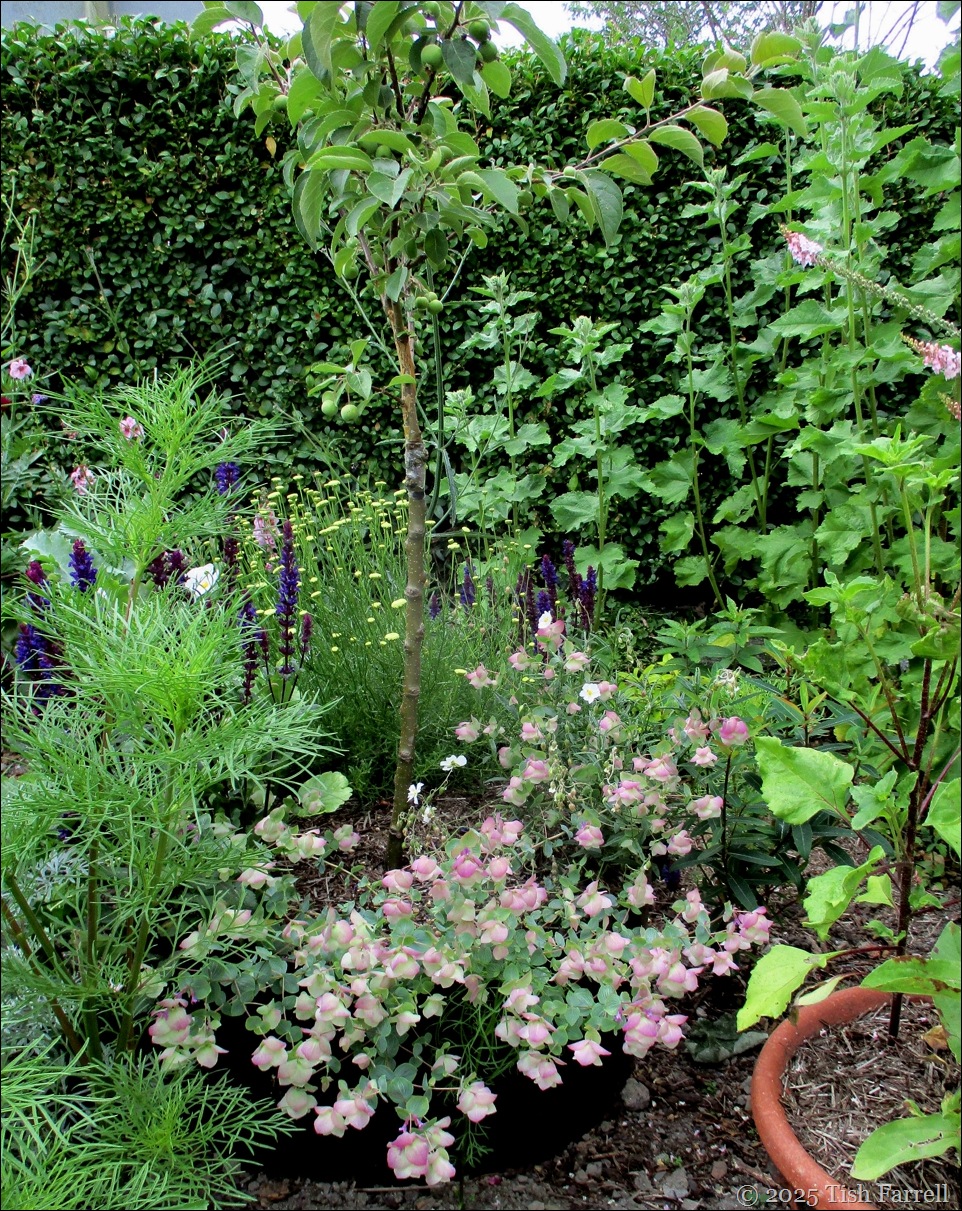
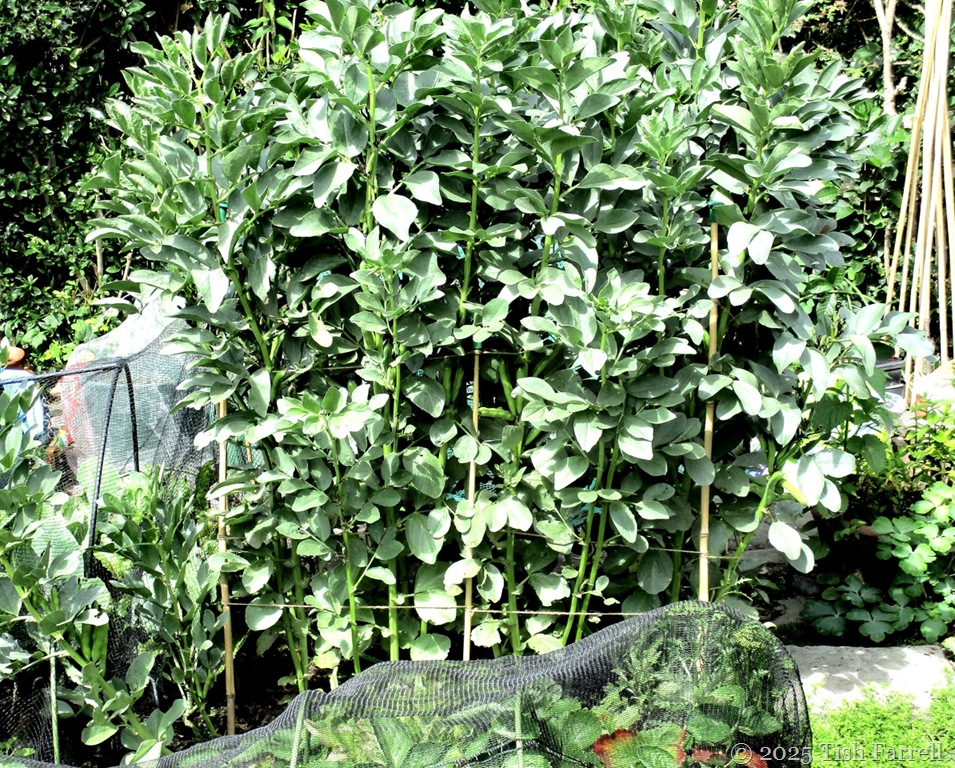
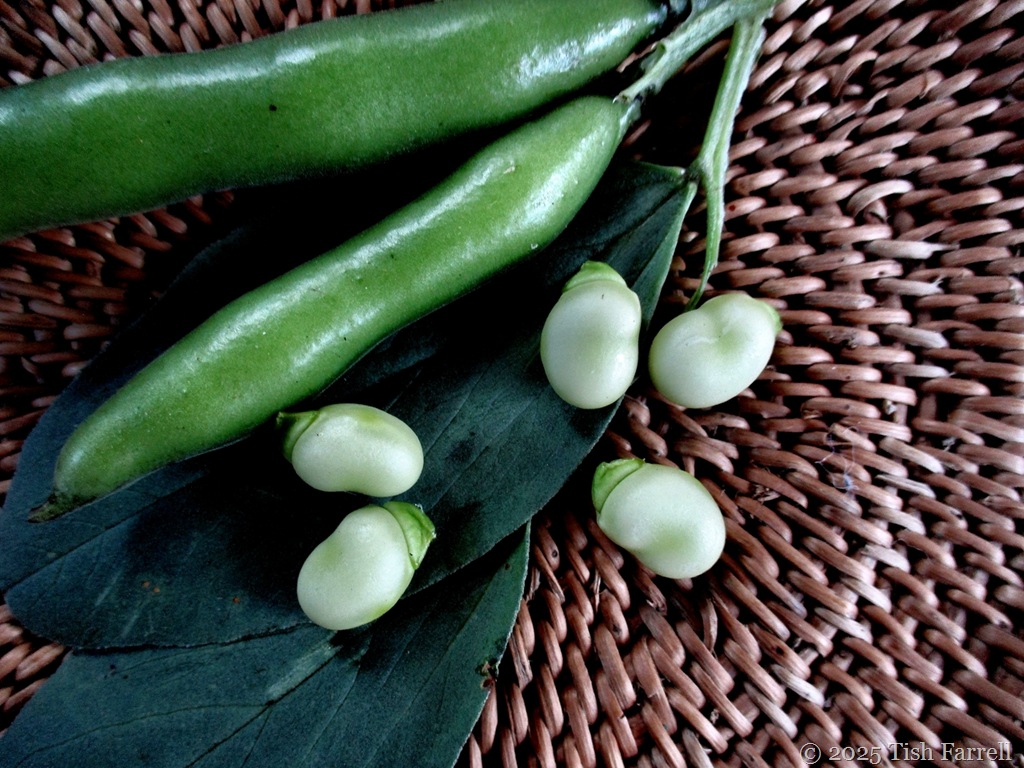
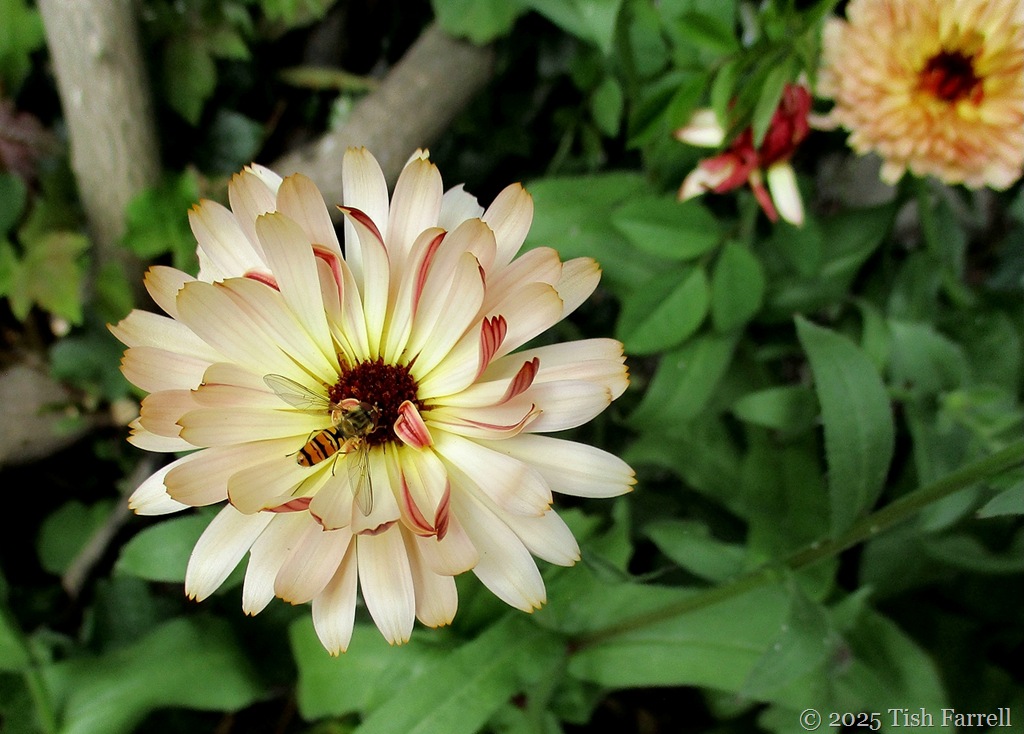
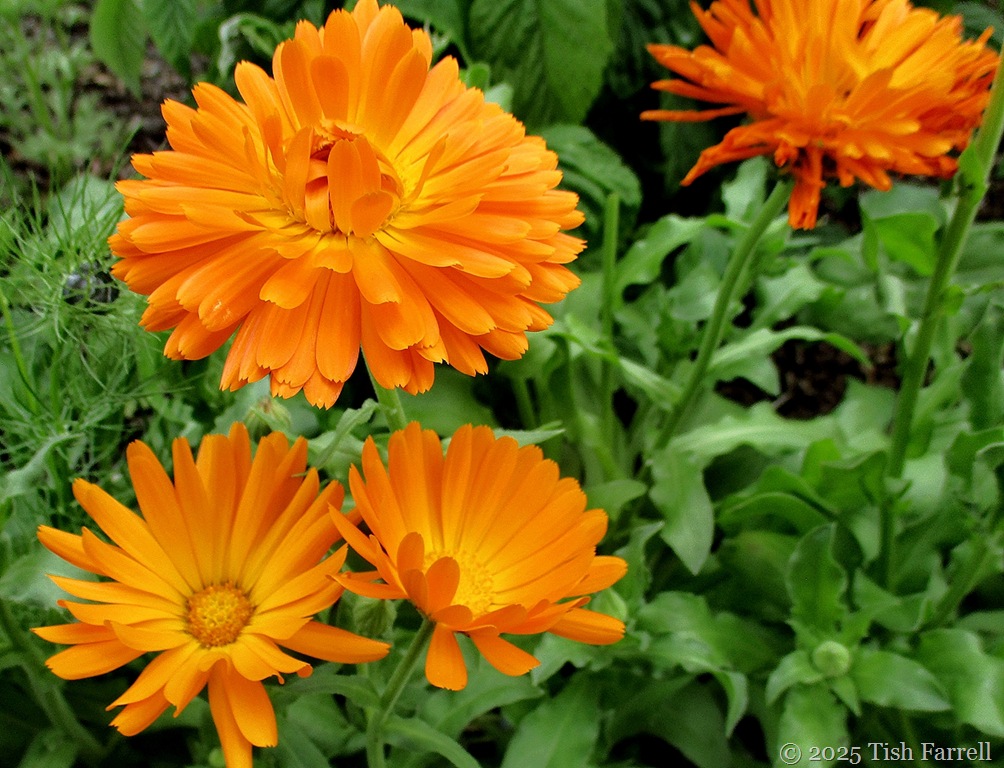
Other potted crops include spring onions, leeks, pot marigolds and nasturtiums (for salads and prettiness), parsley, basil, dill, mint, coriander and oregano. I also have a bucket of climbing Violette French beans, and another of borlotti beans. I’m not sure how they’ll work out. The French beans have been beaten up by the winds (there has been no ‘hottest ever’ global warming in Broseley only shivering) but they are at least beginning to flower.

So there you have it: the Farrells’ moveable feast, and in the interim, the makings of a green salad to accompany every supper for the last couple of months. The exercise is making me re-think my gardening practice. The biggest advantage (apart from the moveability) is that container growing seems to help focus the mind on small, successional sowings, something I rarely seemed to manage on the allotment. You do need to keep an eye on the watering however. Wind, in particular, can dry out pots very quickly.

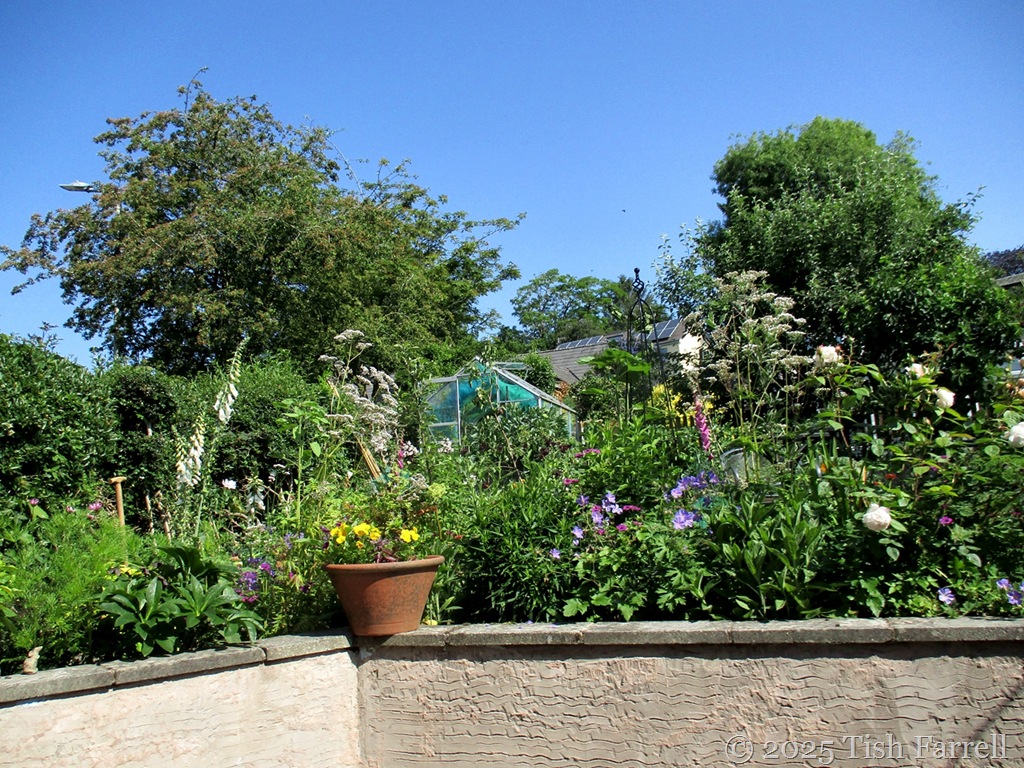
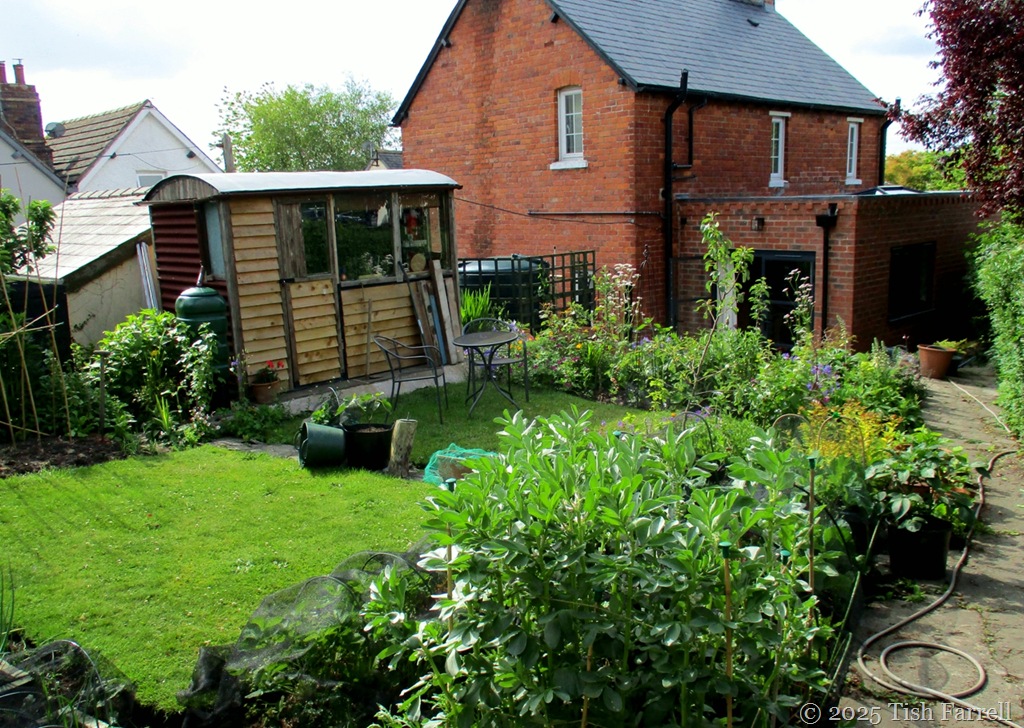
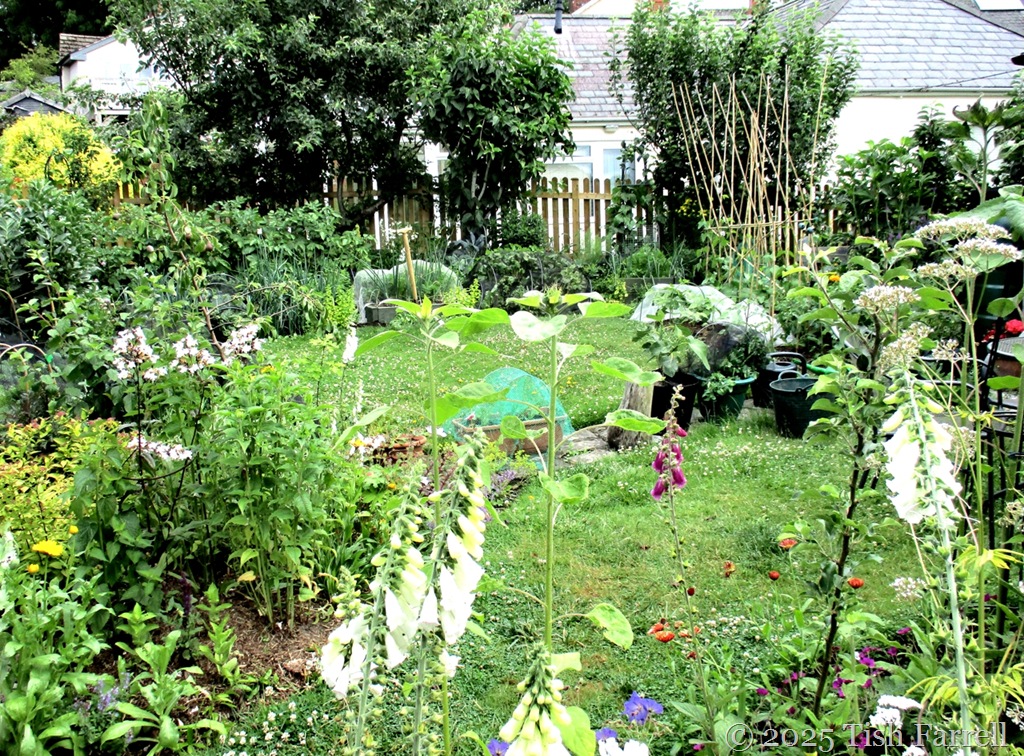
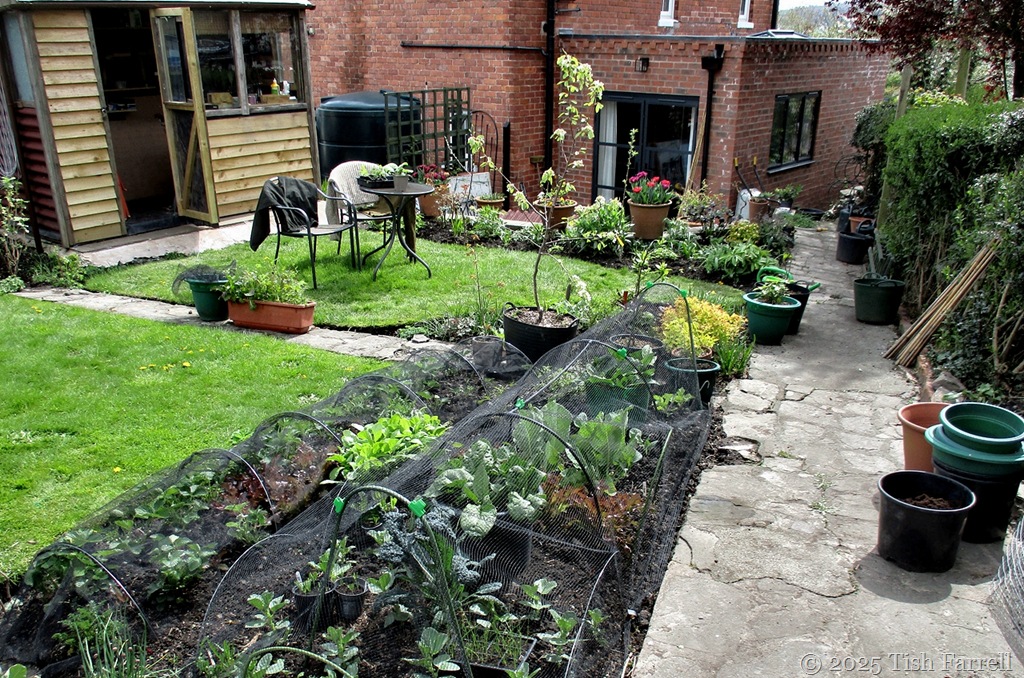
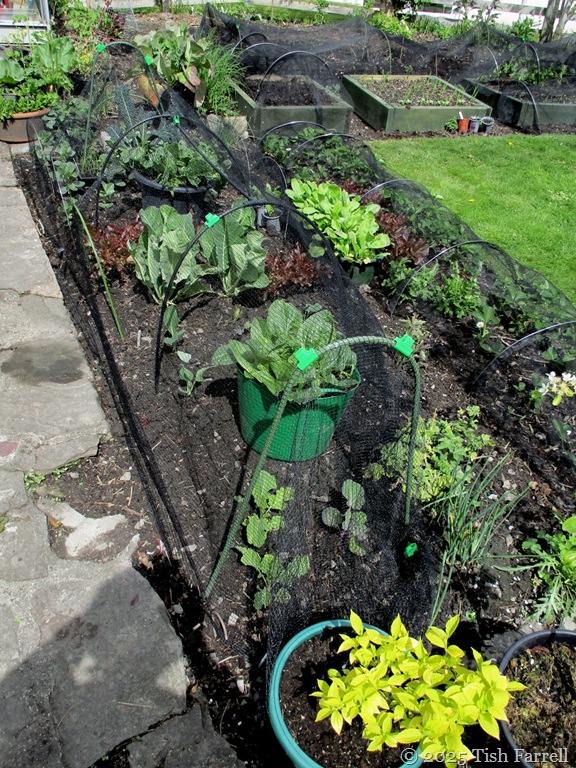
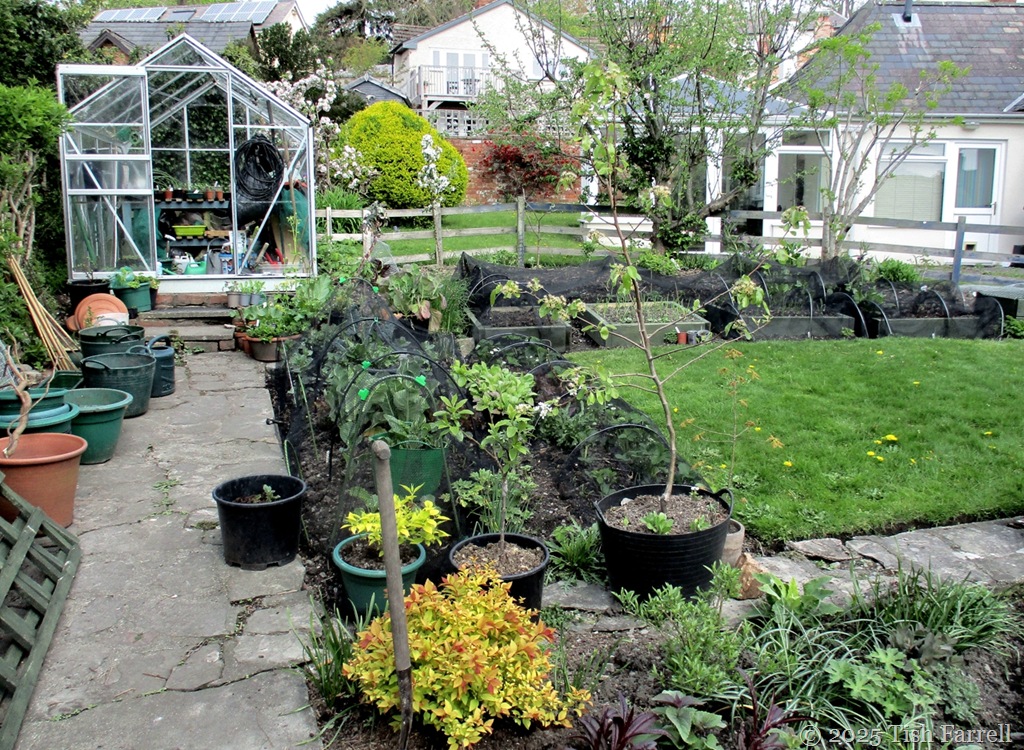
And now for some views of the back-door veggie plot:

IMG_3479

IMG_3473ed

*

I hope this might have enthused some of you to get potting. You can’t beat a freshly plucked green salad.

Quick Fix at The Opium Poppy Cafe

poppy bee and hoverfly

I’ve settled a few herbaceous cuttings in our rental house garden – geraniums, helianthus, Michaelmas daisies, centaurea, valerian, and oregano, and they’re all doing rather well.

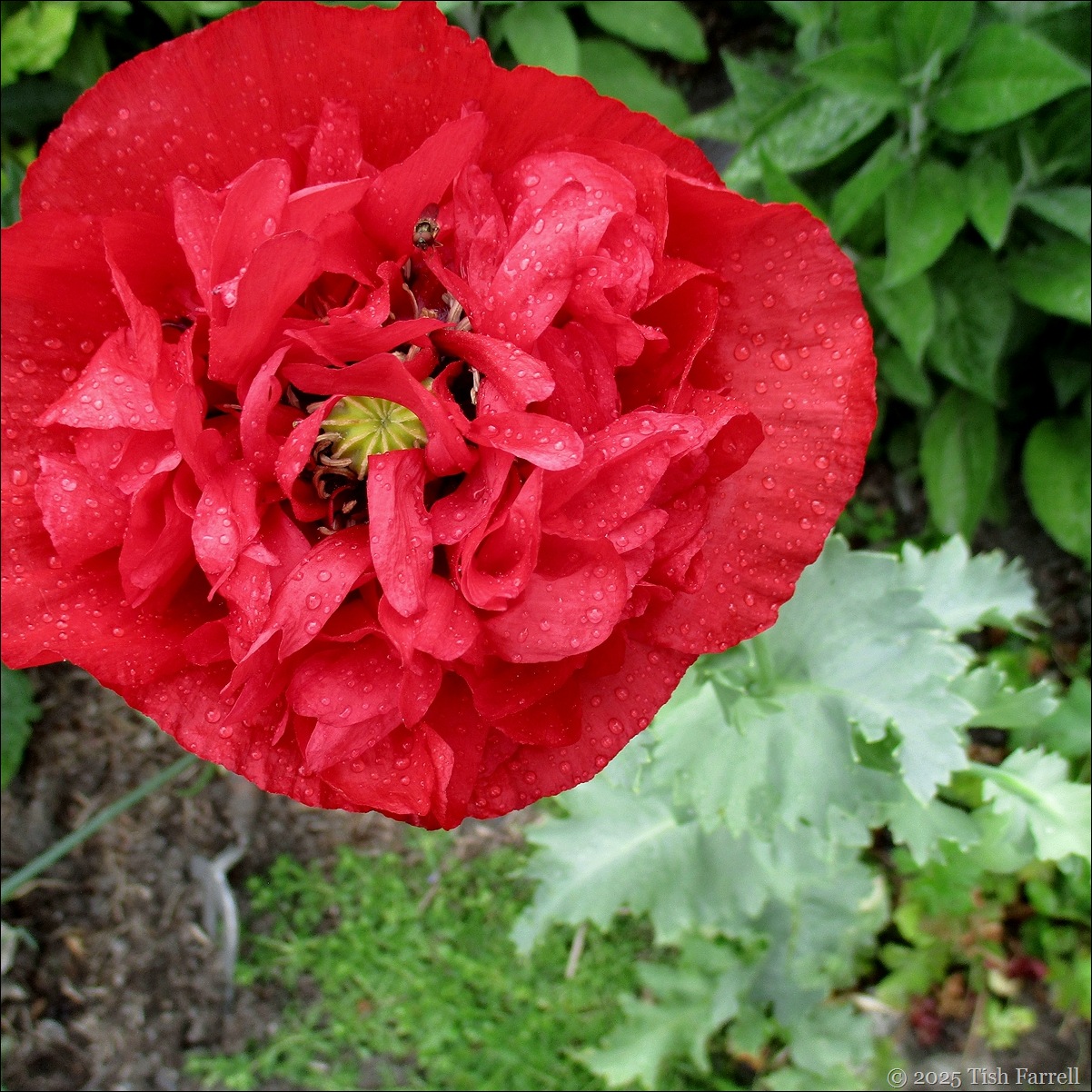
But this opium poppy brought herself, and this morning proved a hot spot for a bee and hoverfly feeding frenzy. Visitors included a white tailed bumble bee and a flurry of marmalade hoverflies.

https://youtu.be/v3abVg6pwWE

Backlit From The Wenlock Archive

P1050321

This week Ann-Christine at Lens-Artists wants to see our backlit subjects – always an appealing approach as far as Mrs. Farrell’s concerned. This year, though, the sun has been so tricksy – more going than coming – there seem to have been few chances for new naturally  backlit shots.

Which means dipping into the archive: a Much Wenlock retrospective in other words; I know some of you won’t mind revisiting Sheinton Street.

IMG_0777cr

Underneath the Horse Chestnut tree, last summer on the old railway line

*

IMG_0323re

Wild Arum Lily/Cuckoo Pint/Lords and Ladies last spring on Windmill Hill

*

IMG_7453cr

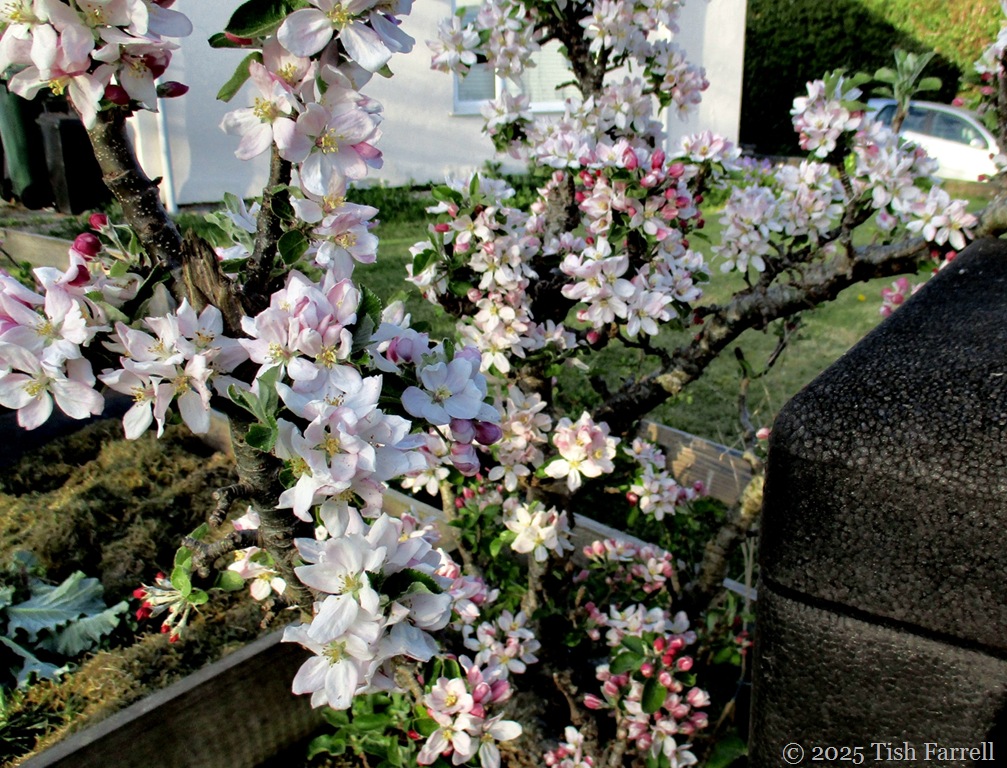
Evereste Crab Apple blossom over the garden fence

*

IMG_7572

On the kitchen table: lilac and hawthorn blossom

*

IMG_8160

Looking up into the ‘upstairs’ garden: lemon balm and montbretia leaves

*

sqIMG_0652

Winter sunset in the Sytche Lane rookery

*

IMG_8700

Late summer sunset on Townsend Meadow with nettles

Lens-Artists: Backlit

Still Life After The Allotment

100_4930

*

I’m still pondering on how I feel about giving up my allotment. Hmm.

But then given the long, wet and laboured lead up to spring, I know the soil on my plots will be cold and claggy and in no way suitable for any kind of cultivation. Probably for weeks yet. I also know the wind will be whistling up there, and I can do without the added chill factor. Yet there’s no denying it (as I look at these photos), we’re going to miss the produce, freshly gathered as needed and all grown without the taint of pesticide.

IMG_3242

100_4196

IMG_7438

IMG_8513

IMG_8531

IMG_8566

IMG_9646

*

We do have a small garden at our rented house, and I’ve already sown lettuce, rocket and spinach in big buckets. I have them covered in a large plastic covered cloche affair, and they’ve all germinated despite unpromising temperatures. I’m also going to get carrots going in large pots (they anyway often work better in containers) and peas in seed trays for sprouts. Yesterday I sowed cherry tomato seeds (in heated trays on the kitchen cupboard) and hope to plant them out along the sheltered walled border, though at this rate probably not till June!  And then there might be room for some French climbing beans.

On the other hand, we might suddenly find we’ve bought a house. In which case, my (mostly) portable garden will be moving with us.

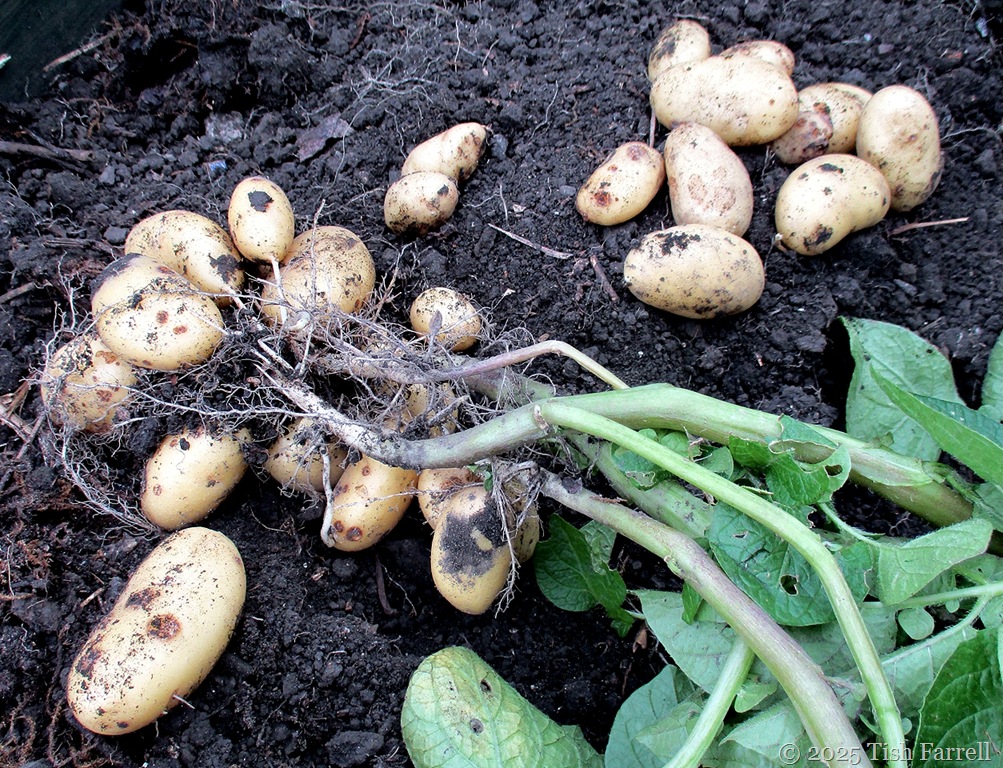
Lens-Artists #246: Still Life  This week Patti sets the theme, a favourite with me when it comes to photographing garden produce. I’m sure I’m not the only one to see beauty in freshly dug new potatoes.

Spring Comes Softly at Hergest Croft

IMG_2899ed

The second day of April, and the last day of our Presteigne cottage holiday, we set off to nearby Hergest Croft Gardens. The 70 acre gardens, part of the Hergest Estate, lie on the England-Wales border in Herefordshire, not far from Kington. From the first moment you set foot in the place you know it will be a gardener’s treat at every turn. And how could it not be? Not only does it hold the national collections of maple and birch trees, it is also six gardens in one, created from the late 19th century, and home to over 5,000 rare trees and shrubs; every specimen  mindfully placed and nurtured over the years by members of the Banks family, a dynasty of local lawyers-bankers-plants-men-and-women.

We’d hoped for sunshine, but the weather forecast lied. The day of our visit was overcast and, while the profusion of daffodils and magnolia cascades through the trees said ‘spring’, to this human it felt more like winter, the Arctic edge to the breeze lingering on and on, fingering into every exposed cranny. I was glad of my quilt-lined waterproof and woolly hat.

IMG_2876

IMG_2879

IMG_2880

*

Here and there were signs of winter hanging on. In fact most of the deciduous shrubs and trees seemed to think so too; there was a general air of arboreal slumber, their hint-of-green looks (on closer inspection) often down to profuse colonies of lichens, which tells you something about the quality of the clear, fresh air up on Hergest Ridge.

In the end it didn’t matter if spring was slow to happen. The gardens were beautiful, and it somehow added to the pleasure of small finds: a clump of violets, some snake’s fritillaries, primroses, more daffodil and magnolia vistas, a maple just unfurling:

IMG_2883ed

IMG_2869

IMG_2894

IMG_2890

IMG_2898

IMG_2897

*

Of course all such visits to English gardens must include a tea room, and Hergest Croft has a very fine one with a suitably gracious terrace overlooking the lawns and parkland. The cakes were so delicious I forgot to take their photo (apologies cake lovers). I was anyway distracted by a burst of sunshine. That didn’t last long either.

IMG_2901

IMG_2913

*

But by four o’clock even pots of tea and slabs of coffee and lemon cakes could not fend off the gathering chill, and there was one final spot to visit before heading back to the car and the warmth of our Presteigne cottage.

The kitchen garden.

At first sight it was definitely still in winter mode, although the rhubarb was putting on a good spurt, the terracotta covers set out  for forcing.

IMG_2922

*

Then we found the orchard, an avenue of ancient apple trees, and beneath them an exuberant (if slightly mad) planting of bulbs and hellebores. I forgot about shivering and laughed. We’d been looking in the wrong place. Who said it wasn’t spring yet?

IMG_2924

IMG_2927

Primrose Peace In The Midst Of Moving House

IMG_2575

Some of you may have noticed that I’ve not been around much in the last few months. And the reason? The Farrells are on the move, out of Much Wenlock and into next-door Broseley (ten minutes drive away), leaving the edge of Wenlock Edge for a new edge atop the Severn Gorge and above the world’s first cast iron bridge (1779).

In fact the Iron Bridge will be in walking distance of the new house, although maybe only on the outward foray. The Gorge is so steep, a bus ride back could well be called for. Anyway, this is what’s been going on – house selling, possessions culling, allotment retreating and finally, in the last three weeks, the hair-raising dash to find a rental property before the new owner moves in. Phew and double-phew. (Who knew that renting anywhere these days is so fraught with difficulties).

We began this whole moving process over a year ago, and it scarcely needs saying that it’s been very stressful. It’s definitely been a matter of snatching peaceful moments as and when. And of course, for gardening types, spotting signs of spring is always a welcome distraction from domestic chaos.  I was busy repatriating allotment tools when I first noticed the primroses along the hedge bank beside Townsend Meadow. This was around the end of January, and I was surprised to see them flowering so early (neck and neck with the snowdrops). Clearly, unlike Mrs. Farrell, neither mind the frigid temps we’ve been having.

IMG_2550

*

Some of you may also be wondering why we’re moving when there’s no obvious necessity. On anxiety-ridden days I have been wondering this myself. But then I have long been hankering for a home with a vegetable garden attached as opposed to one a field’s walk away.  Not that I won’t miss the walk, or the views above the town, or the raven that flies cronking over my polytunnel in the late afternoon, or the chats with fellow allotmenteers.

But I will be glad to leave the allotment’s dispiritingly claggy Silurian soil, the endemic pests and weeds typical of free-for-all community gardens and the outrageous numbers of snails. And of course, I am getting on a bit! I would like to nurture my soil, not do battle with it. Nor do I really want to dash across the field for the lettuce I forgot to pick earlier.
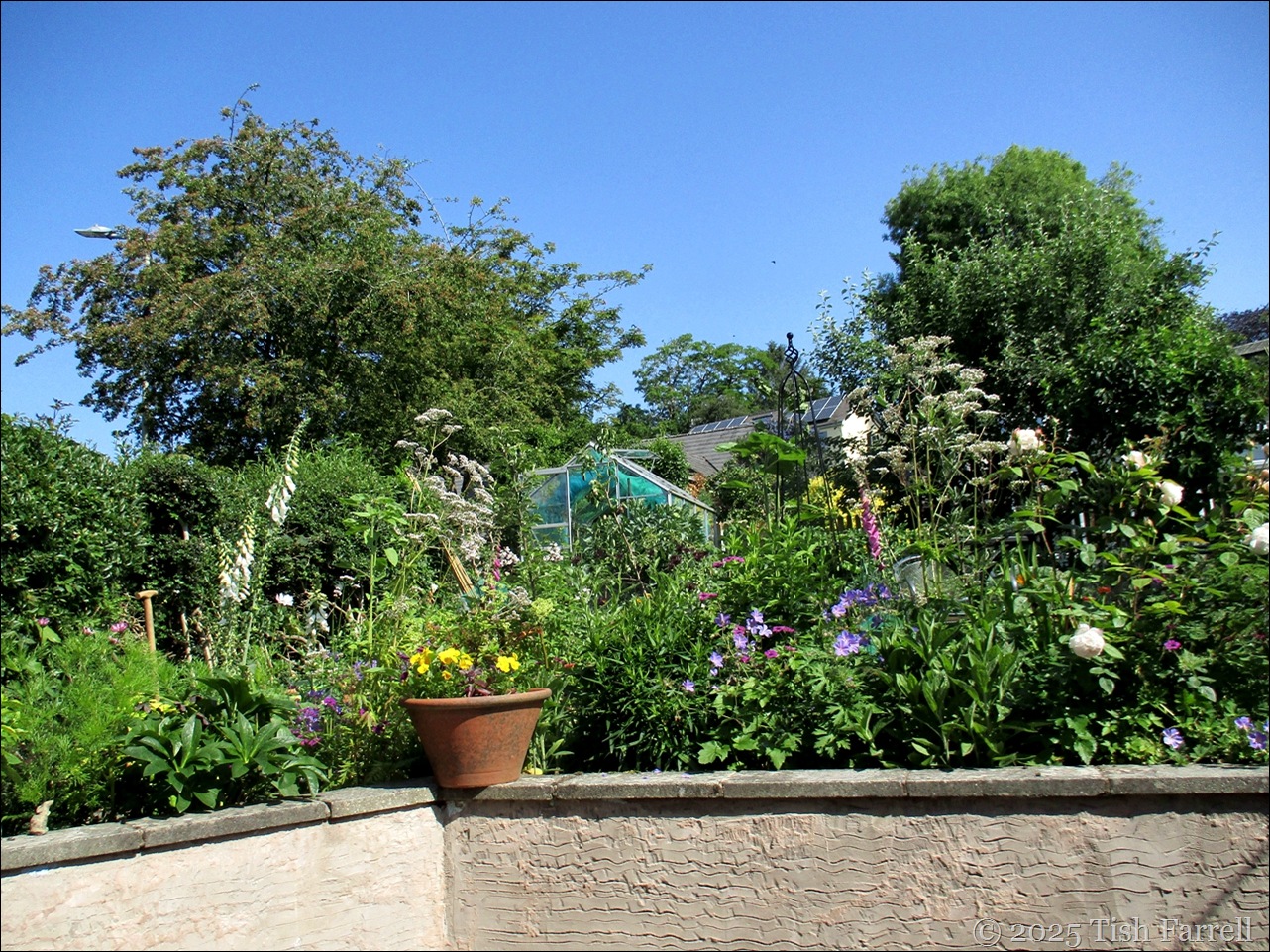
So the plan: to rent for a time in Broseley while looking for a place to buy – hopefully somewhere over Wenlock Edge into South Shropshire and closer to dear younger sibling, the hill country, and also to better functioning public transport systems.

And yes, I will be sad to leave our upstairs-downstairs garden, and Graham his custom-made, super self-built shed. We’ll also miss our quirky cottage (though not the spiders). I’m sure, too, we’re going to feel more than a touch stranded in a rented house that’s not at all our style, to say nothing of the daunting prospect of moving TWICE.

IMG_3493

Summer garden and Graham’s peaceful place freshly built

*

But then Broseley is a very fascinating old town, whose maze-like streets (jitties) of higgledly-piggledy cottages, reflect the arrival of immigrant miners way back in the 1590s when the town’s population of 5,000 was apparently much the same as today’s. The other key industry was clay pipe making, the products exported around the world, and the pipes themselves referred to as ‘Broseleys’.

Here’s a nice taster of what’s to explore from Broseley Historical Society.

Meanwhile, as the packing cases pile high in the living room, and sixteen years of covert dust alarmingly reveals itself, out in the garden, all is still wintery, the crab apple tree eaten bare and the guerrilla garden over the fence very endy.

IMG_2551

*

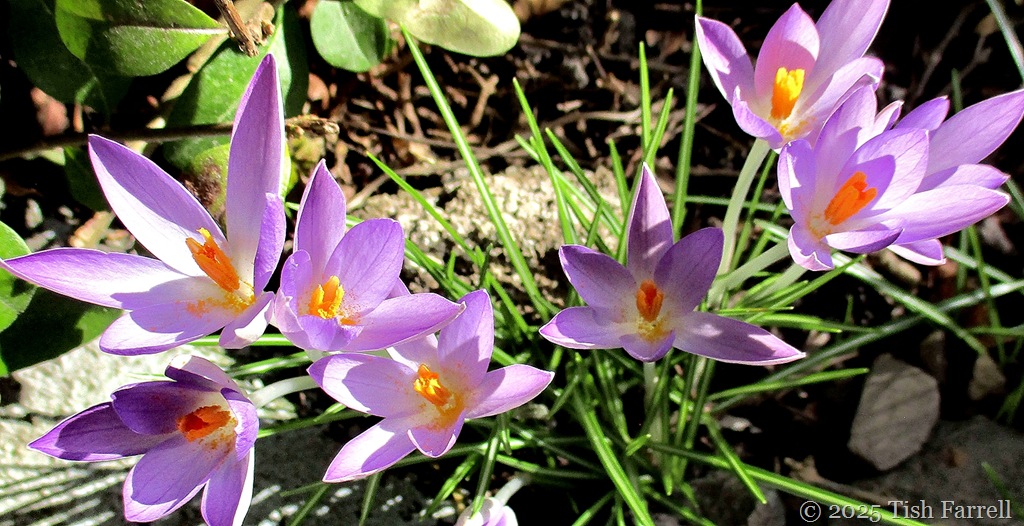
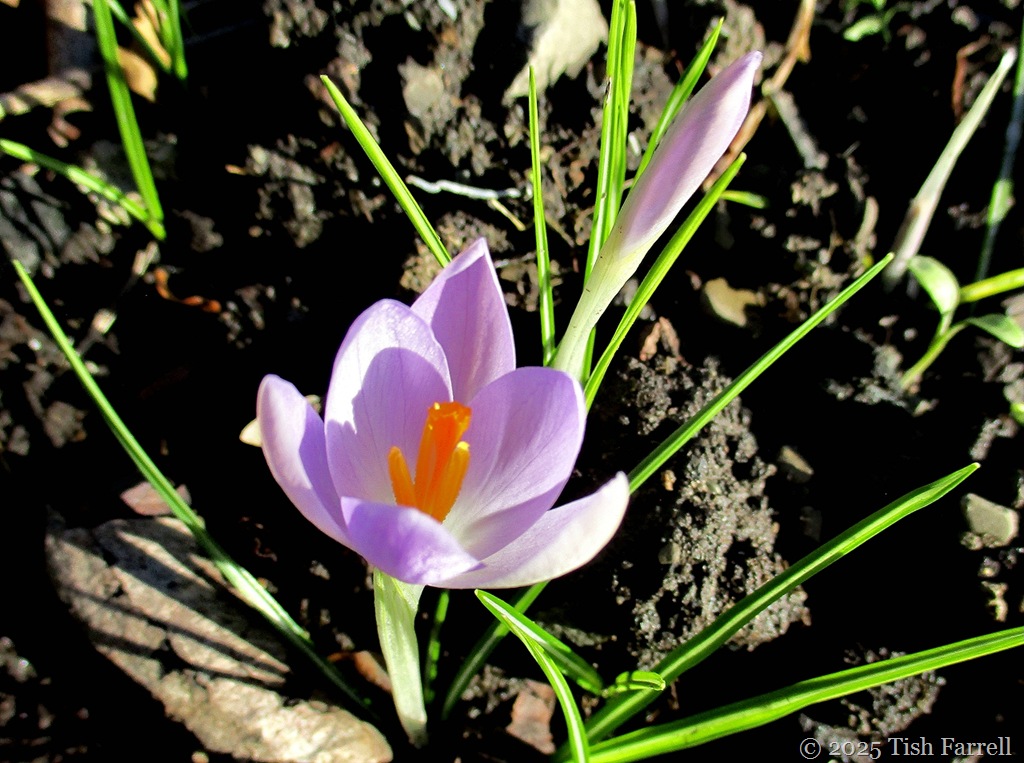
But then in the shady corner behind Graham’s shed there’s  a small scatter of miniature crocuses. So soothing to spend a few quiet moments with them before the big move at the end of the week (with the added thrill of forecast SNOW!)

IMG_2559ed

Lens-Artists: Finding Peace This week Tina’s theme could not be more apt here on Sheinton Street.

Over The Garden Fence ~ News From The Crab Apple Fly-By

IMG_2475ed1

Well, haven’t the birds tucked in well over the past few weeks. I have to say, though, I rather begrudge the number of pigeons who’ve come scoffing at our little Evereste tree. But still, the blackbirds have had their fair share too.
Here’s how the tree looked in early October, aglow in late-day light:

IMG_1890ed

*

And in no time at all it will look like this:

IMG_0297re

*

And like this:

IMG_0366re

*

And so the gyre of life, loss and renewal endures; never mind the doom-mongers.

IMG_2123ed

Today Over The Garden Fence

IMG_2123cr

This morning we woke to thickly frosted panes on the cottage roof lights. But what a change after the dank and gloomy days. The frost came with added sunshine. And blue-sky brilliance. And frosted sparkles. And somehow cold weather doesn’t seem half so shivery when it brings wall-to-wall brightness.

This is the Evereste crab apple tree by the back garden fence. The pigeons and blackbirds have been scoffing the tiny apples. At least half the crop has gone already. It helps that the fruits are much smaller this year so the birds can get their beaks round them. And in between times, the apples that remain make fine beaded garlands, which we can see, looking up through the kitchen’s French windows. It truly is a treasure of a tree.

IMG_2112cr

IMG_2118cr

IMG_2119cr

*

Back in August and September:

IMG_1295ed

IMG_1317ed

CFFC: Apple Red Colours

Wildegoose Garden’s Sculpture Show

IMG_1512ed

Real-life rabbits are the last thing this gardener wishes to encounter in her garden, but these terracotta ones by artist Sharon Griffin would be more than welcome. They were spotted back in September when our favourite plant place Wildegoose Nursery (set inside a historic walled garden) hosted a sculpture show by our favourite gallery, Twenty Twenty. It was a perfect match all round: art among the late summer perennials on a dreamy afternoon. And blissful to meander the garden paths and come upon some extraordinary creations. Here is a selection of works that caught my eye.

IMG_1516ed

Self in stoneware with sgrafitto by Sharon Griffin

*

IMG_1540ed

Mitosis: a storm fallen field maple by Glen Farrelly

IMG_1557ed

Flaunt 2022 powder coated steel by Anya Beaumont

IMG_1562ed

Starlight Tower in terracotta stoneware by Emma Fenelon

*

IMG_1520

Insight: stone and bronze resin by Sue Jones

*

IMG_1539

Walking Squares #4 

Join Becky on her November walks.

Windfall Quinces At The Allotment

IMG_1993

For one reason or another, but mostly due to some serious rainstorms, I had not been to the allotment for several days. When it wasn’t raining, slithering across the field in the mud did not appeal. And then the wind got up. And then just when I thought I’d go, another downpour began. And so it seems that after our too arid  summer, we’re in for a very wet autumn.

But yesterday came the window of opportunity. The morning was almost sunny. We anyway needed some veggies. So wellies on, off I trudged along Townsend Meadow, which is now a green haze of sprouting wheat. The rain is suiting it. It has also been suiting all the field beans spilled during the summer harvesting. They have been pushing up through the wheat, and I noticed yesterday that the farmer has clearly been over the field with his big herbicide sprayer. I find it astonishing that plant-killing chemicals can be so attuned as to know a broad bean seedling from a wheat stem. Anyway, the application is clearly doing its stuff, and the wheat looks fine.

IMG_1988

*

Up on the plot all is soggy and much blown about, and certainly not at all photogenic. There was lots to gather though – leeks, beetroot, chicory, carrots, and still some tomatoes, lettuce and rocket in the polytunnel. I didn’t stay long. The wind was gusting up into a small gale. You can see what it did to quince crop. The tree this year was laden. It seems a waste not to use the fruit, but apart from quince jelly, which needs loads of sugar, it’s not really a favourite in the Farrell household.

IMG_1893

Townsend Meadow: wheat and field beans (before the spraying)

#WalkingSquares This November join Becky in her daily walks, or whenever you can, the only rule, the header photo must be SQUARE.