Musings On Time Past ~ What Do We Make Of It?

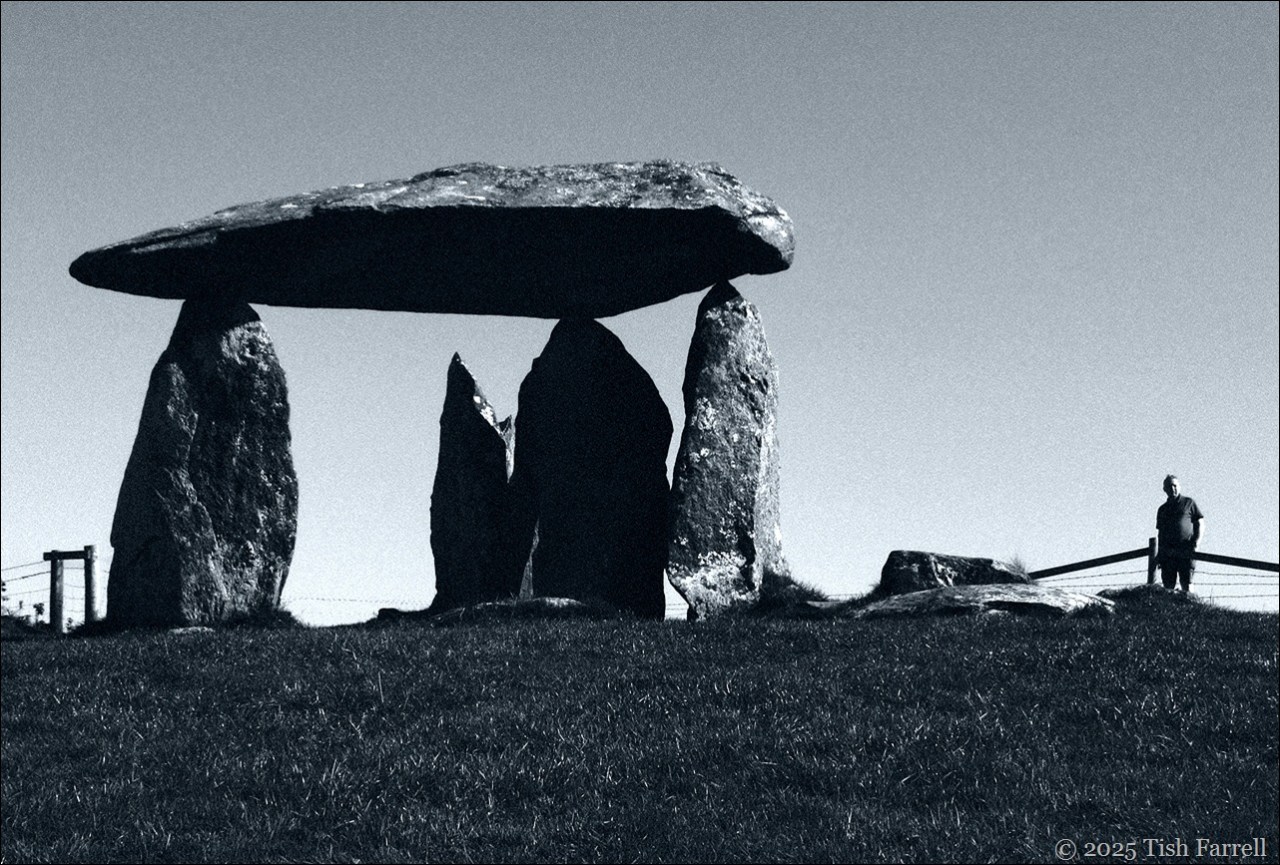
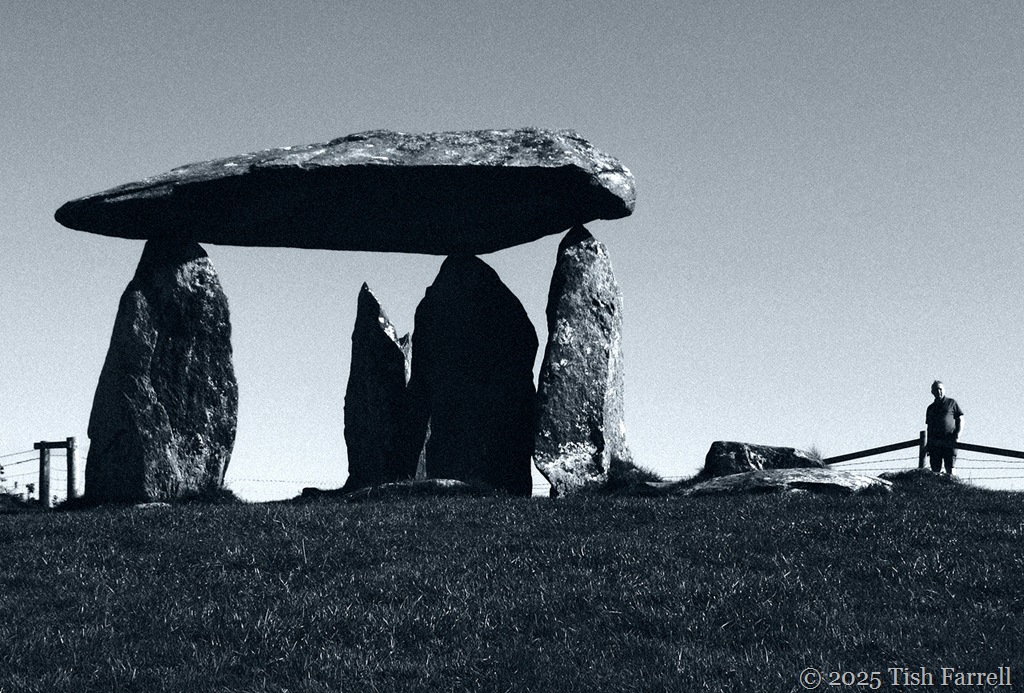
pentre ifan

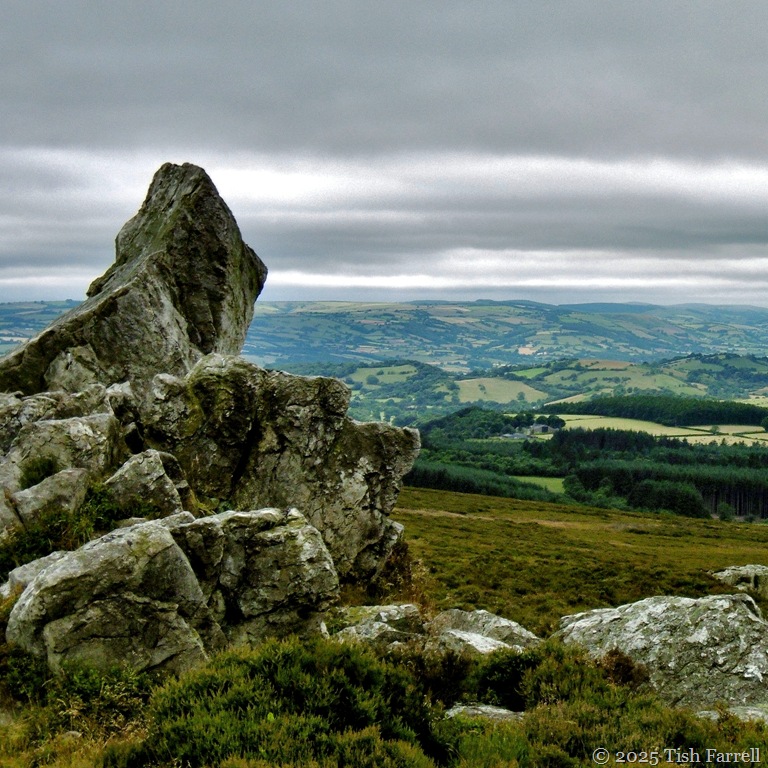
Remains of Pentre Ifan chambered tomb, Newport, Pembrokeshire c. 3,500 BCE

*

We humans have problems with time: too much of it; not enough; the wrong kind for a planned action or pronouncement; then there’s ever that tale of elders who forget what they had for breakfast, but recall in minute detail events of decades past.

We try to pin it down of course, have long done so with all manner of devices. Most likely the late ‘Stone Age’ people who constructed Pentre Ifan above, had contrived the means to keep track of it. For instance, the placement of so-called standing stones, the particular configuration of megalithic circles, the siting of tomb entrances, whence to observe the movement of stars, the angle of the sun, and so know where they stood in relation to the earth’s perceived cycles. A time to plant; to make a journey; to hunt; to trade; mark seasons for rites and festivals.
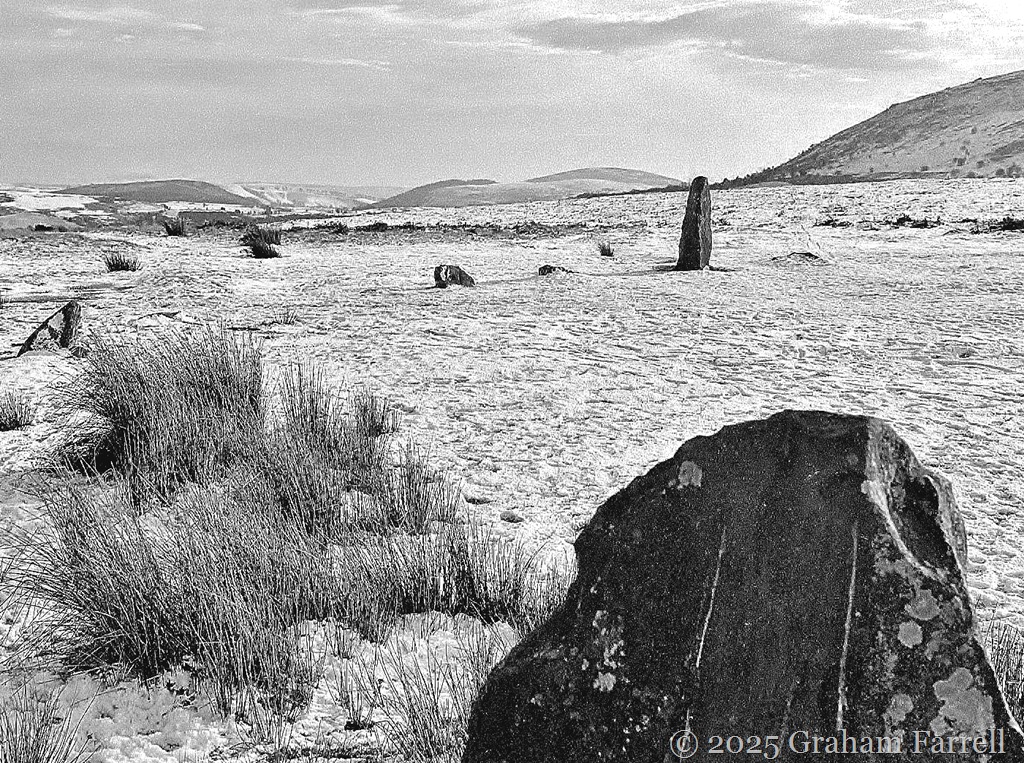
Mitchells Fold

Mitchell’s Fold Bronze Age stone circle, Shropshire-Powys border

*

We don’t know who these prehistoric (pre-literate) people were. There is no apparent connection between us and them. How do we even begin to grasp what five and half thousand years actually means. Most of us, unless we spring from some dynastic household that records family pedigrees down the centuries, or derive from some close knit community where little has changed for generations, cannot name our four pairs of great grandparents without the help of genealogy.com. We certainly have no true idea of how they lived day to day, unless they kindly left us their diaries; and even then…

As L.P. Hartley says in the opening of his novel The Go-Between: ‘The past is a foreign country; they do things differently there.’ And for most of us, too, our generations of ancestors left no mark, but were ever caught up in ‘big people’s’ histories; the machinations of church and state.

*

There are anyway far bigger pasts than our human one. Here in my home county of Shropshire, in the borderland known as the Welsh Marches we have  some of the planet’s oldest parts. Seven hundred million years old, in fact.

Set against such a monumentally unimaginable timescale, the history of humanity, including that of our primate ancestors, is not even a magnified dot on the horizon.

This is what Peter Toghill has to say about the Marches geology:

The beautiful landscape of the Welsh Marches
is underlain by a rock sequence representing ten of
the twelve recognised periods of geological time…
This remarkable variety, covering 700
million years of Earth history, has resulted from
the interplay of… (1) erosion and
faulting which have produced a very complex
outcrop pattern; (2) southern Britain’s position near
to plate boundaries through most of late
Precambrian and Phanerozoic time; and, most
importantly, (3) the incredible 12,000 km, 500
million year, journey of southern Britain across the
Earth’s surface from the southern hemisphere to
the northern, caused by plate tectonic processes
.

An introduction to 700 million years of earth history in Shropshire and Herefordshire

*
P1030691

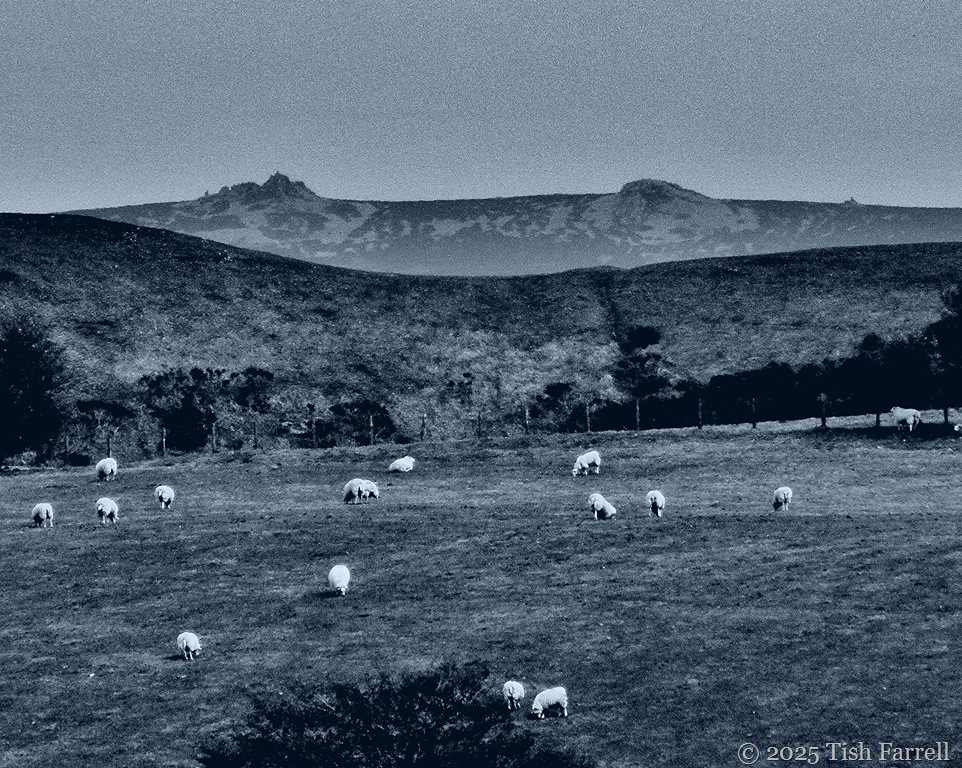
This distant view of the Stiperstones from Mitchell’s Fold stone circle, shows two of the Ice Age tors along the five mile summit, (Manstone the highest point on the left). This hill was probably formed from the laying down of quartzite sand when the whole of Southern England lay in the southern hemisphere, somewhere near the Comoros Islands in the Indian Ocean. That was around 500 million years ago, about the time when it began to move north. The tors themselves were exposed far more recently, by the repeated freezing and melting of glaciers that nudged up against them during the last Ice Age (115,000 to 12,000 years ago).

*
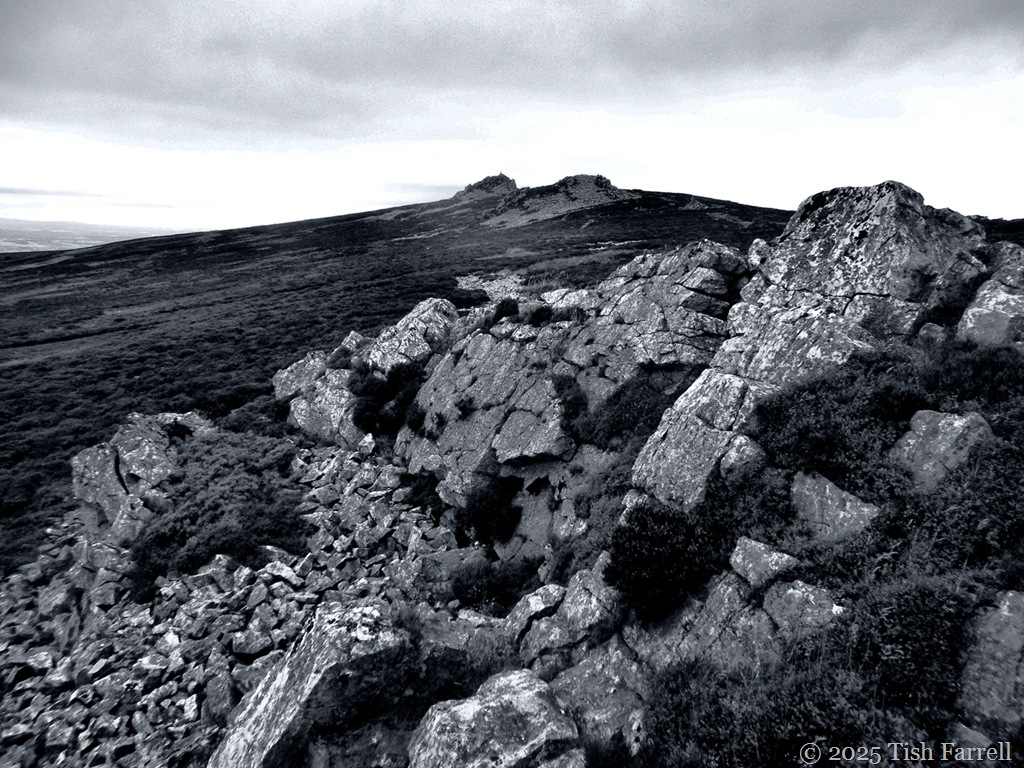
Stiperstones shaped by ice sheets freezing and melting

P1080553cr

Makes me think we humans sometimes think too much of ourselves and what we think we have achieved. Maybe the planet has the edge on us by a few hundred million years. It’s certainly done some momentous shunting and shifting.
Lens-Artists: Ancient

After The Storm ~ Six On Saturday

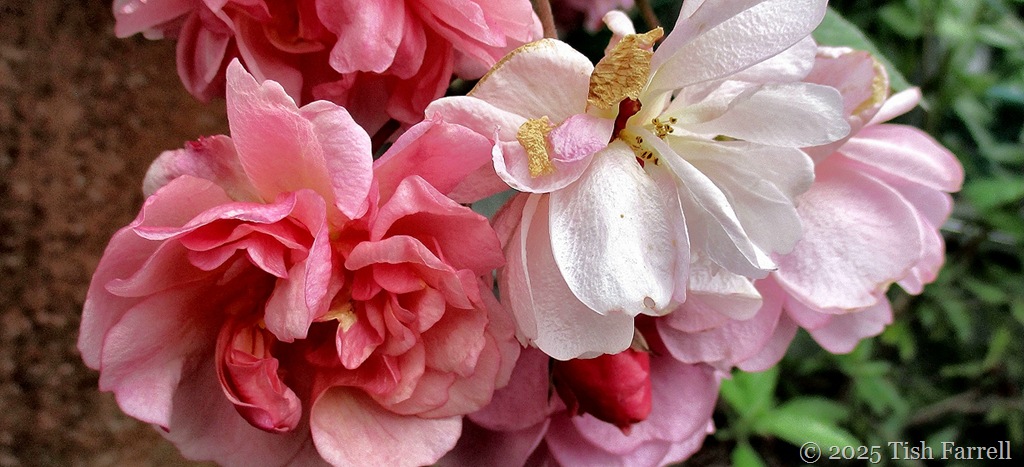
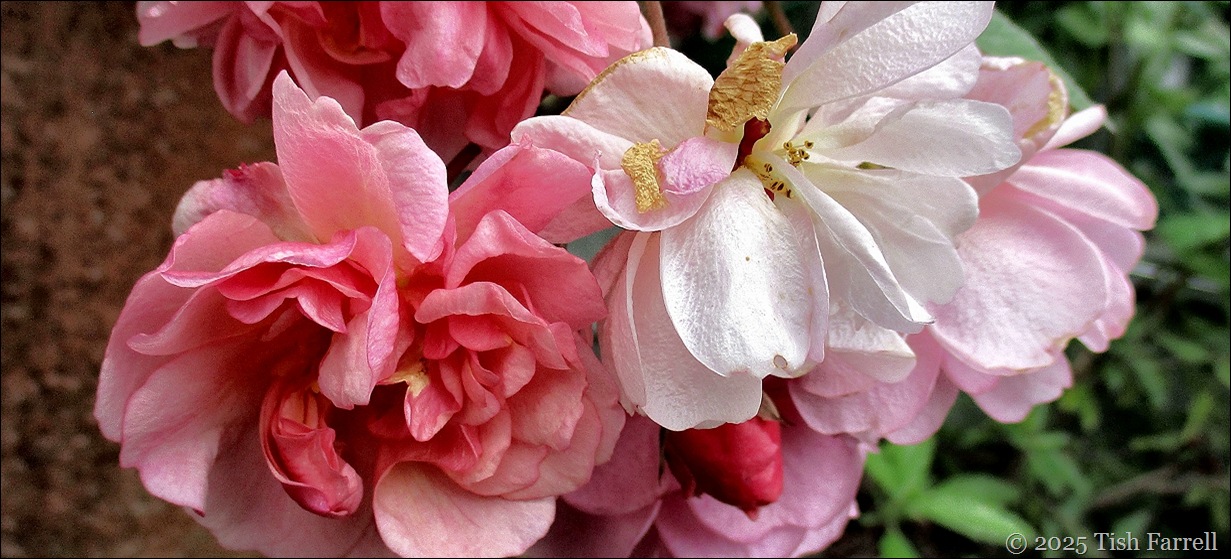
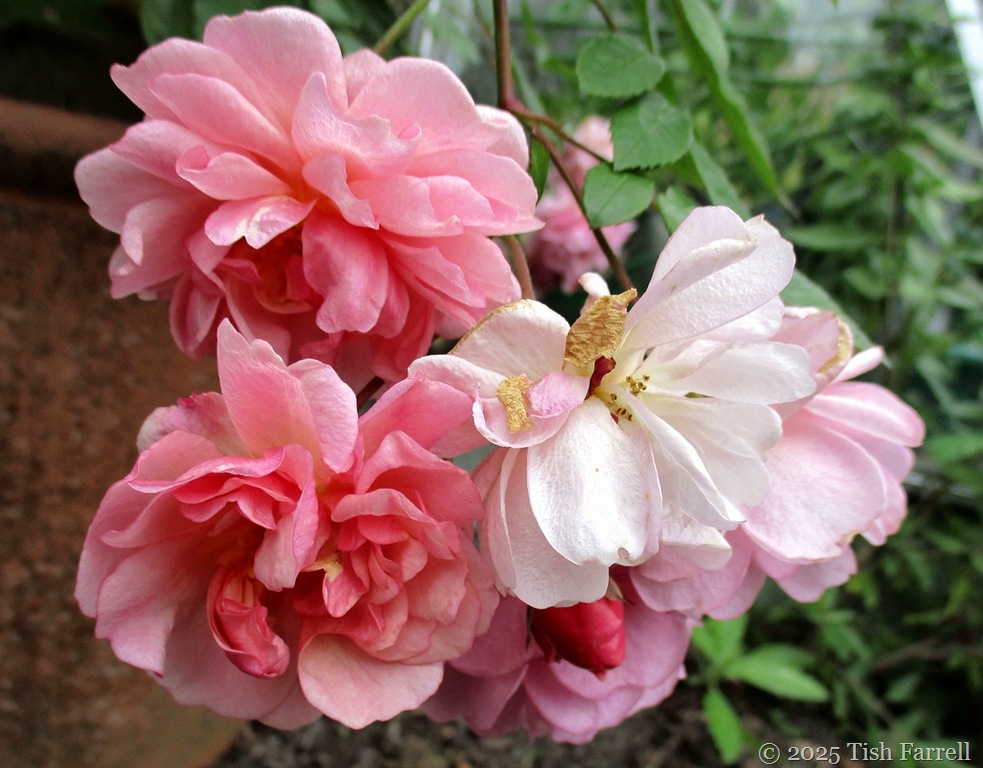
Cornelia rose

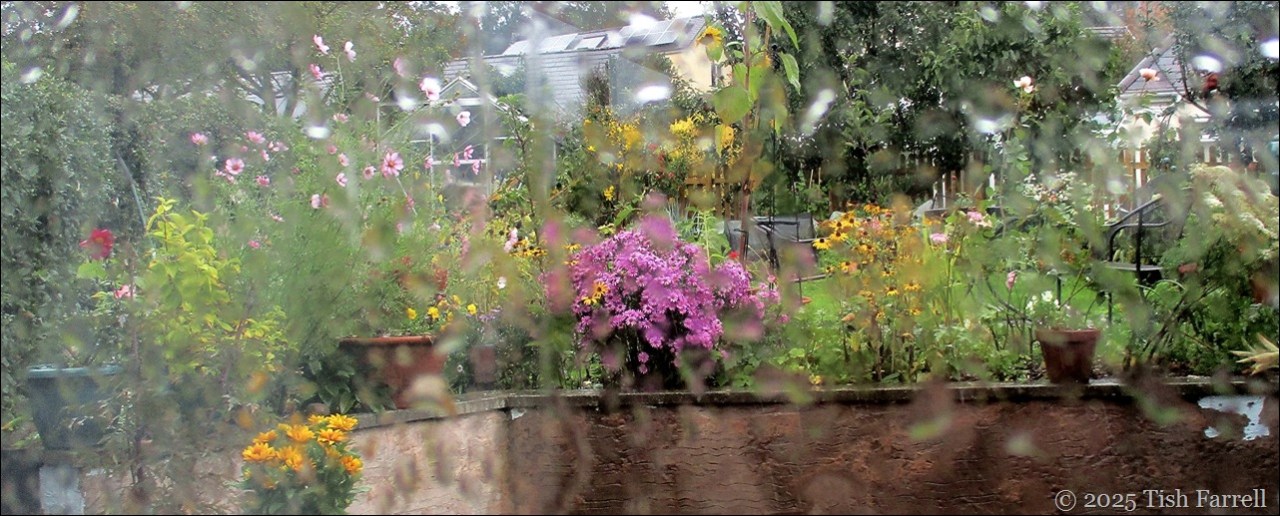
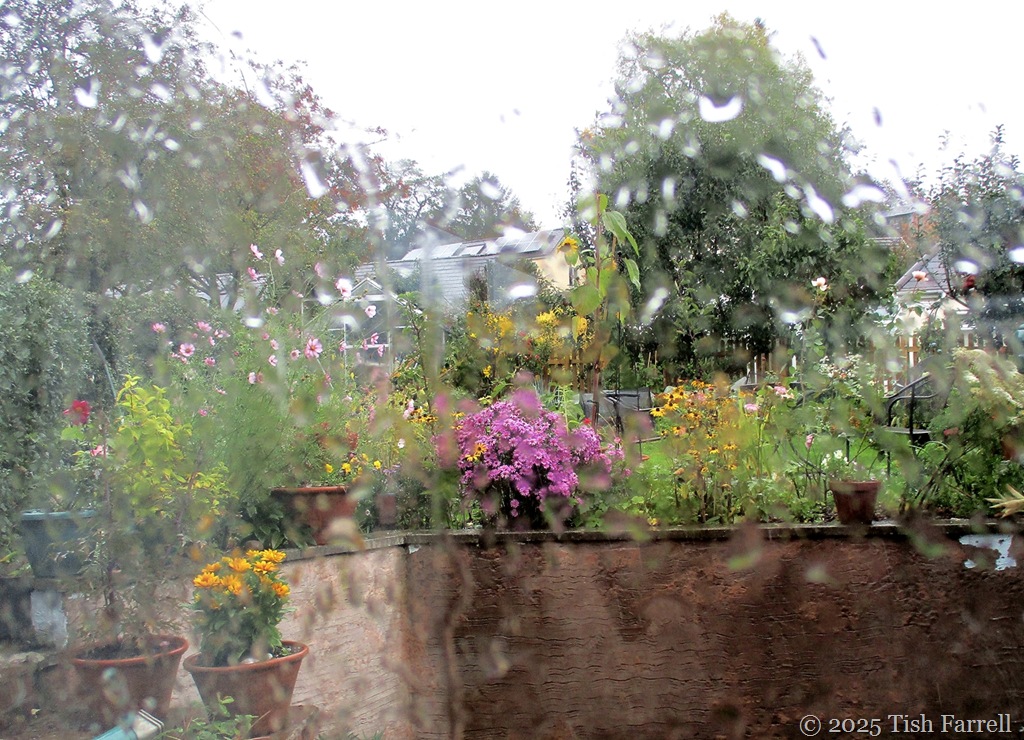
This time last week, the wind was racketing around the garden, threatening to uproot and mash the herbaceous plants. But in the end, damage was minimal. In fact some plants have been thriving since.

And especially

1) Cornelia rose

She’d been in a big pot by the greenhouse all summer. And as she was new, I’d been concerned about keeping her suitably watered during the long summer drought. She did flower a little back then, but not for long. But since the storm, and removal into a bigger, bottomless pot, she has sent out elegant arching stems laden with buds and blooms. She’s a hybrid musk, and the flowers, though small like wild roses, smell delicious. I’m hoping she will eventually fill the gap between the hedge and the greenhouse.

2) Cosmos bigger and better

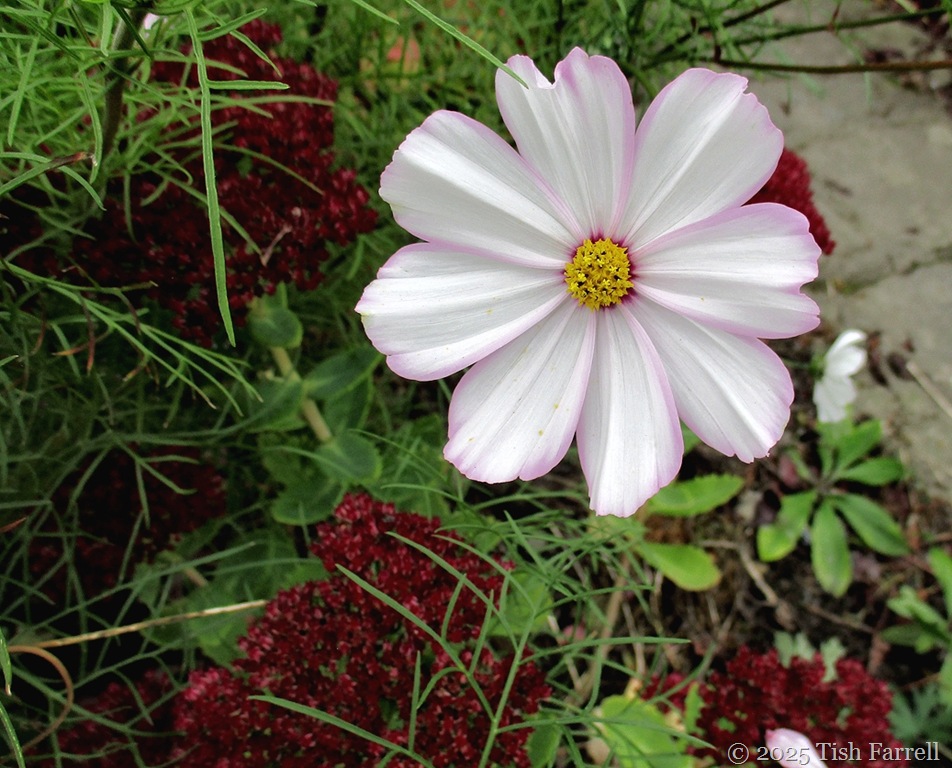
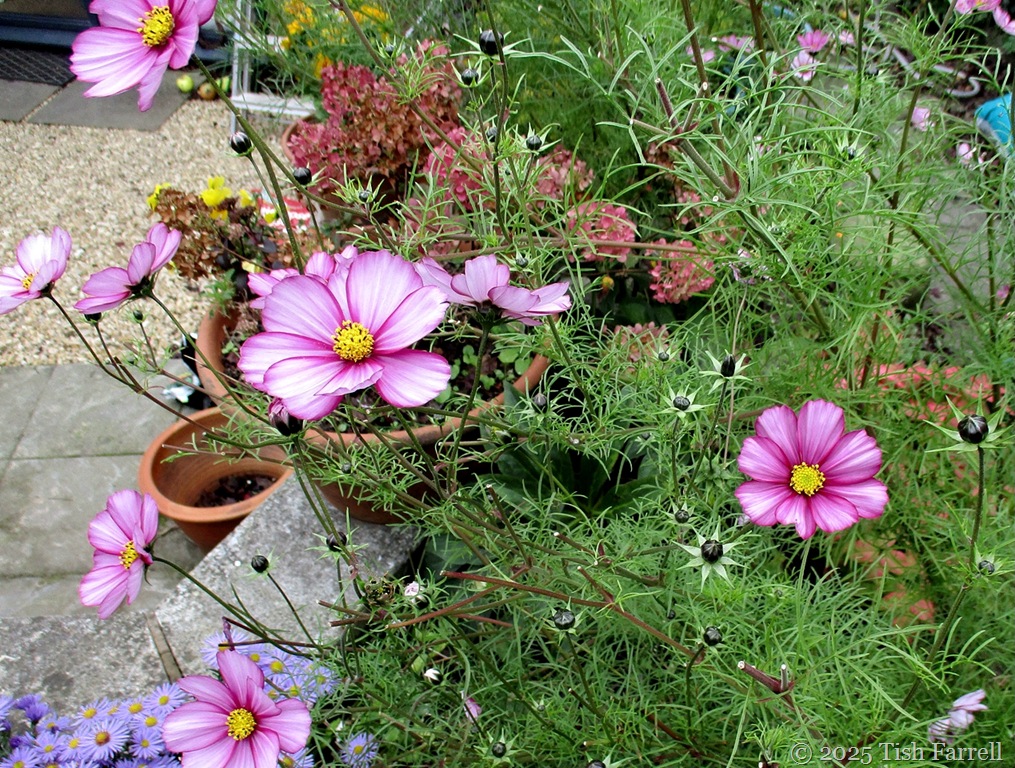
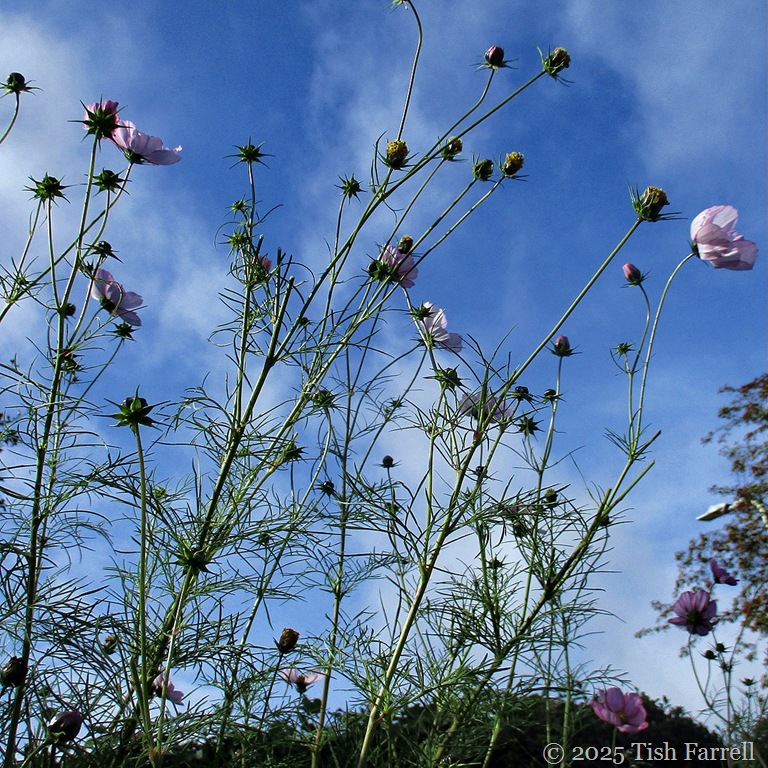
The gale might have blown their frocks off, not to mention nearly scooting them out of the ground, but the Cosmos plants on the terrace wall have come back bigger and better, and are covered in new buds. I’ve been filling vases with them.

cosmos

Cosmos 2

*

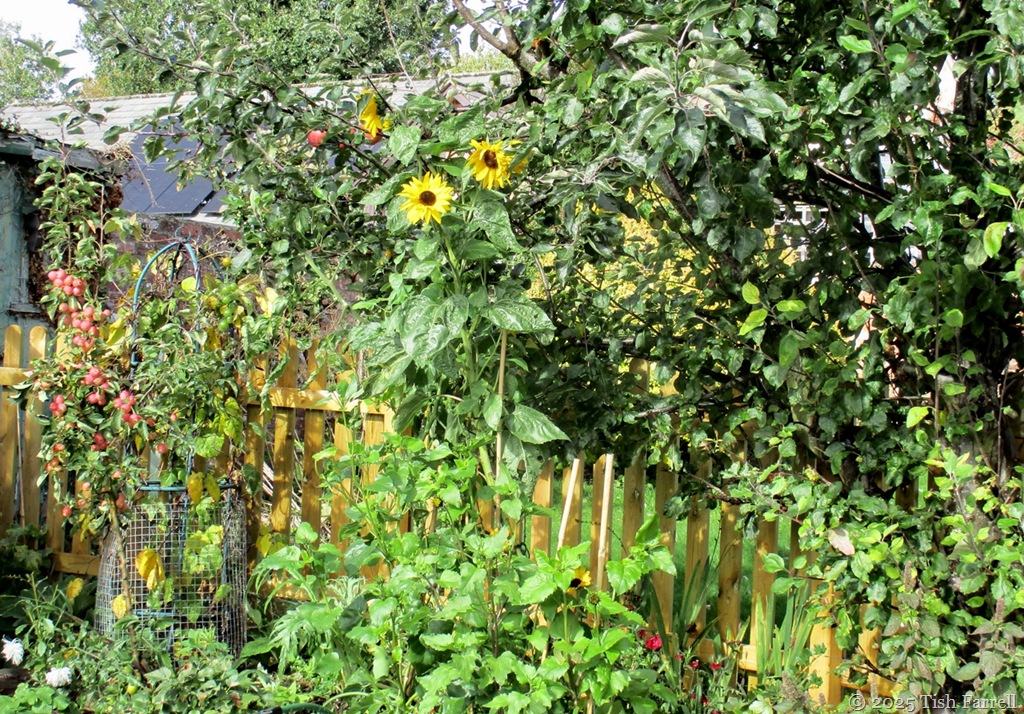
3) Tree tomatoes?

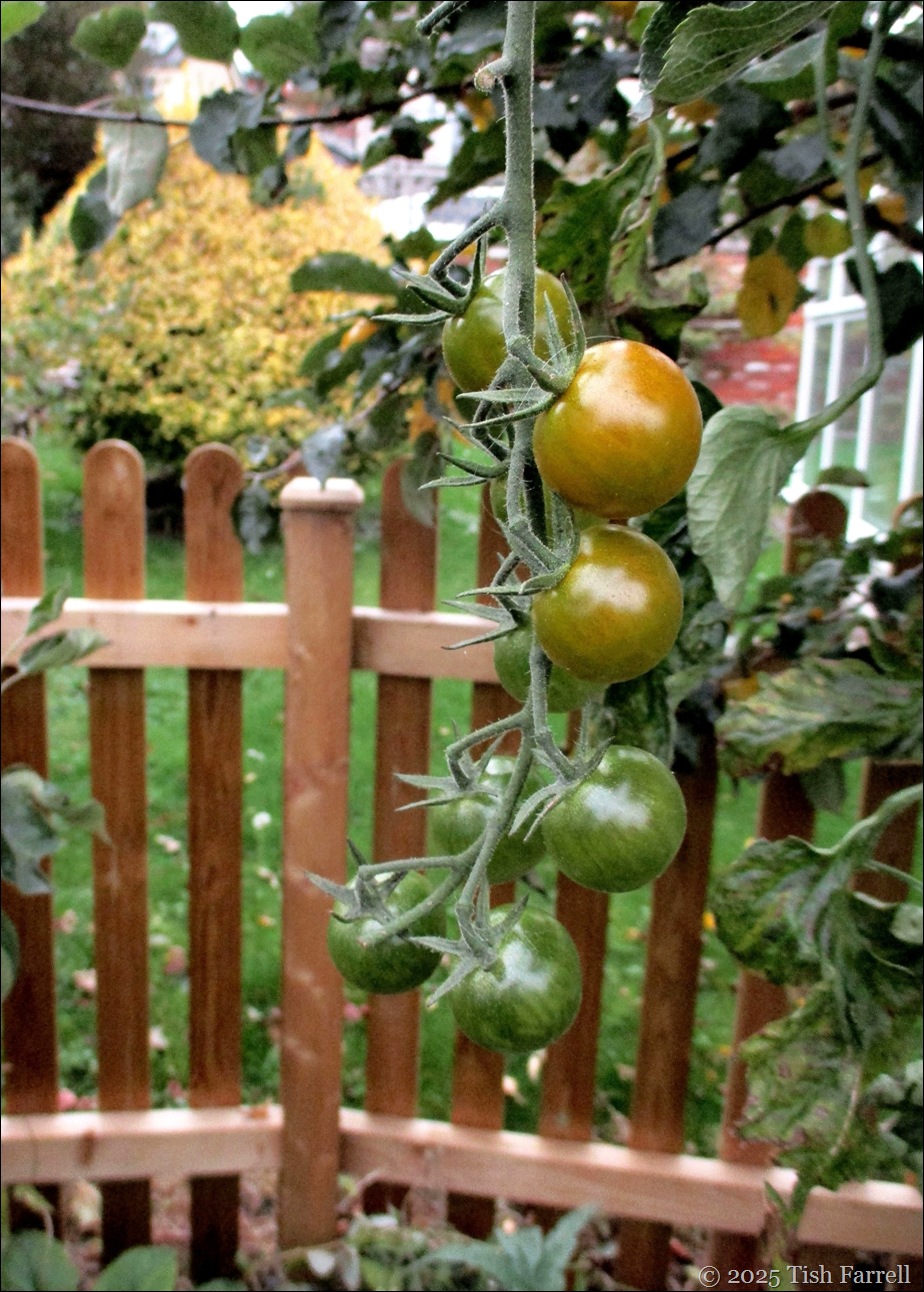
Nor did the big wind deter tomato production in the cooking apple tree.  Daft, I know.

sungold

This plant was one of my rejects, a pot-bound Sungold seedling that had hung around on the garden path long after I’d potted up the main plants in early June. Eventually, I stuck it the ground , and generally forgot about it, though I did provide it with a supporting stick. Some time later I discovered that it had climbed way up into the apple tree, and so chopped off its top growth. And again ignored it. Then it began fruiting and has been doing so for many weeks – just a few tomatoes at a time. They’re delicious too.

Here it is – you can just see a strand of green fruit hanging down to the right of Jelly King crab apples, green obelisk behind.

apple tree

*

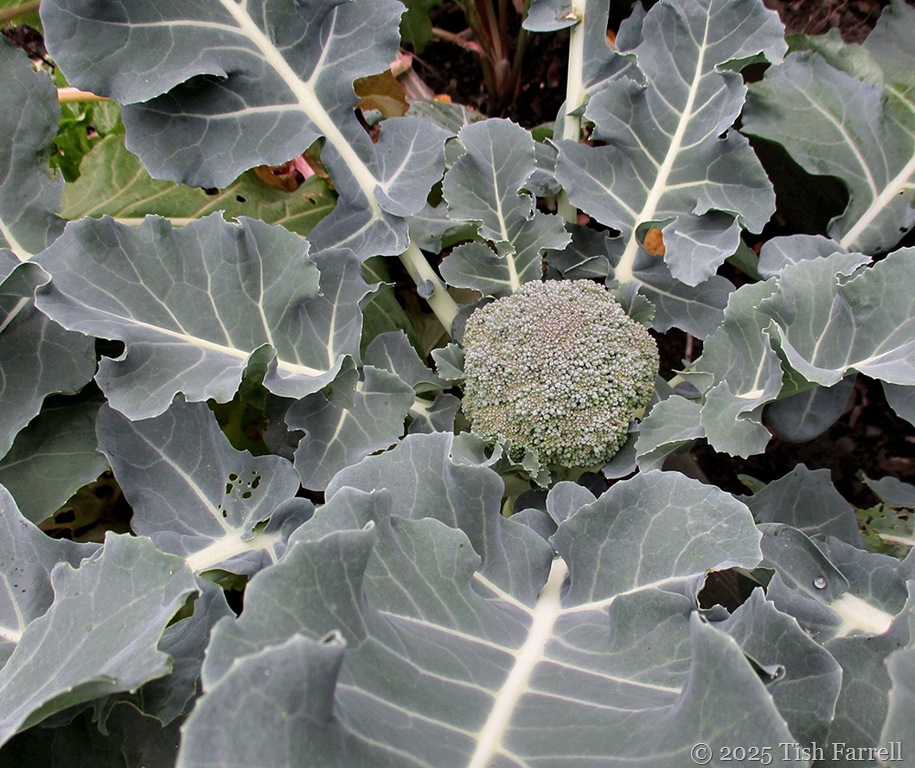
4) The Kabuki calabrese gets the prize this week for making me smile a lot. I always find it exciting when my brassicas start to sprout. And this particular plant has survived remarkably unscathed after the summer attack of flea beetles which make holes in everything of the brassica family. The flower head isn’t exactly big enough for two. Well, not yet. Watching brief activated.

Kabuki broccoli

*

5) Grumble of the week

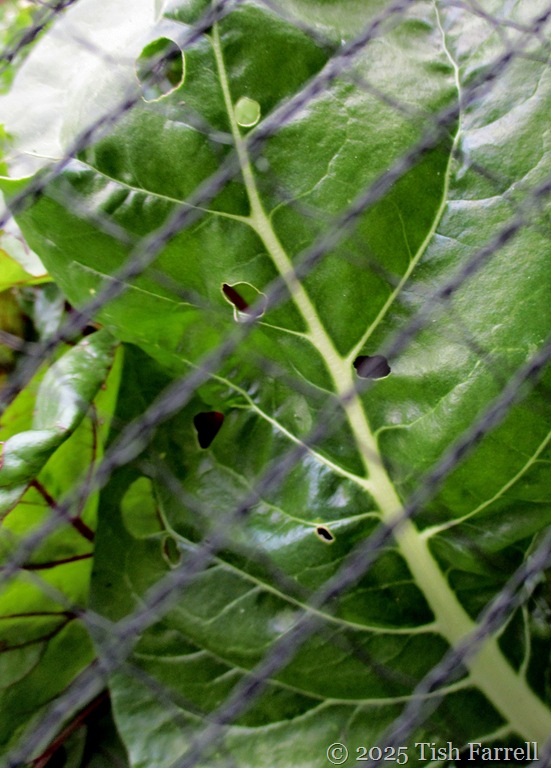
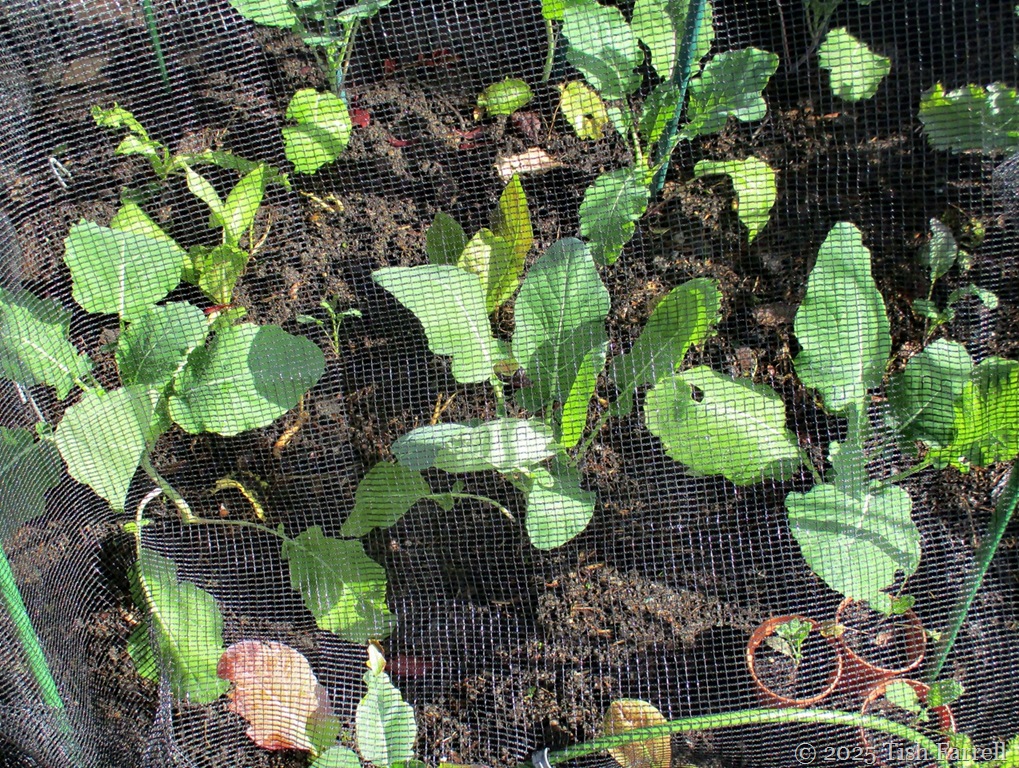
Well, there always has to be something. Now I’m wondering what on earth is making holes in my Swiss Chard (mature and seedling versions) and also the Perennial Spinach. I thought I’d finally protected all the edible greens from all comers with a covering of fine black netting. All summer I’d managed to fend off butterflies from the caulis and purple sprouting. And kept the pigeons at bay. But now I have holey leaves. He who is a sometime plant pathologist posits caterpillars, but I can see no obvious sign of them. Suggestions, anyone?

spinach pest

Swiss Chard

*

6) Sunbathing

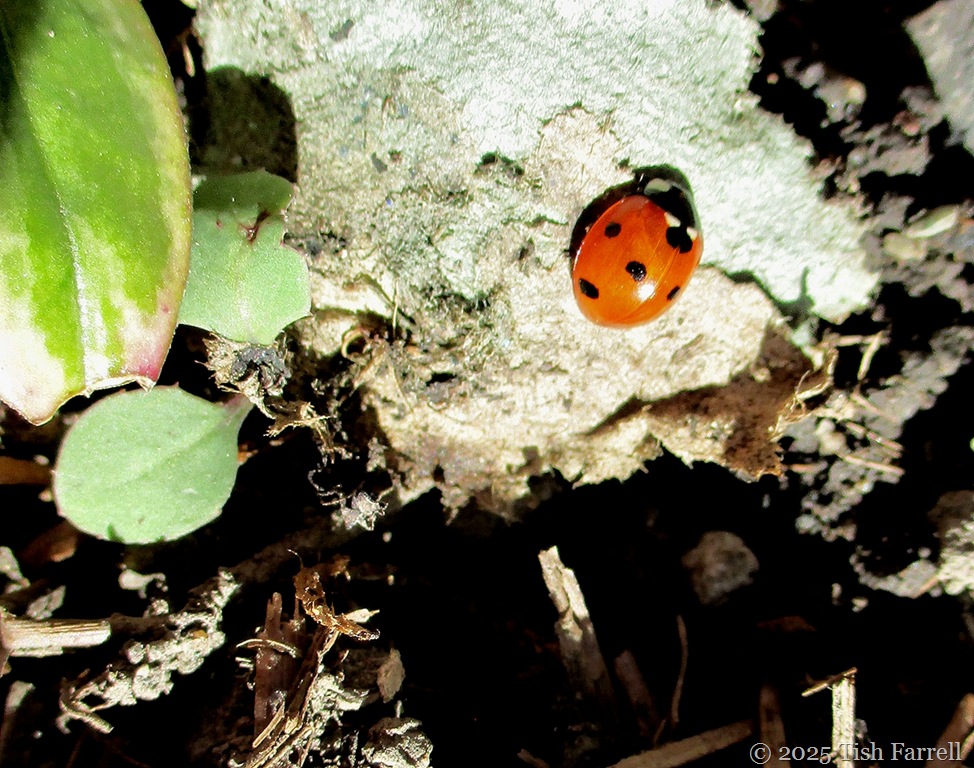
And not to end with a fit of gardening disgruntlement, since the storm we’ve been having some wonderful sunny spells, warm enough to make one put autumn woollies straight back in the cupboard. Even the ladybirds have been sunning themselves. I’ve been finding them all around the garden, including some very tiny ones.

ladybird

And that’s it from our Shropshire garden. Happy gardening, folks.

Please call in on our host Jim at Garden Ruminations.

Six On Saturday

Cornelia rose header

Feeling Blustered: Six On Saturday

IMG_9149

1. Storm-struck

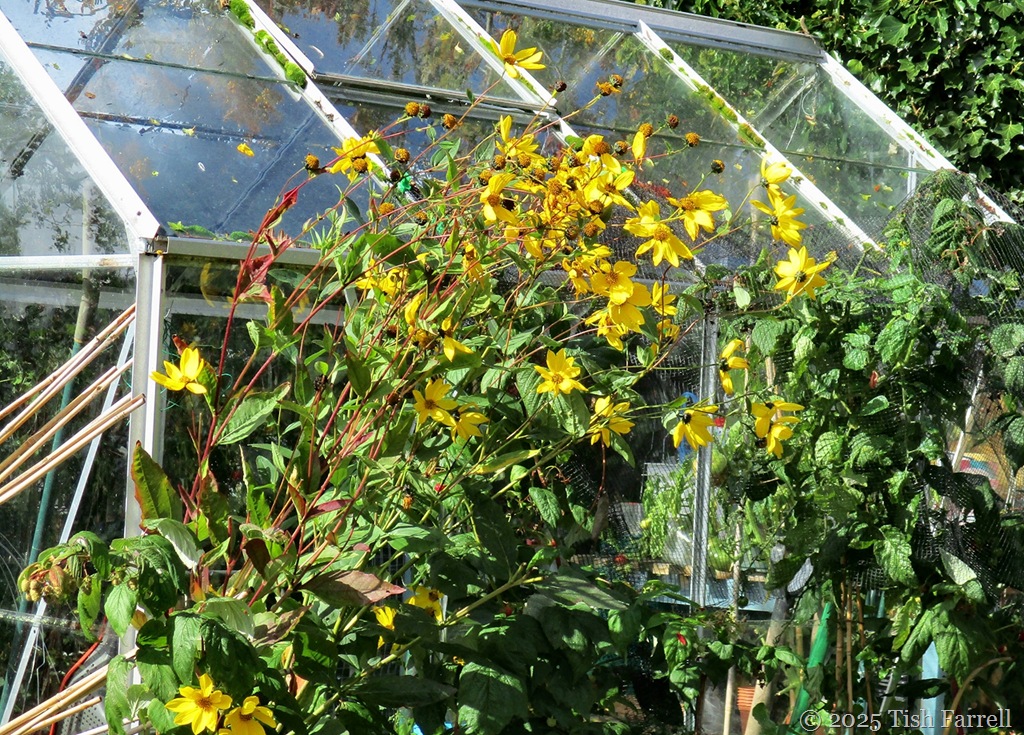
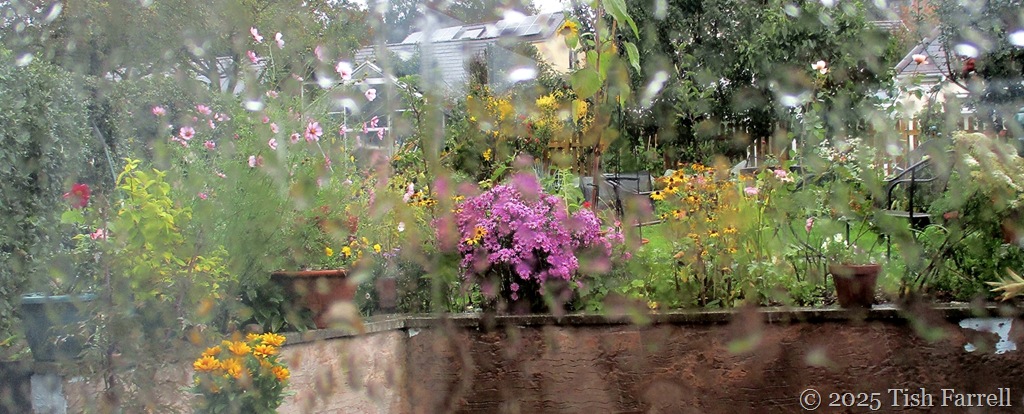
This morning at breakfast time – with a high wind whooshing about the place and rain lashing the kitchen doors, the garden definitely looked a no-go area. I could see three dozen bean canes splayed like pick-up-sticks across the top path by the greenhouse. Drat and double drat. When I dismantled the runner bean rows a week or so ago, I had forgotten to tether them securely to the hedge. I could also see the cosmos at the top of the steps being tossed about. Since late September and the onset of rainy days, it has been flowering magnificently. Now it was having its petals blown off. More curses. And I could see that the Selinum (farthest right at the wall top) which is still flowering as well as seeding, was now rearranged at a 45 degree angle.

Not a happy gardener.

IMG_9160

Cosmos unclothed; Helianthus blown away.

IMG_9180

And then, quite suddenly, towards midday, the rain stopped and the sun came out, although we still have a mighty blow, with now-and-then gusts that lift you off your feet.

I did a quick tour of the garden, but there was not much to be done mid-gale, apart from attempting a bit of support for the Selinum.

2: Apples

apples

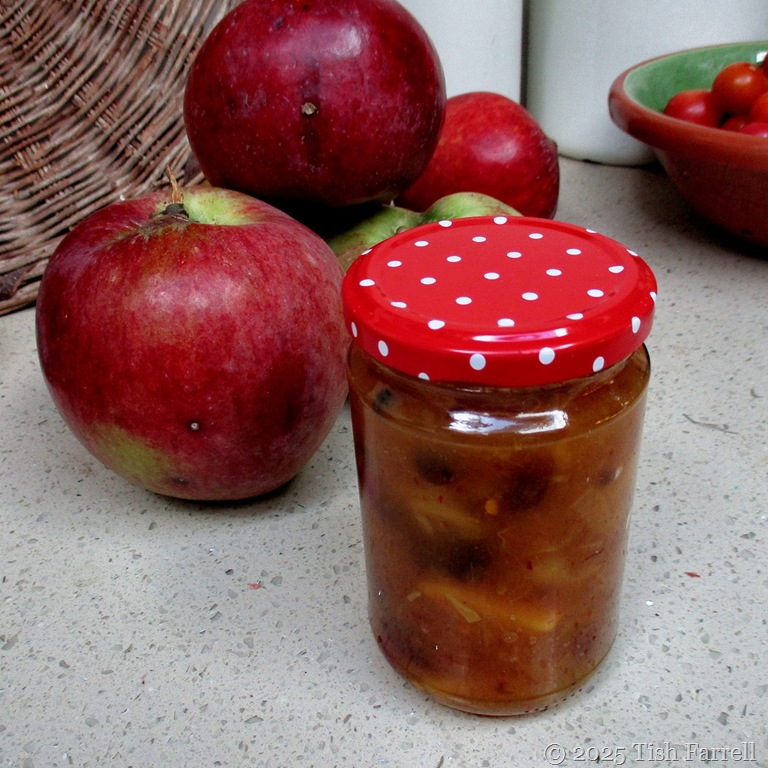
With the wind, I was expecting another heavy crop of windfalls. But when I went out to check the damage, I was pleased to see that most of our remaining apples are still clinging sturdily to their stalks. Which is good news as I already had a stack of windfalls in the kitchen. And there’s only so much apple sauce we can eat, and all the neighbours are overwhelmed with apples too and putting them out at their gates for anyone to take. However, I recently discovered an easy apple chilli chutney recipe, and so, as gardening was out, this was what happened next.

IMG_9192

*

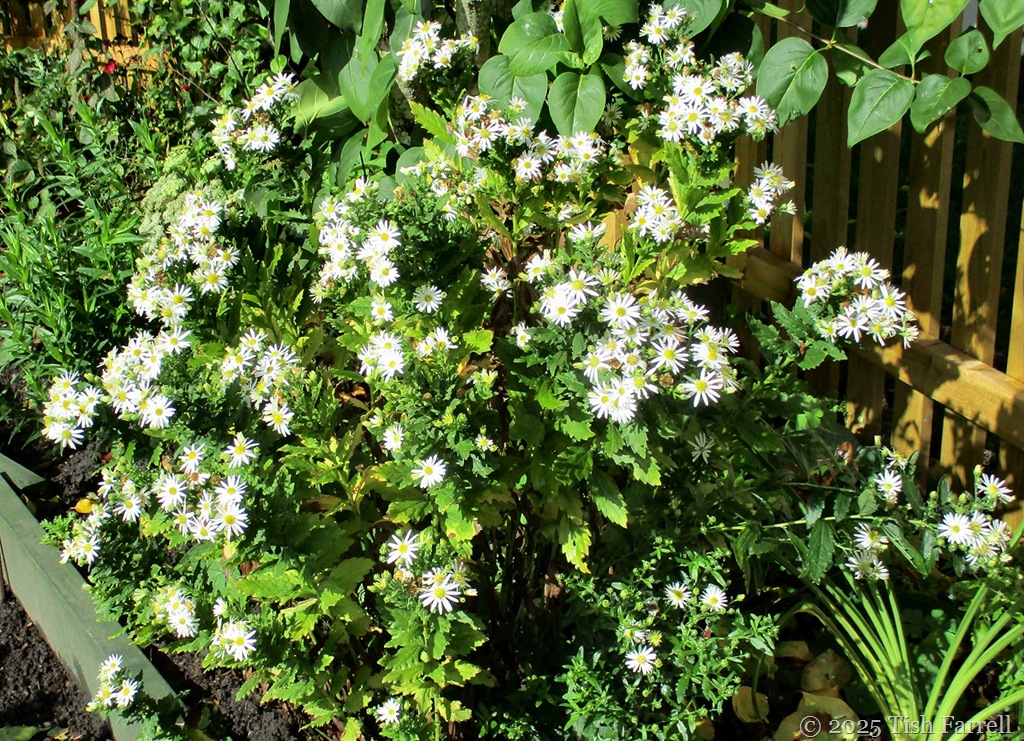
3. In love with Michaelmas daisies

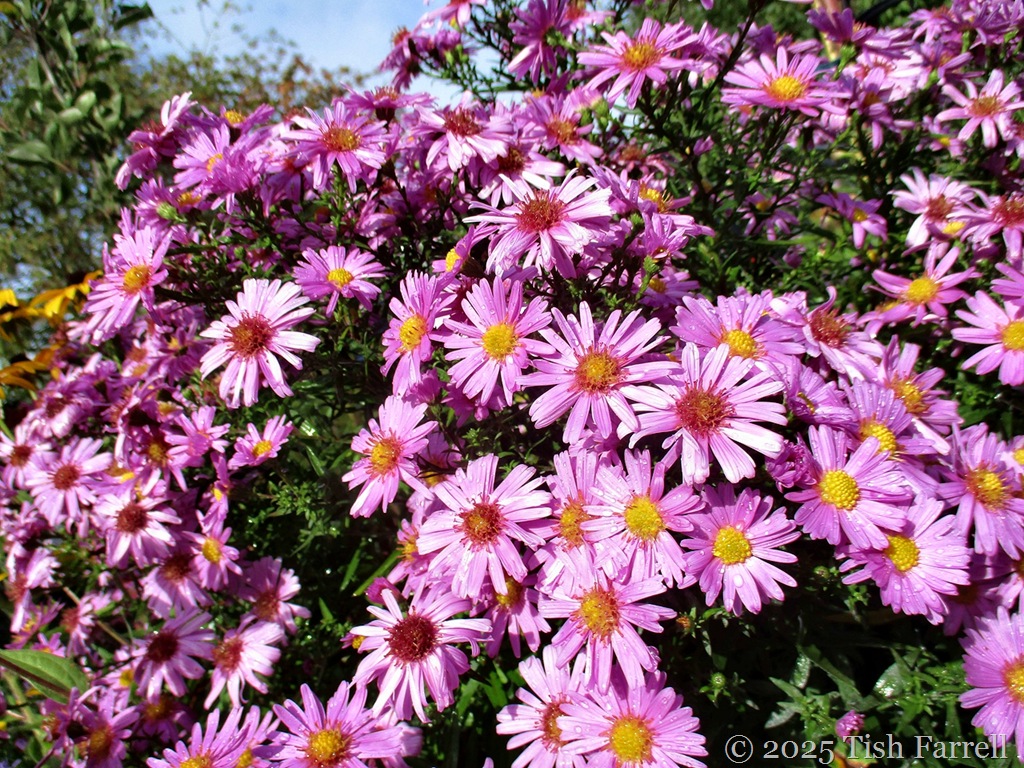
I’m not expecting the late flowering flowers to survive the wind, but that won’t include the Michaelmas daisies (Symphyotrichums/Asters whatever they’re called these days).  I took this photo with the wind still blowing. Only a couple of small side stems damaged.

IMG_9158

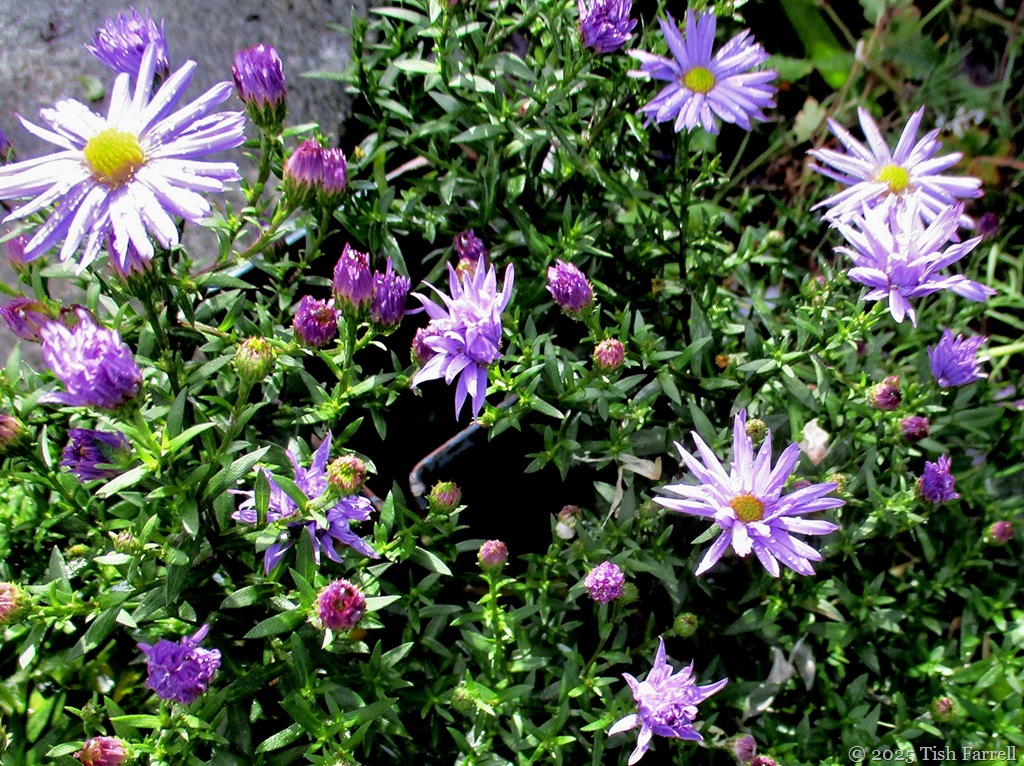
Its neighbour, a compact little variety (I think it could be Purple Dome) has only just decided to flower:

IMG_9167

And at the bottom of the garden this tall white bushy version, White Ladies maybe, and…

IMG_9176

…Aster x frikatii Monch have been flowering since the hot days of summer:

Aster × frikartii Mönch

*

4. Great Dixter Nursery

And so like Jim, I’ve been doing some plant buying. I have recently discovered that Great Dixter House and Gardens has an online plant shop. They sell some very lovely plants (1 and 2 litre sizes) at very reasonable prices. That’s where I found Patrinia as featured in an earlier SoS. And it’s where I also found ‘Symphyotrichum Les Moutiers’ which is now planted in my front garden. We’ll have to wait nearly a year before we see it in action though. Do give the link a quick look.

5. Ongoing edibles

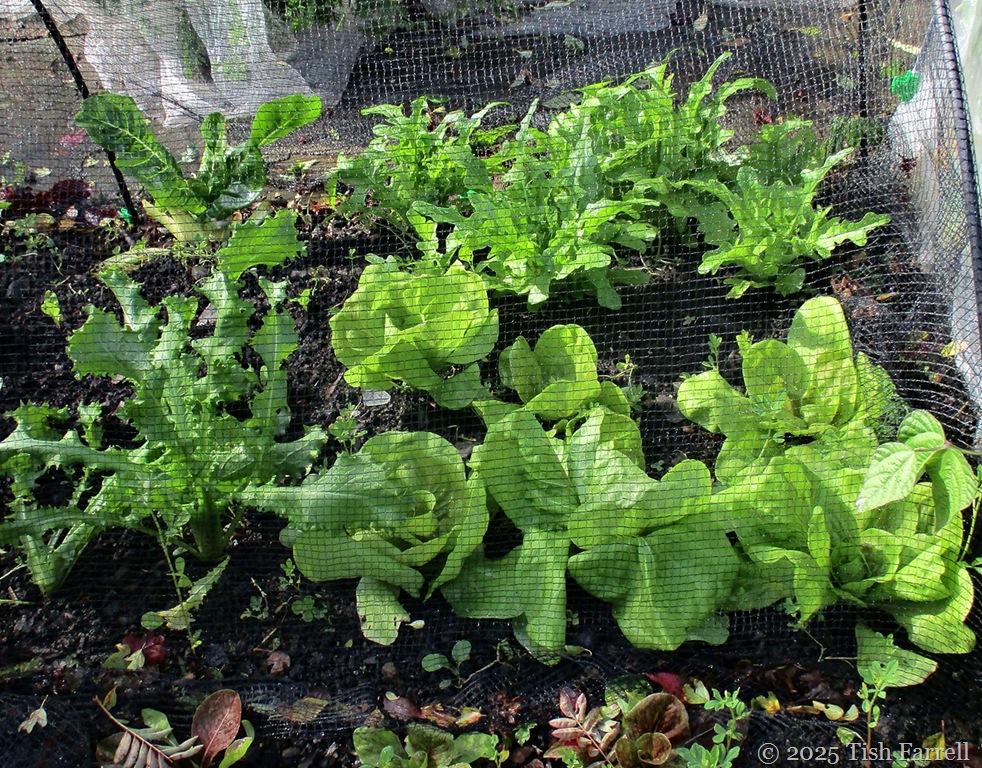
The salad stuff hasn’t been troubled by the unruly weather. The radicchio and endive, rocket, land cress, and Moroccan Cress lettuce are presently thriving, though everything has to be netted against pigeons.

IMG_9185

We also have some Swiss chard, beetroot, parsnips and leeks, and a new bed of winter greens (planted out on the runner and borlotti bean bed) is looking quite good. And there are still a few climbing borlotti beans to pick in the side-garden wall bed.

IMG_9187

*

6. A happy face

IMG_9164

Now as I’m writing this, the rain is back and the wind is still blowing. So I’m finishing off with another garden stalwart. I was so pleased to find this marigold looking so fresh-faced as I went round the garden late-morning. Of course, we eat these too. Perhaps I shouldn’t mention that though.

Happy gardening folks – whatever your weather. Even on distinctly unpromising days, there’s usually something in the garden to be glad about.

copyright 2025 Tish Farrell

Six On Saturday  Please catch up with Jim at Garden Ruminations.

header

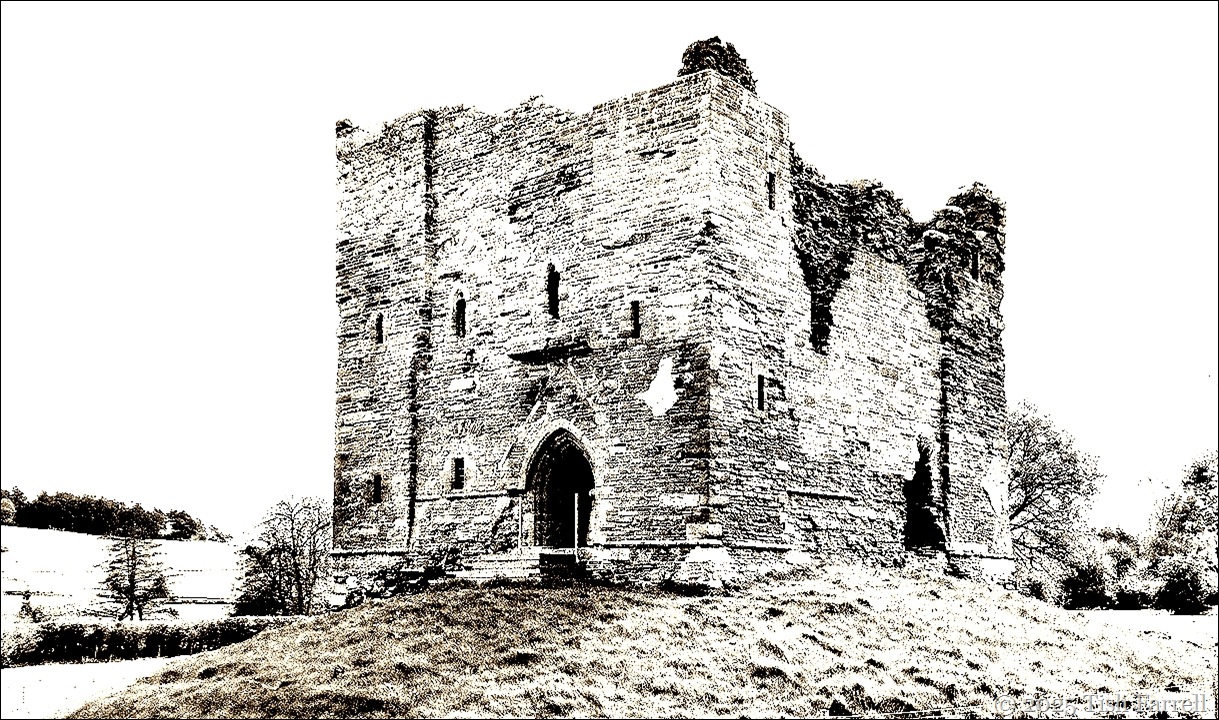
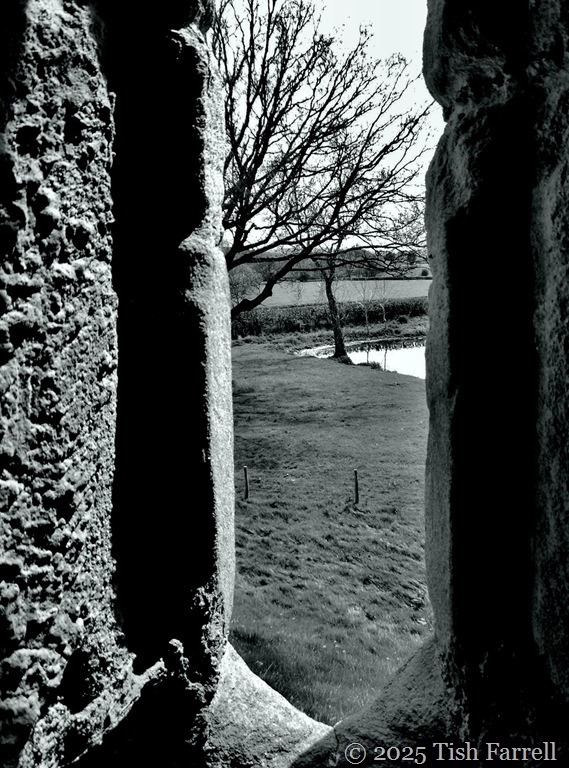
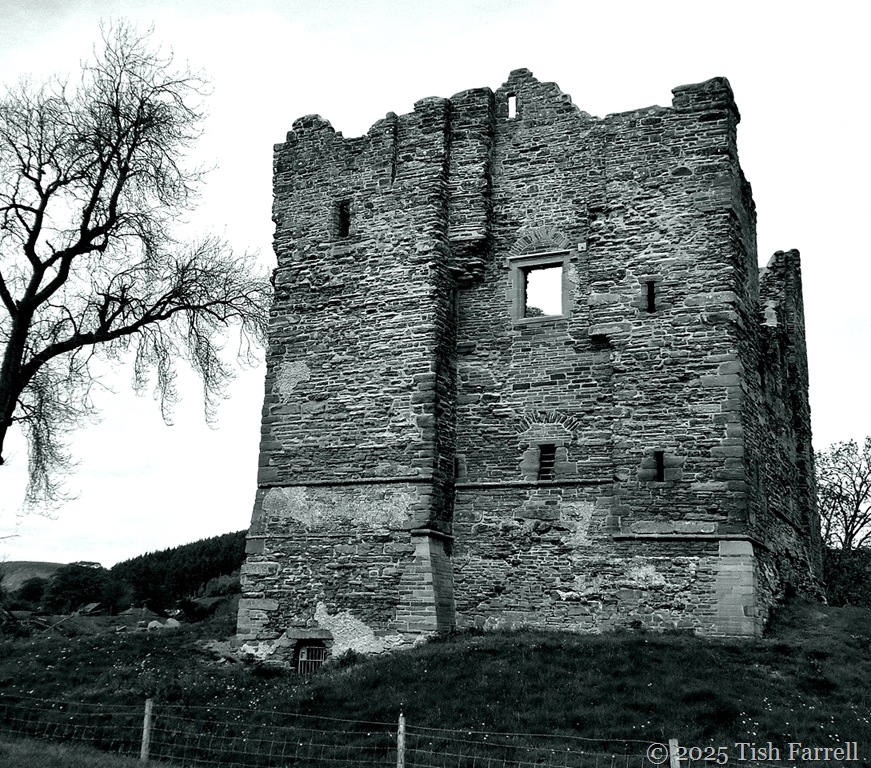
Hopton Castle, Shropshire

Hopton Castle

I’m quoting some text from an earlier post:

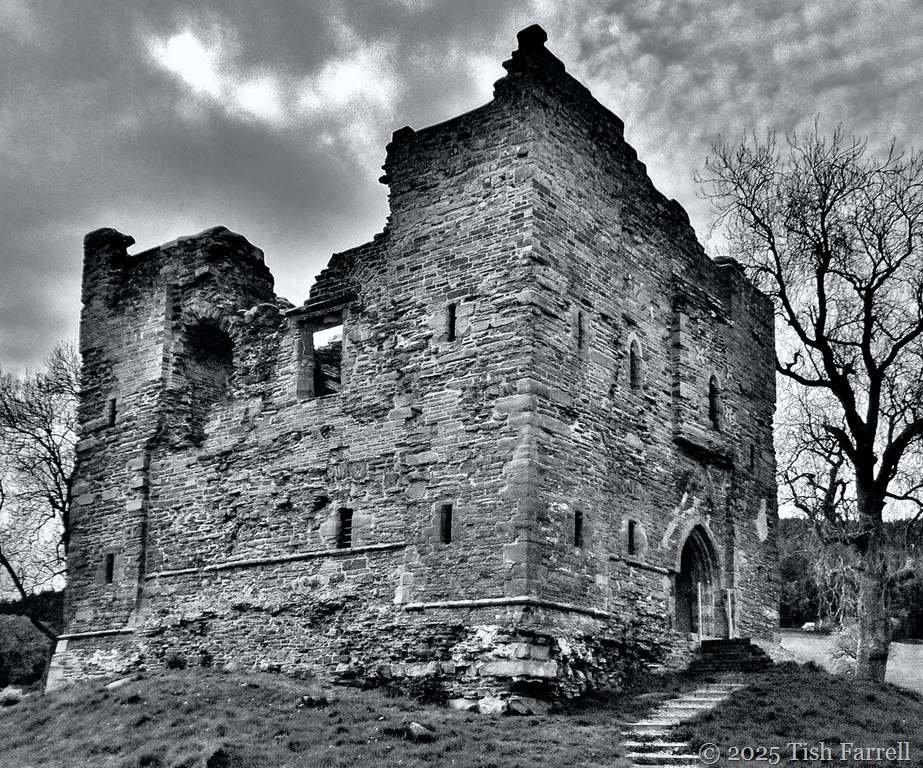
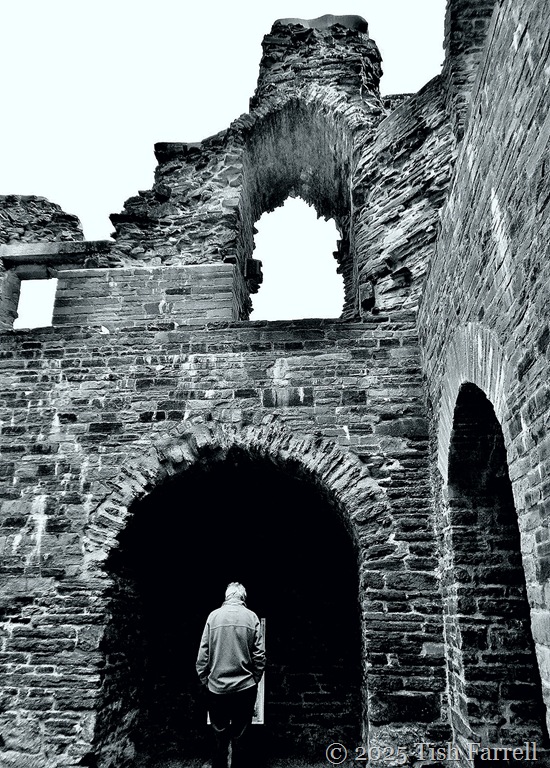
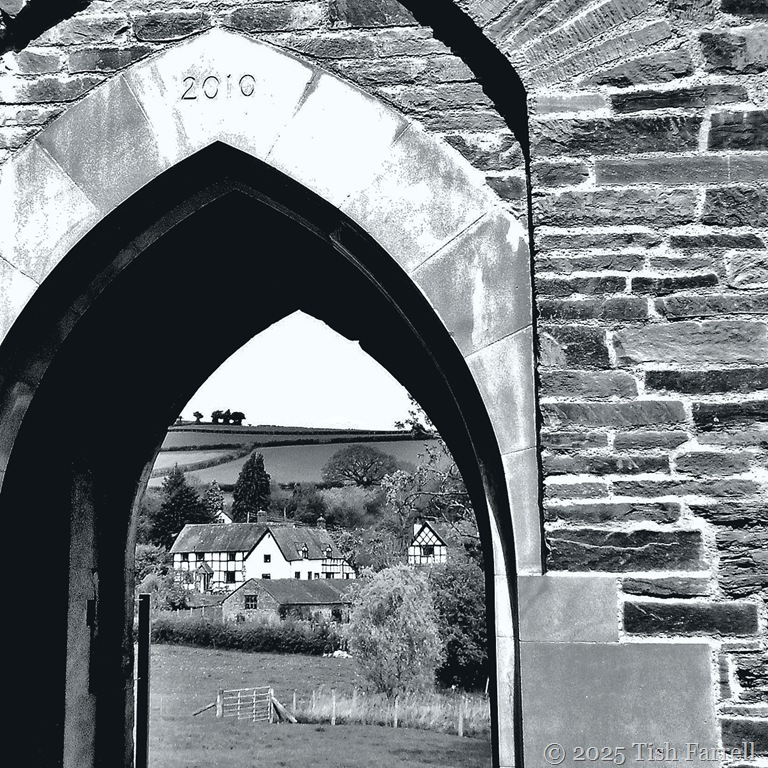
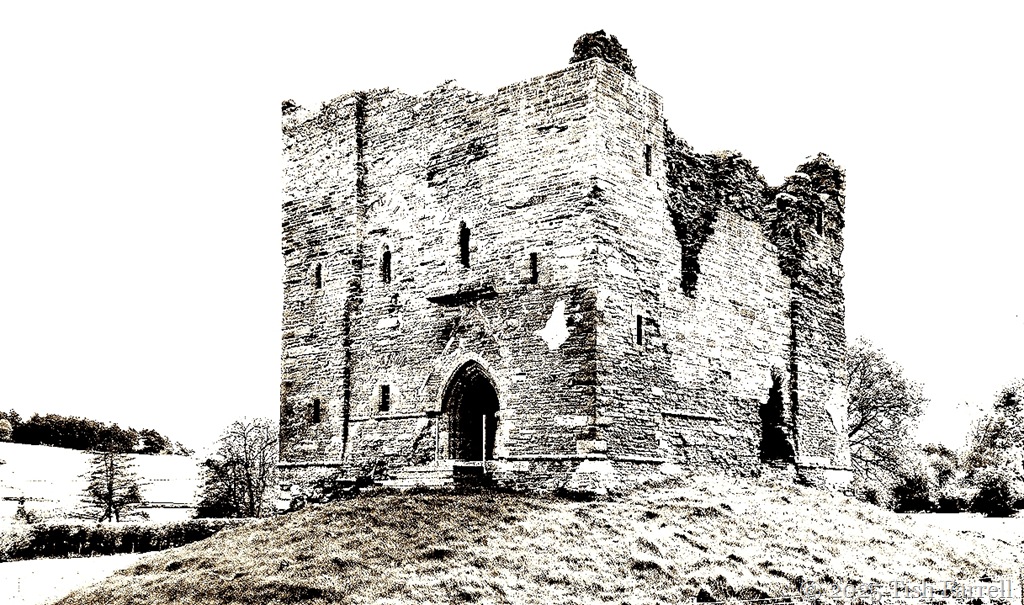
“Here we have the remains of Hopton Castle, an enigmatic ruin in the Shropshire borderland, eleven miles northwest of of Ludlow. It is called a castle, but it might be better described as an upscale medieval tower-house. That it survives at all, in this accessible state, is down to the creative efforts of the Hopton Castle Preservation Trust whose members toiled for 11 years to raise funds to consolidate the main structure, and then spent a further five years overseeing the work.

Hopton interior

The ruin is full of puzzles. The preservation work revealed hints of 11th, 12th, 13th, and 14th century construction, but with no clear evidence for the date of the main surviving structure. It’s been suggested that the Hopton family, who owned it between the 11th and 15th centuries, at some stage deliberately set out to create a faux antique country residence much as the Victorians did with their  mock Tudor ‘cottages’. In other words, the Hoptons went in for some creative intervention of their own.

One theory is that it was a hunting lodge. The interior work of all  three floors appears to have been very grand, and definitely of ‘lordly’ quality.

Hopton village

Restored entrance

*

Hopton interior 2

Also, the tower was clearly not intended as a defensive structure. As you can see from the first photo, any besieger could simply walk up to the front door. Yet the building it replaced, the first ‘castle’ on the mound was indeed a functioning fortification – a motte and bailey castle typical of the Normans’ early conquest of Britain after 1066. Made of timber, they could be constructed swiftly, and as the need arose, later re-built and expanded into domineering stone fortresses.

But this did not happen at Hopton. The stone walls that replaced the 11th century motte and bailey appear to have been built of poor quality stone, unsuited to withstanding a siege. Meanwhile, the interior fittings and design suggest considerable expense.

So it’s a pretend castle then?”

Hopton 3

You can read more about this (pictorial reconstruction included) at my earlier post: Creative Intervention Rescues A Ruin

*

This week at Leanne Cole’s Monochrome Madness the guest host is Sarah from Travel With Me. Sarah’s theme is RUINS.

Hopton Header