A Bronze Age Circle And Some Mystic Brume

Mitchells Fold and brume

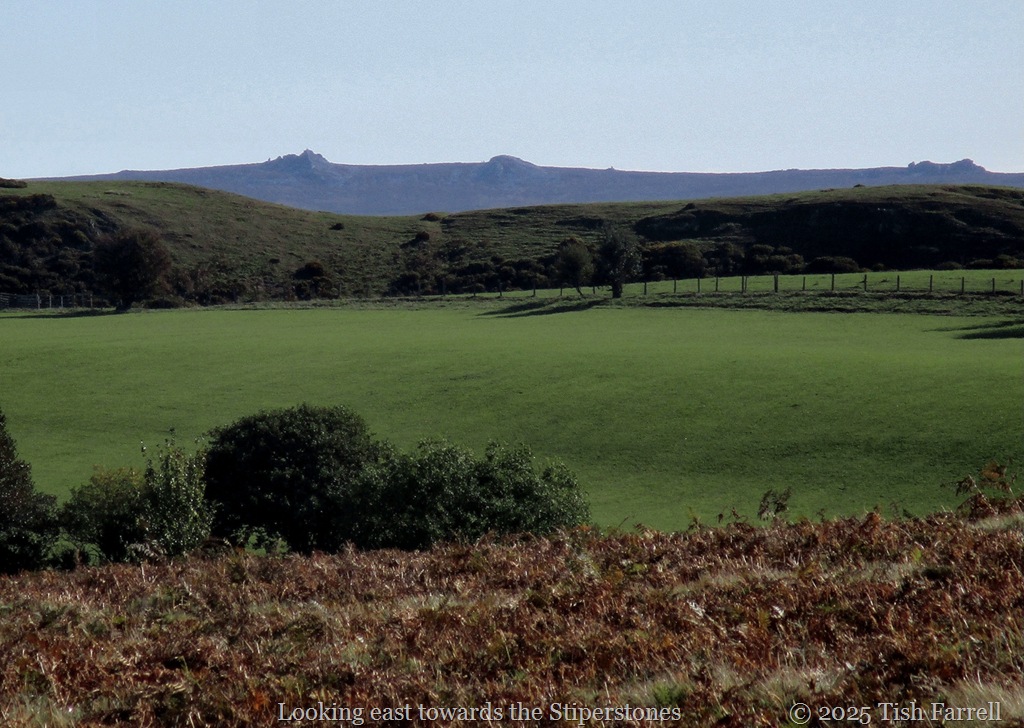
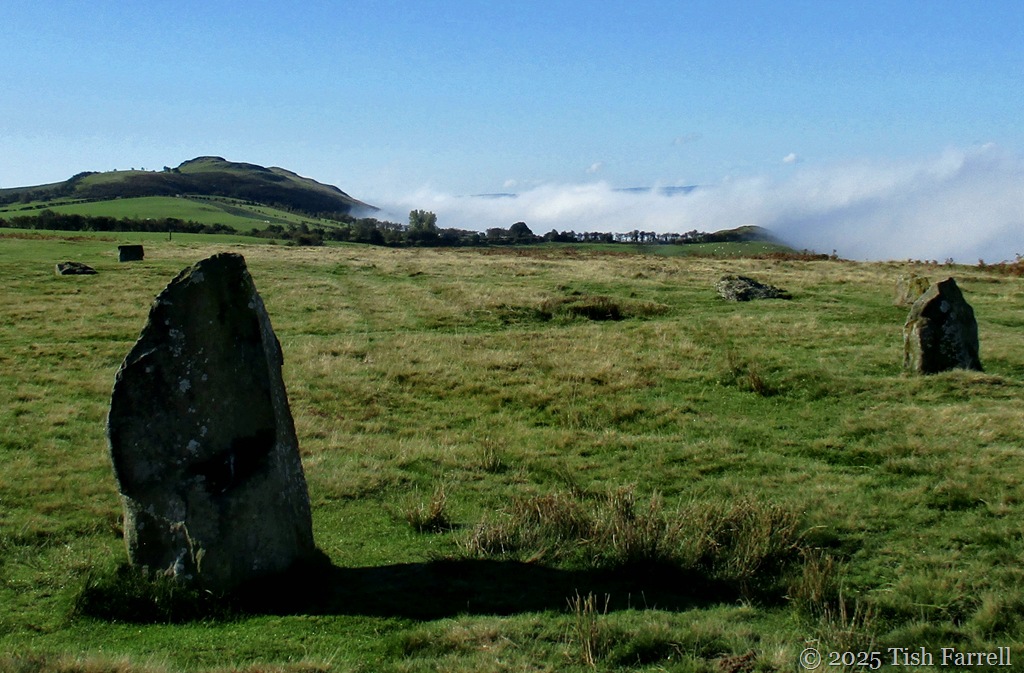
It’s a year or so since we last visited Mitchell’s Fold stone circle. I’m not sure why it’s taken so long to go back there. It’s only six miles from home and such a fine spot, sitting high on Stapeley Hill, with the Stiperstones to the east, Corndon Hill to the south and Wales rolling out in the west. Somehow we had let the summer go by when a sundowner visit would have been perfect for capturing light, communing with ancestors and gazing out on those wide Welsh vistas.

As it was, we waited until late September. And so last Friday, and well before coffee time, in hopes of some good light, we set off. The sky was clear, the sun brilliant and the air autumnally crisp. As we drove out of Bishop’s Castle, I conjured the landscape photos I would take up on the hill; those views into Wales…

path to Mitchells Fold

Except when we set off on foot up the Stapeley Hill track I soon saw I wouldn’t. Westerly vistas were off.

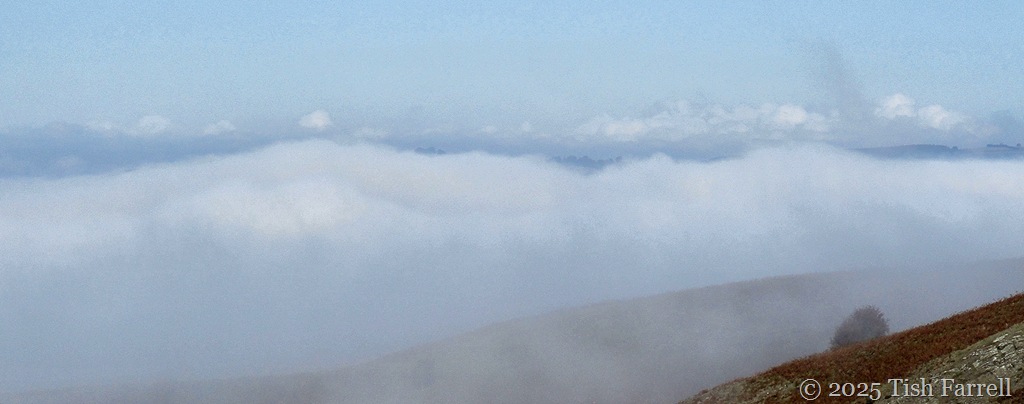
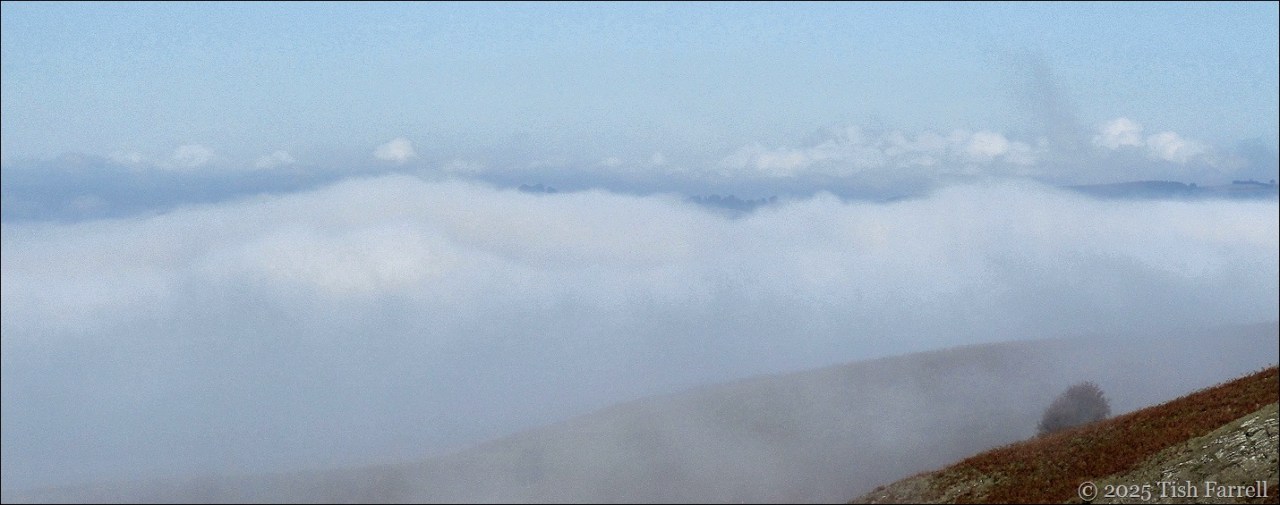
The uplands might be bathed in sunshine, but the low lying reaches had been invaded by rivers of mist, also known in literary circles as brume. We watched as this mysterious atmospheric phenomenon flowed by, whiffling up hillside clefts and gullies, some of its manifestations distinctly pink. At closer quarters you could see through it as if looking through gauze.
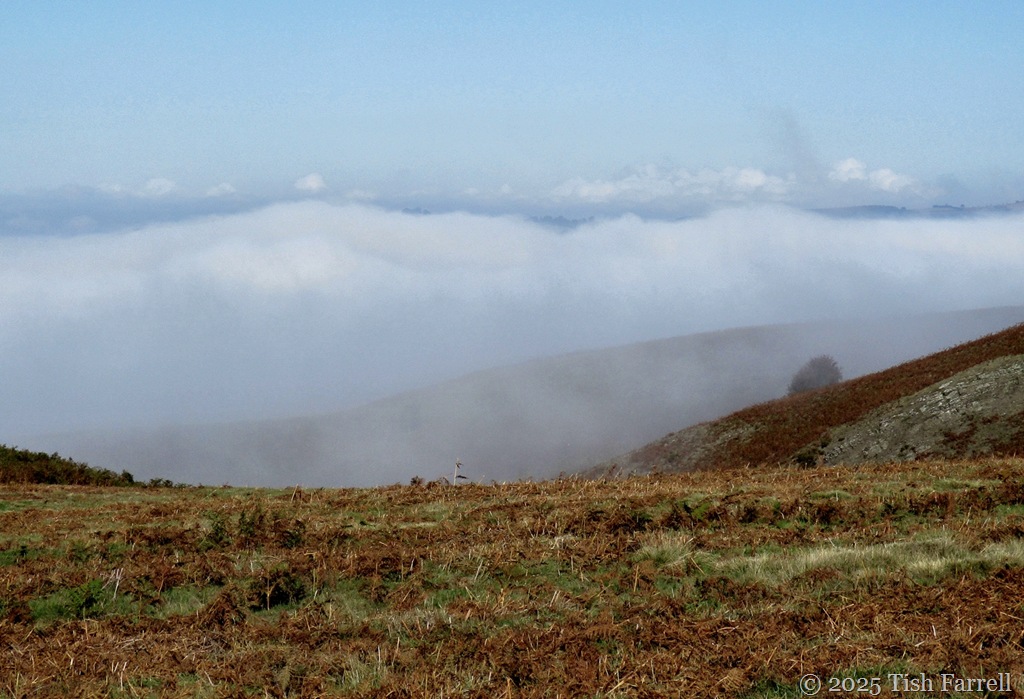
Brume

*

Seen in monochrome setting, there’s almost the sense of spray, as in breakers crashing against a rocky cliff-face…
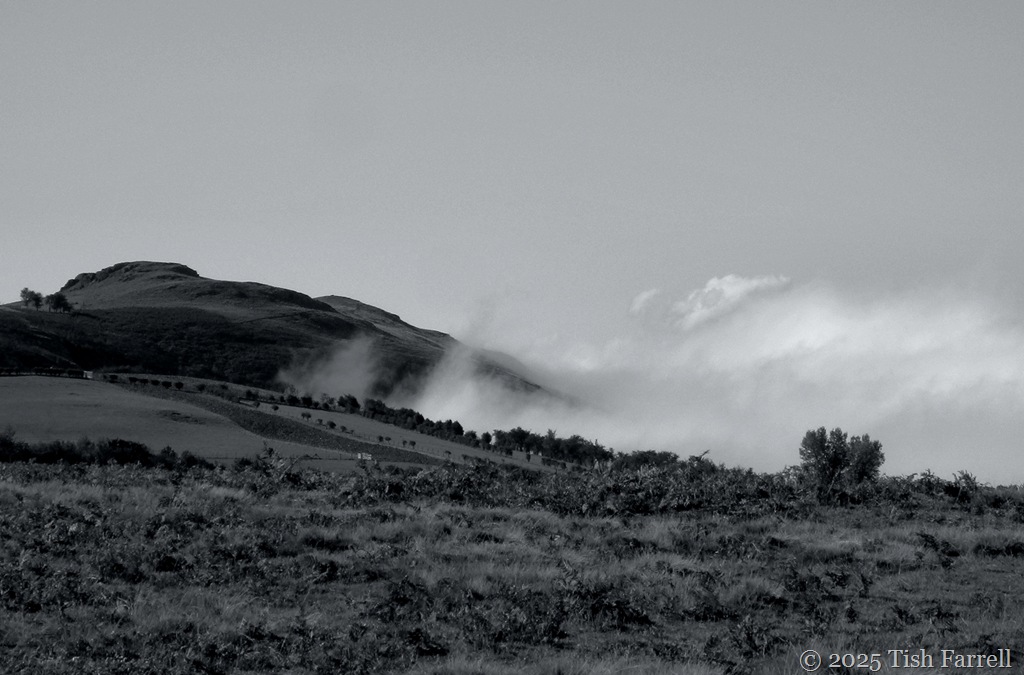
Brume monochrome

Of course this all added a frisson to the mystery of ancient stones.

I’ve written about them several times, including in a much older post Witch-catching in the Shropshire Wilds which mentions the myth associated with the place. But very little is known of them other than there were once 30 or so standing (now only 15 and some of them are recumbent.) And that they were sourced locally and hauled in place over 3,000 years ago. We can guess, too, that this was a place of great significance to local people (temple or gathering place?) for we know, too, that nearby hills (Corndon, the Stiperstones) have on their flanks many remains of Bronze Age burial cairns. There is also a lone standing stone and a supposed robbed burial cairn not far from the circle.

A landscape, then, of many meanings; the kind of meanings where sacred and profane coalesce, the subtleties of whose interconnectedness we offspring of industrial culture often fail to grasp, confusing the sacred with dogma. 
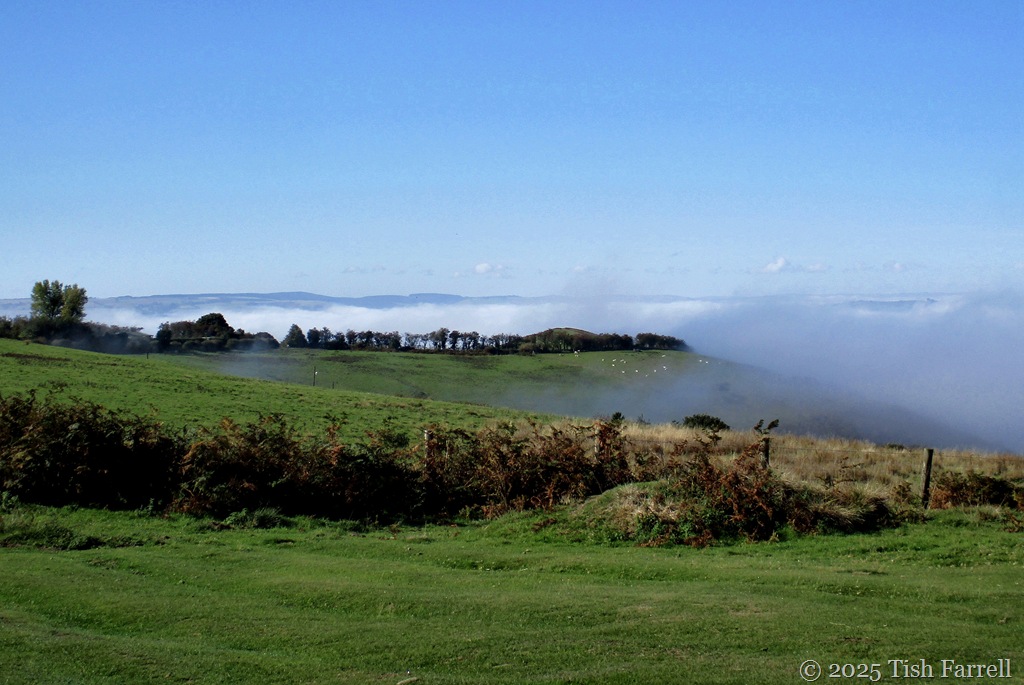
Brume 2

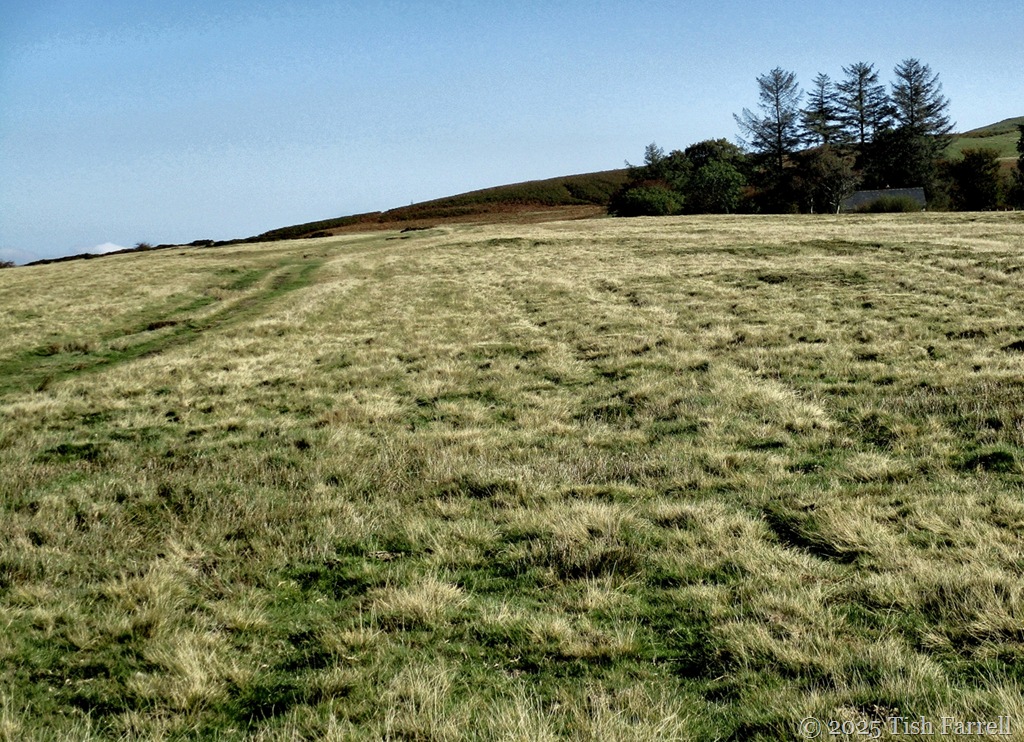
Around the stones, there are traces of more recent human doings. You can see them in the photos: the remnant ridges and furrows of a mediaeval field system. And also running through the middle of the circle, the ruts made by carts and, in particular, the stage coaches that are said to have run this way between our county town of Shrewsbury and Aberystwyth in mid-Wales. Can you imagine?

In a way, I find this last historical glimpse more exciting than the stones. Just think how it would be, racketing around in a draughty coach, being hauled over this bleak hill on a grey winter’s day, some real fog closing in and looking out on these standing stones…it could be a scene from Jane Eyre.

Mitchells Fold coach route

Mitchells Fold coach road

*

For now I’ll leave you with some more non-wintery views:
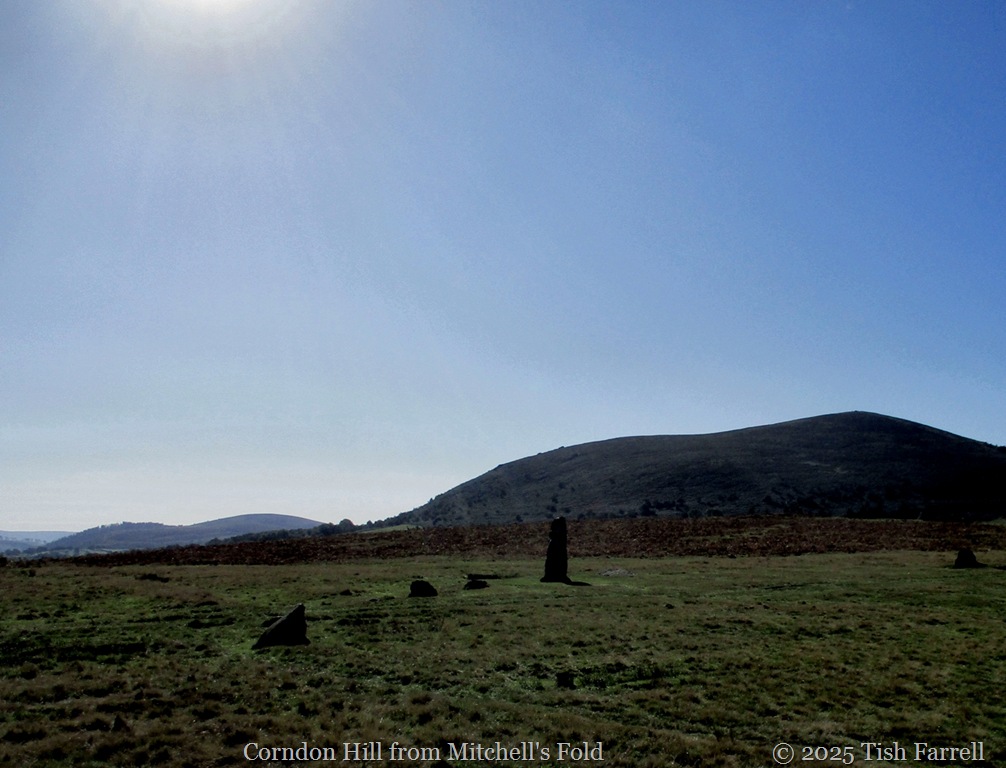
Mitchells Fold and Corndon Hill

Stiperstones

towards Bishop's Castle

*

Copyright 2025 Tish Farrell
Brume header


Season Of Mist and All Round Wetness ~ Six on Saturday

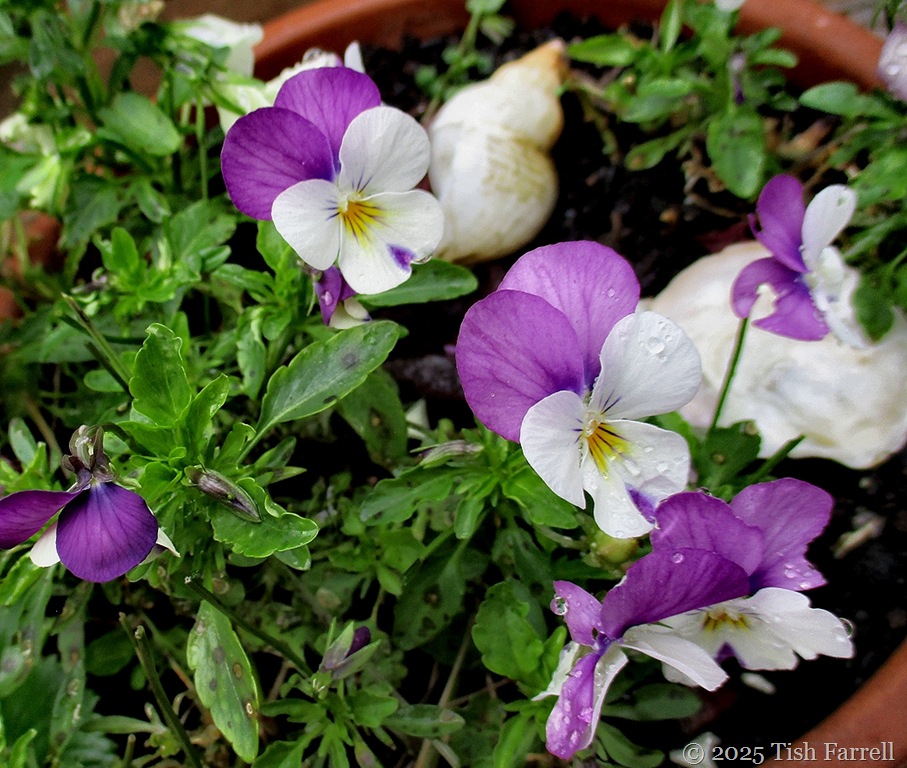
viola magnifico 2

Here in Bishop’s Castle the rainy weather continues as we head towards the autumn equinox. Just now it’s pouring steadily, threatening to dampen spirits for today’s Michaelmas Fair. This is always a hugely jolly affair of stalls, parades, Chinese dragons, steam engines, vintage vehicles and street performances – assorted bands, Morris dancers, a jester from Chester, the singing farmer, to name but a few of the events. And then the whole thing is rounded off mid-evening with a magical lantern procession through the town (the lanterns made by children). All very much dependent of weatherly cooperation. But then I’m sure, this being the Castle, everyone will make the best of it, brollies and waterproofs at the ready.

Definitely not a day for gardening though. Also as the season winds down, it’s hard not a feel a touch dispirited by the ongoing sogginess. The few roses on their second flowering don’t like it much either. But come hell or high water, to say nothing of last winter’s three solid weeks of snow and frost, the little pansies, viola magnifico [1] above still soldier on. This plant has been flowering continuously for twelve months.
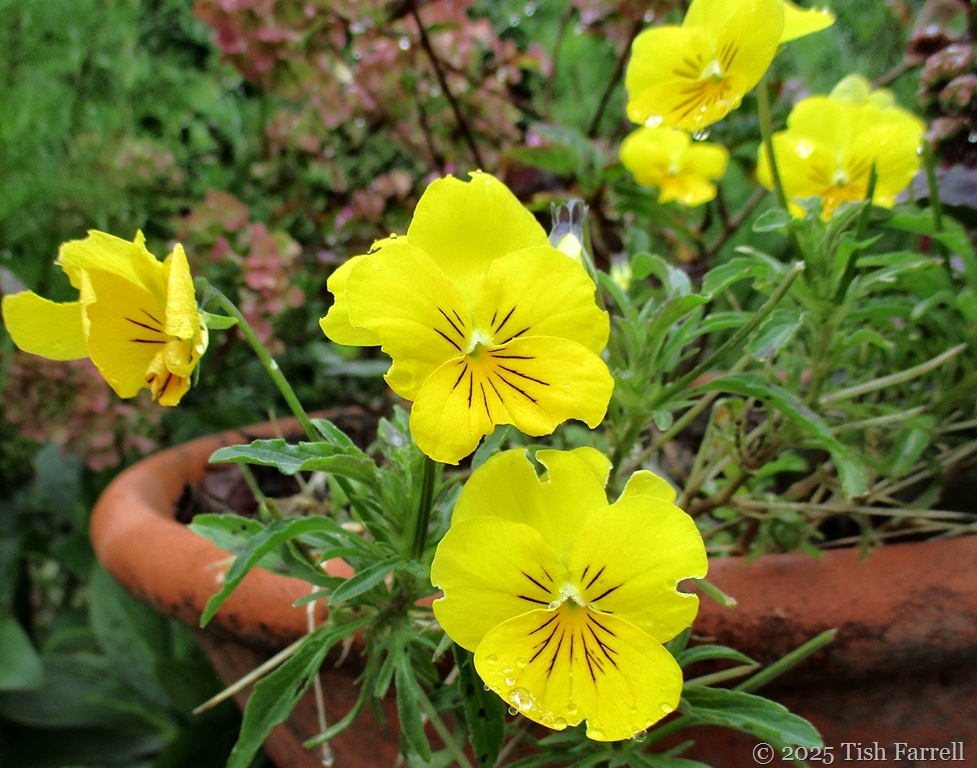
And talking of pansies, what is it that nibbles the yellow ones? And is it the same thing that bites off the buds from my only lupin whenever it tries to flower?

*

yellow viola

*

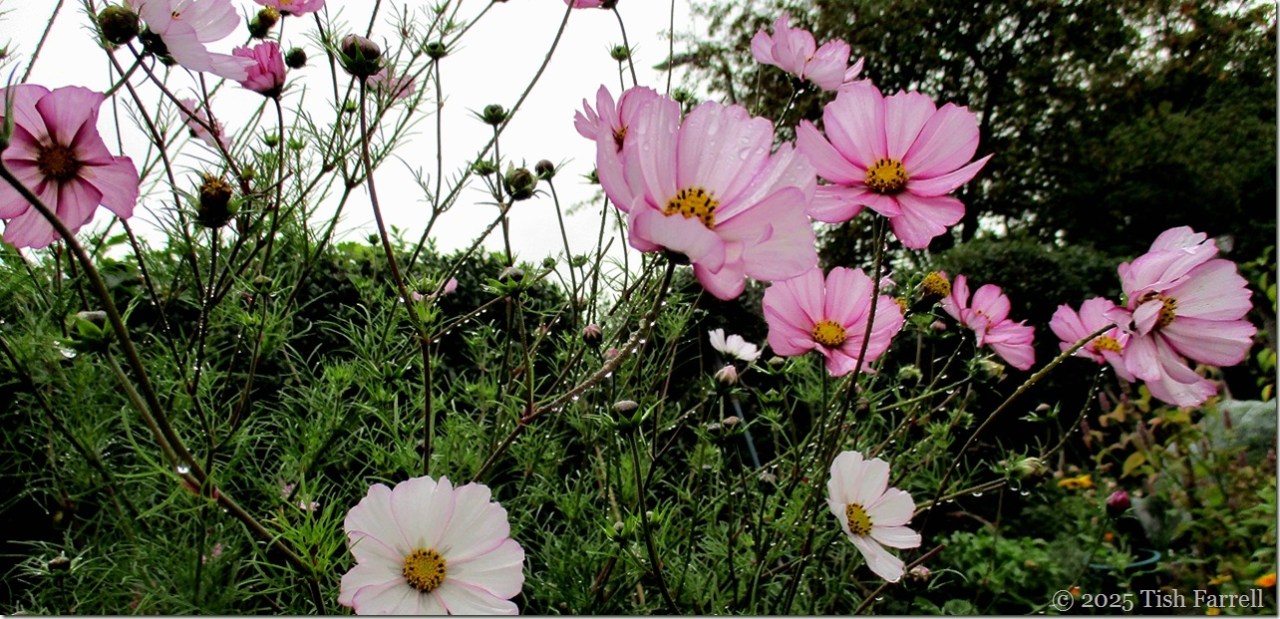
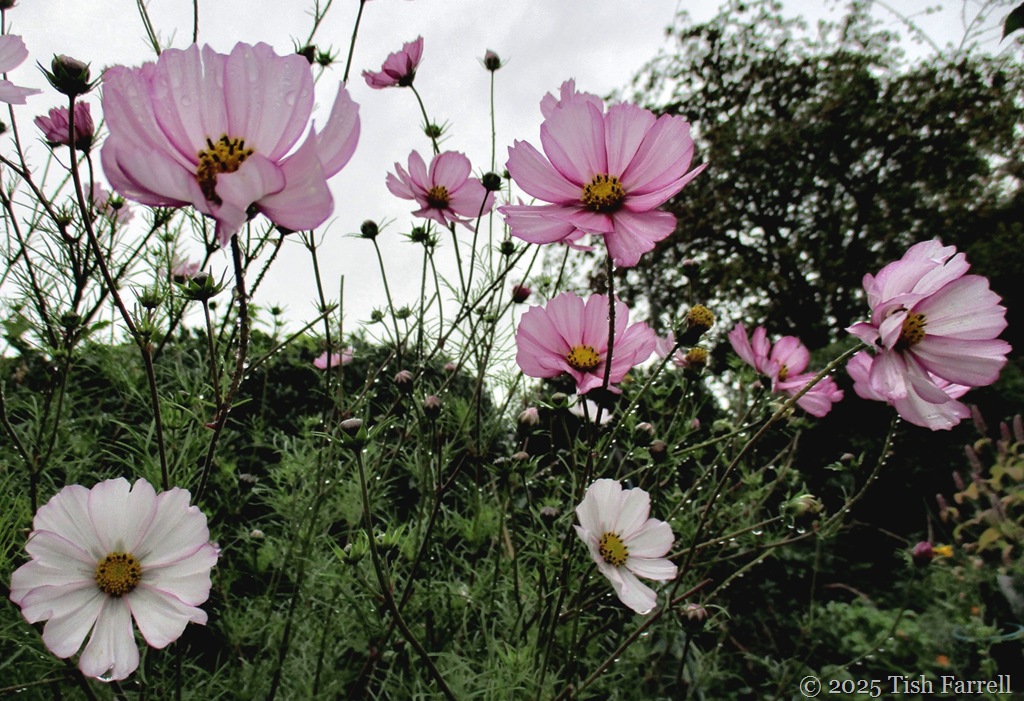
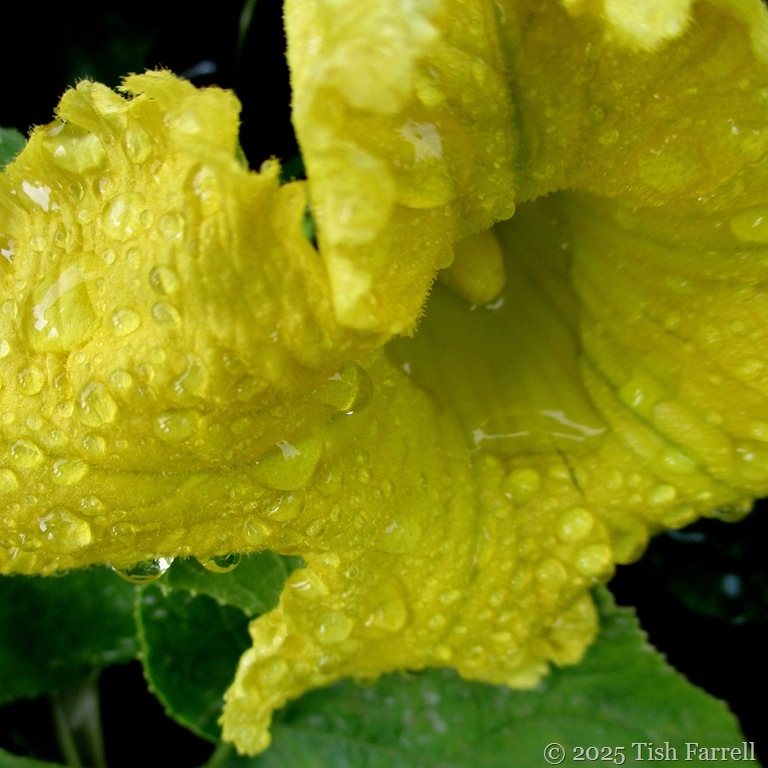
The Cosmos [2]doesn’t mind the weather either. In fact it seems to be having a new lease of life, and I’m enjoying the drifty looks of it, its stems hanging in raindrops.

Cosmos

*

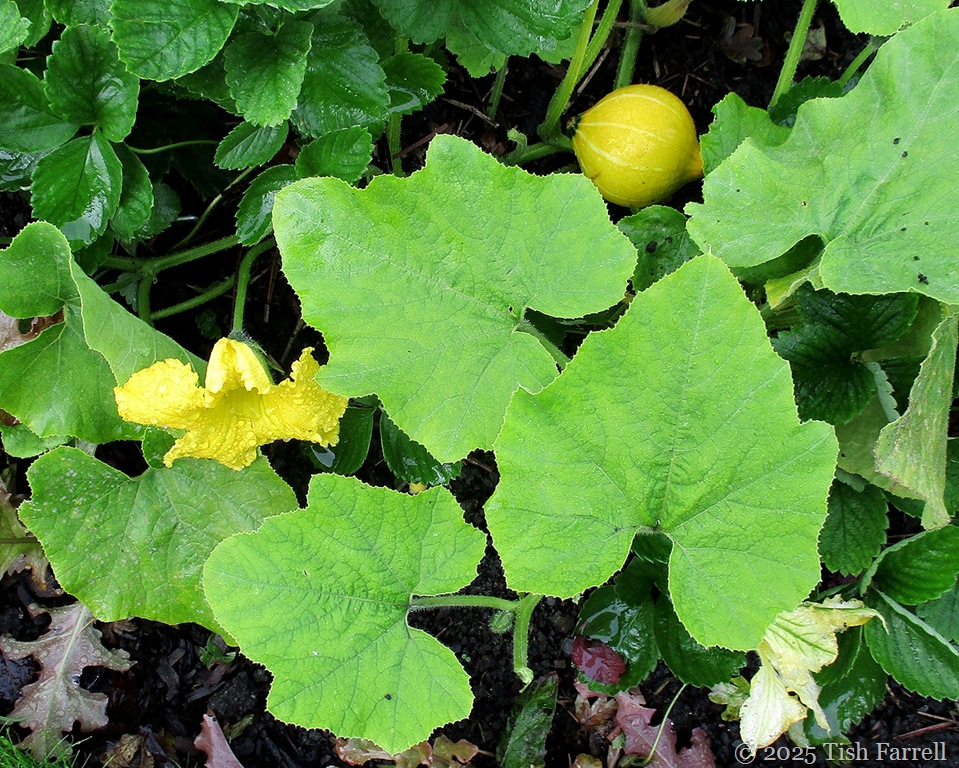
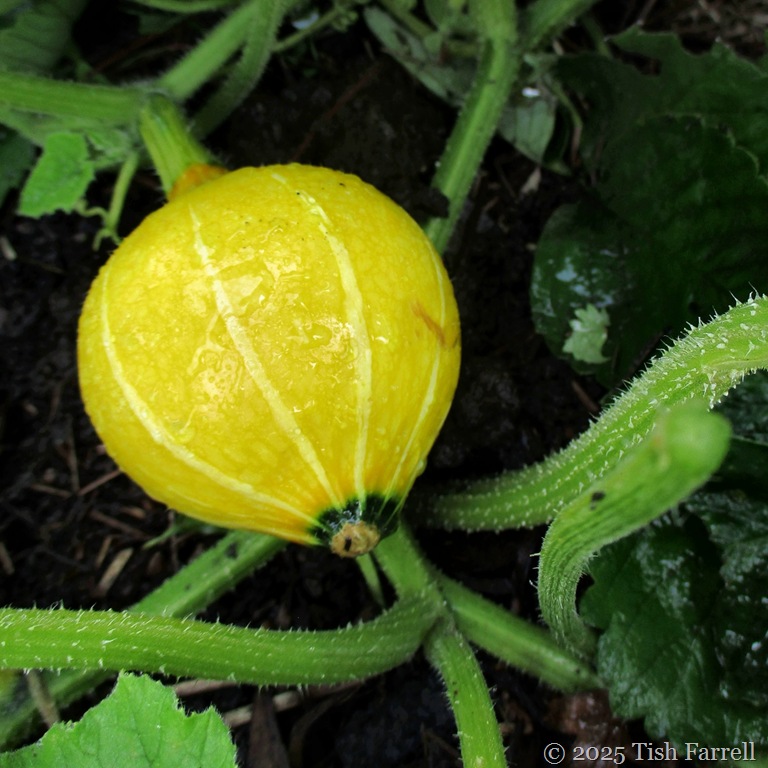
The Japanese ‘Uchiki Kuri’ squash [3] plants  weren’t as productive as I’d expected, and I had high hopes of some later planted plants. They’ve produced a couple of tiny ones, and I’ve nipped off extraneous shoots, but I think it’s probably too late for them now.

Japanese Squash 2

Japanese squash 3

japanese squash

*

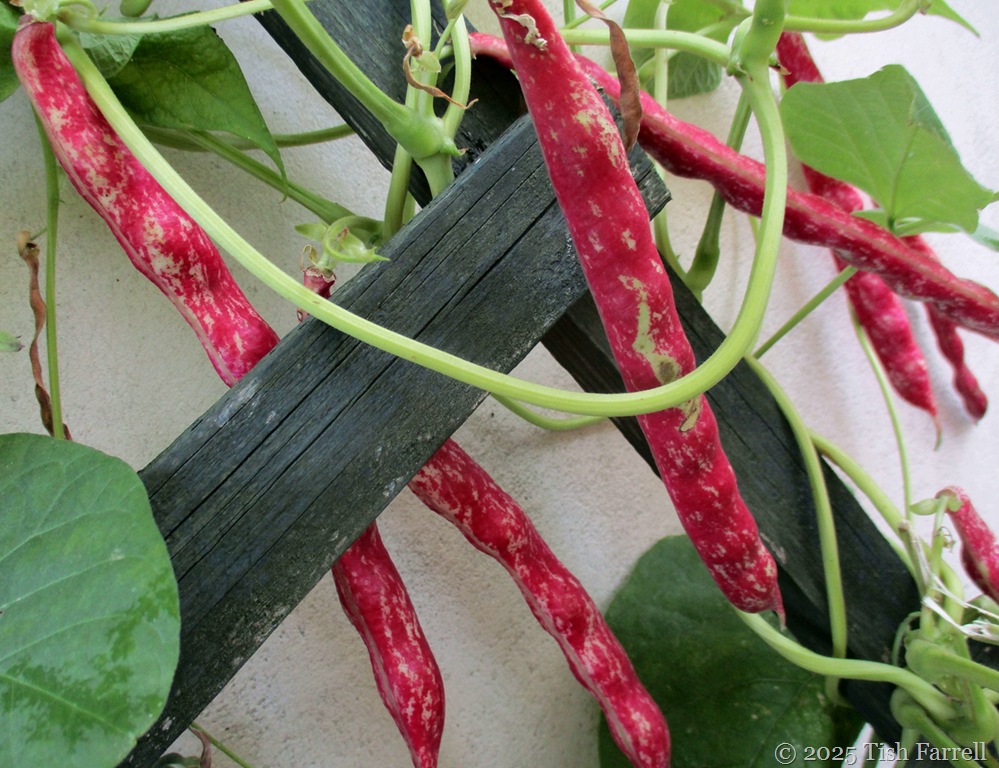
The borlotti bean crop [4] is looking more promising. I picked all the dwarf variety some weeks ago, but the climbing ones are just beginning to dry in their pods. I love them for their looks alone, though they’re pretty good in the pot too.
borlotti

*

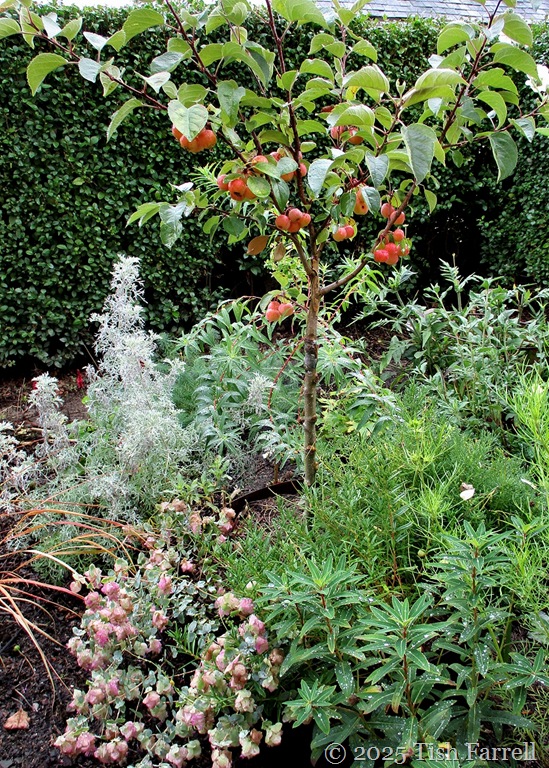
Despite my weather whingeing, the garden is still looking colourful. The rudbeckia and Michaelmas daisies certainly brighten the place up. There are also still some sunflowers at the bottom of the garden, and my two very small crab apples trees [5], Evereste and Jelly King are looking their vibrant best.

 Evereste

This miniature Evereste is in a corten steel raised bed, along with some origano Kent Beauty, and Santolina. Silvery Artemesia Powis Castle behind.

*

Jelly king

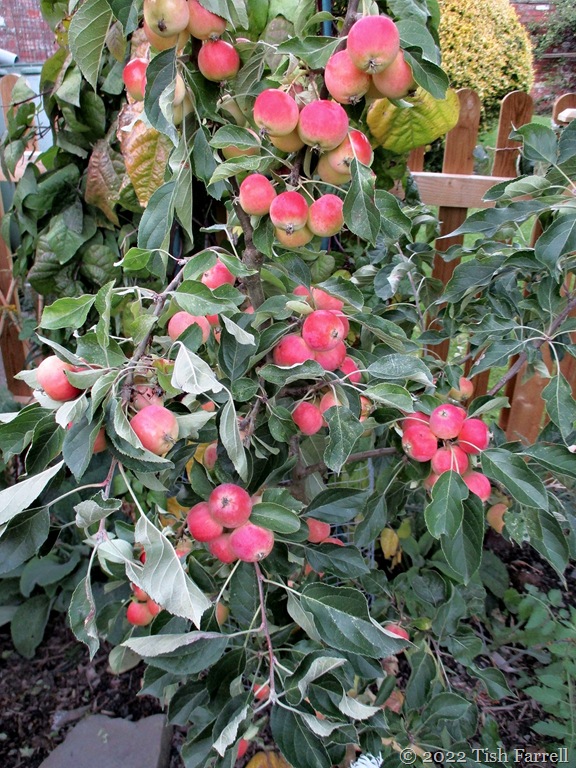
Jelly King is lighting up the furthest corner of the garden. I’m not sure I want to sacrifice the apples to making jelly (perverse I know, considering this is why I chose it). They look so lovely, and in fact, now I have found sources of wild apples (see previous post) I think I will leave them, first for us to look at, and later for the blackbirds.

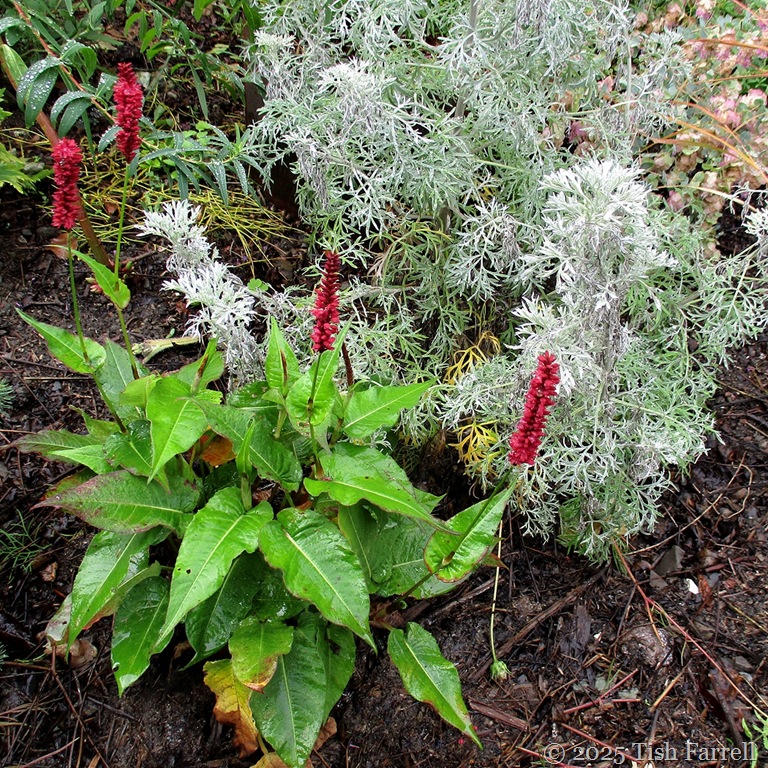
Finally, here’s one of my newish garden plants that has been so glad of the rain, Persicaria Blackfield [6], red bistort. It really struggled all through the summer, despite my hand watering. But then with the first of the recent showers, it perked up and began to flower. It’s interesting that the drought seemed to have had a miniaturising effect on the whole plant, as if it was making itself small to save itself. I’m hoping it will settle in now and come into its own.

Persicaria Blackfield

*

Six on Saturday Please visit host Jim at Garden Ruminations. He’s been very busy despite the weather.

Wild Apples On Wintles Hill

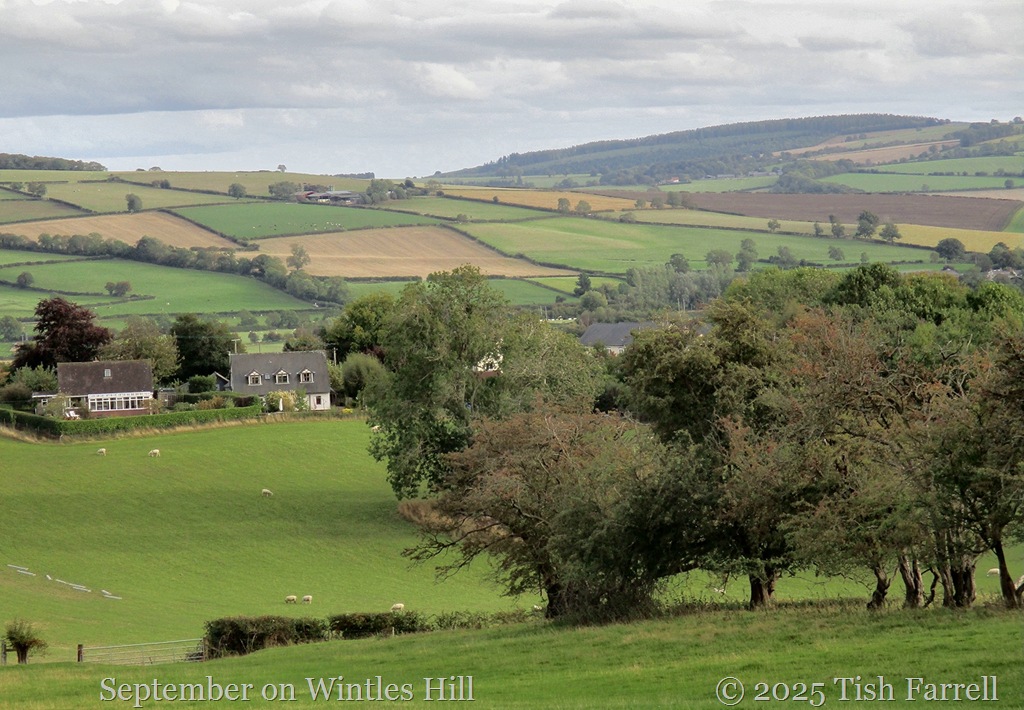
on Wintles Hill

Come September and the months of drought simply switched off. Instead we have rain between showers. There have been days and days of lowering skies and serious downpours, and although this may be considered ‘typically English weather’, it comes as a shock after months of wall-to-wall sunshine.

But then last Tuesday we had a reprieve. Cloud yes, but rain on hold.

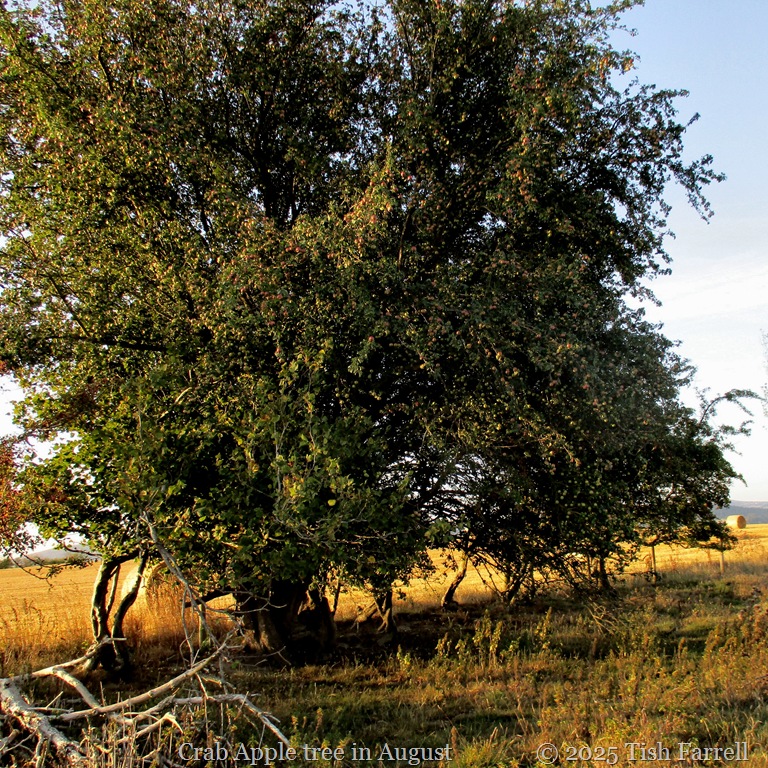
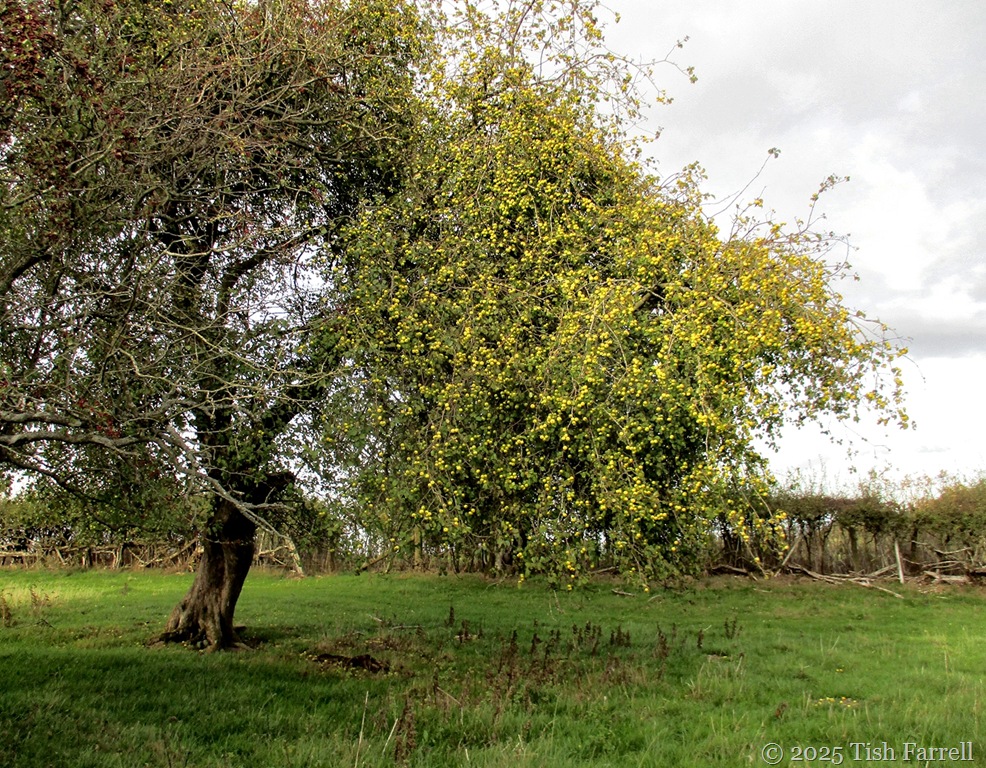
Let’s go for those crab apples, I say to he-who-builds-carports-that-aren’t-for-cars. He was not keen. The crab apple tree we first spotted in August is on top of Wintles Hill. It’s quite a haul up the green lane from town, followed by a gasping scramble up a steep sheep field. But he kindly yielded and came along too. It’s glorious once you’re up here, he says.

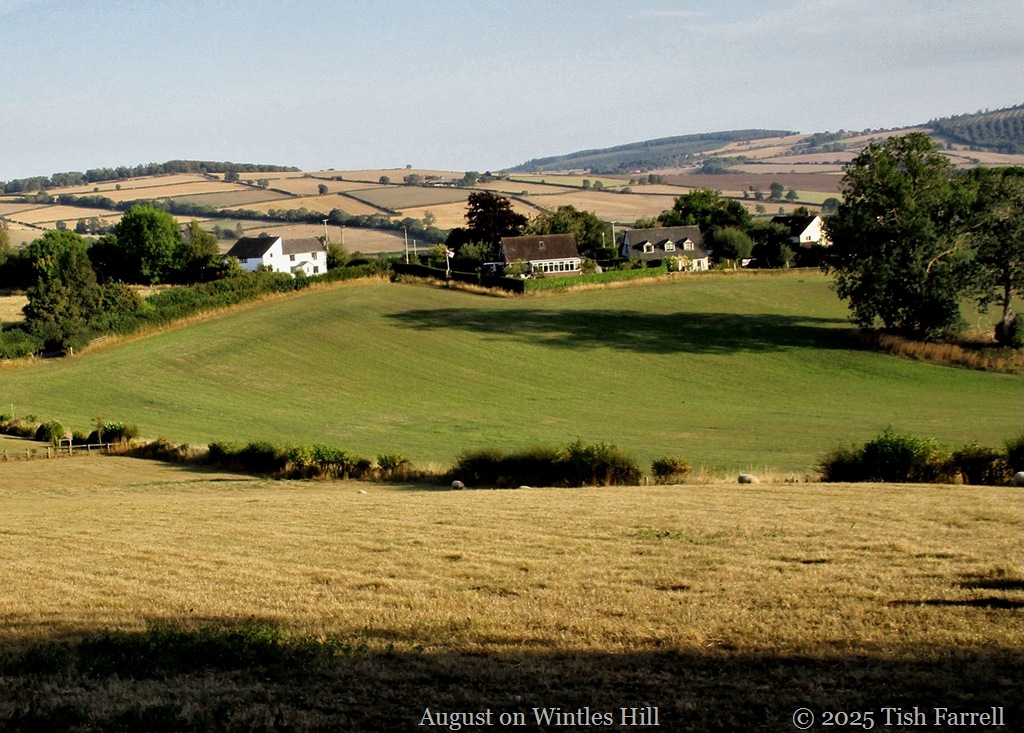
Back in August, when were are last here, the world felt toasted, the farm fields bare from an exceptionally early harvest, the grass brown and dead looking. But this week, after so much watering, all was mostly green again – the pasture fields rejuvenated. We even found some field mushrooms, the first I’d seen in years.

IMG_8621ed

crab apple tree in August

*

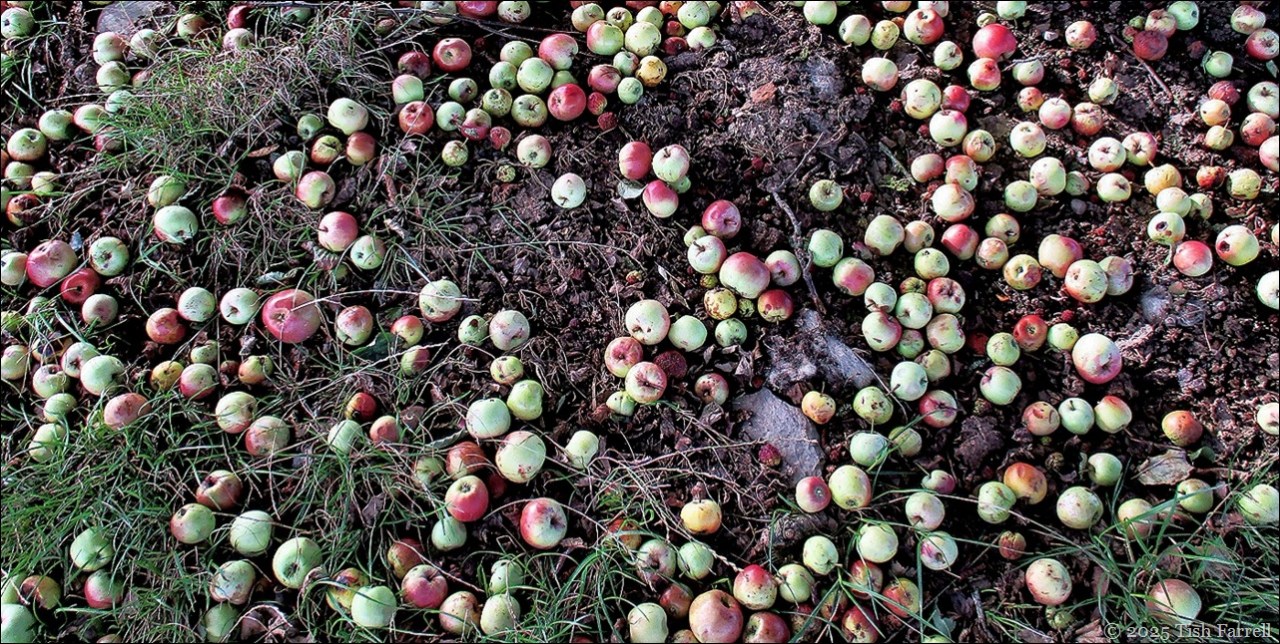
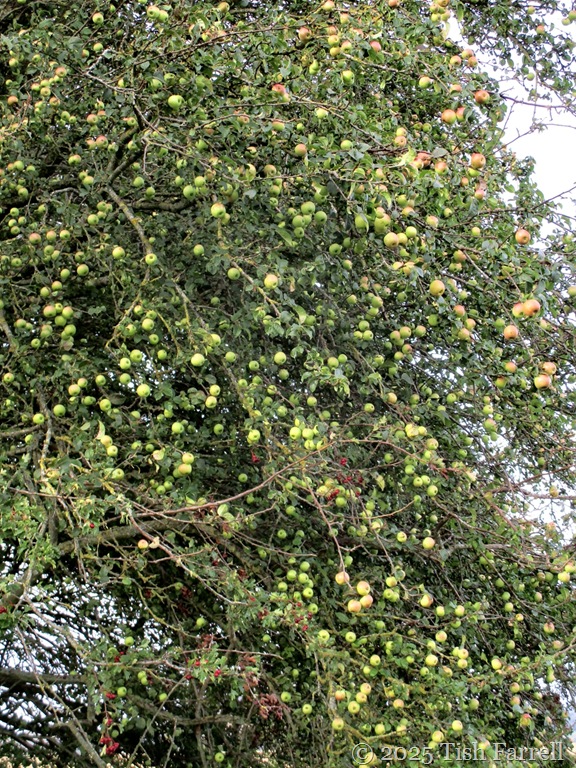
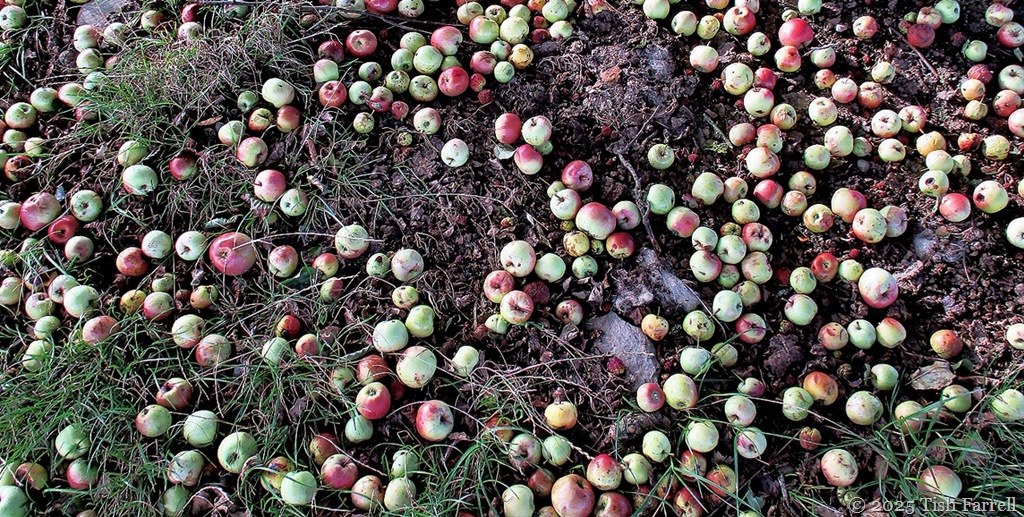
When we arrived at the tree we found it as crammed with fruit as it had been a month earlier, but now there was a mass of tiny apples underneath. (We’ve also had gales).

fallen fruit

*

Since August I had been dithering about gathering the apples. It seemed too early. I had inkling they were better for making jelly after they’ve weathered a cold spell. But oh well, we were there now and with bags to hand. The fallen apples were anyway ripe and it occurred to me, that given the mass of apples still on the tree, I could come for another forage later in the year. And then I’d know, one way or the other – before or after a frosting.

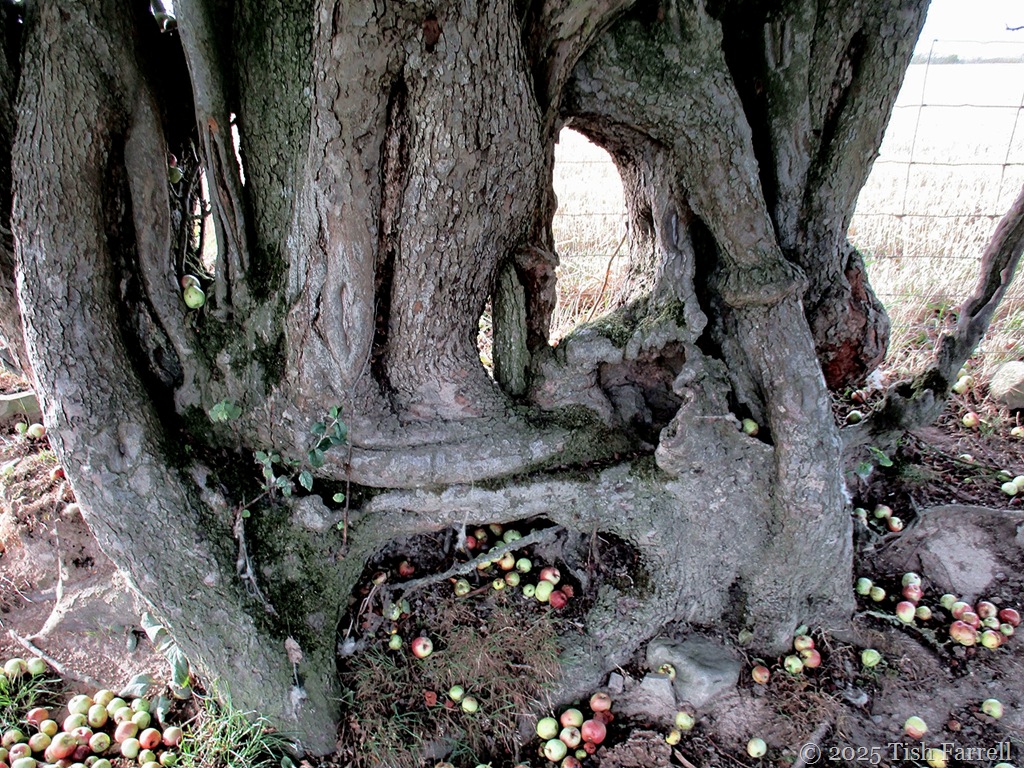
As I was crouched, head down, picking over the fruit, I noticed the tree’s trunk – or rather trunks: talk about the drive to survive come what may…

crab apple tree 4

Wild art as well as wild apples then.

There is definitely a remnant slip of hawthorn in the melee of roots and stems. But it makes me wonder: how ancient is this tree or trees? And how amazing that, here on so exposed a hilltop, and with so many gaps in its infrastructure, it can still produce such a prodigious crop.

crab apple tree
*
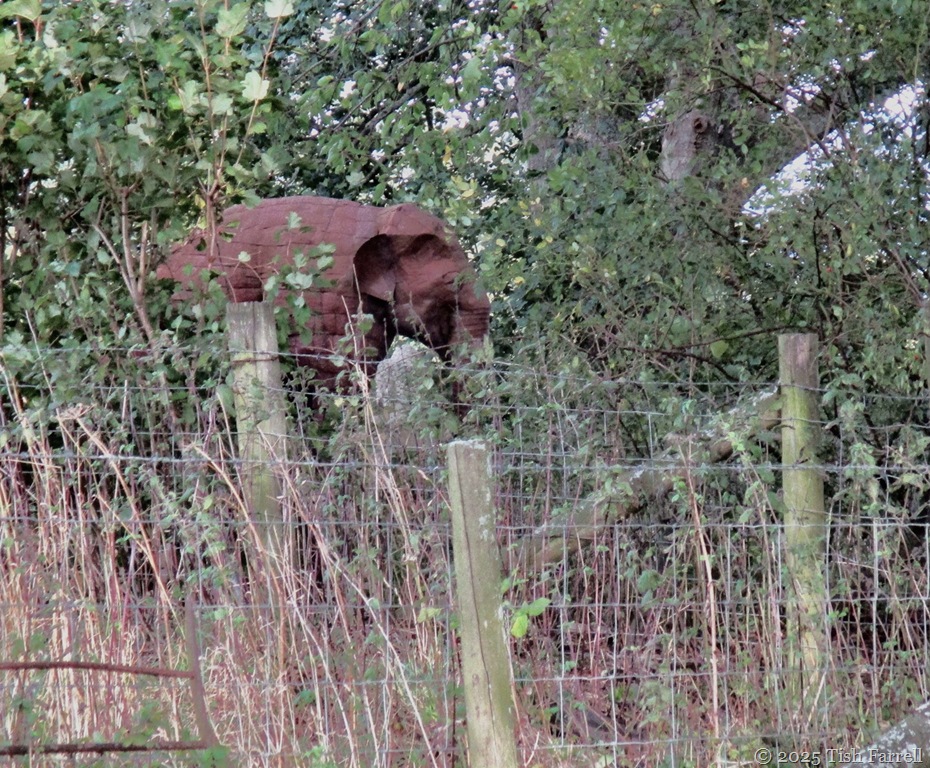
I collected a couple of kilos of fallen fruit. The apples on the tree did not want to be picked, holding fast to their twigs. We headed onwards and homewards down an easier slope, glimpsing the Indian elephant sculpture through the trees. We didn’t visit it this time, but it amused me that this view was often how we saw wild elephants when we lived in Kenya. In fact you were lucky to see this much of them…
elephant
*
And it was here we found yet another crab apple tree, the fruit pale yellow, smaller and rounder than the hilltop apples. And it too was laden. Well! No need to worry about jelly supplies.
  yellow crab apples
*
I also wished I could think of something useful to do with hawthorn berries. There was a profusion of them on a nearby tree. All around Shropshire this year the fruit is providing a spectacular show, seemingly quite unaffected by the rainless spring and summer. The berries are of course very important in herbal medicine: tinctures and teas deemed restorative for the heart and arteries, and more besides. Simply looking at that glorious red made me feel brighter:
hawthorn
*
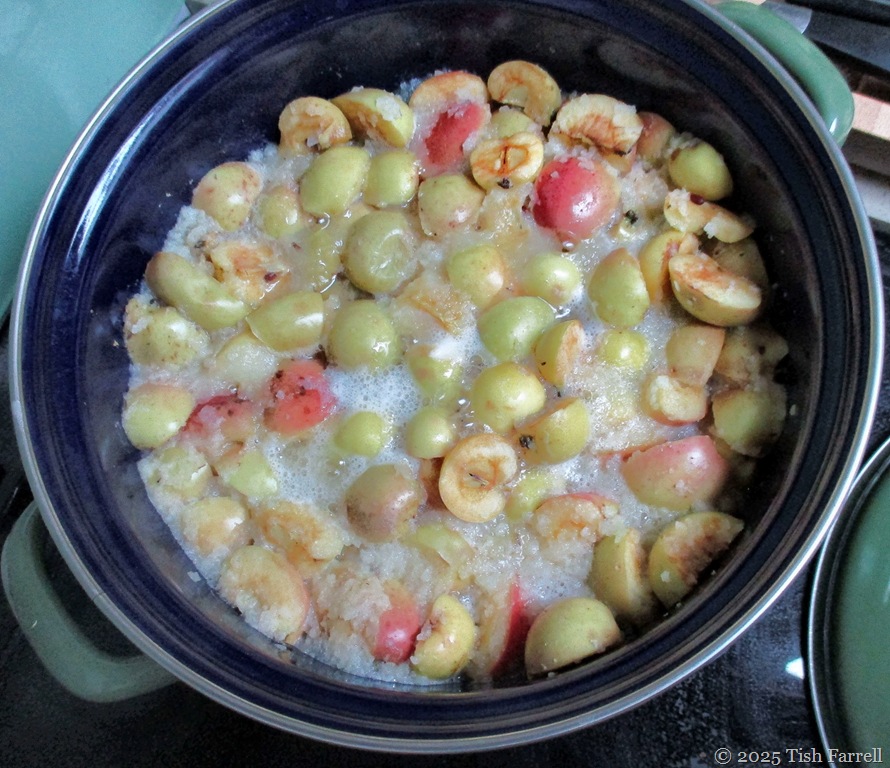
And so to the kitchen to chop apples and simmer till soft.
The pulp is then put in muslin and strained overnight (allowed to drip, but not squeezed).
*
crab apples simmering
*
The resulting juice is measured and put in a heavy pan with sugar at a ratio of 10:6 juice to sugar. You can add some lemon juice and herbs – chopped mint or rosemary, but I don’t. After stirring in the sugar until it is melted, a steady 7-8 minute boil is usually enough to achieve a set. The jelly should then be poured into sterilized jars.
crab apple jelly
*
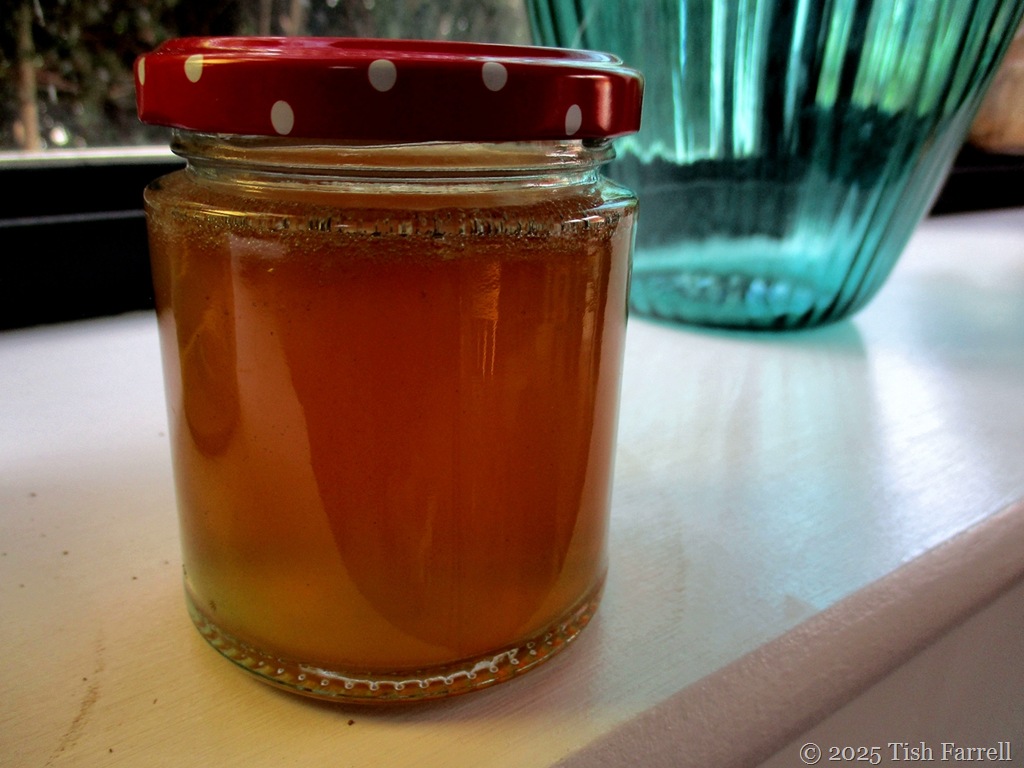
This being a once-a-year activity, I find it helps to make a small batch first to get the gist of things. This jar would definitely not pass muster at a Women’s Institute jam and preserves contest – too cloudy (must have squeezed the straining muslin), too many bubbles as I probably overdid the ‘setting’ in order to be on the ‘safe side’.
This particular crop obviously had a high pectin content: the gelling happened in less than 5 minutes. But never mind. It will still be fine with roast lamb, and delicious on a warmed croissant or with soda bread toast. And using the Wintles Hill wild apples means I can leave my lovely little garden crab apple trees looking decorative with their full complement of fruit. The blackbirds will get to enjoy them in December.
fallen fruit header

For Love Of Patrinia ~ Six On Saturday

Wildegoose 1

These first few photos aren’t from my garden (if only), but here to illustrate gardener’s lust [1] ~ that moment when a new plant begins to root itself in the psyche, aka mental compost, until you know that you simply have to have it.

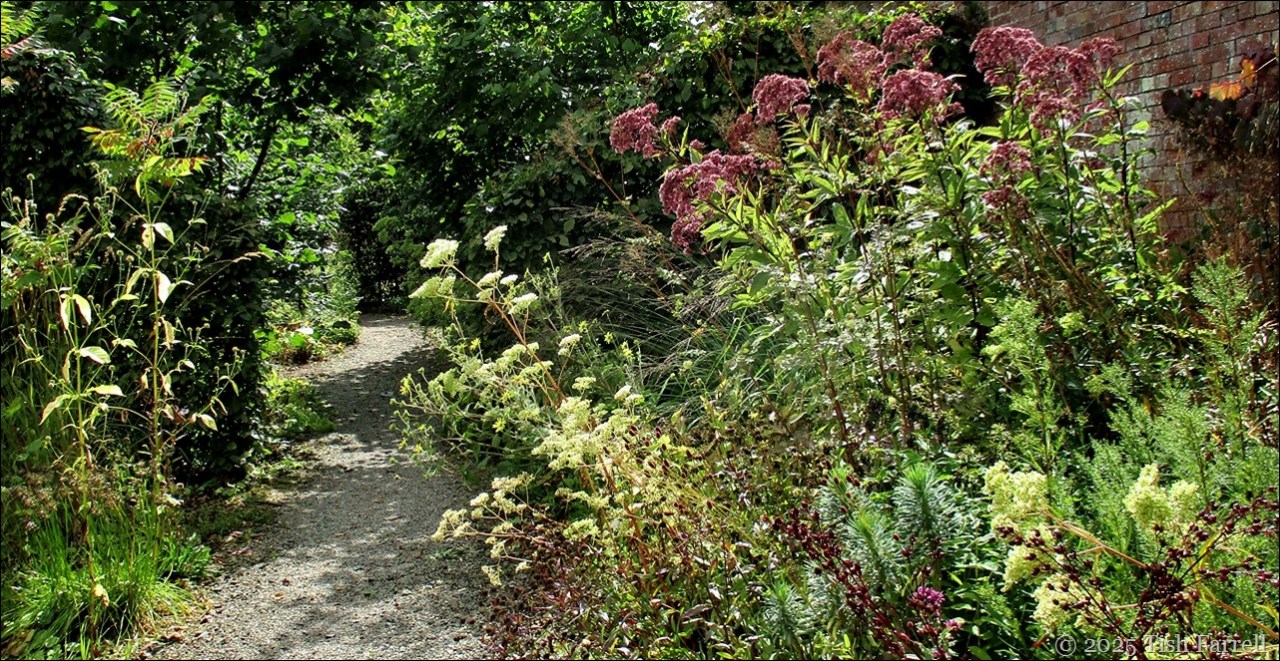
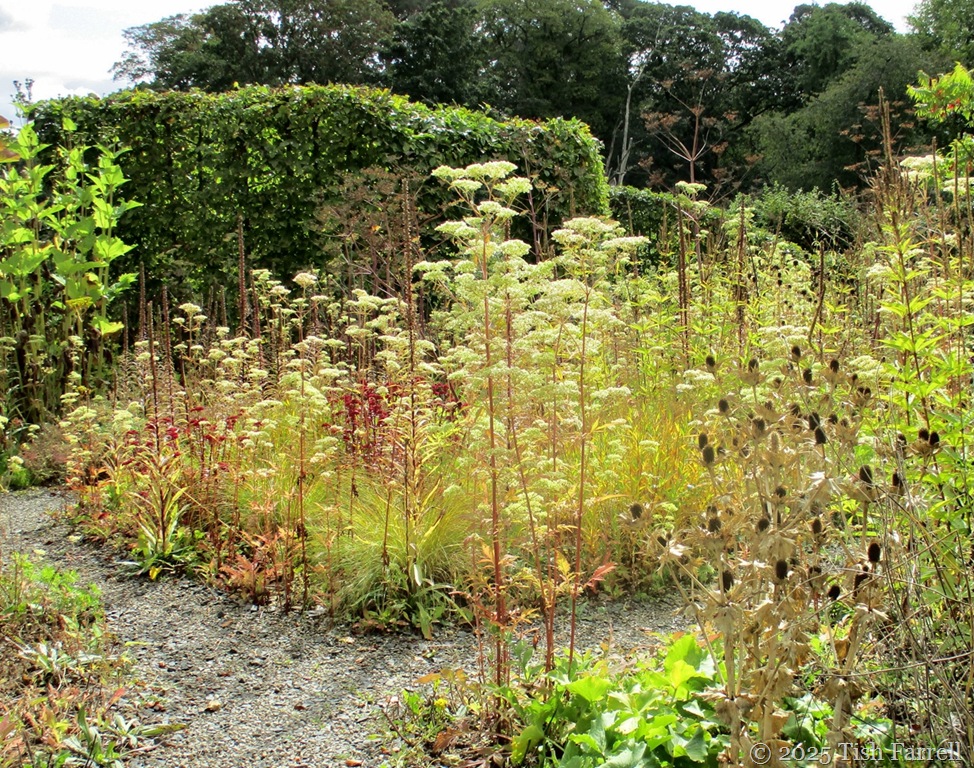
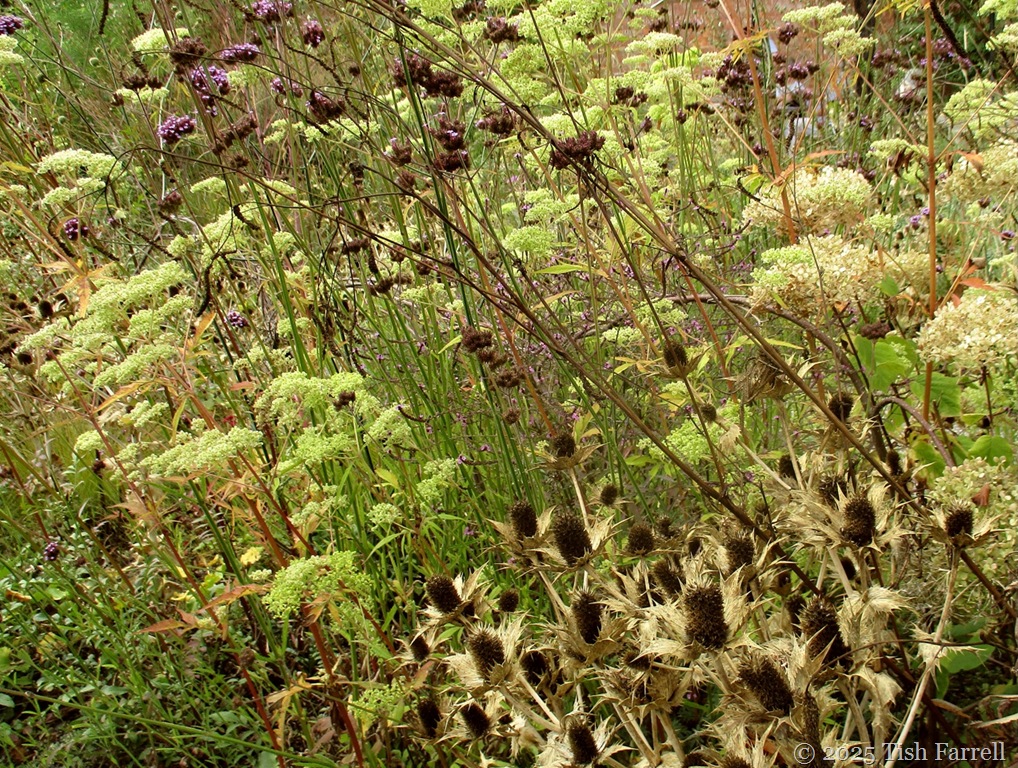
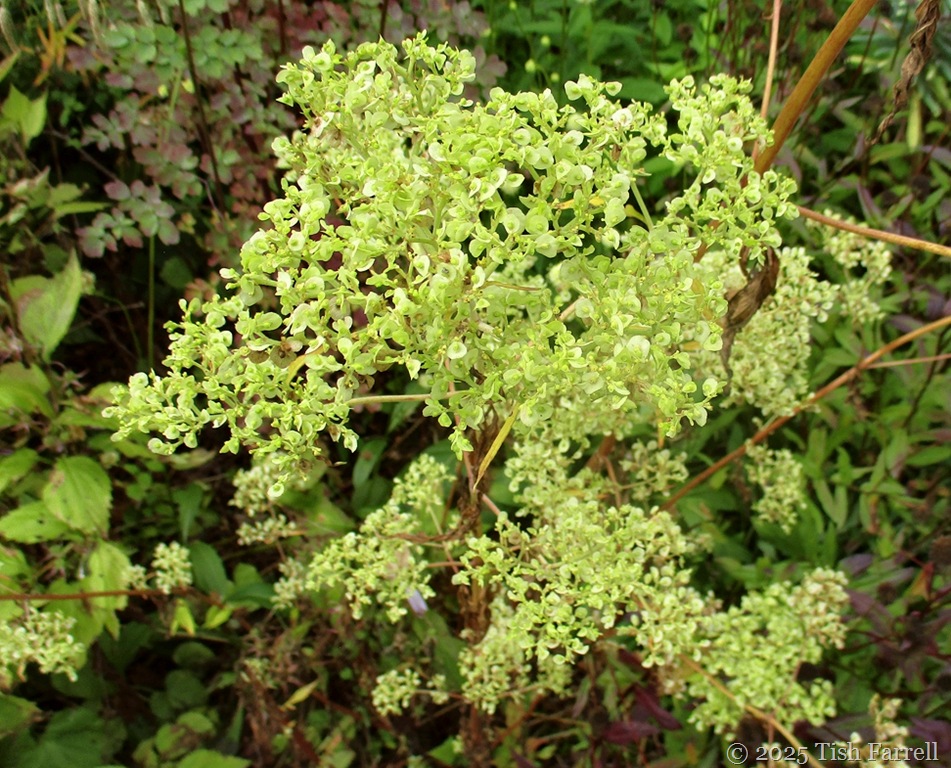
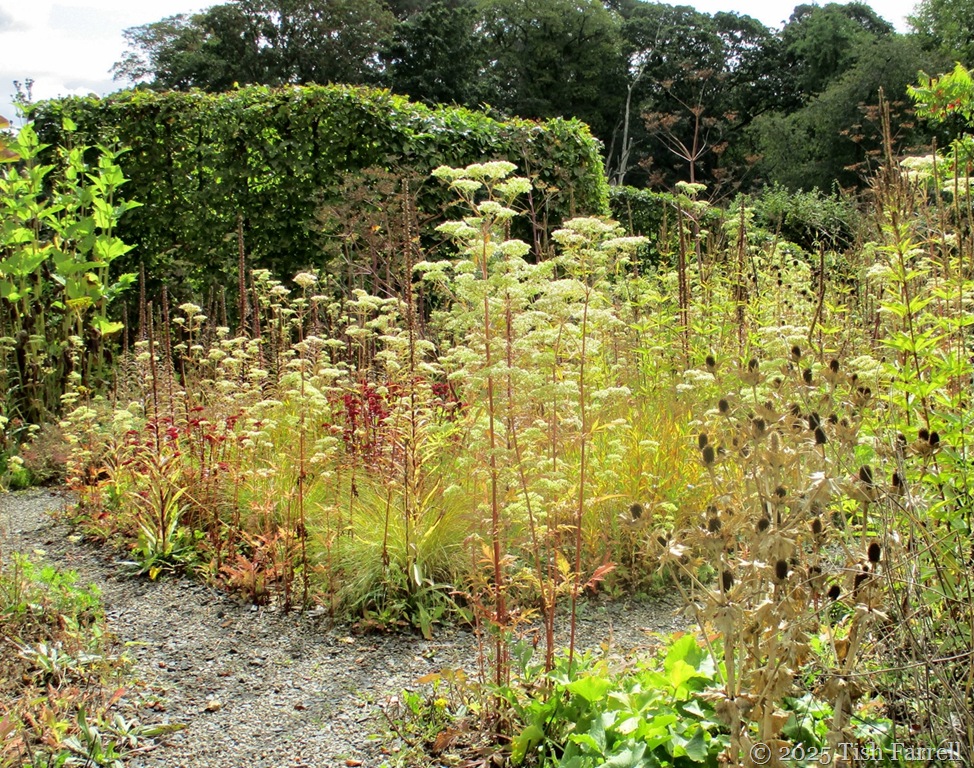
Well, that’s what happened last week when we went to visit the walled garden of Wildegoose Nursery here in Shropshire. (See previous 2 posts). It was a hazy day, but everywhere the garden was alight with the frothy, apple green seedheads of Patrinia monandra/aff punctiflora [2] a tall and gracious plant, and one quite new to me. (And yes, it does seed itself everywhere, but I was told unwanted stems pull up easily). 

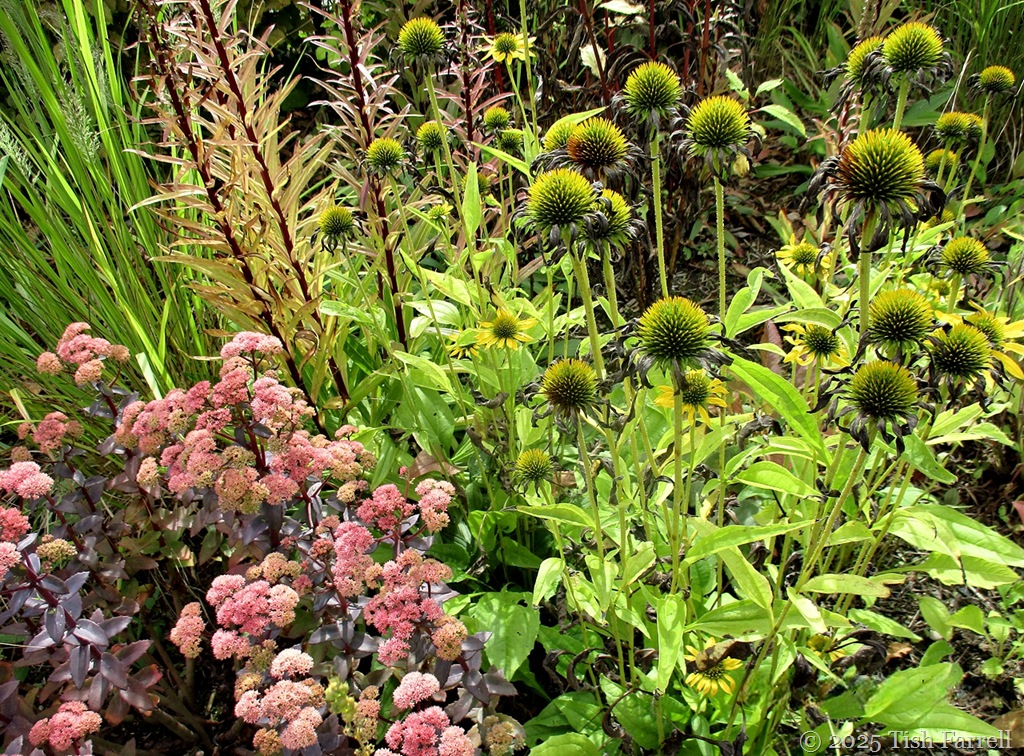
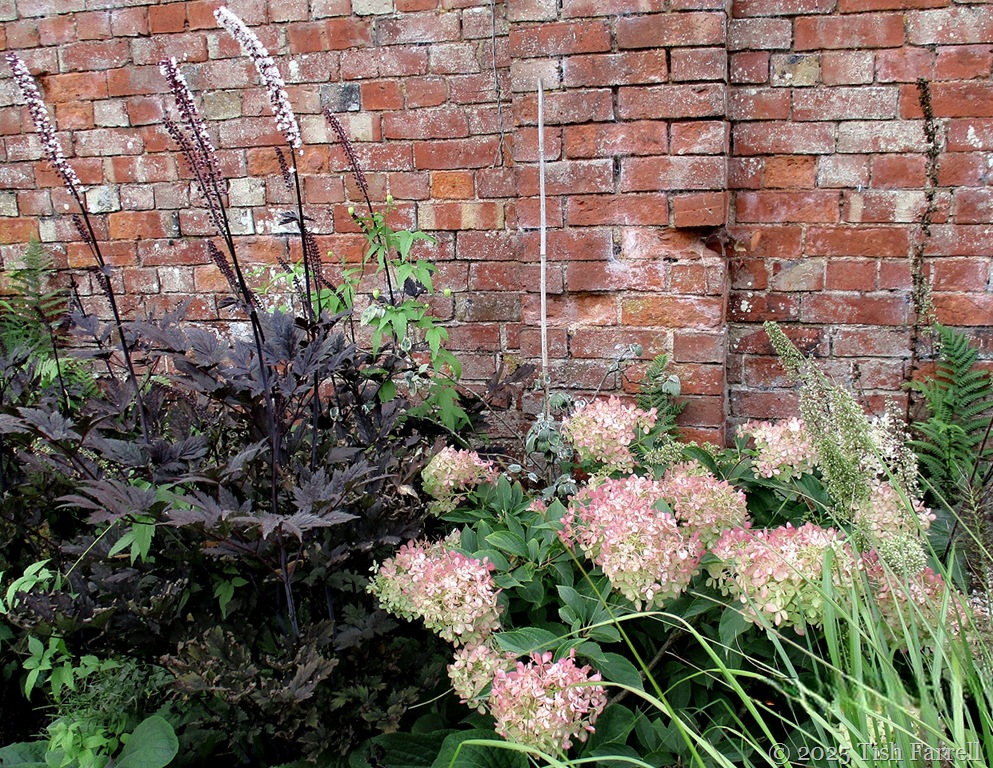
At Wildegoose it sets off not only the reds and bronzes of late summer sedums, Eupatorium, and Heleniums, but also the fading stems of Verbena, Sea Holly, Echinacea and Hydrangea:

Patrinia 4

Patrinia 3

It’s a perennial, clump forming (50cm wide), hardy plant, with spreads of tiny yellow flowers from July to September. The seedheads, though, can last well into the winter. The plant was first collected in China by the Gothenburg Botanic Garden, or so the Beth Chatto site tells me.

And the reason I was looking there, was because it was only later when we arrived home, and I was scanning through the photos that I suddenly saw how lovely Patrinia might look in our so much smaller garden. And I knew Wildegoose was about to close for the winter, and that we were unlikely to get there before it did…And so to postal sources, although of course the plant, if ordered now, will naturally come pruned of those lovely seedheads…(Oh, the self-inflicted anguish of the besotted and too impatient gardener!)

*

Meanwhile, back at The Gables we’ve been having a week of thunderous downpours with intermittent spells of warm September sunshine; April showers on steroids. The lawn is quite rejuvenated, although I hate to tell it, now it isn’t rock hard, I’m going to dig more of it up to make a new strawberry bed. (Psst. Don’t tell Graham).

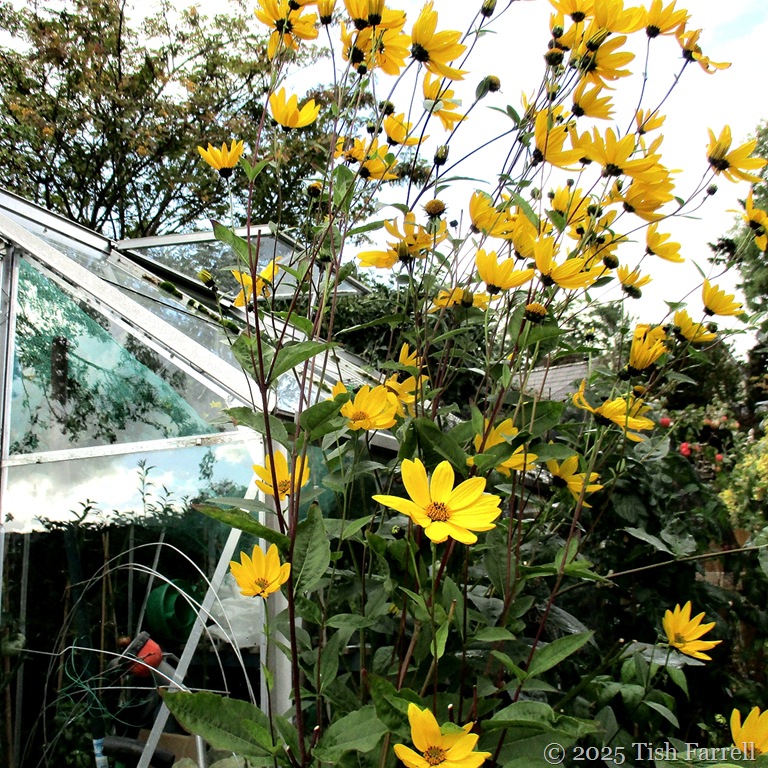
So yes, we are heartily glad of the rain, even if it comes like swift deliveries from Niagara Falls. The Helianthus [3] by the greenhouse is certainly having a new lease of life. It’s lighting up one of the shadier parts of the garden, an unexpected full-on display when it’s already been flowering for weeks.

helianthus

helianthus 2

*

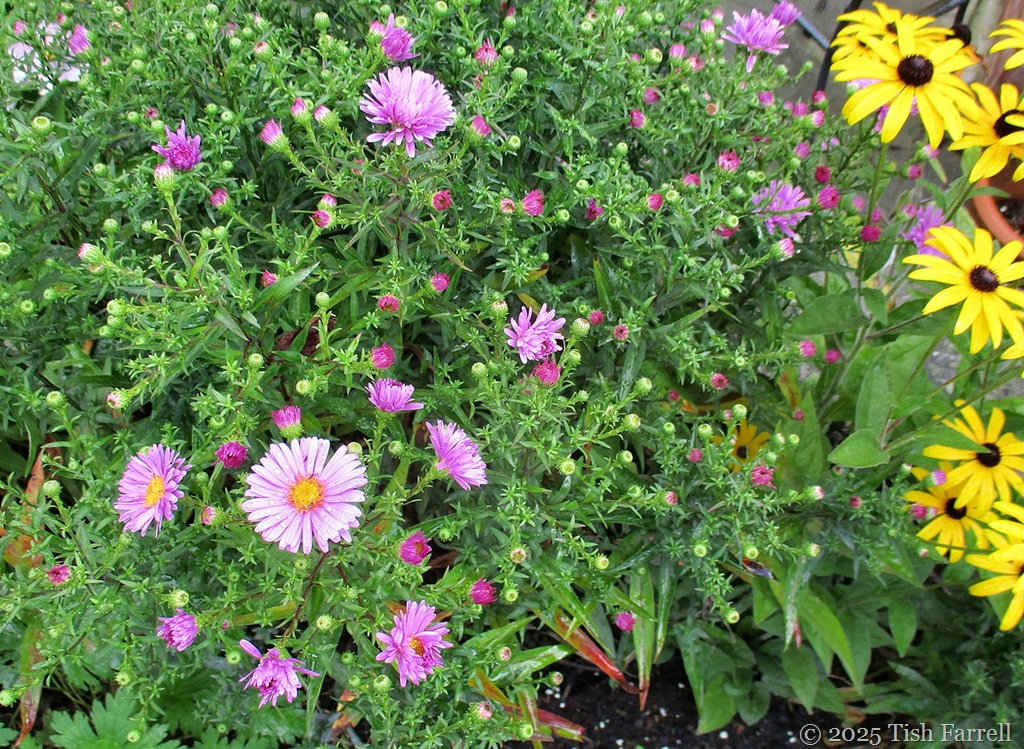
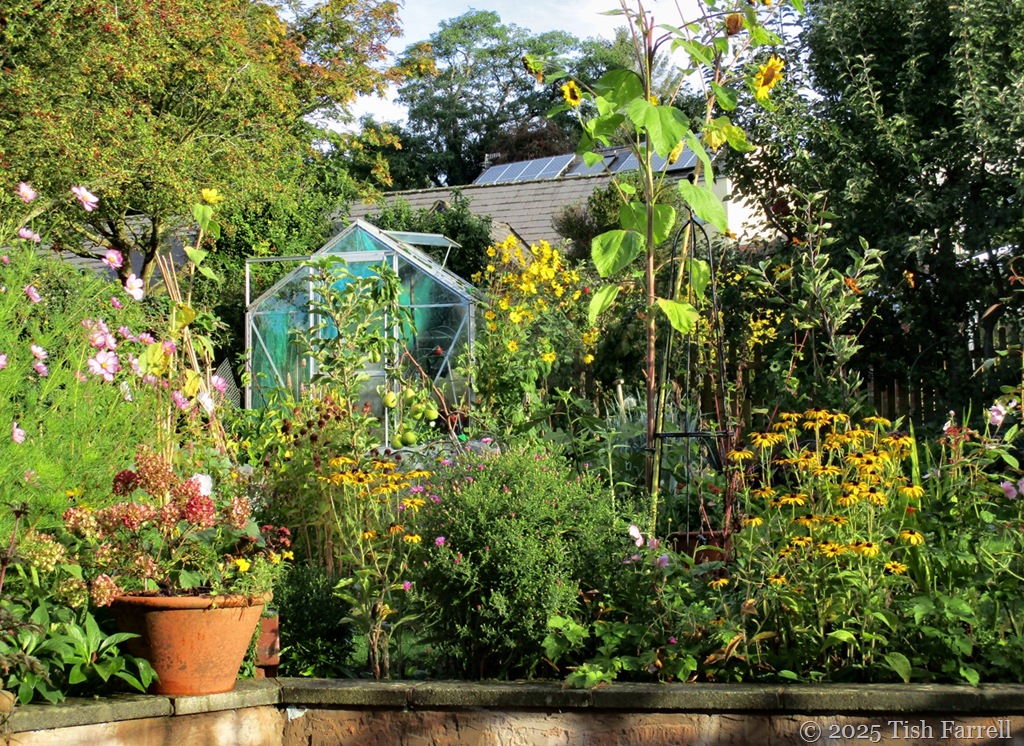
In the border along the terrace wall, the Michaelmas Daisy [4] is at last beginning to flower. It’s been a mass of buds all summer, but was obviously saving itself for more autumnal days. It should be splendid in a week or so, and especially if the Rudbeckia keeps going.

michaelmas daisy

back garden

*

Further along the border, between the Japanese Anemones and Selinum, St. Cecilia rose [5] has been spurred into a second flowering. We inherited her with the garden. She was in a poorly state, but though the flowers, when fully open, are rather wan and saintly, and thus none too remarkable, I decided to nurture her. She anyway smells quite nice, and is appealing when the buds are seasonally dewdropped and seen beside the presently seeding heads of  Selinum.

St Cecilia and Selinum

St. Cecilia 2

*

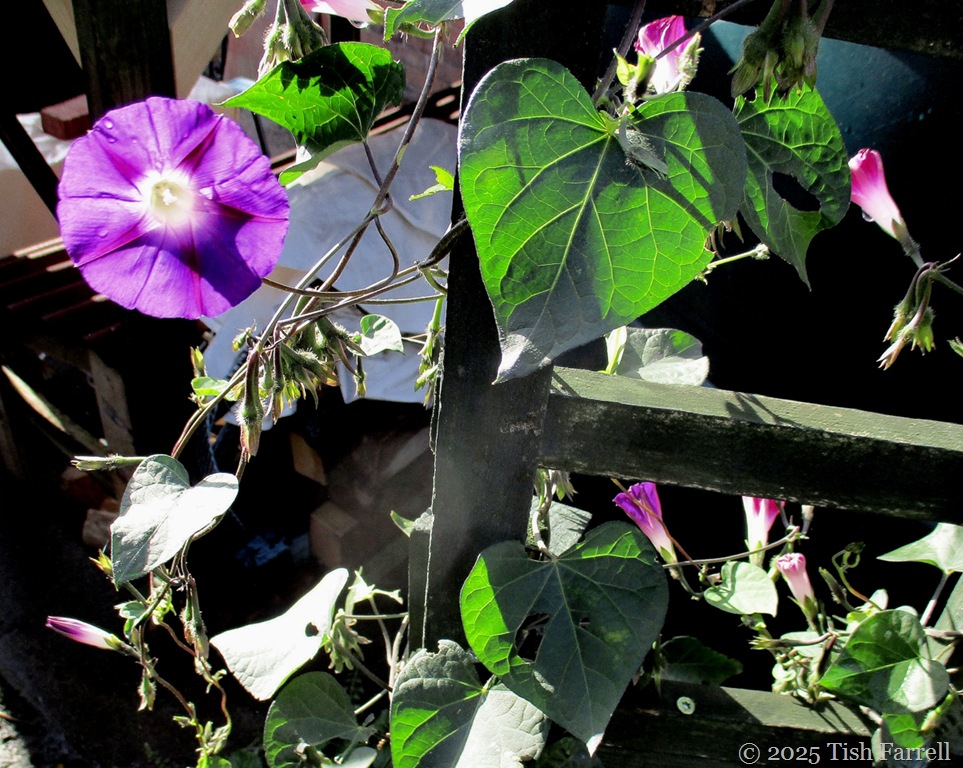
And finally the Morning Glory [6] growing on the trellis by the oil tank looks to be enjoying the cooler, wetter days. I’m surprised it’s still going after the torrential downpours, the flowers lasting longer through the day too.

morning glory

Happy gardening, folks, whatever your hemisphere.

Six on Saturday Please visit Jim in Cornwall for his week’s garden news.

‘Drawn from the Earth’ ~ Art In The Garden At Wildegoose Nursery

large female bust 2

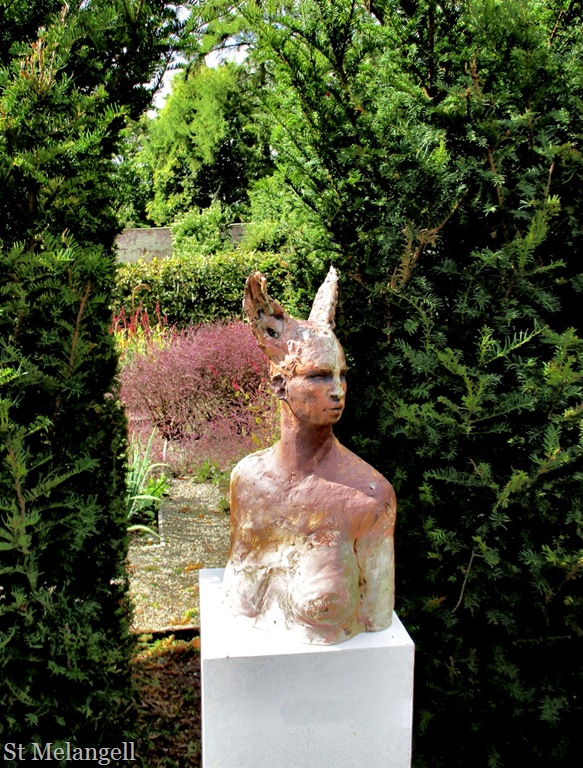
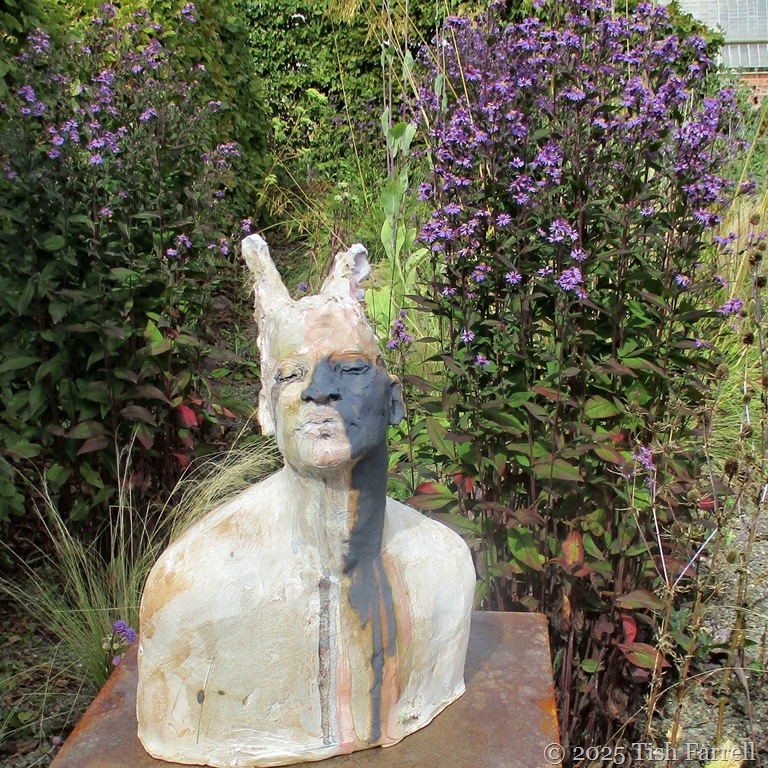
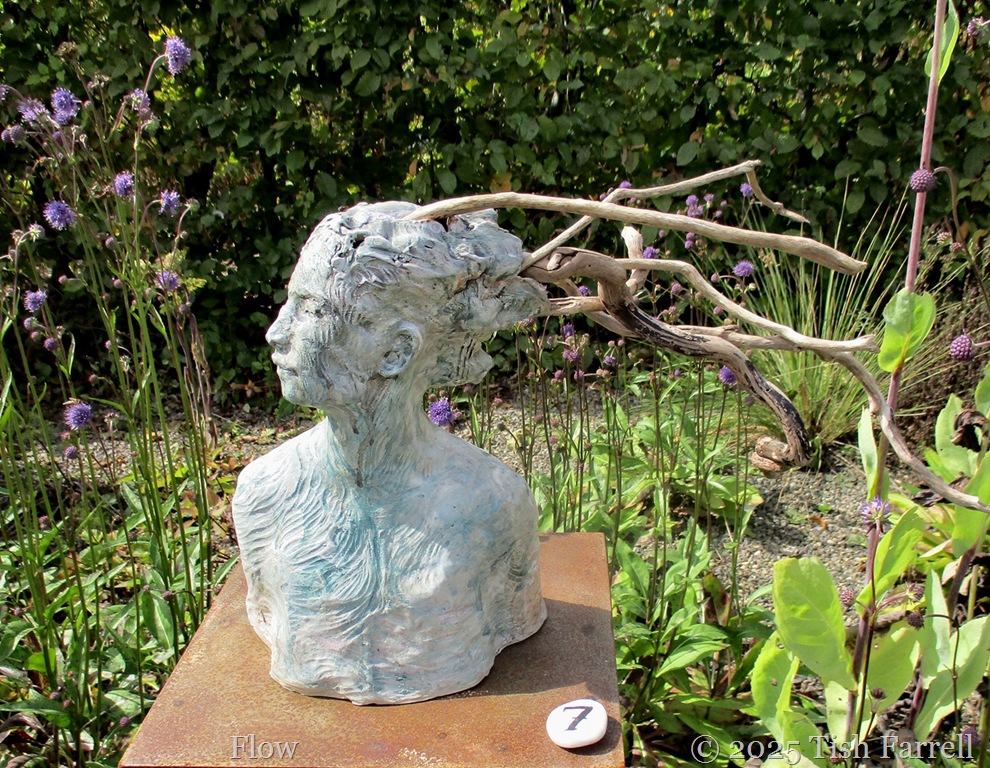
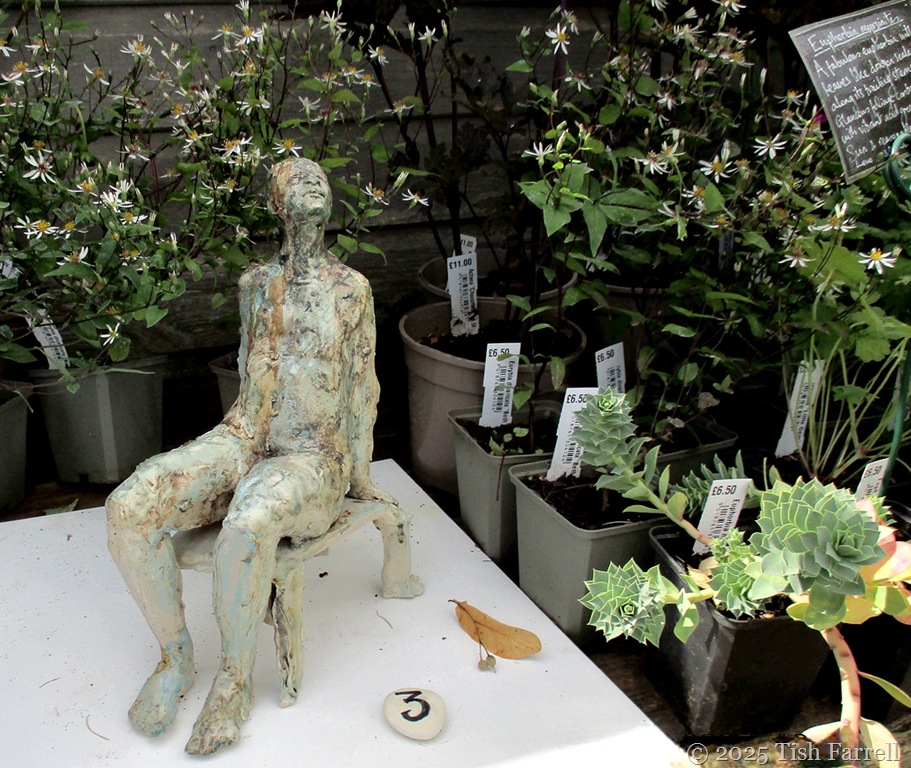
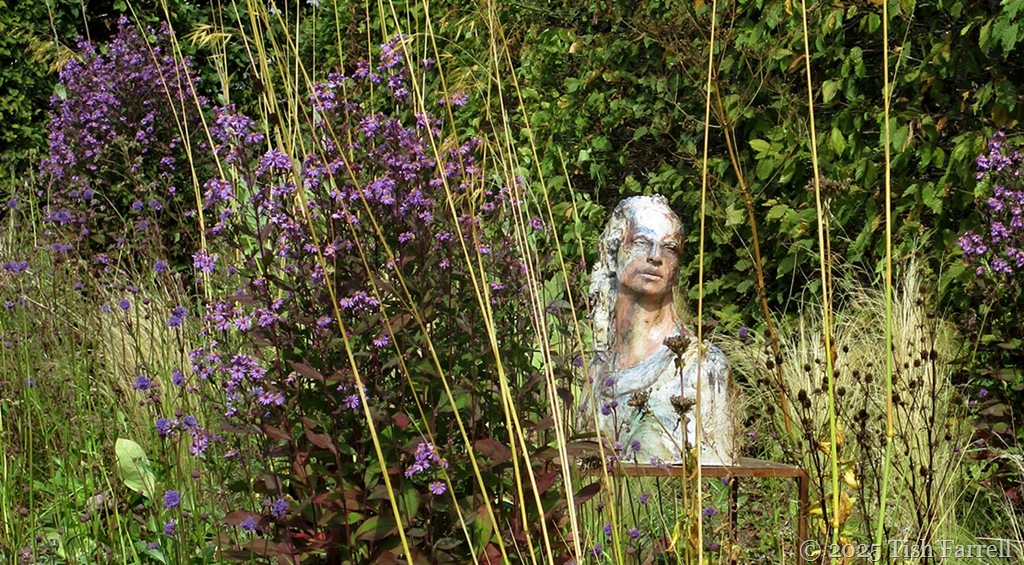
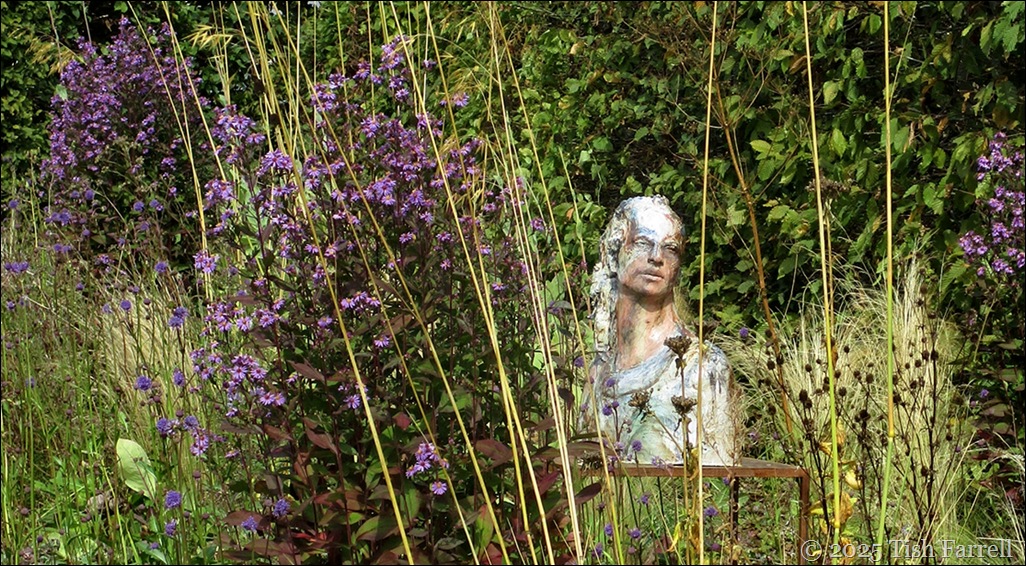
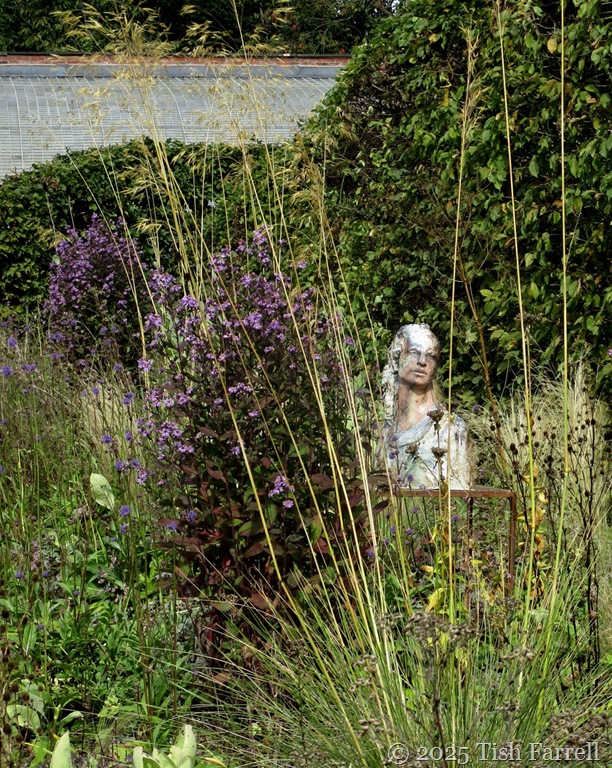
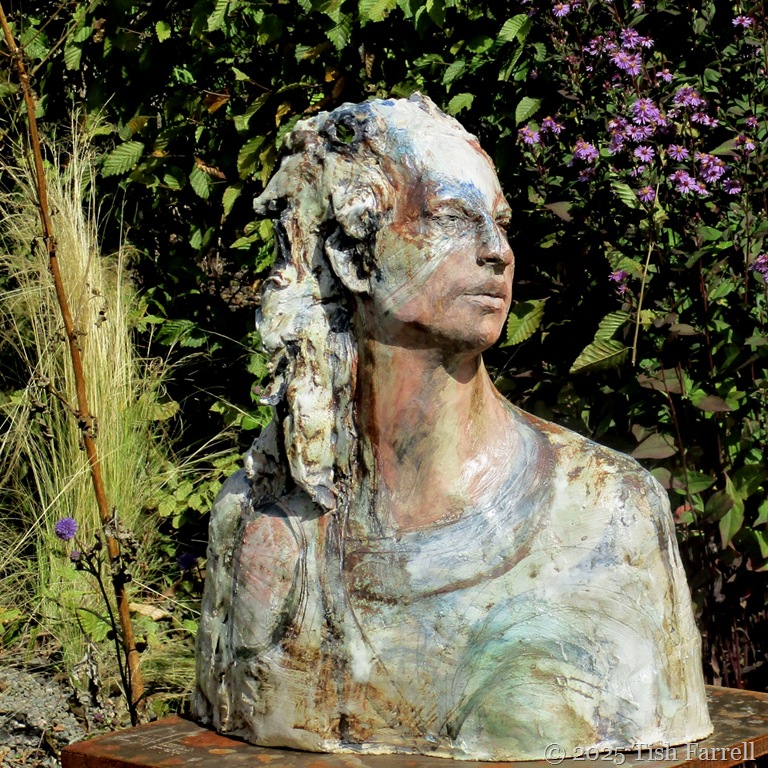
In the last post I said I’d show some of the artworks from Mary Elliot’s ‘Drawn from the Earth’ exhibition, hosted last week by Wildegoose Nursery.  The setting is a series of garden ‘rooms’ created in an old and magnificent walled garden. The late summer plants and grasses made an otherworldly backdrop for Sharon Griffin’s ceramic figures.

large female bust

Her work is haunting. To come upon her pieces, as if by chance, in a garden that is slipping into autumn, gives them added drama; a life almost. There’s a sense of ‘old gods’ invoked; forgotten stories being retold.

Or in her own words:

I make work which explores the universal human condition…clay allows me the freedom for pure expression; a re-connectivity with the land and ancestral storytelling…

art 4

faun with shadow ears

Faun with a shadow face and deer ears

*

Flow

Not so blind that I can't see Sharon Griffin

‘Not so blind that I can’t see’

*

small figure

And on the plants for sale table: ‘The Gardener’

*

I only came upon this one work by sculptor, Glen Farrelly.  It’s called ‘Formation’. I perhaps find it more personally appealing than the Sharon Griffin works. i.e. in the sense I could see myself living with it. I loved its setting amongst the pale green Patrinia seedheads and red sedum, the spires of dying flower stems and grasses.

Art 4a

*

And finally some more views of the gardens – plants making their own end-of-season artworks.

echinacea and ice plant

hydrangea and actaea

Wildegoose 1

wildegoose 2

*

Mary Elliot’s drawings and paintings can be seen HERE.

header 2

The Blue Bench At Wildegoose Nursery

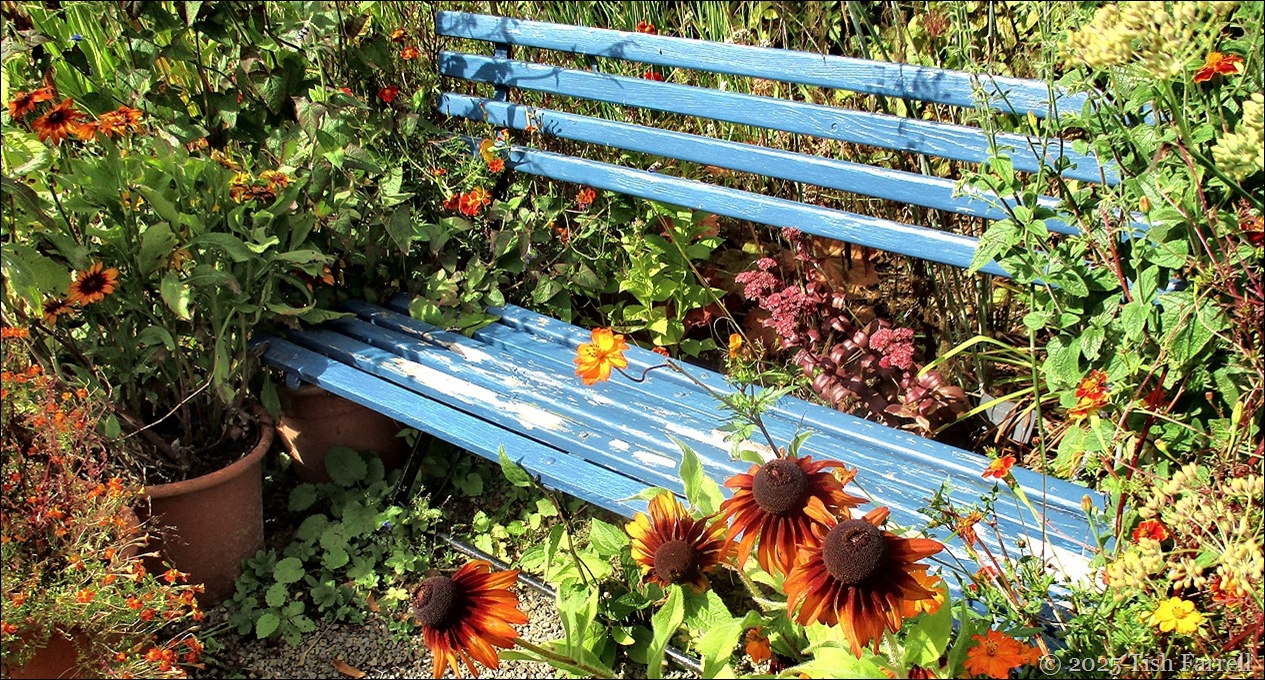
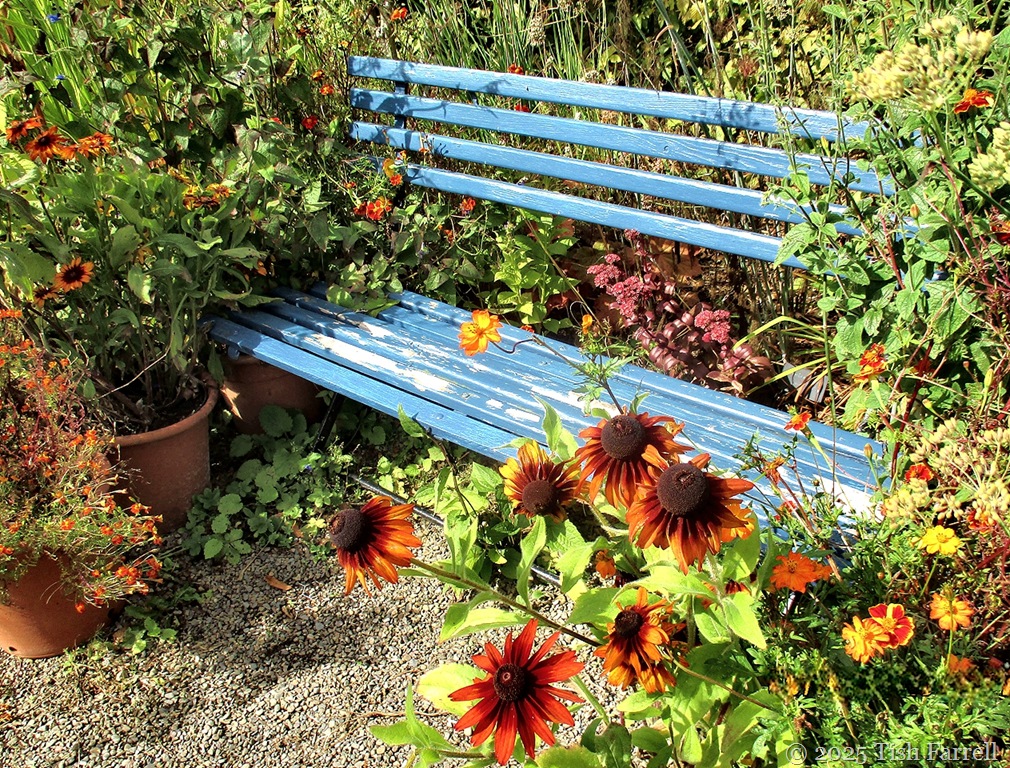
blue bench Wildegoose Nursery

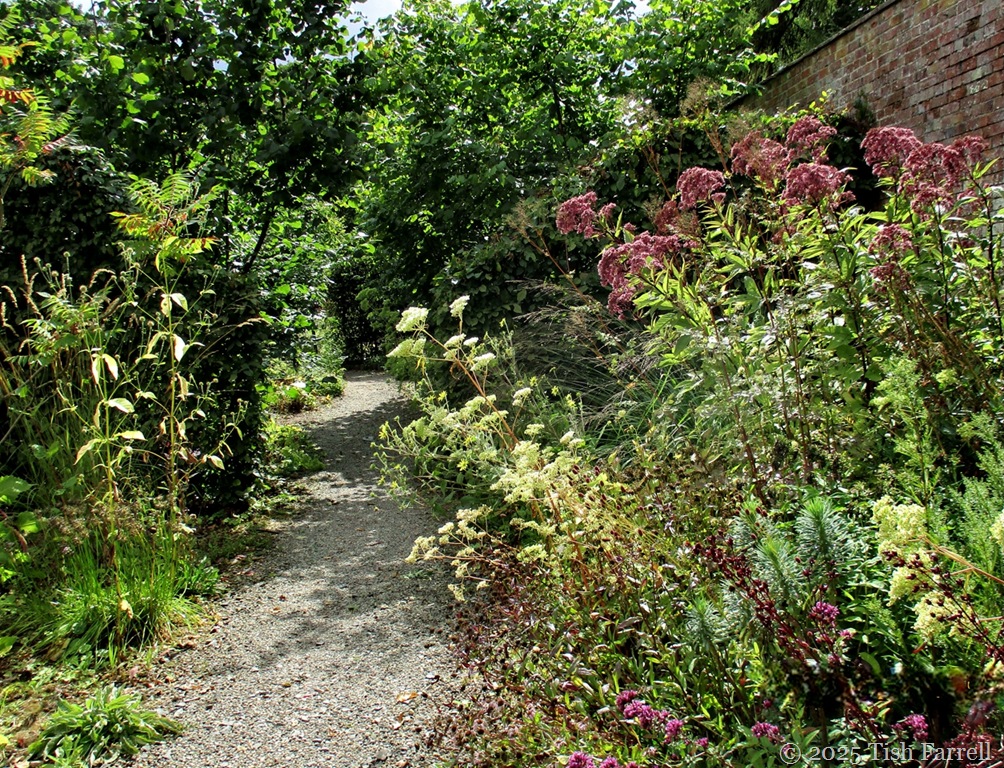
It’s quite a while since we last visited Wildegoose Nursery. It’s a longer drive from Bishop’s Castle than it was from Wenlock. But this is no excuse. It is the most beautiful place, the nursery created in what was once the walled vegetable garden of Millichope Park, Munslow. (You can read the story of all that has been created, plus splendid photos HERE).

The walled garden itself is planted in a series of ‘rooms’, showcasing the nursery’s range of plants for sale. It is only open during the planting season from March to late September. There are umbrella-ed tables and a pleasing cafe serving delicious cakes and lunch-time snacks made from the garden’s produce. And there are some very magnificent Georgian glasshouses which have been restored and once more put to growing.

glasshouse 2

Every one of those several thousand glass panes had to be replaced. But the reason I’m showing this particular shot, is because there’s a potting bench in view – i.e. to go along with the header bench for Jude’s Bench Challenge. (I also know she knows all about Wildegoose.)

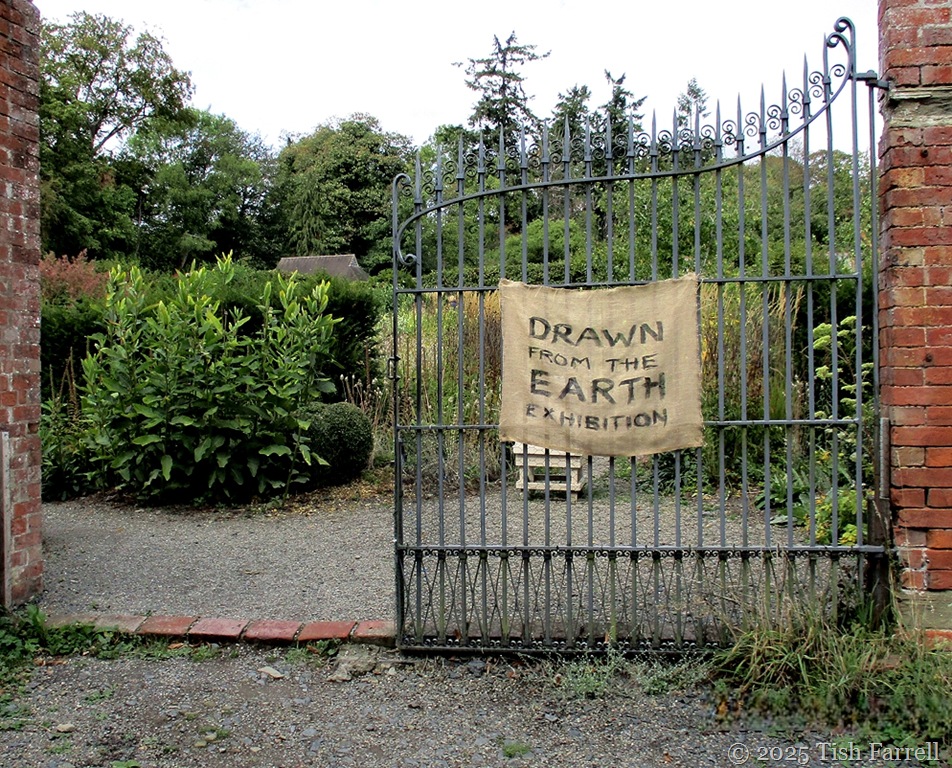
The reason we roused ourselves to go there last week was because one-time Wenlock chum, Mary Elliot, artist and former 20/20 Gallery owner had put on a four-day art exhibition there Drawn from the Earth. She was exhibiting some of her own work too (much of it inspired by the Wildegoose gardens) and we’d hoped for a general catch-up. There will be more of the exhibition in the next post. For now a glimpse of the garden in its autumnal colours:

wildegoose 3

*

And coming up in the next post:

drawn from the earth

*


Late Bloomers: Six On Saturday

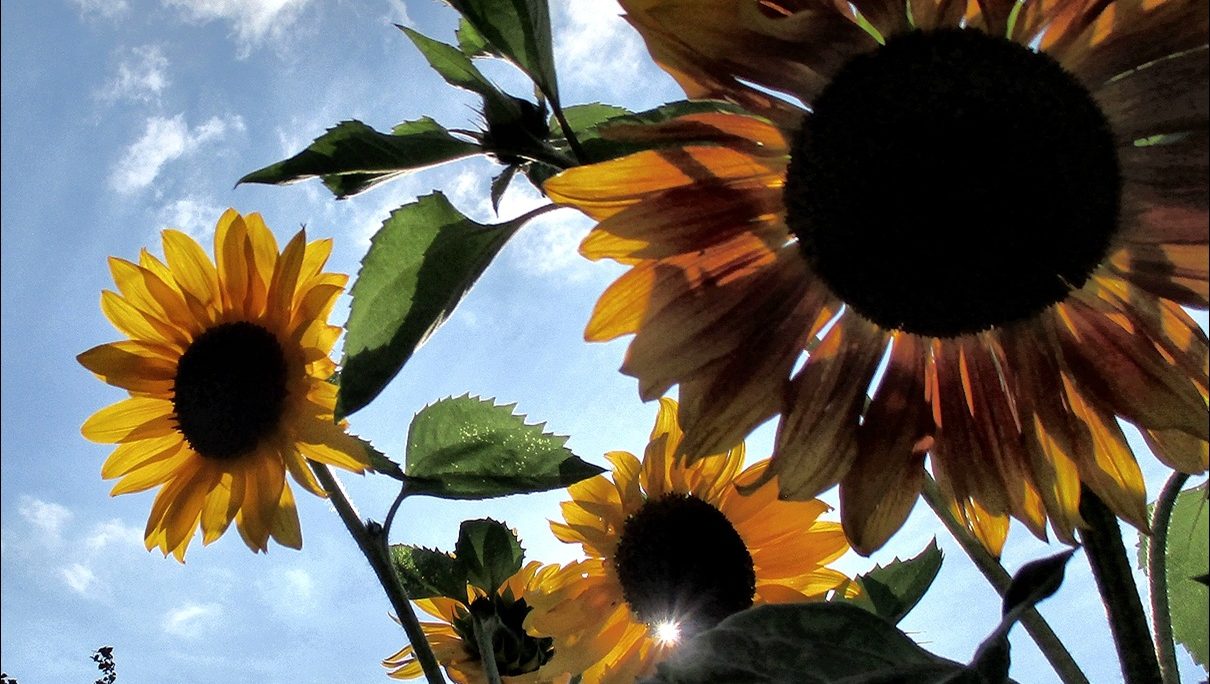
sunflower

The garden looked shell-shocked after this week’s deluge. Rain at last! But rather too much at one go. “It never rains but what it pours…” etc etc. Anyway, the giant sunflowers [1]  held their own and are still putting on a show. Then there were the almost immediate signs of revival by the lawn which had been dusty brown all summer. This reminded me of our Kenya days when our lawn of tough Kikuyu grass was reduced to looking like old sacking during the long dry season. But come the short rains and up would spring masses of green shoots,  an instantaneous green sward.

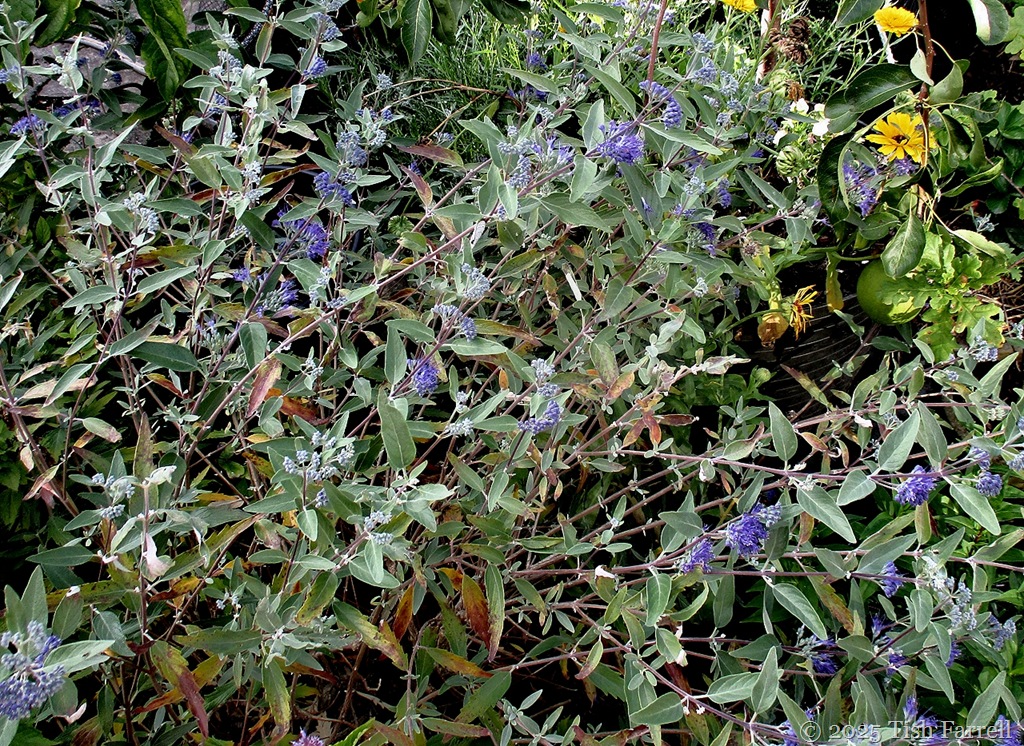
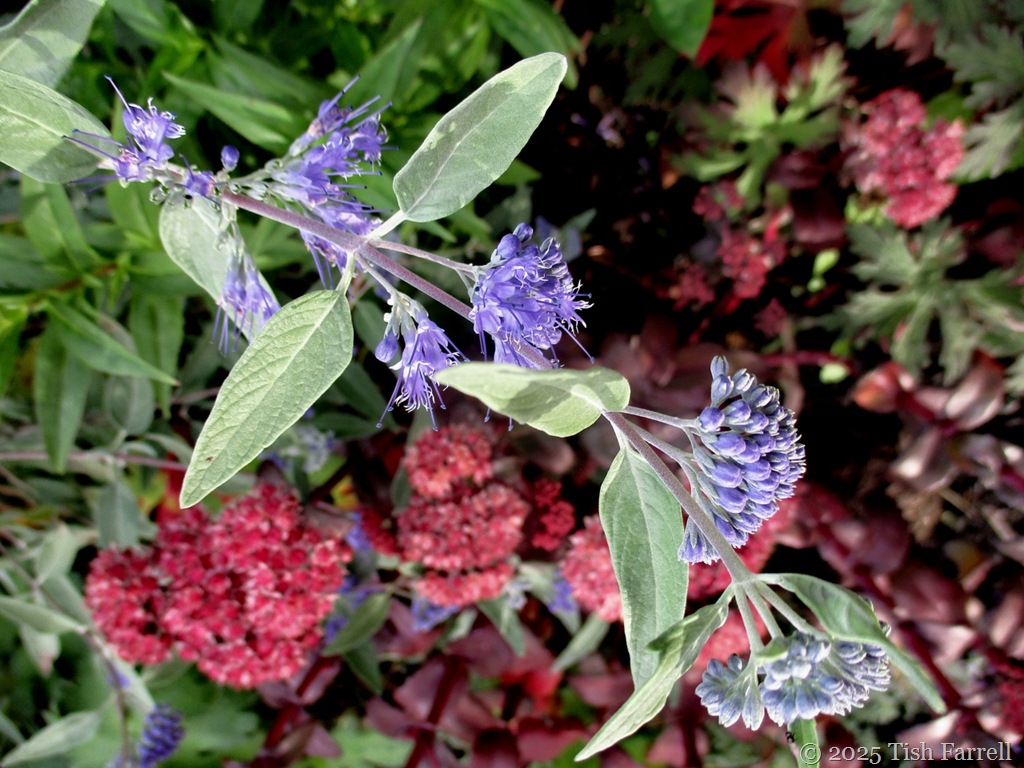
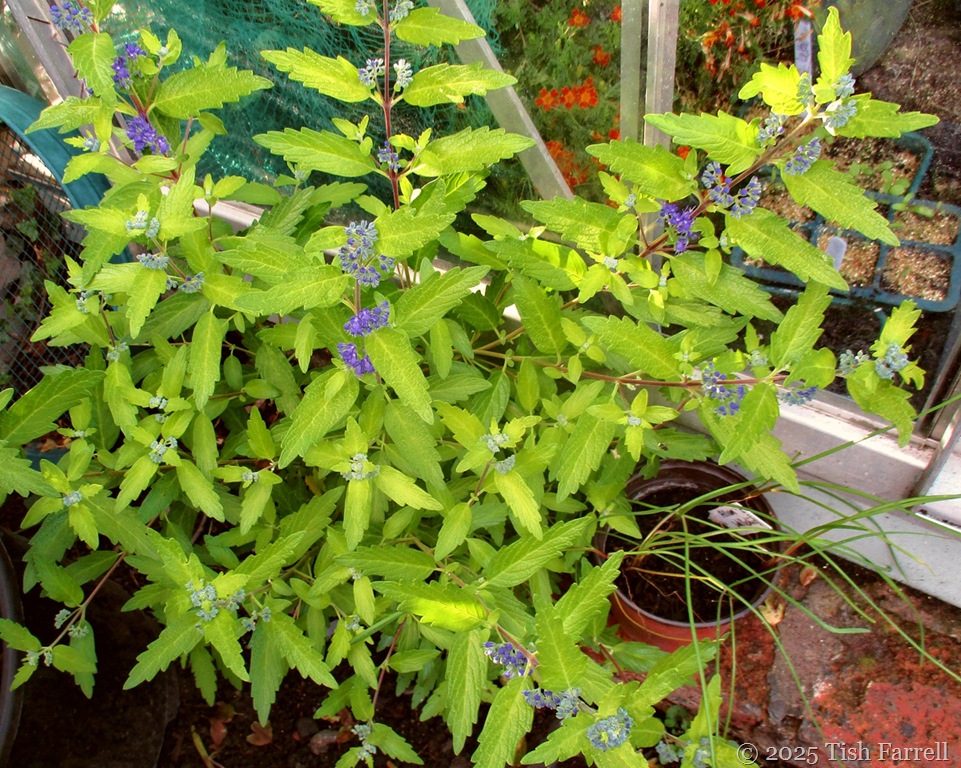
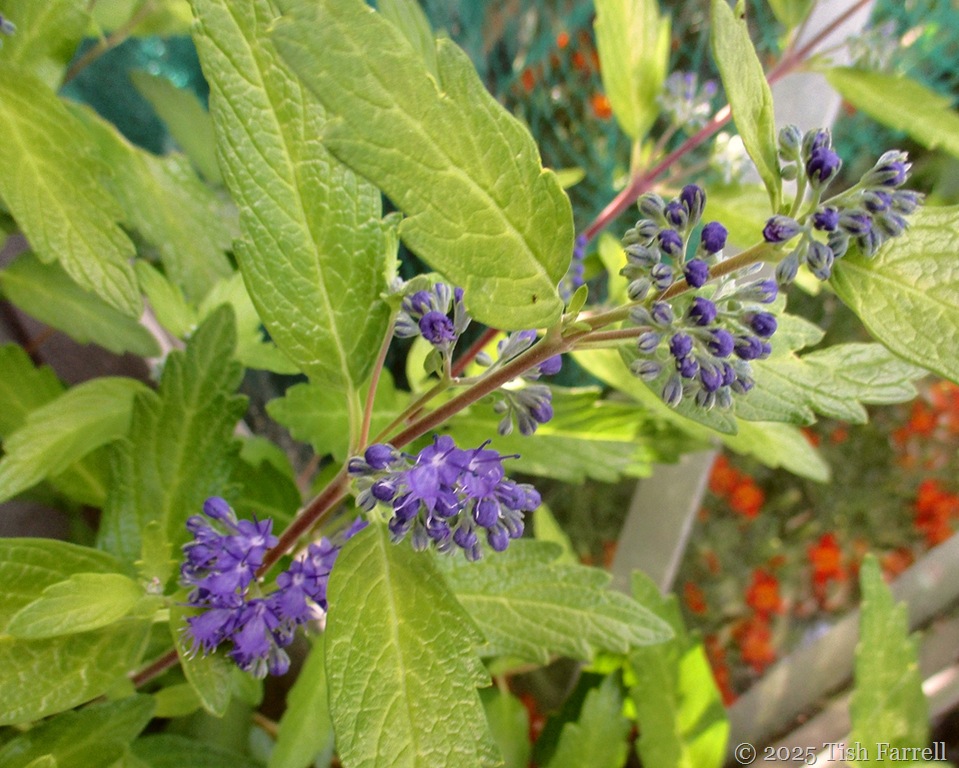
The rain stirred the caryopteris [2] into flowering. It is supposed to be late, but this year seemed particularly so. As a shrub, its structure is rather underwhelming. The small silver-grey leaves and lax stem tendencies make it look rather like some unkempt garden escape on waste ground. Or maybe it was just the way I pruned it. The instructions said give it a good cut back.  Or then again, maybe it is simply the effect of a long, dry summer. This variety is Heavenly Blue. And if the overall look isn’t too exciting, the sapphire sprays are gorgeous, and bee-life loves them.

caryopteris heavenly blue

caryopteris detail

I have some other young caryopteris shrubs by the greenhouse. These have yellowish leaves and are a variety called Gold Crest. At the moment, their shape is rather more appealing. Also the contrast colours of flowers and foliage is pleasing.

caryoptros gold crest

caryopteris details gold crest

*

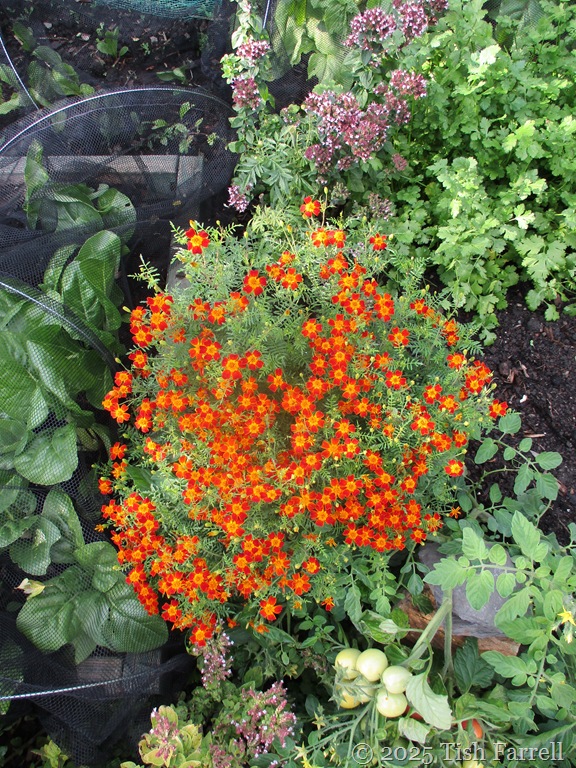
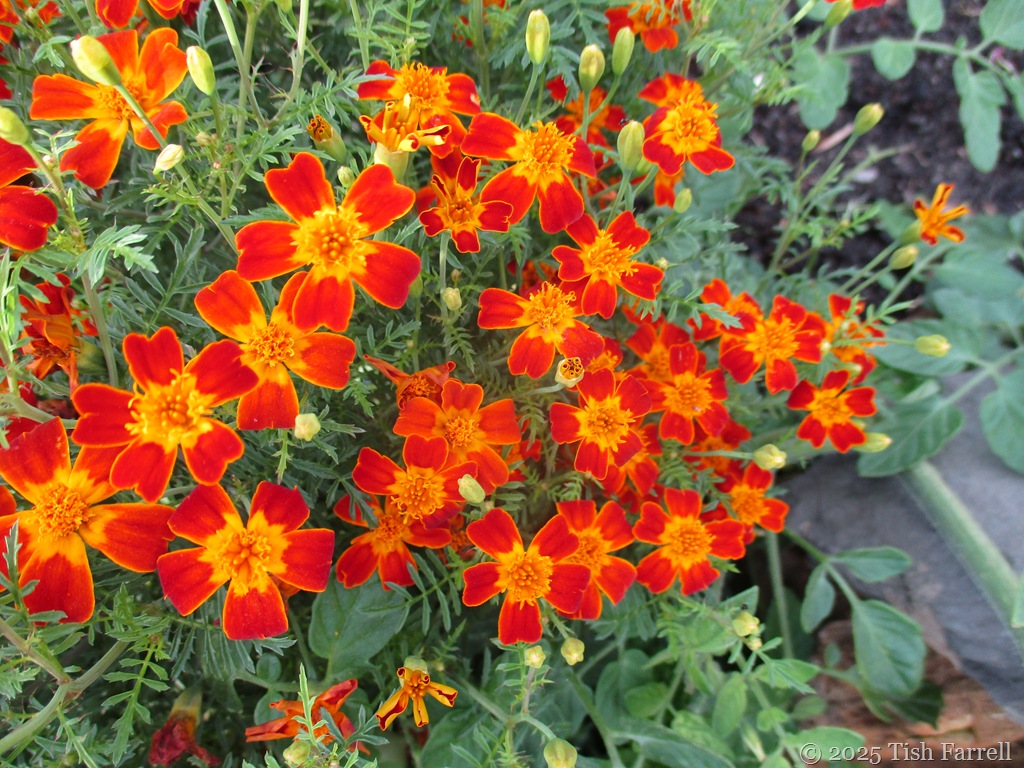
The French Marigolds [3] have also appreciated a good dousing. Grown from seed this spring, Red Gem has been flowering all summer. She’s supposed to deter white fly, so I planted her out in the greenhouse amongst the tomatoes, and also between the raised beds where I have a rather late performing Tumbling Tom cherry tomato. The individual flowers are tiny but it’s still a good show.

IMG_8845

IMG_8844

*

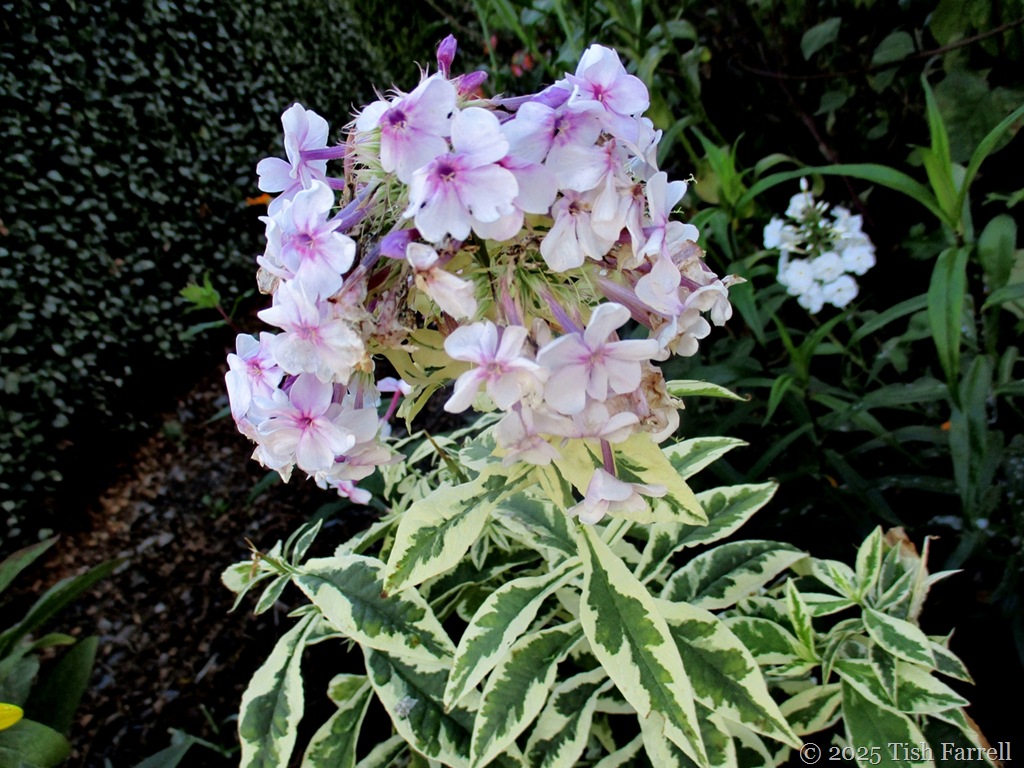
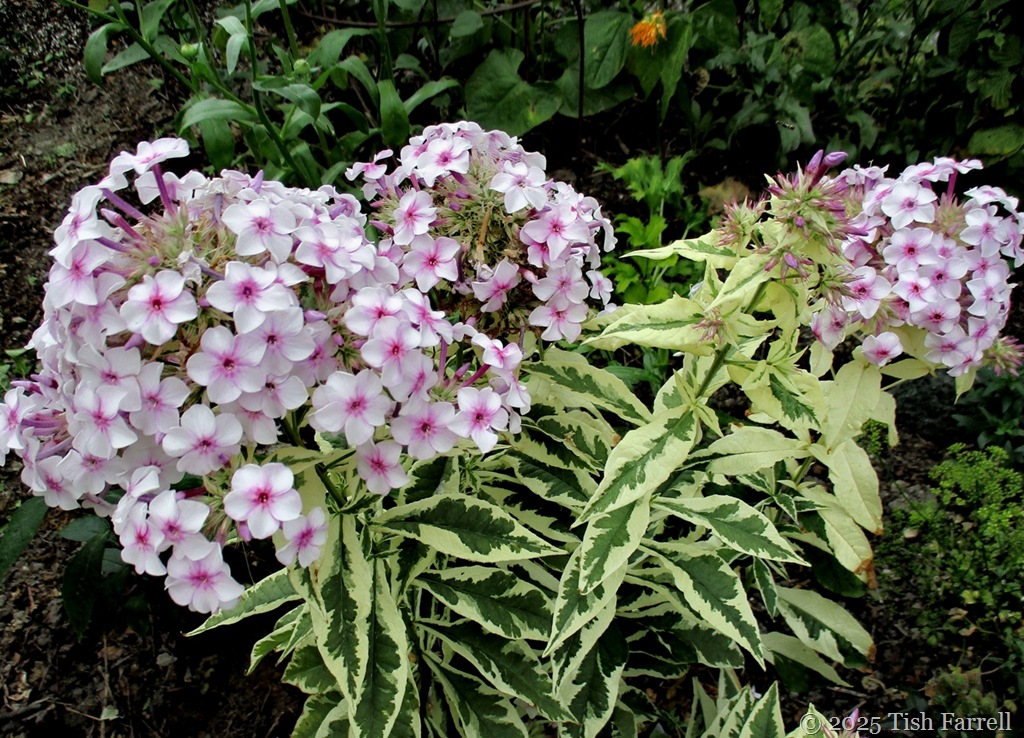
Another plant that’s done well until this week is one of my new favourites: phlox Norah Leigh [4]. I should have featured her when she was in full bloom. But she still has a few flowers, and although I’m generally unkeen about pink, I find the contrast with the variegated foliage very attractive. I’m becoming a bit of a phlox fanatic.

Here she is after the heavy rainstorms:

Norah Leigh

And here she is a week of so ago, before the rain: a stalwart show considering the dry weather, and that I only bought her as smallish specimen back in the early summer :

Norah Leigh 2

*

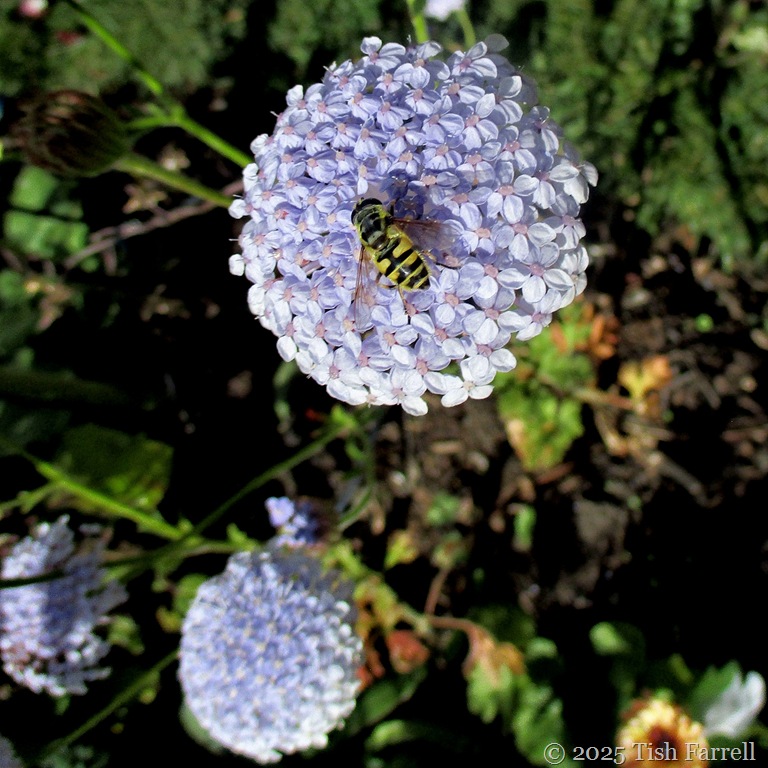
Some of the seed grown Madonna Lace Didiscus [5] are still going too. Also much loved by insects. When the flowers fade they transform into little silvery sputniks – quite magical on a dewy September morning.

lace flower

*

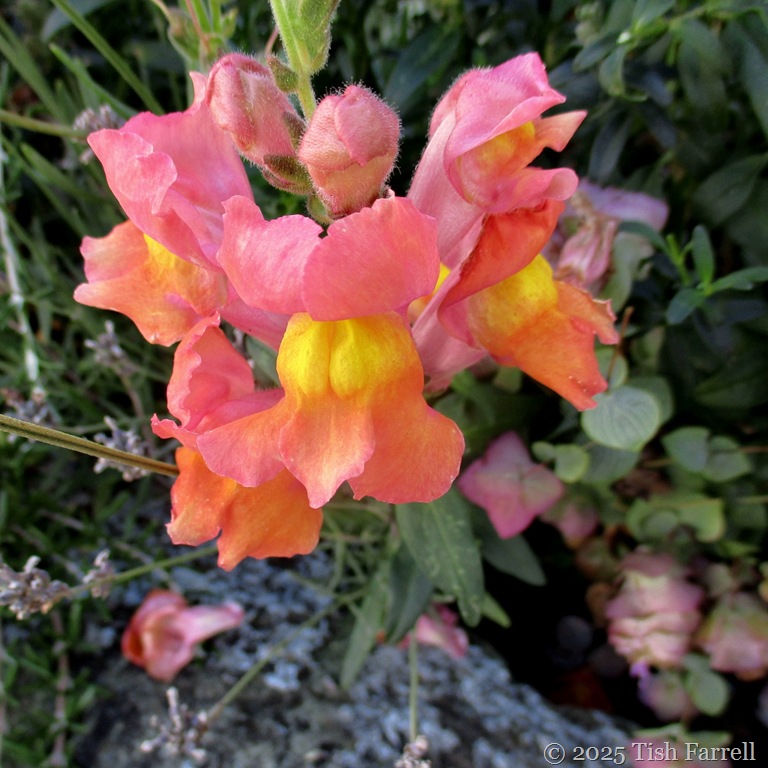
But the prize for the longest flowering flower this year goes to the self-sown and -grown snapdragons [6]. They’re on their third blooming round at least, and the plants are now growing quite shrubby with masses of seed heads among the latest flowers. The original volunteers have made some new plants in the course of the summer and these are also flowering now. And there’s me thinking that our front garden soil, which is full of old paving mortar and mashed roof tiles is somehow problematical. Norah Lea and the snapdragons are clearly loving it.

snapdragon

*

back garden

Late summer in the back garden. He who-builds-sheds’ wing shade is obscuring the sunflower view from the kitchen door, though we have been glad of it. Here’s what it’s hiding:

sun in sunflowers

Six on Saturday  Please call in on Jim and see what he’s been up to in the garden and at the allotment.

Scavenging The Old Africa Album

Hippos Naivasha

This week at Lens-Artists, Anne from Slow Shutter Speed sends us on a virtual scavenger hunt. I haven’t been in the old Africa album for a while, so I thought I’d have a rumage there. A virtual mini safari as well then.

‘Wavy lines’ tops the list. The header thus features a wavy profile of hippo ears, eyes and noses in a wavy Lake Naivasha in the Kenya Rift Valley.

*

Maasai Mara elephants

This herd of Maasai Mara elephants was in a very peaceable mood. They walked around us as we were parked up eating a picnic breakfast. I’m thinking elephant hide would feel pretty ‘bumpy’ should one ever dare to try it, especially the trunks.

Whereas cheetahs must be wonderfully ‘soft’. They also wear nice ‘circular’ spots. This female was having an afternoon siesta when we pulled up beside her in a safari truck. She didn’t look at us, but simply posed like a professional, well used to having her photo taken.

cheetah

*

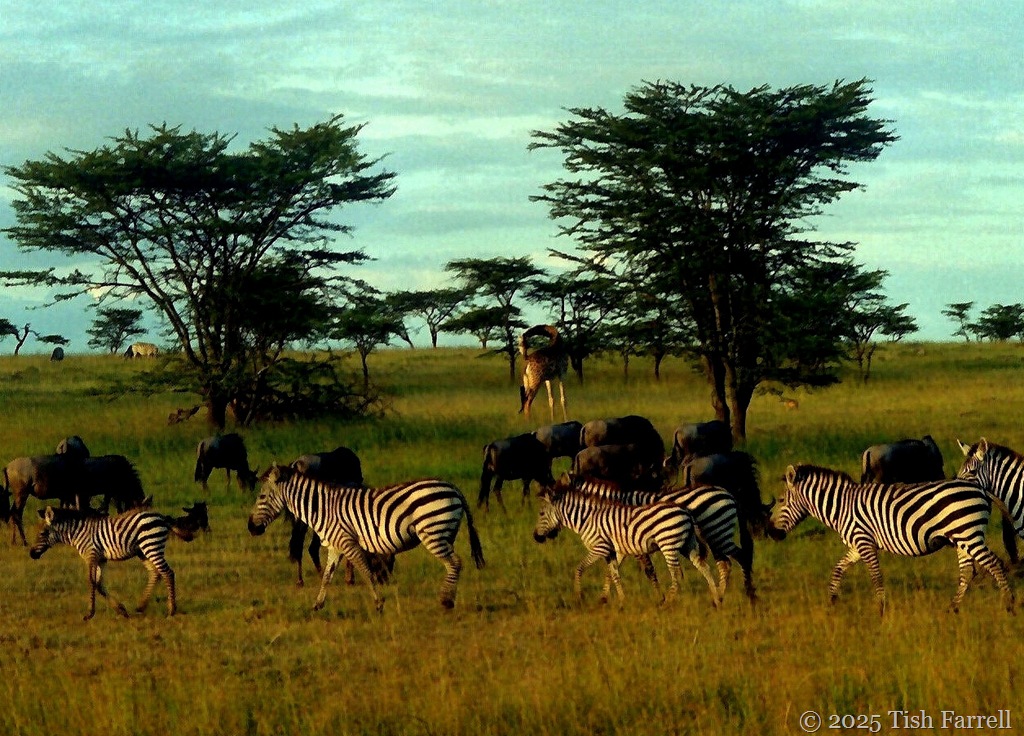
And more ‘patterns’. This time stripes. Zebras come with wavy ones:

Zebra sunset Maasai Mara

And then there’s another Kenyan speciality, patterns-wise:

Digo girls in kanga wraps

Cotton kanga wraps come in pairs with vivid designs and snappy Swahili slogans on the hems, here worn by Digo girls on Mombasa Beach.

*

Tiwi fisherman

Now for ‘smooth’ water and a smooth dug-out canoe on Tiwi lagoon. A Digo fisherman under the midday sun. I’m guessing he’s looking for reef lobster.

And as for ‘cool shadows’,  here’s me escaping to some at a Tiwi beach bar. Not so much too hot, as too bright to see out on the white coral sand. Aaah! Those were the days.

Cooling shadows

*

Lens-Artists: Virtual Scavenger Hunt  This week Anne at Slow Shutter Speed sends us on a photo quest, five to ten of the following: wavy lines, bumpy or soft texture, patterns, things circular, rectangular, smooth, made of glass, something with water in it, with green eyes, a wheel, a camera, cool shadows or jewellery…

Hippos Naivasha header