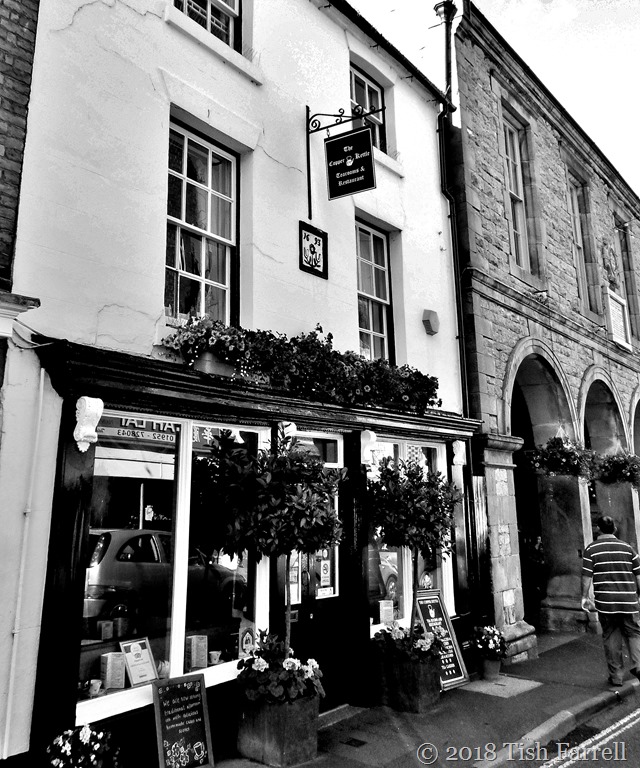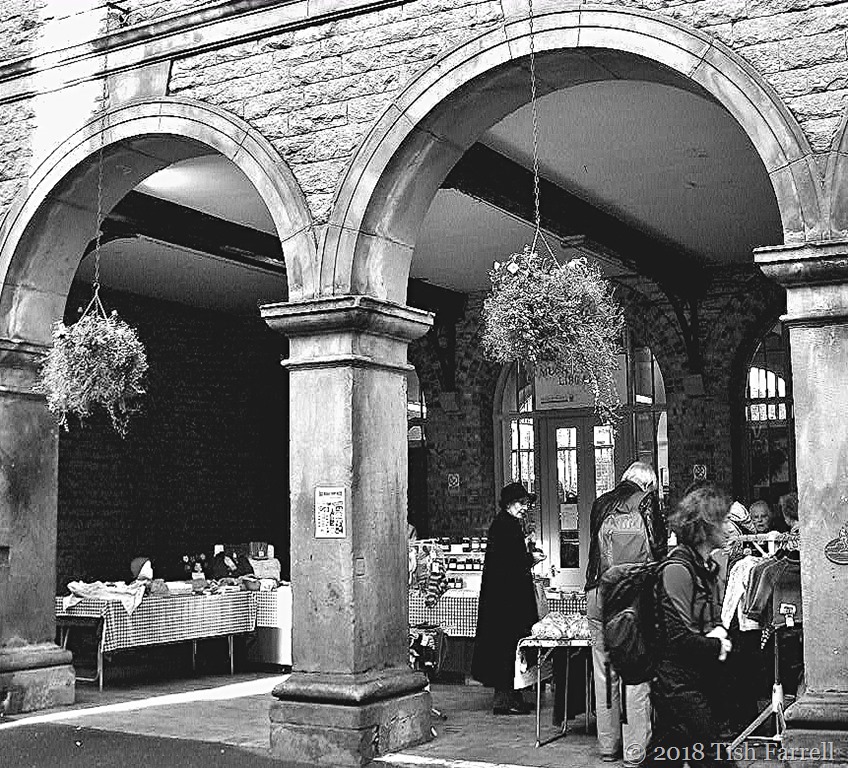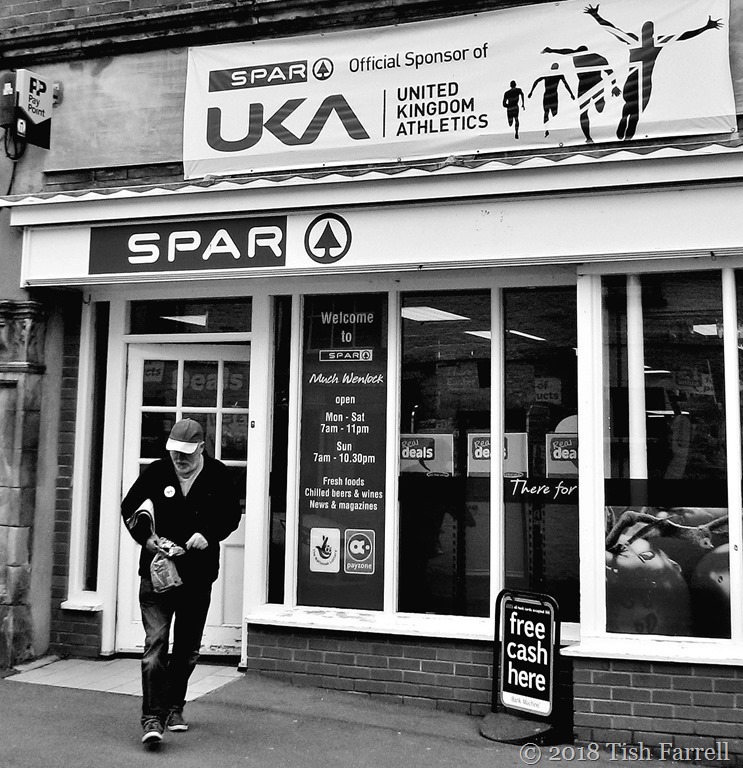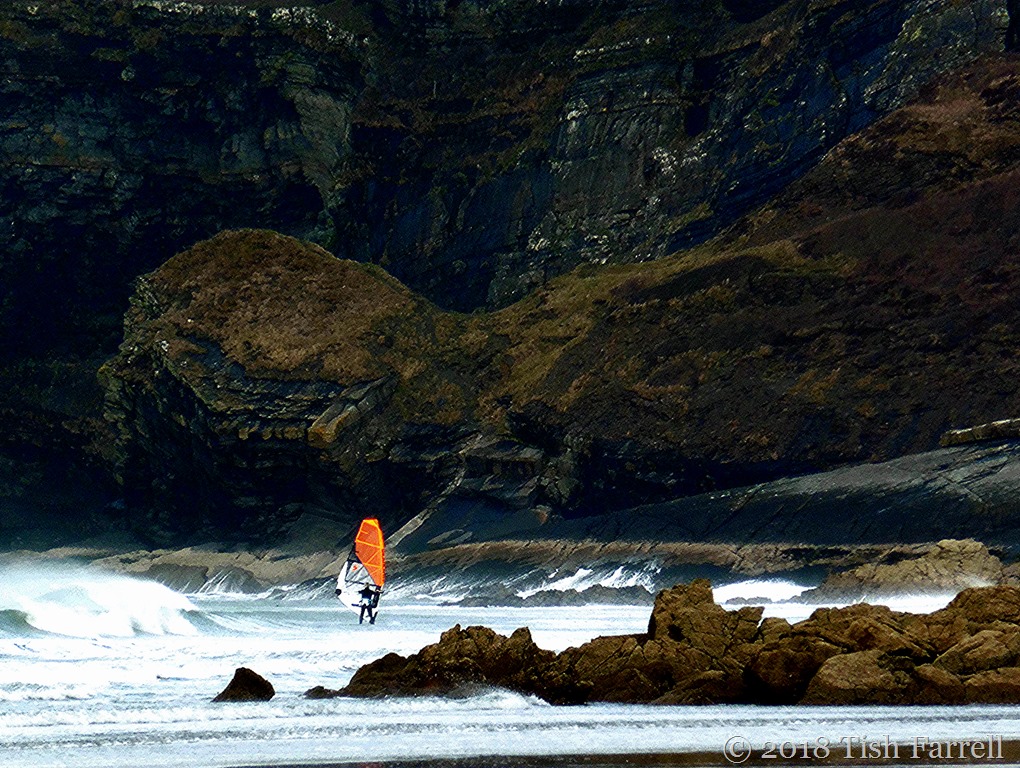
My Town In Black & White

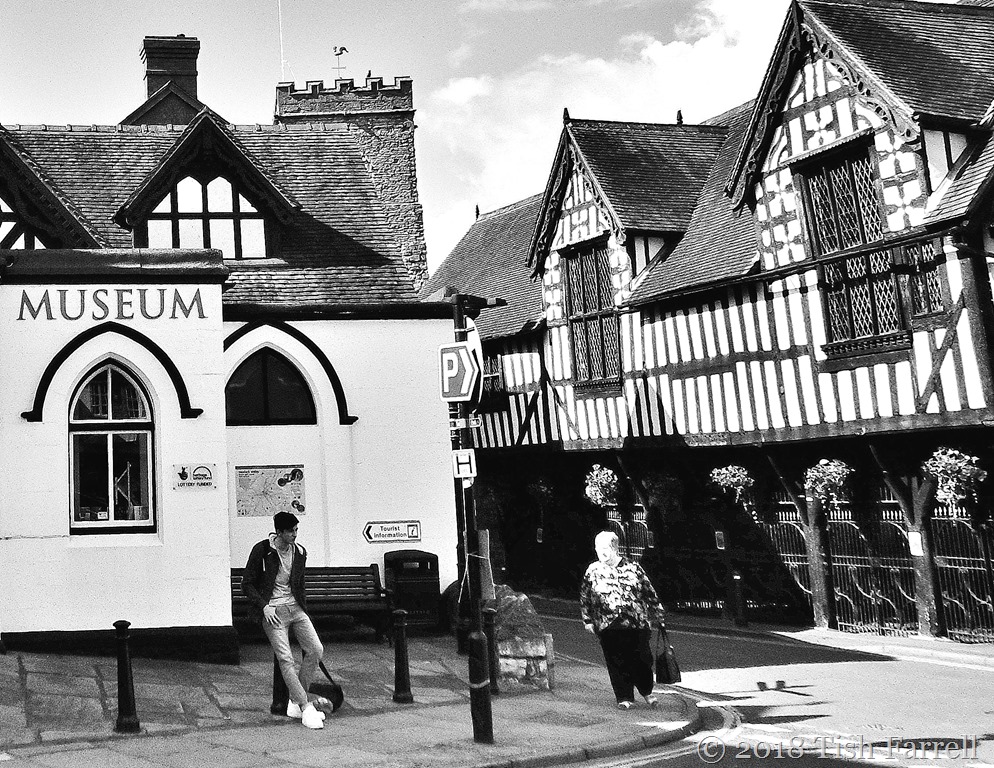
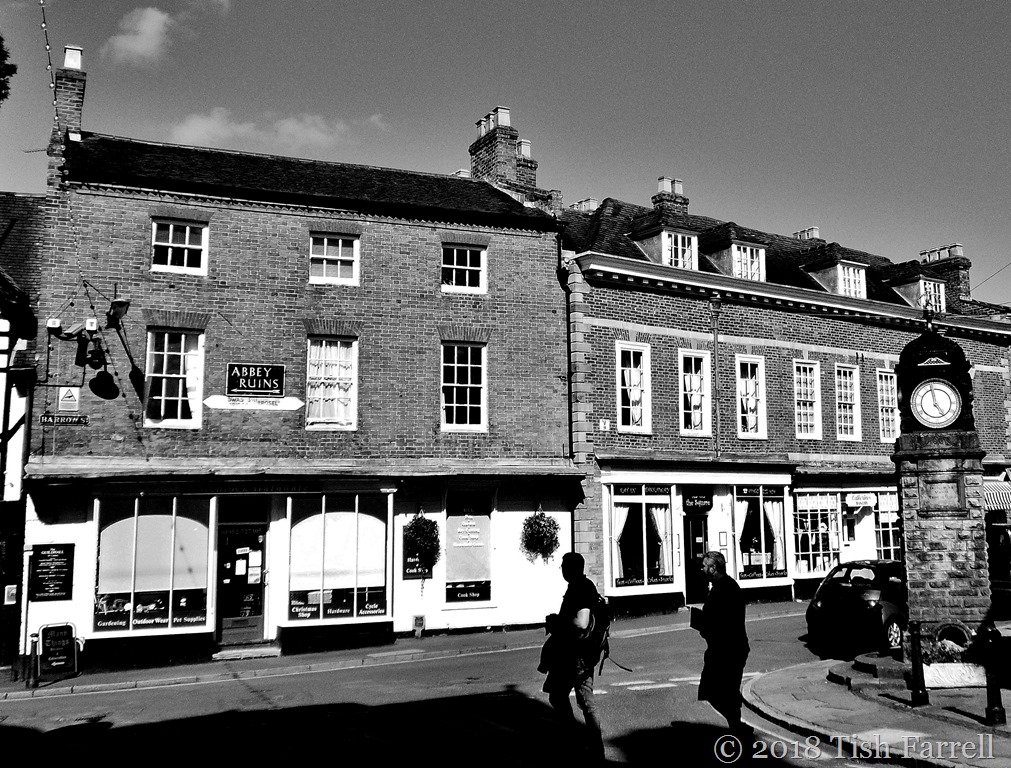
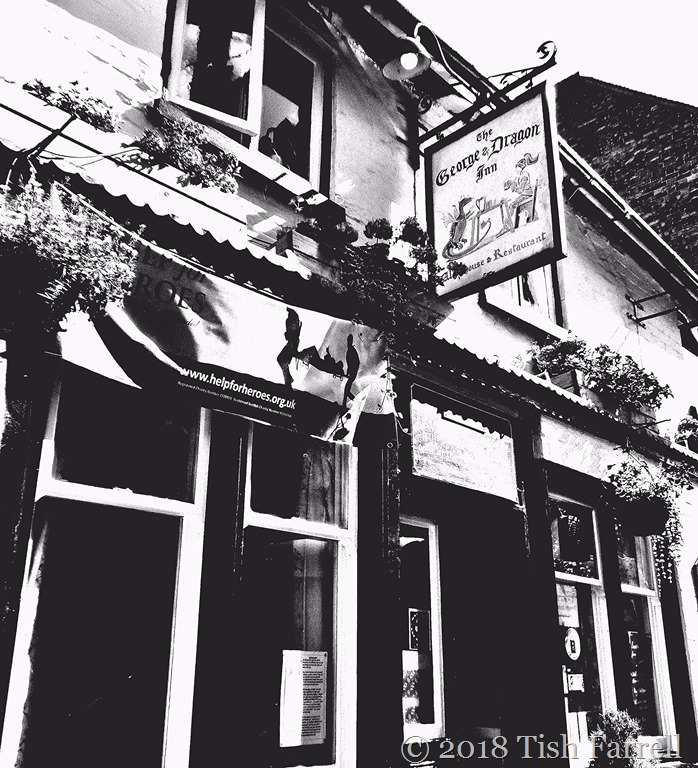
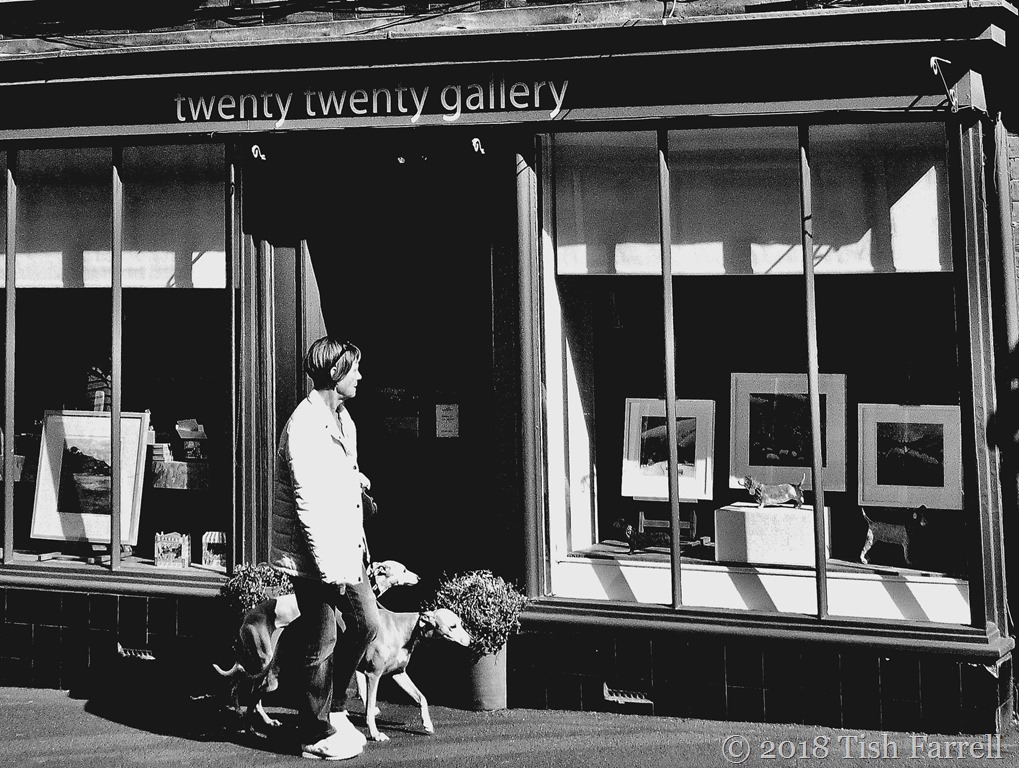
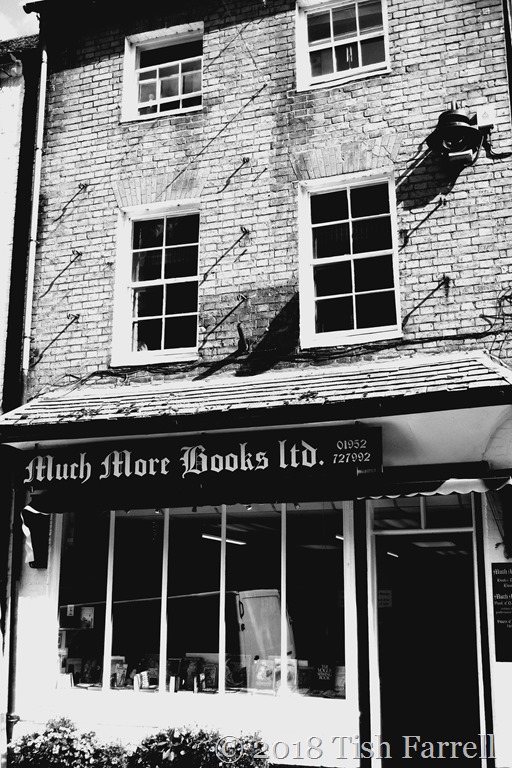
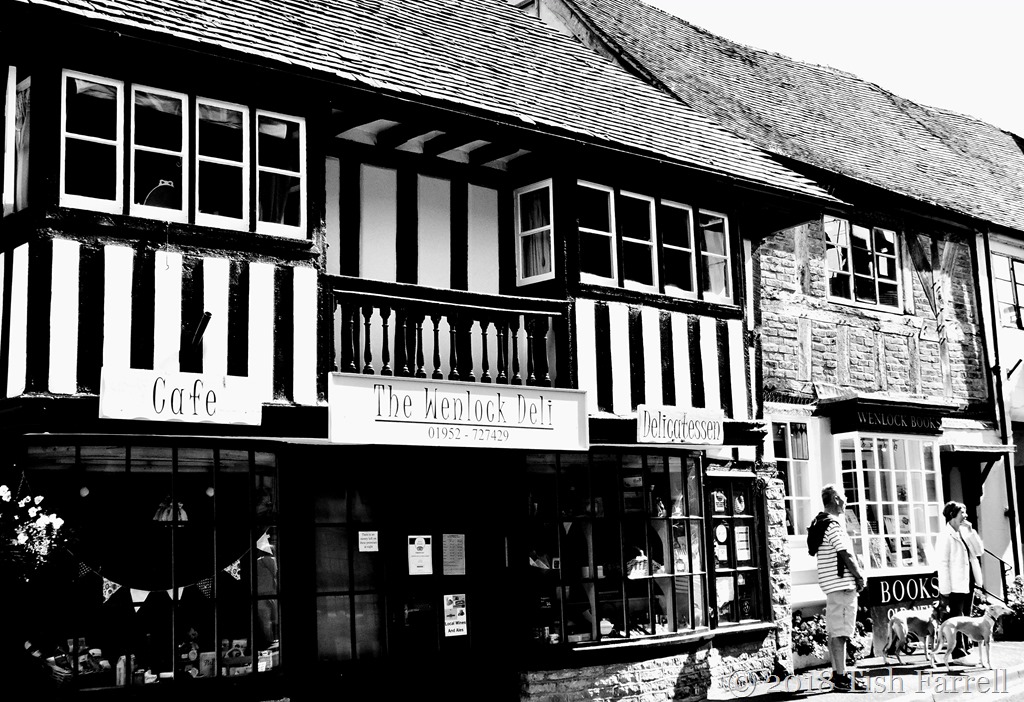
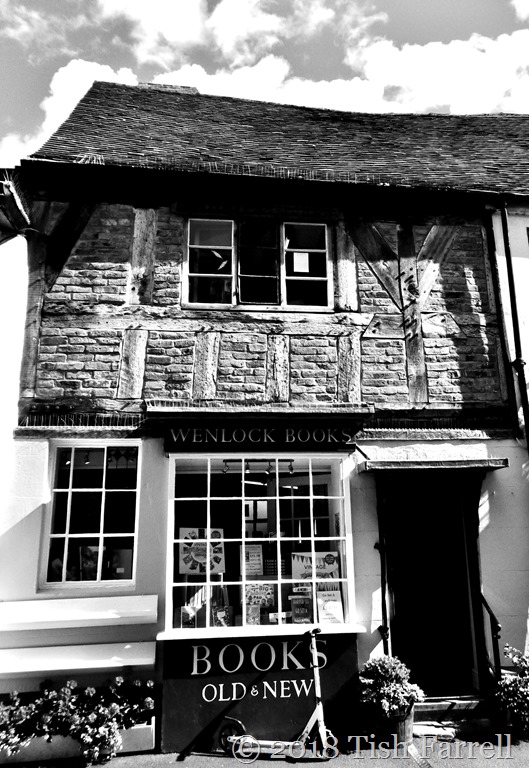
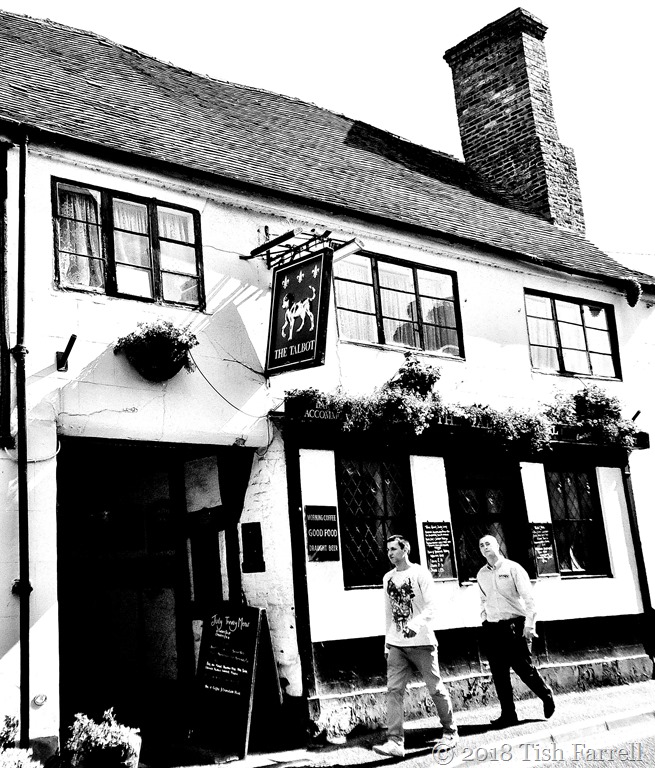
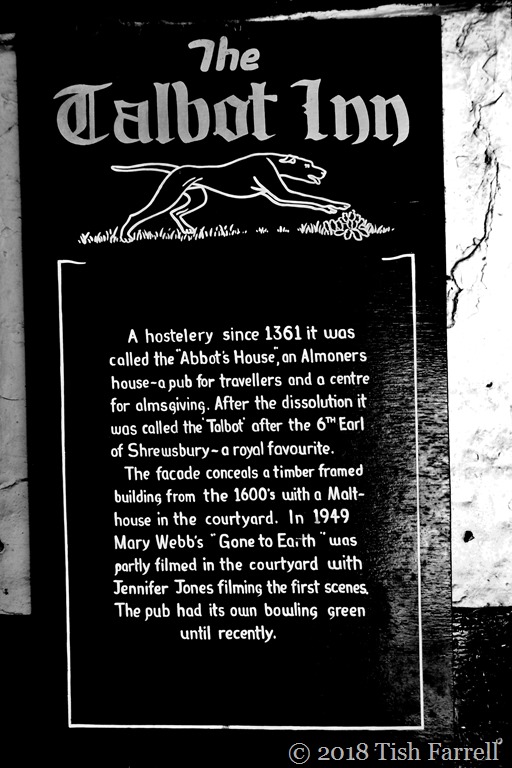
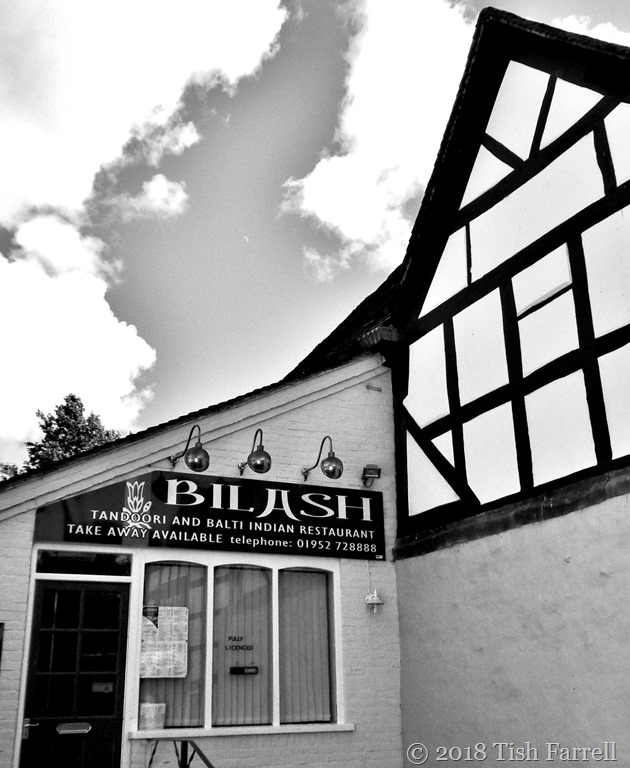
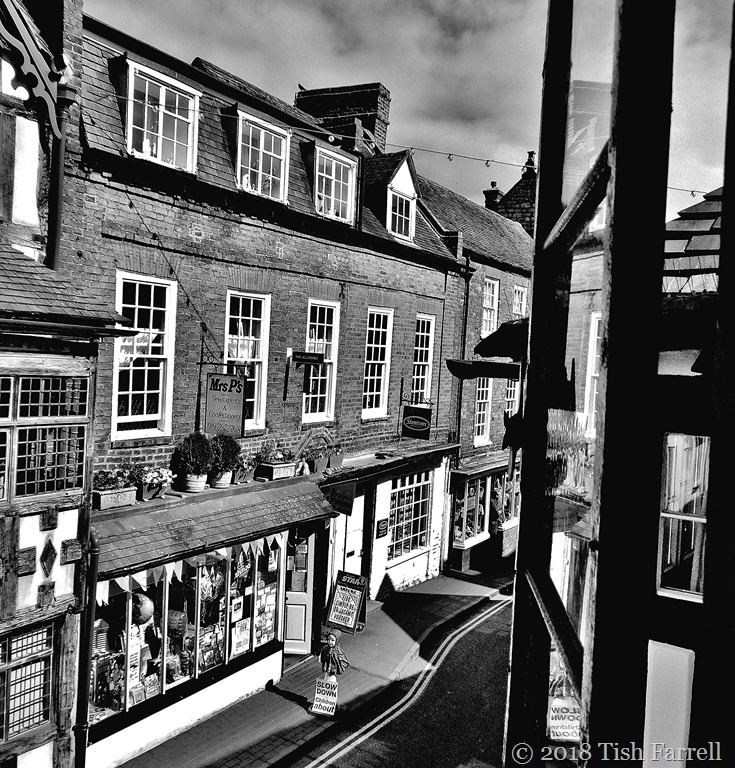
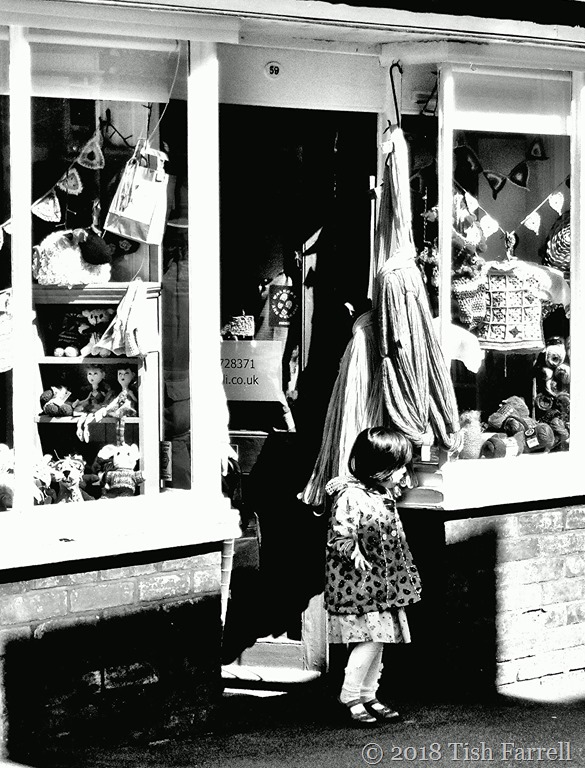
Cee’s current black and white challenge is store fronts and building signs, so I thought I’d give you a quick tour of Much Wenlock’s High Street and Square, starting with the Museum (once the Market Hall) and opposite The Guildhall built in 1540, and still a market place several days a week. Most of these images were shot in monochrome.

The town grew up around the early medieval priory, first catering for the many pilgrims, and then with the Dissolution of the Monasteries in 1540, growing into a thriving manufacturing and mercantile centre. Most of the oldest buildings along the town’s main streets would have been shops, workshops and inns rather than private houses. There were blacksmiths, nailers, needlemakers, clay tobacco pipe makers, brick makers, cloth and leather workers. There was also a thriving in trade in cattle, horses and agricultural produce. The grant for the first weekly market was issued by Henry III in 1224. We can thus be pretty sure that an awful lot of shopping has been done since then.

P1010741

P1010702

P1010704

P1010706

P1010708

P1010710

P1010711

P1010733

P1010718

P1010145

P1010148 - Copybw

P1010734

100_4919

IMG_1097

Cee’s Black & White Challenge Store Fronts and Building Signs

From The Old Africa Album ~ Zanzibar Sunset

Scan-130429-0060

With this winter that will not end, my thoughts are turning to our Africa days with a longing for some tropical warmth.

After one fine day yesterday (wherein I managed to plant out some onion sets and broad bean plants) the rain returned in the night. And today it has rained and rained and rained. There was also fog over the fields for most of the day. Only as I write this at 7pm (and I’m wondering if  looking at this Zanzibari scene hasn’t worked some magic) is there a hint of watery sunlight over Wenlock Edge. But there is more rain forecast for the rest of the week. If it keeps up like this Shropshire will float away back to where it began 400 million years ago, and pretty much in the location of this photograph – off East Africa in the Silurian Sea.

It’s an amusing thought, floating back to Africa. I can already smell the jasmine and the sea-salted frangipani. And the soft lap of waves. And watching the sun go down over mainland Tanzania.

Daily Post: Rise/Set

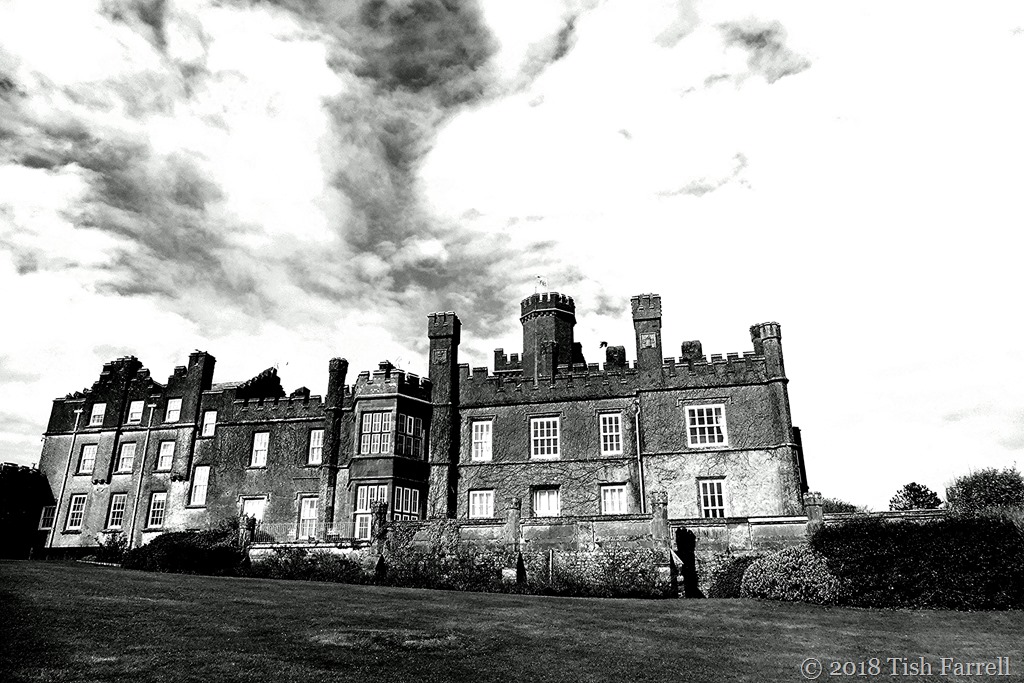
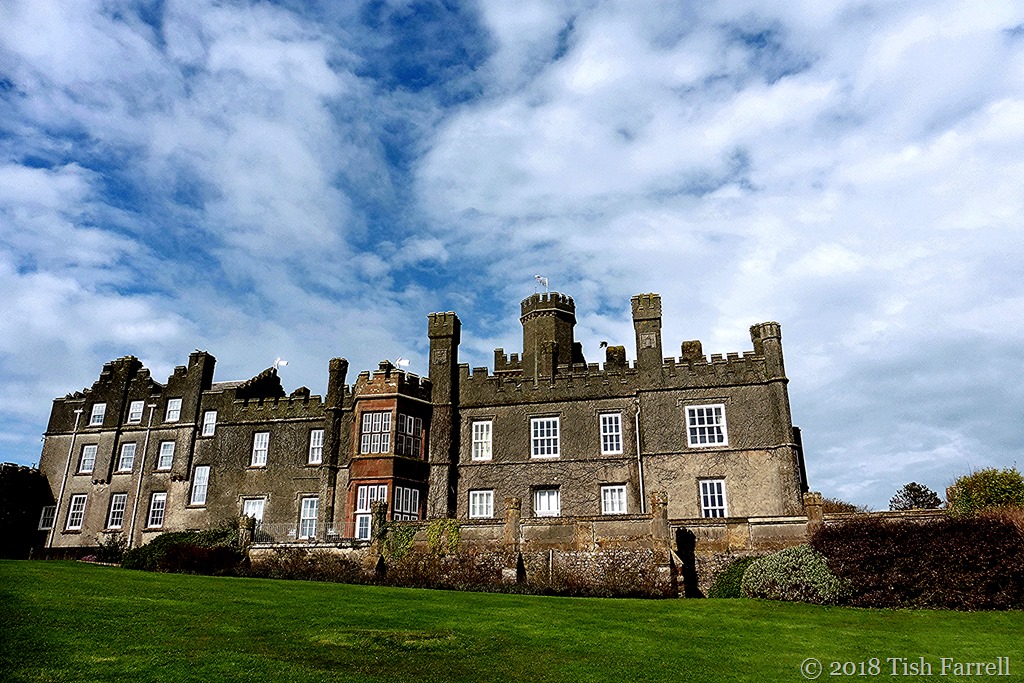
St Bride’s Castle ~ After And Before At Black & White Sunday

P1040959

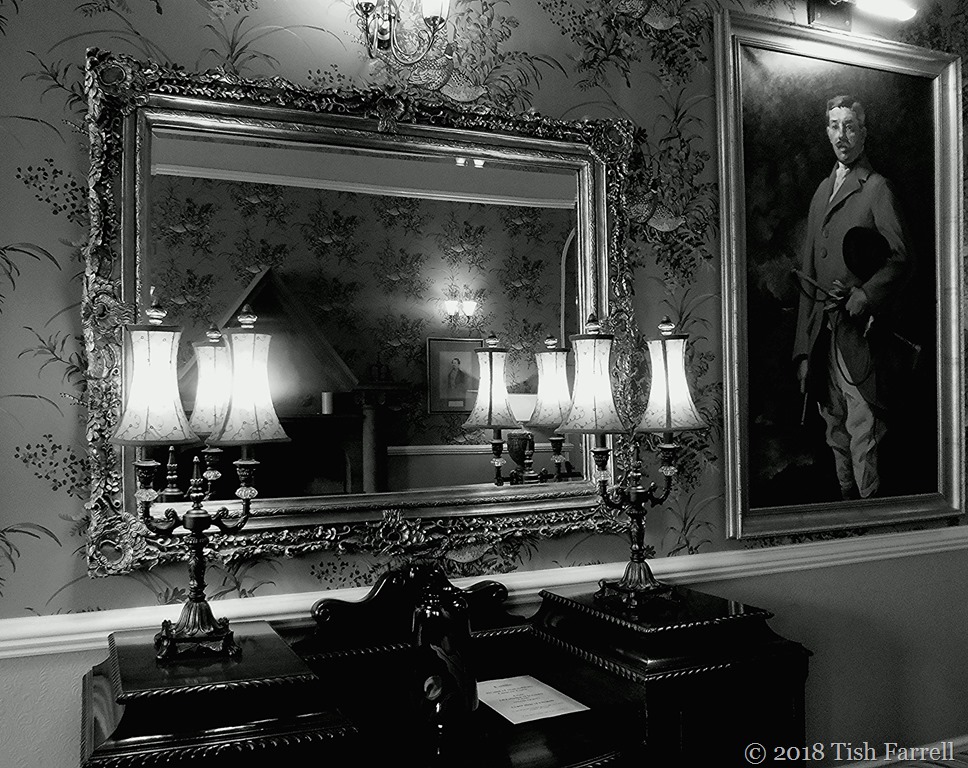
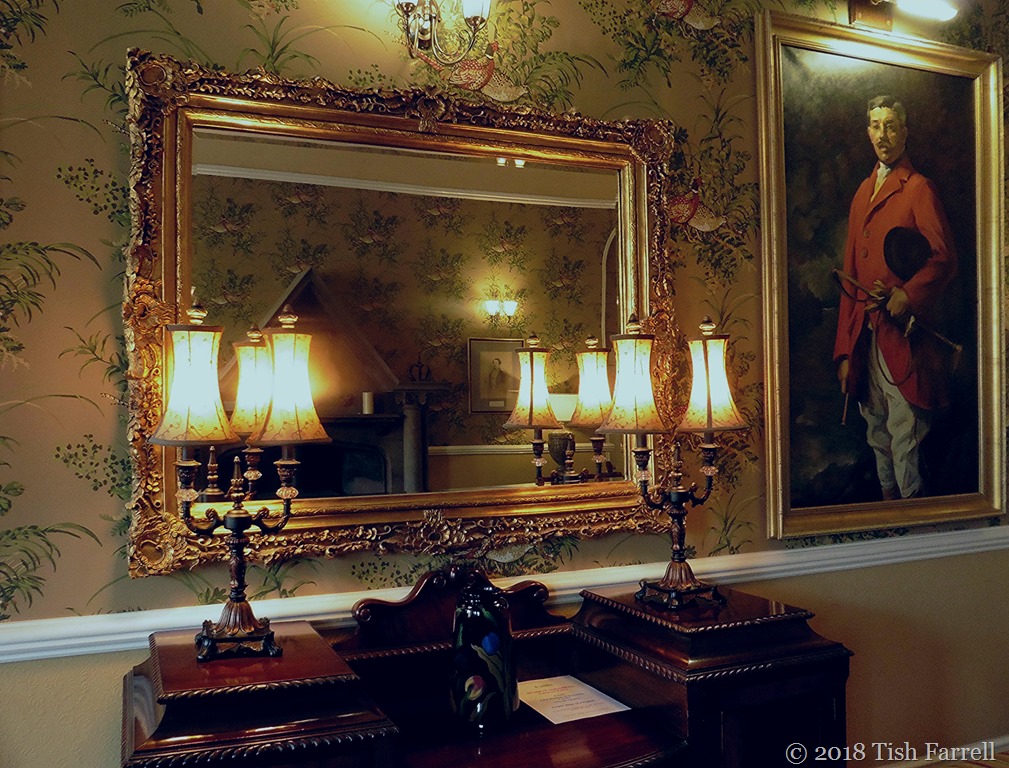
Over at Lost In Translation, one of Paula’s recurrent themes is the conversion of a colour image to monochrome. It’s always interesting discovering what will or will not work; which details become more or less significant. Sometimes there are quite striking and unexpected differences in mood. All of which is to say, I’m not sure why I even thought of converting this first photo to monochrome. As an indoor, night-time shot with too many light sources, I wasn’t expecting it to work at all. But then I found I rather liked the monochrome version. It somehow has a more formal or stately feel about it. It was taken in the hall-drawing room of St. Bride’s Castle.

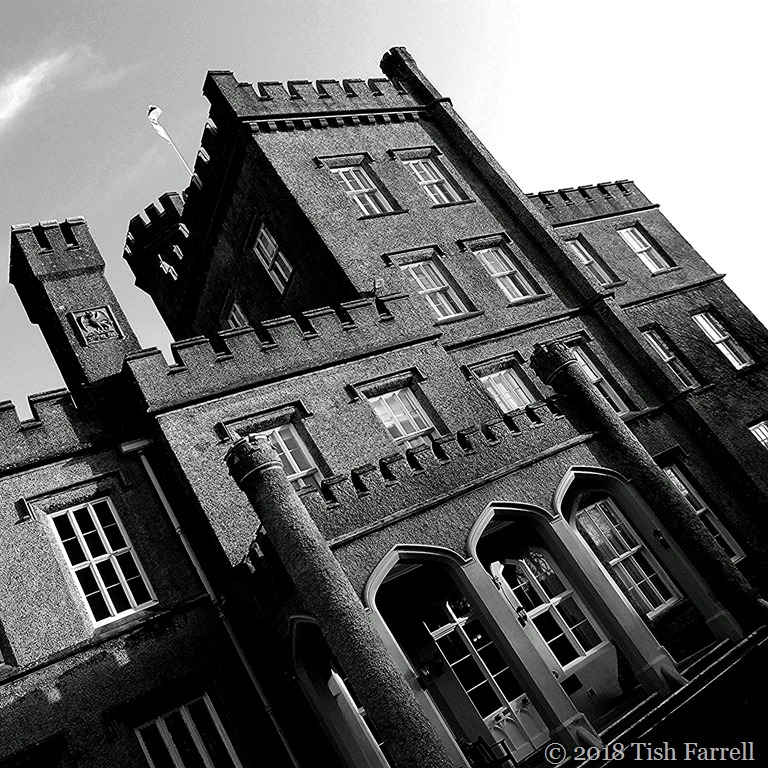
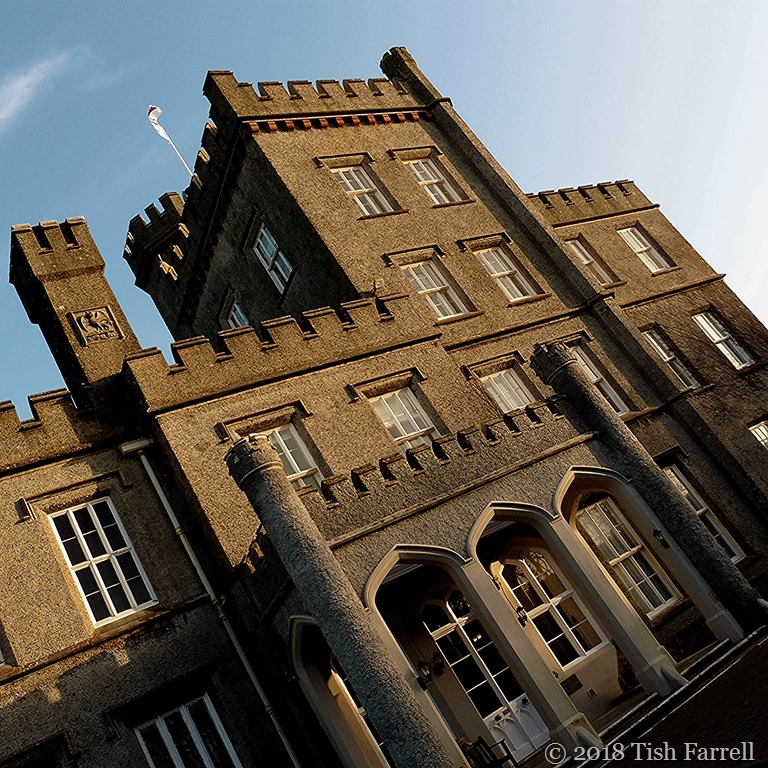
Coming up is the front entrance. I don’t think the conversion does much for the image here:

P1040483bw

P1040483

*

This next exterior shot perhaps works better: austere geometrical silhouette against active clouds:

P1040590bw

P1040590

*

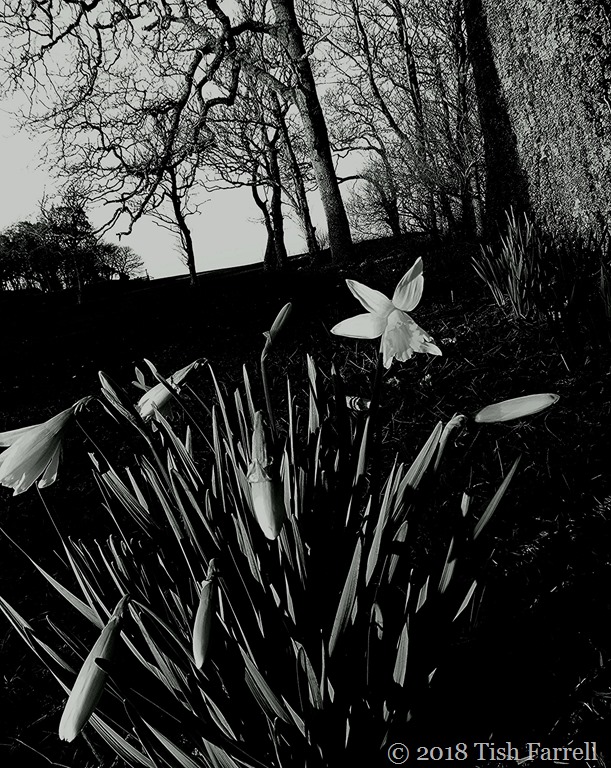
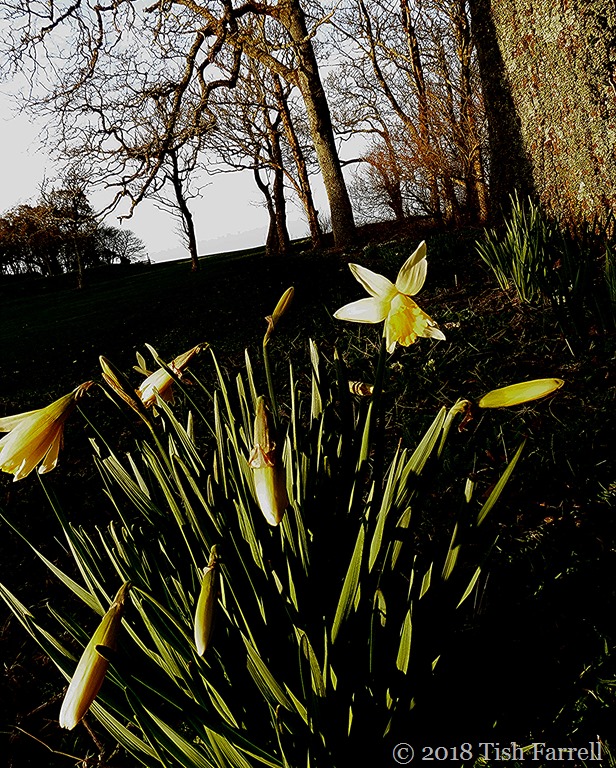
And I do rather like this clump of monochromed daffodils found in the castle grounds:

P1040467bw

P1040467cr

Black & White Sunday: After and Before

More about St. Bride’s HERE

In which Six Go Potty In Pembroke With Cockapoo Puppy  – holiday snaps #10

Last March Square: Bouquet For Becky

100_5389cr

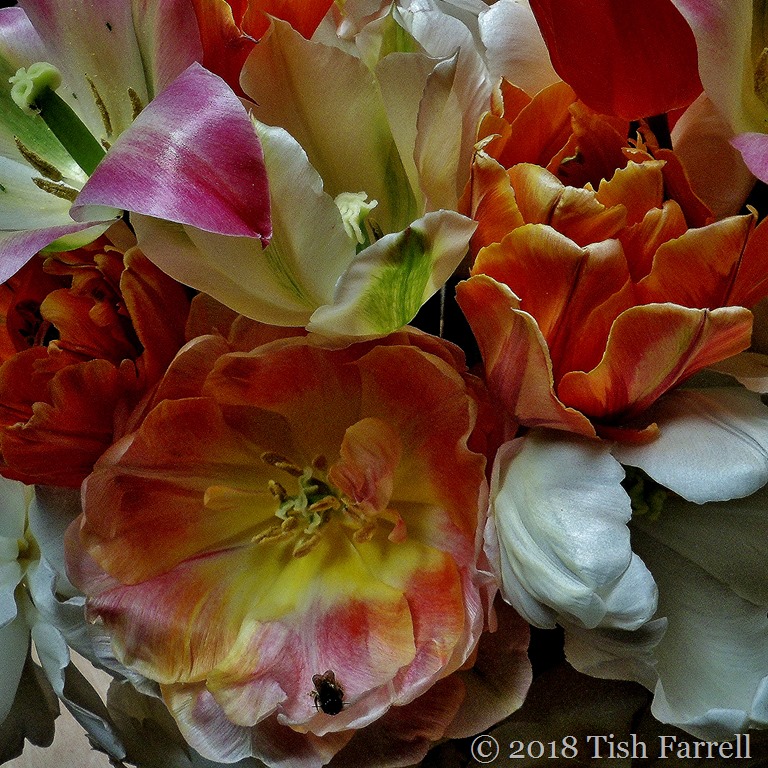
Well, it’s almost a circle, this gorgeous tulip. And it does come with its own bee. And I’m sure everyone who has had fun with March squares in squares and circles in squares will want to say a big ‘hurrah’ and thank you to BeckyB for keeping us so alert and amused with this challenge even as she’s moved between two countries and not been very well.

Not only has it been fun, this challenge has also opened my eyes to the  quite surprising compositional dynamic of the square format. Laura (at Eljaygee) and I have been having  a bit of chat about this. If you go to her post linked here you can see a range of photos that she feels have been given new life by applying a square crop. It’s all fascinating stuff, and anything that makes you LOOK with fresh eyes is always a bonus.

THANK YOU BECKY AND HAPPY EASTER


March Square Please visit BeckyB for her final March Square

Six Word Saturday  Debbie has also been doing some fine squares so I’m also linking to her 6WS – another challenge that keeps us thinking as well as viewing.

Solar-Powered Apple Lanterns As Repurposed By Blackbirds ~ Thursday’s Special

IMG_3872cr

Sometimes it takes me a long time to reach the allotment. I set off with great purpose, shouldering a big bag of vegetable waste for the the compost heap. It is only a short hike across the field, although after rain it can be treacherously slithery, thus requiring due care and attention to avoid all outbreaks of undignified slippage. And then there are the distractions. And if I happen to have a camera in my pocket: well then, gardening must wait.

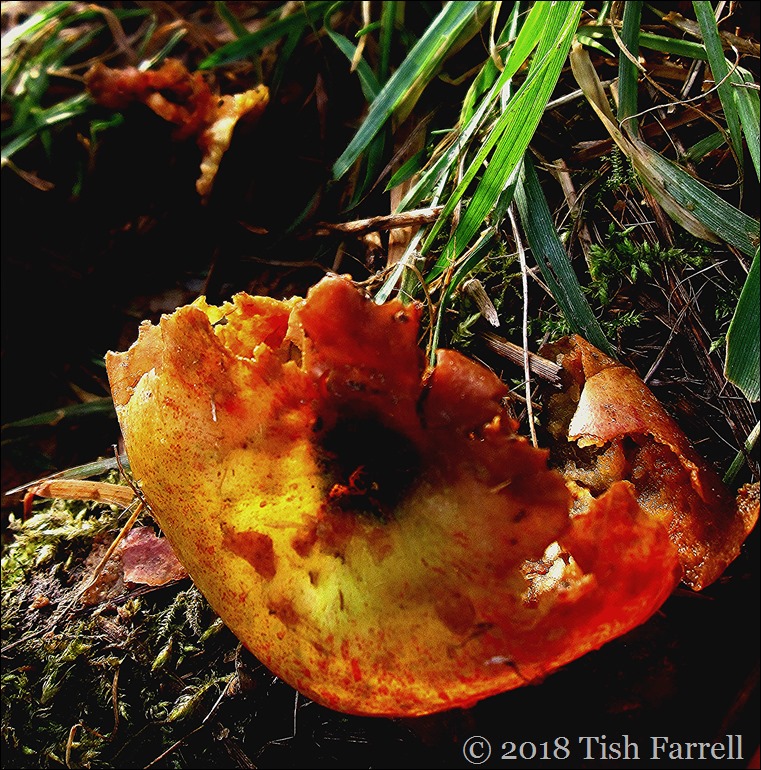
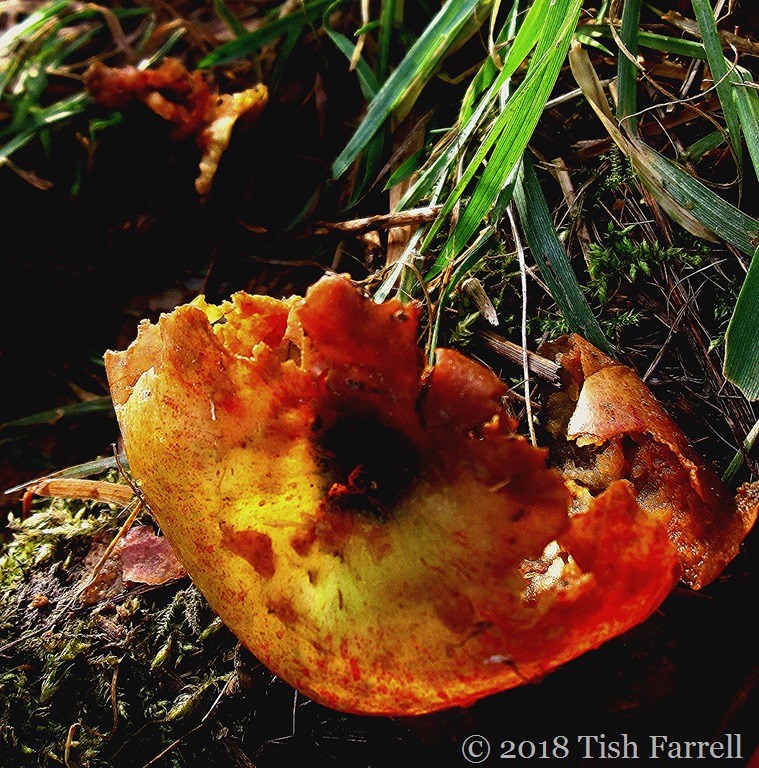
So that’s what happened when I spotted these apples that someone had slung over their hedge in the autumn. During the winter the blackbirds had nibbled the insides so neatly that only the skins remained. Not only that, the delicate apple ‘shells’ had now accrued quite new and surprising properties. Lying scattered in downtrodden grass and browning leaves, they were now capturing and emitting that too rare glow of winter sunshine. Thank you, blackbirds. A fine light show.

IMG_3886cr

Thursday’s Special: recycled

copyright 2018 Tish Farrell

Jackdaws Tuning In

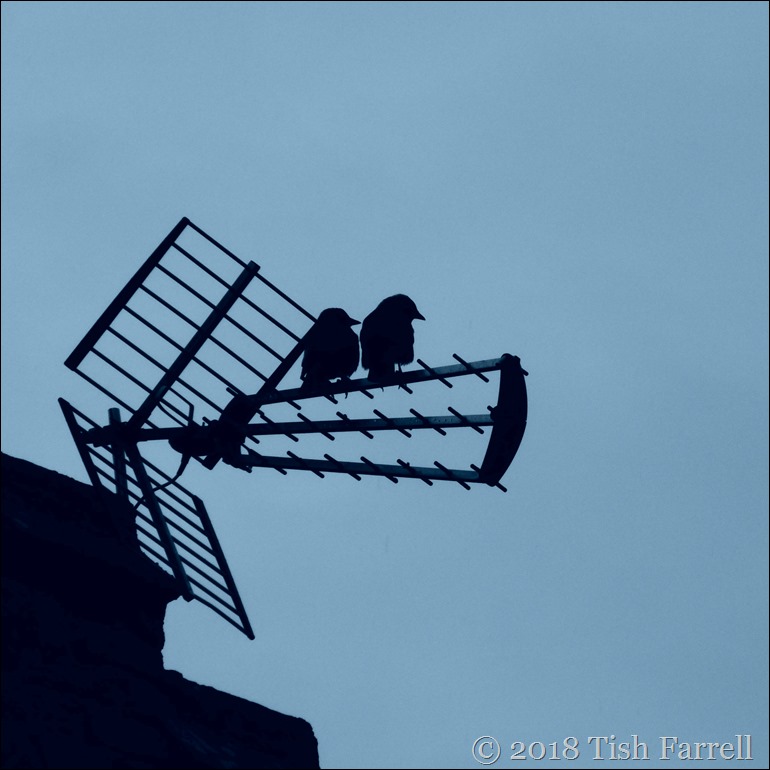
The cawing of rooks and chack-chacking of jackdaws in the grounds of St. Bride’s Castle was deafening. Day after day and no break from the din as the birds whisked round gathering nesting material or scouting out new nesting spots. The jackdaws seemed to have their sights on the castle turrets, while the rooks had commandeered the nearby ash wood where they were busy composing the usual twiggy mounds up in the treetops. So much commotion and it said one thing: SPRING!

March Square #28

In which Six Go Potty In Pembroke With Cockapoo Puppy – holiday snaps #9

Solva, The Oldest Working Woollen Mill In Pembrokeshire ~ And A Good Moment To Dust Down Old Prejudices

P1040782square

Childhood summer holidays: the cottage stay near a Welsh beach and the much wearing a brown gabardine mac; endless search for places that might offer shelter and diversion from wet and gloomy weather; the Welsh Crafts Shop that, if we’re lucky, will have a cafe.

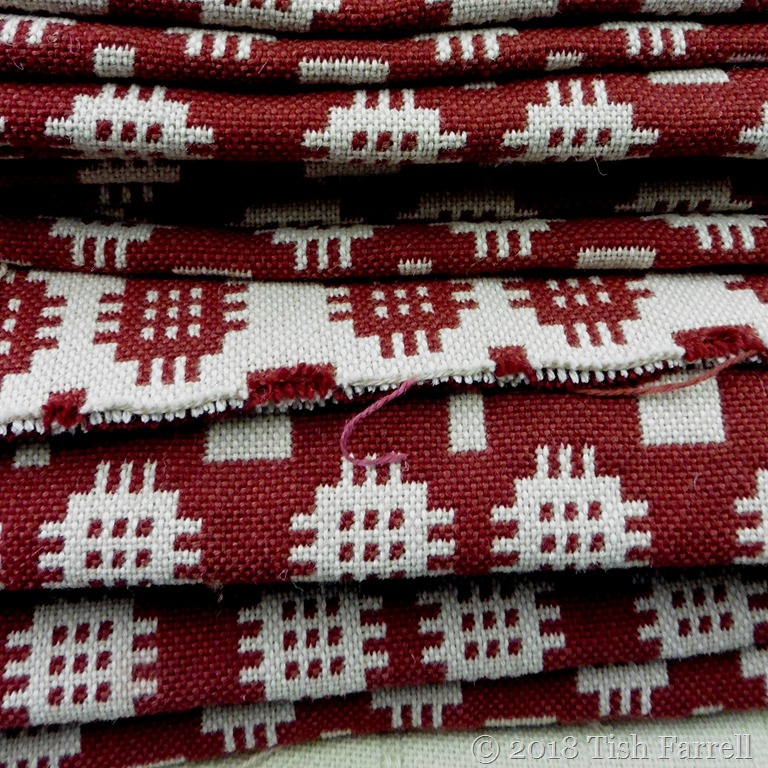
Back then, to my young 1960s’ eyes, Welsh tweed seemed very old hat. It had all the charm of the post-war-geometric-abstract-chemical coloured fabrics that my parents had taken to (fabrics which are now very popular again in vintage shops). I found the designs and colour palette distasteful then – too hectic for one thing – and I still do, though I can see they were meant to cheer everyone  up after years of rationing and austerity; inspire a spirit of hopeful busyness and productivity.

So where does that leave my views on Welsh tweed now?

Well, it’s always good to revisit old dislikes and appraise the situation with fresh eyes. For a start there is no denying the fabulous quality of the product. This is reflected in the price. However, it really does NOT still need to be used to cover bags, purses or to be made into unfortunately shaped waistcoats. On the other hand, deployed as rugs and furnishing fabric, then we’re on to something. In fact Welsh tweed has been acquiring cachet in quite discerning quarters. And although I forgot to take a photo, the stair runners are perhaps the finest things the mill produces, especially the red ones. You can see some in situ HERE.

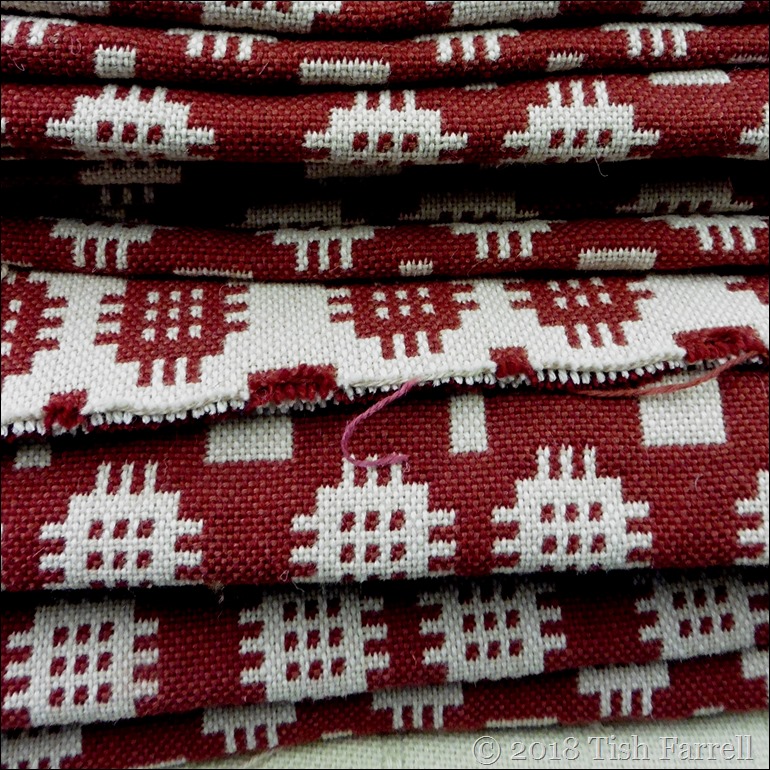
As for the reversible rugs with their traditional ‘portcullis’ designs, I’m suddenly finding I like them too – at least to the extent of buying four place mats in spring green for the kitchen table. I like the ‘cottage industry’ simplicity and well-made-ness, in much the same way that I like the 1960s pale oak ercol furniture (now being reprised) – just so long as it doesn’t come with its original overdone upholstery and cushions which often obscure the pleasing frames. So I’m also thinking that if anyone needs to replace original fabric on a piece of vintage ercol, then  Welsh tweed could be just the thing – a refreshed ‘Arts & Crafts’ look. A little googling also reveals that another Pembrokeshire Mill has already thought of this. See what you think.

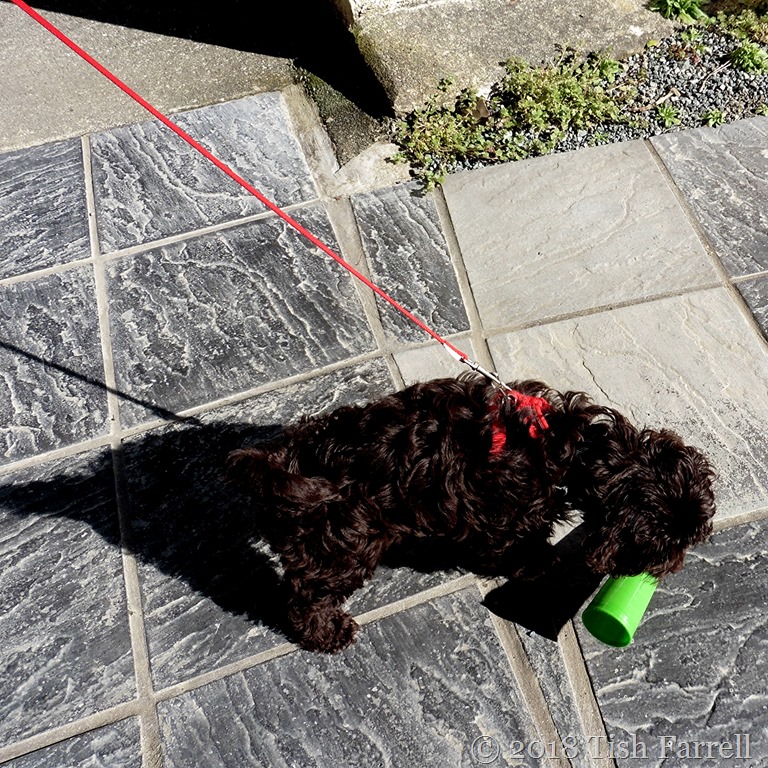
Solva Mill, as the sign proclaims, has been in operation since 1907. The workers’ clocking on clock is still in the old workshop foyer. For those who like wheels and gears, there is old weaving equipment all over the place, inside and out. You can read a bit more about the history of the mill HERE. Its situation is blissful, in a little valley up in the hills above Solva village. The overshot watermill that once powered the mill was restored in 2007 as part of the works’ centenary celebration, and there are hopes to get the whole system revamped to produce electricity. In return for free left over plastic yarn cones (see below), you can make a donation to the project. This meant that Super Puppy was able to leave the premises with a very satisfactory toy. A good morning out all round.

P1040788square

March Square #27  Becky’s March Square extravaganza is nearly over, so with this post I’m probably putting all my squares and circles in one basket. I think it’s safe to say there are more here than anyone can possibly count.

In which Six Go Potty In Pembroke With Cockapoo Puppy  – holiday snaps #8

copyright 2018 Tish Farrell

Beauty In Unexpected Quarters?

IMG_6787square

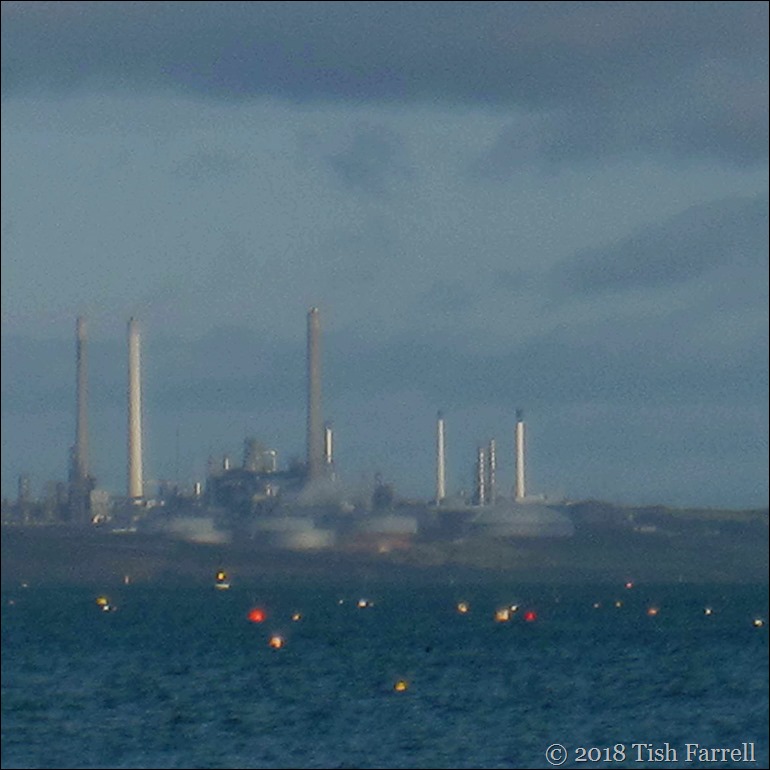
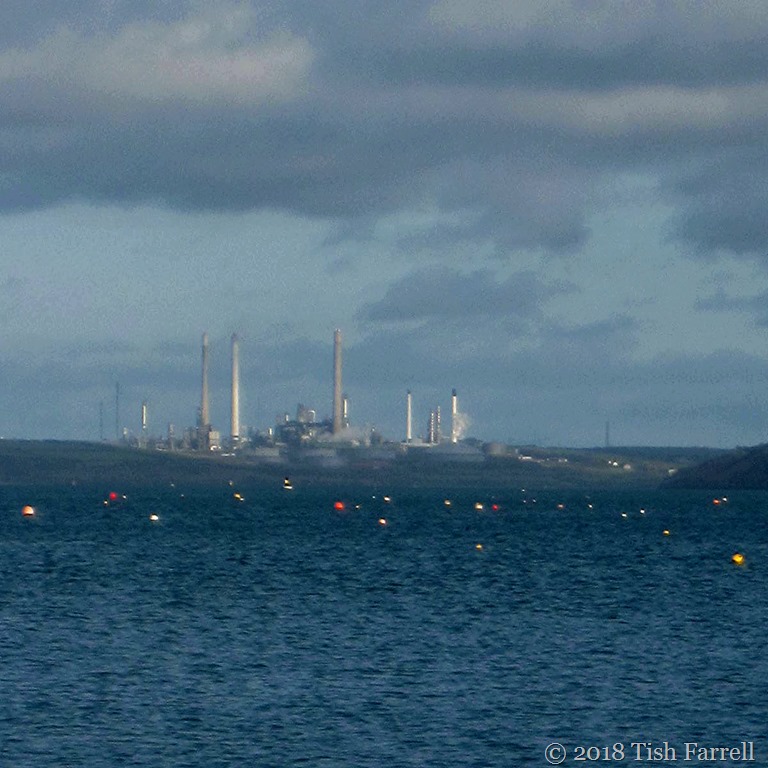
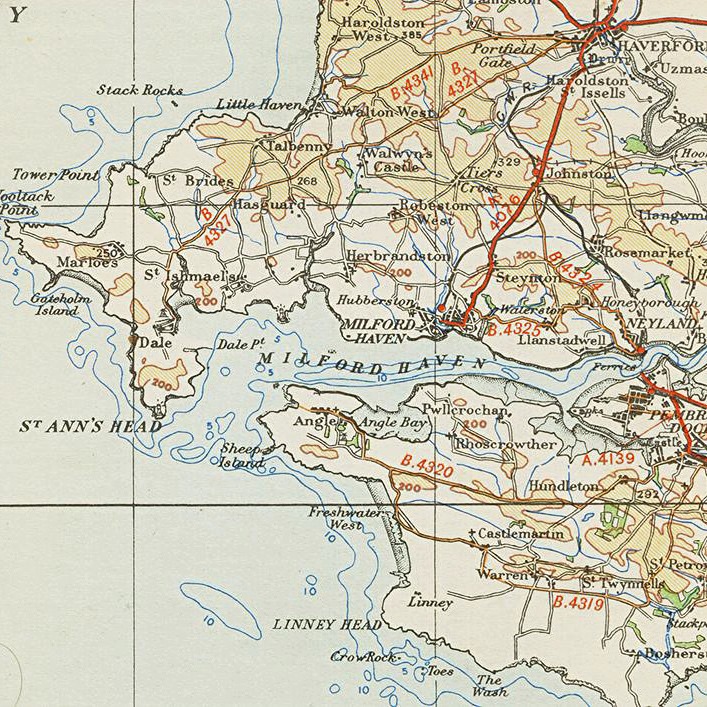
This view was taken from the little village of Dale on the estuary of the Black and White Rivers Cleddau, looking towards the port town of Milford Haven. Twelve hundred years ago, and until the Norman Invasion of 1066, the sheltered inlets of the Haven were the haunt of Viking raiders. In fact if you had been looking out across this stretch of water in 854 CE you might have spotted the 23 ships of a Viking raiding fleet. They were gathered off Milford Haven, under the command of Ubba/Hubba (who incidentally gave his name to the present-day settlement of nearby Hubberston). He was one of several commanders of the Great Army whose various factions invaded the Saxon kingdoms of Wessex, Mercia, Northumbria and East Anglia.

If you had looked again in 1171 CE you would surely have seen at least some of the 400 warships that had converged in the Haven as a prelude to Henry II’s invasion of Ireland. The ships were carrying 500 knights and 4,000 men-at-arms.

Look again in 1597, and there would have been storm ravaged ships of the Spanish Armada. A number made landfall on the Cleddau only to be sent packing back to sea by the Welsh militia. This seeing off also apparently involved some pillaging. One of the damaged caravels was captured by six Welsh boats, and relieved of its gold and silver.

Today, though, instead of long boats and warships, you are more likely to see oil tankers heading for the oil refineries of Pembroke Dock. And sometimes even a cruise ship. The misty installation is a recycled oil refinery, now used for the storage of Liquefied Natural Gas.

1024px-Milford_Haven_harbourmap1946 square

Milford Haven, Pembrokeshire  Ordnance Survey  1946 (out of copyright)

*

IMG_6799

Dale Beach  – never too old to hunt for seashells.

*

March Square  Ordnance Survey map apart, this post’s circles and squares in squares may take a bit of finding: round buoys and storage tanks anyone? Square window panes and spotty backpack? Please pop over to BeckyB’s for more March geometrics.

In which Six Go Potty In Pembroke With Cockapoo Puppy – holiday snaps #7