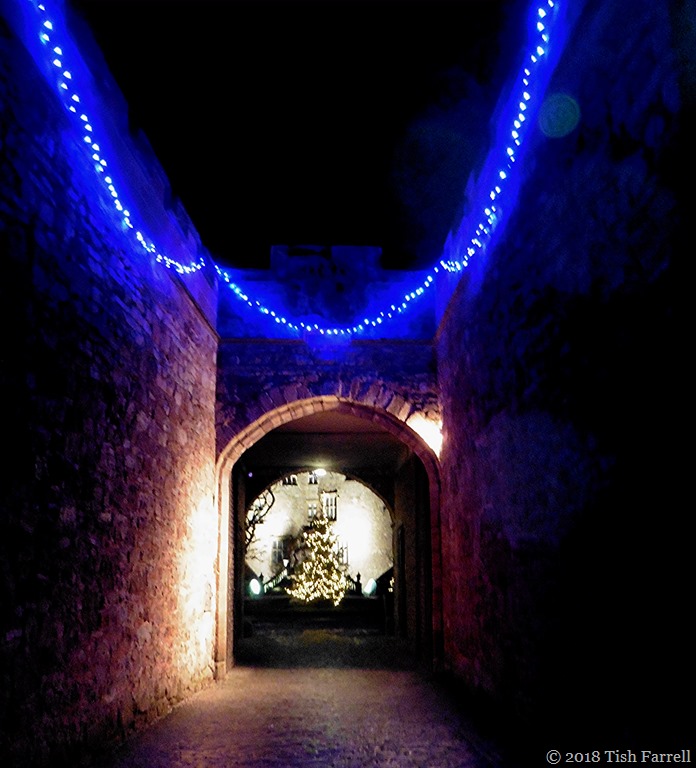
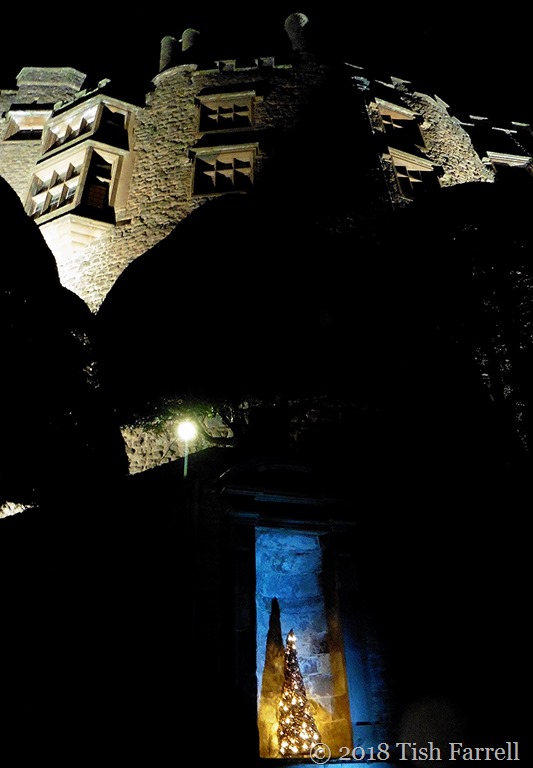
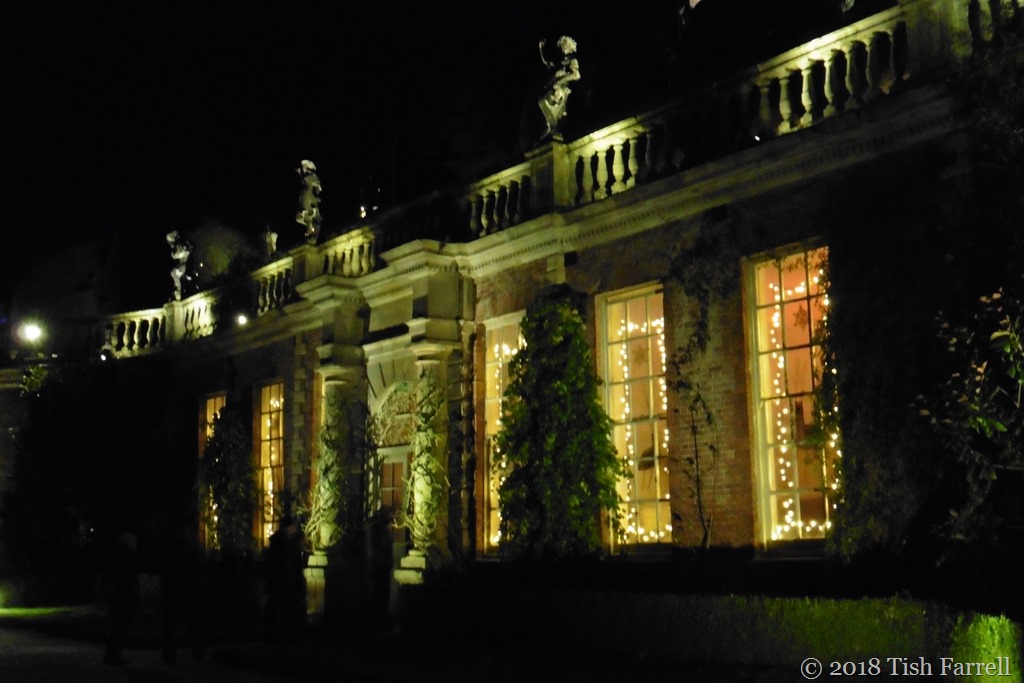
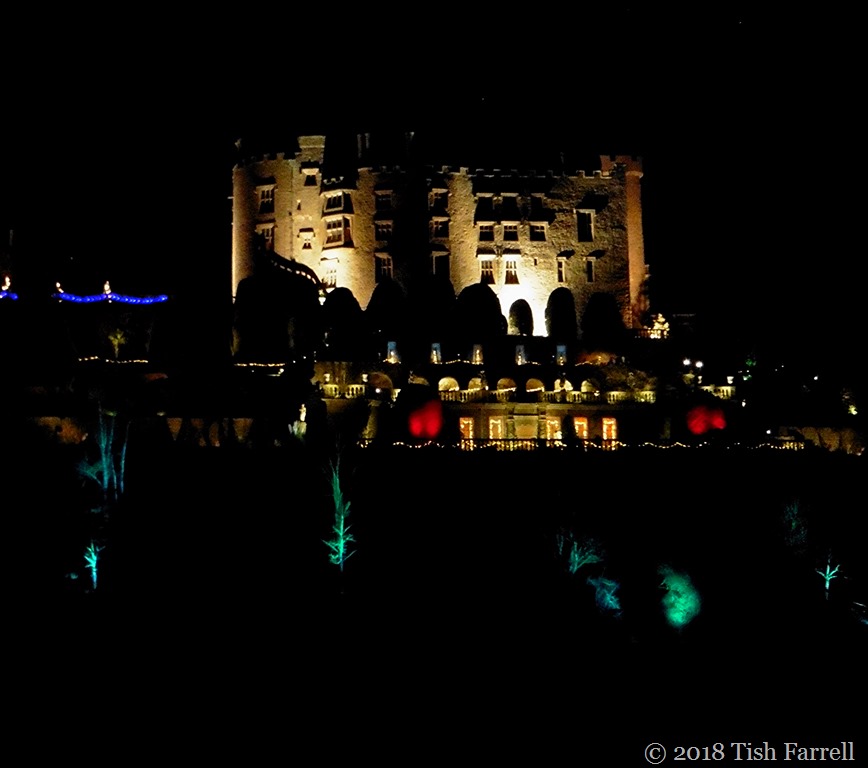
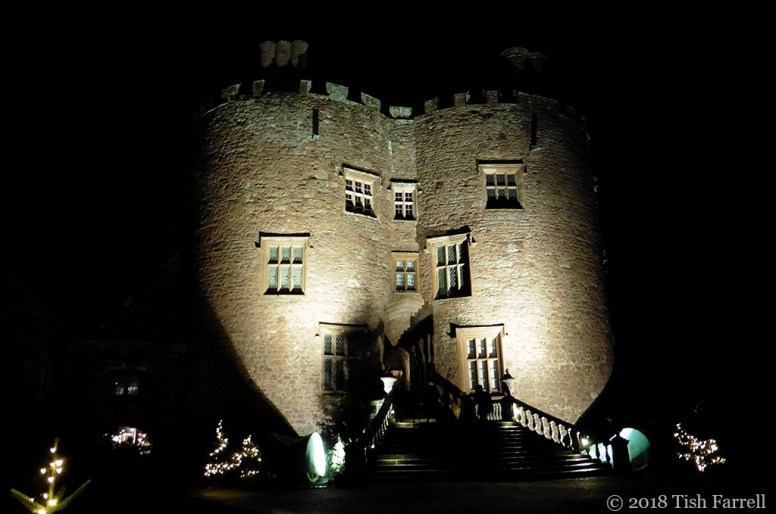
As darkness closed in and yet another squall blew up, we slipped over the Welsh border and headed for Welshpool. We had hemmed and hawed up to the very last minute of departure: should we or shouldn’t we go; it could be muddy; the parking a nightmare; too many people; the prospect of getting soaked; nearly an hour’s drive on unlit winding country lanes. So many reasons not to go. And then we simply gave up the argument and set off.
It was not promising. The constant swish of wipers; rain that felt set-in; roads awash and headlights picking up flooded fields and burst river banks. But as we reached the outskirts of Welshpool the rain suddenly stopped, and ahead and high on its rocky promontory Powys Castle glowed like some fairy-tale bastion. And as it turned out, parking was easy; we were not mired in mud despite days of rain; and though there were plenty of visitors, we all soon lost ourselves in the castle grounds and it quickly became a big, magical adventure.
And not a little bonkers, I must admit – going round the steeply terraced castle gardens in the dark – the whole thing laid on by the National Trust as part of their season of festive celebrations at the castle. Anyway, here are a few other-worldly scenes from the night garden of this ancient Welsh borderland fortress.
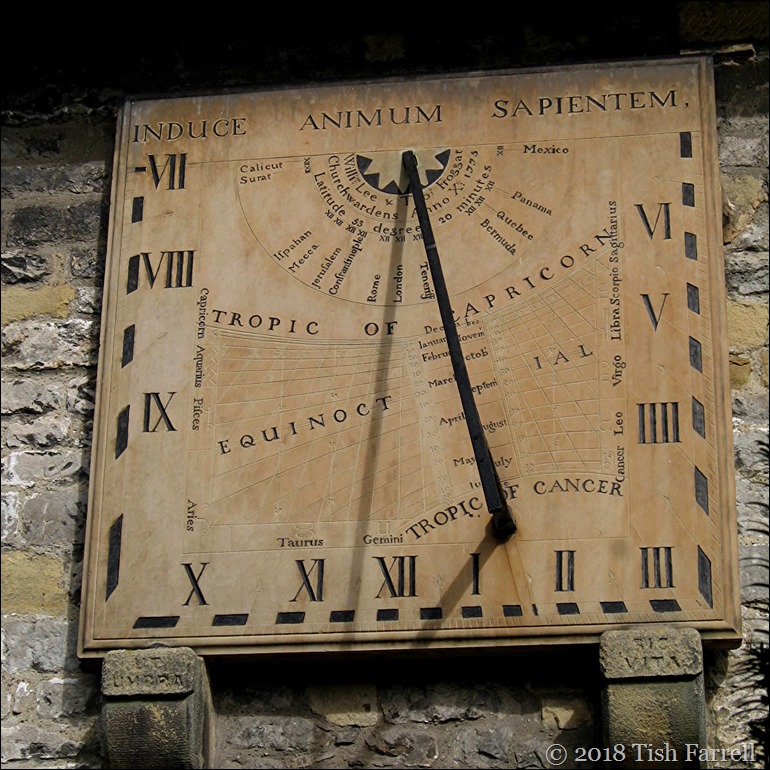
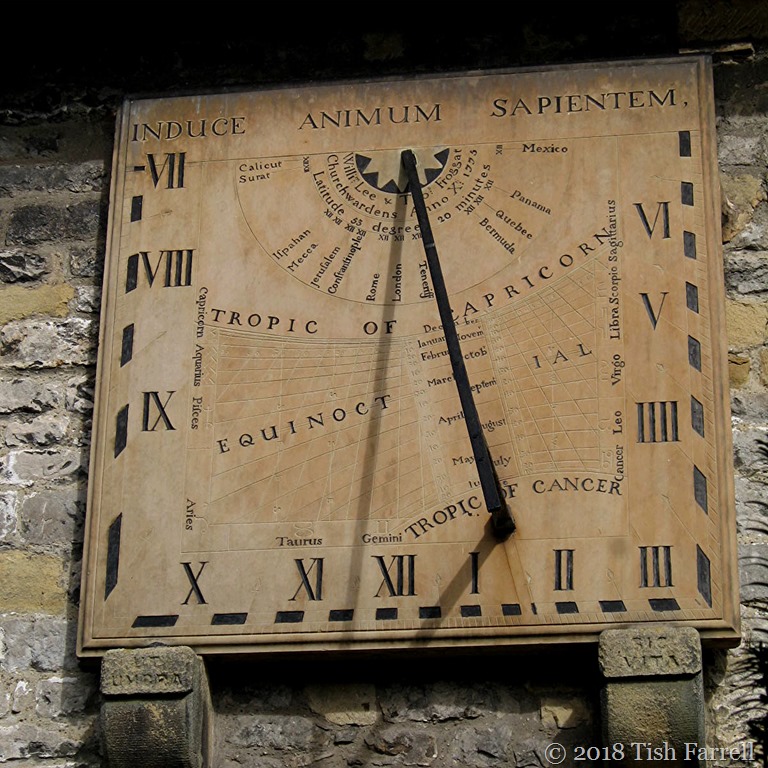
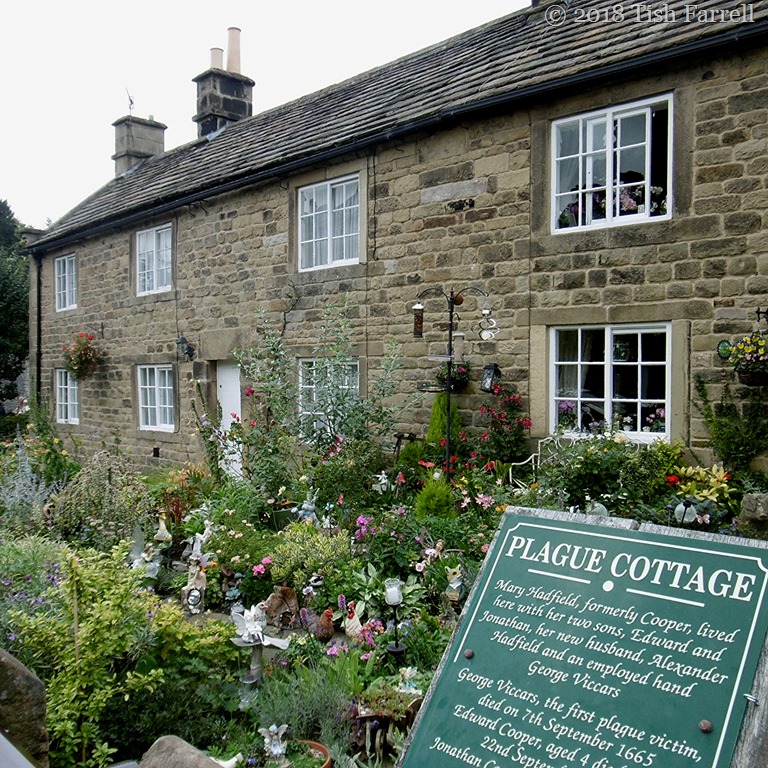
This magnificent sun dial was erected on the wall of Eyam parish church in 1775. I’ve posted a photo of it before, but this one was taken in October during our stay in Derbyshire. The village of Eyam is famous for its extraordinary response to an outbreak of bubonic plague in 1665 wherein the villagers agreed to quarantine the entire village so as not to spread the infection. You can read more of this story at an earlier post: In Search of Lost Time in Eyam and an Outbreak of Plague. As to the accuracy of this sun clock, well according to my camera it was exactly one hour slow when I took the photo, but then that may have more to do with the way we keep shunting the hour about at different seasons.
Time Square #8 Pop over to Becky’s for this week’s squares round up.
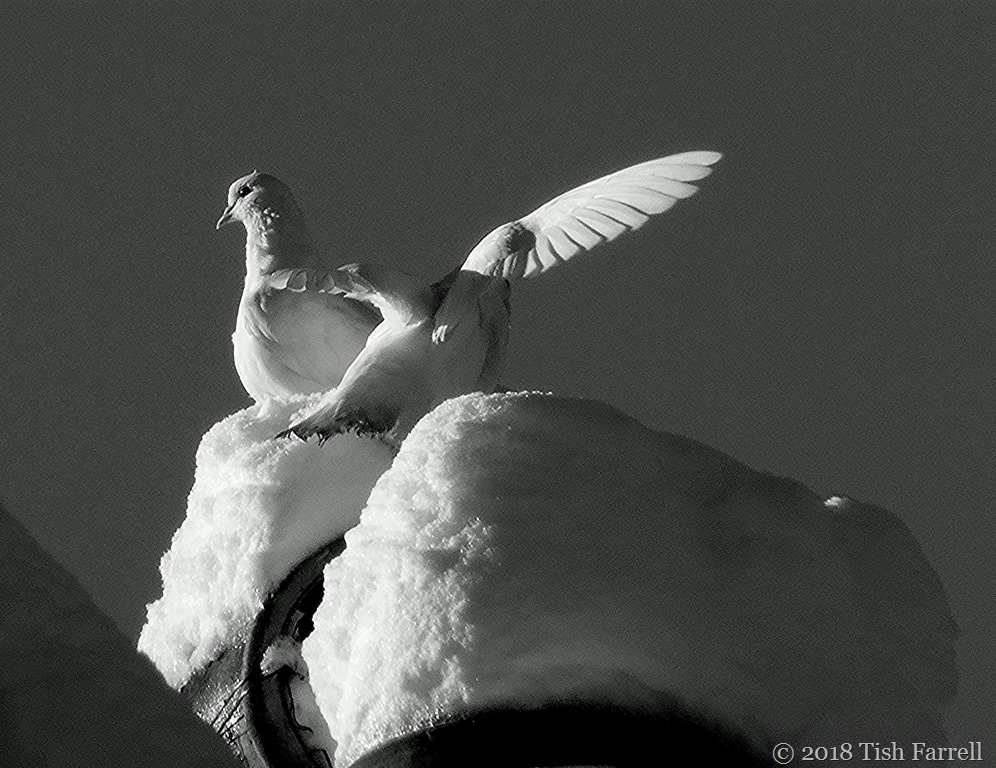
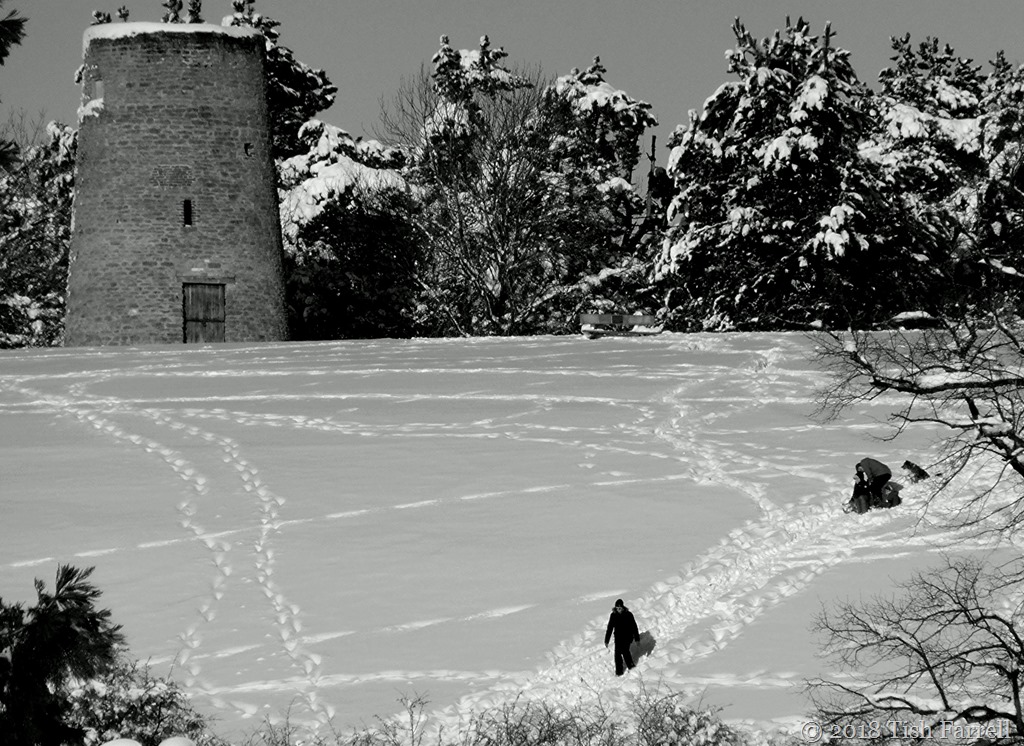
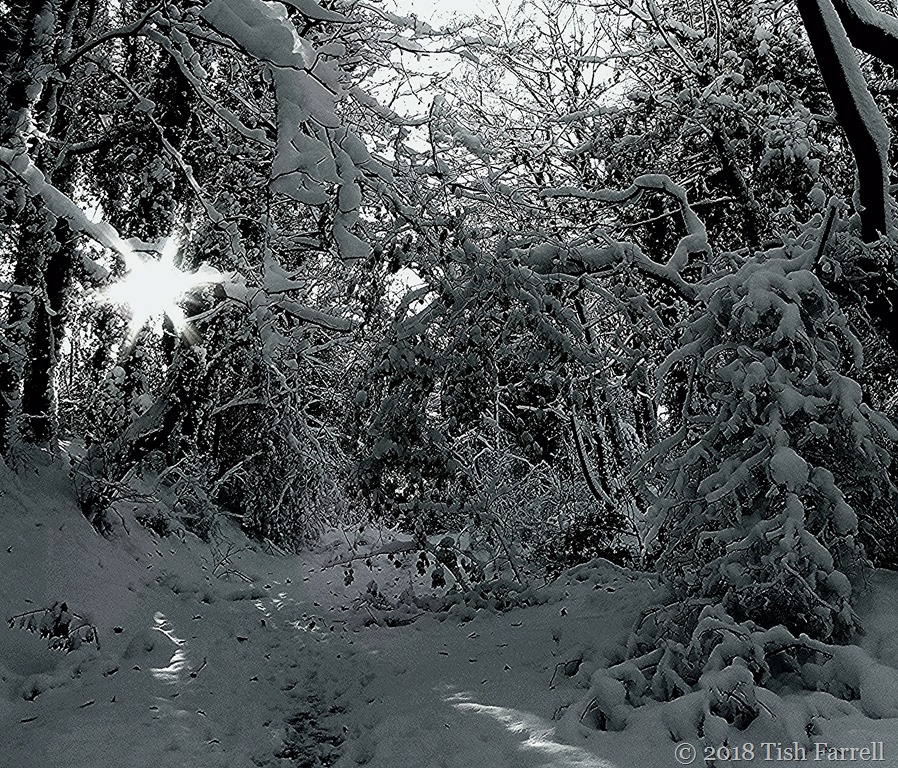
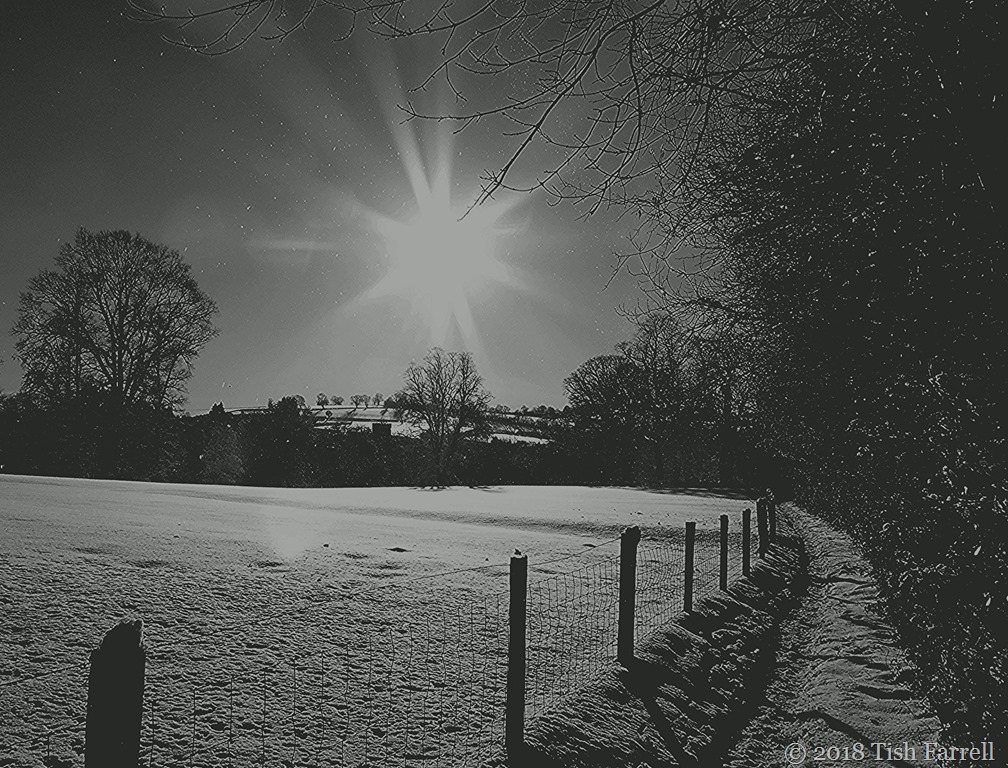
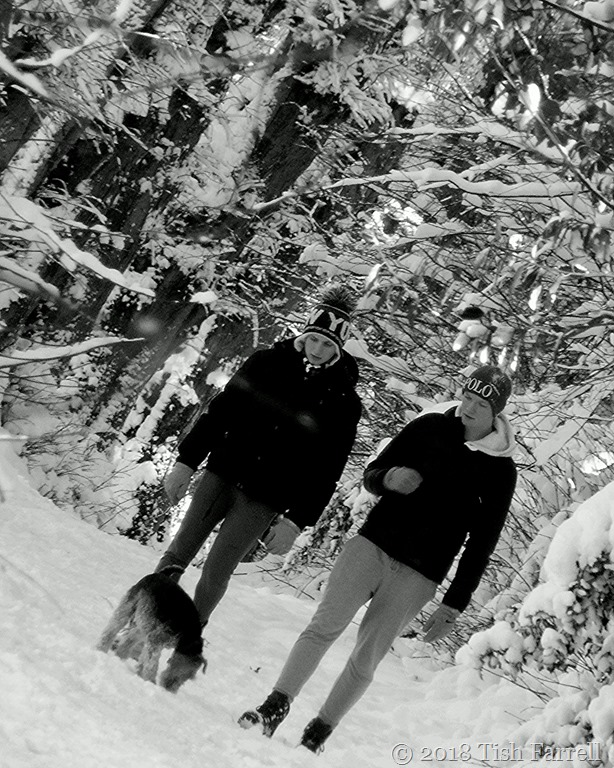
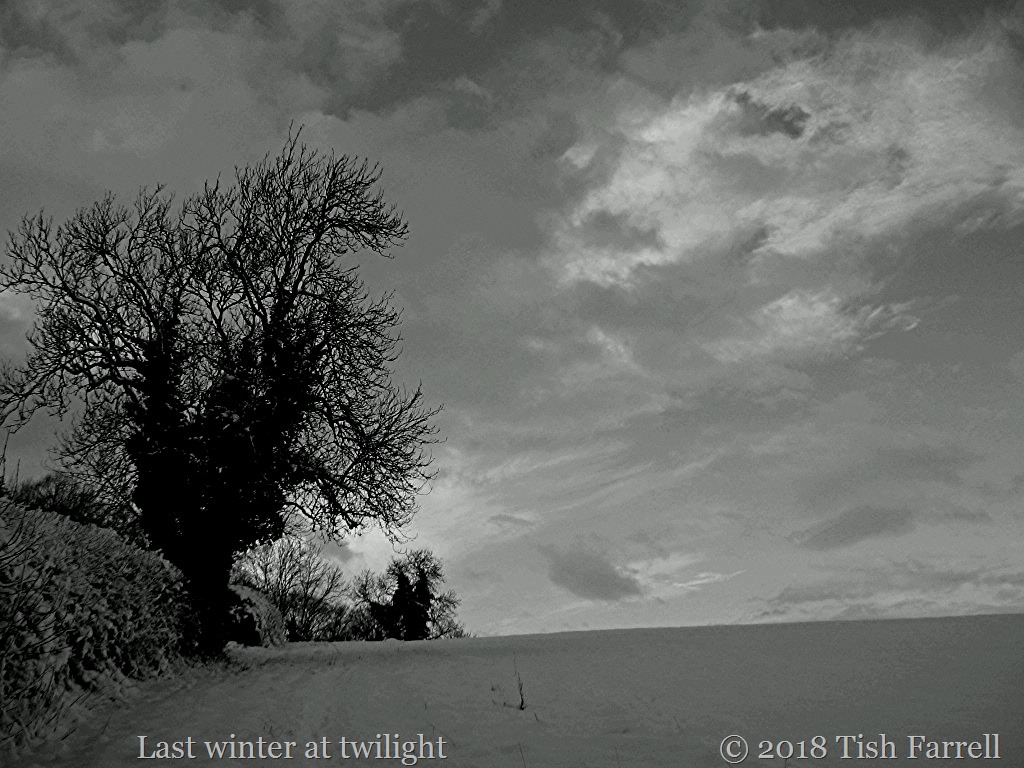
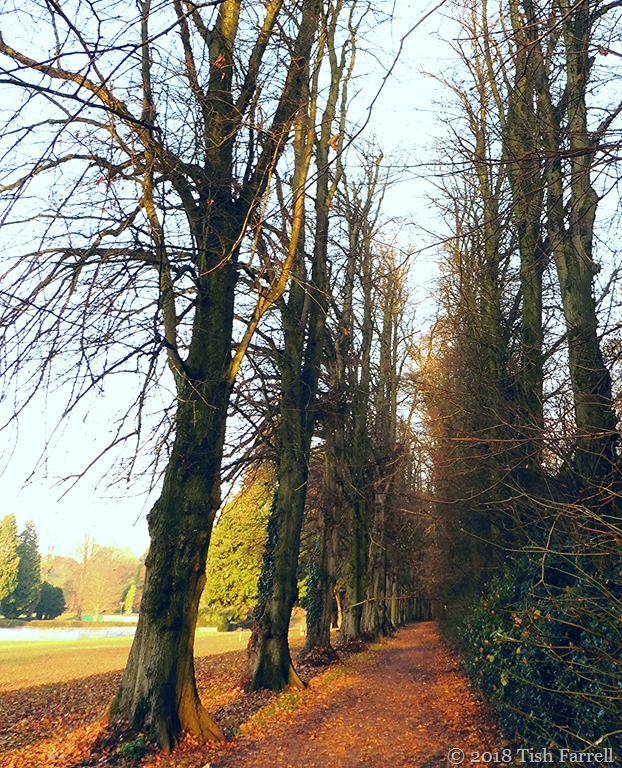
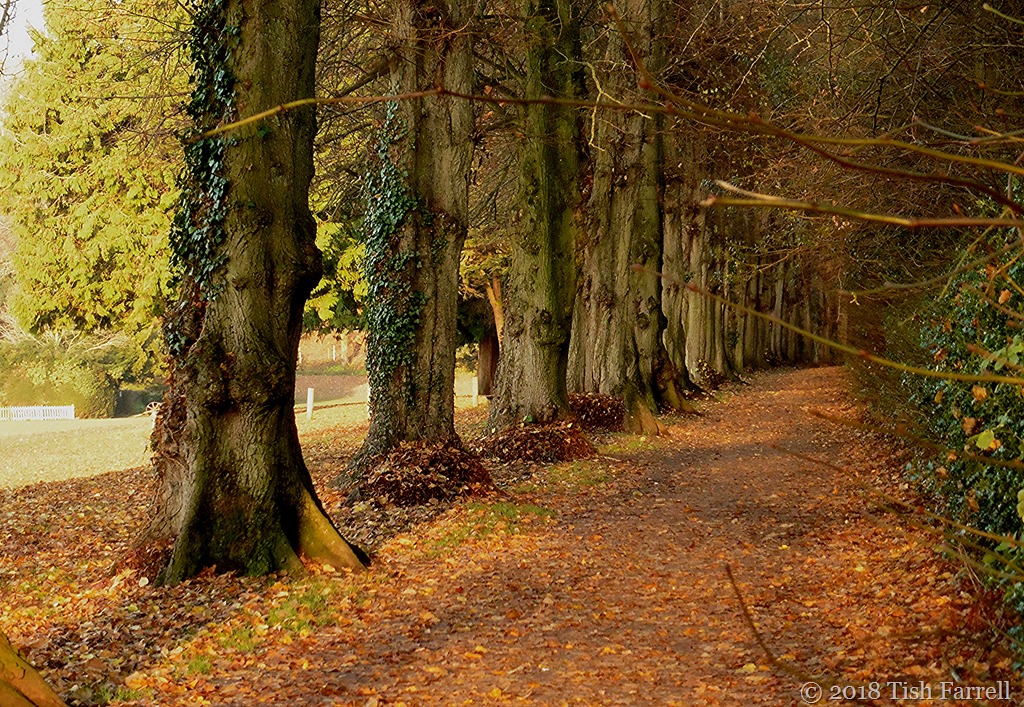
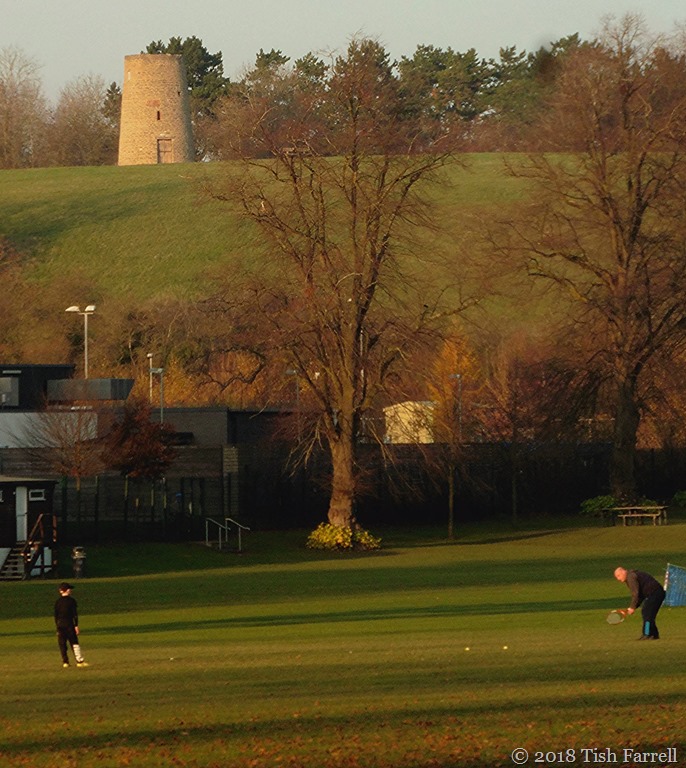
Much like Cee’s current ‘black and white’ challenge, this blog is blowing all hot and cold this week – from Kenya’s tropics in the past two posts to a Shropshire winter in this one. These photos are from LAST winter I hasten to add. And much as I had the most enormous fun out in the snow with my camera, I do not need a repeat performance yet. (Please and thank you in advance, Weather Gods). Anyway, here are some sunshiney snow-scenes from my favourite places around Much Wenlock: Windmill Hill, the old railway line, and the Linden Walk.
Much of the wildlife news from Africa – as per mainstream media – is almost invariably negative. Of course I don’t argue at all with the need to focus public attention on the poaching of rhino horn and elephant ivory – not if it will put pressure on the nations (China, Malaysia, Philippines, Vietnam especially) that fund and fuel this wretched trade. But perhaps the overall effect of such reporting is to give people the idea that African nations do not care for their wildlife. This is not true. Such reporting also often overlooks the absolute heroism of African wildlife rangers (both men and women) who night and day risk their lives to defend their national parks and reserves against poacher predation, often within conflict zones such as DR Congo.
A nation like Kenya has vested interest (public and private) in maintaining and protecting its vast and varied wildlife areas. Tourism is a major income earner, although tourists themselves may at times pose a significant threat to the nation’s environment, both natural and cultural, as their every want is catered to. Also the majority of Kenya’s population are smallholder farmers and most game parks have few boundaries. The wildlife goes where it will, and one elephant can destroy a farming family’s livelihood in a few minutes of chomping and stomping about the place. Elephants kill people too.
In other words conservation has an awful lot of human angles beyond the protecting of particular animal species and their habitats. And while some species may be under threat, it seems that others such as the Cape Buffalo are causing problems by their rising numbers in small reserves. So: just to cast a brief light on the work of the Kenya Wildlife Service (and you can follow this link for more details) here is a current progress report.
Perhaps of greatest importance to the world at large is that in October Kenya’s effort in combatting wildlife trafficking, in particular ivory poaching, was acknowledged at the 70th meeting of the United Nations Convention on International Trade in Endangered Species (CITES).
Also in October the Kenya Wildlife Service hosted its Annual Carnivore Conference which explored the impact of the increasing spread of human populations into carnivore habitat. A quick scan of the topics covered give vivid insight into the multifarious issues involved at the big cat – herder-farmer interface.
And then a week ago Kenya’s Cabinet Secretary for Tourism and Wildlife, Najib Balala launched the National Recovery Plan For Giraffes. He pointed out that while attention has been focussed on rhino and elephant losses, many species of plains game have been increasingly under threat. Giraffes, in particular, are targeted for the bush meat trade. Climate change and loss of habitat are also issues. (I did a post about giraffe loss and their conservation a couple years ago). It’s good to see some concerted action between government and nongovernmental wildlife organisations.
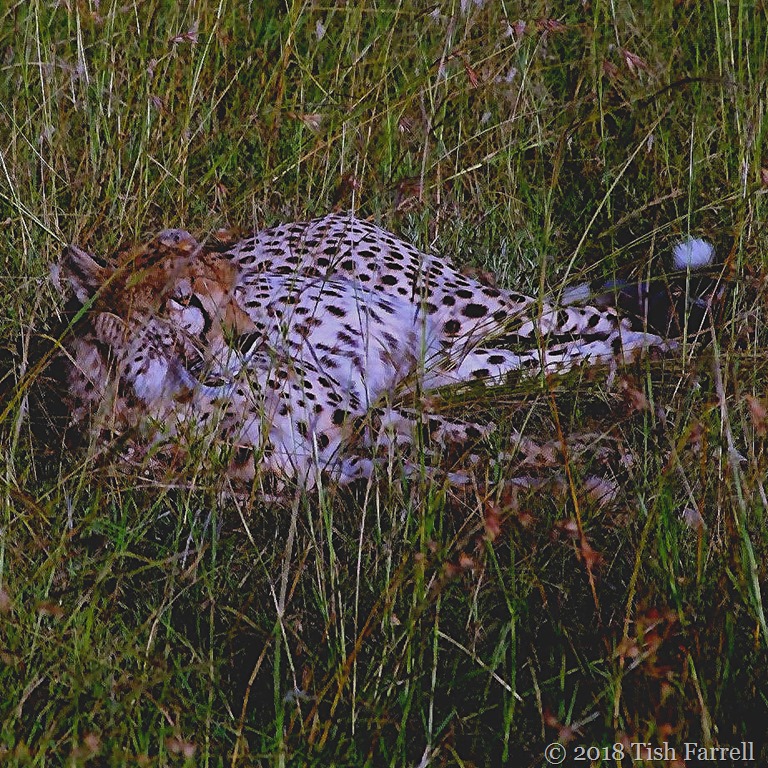
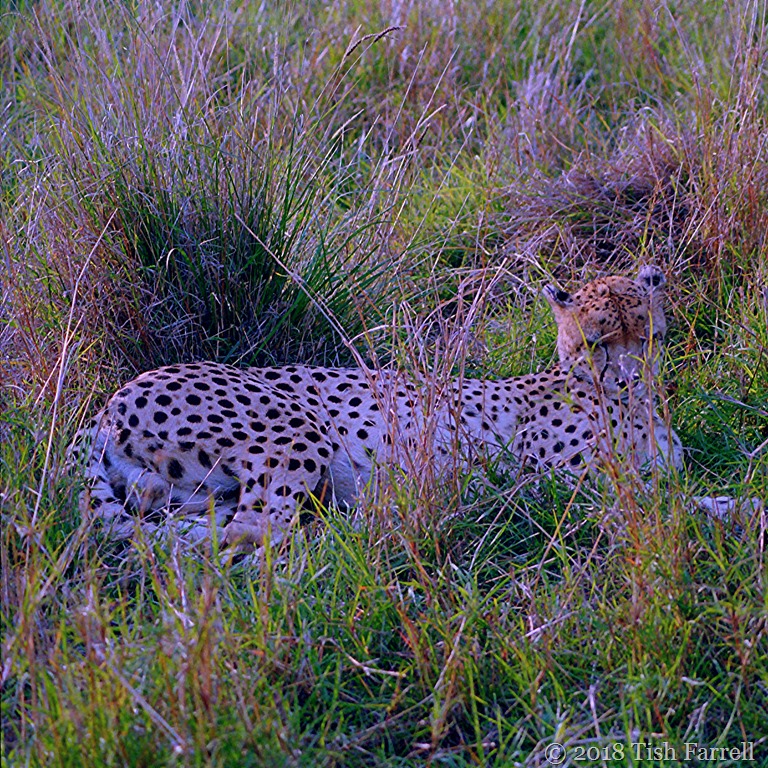
Some cause for optimism then, though we can’t be as laid back on the matter as these cheetahs seem to be about my intrusion into their afternoon nap time.
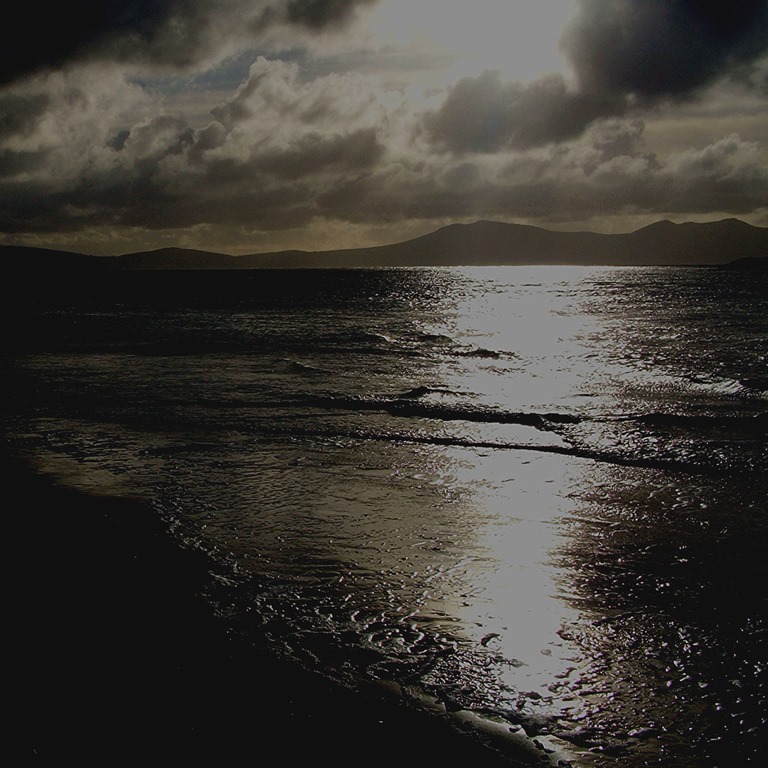
It was a blue-sky, blustery December morning on Anglesey’s Newborough Beach. And then a big cloud blew over the sun: some brief seaside alchemy before the sun came out again.
Time Square #2 This month Becky wants to see us in the square; images connected with time – spot on, tenuous, devious, or ingenious – any approach is acceptable.
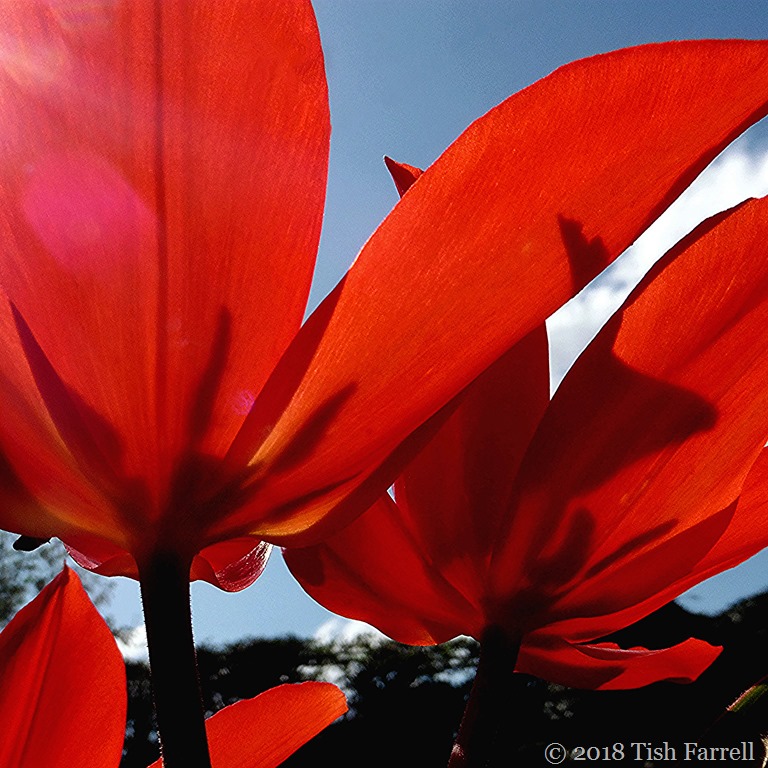
…in the northern hemisphere that is. In fact UK gardening buffs say December is often the BEST time to plant them – before the real frosts, but after the temperatures have dropped. If planted in warm weather tulips can be prone to fungal diseases. But whenever you choose, they do need good drainage, and quite a deep planting hole. And they love the sun as they are plainly demonstrating here. So much to look forward to then from a pot filled with bulbs. And after yesterday’s monochrome studies of the field behind the house, I felt a blast of festive red was called for.
Time Square #1 For the month of December Becky’s set us the task of posting square photos on the topic of time, however we wish to interpret it. Please join in – as and when.
Those of you who come here often (thank you faithful readers) will know that our cottage garden overlooks a field called Townsend Meadow. Ironically, few of today’s Wenlock residents probably know this unless they have looked at the old tithe map. Doubtless our good neighbour Trevor knows because he has lived his whole life here, and his father before him. The manorial landlord and his agent probably know it too. Anyway, as to origins, the name says all. The field’s present fence-line along the Sytche Brook (which gathers in the run-off from nearby Wenlock Edge) once marked the northerly limit of Much Wenlock.
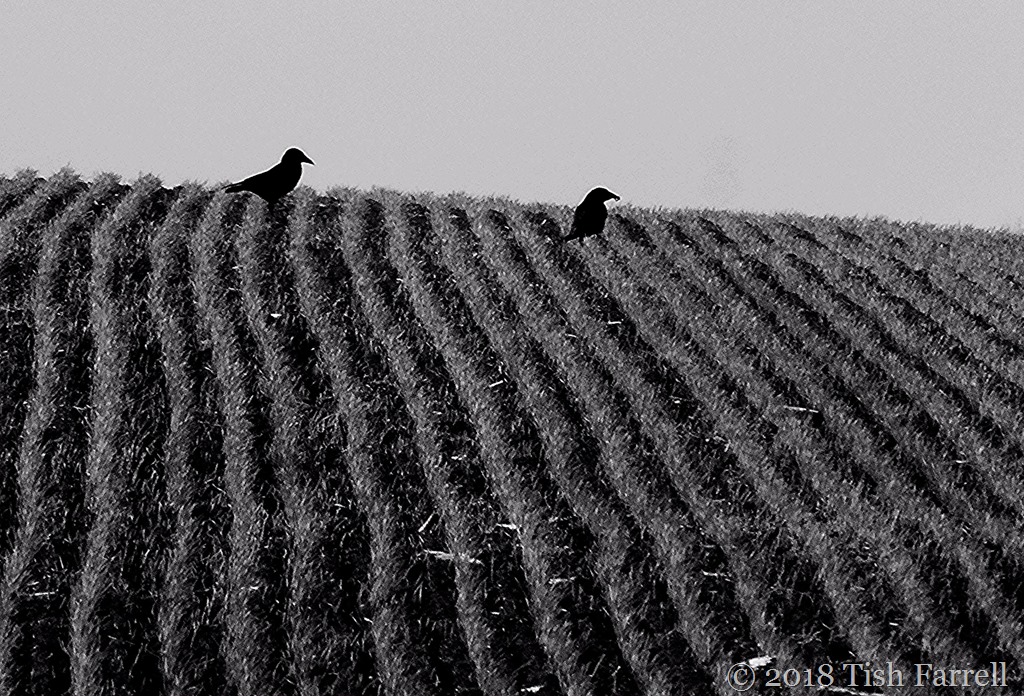
Of course the town has sprawled beyond it since, but not very far. The presence of two great limestone quarries with their regular programmes of blasting and accompanying dust storms well into the 20th century, probably discouraged development, though did not deter the erection of the Lady Forester Memorial Hospital opened in 1903, now a care home, or in 1953 the building of the Much Wenlock Modern School (now the William Brooks School), the latter proving in 1981 to be well in the flight path of exploding debris from neighbouring Shadwell Quarry when three pupils were injured during a blast. Now the quarries are abandoned and silent, and out on Townsend Meadow it is usually pretty quiet too, apart from the calls of rooks, jackdaws and buzzards. Now and then the farmer arrives with another dose of agri-chemicals.
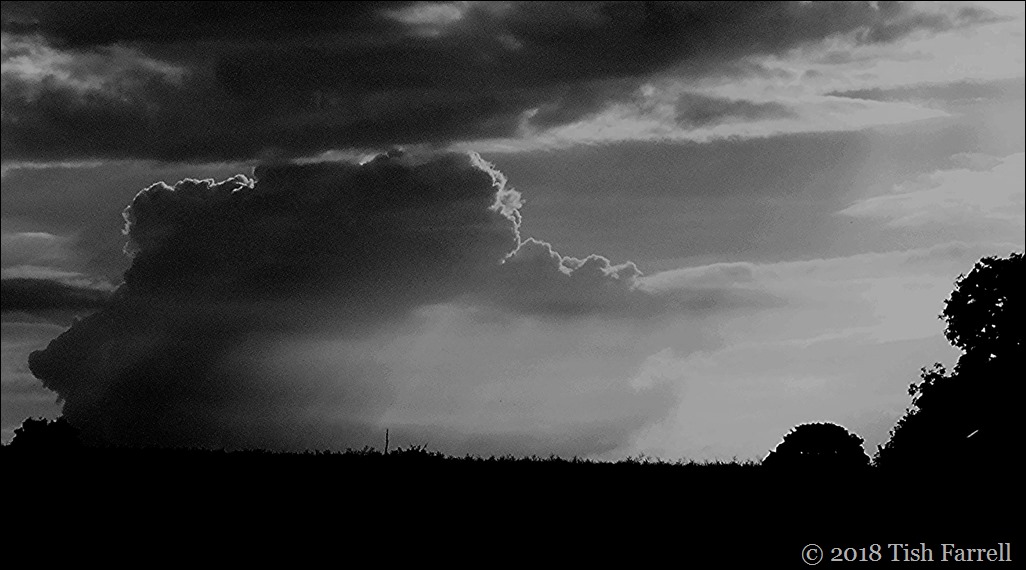
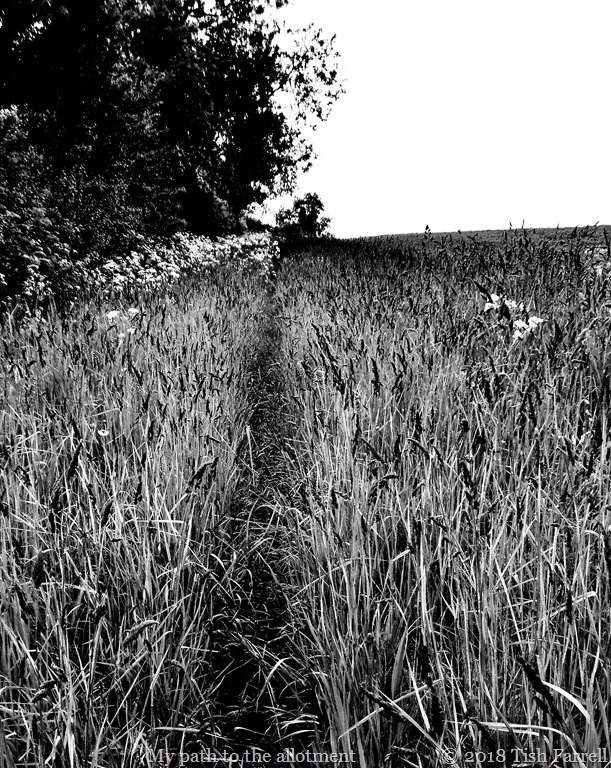
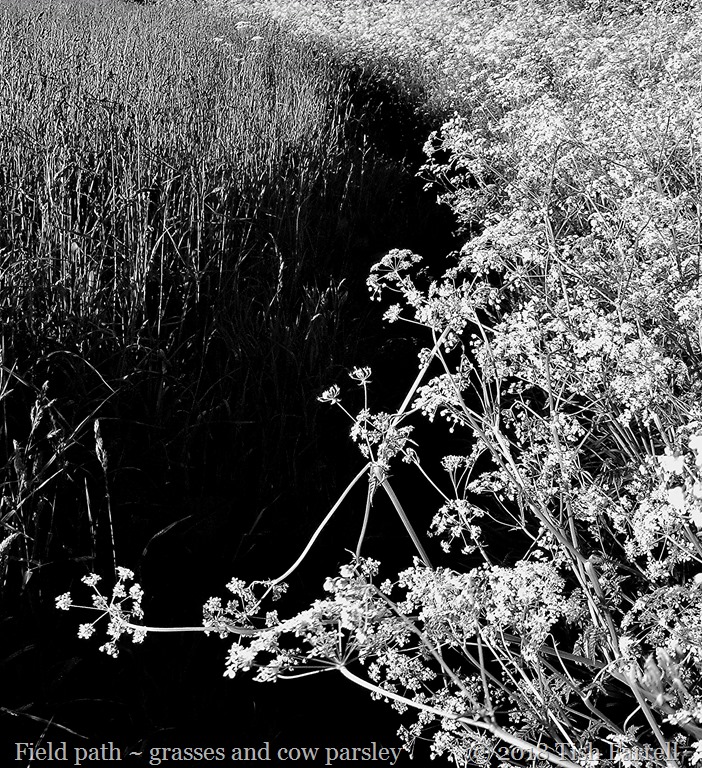
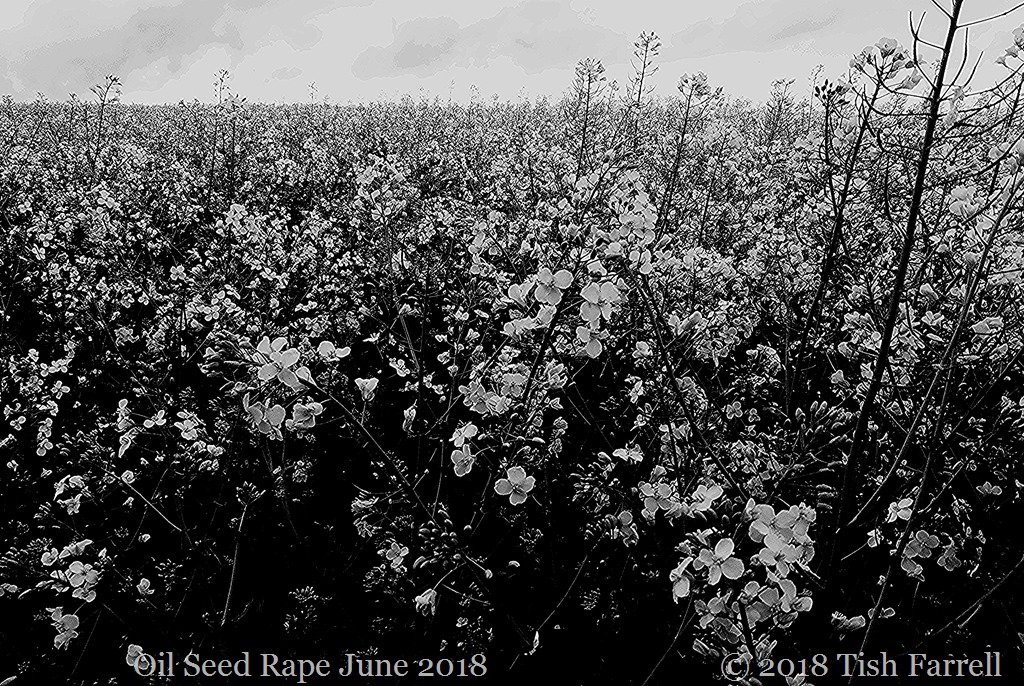
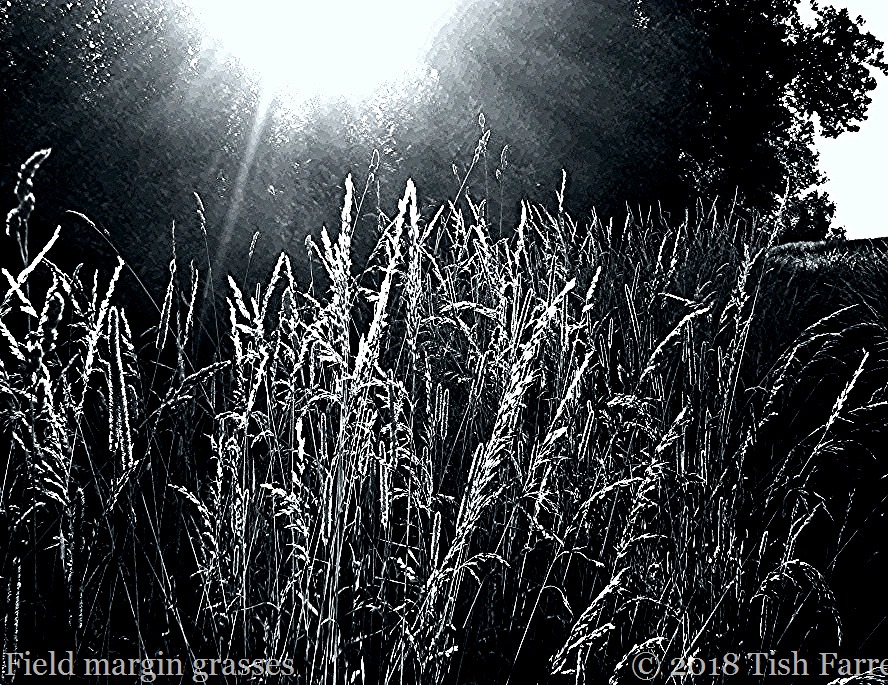
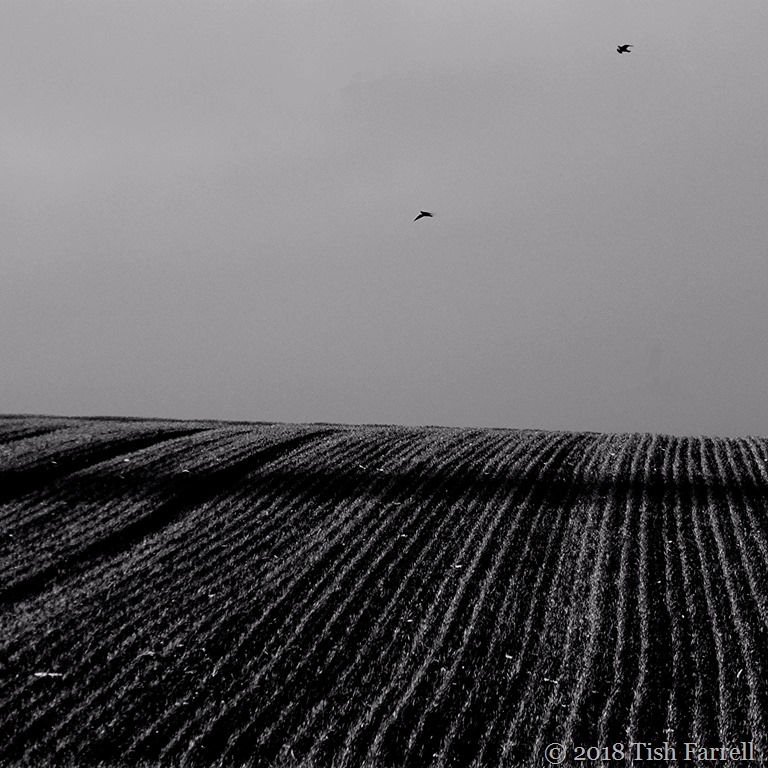
This field has been our view for twelve years now. We never tire of it, and especially the play of light and cloud movement along the false horizon to the west. I never stop taking photographs of it either – usually on my way to or from the allotment. So here are some of my monochrome images, taken with my Lumix point-and-shoot digital camera on its monochrome setting. i.e. they are not edits of colour images, and some are taken in low light conditions which accounts for the grainy look.
First comes summer and a view that makes me wonder if we should have been calling for ghost busters:
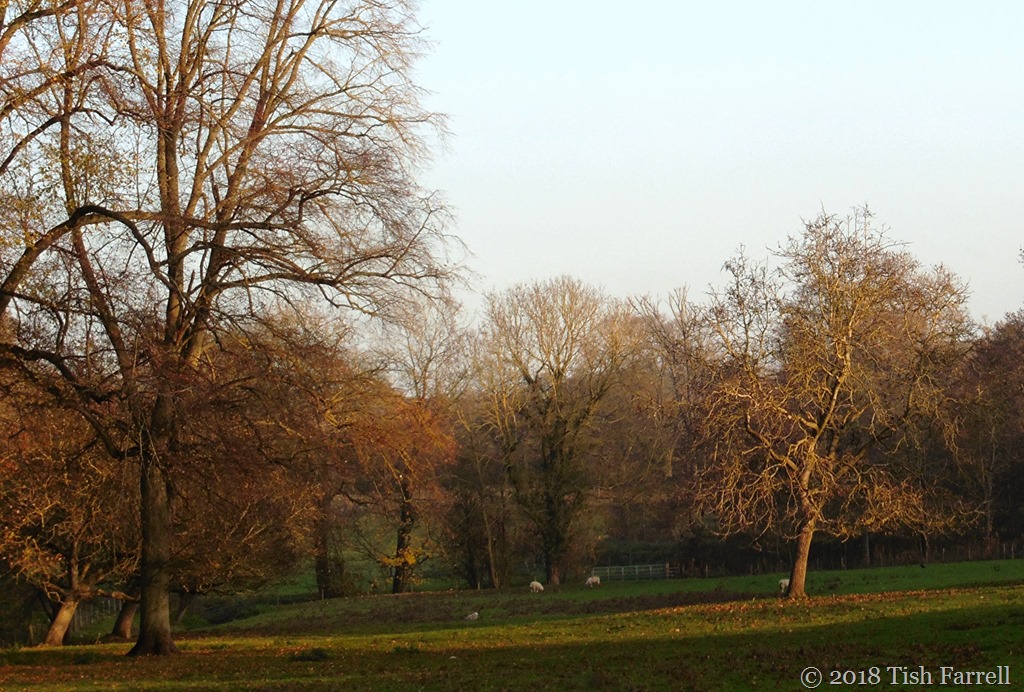
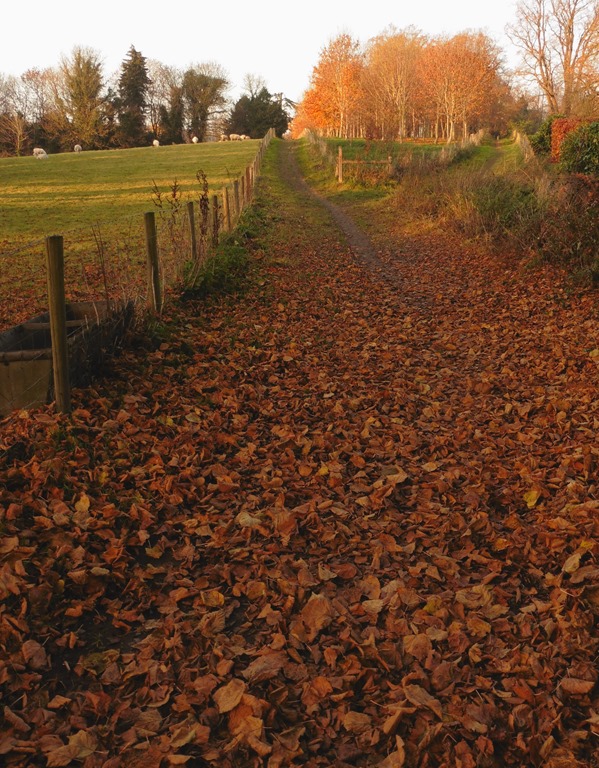
Scenes in old gold: the Priory parkland above, then the Linden Walk and Field and a view of Windmill Hill:
*
The Cutlins path, sheep and parish church:
*
And now the townscape as seen from the allotment:
*
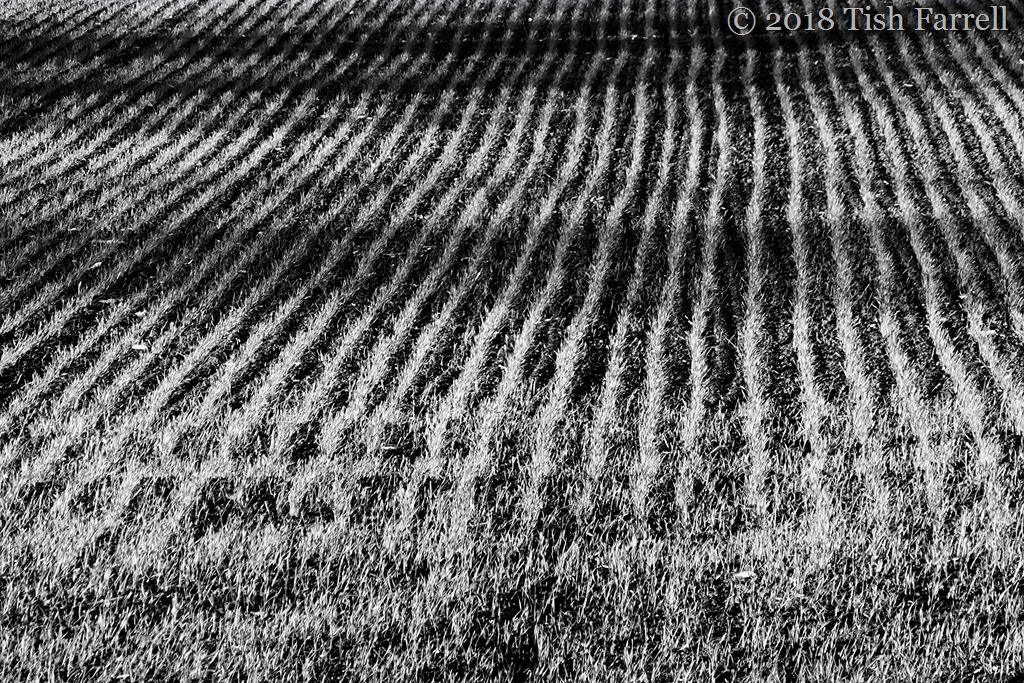
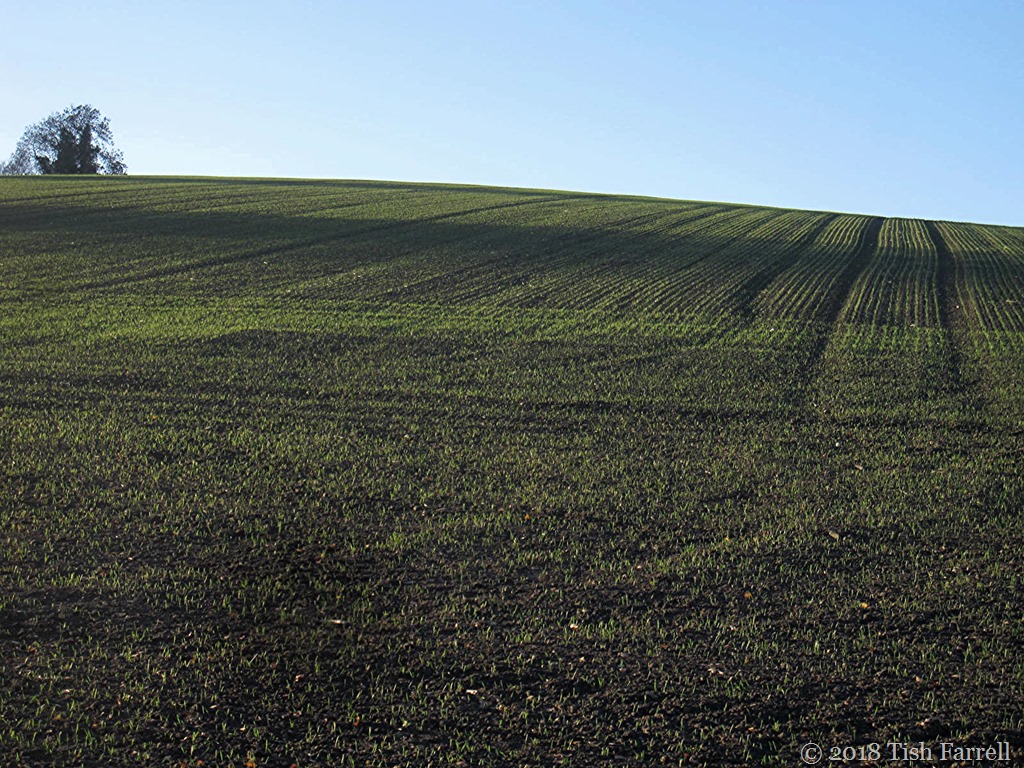
And a touch of green: winter wheat sprouting in Townsend behind the house (you saw it being sown HERE back in October):
*
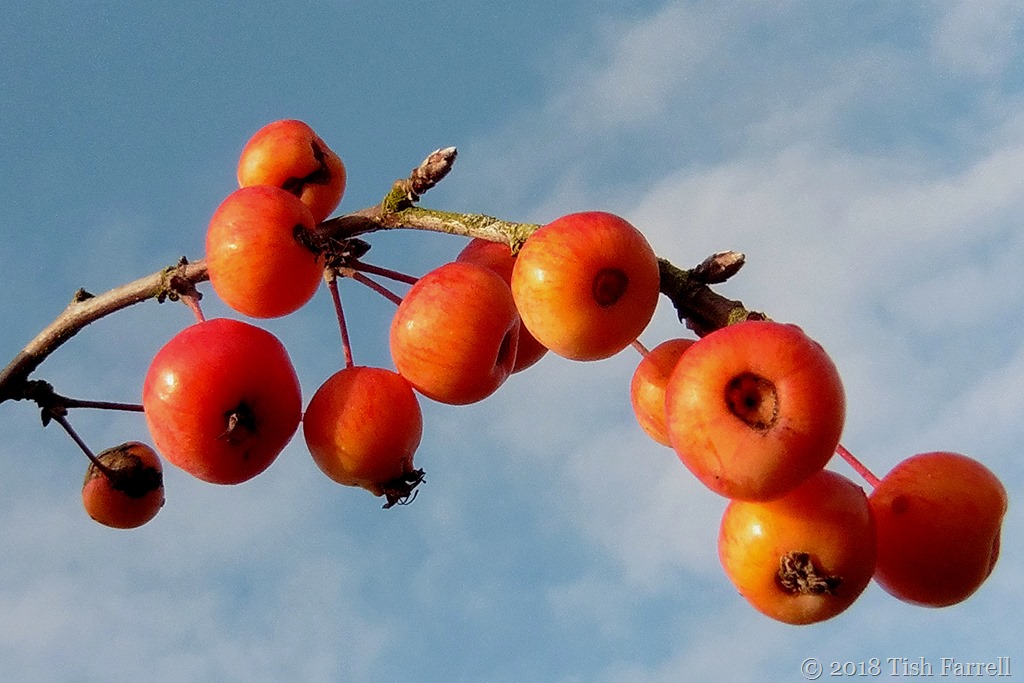
And in the garden: Evereste crab apples, Hesperanthus, and Foxgloves (still flowering today):
*
And on Remembrance Sunday, Much Wenlock marked the centenary of the ending of WW1 with the lighting of a beacon on Windmill Hill, an occasion (on my part anyway) coupled with the fervent wish that here at least was one lesson from history that the ruling elite might learn from, though it’s showing few signs so far.
Last week, 16 November 2018, Professor Philip Alston, international lawyer and UN Special Rapporteur on extreme poverty and human rights made his statement on the shameful state of Britain. He began by pointing out that the UK is the world’s fifth largest economy, yet one fifth of its population live in poverty. Of these, 1.5 million are destitute. The reasons for this, he says, are largely ideological, and government ministers are so fixed on their agendas, they are refusing to acknowledge the evidence presented to them, or acknowledge the consequences of their policies. The problems, Professor Alston states, are set to grow worse, and especially for the most vulnerable: CHILDREN.
14 million people, a fifth of the population, live in poverty. Four million of these are more than 50% below the poverty line, and 1.5 million are destitute, unable to afford basic essentials. The widely respected Institute for Fiscal Studies predicts a 7% rise in child poverty between 2015 and 2022, and various sources predict child poverty rates of as high as 40%. For almost one in every two children to be poor in twenty-first century Britain is not just a disgrace, but a social calamity and an economic disaster, all rolled into one.
Amber Rudd, the new Work and Pensions Secretary dismissed the report on the basis that its tone was ‘highly inappropriate’. Philip Alston’s response, as covered by the Guardian, was to tell her to take action rather than criticise.
You can judge Professor Alston’s tone in this introduction to his statement:
The UK is the world’s fifth largest economy, it contains many areas of immense wealth, its capital is a leading centre of global finance, its entrepreneurs are innovative and agile, and despite the current political turmoil, it has a system of government that rightly remains the envy of much of the world. It thus seems patently unjust and contrary to British values that so many people are living in poverty. This is obvious to anyone who opens their eyes to see the immense growth in foodbanks and the queues waiting outside them, the people sleeping rough in the streets, the growth of homelessness, the sense of deep despair that leads even the Government to appoint a Minister for suicide prevention and civil society to report in depth on unheard of levels of loneliness and isolation. And local authorities, especially in England, which perform vital roles in providing a real social safety net have been gutted by a series of government policies. Libraries have closed in record numbers, community and youth centers have been shrunk and underfunded, public spaces and buildings including parks and recreation centers have been sold off. While the labour and housing markets provide the crucial backdrop, the focus of this report is on the contribution made by social security and related policies.