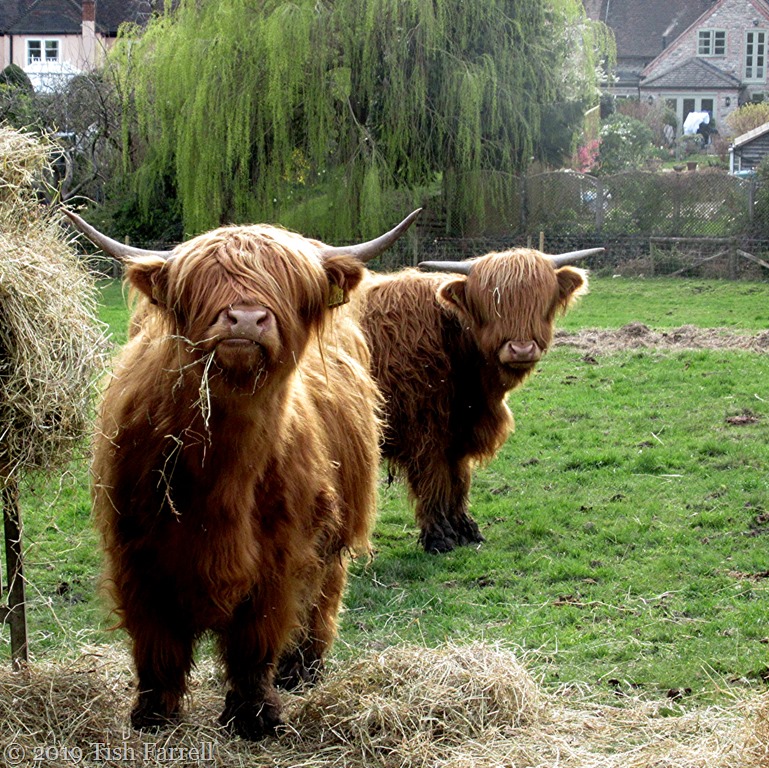
It doesn’t take much to keep us Farrells amused, or should that be amoosed. Anyway, since the highland cattle took up residence in the Cutlins meadow, it has added a whole new dimension to popping to the High Street for some milk. I can report that Mammy and infant MacMoo who featured in earlier posts, have been moved to pastures new, and now we have only four junior MacMoos with whom to pass the time of day. But they are pretty obliging when it comes to a photo shoot, although all in all, they would much rather eat hay. Just like us, then, it seems they are easily pleased.
Tish Farrell Writer
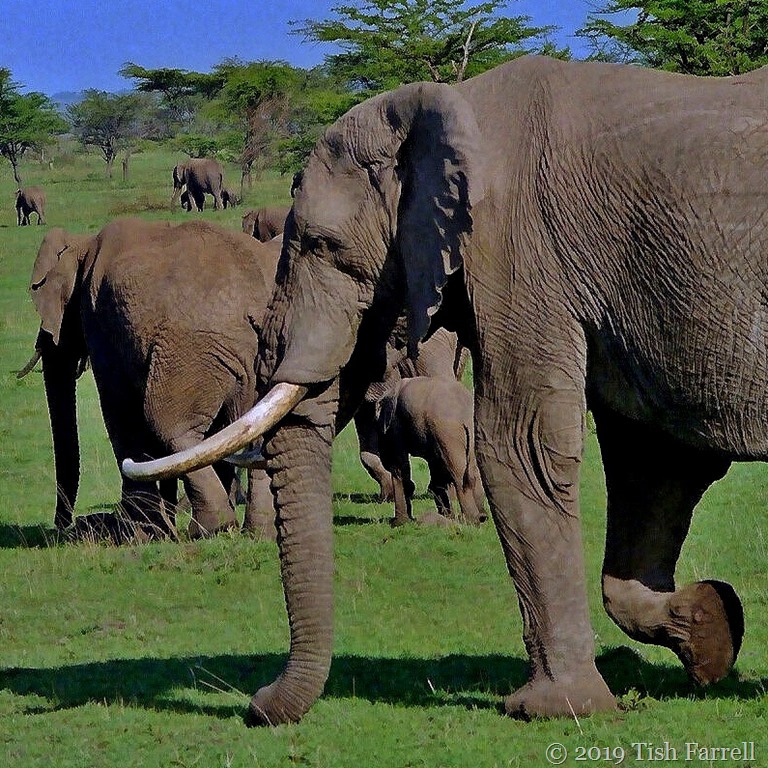
Elephants In The Acacias
I have elephants on my mind today. Last night when we were trawling YouTube it threw up a mesmerizing BBC film about the desert elephants of Mali’s Sahel. It was made back in 2001, and followed a research project that involved fitting radio collars to 8 elephants (a very tricky pursuit) and tracking them and their herd over a 700 mile migration route, from water source to water source, as they crossed the desert lands of Mali and Burkina Faso. A subsequent trawl on the web suggests the research is ongoing under the auspices of Save The Elephants. The film is well worth viewing, and this is the link to the Daily Motion version: The Lost Elephants of Timbuktu 2001.
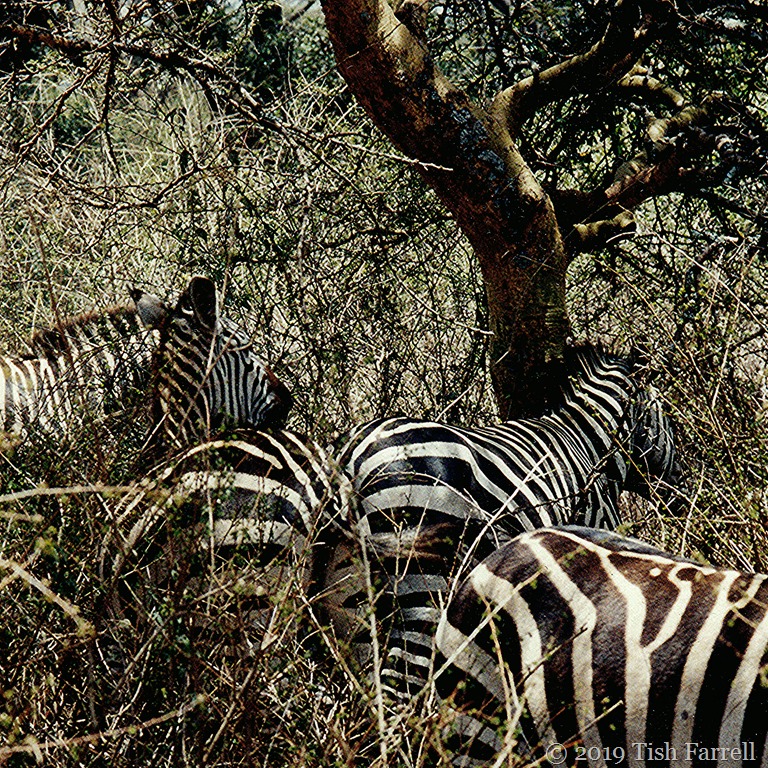
Beneath The Sheltering Thorns
Our almost-spring has reverted to winteriness today, so it’s back to the old Africa album for Square 22 and a bit of midday heat. Am imagining too the smell of the bush – spicy sundried grasses and hot peppery earth – and in my head the seamless kroo-krooing of doves. And because it has amused me ever since I heard it from a tipsy guide in Zambia, I make no apologies for repeating it again here: when it comes to zebras’ butticles, he told us, each has its own unique set of stripes. He further suggested that this was how the offspring recognised their mothers. I have no idea if this is true, but am happy to go along with it if only for the butticles, since they sound more decorous than buttocks and so have remained discriptor of choice in the Farrell household when referring to that particular part of the anatomy. And anyway, zebras do sport such very handsome ones.
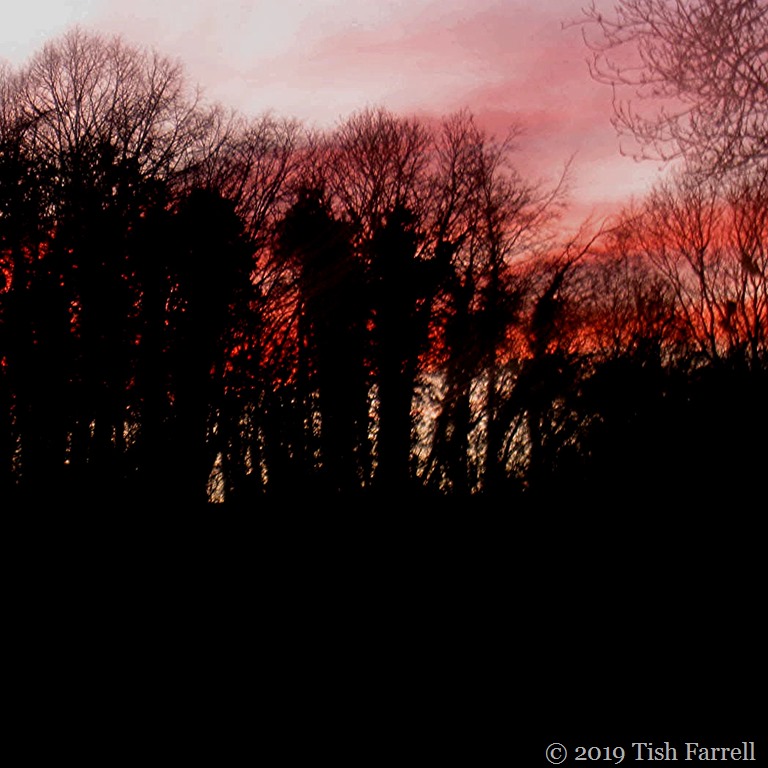
Look Out! The Wood’s On Fire
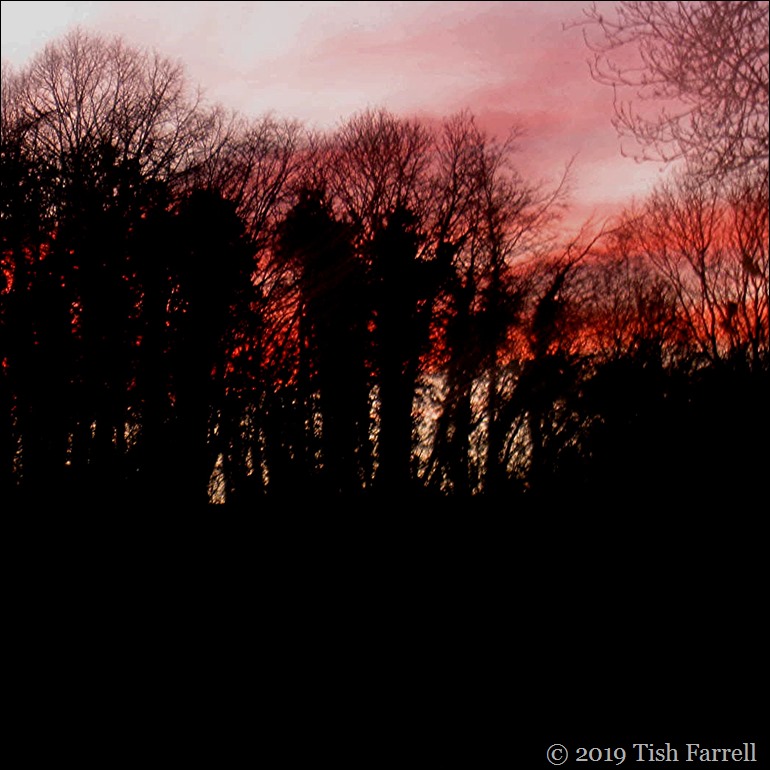
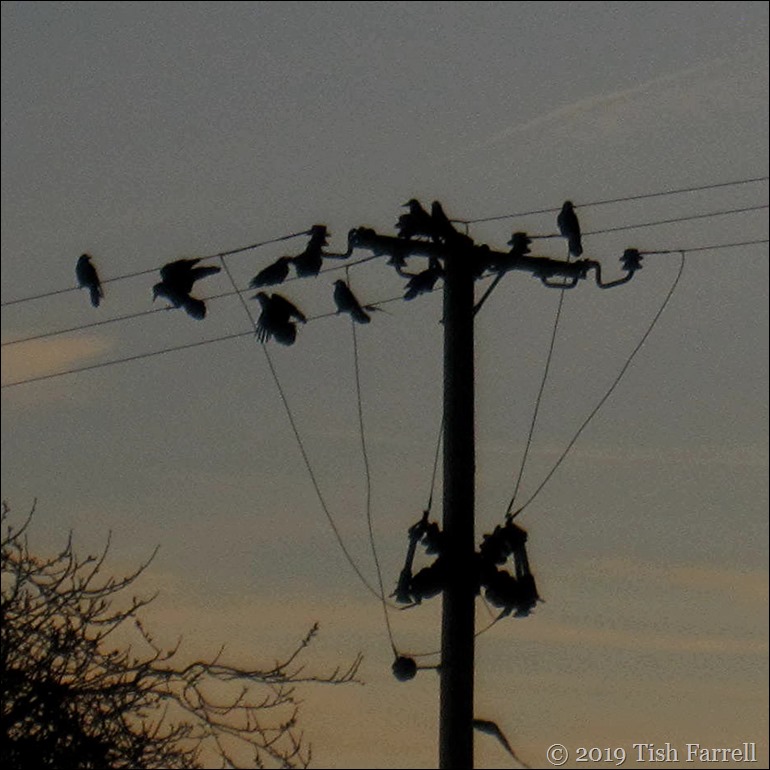
For one reason and several it was nearly 6 pm by the time I headed to the allotment yesterday. It had been a perfect day, an almost summer day, and I was sorry I’d not gone gardening sooner. There were, after all, the first early spuds and onion sets to plant, and parsnips and peas to sow, and several other jobs to be done. When I did finally get myself there, the sunset was so brilliant, I took to snapping scenes like this instead of doing what I’d meant to do. The rooks watched me from their gathering points on the powerlines, and even let me take their photo. Otherwise, I had the allotment entirely to myself, and there was that deep sense of the plots settling down for the night, free of their gardeners’ interventions.
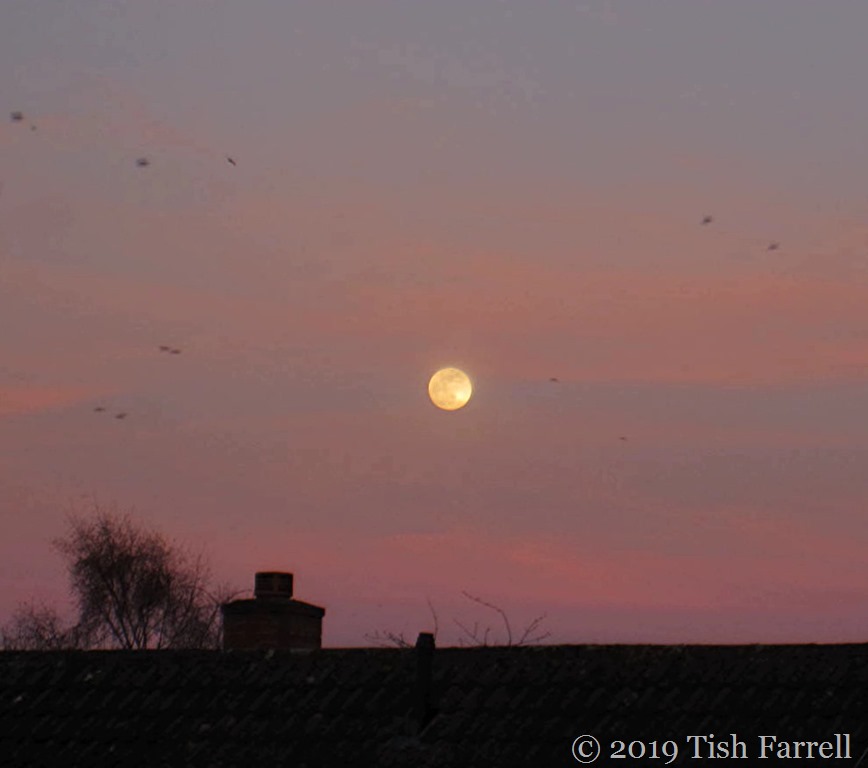
I did make it to the polytunnel eventually. And in the remaining half-light planted out some lettuce seedlings in one of the raised beds. Then sowed some Early Onward peas in pots, since sowing them in the ground only seems to feed the mice. I also decided it was time the sprouted Aqua Dulce broad beans, likewise sown in mouse-avoiding trays, should go outside on the potting bench under some fleece before they grew to used to the warmth in the tunnel. And I had just stepped out of the polytunnel to fill my watering cans, when I saw this:
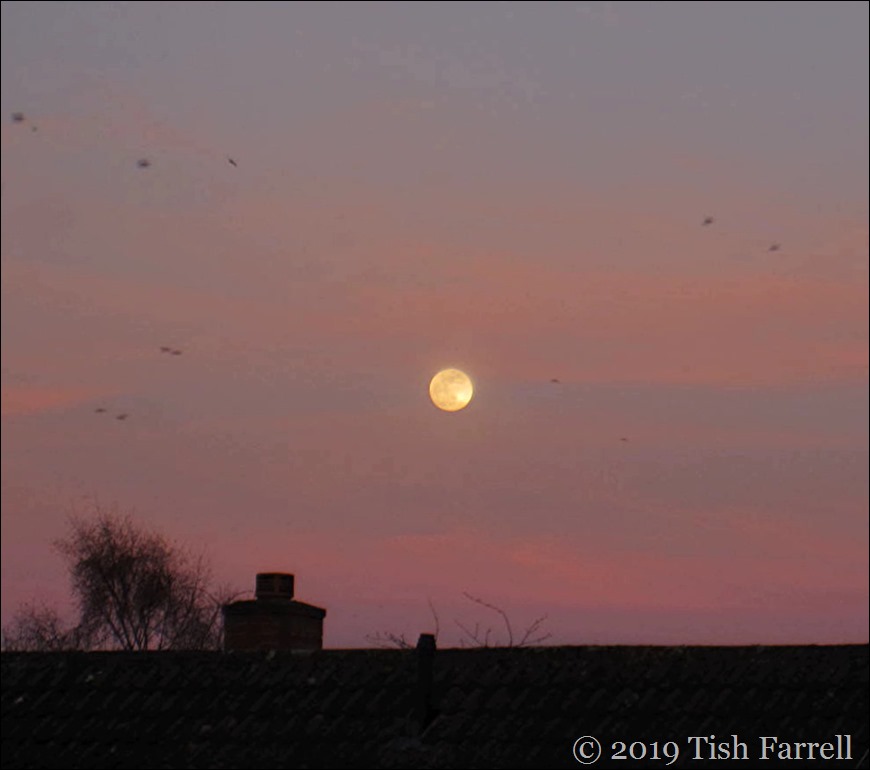
A moon in the pink, and the rooks flying over it. And I thought it probably was time to go home. And so a few photos later, I set off across the darkening plots, scrambled through the gap in field hedge into Townsend Meadow, again beheld the moon in picture book mode, this time over the Priory ruins, and thought how good it was to be alive, and that this was my first ‘home from the plot by moonlight’ of 2019.
copyright 2019 Tish Farrell
Out In The Late Day Sun
Usually when it comes to lime tree photos, I’m snapping the Linden Walk which is just a short trot from the house. But when I walked up there on Sunday afternoon the photos I took of it looked flat and gloomy. It was only as I was heading for home that there was a sudden change in the weather. Sun. Here it is shining through the lime trees that line the road beside the Linden Field. And here it is marking an end to our recent bout of storms and rain. At least for the next week or so. Time to get sowing and planting.
Signs Of Spring In Rookery Wood
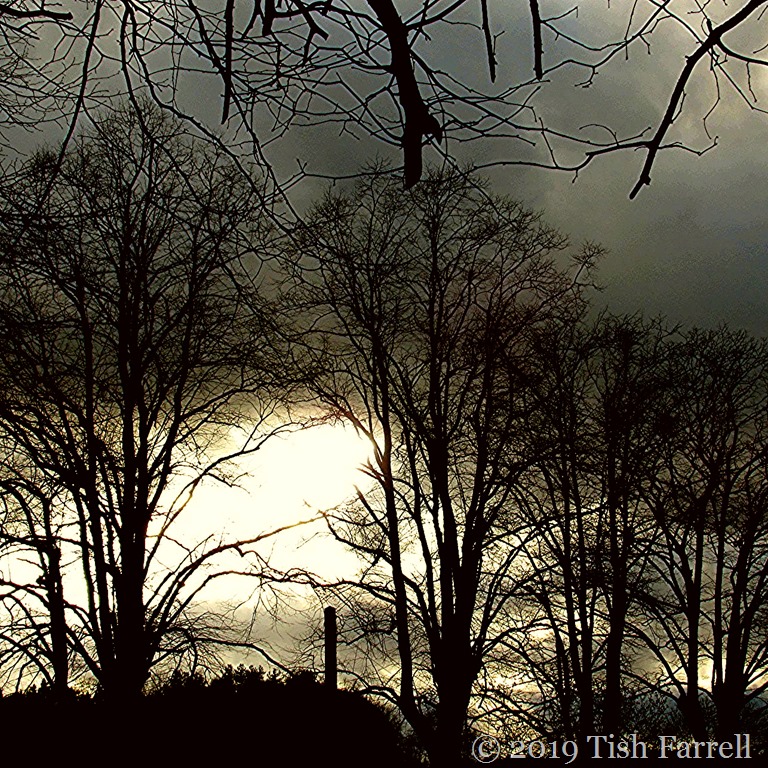
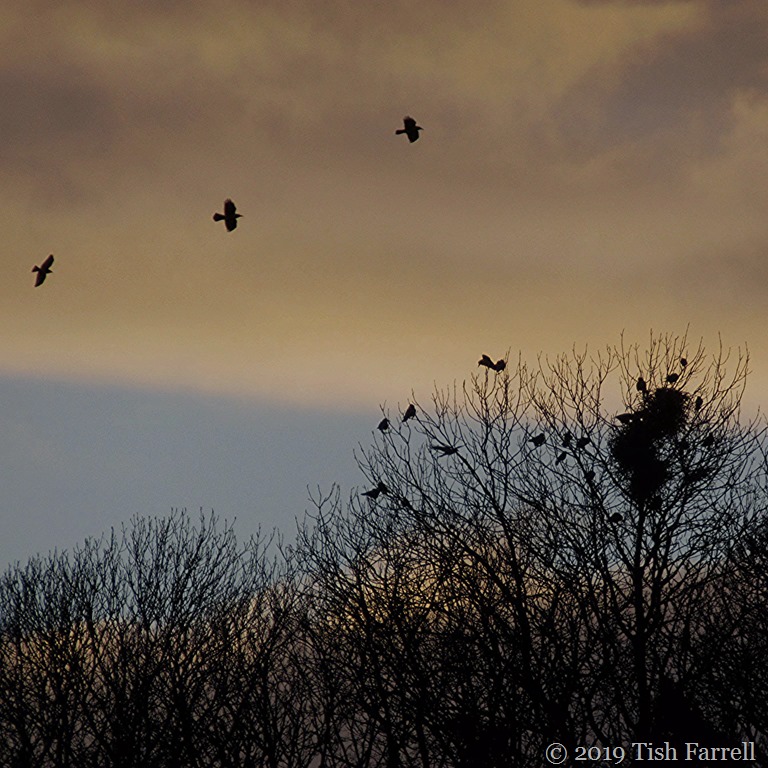
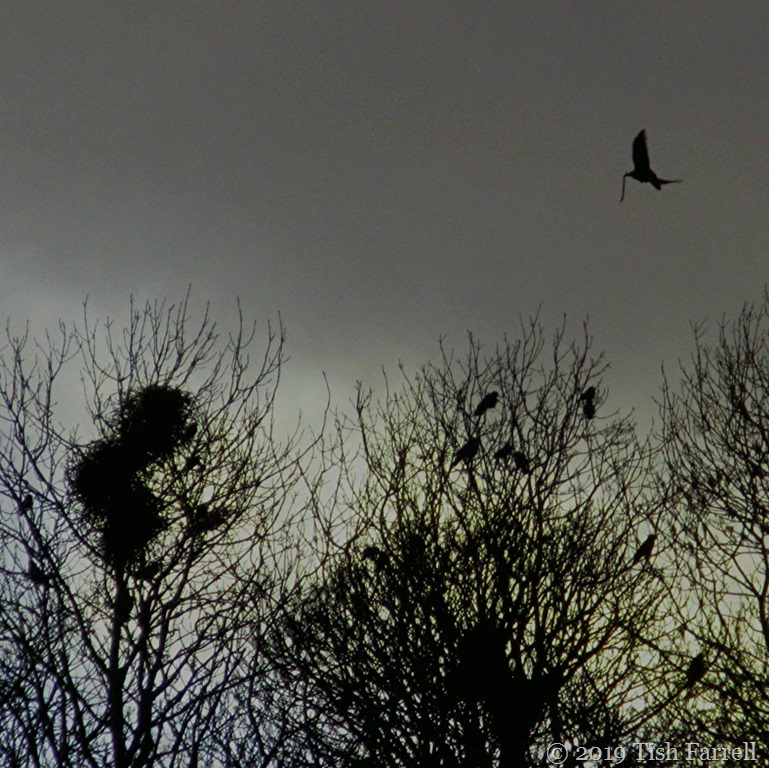
The things I do. Yesterday’s twilight with its magnificent post-storm sky had me standing on the cabin bed in my study and resting my camera on the open rooflight. If I use lots of zoom I can spy on the rooks in the wood on Sytche Lane. At this time of year there’s much to watch. For one thing they are making some serious extensions to their old nests.
For another, now is the time when the more spectacular ‘fly pasts’ begin. There seem to be two modes. The first kind involves a sudden outburst in the rookery (there are jackdaws in the wood too). For no apparent reason all the roosting birds whoosh out over the meadow, bowl around in a swirling mass and then return to the trees as if nothing had happened. The second kind is a much bigger production and usually happens around sunset or shortly afterwards. It seems to be about a gathering in of rook cohorts from the four quarters, a reconfirmation of rookery membership perhaps (?) – this after their day’s foraging around the fields.
As they return to the rookery so the aerial dance begins: sometimes high above Townsend Meadow, at others in high-speed mass swoops at ground level. It is very exhilarating. And perhaps that’s it. The display is an expression of rookish joi de vivre. And why not? If I were selling my house, I would say the view of rooks from the study rooflight is a very particular asset, though maybe not for the ornithophobic or anyone with a tendency to vertigo.
copyright 2019 Tish Farrell
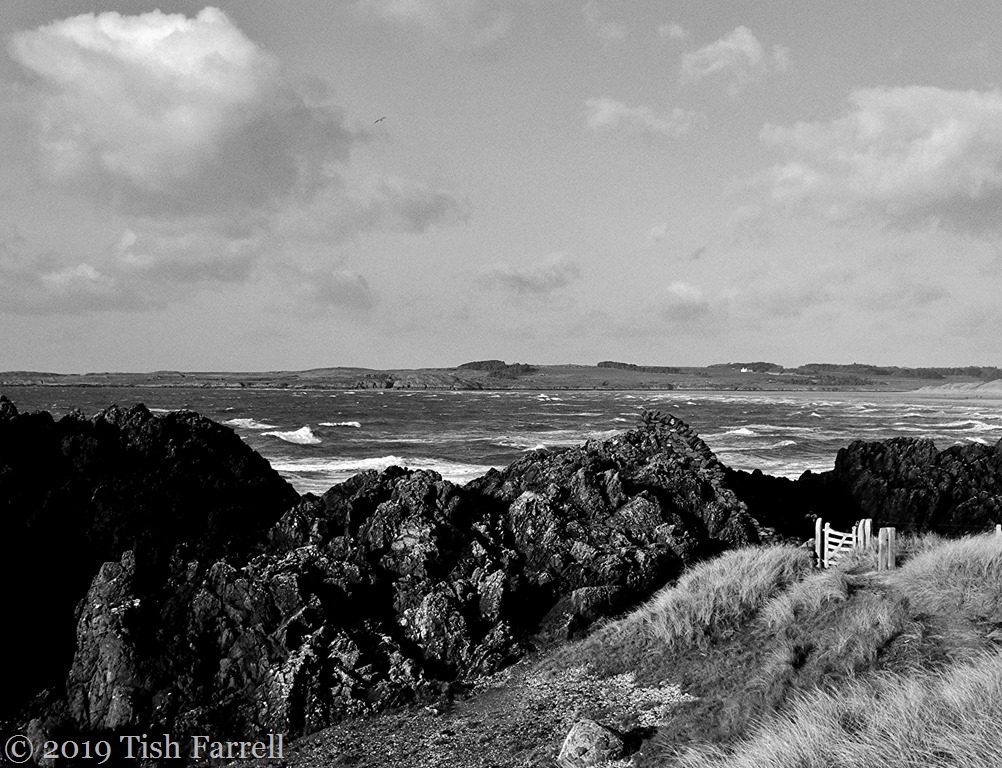
The Little Gate To The Cliffs
Llanddwyn Island, Anglesey, North Wales shot in monochrome
Remembrance For Days Like These
No man is an island,
entire of itself;
every man is a piece of the continent,
a part of the main.
If a clod be washed away by the sea,
Europe is the less,
as well as if a promontory were,
as well as if a manor of thy friend’s
or of thine own were.
Any man’s death diminishes me,
because I am involved in mankind;
and therefore never send to know for whom the bell tolls;
it tolls for thee.
John Donne 1572 – 1631
Thursday’s Special: Desert Dawn
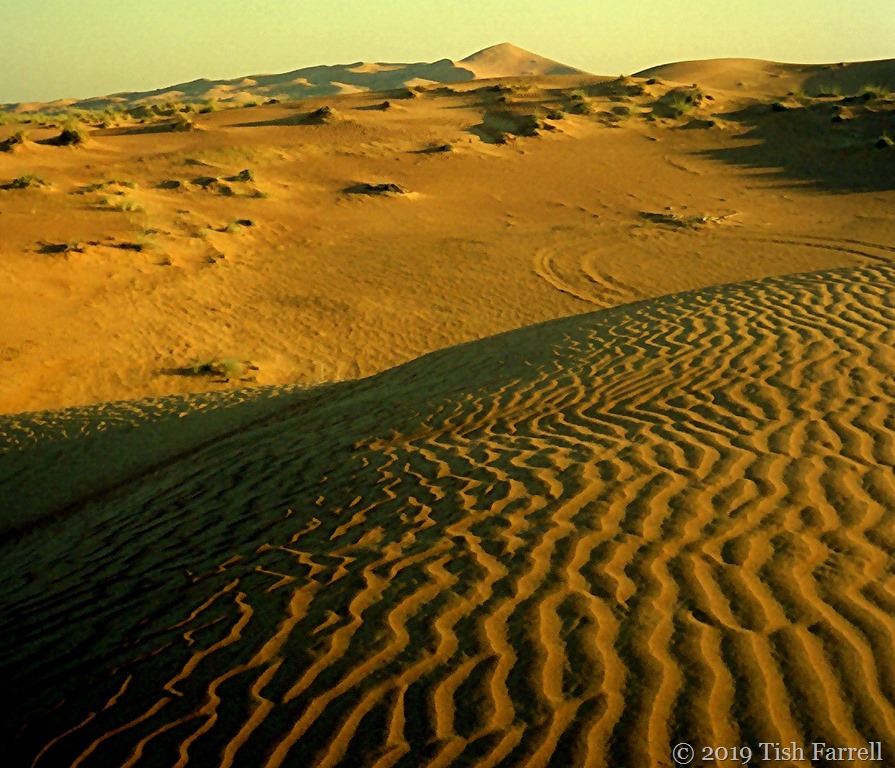
We’ve been suffering serious gales and wetness in the UK, and it’s set to persist, bluster and precipitate for several more days yet. Which has me thinking of dryness and deserts and heat and stillness and no wind. This photo was taken early one morning in the desert outside Dubai. It was around 5 a.m. and I had just given up the battle of trying to sleep in an igloo tent while close by our guide snored loudly in the open back of his 4×4. And when I walked out alone and saw all this, what could I say. Who cares about mangled limbs and a sleepless night? Why would I?
Thursday’s Special This month Paula challenges us to show her any or all of the following: inversion . circuitous . corniculate . sabulous . interstice . I’m definitely claiming the last two in this shot, and also some circuitous tyre tracks. And then there’s inversion – the up and down-ness of the dunes and sand ruts, the light versus shade, the cool of sunless valleys versus sun-warmed peaks. I suppose at a push too, you might say the distant small lumps and bumps are reminiscent of newly erupting horns?
copyright 2019 Tish Farrell
And It’s Not Only A Pelican…
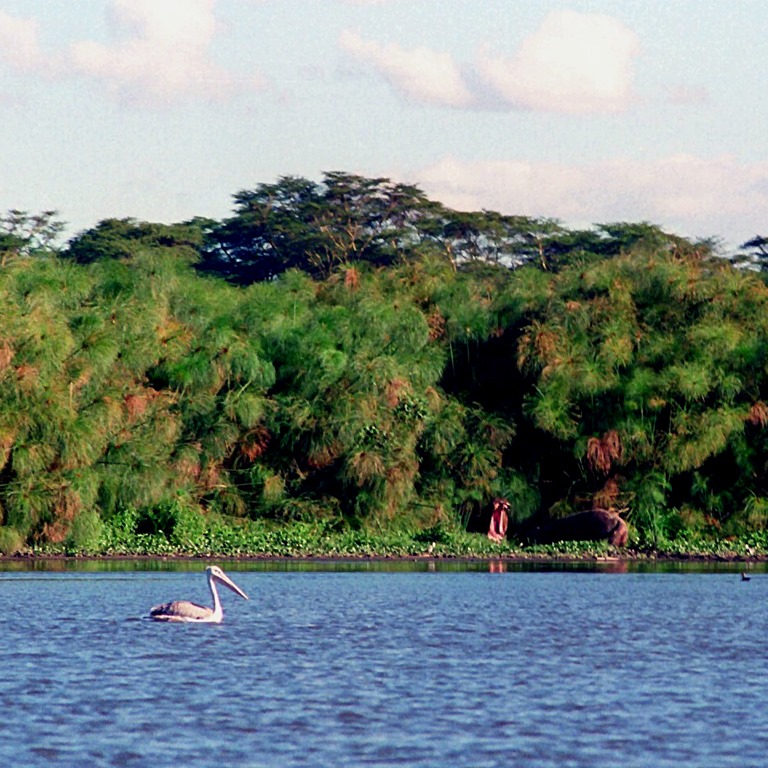
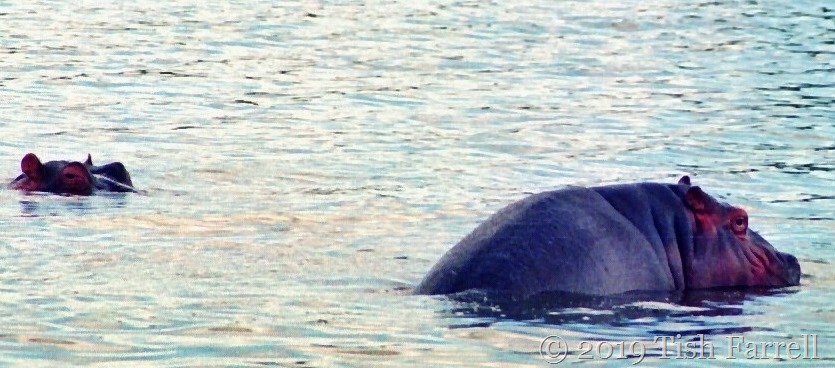
Not the best photo, I know. I cropped it so you can just about see what is going on in the papyrus to the right of the pelican. i.e. the rear end of one of Lake Naivasha’s hippos going ashore and the roaring, open mouth of another hippo who is objecting to the intrusion. Hippos have whopping teeth and tusks, and quite apart from being grouchy with each other, they also kill quite a few humans, especially fishermen. They are at their best when mostly immersed in water, and their surprisingly tender hides well protected from the heat of the sun. But even so, it always pays to be wary.
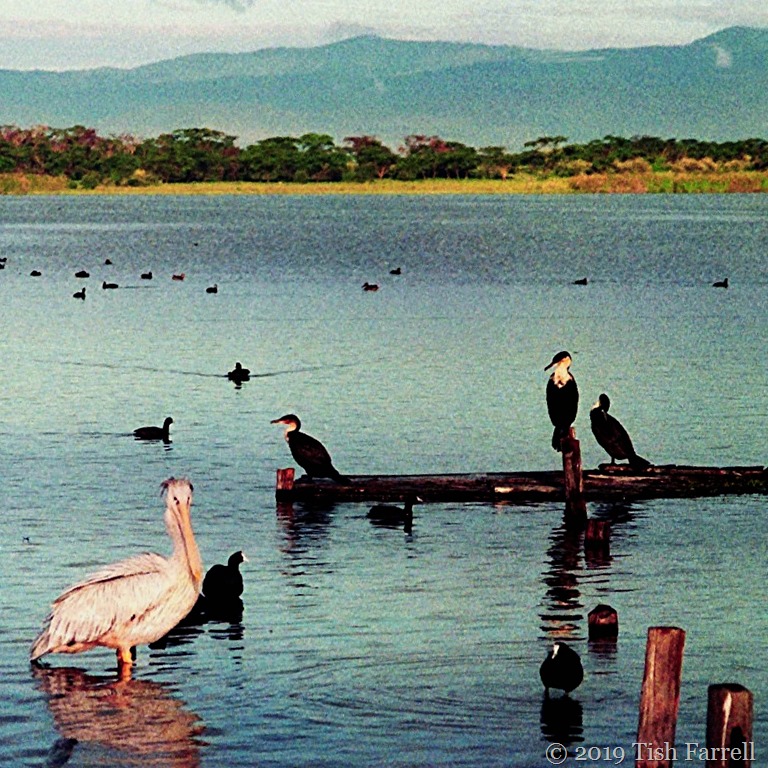
A glimpse of some of Lake Naivasha’s rich bird life (apologies for grainy old ‘out-of-Africa’ shot).
The lake is fed by underground rivers and is Kenya’s only freshwater lake among its Great Rift string of soda lakes. Many of the fresh flowers bought in Europe – roses as well as carnations – are grown in corporate-owned flower factories around the lake shore. Their presence has created jobs and some social services (e.g. company funded primary schools and clinics) for local people, but there are big costs too: too much water abstraction that has shrunk the lake and pesticide and fertilizer run off that have threatened fish stocks. There’s a good little video (7 mins) focusing on these problems and showing more of life around the lake HERE.