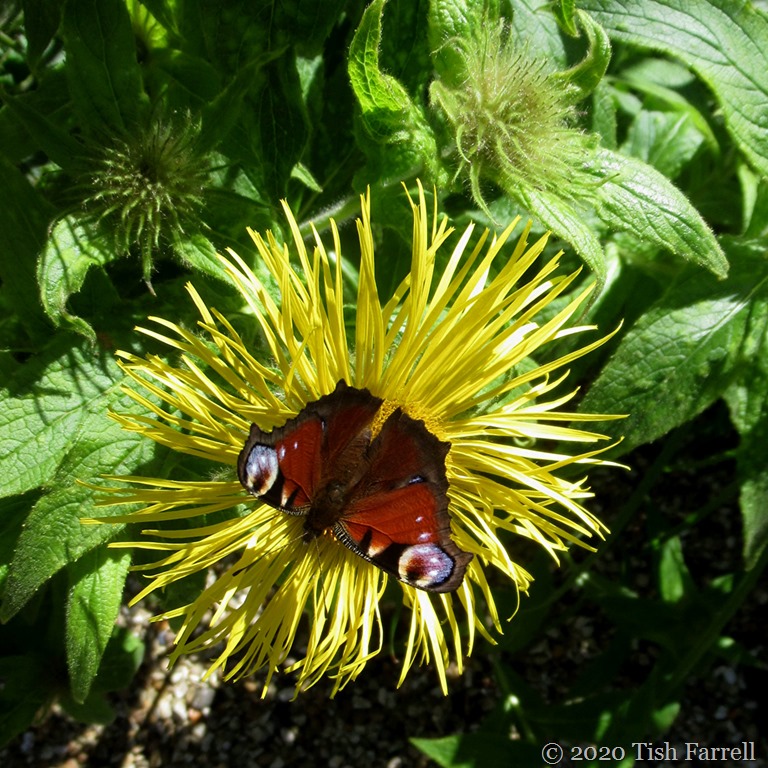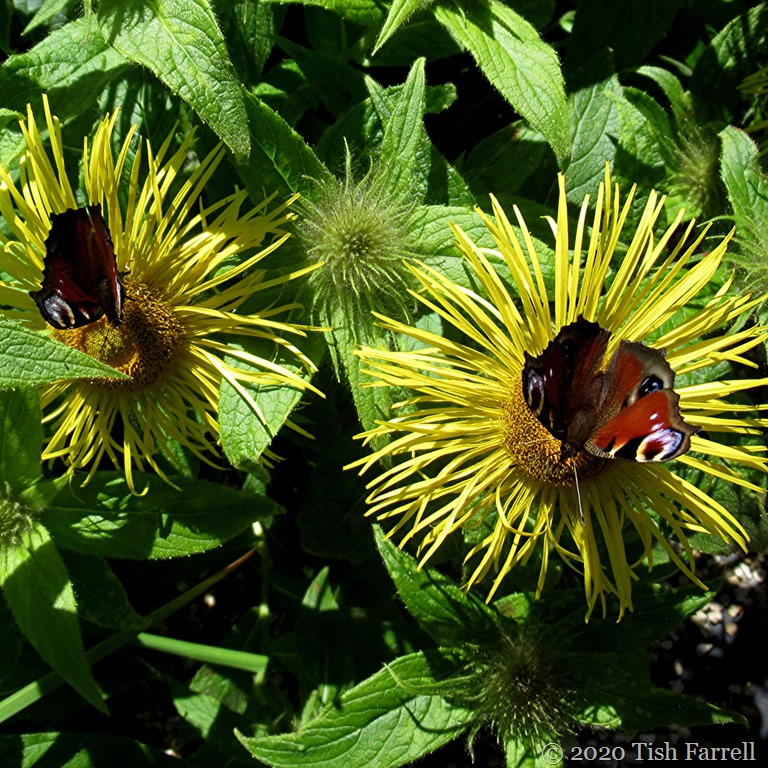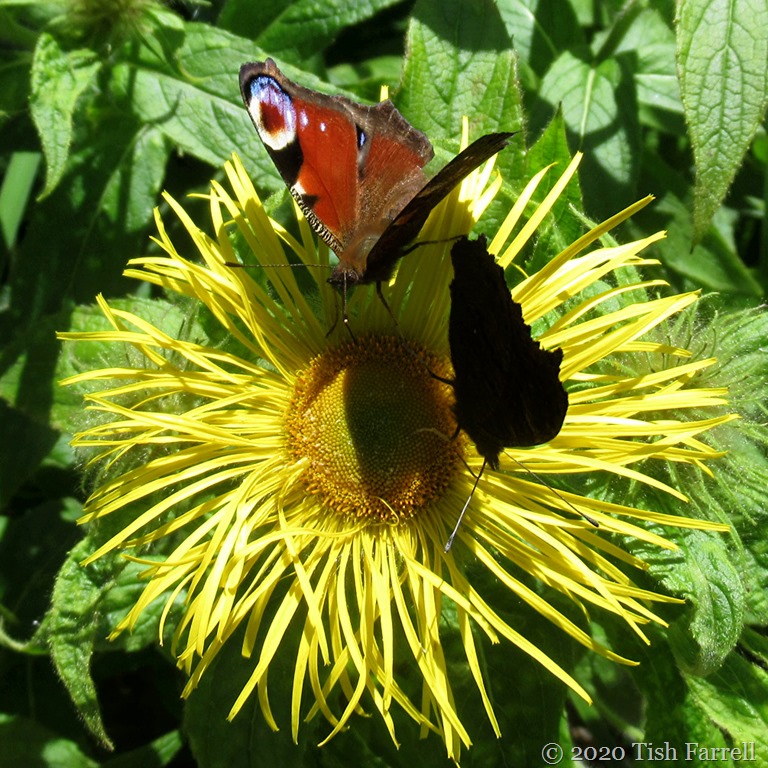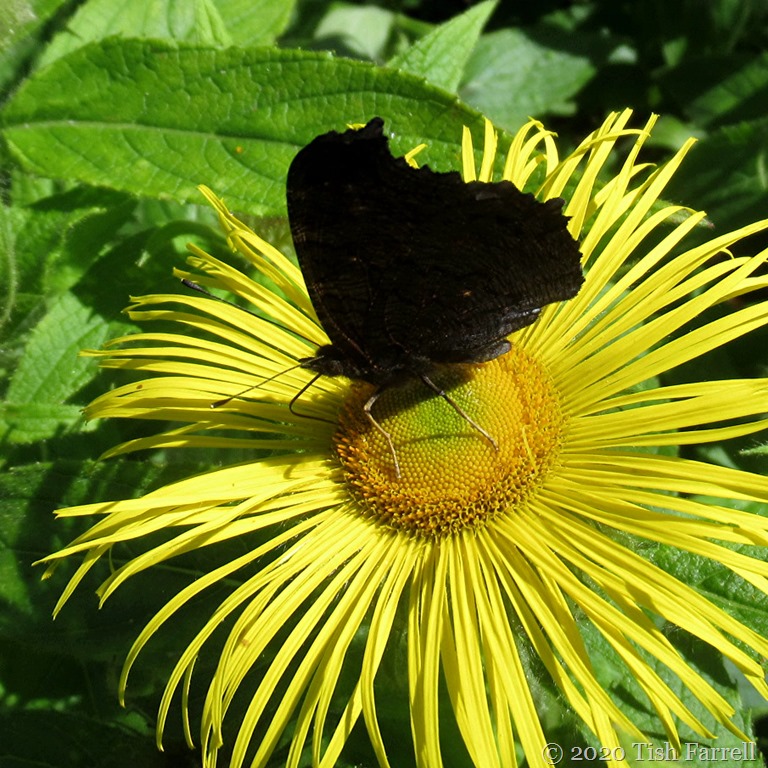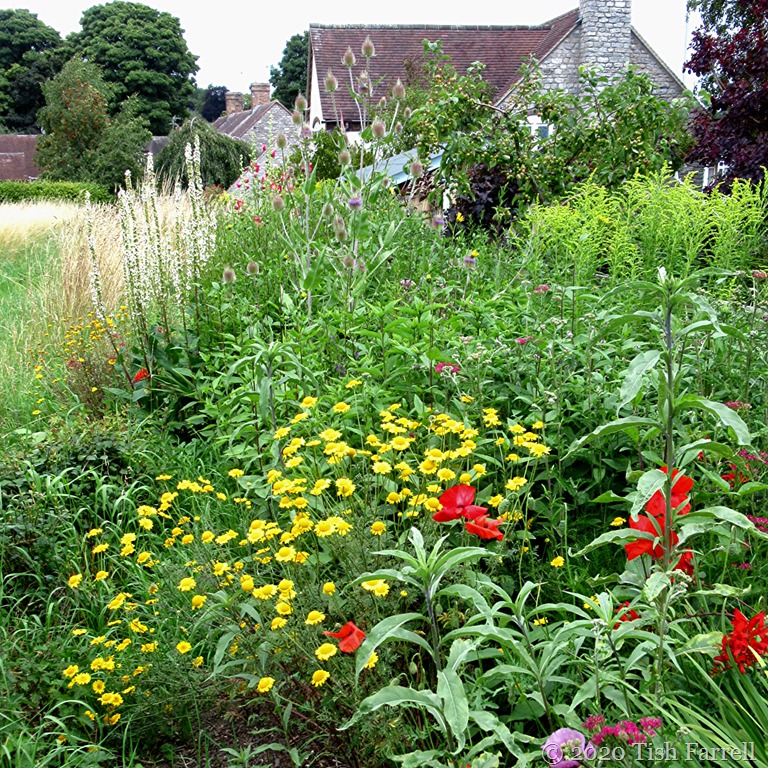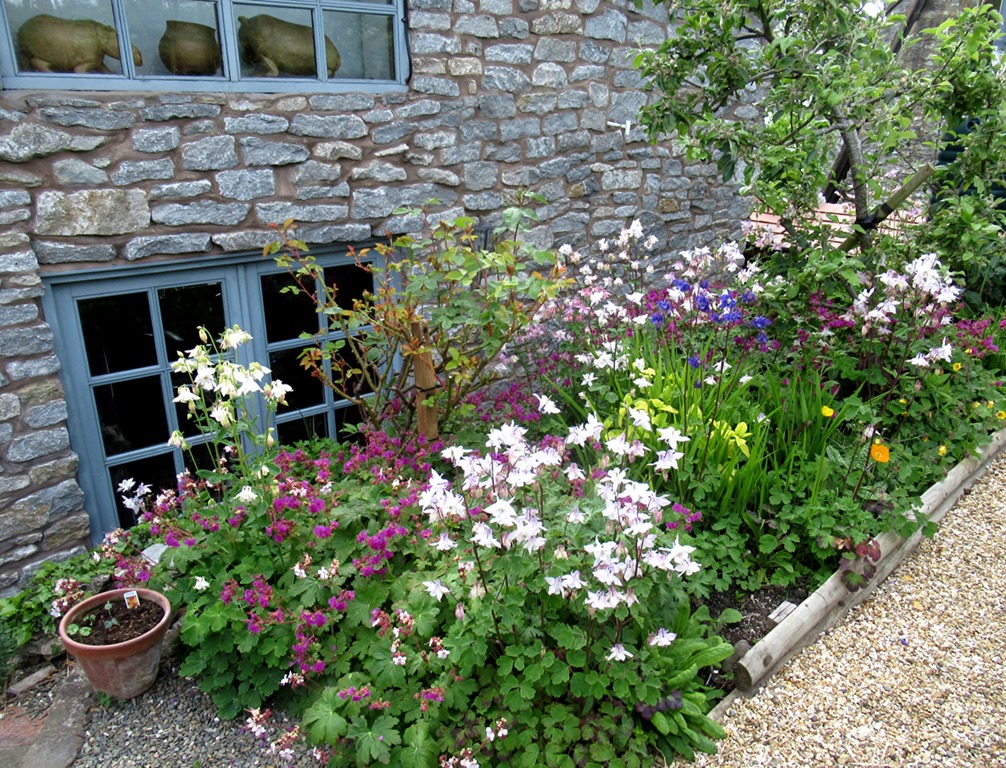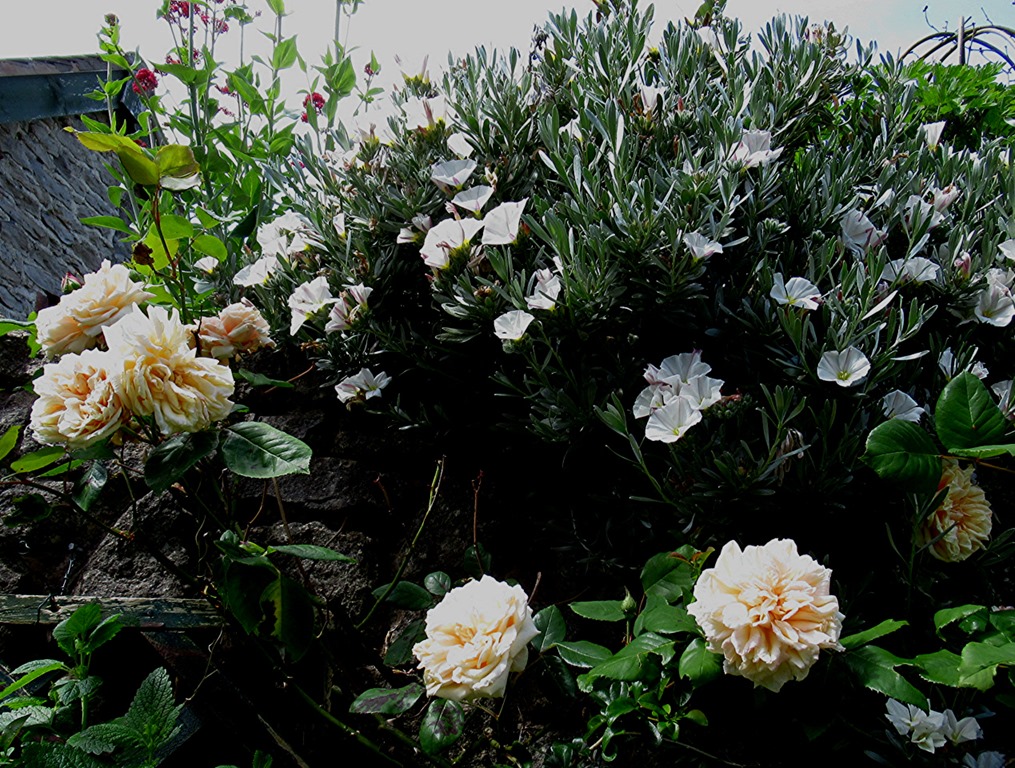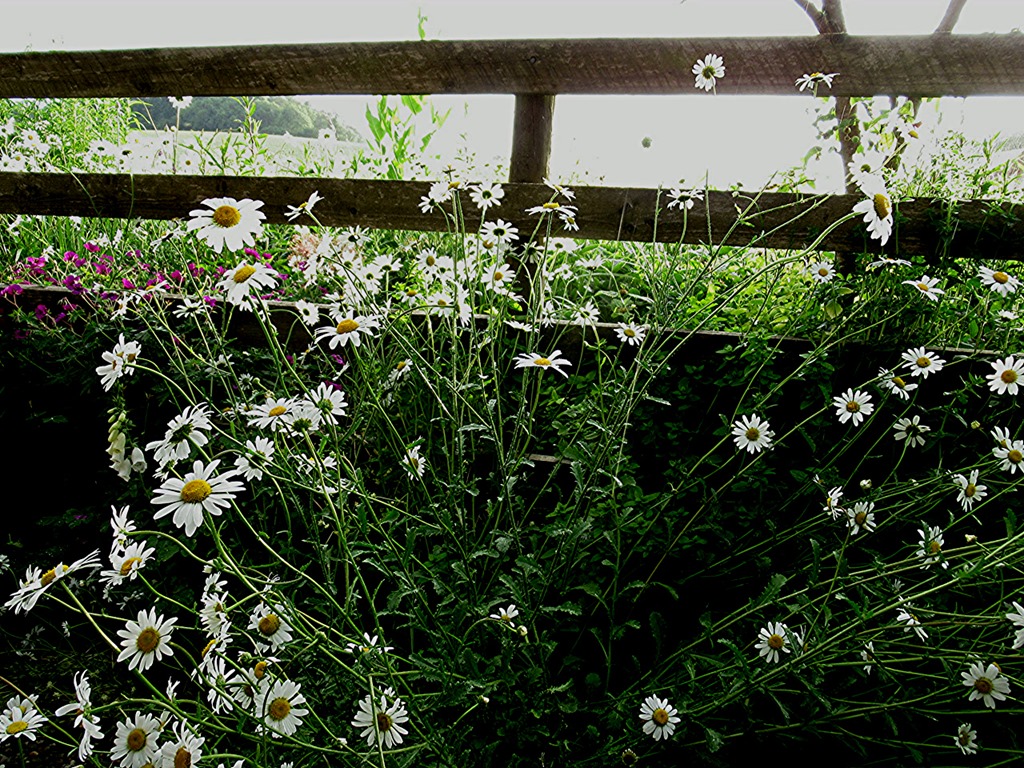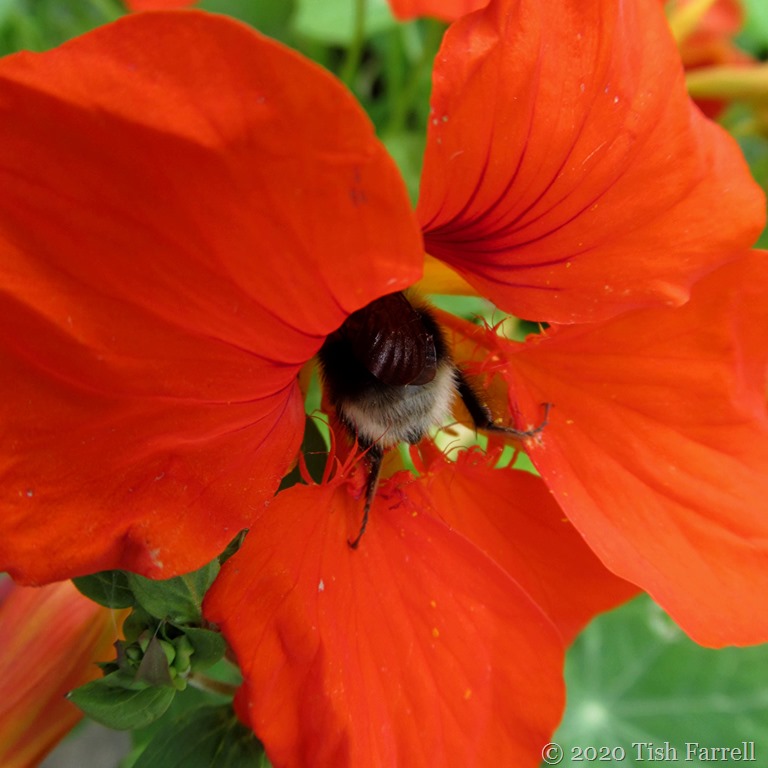
Today in the Sheinton Street garden we have both sunshine and warmth, elements that have been lacking so far this month. And so amongst the Doronicum we also have a profusion of peacock butterflies, sip-sipping like mad at the tiny compound flowerlets. I watch them as I hang out the washing – the survival imperative played out before our very eyes.
Tish Farrell Writer
Hands Up! Who Knows What This Flower Is?
A Novel Perspective?
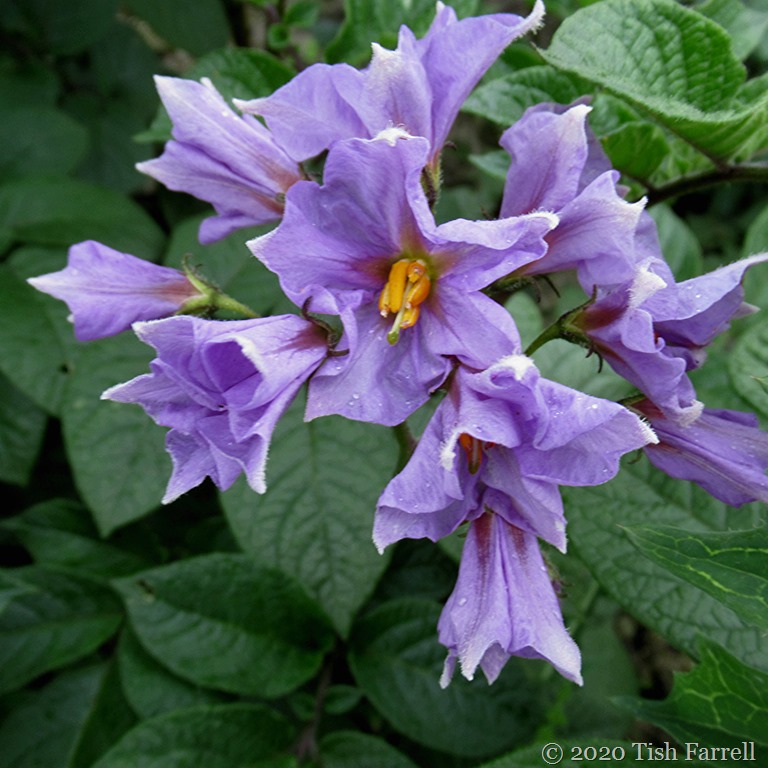
Well it is rather spectacular, isn’t it – for a potato. The variety is Blue Danube and the spuds when I dig them up will be a deep purply-mauvy colour. I’ve not grown them for a few years, but I seem to remember the skins are quite robust (hopefully resistant to slugs) and that inside, the flesh is very white and dry and so they are great for roasting. Which also makes me think they will be just right for the Greek treatment: the addition of water, olive oil (3 parts water to 1 part oil), lots of lemon juice, seasoning and oregano to the roasting tin and a good hour’s cooking.
Usually the potatoes are ready to harvest when the flowers have died down. I’m thinking I might not be able to wait that long.
A Prickly Perspective
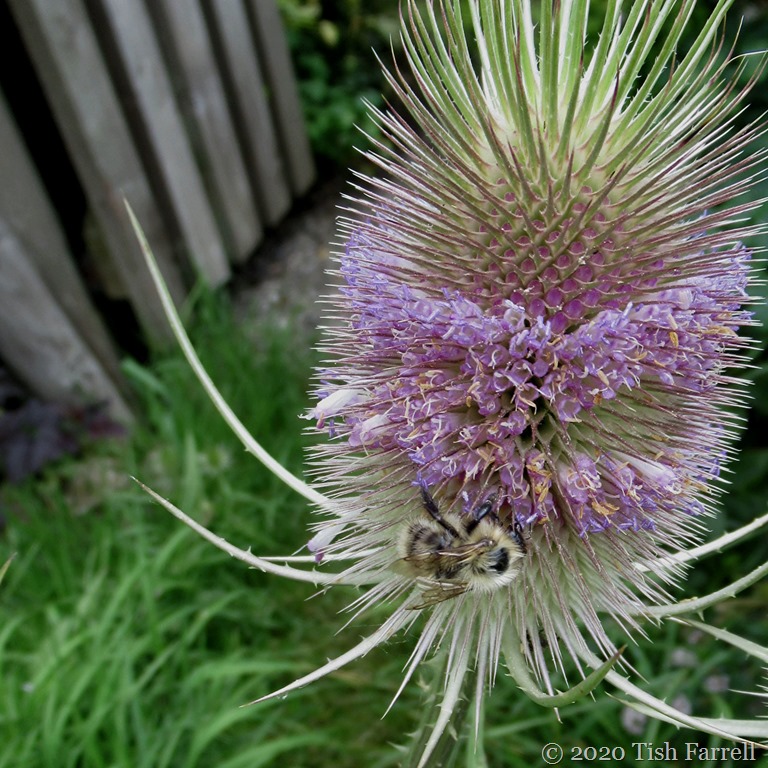
This thistly entity is a teasel flower. It is borne aloft a magnificently statuesque plant most often to be found on waste ground. It seeds promiscuously and every part of the plant is prickly. In past times some of those prickles were put to good use. The dried flower heads were split and pinned to a cruciform structure, called a teasel cross or card (a bit like a table tennis bat) and used in the weaving industry to raise the nap on finished cloth.
There are photos and more information HERE.
I’m sorry I can’t tell you what kind of little bumble bee this is; the ID charts defeated me though my best guess is a carder bee. (Which would be appropriate). I anyway like the way its colour scheme ‘goes’ with the teasel’s ashy tones. I also admired the way it picked its way so gingerly through the spiny elements to reach the nectar in the tiny segmented florets.
This scene was captured over the garden fence in the guerrilla garden, where all is presently thriving. Here is a field-side perspective with the teasel bringing up the rear. I transplanted it as a seedling found on an abandoned allotment plot. I might just regret the introduction, but for now it’s looking rather splendid.
Bringing Up The Rear ~ That Would Be Me
Walled Garden, Attingham Park
*
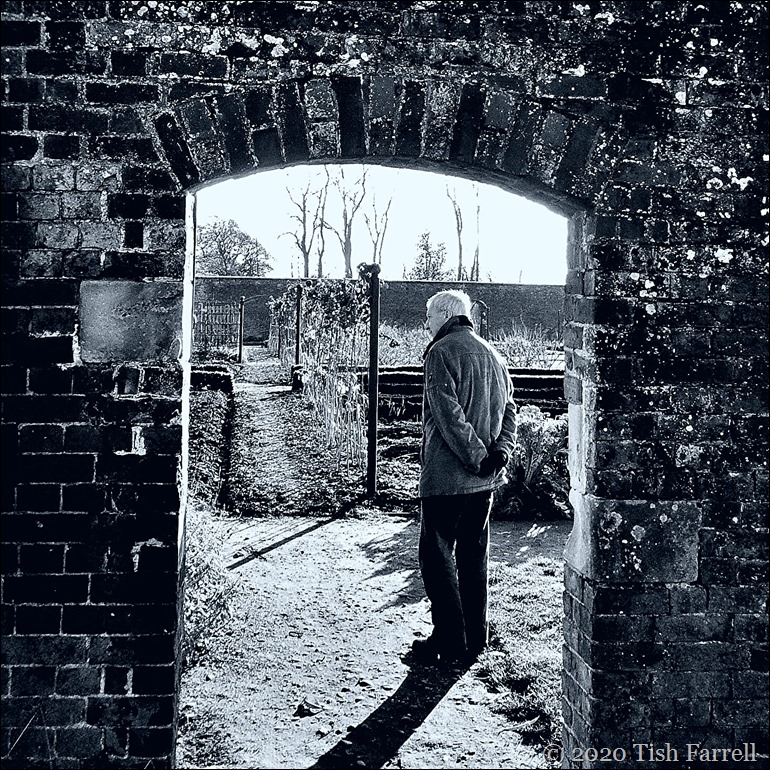
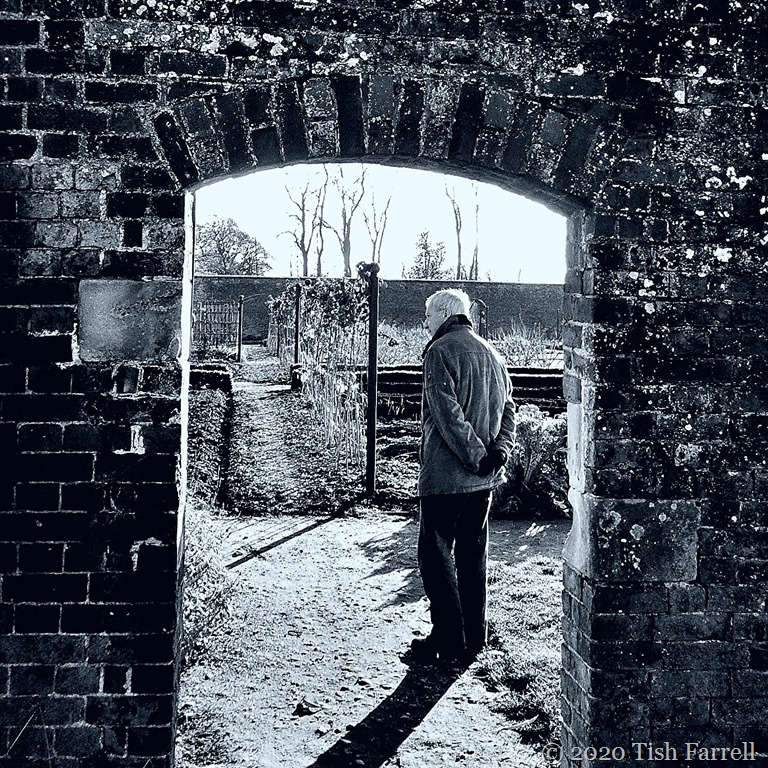
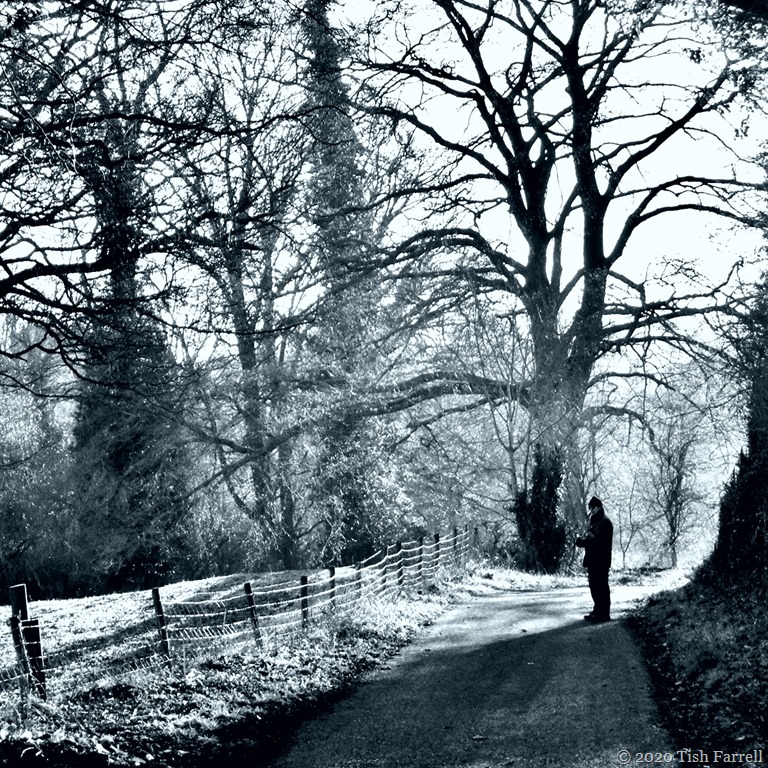
He who lives my house has a habit of walking into my shots so I have quite a file of Graham-from-behind photos. I rather like this one though, mainly because the truncated wintery view of the walled garden probably wouldn’t have added up to much if he hadn’t stopped for a moment’s contemplation.
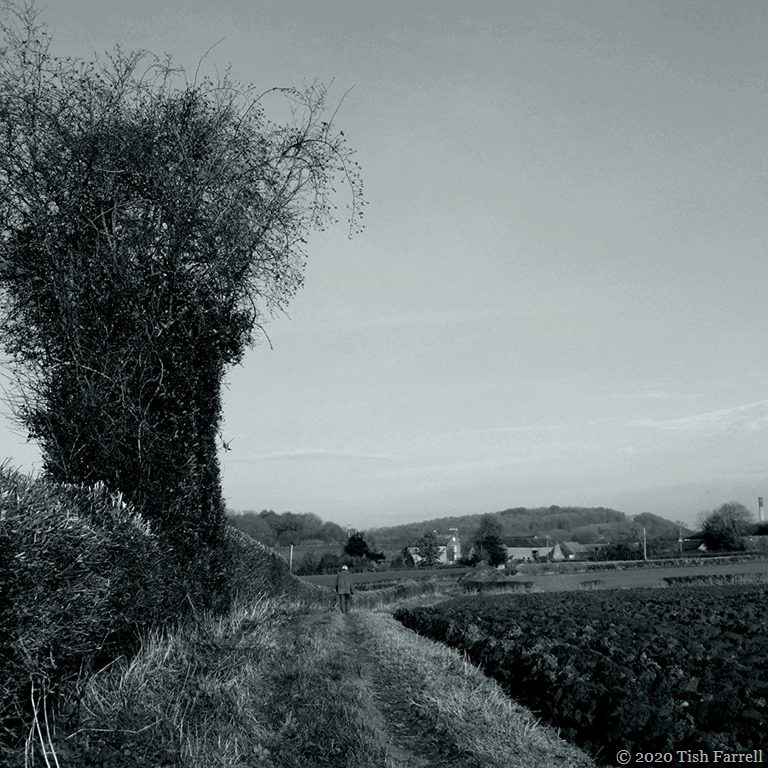
Here are some more ‘back’ views come upon during Farrell expeditions around Much Wenlock:
The path from Wenlock Edge behind the house
*
Field path to Bradley Farm
*
The lane behind Wenlock Priory
*
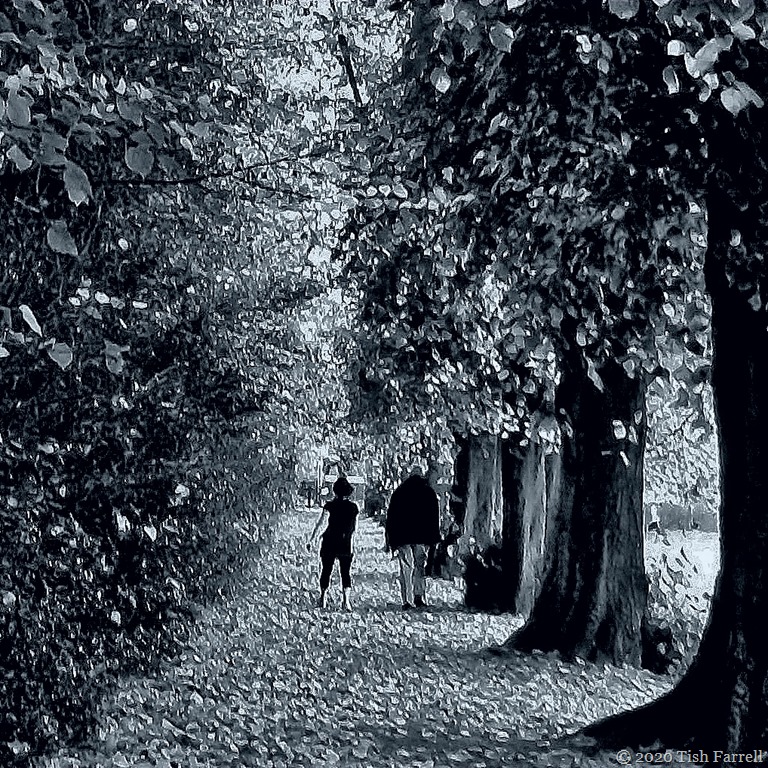
The Linden Walk with passing speed-walker
*
On Wenlock Edge looking towards Ironbridge Power Station
*
A ‘now what’s she doing look’ on the old railway line
*
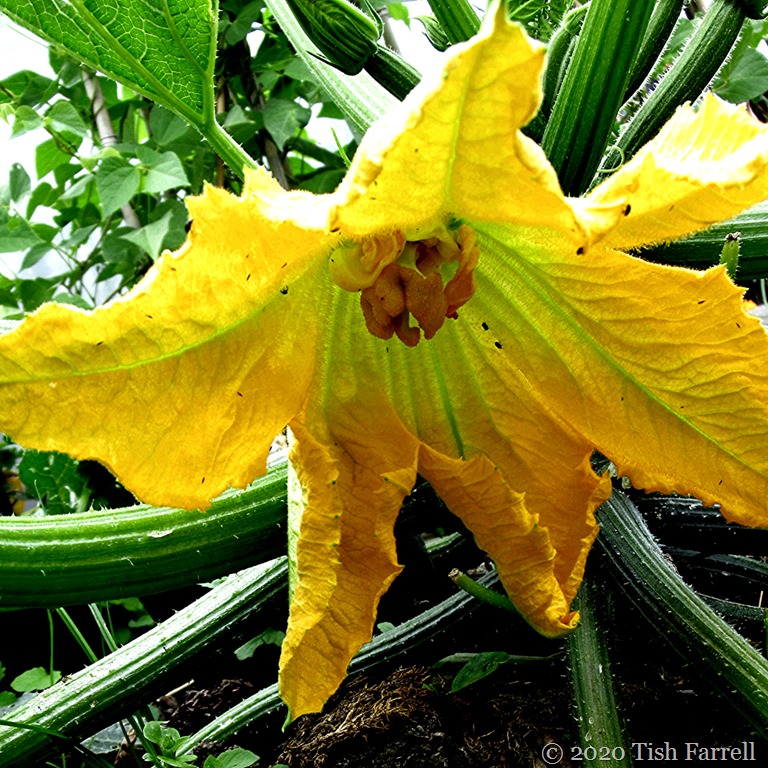
Zucchini ~ The Prequel
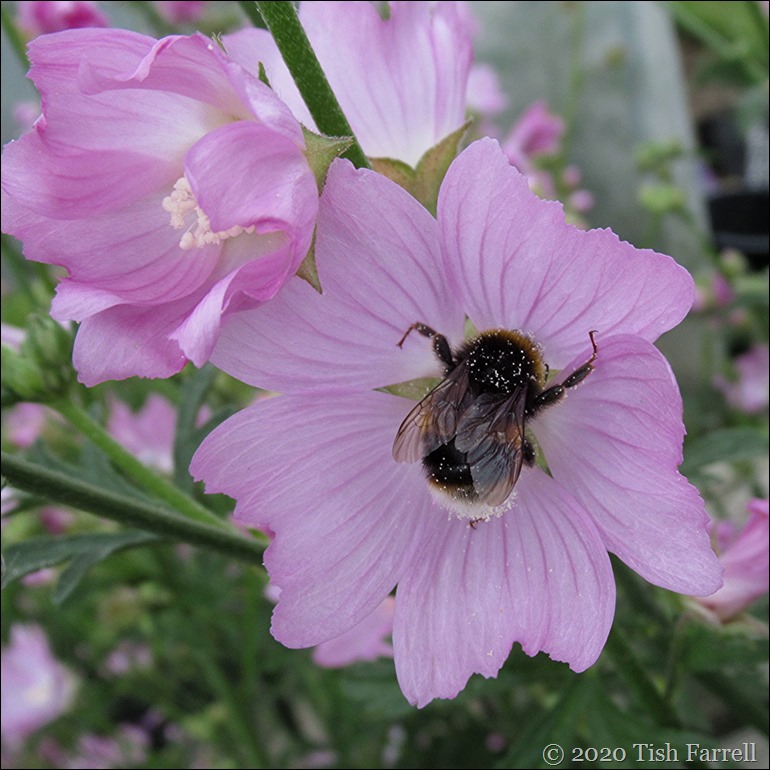
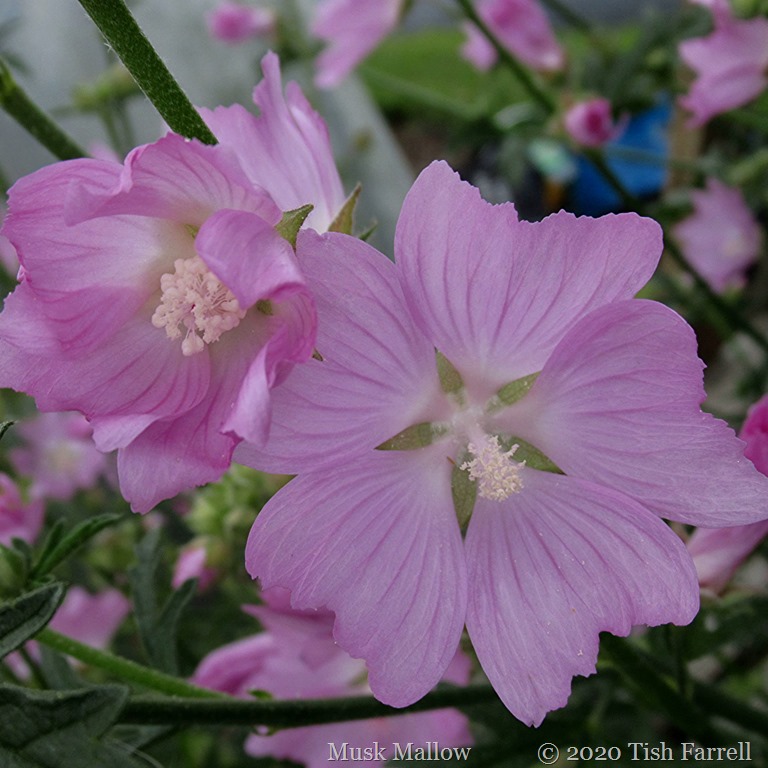
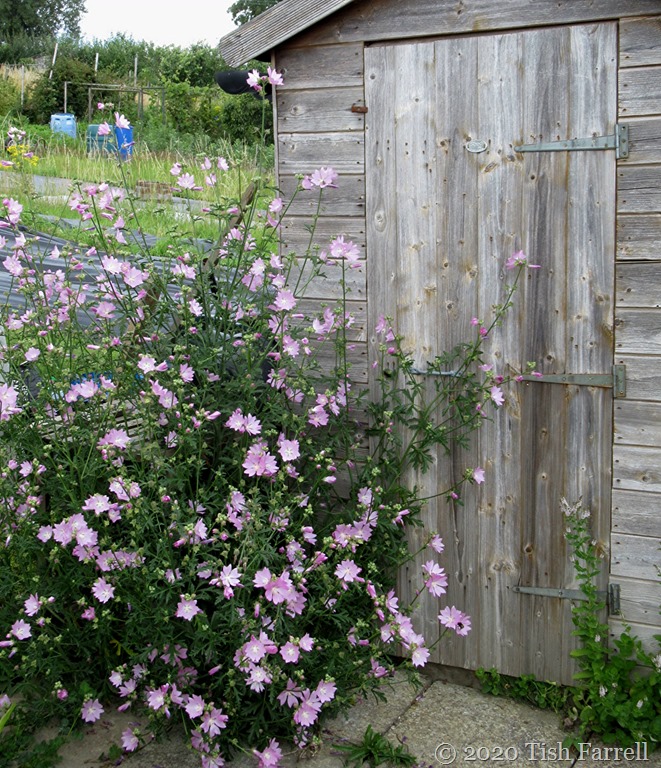
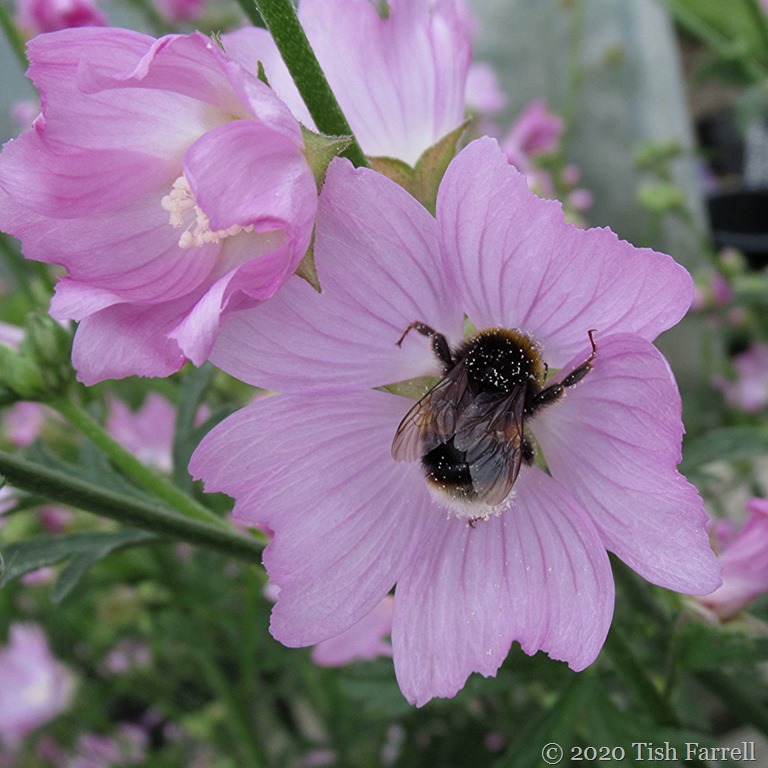
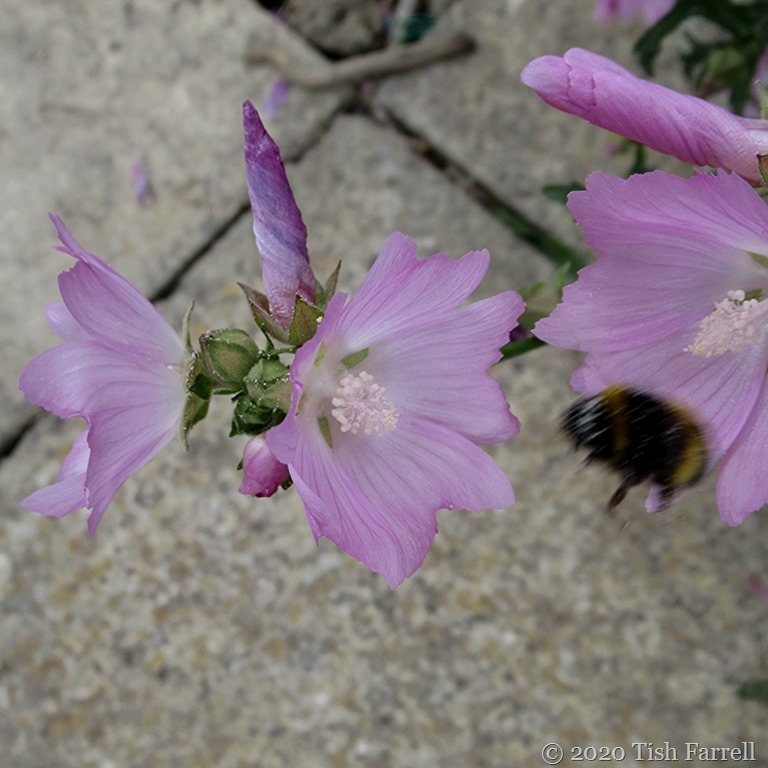
Musk Mallow Monday & Communing With Bees
This morning I took my grumpiness to the allotment in hopes of leaving it there. This plan did not altogether work, though I did have a very lively chat with Phoebe, the allotment’s star maker-and-mender of abandoned plots. At the time she was hauling a grass mower over a rough bank that she’s been busy clearing, and going at it with all the vigour that supposed a new career in all-in wrestling might be appropriate.
She turned off the mower and we talked of how the world used to be, and no longer was. And I said how nice the green chairs were, placed by her under two reclaimed old apple trees; chairs I had donated to the cause last week because I’d inherited them with my polytunnel and never sat on them there, not in four-plus years. They are only plastic, but pleasingly weathered, and now, re-sited, offer new possibilities for sitting in a quiet and shady spot. Phoebe said she’d been eating her sandwiches there.
I told her I was feeling very cross, and had spent a couple of hours simply faffing about. This included scrumping gooseberries on an overgrown plot. I never used to care for them but the fruit on these abandoned bushes is now claret coloured, almost black when fully ripe; sweet enough to eat straight from the stem. I’m thinking of a luscious gooseberry fool or a wine infused jelly.
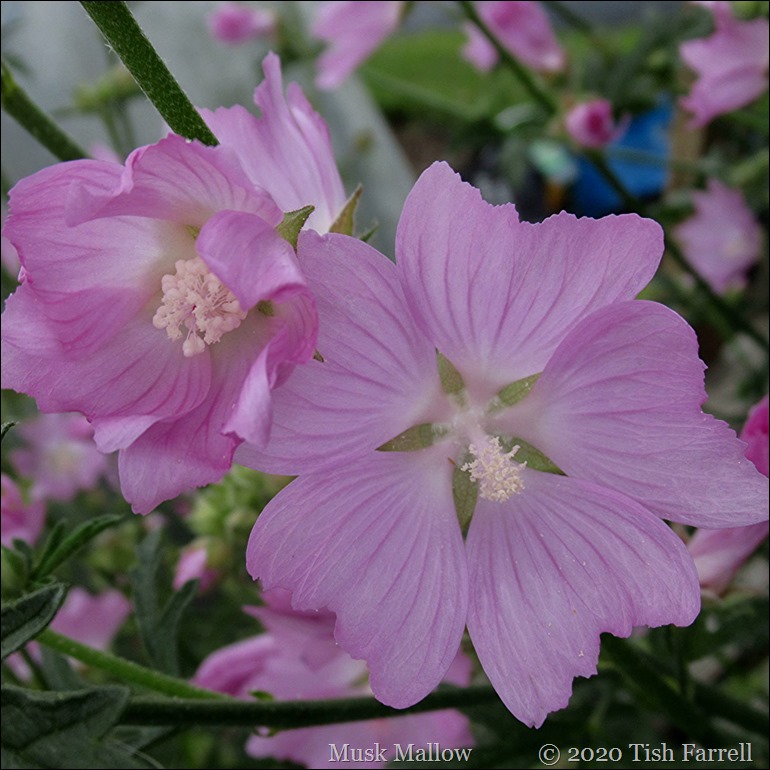
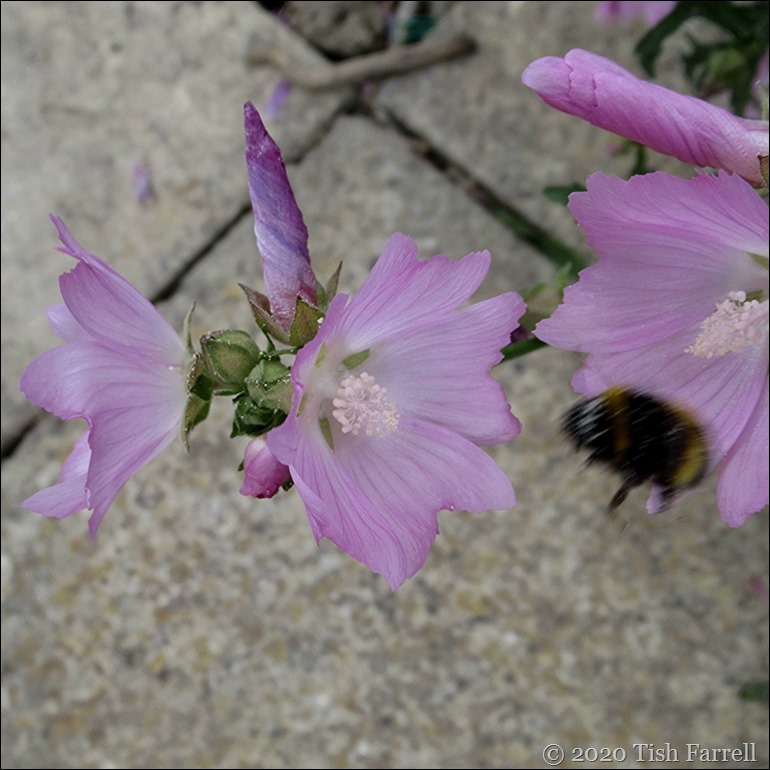
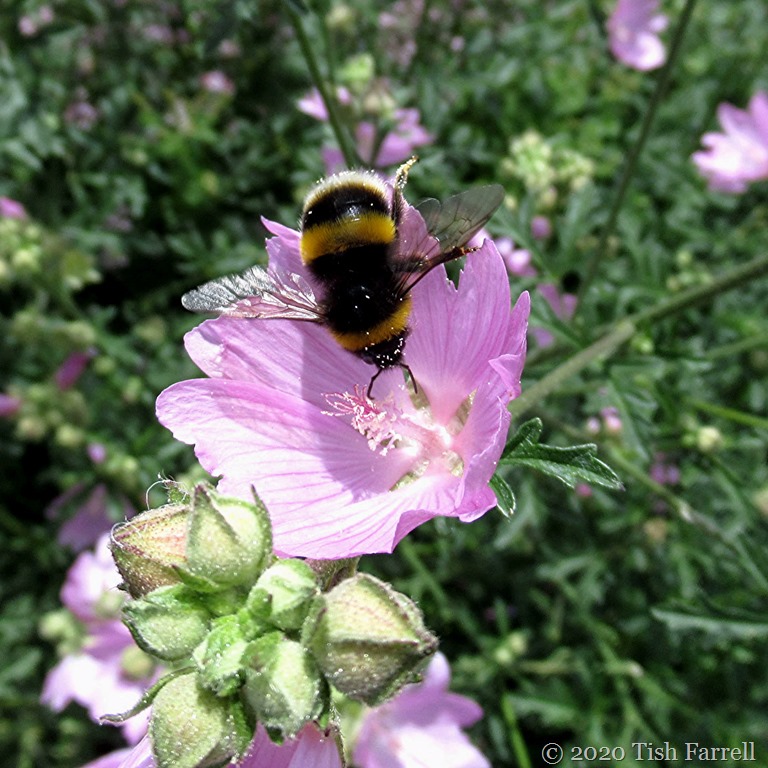
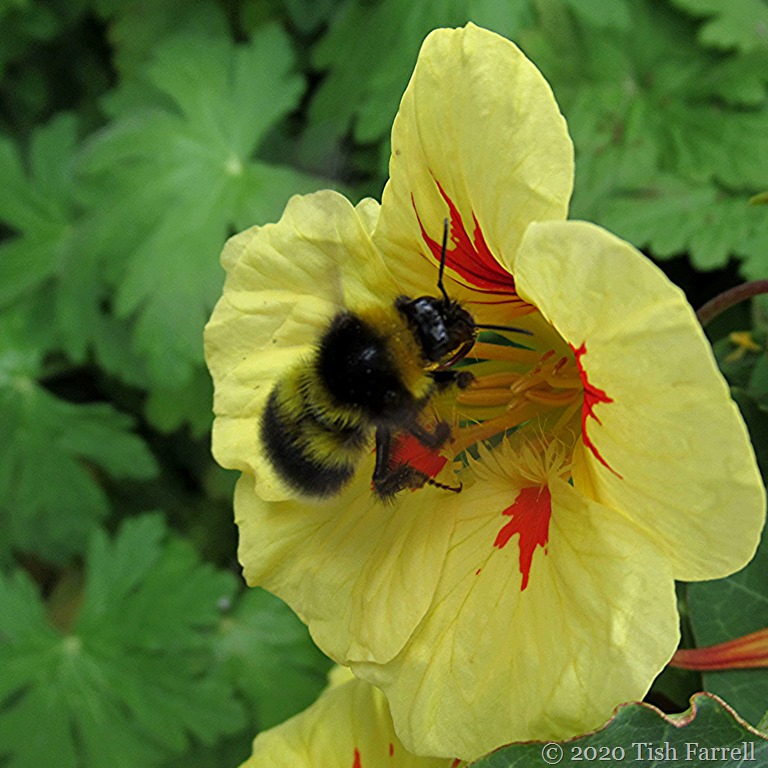
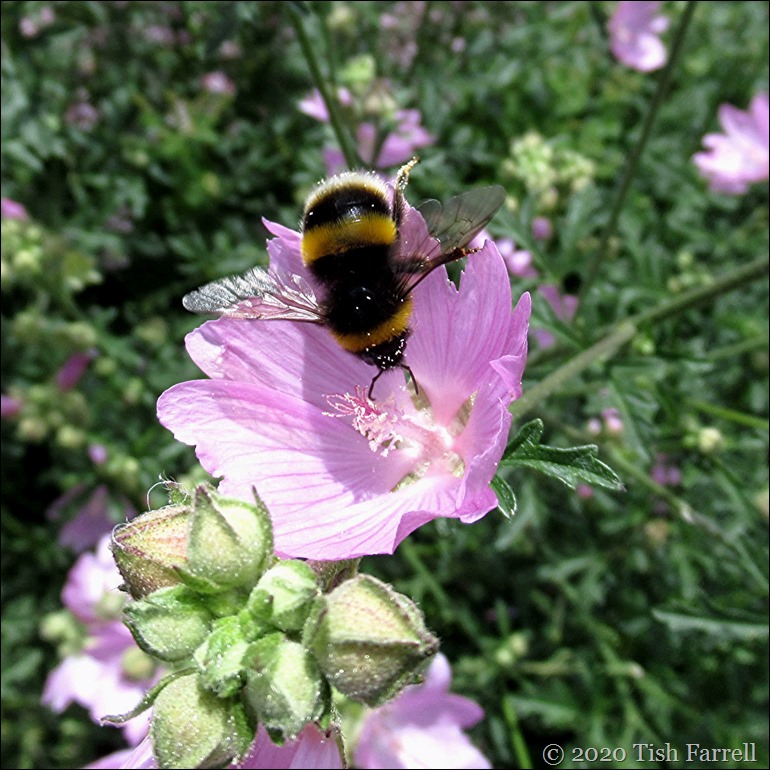
I also spent some time with the bees and butterflies. All annoyances are forgotten while one watches them. It’s akin to meditation. The bumble bees were literally bathing head-to-toe in the pollen of the musk mallow. This is a wild plant that insists on growing in front of my shed door. I’ve cut it down to the roots once, and transplanted a residual shred of it to a less annoying location where it is now also thriving; but the mother plant has come back with a vengeance. And since it’s such a hit with the bees, it had better stay for now.
A focused perspective – making a bee-line
Leading You Up My Garden Path
Our cottage is built into a fieldside bank. The garden is broad (as wide as the house), but not deep. Or rather it is deep since it drops off about 8 feet to the right of the frame. The two old privies back onto Townsend Meadow. There’s a very free-form hedge of many plant species behind the foreground flower bed, and a fenced portion (guerrilla garden on the field side) beyond the privies. The deep red smoke bush behind the brolly marks the boundary with next door, and I’m standing with my back against the bespoke, self-built Graham-Shed to take the photo. Here then is the Farrell domain – small and irregularly formed. An upstairs-downstairs-between-floors-short-on-planning sort of a garden.
Square Perspective #18 A seafood teaser from Becky today.
Six Word Saturday And a fabulous Vatican shot from Debbie.
‘Does My Bum Look Big In This?’
Wild Wild Eating
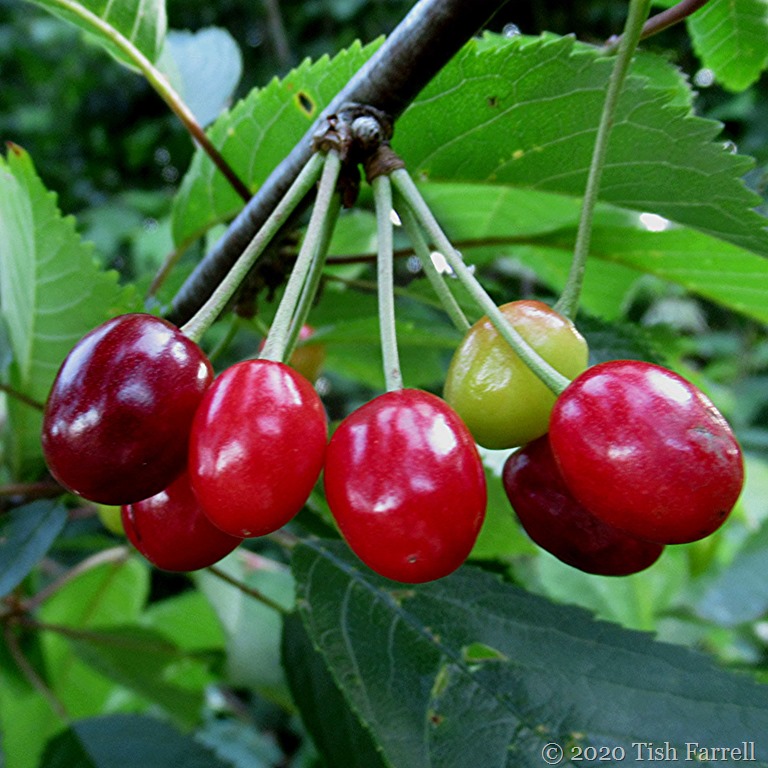
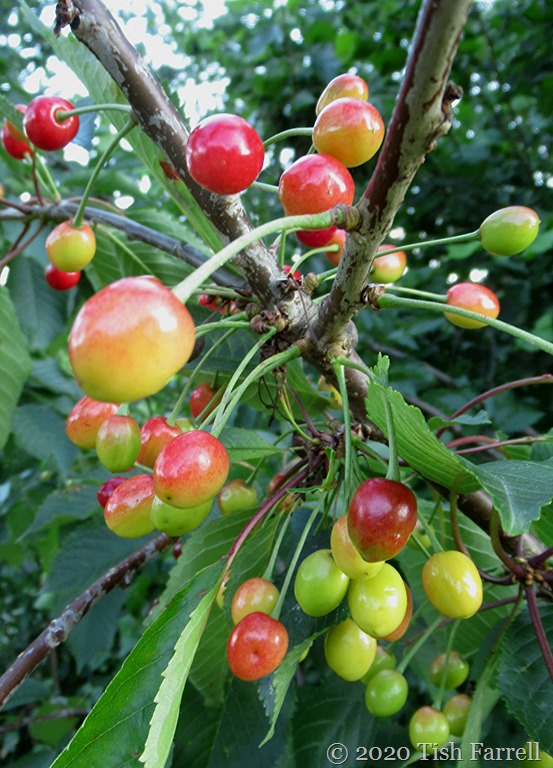
There’s a little ‘copse’ of wild cherry trees (Prunus avium) in one corner of the allotment. Most years I scarcely notice the fruit. The cherries are usually less than half the size of a cultivated cherry, and more stone than flesh. But this summer there has been a magnificent crop, and I’m afraid I’ve been grabbing handfuls as I pass, stuffing them in my mouth, and spitting out the stones willy-nilly. Delicious, but most uncouth, and doubtless my regardless foraging activities will give rise to a whole new forest.
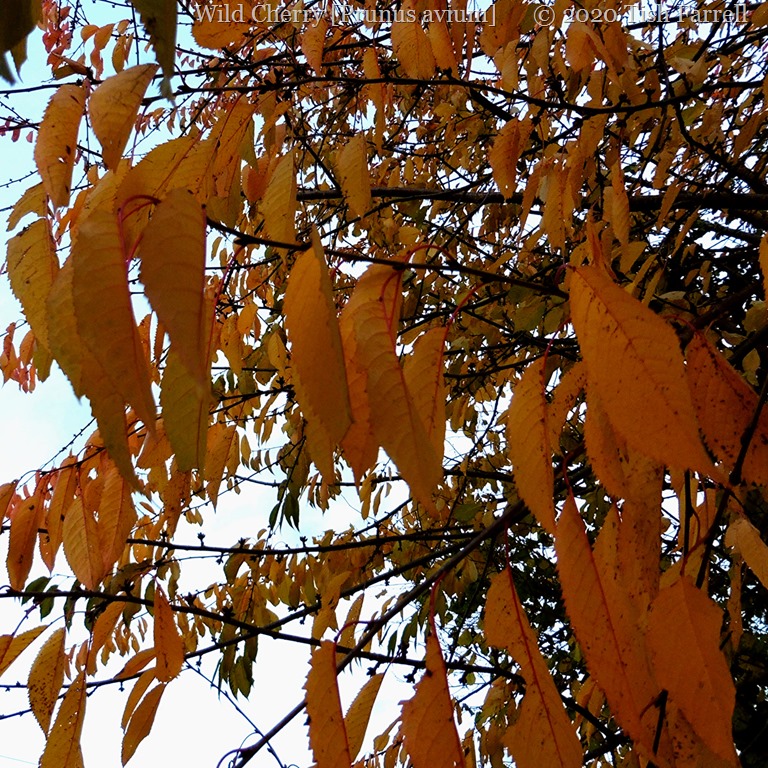
And why not? These native British trees are very beautiful; quite stately in habit and tall with handsome chestnut coloured trunks. Hitherto my dealings with them had been confined to autumn when I go and rake up the leaf fall to make compost. And what a golden harvest it is. The leaves are very lovely; so much so, I often feel they should be edible too. I have yet to try them. In the meantime, the Woodland Trust has more to say about the Wild Cherry.
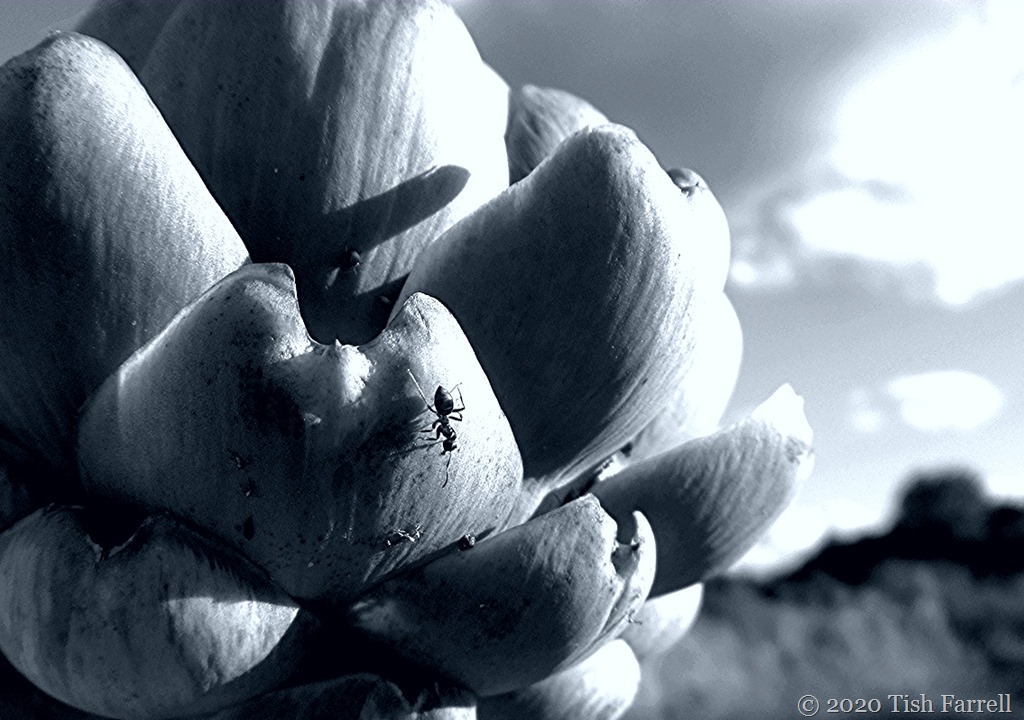
Thought For The Day: Even An Ant May Cast A Shadow
Friday evening at the allotment: the ant and the artichoke.
Please visit Thom at Writing Prompts and Practice for the true story behind this photo:
‘Be strong, be brave, and cast a big shadow.’