Elephants at Dawn

Scan-131109-0004

Scan-131109-0032

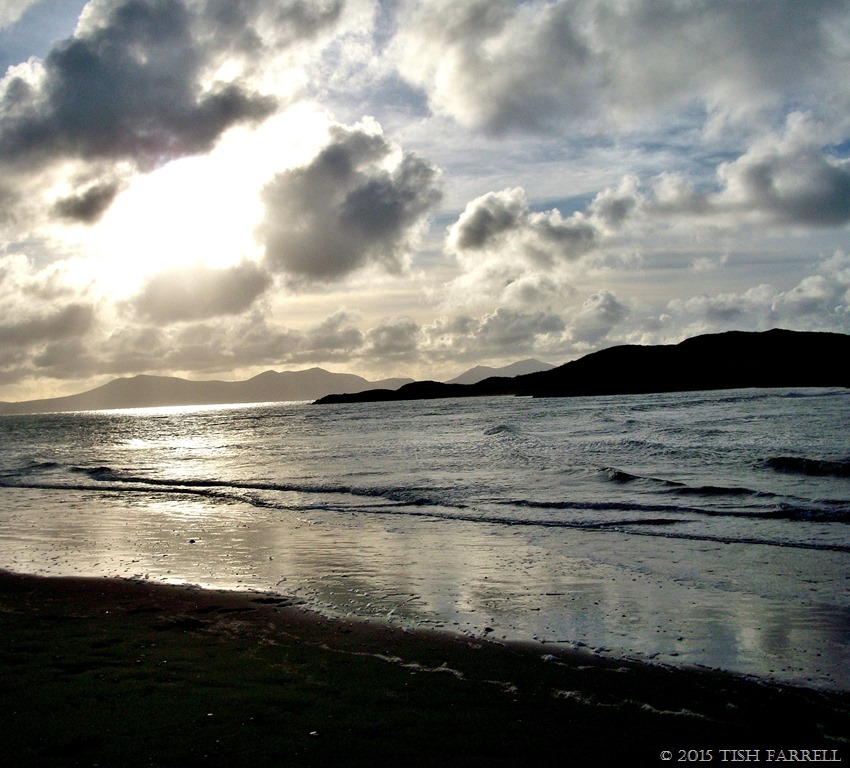
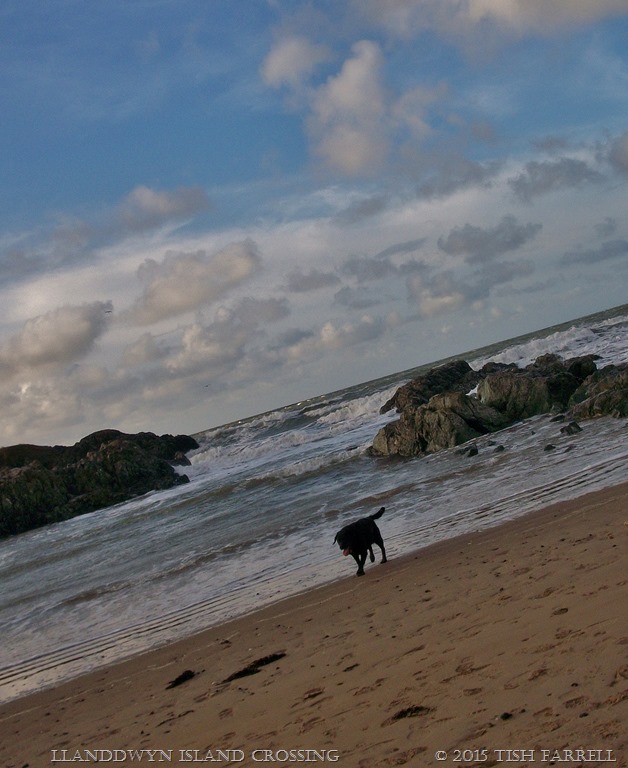
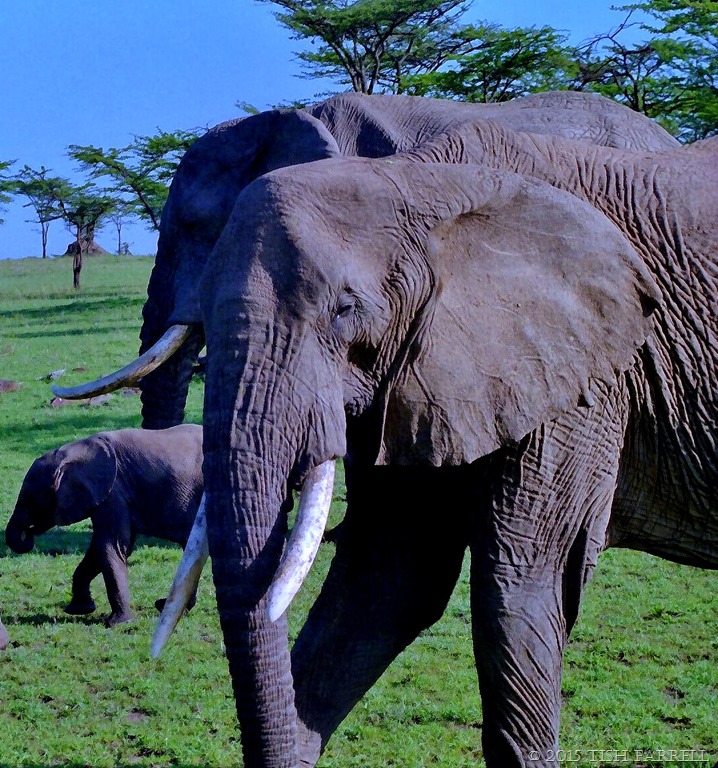
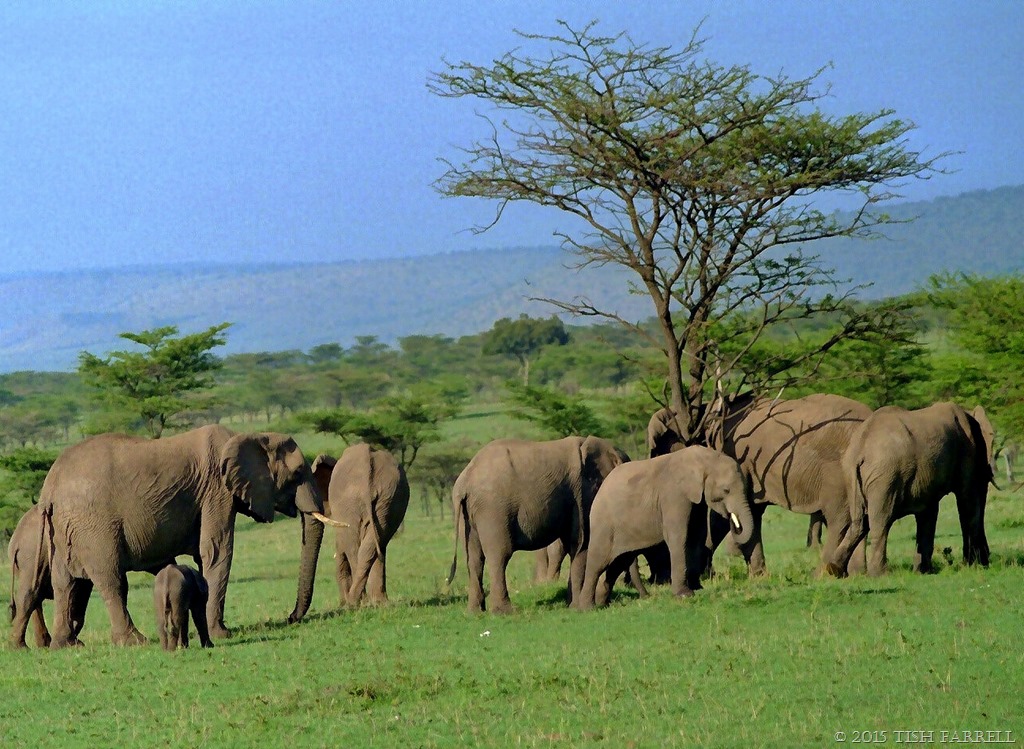
There is nothing more imposingly serene than a large herd of unruffled elephants on the move. We humans, on the other hand, may become thoroughly over-excited by such an encounter. The elephants are not impressed though. They note our existence, weighing us up with scant regard. We are quickly aware of being mentally ‘put in our place’. And as we watch, and watch the herd’s slow and steady progress through the Mara thorn trees, we find ourselves succumbing to the collective elephant will. There is the urge to follow, to step out, placing each foot with quiet intention on the surface of the earth, moving at one within ourselves instead of forever rushing about, seeking fresh excitement. As they disappear from view, we are left with a sense that something has changed. Have we been changed? In any event, it seems there is much to be learned from an early morning meeting with elephants.

Later that day, as dusk is descending, we meet the herd again. They are crossing the trail that leads back to our camp. The guide stops the truck, and we stand up, leaning out of the roof hatches as the herd moves all around us. It is breath-taking. This time they are close enough to touch. We can smell their musky hides. They move around the truck as if it is not there, then fade into the darkness as quiet as ghosts.

© 2015 Tish Farrell

Daily Post Weekly Photo Challenge: Serenity


*


image

Secrets, conspiracies, tragedy,

dark comedy – a fast-paced

novella of interwoven tales set

somewhere in East Africa

Available on ePud Bud 

5* Amazon Kindle Review


Serenity

The People of the Birch Bark House

101_0161

101_0162

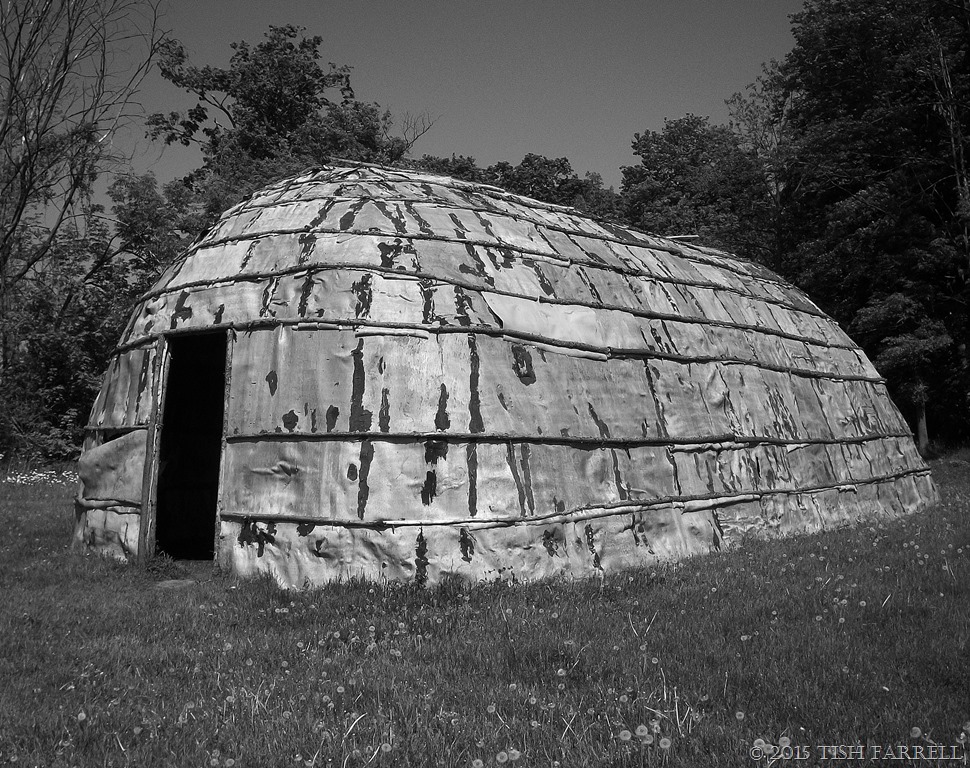
We came upon this reconstructed Iroquois longhouse when visiting the Museum of Ontario Archaeology in London, Ontario. It stands next door to the museum, on the Lawson site, where the remains of a 500-year-old fortified Neutral Iroquois village were discovered in the 1920s. Since then over 30,000 artefacts have been recovered, along with traces of 19 long houses and a long section of palisade. It is thought that around 2,000 people once inhabited the five acre site.

The village sits up on a flat plateau above Medway River and Snake Creek in northwest London, a good defensible position with access to fresh water and fishing. From the late 1400s there seems to have been an increase in inter-tribal conflict, made worse later by the arrival of Europeans, who among other things, sought to control the fur trade. Around the 1650s the Neutral Iroquois were defeated and dispersed by the New York State Iroquois, leaving south western Ontario empty until the early 1700s when the Ojibway moved into the area.

The Iroquois called and call themselves Haudensaunee. (See the Haudensaunee Confederacy website for more about their culture). I read that this name translates as: ‘People of the longhouse’. It is a fitting name for a culture whose architecture so clearly defines their communal ethos.  Traditionally, longhouses were as long as there were extended family groups to occupy them – between 60 and 300 feet. The frame was made of bent saplings with a span around twenty feet wide and high. On either side the door, platforms ran the length of the house, with one family to every section. Every two families facing one another across the corridor shared one of many central hearths. The Lawson example, though, is apparently more typical of longhouses found in northern Ontario since it uses a covering of birch bark rather than elm that was used in the south west.

It was strange, but the Lawson longhouse felt very lonely. Perhaps it was because there was only one house on a site where there should have been several. Inside, too, there was a curious sense of abandonment, and this seemed odd for a reconstructed exhibit. There was no one else around on the day we visited, just the spring breezes in the surrounding scrubby woods. Even now, several years on, I can still feel the great sense of sadness that I experienced as I walked around the site. I had earlier been told at London’s Fanshawe Pioneer Village that before the European settlers arrived, south west Ontario was a land of monumental trees, and as soon as I heard this I began to regret their loss. It was also a land of peoples whose values and customs were often greatly misrepresented and wilfully eradicated by the newcomers. I felt the loss of them too, and also the sense that we had missed something very important by not understanding better how the ‘first people’ lived in the once majestic landscape, that is now so very cleared and broken in, and in many places, downright ugly with viral shopping malls, diners and freeways.

© 2015 Tish Farrell

Cee’s Black & White Photo Challenge: Wood

Thursday’s Special: Multicoloured

IMG_0391

This batch of colanders made smile. They were spotted in a cook shop window in Portsmouth, Massachusetts, where we had stopped en route for Boston.  I was entranced. Like a child eyeing shiny new building blocks, I wanted them all. What was the point of buying only one colander when they looked so good in a crowd? And which would I choose – the red, or the mauve, or the sky blue, or…? My companions walked off without me. Lunch was calling. So in the end I simply snapped them, and now they seem just right for Paula’s Multicoloured prompt at Thursday’s Special.

Still Life: Winter’s Harvest

P1000276

I confess I’ve been bogged down in the post-viral doldrums for the past two weeks – feeling very sorry for myself. This is definitely a bad place for anyone to be. I did not want to do ANYTHING. And everything I attempted to do I judged hopeless, and pointless, and badly executed. My writing came in for a very large amount of stick, which gross assault was especially demoralizing and depressing.

But wallowing in bouts of self-castigation has to have some limits. In fact wilful incapacity finally led to something distinctly nourishing and wonderful. I lay down all day for several days and read Emily Brontë’s Wuthering Heights, followed by Charlotte Brontë’s Jane Eyre. I let myself be psychically transported, and I cannot say how grateful I am to the spirits of those two fine women writers. They knew how to create unforgettable characters. They knew how to conjure an under-your-skin sense of place. And the tales they told, although very much of their time, also possess many timeless qualities, as well as addressing themes (the position of women, for instance) that are still very much with us today.

So this is my first winter’s harvest – a darn good read. In fact I finished Jane Eyre late last night. When I woke this morning the dark mood that had weighed me down for a fortnight had miraculously lifted. On the skylight above the bed were large snow flakes frosted on the pane, a blue sky and everywhere lit up by an other-worldly, early morning sun. My inner eyes were open again too. Finally I could see how lucky I was. The mild depression I had been feeling was absolutely nothing compared with the perpetual darkness that so many have to contend with.

When I got up I found that it had not snowed much – just enough to cover the field behind the house in a thin white dusting. By the time I set off across it, the thaw had already set in, but it was good to be walking out in a white world. I realised, too, it was high time to venture out in pursuit of another kind of harvest. What had been going on at the allotment during my absence?

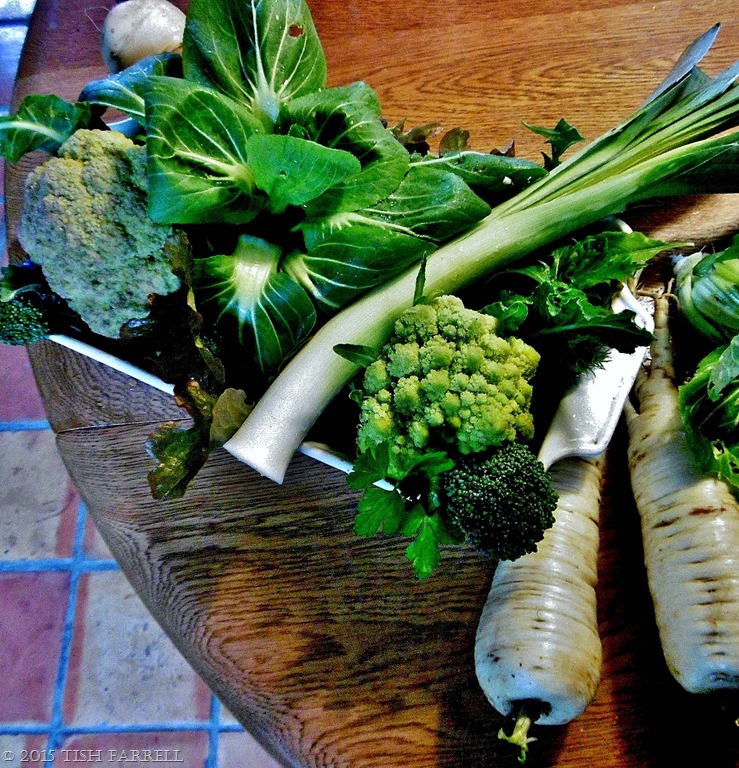
As you can see, the answer is: quite a lot. I’m amazed how much there was still to pick in the middle of winter: broccoli, purple and romanesco cauliflowers, leeks and parsnips. The brassicas are growing under enviromesh, and seem lush and healthy. In the polytunnel frilly lettuce, rocket, mizuna, bok choy and two kinds of parsley are quietly growing under fleece. Elsewhere on the plot the overwintering onions look well sprouted, and the field beans (mini broad beans) have germinated quite strongly. There will be crops of purple sprouting broccoli in the early spring, and the Swiss chard is still hanging on in sheltered corners. In fact all seems to be thriving on the additions of Biochar organic fertilizer that I added to every vegetable’s planting hole last year. It is supposed to be magic stuff – a form of charcoal that not only improves soil and feeds plants, but also possibly helps to reduce the effects of carbon emission by means of carbon sequestration.

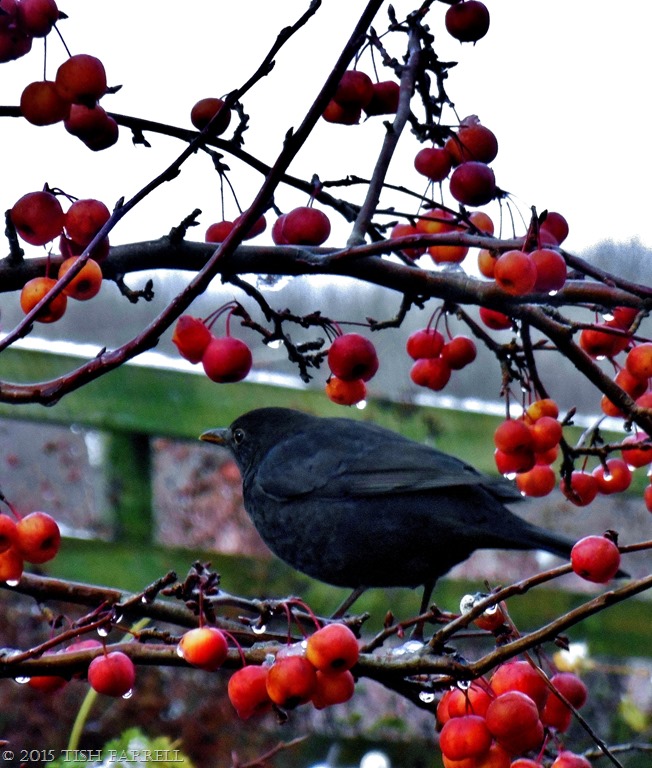
And so, finally, to all of you who might be suffering the January blues, here is my third harvest: the blackbird caught this afternoon on my frosty crab apples. May this image transform any darkling tendencies, and the colours kindle sparks of elemental joy. There is life still…

P1000283

© 2015 Tish Farrell

Losing Kui -Final[1]

ON AMAZON AND ePUB BUD

Secrets, conspiracies, tragedy,

dark comedy – a fast-paced

novella of interwoven tales set

somewhere in East Africa

To the Isle of Dwynwen, Welsh Saint of Lovers

100_7117

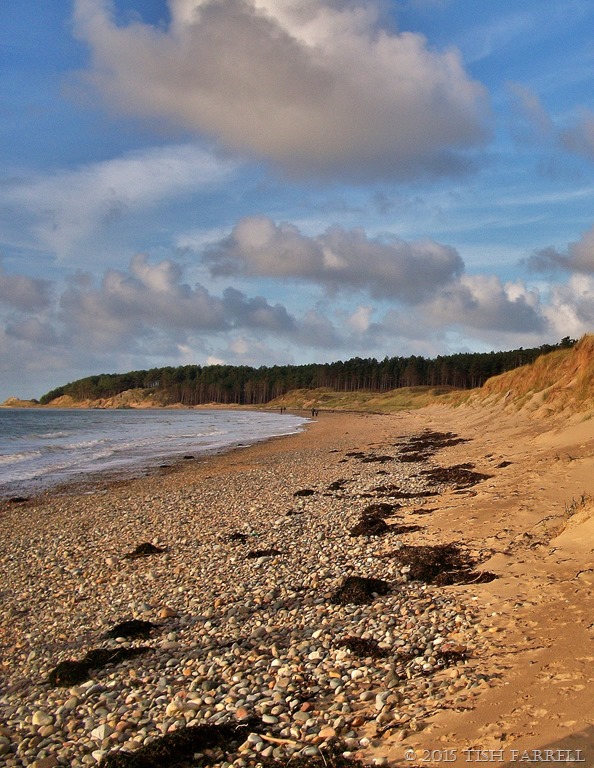
Christmas morning and we find ourselves in a general pilgrimage of families and dogs. We have all had the same idea: to trek along Anglesey’s Newborough Beach to Ynys Llanddwyn, the island sanctuary of Dwynwen, Welsh patron saint of lovers.

100_7140

As you can see, the day was brilliant, but down on the shore the wind was bitingly cold. It was a challenge to take photos, but taken they must be. For one thing, the views across the Menai Strait to the mainland’s Llŷn Peninsula were mesmerizing, and had to be captured.

100_7187

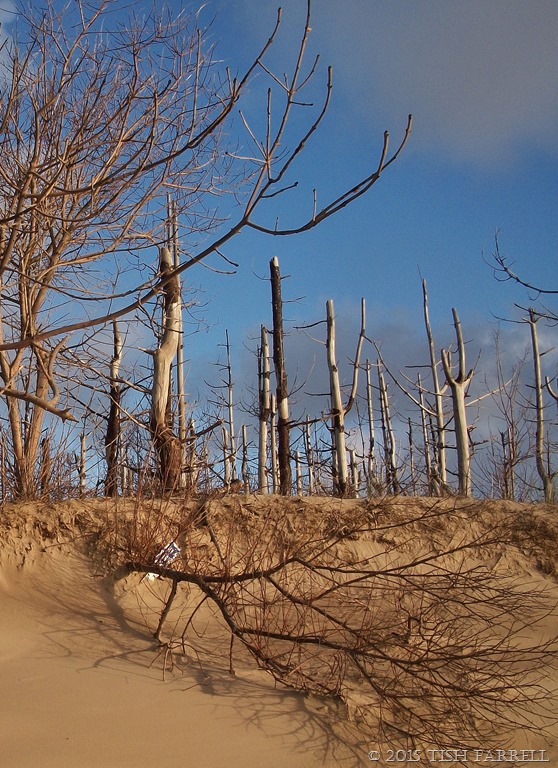
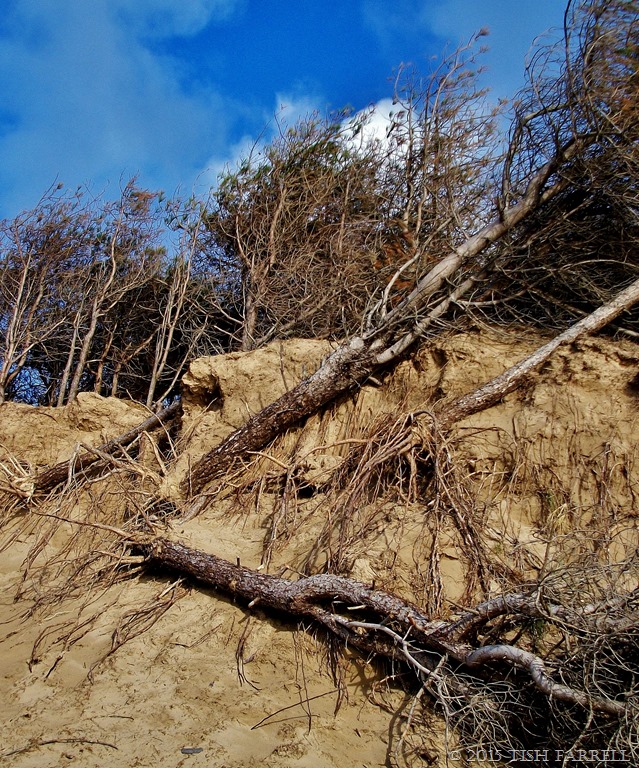
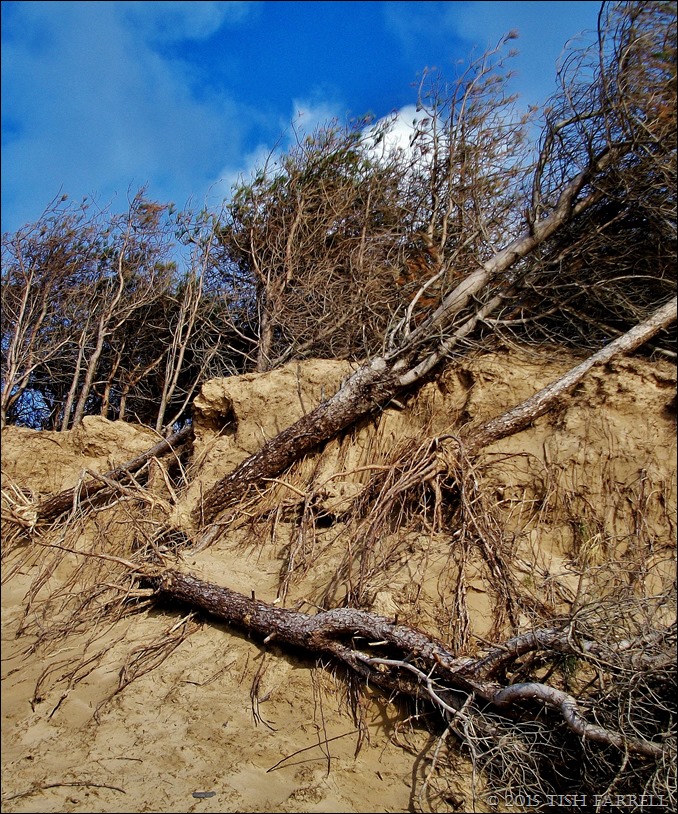
For another, there were some rather shocking scenes of coastal erosion. I promise, though, when we reach the island I will tell you the story of Dwynwen.

First things first. Newborough Beach is some two miles long and ends at the promontory that forms Llanddwyn Island. It is famous for its dunes which apparently arrived there in the great storm of 1331. It was the Feast of St Nich0las (December 6) when the disaster struck, and on that day the wind and sea rose to such a pitch that they drove, from the shores across the Strait, great mounds of sand and deposited them on the once fertile fields and dwellings of the medieval Newborough.

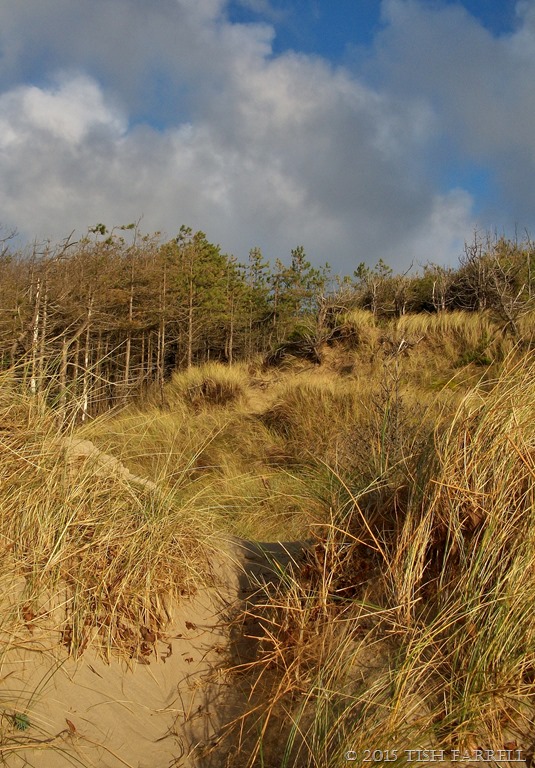
Ever since, many of the dunes have continued to shift, although there have been various strategies to stabilize them. In the sixteenth century marram grass was planted, and this gave rise to a successful local industry wherein the grass was cropped to weave into mats and baskets. Far more recently, in the 1940s, the Forestry Commission planted the promontory with conifers. The small forest that has thrived there since is home to ravens and red squirrels.

100_7131

Now, though, there are new threats from the weather. Last winter severe storms lashed the Welsh coast, causing great damage and much local concern about a future where rising sea levels and erratic storms are likely to figure more prominently.

100_7122 - Copy

100_7128 - Copy

It is a simple demonstration of the power of weather, and instead of arguing about its precise causes we should perhaps be wondering what is best to be done. At the present, the people of Newborough are doing just that. There is an on-going public consultation as to how the forest and nearby salt marsh may be protected. This whole corner of Anglesey is a much treasured resource to locals and visitors alike.

100_7135

Meanwhile, sister Jo’s labrador Molly is hardly concerned with matters of coastal erosion. Nothing a dog likes more than sand in its paws, wind in its ears, some smelly crabs and dead fish to nose, and also to lay claim to everyone else’s stick.
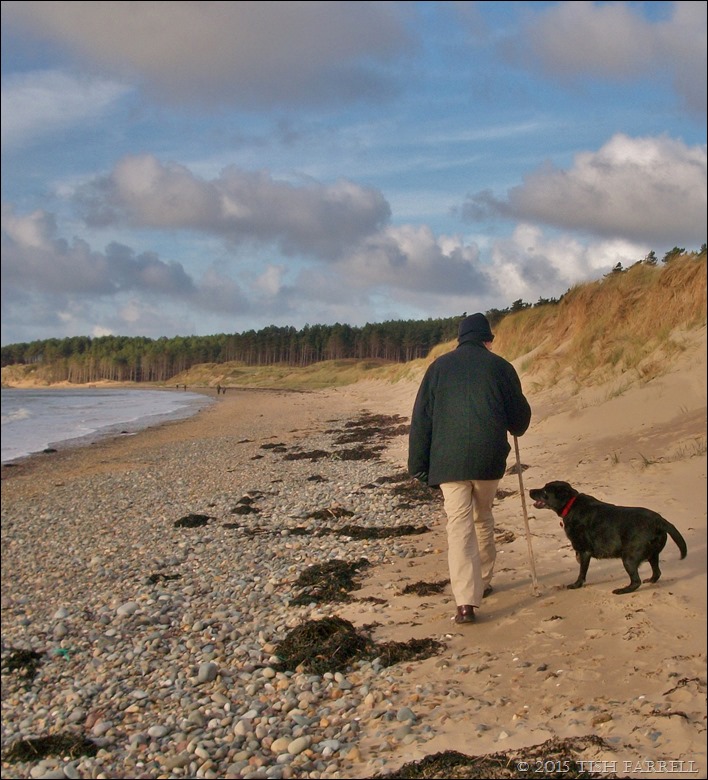
100_7141

She always wins. ALWAYS. Bad luck, Graham.
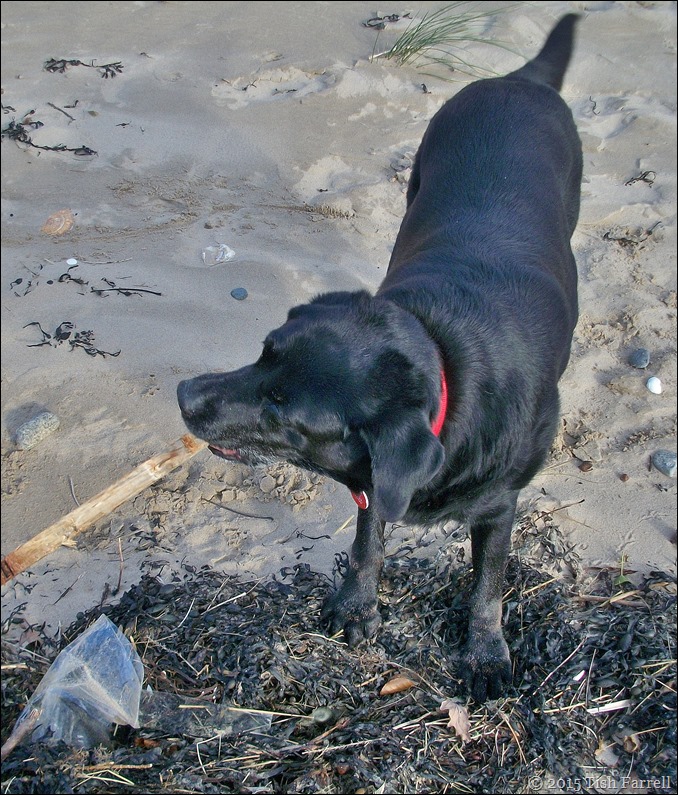
100_7144

When we reach the crossing place to the island, the tide is still too high to walk across. So we ponder the rocky deposits of pillow lava, that were apparently blown up from undersea volcanic eruptions in the Precambrian era, and wonder if Dwynwen really did choose this exposed promontory for her sanctuary some fifteen hundred years ago. There is no doubting the elevating beauty of the place.
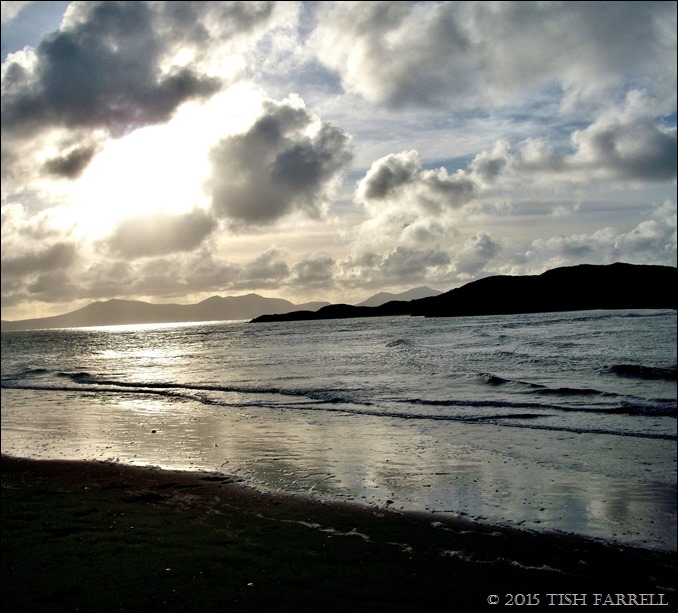
100_7161100_7158

100_7160

And so, as I promised, to Dwynwen’s story. She lived in the fifth century CE, and was one of Prince Brychan’s twenty four daughters. She fell in love with a young man called Maelon Dafodrill who apparently returned her feelings. Yet in a fit of caprice, Dwynwen refused his proposal of marriage. Some say it was because she wished to remain chaste. Others say it was because her father had arranged for her to marry another man. For his part, Maelon made his displeasure at the refusal known by spreading tales that cast doubt on Dwynwen’s honour.

In a frenzy of anguish, she thus took herself off alone to a wood where she prayed to be cured of her passion. And so it was that an angel appeared to her in a dream and gave her a potion that not only erased her feelings of love, but also transformed the spurned lover into a block of ice. Heaven also granted her three wishes. Dwynwen thus asked that Maelon be unfrozen. She then requested that if any true-hearted lover invoked her name, they should be granted their heart’s desire or relieved of their painful emotions. Finally, she sought never to be married, and thence withdrew from the world, founding a convent on Llanddwyn Island which, after her death in 465, became a place of pilgrimage. Her feast day is 25 January, and is celebrated by many in Wales with cards and flowers in the same way Saint Valentine’s Day is marked in many European countries.

100_7175

And so unable to complete our own pilgrimage and reach the island with its ruined church, we retraced our steps, thinking more profanely of a turkey to be roasted, presents to be opened, and a glass of champagne to drink.
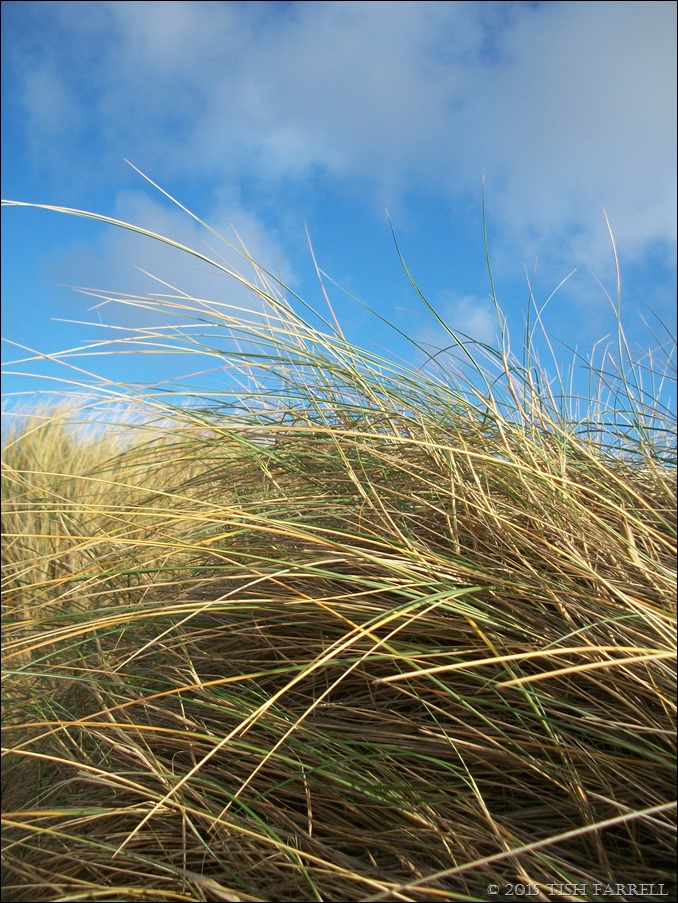
100_7191

And it was under this patch of marram grass, as we left the beach, that my Kodak EasyShare gave up the ghost. You could say, then, that this post is its last post. Just as well I still have the memory…

copyright 2015 Tish Farrell

Inspired by Jo’s Monday Walk

See her latest post and other bloggers’ walks at Roker Pier

*

Losing Kui -Final[1]

ON AMAZON AND ePUB BUD

Secrets, conspiracies, tragedy,

dark comedy – a fast-paced

novella of interwoven tales set

somewhere in East Africa

The Hounds of Henllys: Shadowed

P1000194

P1000193

We spent our Christmas with my sister, Jo, and chap, Bob, and their labrador Molly, staying in a cottage in the grounds of Henllys Hall on Anglesey. These huge sculpted dogs guard the entrance drive to the cottages, and are caught here in light shadow with the sun on the scene behind them. I find them intrinsically noble, and they unavoidably remind me of the story of the great dog Gelert, owned by the thirteenth century Welsh prince, Llywelyn of Gwynnedd. But beware, this tale does not end well. Here it is.

One day Llywelyn went hunting with his court, leaving his faithful hound, Gelert, to guard the stronghold, and in particular to watch over the Prince’s young motherless son who was still only an infant. At sunset when Llywelyn returned to his castle, Gelert rushed to meet his master, but something was horribly wrong. The dog’s muzzle was all smeared with blood. Filled with alarm, Llywelyn ran to his son’s chamber and, seeing the cot upturned, and bed clothes  strewn about and streaked in blood, he leapt to conclusions, and drawing his sword, he killed his beloved dog. As the dog yelped his last, so a child’s cry rang out from under the cot. When Llywelyn ran to right it, he found his son quite safe beneath. But he also found the corpse of a large wolf that Gelert had killed to save the child. Filled with remorse, Llywelyn built a cairn of stones to honour his faithful friend, and the place where it may be seen is at Beddgelert (grave of Gelert), beside the River Glaslyn, on the road to Porthmadog.

copyright 2015 Tish Farrell

Daily Post Weekly Photo Challenge: Shadowed

image

Secrets, conspiracies, tragedy,

dark comedy – a fast-paced novella

of interwoven tales set somewhere in

East Africa
Thursday’s Special: Dusk on Wenlock Edge

IMG_1147

I may have mentioned once or three times that I spend a lot of time watching the sky from our house below Wenlock Edge. Silhouetted in this photo are the wooded slopes of Wilmore Hill which lies between us and the Edge. The land then dips, then rises again until it reaches the scarp, at which point the ground simply falls away alarmingly through a hanging woodland of giant beech, oaks and ash. Far below the trees stretch the farm fields of Shropshire. And so from our vantage point the Edge gives us a false horizon, providing a stage for much interesting weather-watching. Hours can slip away…days. There’s a real danger of finding oneself turned into Rip Van Winkle. Maybe it’s already  happened…

*

For more evocative dusky scenes, or to post your own please go to Paula’s Thursday’s Special and be inspired.

*

image

Trees

P1000076

Storm lashed

Wind wrought

Winter’s tracery

*

Inspired by Laura Bloomsbury at  Tell Tale Therapy who was in turn inspired by Linda G Hill’s Friday prompt for Stream of Consciousness Saturday. I love the way one blog leads to another. Go to both links for quick-fire creative responses to Linda’s prompt: the letter ‘T’. The rule is no forward planning. Just write.

socs-badge

Badge by: Doobster @ Mindful

*


image

Secrets, conspiracies, tragedy, dark comedy

– a fast-paced novella of interwoven tales

set somewhere in East Africa
Farewell, Little Digital…

100_7187

My trusty Kodak EasyShare camera died on Christmas morning. We were striding along Newborough Beach on Anglesey, in North Wales, me happily snapping away here and there. As you can see, the light was wonderful, and the mountains of Snowdonia across the Menai Strait, a mystic blue-grey. And then the camera began to die. Touchingly, it’s last shot is of me with my specs on, peering down at its lens, and wondering what on earth was going on with it. Under the circumstances, I’m not sure how the photograph happened, but happen it did. (An unintended selfie?) And so there you have it, little Kodak’s last click. Aaaah.

100_7193

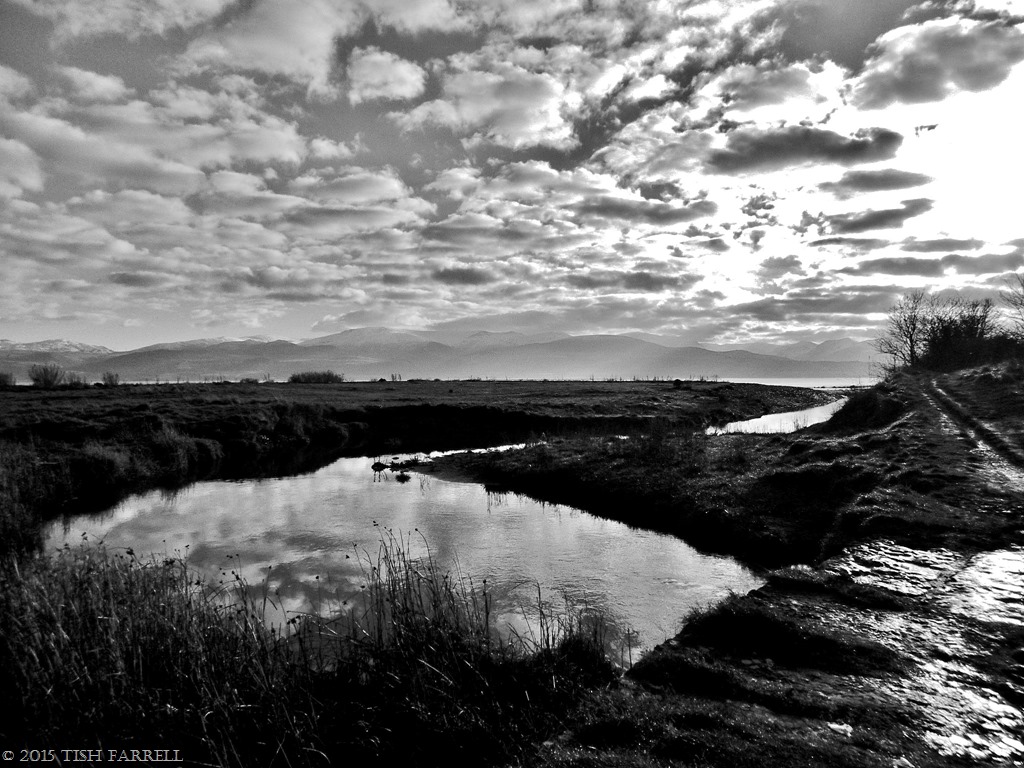
Perhaps it knew what was coming; that I was about to desert it for a smarter, whizzier model. For yes, when we got back to the house, and the present opening, it was to find that Santa, aka the Team Leader, had bought me a new Lumix Panasonic. Oh, so many more modes and functions. But at least it has forced me to make one New Year’s Resolution: to learn how to use it properly. There! Now I’ve committed myself in print. Anyway, here’s a preliminary attempt in monochrome mode: looking towards mainland Wales.

P1000153