Iron in the Soul ~ Warrior of Llyn

100_4526 - Copy

I have been a multitude of shapes
Before I assumed a consistent form.
I have been a sword, narrow, variegated,
I have been a tear in the air,
I have been in the dullest of stars.
I have been a word among letters,
I have been a book in the origin.
From a translation of the Welsh medieval text of The Book of Taliesin, a sixth century Welsh bard and courtly singer.

 *


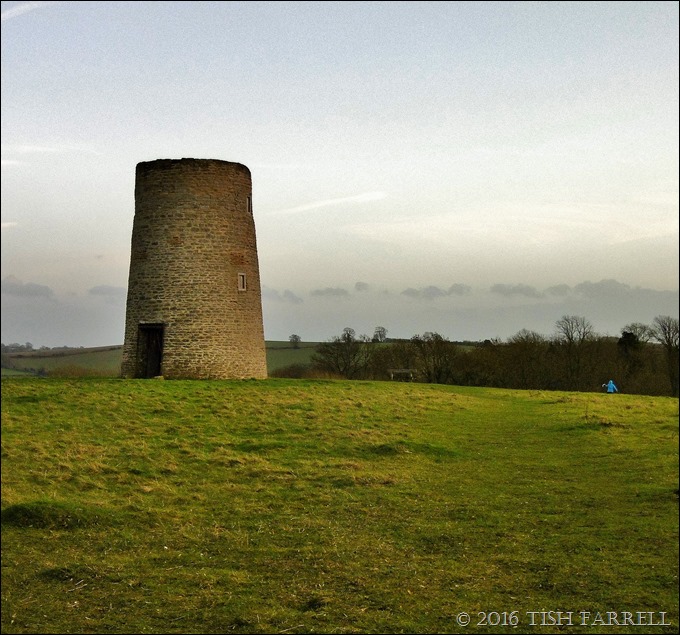
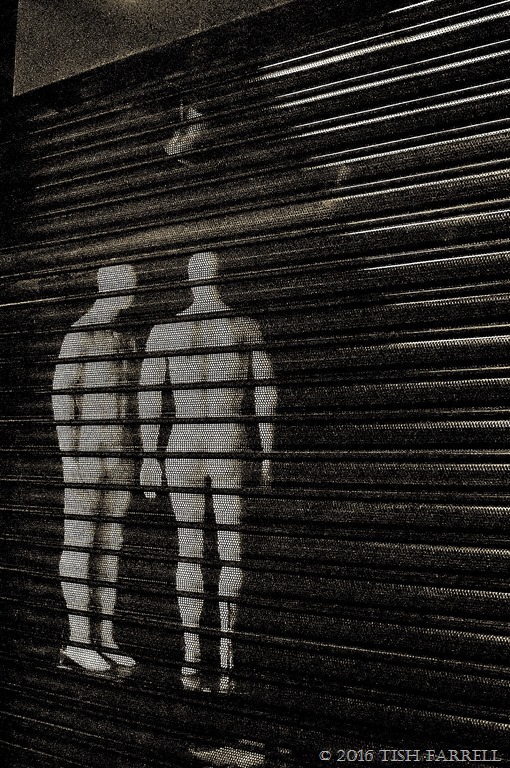
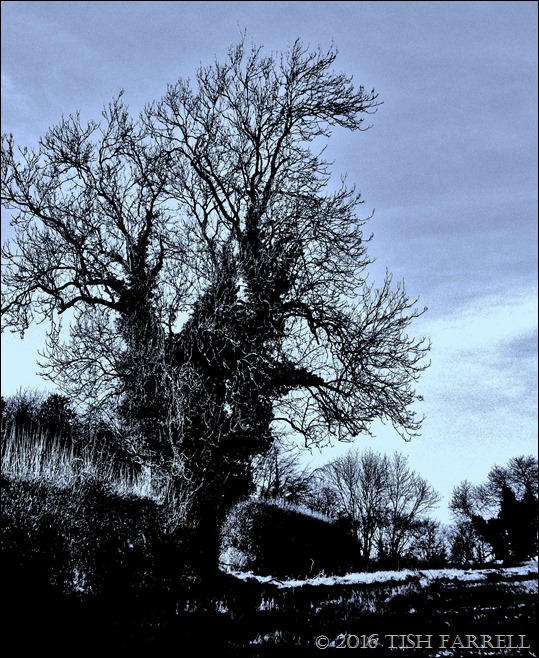
It is said that the Iron Man of Mynydd Tir y Cwmwd sings in the wind. I can believe it too: bold laments of long ago battles, a proud Celtic warrior fending off invading Roman governors and power-hungry English kings. Sadly, the cause was lost on both fronts, although at least these days Cymru,* Wales, has its own Welsh Parliament, and Cymraeg, the Welsh language, is nurtured, learned in schools and spoken widely with great pride. And so it should be. It is one of the world’s wonderful languages, the words formed from the rush of sea on rocks, the wind whistling down from the heights of Yr Wyddfa** (Snowdon, Wales’ highest mountain). Under past times of English domination much was done to stamp out the Welsh culture altogether. It is what invaders do – belittle, ban, override  heartfelt expressions of a conquered people’s culture.

{*roughly pronounced Kumree and **Ur Oithva}

You can read the rest of this earlier post about the Iron Man of Llanbedrog at Warrior Wind-Singer of Llyn

copyright 2015 Tish Farrell

This Sunday at Lost in Translation, Paula’s ‘Black & White’ word is ‘winding’. Please follow the link to take part her challenge and see more winding renditions.

In the background on Zanzibar’s farms

Scan-130429-0006 - Copy (2)

One of the must-do tours if you visit Zanzibar is a trip around the island’s spice and fruit farms. Hari our guide was intent that we should taste everything we saw growing, so here he is bargaining with a farmer for a ready-to-eat bunch of bananas. You can see the banana grove in the top left corner. Banana branches are usually harvested when the fruit is still green. There’s a knack of knowing just when to cut them.

Being a nosy writer who is always in need of background detail, and also a one-time student of cultural anthropology, I try to capture slice-of-life moments whenever I can. They’re usually not the best quality photos, but I hope to make up for technical shortcomings with content interest. (And yes it would be nice to have both). So here is my take on this week’s Thursday’s Special challenge from Paula – ‘in the background’. My choice of subject, however, did mean I had to switch my blog snow off. There’s enough climate change going on without having icy precipitation on Zanzibar.

Scan-130429-0007

This farming family has a jackfruit orchard, as well as coconut palms. The jackfruit apparently weren’t ready for tasting, but I was anyway more distracted by the presence of the domesticated Muscovy duck. Now how did that arrive in the tropics? The mabati iron sheets on the farm house roof  (i.e. instead of traditional palm thatch) are a sign of  prosperity, and therefore of status.

*

Scan-130429-0010

Scan-130429-0010 - Copy (2)

I’m wondering where this little girl is off to in such a hurry. Also one of the reasons why I’m showing off the tall trees in the background is that if you intend to make a living from them, then someone has to climb up them to pick the fruit…

Scan-130429-0074 - Copy

Thursday’s  Special: In the background

Wenlock Priory through the pines ~ an enduring landmark

P1000492

P1000494


How impressive then must the beautiful church have been in the days of its prosperity, when the pilgrim came down to it from the grassy hillside and its bells made the stillness sensible.

Henry James on Wenlock Priory Portraits of Places

Much Wenlock has many historic landmarks, but its Priory is the one with the oldest roots, dating back to the seventh century when  the Saxon princess, Abbess Milburga, presided over a dual house of monks and nuns.  In medieval times, under Norman rule, it was expanded to become one of the most imposing (male only) religious houses in Europe.

Then along came Henry VIII with his marriage problems, and in 1540, as part of his Dissolution of the Monasteries campaign, (i.e.the  liberation of monastic wealth), the lead was stripped off the roofs. The Priory has been ruinous ever since. Meanwhile the Corsican pines have grown up along the boundary wall.  I don’t know when they were planted, or by whom, but spiring above the ruins, they somehow give a sense of lost architectural glory.

There is of course much romance in dilapidation as Henry James’ description in the quote above betrays. He was certainly taken with the place, and came here two or three times as guest of the Milnes Gaskells  who lived in the Prior’s House abutting the ruins. The Priory was at that time the Milnes Gaskells’ own private garden feature, and part of the tour for all their many house guests.  I particularly like this next, perhaps unlikely image of a recumbent Henry James gazing up at the remains:

You may lie upon the grass at the base of an ivied fragment, measure the girth of the great stumps of the central columns, half smothered in soft creepers, and think how strange it is that in this quiet hollow, in the midst of lonely hills, so exquisite and so elaborate a work of art  should have arisen.

You can read more about Henry James in Wenlock HERE.

Now please visit Paula at Lost In Translation for more Black & White Sunday  landmarks.

World Soil Day & December at the allotment

100_8168

Here is my path to the allotment. I’m a bit fixated on it, and have been snapping it at different seasons. I like the way colour has leached from the grasses.

The allotment looks bleak at this time of year, not improved by the fact that many of us are untidy allotmenteers. There’s all sorts of unsightly takataka lying about – things that might come in handy for something, sometime. I’m guilty of it myself, and of course when you take on a plot, you inherit your predecessor’s junk. I’m gradually whittling mine down.

There are also jobs I haven’t done – edging the beds, giving the paths a final mow while I had the chance. But I did sow my mustard at just the right time and now have an impressive crop.

100_8136

I’m growing it both as a cover crop and a green manure. If we have a hard winter it will probably be frosted and die down by itself. For now it’s still growing, and if it survives till spring I’ll cut it down and probably just let it rot on the  soil surface. With green manures it is usual to dig them in before they flower. But I’m beginning to have second thoughts about digging, much as I enjoy wielding my grandfather’s sharp bladed spade.

For years I’ve known (vaguely) about No Dig Organic Gardening, just as I’ve long known that mulching crops produces sturdier, tastier produce that needs little watering. But it has taken a while for the penny to completely drop.

No dig cultivation is not simply about saving labour. It’s about protecting and nourishing the soil. And since today is World Soil Day, there can be no better moment to think about this totally essential, life protecting, life enhancing substance. If our soil is degraded and low in nutrients, then our food is not giving us the nutrition we need to stay strong and healthy. M.S. Swaminathan, India’s ‘Father of Green Revolution’ calls this ‘hidden hunger’.  Paradoxically, we suffer from it even in rich countries where we eat all day, and it contributes to (and some would say lies at the root of) much chronic disease.

Soil anaemia also breeds human anaemia. Micronutrient deficiency in the soil results in micronutrient malnutrition in people, since crops grown on such soils tend to be deficient in the nutrients needed to fight hidden hunger…Managing our soil and water resources in a sustainable and equitable manner needs a new political vision.

M.S. Swaminathan

100_7997

All my gardening life I have tended towards the traditional notion that digging the soil well, weeding, and adding plentiful compost is a ‘good thing’. Yet after 8 years of digging, weeding and forking in compost on my allotment plot, I’m seeing only marginal improvements in the soil: i.e. it’s a little better than it was.

In dry weather the soil surface still turns brick-hard,  which in turn constricts plant growth, (and in some cases  ‘bonsais’ the plants) making then weak and susceptible to pests. I then have to do a massive amount of watering which is not ideal either; it discourages the plants from rooting deeply.

Also every time you slice through the soil with a spade you disturb the complex community of bacteria, fungi, protozoa, and nematodes that support vibrant plant growth.

Better, then, to thickly pile shredded garden waste over the entire soil surface, and allow a microenvironment to establish underneath. The mulch gradually breaks down as all the matter is digested and re-digested, creating a nutrient rich, moisture retaining medium.

I now realize I need to cultivate a cohort of  jobbing domestic gardeners who will let me have their shredded garden waste rather than taking it to the recycling centre. In the meantime I decided on a little experiment.

Lacking the necessary quantities of gardeners and their shreddings, I spent three hours hours yesterday digging out my partially rotted compost bin, and spreading it several inches deep over four square metres of exposed soil. It was a messy process after days of downpours. But it’s amazing what lengths this writer will go to to avoid writing the novel.

The trouble is, rooting around in one’s compost heaps, turning stuff over, redistributing it, tends to be rather more satisfying than staring at the computer screen and straining one’s brain to dig out the right words.

I’ve also been making simple ‘silos’ out of chicken wire, to collect the leaves and so make leaf mould. This will take a year or two, but I might try and speed the process up next year by adding in some grass mowings. The resulting dark compost is just the stuff for seed sowing, so hopefully there will be some in  spring 2017.

100_8138

And I’ve been busy in the polytunnel. The summer’s ludicrous tomato forest is long gone and the last of the fruit turned into soup, sauce and chilli tomato jam. Now all has been raked over and planted with winter salad stuff – Chinese mustard, chard, pak choi, purslane, perennial rocket, lamb’s lettuce, Russian kale. I also have some parsley in there, onions, garlic, leeks and a bucket each of carrots and Florence fennel. The fennel probably won’t grow much, but we can eat the feathery leaves.

And just in case we do have the promised hard winter, I already have the fleece ready to lay over the young plants. Last year was pretty mild, and I found that once I put fleece over everything, the plants continued to grow, if only a little. I also have two small water butts filled to the brim and stationed inside. Their presence is supposed to provide a slight increase in temperature within the polytunnel. They are also handy when the allotment water supply is switched off for the winter.

Meanwhile, out on the plot, there are still lots of crops to harvest – carrots, leeks, kale, small amounts of  perennial spinach, and cauliflowers. The Brussels sprouts, cabbages, purple sprouting and Romanesco broccoli are all coming along. The field beans have sprouted, likewise the overwintering Radar onions.

100_8139

I know I am very lucky to have my allotment. But everyone can do some gardening, even if you only have a bucket. In fact a bucket is great for growing carrots. Lack of space need not be an obstacle. A single raised bed of one square metre, topped with layers of mulch can be intensively cultivated with leafy crops. And remember, there’s no need to dig it. Also mucking around close to soil is good for lifting the spirits. Scientists have discovered it gives off some kind of anti-depressant molecules.

All of which is to say:

SOIL – WE CAN’T LIVE WITHOUT IT. HEAL IT, AND WE HEAL OURSELVES AND THE GENERATIONS TO COME.

HAPPY WORLD SOIL DAY!


copyright 2015 Tish Farrell

Creative Intervention Rescues A Ruin

P1010246

Here we have the remains of Hopton Castle, an enigmatic ruin in the Shropshire borderland, eleven miles northwest of of Ludlow. It is called a castle, but it might be better described as an upscale medieval tower-house. That it survives at all, in this accessible state, is down to the creative efforts of the Hopton Castle Preservation Trust whose members toiled for 11 years to raise funds to consolidate the main structure, and then spent a further five years overseeing the work.

The ruin is full of puzzles. The preservation work revealed hints of 11th, 12th, 13th, and 14th century construction, but with no clear evidence for the date of the main surviving structure. It’s been suggested that the Hopton family, who owned it between the 11th and 15th centuries, at some stage deliberately set out to create a faux antique country residence much as the Victorians did with their  mock Tudor ‘cottages’. In other words, the Hoptons went in for some creative intervention of their own.

One theory is that it was a hunting lodge. The interior work of all  three floors appears to have been very grand, and definitely of ‘lordly’ quality.

P1010211

photo: Hopton Castle Preservation Trust

*

Also, the tower was clearly not intended as a defensive structure. As you can see from the photo and the reconstruction, any besieger could simply walk up to the front door. Yet the building it replaced, the first ‘castle’ on the mound was indeed a functioning fortification – a motte and bailey castle typical of the Normans’ early conquest of Britain after 1066. Made of timber, they could be constructed swiftly, and as the need arose, later re-built and expanded into domineering stone fortresses.

But this did not happen at Hopton. The stone walls that replaced the 11th century motte and bailey appear to have been built of poor quality stone, unsuited to withstanding a siege. Meanwhile, the interior fittings and design suggest considerable expense.

So it’s a pretend castle then? A place for Sir Walter Hopton, Sheriff of Shropshire and Staffordshire, to display his wealth and status while entertaining well chosen guests for a spot of deer hunting?

P1010230

Perhaps some of the answers lie in Shropshire Council’s five miles of archives that include shelves and shelves of unread medieval documents. In which case, they are likely to stay hidden. Probably forever. The on going local authority cuts mean there is little chance that the necessary scholarly research will ever be done. The archivist was one of the first people to be dispensed with, and for years before the cuts the archives were always under-resourced.

But if we don’t know much about the castle’s medieval history, we do know quite a lot about the bloody siege of Hopton in 1644, wherein Royalist forces attacked the staunch Parliamentarian Wallop family, who then owned the castle. It’s a swashbuckling tale, and you can read more about it HERE.  Some years ago Time Team carried out an excavation in an attempt to verify the circumstances of the battle. You can find the full episode on YouTube:  https://www.youtube.com/watch?v=MIiYOgmO-Cs


copyright 2015 Tish Farrell


Looking For Space On Wenlock’s Windmill Hill

100_7821 - Copy

This month the photo challenge at PerelincolorsTech of the Month is to compose shots that make good use of empty space. So here are some views of Windmill Hill, near my house – some recent, some taken earlier in the year. I thought that by having big skies in the background, or a large expanse of meadow in the foreground, and also by shooting downhill or lying down, it would create both scale and a touch of drama. Also it was an attempt to add interest to a scene that, though pleasing in itself, could not in any way be described as spectacular. And finally I was trying to capture a sense of something special about a place that I am perhaps overly familiar with. See what you think.

100_7835

P1010939

P1010448

P1000782

Perelincolors

Lucile de Godoy

My Wenlock World In Black & White

P1000517

This week Cee has given us ‘carte blanche’ to post black and white images of our choice. So I thought I’d show you my everyday world, but with just a touch of ‘noir’.

Welcome, then, to Much Wenlock

where all looks tranquil. Or does it?

100_7046


P1010518 (2)


P1010485


P1000562


100_5899


P1010145


Cee’s Black & White Photo Challenge

Go here to see Cee’s and other bloggers’ b & w favourites

Three dhows at sundown on Lamu

Scan-140801-0001

You, the very lovely people who have been following my blog for a while, will have seen this image before – possibly more than once. But I’m sure you won’t mind seeing it again. Even if I say so myself, it is a blissful scene,  and a chance capture in the Manda Strait on Boxing Day too long ago.
Trio

Jaha’s Cause ~ Help her to victory and support her anti-FGM campaign

Dukureh_ProfileCarousel3

photo: http://www.lorealparisusa.com/en/women-of-worth/2015-honoree.aspx?profile=Jaha-Dukureh

*

Jaha Dukureh was born in The Gambia. She was infibulated in infancy, and at fifteen sent to America to marry a man in his forties. The marriage did not last and she ran away. Now married to a husband of her choice and is still living in the U.S., she has three children, including a daughter.

Her decision to protect her daughter from FGM spurred her to fight to protect other girls. She started a Change.org petition that caught the attention of President Obama. The practice of FGM within the US was already an offence, but Jaha’s intervention resulted in the Girls’ Protection Act of 2010, which criminalizes the transport of U.S. girls abroad for FGM.

Now Jaha is taking her campaign home to The Gambia, where currently 78% of girls are infibulated. She is talking to the women who carry out FGM, and to the younger generation. As the daughter of an influential imam, she is also in a good  position to argue against the strongly held myth that FGM is required by Islam. Her goal is a national ban on FGM in The Gambia.

Jaha is one of the 10 women nominated for L’Oreal’s Women of Worth 2015. If Jaha wins, L’Oreal will promote Jaha’s cause and donate $25,000 to her organisation Safe Hands For Girls. This U.S. based group is run by FGM survivors and aims to raise awareness of the abuse and to give support to other survivors. Follow the link to see their work.

SO PLEASE VOTE. YOU HAVE 2 CHANCES TO HELP MAKE A DIFFERENCE, TODAY AND TOMORROW.

YOU CAN VOTE HERE

8617702_orig

YOU CAN VOTE HERE

Jaha’s Journey – the film

To learn more about Jaha’s life and work you can see a clip from Patrick Farrelly’s unfinished film here:

YOU CAN VOTE HERE


Victory

Travel Theme: Faces
#FGM  #Jaha’sJourney #SafeHandsForGirls #JahaDukureh #FemaleGenitalMutilation

Maasai Cricket Warriors Against FGM ~ Warning: this post comes with a Sensitive Subject Sticker

7d653c00-9e4f-40c6-a781-e1e15d8116c7

‘The eye that leaves the village sees further’ Maasai wisdom

Photo courtesty of https://www.justgiving.com/MaasaiCricketWarriors/

*

It’s already been shown in Hollywood, but today in London sees the release of Warriors, a documentary by Barney Douglas. From next week there will be star showings across the UK, so if you have a chance to see it, do. You will see a glimpse of real, magnificent, originally-minded Africa, and not only that, 45% of the film’s proceeds will go towards one of the best community causes I can think of – changing attitudes to a rite that these young Maasai men say must go – female genital mutilation, aka female circumcision or FGM.

The stars of the film are a team of cricket playing Maasai warriors. They’ve been playing since 2009, and their ambition was to play at Lords, which they did this summer. They are a fine sight to behold in full morani gear plus bats and pads. And they are killer cricketers. They could even rouse my interest in a sport that usually makes my brain glaze over, despite that lovely sound of leather thwacking willow.

Working as volunteers, these young men have been using their growing popularity to spread the word against FGM and forced early marriages. Their far-flung travels have earned them the right to be heard by the elders back home, and now the young men are saying that they will refuse to marry a  girl who has undergone FGM. In a community that has clung to the rite despite the enactment of Kenya’s 2011 Anti-FGM law, this is a powerful stance. It will bring change.

This is what the team captain, Sonyanga ole Ngais had to say at the Warriors Premier:

Thank you for helping us with our inevitable war against FGM because we know that all gender inequalities are related to FGM. Eradicating FGM means that the girl-children shall not be forced to drop out of school in preparation for early marriage and early motherhood. This directly translates that the girls can be educated, gain a bargaining power to choose her own path, when to marry, her own chosen husband and when to get her children. It translates to better health, better economy and better self-esteem. Simply, an FGM free community is a healthy, empowered and wealthy community.

602447_539098019484652_331684898_n1

Photo: http://maasaicricketwarriors.co.ke/

You can see the trailer for Warriors  HERE


And now to my personal interest in this anti-FGM initiative from within a practicing community.

Back in 2002 I was asked to write an article on FGM for the inaugural issue of Zuri , a US magazine aimed at African American teen girls. Zuri means beautiful in Kiswahili and the magazine’s founder, and editor-in-chief, Donna D King wanted to produce an attractive bi-monthly journal that would raise young women’s aspirations in everything from their appearance to their values, beliefs and career choices. The publication had a strong Christian ethic, and Ms King also wanted to include articles that would deal plainly with issues that might affect young women of colour. (Sadly, the magazine is no longer around.)

IMG_0001

At the time of this commission, I had not long returned from Africa where we had been living for eight years.  For most of this time we were in Kenya, and throughout the 1990s the topic of female genital  mutilation, usually referred to as ‘female circumcision’, along with reports of forced teen marriages, was frequently covered by the national press. In theory, the rite was illegal in all its forms. In practice it did, and clearly still does take place.

In Britain FGM is a criminal offence, and rightly seen as a human right’s violation. Since the summer, all health care officials have been told they must report any suspected cases.

But this is only one side of the problem. We all know that making something illegal does not stop it, otherwise our nations would have no need for police forces, customs officials and judiciaries.  By far the most effective measures to end such practices, I would argue, must come from within the communities who practice them. Certainly in Kenya, this kind of community activism has been going on since the 1990s. It is a slow process for all kinds of reasons, which I go into below. But high-profile initiatives like the Maasai Cricket Warriors, and now the Maasai Cricket Ladies – YOU CAN SUPPORT THEM ON FACE BOOK – just make me want to give a loud resounding HURRAH!

Anyway, here’s what I wrote back in 2002 with one or two statistical updates:


The Cruellest Cut?

It is easy to condemn a stranger’s customs, and when it comes to a rite as hazardous as Female Genital Mutilation (FGM), it is not surprising that our first response is BAN IT.  In the United States, the UK and many industrialized nations, FGM is illegal, but in several Middle Eastern and many African countries, FGM is both legitimate and common. In a country like Kenya where 12 out of 40 ethnic communities ‘circumcise’* their young women, the debate for or against FGM has been simmering since 1929 when European missionaries first tried to stop the custom.

But despite all the laws and adverse criticism, the rite is not going away.

The World Health Organization estimates that up to 140 million girls and women have undergone one of the three main types of FGM.  Plan UK  further states that every year across Africa, 3 million more girls will  undergo the rite. And so today, as you go to school, cruise the mall, or watch TV, the genitalia of 5,000 girls will be cut off in unsanitary surroundings. The victims may be infants, five year olds or young teens. They may be cut by force or submit willingly. They will suffer it because those who love them most—their mothers, fathers, grandparents—say they must, and because it has always been done.

Then there is the side of this issue that most affects industrialized nations. When people from communities who practice FGM migrate from their homelands, they take the custom with them. For parents settling among strangers whose lives seem far from moral, the belief that FGM is the only way to protect their girls’ virginity is likely to be reinforced. If the rite is illegal in the adopted country, they will simply take their girls on a visit to their homeland.

In criminalizing FGM many nations, including the US, UK, Kenya and Egypt, have acted with the very best of intentions, and with aim of protecting vulnerable girls. FGM has serious health risks: haemorrhage, shock, septicaemia, sterility, abscesses, chronic pelvic and urinary infections, incontinence caused by rupture of urinary and rectal tracts, painful periods, painful sexual relations, keloids (raised spreading scars), long labour, frequent stillbirths, foetal damage, and depression.

Some mutilated girls bleed to death. Others die in childbirth. Very many suffer in silence their entire lives because talk of the rite is taboo. They may not even realize that FGM caused their chronic bad health problems.

So what precisely is female genital mutilation? The World Health Organization lists three main forms:

Type I. Clitoridectomy—removal of all, or part of the clitoris. This type of FGM includes the least damaging form, Sunna, which involves cutting off the prepuce or clitoral hood.

Type II. Excision—removal of the clitoris and part, or all of the labia minora. This can cause massive scar tissue and, later, difficulties in childbirth.

Type III. Infibulation—removal of clitoris, labia minora and labia majora. The raw surfaces of the vulva are then stitched together using thorns and gut. A pencil’s width hole is left for the passing of urine and menstrual blood. After this procedure, the girls’ legs may be bound together for up to 40 days to ensure the cut surfaces heal to make a permanent cover over the vagina.

The pain and trauma of infibulation haunts many women all of their lives. After marriage, the bridegroom cuts the sutures, and then replaces them later. During childbirth, the sutures must also be cut, but after the baby’s birth, the woman will be stitched at once to ensure her husband’s honour. This act of re-stitching causes further scar tissue and makes future childbirth hazardous.

The FGM ‘surgeons’, usually a caste of older women whose livelihood it is, rarely use any form of anaesthesia. They may also use unsterilized tools such as broken glass, scissors and razor blades for a procedure that can last as long as 20 minutes.

These, then, are the facts of FGM, but its cultural justifications are varied and complex, and the reasons for it deep-rooted in tradition. Also, the reasons for Types I and II are very different from the most extreme form, infibulation. The former are usually associated with traditional ceremonies that initiate adolescent girls into womanhood. In most of the African societies that practice FGM, Sunna, the least damaging form, is the one most commonly used to mark the transition to womanhood.

Initiation of this kind is usually associated with the onset of puberty and menstruation. Oral history sources suggest that in pre-colonial times girls did not begin to menstruate until they were at least  17 years old, and thus already old enough for marriage. When FGM took place it was in association with training for adult life. Young women would be secluded in special camps, often for several months. Here they would learn from their female elders everything they needed to know about married life and sex. They would be schooled in how to conduct themselves as good mothers and responsible community members. They would learn clan history and special songs and dances. They would be taught to behave with quiet dignity, and be prepared by their tutors to bear the cutting without showing fear or crying.

In every sense this process represented a graduation. Afterwards, when the girls returned to their community as proven brave young women who could endure extreme adversity, and so were ready to play their part, everyone showered them with gifts and praise, and the whole event was celebrated with general feasting and dancing.

Today, due to school attendance and church membership the valuable training associated with this rite of passage has long gone, but women still send their daughters and granddaughters for “the cut” because they see it as a badge of womanly status. Without it, they think their girls will be outcasts in the community and thought of as unclean, promiscuous, or childish and, therefore, wholly unfit for marriage. Traditionally, an unmarried woman in many African societies has absolutely no status.

For many poor rural women, then, FGM is seen as the only way they can gain some standing in their community. In such situations the women themselves are the main upholders of the rite. They are not prepared to lose the sense of status they believe it confers on them, even if this means crossing husbands’ and elders’ wishes. They will shrug off the dangers, saying the benefits far outweigh them. This situation was dramatically exposed in Ousmane Sembene’s award-winning Senegalese film Moolaadé (2004).

The Kenya situation also shows up the flaws in simply outlawing the practice. In 1982 when President Daniel arap Moi announced his plan to ban FGM, those communities that practiced the rite rushed to have their daughters cut before the law could be passed. In fact Kenya’s Anti-FGM law was not enacted until 2011, and even now it is difficult to enforce among remote communities. There has also been a trend to ‘circumcise’ girls at ever younger ages. But without the appropriate accompanying sex education, which neither school nor church tends to provide, the upshot has been an epidemic of school-girl pregnancies, and the inevitable abandonment of education.

Unexpectedly, too, sending girls to school may also help to keep FGM alive. Circumcised girls are said to apply fierce peer pressure by ostracizing uncut girls. Furthermore, since rural girls must often go to boarding school to receive an education, their parents believe that FGM will stop their daughters from misbehaving while they are away from home. They also think it will protect them from HIV infection.

All the social changes, coupled with the fear of AIDS, have often served to entrench the practice of FGM types I and II. Yet at the same time, the rite has lost much of its original meaning. Instead of being an important rite of passage that admits a girl to a higher social status, it now largely serves to control girls’ sexual behaviour in much the same way as type III infibulation does.

This, the most extensive form of FGM is practiced in deeply conservative societies, where virginity and wifely faithfulness are upheld as matters of high family honour. In Somalia, for instance, families commonly infibulate their girls by force by age five as former Somali model, Waris Dirie’s moving book Desert Thorn  painfully reveals.

Infibulation is also practiced in Egypt, Sudan, and parts of West Africa, where is often associated with the Muslim faith, despite the fact that FGM long pre-dates Islam. This form, then, presents anti-FGM campaigners with their biggest challenge; the communities who practice it are fiercely independent and do not care to be told that their customs are wrong.

So how, then, can FGM be stopped? Is criminalizing it the answer? Is legislation a viable answer when so many women choose it for their daughters and granddaughters?

In Kenya many community activists have realized that banning the rite can simply drive the practice underground. Since the late 1990s they have been devising more proactive approaches, in particular helping communities to create new ceremonies—ones that confer status but without the cut. One example is called “Ntanira na Mugambo,” translated as “Circumcision Through Words.” It has been promoted by Kenya’s national women’s group, Maendeleo ya Wanawake, and involves a new one-week ceremony.

Each ceremony is tailored to meet different cultural needs but, for all girls who attend, the objective is to teach them about personal health and hygiene, their future roles as parents, wives and community members, the importance of staying in school, and how to handle peer-pressure. In communities where the male view predominates, the building of self-esteem is also key. At the end of the week the young women graduates are given certificates and gifts by their community and generally feted in the manner of traditional ceremonies.

Little by little this new rite is gaining acceptance. But it is no quick-fix solution. The entire community must embrace the new rite. In particular elders, husbands and young men must be persuaded. In a bid to gain everyone’s support, campaigners organize preliminary discussion groups in churches and in youth groups. They encourage men, in particular, to carry the anti-FGM message to others.

Campaigners have also found that focusing on FGM’s health problems is the surest means of persuasion, whereas condemning cultural beliefs or sexual attitudes is very counter-productive. Finally, campaigners ask young men supporters of the new rite to swear an oath that their future wife need not be circumcised.

Because the rite does not exert a blunt prohibition on female genital mutilation being practiced in Kenya, but offers an attractive alternative, it is possible that it may become the most successful strategy towards more widespread elimination throughout the world.

César Chelala, global health consultant The Lancet 1998

These and similar initiatives are now proving powerful tools for change in Kenya and other African countries. They also have the support of international agencies such as the World Health Organization, the Program for Appropriate Technology in Health (PATH), and UNICEF.

Even so, no one underestimates the time it will take to eradicate FGM completely. No human being’s beliefs are easily changed, no matter who they are. Most campaigners agree that it will take at least three generations to end the practice. It also seems likely that informed and non-judgmental persuasion from within communities offers the best hope of success.

As onlookers we may justifiably feel horror, anger and disgust, but if we are honest, and think how we ourselves might react to outsiders’ condemnation of our cultural practices, we will see that judgmental pronouncements are more likely to harden attitudes than to change minds for the better.


* female circumcision is a term of convenience often used in practicing communities, but the large scale of mutilation in FGM in no way equates to male circumcision.

copyright 2015 Tish Farrell

Related:

Kenyan girls taken to remote places to undergo FGM in secret  The Guardian 2014

You can read a young Kenya woman’s personal account of FGM HERE

#FGM #MaasaiCricketWarriors #MaasaiCricketLadies