Some people – otherwise known as Graham – think I have secret ambitions to take over the whole of Wenlock’s Southfield Road allotment. He couldn’t be more wrong, although whenever I protest my intention to contract operations and reduce my current domain of one and half plots to a single half plot with polytunnel attached, he gives me that look. Oh yeah? The problem is, just like Britain leaving Europe, my exit strategy is complicated. But unlike Brexit, at least I do have a strategy for reducing my plot occupation. Indeed in this era of foolish contraction we could even call it Plexit.
The story of my initial expansionist tendency begins nine years ago, not long after we moved to Wenlock. I had known the town for much of my life, and lived for a long time in a neighbouring parish, but I had not known that the town had an allotment. It is well hidden behind a row of houses, a relic of much earlier times when a railway ran by our neck of the Edge, and railway workers had the right to demand that their company provide, along with their houses, some sizable garden plots on which to grow their own food.
It was a chance remark at a neighbour’s Christmas party that made me realize that the shed roofs that I could just see across the field from our new home were not in a row of private gardens as I had first thought. The hunt for a plot was on. When I finally tracked down the chairman of the Wenlock Allotment Society it was March, and I was champing at the get-gardening bit since our cottage garden was not big enough for vegetable growing. Though charming, the chairman told me all the plots were taken, and he would add me to the waiting list that already had several people on it. He did not sound hopeful, and disappointment descended. Yet by April he was on the phone saying that I clearly had a fairy godmother: my pumpkin dreams had come home to roost. Several plots had been unexpectedly surrendered, and there was a half plot left if I still wanted it. The rent was £20 per annum. So I said yes, site unseen, and we arranged for a convenient moment a few days later when he might introduce me to my new land holding and collect the rent.
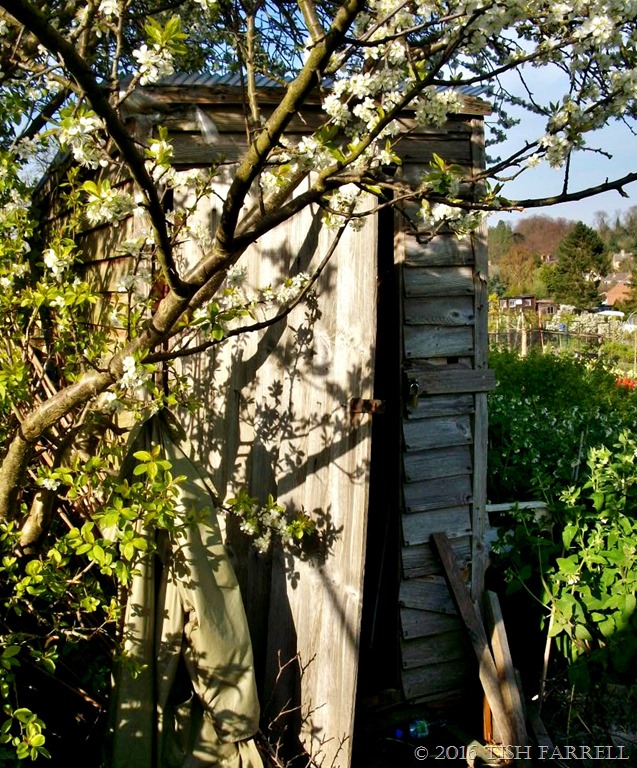
Thus began allotment my life – with an inherited leaning shed, an ancient greengage tree just then in bloom, and a plot full of couch grass, sow thistle, docks, dandelions and buttercups that the previous incumbent had clearly been nurturing for some considerable time.

And that’s the problem with allotments. Too many would-be cultivators take them on only to find themselves overtaken by the amount of labour involved. Yet the idea of allotment growing remains beguiling, and so time passes as they decide whether or not to abandon the plot. The upshot of this is that everyone gets the fall-out from the weeds on neglected plots. Also the general tendency to disorder that breaks out in such communal enterprises provides havens and harbourage for pests and diseases that then become endemic. It takes much gritting of teeth not to resort to a host of chemical applications.
The upside of allotments is of course the camaraderie – the like-minded people who will be there to commiserate over one’s sorrow at slug and allium weevil devastation, or to swap ideas for pest control, share the joy of success and in the ensuing excesses in crops, or generally to keep an eye on neighbours’ plots while they are away. All good stuff.
Also when I first started, there was one old gardener still hard at work. Crook-backed, and slightly crippled, he travelled by bus from another village. This also involved him in quite an uphill hike from the bus stop which he could only accomplish very slowly, and with a few stops for a cigarette. But once on the allotment he tended three full 20 by 5 metre plots on behalf of other elderly tenants or their widows who lived on Southfield Road. He was there most days too, and I think he had probably been there for centuries. He gardened in the way my grandfather would have done.
Often in the winter, when we still had a few really cold ones, we would be the only people there, and I would take the opportunity to quiz him over his tried and tested methodologies. I especially took note of when he sowed particular crops. His repertoire was limited, but he grew in bulk: broad beans, runner beans, beetroot, onions and potatoes. I don’t remember his growing much else. He knew what worked best, and he knew those crops that were within his capacities to manage on such a scale.
And that’s another big lesson to be learned at the allotment. When you have your first plot – which can seem so large and roomy – and you have finally cleared all the weeds, it’s too easy to assume that anything will grow there. It won’t . Not unless you have been lucky to take on a well worked, and hugely well composted and sheltered site. It took me a while to learn that it’s best to start by taking a good look at what the seasoned growers are growing; see what thrives in the face of endemic pests, the plot’s micro-climate, the general environmental conditions, and soil structure limitations. That way you can be sure to get one or two decent crops of something, and these successes will keep you going while you get to grips with your plot’s potential and/or deficiencies.
For instance another experienced allotmenteer showed us newbies that the only way to grow decent carrots and parsnips on our heavy soil was to dib individual root shaped holes at sowing time, fill them with good compost and then sow the seeds on top. It’s a rather time-consuming process but worth it if you don’t want to waste packets of seed. For carrots it also reduces the need for a lot of thinning, and the plants can be left to grow throughout the season covered by horticultural fleece, so avoiding attacks by carrot root fly. I have now adapted this idea by using moveable raised bed, which Graham originally made for me as a cold frame. I place it on top of the existing soil level. Fill it with a good six inches of fine compost mixed with coir fibre and sow into that, and then cover the lot with enviromesh.
In those first years it was tough going. I thought I was a moderately experienced gardener, but there was much unforeseen trial and error. The plot took monumental amounts of clearing, digging, and composting. Crop successes were patchy, apart from colossal amounts of black currants and broad beans. The heavy soil proved almost impossible for sowing anything other large seeded vegetables, and even then there was a tendency for them to rot if we had a spell of cold, wet weather. Or if they germinated, the roots became compacted and the plants effectively bonsai-ed themselves, and then got eaten by slugs or infested with aphids.
All the time I was casting covetous eyes on the other half of the plot. It had clearly been well cultivated over the years, and the soil looked lighter and much more promising. I saw it produce masses of strawberries and fine looking French and runner beans. It was also nearer the water point, a serious consideration given our erratic weather patterns which often involve a spring or summer drought. I watched two other gardeners come and go there before finally making my bid for it. At last. Now I could grow decent potatoes, strawberries, runners beans, leeks, carrots, and leave the old plot to produce what it did best – raspberries, blackcurrants, rhubarb, artichokes, and swathes of very useful comfrey for feeding the rest of the plot.
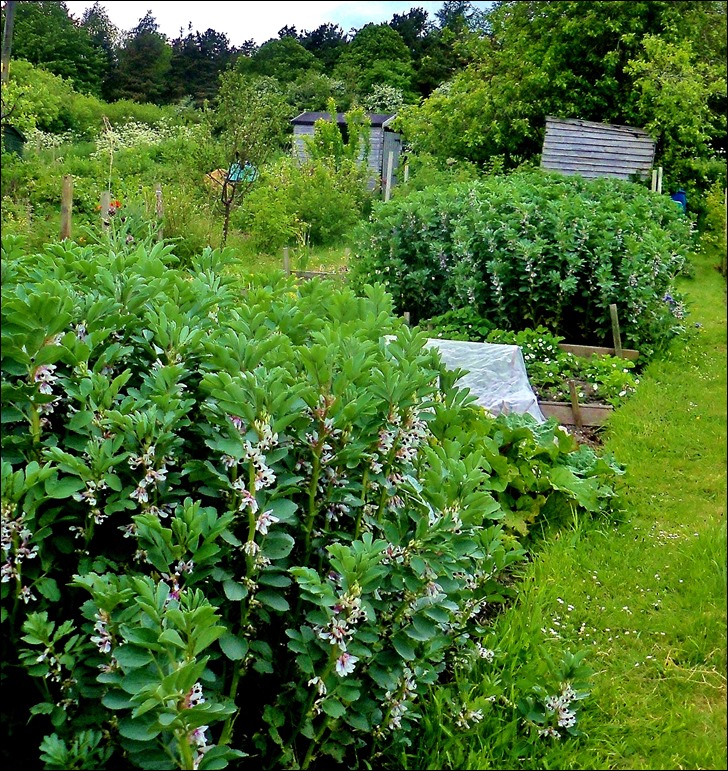
The half plot I began with nine years ago, this year growing cover crops of field beans. I should perhaps have dug some of them in before they flowered – this as a green manure. But I didn’t, and the blossom kept the bees very happy. And now I have tons of mini broad beans – to eat, and to dry for autumn sowing.
*
So now I had 70 feet of plot, and I had only just begun to get the measure of it when I rather recklessly found myself with a further half plot. This was two years ago. I was so fixated on taking over the polytunnel that Bob and Sally had erected there the previous season that I neglected to notice that it stood on an especially wide piece of ground that had once been the domain of the aforesaid aged gardener, and thus long neglected. And so quite apart from learning the new art of polytunnel cultivation, it was back to tackling another dense carpet of dandelions, buttercups and couch grass.
Even I could see the daft side. He who disbelieves in Plexit (that would be Graham), simply raised his eyebrows and saw (as with Napoleon’s invasion of Moscow) only evidence of wilful territorial overreach. ‘You’ve taken on too much,’ the look said.
‘But I have a plan,’ I said. ‘I mean to contract. It’s my ultimate objective.’
More raised brows.
‘It’s raised beds that I really need,’ I said. ‘Then I can start the retreat from the old plot.’
Being the kind soul he is, Graham agreed to making me some beds, though leaving me with the distinct impression that he was humouring a mad woman.
Last year then, and before I’d discovered ‘no dig gardening’ approach (see earlier post HERE), I started clearing the new plot, basically by skimming several inches of weedy compacted ground off the top and dumping it in compost bins where it might just rot down by the end of the century. I covered the bare ground with the limited amount of compost I had available, sowed some trefoil for a green manure and inter-planted it with sweet corn, which to my surprise grew a magnificent crop of large cobs. I also planted out brassicas next to the corn and produced some rather fine purple cauliflowers, which also surprised me. Meanwhile Graham set about on the first consignment of raised beds, made from recycled pallets which he picked up for free from work.
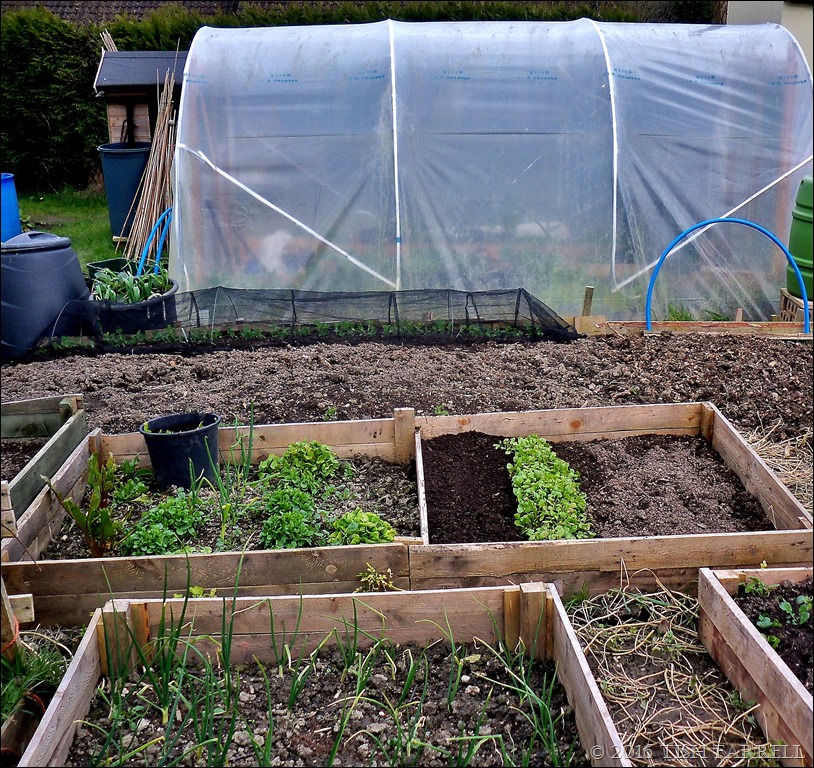
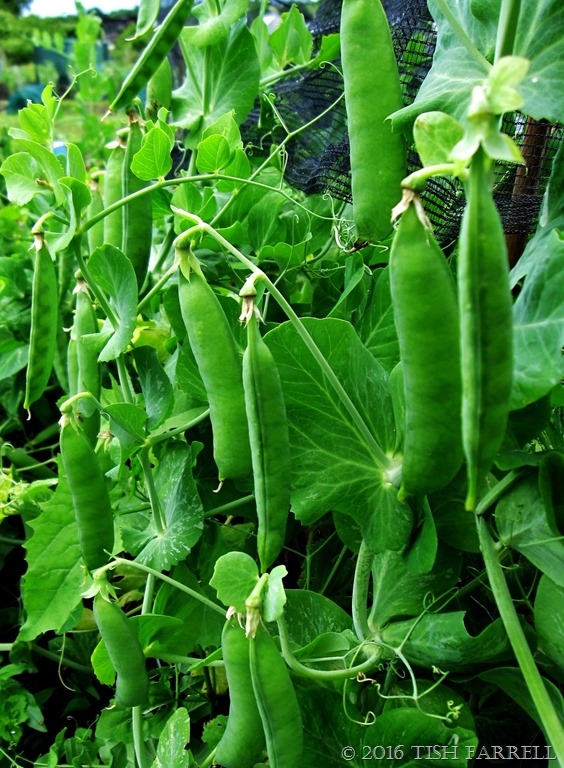
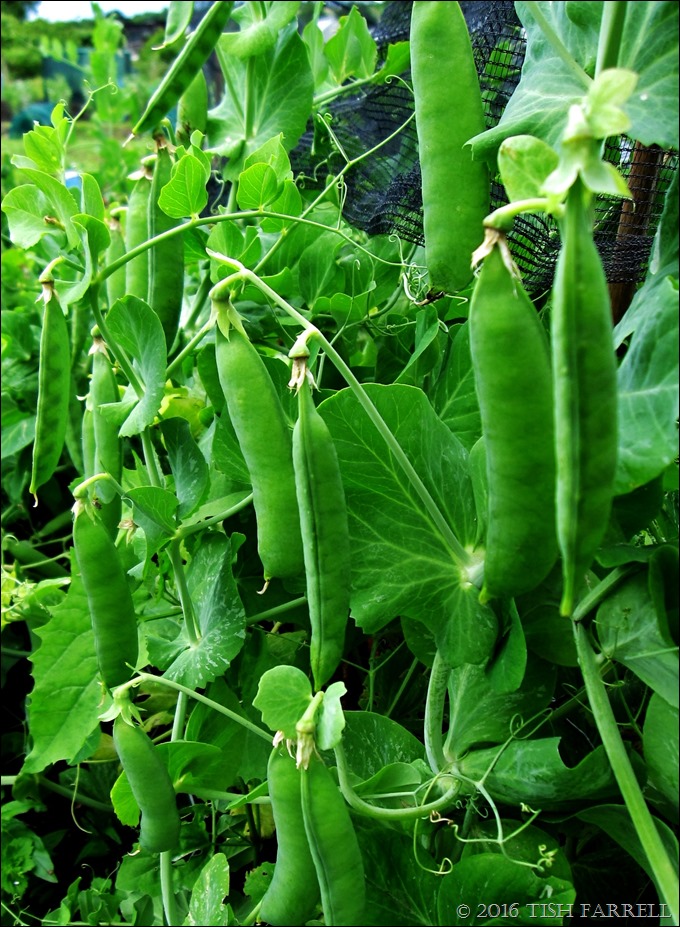
The new plot in early spring this year. Beds provided by Plexit sceptic, and planted with over-wintering onions, lamb’s lettuce and winter purslane. Behind the polytunnel the open bed has not been dug apart from some spot-weeding of dandelions, but covered with six inches of recycled soil from the allotment’s communal heap of ages (see next photo). It has been planted with Early Onward peas (just being harvested this week. See second photo above). These were pre-grown in 4 inch pots, five or so seeds to a pot, to avoid mouse devastation. I find that transplanted peas do really well, although it’s a bit of a faff having loads of pots. They also need to be well defended from pigeons as soon as they are planted out.

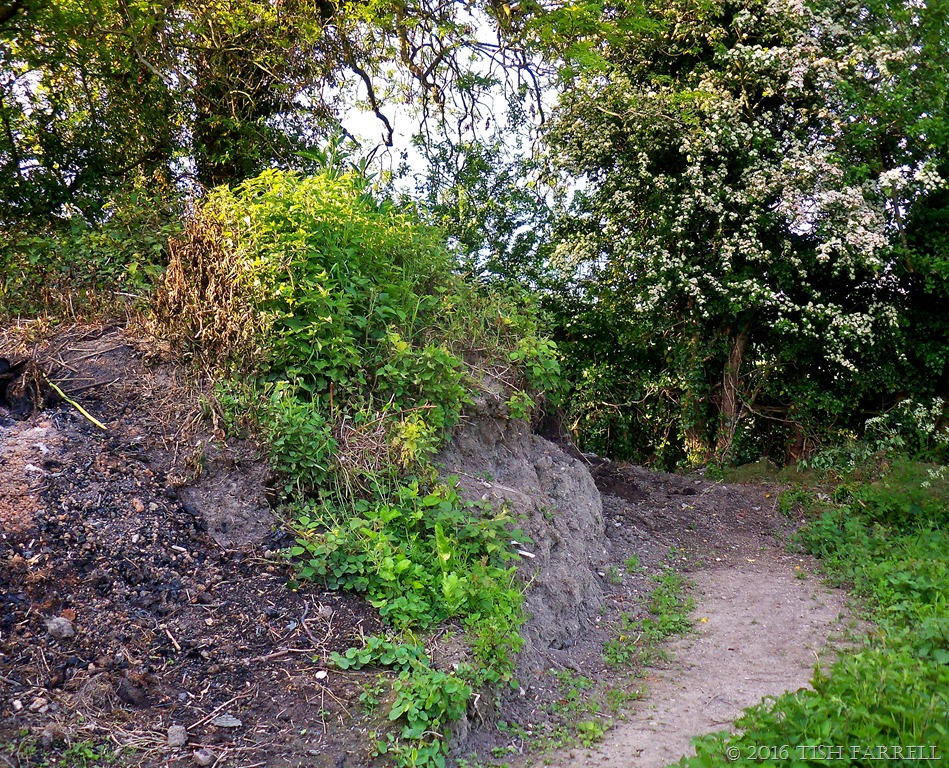
This heap was apparently some 40 years in the making. At the end of the winter, before some of us began to recycle it, it extended beyond the weeds on the right, and was 6 or 7 feet high. I suspect I have moved around 100 barrow loads. Unavoidably, given that the allotment is a weed haven, the soil is filled with weed seeds, but at least it is lighter and more free draining, and gives crops a chance to get going. So far the crops in the new raised beds, or on areas where I’ve not dug, but covered the soil with several inches of stuff from my own compost heaps, are far superior to anything grown on existing dug-over soil. And while no-dig proponents claim that this method means fewer weeds, I don’t think this holds for a very weedy allotment, but at least perennials like dandelion and nettle are easier to remove from lighter soil.

This year’s Lark sweet corn, growing next to the peas on a no-dig plot.

Nautica French beans in a raised bed on recycled compost heap soil. So far so good, though a few nettle seedlings popping up.
*
And now for Plexit, and my plan for plot downsizing.
Ideally in terms of work load it would have been better if I had already relinquished the half plot I first started with nine years ago – along with the leaning shed and the greengage tree that only fruits every nine years. Despite all my compost input, pony poo additions and green manure growing, the ground is still the least promising. The only remedy would be to cover it with the rest of the communal soil heap, but then I reckon that (along with effort needed to move it) it would be far better deployed on the new plot where I’ve just started making a no-dig experimental bed by covering the weedy, long uncultivated ground with cardboard and six inch layer of soil, and then sowing it with cover crops – fenugreek and phaecelia. I’ve no idea how this will turn out. It’s also adjacent to my other experimental section of cardboard covered by 6 inches of tree shreddings – another unknown quantity with regard to next year’s cultivation potential.
But the main block to immediate downsizing is the fact that the much loved raspberry patch is at the top of the old plot, and I can’t give it up until I’ve got a new bed going. The present one keeps us in fruit the year round, so can’t be surrendered lightly. I started a new bed behind the polytunnel last winter, but the canes are being very slow to get going, and I may need to replace some of them – all of which will put Prexit on hold.

Nor am I keen to give up the bottom half of the old plot just yet because it’s doing rather well, and I also have my three massive compost heaps there, and several leaf mould silos. And anyway it provides plenty of room for potatoes and winter veg. And then well…
In the end I suppose it’s more than obvious. The Prexit sceptic has a point: I won’t be yielding territory any time soon. But then that’s my point. I’m busy negotiating, doing essential groundwork, ensuring that what I give up will be in reasonable shape when I do so. Only when conditions are the best they can be, or I’ve run out of steam, will I start the retreat. Makes you wonder about Brexit, doesn’t it?
In the meantime, if don’t have a garden…
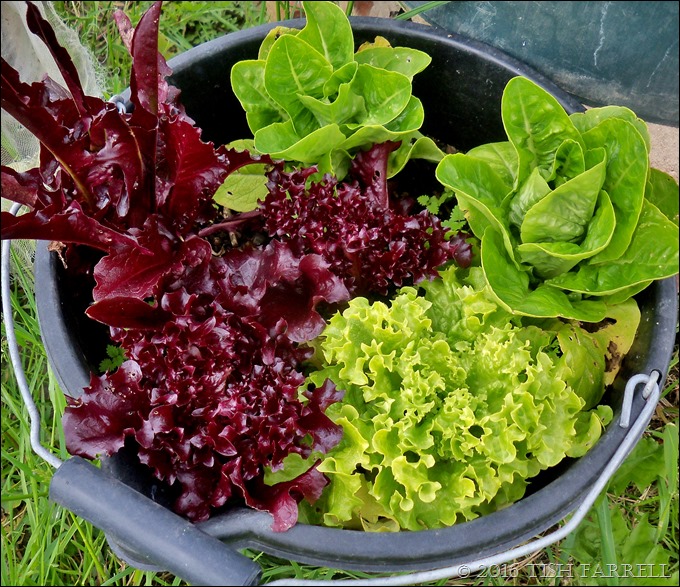
Lots of vegetables grow well in containers – leeks, garlic, carrots, spinach, salad stuff, tomatoes. A bucket with a few holes in the bottom makes an easily portable garden.
copyright 2016 Tish Farrell
Related: Trying not to dig the plot and 30 minutes of weird weather
This month Jude at The Earth Laughs In Flowers wants to see photos of the edible garden. Visit her to find out more and see her splendid allotment gallery.