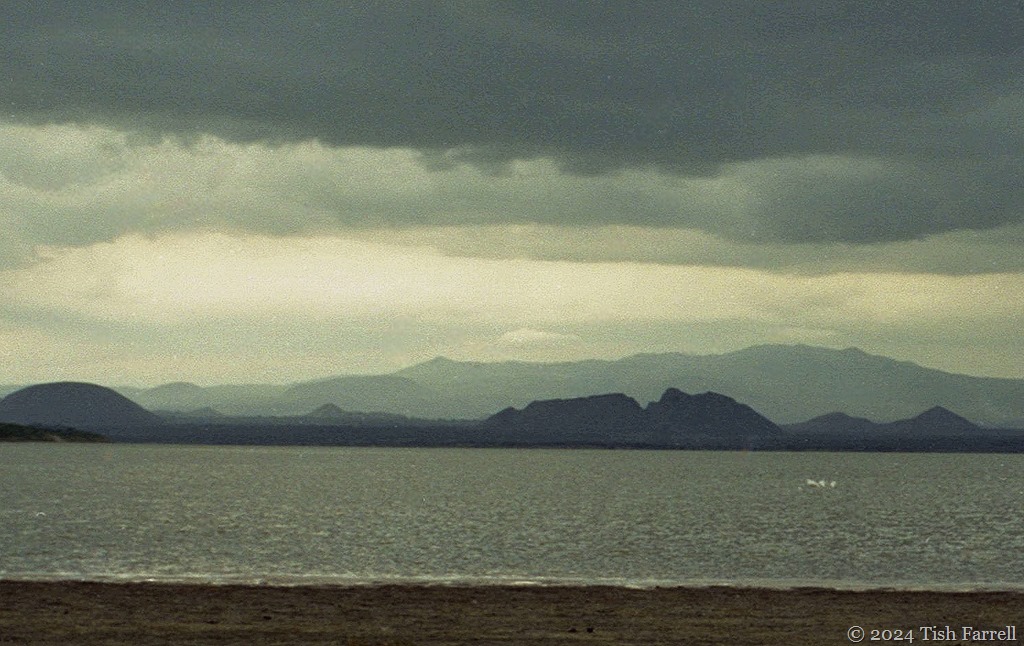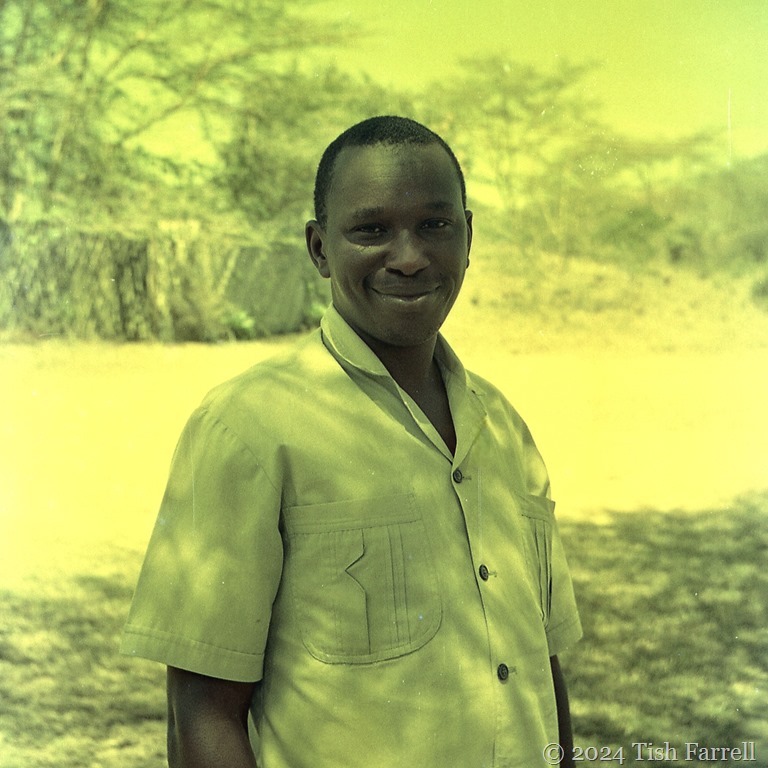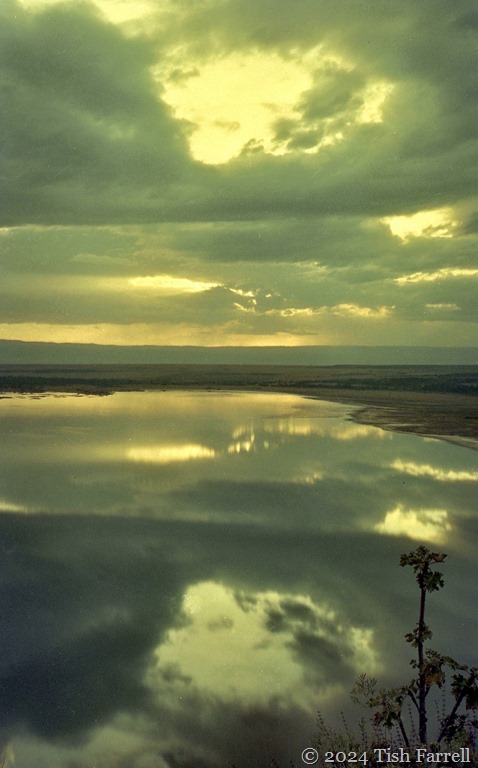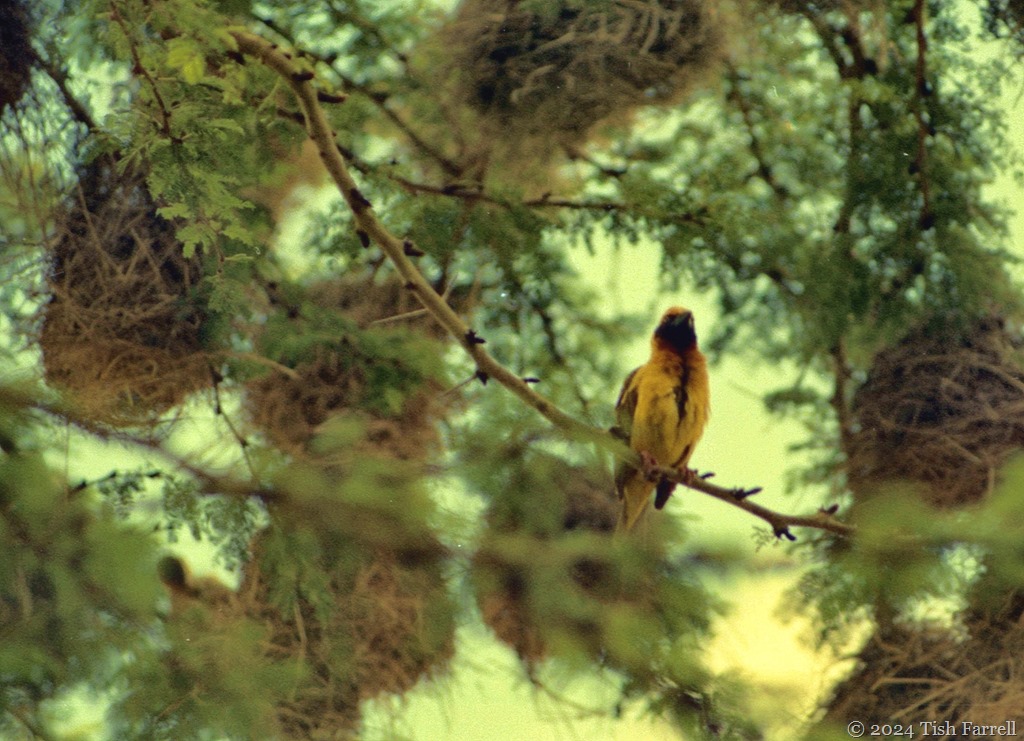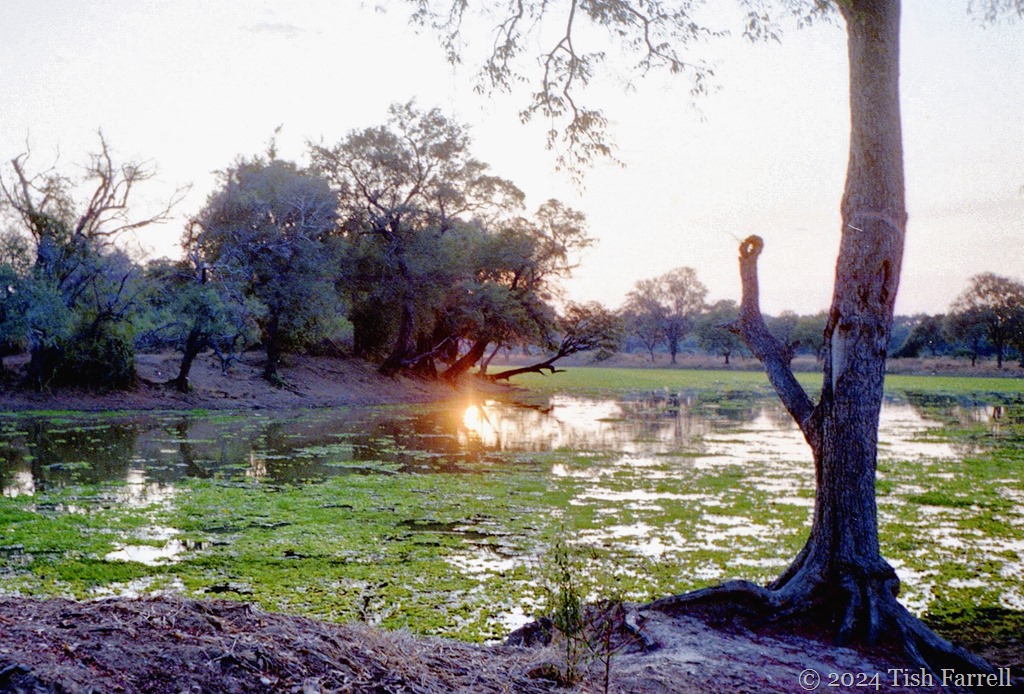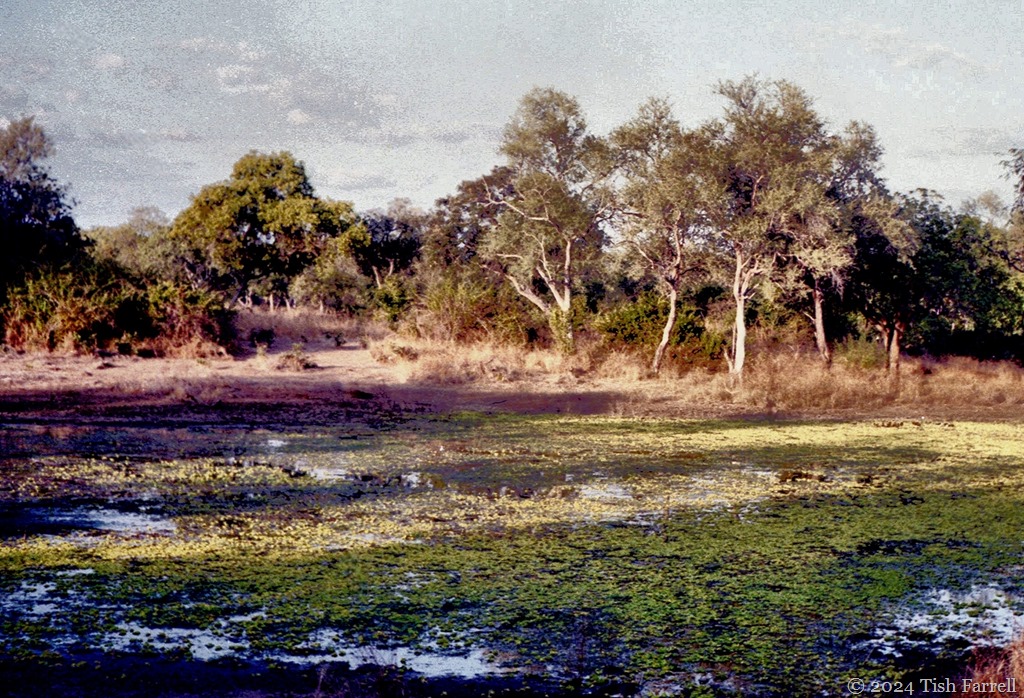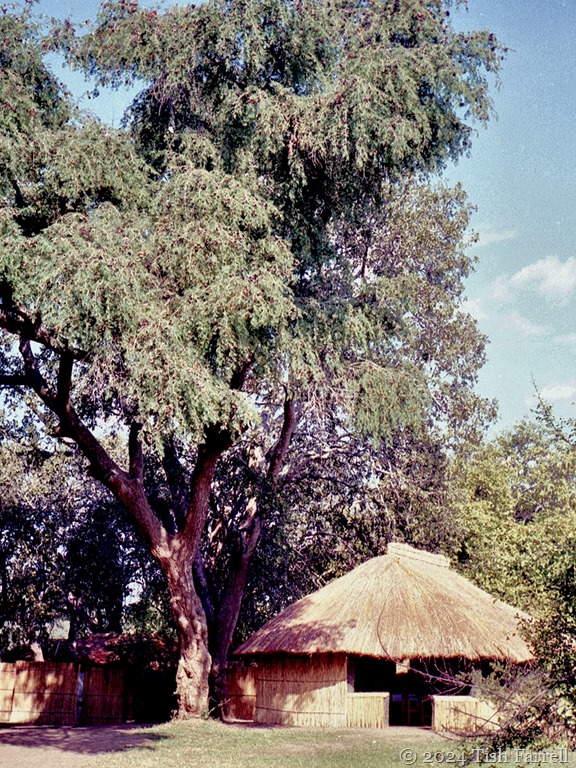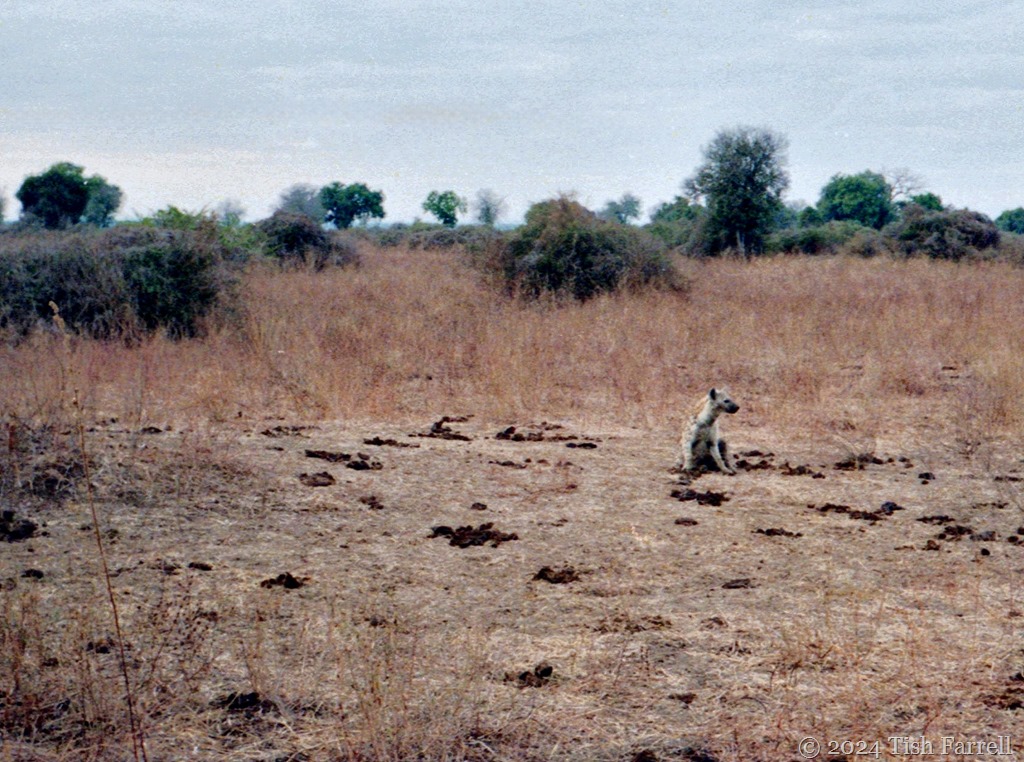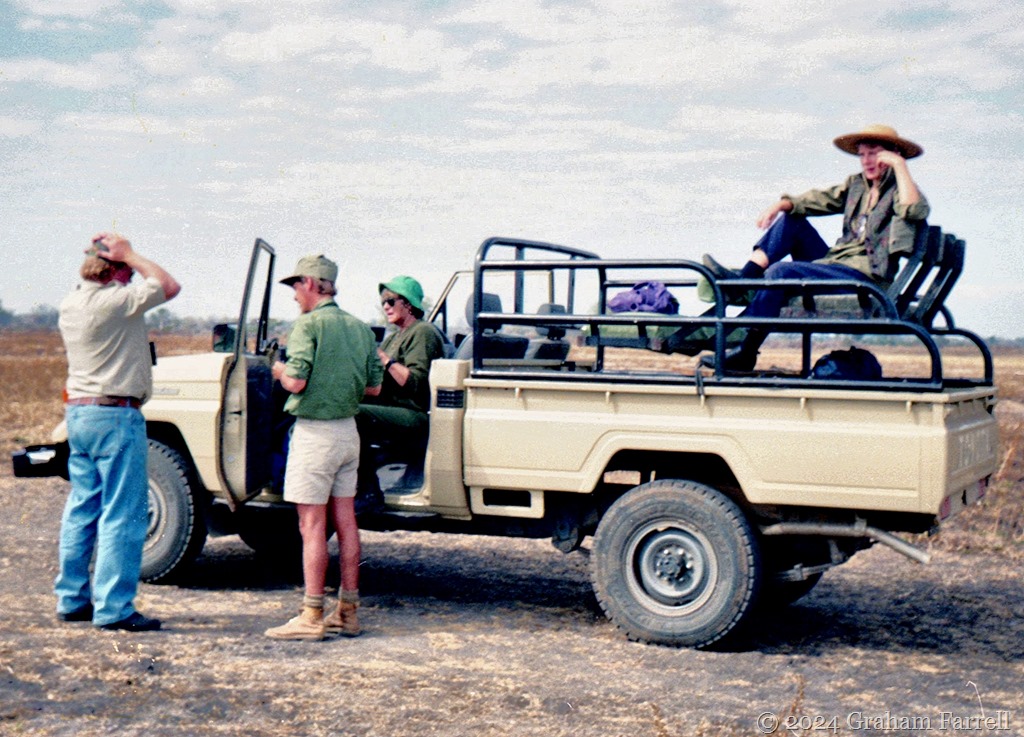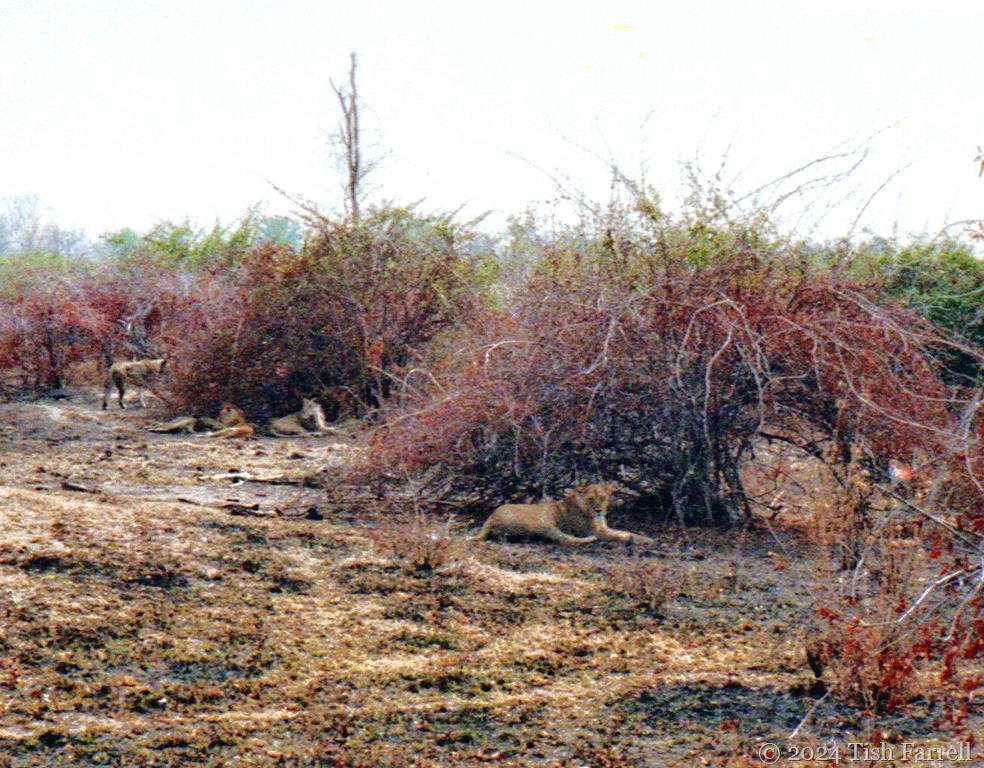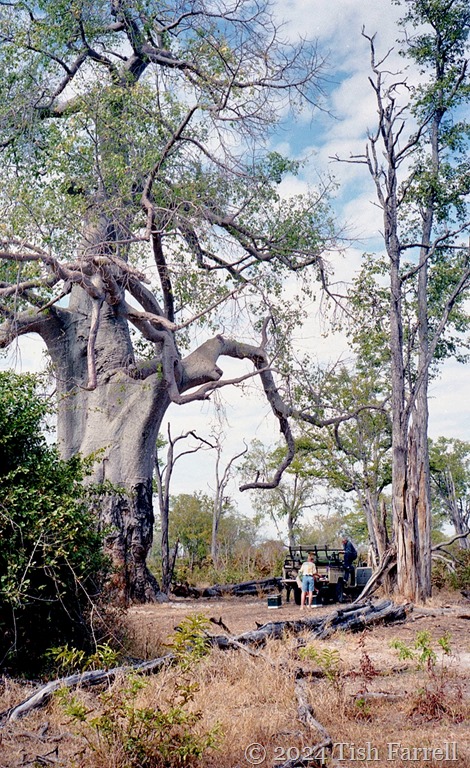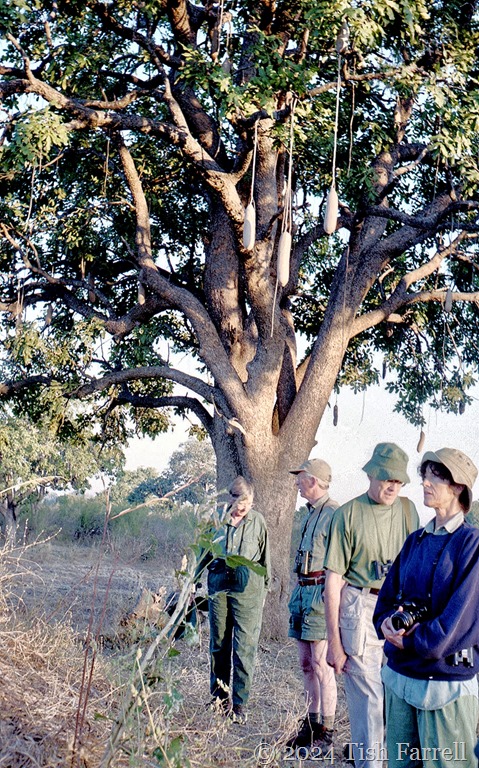
Letters From Lusaka #5 ~ The Road To Petauke And The Man With The Yellow Maize

Eastern Provinceed

In 1992-1993, during the first years of Zambia’s multi-party democracy, we were posted to Lusaka, Zambia’s capital. Graham was charged with organising the distribution of European Union food aid to drought-stricken Zambians. (Part 1 is HERE and part 2 HERE and part 3 HERE and part 4 HERE)

zambia-political-map

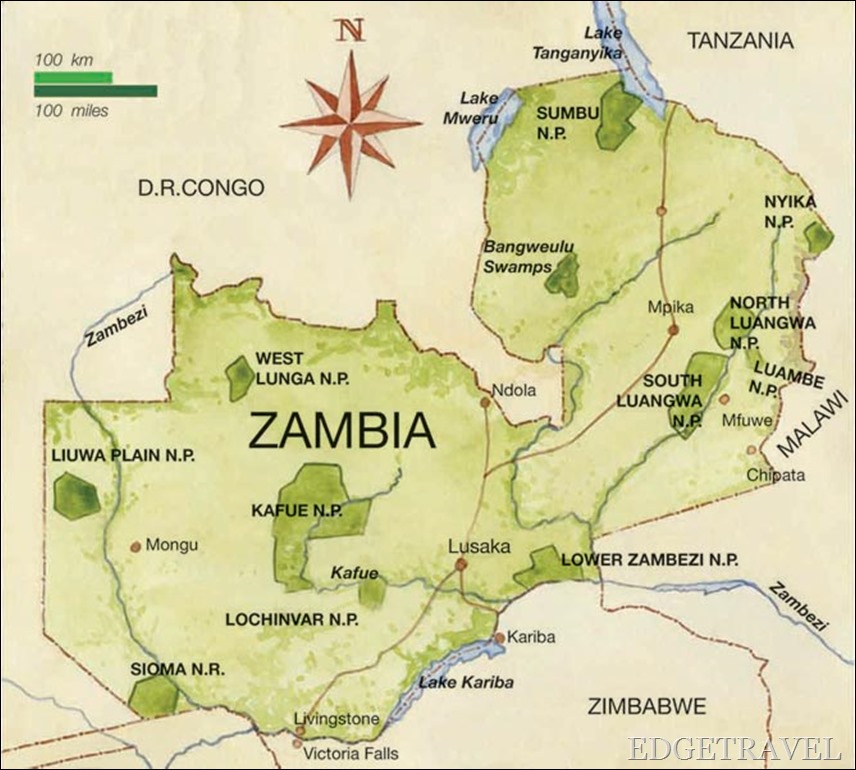
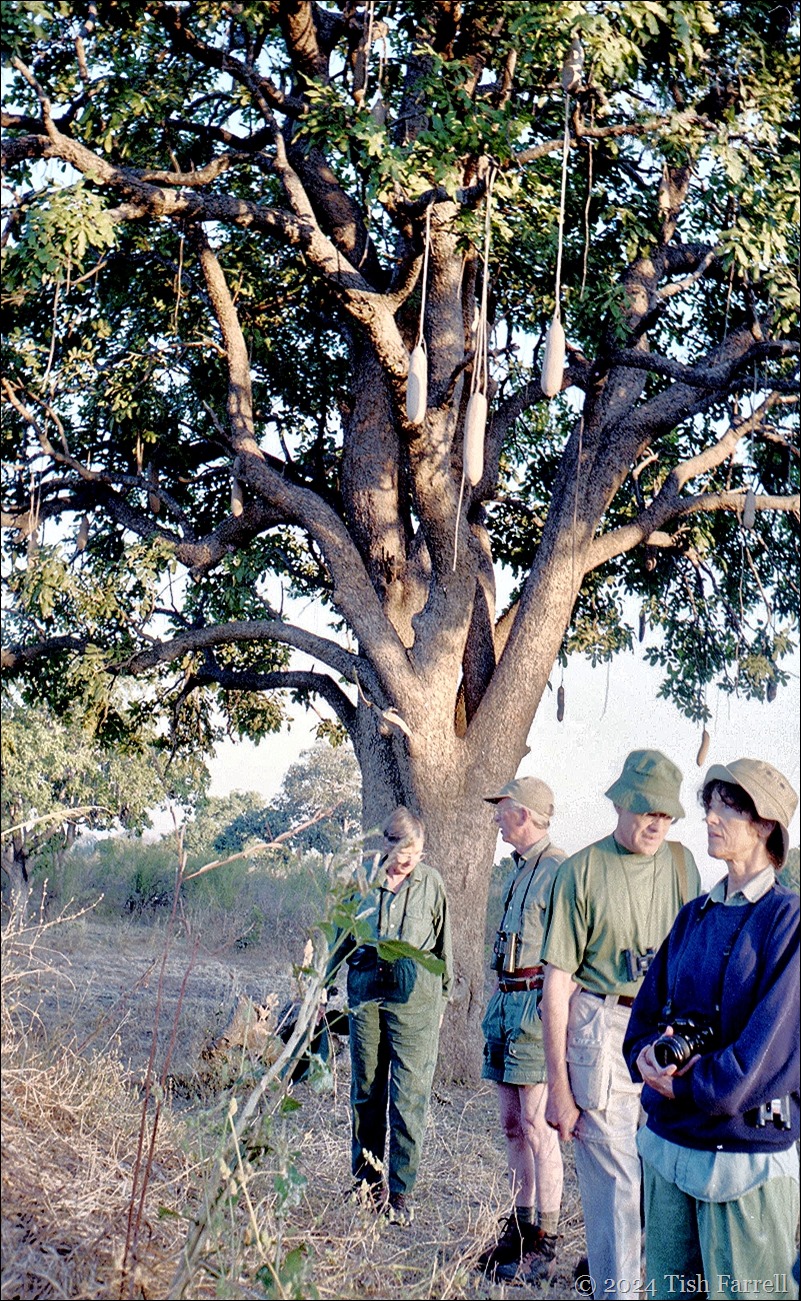
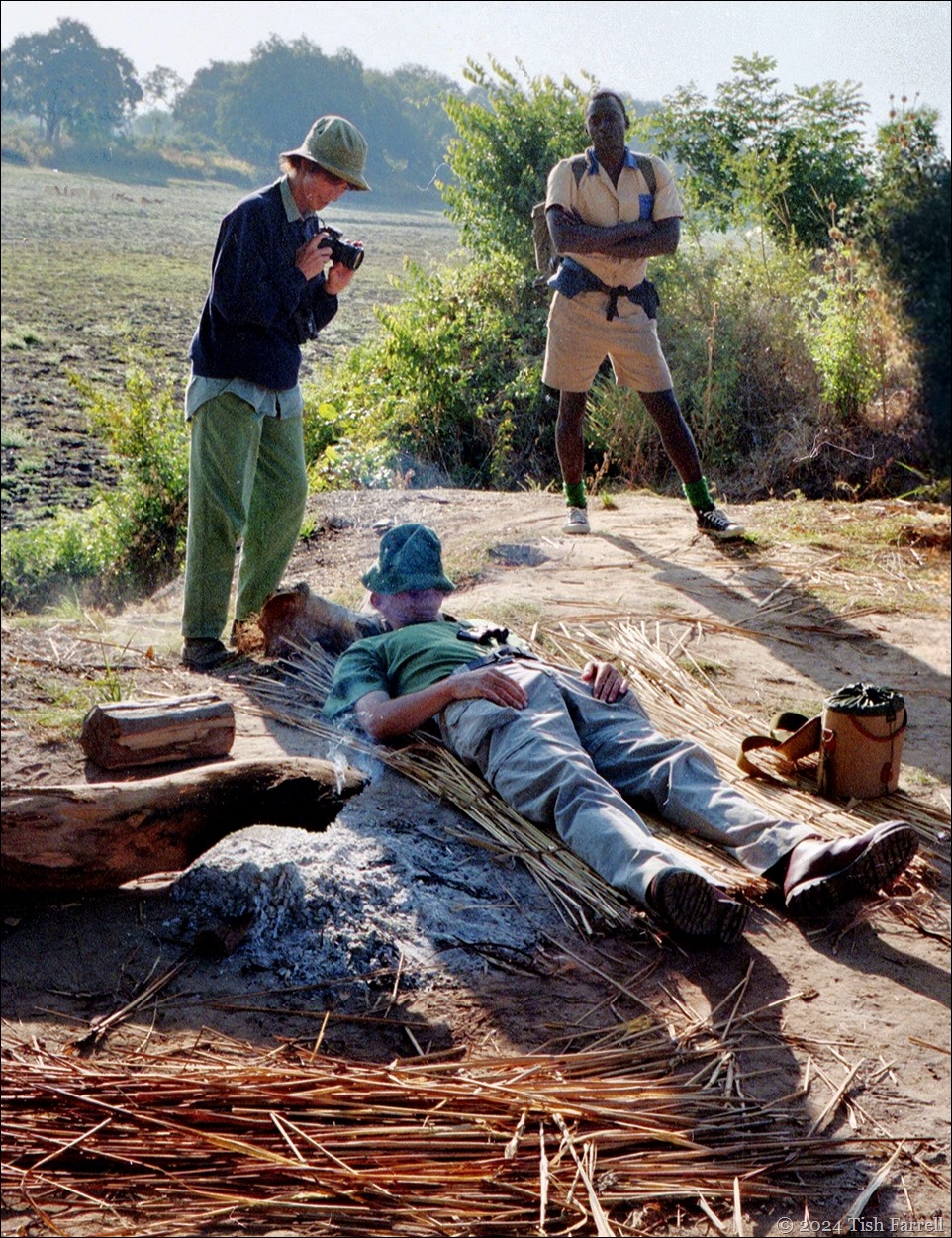
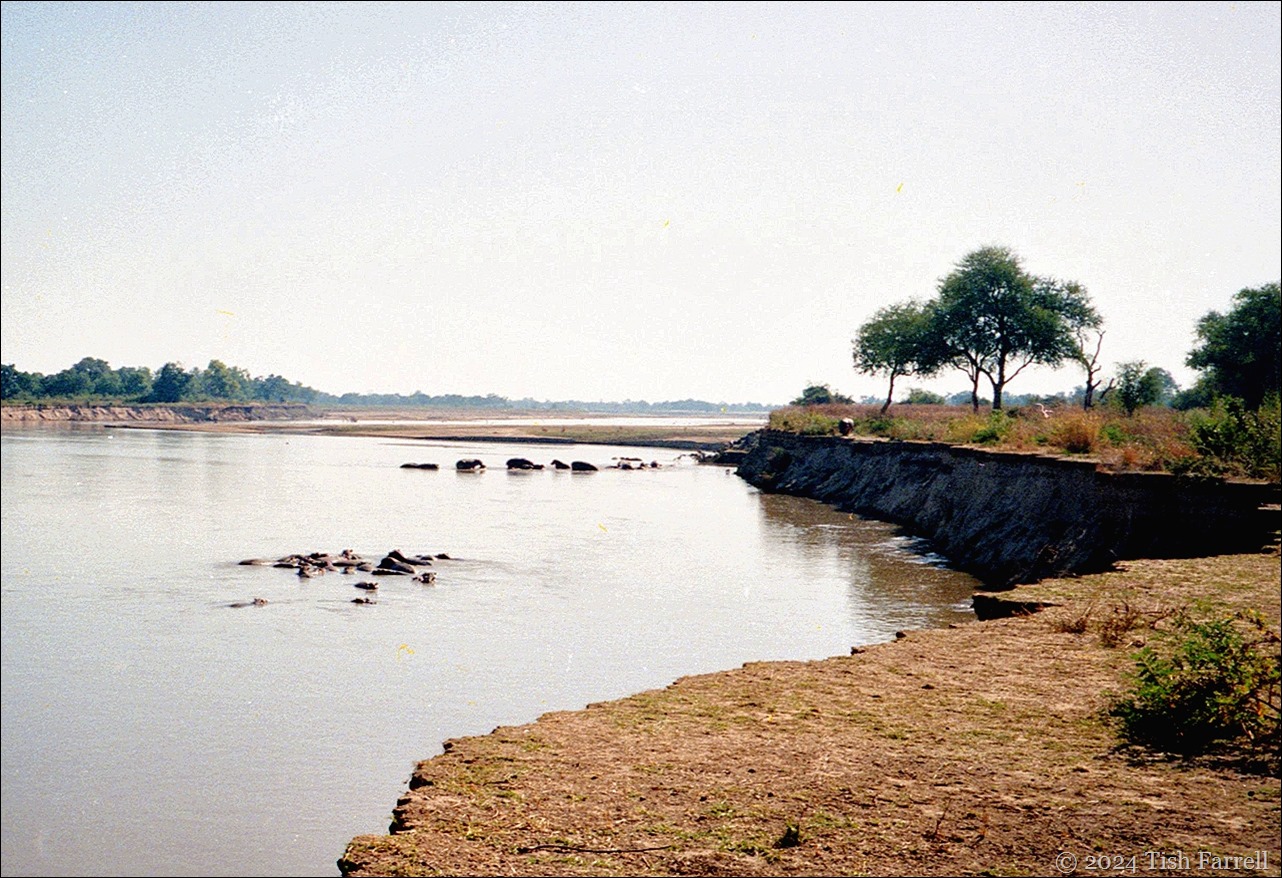
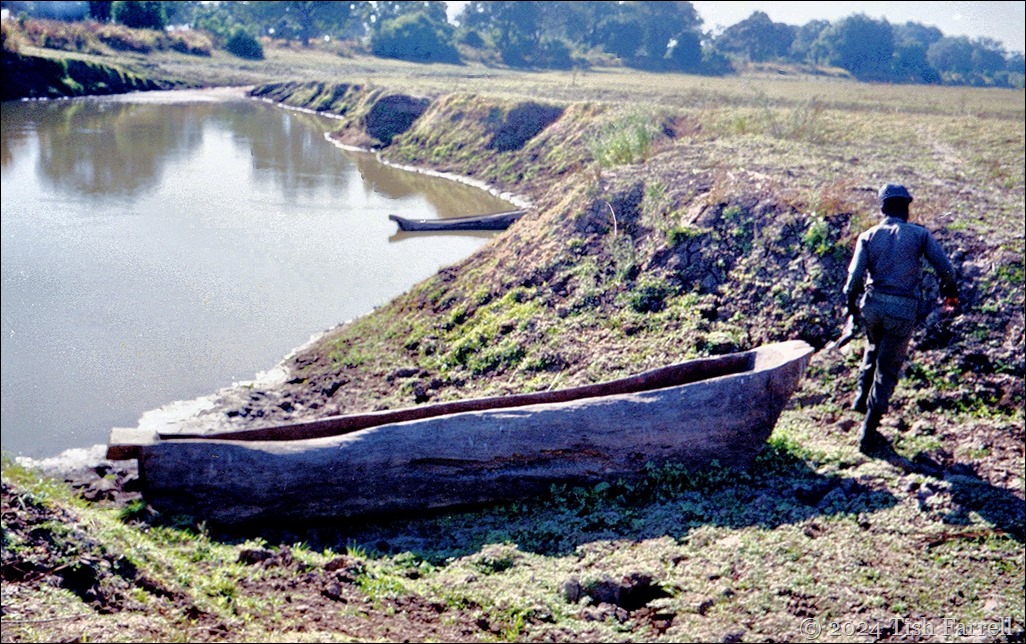
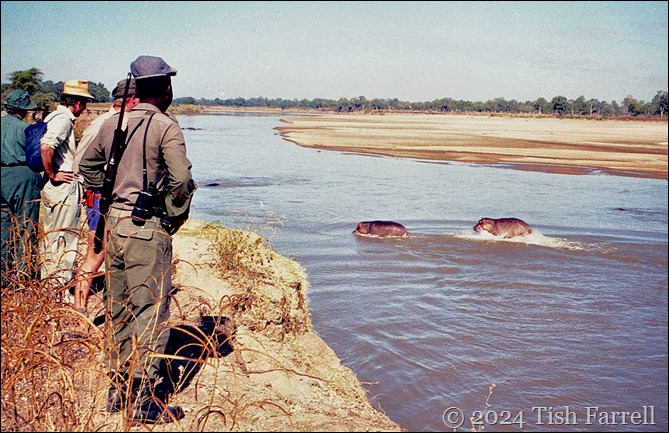
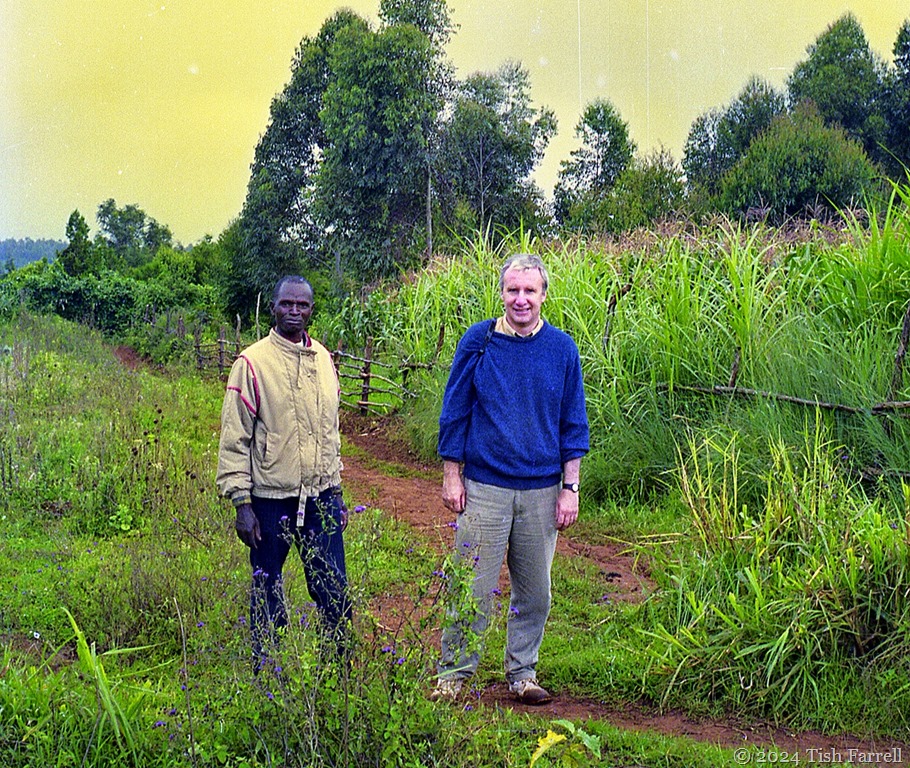
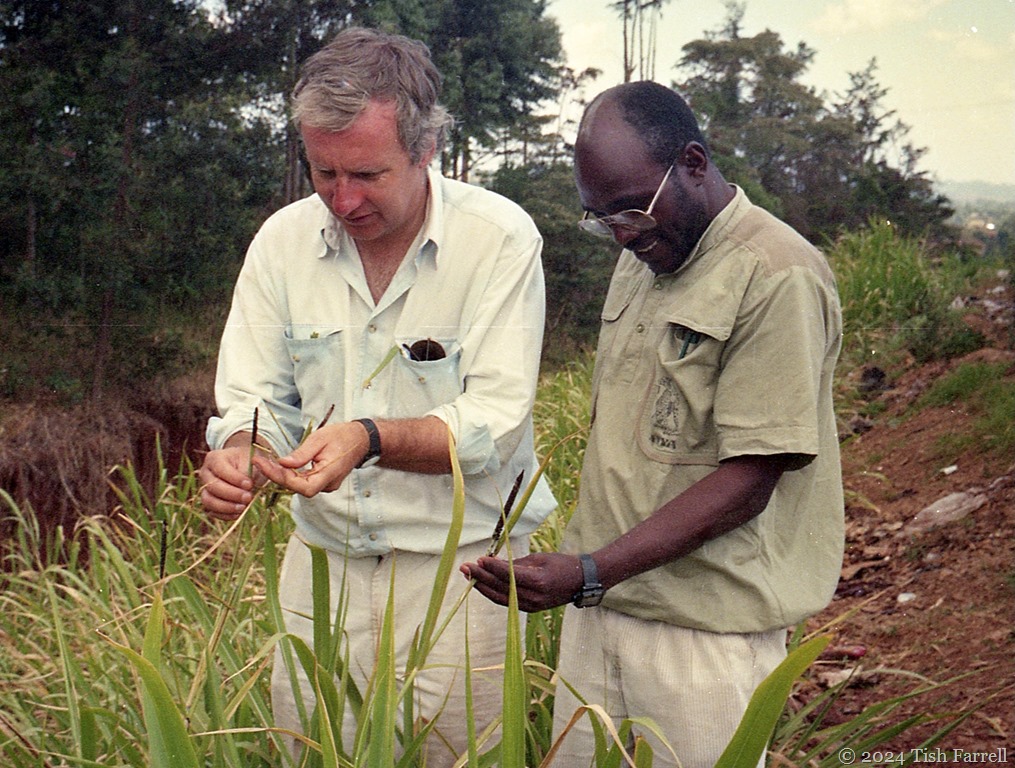
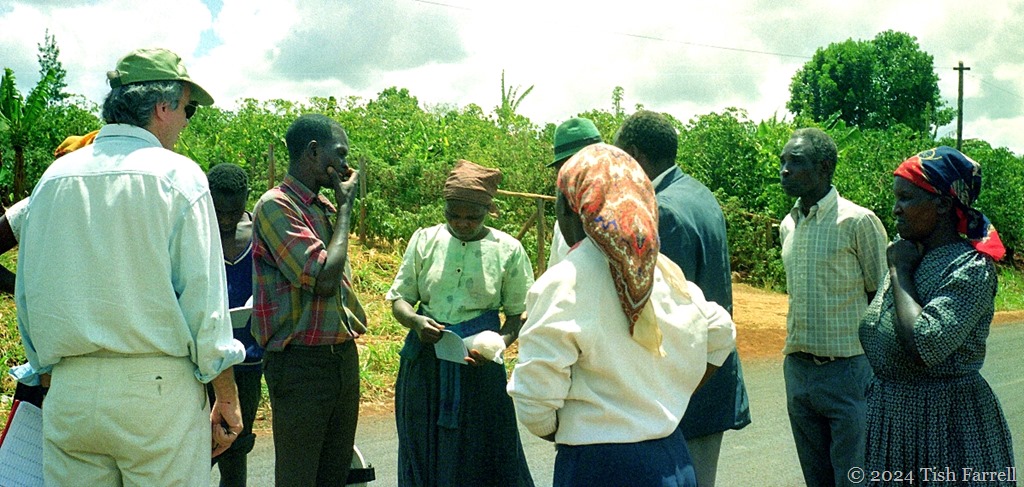
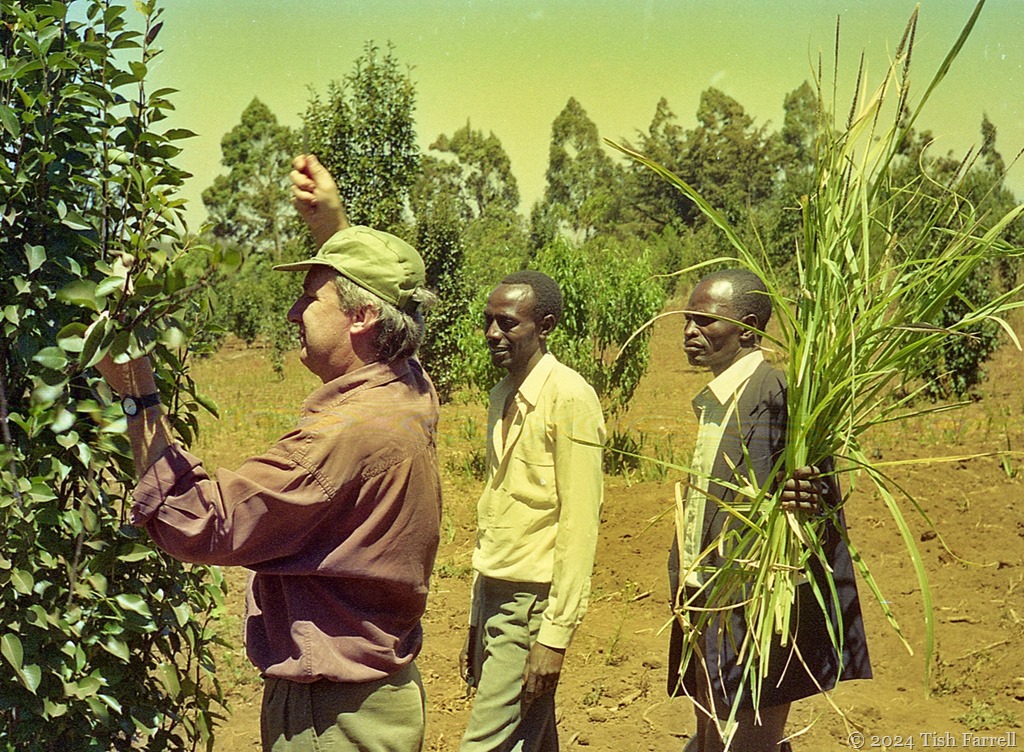
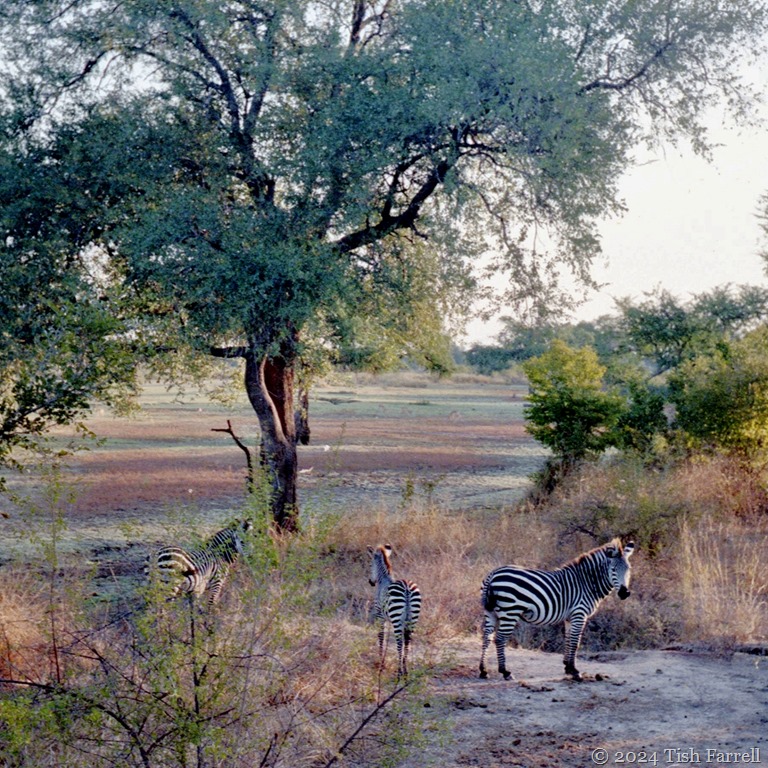
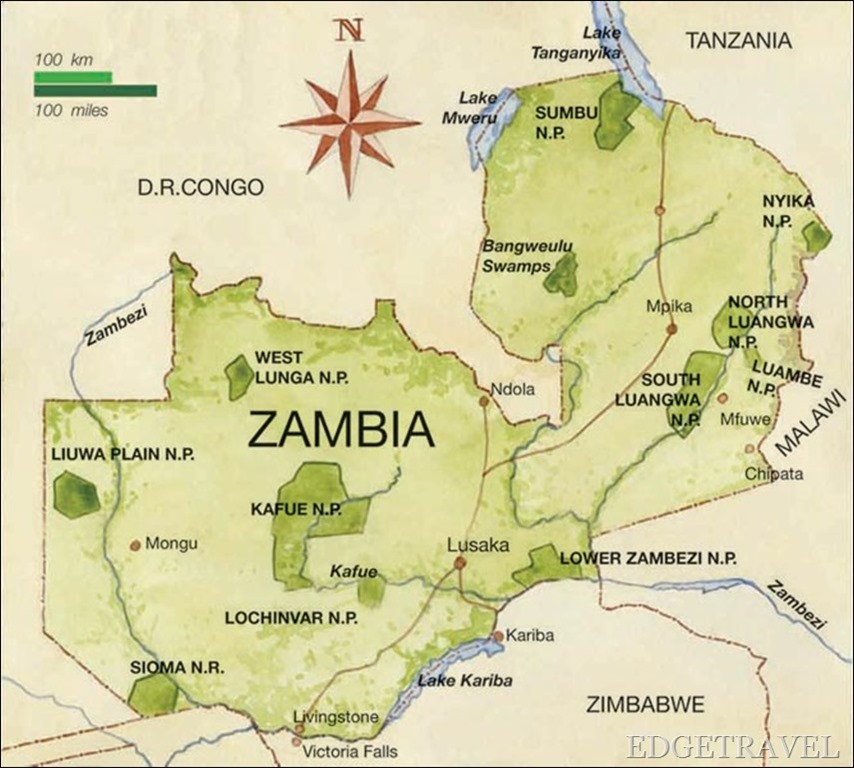
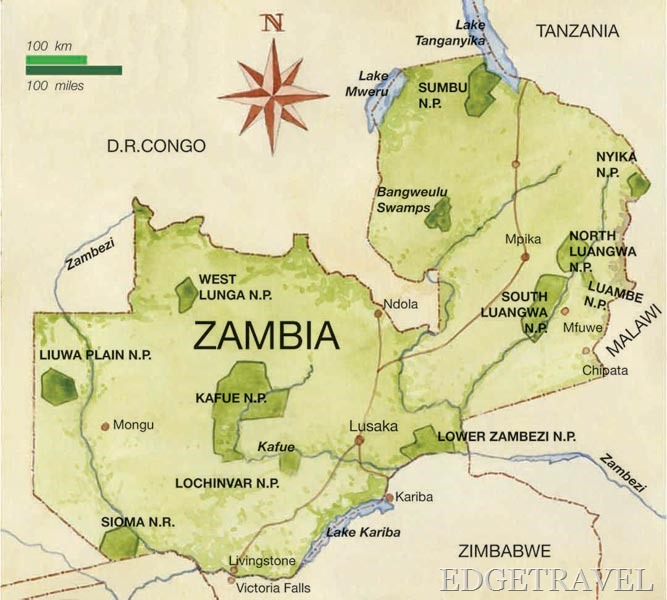
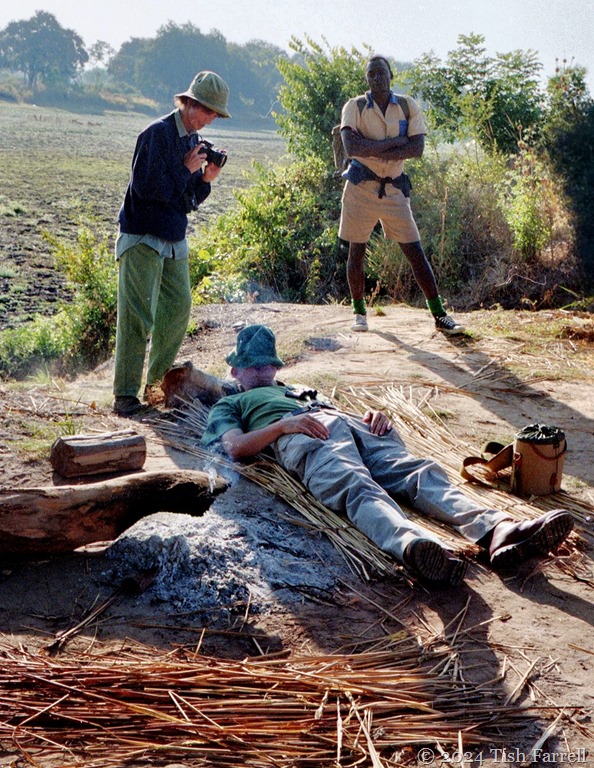
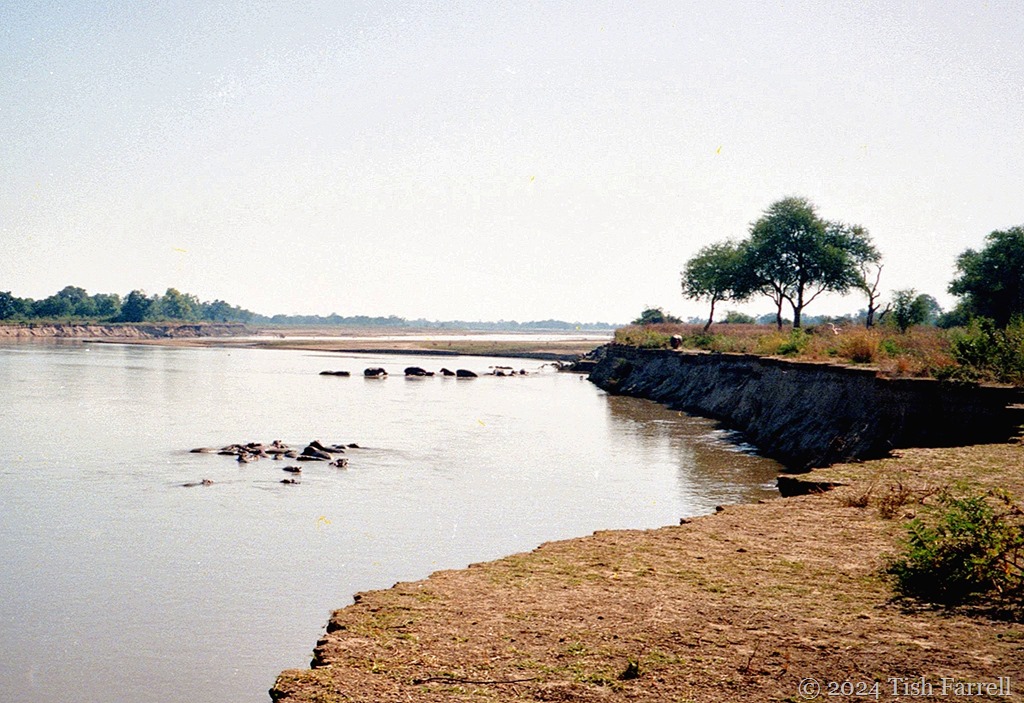
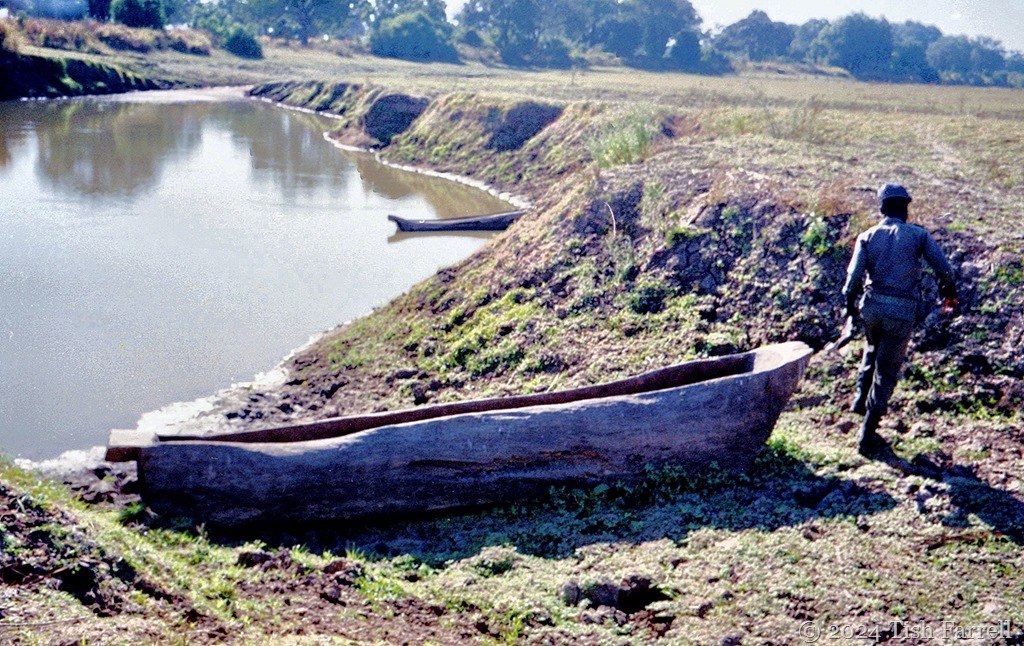
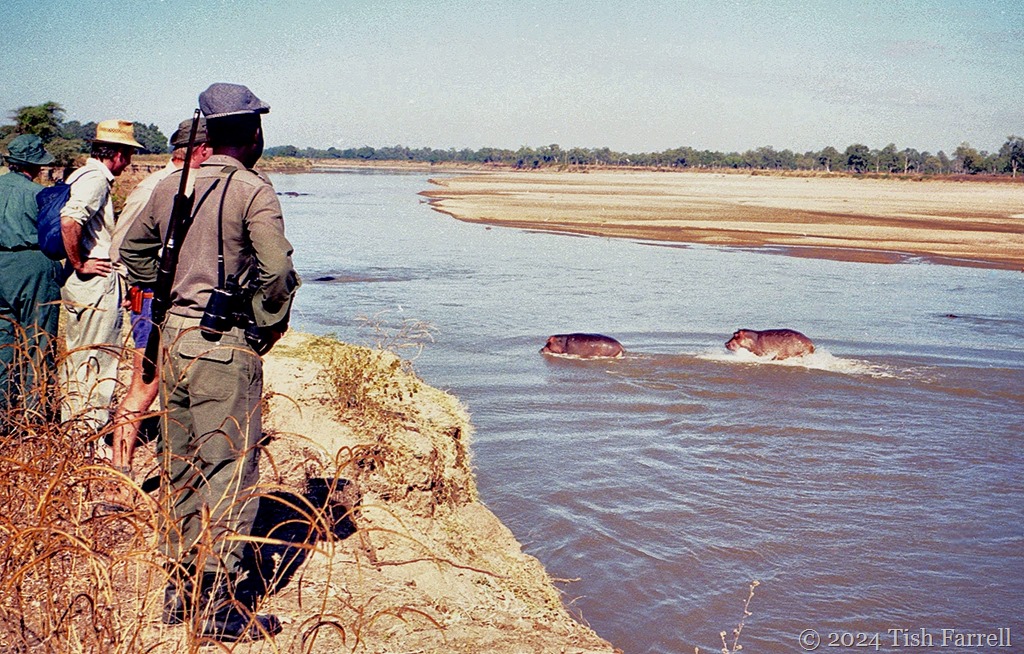
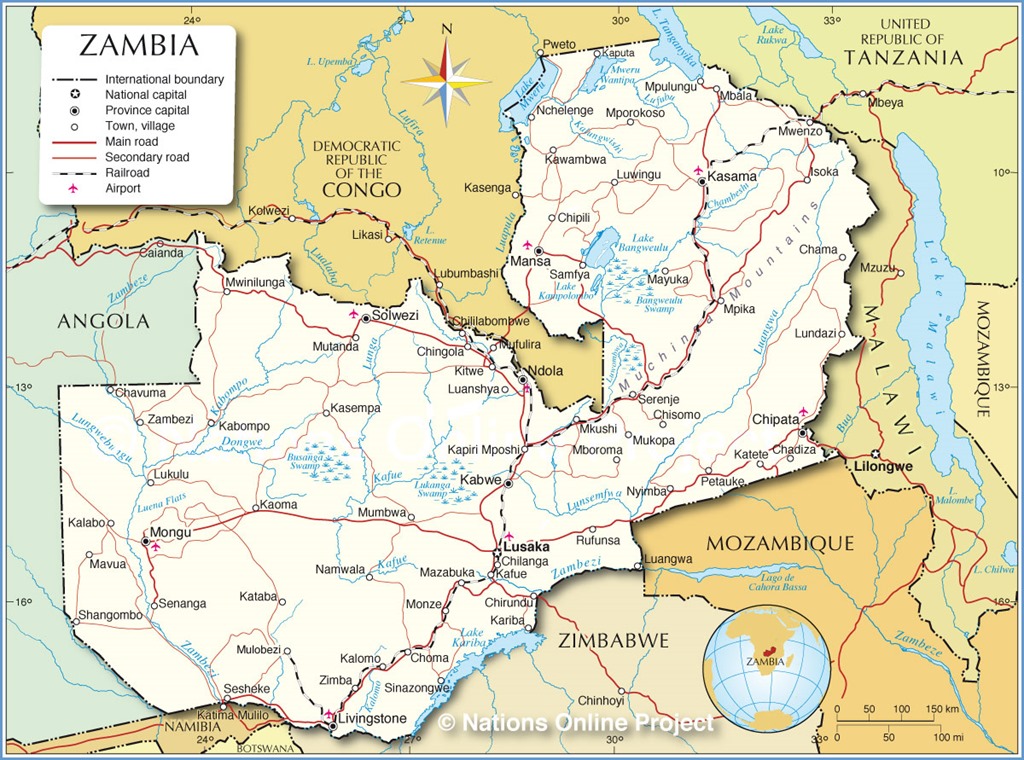
Early in April 1993 Graham has another upcountry mission, this time to check on the arrival of maize at the Ukwimi refugee settlement area near Petauke, Eastern Province. The initiative, in an area north of the Mozambique border, is managed by the Lutheran World Federation, an organisation overseeing some 25,000 refugees in 73 villages spread over 300 square kilometres, an area that also includes several indigenous Zambian communities.

The incomers are village farming folk who have fled the civil war in their own country. Many among them share both language and cultural traditions with Eastern Province Zambians (i.e. communities historically divided by colonial map makers). At Ukwimi they are settled on parcels of land and given every assistance to become self-sufficient. In April 1993, with peace negotiated between Frelimo and Renamo forces, most recent cross-border arrivals in Ukwimi have been driven there by hunger.

*

It’s a 400 kilometre drive to Ukwimi HQ*, and another Monday morning appointment. We set out on Sunday at midday, leaving Lusaka on the Great East Road. The sky is overcast and it’s rather cool.  As we pass by large dairy farms, among them Waterfall Farm owned by mining conglomerate Lonrho, the sight of green fields with Friesian cattle tells the brain we’ve somehow been flipped to Cheshire in the English Midlands.

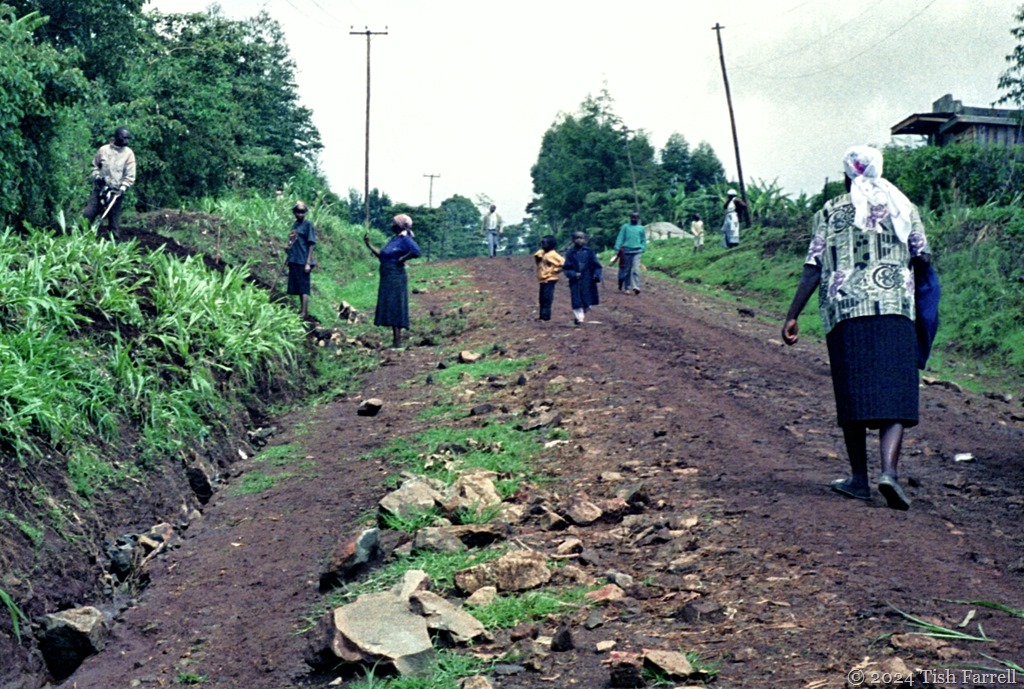
But no. Now there are here-and-there banana thickets, palm trees with swollen boles and dishmop tops. And now we’re in bush country and the road stretching out. And now there are no other vehicles, but there are people, and we soon find that Zambians have many uses for highways beyond driving on them. We begin to see many people carrying palm fronds. It is Palm Sunday and the devout are walking down the middle of the road. And why not choose a smooth path.

Young lads sit on the road edge, leaning back, hands on the tarmac. They simply seem to sit and sit.

At Changwe there is a roadside trading centre with a few stores and a smart hacienda style bar and restaurant. We pass a bicycle race there.

At one point we bowl over a crest in the road and come on a big church gathering, filling both carriageways. People are singing and drumming. The crowd parts like magic and with great good humour, they wave us through.

*

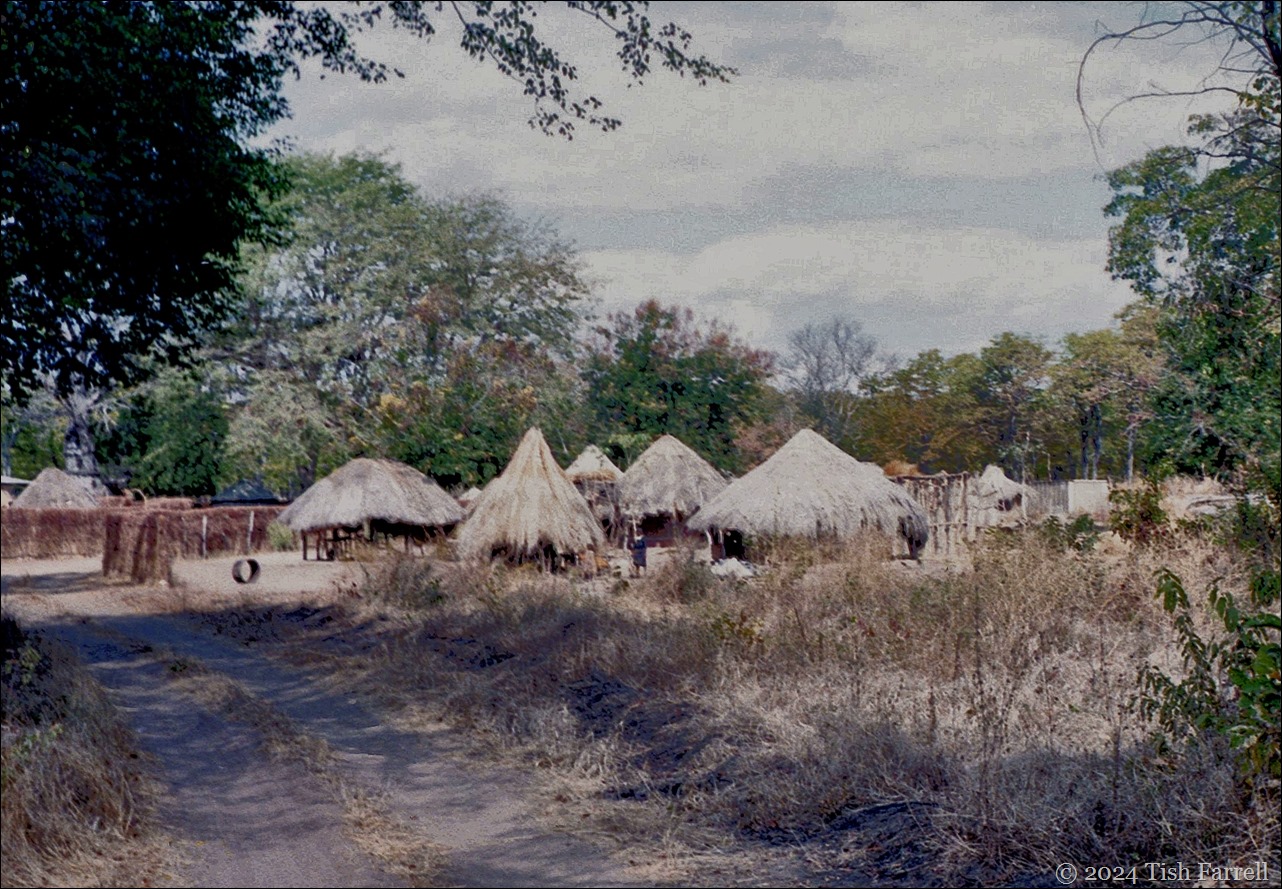
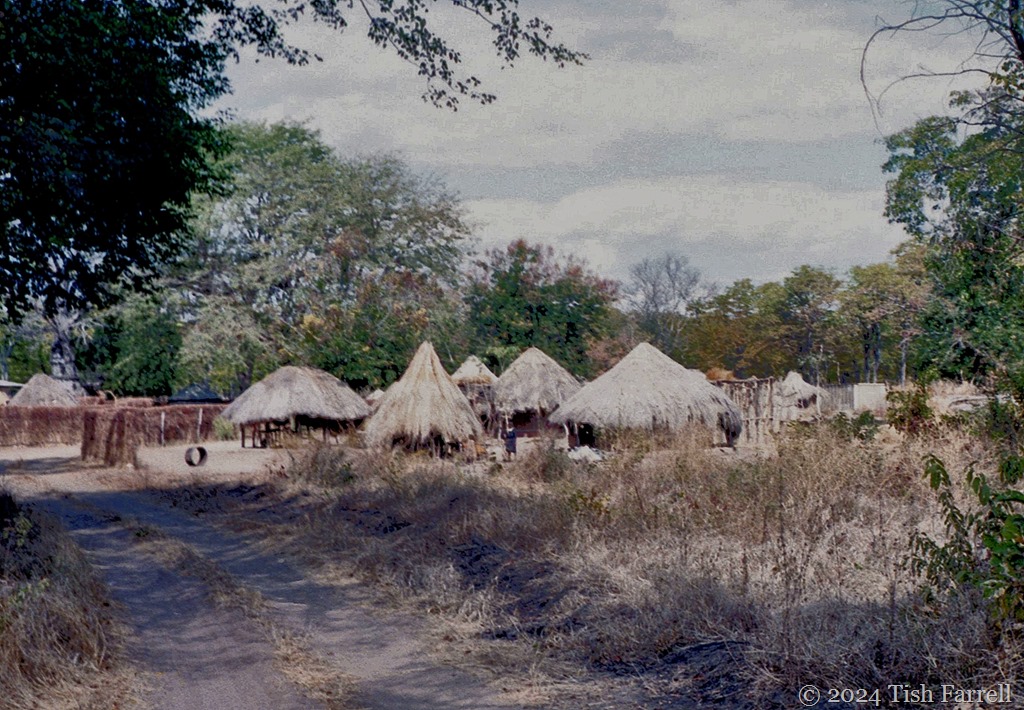
Bush country flanks the asphalt, tall grasses on either hand and beyond them glimpses of shaggy thatched roofs, clusters of dwellings under thorn trees, small plots of maize. In places where the bush meets the tarmac there are hand-painted signs announcing the presence of bus stops, the gates to small farms: Mulenga, Mulaliki, Mulawzi; to the local medicine man.

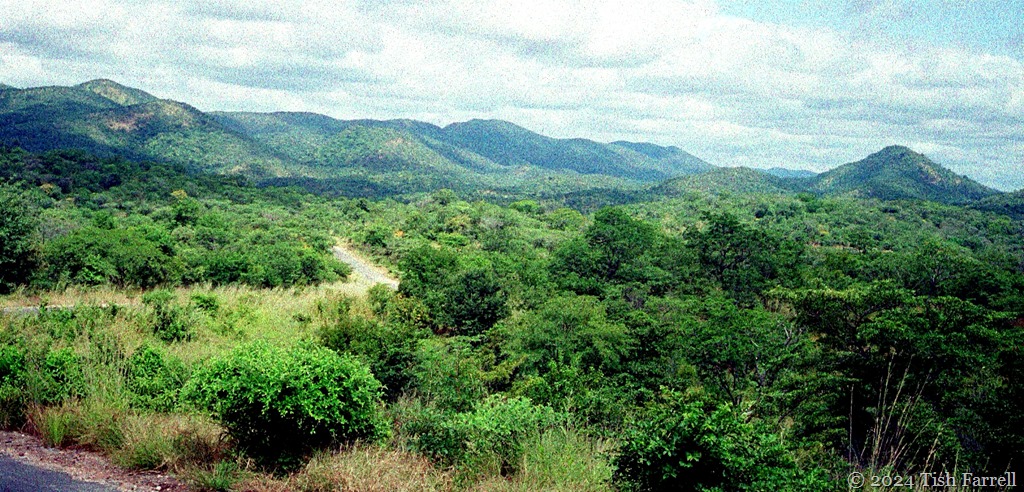
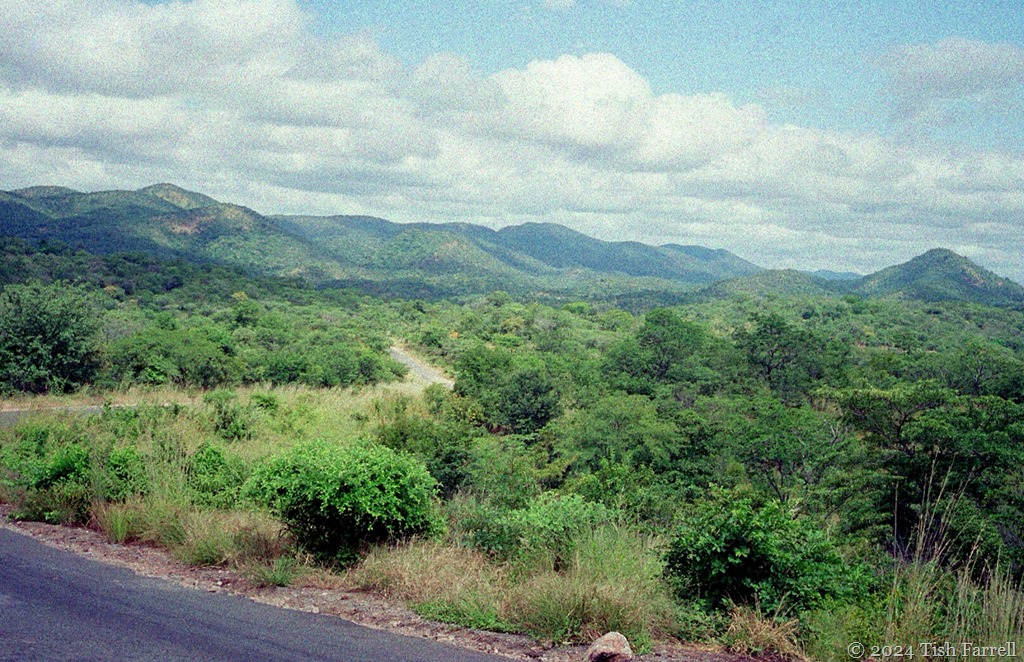
We are travelling along a low ridge, to the south the land falls away in lightly wooded plains; to the north is a spine of blue hills. There are road-side stalls selling pumpkins and squashes of all shapes and sizes. There are wigwams of sugarcane, neat cords of firewood, sacks of charcoal. A woman walks by with a large zinc bath on her head. As she stops to adjust the load, a wave slooshes over the edge. The sight takes my breath away. I feel my spine contract.

And still there are few other moving vehicles along the road although we see many stranded broken ones.

Now the countryside is more hilly and densely wooded. There are roadside flowers, deep yellow daisies, pale yellow hibiscus, and a plant that looks like broom (also yellow). The villages have little thatched gazebos on the top of knolls with seats so you can look out to the blue hills. Meanwhile, the road that was good is not so good. There are big potholes, and to add to the driving confusion, some are filled with red dirt and others not. Where the road cuts through rock, it is carmine red and glinting with quartz.

Eastern Province Luangwa Valley 2 ed

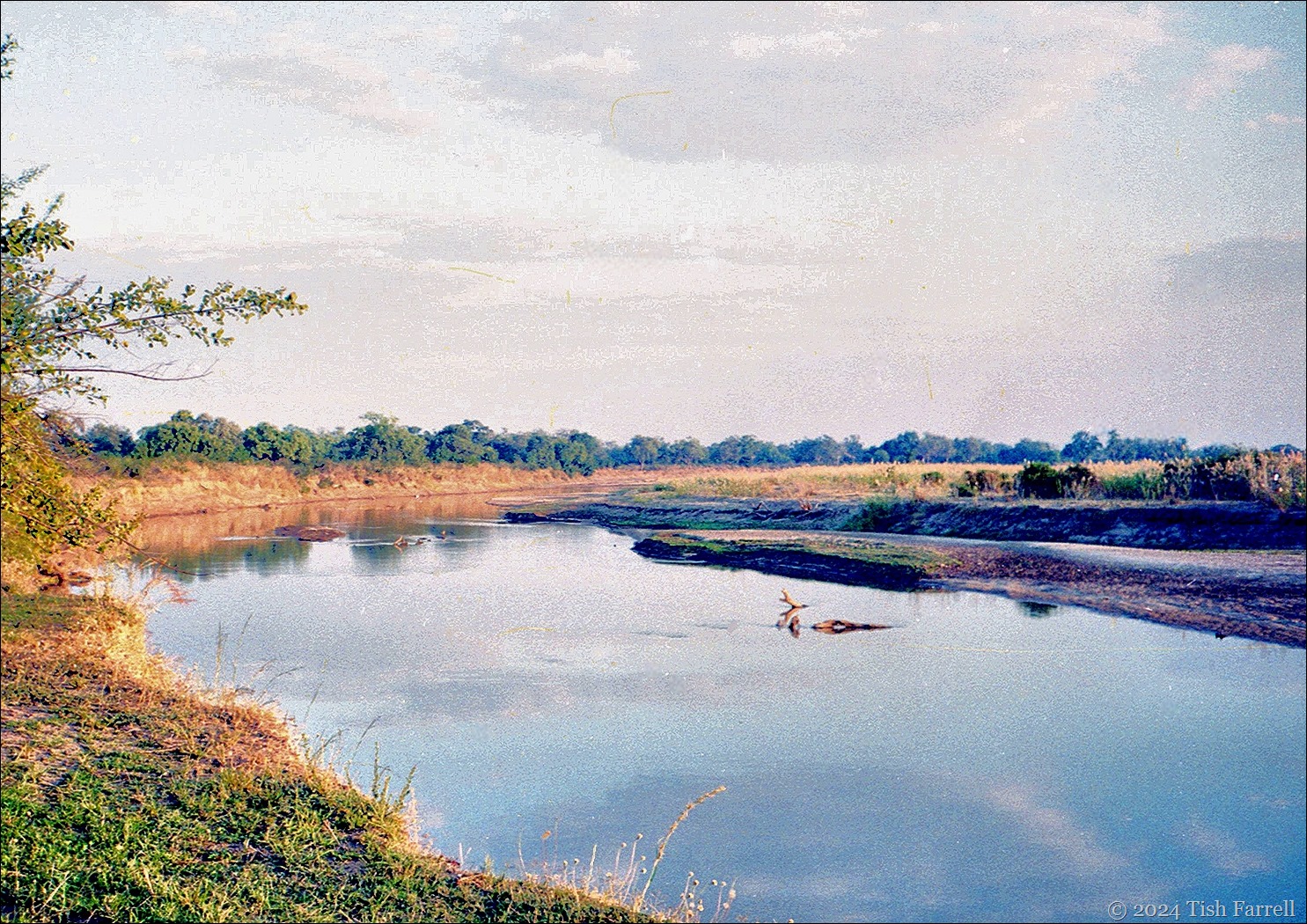
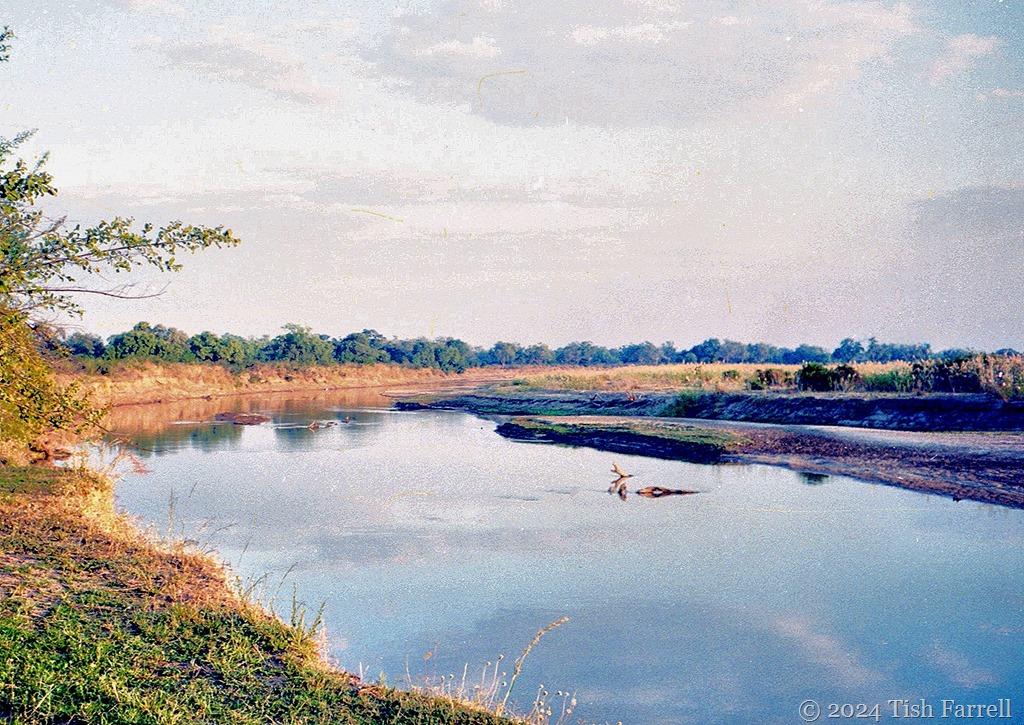
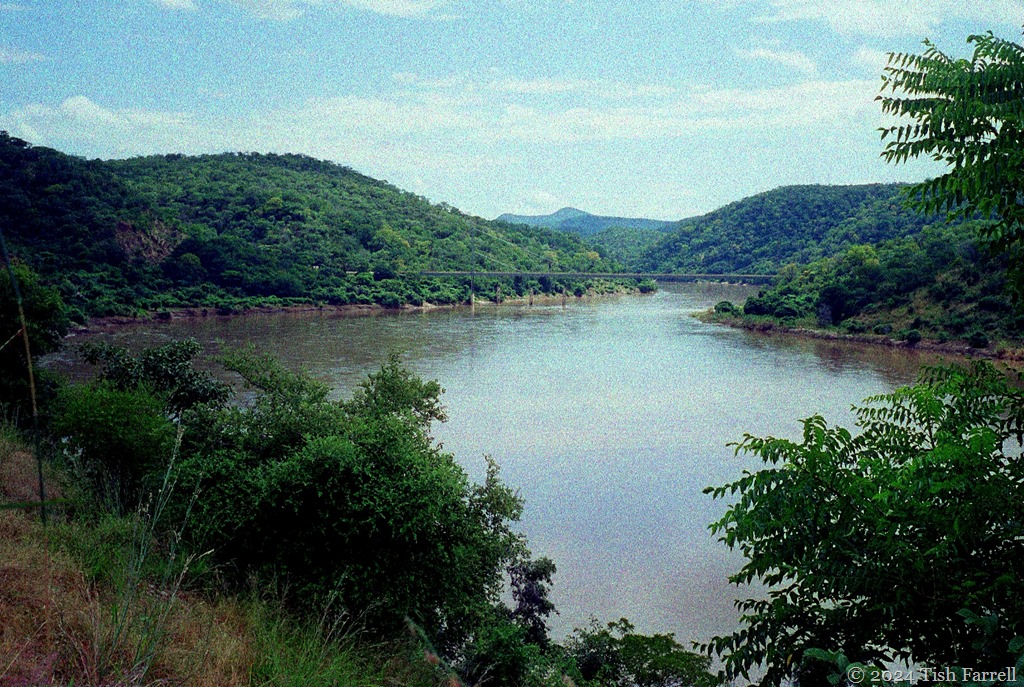
We cross the broad expanse of the Luangwa River between wooded gorges. There is a suspension bridge opened in 1968 by former President Kenneth Kaunda. It looks sturdy enough, but a sign instructs drivers that only one vehicle at a time may cross, speed limit 10 kph. And so we cross.

About 50 km from Petauke we drive through a small village and fail to stop at the police check point. There is no one manning it. But ahead a khaki figure dashes from a roadside hut and waves us back. My heart sinks. We’ve had some uncomfortable moments at Kenyan checkpoints. But the young officer is charming. He apologises for not being in the road where we would have seen him. He had been growing too hot standing there, he says. We can see his point, but he still wants to see some I.D.

As Graham fumbles with his brief case, trying to find something that might serve, he says he works for the European Union. Ah, says the policeman, the man with the yellow maize. Some of your trucks have already gone through.

Graham says he is going to Petauke to check on their arrival. The officer smiles broadly and asks Graham for his name, salutes me with a “Madame” and bids us farewell, all without need of paperwork.

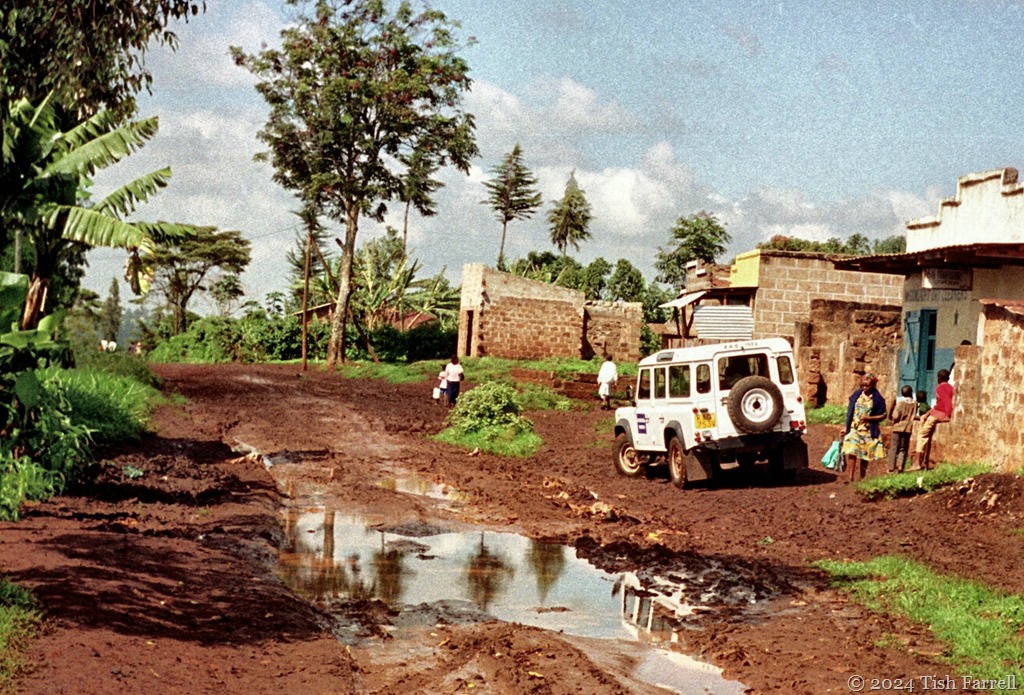
Further on at the turn for Petauke there is another road block. This time we are questioned by a young man who is clearly not a policeman. He tells us he is acting on his brother’s behalf.  “Just to be friendly”, he says, “my brother needs to know who you are.” He is happy with Graham’s business card, finally retrieved from the brief case.

Now the roadside shopping opportunities include furniture, items parked in splendid isolation in the bush – a bed,  a dining table, a row of Adirondack chairs.

Most striking of all is a lone Welsh dresser – the full deal, cupboards below, shelves above. There it stands, surrounded by elephant grass, challenging me, like one of the White Queen’s six impossible things before breakfast. And I wonder from what colonial or mission original was this piece so faithfully copied? And who does its maker think will buy it, here on the road to Petauke where so few people with the means to transport it seem to pass?

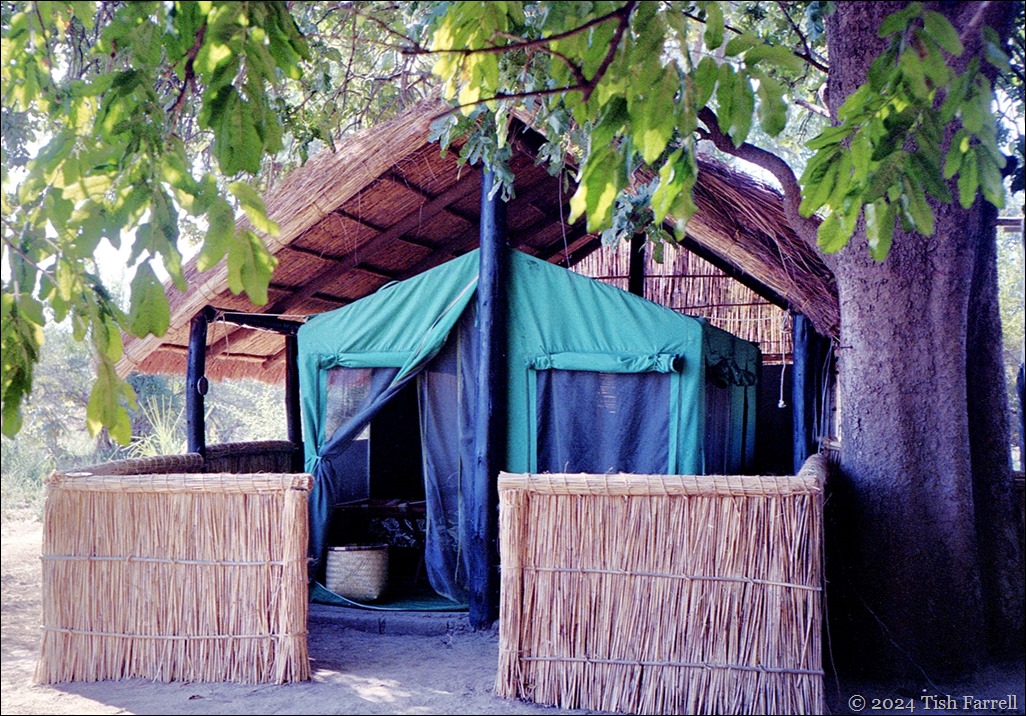
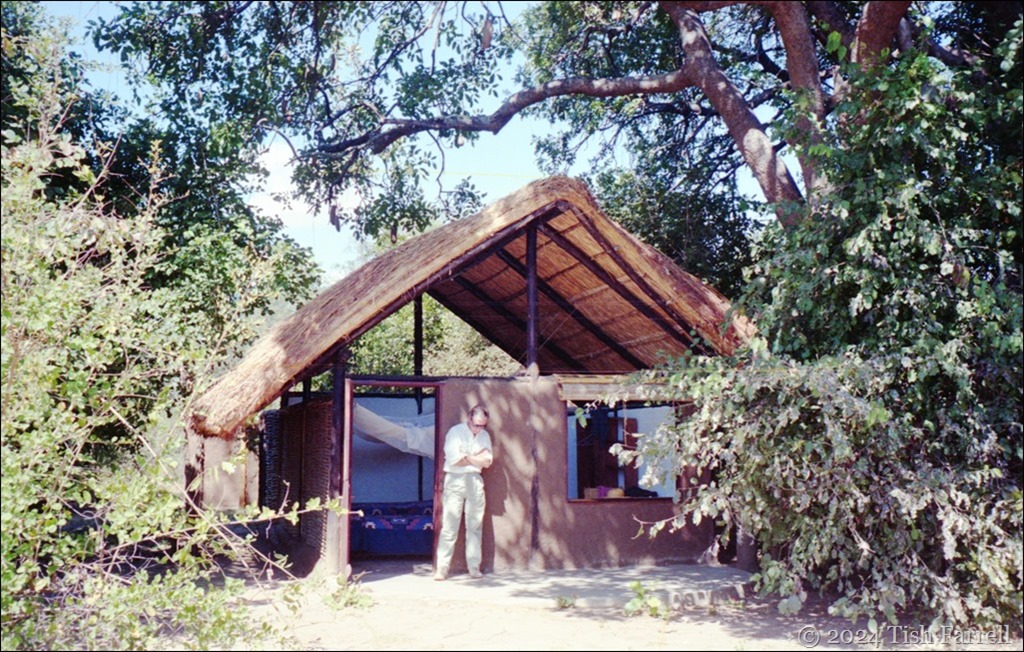
I’m still wondering when we check into the Nyika Motel and are shown to our bungalow. The bedroom walls are turquoise with orange paintwork, the chandelier green with most of its drops missing, curtains blue, the bedspread blue and black nylon, dark green cloths on the coffee table and sideboard – a colour scheme to jangle the nerves. But it does not matter. The place is scrupulously clean, with plenty of hot water, although we have to improvise a bath plug.

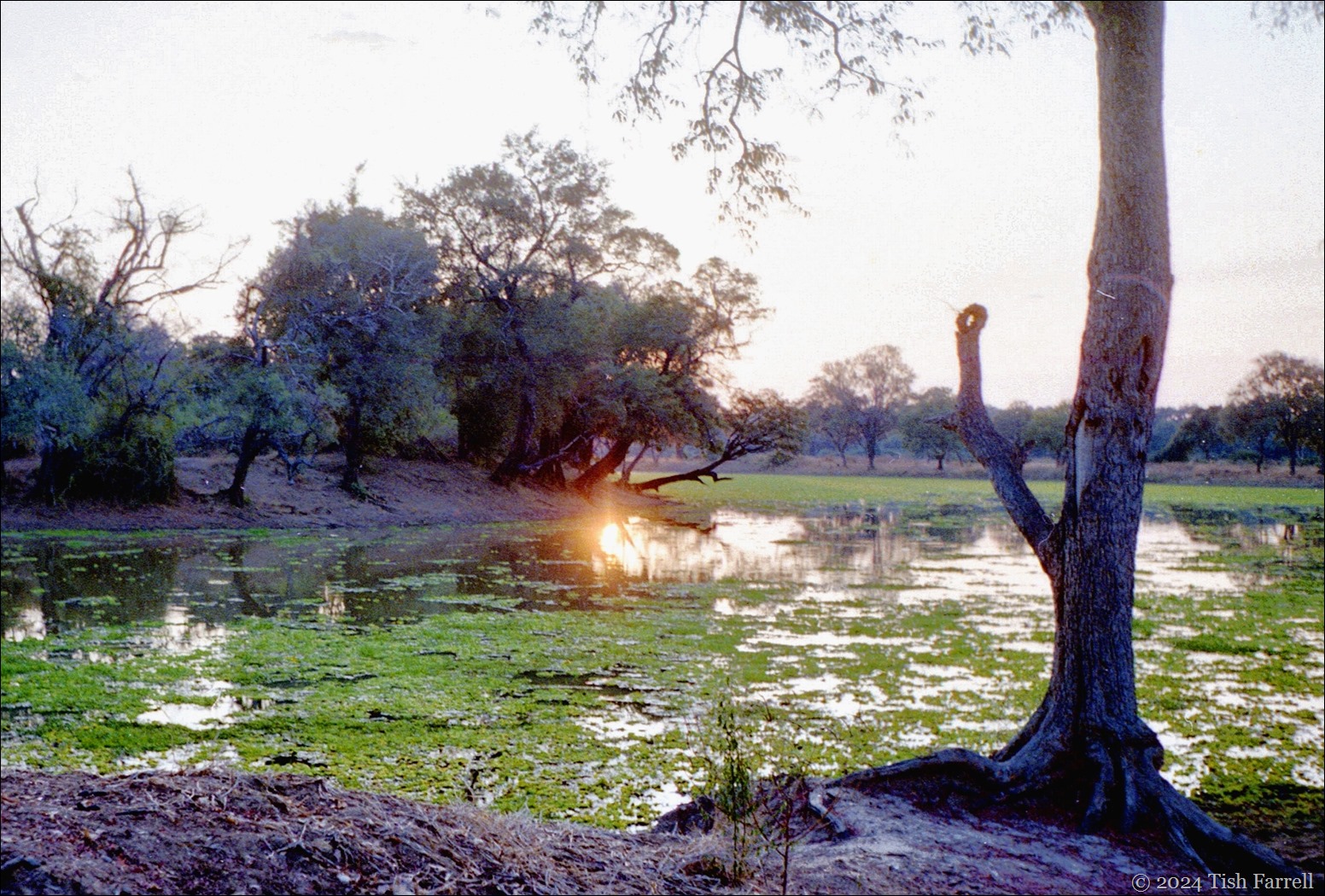
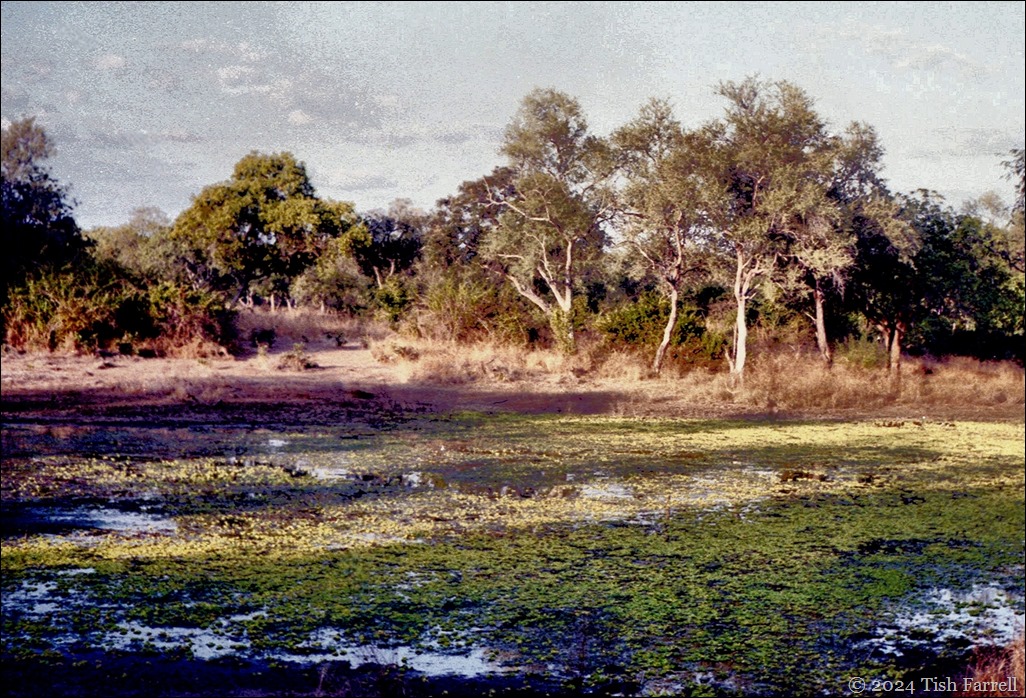
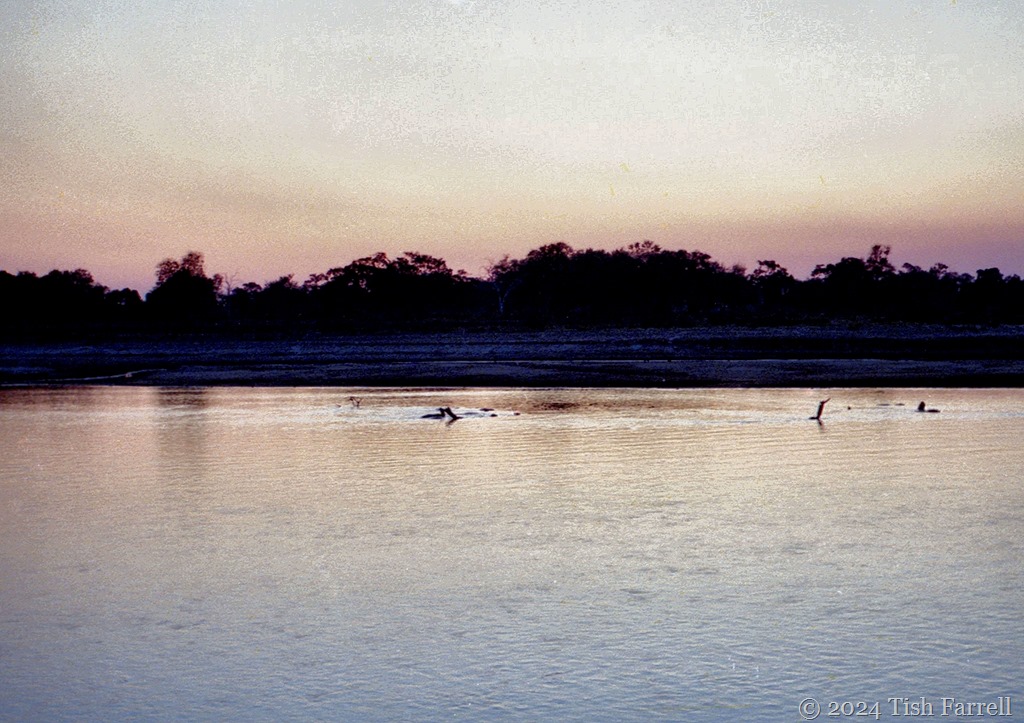
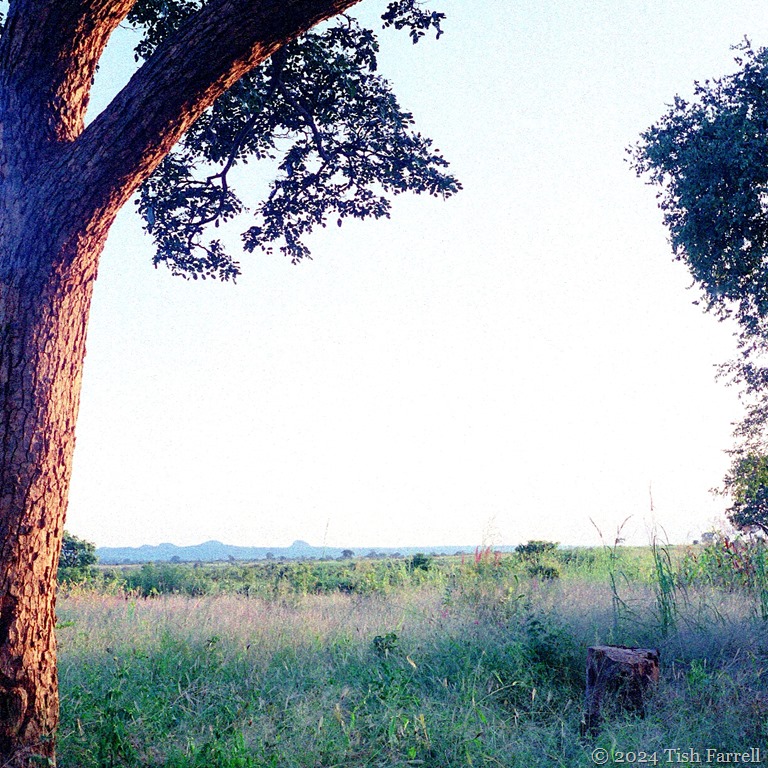
By now, the late day sky has seen off its gloom. There are magnificent cumulus cloud formations against the blue. We sit on the doorstep and watch the sun go down over the bush country, strange rocky outcrops to the south. There are rufous swallows, drongos, mousebirds, the bubbling call of the water bottle bird. The crickets tune up. There is lightning, wind in the thorn trees. I’m so glad to be there.

Eastern Province sq

Copyright 2024 Tish Farrell

*Ukwimi HQ is now a Trades Training Centre for Zambians, the refugee centre no longer needed.

Eastern Province heaader

Six On Saturday: Of Flying Saucers, Scorpionweed And An End To The Great Gobbling

IMG_6143

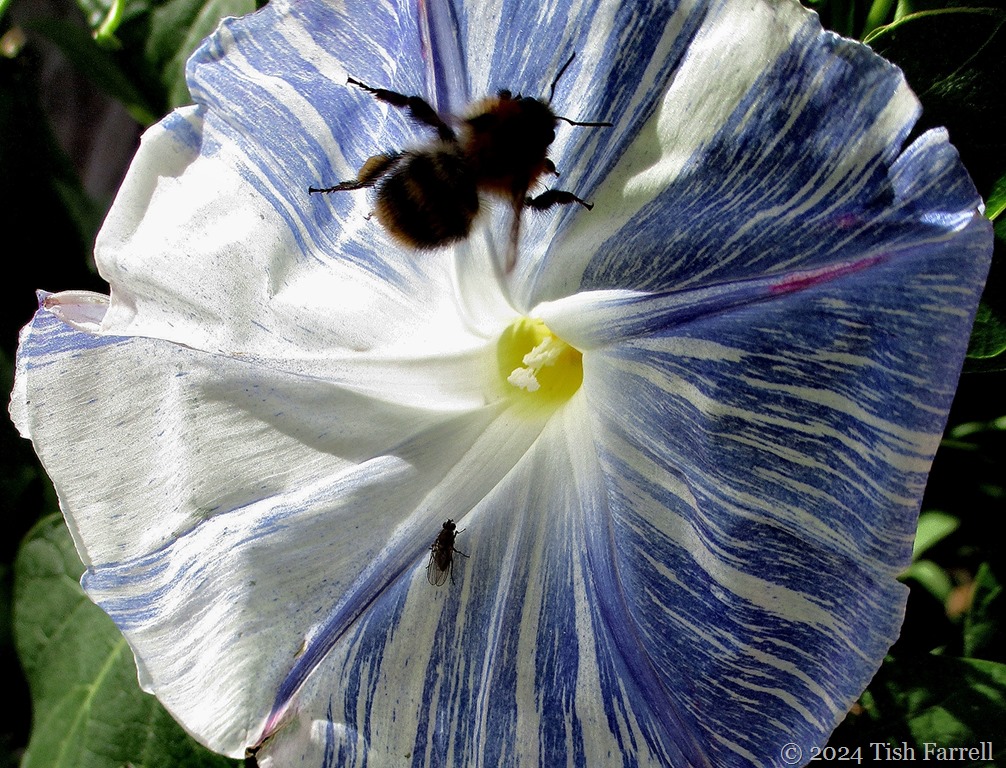
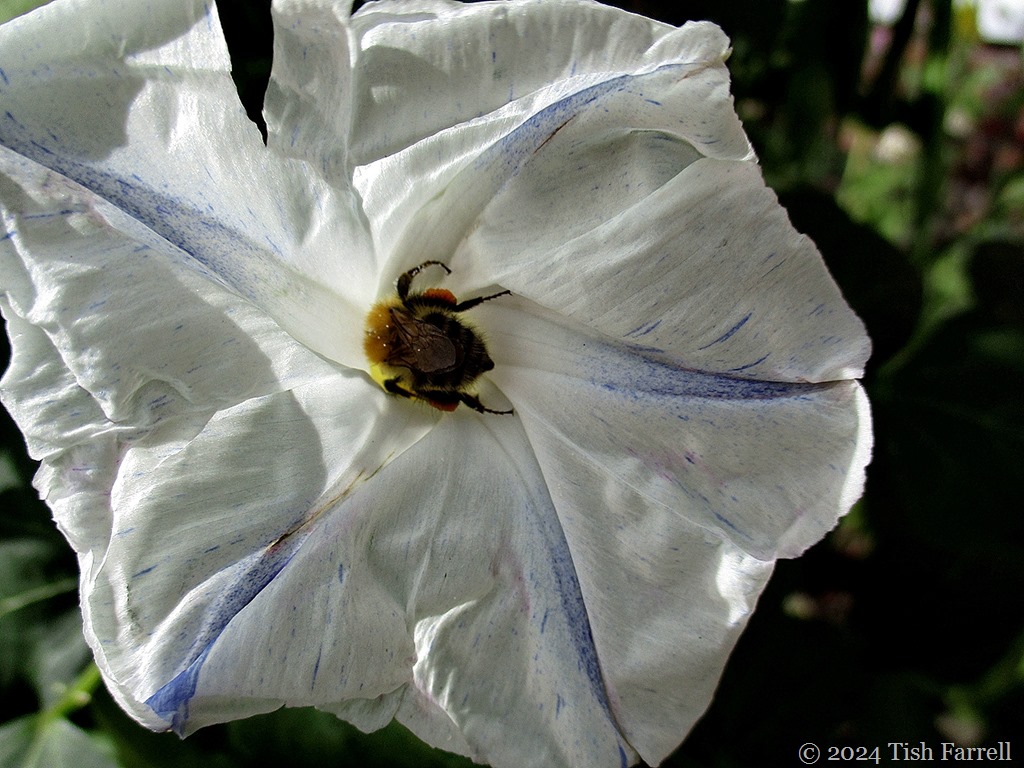
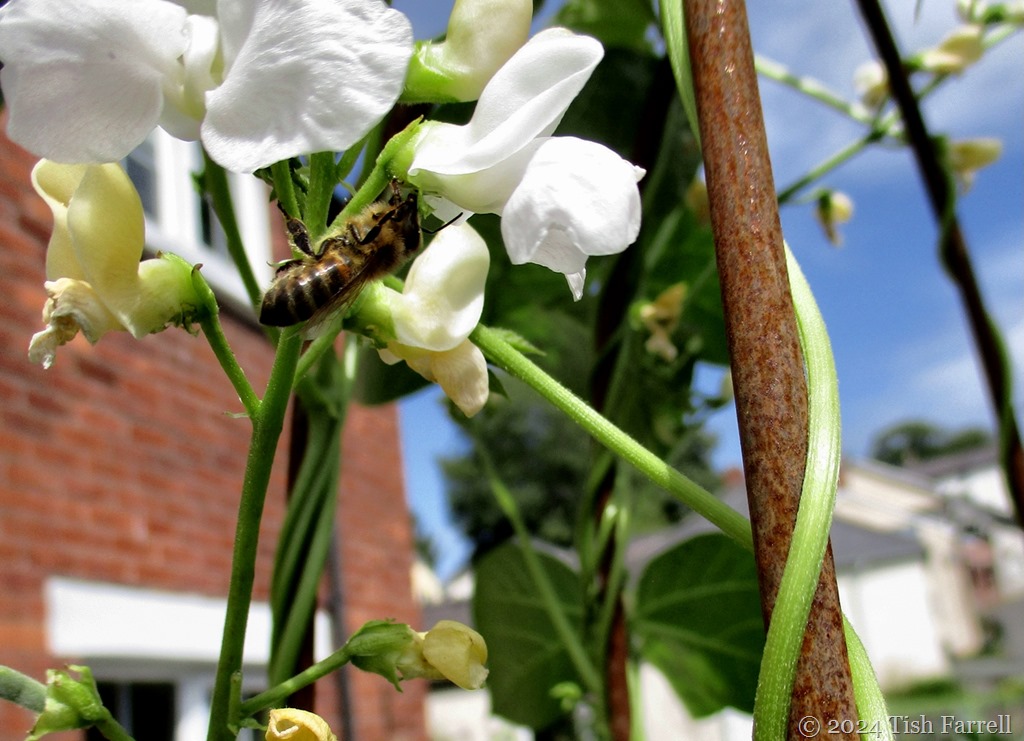
And no, we have no extra-terrestrial sightings here in Bishop’s Castle, at least not over The Gables, but I do have a few Flying Saucer Morning Glories. They are late on parade, growing up my obelisk of butter beans in the front garden.  I wasn’t really expecting them: the seed was several years old. Yet here they are, busy luring insectkind.

IMG_6145

*

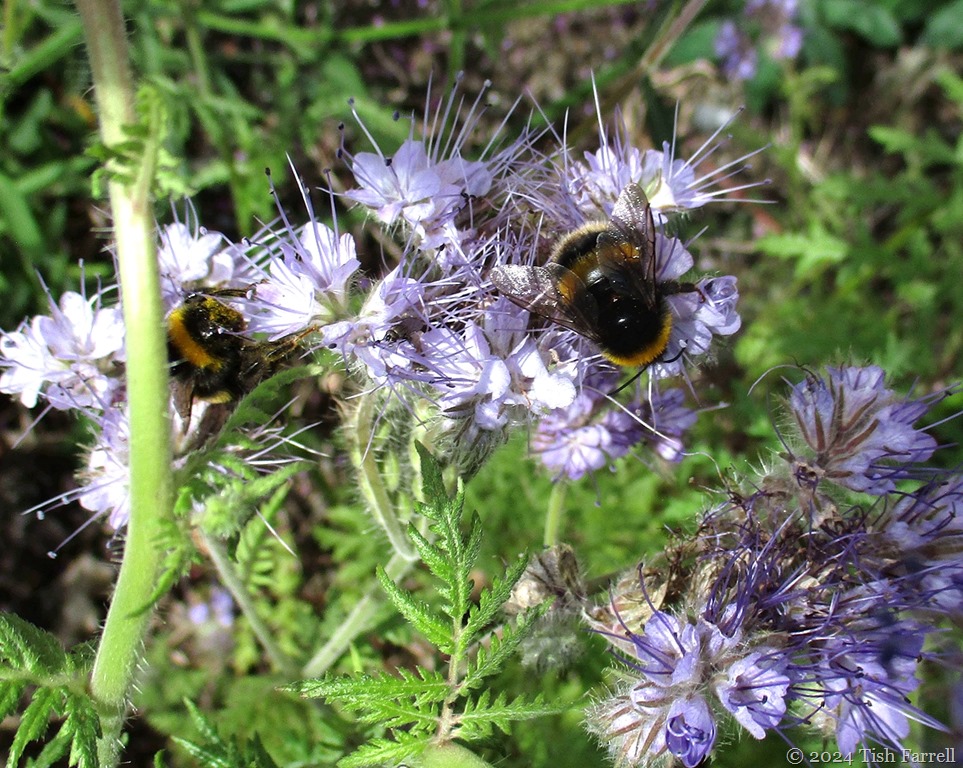
Also in the front garden, in the opposite bed, the phacelia has been flourishing for the past few weeks, every day alive with bee hum.

IMG_6172ed

IMG_6166ed

This borage family member hails from North and Central America where it also goes by the name of Scorpionweed, which sounds hair-raising. So far there has been no sign of cohabiting scorpions (no doubt a huge comfort to other half who was bitten on the foot by one while overlanding in the Sahara.)

I sowed the seeds quite late, probably around the beginning of July. As with the Flying Saucers, I was prepared for them not to germinate. The packet was left over from Wenlock allotment days. I grew it back then either as green manure or a cover crop. But then on a trip out in late June I’d spotted fields of it around Ludlow. I’d never seen it growing on an agricultural scale before. It was in full bloom and the fields seem to float in a mauve haze. More than a good enough reason to try it.

These days there is much farmer emphasis on improving soils and attracting insects on land taken out of food production (food security no longer seems to be a priority in government policy for British agriculture). Hairy crops like phacelia, vetch, linseed have been found to improve worm populations, this even in light and sandy soils.

I decided to try it on the ground where we had lifted paving slabs and left behind a layer of old mortar which had mostly been broken up into the soil. It looked very unpromising territory, and I wanted to see if anything would grow there. And it did. The seeds sprouted in a few days.

Usually if you’re growing phacelia to provide green manure, it should be dug in before it flowers to stop self seeding. But I thought never mind about that. The flowers are so pretty, their scent so subtle and, while they last, their kindness to insects immeasurable. The first frost will doubtless fell the plants, and I’ll probably leave them to dig in before spring.

*

IMG_6271ed

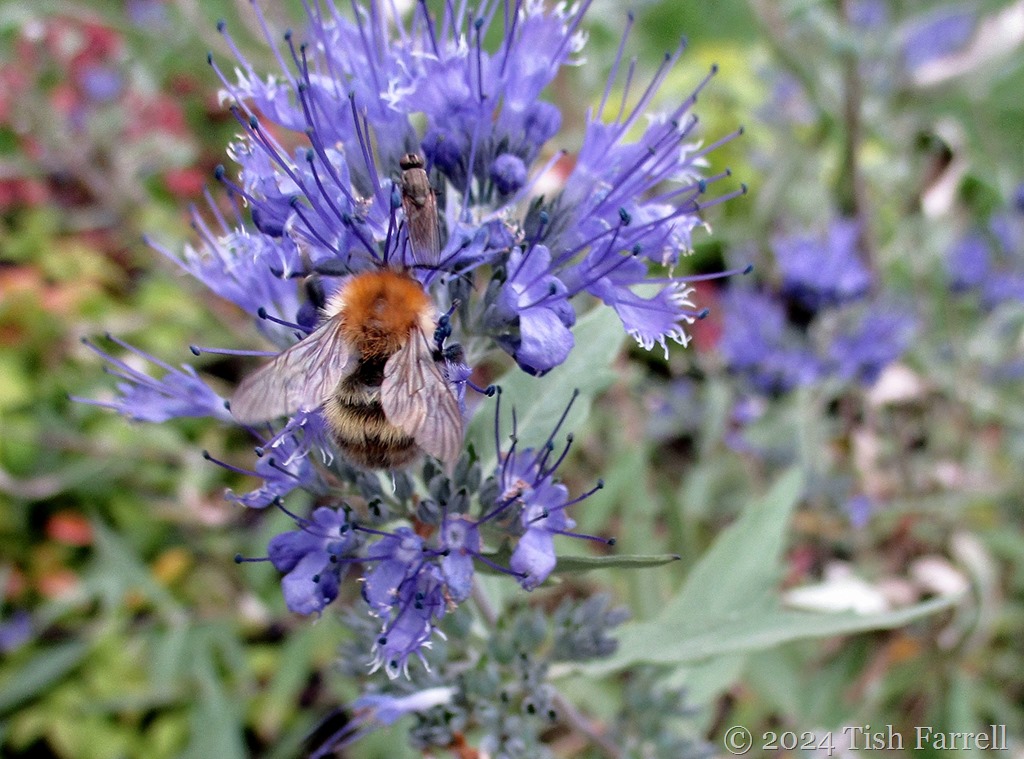
And here’s another insect friendly plant, doing its end of season feeding duty while looking lovely too: Caryopteris ‘Heavenly Blue’, a fairly compact hardy shrub bought back in the spring. It clearly loves our garden and has opened its branches so generously. The flowers are scented too, and it’s taken over catering duties from the neighbouring purple agastache, which is now a mass of dusky seed heads and no longer of interest to the bees.

Much of the rest of garden has a look of late-summer weariness. We had a couple of real summer days earlier this week, but there’s a real sense of autumn in the offing. My runner beans simply stopped producing at the end of August, for no reason that I can fathom. Although I did notice yesterday that a single plant has decided to grow a couple of strands worth. Perhaps one last small meal then.

Meanwhile, the Flying Saucers’ hosts, the butter beans are still flowering like mad up the front garden obelisk. There are many pods but they are being very slow to fatten, doubtless down to the lacklustre summer and cold-spring start. I’m now hoping for an amiable October that might give the beans the chance to finish off. And for now, the blossom is still performing essential services.

IMG_5976

*

The good news, though, is that the horrendous brassica gobbling has ceased, this after the cabbage white caterpillars ate every kale plant down to the stalks. It did not matter that I’d covered crops with so-called butterfly netting and fine grade enviromesh. Somehow the butterflies sneaked in to lay their eggs. Patrolling the plants even twice a day proved a losing battle. They made inroads in the pointy cabbages too, but I’ve managed to save some of those.

Ever hopeful, I’ve replanted Russian and Tuscan kale plantlets under extra-fine mesh. The butterflies are still about, but not in the flocks we experienced earlier in the summer. Fingers crossed.

IMG_6282

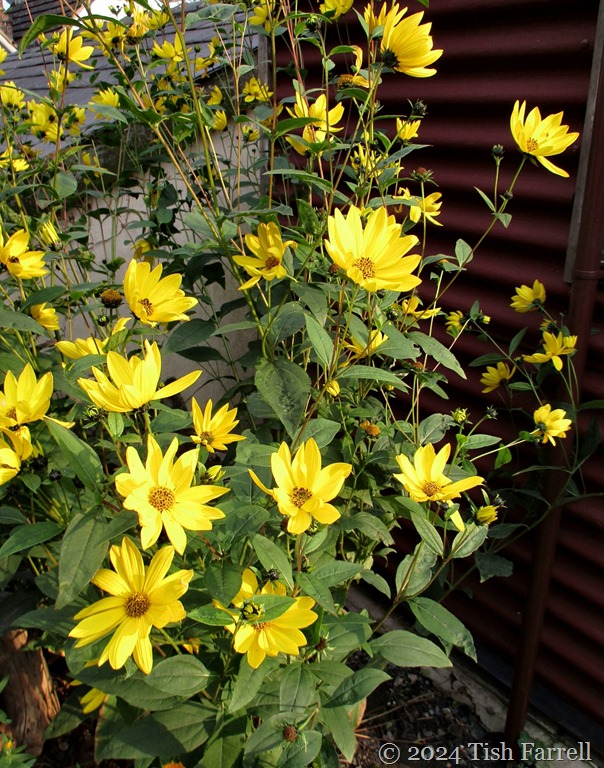
There are other bright corners in the garden, and especially this towering clump of helianthus, a perennial sunflower. Back in the spring when I planted it out, it was three single small stems with only a few roots between them. The cuttings came from my sister’s Little Stretton garden, descendants from plants that grew in our Aunt Miriam’s Devon garden. I’m so pleased to have it. I did not have a chance to grab a segment or two of my Wenlock helianthus before we moved. It used to be the star of the late summer guerrilla garden there. It’s growing even more vigorously in Bishop’s Castle.

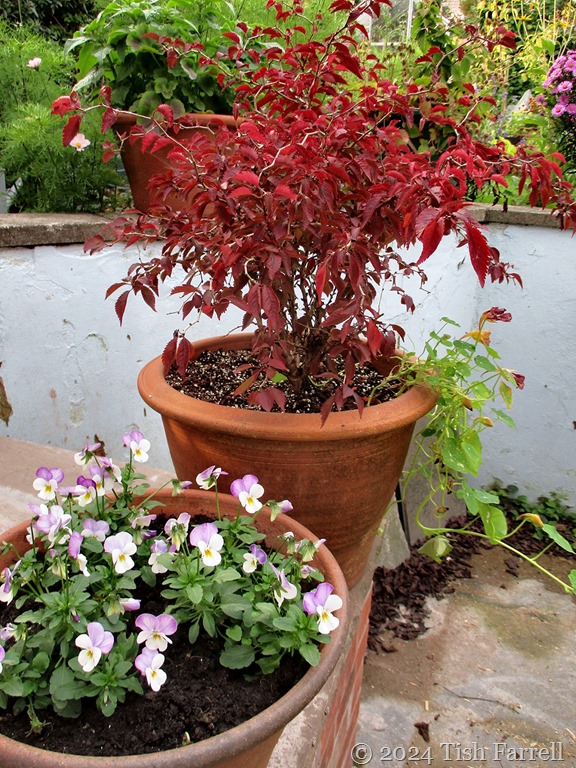
And last but not least, but definitely with an eye to autumn in its new russet foliage, this is a newcomer to the Farrell garden, Japanese cherry kojo-no-mai. (Posing here with some very sweet violas).

IMG_6254

It will eventually grow into a small tree, but for now seems happy in this pot.

*

Six on Saturday  Please visit Jim at Garden Ruminations. He needs some get-well wishes.

Oh, What A Perfect Day…

IMG_6231ed

Yesterday felt as if all our missed summer days had been rolled into one. It was warm, the light golden, the sky a flawless blue in every quarter. In the afternoon I took myself off for a walk – up Laburnum Alley and into Welsh Street, and thence up a green lane out of the Castle and onto the uplands.

IMG_6233ed

IMG_6220

IMG_6191

*

There’s little to hear but the bleating of sheep, the thrum of a combine harvester just over the hill and rook call. The town lies quietly below.

As I climb, I stop to scan the changing vistas. From the highest point there is a near 360 degree ring of hills surrounding Bishop’s Castle, the most obvious for its length being the Long Mynd. Whenever I see the Mynd I always give a mental wave to sister Jo, who lives on the other side. I sometimes thinks it’s odd to have this very big and ancient hill between us; some of the oldest rock in the world in fact.

IMG_6195

Looking east-ish towards the Long Mynd

*

And towards the opposing quarter…

IMG_6221

*

I need a Castle local to teach me the hills, particularly those to the north and west and into Wales. I know the names – Corndon, Lan Fawr, Roundton, Todleth …and I’m guessing they are in the next photo moving from right to left (?) and that the big wood below is Saddler’s Big Wood.

IMG_6228

*

For now, some other scenic spots…

IMG_6223ed

IMG_6196ed

copyright 2024 Tish Farrell

Letters From Lusaka #4: Of The Smoke That Thunders And Walking Over The Zambezi

Zambia's Victoria Falls looking along knife-edge to Zimbabwe's falls header

In 1992-1993, during the first years of Zambia’s multi-party democracy, we were posted to Lusaka, Zambia’s capital. Graham was charged with organising the distribution of European Union food aid to drought-stricken Zambians. (Part 1 is HERE and part 2 HERE and part 3 HERE)

*

It is early December 1992, barely two weeks into our Zambia posting, when Graham is despatched ‘on mission’, the European Union Delegation’s term for out-of-town business. He is told to attend a Monday morning meeting at a railway depot in Livingstone, some 300 miles south of Lusaka, a six hour drive away.
zambia-political-map

And the actual mission? To inspect a newly arrived shipment of maize from South Africa, via Zimbabwe, part of the 100,000 tonnes of food aid being brought in by the European Union. There has been talk of organised theft along the line of rail, of some local big man who has the power to divert trains to his own mill. It is thus important to check the consignment is intact.

Graham’s boss, Bernard, suggests he drives down the weekend before. He further suggests that I go too. It is a chance to see Victoria Falls, he says, and not to be missed. Later I suspect he is also being kind. We’ve scarcely adjusted to Lusaka living and he will not unnerve us by spelling it out: that Lusaka’s diplomatic quarter is a regular target for cross-border armed raids by unpaid members of President Mobutu’s Congolese army.

But on the Saturday morning as we leave the city under big skies, I’m not thinking about this; only of the journey ahead, of what we might see.

*

Once out of the city we head ever onward on the South Road. The single carriageway is wide and straight with few pot holes, and for the most part empty of traffic. After nine months of bumping along the ragged tracts of the Nairobi-Mombasa highway, stuck behind fumy trucks, it is sheer luxury. On either hand the savannah woodland runs green and lush and reminds me more of central France than of Africa. At Kafue we cross the wide expanse of the Kafue River, wooded uplands all around. But as I find later, this is the only significant landmark until Livingstone some five hours later.

South Road

A view of Zambian savannah miombo woodland, Southern Province

*

We pass through neat small trading centres – Mazabuka, Monze, Kalomo, Zimba. Sometimes we glimpse thatched roofs through the roadside vegetation. Sometimes there are lads holding out fistfuls of mushrooms, their caps big as dinner plates. But over all there is a sense is of quietness, an undramatic treescape sparse in humanity.

And then we’re in Livingstone, once Zambia’s capital, back in the days when Northern Rhodesia was a British Protectorate. In 1992 it strikes us as little more than a village. Its wide main street has a colonial air; all is neat; tree-lined pavements, arcaded stores; whitewashed, zinc-roofed, verandaed bungalows. When we check into the Intercontinental Hotel the time-warp feeling thickens. We are served afternoon tea on the tree-shady lawn, watched by ducks, guinea fowl and vervet monkeys.

By now I can wait no longer. The light may be poor, the sun blanked out, but there’s a world wonder to see, and the hotel’s garden path takes us right there…

Victoria Falls

*

I don’t know whether to laugh or cry. It is too hard to absorb, this bare basalt cliff. The mighty Zambezi reduced to a trickle.

The long drought has much to do with it. But Zambia also abstracts large quantities of water to run its hydroelectricity scheme. Graham then tells me the best view of the Falls is on the Zimbabwe side of the cataracts, and that if we’d remembered to bring my passport we could have walked over the bridge to see them.

Ah, well. Another time perhaps. We walk along the path beside the waterless precipice, but this alien landscape soon has me thinking of Tolkein’s Mordor; I expect the eye of Sauron to burn through the cloud any second. We give it up and go back to the hotel.

004 (2)

The Falls as seen by  David Livingstone in 1855. Engraving from Missionary Travels and Researches in South Africa 1857

*

It was David Livingstone who named the Falls after Queen Victoria. This was in 1855, and probably he was the first European to clap eyes on them. Of course they already had local names, Mosi-oa-Tunya, the smoke that thunders, being the Tonga people’s name for them. These somewhat reclusive farming folk inhabited much of the Zambezi Valley including the portion now occupied by Lake Kariba. It’s pleasing to learn that the UNESCO World Heritage citation at least gives precedence to the Tonga name.

*

In theory our hotel room has a river view, but all we see is a vast expanse of dry bed with odd clumps of palm trees and scatters of huge boulders. But on Sunday afternoon, under a bright sun, I notice people picking their way across. I persuade Graham we should join them.

We’ve hardly started out when a boy appears from nowhere and offers to guide us ‘to the best Falls’ viewpoint.’ And so we follow, but it’s not easy going, picking our way around oily pools and stagnant crevices, clambering through a maze of mammoth boulders, trying to ignore piles of fresh elephant dung.

We are so busy watching our feet we don’t notice the storm clouds gathering. And when I do, I’m suddenly nervous. I’ve read about flash-floods engulfing dried up river beds. I keep glancing upstream as if that will do any good. I worry, too, about rounding a boulder as big as an elephant and meeting an actual elephant.

Then the rain comes and that’s all I can think of – the fat freezing drops that stab the skin. (How can African rain feel so cold?) We follow the boy to cover, crouch under trees on Livingstone Island, the very spot from where the explorer had first viewed the Falls in 1855 (see the engraving: island in the foreground). For ages we crouch with the boy under dripping trees until, thoroughly cold and soaked, Graham asks him if the good view is much further.

No, no, it is close by. We make a final dash. And here it is. The view:

Victoria Falls, looking over the knife edge in a rainstorm ed

*

Not much to see with spray rising up and rain pouring down. Except there we were on the knife-edge with a 300 foot drop below. I quickly take this photo, and stow my camera. Then hold my kanga-wrap (which I’d brought to keep off the sun) over my head to stem the downpour. And it’s then a sudden gust of wind snatches the sopping cotton. I feel the slight lift and step back in shock. I’ve had more than enough of Mosi-oa-Tunya.

So has the boy.  We turn to see him sprinting away without waiting for a tip, and now I really am worried. Leaving without his kwacha? What does he know that we don’t? Watching him go, my heart sinks. The hotel looks very far away, the boulder-strewn riverbed between us and it, increasingly nightmarish. Overhead the sky is black, now and then fractured by great shafts of fork lightning. We slip and slide on wet rocks. More phantom elephants. More imaginary flash floods. More scrambling out of megalithic cul de sacs.

Of course it’s all panic and little substance. After a hot shower and a bottle of Mosi beer back at the hotel, it seems like a great adventure, though we do wonder if the part of Livingstone Island  where we’d sheltered was in Zambia or if we’d  entered Zimbabwe without the necessity of passports.

That night I am taken ill, probably the start of an amoebic assault that is later diagnosed in Lusaka. And so the next day when Graham has to visit grain depots, first in Livingstone, and then two Red Cross grain stores on the way back to Lusaka, I am happy to sit in the car and doze. It will be another seven months before I finally see the western cataract of Mosi-oa-Tunya.

Food aid consignment 3

Maize consignment safely arrived in the Livingstone depot

Copyright 2024 Tish Farrell

Letters From Lusaka #3: Of Security, Kabulonga Howling And News Of A Coup

ed

In 1992-1993, during the first years of Zambia’s multi-party democracy, we were posted to Lusaka, Zambia’s capital. Graham was charged with organising the distribution of European Union food aid to drought-stricken Zambians. (Part 1 is HERE and part 2 HERE)

*

Sable Road - compound pool and neighbours' house

We soon discover that our household security provision falls short of official standards. European Union and British High Commission employees are advised to have internal security gates installed, external security lights, roof siren, alarm buttons, window bars, a pack of Dobermans and ridgebacks, a two-way radio and armed twenty-four-hour guards. The fortification of a property may cost around £5,000.

Somehow we survive without most of these devices, although the top of our garden wall, which also forms the rear boundary of the compound, is quite high and is further cemented with shards of broken glass.

The nights, though, can be nerve-wracking. Rounds of automatic gunfire are common after dark. Some European locals, we are told, have made a ritual of standing on their front lawn at 9 pm every night and shooting off their sporting rifles – just to let “the thieving bastards” know what’s what. These are the same people who will tell you that, when they are not trying to relieve you of your worldly goods, the Africans are really very charming.

But gunfire aside, it is anyway hard to sleep in the perpetual gloaming of the security lights dotted around our compound. The insects, too, grow louder as the night draws on, and then the dogs wake us.

I call it the Kabulonga Howling. For reasons unknown, it begins with a single canine, a lone keening which then swells from compound to compound in a relayed dog lament until finally a monstrous crescendo resounds across the suburbs. But once howling pitch is reached, it quickly subsides, and instead we are left with the beat of Zambian dance music, thrumming away beyond our perimeter wall.

Sable Road compound

*

We have no idea who lives beyond our glass-spiked rampart. I have tried standing on the brick barbeque in the back yard, but I still cannot see over the wall. Instead, I often hear a Zambian boy badgering his little sister whose name is Lorna. Lorna is always being ordered to do something or other. There is meek compliance in her little voice. It is the lot of many Zambian women to defer to men. Already I feel sorry for her.

One day I find an arrow in the back garden – a stiff plant stem tipped with a bent Mosi beer bottle cap. For a moment, as I examine this makeshift missile, I think of Robinson Crusoe finding unsettling signs of life on his confining island shore.

*

By day, Graham leaves early for the EU Delegation. It is only a five minutes’ drive away. I begin to tend the back garden, sowing beans, courgettes, carrots. Things quickly sprout, but the land snails are as big as my fist. I write and read, although finding books is a challenge. We can find no bookshops in Zambia since the nation can no longer support a publishing industry. Once a week we drive down to the British Council on Cairo Road to borrow books from their library. We do this, ignoring white Zambians’ warnings that our Suburu will be car-jacked if we park anywhere downtown. Whenever we go to the library, most of Zambia’s students seem to be there, studying hard. Every seat is taken. It is hard to gain qualifications in a land without books.

British Council

One of the parking boys who minds our car whenever we visit the British Council library. In ten months of parking on Cairo Road neither the car nor any of its parts go missing.

*

And not only is there a lack of books,  but newsprint, too, is hard to come by. Newspapers sell out quickly each day and I have to rely on Graham bringing the Delegation copy home at lunch-time for quick scan through. Soon we hear that four Zambian Daily Mail accountants have been arrested for ripping off their own company’s limited newsprint stock and selling it to a rival newspaper.

Then there is the challenge of household shopping. Our local shop is Kabulonga supermarket where I frequently search the shelves to strains of  Michael Bolton’s The Lady in Red. A beautiful girl in cobalt blue chitenge and matching head-cloth tied with great flourishes, is often on the till. She has the poise of a princess.

It’s basically a matter of buying whatever is there and then thinking of something to do with it. Treats include cartons of delicious Ceres grape juice, and jars of sweet pickled beetroot imported from South Africa. The local yogurt comes in big tubs, plain or strawberry. Other staples include corned beef and South African wine. On the other hand, there is never a shortage of cleaning products, all heavily perfumed. At Christmas we see them parcelled up into apparently enticing gift packs along with small bales of second hand clothing.

Kamwala-roadside-furniture-market-ed[1]

We bought our bed from traders in  Kamwala Market

*

There are of course shopping opportunities everywhere along Lusaka’s streets – cigarette and used clothes stalls, a man selling bread, another with his scrawny hens, fish from a freezer connected to nothing, caterpillars dried or roasted, large woodland mushrooms the colour of cygnet down, little pyramids of tomatoes. If I buy two piles of tomatoes from the young woman in the photo, she gives me an extra tomato as a “special gift”, and then wraps the lot in computer print-out. It’s one of those frequent incongruity moments.

001

*

I also walk down to the Maluwa Co-operative in the hopes of something more interesting than beetroot and corned beef. Again, I never know what I will find there: perhaps, if I’m lucky, a good mission-reared chicken in the cold cabinet, or button mushrooms, some Gouda cheese, broccoli, new potatoes, French beans, bunches of roses. If he catches me walking, an elderly white Zambian in a pick-up, (his ‘boys’ in the back), always insists on giving me a lift. He means well, and it is easier to comply with his desire to save me from imagined predations of Zambians than to argue.

Maluwa Co-op

Maluwa Cooperative Store

*

But I like it out on the road. There is so much life outside the high walled, razor-wired residences of the elite. People greet me. One day a taxi driver, trying to mend his broken-down car, stops struggling with things mechanical and offers me a lift. For a second I’m rooted to the spot. I note the rear tyre lodged on the back seat. Does he think if I say yes the car will conveniently right itself. He looks a touch sheepish when I smile and say no thanks. I like his style though: never miss the chance to cut a deal. As I step out again on the dirt road that has lost its asphalt, my footprints join the countless prints of others in the red dust.

*

Graham spends his days rushing round to meetings with aid agencies. There are fears that donations of free maize will dissuade farmers from planting their own crops, despite the good rains. Too much free maize is also likely to depress the economy, and this must be avoided. Much is given out as payment for working on public enterprises such as road building or making bricks for the building of clinics. Unemployed women, in particular, are keen to do such work. Receiving a sack of mealie meal, sugar, beans and cooking oil in return for their labour gives them independence from menfolk who might otherwise take any cash earnings. Graham also has to travel down south to Choma and Kalomo to oversee the distribution of EU maize by the Red Cross. There are more trips out east and to the Copper Belt.

011

Villagers coming to collect cooking oil and maize meal from the Red Cross.

*

012

A farmer shows Graham his empty granary.

*

In March Graham comes home saying there is a bit of flap on. Brussels has phoned the E.U. Delegation saying that the BBC has reported a coup in Zambia: is everything all right there, they ask. The diplomats scratch their heads. No coup has been observed out in the suburbs. But then a few days later it is clear that something has happened. Major Rezi Kaunda, son of the long-serving and recently supplanted, ex-president, Kenneth Kaunda, has been arrested. He is reported as being under armed guard. Further details explain, somewhat bizarrely, that he is sitting in the yard of Woodlands police station with his flask of tea and a radio. Fourteen plotters in all have been arrested both in Lusaka and the Copper Belt. These include the editor-in-chief of the Zambia Times.

Later we hear that an incriminating document, The Zero Option, has been seized. It gives detailed plans of how members of the UNIP opposition old guard, led by Rezi, intend to make Zambia ungovernable by fuelling a crime wave, infiltrating the unions and government departments. It is mooted that this campaign of destabilisation has already been instigated and is responsible for the alarming crime wave.

President Chiluba has only been in office for a little over a year. His Movement for Multi-Party Democracy defeated Kenneth Kaunda in the first democratically held elections since Independence in 1964. Kaunda Senior had been in power all that time, but on defeat, chose to bow out gracefully. Meanwhile Frederick Chiluba claims that he is on a clean-up mission of this potentially rich, but now run-down state. He declares a limited State of Emergency while order is restored.

We all breathe a sigh of relief. No need for the emergency evacuation that the High Commission is so unlikely to provide for us. Besides, Graham still has much work to do, and there’s so much I still want to discover. One thing I am itching to know is how this copper-rich nation, with its deposits of sapphires and amethysts and airy upland mopane forests is one of the poorest on earth. Why are its impoverished, beleaguered but hard-working peoples being so ruthlessly ‘structurally adjusted’ by the World Bank? I am beginning to suspect that the spirit of Cecil Rhodes is restless and abroad once more, but that, as they say is another story.

*

Lusaka agricultural show - Boy and copper belt truck tyre

A view of one of the stands at the Annual Lusaka Agricultural Show. The 1993 show slogan is ‘Produce to Prosper’. Better, if less catchy, would be ‘Produce and get fair pay from multi-nationals.’

Eastern Province heaader

To be continued…

copyright 2024 Tish Farrell

Letters From Lusaka #2: of roving armies, the cholera season and making a new home

Lusaka agricultural show - kids ed

In 1992-1993, during the first years of Zambia’s multi-party democracy, we were posted to Lusaka, Zambia’s capital. Graham was charged with organising the distribution of European Union food aid to drought-stricken Zambians. (Part 1 is HERE)

002

*

While we are still ‘living’ at the Pomodzi Hotel, and Graham is away at the European Union Delegation, getting to grips with his mission while walking a tightrope of diplomatic protocol, I do the unthinkable as far as white locals are concerned. I walk out of the hotel grounds and down a couple of avenues to the Ridgeway Hotel. One of Graham’s  Natural Resources Institute colleagues, a regular visitor to Lusaka, has told me the place has a good gift shop, and that there may be a chance of finding some local books.

I set off on the basis that as I am not travelling by car, I will not be car-jacked. I am not. The gift shop is wonderful, brimming with Zambian craftwork. I buy a beautiful Tonga basket and a small olive-wood elephant for luck. I have it still on my Bishop’s Castle mantelpiece.

IMG_7545

*

I’m disappointed to find no books at The Ridgeway, but I do find a map: a Lusaka street map one side, Zambia on the other. At last we can properly see where we have landed. I study the country’s boundaries, trying to make sense of the colonial cobbling that created a nation whose North Province lies to the east of its Central Province. (The British were here in erstwhile Northern Rhodesia for the copper).

zambia-political-map

*

The country nestles in the heart of southern Africa between eight countries. In outline it resembles a foetal chick curled on its back within a protecting shell. In reality, though, I soon learn that Zambia has no such protection. It simply has too many borders and not enough military personnel. In 1993 there are only some 300, 000 taxpayers in a population of eight million, which is not enough to pay for more soldiers. The north-west border with Democratic Republic of Congo is lethally porous. Members of then President Mobutu’s own unpaid armed forces regularly drive into Zambia’s Copper Belt and conduct armed pillaging campaigns against innocent drivers and householders. Sometimes they come as far south as Lusaka.

*

We are told that when driving at night, we must never stop at red traffic lights (locally called robots), since this is the moment that car-jackers will choose to pounce. Over in Eastern Province the threat comes from the conflict in Mozambique as RENAMO guerrillas cross the border to shoot up Zambian buses and steal food. In Western Province UNITA fighters from Angola’s war terrorize Zambian villagers. Famine, then, is only one cause of death; there are many others, and the mineral resources that Cecil Rhodes sought so hard to control through his dark-hearted dealings with local chiefs are high on the list.

Then there is malaria and tuberculosis, and as the rains bucket down through December, the cholera season begins. Overflowing septic tanks and pit latrines are polluting the city’s boreholes. At first, oblivious of such dangers, we eat out at downtown restaurants. We are down in Livingstone, near the Zimbabwe border, Graham checking out the contents of grain stores, when I am stricken with amoebic dysentery. Again it is the Delegation secretary who comes to the rescue and directs us to the mining companies’ private clinic, downtown on Cairo Road. The diagnostic facilities there are impressive, the British-born doctor patronizing. But after a three-day course of very large pills, I recover. I am lucky. Of course I am.

Sable Road - compound pool

Six or so houses share the gardens, including a very small pool.

*

After a fortnight’s dispiriting search for a bolt-hole away from the Pomodzi, viewing sprawling premises we can’t afford, the Delegation Secretary suggests a vacant house on a small compound in Kabulonga. It is small, red brick, single storey with a sheet iron roof that, during the rains, resounds as if someone is firing bullets into a host of upturned buckets. The kitchen and bathroom are 1950s basic, but the spacious living room has French doors opening onto a tiny high-walled garden. There is a big avocado tree in the corner where African sparrows come twittering in to roost in late afternoon. Above the perimeter wall, when it is not raining, arcs the blue Zambian sky. To the rear, the kitchen gives onto a walled back yard and a patch of grass. There are two bedrooms, and a tiny study. Outside the front door is a communal garden and terrace – garden seats set by a small swimming pool, a tall palm that rustles endlessly in the high plateau breezes, a sweet scented frangipani tree. No house overlooks any other and there are shady walk ways in between each property.

Zambian produce - still life

Produce including delphiniums and ginger lilies from the local co-operative on Sable Road

*

The gardens are tended by a gentle young man called Stephen Nyangu. His name suggests erstwhile connections with the Nyanja royal clan. But Stephen’s situation is a far cry from tribal pre-eminence. He sweeps, mows, weeds, plants, prunes and waters six days a week, from seven in the morning to five in the afternoon. Then he cycles the couple of miles to his compound home in Leopard’s Hill Road where he lives with his wife and four children. The gardens he cares for bloom strangely under sub-tropical skies with tea roses, violets, pansies, Sweet William and Madonna lilies. He also washes all the cars and hefts all the dustbins to the big compound gate to be emptied once a week. For this he earns twelve thousand kwacha a month, about eighteen pounds. He has no leave beyond national holidays, and after work he runs a cigarette stall.

Stephen Nyangu the compound gardener 4

Stephen Nyangu works day and night to keep his family.

*

On my first day in our new home, it is Stephen who knocks on my door.

“Good morning, madam. My name is Stephen. If there is anything you want me to do, I am just out there.” He gestures in the general vicinity of the pool. “Call me.”

He is the only person on the compound who bothers to introduce himself. In ten months we scarcely see any of the other tenants beyond the Sikh couple who live next door. They nod to us. They have two much pampered, miniature Pomeranians and a  maid called Isa. Isa looks a good-hearted soul and she works in several of the other households on the compound once she has done her daily tasks for the Sikhs. These include much furious chopping at seven a.m. Perhaps she is chopping for the Pomeranians. When she is left in charge of them for three months while their owners go on leave, she grows so fed up with their insistent yapping that one day she yells SHUT UP. And so shocked are the indulged little canines, that they do just that. I want to hug Isa.

I further decide that my house is scarcely big enough to justify even a once-a-week cleaner, this despite the constant slick of red dust that blows in every day. I thus do my own housework.

Our compound is in Kabulonga, the heart of the diplomatic quarter. Our next door neighbour is the Egyptian Embassy. At night the guards fire off rifles. We never do know what is going on there, and sometimes it sounds like a siege. Our compound is one of the least fortified on the road. The iron gate has open railings instead of sheet metal armour plating, and our day guard, Sammy, always leaves it unlocked  anyway during the day, while he plays draughts with a neighbouring house-guard. He’s a bit  nonplussed by my habit of going out on foot, and at first dashes from his game to open the gate as if I were a passing vehicle. We soon come to a silent arrangement whereby we greet each other, I open the gate for myself and he keeps on with his game.

There is a sense of excited liberation as I step out onto Sable Road. I never meet another European walking here on this lovely tree-shaded avenue.

Sable Road in the dry season ed

Sable Road in the dry season.

To be continued

copyright 2024 Tish Farrell

Letters From Lusaka: notes from an aid nomad’s life #1

Cairo Road Header

This is an edited re-run of an old post – and a much longer read than usual…

*

October 1992 and I’m expecting to start a new life in Medway, Kent, but instead I find we are off to Lusaka. It is hard to take in. I am barely back in England after nine months in Kenya where we lived out of a Land Rover, plying the Mombasa Highway. My heart is still in the Ngong Hills, the knuckle-shaped peaks that were my last view of East Africa before the plane rose through the clouds and headed for London via Bahrain. In that moment I find myself weeping for the loss of the Ngongs, recognising, with a twinge of shame, I would never weep like this for my homeland. 
Due to ticket problems I have to travel back to the UK alone. G will follow the day after. When we say goodbye at Nairobi airport there is no inkling of another overseas contract. Yet two days later when we meet up in England, the first thing G says is: how would you like to go to Zambia?

Zambia, I echo blankly. How would I know if I want to go there? But with barely a pause, I say yes; I’m up for it. I’ll find out later if I’m going to like the place. Besides, whatever happens, it’s bound to be interesting.

When we tell friends and family where we are going, they also look blank. Zambia, they say. What did it used to be? It is only months afterwards that I see how loaded is this seemingly simple question, how unfathomable the answer. What indeed did Zambia used to be – before it was Northern Rhodesia – before David Livingstone passed through it in search of lost souls and the Nile’s source, and claimed the falls known as Mosi oa Tunya (The Smoke that Thunders) for Queen Victoria; before the south’s Zulu Wars that pushed many displaced communities across the Zambezi?
We’re expected to leave within the month, but due to various administrative foul-ups, this stretches to two. It gives us time to unpack our Kenya life, catch up on dental work, have the jabs we have not already had, say hello and goodbye to relatives, and to get married. This last event takes place briefly before a handful of guests in a Bridgnorth building society office where the registrar has occasional premises. Our little marriage party finds itself queuing for attention alongside Friday morning withdrawers and depositors. It all seems fittingly bizarre for a life that no longer fits the norm.

Cairo Road looking south

Lusaka’s main street, Cairo Road, looking south

*

At this point I am still no wiser about our destination. In these pre-Google days there is little time for research. To my annoyance, too, I find there are no handy books on Zambia, not in the public library, nor in the bookshops. By the time we come to leave, we have only the sparse Foreign Office briefing notes to go on. They speak of the climate and the kind of clothing we will need, and of the possibility of having to take a driving test if we want to drive in Zambia.

No clear picture of the country emerges. I am becoming increasingly irritated at the lack of information, as well as at my own ignorance. How can I, an English woman, not know a thing about a land that Britain ruled and exploited for over sixty years, a land we only quitted in 1964 while I was in still at school? Why wasn’t it on the curriculum along with Cicero and Chekhov? How can the existence of a former protectorate pass so swiftly from the protecting nation’s consciousness? How can it become so very unimportant?

Then suddenly it’s too late for righteous indignation; it’s all down to family farewells, and wondering if the right things have been packed, when there is no way of knowing what the right things should be. Of necessity, it becomes a matter of travelling hopefully and telling ourselves that the contract is for ten months only. And ten months isn’t long, is it?

*

So, November 1992 and we fly into Lusaka with the rains. It seems like a good omen – to arrive with rain. There has been severe drought over southern Africa for at least a year. Crops have blown to dust, rivers run to sand, and the granaries lie empty. In remote districts, we later learn, villagers have been surviving on a diet of wild mangoes. To add to their misery, the wildlife is hungry too. In one district villagers have been barricading themselves into their homes. The local lions have developed a taste for canine flesh and are breaking down house doors at night in order to snatch the dogs from the midst of their terrified human families.

And of course, this is why we are going to Zambia; famine is taking us there. G has been seconded from the Natural Resources Institute in Kent to the E. U. Delegation in Lusaka to supervise the distribution of European Union food aid to starving Zambians. The country’s then new President, Frederick Chiluba, tells the Head of Delegation that he does not trust his ministers to do the job. The consignments of maize meal and cooking oil must therefore be distributed through church missions and the Red Cross. Zambia is a big country, the size of France and the Low Countries combined. G will be in charge of logistics: checking the contents of grain stores, getting trucks on the road and ensuring that loads reach their intended destination. His boss at NRI is sure he is fitted for the task, although he has never done anything like it before.

Food aid consignment 4

Food aid awaiting distribution in a Zambian warehouse.

*

In Kenya, as a crop storage specialist, he had been dealing with another kind of food crisis – the spread of a voracious pest that gobbles up maize – the Larger Grain Borer. This beetle is a native of South and Central America, and (ironically) came to Africa in the 1980s in a food aid consignment from the United States. It has no natural predators in its new homeland and, across a continent where maize is many peoples’ staple crop, it also has all the food it can eat. If a grain store is infested you can hear the jaws of these tiny creatures gnawing the cobs to dust.

In Zambia we find the beetles are already there too, spreading out into villages along the line of the Tazara Railway that links land-locked Zambia to the port of Dar es Salaam. The Chinese built the line in the 1970s to provide Zambia with an external trade route through Tanzania after Ian Smith’s Unilateral Declaration of Independence in Southern Rhodesia cut the country off from all points south. Now the Tanzam is a handy vector for crop pests and thus, through such unintended consequences, is the frequent folly of donor good intention compounded. It is the sort of thing that happens in African countries all the time. It makes us question then (as we will do many times over the next few years) the ethics of our presence on the continent.

Cairo Road - looking north ed

Cairo Road looking north

*

That November morning, then, as we make our descent through grey skies into Lusaka International Airport, I note only how flat and tamed the landscape looks: large square fields of European-owned ranches (Lonrho, for one, is a big player here); service roads and farm buildings laid out in orderly grid patterns. It is also very green and looks more like France than the Africa I have come to know. I suppose I feel a little disappointed. It is bush country that I have fallen in love with, the smell of it triggering some ancient genetic memory that tells me that such landscapes mean home.

Once down on the tarmac, and as a matter of courtesy so we will not get wet in this welcome downpour, a bus arrives to ferry us the short distance to the low white terminal building. Our fellow travellers are European businessmen, each shouldering his laptop bag. By contrast, a tall African in a well-cut suit emerges from the First Class cabin wielding only a shiny new golf club. It seems utterly incongruous, as if he has just stepped out of a London taxi after visiting a golfing shop rather than flying half way across the world. It crosses my mind that I like his style.

By now I am both jet-lagged and deeply anxious about the forthcoming immigration process. Still fresh in my mind is the stony-faced inscrutability of Kenyan officialdom when I twice visited the notorious Nyayo House immigration department to extend my three-month travel visa; I recall the hours left in limbo, sitting amongst distressed Somalis and Ethiopians, all trying to secure sanctuary away from troubled homelands. But suddenly I see it’s not going to be like this. The officers, as they take their seats at the immigration desks are all smart young women. They are laughing and chatting and, when we hand them our passports and paperwork, they are still smiling, and at us.

Next we have our first, but fleeting taste of the diplomatic life, as G’s new boss steps up and introduces himself. His name is Bernard. He is French, frenetic and instantly engaging. He whisks away our paperwork and deals with it in minutes. There is then a worrying delay before we can claim our bags. Bernard tells us that British Airways on this route are well known for leaving cases behind in London. Finally, though, we have our luggage and are propelled into Bernard’s Peugeot, Bernard talking non-stop. He apologises for his poor English, saying that this is his first posting to an English-speaking country. Mauretania and Madagascar were his previous postings. Worryingly, he adds that he hopes we will speak some French. Beside me, looking wan, G winces; he does not fly well. He can barely speak. When he does, it is to utter a customary response in KiSwahili. I’m beginning to feel hysterical.

Soon, though, all smooths out as we cruise along the Great East Road into Lusaka. There is little traffic (not like Nairobi), and the place has a small-town provincial air – wide streets lined with jacarandas shedding mauve petals and acacias with russet coloured flowers, red-roofed villas. We pass the turn to the University of Zambia, the entrance to Lusaka’s agricultural show ground. The side walks are filled with people walking – young men in loose shirts and smart front-pleated pants striding out, country women in ankle-length chitenge wraps, city girls in high heels and sleekly cut frocks, and who seem to flow along the street. There are roadside stalls selling garden surplus – mangoes, tomatoes, okra, spinach.

E C Delegation

EU Delegation, Lusaka

*

And I am just thinking that I can cope with this when we swing into the grounds of the five-star Pomodzi Hotel, and Bernard’s car is instantly lassoed in chains whose ends the hotel porter quickly padlocks to an adjacent post. I have never seen nor imagined anything like this. Bernard explains that this is a necessary procedure even though it will only take a few minutes to escort us to reception. I see that other guests’ cars are similarly chained. It is then that my one sure piece of Zambia information surfaces.

Pomodzi Hotel

*

All along we have been ignoring it, that in that year of 1992 the country has a big security problem. Some months later the reasons for this become clear, but for now I am struggling to absorb this apparent evidence of an expected car-jacking – in broad daylight, and in such orderly and upmarket surroundings. I gaze, bemused, at the tail-coated porter who is now ushering us into the hotel foyer. After the humid warmth of outside, the hotel is frigid with air conditioning. The reception area is cavernous, all grey-white marble. A trolley appears and our cases are stacked upon it. They look shamefully shabby in these austerely smart surroundings. The porter politely motions me towards a comfortable armchair while G registers. This always takes ages, and by now it is lunchtime and I am hungry and yet too tired to want to eat. Then suddenly there are Englishmen everywhere. They seem to issue as one from the lift.

“Hello. I’m David…Peter…Tim…Paul…Alan. We’ve not been introduced but…”

As welcoming committees go, it is well meant but too much, and I wonder if I’m responding sensibly. They turn out to be G’s fellow consultants from the Natural Resources Institute in Chatham, Kent, out on short-term missions relating to crop storage and food security. They include G’s head of section, the man who seconded him to the E.U. Delegation. He’s just off to Zimbabwe, and hardly have we reached our room than the phone rings, and G is summoned to an impromptu meeting and a trip round a Lusaka grain store that has flooded, none of which has anything to do with his present posting. He goes off looking terrible while I collapse on the bed, trying to come to terms with my new surroundings.

Here we are back in Africa, back in the so-called developing world, here to help deal with a food crisis. Yet now I find myself in a room that has more of comfort and opulence than I’m used to in England. There is a huge colour television that shows American and British world service programmes. There is a telephone by the bed and another beside the lavatory. The ivory tiled bathroom has abundant hot, clean water and piles of soft white towels. The flask of drinking water is chilled. We have our own veranda. The room service menu offers club sandwiches, burgers and steaks. A polite notice on the writing desk requests guests not to tempt the staff by leaving their valuables unattended.

This is a hotel designed not so much for travellers and tourists, but to cater for the expectations of international entrepreneurs. Its luxury is hard to reconcile with the hardship that G has been brought here to relieve. This is only the first of the multiple contradictions that we will encounter over the next ten months. We learn not to dwell on them, and so become part of the contradictions.

*

Now in Lusaka, we find ourselves dropped into a diplomatic no-man’s-land. Although G works for a British government institution and has been deployed by them on official business, neither the EU nor the British High Commission want to altogether acknowledge our presence in the country. We gather that the BHC has some bee in its bonnet about the cost of air-lifting us back to the UK in the event of some great ill befalling us. This is a puzzling response when all G asks for is some anti-malarial pills. They are not keen to give us any, since this establishes responsibility.

There is also a problem about finding us somewhere to live, this despite the fact that both missions have their own staff accommodation. We have been sent out with a stash of travellers’ cheques to pay for ten months’ rent and to buy a car, but house rents in Lusaka are twice the allowance we have been given. A Delegation secretary, a white Zambian, takes pity on us and directs us to a small company compound of eight houses where local Zambian Europeans and Asians live.

There is one house vacant, and we can just about afford it. The accommodation is very lowly by diplomatic standards, and full of dog-haired furniture, but we still manage to upset BHC consular etiquette because the compound has a swimming pool. Only officials of the higher orders may be allocated houses with pools. BHC staff kindly let us know of our gaff at social functions, although we wonder what it has to do with them since they were so unwilling to acknowledge our existence. Clearly the swimming pool has got under somebody’s skin.

Sable Road compound our house by the pool 3

Our house on the Sable Road compound and a glimpse of the undiplomatic pool

*

Sable Road our sitting room

Home for ten months.

*

Then, when we are among EU Delegation officials and their white Zambian staff, we are constantly regaled with tales of car-jackings, house break-ins, muggings and murder. At his house, Bernard has been newly issued with a gun and a short-wave radio to summon security in case of attacks by the locals. We presume that we are not important enough to warrant this scale of protection. When, after some weeks, I return to Zambian Immigration to renew my passport, and once more am treated with only good hearted African courtesy, I consider switching my nationality to Zambian.

To be continued…


Copyright 2024 Tish Farrell

Cooling Off In Kiboko

Kiboko ed sundowner rain 2

Every time there was that gasp of relief, as if we’d not been breathing for the last hundred miles. Ahead, through the heat haze, appeared the stand of fig and fever trees, rising tall and green above the dry bush country. After two hours of truck fumes, heat and dust and no shred of shade since leaving home in Nairobi, it seemed like an oasis.

It could be a mirage of course. But no. Next the scene would solidify and we’d see the Akamba wood carvers’ stalls set out under the trees. And then, thanks be, we’d be turning off the Mombasa highway, bumping along the dirt track, that was scarcely more bumpy than the road, and into the cool sanctuary of Hunter’s Lodge.

Kiboko ed 3

*

Kiboko ed header Mombasa highway north of Kiboko

And this is what we had left behind – the highway looking north towards Nairobi, caught here in a rare truck-free moment. There is currently talk of this route being replaced by a 300-mile multi-lane, super highway-toll road to be built under the auspices of the US government. Some Kenyans are sceptical of its ever happening.

*

The trip to Kiboko and Hunter’s Lodge was one we made every other week during our first year in Kenya. Graham had been seconded to the Kenya Agricultural Research Institute to work on the eradication of the Larger Grain Borer, a voracious pest of stored grain, introduced to the continent on consignments of food aid. The project had its base at Kiboko field station, which, most conveniently, was behind the garden at Hunter’s Lodge.

There’s more back story here: Once in Africa: everyday moments at Hunter’s Lodge…until the crocodile

Kiboko ed sundowner

The Lodge was built in the 1960s as the retirement home of big game hunter, the blunt-speaking, no-nonsense Scotsman, John Hunter. He belongs to the era of grand shooting safaris for maharajas and European nobility. (Out of Africa Bror Blixen and Denys Finch Hatton were colleagues and friends). He also spent much of his shooting career working for the colonial game department, tracking down ivory poachers while ridding the lowland bush country around Kiboko of ‘troublesome’ rhino and elephants. The former were terrorising the Akamba farmers, the latter destroying the sisal and orange farms of British settlers. He chose this spot for his home because he remembered it as an elephants’ waterhole, where he had enjoyed much time simply watching them. He seemingly saw no irony in the fact that he’d helped eradicate the local population.

The waterhole, which was fed by a rare local water source, the Kiboko River, was remodelled into a garden lake, and traversed (in our day at least) by an extraordinary bridge that led to the vegetable shamba.

Kiboko ed pool

Kiboko ed garden bridge

There was said to a leopard living at the top of the lake, though I never saw or heard it. We did hear bush babies screaming at night, and also watched the nightly firefly show over the water. It was also a fabulous place for birds: over two hundred species including many varieties of kingfishers, weaver birds, herons and storks.  Sadly, I had only my small Olympus – trip camera, so there are few bird photos. The very distant marabou storks in the next photo’s tree tops are actually huge in real life.

Kiboko ed fever trees

Kiboko ed dining room

kenya_map best

Kiboko isn’t marked on the map. It’s a centimetre above the border with Tanzania, due north of Kilimanjaro, roughly midway between Sultan Hamud and Kibwezi. The area east of the highway north of Tsavo East Park is Ukambani, traditional territory of Akamba farmers and herders. To the west is Maasai land, though you will of course see Maasai herders along the road, at the trading centres, and spot the red flash of their shukas as they drive their herds across the bush country north-east of Kiboko.

Sometimes along the road you may also catch a glimpse of Kilimanjaro, on those odd occasions when the mountain chooses to show itself. As you can see, lowland Ukambani is a sear land of thorn scrub and savannah. It hardly rained at all in the times we visited. The header photo was one of those rare moments.

Kiboko ed Kilimanjaro header

*

Lens-Artists: Cool Colours  John at Journeys with Johnbo sets this week’s theme and says he is open to any or all interpretations.

Monochrome Madness: On The Beach

P1050036cr

Marloes Sands, Pembrokeshire, South Wales

*

I love winter beaches. You never know how it will be there – the wildness of wind and waves, the shafts of sudden sunlight, sands strewn with sea debris, or storm-scoured, the off-season pursuits of humankind…

Newborough biker

Christmas morning, Newborough Beach, Anglesey, North Wales

*

P1060449bw

Menai Strait, Anglesey

*

IMG_0801

This could just be the French Lieutenant’s Woman displaced from Lyme Regis to Red Wharf Bay, Anglesey. I do know her name is Sarah.

*

These next views are of Portwrinkle beach, Cornwall, also taken around Christmas time:

Cornwall

Portwrinkle

My prehistorian’s eye perceived those rocks as some flooded megalithic structure, the remains of a Bronze Age circle or chambered tomb perhaps. Certainly, in other parts of the Britain, the remains of Neolithic wood henges have been discovered on beaches below the tideline.

*

Monochrome Madness: on the beach.  This week Brian at Bushboy is acting host at Leanne Cole’s Monochrome Madness

What’s In A Garden ~ Or Tales Of The Not Quite Planned

butter bean blossom and morning glory

The thing about making a garden is you never really know what will happen there. Not really really. You do of course ‘set the stage’ for growing to happen – from planting up a few doorstep pots to toiling over ground work and designing and filling borders.

And then when you sow seeds, as I did here for Gigantes butter beans, and Black Knight morning glory – you could well envision how they might be if they were planted out together and set to grow up the front garden obelisk. (Header photo)

But you can’t necessarily predict the actual ‘show’, which of course is what’s wonderful about gardening. In many ways it’s ever an experiment. The pleasure comes when you walk outside and notice something  special, the something whose actual disposition you had no control over.

IMG_6023

In the back garden I planted out some more Black Knights with purple climbing French beans Violette. But at the moment they seem more keen to keep company with the courgettes. The flowers have an unearthly look about them. I could swear they radiate light from their recesses.

IMG_6035

*

Then there are the wild and feral plants that invite themselves into the garden. Sometimes they are not too welcome. But sometimes they make one’s heart leap with delight. Here, entwined in our otherwise horrid hedge we have this glorious pink convolvulus (bindweed). The flowers are much bigger than the wild white version of themselves and they out-trumpet their morning glory cousins too.

IMG_6010

*

And then there are the garden invaders that invite more curiosity than delight. These delicate crimson-grey poppies are presently flowering above the terrace wall and, as far as I can tell, is a single plant with many branching stems. As the flowers fade, the more ashy they become.I’m not sure what to feel about them.

IMG_5878

IMG_6036

*

But I know I love this white marsh mallow, a shrub I bought recently to grow on and fill a gap along the back garden fence. A perfect moment – catching the early morning sun on its face:mallow

*

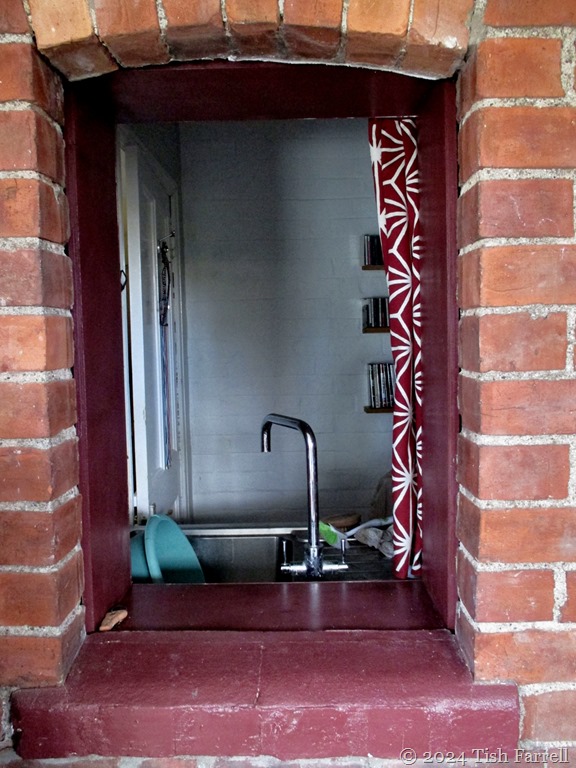
And then there are things that add to a garden that aren’t quite in the garden. Just over the hedge, on the roadside verge, is an ornamental cherry tree with deep burgundy foliage. At sunset, as we eat supper, we have a glimmering light show at our new kitchen window; not at all what we were expecting.

kitchen window

IMG_6006

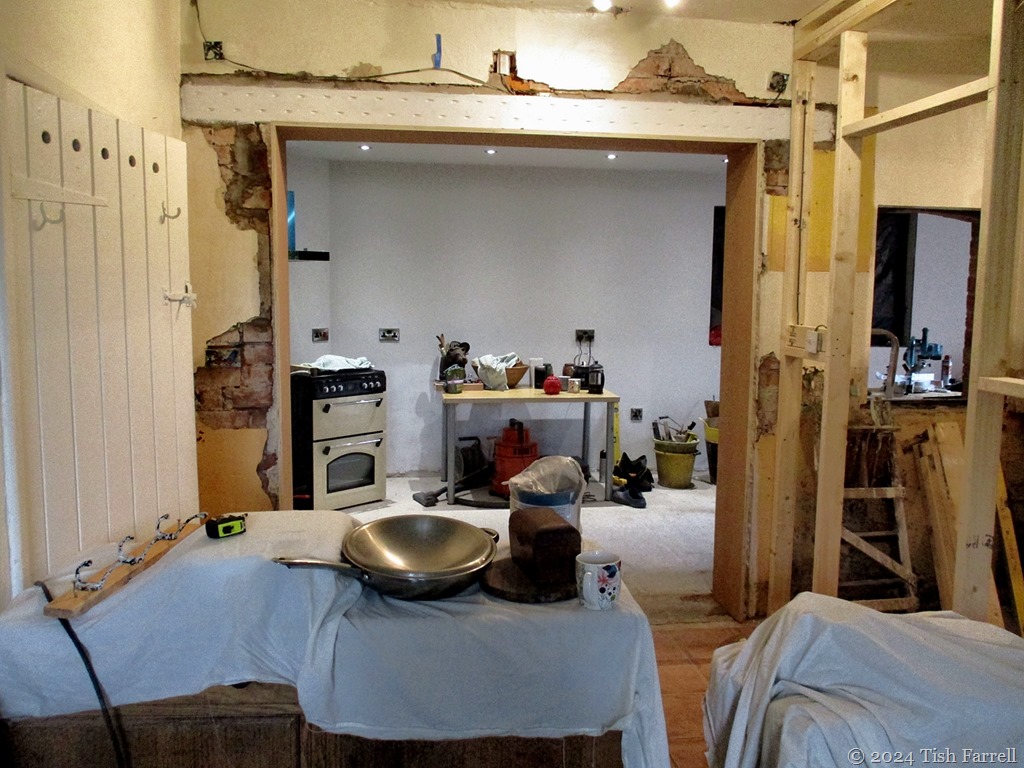
P.S. For followers of the house renovations: the kitchen’s not finished yet. Last lap stuff still to do.

Lens-Artists: What’s In A Garden  Ann-Christine at Leya shows us some stunning gardens