giant gwendol makes the wrekin

100_5822


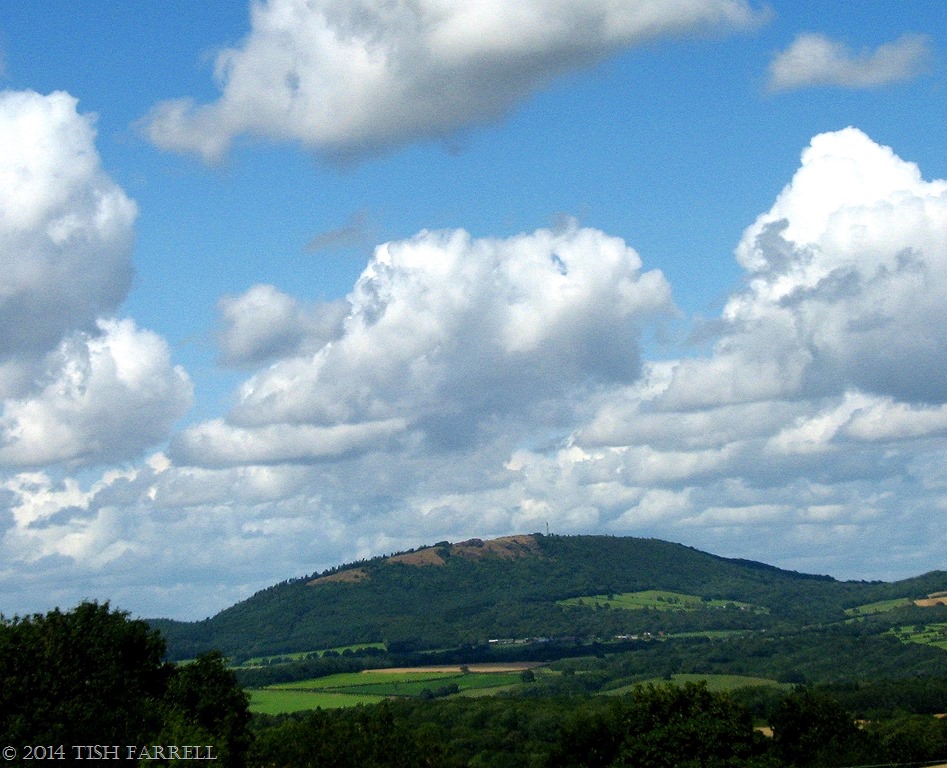
As hills go, The Wrekin (pronounced REE-kin) in my home county of Shropshire is not very high – just over 400 metres (1300 feet) . But then, as estate agents say, location is all, and this is the only big hill for miles around. It rises over a county of farm fields and the flatness of the Shropshire Plain beyond, and thus is a useful landmark when navigating the county’s ancient network of sunken rural roads. It has also long loomed large in local imagination. As with significant natural features the world over, it gives people something to think by, prompting many a tale and joke.

For instance, we have a saying whose usage extends into neighbouring  counties. To go all round The Wrekin means to ramble on for hours before arriving at the point. Hopefully not exemplified in this post. Because yes, I will get around to Giant Gwendol before too much longer. But first some geology. Please don’t groan. I’ll make it snappy.

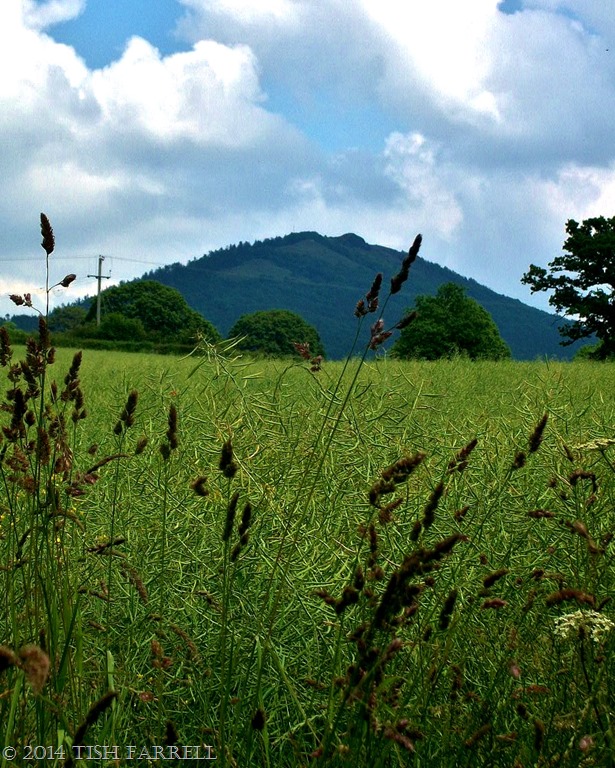
Looking at the photograph above, the first thing that strikes you is that the hill looks like an old volcano, and I seem to remember being told that it was in year 3 geography at secondary school. This apparently is not the case, although it is composed of volcanic rock. The vent that spewed it out is no longer around or visible. This is perhaps worrying. One has to put faith in notions of volcanic dormancy and, since the spewing forth of rhyolites, tuffs and agglomerates took place in the Precambrian some 680 million years ago, we can perhaps rest easy in our beds: Shropshire has had long enough to get over its hot phase. 

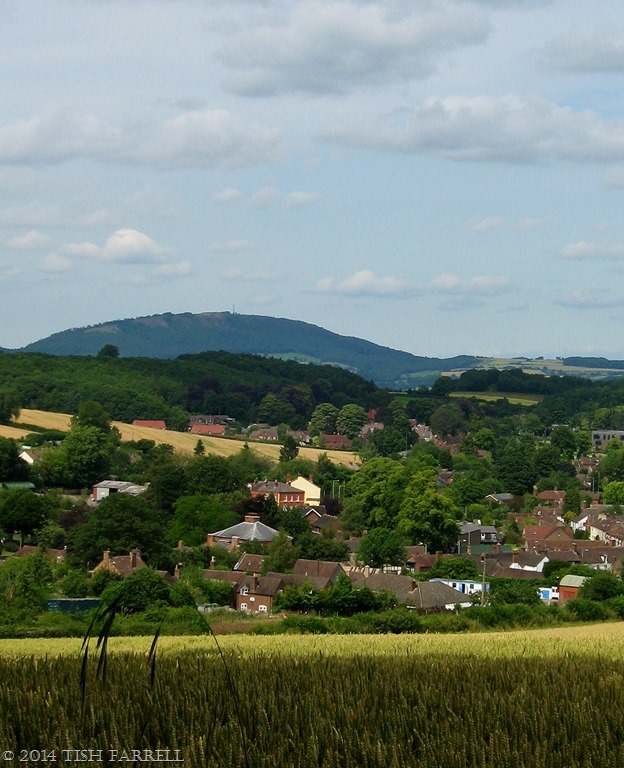
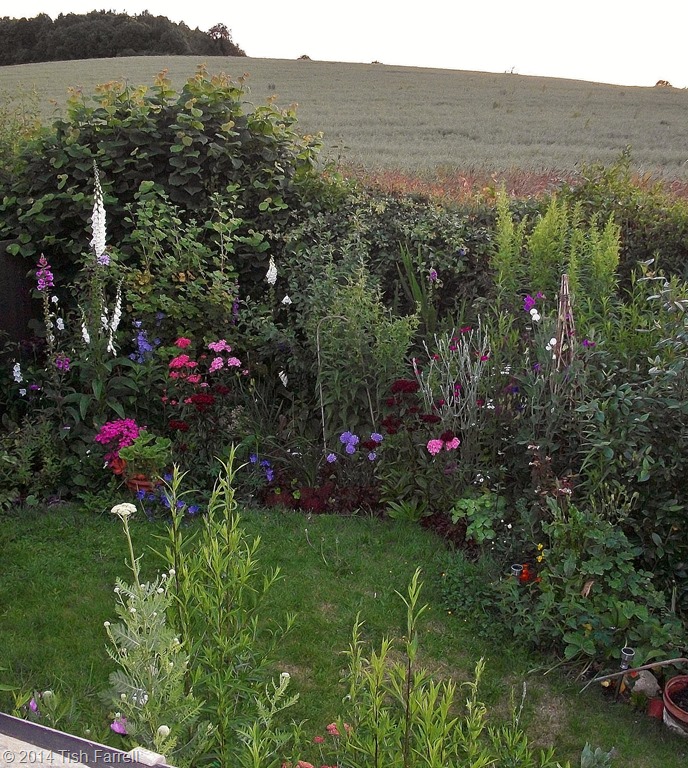
This is also good because as you can see from the second photo, the place where I live, Much Wenlock, is rather close to The Wrekin. The yellow wheat field in the middle ground is behind my house.

But now for the Gwendol story.

IMG_1285


There once was a Welsh giant called Gwendol. For reasons unknown he had conceived a grudge against the mayor and townsfolk of Shrewsbury, in the neighbouring county of Shropshire. Since the town lay within a nearly closed loop of the River Severn, Gwendol came up with a dastardly plan. He would dam the river and so drown the town and all who lived there.

He set off from Wales with a great spadeful of earth to do the deed, and headed for Shrewsbury. He tramped for mile after mile, but somehow lost his way, ending up instead near the town of Wellington. Weary with the search, and from carrying a heavy load, he sat down to rest.

After a time, an itinerant cobbler came walking by. He had walked from Shrewsbury and was heading for Wellington. Over his shoulder he carried a big sack of used shoes for mending.

Gwendol stopped the man and asked for directions. He even told the cobbler his plan to fill in the River Severn and so drown Shrewsbury and all who lived there.

The cobbler was horrified, and especially appalled at the prospect of losing so much trade.

He thought fast.

“Oh dear me,” he told the giant, “that town is so far away. Many days’ walk.” Then he opened his sack of  old shoes. “See,” he said. “I have worn out all these shoes and boots walking from Shrewsbury.”

At this, the giant groaned. “I am too tired,” he said, “to carry my load of dirt that far. I had better leave it here.” And so he emptied it out there and then and, as a parting shot, before setting off back to Wales, he cleaned the mud from his own boots, and so left behind little Ercall, the small hill that stands nearby.

And so now you have the true story of how The Wrekin was born. In fact, for a not very bright giant, I think Gwendol did a pretty good job, landscaping-wise. Also the damming plan would never have worked. Old Shrewsbury town may sit inside the loop of the River Severn, but it is also on a very steep hill. Just as well, though, that Giant Gwendol trudged back into Wales and was never heard of more in Shropshire.


IMG_1364


copyright 2014 Tish Farrell

SOURCE: This tale appears in Charlotte Burne’s Shropshire Folklore 1883. In other versions the Devil is the hill-builder.

Flickr Comments ‘G’ words

Charles Darwin, holy bones and wild orchids at Wenlock Priory


IMG_1261.jpg


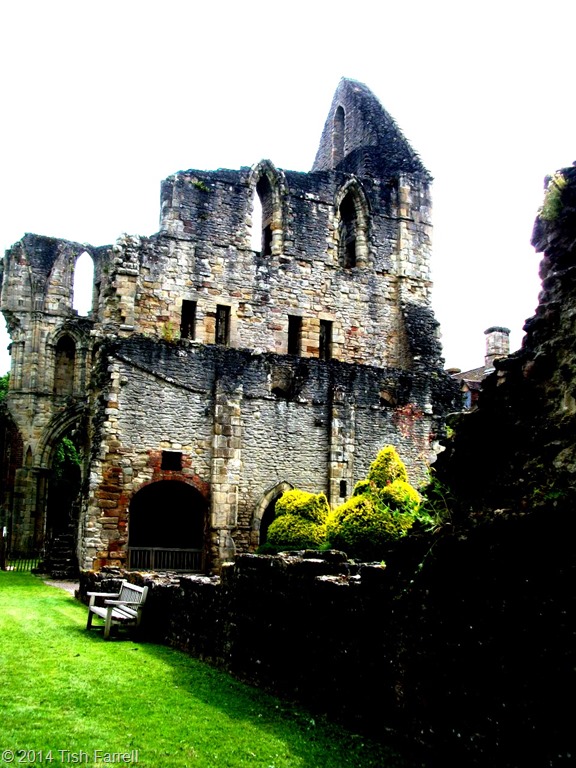
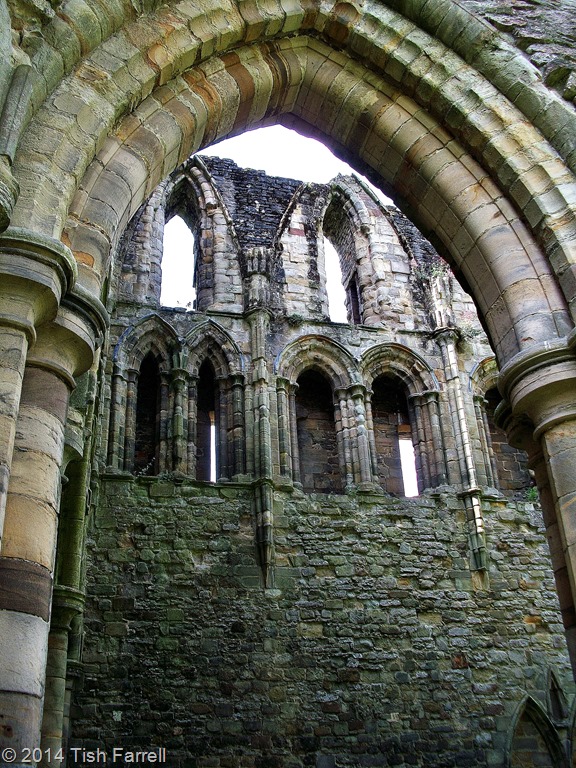
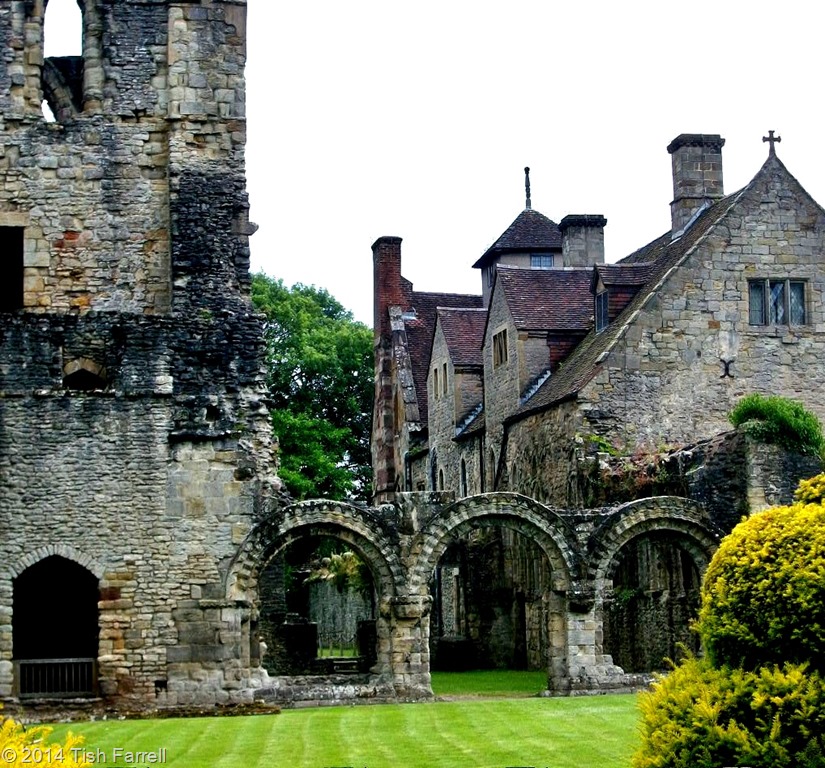
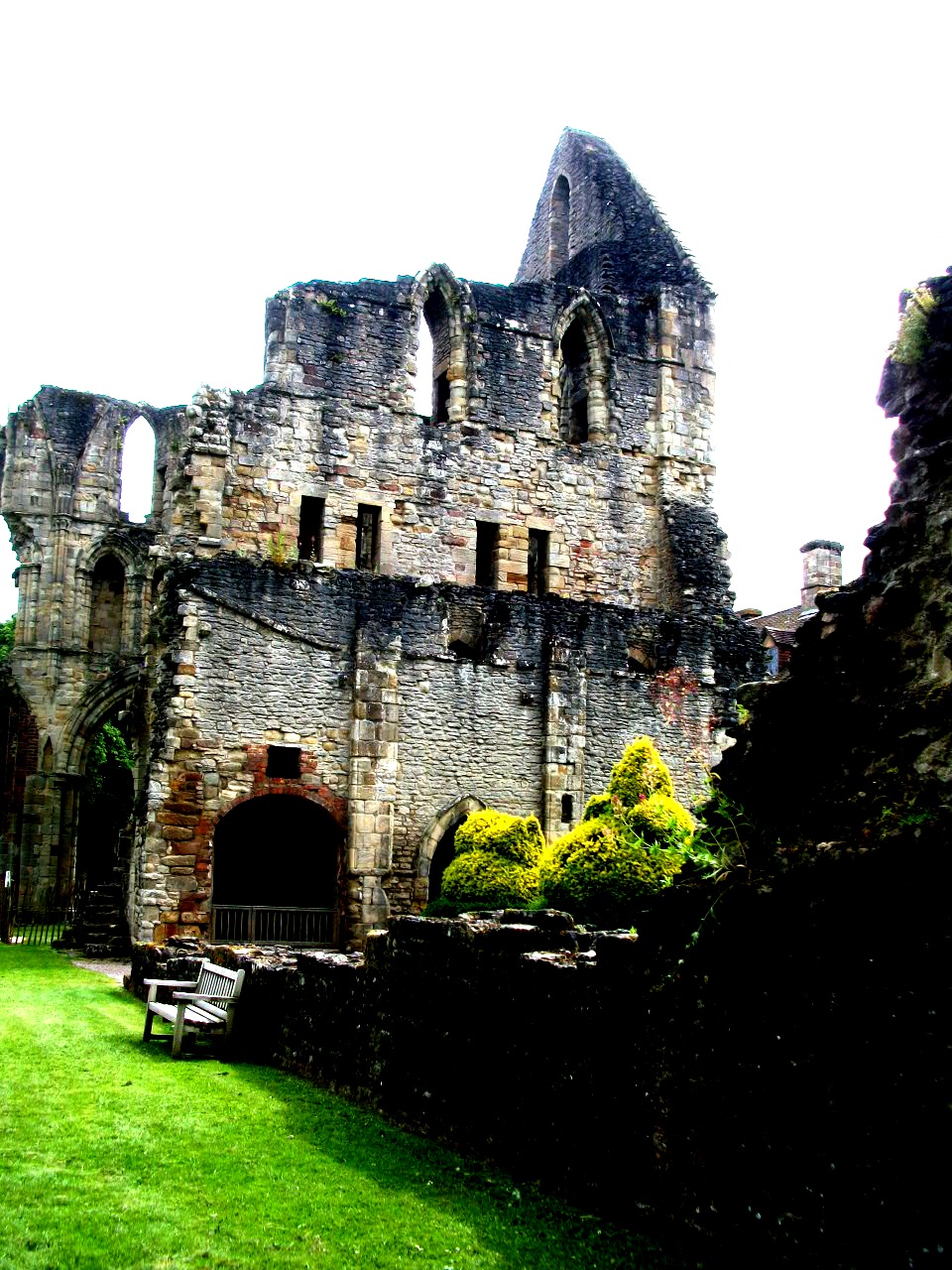
I came upon this wild orchid last week: a single small spike, flowering in the un-mown margins of Wenlock Priory. The Priory is my hometown ancient ruin. In fact the town of Much Wenlock both grew up around, and then later out of the monastery. This latter occurrence was due to some opportunistic recycling on the part of the local populace. After Henry VIII dissolved the monasteries in 1540 (this in a bid to take control of the English church, marry Anne Boleyn and free up some  much needed monastic capital), the lead was ripped from the roofs, and over the years, the stones from the ensuing ruins used to build many of the town’s houses.

100_5898.jpg

*


IMG_1260

The orchid is Anacamptis pyramidalis, a pyramidal orchid, and fairly common in Shropshire. This particular specimen was only a hand’s span in height, but the plant will grow taller. I did not get down to sniff it, and am sorry now, because I have since read that the flowers have a vanilla scent by day to attract pollinating butterflies. But then at night, when wet with dew, they give off a goaty smell that offends moths, or indeed anyone rash enough to get down on their knees for a quick nocturnal whiff. Their roots have medicinal properties when dried and ground into a sweet, nutritious powder called salep. It was once used to soothe upset stomachs. Perhaps the monks in the priory’s infirmary used it too, but please do not try this at home.

Incidentally, it was Charles Darwin who discovered that the structure of orchid flowers was designed specifically to be pollinated by either butterflies or moths with their long probosces. He wrote about it in Fertilisation of Orchids. Darwin also has a local connection. He was a Shropshire lad, born  in the nearby county town of Shrewsbury in 1809. Shropshire has a lot to answer for, and indeed be proud of.

It is also interesting to think of Darwin within these Priory confines. Just as his book On the Origin Species shook the foundations of Christian orthodoxy, so these ruins mark England’s break from the Church in Rome and a complete shake-up in religious belief that rebounded down the centuries. For years, Darwin put off publishing his theory of natural selection – “like confessing a murder”. Even his wife was concerned about the state of his soul. Only the realization that out in the Malay Archipelago, one Alfred Russel Wallace was arriving at similar conclusions to his own, prompted him to finish his book. In the first public airing that described Darwin’s work, Wallace was also given credit.

100_5957-2.jpg


But back to the orchid. I found it growing not far from the place where the Priory’s high altar would have stood, beneath the great east window. Behind that altar was said to be the shrine of St. Milburga. She was a Saxon princess famous for all manner of miracles, and who long after her death, became a big draw on the medieval pilgrim circuit.

For thirty years she had been abbess of the first monastic house in Much Wenlock. This predates the existing 12th – 15th century monastic remains by hundreds of  years, and was founded as a mixed house for both monks and nuns in 680 AD by her father King Merewahl of Mercia. Her grandfather had been the great King Penda, who, it is said,  personally abhorred Christianity, while nonetheless tolerating those with Christian beliefs.

All three of Merewahl’s daughters, and also his queen (after she forsook the marriage) headed religious houses. And I gather it was common in Saxon times both to have mixed-sex religious houses, although with separate places of worship and accommodation, and for them to be ruled by women. Milburga had been well educated at Chelles in Paris before she took up her office. She also controlled extensive estates, which later became part of the Cluniac monastery of Norman times, and yielded large revenues in agricultural produce.  It is clear that in Saxon times, princesses were deemed to have both political and spiritual power to wield. There was apparently no incentive for kings to marry them off in useful dynastic marriages.

The re-discovery of Milburga’s remains in 1101 during the rebuilding of her, by then, ruinous church greatly added to the Priory’s revenue and prosperity as pilgrims flocked to the newly established shrine.  The opulence of the Prior’s lodging, expanded in 1425 , gives an indication of the wealth and power enjoyed by its then Prior, Richard Singer.

IMG_1265.jpg

There are many historical accounts of grim goings on in Wenlock Priory – everything from monks counterfeiting coinage to plotting to murder their prior. But these will have to wait for another post. For now more views of the priory ruins and its other plants – wild and cultivated.

IMG_1230.jpgFoxglove in the cloister garden. Digitalis purpurea was used by monastic herbalists from the early Middle Ages to cure dropsy (oedema or swelling caused by fluid). It has also  long been used for heart conditions, although an overdose can prove fatal. Something else not to try at home.

*

100_5923_thumb.jpg

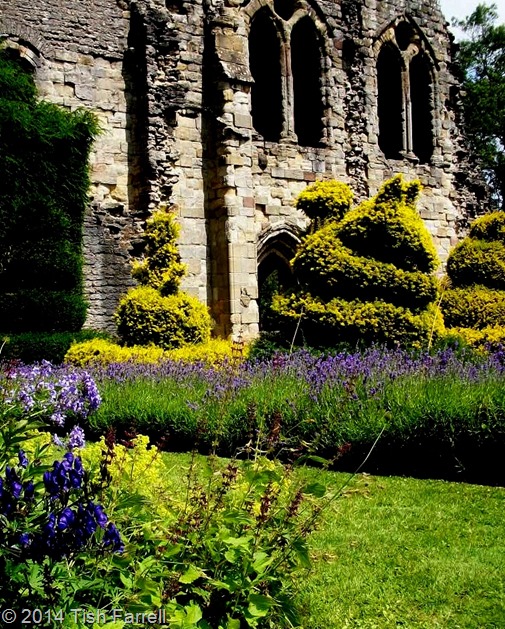
More mauve than purple – the lavender border (and topiary) in the cloister. Lavender has many soothing medicinal uses – for headaches in particular. I have no idea why the topiary hedges are there – a much more recent non-monastic addition it seems.

100_5907.jpg

copyright 2014 Tish Farrell


For more shades of purple go to Ailsa’s Travel Challenge HERE 

For more ‘C’ stories go to Flickr Comments HERE

“Wheat…fields of wheat…” Musings on the path to the allotment


100_5994

Okay, who knows which film this quote comes from? As an extra clue I give you the line in ‘full’: “Wheat… lots of wheat… fields of wheat… a tremendous amount of wheat…”

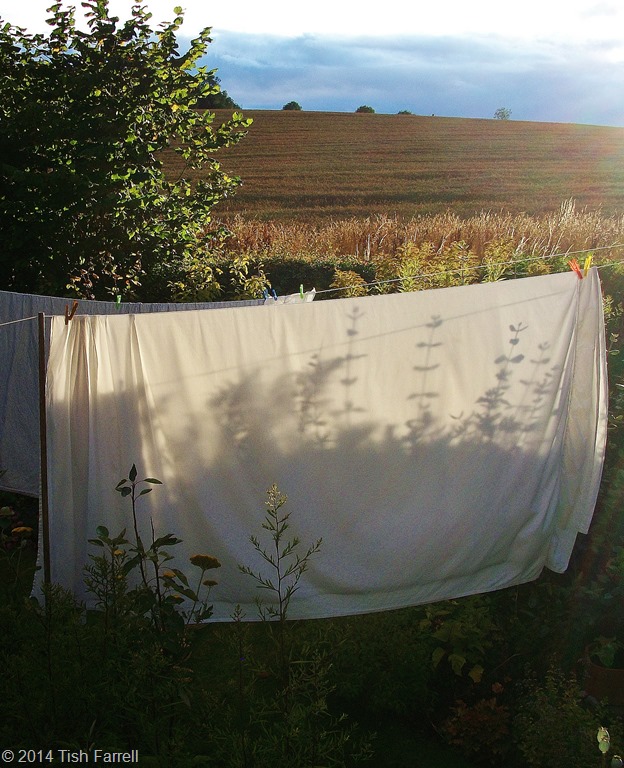
For some reason I cannot explain, this particular exhortation is rather popular in the Farrell household.  The Team Leader is wont to deliver it at unexpected  intervals and with some vigour. This habit even predates the time when we actually came to live beside  a field that often has wheat growing in it. So here is it. The field behind our house. And while I admit it might overstep the bounds of propriety to share my washing with the world, here is another view of the wheat field from our garden. I also think the flower shadows on the sheet rather fine: housework turned artwork?

077 (2)

I have written in earlier posts how our house lies on the edge of Wenlock Edge, a twenty-mile scarp formed from the upthrust bed of a tropical sea – the Silurian Sea in fact. This geological formation is a breath-taking 400  million years old – a place once inhabited by trilobites, and molluscs, and sponges and corals, although it should be made clear that when these creatures lived, the shallow sea in question was not in the northern hemisphere.  No indeed. In its tropical heyday Shropshire lay off equatorial East Africa. We are thus, for all our rustic appearance, a well-travelled county. We also have lots of geology of international importance, but  which I cannot begin to describe because the terminology and chronological expanses confound even me, a prehistorian. The Shropshire Geological Society have  a good site HERE should you wish to know more.

100_2077

The reason I’m showing you the wheat field is because my path to the allotment runs along the edge of it. I walk back and forth at least once a day. And so when I’m not writing blog posts or fiddling with my novel, this is one of the places where I’m likely to be. There is always something that catches my eye – thistles, the light, clouds, buzzards, the rooks and jackdaws, a neighbour’s three white ducks that regularly escape from their pen to eat slugs along the path, cats on the prowl, pretending I can’t see them.

Even the wheat is quite interesting. It amazes me how it manages to force its way up through a cloddy layer of grey clay that bakes to concrete after a few days with no rain. This soil, too, is a product of a geological event – a deluge of  volcanic ash from aeons ago and that has now broken down into bentonite clay.  It is the same soil in the allotment. Soft fruits seem to thrive on it. Everything else is a challenge. Wheat, though, has apparently been grown along the slopes above the town for generations, hence the name The Wheatlands for some of our now built-upon areas.

100_5840

100_5839

And talking of building, a couple of years ago when the Local Authority called for landowners to put forward development land, our local landowner proposed  this and most of the fields on the Edge side of the town, including the allotments too, gardens  that have been there since the 1940s.  Development on this scale is something that most town residents fervently  hope will not happen. We have already been threatened with up to 500 houses over the next 11 years. This in a town with antiquated drainage, severe traffic congestion, few jobs, poor public transport, and inflated house prices, and one that has seen several new developments of upmarket houses in the last few years.  More crucially, the town sits in a bowl below the Edge and has recently been designated a rapid response flood risk area by the Environment Agency.

001 (2)

More tarmac, roofs and roads that speed up run off from the hills above our homes are the last thing we need.  Some of the newest developments in the town are themselves subject to flooding.

100_5849

 100_5995

All right, I admit it. The landscape behind our house is perhaps not particularly noteworthy of itself, but the light and sky above it are. The uptilted scarp of Wenlock Edge forms a false horizon, so there is always much weather to watch. It changes every second. One day we saw a fire rainbow which we gather is quite rare.

Ironically, it it perhaps because this view from our house is ever under threat, that makes us look at it and appreciate it all the more. But it makes me angry too. I am not opposed to development, but it should be well planned, and enhance the locality, not cause problems for other people’s homes. There appears to be no mechanism in English planning that can ensure the provision of good quality housing at prices people can afford. Density seems to be the only planning criterion, not  homes with green spaces around them, and places for community orchards and gardens, footpaths and cycle tracks and areas where people of all ages can play. All things that boost wellbeing. You would wonder why it is so hard to do.

It is true that  Much Wenlock people have recently voted to have the Local Authority  accept their Neighbourhood Plan, a community compiled document that reflects our aspirations and plans for the foreseeable future. Our Conservative Party MP, Philip Dunne, tells us the Plan will deliver localism to our door, that is, we will have a say in the kind and scale of development that is proposed for our town and parish, development that will protect landscapes, open spaces and heritage while improving the quality of life for everyone. Whether it will, or not remains to be seen, particularly under a government whose recently sacked Secretary for the Environment apparently allowed for the destruction of ancient woodland as long as developers replanted elsewhere.  Bio-diversity anyone?

Which I suppose brings me back to the quote; “Wheat…fields of wheat…” You can’t get more of a monoculture than that. Hey ho. So many things to unpick. Think I’ll trundle up the path to the allotment and pick raspberries.

copyright 2014 Tish Farrell

Related:

…of Silurian Shores

Old Stones of Wenlock: repurposing the Silurian Sea

In Much Wenlock an Inspector Calls

100_4193

P.S. The quote is from Woody Allen’s Love and Death


Yesterday’s Shining Star? The Restoring of Artist Mildred Elsi Eldridge (1909-1991)

www.glendwr.ac.uk (2)

Self Portrait Mildred Elsi Eldridge. Photo: Glyndwr University www.glyndwr.ac.uk

*

It has to be asked, this burning, niggling question, but why on earth do we forget women artists so readily? Why is it that their work is less exhibited, less revered or, if noticed at all, only grudgingly accorded a modicum of the status enjoyed by male artists?

I leave it to you to supply the answers to these questions. I only note that this same enquiry was the driving force behind Professor Amanda Vickery’s recent BBC2 series The Story of Women and Art. In this too brief historical exploration of  forgotten/hidden/suppressed  and otherwise invisible women artists, Professor Vickery introduced us to the breath-taking creativity of (among others) Sofonisba Anguissola, Berthe Morisot, Johanna Koerten, Properzia de Rossi and Artemisia Gentileschi.  I will be forever grateful for the introduction.

Now, though, I have a very particular question. It relates to the work you are about to see – details from a great mural that, until fairly recently, was hidden from view.


All photos: Glyndwr University www.glyndwr.ac.uk

DSC06549[1]

*

panel 6 glendwr


*

DSC06941[1]

*

DSC06556[1]


So my question is this. What was in the minds of the people when they took down and concealed from sight this work of lucent genius by Mildred Elsi Eldridge; how did they feel when they stowed away the Dance of Life?

Sorely deflated? Bereft? As if the light had gone out?

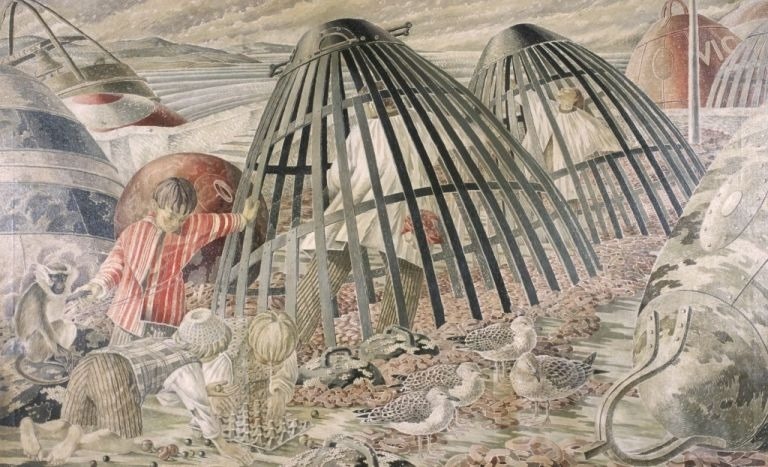
The work was originally commissioned in the early 1950s by the Hospital Management Committee of the Robert Jones Agnes Hunt Orthopaedic Hospital, Gobowen near Oswestry in Shropshire. A new nurse’s home had been built and the  mural was to hang in the dining hall. The hospital’s Doctors Menzies and Salt had recently been to Sweden and seen how art was being introduced to hospitals to enhance the healing process.

The fee for the commission was £500 and the work took M E Eldridge around five years to complete (Gwydion Thomas in Life and Times of M E Eldridge). In 1999, after being on display for forty years, the mural was put into storage. The hospital was undergoing development. But once consigned to custodial care, it was over a decade before moves were made to restore the panels and find them a new home. 

Elsi’s son, Gwydion Thomas, was a child when the panels were being painted  (see the boy with the monkey above). He says the work was created in their home, in the drawing room of Manafon Rectory, Montgomery. He says that, as there was not enough wall space to hang the work in progress, Elsi rolled up completed portions as she went along, hanging others over doors as she was painting. He says the work wound many times around the room. It is a sharp glimpse into this woman’s focus, vision and determination.

DSC06558[2]

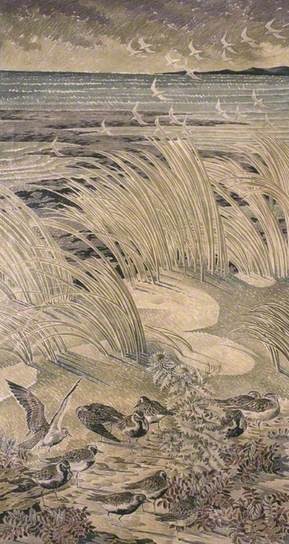
The mural’s overarching theme explores how we industrialized human beings have become detached from the natural cycles of life and death. There are depictions of alienation and loss. Yet the work inspires hope, too, through the reclaiming of forgotten wisdom and traditional ways of living and healing. And so, despite the dark undercurrents, the work is hugely elevating. Joyous.  Transcendent. Full of verve. When fellow artist, Stanley Spencer, saw it in 1958 he wrote to Elsi: “Just one look at the heavenly sheep panel would remove all fear and gloom.”

Art Historian, Peter Lord, has described the work as “a masterpiece on so many levels”, while pointing  out not only the technical ambitiousness of so large a project, but also the fact that Elsi completed the work without a suitable studio.

It is good news, then, that Dance of Life has now been released from custody, restored and put on permanent view at Glyndŵr University’s Centre for the Creative Industries in Wrexham. It can be viewed by visiting the main University Reception (tel: 01978 293950). 

DSC06663[1]

Restoration by Vanessa Andrew in progress at Glyndwr University www.glyndwr.ac.uk

*

DSC06933[1]

Gwydion Thomas speaking at a private view of the restored panels

Photos: Glyndwr University www.glyndwr.ac.uk

DSC06936[1]*


*

So: you have seen some of her work, including that self-assured self-portrait at the start of this post, but what of the artist M E Eldridge? Why isn’t she better known?

Mildred Elsi Eldridge

She was born in Wimbledon in 1909, the daughter of a pawn- broker turned  jeweller. She studied at Wimbledon College of Art and then at the Royal College of Art, where her teachers included Eric Ravilious, Edward Bawden and William Rothenstein. She was one of the RCA’s star pupils. In her autobiography she says of this time:

A free studentship in 1931 took me to the RCA which in those days was attached to the Victoria and Albert Museum. There were huge doors from the V&A into the College which were kept securely locked but as there was always one of the museum keepers on duty on the other side of the doors, special signs and knocks could be made so that after signing on at the RCA entrance desk it was possible to escape into the V&A and make drawings of the splendid treasures in the museum, or experimental drawings of one’s own which would probably have received severe criticism from the RCA staff. From there, sallies could be made to the Science Museum across Exhibition Road or to the Natural History Museum to make studies of animals, plants and fungus.

In 1934 The Rome Scholarship competition was held – the subject Music. I submitted the 5′ x 5′ Telling the Bees which later became the central part of the first panel in the mural in the Dining Hall of theNurses’ Home at the Gobowen Orthopaedic Hospital. 

M. E. Eldridge Autobiography

meeautobees[1]

This was the piece that won her the prestigious Travelling Scholarship to Italy and opened the doors to the art world. When she returned to London she soon established herself, being the only artist to sell all her work at 1936 Royal Academy exhibition. The next year she had a one-woman show at the Beaux Arts Gallery, and with the proceeds of the sales, including several to major collectors and large metropolitan art galleries, she bought herself a Bentley car. And then –

She turned her back on the glitter, and headed off in her Bentley for  the Shropshire-Wales borderlands to teach at Oswestry High School and Moreton Hall School for Girls in Shropshire. She lodged just over the border in Wales, in Chirk near Wrexham, and it was in the house where she was staying that she met the fellow lodger, a young curate, who was to become known to the world as poet, R.S. Thomas. She made this portrait of him in 1940, the year of their marriage.
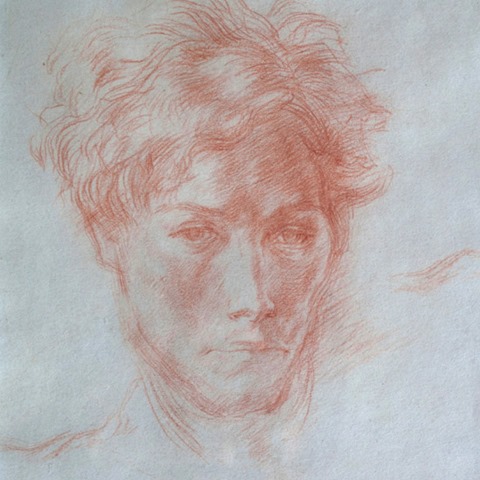
1940 yr of marriage

It would be easy to say that the growing fame of RS eclipsed or stunted Elsi’s talent. He apparently took no interest in her work or did anything to encourage her. There is a revealing interview in the New Welsh Review issue 64 in which Gwydion Thomas says that after Elsi’s death in 1991, his father wondered if Elsi would have “gone on painting properly” if, as they moved from rectory to rectory across Wales, he had ever bothered to arrange for a house with suitable work space for her. RS admitted, too, that he should never have expected her to live at Sarn y Plas in Rhiw (see the previous post) after he retired  from the priesthood, and the church authorities would not allow them to buy the Aberdaron rectory with its pleasant rooms and fine views.

cover_64[1]

Gwydion describes her room at the house in Rhiw: so dark with two tiny windows, and damp too. She had to keep her paintings in black plastic refuse bags to protect them from the water that  dripped through the walls. It was so cold, that as she painted, she kept her feet inside a cardboard box, along with a two-bar electric heater, and so was frequently burned. The room also had a low loft which she reached by means of a ladder. Here, with the company of mice, she both slept and worked. Tellingly, the new room that the Thomases built at Sarn y Plas served RS as bed-sitting room.

Elsewhere, Gwydion describes Elsi as

a remarkable and talented woman. She painted, and sold, some 2,000 finished pictures and produced innumerable studies…She was a weaver, a sculptor, a clothes maker – she made me clothes out of rabbit and mole skins – and a knitter, a teacher, a writer and illustrator of children’s books…She designed altar cloths, stained glass windows and wrought-iron chandeliers. She designed and planted four gardens, raised a child, cooked for my father: four meals a day, every day, for 50 years.

He did not know why she stopped painting landscapes, and took to churning out what he calls  ‘pretty’ paintings and illustrations. But he does say something that is perhaps illuminating. He says that when his parents first met, RS was writing “dreadful imitations of soppy Georgian poetry”, and full of dreams of Celtic romance. Then along comes this vibrant, shining, well read, well travelled and sophisticated young woman who can introduce him to other kinds of literature, and to the wider world besides.

When it comes to Elsi’s influence on the poet, R S Thomas scholar, Jason Walford Davies, calls her a catalyst, a promoter, the one who made things possible, and helped RS realize a career as poet. She certainly inspired him to write some of his most humane and moving poems.

Marriage

We met
under a shower
of bird-notes.
Fifty years passed,
love’s moment
in a world in
servitude to time.
She was young;
I kissed with my eyes
closed and opened
them on her wrinkles.
‘Come,’ said death,
choosing her as his
partner for
the last dance, And she,
who in life
had done everything
with a bird’s grace,
opened her bill now
for the shedding
of one sigh no
heavier than a feather.

R S Thomas

rst


And so perhaps, in a sense, R S Thomas was also one of Elsi’s creations, a co-creation certainly. She gave him the gift of possibility, and that is a great gift indeed. Her artist self may indeed have been diminished by the marriage, although she strikes me as a woman who knew her own mind and made her choices accordingly. Perhaps she had painted out all her best thoughts, and felt she had nothing more to add in terms of ‘great works’. She anyway never stopped creating, making paintings for Medici greetings cards for instance, and she was working still when she could barely see.

There seems to be no single explanation, then, as to why M E Eldridge, after such a glittering start, is not better known today. Clearly she had some hand in this when she decided  to drive away from her London career, and head for the Welsh Marches. But then to leave in a Bentley, that most self-aggrandizing of vehicles? It is all so playfully enigmatic.

And so instead of answers, I leave you, in like vein,  with this alluring abstract study called ‘Gwydion’s treasures 1952’. I love the shining light in the marbles: what a heart-felt evocation of childhood freedom, and not a shred of sentiment. Only wonder at the cycle of life and death to be observed upon the sea shore, and seen through the endlessly enquiring eyes of a child. Her child.

abstract 1952 httpwww.bbc.co.uknewsuk-wales-21714220

*

For further discussion of overlooked women artists:

Jeanne de Montbaston Women, Art and Authority: The Language of Exclusion

#artbywomen

Text © 2014 Tish Farrell

When Henry James came to Wenlock

“If Gaskell asks you to Wenlock don’t for the world fail to go.”

Henry Adams in a letter to Henry James 1877

IMG_0944

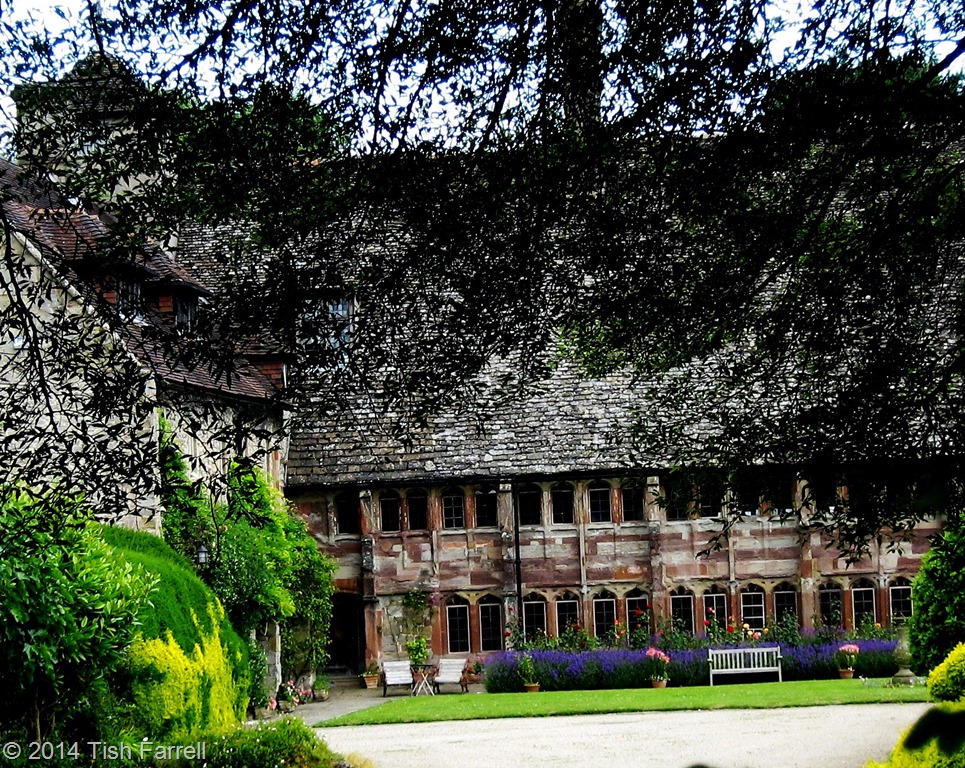
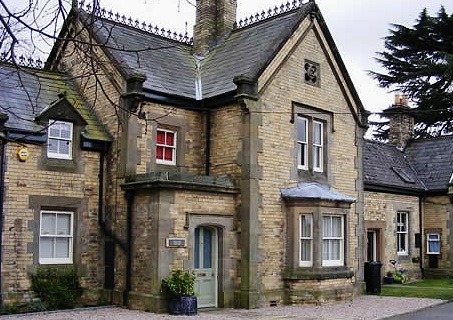
This is the house where Henry James stayed  on his visits to Much Wenlock in 1877, 1878 and 1882. At the time it was known as The  Abbey, but  once it was the Abbot’s House, and part of a great medieval Cluniac priory whose ruins stand beside it. Only the house, and the town’s parish church survived Henry VIII’s great monastic dissolving campaign of 1540.

I’ve recently read, too, that the Dissolution did in fact involve actual structural ‘dissolving’. The first thing King Henry’s agents did in their bid to disempower the clergy and seize their estates was to rip the lead off the monastery roofs. The wear and tear of English weather then did the rest. Since Wenlock Priory was once one of the most imposingly large religious houses in all Europe, you can well see how efficiently the elements did their work.

100_5898

The adjacent small town of Much Wenlock town dates from at least from Saxon times when St. Milburga, daughter of a Mercian king, founded the first religious house here. She was Abbess of Wenlock  between 675-690 AD. The later priory was the work of the invading Normans, who liked to use looming architecture to cow the natives into submission. The monks were brought in from France, but it wasn’t  until end of the 12th century when Bishop Odo, a former Cluniac monk, published his account of the discovery of St.Milburga’s bones (he describes them as “beautiful and luminous”)  that this great house acquired the kind of saintly cachet that ensured serious pilgrim-appeal, and thus brought much prosperity to the town.

After the Dissolution, however, pragmatism ruled, and much of the fallen priory masonry was used to build or expand the town’s homes and businesses. Thereafter, Much Wenlock’s success was based on providing a small but busy mercantile and manufacturing centre for the local agricultural and quarrying community. It even had two Members of Parliament.

But back to  Henry James (1843-1916). What on earth had brought this widely travelled writer to the little town of Much Wenlock? And not once, but three times.

HenryJamesPhotograph[1]

In fact it was only the urging of a friend, Harvard history professor, Henry Brooke Adams, that brought James here at all on that first visit in 1877. He hardly knew his hosts, Charles and Lady Catherine Milnes Gaskell. Charles Milnes Gaskell, rich barrister and landowner, was a close friend of Adams, and it was Adams who indirectly secured the invitation for Henry James. He knew that James would love the Abbey. Hence the exhortation: “If Gaskell asks you to Wenlock don’t for the world fail to go.”

And so, further enticed by “a gracious note from Lady Catherine Gaskell” and armed with a copy of Murray’s Handbook of Shropshire, Cheshire and Lancashire, Henry James left London for deepest Shropshire, travelling by train to Much Wenlock. The details of how he spent his time on his  five-day visit appear in a travel sketch called Abbeys and Castles, later published as part of Portraits of Places (1883).

Railwayramblers.org.uk

At the station (now private houses) he was met by the Gaskell’s coachman, Crawley, driven into the town, passing in sight of Holy Trinity Church (today without the spire shown in the Frith photo). Here they  turned left into the Bull Ring… 

100_4966

passing Priory Cottage on the left…

100_5338

…the turning right into the Abbey’s winding drive…

100_4997

…with the priory ruins on the left.

IMG_0952 - Copy

The carriage would then have swung hard  into the open courtyard of the Abbey, and this would have been Henry James’ first view of his destination. Well-travelled as he was, I think he would have been astonished.

Adams’ certainty that his friend would love the place was spot on. In Portraits and Places (p278)  Henry James says:

“It is not too much to say that after spending twenty four hours in a house that is six hundred years old, you seem yourself to have lived in it for six hundred years. You seem to have hollowed the flags with your tread, and to have polished the oak with your touch. You walk along the little stone gallery where the monks used to pace, looking out of the gothic window places at their beautiful church, and you pause at the big round, rugged doorway that now admits you to the drawing room. The massive step by which you ascend to the threshold is a trifle crooked, as it should be; the lintels are cracked and worn by a myriad-fingered years…it seems wonderfully old and queer. Then you turn into the drawing room, where you find modern conversation and late publications and the prospect of dinner. The new life and the old have melted together; there is no dividing-line.”

In letters James admits to being rather  in love with Lady Catherine, whom he describes as a perfect English rose. She was only twenty years old at the time, and expecting her first child. She apparently put garden flowers in his room and made sure he had plenty of writing paper and pens. But when it came to entertainment, this was down to Charles Gaskell. Despite the rainy weather, he and James appear to have yomped all over the district looking at stately homes and other ruins. They also took the train to extend their excursions to Stokesay Castle and Ludlow. Henry James was clearly enchanted. Of Much Wenlock and its setting he says:

“There is a noiseless little railway running through the valley, and there is an ancient little town lying at the abbey-gates – a town, indeed, with no great din of vehicles, but with goodly brick houses, with a dozen ‘publics’, with tidy, whitewashed cottages, and with little girls…bobbing curtsies in the street. But even now, if one had wound one’s way into the valley by the railroad, it would be rather a surprise to find a small ornamental cathedral in a spot on the whole so natural and pastoral. How impressive then must the beautiful church  have been in the days of its prosperity, when the pilgrim came down to it from the grassy hillside, and its bells made the stillness sensible.”

Things have changed of course, although we still have a fair few ‘publics’ for so small a town – five in fact. But there are no longer little girls who curtsey to gentleman, and sadly no railway, which means instead we do now have the inevitable din of vehicles..

100_5337

100_5024

IMG_1074

100_5328

*

An interesting aside to the Henry James’ Shropshire travelogue is that he is said to have been working on his disturbing ghost story The Turn of the Screw while staying at the Abbey. He certainly had the supernatural on his mind during that first visit.

“…there is of course a ghost – a gray friar who is seen in the dusky hours at the end of passages. Sometimes the servants see him; they afterwards go surreptitiously to sleep in the village. Then, when you take your chamber-candle and go wandering bedward by a short cut through empty rooms, you are conscious of a peculiar sentiment toward the gray friar which you hardly know whether to interpret as a hope or a reluctance.”  (Portraits of Places)

And this does rather remind me of a passage in The Turn of the Screw  where the governess narrator describes how her young charge, Flora, takes her on a guided tour through the rambling old mansion at Bly:

“Young as she was, I was struck, throughout our little tour, with her confidence and courage with the way, in empty chambers and dull corridors, on crooked staircases that made me pause and even on the summit of an old machicolated square tower that made me dizzy.”

But then Henry James seems to have made a life’s career of ‘staying’ in, or visiting large country houses. All the same, I like the idea of his brewing this grim tale in Wenlock. Certainly from across the old monastery parkland, the Abbey does have a more brooding and sinister air. And now I’ve sown that notion, I’ll leave you with some more views of undissolved monastic relicts: 

100_5003

100_4984

References:

Cynthia Gamble John Ruskin, Henry James and the Shropshire Lads New European Publications Ltd 2008

Vivien Bellamy  A History of Much Wenlock Shropshire Books 2001

copyright 2014 Tish Farrell

Rooti-toot-toot, it’s spring at the allotment: up close and vegetal

100_5367

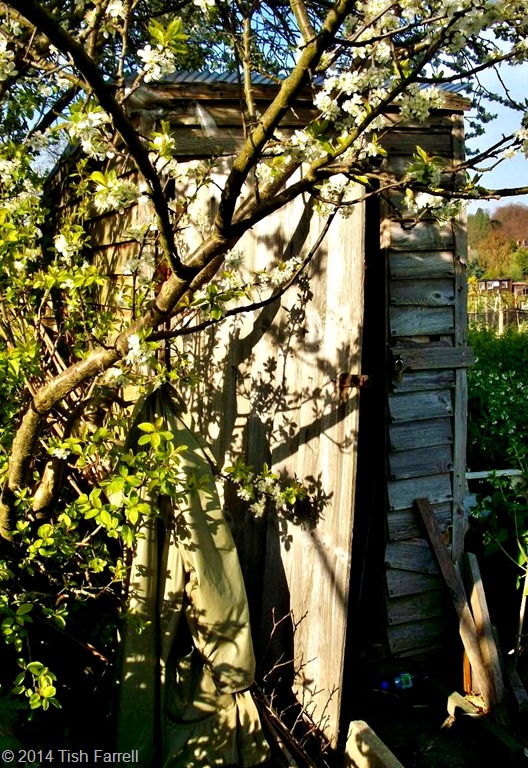
Well the old shed has made it through another year. A couple of bits have fallen off, but last year’s application of internal bracing by the Team Leader, aka Graham, has kept its tendency to list in an easterly direction in check. Would that we all had such a bracing. Over the winter it housed a poor mummified mouse, and snails still go to roost in there. I’m not showing you the inside, though. You definitely do  not want to see in there.

100_5374 (2)

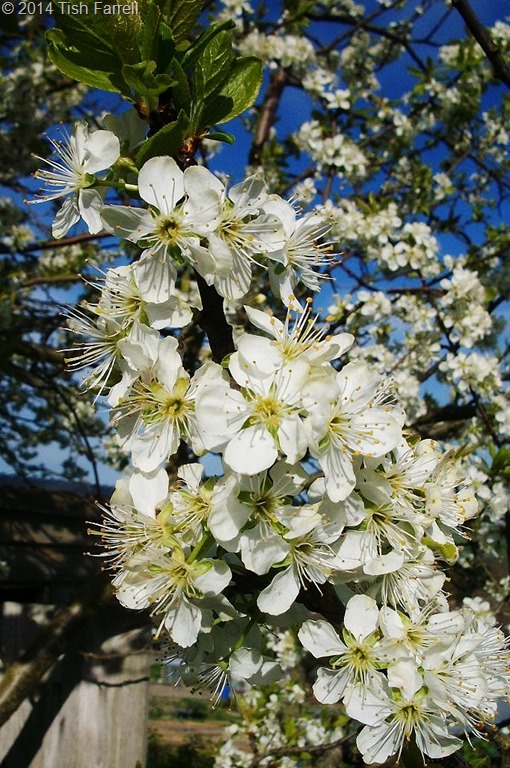
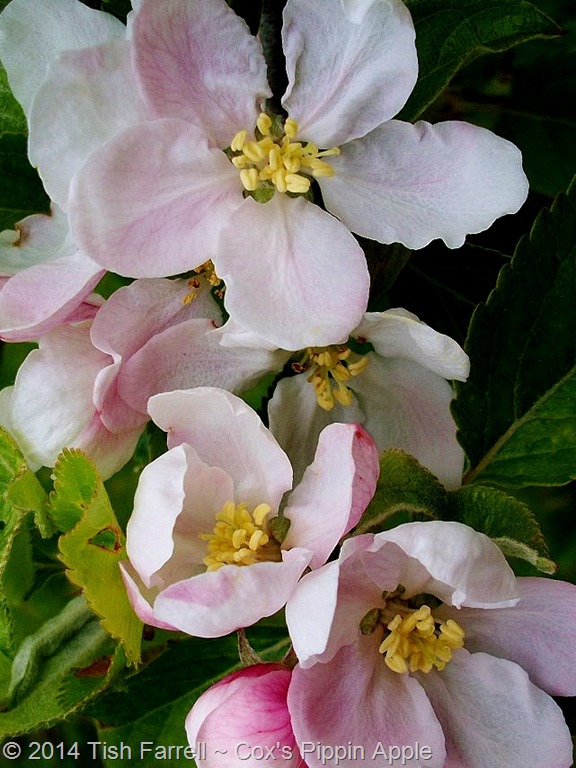
Instead, here is the ancient greengage tree with its delicate blossom. Already I’m wondering if it will give us some fruit this year. Greengages are notoriously temperamental, and after the magnificent crop in my first year of allotmenting that had us, and all our friends and relations, dribbling with delight over bucket loads of luscious harvest, it has borne very little. That was seven years ago. Maybe this year is the year then.

100_5362

There are loads of jobs to do, not least digging. The endlessly wet autumn and winter meant that winter digging was impossible, so there has been much to catch up on. Meanwhile the weeds are literally having a field day, which makes this the the season of dandelion beheading. (Sorry, dandelions). They are sprouting up all along the paths between everyone’s plots, and I’m afraid I find great satisfaction in slicing off these cheery faces with my strimmer. Their replacements are anyway there the next day, beaming vigorously.

100_5637

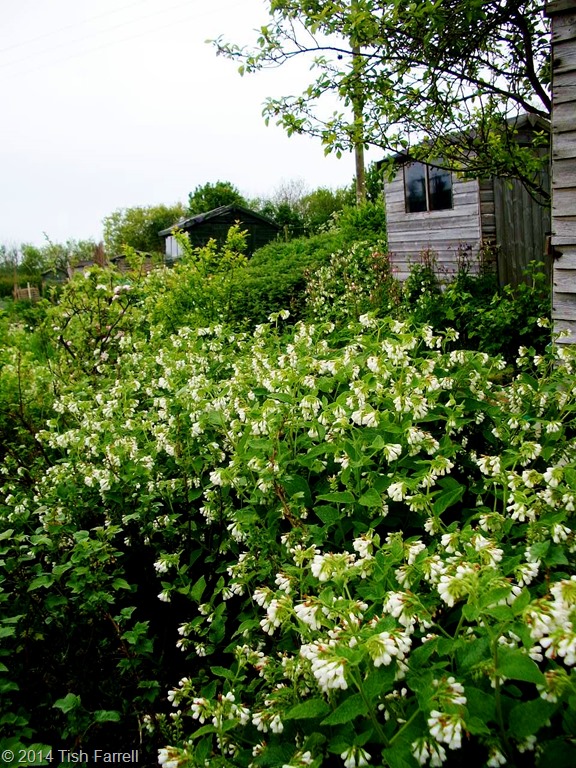
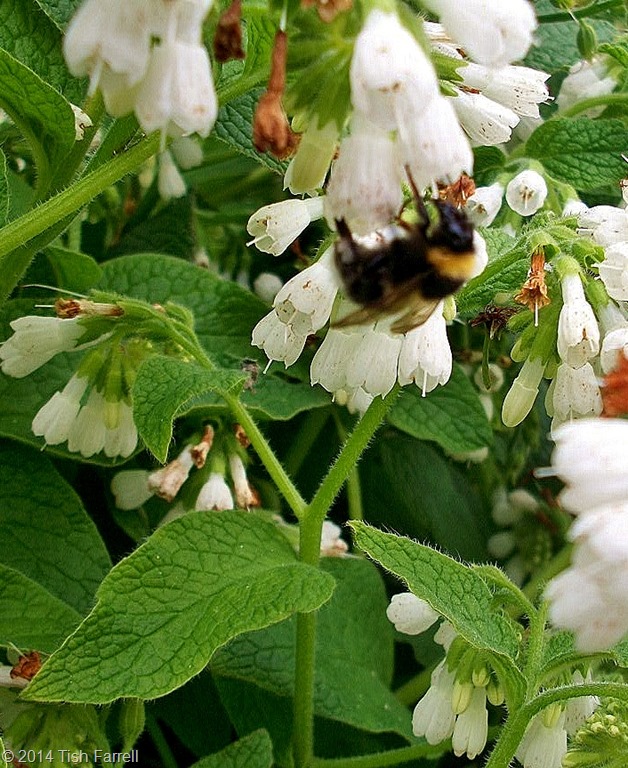
Then there is the comfrey forest to manage. This plant I crop and cherish. You cannot have too much of it, and it obligingly grows  itself in a huge clump beside the shed. If you cut it down after flowering, it will grow again and again during the summer.

Comfrey, as I have mentioned before, is the organic gardener’s dream plant. It comes in other shades, pink to purple through blue. Its ability to mine otherwise inaccessible  nutrients from the soil (dynamic accumulation I believe this is called) and repurpose them in its foliage make it an endless source of cost-free fertilizer. It is one of the reasons why you can’t look in my shed. I do my brewing in there. And no. It’s not what you think.

100_5645

For those who missed an earlier post on this, I stuff old compost bags with the comfrey’s  top growth, seal them with clothes pegs, cut a hole in the corner of each bag, and prop it over a bucket and wait. In the warmth of the shed the vegetation soon rots down, giving out a dark and evil looking liquid that collects in the buckets.  This stuff is pretty smelly, although nowhere near as pungent as the slimy residue left in the bag, which then ends up on the compost heap. The liquid I  decant  into old plastic bottles, and use as a feed through the growing season. It is 3 times richer in potassium that farmyard manure, but it must be diluted 1 part comfrey essence to 15 parts water.

The blurry bee above would not stay still for the shot, but that’s another good thing about comfrey. Bees like it. As I took this, I spotted at least 4 different kinds: a honey bee and three bumbles of varying liveries and sizes. Having written of the dire things that are happening to bees, it’s heartening to see so many at the allotment doing their work. Thank you, bees.

100_5647

The mild winter has meant that many crops simply kept going without dying back. Yesterday I noticed that my globe artichokes have already made globes almost big enough to eat. In May? What is going on?  But thank  you, artichokes.

100_5611

The Swiss Chard has been magnificent too and kept us going through the winter with fresh new leaves. It is only now going to seed. Nor did I sow it in the first place. It seeded itself around my plot from my neighbours’ plot. Thank you,  Pete and Kate.

100_4188

And now you can look at my Red Duke of York spuds, their foliage just pushing through the soil. I love the purple flush on the new growth.

100_5631

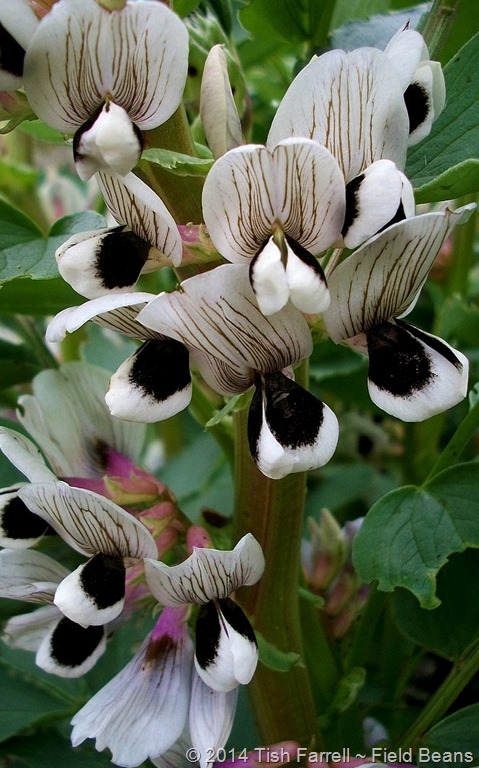
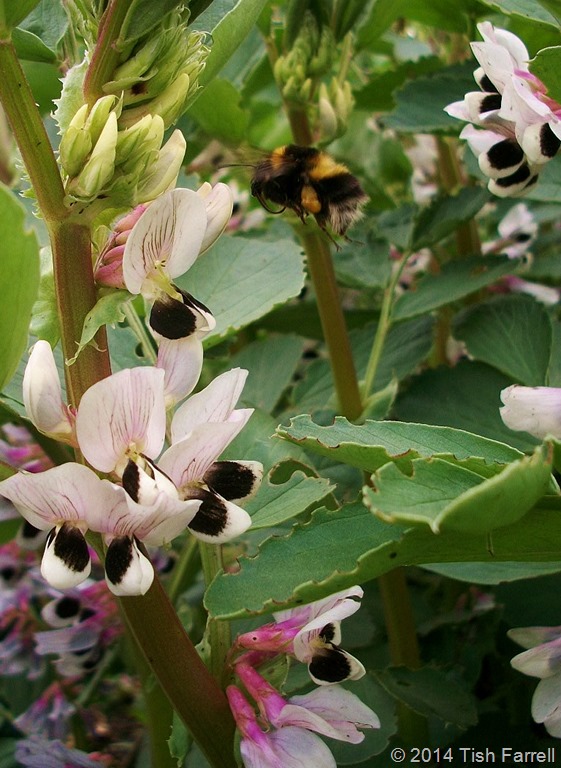
And next are my over-wintered field beans (rather like broad beans I am told, but smaller and tastier). This is the first year I have tried them. The metre tall stems are covered in blossom from tip to root, and the scent is glorious. The bees are busy here too.

100_5620

100_5619

*

And last but not least, the strawberries are flowering like crazy…

100_5616

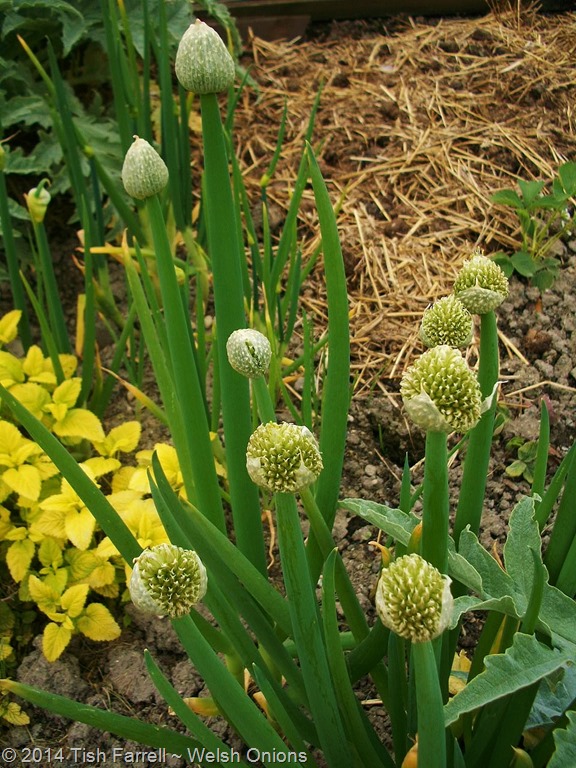
And the Welsh Onions are bursting into bloom beside the Lemon Balm, although I’m not sure whether I should be stopping them from doing this. On the other hand they will look rather splendid as the flowers open, and of course make lots more seed.

100_5613

And finally, the brightest face of all at the allotment, other than mine after too much digging. This is yet another lovely plant that grows itself up there with no help from me, and flowers into the winter. Its petals are lovely in salads, and it makes a good herbal tea that is said to improve pretty much any condition. I can believe it. Simply looking at this flower does you good: the orange goes right through your eyes and into your immune system. A big hand then, for the marigold. TARRAAAAH!

IMG_1137

© 2014 Tish Farrell
Please go to all these places for lots more brilliant stories:

Frizztext’s tagged ‘R’

Ailsa’s Travel Challenge ~ Close-up

DP Weekly Photo Challenge ~ Spring

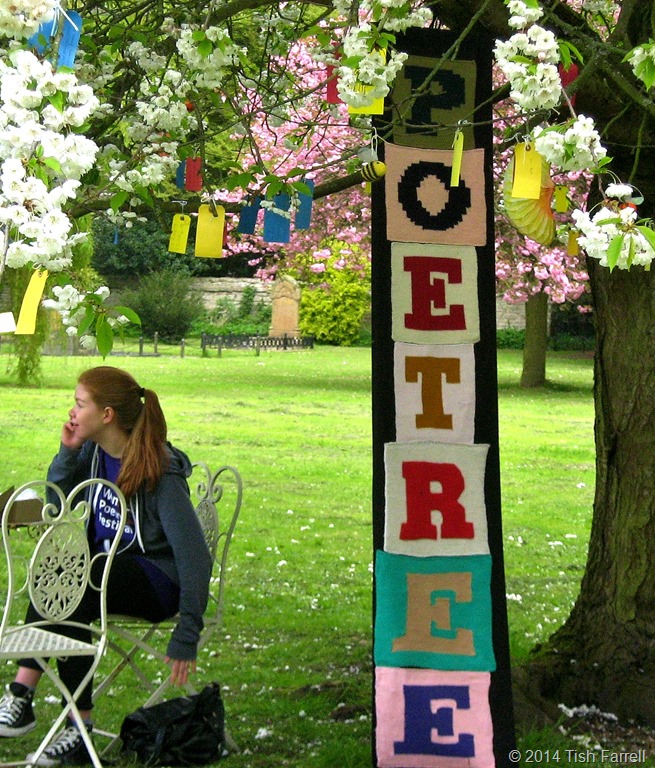
Much lettered at Much Wenlock’s Poetry Festival


100_5560

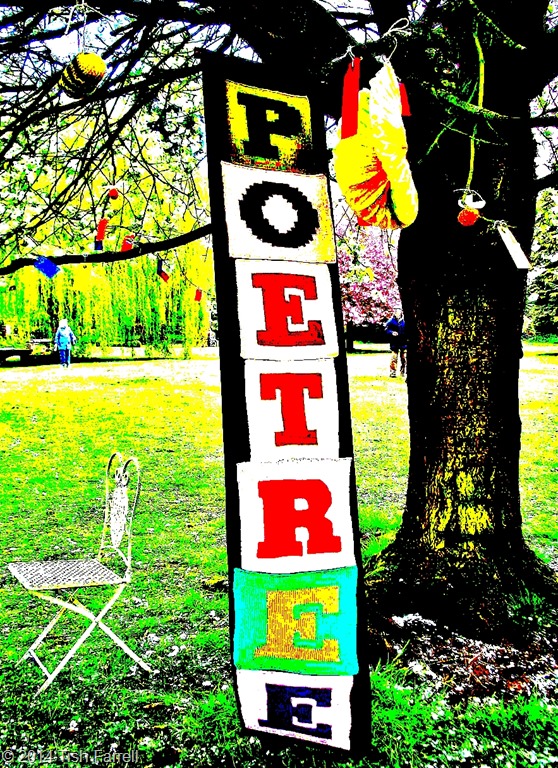
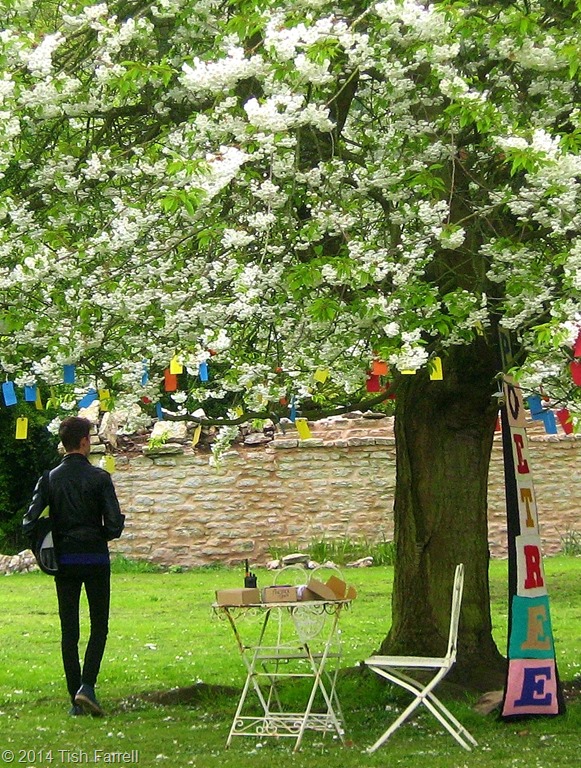
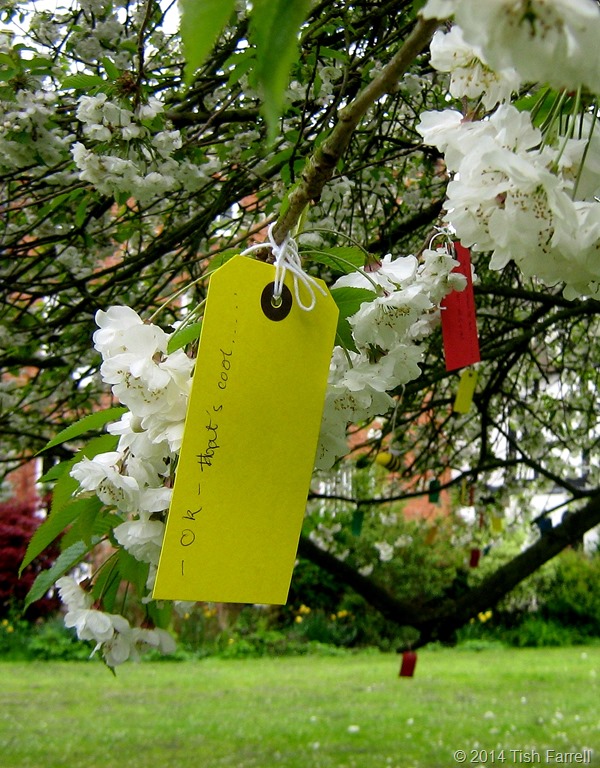
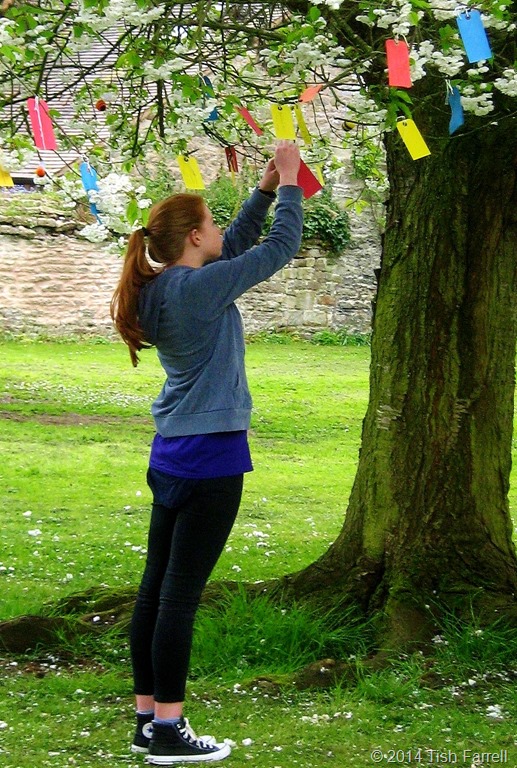
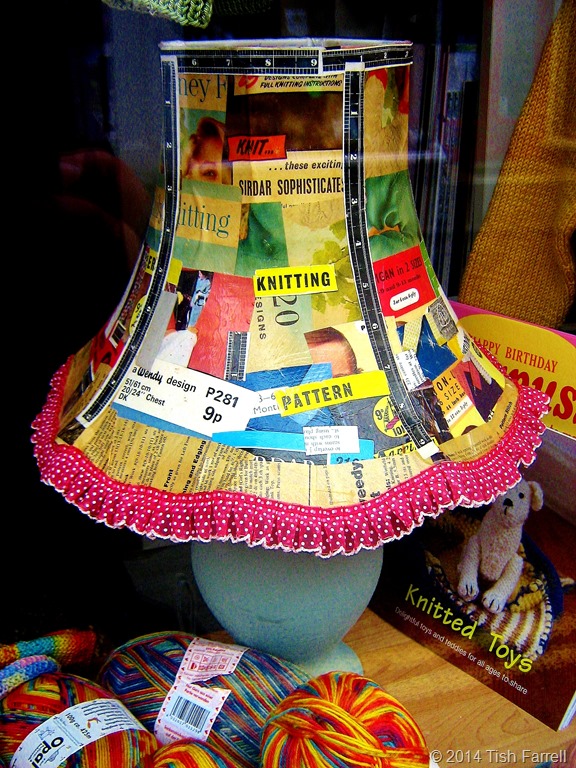
These letters are knitted (I think I was responsible for the red ‘E’) and here they are adorning the cherry tree on the Church Green. This is the Wenlock Poetry Festival’s ‘Poetree’ (artistic licence rendered photo-wise) and, during this now annual April event,  everyone may compose, or write verses from their favourite poem on a luggage tag and hang it on the tree for others to read.

This year the tree has joined in the general creativity by bursting into bloom. In previous years it has been quite bare.

IMG_1050

IMG_1038

IMG_1116

IMG_1105

IMG_1032

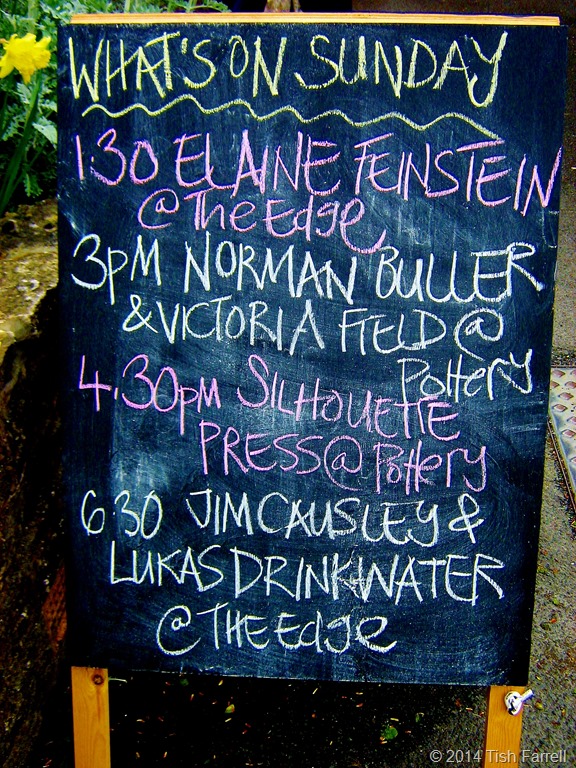
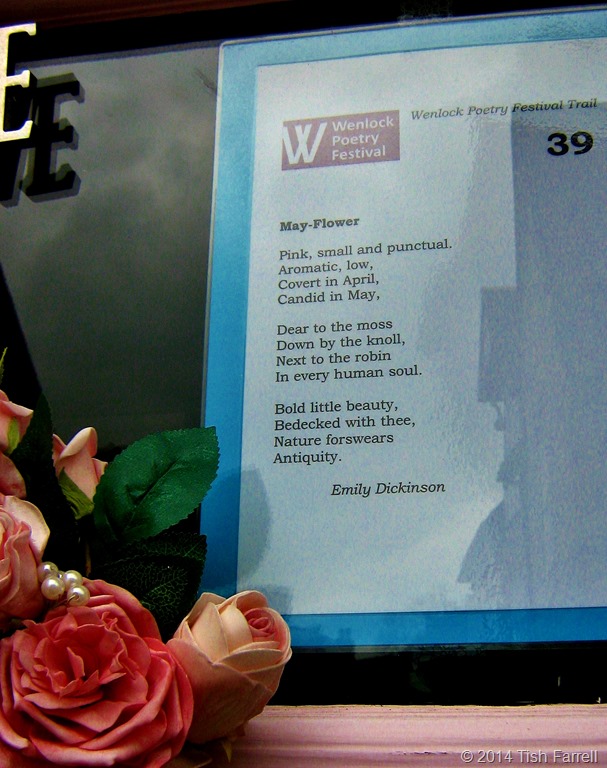
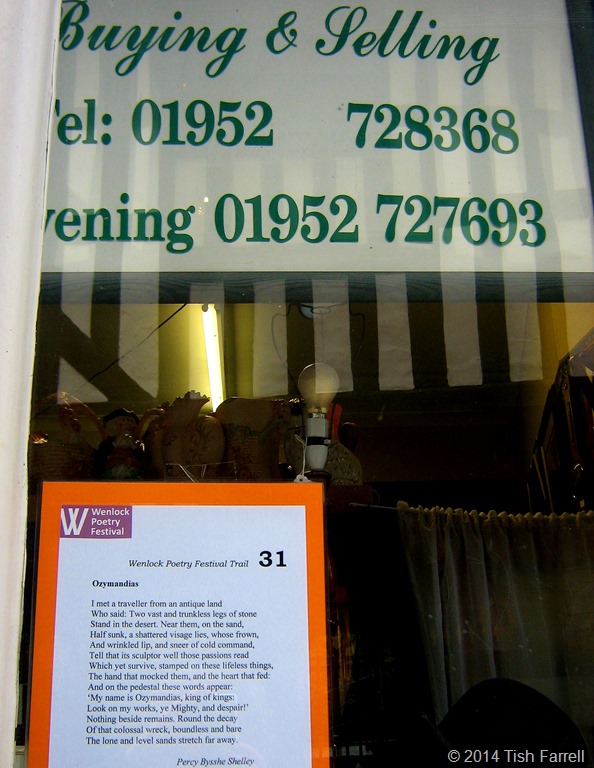
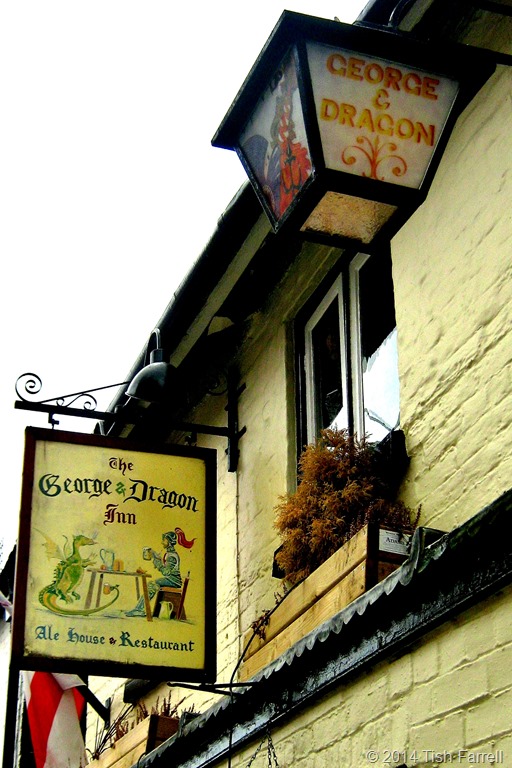
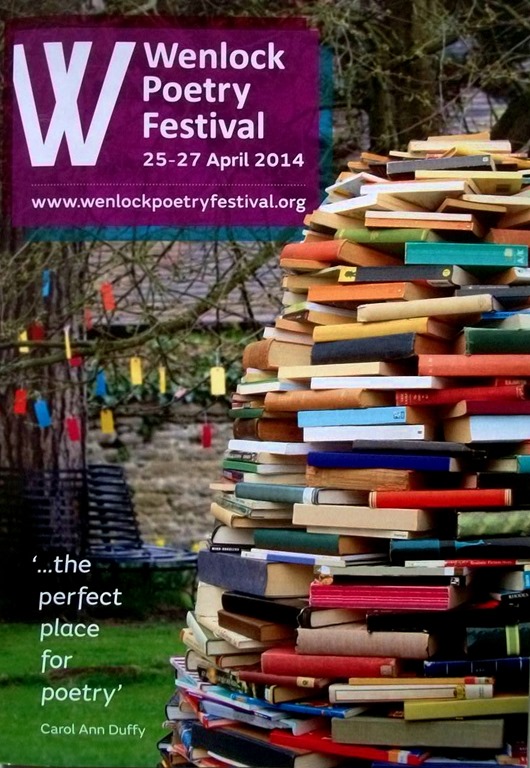
The festival embraces the entire town, using venues at Wenlock Pottery, Methodist Church, the George and Dragon Pub, Tea on the Square Cafe, and The Edge Arts Centre. Besides the three-day programme of readings, talks and workshops with top British poets, there are verses to be found all over the place. Nearly all the shop windows host one, and they include works by local amateurs as well as the more famous.

IMG_1026

IMG_1100

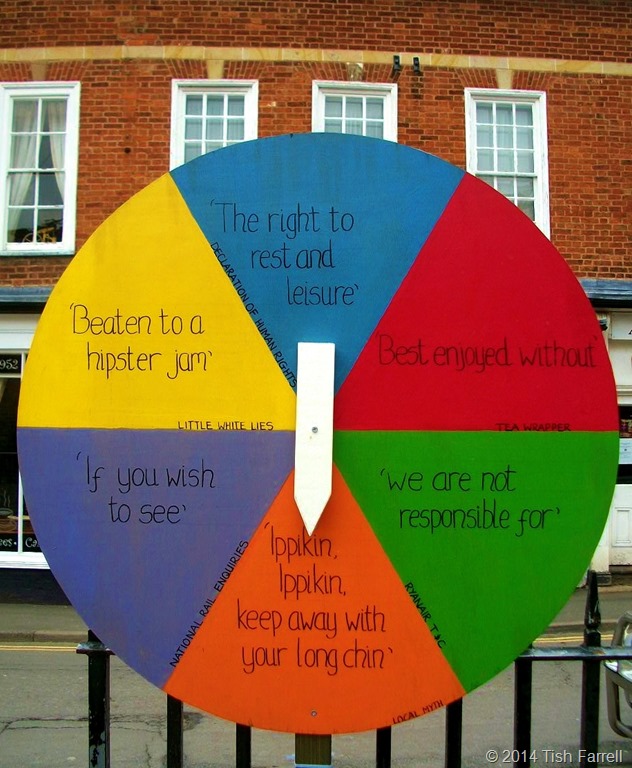
And then there are the ten Dada Poetry Orienteering spinners (including 2 mystery ones) sited about the town. They comprise phrases culled from printed matter – from the Declaration of Human Rights to a tea wrapper. Visit some or all and, with random spins of the pointer, create an on-the-spot composition.

100_5594

And when inspiration needs a further boost, then there are refreshments on hand, not only at the Poetry Café in the Priory Hall, but at the town’s ancient inns, and traditional tea rooms.

IMG_1080

IMG_1058

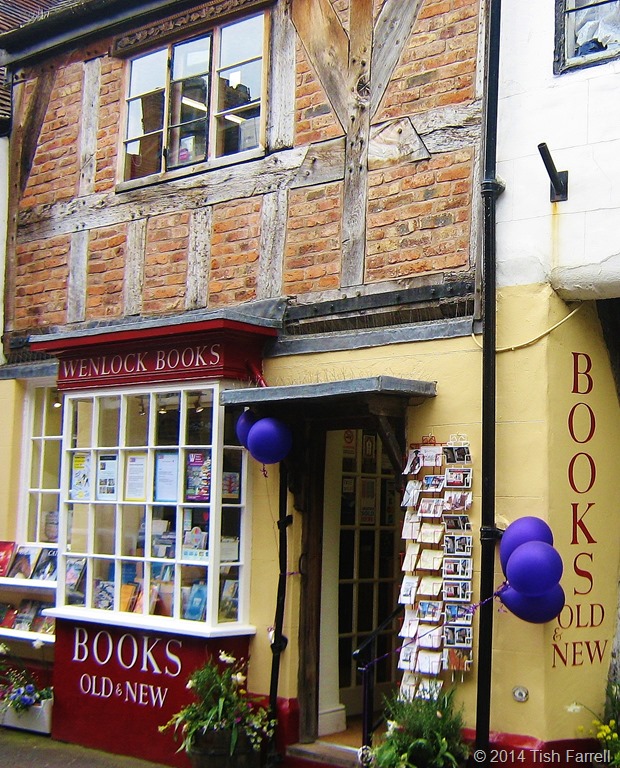
And here we come to the heart of the festival, the town’s famously much loved independent book shop, Wenlock Books. Its owner, Anna Dreda, has been the primary driving force behind the festival, enticing, Carol Ann Duffy, Britain’s Poet Laureate, to be the festival’s founding patron. The festival is now in its fifth year, and involves the efforts of many dedicated volunteers who put in many months of work to ensure its continuing success.

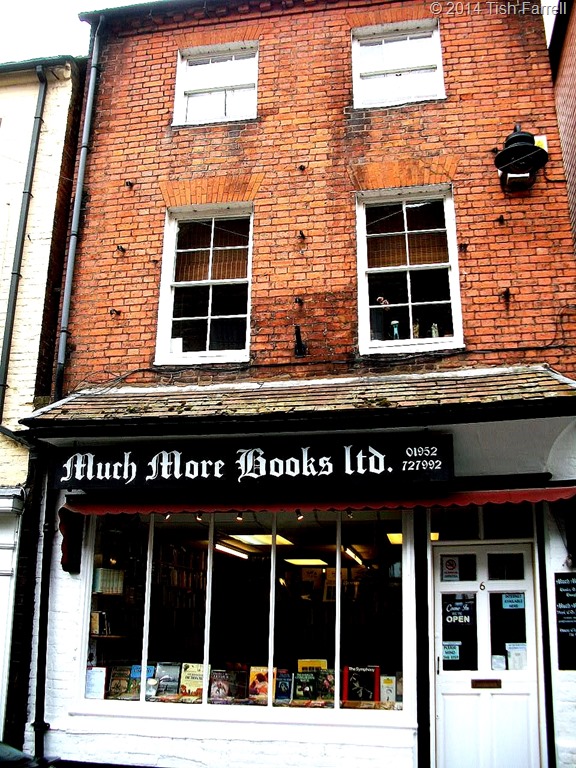
And so for a small town of less than 3,000 people, we are astonishingly well-lettered, and much of this is down to Anna, who throughout the year (and quite apart from the poetry festival) lures young and old into her lovely shop to take part in reading groups, listen to stories being read, or chat with authors. Coffee and biscuits are ever on offer, and sometimes even a Tea and Toast Breakfast. Last year, too, Anna was invited to meet the Queen during a celebration of British contemporary poetry.

IMG_1054

Anna Dreda.

Anna Dreda of Wenlock Books

*

Sadly, you have just missed this year’s festival, but now that you’ve glimpsed a little of what’s on offer in Much Wenlock, check out the festival website below and make a date for next April. But before you leave, a few more views of lettered Wenlock:

IMG_1069

IMG_1071

100_5579

IMG_1079

100_5606

See you at the sixth Wenlock Poetry Festival 2015


Related:

Wenlock Poetry Festival

Wenlock Books


Go to Daily Post Weekly Photo Challenge for more LETTERS

Of Monumental Mysteries

“The past is a foreign country: they do things differently there.”   L P Hartley The Go-Between      

Scan-130804-0007


Scan-130804-0012

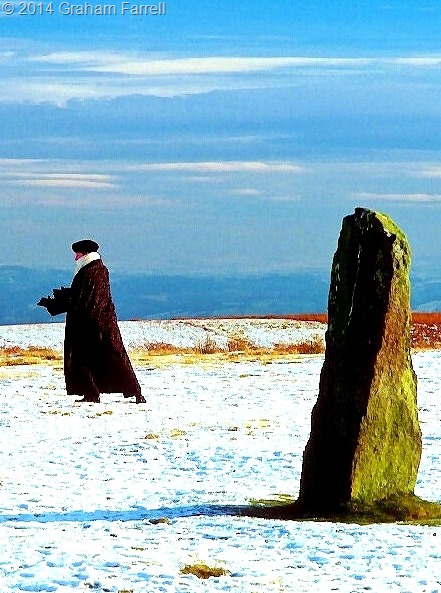
So what’s the mystery here? No, not that strange woman in a Welsh felted hat doing tai chi. (Actually,  I think I may be in the process of ‘grasping the sparrow’s tail’ Yang-style long form. I’ve rather forgotten).  I remember, though, the icy winter’s day, and the absolute stillness, and the hazy blue views of Wales over the border from my Shropshire homeland, and the feeling that this circle of ancient stones was a special place; that it stirred in me the sense that doing tai chi here would be a good thing.

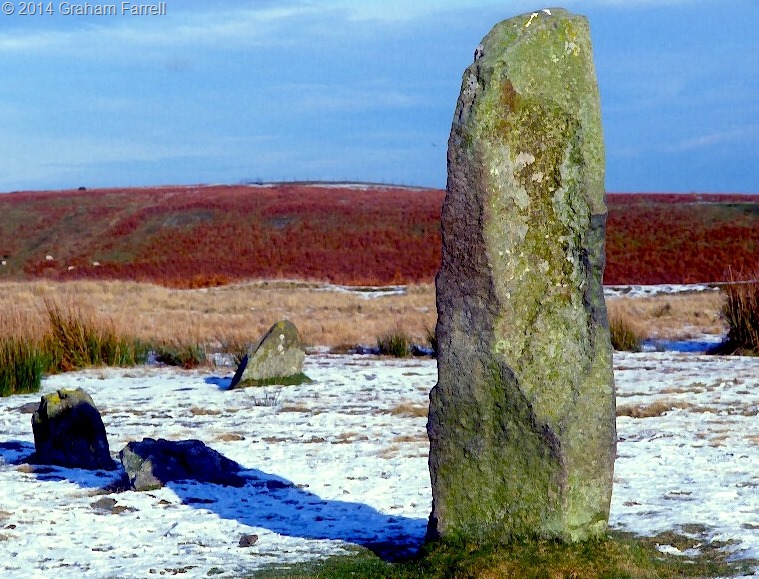
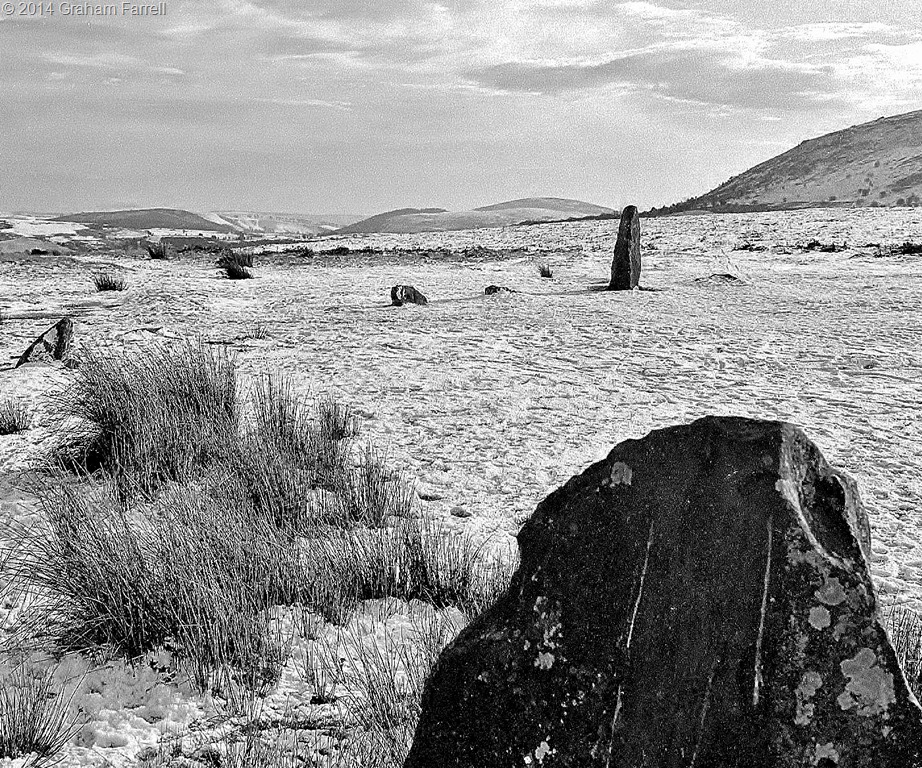
I have written before about Mitchell’s Fold Bronze Age stone circle,  and you can find the witchy legend associated with it  HERE.  Historically speaking, little is known about the stones  beyond the fact that they were raised some 4,000 years ago. The surviving fifteen stones form a rough circle, although there may have once been as many as thirty. The tallest survivor is said to have originally been one of a pair, and so formed some kind of gateway or threshold at the circle’s edge.

These henges are, on the whole, unfathomable. There is no knowing how the people, who toiled to build them, made use of them, or what their precise significance was in their daily lives. The elevated location of Mitchell’s Fold, with its sweeping vistas, suggests to us a sacred function. There are also possibilities that the stones’ particular alignment served as some kind of calendar, marking solar and lunar events. And, for more prosaic purposes, in a world without maps and SatNav, prominently sited megaliths may also have provided travellers with landmarks to keep them on course through the upland wilds. The Bronze Age was, after all, a time of intinerant smiths and artisans who covered great distances to trade their goods and services.

Scan-130804-0041

This is borne out by the fact that not far from Mitchell’s Fold, just over the Welsh border in Powys,  is the Cwm Mawr Bronze Age axe factory. The distinctive looking axe-hammers that were made here have been found across Wales and England, their discovery demonstrating an extensive trading network. Nor is this henge an isolated monument in the immediate landscape. There are numerous cairns and two further stone circles nearby. This seemingly remote place, then, was very busy some four millennia ago.

As a Prehistory undergraduate, also in times long past, I spent three years in Sheffield University lecture theatres looking at images of barrows, chambered tombs, henges, hillforts, cist burials, urn cremations and other ancestral relics. This being the era of slide projection, the photographs were often shown upside down and back to front; it became a standing (or otherwise) joke, looking at remains from an inverted position. The fact is though, however you looked at them, their intrinsic meaning  could  not be divined. All that might be said is that these mysterious constructions were of immense importance to our forebears. We know this because of the great effort involved in their making; these were people who, by our standards, had very limited technology.

033

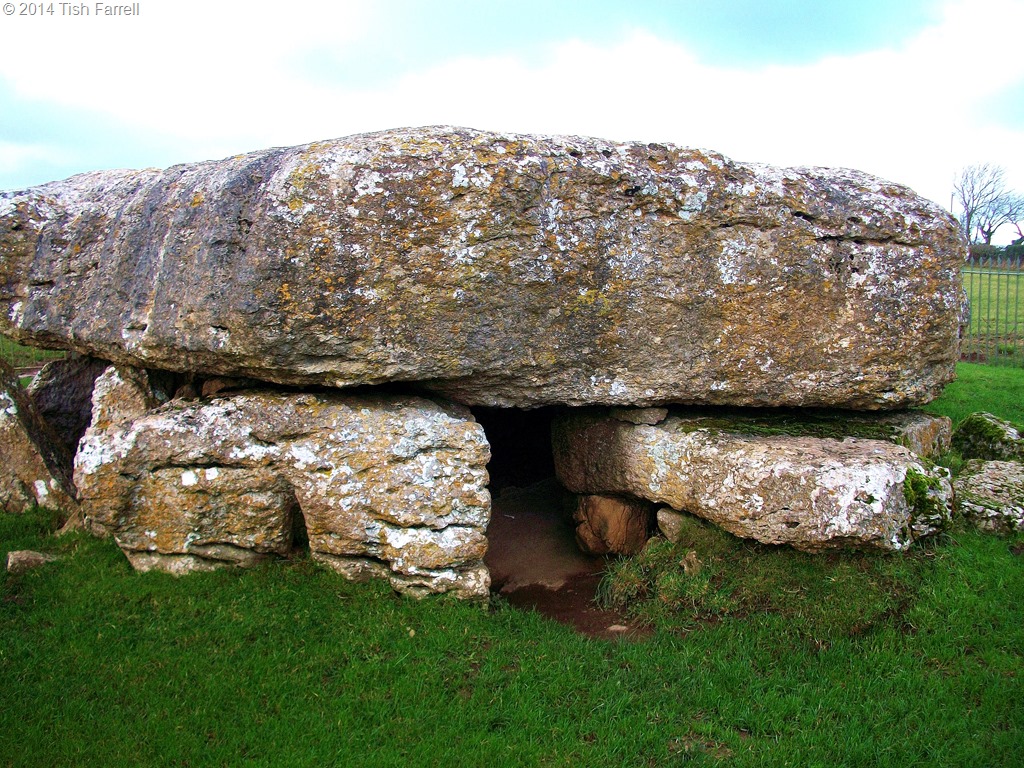
And so here is another example of megalithic mystery. This is the late Stone Age (Neolithic) Lligwy burial chamber on Anglesey in Wales. Excavation in 1908-9 uncovered the remains of 15-30 people, along with pottery that provided the dating evidence. It is estimated that the capstone weights 25 tonnes. This is truly mind-boggling. How did people without cranes lift this monstrosity onto the supporting stones? How  many people did it take? Wasn’t the population in prehistory supposed to be small?

Of course experimental archaeology has demonstrated that much may be achieved with the cunning use of tree trunk rollers and various simple pulley devices combined with muscle power. But even so,  the Lligwy burial chamber is surely  a triumph of human will  over an absence of hydraulic lifting gear. In this era people had only stone tools.

So yes, the past is a foreign country, and people did do things differently there, and in ways we cannot possibly know. And if I learned anything from three years of studying Prehistory and Archaeology it was not to judge people by their limited toolkit. These people were as intelligent as we are, maybe more so, since there was a greater need to apply it at all times.

Our current understanding of these  monuments may be fragmentary, wrong-headed even, but shouldn’t this be all the more reason to keep these ancient places safe? At this present time in England our heritage is daily under threat from a government that wishes to build its way out of  recession.  Worse still, current laws allow developers to take local authorities to judicial review  if their  planning applications are refused.

To avoid  incurring huge costs to the public in legal representation, local authorities are now being pushed to grant planning permission in close proximity to unique monuments.  At present, in Shropshire, the setting of  2 major sites  is under threat: Old Oswestry Iron Age hillfort, and the post-Roman Offa’s Dyke. Why this is happening is of course absolutely no mystery at all.  The past has cachet. It is a highly sellable ‘commodity’. Let’s sell it off, why don’t we?

© 2014 Tish Farrell

Related:

Valuing the Past: How  much for Old Oswestry Hillfort?

Open to Offa’s: yet another piece of Shropshire’s heritage at risk  in The Heritage Journal  along with many other excellent articles


Weekly Photo Challenge: Monument

Colourbridge

Life is great

Leya

Travel Garden Eat

PonderTheIrrelevant

The Human Rights Warrior

FRIZZ’S TAGGED ‘O’  GO HERE FOR MORE ‘O’ STORIES

Looking inside ‘The House of Belonging’: remembering artist Sheilagh Jevons

House of Belonging detail i

The following is the account of a conversation I had with Sheilagh in 2014, a year before her death. She is sadly missed.

*

I thought it was time I welcomed good friend and artist, Sheilagh Jevons, to this blog. She lives a few miles from me along Wenlock Edge, in the little village of Easthope. There, and in her studio not far away, she creates arresting work that explores the sense of belonging that people have with landscape. From time to time she and I have involving conversations about the creative process – the stumbling blocks, the sources of inspiration, the way we work (or in my case, don’t work).

A few weeks ago she came round for coffee. I wanted to ask her about a painting I had seen in her studio. I had thought it striking and mysterious, and wanted to know what she meant by it. Besides which, it is hard to resist the opportunity to grill an artist when you have one captured inside your house.

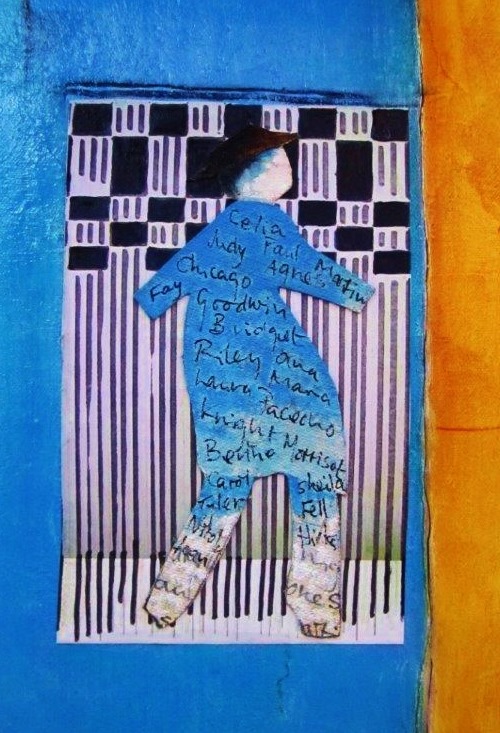
The header image is a small detail from a work called The House of Belonging. This figure has appeared in Sheilagh’s other works and represents women artists. Some of their names are written on the smock, artists perhaps not well known to the general public. Here she pays homage to their work, but also alludes to the fact that, overall, very little work by women artists is to be found in museums. The writing of names and of repeated key-words and equations is characteristic of many of Sheilagh’s pieces. It was one of the things I was going to ask her about. But first, the painting.

House of Belonging ii

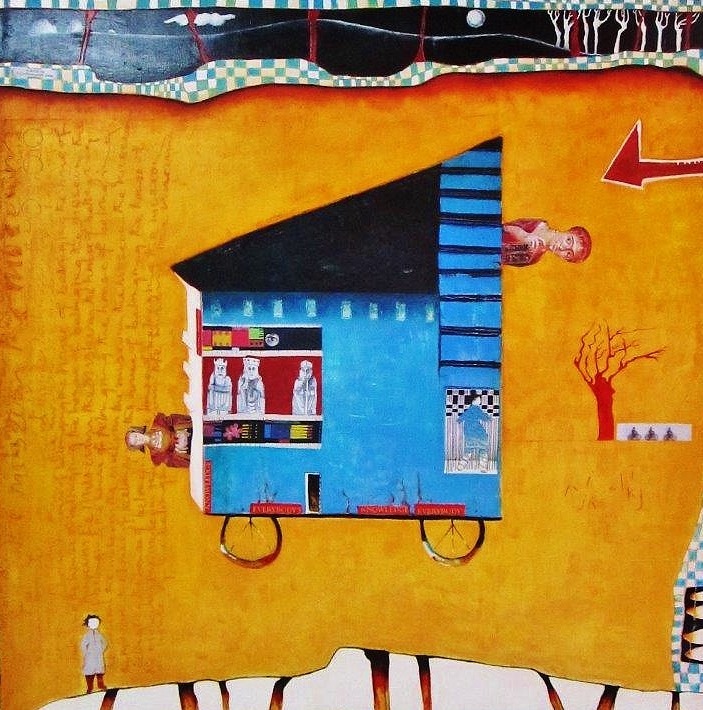
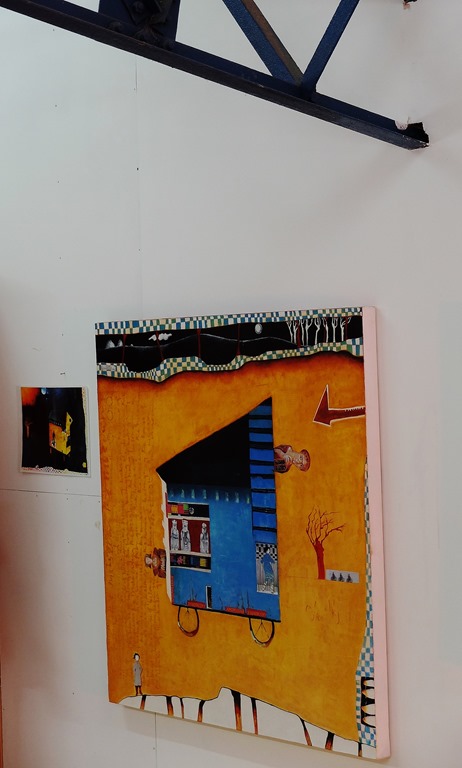
It is a large canvas, some 4 feet (120cm) square. The next photo gives a better sense of scale. Here it is hanging in Sheilagh’s studio:
Shelagh 003

I asked Sheilagh how the work began. She told me that some years ago the idea of belonging had become very important to her. As she says on her website:

Our ‘sense of belonging’ ripples out from our homes to our village, street, town, county, region and country and help to shape our identity…

Key, then, to her work is a sense of connection to land and how that relationship defines us. This in turn has physical expression in community repositories, the places where we keep artefacts, our history, the knowledge of ancestors – all the familiar things we recognise and which tell us something of who we are. In other words, the museum, or as Sheilagh describes it: the house of belonging. The script running down the left-hand margin of the painting in fact repeats over and over the words ‘the museum’, the house of belonging’. The repetition reflects the strong political stance of Sheilagh’s work.

To me this is ‘the writing on the wall’, a statement of collective ownership; The House of Belonging staking a claim. Its contents are manifestations of how humans have interacted with their landscape and the place they call home. Sheilagh also says that adding text creates a certain texture; that the sense of a hand moving across the work creates a connection with her, its maker. The wheeled blue structure, then, is the House of Belonging. The words written inside say ‘everybody’s knowledge’. This is written twice so there can be no mistake. It feels like something to stand up for, a rallying call.

It is also important, Sheilagh says, that the House can move across the landscape to where the people are, rather than the other way round; this makes it more egalitarian. Inside the House are images and artefacts, symbols of creativity. Some of them are stereotypical of ‘heritage’ and therefore instantly recognisable. For instance, the chess pieces (centre left in the painting) are derived from the Scottish Isle of Lewis Chess Set in the British Museum. The set dates from AD 1150-1200 and suggests Norse influence or origins.

House of Belonging Detail ii

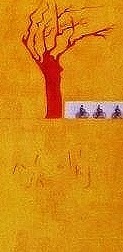
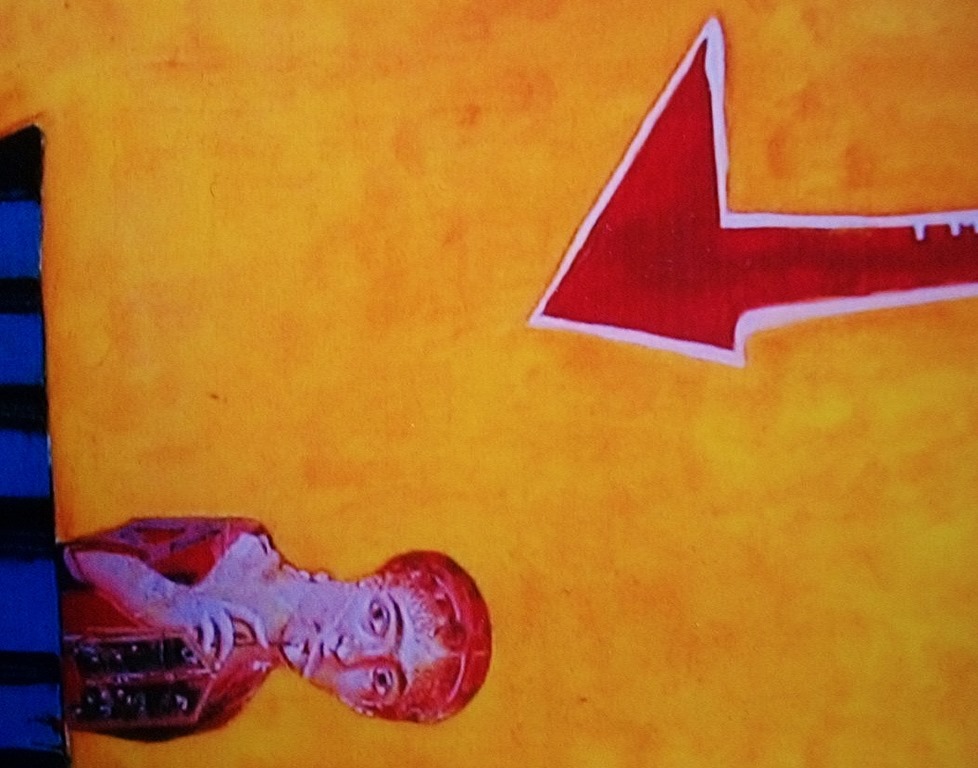
Sheilagh copied and simplified the images from a sales catalogue that specialises in heritage reproductions. The placing of the queen in the central position is also significant. She says she feels bound to redress an imbalance: the fact that in most of our media women only occupy centre stage when they are being commodified in some way. And then there is the mathematical equation painted in red beneath the red tree, centre right of the painting. 100_5291 The presence of equations in Sheilagh’s works adds a further layer meaning for her, and although she doesn’t think it necessary to explain them, she is always very pleased when people recognise them. This particular one refers to mathematical research by American academics in the 1920s called The Geometry of Paths. The appearance of equations in Sheilagh’s paintings also has more personal origins. She tells me she started to include them some years ago – after she had been helping her daughter revise for her Maths and Physics A’ level exams. It is another connection. There are many more signifiers in the work: motifs that have links and resonance with Sheilagh’s other works. The red tree above the equation is a symbol of timelessness, indicating ‘forever’ in human terms.  House of Belonging ii - Copy The red arrow in the top right creates a sense of energy and direction; a ‘look what’s here’ sign. There is the sense of a force field, drawing people to the House of Belonging. 100_5294

Finally, we talked about the overall composition. Sheilagh says that she began the work some years ago after she noticed that a small building denoting ‘museum’ often appeared in her landscapes. This time she wanted it to have it as the main subject, and to make it both an enticing and a mysterious place. At this point she also created the friezes at the top and bottom of the picture, these in order to suggest other layers of reality behind the surface painting. The top frieze is the wider, timeless landscape of which the museum is also symbol. The bottom frieze is deliberately ambiguous and suggestive; it invites the viewer to consider what might lie behind.

House of Belonging ii And having created the work’s essential structure, the painting was then abandoned. It was only some fifteen months later, when Sheilagh, looking for a large canvas to start another work, returned to it. She was fully intending to paint over it, but when she looked at it again she suddenly knew how to proceed and completed the work very swiftly. She says it probably is not quite finished, and suspects that something may still need to be added. In the meantime she has been occupied with a large body of work relating to Scotland.

*100_5111 100_5110

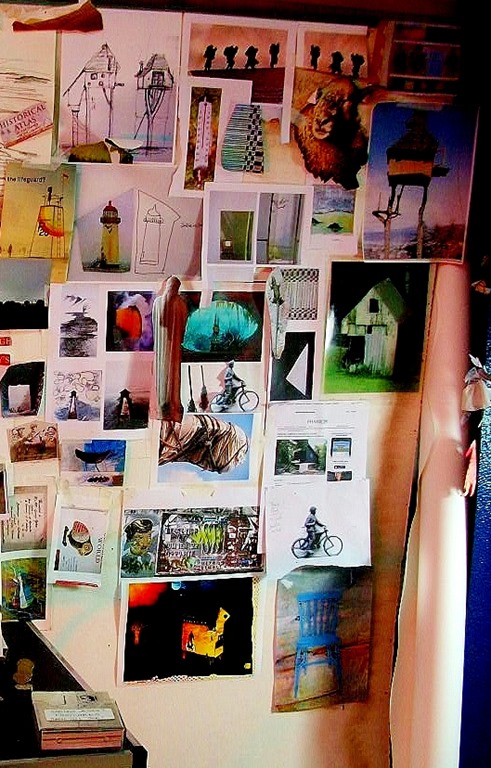
Notes and reference materials from Sheilagh Jevon’s studio

© 2014 Tish Farrell