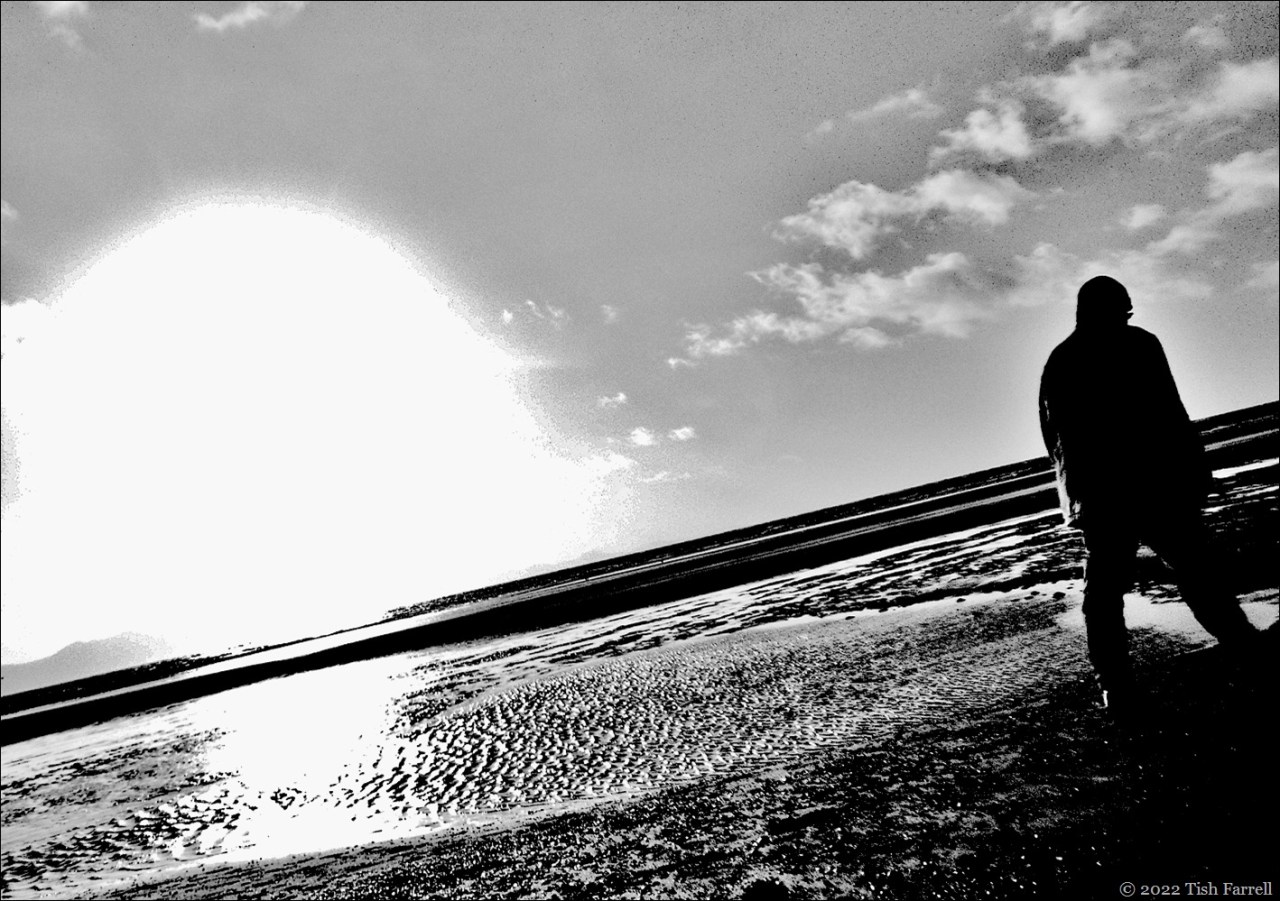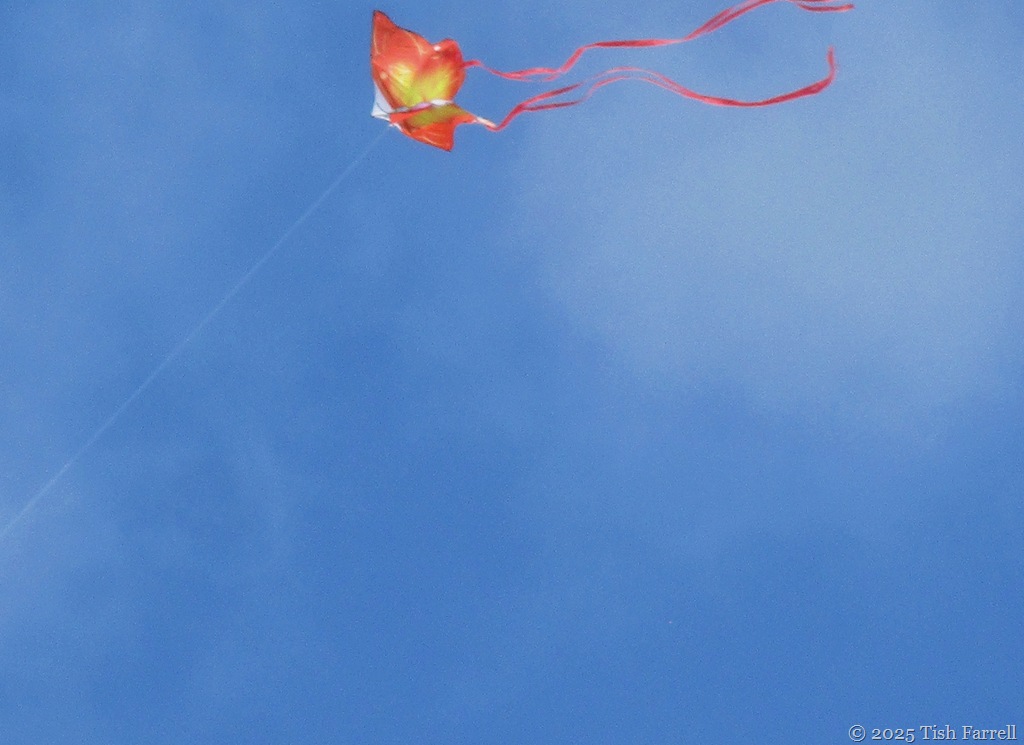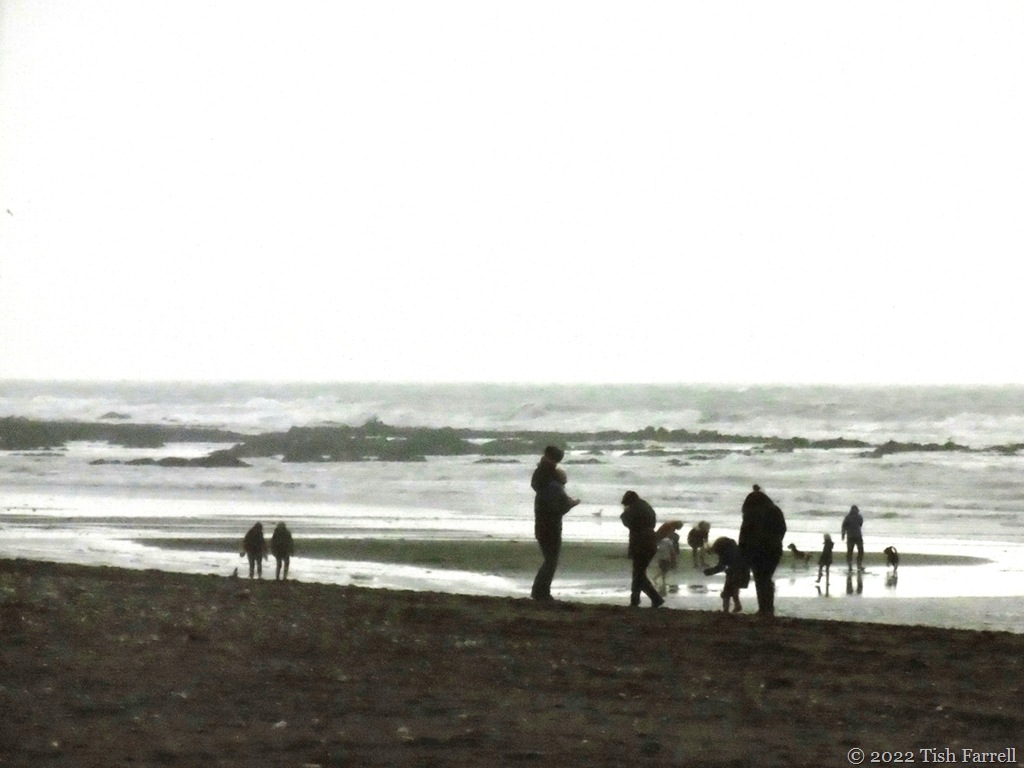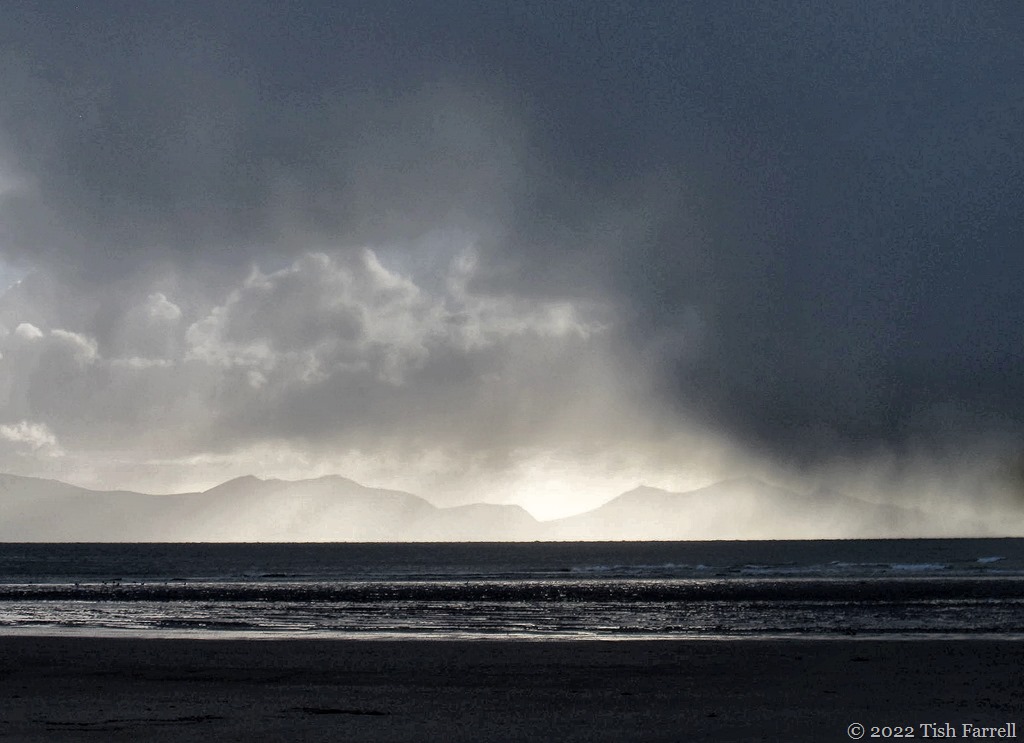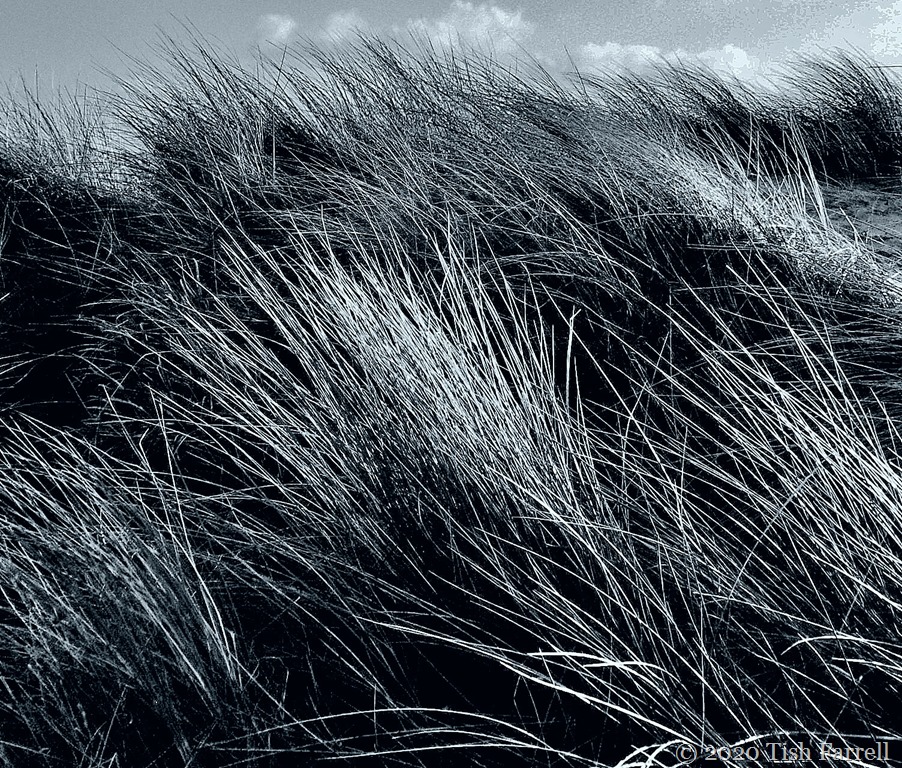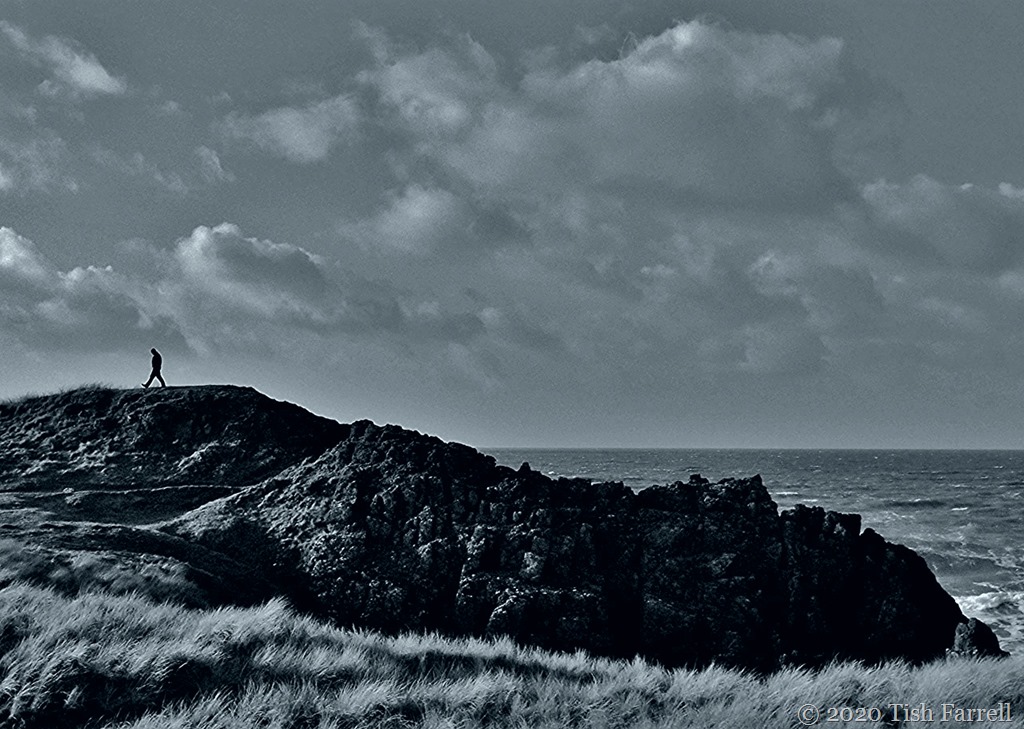
I’m not sure what was going on when I took this photo. An unintended composition, methinks: camera aslant; subject leaving the scene; shooting into the sun. An all round combination of errors, but then I also quite like the end result.
*
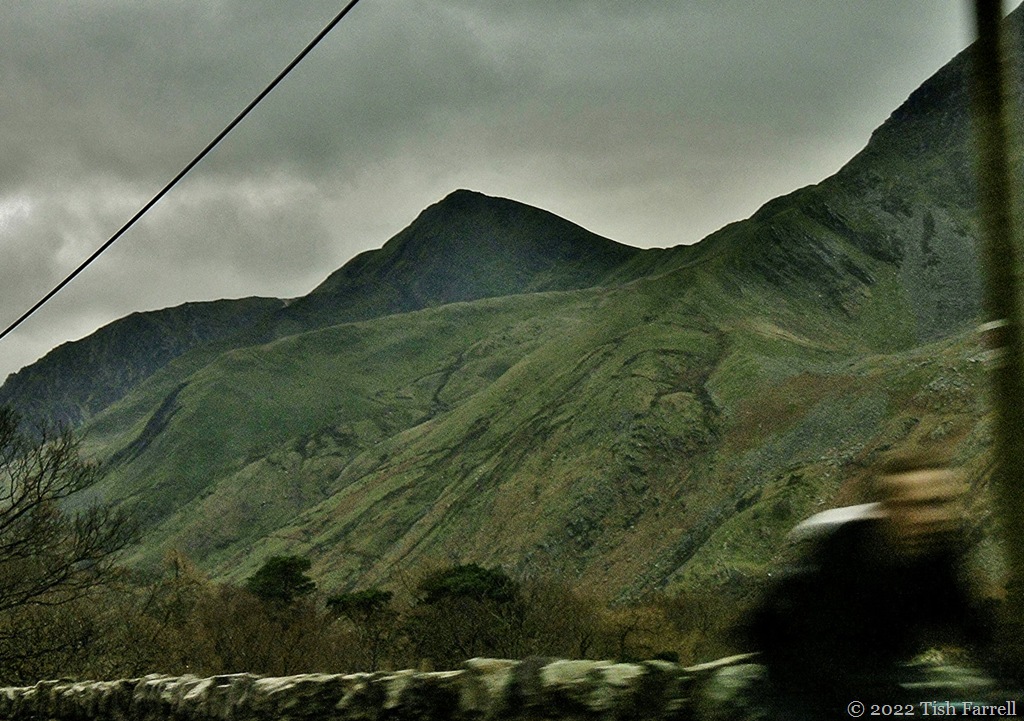
Here both the camera person and the subject were on the move, in other words, me snatching this shot of an uphill cyclist through the car windscreen; caught on a bend in the Llanberis Pass, North Wales.
*
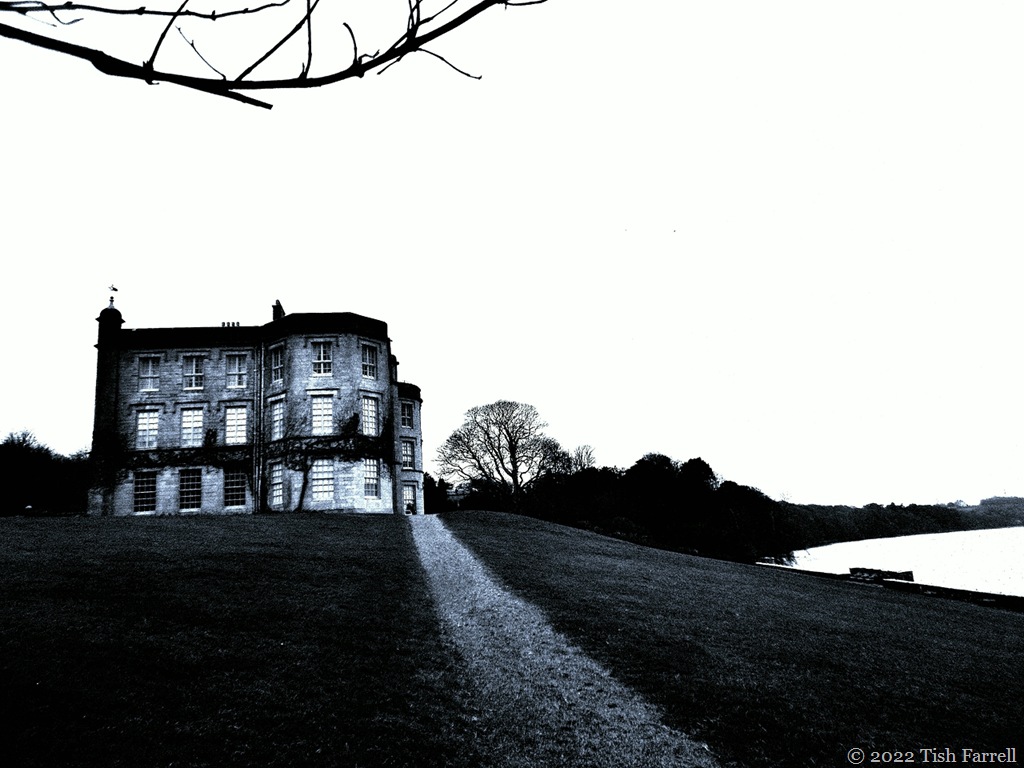
Next at Plas Newydd, Anglesey in late December, taking a photo when there wasn’t enough light and leaving a twig in the way:
*
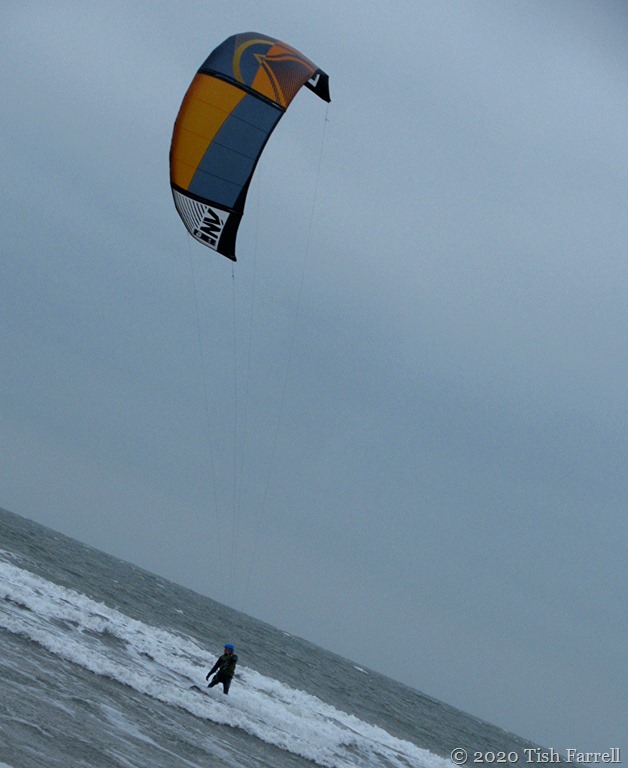
Taken on Newborough Beach back in March: too much negatives space; subject out of focus and also leaving the frame. But then that’s kite-flying for you.
*
And camera on the wrong setting for a winter’s day on Seaton Beach, Cornwall. It seems to have created an oil painting effect:
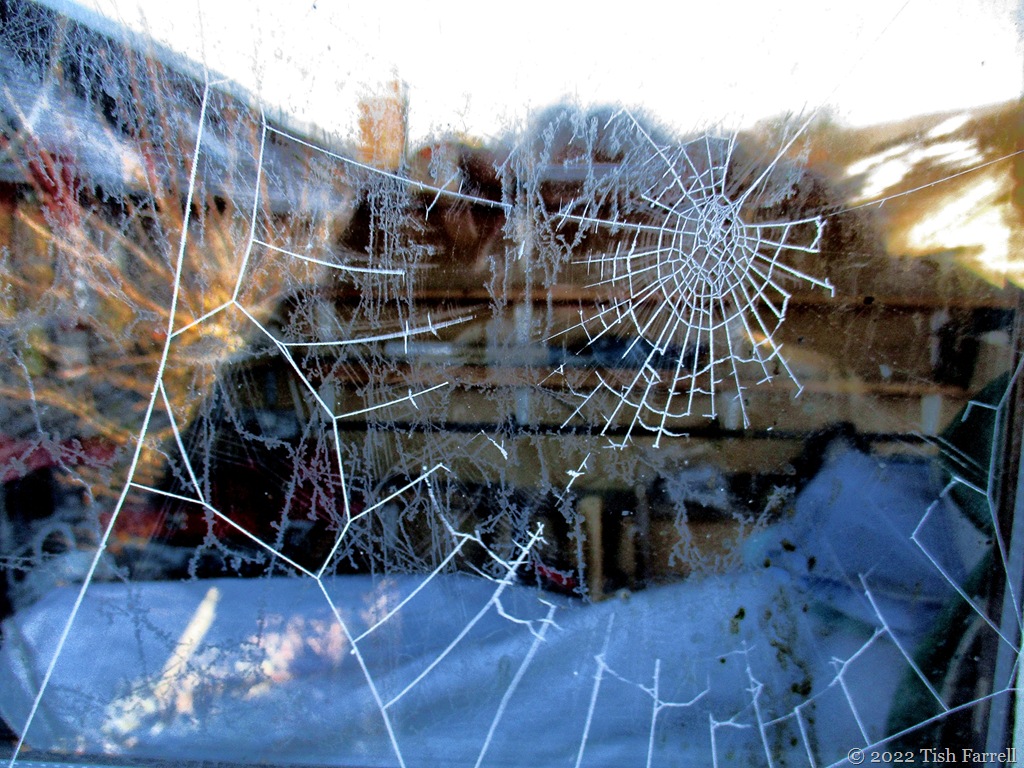
And last but not least of strange creations:
It took me a while to work out what I’d done here. Basically it’s a photo of a frosted spider’s web stretched outside the window of other half’s old Wenlock shed. But you can see both the shed interior and the reflection off the window which seems to show neighbouring rooftops and some of the garden.
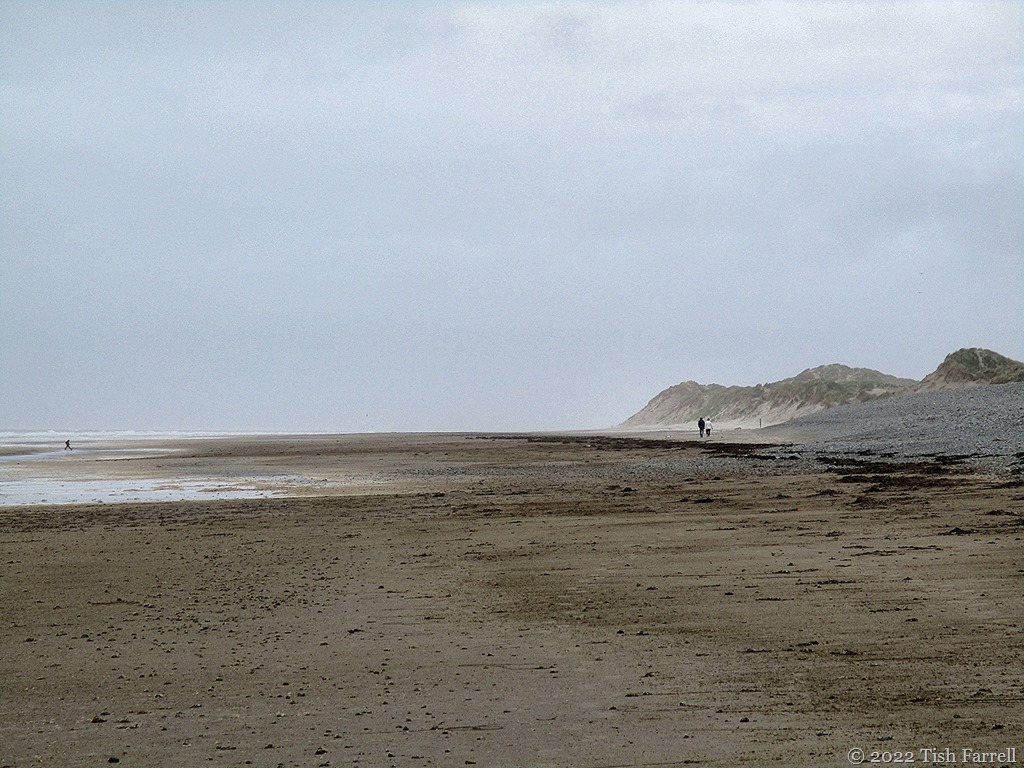
New Year on Newborough Beach, Anglesey – mainland Wales in the mist
*
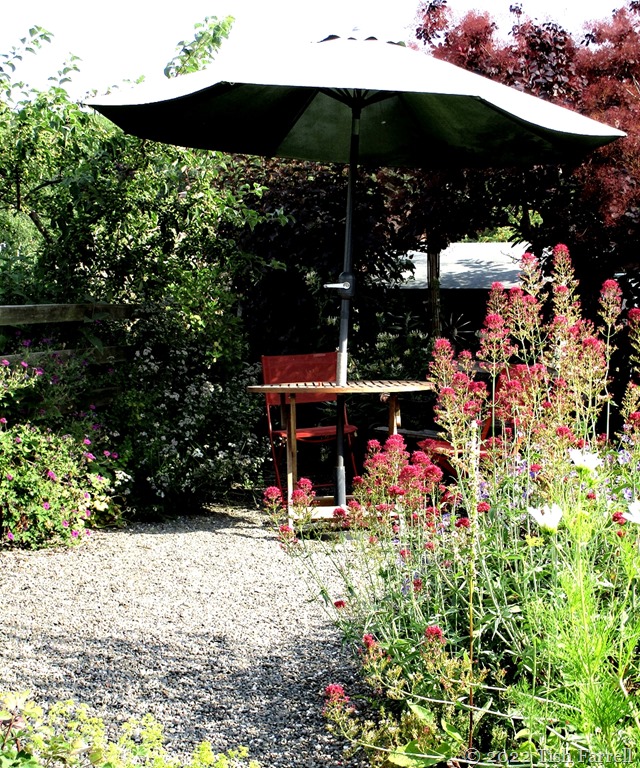
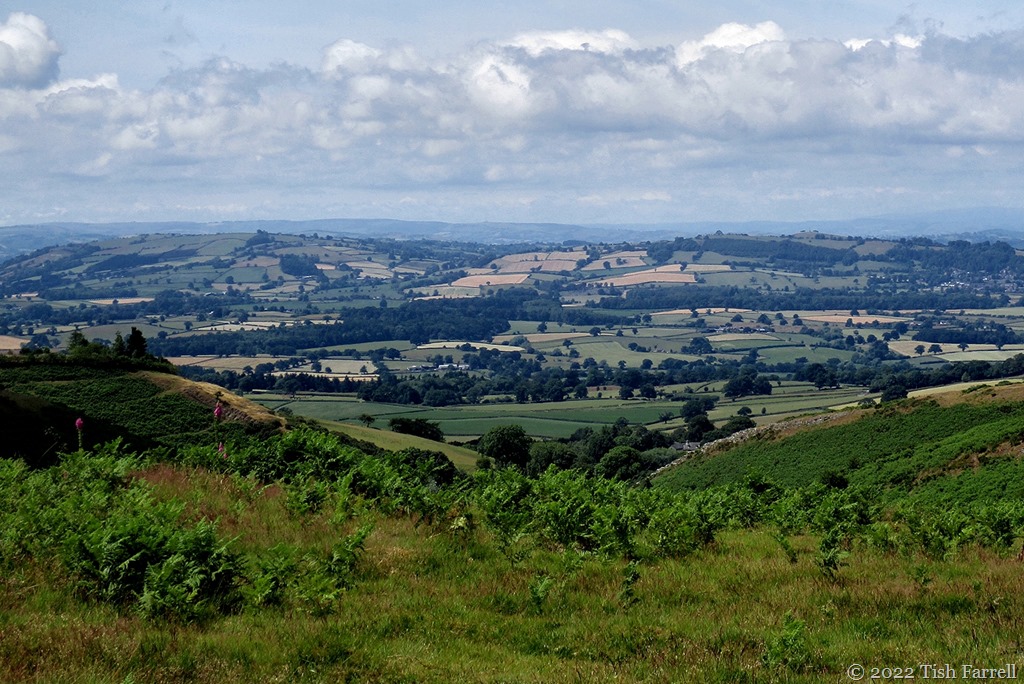
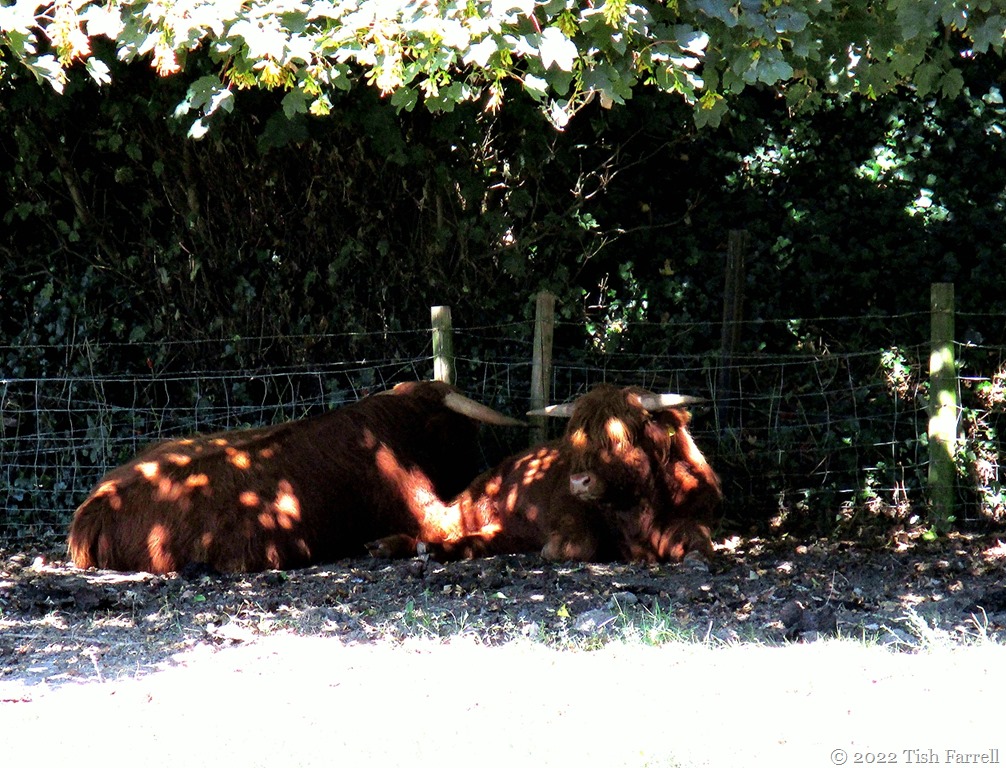
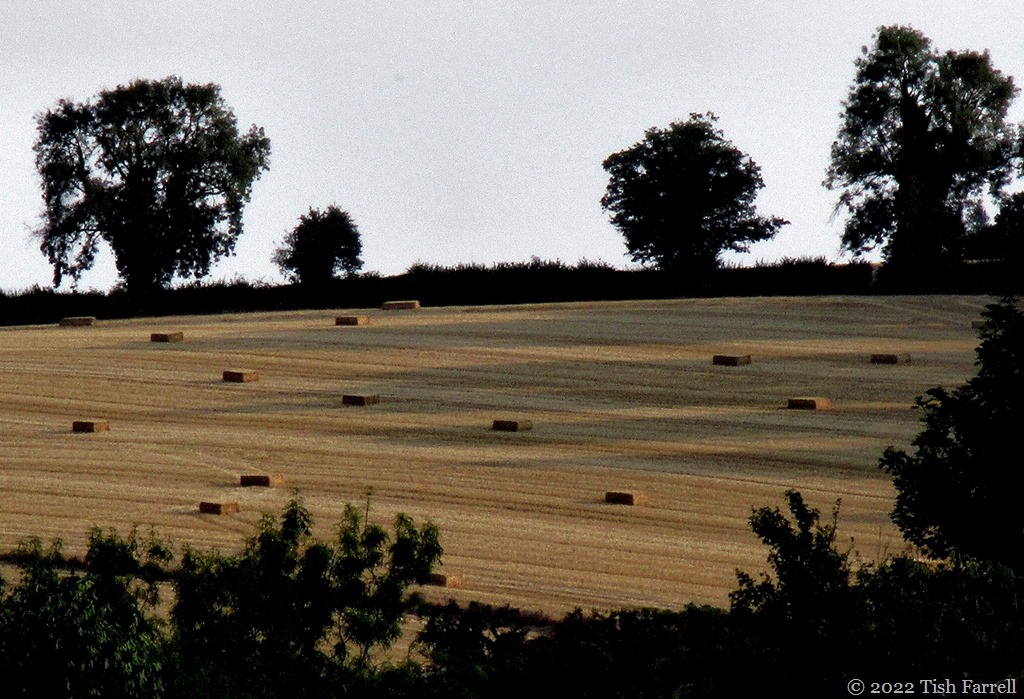
We began and ended 2022 on the island of Anglesey in North Wales. In between there were meanderings to favourite spots in Shropshire and around and about the town of Much Wenlock.So here we have a random selection of a year’s happy moments and things that caught my eye.
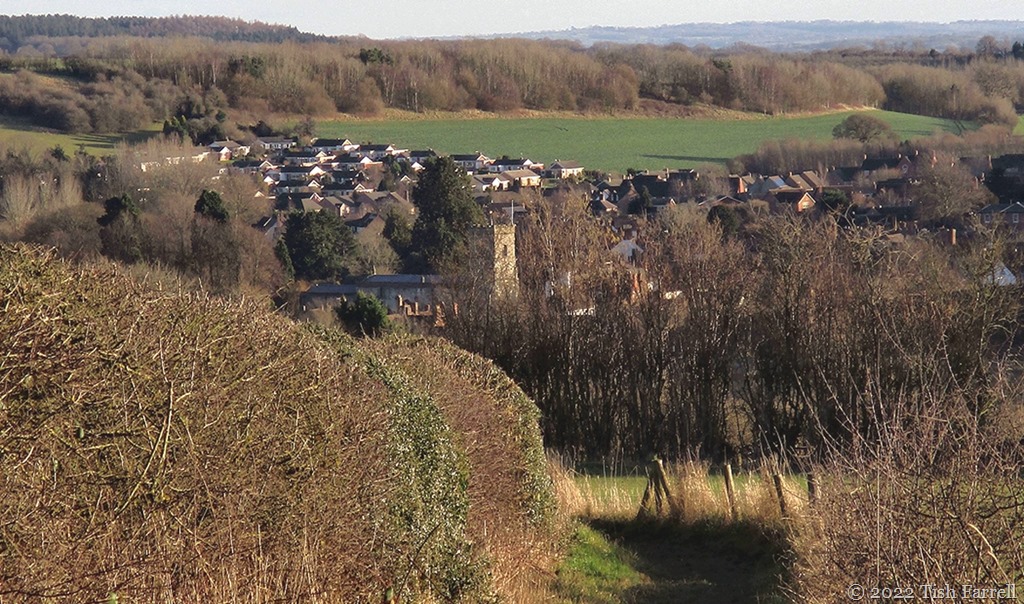
January walk on Wenlock Edge – looking down on Much Wenlock
*
On the Cutlins in February
And finding aconites: first signs of spring
*
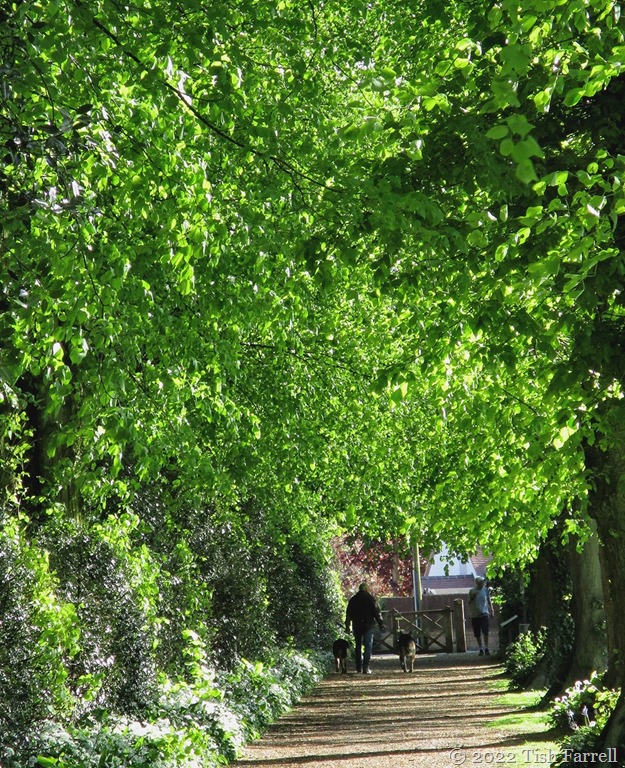
The Linden Walk in early March
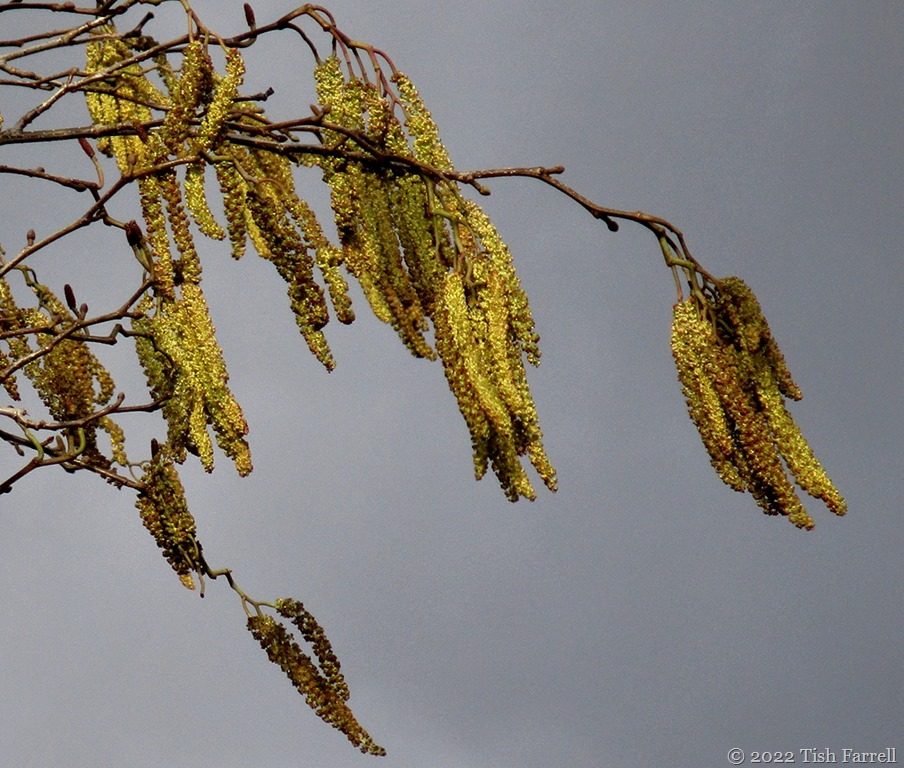
And alder catkins in the Linden Field
*
April over the garden fence
Oil Seed Rape in full flourish in the Corve Valley
*
May on the Linden Walk
And on Windmill Hill
*
June on Wenlock’s old railway line
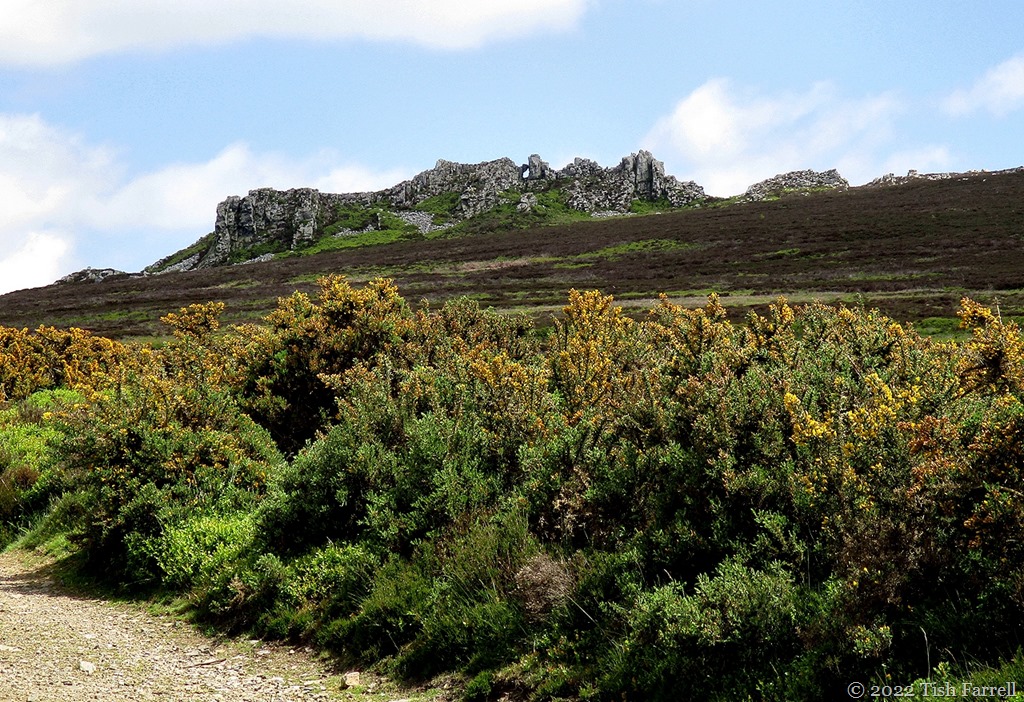
And on the Stiperstones viewing the Devil’s Chair from a respectful distance
*
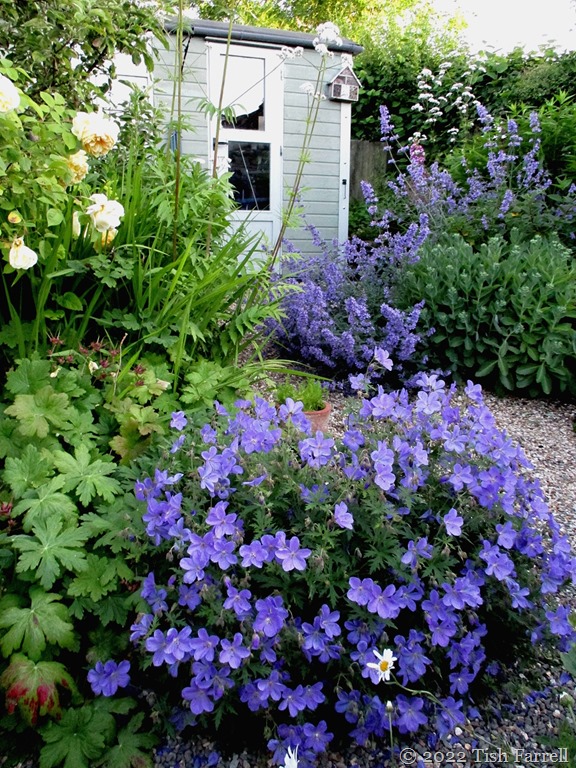
June in the garden
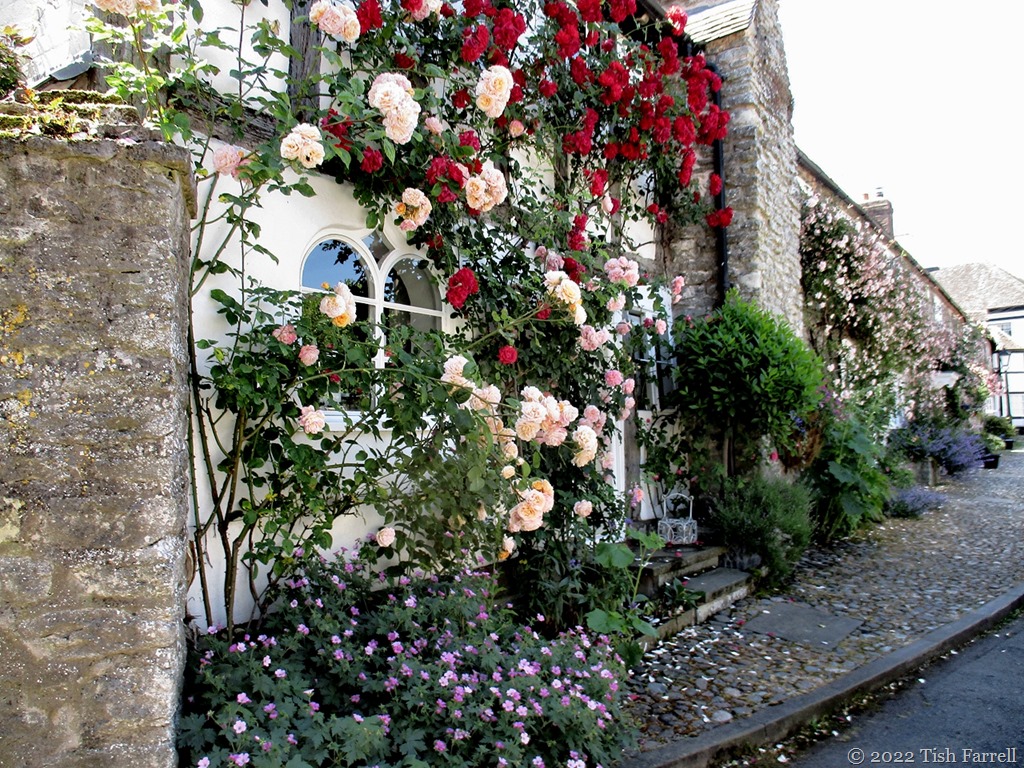
And on the Bull Ring, Much Wenlock
*
July in the garden
And in the Shropshire Hills at Mitchell’s Fold
*
August over the garden fence
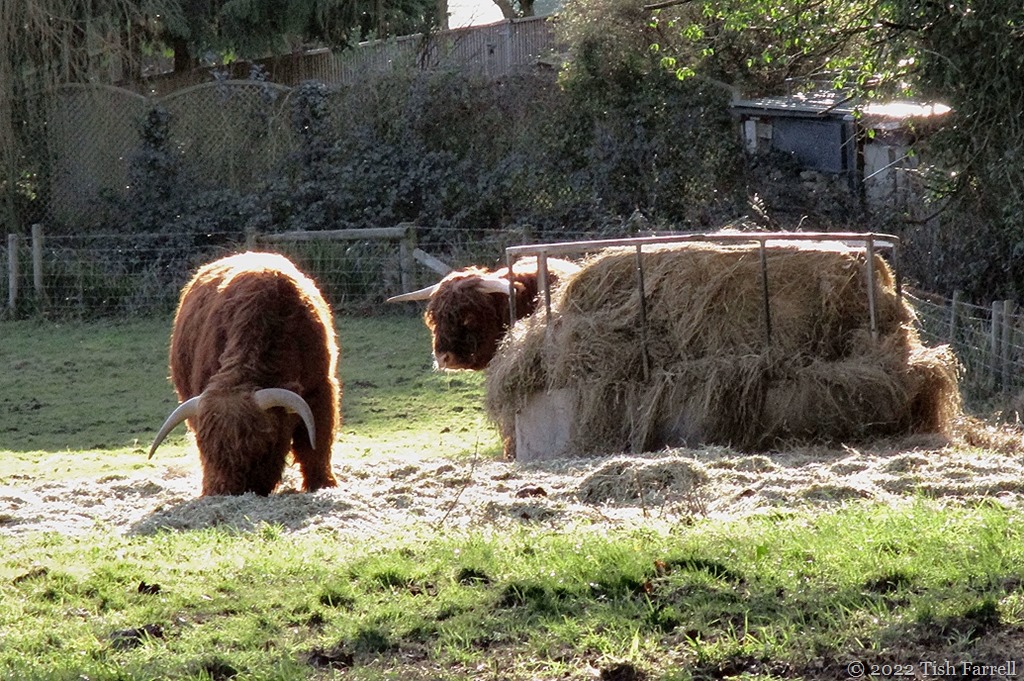
And with the Cutlins MacMoos during the two-day heatwave
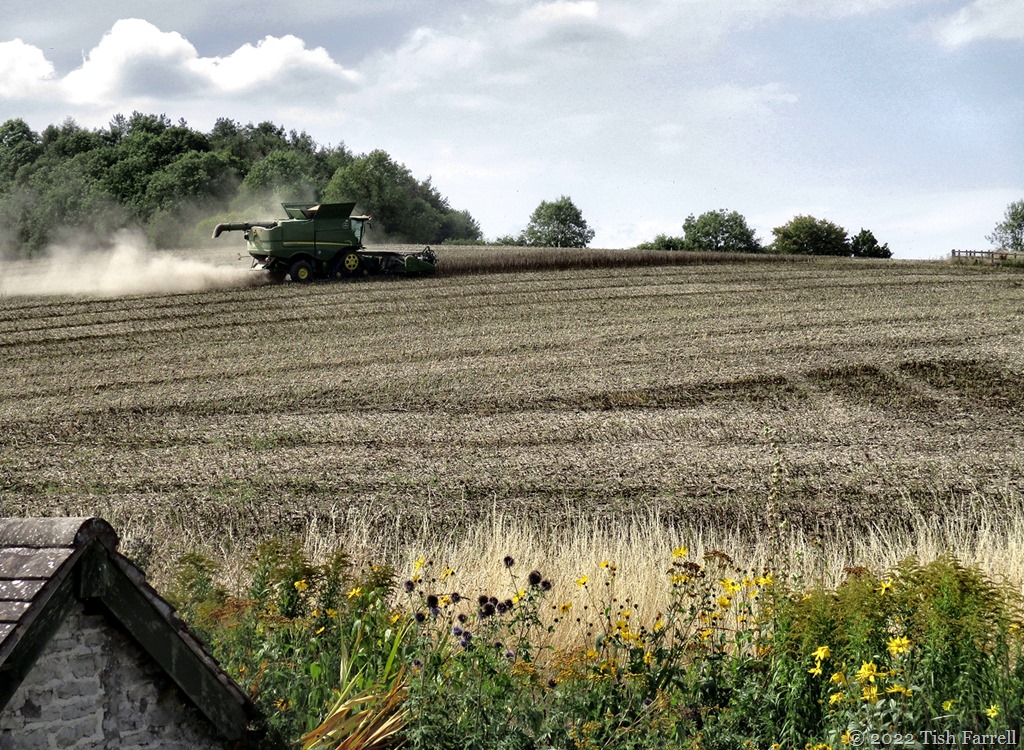
And after the wheat harvest on Callaughton Ash
*
September: harvesting the field beans in Townsend Meadow
Gathering storm clouds, but no rain
*
Early October and back to Wales: Barmouth Beach
And October’s end in Ludlow
*
November: windfall quinces at the allotment
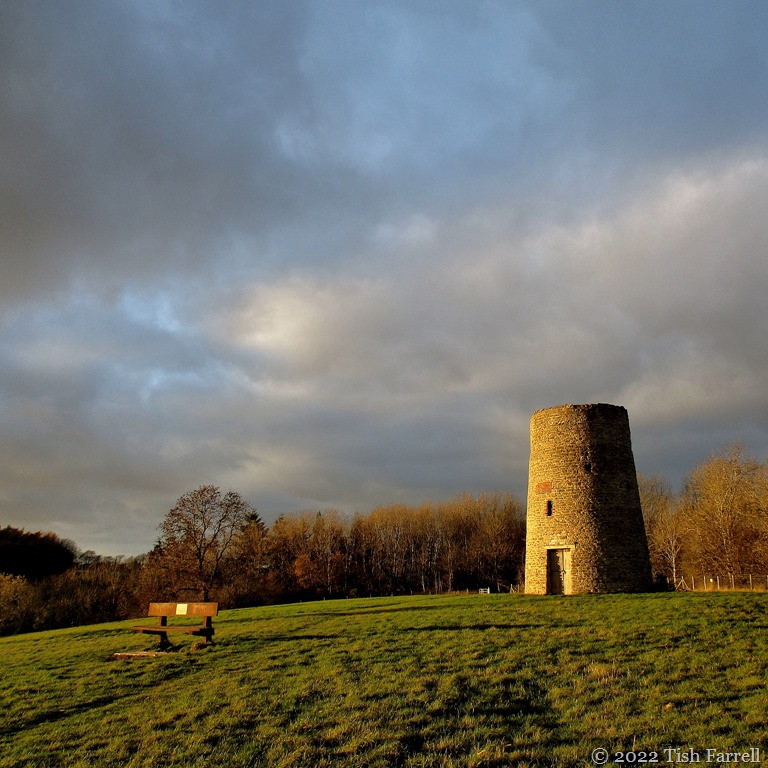
And a sundowner stroll on Windmill Hill
*
December over the garden fence
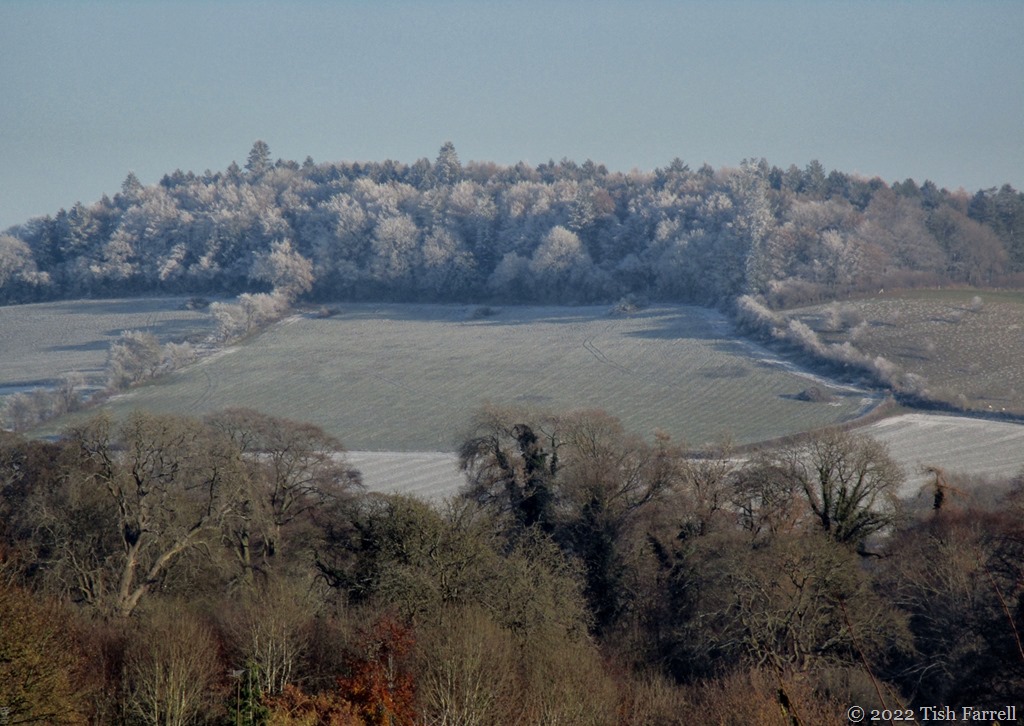
And on hoar-frosty Downs Hill
*
And so back to the beach, Lligwy, Anglesey, January 2023
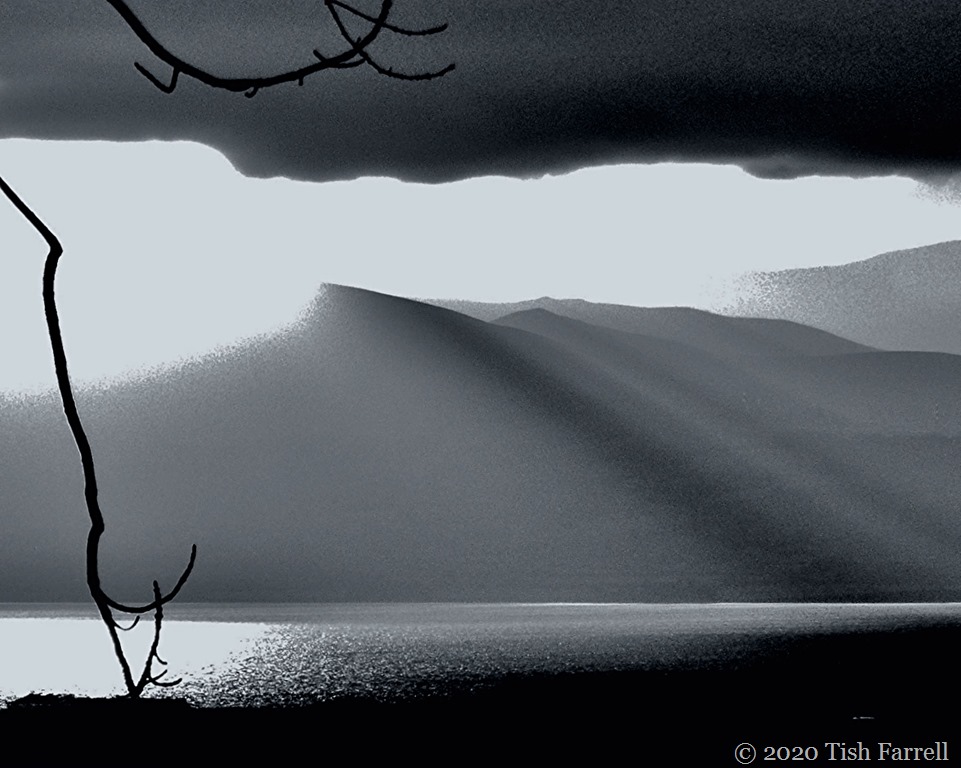
Winter light over the sea can make for some mysterious monochrome images. The first photo was taken early one morning, above the small town Beaumaris on the island of Anglesey (Ynys Mon). In the foreground is Menai Strait; beyond it the mountains of Snowdonia in mainland Wales.
For several years Anglesey has been a favourite place for family Christmases. There have been times of hair-raising gales, but also days of brilliant sun and unexpected warmth. This searchlight-sun effect over the Strait is a particular local phenomenon, and you quickly understand why the Celtic Druids, and later the early Welsh Christian saints were so drawn to the place. Landscape as transcendental meditation.
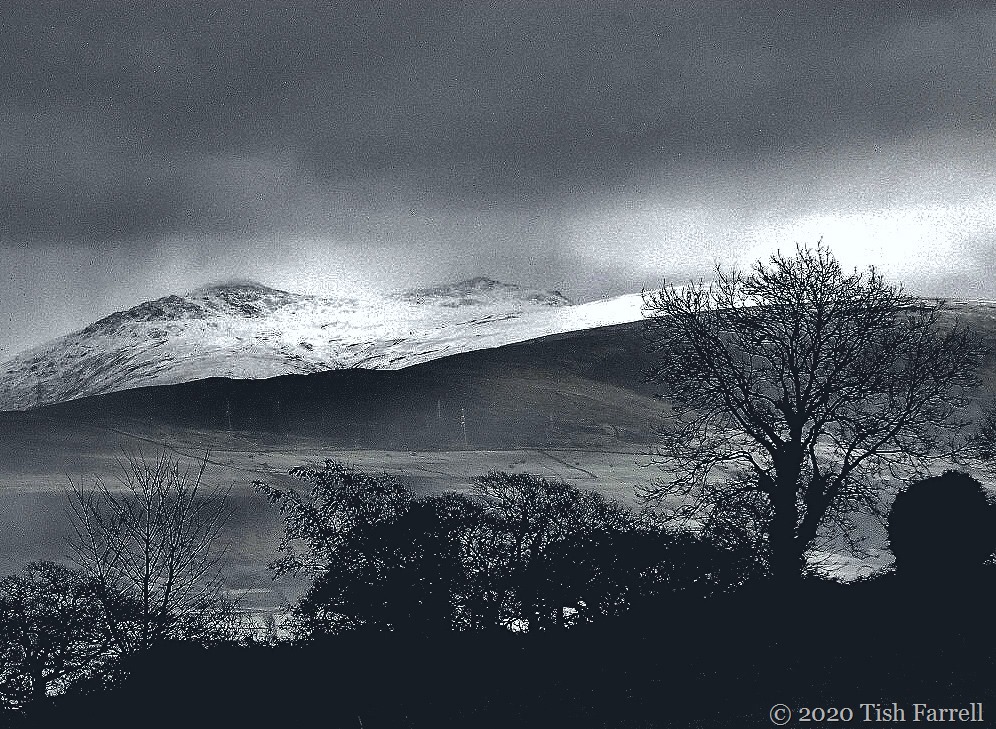
You can hardly see the Strait in the next photo (below the tree silhouettes), and it was anyway just going dark. But even so there’s a luminous glow on the field slopes of the far shore – a reflection off the water? And then there are the snow slopes making their own light. I like seeing how much of an image can be gained from the least amount of light. At the time I was using my little Kodak EasyShare ‘point and shoot’ camera. It was interesting what it could come up with.
*
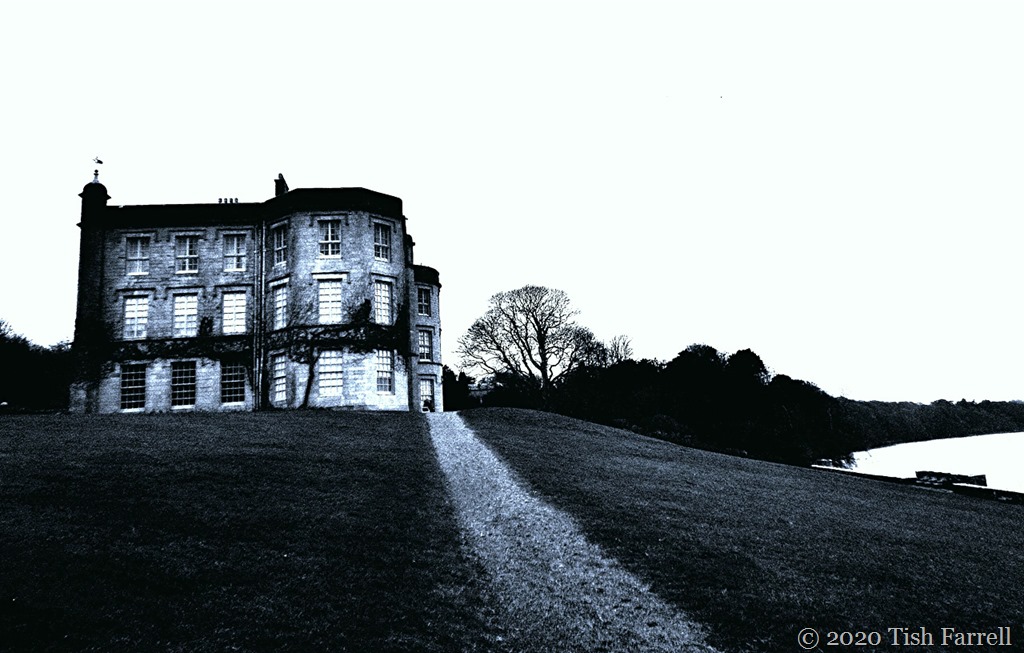
The morning we visited Plas Newydd it was broodingly gloomy – as if the sky gods had forgotten to switch the lights on.
*
But some sunnier days on the beach at Newborough:
2020 Photo Challenge #46 This week’s assignment from Jude: make sure you have contrasts in your image(s). Clear whites and strong blacks will add impact and create attention.
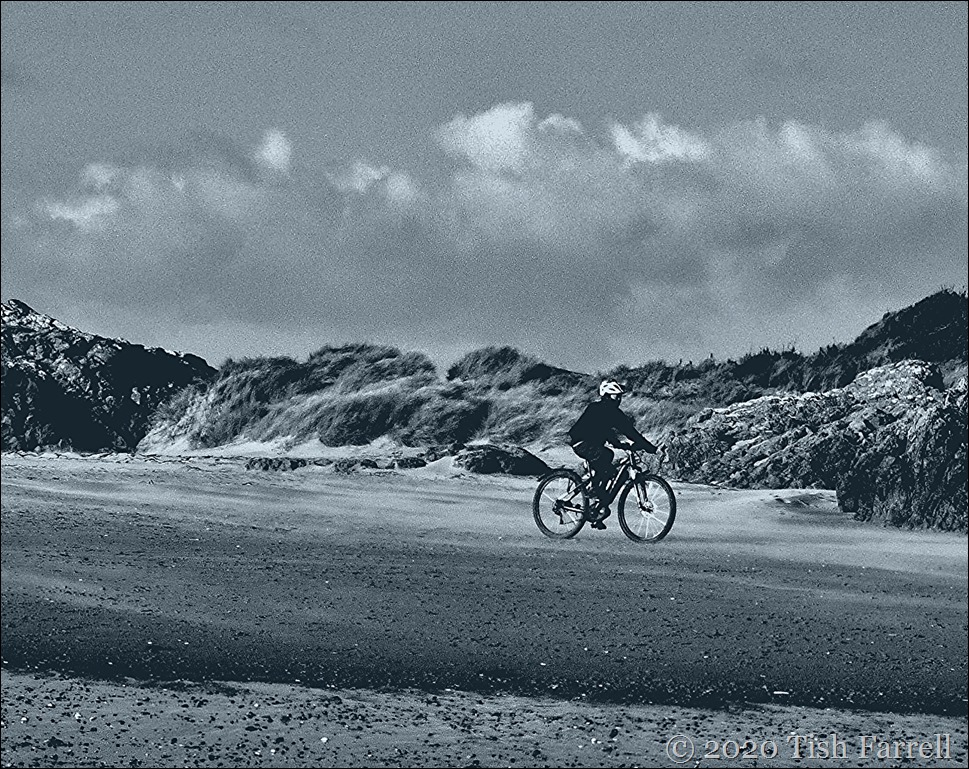
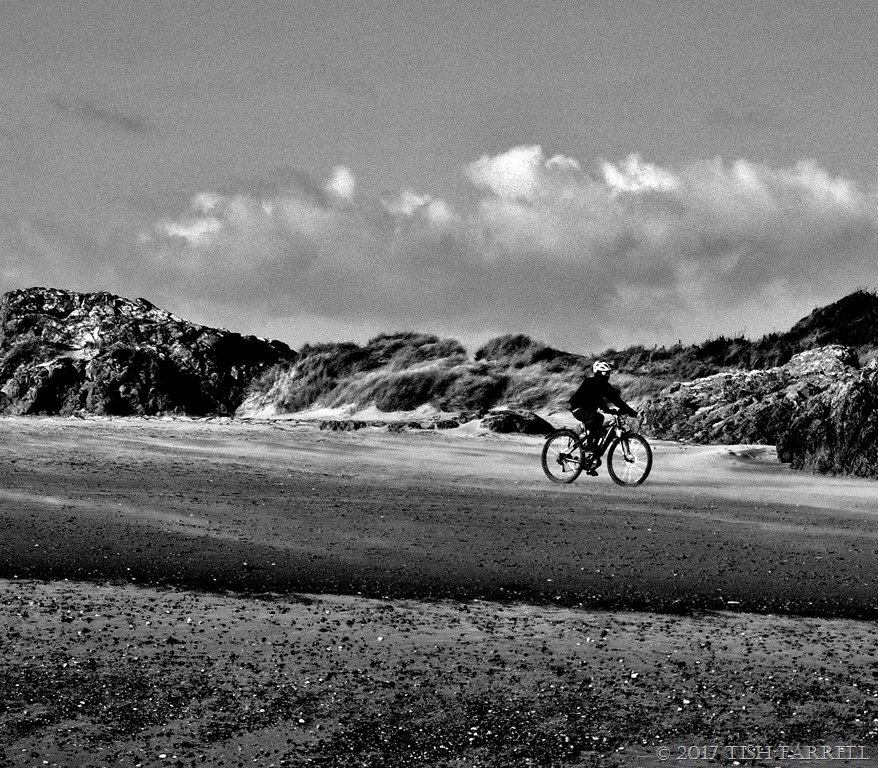
It’s years since I rode a bike. In fact I wonder if I still can, though I do remember the precise moment when I first mastered the skill and forward momentum suddenly happened. Just like that – after hours of wobbles and falling about. What a sense of freedom. And so I’m thinking if I had a handy beach I might well give it another go. Softish surface to land on for one thing. But what joy to whizz over tide-washed shores, sea wind in one’s face, gulls wheeling in their own particular way.
Looking at this photo now I’m beginning to feel envious of this unknown cyclist caught plying Newborough sands a few Christmases ago.
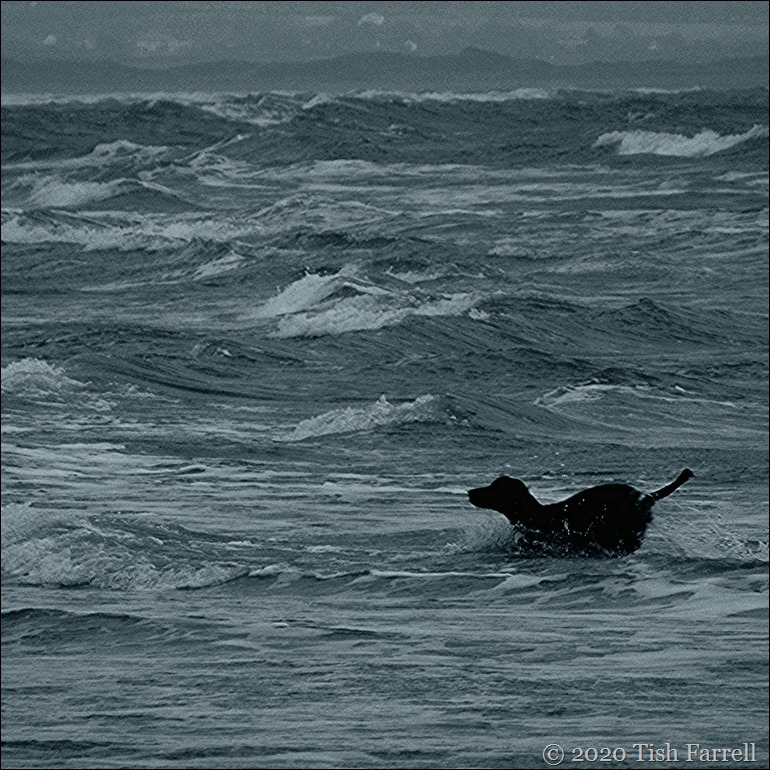
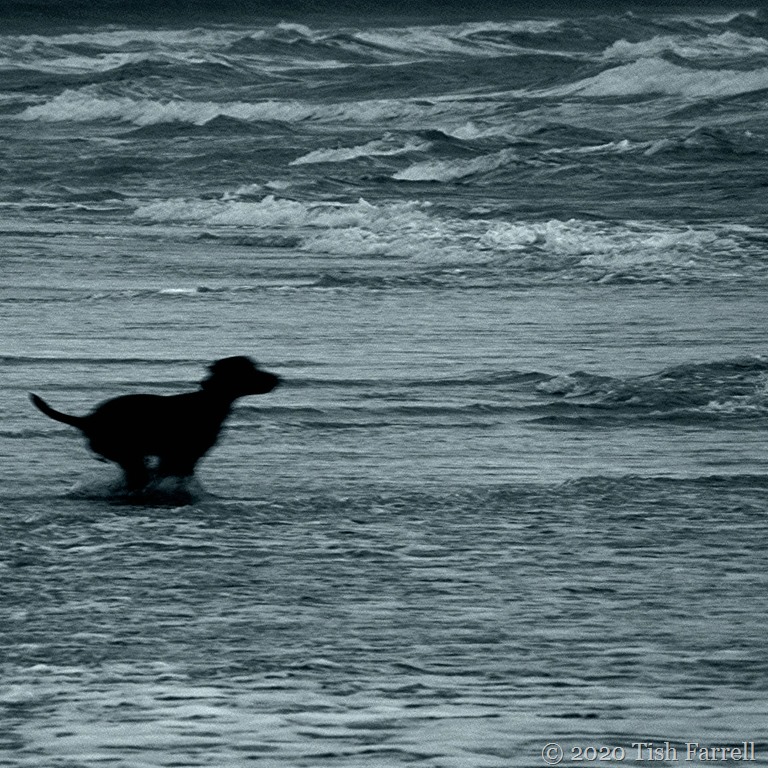
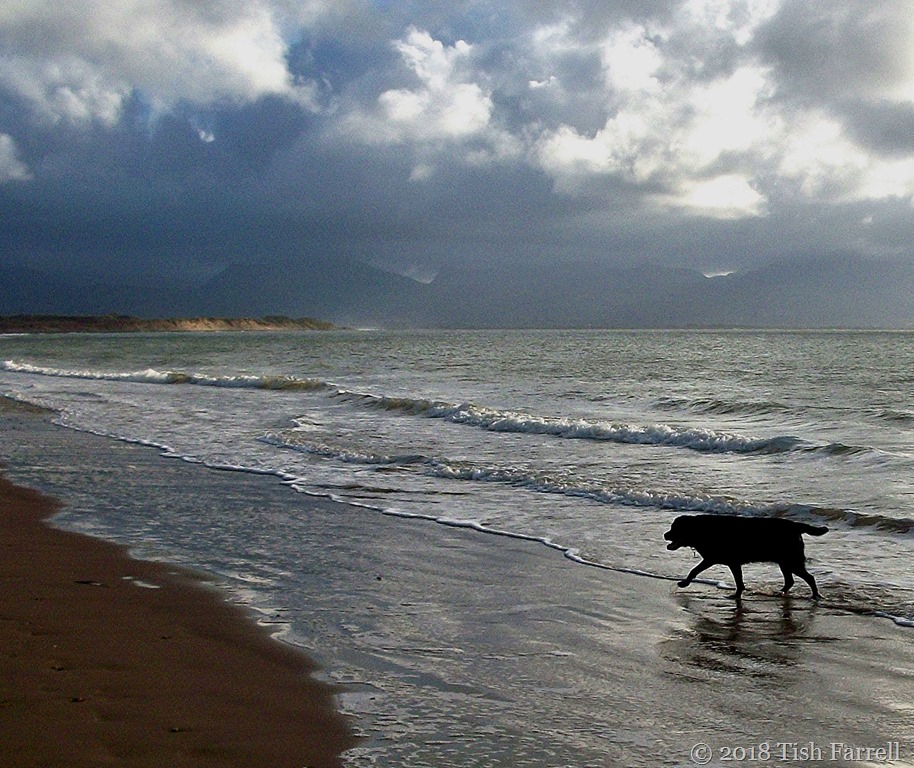
The wild waves on Newborough Beach may look alarming, but this dog was having the time of its life – as dogs usually do. Nothing like a spot of unfettered enthusiasm.
January Light #11 Pop over to Becky’s to join in her January Light challenge: square format, words ending in ‘-light’ (fudging allowed).
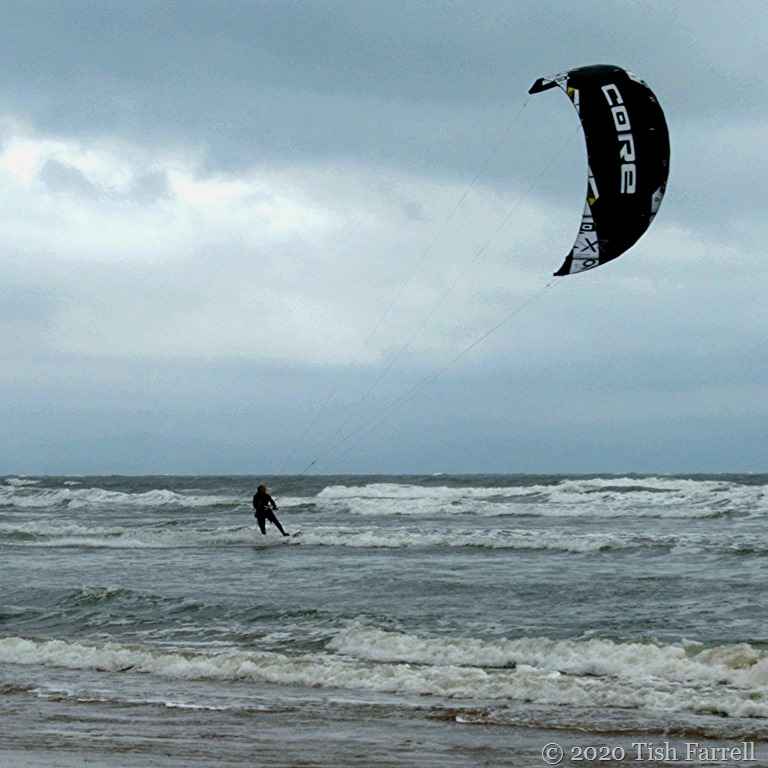
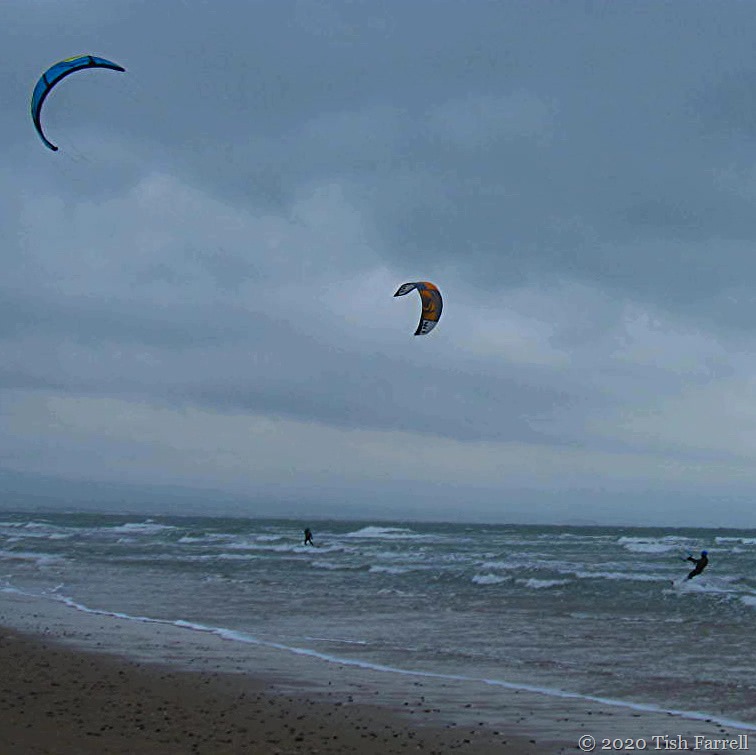
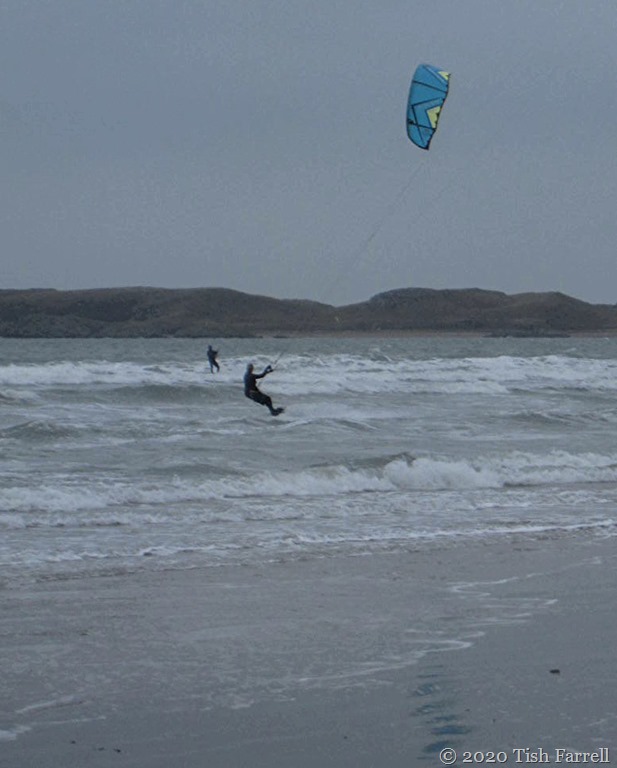
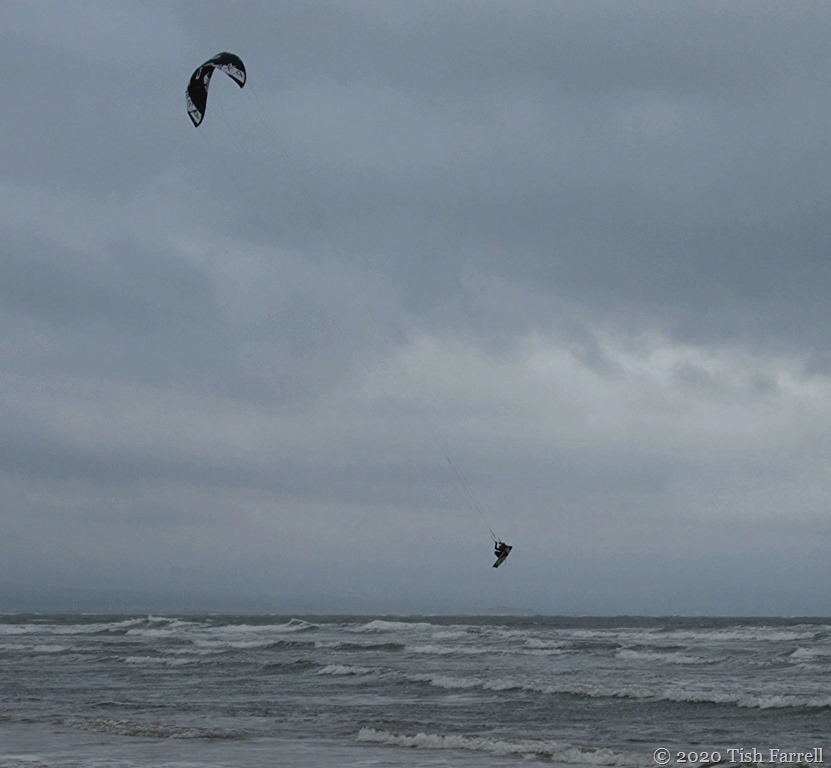
The reason we were on bleak and windswept Newborough Beach on the last Sunday of December (being unexpectedly wowed by intrepid kiteboarders) was because we thought we should work up an appetite before lunch. And no ordinary lunch either. Sister Jo had booked it weeks before – at the Marram Grass – a little beach shack eatery that has become a legend not only on the island of Anglesey, but far beyond.
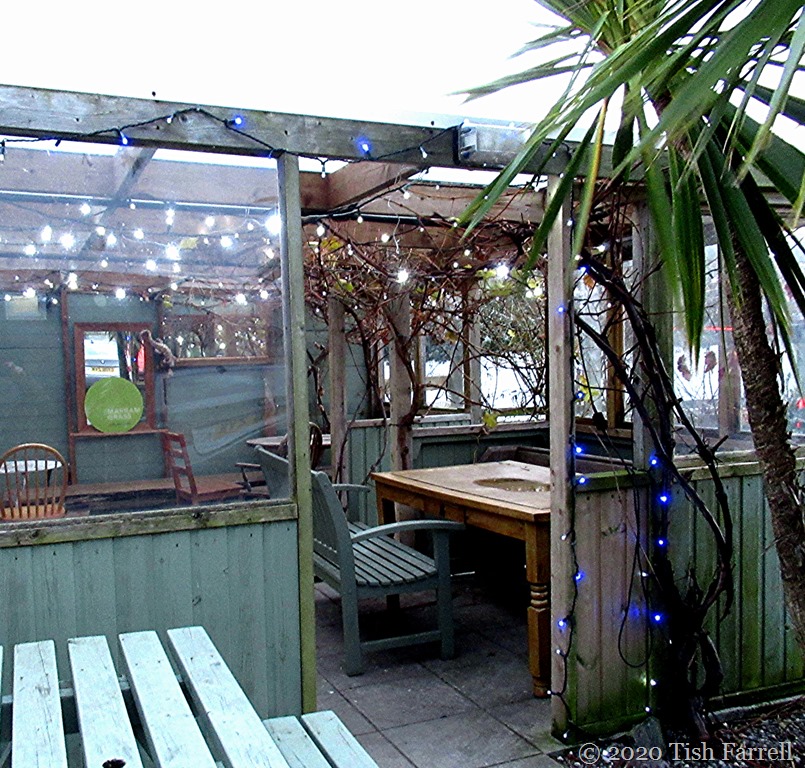
To say the premises are unassuming is an understatement. It truly is a large shed – and that’s how it began. Nine years ago, when two young men – Liam (newly graduated surveyor) and Ellis (self-taught chef) Barrie came to help their parents set up a small caravan park, it was an old potting shed. And from it grew a thriving enterprise whose raison d’etre is to serve freshly made food that highlights local and seasonal produce, much of it home-grown.
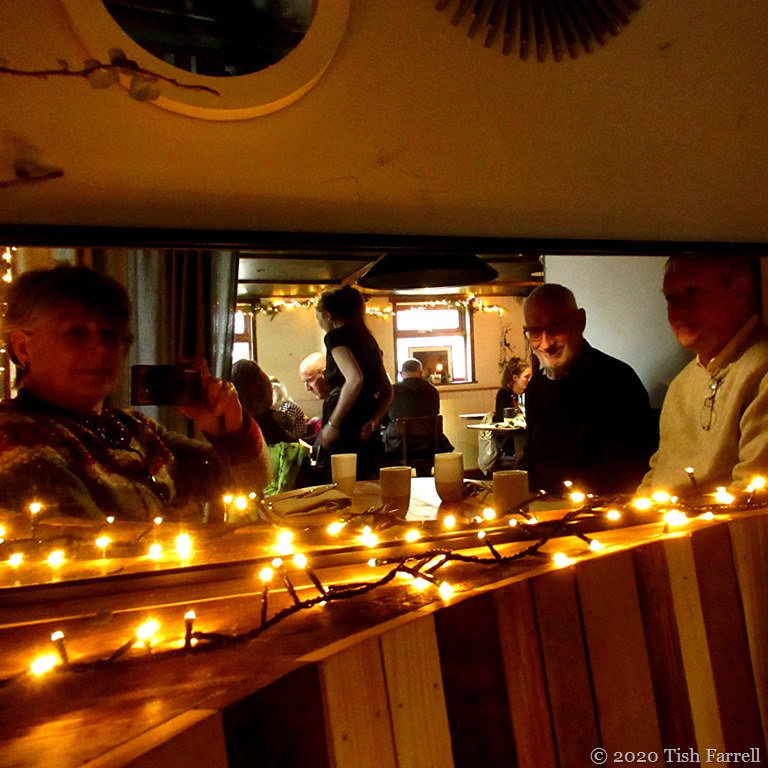
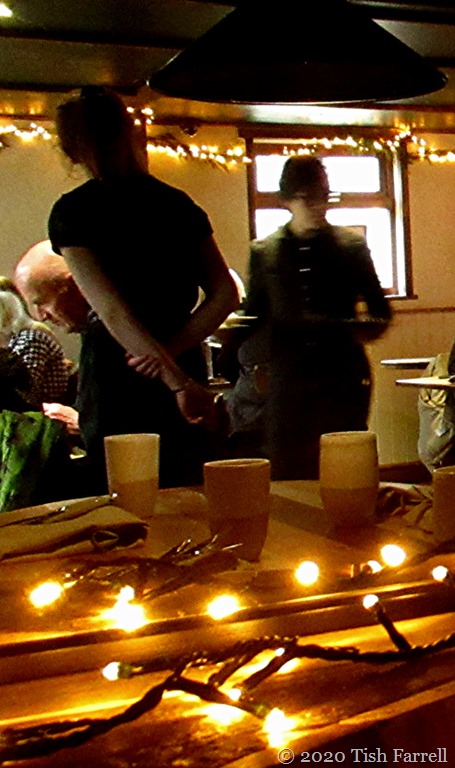
They’ve won awards. And so they should. We stepped out of the freezing wind and into an all-round glow. We sat in our cosy booth as the afternoon grew darker, ‘50s tracks on the sound system, low hum of chatter beyond, and a complete unknowing of what we would eat. There was no menu. All depended on what the chef had decided to cook, and so instead of feeling like run-of-the-mill clients, we became guests. And it made me think that there was nothing more blissful on a dreary winter’s afternoon than a long, slow Sunday lunch, impeccably created and presented with love.
The last Sunday of 2019 and a piercing wind is blowing on Anglesey’s Newborough Beach – the sort that knifes through all clothing defences and finds every millimetre of exposed flesh. Brrrr. By lunchtime it is growing dark too, or perhaps day never quite dawned properly. It’s anyway a big change after the entrancing blue of Christmas Day. But we are not put off: Newborough Beach is a favourite winter walk so we trundle through the high dunes to the shore, as ever joining a mass of promenading families and dogs, and face the elements. The wind takes our breath away.
But down above the tide-line there is much activity – lines laid out and out across the sand as paragliding wings are prepared by dive-suited individuals. Much clicking on of harnesses, clapping on of helmets and multi-coloured kite-fluttering. And then they are off, skimming the bay at astonishing speeds, now and then shooting high above the surf – aerial ski-jumping. It is exhilarating to behold – or it is when one can focus through eyes filled with wind-tears. But then that’s one of the things we love about this beach – you just never know what you will see there.
On the other hand I’m rather wondering at the reactions of legendary St. Dwynwen, she whose religious retreat this place was in early Saxon times. Or maybe her spirit is out there embracing it, flying with the wings – engaging in extreme sports, closer to the heavens.
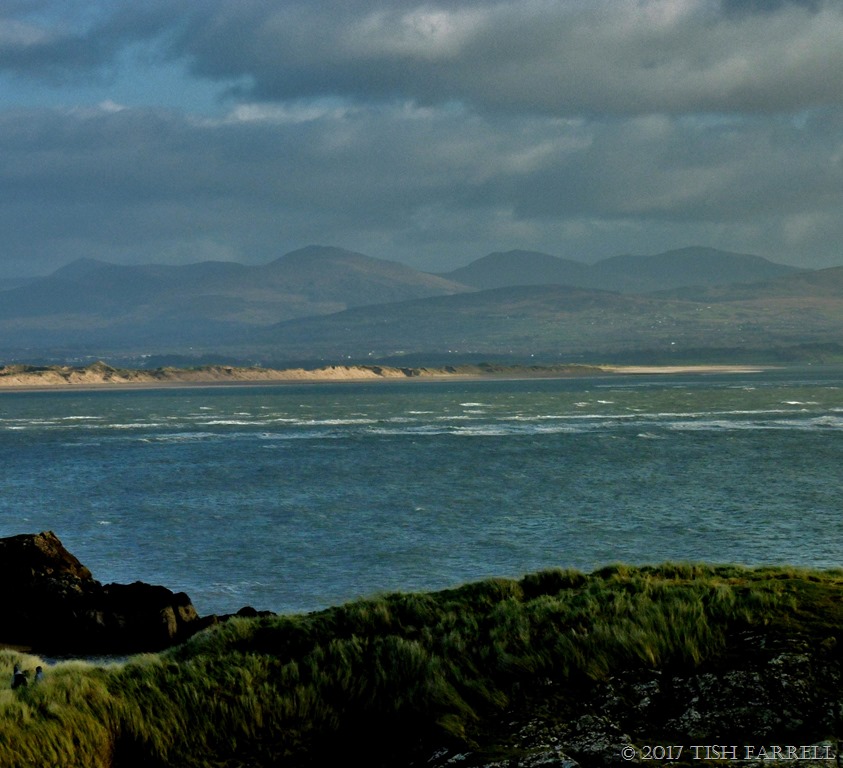
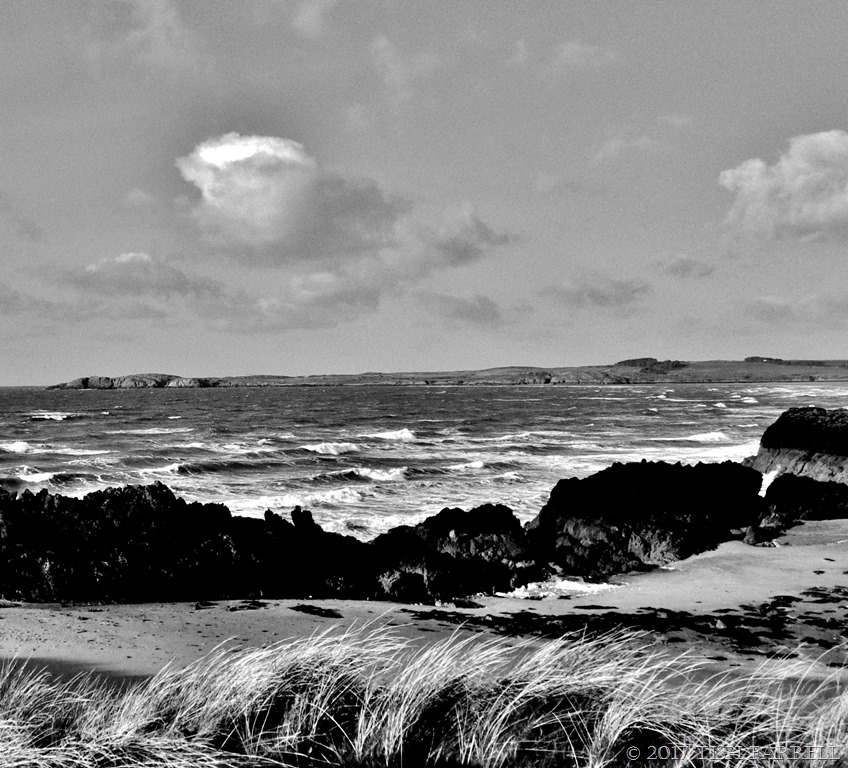
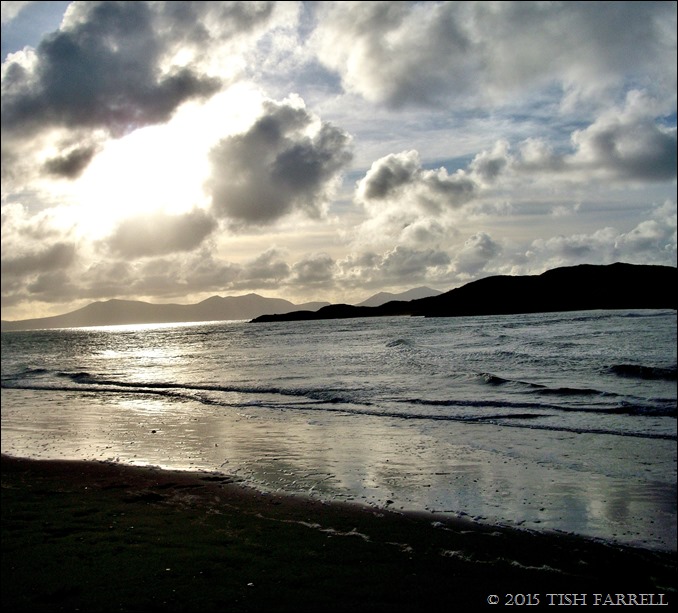
This one was on Newborough Beach, Anglesey, one late December morning. You can just see the mountains of Snowdonia on mainland Wales in the distance.
But not to make light of those who suffer bad black dog days, and there are very many of us who do, intermittently or full-time, here is a hopeful little video from the World Health Organisation:
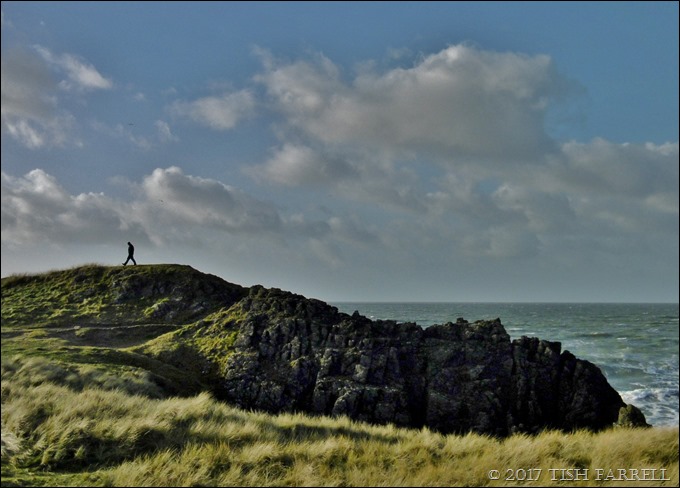
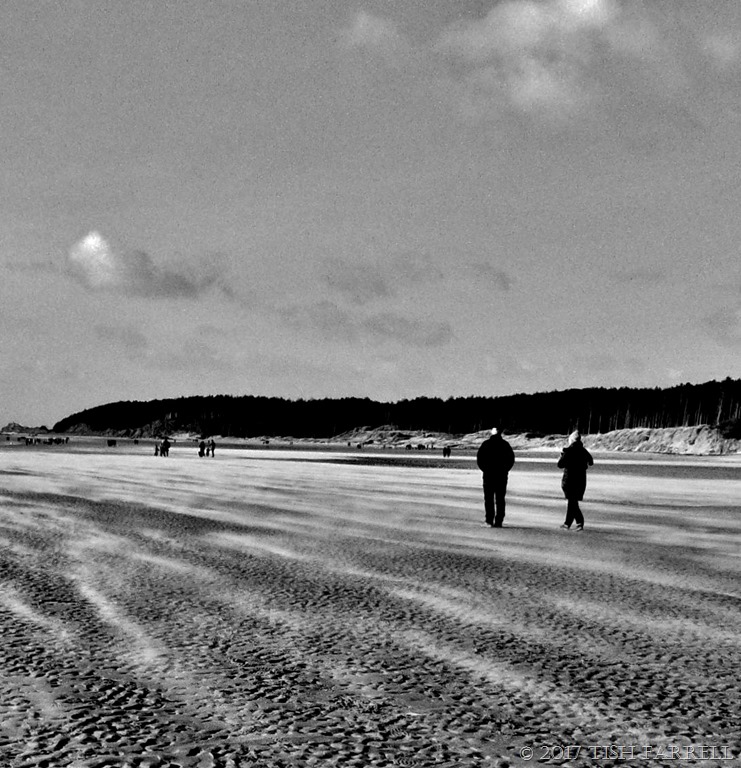
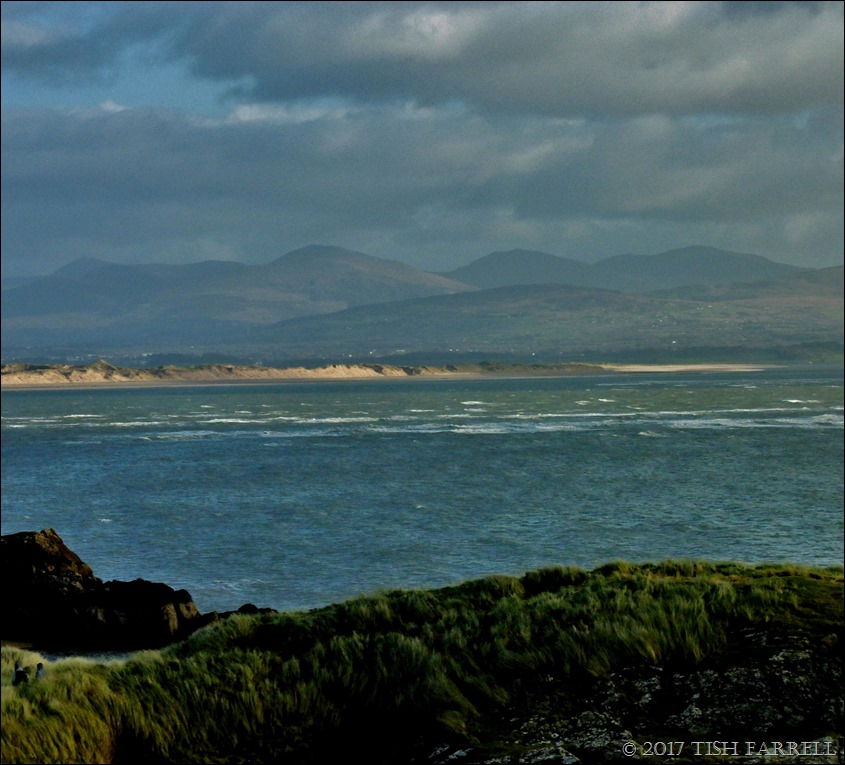
It was blowing a gale, wind like ice on our faces. But that did not stop us – nor a hundred like-minded souls, all intent on the secular pilgrimage of walking off Christmas Day excesses, giving the family dogs a much needed airing, and heading to Llanddwyn Island while the tide was on the ebb. Anyway the sun was out, the light crystal bright, and the mountains of mainland Wales across Menai Strait looking their dreamy best. So why wouldn’t you head for the sea shore.
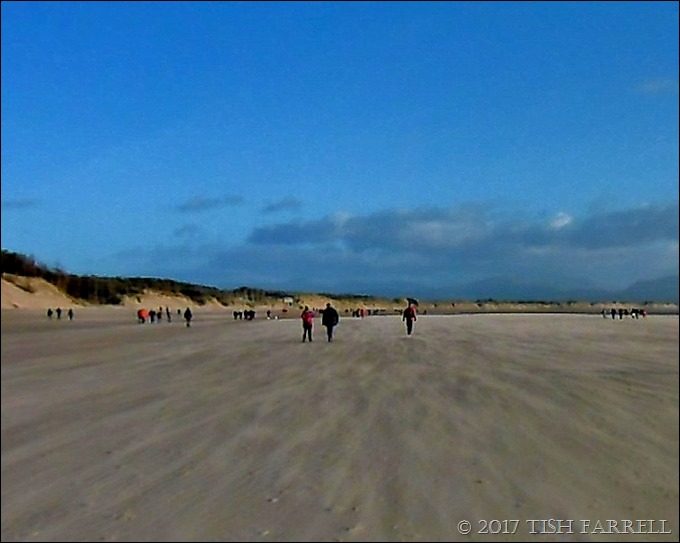
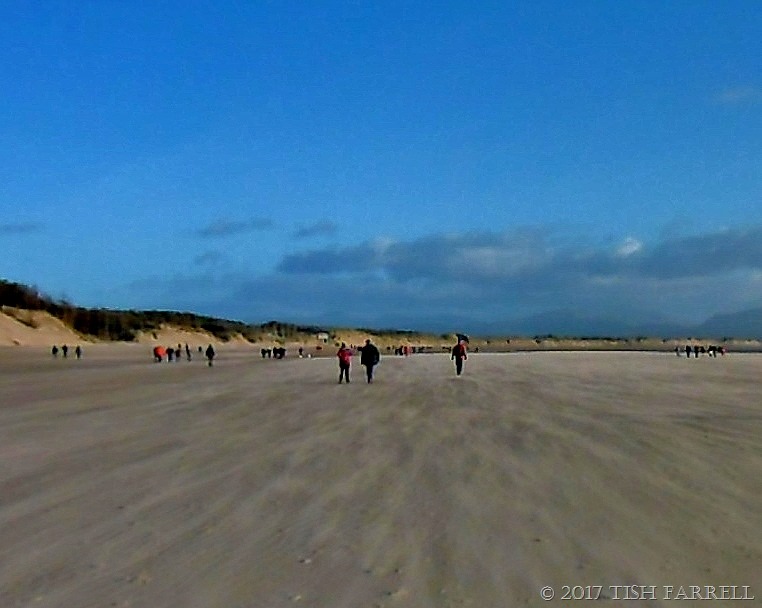
Newborough Beach was positively crowded. Not only that, the sands were coming to meet us as we set off to the island. It was the strangest experience, which along with eyes full of wind-tears played havoc with one’s perceptions. It was rather like going backwards on a forward moving pavement.
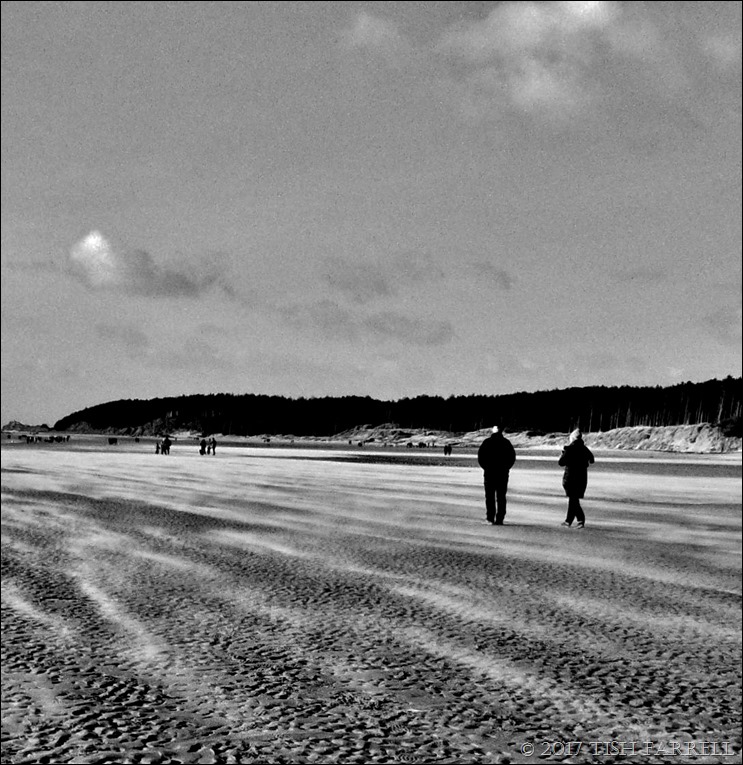
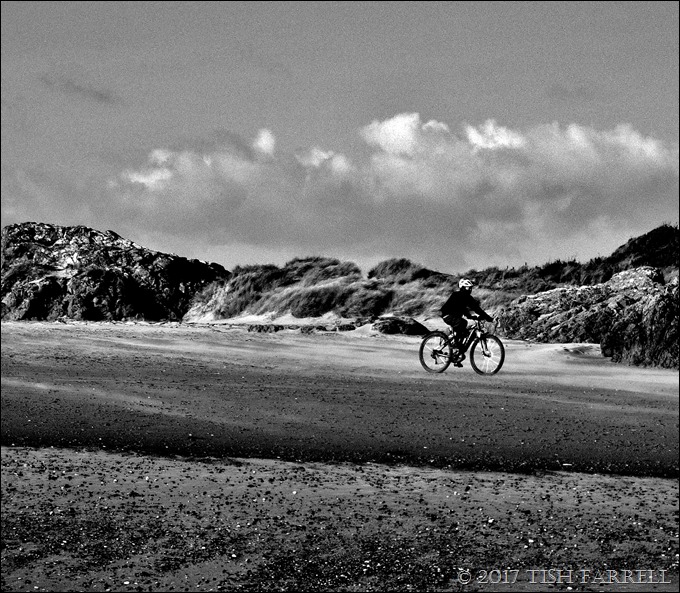
And so at this point, seeing a chap on a bicycle seemed most surreal. But then why not ride your bike on the beach? So much space. No grouchy motorists on your tail. All that sand for a soft (well soft-ish) landing.
I’ve written about Llanddwyn (roughly pronounced ‘hlanthwin’) Island before. We were here two years ago, on Christmas Day, but then the tide was too high for us to reach the island.
In fact it is not an island at all, but a long, slender peninsula, poking out into the Irish Sea like some dragon’s tongue. And it was here that St Dwynwen, daughter of a Welsh king, withdrew from the world to form a convent. This was in the fifth century, around the time that Roman rule in Britain was coming to an end. You can read her story at the link above, although there are many versions, and they mostly have to do with spurned or thwarted love, and so are used to explain how she came to be the Welsh patron saint of lovers. Her day is celebrated each year on 25th January.
During the Middle Ages, as poets and pilgrims were drawn to Llanddwyn Island, so the accounts of their visits helped grow Dwynwen’s reputation for mystical powers of healing and divination. Even her well was said to be inhabited by sacred eels, and through the cunning reading of their movements, you might predict the future. On the other hand, if the waters boiled up during your visit you could be assured of love and good fortune.
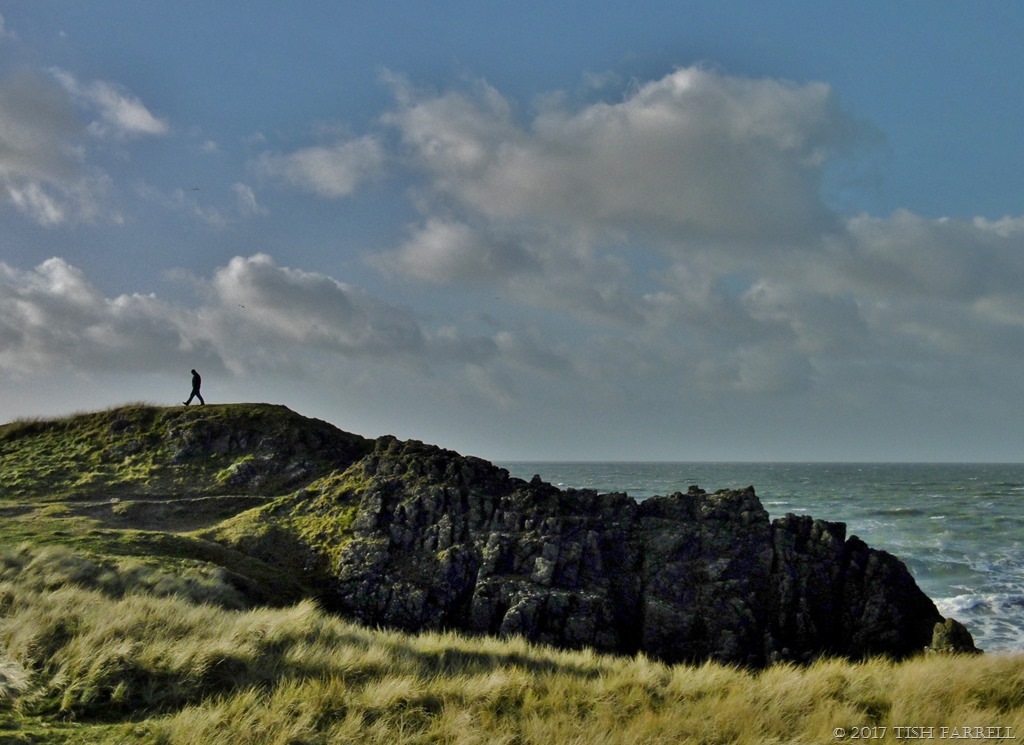
We, however, were not enticed from the path to see this for ourselves. A very pungent odour wafting our way suggested something had died there. Perhaps the sacred eels? Instead we took the cliff path and enjoyed the thrill of stepping out above a stormy sea.
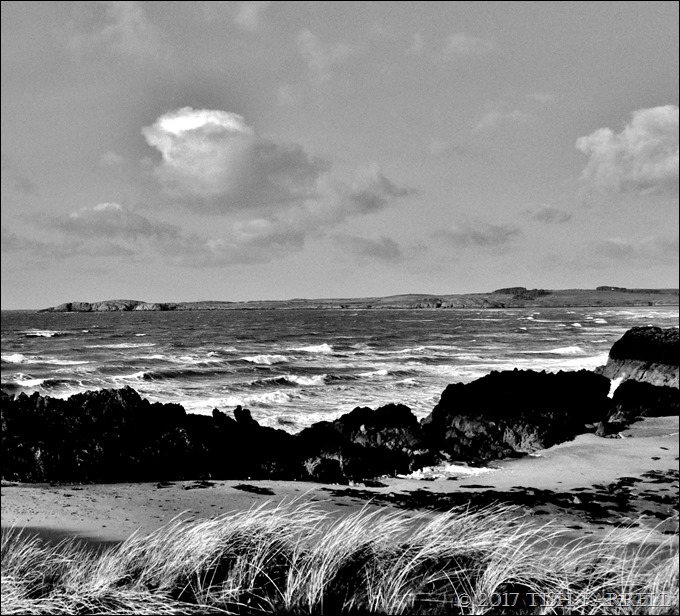
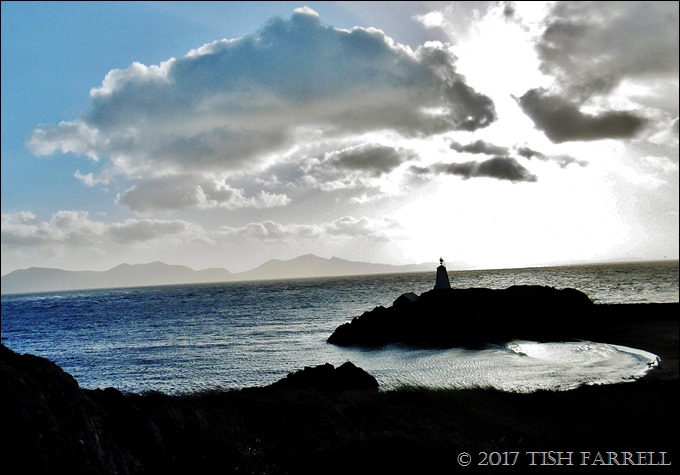
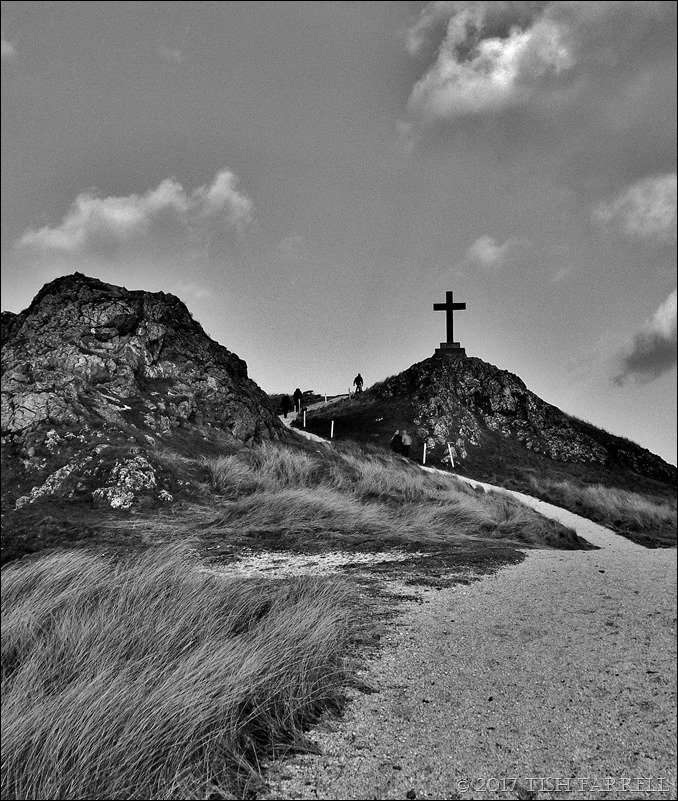
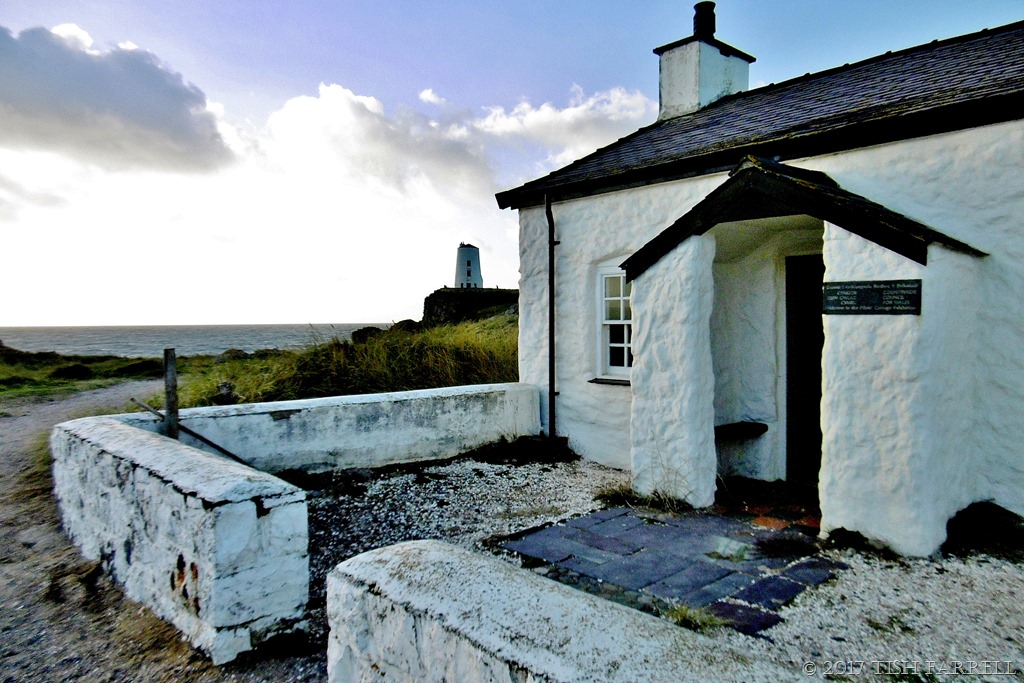
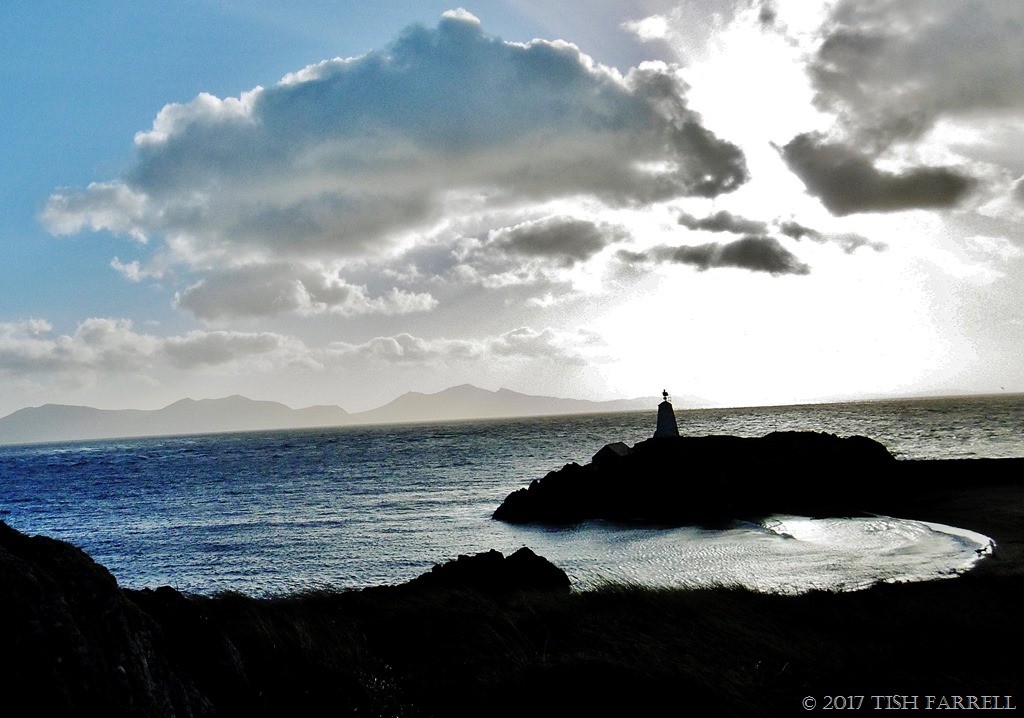
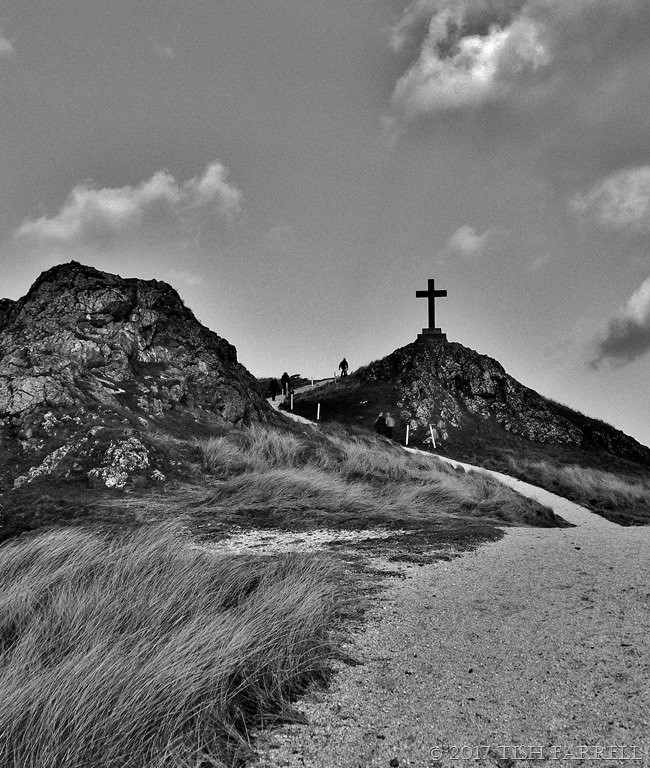
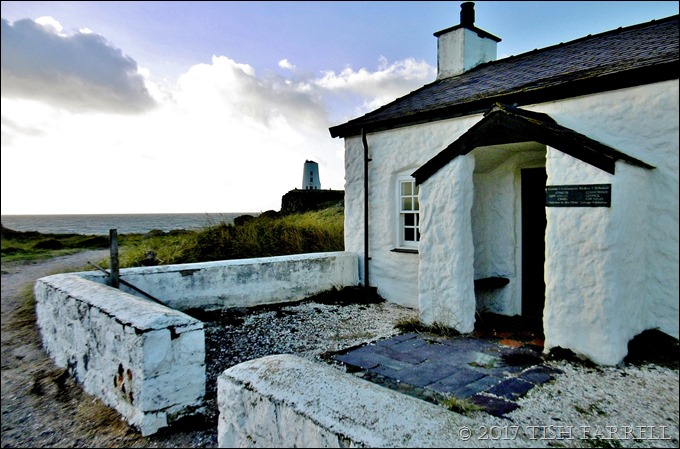
There is anyway much to explore on this small promontory. At every point, as the sea recedes, there are enticing coves – some rocky, some sandy. There are many man-made features too: a Celtic cross of nineteenth century vintage, another marking Dwynwen’s death in 465 C.E. There are the ruins of a Tudor church built on the site of Dwynwen’s own church which she apparently built herself from beach stones, and so doubtless did not stand the test of time and wild Welsh weather. There is also a beacon, a lighthouse and three cottages built for the lighthouse keepers and their families. In the nineteenth century the export of Welsh slate was a thriving industry, and the lighthouse served the slate ships in particular, keeping them off the dangerous Menai Strait sand bars.
On the long walk back up the beach, the wind was behind us. Now we were walking with the moving sand. But it was still a very odd experience.