5 Photos 5 Stories: Hidden Wenlock #2

IMG_1265

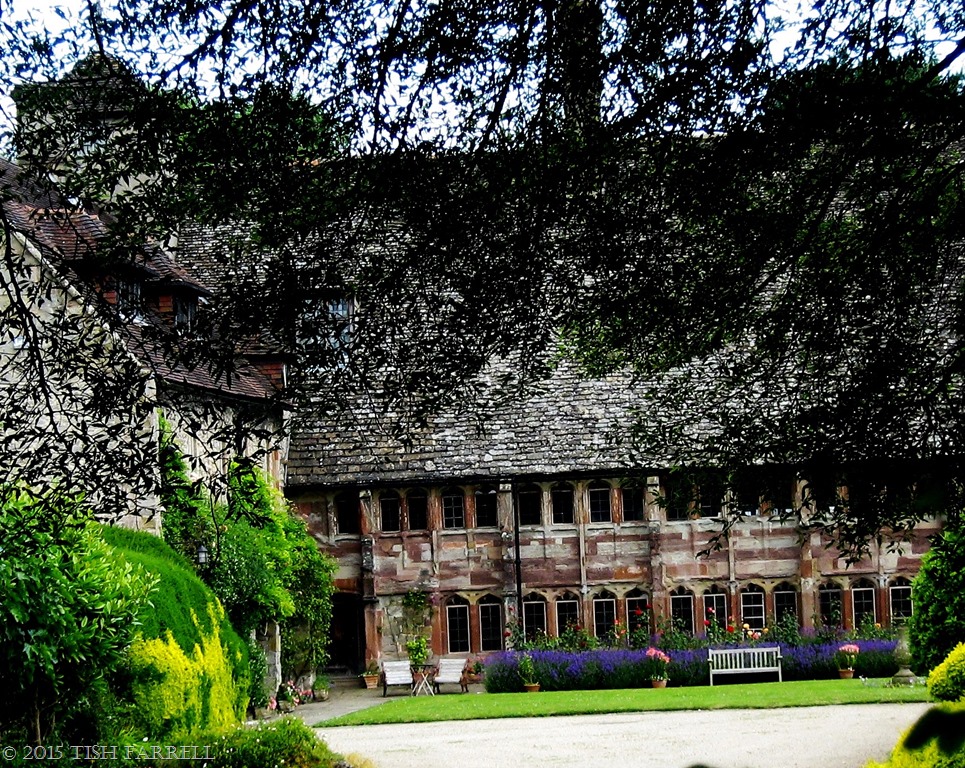
Day 2 of the 5 Photos 5 Stories challenge (thank you Pauline at Memories Are Made Of This), finds me scrambling around at the back of the town graveyard, trying to sneak this photo of Prior’s House. It adjoins the Priory ruins (see 5 Photos 5 Stories: Hidden Wenlock #1)  and peeking over the parish church wall is the only place you can get a good view without being an invited guest. Most of the town’s visitors never see this particular vista.  The house, long known as The Abbey, is privately owned, and has been since 1540, and Henry VIII’s Dissolution of the Monasteries.

Below is the view of the house that visitors to the Priory see. It originally included an infirmary, and so wasn’t solely the Prior’s domain. However, the place would have seen many high times with minstrels, feasting and much medieval jollification. The monks also liked a spot of hunting, and a few other unseemly pursuits, which I’ll get to shortly.

100_5964

In its time the Prior’s Lodging  hosted some extremely august guests – none higher temporally speaking, than the King of England. From 1231-45  Henry III made several visits, doubtless accompanied by his entire court, from guards to grooms, cooks, courtiers and blacksmiths. He also kept his wine store there, and with a royal  keeper specially appointed to take care of it.  For one particular visit the Sheriff of Shropshire was instructed to order four barrels up from Bristol.

Today the grandeur of the Prior’s lodgings merely hints at the former wealth  and prestige of Wenlock Priory. From Norman times on it was in fact an income generating corporation, from which the King, the Sheriff of Shropshire, and the Pope also took their share. The Priors dished out justice to the town, and imposed extortionate taxes on  widows, heirs and beer. The religious house also controlled the extensive lands once owned by the Saxon princess Milburga, later Saint Milburga who was abbess of the first convent on the site in the late 600s AD.

During the monastic period the monks’ possessions included farms, mills, quarries, iron foundries and coal mines. There were manorial rents to rake in, fines to impose, markets to run and a major pilgrim attraction to publicise. The monks even dabbled in some deliberately criminal money making. In 14 17, the outlaw Sir John Oldcastle brought a master forger to Wenlock to teach the monks how to make counterfeit coinage. Worse still, back in 1272, some of the monks had also attempted to murder their Prior. It seems they were angry when his slippery financial deals threatened their good life. He had not only put the Priory in debt, but then sold the future wool crop (seven years’ worth), keeping the money for himself.
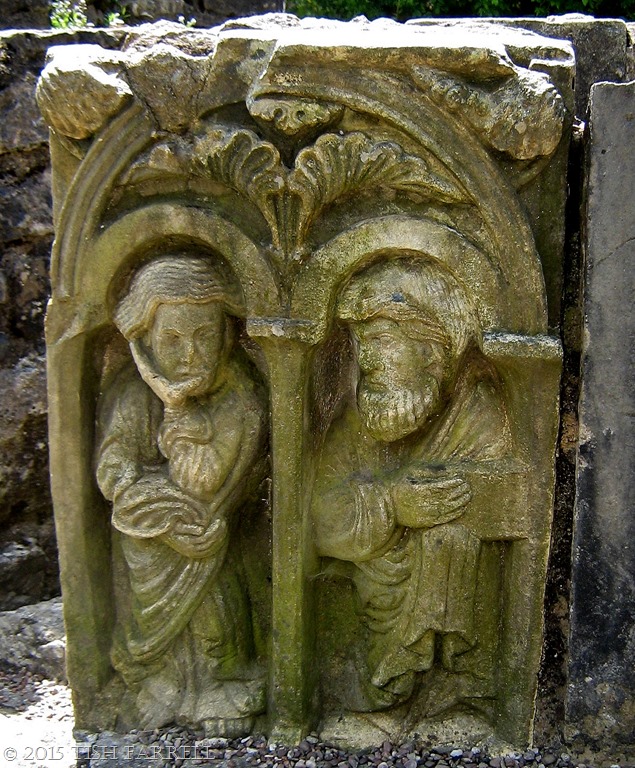
IMG_1240

Ornately carved lavebo where the monks washed before going to eat in the refectory, circa 1180

*

By 1521 things were in such a bad way that Cardinal Wolsey sent in his man, Dr. John Allen, to interview, in confidence, each and every monk. This resulted in a long list of Injunctions (orders) and Exhortations (recommendations) for more godly behaviour. These included strictures that monks should not take boys to the dormitory, carry arms or form cliques and conspiracies, gamble, have dealings with women, have private possessions or hunt. Women were expelled from the cloister and hunting dogs from the hall. The Prior was especially instructed not to ‘indulge in luxurious and extravagant living with a large household.’

Less than 20 years later, the Priory was stripped of its lead roofs and left to decay. Henry VIII’s act of dissolution in fact had interesting outcomes quite apart from the religious revolution that hit the nation. It not only released monastic wealth in terms of jewels and silver, but freed up many capital assets that would then be seized on by merchants with an eye to industrial development.

In the first instance, Henry gave Wenlock Priory and its lands to his physician, but he in turn quickly set about selling it off, parcel by parcel. So we see the arrival in Shropshire of men like John Weld, a canny London wheeler-dealer, who began to develop the monastic coal pits, and experiment in soap making. Others like him took over the ironworks, and began experimenting in iron and steel production.

It was an unintended consequence perhaps, but courtesy of the monastic enterprises, there was a skilled local workforce to hand, and in all manner of trades. Not only that, the nearby River Severn (also utilised for centuries by the monks) presented an established transport route to Bristol and beyond. There was no having to lug commodities over treacherous roads either: a system of wooden railways linking mines and foundries to the river was soon in place, and all before the 17th century was done.  Industrial Revolution here we come.

And so if anyone wonders why, in the early 18th century, the likes of the great ironmasters, John Wilkinson and Abraham Darby, came to this seeming Shropshire backwater to develop their technologies – this is why. Resources, long established industries, labour know-how, and a navigable river. They were men with plans, and a vision of an industrialised nation. It’s an interesting thought, as one wanders around the ruined Wenlock Priory, a monument to picturesque decay, how one thing leads to another.

copyright 2015 Tish Farrell


100_5899


5 Photos 5 Stories Challenge

The idea of this challenge is to  “post a photo each day for five consecutive days and attach a story to the photo. It can be fiction or non-fiction, a poem or a short paragraph, and each day nominate another blogger for the challenge”.

So today I would like to nominate  Robin at Northumbrian : Light. Robin takes stunning photos and tells a good yarn. If you haven’t seen this blog, go there at once.


Related:

Past and Present in the Ironbridge Gorge

5 Photos 5 Stories: Hidden Wenlock #1


References:

A history of Much Wenlock  Vivien Bellamy

Wenlock in the Middle Ages  W F Mumford
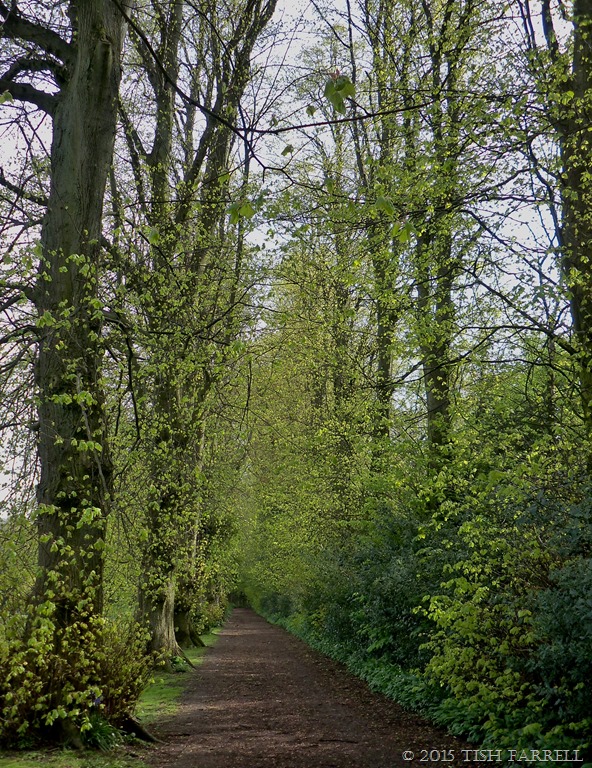
Seeking Spring ~ A Walk on Wenlock’s Wild Side

100_5445

I knew there was only a small window of opportunity. At nine thirty yesterday morning there was sunshine. Go out there at once, I told myself. The way the weather is these days, it might be the last you see of it. Carpe diem and all that.

So seized it I did, and it was certainly warmer to the touch than it has been for many days, and as you can see from the above photo, the ancient, and thus arboreally wise lime trees on the Linden Walk definitely think it is spring.  Drifts of green. Blissful.

P1010309

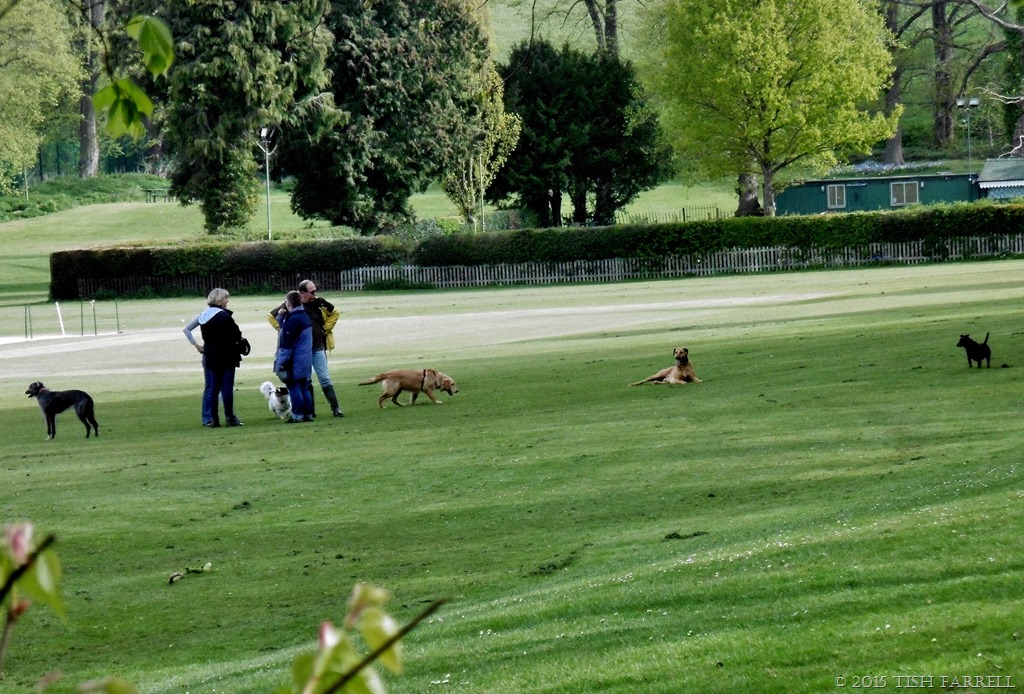
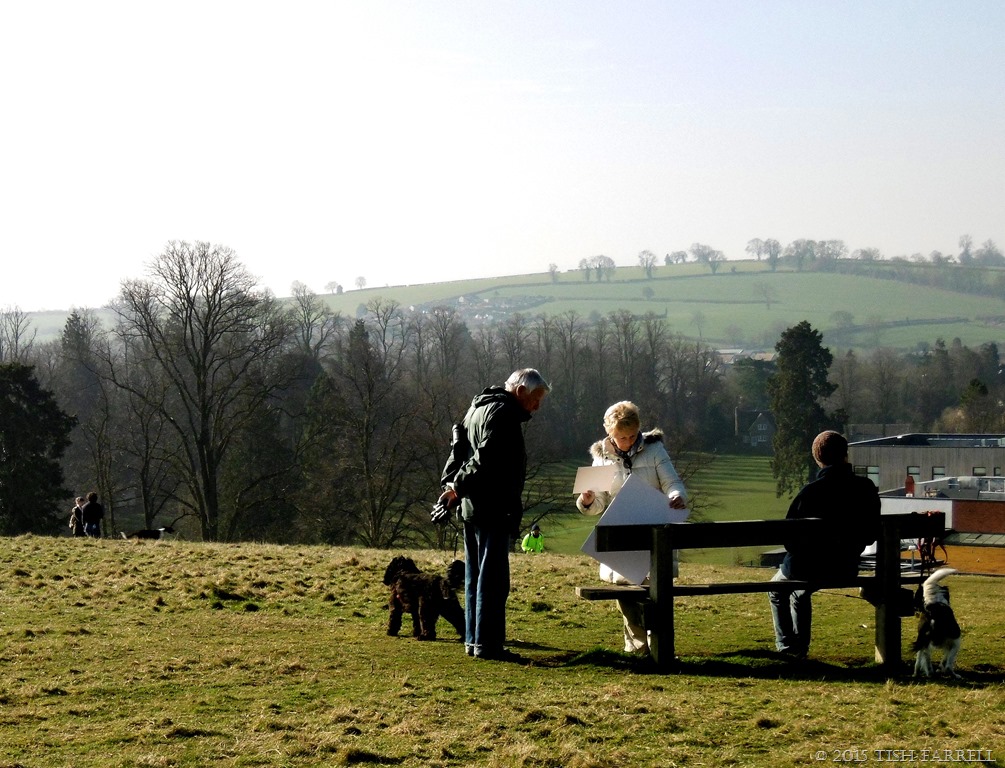
The dog walkers, too, were out en masse, owners chatting amiably on the Linden Field quite as if it were – well, spring. And despite Thursday’s appalling election results (Scots Nationalists excepted) and the return of a government that treats food banks as something to be proud of, and regards the nation as a resource for unbounded fracking, everyone I met seemed pretty cheerful. I will thus make no further mention of Tory attrition and spoil the moment.

The little green building you can see in the background behind the dog walkers is Much Wenlock’s Bowling Club HQ. It occupies a re-cycled railway carriage, a relic from our erstwhile lovely railway that once ran beside the Linden Walk and, until the 1960s, when the wretched Dr. Beeching axed thousands of miles of Britain’s railways, linked Much Wenlock to the outside world. But enough! Too much negativity already.

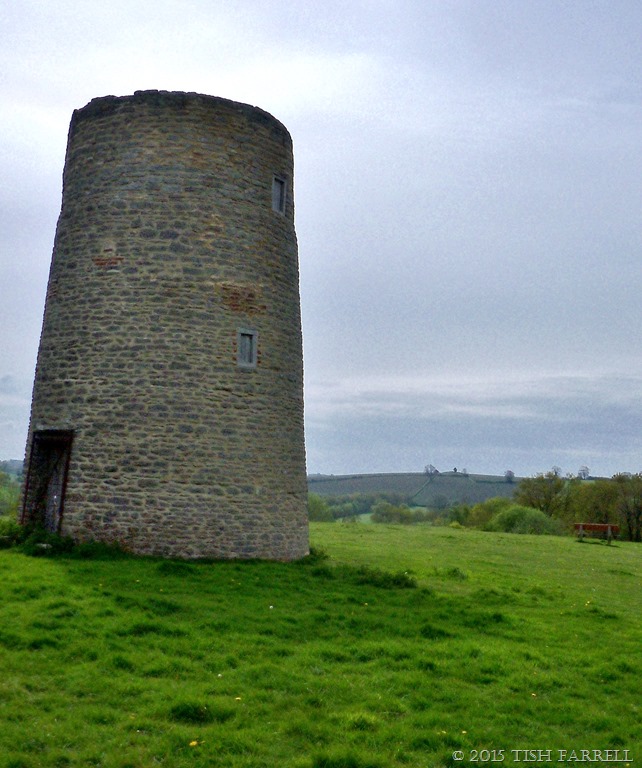
I headed off behind the Bowling Green to see what was growing on Windmill Hill. This quest was motivated by Meg at Snippetsandsnaps. In response to an earlier post here, she said she would like to see more of what happens on the old limestone pasture on which the windmill stands. I’d mentioned the wild orchids for one thing, so I thought  (given our erratic climate) I’d better go and check if they were flowering yet.

100_5459

They weren’t. Still too early. But the first thing I spotted were the cowslips, also known in Olde Shropshire as cowslops. The richly eggy coloured clumps were growing here and there. In the past they would have grown in yellow meadowsful all around Much Wenlock. I even remember them. When I was a child, my parents would make a point of driving out from Shrewsbury where we lived, simply to visit them. We’d have picnics amongst them.

P1010322

Once, too, cowslips were an important resource. In the days before modern farming methods seriously reduced their habitat, Wenlock’s school children would absent themselves from class at the National School in order to help with the annual gathering. The flowers were used to make herbal infusions to combat coughs and bronchitis, and in a town regularly doused in limestone dust from the quarries, bad chests would have been a common problem.

Doubtless, too, the town’s doctor, William Penny Brookes, (he who inspired the modern Olympics and planted the avenue of lime trees that we have just walked along), supported such an activity. He practised for the last fifty years of the 19th century and, as well as being a physician, he was also a highly knowledgeable herbalist, having trained both in medicine in London and herbalism at the renowned University of Padua.

And this was by no means quackery in action as some are wont to call herbal medicine. After all, from where does Big Pharma get so many of its notions if  not from trying to concoct synthetic (patentable) analogues of the deemed active chemicals teased from botanical compounds? All of which is to say, we lose our plant heritage at great cost to our future well being, to say nothing of the planet’s well being.

Besides which, flowers can mean fun and festivities. Cowslips were also used to make wine, and to strew the paths of spring brides. Mm. Just think of the air filled with their subtle, sunny scent in times when May was WARM.

And talking of warmth and nuptial pursuits, the next thing I came across while snapping cowslips, was a pair of mating molluscs, also known Cepaea nemoralis (Linnaeus, 1758), Britain’s commonest snails. Spring has certainly made this pair frisky, but I will spare you the more intimate shots, and leave you with their rather pleasing  Northamptonshire dialect name of pooties. Canoodling pooties then.

100_5452

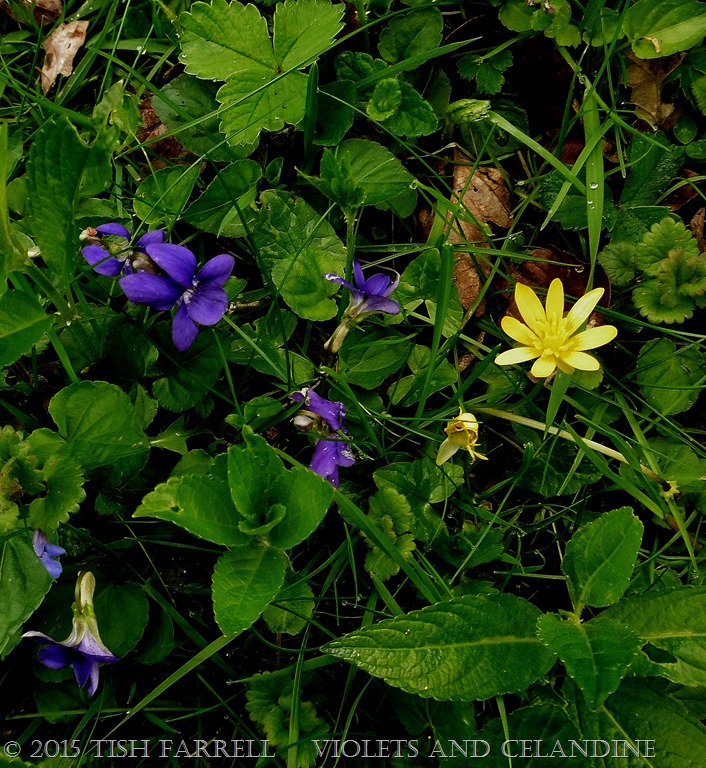
Windmill Hill has more than its open, calcareous pasture. There are wooded flanks to the north and south and here, beneath the trees, I found violets and celandines. You can also see leaves of tiny wild strawberry plants (north of violets), germander speedwell (northeast of the celandine), and sprigs of Dog’s Mercury at the bottom of the shot.

P1010366

*

And coming up is Dog’s Mercury (Mercurialis  perennis  or Boggard Posy) in full flush. This unremarkable looking plant is a member of the spurge family and very toxic, a fact reported in a letter from Shropshire in 1693 and published that year in the Philosophical Transactions of the  Royal Society, 203 VIII. The letter gave a detailed account of how one  Mrs. Matthews had gathered, boiled and then fried the herb with bacon for her family’s supper. Two hours later there was much purging and vomiting followed by heavy sleeping. Sadly one of her children died after remaining unconscious for several days. Mr. Matthews, however, reported going to work the next day three hours late, but feeling as if “his Chin had bin all Day in the Fire.” He had therefore been forced keep his hat at his side as he worked, filled with water, so he could keep dipping his chin in it.

100_5469

*

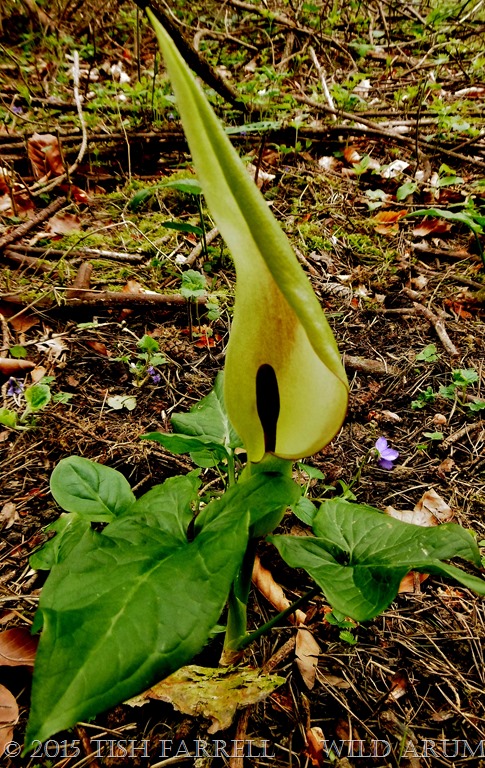
This next plant, Arum maculatum,  also has toxic characteristics. And it has a host of intriguing country names, some of them certainly alluding to what William Shakespeare referred to in Hamlet as ‘country matters’. For instance we have Lords-and-ladies, Ladies and Gentlemen (Shropshire version), Devils and Angels, Willy Lily, Cows and bulls, Red-hot-poker. Then there are the more curious Jack in the Pulpit, Cuckoo-pint, Fairy Lamps and Shiners. Its hooded sheaths (spathes) do glow in a faintly sinister, not to say priapic fashion in the shadiest spots. When done flowering, and presumably duly fertilised, the sheath collapses in a disturbing manner. In the autumn, though, there are spires of fire-red berries that light up gloomy days.

As to usage, in the times when people still wore lacy ruffs, the arum roots were crushed to make starch, although the processing apparently gave the launderers nasty blisters on their hands. It presumably did not do much for the ruff-wearers’ necks and faces either. So yes, it’s also good to remember the toxic properties of plants along with their more healthful aspects.

P1010337

*

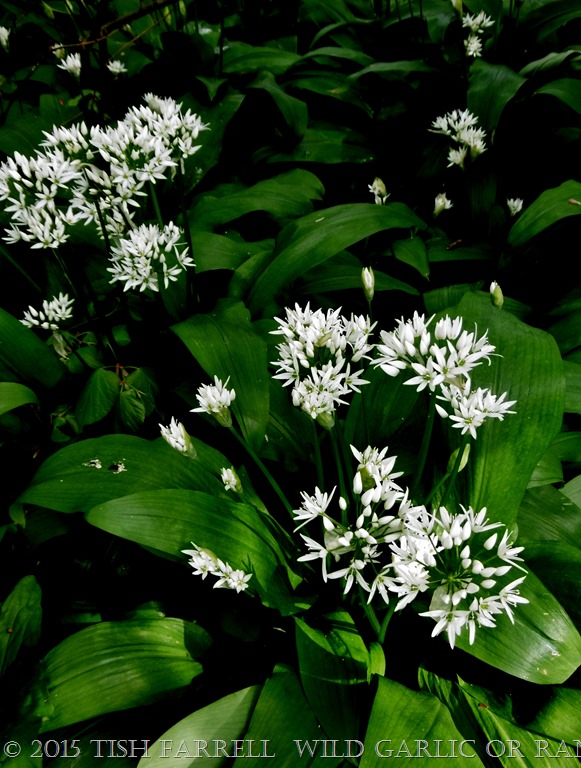
And now for something seriously edible, if you like garlic and onions, that is. The Wild Garlic or Ransoms (Allium ursinum) grows in profusion at the foot of Windmill Hill, and especially along the banks of the old railway line. Those who don’t care for the smell will appreciate its vernacular names of Stink Bombs and Stinking Nanny.

P1010304

But you can certainly cook, or add to salads, both the leaves and the flowers, and their flavour is not as strong as the smell suggests. Excellent wilted in olive oil with pasta, for instance, or in soups – cream of potato and wild garlic say.

This wild garlic photo was taken while the sun was still shining, and as I said at the start, I knew it wasn’t going to last. Even if I hadn’t read the Friday forecast of rain by noon, followed by more rain all day, the green woodpeckers would have warned me. As I headed down the hill and along the old railway line their cries, known as yaffling, dogged my footsteps. It’s interesting how this member of the woodpecker family likes to alert everyone to a coming downpour. In Africa it is the red-chested cuckoo that performs reliable rainbird duty.

100_5494

Those yafflers were dead right too. As I turned for home, the sky was leaden, and the first drifts of rain were falling through the trees. Bye bye sun!  But then the old railway line is a good place to be whatever the weather. It is one of the town’s most popular footpaths, and it is hard to imagine that along it the Great Western steam engines once came rattling into Wenlock – the Olympic special bringing thousands of spectators to the annual Wenlock Olympian Games on the next-door Linden Field; goods trains from South Wales coming to collect limestone from Shadwell Quarry behind Windmill Hill. These days, then, there a trees as well as leaves on the line (NB for those living outside the UK,  ‘leaves on the line’ has long been the old British Rail’s excuse for non-arriving trains.)

Finally, I’ll leave you with a few more shots of botanical specimens discovered round Windmill Hill and along the railway line. Clearly the natural world is busy cracking on – full of vim and vigour – even as I shiver in the cold wind, and hang on to my much layered clothing. That’s good to know though – that nature will out, even if, as time goes on, it may not quite do what we expect.

100_5488

100_5483

100_5490

copyright 2015 Tish Farrell

Reference: Richard Mabey Flora Britannica

Forces of Nature

This post was also inspired by Jo’s Monday Walk at restlessjo, a great venue for walkers, whether in body, mind or spirit.


Is it really spring?

P1010198

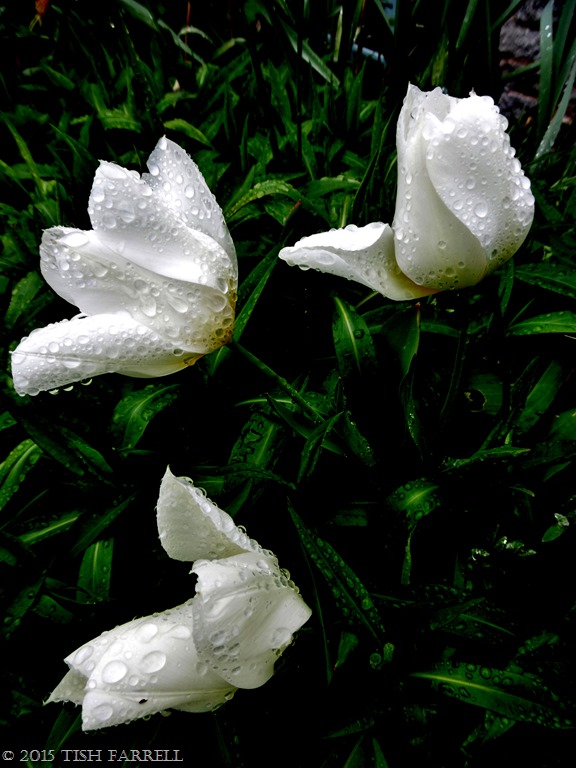
Here at Sheinton Street we are wondering if spring has  come. Certainly it looks like spring. We have had daffodils, crocus and cherry blossom, and now the crab apple tree is blooming. But this is not spring as we know it. For one thing the winds have been icy, and unrelenting day after day.  For another we completely missed out on April showers, and when they finally came on Saturday night, they came all at once and pounded away what blossom was left on the damson tree. I’ll be surprised if  the Shropshire Prune has any fruit this year. Out in the very wet garden on Sunday morning the tulips looked positively shivery. Dishevelled too.

P1010199

Definitely brrrr all round. There’s an old English saying that advises, ‘Ne’er cast a clout till May is out,’ and I can tell you there will be no clout casting in this house – probably not till July.  Time to stoke up the wood burning stove, and see how the baked spuds are cooking.


Happy May, Everyone, Whatever Your Season

Sun Setting Over Wenlock Edge ~ Or Did The Earth Move?

P1000591

From my house I often watch the late-day sun slip behind the Edge. But which of us is moving: me, or the sun? It’s the sort of displacement-activity question I ask myself when I should be doing something more constructive. It also makes me think about the Edge, the fact that something so apparently static is, of itself, an embodiment of movement; a geological exemplar of extreme process and change.

The limestone ridge on whose foothills we Wenlockians dwell, is 425 million years old. It runs for some twenty miles while rising up to three hundred feet above the land.  And so it goes without saying that a structure of this size cannot help but evoke a sense of monumental immobility.

How can it  move?

Yet move it has, and move it does, although these days not on quite the colossal scale of the Silurian Age when it was formed.  Its constituent parts, the sea-creature fossils that have fascinated the world’s geologists enough to earn them their own Wenlock Epoch, clearly indicate that our Edge is neither where it was, nor what it was in the aeons before fish were invented.

In fact during the Silurian era, and some 200 hundred million years before one cosmic hint of a Stegosaurus or Diplodocus was abroad, the strata that would become Wenlock Edge were quietly forming. Layers of dead and decomposing corals, sponges, sea lilies and molluscs were building up beneath a shallow tropical sea, and in a location somewhere off present-day East Africa and well south of the Equator.

Today, however, this former sea bed is an up-tilted escarpment, a steeply wooded ridgeway of ash, birch, hazel and oak trees. It bisects a temperate, rural Shropshire in the middle of England, which as most people know, is and often feels hugely north of the Equator. The power of tectonic shift and uplift is thus truly marvellous.

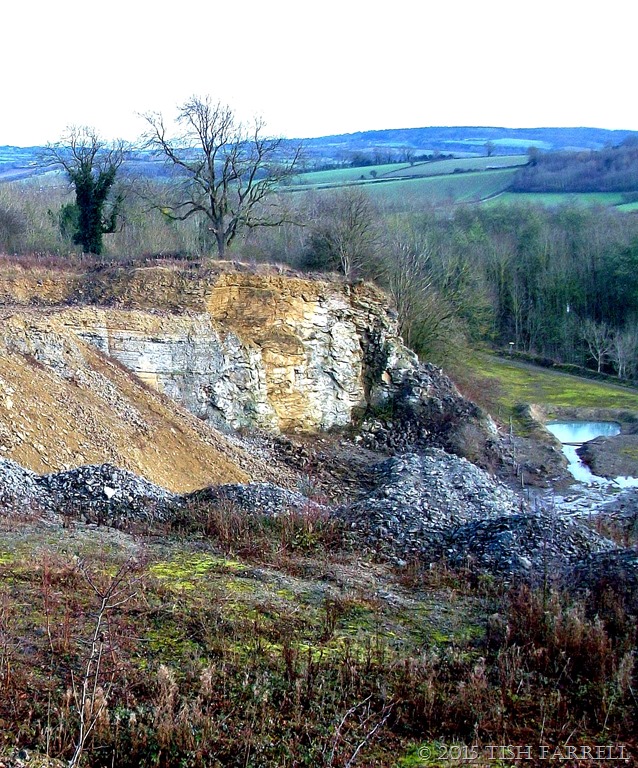
For the last couple of millennia, though, it has been humans who have been responsible for the Edge’s biggest movement. They have hacked, drilled, and blasted out the limestone with dogged persistence. At first the spoil would have been carried away on packhorses, then on carts, and finally by train and truck to wherever it was needed. Chunks of fossil sea bed hauled off to build grand monastic houses, feudal mansions, churches and cottages; limestone mortar to make them weather-tight; limestone to burn to make quick-lime for fertilizer; crushed limestone to pour into the top of massive blast furnaces, and so draw the impurities from smelting iron.

100_7035

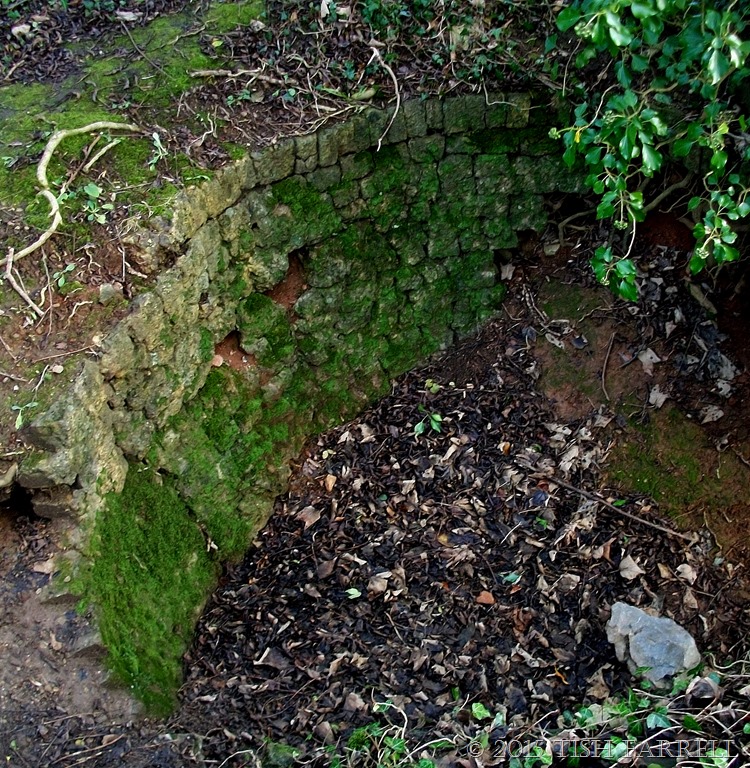
One of the many old lime burning kilns on Wenlock Edge

*

In such ways did Wenlock’s broadcast and reconstituted Edge come to play its part in Britain’s Agricultural and Industrial Revolutions. Yet way before this, in the late 600s AD of Saxon times, it probably also gave us our curious sounding name. In those days it was the habit to paint the early Christian religious houses with lime-wash so they glowed luminously white against surrounding terrain.  It was also around this time that Milburga, daughter of a Mercian king, became abbess of a dual monastic house of monks and nuns that stood where the town’s parish church now stands .  Gwen/Wen means white, and Loc/Lock means chapel or religious house. So there you have it – Wenlock – the place of the white church.

In more recent times, aggregates for highway construction have been the Edge-product of choice, and supplies are still outstanding in one of the quarries. At intervals convoys of motorway construction trucks come rattling through the town to fill up – and all this so more and more traffic can rush about the place.

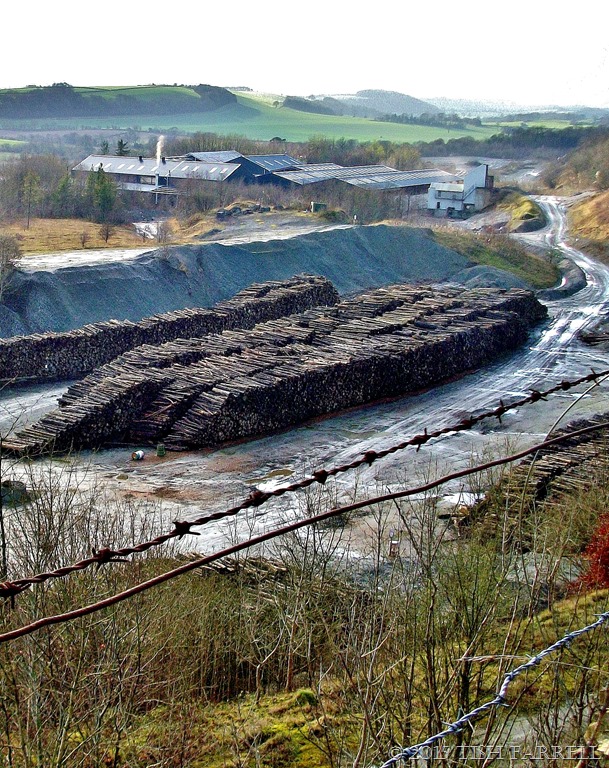
The mopping up of the aggregates marks the end of quarrying,  although the quarries themselves have now been occupied by other industries  – garden fencing  and woodchip fuel producers, paint and packaging companies – all taking advantage of the huge spaces left behind by the evacuated limestone.

100_7059

100_7071

Yet where the old workings and exploded cliff faces have been left to themselves, there are signs that the vegetation is reasserting itself, slowly extending the habitat for the Edge residents: deer, badgers, hares, weasels and mice.

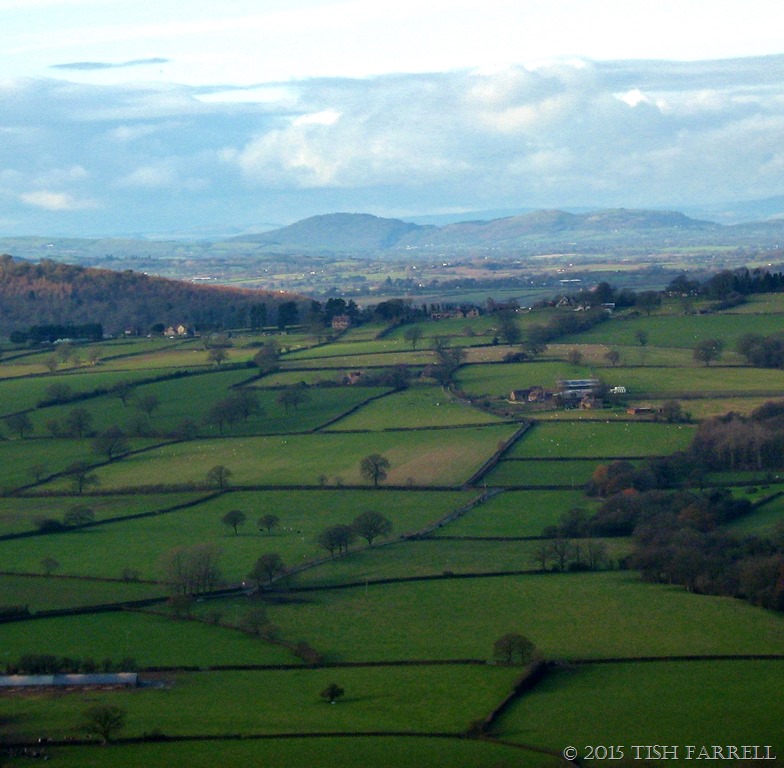
I find the old quarries fascinating in a  morbid, Edgar Allan Poe-ish kind of way. Ravens like to nest there for one thing, which adds to their brooding allure. However, if you turn your back on the quarries, and look the other way, through breaks in the tree cover, you will see broad sweeps of Shropshire’s hills and farmland. And this, for most people, is the main reason why the twenty-mile-long vantage point is one of the county’s great treasures. The National Trust who own a long stretch of the wooded slopes, and manage the woods and paths, want to ensure it remains that way – a valued public resource.

IMG_1911

This  view looks towards the Welsh borders and, in the past, would have been gazed on by writers such as Thomas Hardy and Henry James, and by Africa’s darkest explorer, Henry Morton Stanley, all of whom were, at various times, guests of the Milnes-Gaskells, Much Wenlock’s erstwhile gentry who lived in the Prior’s House at Wenlock Abbey. The Milnes-Gaskells were good hosts and tour guides and made sure that their visitors always took in the best views.

On reflection, though, I’d say that this particular fieldscape would have looked very different a good century ago – smaller fields, many more hedges and trees back then. Much bigger trees too, for all the huge oaks were culled by the late nineteenth century, and those of us alive today have never seen their like other than in old photos, where their magnificence has been felled and stacked up, ready to serve some apparently pressing human purpose.

Life for ordinary people would have been tough too – with many more labourers working the land, horses pulling ploughs, vistas of scenic rusticity that did not fool Thomas Hardy for one moment. He is said to have been mightily appalled by the impoverished state of Wenlock’s workers.

P1000594

And so back to the setting sun/moving earth where this post began. The Edge then, is still in motion, although mostly in ways not much noticed by us. The limestone scarps are degrading. Rock becoming soil and mixing with the leaf mould to create new niches and microclimates, the old lime kilns, moss and ivy coated, weathering into the earth, the quarry scars and debris gradually being colonised by trees and plants.

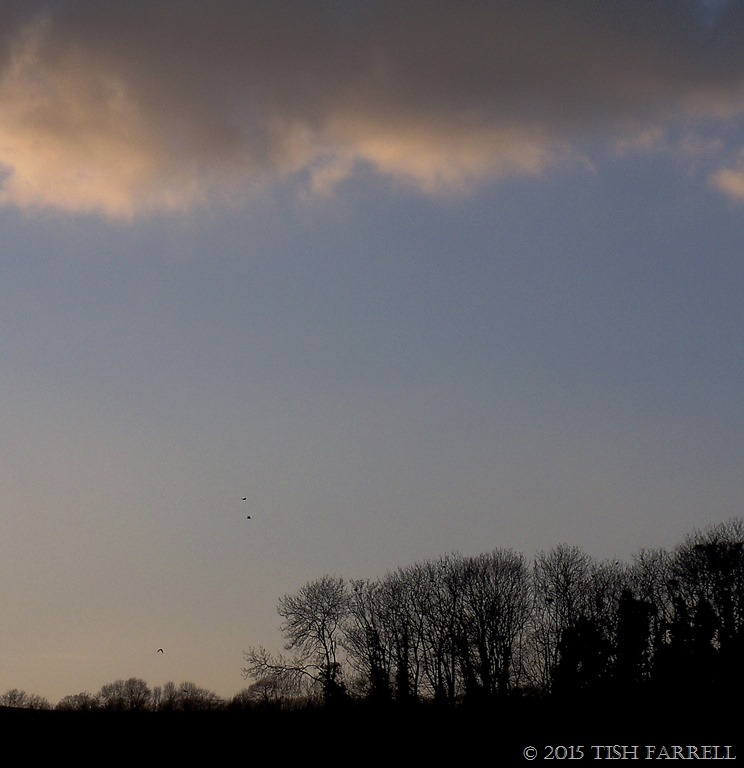
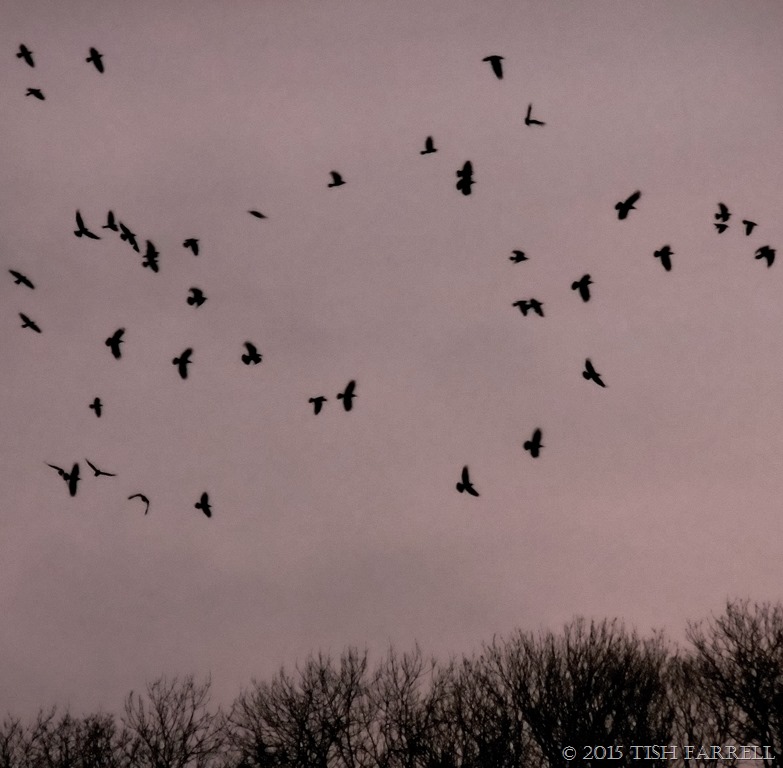
Then there are the kinds of movement that I observe day after day behind our house: the march of clouds, weather; the change of light, dawn , dusk, the stars, the seasons, the rooks and jackdaws going out, and coming home. Everything shifting, transforming, recycling as the earth rotates around the sun. I find that thought – the revolving planet and the endless motion of its life forms – very joy-making. It is good to stand still and watch, and especially as the sun sets, or the earth moves.

100_5072

P1000341

Rooks and jackdaws coming home


copyright 2015 Tish Farrell

Jennifer Nichole Wells: sun

Motion

A bench with many views and a windmill

P1000684

P1000674

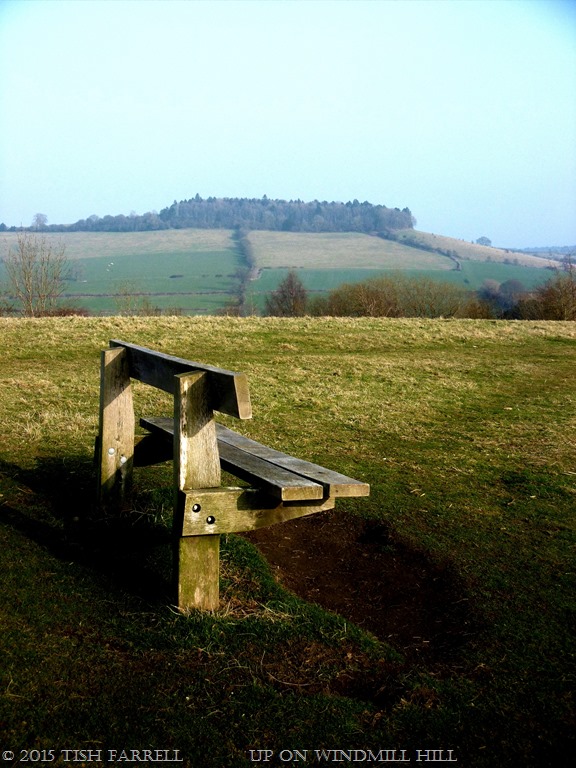
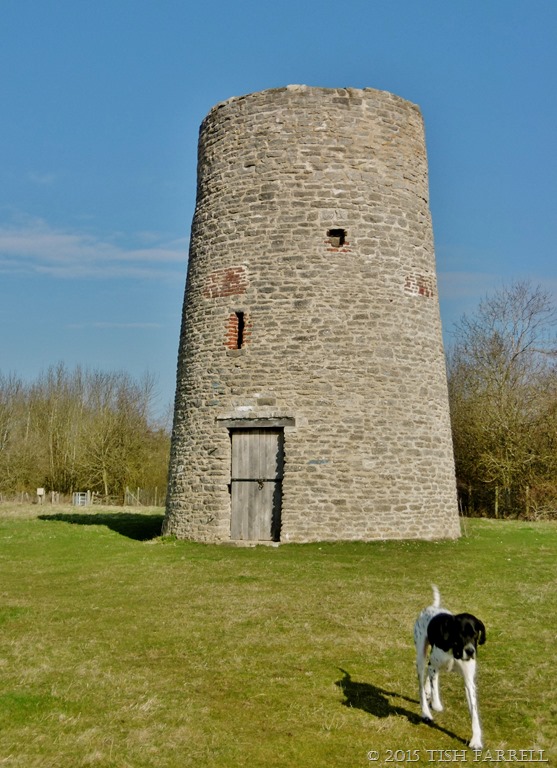
This bench is only a short walk from our house, although a bit of a steep haul up Windmill Hill. The windmill itself is quite a landmark in Much Wenlock, although much about its history, and how it looked when in use, remain to be discovered by the stalwart Windmill Trust whose members take care of it.

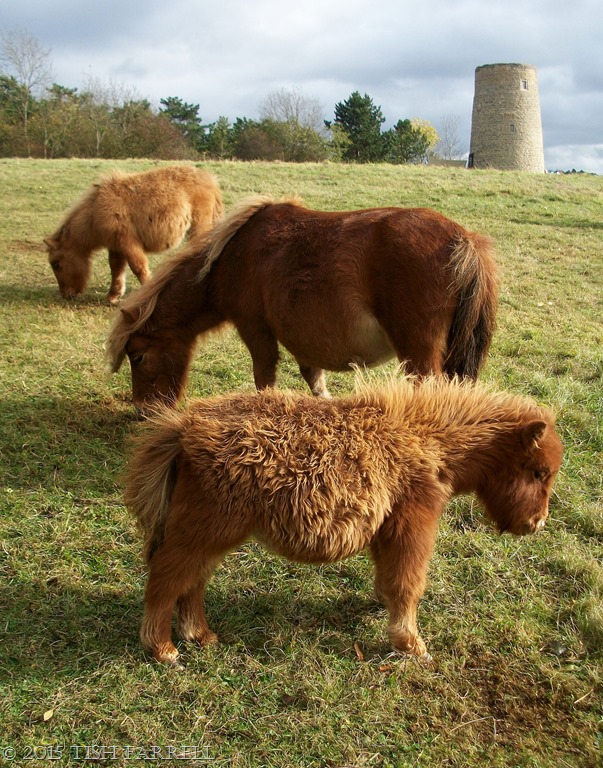
There is always something to see from this bench, quite apart from the views across Shropshire. Even the vegetation is interesting. It is a rare remnant of limestone meadow, and in late spring there will be cowslips and orchids here, wild thyme and primroses. Later there will be agrimony, giant  knapweed, St John’s Wort, yellow bedstraw and hare bells. Sometimes the miniature ponies graze here, all part and parcel of preserving the meadow.

100_6660

*

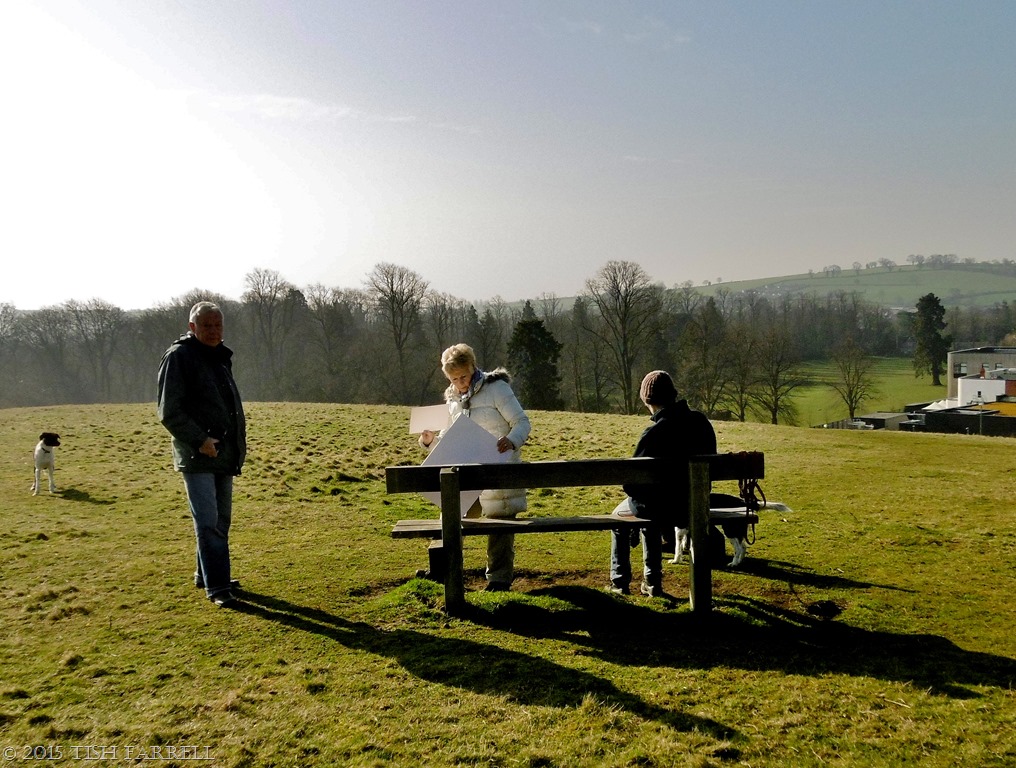
Recently some of us combined dog walking and watching the eclipse from here. And while we were doing that…

P1000748

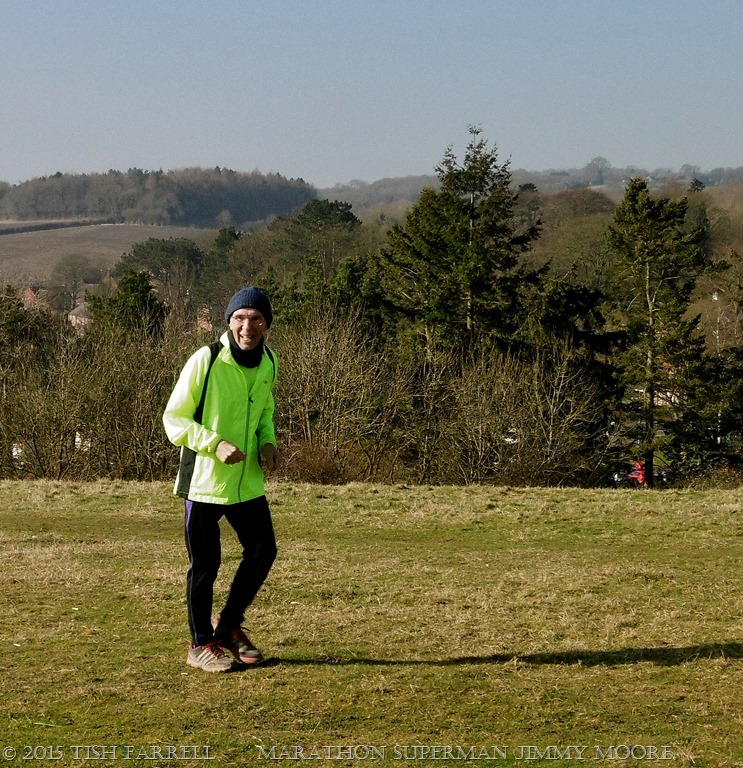
… we also caught a glimpse of local marathon hero Jimmy Moore, apparently eighty years old this year, and still out training.

P1000750

He, more than most, has done so much to uphold the values of the town’s erstwhile physician, William Penny Brookes (1809-1895). Brookes reinvented the Olympic Games in Much Wenlock in the 1850s, and provided the inspiration for the modern Olympic Games.  The Wenlock Olympian Games are still held every July on the field below and at the nearby William Brookes School. The three-week series of contests attracts athletes from around the world. Jimmy has also coached many youngsters  participating in the Wenlock Games.

P1000685

P1000736

And finally, I thought I’d pass on some Olympian glow on this Monday morning. You can just see the windmill in the background, the William Penny Brookes Academy on the left, and the community’s own Linden (Olympian) Field in the centre ground. Besides, it is not good to linger about, sitting on benches, splendid though their views may be. Latest medical opinion informs us to keep standing up.  Or to quote Tom Petty and the Heartbreakers  “if you don’t run, you rust.”  Walking, however, is probably best for most of us.

Copyright 2015 Tish Farrell

At Travel Words during April, Jude is looking for benches with a view

The Poetree at Much Wenlock’s Poetry Festival

IMG_1116

 the perfect place for poetry

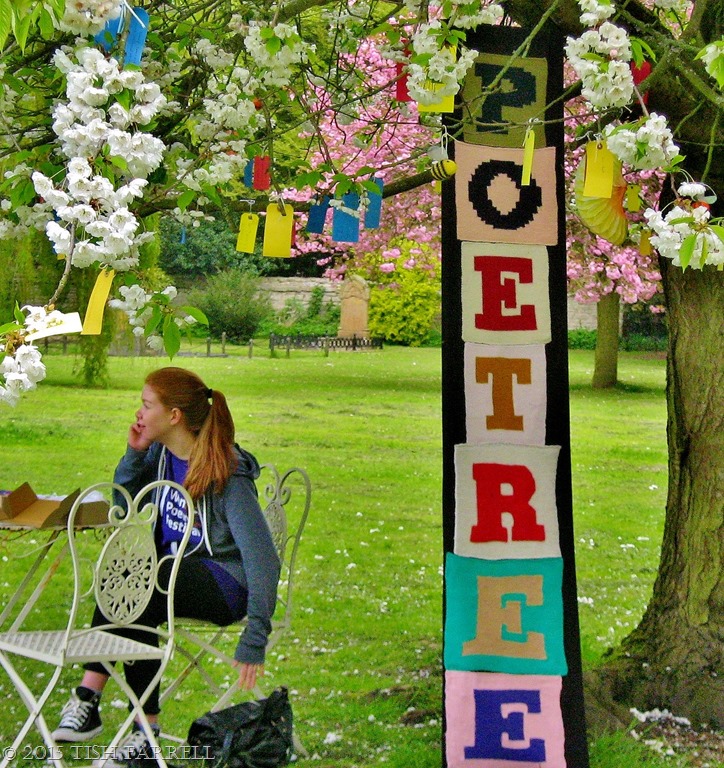
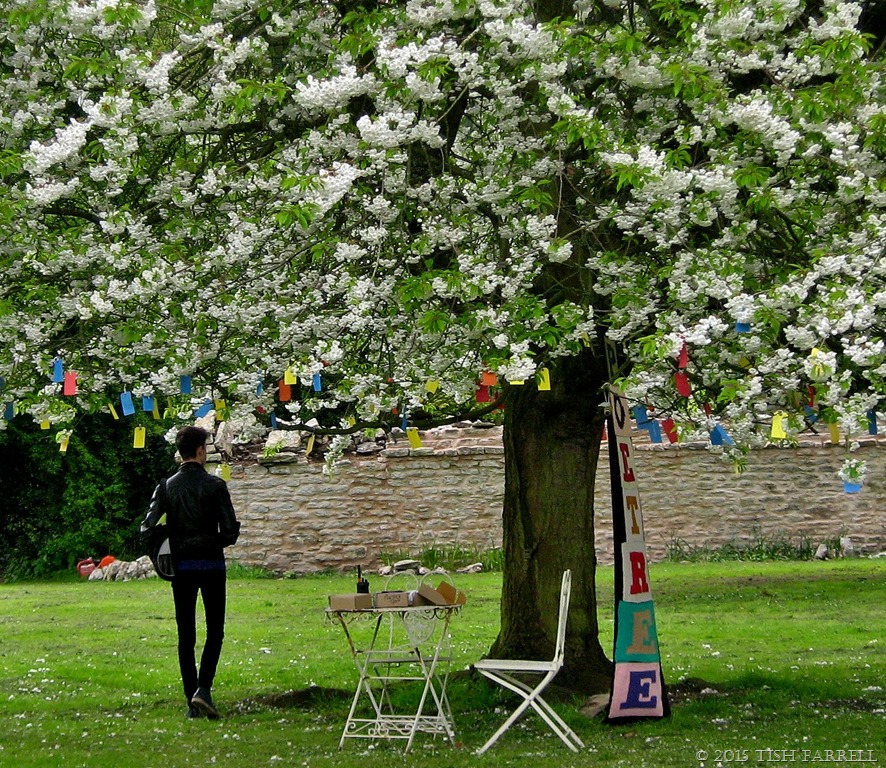
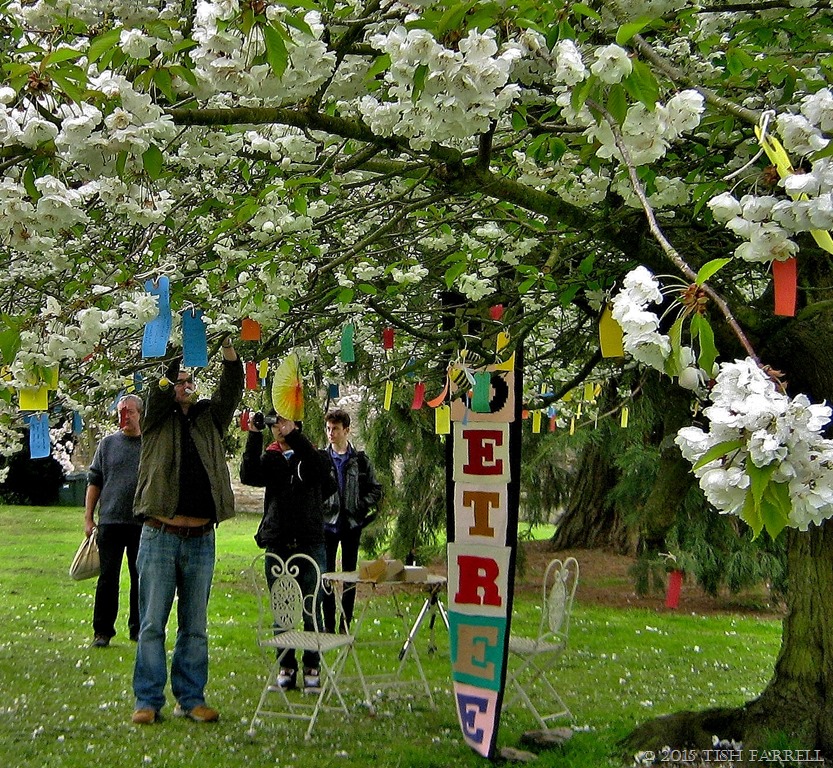
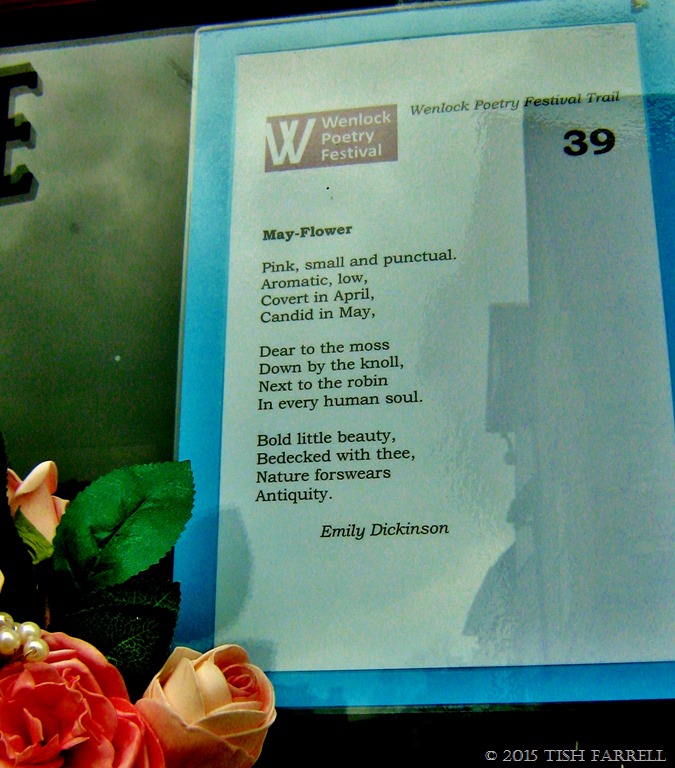
And that would be Much Wenlock, or so says Carol Ann Duffy, Britain’s Poet Laureate, and the festival’s founding patron. Not only that, Wenlock’s Poetry Festival is one of the best of its kind in the UK. Now into its sixth year, it was the creation of Anna Dreda, owner of the town’s lovely Wenlock Books, and in a few weeks’ time our streets will be teeming with poets and poetry lovers. For three whole days there will be events of all kinds and for all ages and tastes. There poems in shop windows, poetry breakfasts, and readings of their work by some of the best British poets of our time. This year there will be a closing gala event with Dame Carol Ann Duffy, Imtiaz Dharker, Jean Atkin & Little Machine. One of the side-show attractions is always the Poetree on the Church Green. Every year people can break briefly into verse and hang their words on the tree for others to read. Last year the tree was so happy it reciprocated by bursting into bloom. What more can one ask for? IMG_1050 IMG_1042 You can find out more about events at this year’s Much Wenlock Poetry Festival   It takes place all over the town on Friday 24th to Sunday 26th April 2015. And now here’s a poem I found while out window shopping at last year’s festival: IMG_1026 Jennifer Nichole Wells One Word Photo Challenge: shamrock   #WenlockPoetryFestival
In my garden change happens

100_5703

The showy petals of Patty’s Plum oriental poppy give way to the tight buds of  Black Elder (Sambucus nigra). And so it is that one thing leads to another. And although the prospect of change often worries us, there can be great beauty in transience. There is excitement too, if we allow it: of a ‘what will happen next?’

copyright 2015 Tish Farrell

Ephemeral

Eclipsed in Much Wenlock on World Happiness Day and Taking a Solar Selfie

100_5065 Here I am on top of Windmill Hill, Much Wenlock’s landscape landmark, and this is the only way I could see the partial eclipse – with my back to it, and camera at the ready. We had such clear skies, and the sun was so bright that we remained bathed in sunshine throughout this cosmic event, although it did seem very cold. Lots of people who were out walking their dogs had gathered  at the windmill too, one lady monitoring the process through a pin-hole viewer. This is the scene before me as I take the photo over my shoulder: windmill and pointer. Had the eclipse actually happened? P1000779 P1000764 P1000788 Aftermath. I caught the sun in the trees as I walked home across the Linden Field. This, incidentally, was the place where the Much Wenlock Olympian games were, and are still held every year. They were devised in 1850 by the town’s physician and herbalist, Doctor William Penny Brookes, and went on to inspire the founding of the modern Olympic Movement. Windmill Hill provided the natural viewing platform where spectators sat to watch the events. See how this little town of ours spread its good hearted influence around the world. Wishing everyone joy on this, International Day of Happiness   #eclipse #International Day of Happiness

Life Imitating Art Imitating Life…?

P1000380 - Copy (2)

I snapped this the other morning with my little Lumix ‘point and shoot’. It’s the view from our bedroom window. The light was extraordinary, and when I looked at the image again it reminded me of  René Magritte’s The Golden Legend  –  also a view from a window, although with the interesting addition of flying baguettes. What do you think?

René Magritte

You can find out more about Magritte HERE. I like the way he challenges our ingrained perceptions.