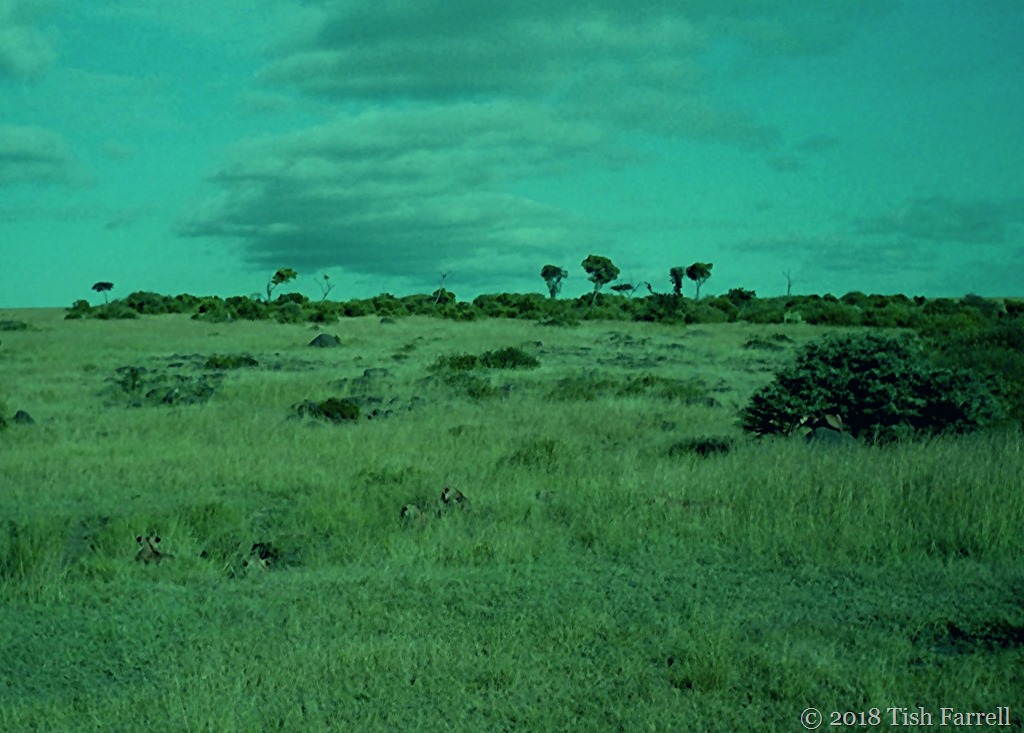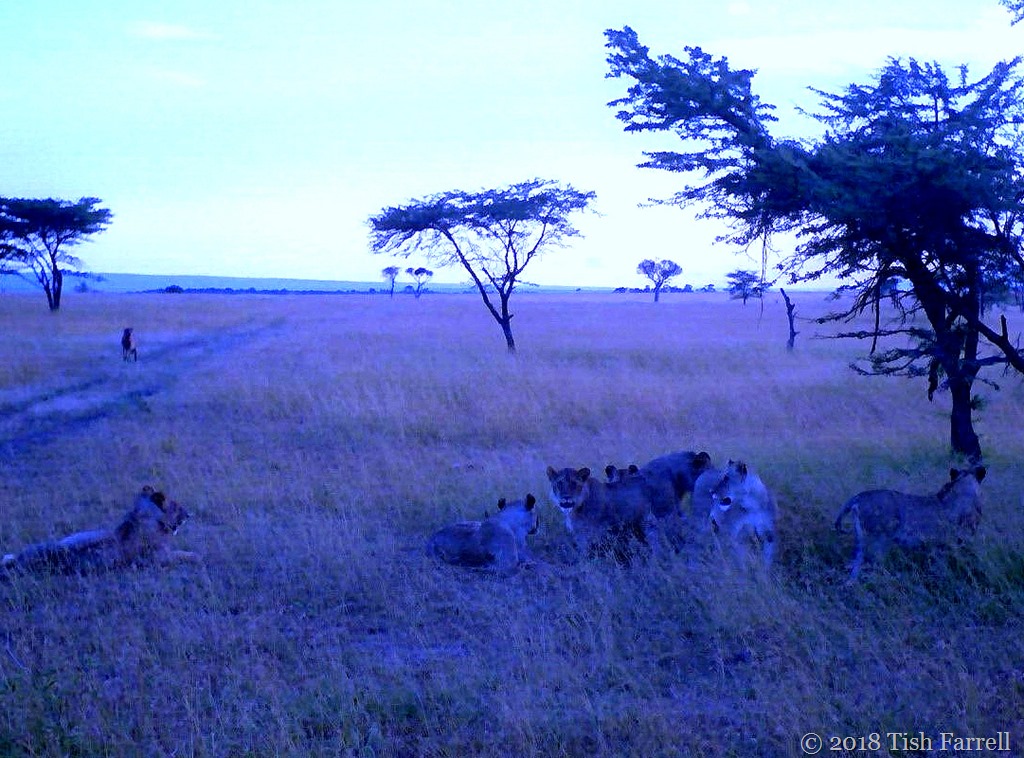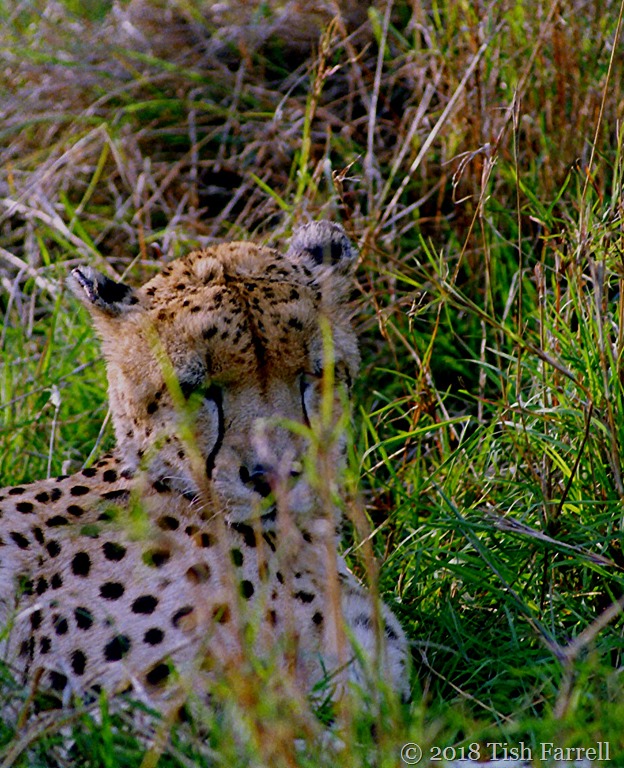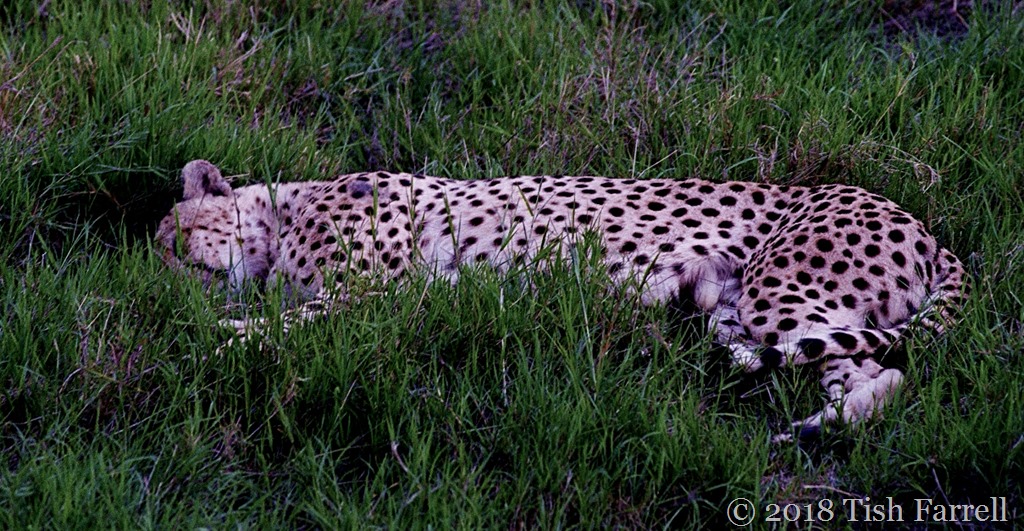
With all that is presently going on in the world, a visit to the old Africa album and the banks of the Mara River seems like a soothing thing to do – a bit of virtual safari-ing. It’s handy too because this week at Lens-Artists, Amy at has given us ‘river’ as the theme.
For six of the seven years we lived in Kenya (this was in the 1990s) we somehow managed not to go to the Maasai Mara. Then in our final year we went three times, always staying at the small Mara River Camp below the Esoit Oloololo escarpment, guests of the Koiyaki Lemek Maasai group ranch wildlife trust. It was Godfrey Mwirigi who lured us there. We came to know him at Elmenteita where he managed Lord Delamere’s Camp, but one morning in early May 1999 the phone rang in our Nairobi house. I mention this because the phone ringing was an unusual event; it was an instrument that rarely functioned.
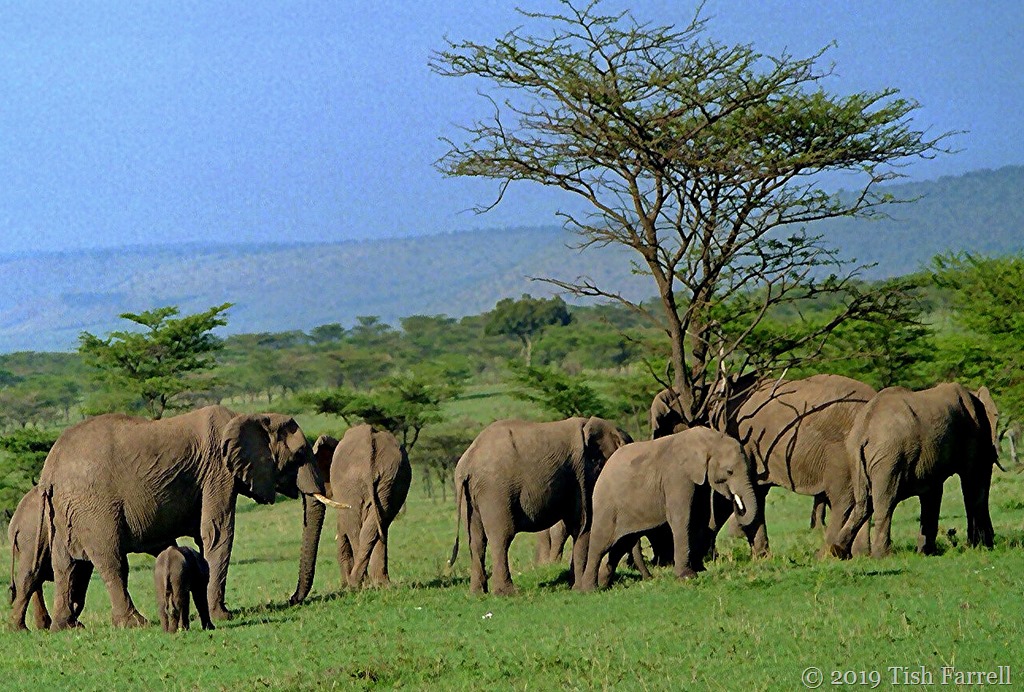
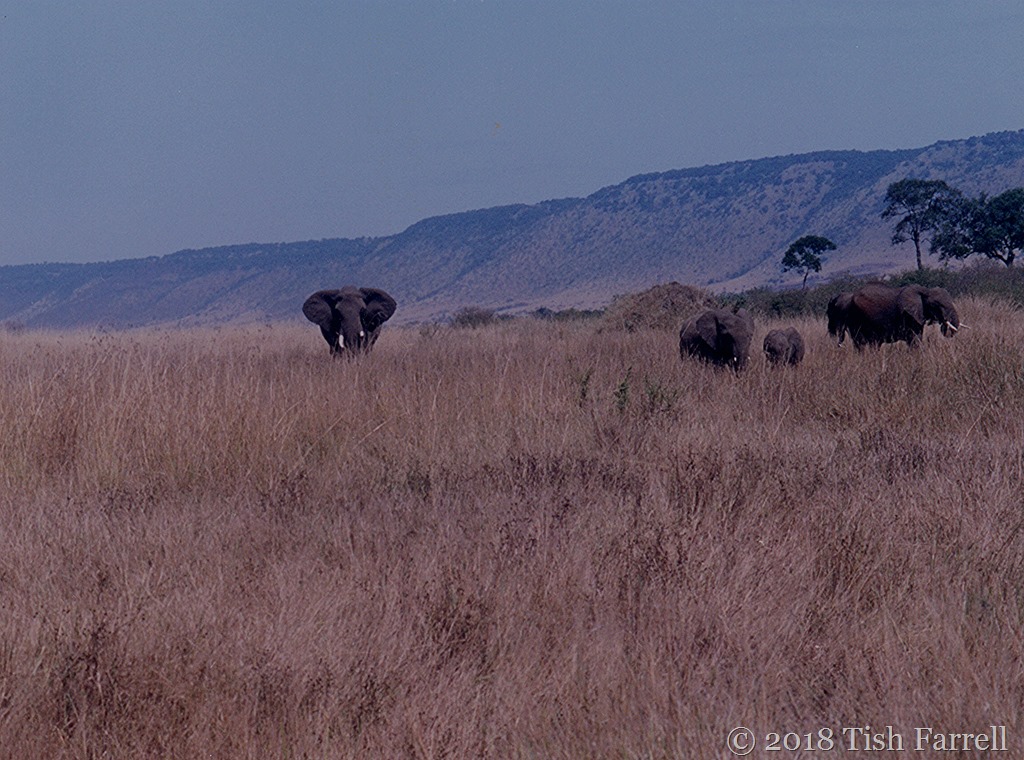
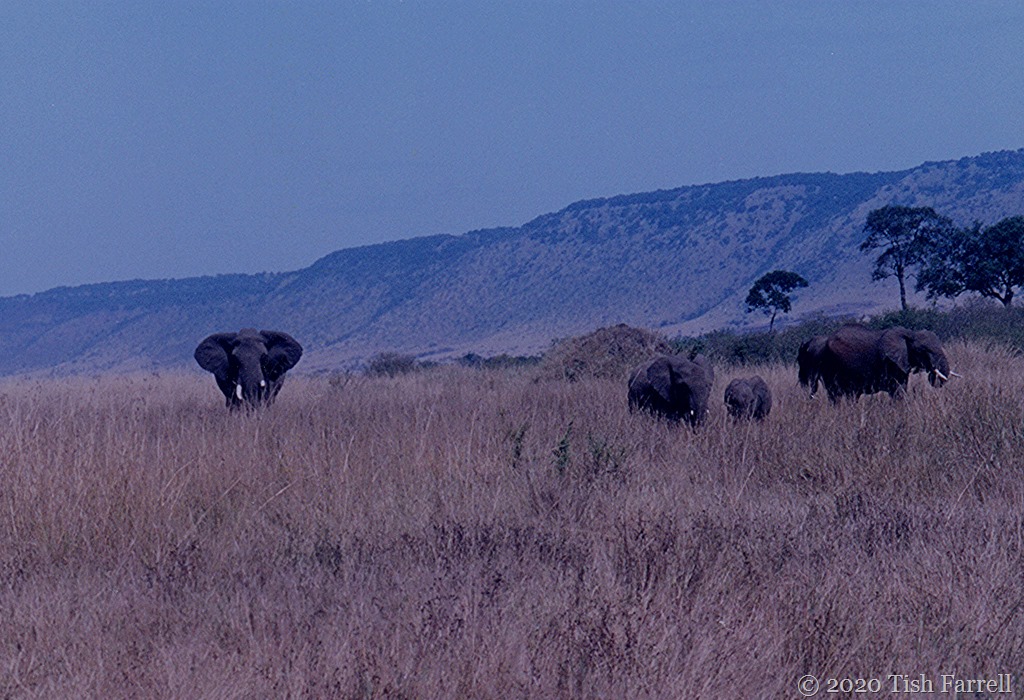
It was Godfrey on the line. After the usual exchange of greetings I told him he sounded hazy. ‘I’m ringing from Mara River Camp,’ he says. Now I’m even more astonished – phoning all the way from the Maasai Mara when trying to ring up the next door neighbours was often impossible. He told me he had just started his new job as manager there and when I asked him how it was going he says, ‘Fine. Fine. I can see hippos from my office. It’s lovely here. We’ve had no rain yet and there’s plenty of game.’ It sounded like an invitation. It had to be an invitation. So two weeks later we set off to see him – Saturday morning flying by Fokker Dash on the regular domestic plane service out of Wilson Airport in Nairobi, whence, having negotiated the usual city traffic turmoil and checked in, the flight took only 40 minutes from city centre to touch-down on the plains’ landing strip. We were there almost before we were ready for it. Banking over the nearby marsh beside the landing strip I spotted elephants. Amazing!
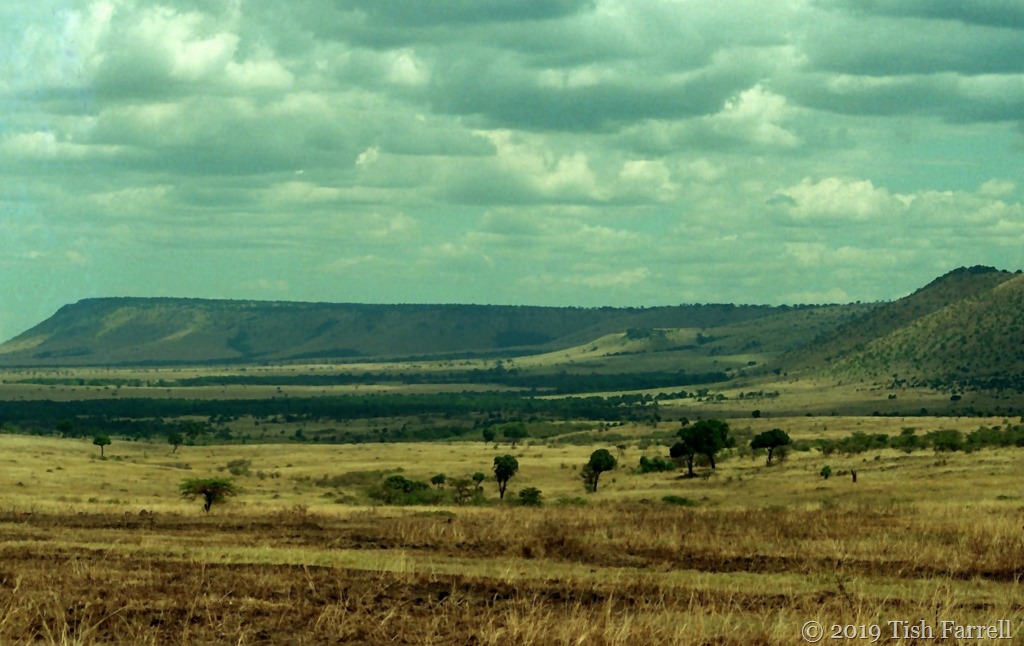
A safari truck was waiting beside the landing strip to pick us up, the camp driver and assistant manager, Tito there to greet us. Tito told us the Mara River Camp would be a further 40 minute drive over rough tracks, and she apologised for the state of them. We bumped along beneath the escarpment, following the ox-bow meanders of the river, its banks wooded with acacias, wild olives, crotons, cordia, and Kenya greenheart.
The camp itself was on a river bend, twelve large tents set under the trees. The soundscape filled with bird-chatter and the grunting of hippos, the air lemon sweet from cordia blossom. As it turned out Godfrey was astonished to see us. He flew from his office with open arms. The tour company had mixed up our names and he was expecting a Mr and Mrs Graham. He then told us that he couldn’t have come to meet us from the plane as he’d had visitors. Important ones. The Maasai elders who jointly owned the 300 square miles of ranch in which the camp stood had come to check out the new manager, to see if he came up to scratch. I asked what would happen if they didn’t like him. ‘They are very powerful,’ said Godfrey, meaning a swift transfer out. This seemed unlikely, however. I had caught sight of the departing wazee, one an imposing grizzle-headed ancient wrapped in a red blanket. The members of the little delegation were all smiling as they walked away.
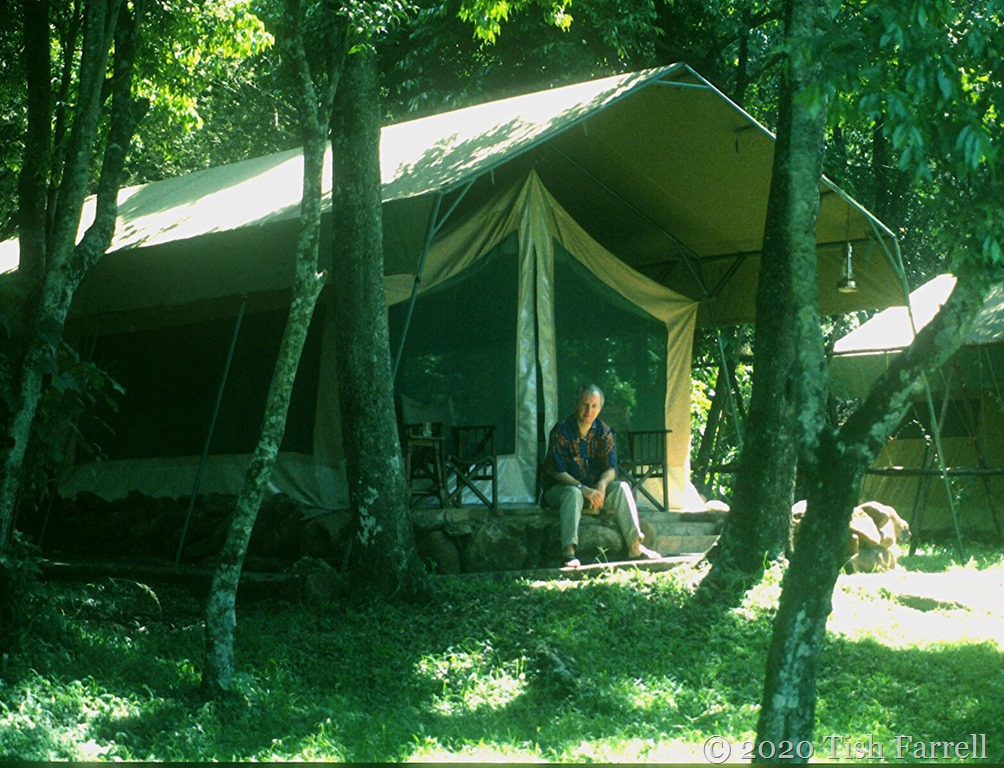
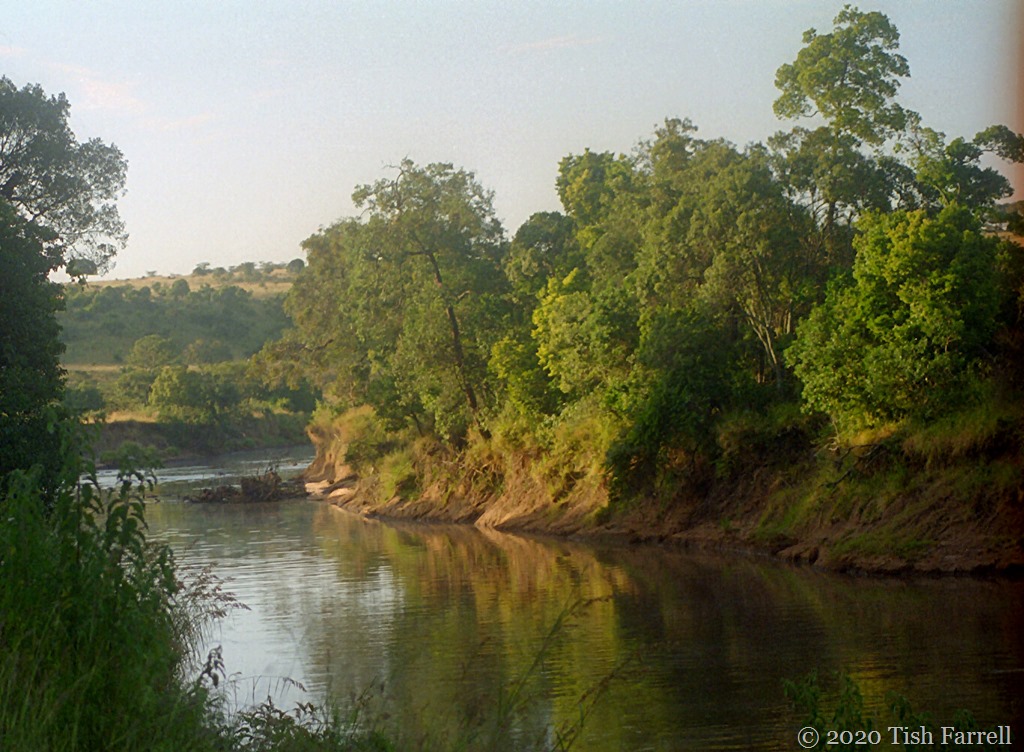
[From the Kenya diary]
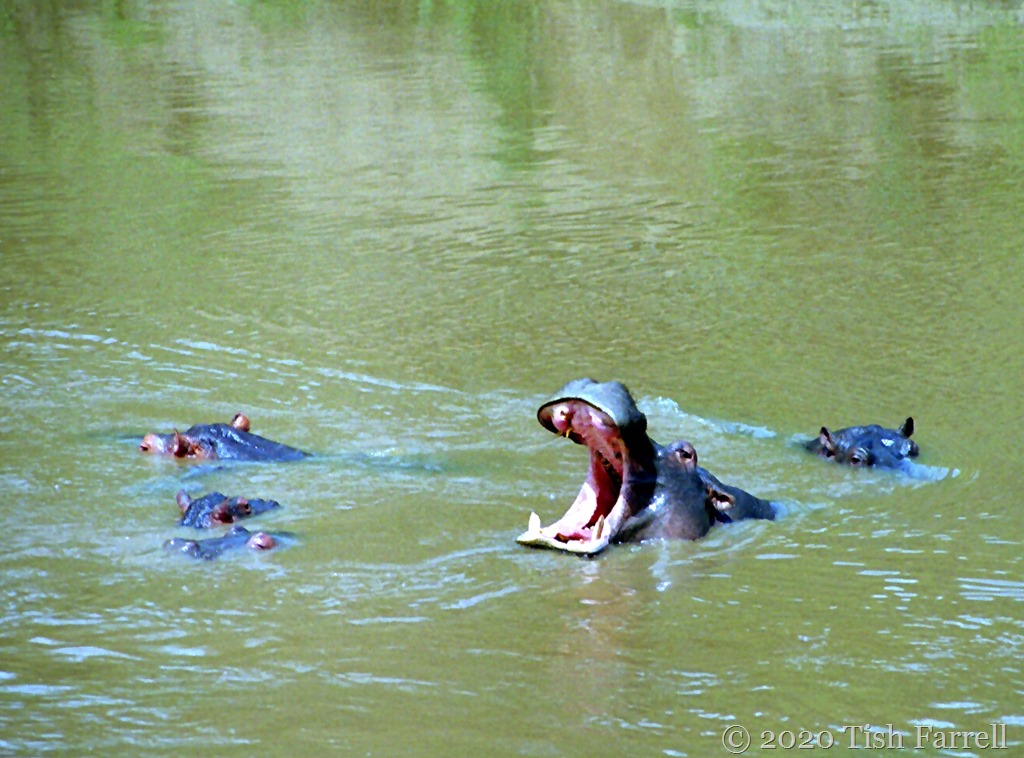
After lunch under the trees – battered lake fish and vegetables, Godfrey comes to join us on the riverbank for a spot of hippo watching. In a few weeks he has made himself at home here though his actual homeland is on the faraway flanks of Mount Kenya. I remember that when he took over as manager at Elmenteita camp he had to take the safari guide’s exam and learn to identify some 600 species of birds. I ask if there will be more exams now he has a new habitat to get to grips with. He laughs and says mammals are his next assignment, though he has two years grace before he needs to go in for the silver medal exam. Below us the hippos snort and blow, sometimes submerging completely, then rearing up like whales, bottoms first, or doing their fearsome yawns which show the teeth that can bite a tough old crocodile in two, especially if it has designs on one of their babies.
Godfrey begins to tell us about his other recent Maasai experiences, and for a moment we see that in some ways he is as much a traveller in Kenya as we are. The Maasai, he pronounces, are very interesting people with some very unusual customs. For instance the day before a group of women had come singing and dancing into the camp, and because rural Maasai rarely speak Swahili he had to ask Tito, who is Maasai, to explain what was going on. She told him they were there to collect money, because they were all childless women who needed to go to the elder for a blessing. This man had to be paid, but after the blessing had been duly delivered, the women would be free to consort with any man they chose in the hopes of conceiving a child.
Poor Godfrey was trying to get away with donating only a hundred shillings, in harambee (Kenya fund-raising) fashion, but they invaded his office waving twigs and saying it was not enough. Five thousand bob (£50) was what they needed. And it was only after a lot of persuading that he managed to convince them that he truly didn’t have it. They told him they would go off to other camps and try there. When they had gone Godfrey told Tito that if he’d known they were coming he would have gone to his tent, but she only laughed and said they would have looked for him there too.
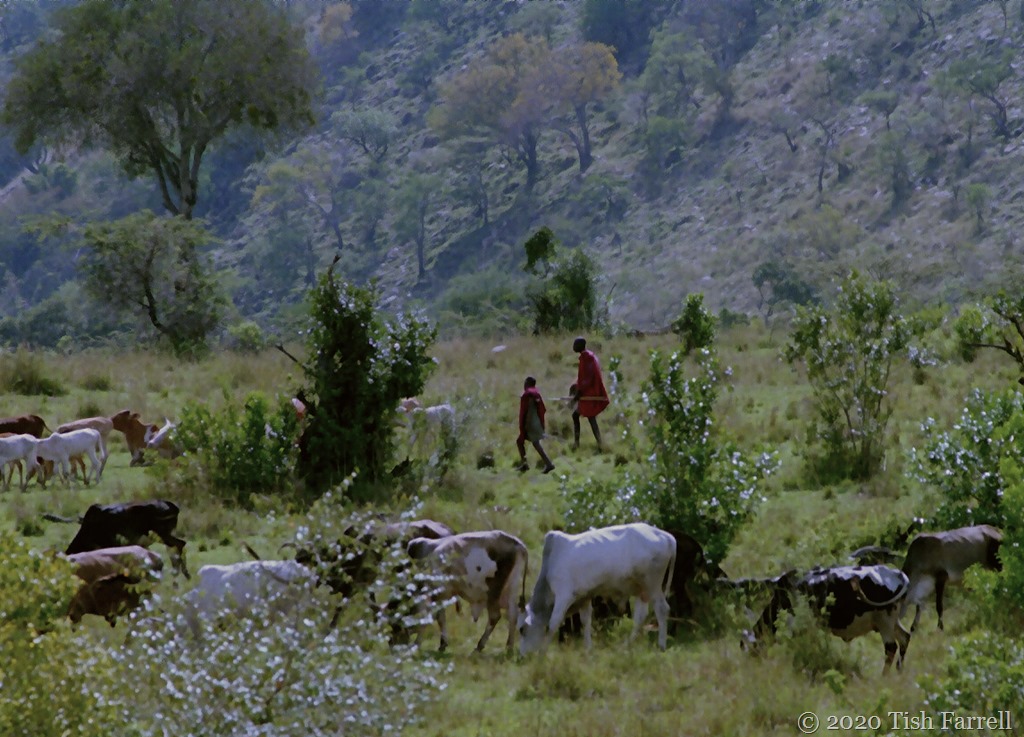
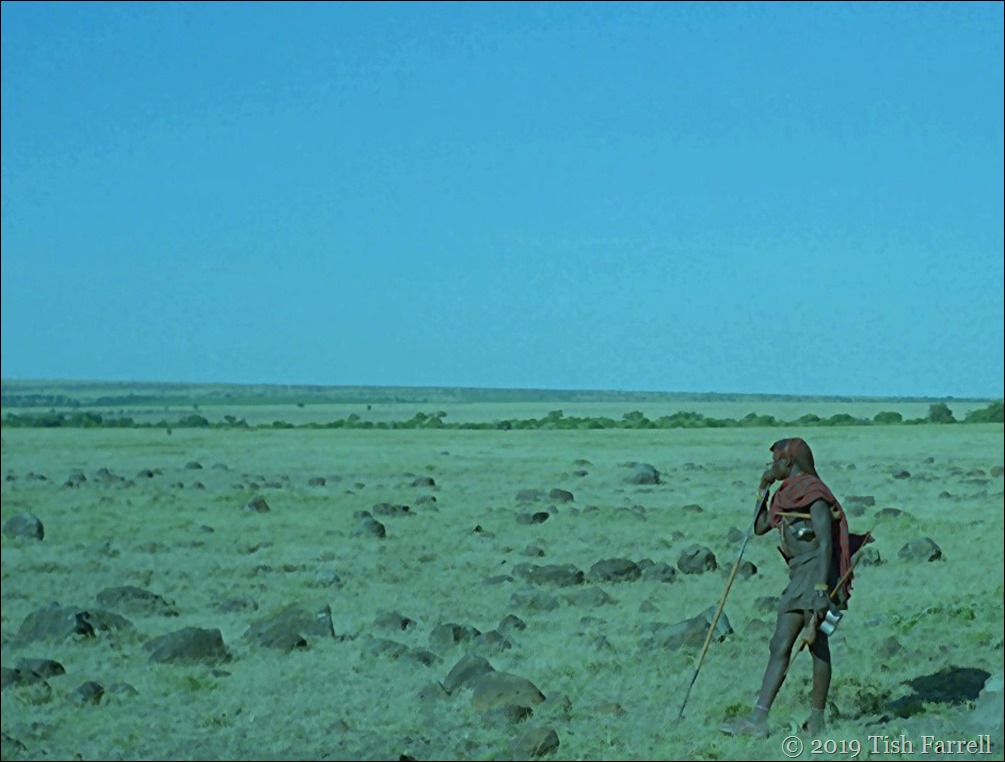
The view across the river: Maasai lads minding their herds below the escarpment.
*
30 May
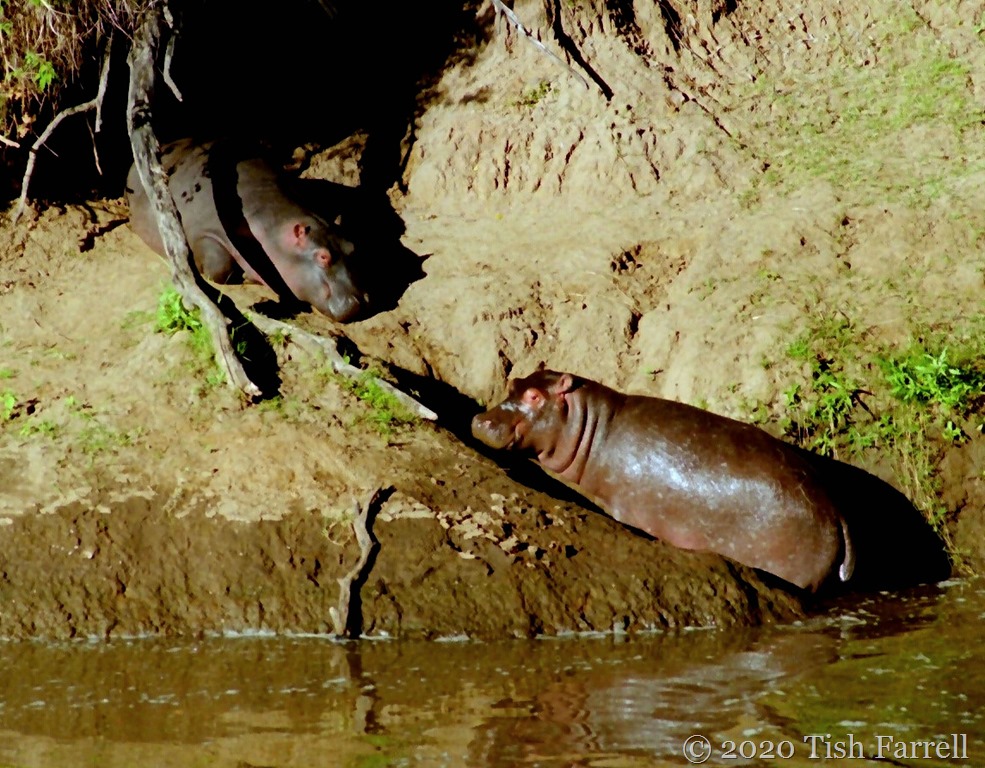
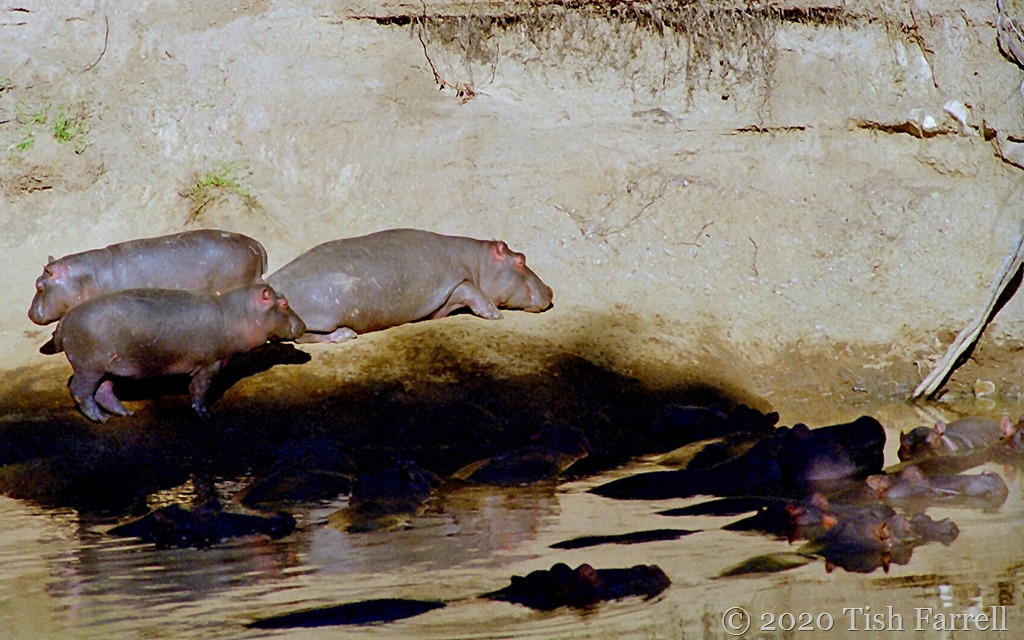
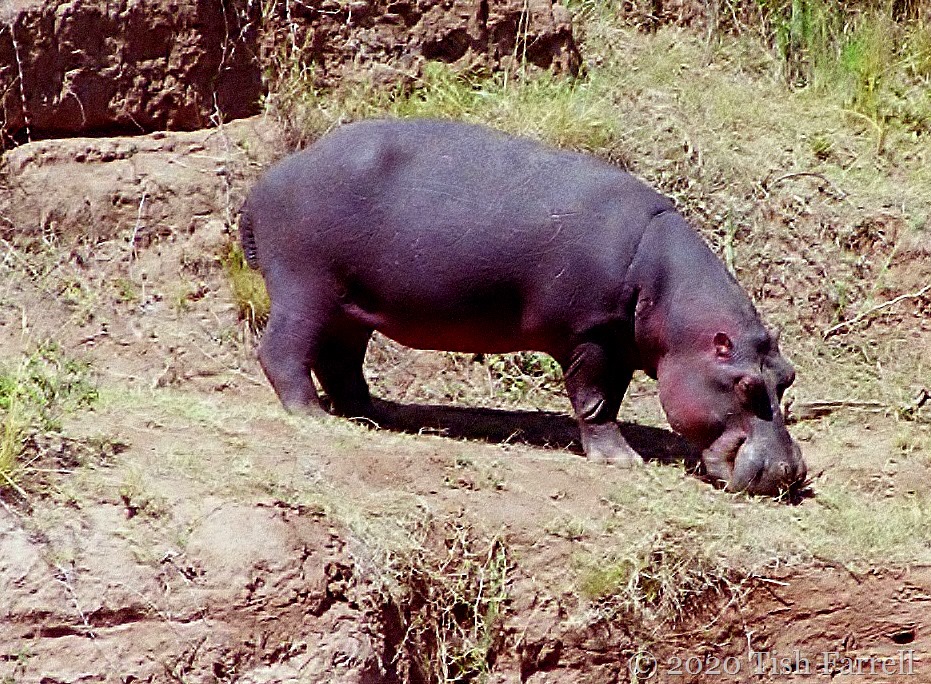
Extraordinary. I’m up and dressed by 5.30 a.m. Now is the time for hippos to return the river after a night spent browsing far and wide, and it is a foolish person who finds himself standing between a hippo and the river. They are of course intent on being submerged before the sun can overheat their sensitive skins. Round the camp the hippo slipways to the water are mostly on the far bank and I watch the huge hulks pass like ghosts through the woodland, a mother nudging her baby, before they start edging slowly, slowly, ever-so-slowly, down a deep gully and into the water. Thus does the long day of snorting and blowing and wallowing begin.
31 May
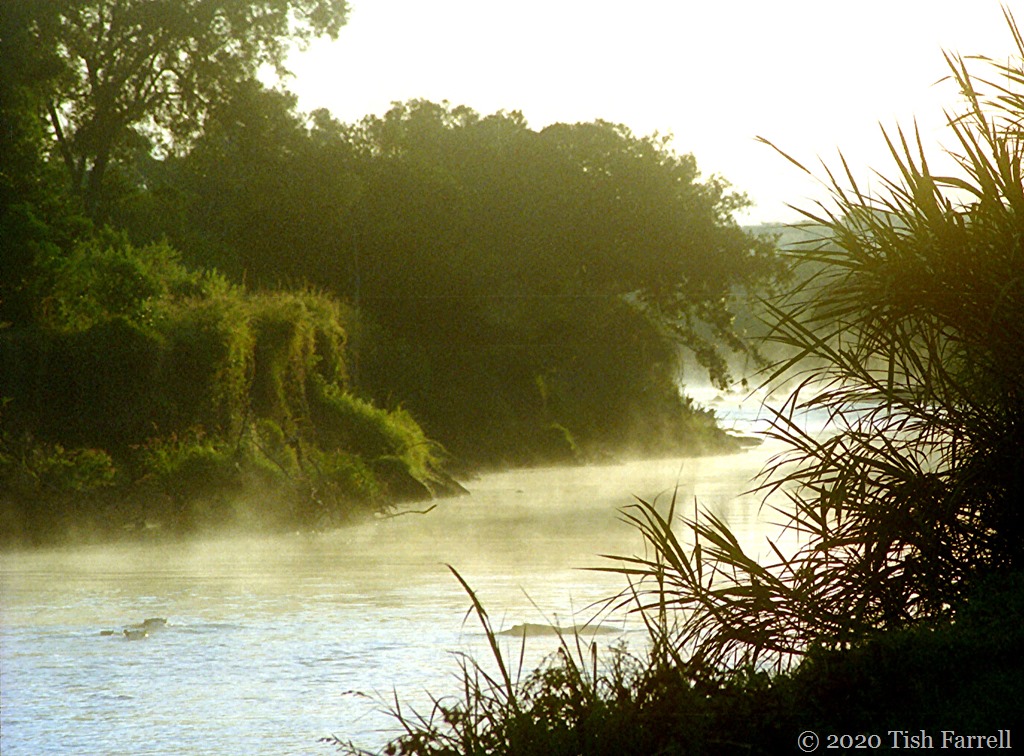
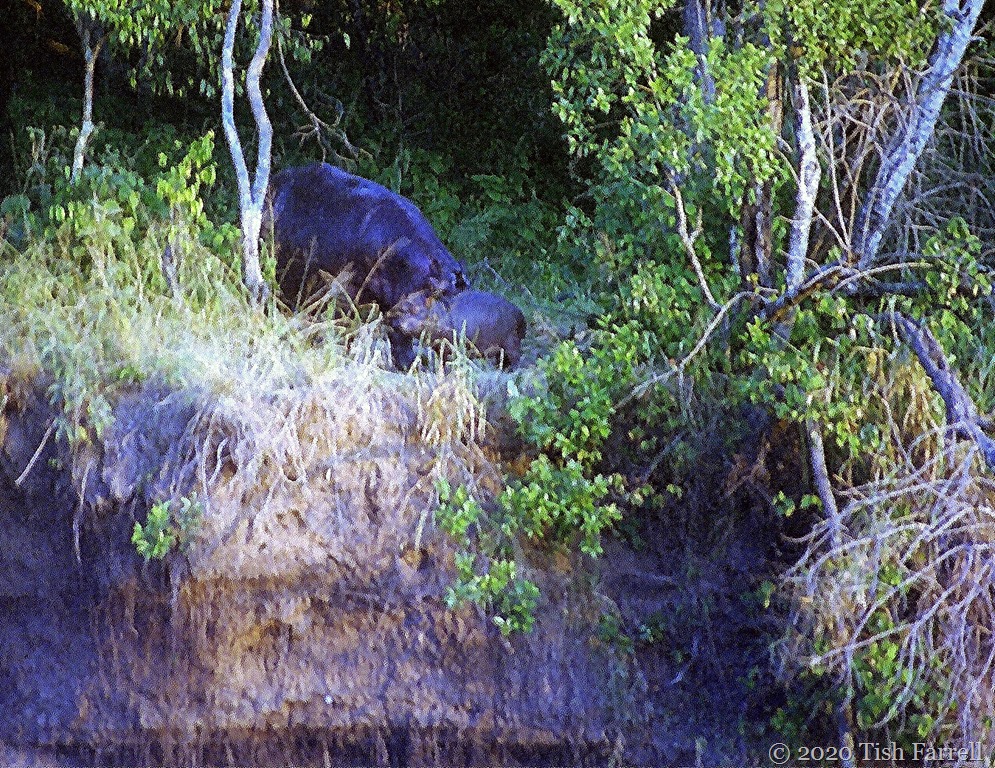
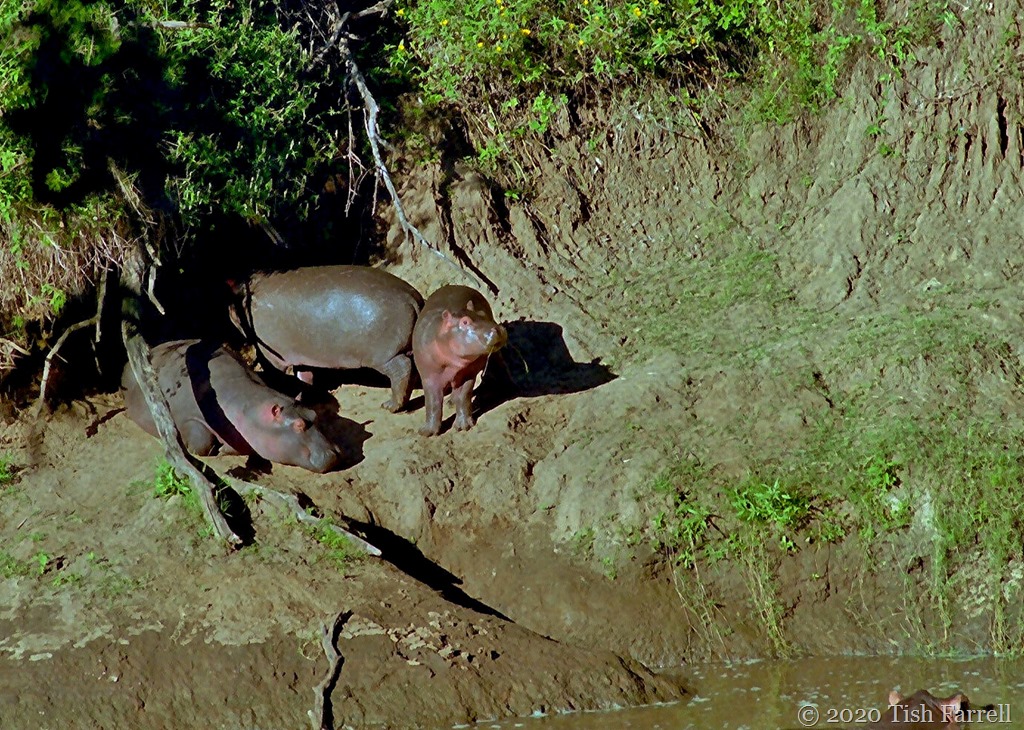
Up again before 6 a.m. Am aware of Graham’s astonishment even though he pretends to be asleep. I go hippo spotting until it’s time for my 7.30 wilderness walk with Daniel. The sun is just lighting up the river and steam rises off its slow–moving surface. This morning the hippos are ‘late going home’, as Godfrey puts it, with only two so far immersed and two others beached along the bank apparently dawn-bathing. I see the big shapes moving through the woodland. In front is a mother with a small round calf. It is not anxious to go down the hippo-chute. She nudges its bottom with her nose, and small as it is (though clearly sure of what it does or doesn’t want) it turns round and nudges her right back. For a long time they make no progress, and then the way is blocked by a big male who takes a good fifteen minutes to negotiate the gully. But then I suppose when you’re as big as he is, any untoward gathering of speed down the bank could end up with terminal burial in the river mud.
The walk along the riverbank with Daniel is uneventful. We look at plants, and see a little bee eater with its lime-green back, an immature augur buzzard, a yellow bishop. The sun is hot by 8.30 and I’m feeling hungry, but Daniel is determined to take the outing seriously. He’s brought some of his reference books too. ‘It’s not very often we get guests who are interested in plants,’ he says. ‘It’s easy to forget what you’ve learned without practice.’ To prove the point he picks a piece of the plant whose name I ask but he doesn’t know and slips it inside his Flowering Plants of East Africa book, for future identification. I forget about breakfast and continue to set him floral challenges.
On the way back to camp we see leopard prints on the track. ‘Oh yes,’ Daniel says. ‘They come round the camp at night.’
It’s nearly nine when we arrive back. I find Graham and Godfrey having a leisurely breakfast with the hippos, who are by now all safely ‘home’ in the river; or they are until one huge beast suddenly emerges and climbs ponderously back into the wood. This behaviour is so unusual we pick up the binoculars for a closer view and see that his hide is covered with bleeding scratches. It’s hard to imagine what might have caused them, other than a serious tangle with an acacia thicket. Godfrey says the fish are probably irritating the wounds, hence the unexpected exit.
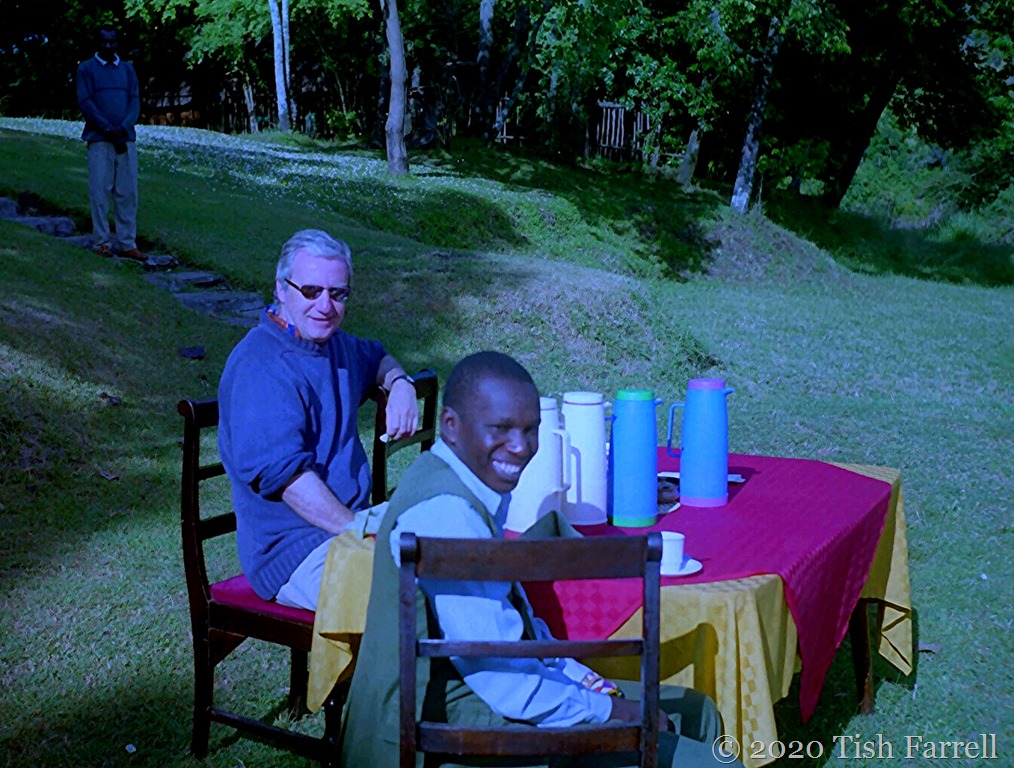
Graham and Godfrey
*
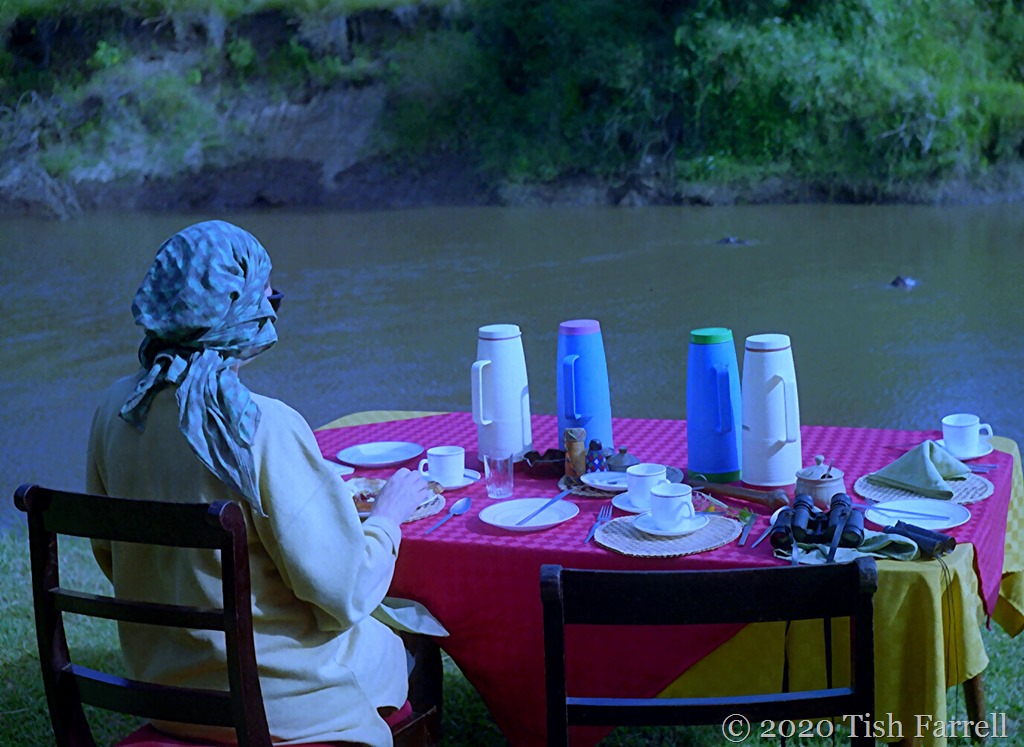
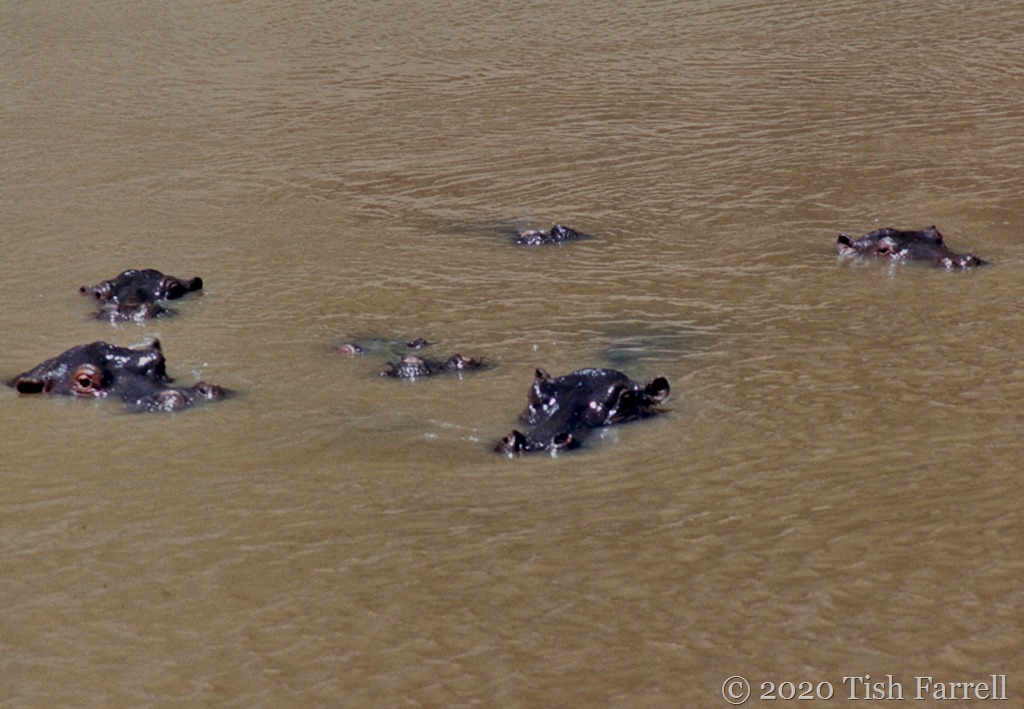
Happy days!