Gathering of Elephants

Scan-131109-0004

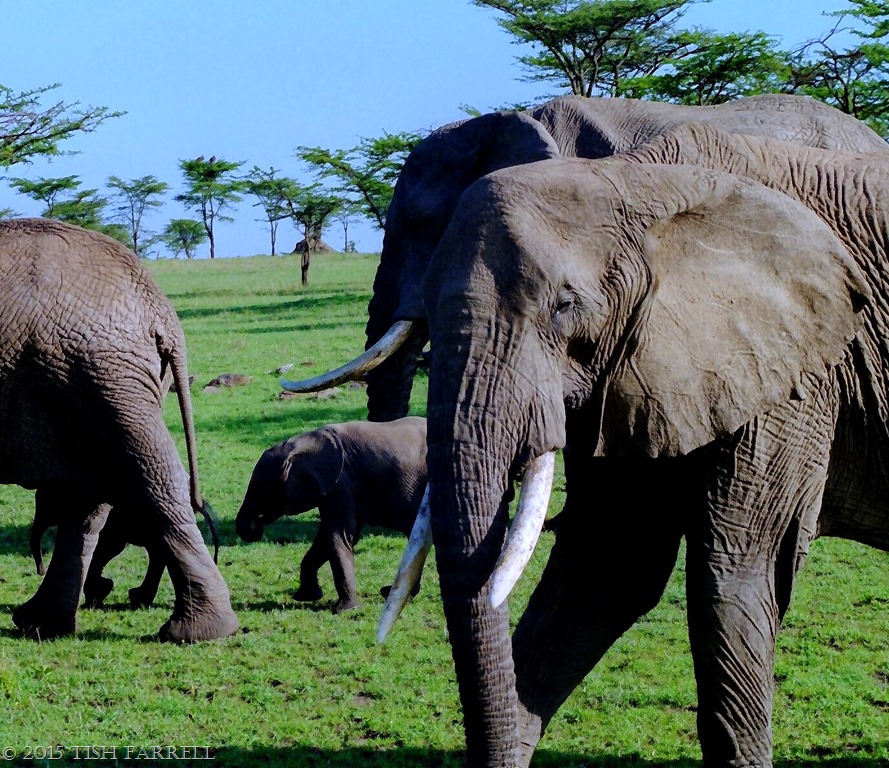
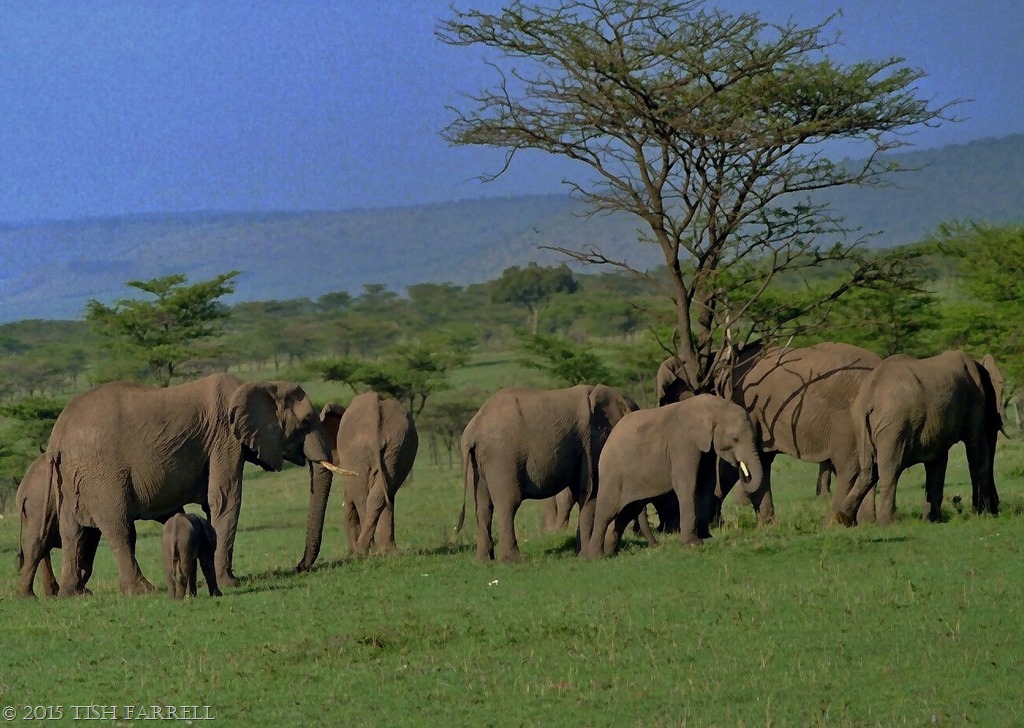
Early morning in the Maasai Mara. Our last Christmas in Kenya, and we’re out on a family safari with my sister and co. Daniel, our guide from Mara River Camp is both driving and game spotting. The rest of us are not awake yet. And so when we find ourselves among a large herd of elephants, it is hard to believe. A waking dream, then.

Daniel stops the truck. And the elephants move by us as if we’re not there. It must be a dream.

Even so, we are soon aware – first of their utter quietness, and then of an all embracing unity of purpose. These dozens of imposing creatures are acting with one mind, moving as an elephant entity through the thorn trees.

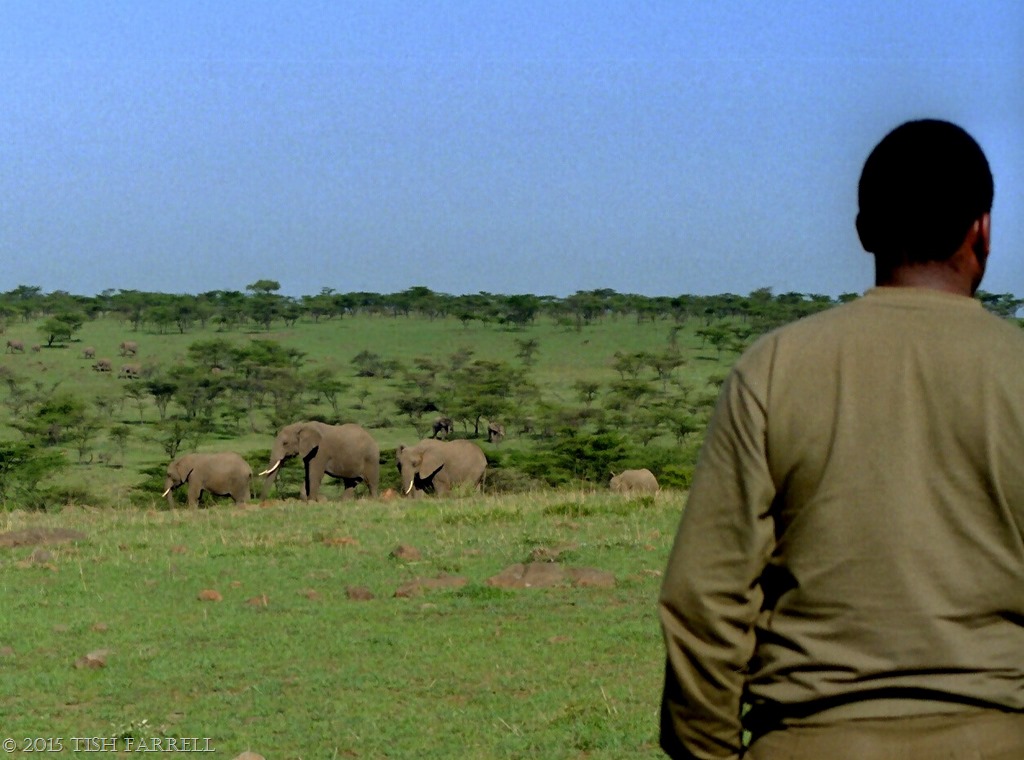
We drive on a little way to an upland vantage point from where we can see across the valley. Daniel announces that this a good place to have our picnic breakfast. He says it’s all right to get out of the truck. I wonder at the strangeness of standing out in the African bush at Christmas, eating hard boiled eggs and croissants as elephants pass us by.

Scan-131109-0032

Scan-131109-0025

Gathering

Three dhows at sundown on Lamu

Scan-140801-0001

You, the very lovely people who have been following my blog for a while, will have seen this image before – possibly more than once. But I’m sure you won’t mind seeing it again. Even if I say so myself, it is a blissful scene,  and a chance capture in the Manda Strait on Boxing Day too long ago.
Trio

Luminous Lions in the Maasai Mara

Scan-140726-0004 (8) - Copy

It’s as if the East African landscape only becomes itself at sundown and sunrise; is only visible to us humans in steeply angled light. It reminds me of the magic painting books I had as a child: nothing but white pages, the images barely descried, a palimpsest of silvery lines. All is blank then; staringly dull. But take a pot of water, and ply a paint brush across the page, and all springs astonishingly to life. Everywhere bursting in colour.

Out in the bush the wild life anyway lies low during the midday hours.  And even if you could see them, the equatorial sun flattens the vista. You lose a sense of scale and distance. Even a magnificent eland spotted in the Great Rift at noon can look strangely unimpressive.  Just a big antelope then.

Kenya’s game parks and reserves are vast – hundreds of square miles. The animals are not fenced in although, increasingly along the borders, farming (large and small scale) encroaches on grazing grounds and migration routes. But this lack of containment means you can drive around a game reserve for hour after hour and see nothing but thorn scrub; or the retreating rear end of a warthog if you’re very lucky.

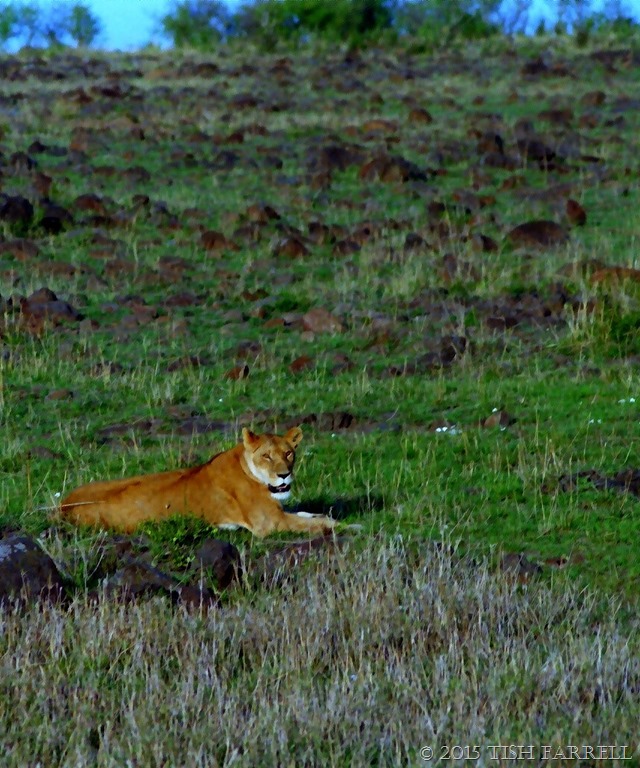
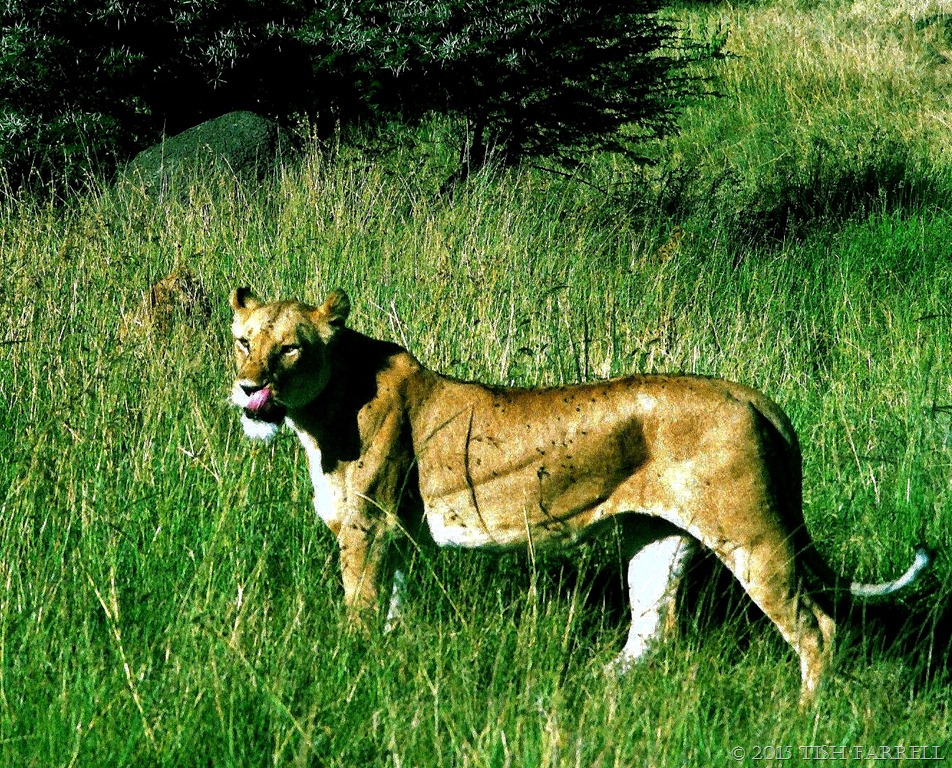
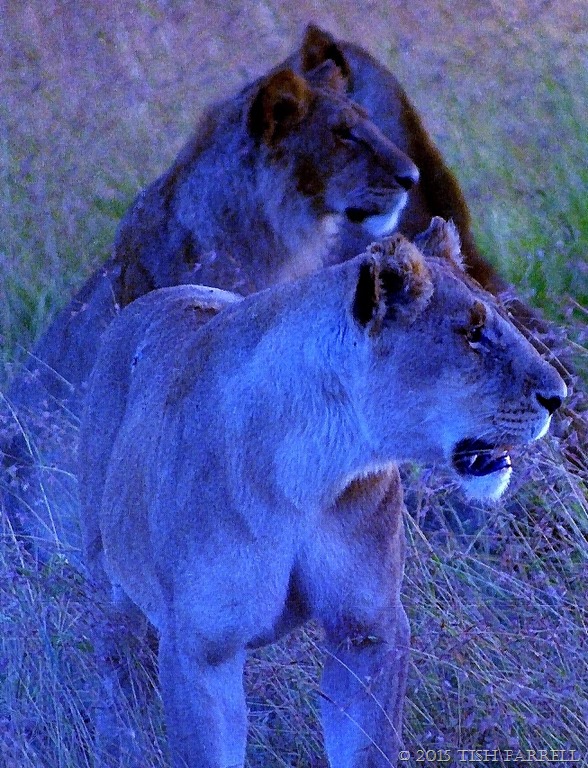
But then the sun begins to set, and you are out with a local driver-guide who knows where to look; and the light turns rose-gold, and the land puts on its best colours. And what was distant, and unfocused takes on form and clarity. Out of mind-numbing absence, and hours of searching, emerges this big-cat presence…

Scan-140726-0011 (2)

Scan-130520-0016

Of course they were there all along. Only now they let us see them. Apart, that is, from the big male who is still hiding in the grass behind his mate. It’s another piece of bush magic, how a 500-pound big cat can disappear in twelve inches of grass. Can you spot him?

copyright 2015 Tish Farrell

Ailsa’s travel theme: luminous

Mara Dawn, Lewa Sundown: Monochromatic Africa

Scan-140826-0029jpeg

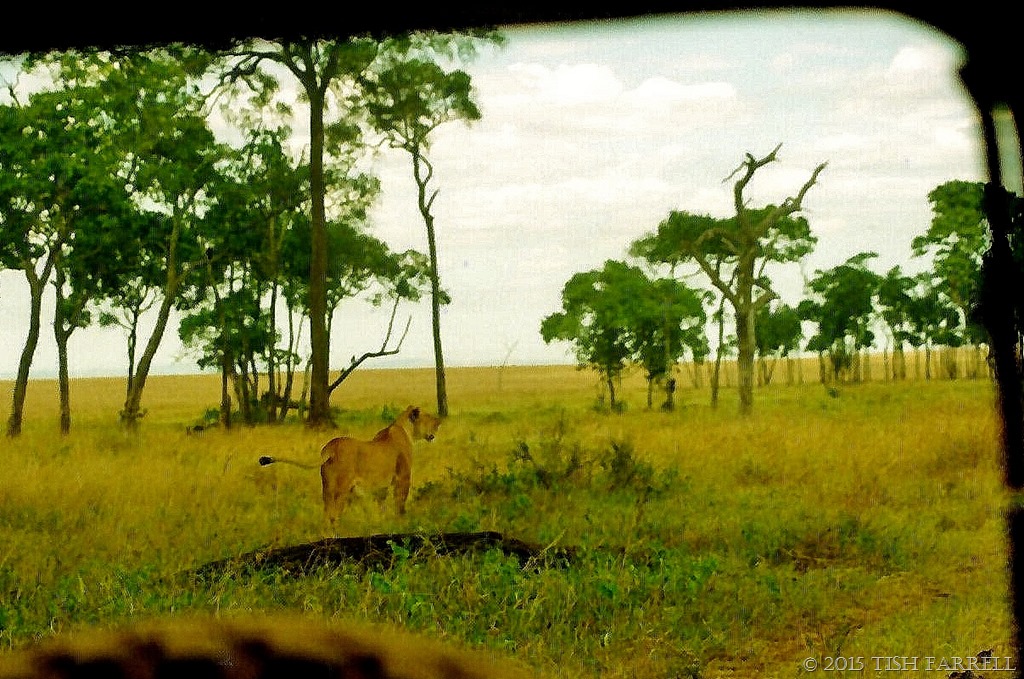
In winter at the Equator, Africa comes in many kinds of monochrome. At first light all is sepia. This lioness was captured at dawn in the Maasai Mara. She is watching out for hyena that are moving in on the Marsh Pride’s kill.

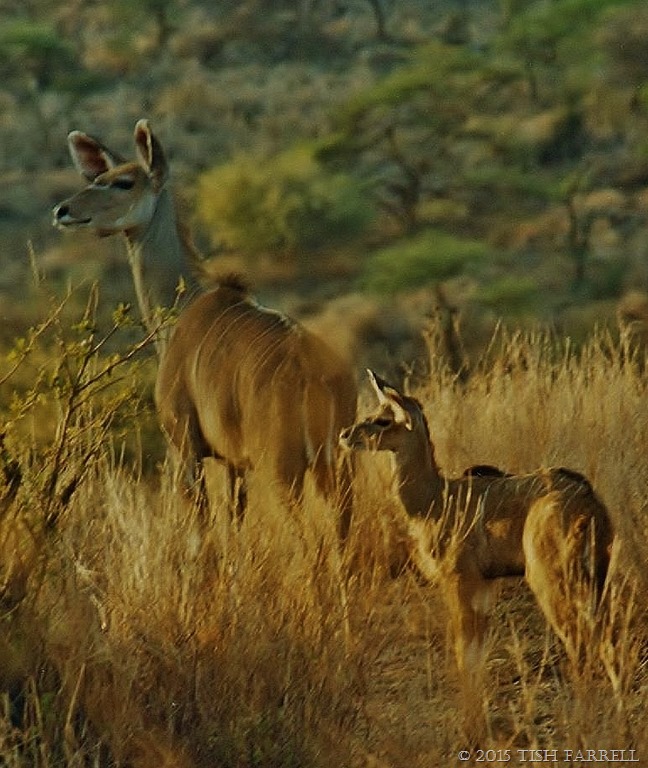
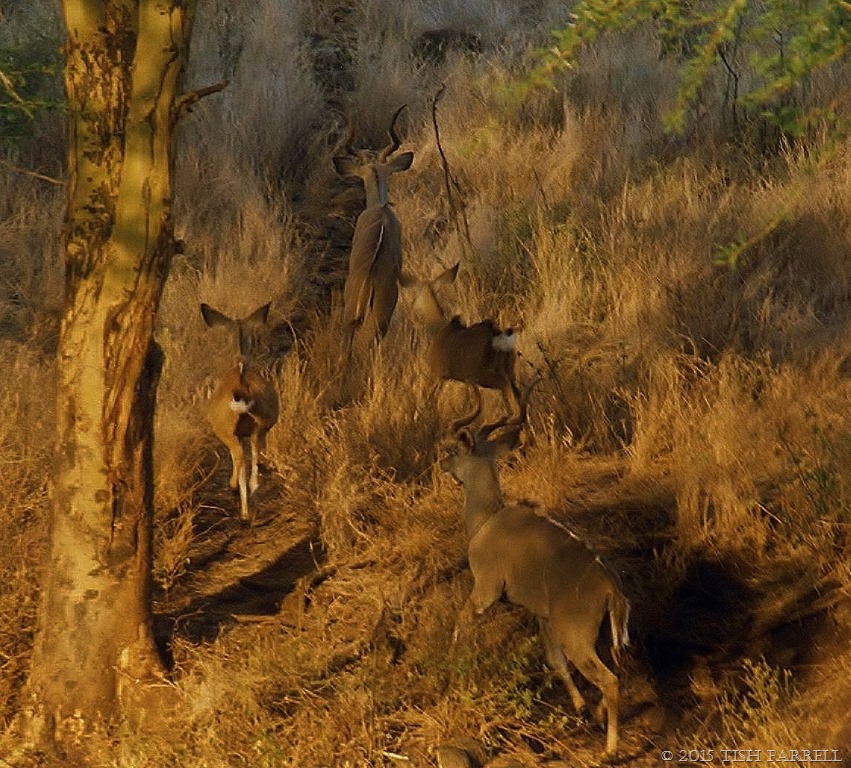
At sundown  in Lewa, in Northern Kenya, all is old gold as these kudu stop for a moment before melting away into the thorn scrub. Did we really see them?

004

003

Monochromatic

Melting in Mombasa

Scan-130603-0019

The sticky humidity of Kenya’s coast is a shock to the system after Nairobi’s airy upland plains  where, even in the hot season, temperatures rarely rise above the low 80s F.  Back in our day, when were travelling the Mombasa Highway quite often, the road south comprised 300 miles of ragged tarmac that descended in stages through nearly 6,000 feet – from highland plains to lowland plains, and thence through the rugged thorn scrub of the waterless Taru Desert, until the final drop down to the Indian Ocean. It was like plunging into a warm bath, the air thick with sea smell and frangipani blossoms.
Scan-130603-0014

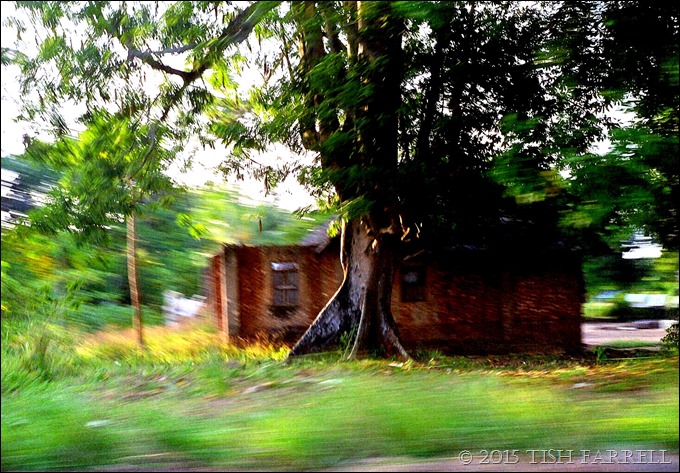
During the rains, large sections of highway were often washed out, sometimes with horrendous chasms opening up. In the dry season the potholes through Kibwezi were filled with sand like mini deserts. And if we found ourselves stuck behind a fume-belching truck, we could travel many miles before finding a stretch of road with a sufficient tarmac on which to overtake it.

None of this stopped us from setting out though. You simply had to be prepared for anything, and this could include a brooding big Cape Buffalo holding the road hostage through Tsavo.  And now here’s an excerpt from the diary I kept, and just found loitering in my filing cabinet:


Kenya Diary 30th August 1994

It was raining and steamy when we arrived in Mombasa at lunch time. The streets were jammed with hooting traffic, and there were vast rain lakes everywhere. The pavements were brilliant red with row upon row of ripe tomatoes, laid out by  the Swahili women  in their black buibuis.  Everywhere the roads rang with the chink-chink of the metal washer rattles on the delivery guys’ handcarts. The carts were piled high with everything and anything: crates of sodas, cooking oil, jerrycans of water, baskets of pineapples, coconuts, mattresses, a wardrobe. It struck me that Mombasa feels so different to much of inland Kenya it might as well be another country.

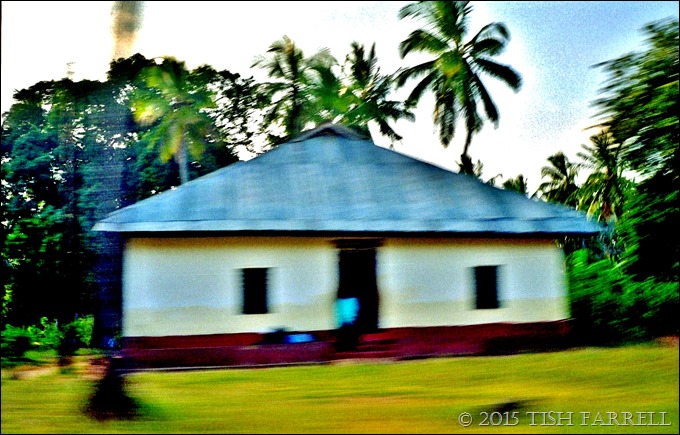
For once we drove straight onto the Likoni Ferry without the usual sweaty wait in a tail-back of trucks and safari vans. Soon we were bowling along the coast road to Tanzania, moving between plantations of coconut palms that bowed with the sea breeze, flitting past  tiny white-painted mosques  and palm thatched homes built from coral rag. Here it  was  the skyline not the pavements that was a brilliant red: all the roadside Nandi flame trees were in flower, fist-sized blooms glowing like coals against a stormy sky.

By two thirty we were sitting down at a Tiwi beach bar, eating spaghetti and homemade tomato sauce while the rain drove in suddenly across the reef, drumming on the thatch. The sticky heat dissolved in the wind and the ocean took on a mean and steely look, and roared. It all seemed very Somerset Maugham, that is if one overlooked the presence of the spaghetti.
 

Scan-130603-0023

copyright 2015 Tish Farrell

Jennifer Nichole Wells OWPC: humid

Great Rift ~ Beneath The Skin, Our Common Humanity

Scan-140809-0001


RIFT

Not homeland,

but sourceland;

scored in genetic code;

branded in bone:

thorn trees’ jasmine scent,

red pepper dust on the tongue,

sifted on skin,

while beneath our feet

obsidian’s glint,

shards of the earth’s dark heart;

the Rift,

riven,

wide

open

copyright 2015 Tish Farrell

Symbol

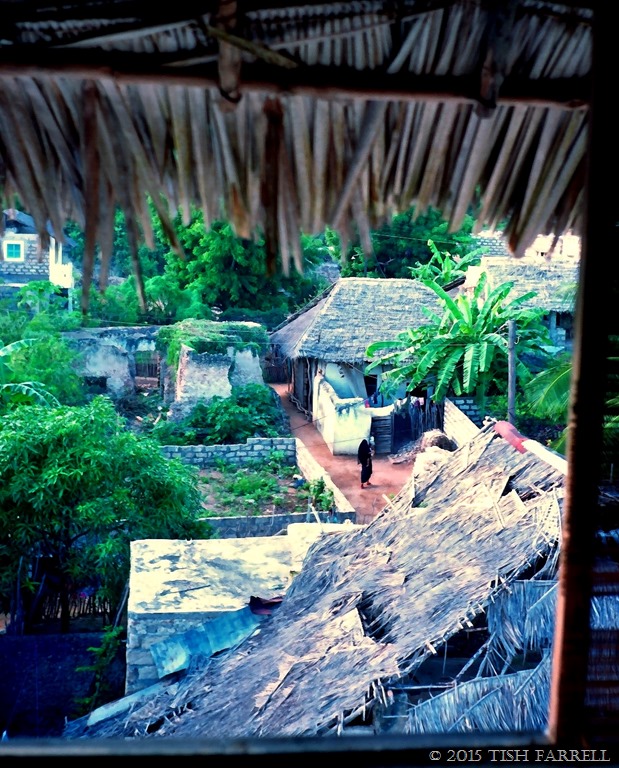
Bird’s Eye View of Shela Village, Lamu

Scan-140802-0003 (2)


This week at Thursday’s Special, Paula has asked us to interpret ‘a bird’s eye view’. I’m not sure that four storeys up in Shela’s Island Hotel  quite constitutes a bird’s eye view, but it’s as high as I’m going. I’ve written about our stay on Lamu in other posts. One thing I will say here is that we had a room that was ideal for someone as nosy as I am. Three sides were entirely available for nosiness, overlooking the centre of the village. I didn’t know which way to look first.

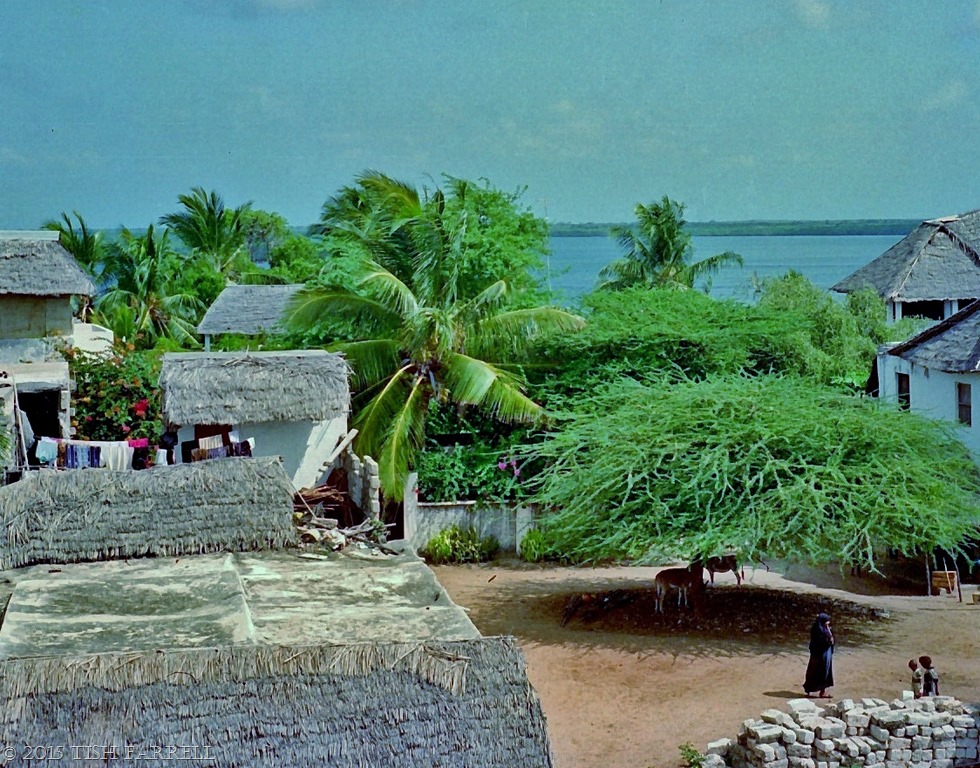
In the next photo you can see the village square with its donkey park under the thorn tree. There was only one vehicle on Lamu at the time of our visit – an aged Land Rover, and donkeys were used for all forms of land transportation. They were left under the tree until someone needed one to move something. In the bottom corner you can see blocks of quarried coral rag used for house building.

Scan-130428-0138


Please visit Paula at Thursday’s Special for more views.

Some don’t like it wet, and a case of sub-teen rebellion big cat style

Scan-140726-0010 (2)

First off I should say these aren’t the best of  photos. They were taken on a dullish, August day in the Maasai Mara, and out of the back of a dusty Land Rover. But it’s a nice little glimpse of ‘I’m-a-big-boy-now’ rebellion of the lion kind.

It was the she-lion’s odd behaviour that attracted our attention. We drove towards the swamp to see what was going on. The rest of the Marsh Pride was lying up in the long grass a good half mile away, but here was a lone adult female walking about in a distracted manner, and with no attempt at concealment. She was also calling…and looking…

Scan-140726-0012 (2)

And calling…

Scan-140726-0011 (3)

We drove around the swamp. And then we could see what she couldn’t…

Scan-140726-0005 (10)

Junior. He, in fine nonchalant style, was busy exploring. He could hear Mom all right, but he was darned if he would show himself. In fact he just kept going…

Scan-140726-0007

…in the opposite direction…

Scan-140726-0003 (13)

Ooops! Not looking where we were going…

Scan-140726-0002 (4)

But it gave him a good excuse: “Was just getting a drink of water, Mom.”

Scan-140726-0001 (3)

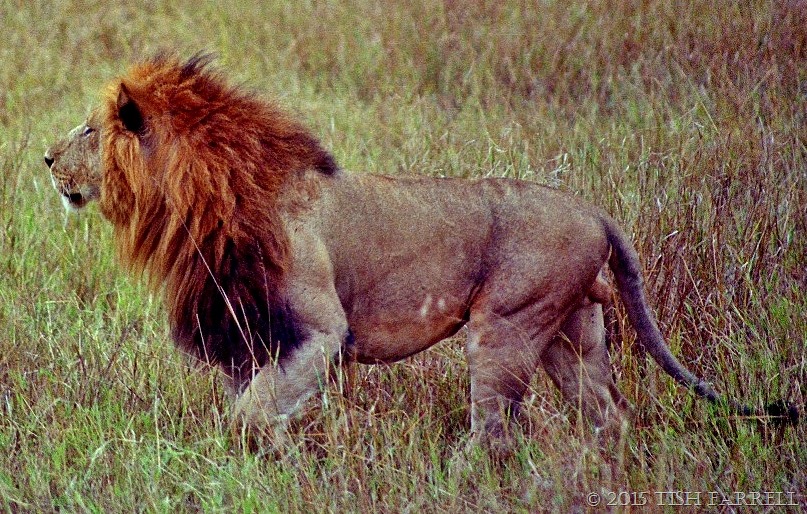
We left them to find one another, although I reckon Junior was in for a big cuff round the ears. Meanwhile, here’s the big lion, he was thinking he already was – Dad.

Marsh Pride male 3


This post was inspired, somewhat tangentially, by Jennifer Nichole Wells One Word Photo Challenge: wet Drop in to her blog to see other bloggers’ responses.

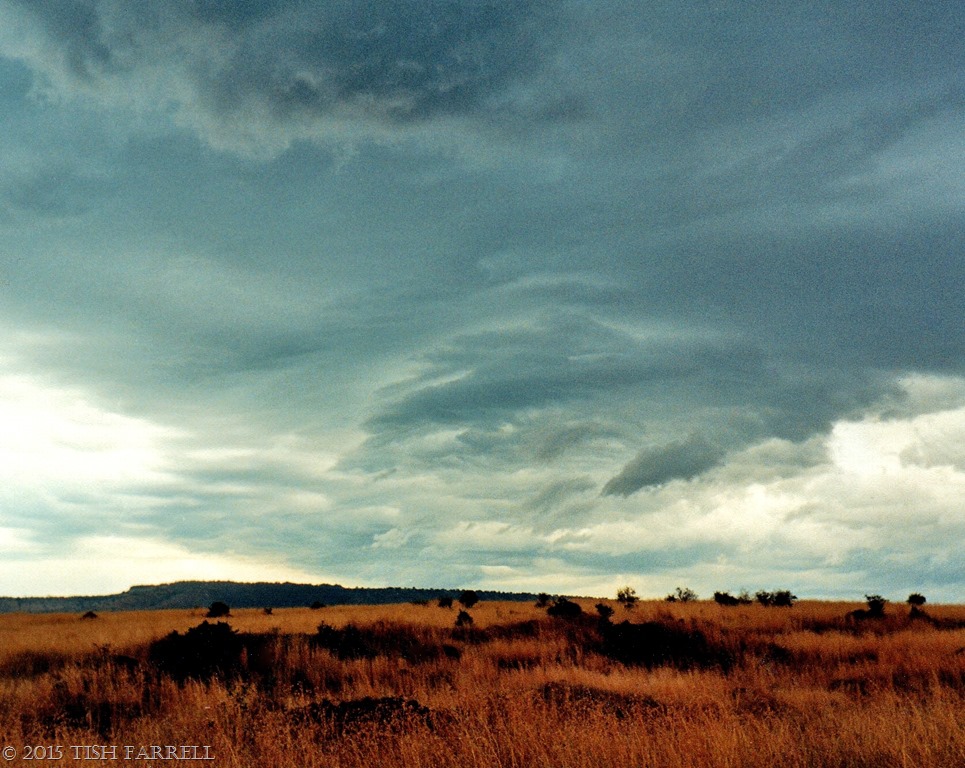
Clouds over Kenya

IMG_0024

This probably is not the kind of scene most people associate with Africa. It looks more like a stretch of bleak English moorland in December. Anyway Kenya it is, and it was taken one August in a Maasai group ranch conservancy, bordering the Maasai Mara National Park.

May to September is East Africa’s winter, and the skies are often overcast and leaden. The nights, and even the days can be chilly. Kenya, anyway, covers many of the world’s climatic zones either horizontally or vertically – from the hot and arid Northern District, bordering Ethiopia and Somalia, to the alpine heights of Mount Kenya with its glacial peaks. There are also the airy, and rarely too hot, highland plains around Nairobi, and the steamy humidity of the Mombasa coastal strip to the south.

Much of the nation’s weather is determined by the cycle of Indian Ocean monsoon winds. These, unless disrupted by El Nino effects, bring two seasons of rain – the long rains in March to May, and the short rains in November-December. In between, many areas receive little or no rain. Western Kenya, however, receives more regular rainfall courtesy of Lake Victoria Nyanza which makes its own weather.  Meanwhile in the fertile Central Highlands above Nairobi, altitude and forest combine to make June and July the season of heavy mists. It’s all a bit dreary, but the mist does have its uses – for instance, ripening the maize crops for the August harvest.

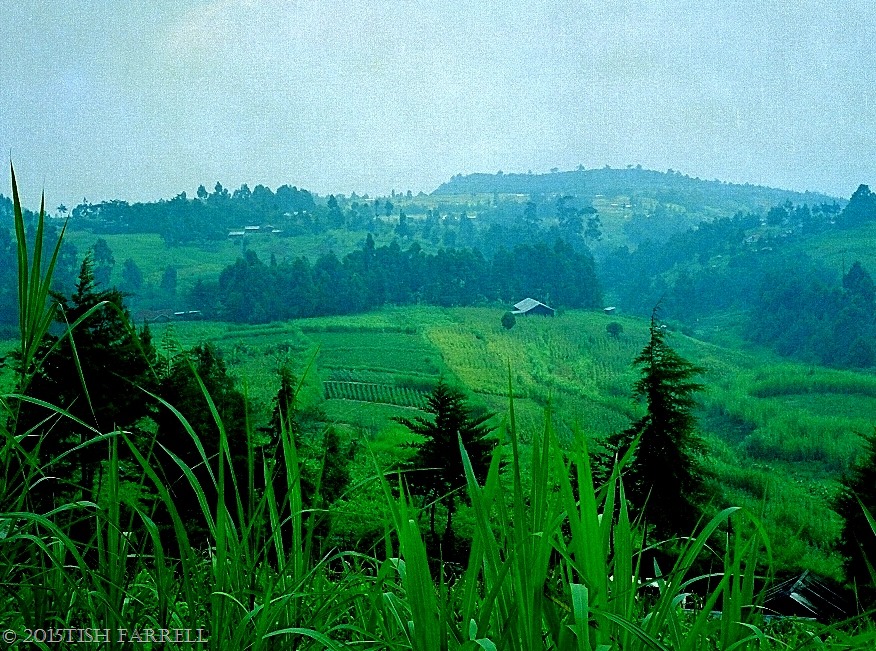
napier grass on the Rift

Smallholder farms and July mists in the Kikuyu highlands, north of Nairobi

*

In the late 1990s Team Farrell was often out and about in the Kikuyu highlands, visiting smallholder farms. And the reason we were doing this in the fog season was because the Team Leader, aka Graham, was – besides running an agricultural crop protection project on behalf of Her Majesty’s Government – gathering data for his doctoral thesis on smut. If you want to know more about our smut forays (of the plant variety that is) your can find out more HERE.

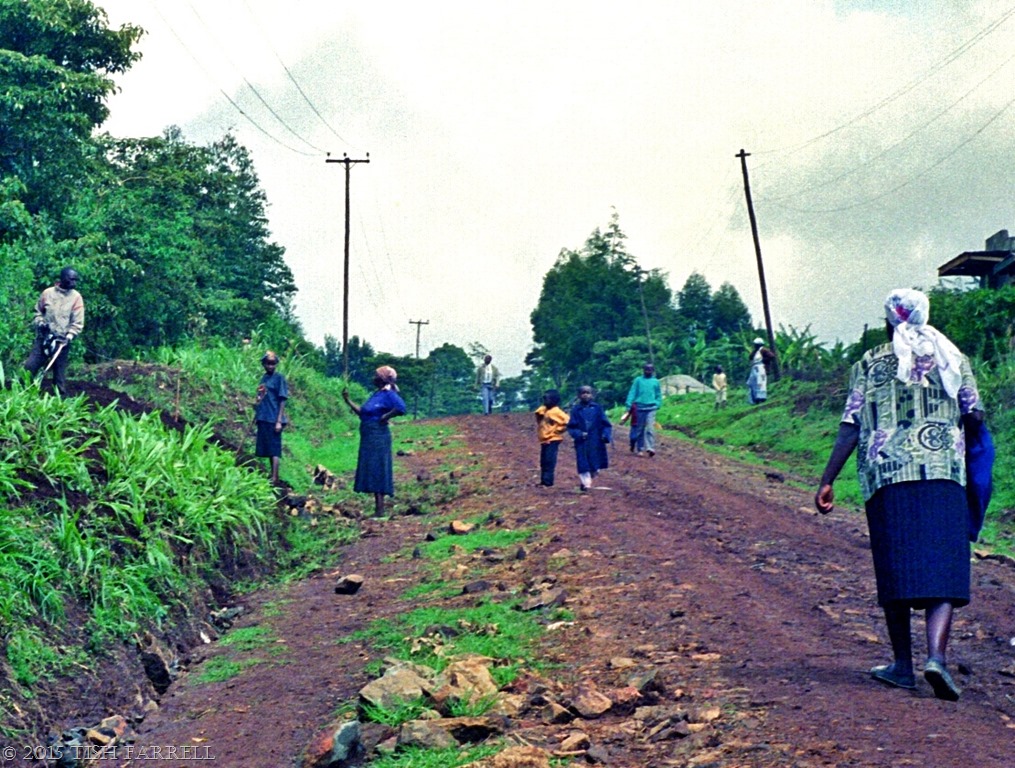
Rift lane after July downpour

Rural road after an unseasonal July downpour. Poor communications embed poverty, making it hard for farmers to get produce to market before it spoils.

*

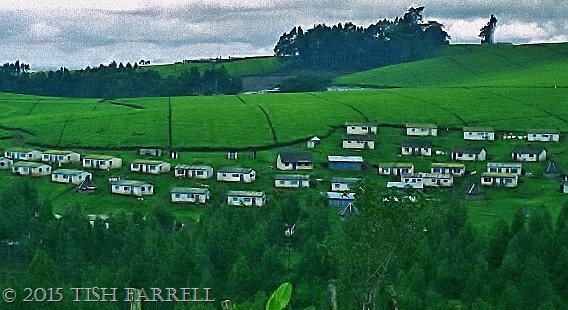
tea fields and workers' houses

Lowering skies over Limuru’s tea gardens with tea pickers’ housing.

*

Kikuyu farmstead 1

Kikuyu farmhouse.

*

banana trees 2

Wintery fields in Muranga where the Del Monte pineapples grow.

*

And just sometimes, even on the gloomiest Kenyan winter’s day, the sun breaks through the clouds:

Kikuyu child 3


Jennifer Nichole Wells OWPC: cloudy     Go here for more bloggers’ cloudy offerings.