Bees in the Sneeze Weeds

100_6723

The season of mists and mellow fruitfulness has arrived in Much Wenlock on the coattails of spring, missing out summer altogether.  Perhaps we’ll have it at Christmas instead, the barbeque months that, back in March, the tabloids were screaming we were in for, along with prolonged drought and associated mayhem that would, shock-horror, stop people from watering their lawns, or hosing down their Range Rovers. Mind you, these are the sorts of rags that would have us believing it is raining migrants. (That would be people so desperate that they risk all to run away from home).

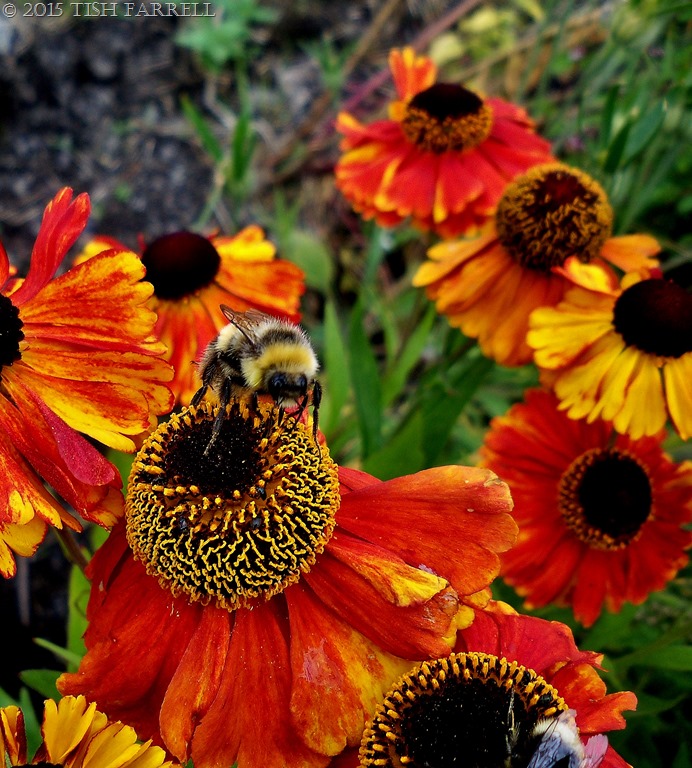
Anyway, whatever’s going on with the climate, the upshot is that much of the garden and the allotment has a very ‘left-over’ look, which is why I almost want to dash out in the garden and hug the sneeze weeds – bees notwithstanding – for being so vivaciously red and yellow as too much autumn dullness descends.

How can a plant so glorious be real? All the flowers in the photos, in all their wonderful variation, are growing on a single plant. And, as you can see, the bumble bees are gorging themselves. There are also some very tiny emerald beetles in amongst the pollen. Sneeze weed, by the way, is a country name for Helenium, which is a far more gracious name for such a generous plant, although one rarely used in the Farrell household.

100_6724

And it’s thanks to the bees and other precious pollinators that we are at least having fruitfulness, if not  harvest-hot weather. Up at the allotment apples are already weighing down the trees. They look like jewels:

100_6546

100_6681

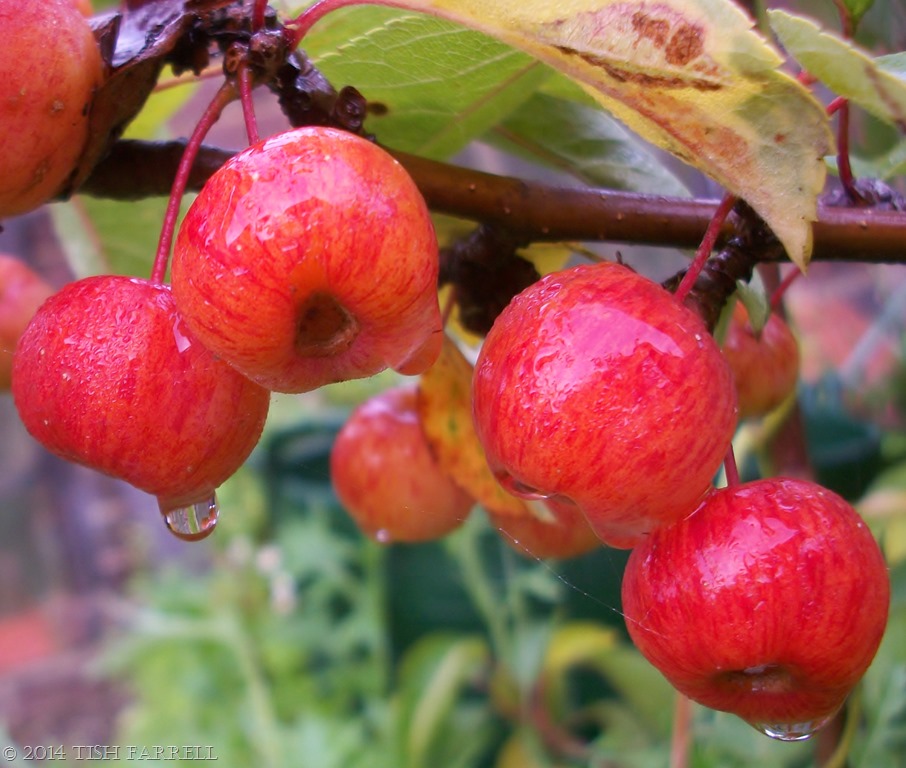
Even the ornamental crab apples look good enough to eat raw. They’ll make brilliant jelly after a touch of frost, which hopefully won’t happen yet.

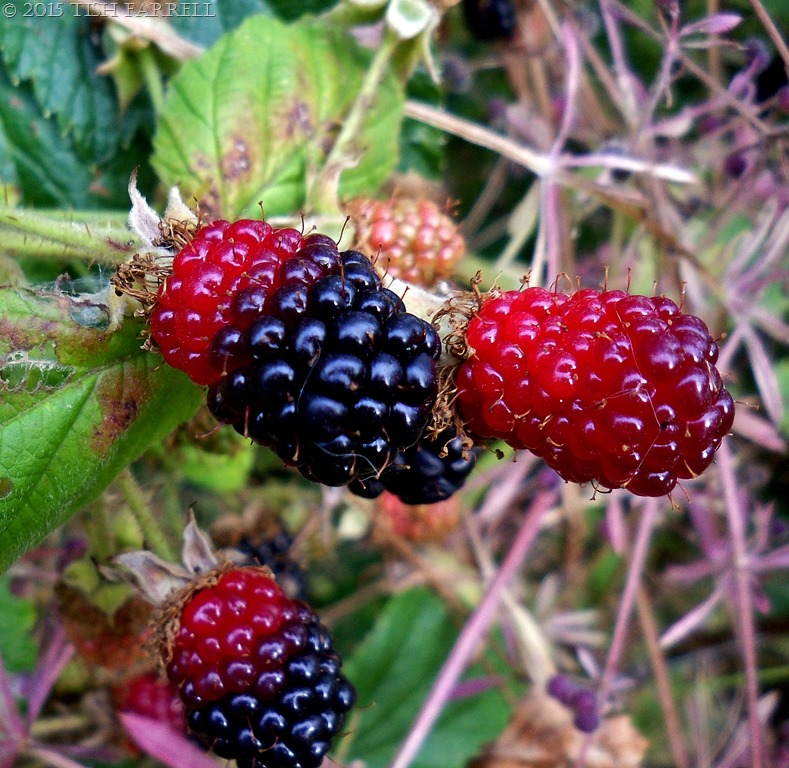
Then there are the brambles:

100_6682

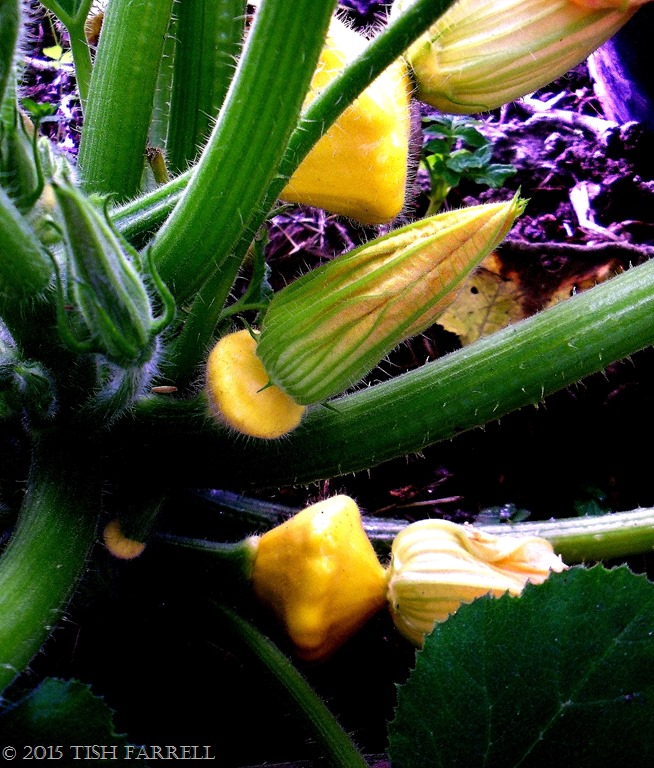
And the little yellow squashes that look like flying saucers:

100_6738

And the runner beans have started to crop (this photo was taken a week or so ago). The sweet peas on the end of the row are there to attract pollinators:

100_6503

Of course, when it comes to weather, we Brits are never happier than when we’re grumbling about it: too hot, too windy, too wet, too dry.  But then even if someone did steal summer, we still have so much to be thankful for. Feeling mellow, however, may not be an appropriate response these days. There may well be some hard lessons to learn when it comes to adapting to an increasingly erratic world climate, and not only for ourselves, but for the people who find their own lands are no longer habitable. We should not be surprised if they risk all to make for the lands of plenty.

copyright 2015 Tish Farrell

Mellow  is the theme over at Ailsa’s Where’s My Backpack

Bee In My Bonnets, Granny’s That Is

P1010543

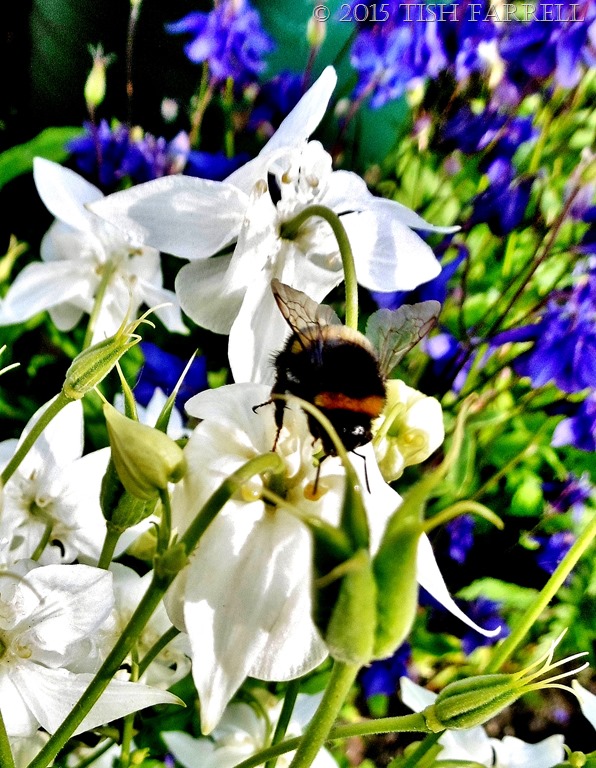
Today over at Lost in Translation, Paula’s Thursday’s Special theme is minuscule, which is a word I often have problems spelling because it comes in two versions, and that then leads me to make up  my own. Anyway, I instantly thought of  pollen grains, which made me think of bees, and of the small busy world of pollen gathering that goes on all spring and summer, mostly unnoticed by us humans. And so since I believe we cannot think of bees too much or too often, given the valuable work they do for us, here’s another bee snap.

I am also grateful to Pauline at Memories Are Made of This, who in today’s post also has bees on her mind, for reminding me a few a weeks ago in one of her comments that Granny’s Bonnets is another name for columbines or  aquilegias. So there you have it – bumble bee in my Granny’s Bonnets, but not in my actual bonnet, although my other half would often beg to differ on that statement.

copyright 2015 Tish Farrell

Thursday’s Special: Minuscule

Storm Poppies

100_6118

Last Saturday I somehow lost track of five whole hours. There is so much to do up at the allotment – weeding, picking peas, strawberries and raspberries, digging up the new potatoes, tying up the tomatoes in the polytunnel, watering, feeding, turning the compost heap, sowing more peas, constructing pigeon defence systems, wandering about neighbours’ plots, taking a few snaps.

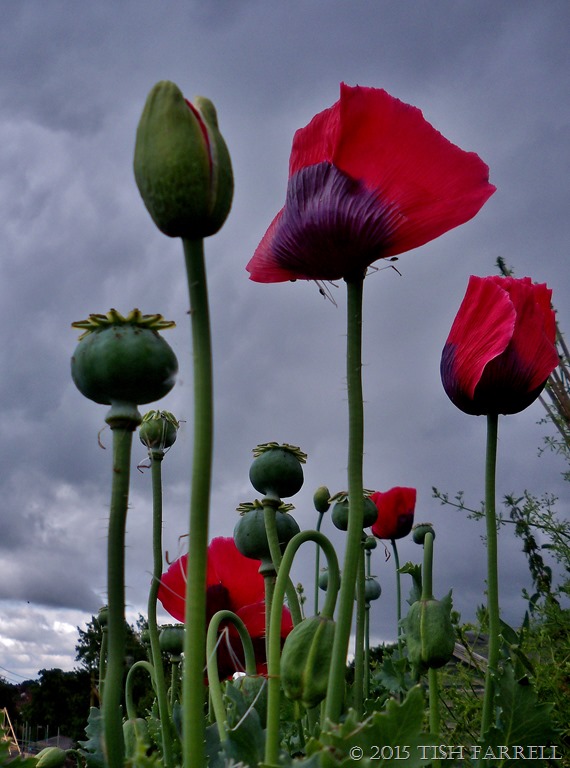
But one of the nice things about having the polytunnel is that when a storm strikes, I can potter around in there until the downpour  passes.  As you can see from the sky, we were in for a deluge, and I caught these poppies just as it was arriving. There was something malignant, I thought, about their stance. Something a little predatory about those seed capsules. Perhaps I’ve been spending too much time in the garden.

copyright 2015 Tish Farrell

Thursday’s Special: Seeing Red

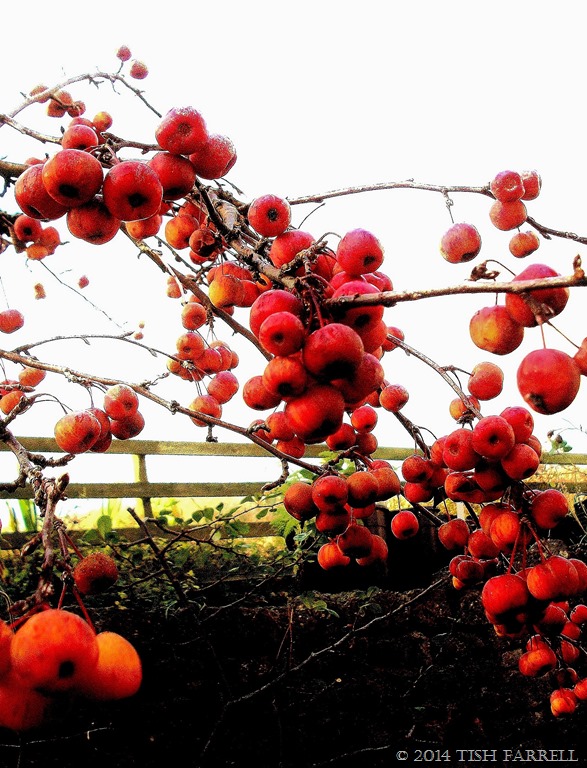
I’m in love with the Japanese crab apple tree in my garden at Sheinton Street. There is hardly a moment in the year when it does not give pleasure. Even now in February there are still a few tiny apples on its bare branches – minimally disposed like a left over Christmas tree that someone forgot to undress. The black bird still visits, although by now the apples have been frosted and lost their bloom.

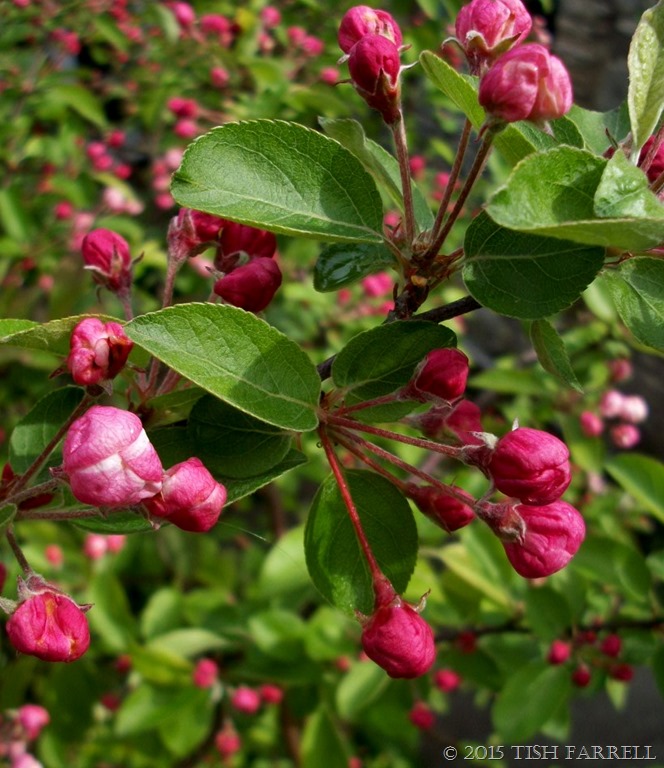
But then I also know that by the time the last one has fallen, there will be tight rosy-red buds bursting to make the next crop, bees permitting. And while I think of it, I’m grateful to fellow blogger, Mélanie at Mon Terrain de Jeux who tells me that crab apples sound much lovelier in French, and I agree – pommes sauvages.

On the other hand, my little tree is so finely wrought and well bred, and its fruit so exquisite, that I can imagine no situation when it might be tempted to wildness – unlike its large, unruly English cousins that grow in our farm hedgerows. Those I raid in October for their not so pretty fruit to make jars of crab apple jelly. (How could I possibly pick my own pommes sauvages?). The jelly is delicious on toast and croissants, and the jars glow like jewels as the hot jelly is poured into them. Mmmm.

More things to look forward to then: blossom, bees, pommes sauvages, toast…

100_5546

For Paula’s Thursday’s Special challenge ‘Red’ at Lost in Translation

One Word Photo Challenge: Strawberry

100_4110

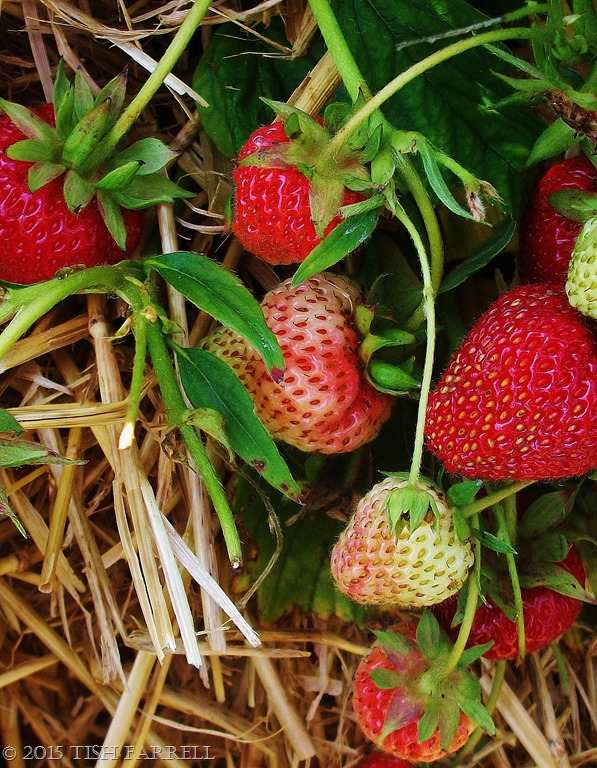
I’m being utterly literal in my response to Jennifer Nichole Wells’ latest challenge.  Well, what better example of the colour strawberry than an actual strawberry, and ones that were growing so happily last year on my allotment ? Also they look so juicy, and remind my cold toes that summer will happen, if not quite yet. I’m also thinking – looking again at Jennifer’s colour swatch – than I can also use a shot of my raspberries to illustrate ‘strawberry’, or is that being too perverse?

100_4193

Anyway, it’s clear where my thought are heading. February is the month when things can be started off in my polytunnel – this in preparation for the spring planting. There are potatoes to chit, broad beans and peas to sow, and excitement is building like rising sap. So much to look forward to.


Winter Harvest

100_7006

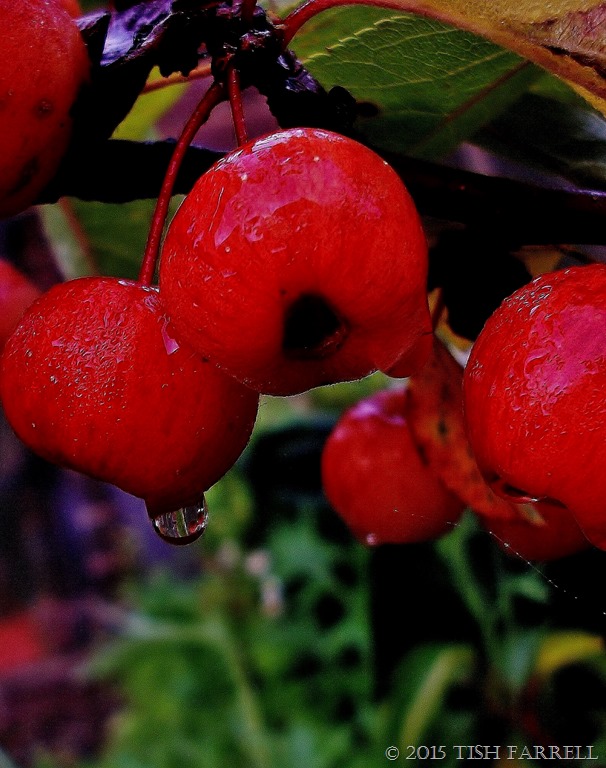
At twilight these crab apples glow like tiny lanterns against the darkening sky. And that’s when the blackbird comes to feed. Or at least this is the time when I most often spot her silhouette bobbing amongst the fruit. You will have to imagine her. It is a piece of English winter magic.  A gift.


Flickr Comments for more bloggers’ stories and photos

One Word Photo Challenge: Scarlet

100_3415

We planted the Japanese crab apple tree in the garden in 2006, not long after we moved into Sheinton Street.  Now is its season of fiery scarlet glory. Each fruit glows like a miniature lantern, brightening the gloomiest autumn day. And today is just such a day in Much Wenlock, my usual sky-view over Wenlock Edge, a blanket of grey mist. Even so, the apples glisten. I know, too, as we head into winter, we will have the pleasure of watching the blackbirds come to feed on the fruit, grey days then enlivened by their darting silhouettes foraging among the branches. Few of these tiny apples will be wasted. And then before you know it, the tree will be bursting with purple-pink buds that open in showers of pale blossom. Spring. Splendid how one thing leads to another.

copyright 2014 Tish Farrell

For more studies in scarlet, visit Jennifer at One Word Photo Challenge: Scarlet 


Polytunnel Vision

100_6616

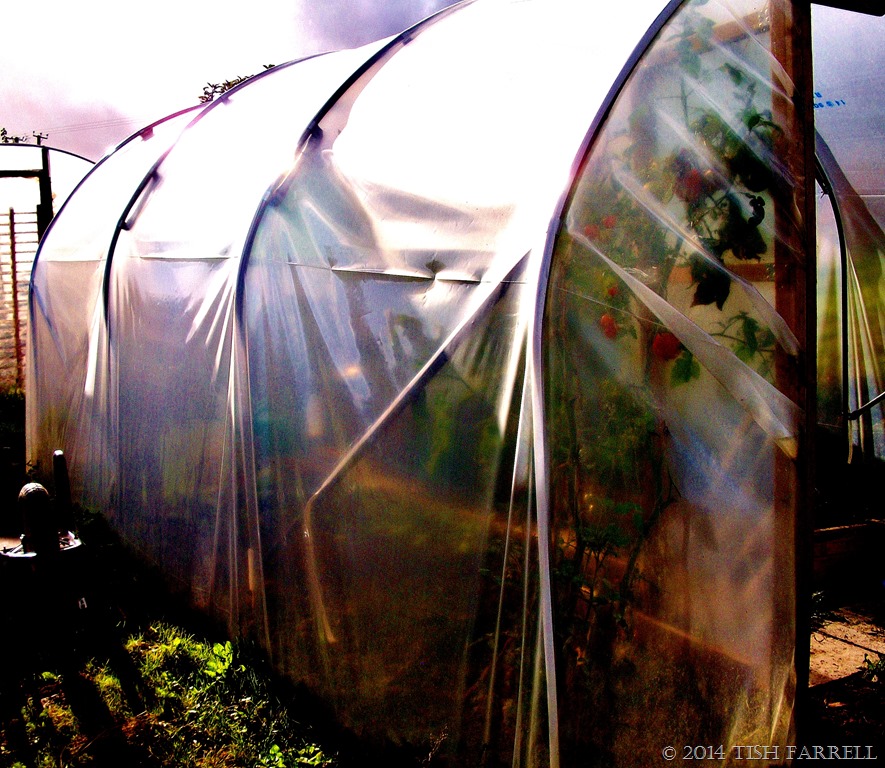
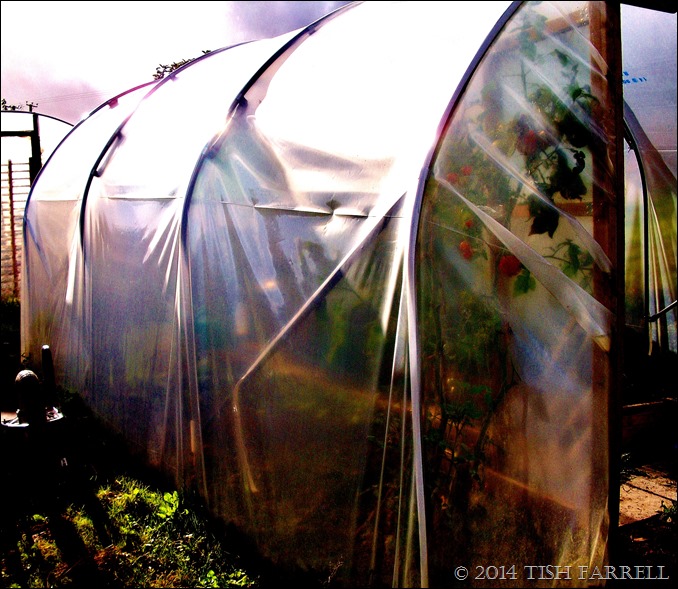
Oh all right, I know. As ambitions go, wanting to own a polytunnel might seem pretty odd. Also it’s not as if I don’t have enough housework in the house without having additional premises to tend elsewhere. But then sometimes in life you get precisely what you wish for, and most unexpectedly at that.

Ever since I took over my plot from Much Wenlock Allotment Society some seven years ago I have increasingly thought that a polytunnel was the very thing I needed. Gardening on the edge of Wenlock Edge can be challenging. The site is exposed, sloping, and often very windy. Much Wenlock is also in a frost pocket, and thus is a degree or so cooler than anywhere else in Shropshire.

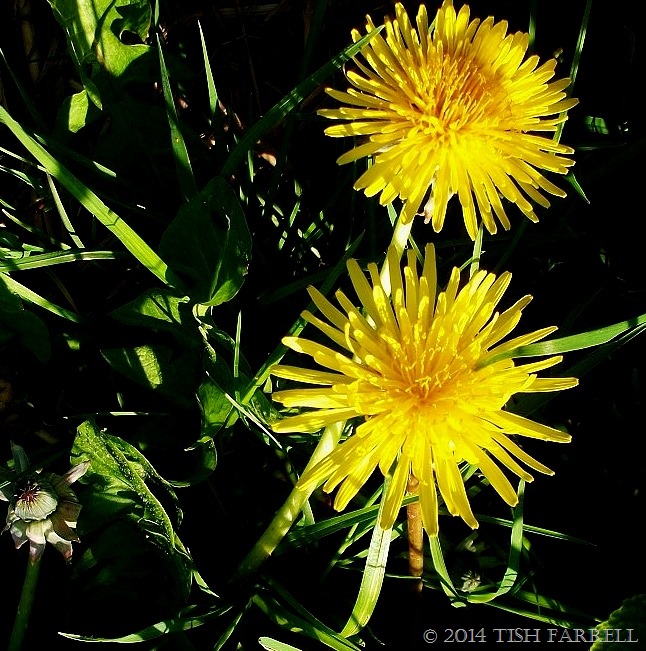
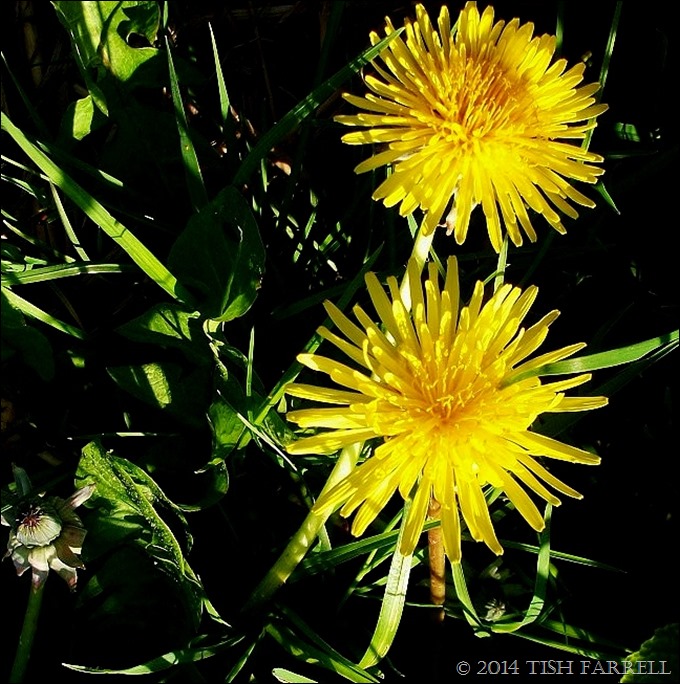
Worse still, the soil comprises a decaying fossil volcanic ash that is like wet cement when it rains, and hard baked cement when it doesn’t rain. It has thus taken seven years of digging, mulching, composting, green manuring, horse manuring, hacking and weeding to get the soil looking like something that vegetable plants might want to grow in. The dandelions, however, grow most verdantly, along with the creeping buttercups, sow thistles, docks, bindweed and couch grass. And so despite improvements, small vegetable seeds still find the soil heavy going. If they germinate at all, they struggle, the soil creating a bonsai effect on the roots, and then the slugs quickly finish them off. Most seeds thus need to be germinated under cover, and grown on before they can stand a chance after being planted out.
100_5367

And then, of course, there are the pigeons. They sit on the telegraph wires and watch what I’m doing. They especially like to eat cabbages and newly sprouted pea plants down to the roots. The rotters. In consequence I spend a lot of time making defensive systems out of environmesh and bits of wire fencing. This kind of protection also has to be applied to beds of leeks, garlic and onions due to the arrival in our part of the world of the allium beetle that likes to lay its eggs in the fleshy roots. The effect of these assaults on the leeks is especially dramatic: they unfurl in spiral fashion and develop rust-coloured stripes.

So you can see that to be an allotment gardener in Wenlock requires the same kind of pig-headed (idiot) tenacity it takes to be a writer. I have visions of deep, humus-laden beds bursting with lush, green spinach and broccoli, in much the same way I have visions of producing beautiful books that everyone wants to devour, and feel nourished by.

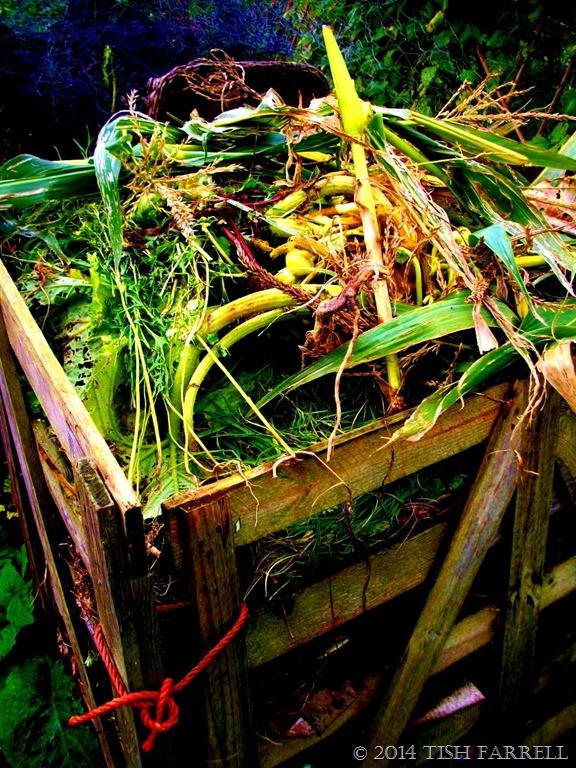
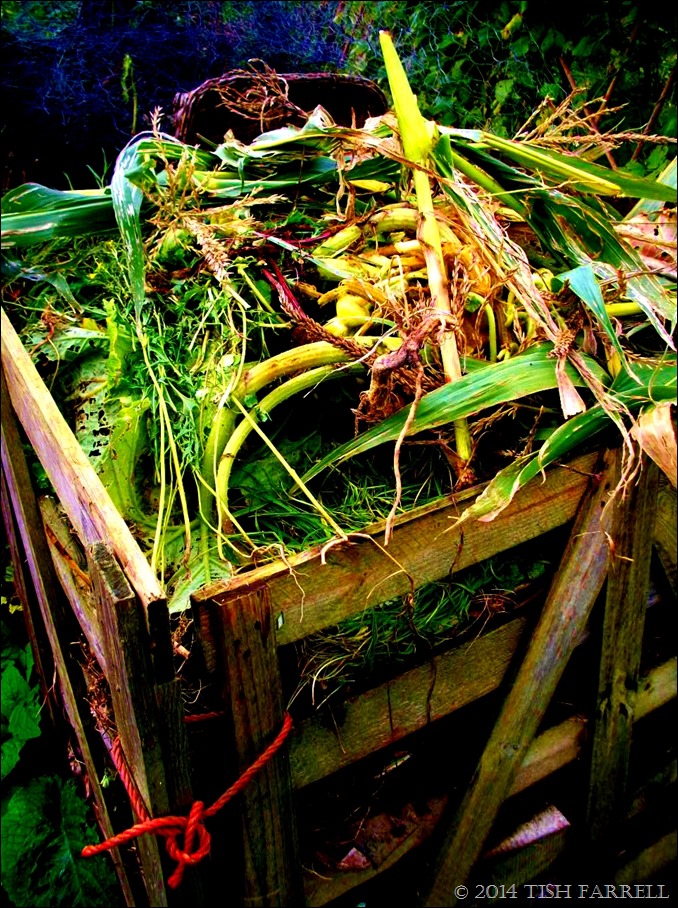
And that’s where the polytunnel comes in. I’m hoping I can crack both objectives in one fell swoop, this on the basis that if I can raise and eat more broccoli and spinach, my brain might produce writing with the requisite added enrichment. We can but hope. I might also say, as I probably have before, the contents of my writer’s brain have much in common with the contents of my compost bin, although at least they don’t smell. (Please note pallet structure installed by the Team Leader aka Graham who endlessly tries to bring order to my chaos).
100_4954

Anyway, back in the early spring when I was clearing my plot I noted, with a severe pang of envy, that my neighbours, Bob and Sally, were making preparations to erect a fourteen foot long polytunnel. I could see it was hard work, with foundation trenches to dig (in the aforementioned concrete soil) and the frame to erect. I watched them toil, hanging doors, and making beds. Next, I watched as my other neighbours, Pete and Kate, followed suit. Their installation was even more hard work, being on a slope. It took them weeks to complete. In the meantime I kept the Team Leader posted as to these events, from time to time mooting the possibility of us having a tunnel; perhaps something smaller, I hazarded.
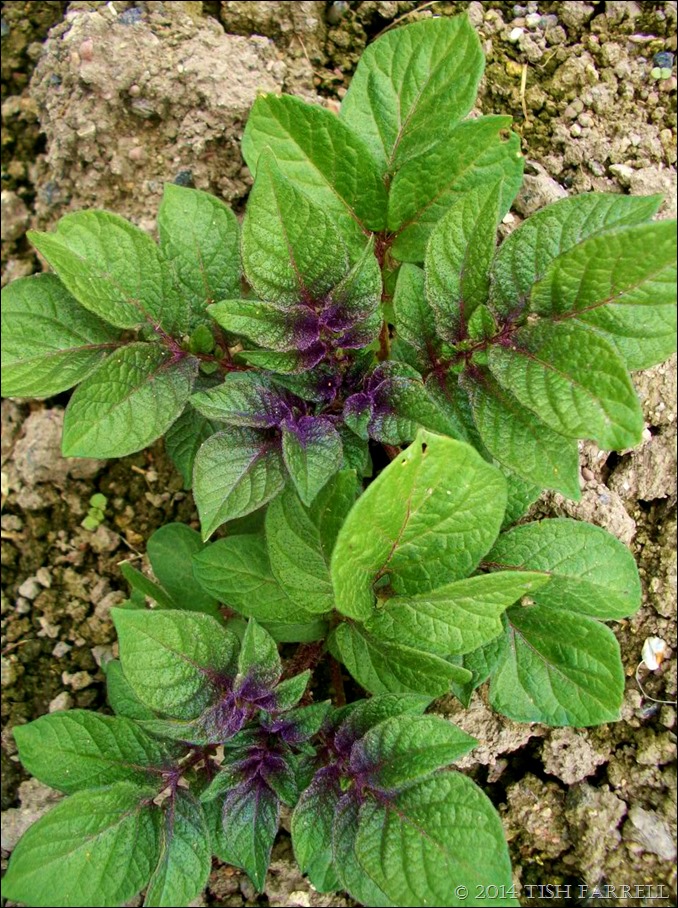
100_5631

I have to say the response wasn’t altogether encouraging, even though we were by then falling out at home over whether the small conservatory on the back of the house was my potting shed and greenhouse, or his workshop. Increasingly my bean and sweet corn seedlings were having to compete with saws and wrenches and other man-things whose function I cannot identify. Nor was there the possibility of building either a man-shed to contain his stuff or a woman-greenhouse to contain my stuff since the garden at  home is too narrow.

Back at the allotment I watched the new polytunnels fill with tomatoes, cucumbers and peppers…I thought longingly of gazpacho that simply cannot be made from flavourless supermarket produce. Ho hum.

Then out of the blue in mid-summer, a little bird, otherwise known as ace fellow allotmenteer, Phoebe, told me that Bob and Sally were moving and were looking to sell their tunnel. She thought I should discuss terms with them.  Not long after this I received a small inheritance from my once passionately gardening Aunt Evelyn of whom I have written elsewhere.

And so to cut a long story short, a week last Sunday I became the proud owner of the Auntie Evelyn Memorial Polytunnel, complete with potting bench, garden chairs and an automatic watering system. My aunt would have loved it. Bob and Sally even left me the last of their tomatoes and cucumbers. Not only that, the plot comes with a new shed that does not lean, nor provide roosting space for snails as my old one does. Already the Team Leader has added a shelf and guttering. In short, my water butt runneth over…Or will do very shortly.
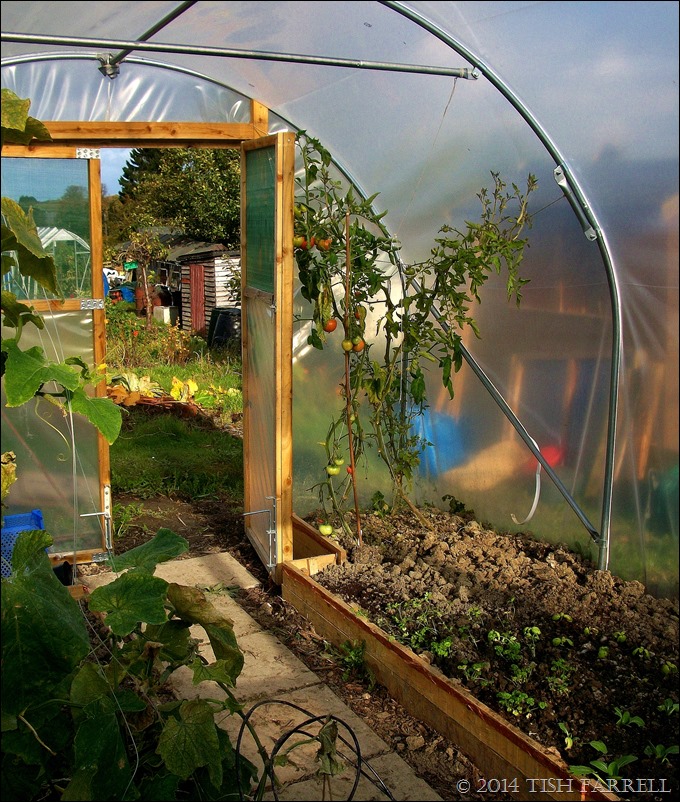
100_6619

I have started clearing the tunnel’s beds and planted out lettuce and oriental vegetables to extend the salad season. But from now on, it is all new territory on the gardening front. There’s a lot to learn about tunnel cultivation and management. Planning and forethought are required. Better get cracking with that spinach and broccoli then.

Related stories about my aunt:

The Many Faces of Evelyn Mary Ashford

Grand Girl: Great Prospects

The Birds; Who, Where, When?

      copyright 2014 Tish Farrell

Please do visit Flickr Comments  to read more bloggers’ ‘P’ stories, or to add your own.

Still Life at the Allotment

100_6630

Mid October and the marigolds are still blooming up at the allotment. I love the way they simply grow themselves amongst my vegetables. In a mild winter they may flower into December.  It was also good to see this bee out and gathering pollen. These days, every bee is precious. Once we have killed them all with agri-chemicals, we can expect to starve. It’s as simple as that. My allotment empire has recently expanded – more of which in the next post – so I’m intending to grow more varieties of late and early flowering plants on my plot. Or maybe I should simply stick to marigolds, and let them grow EVERYWHERE. The flower petals are lovely in salads, and a herbal tea of marigold flowers is good for warding off flu. Simply looking at them makes you feel better. All that orange straight into the brain, lighting up the little grey cells as the days darken.

‘Happy Autumn’ northern dwellers.

100_4930


For more vibrant treats visit Cee’s Fun Foto Challenge