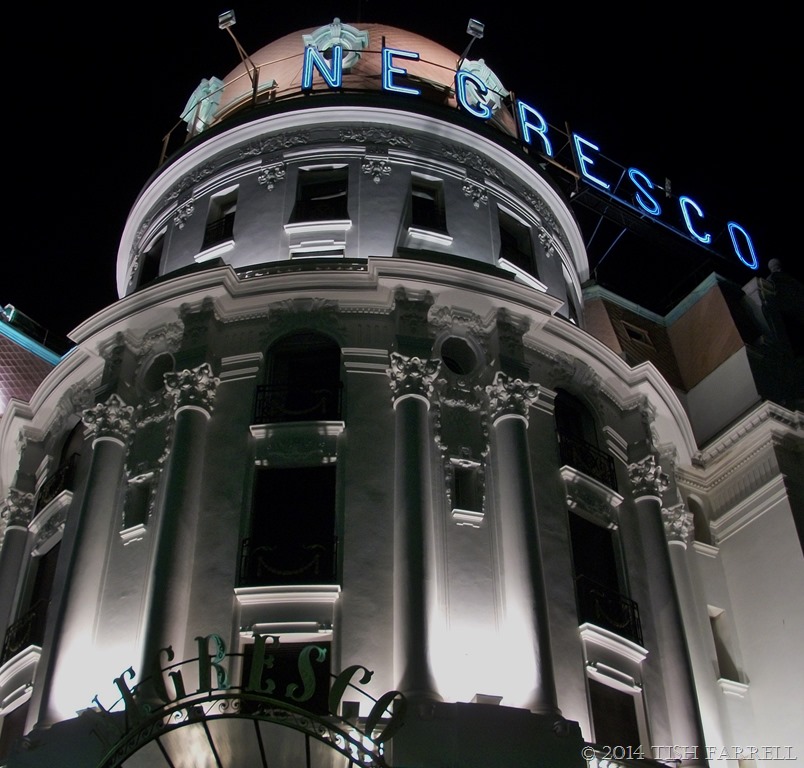
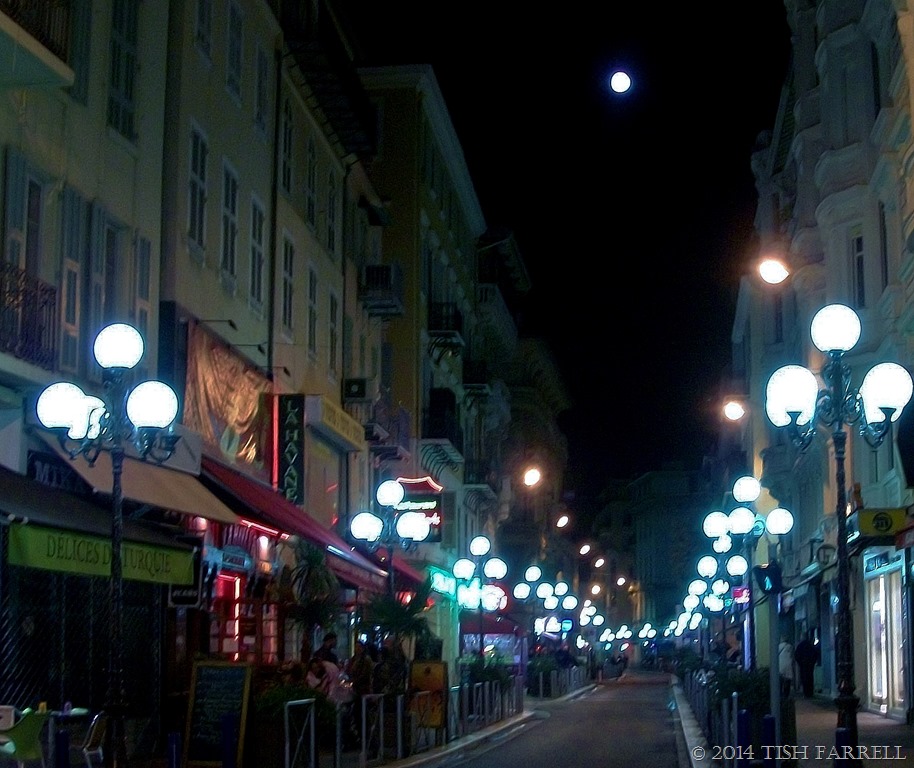
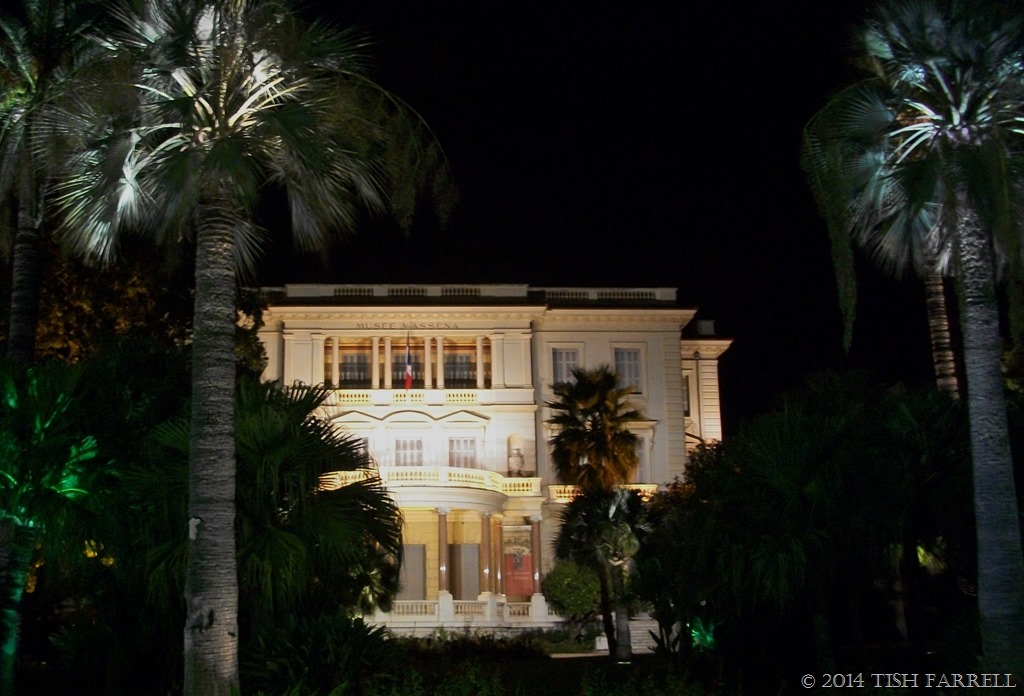
Nice is a lovely city to walk around at night. So many bistro and restaurant menus to browse, the sound of the sea along La Baie des Anges, the October evening crisp after the day’s warmth; ghosts of times past…

Nice is a lovely city to walk around at night. So many bistro and restaurant menus to browse, the sound of the sea along La Baie des Anges, the October evening crisp after the day’s warmth; ghosts of times past…
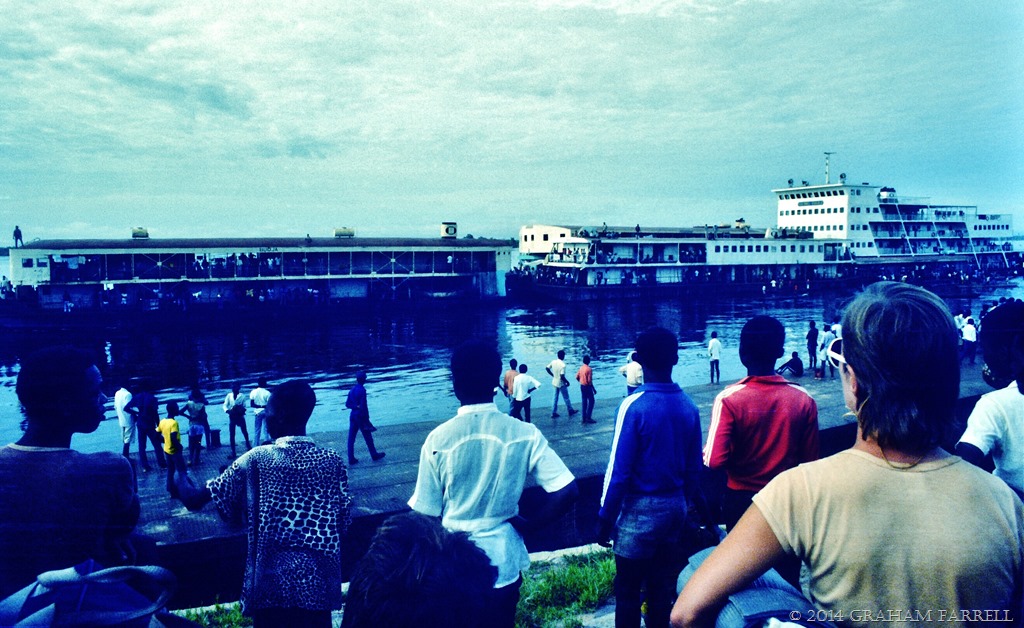
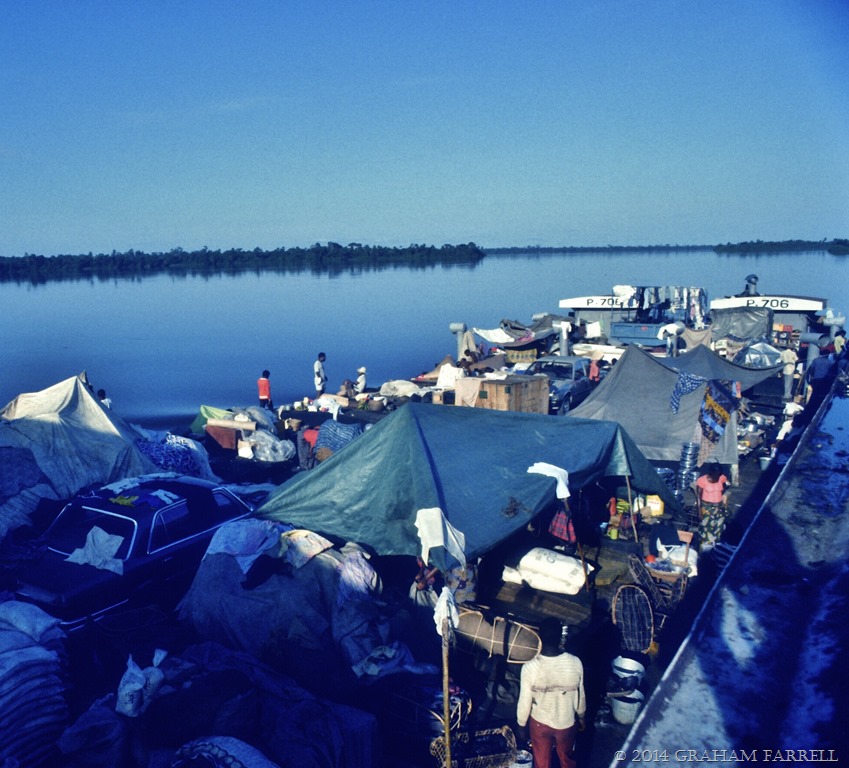
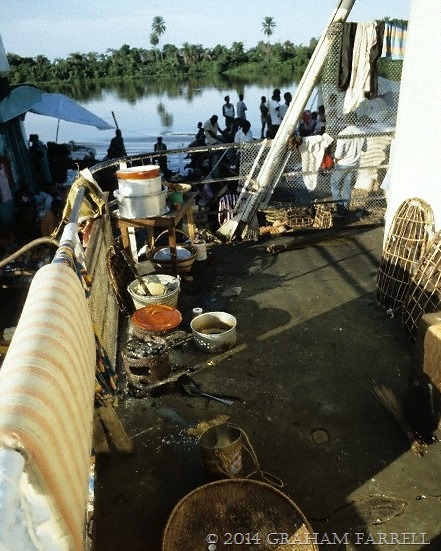
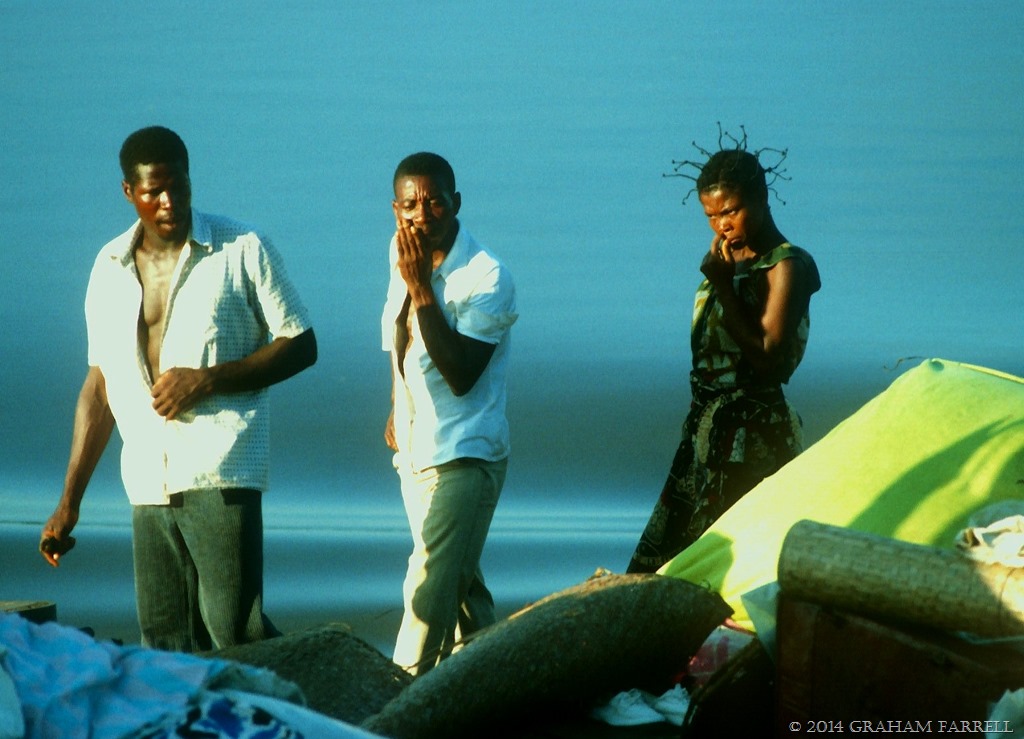
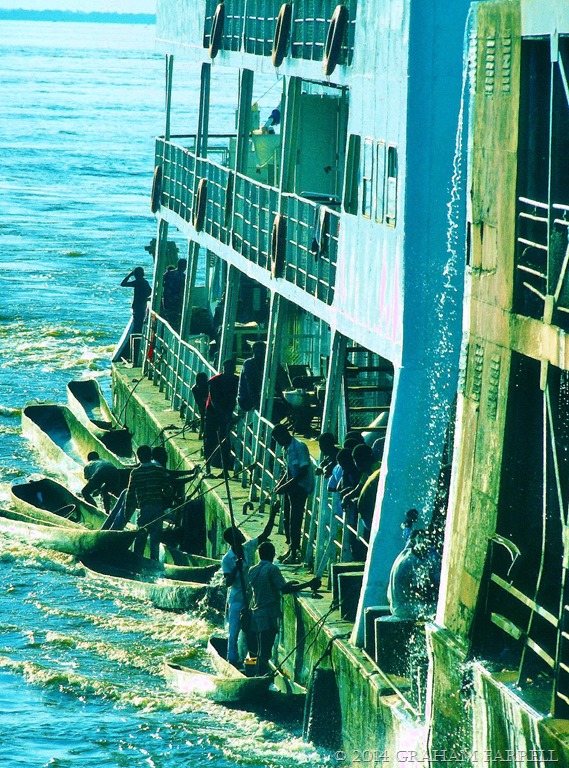
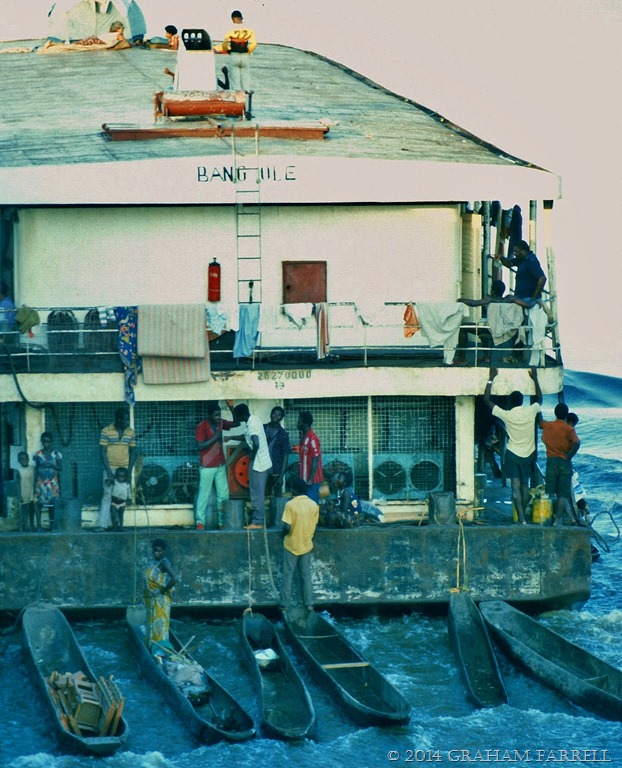
I have written elsewhere that the Team Leader’s long ago trip on the Congo Ferry is a source of great envy to me. I’ve said, too, that the Congo River is Central Africa’s super-highway. In a land with few roads and vast forests, the river is not only an essential means of transport, but a place to do business for communities along the river. This ferry plies some thousand miles of treacherous waterway between Kinshasa, the capital of the Democratic Republic of Congo, and Kisangani in the east. The ferry takes not only passengers, but also has several great barges hitched alongside, and to them are tied fleets of traders’ pirogues. Since progress can be slow with days of delay – running aground on one of the shifting sandbars being a common hazard – the ferry becomes a floating shanty town – all of life and death takes place here.
Henry Morton Stanley was probably the first European to explore the river’s length. It was down to his urging of the riches to be had there that King Leopold II of Belgium established one of the cruellest, most murderous regimes ever perpetrated on hapless humanity. Under the guise of humanitarian aid, Leopold secured this vast Central African territory as his personal fiefdom and named it Congo Free State. From 1885-1908 (until the Belgian Government forced him to relinquish control) Leopold was thought to be responsible for up to 10 million deaths*of African villagers who were terrorized, raped, mutilated and killed in order to provide their quotas of wild rubber and ivory to European Station managers. And believe me, you see only the merest glimpse of these European officers’ activities in Joseph Conrad’s Heart of Darkness, a tale that was rooted in his own brief experience as a steamboat captain on the Congo. Campaigners who helped to expose Leopold’s activities include British journalist E. D. Morel, Irish-born British diplomat, Roger Casement in the Casement Report, and Sherlock Holmes creator, Arthur Conan Doyle.
Nor has the resource grabbing by foreign powers ever stopped. One way and another, the world’s greatest nations have long defended their vast interests in the Congo. Western multi-nationals control millions of dollars of mining concessions. This was the reason why America installed, kept in power and armed the plundering Mobutu regime for 30 years. In 1998, after the repercussions of the Rwandan Genocide escalated into a civil war across the Congo, the US armed 3 of the African nations (Chad, Namibia and Zimbabwe) involved in supporting Laurent Kabila’s bid to take control**. In 2012 The Guardian newspaper reported that British MPs were investigating the ‘opaque dealings’ of London-listed mining companies in DRC***:
“News of the potential inquiry, which could involve top FTSE 100 mining executives being called to give evidence, comes as campaigners argue that natural resources deals are benefiting multinationals rather than the DRC’s population. Commodity trader Glencore will also face calls to explain its involvement in the resource-rich central African country.”
And so the question that nags is when, in the name of humanity, is the plunder and rapine ever to stop? Do not be fobbed off with the notion that the bloody conflicts that have been raging along DRC’s eastern border with Rwanda for over a decade are ONLY to do with local warlords, or Rwanda’s predation. They are to do with coltan that is an essential resource for making cell phones. They are to do with diamonds that adorn the elite and pampered, and are essential to industrial processes and make foreign dealers very rich. They are to do with gold, and copper, and cobalt, and hardwoods, and oil prospecting. They are to do with super-power arms dealing. For this piece of Africa is the most resource-rich territory on the planet, far beyond H M Stanley’s wildest dreams, or even Leopold’s rapacious imaginings.
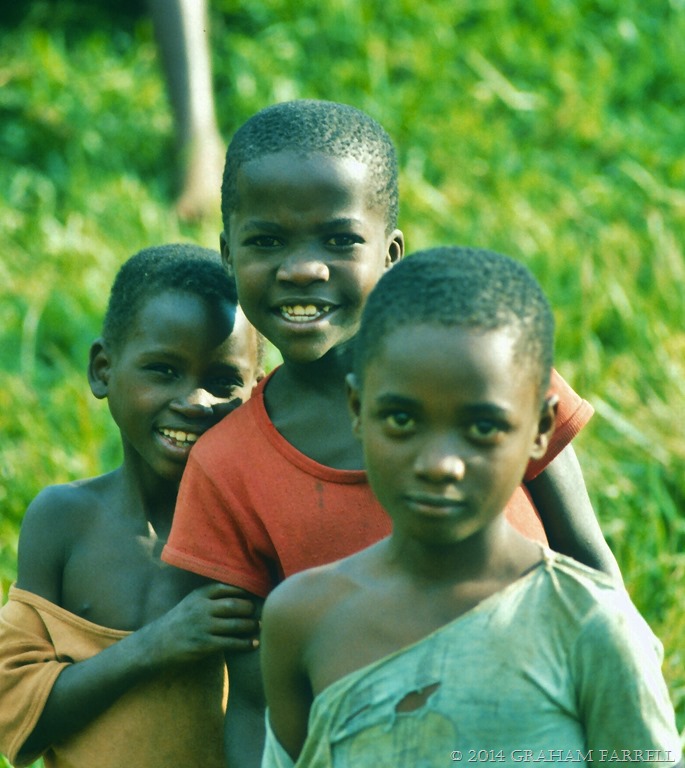
Yet its people remain the poorest on earth. Corporate wealth based on unfair trading comes at human cost, and that cost is the same kind of barbarity that Leopold’s men doled out. As the angry Karim in Monica Ali’s novel Brick Lane is wont to say, the question to ask is: “Who benefits?” In these conflict-ridden days, it is a question always worth asking. Sometimes it offers a glimpse of clarity between all the establishment smoke and mirrors.
copyright 2014 Tish Farrell
References:
* Andrew Osborn Belgium Confronts its Colonial Demons
**World Policy Institute report: US Arms to Africa and the Congo War
*** Mining firms face scrutiny over Congo deals
Corporate Watch Death on the lake: British oil company’s role in Congo killings exposed
Related: Up the Congo for more of the history

Hang-gliding over the hundred metre precipice at Victoria Falls is not to be recommended. Nor had I intended to take the plunge, my ‘sail’ being nothing more than a wet kanga-wrap, held up to fend off a tropical deluge. Somehow, though, circumstances (and a lack of sensible forward planning) had led us to the Falls’ knife-edge just as Zambia’s 18-month drought was ending, and the rains beginning. Even without the hang-gliding it was a heart-stopping moment.
The prolonged drought across Southern Africa was of course the reason for Team Farrell’s presence in Zambia in late 1992. The Team Leader, Graham, had been seconded to the European Union Delegation to manage maize flour and cooking oil distribution to foodless villages across the nation. We had only been in the country a couple of weeks when G was directed to go down to Livingstone on the southern border to inspect a newly arrived consignment of maize. His boss suggested he should drive down on a Saturday and take me too. Naturally Nosy Writer (that’s me) was only too pleased to head off on a several hundred mile safari.
Looking back, the diplomat’s suggestion that I should go was possibly a kindness in disguise. Nothing was spelled out, since we were newly arrived, and Bernard (aka the boss) did not wish to scare us before we had found our bearings. But security in the capital Lusaka was not good. President Chiluba, the newly democratically elected leader, had been in office for barely a year, this after ousting the incumbent of decades, Kenneth Kaunda.
Later it transpired that Kaunda’s army officer son, Rezi, had been intent on destabilizing the country, and was apparently behind the city’s upsurge in violent crime. On top of that, in neighbouring Zaire (now DR Congo) President Mobutu had not been paying the army, and so gangs of gun-toting soldiers would drive down to Lusaka for a spot of night-time car-jacking and house-breaking. In a nation of impoverished people, the diplomatic quarter was the obvious target. Better, then, that I should not be left alone. Not that I knew this then. Nor had G’s company thought to mention any of this before offering his services to the EU. As they say, ignorance is bliss.
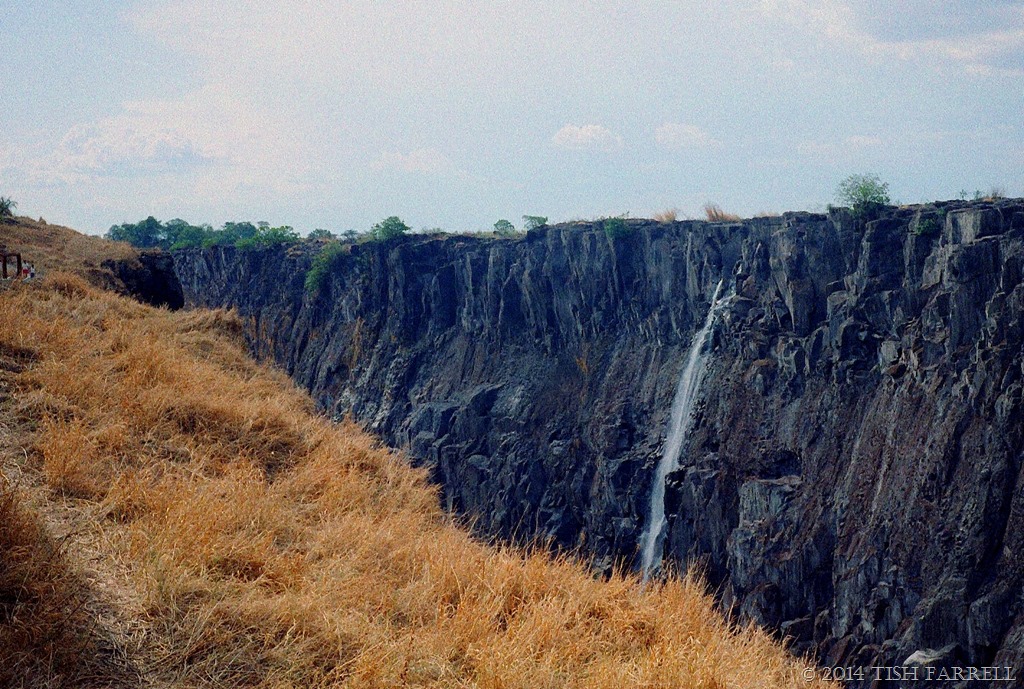
And so one Saturday morning under a wide blue, and seemingly ever rainless sky we set off south. The road, once clear of the city, ran on mile after mile after mile with hardly another vehicle in sight. We passed through landscapes of rolling woodland, the tall-tree miombo which, at first glance seemed more like Europe than Africa. After nine months in Kenya the vistas, too, seemed curiously lacking in drama –until, that is, we reached Livingstone.
Our hotel stood beside the Zambezi, and after tea on the lawn in the English manner it was off to the nearby Falls. The photo above was my first view of them. I wasn’t sure whether to laugh, cry or simply stare open-mouthed. Where was the water?
The drought had much to do with it of course. But the other reason was that Zambia abstracts large volumes of water to run its hydroelectric plant.
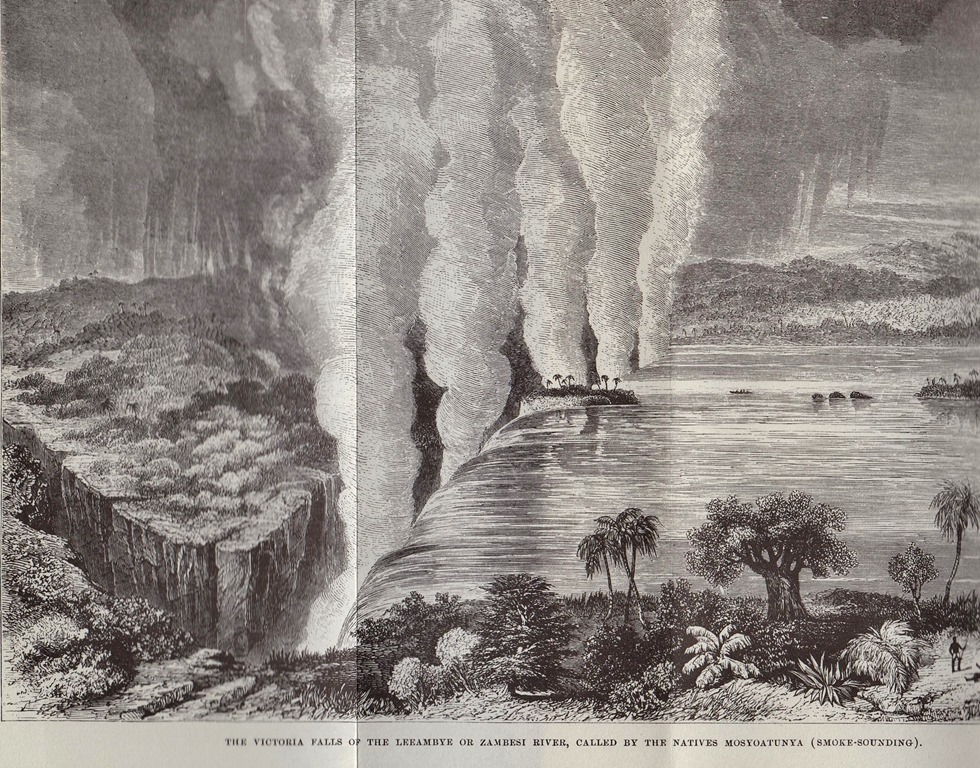
The Falls as seen (and ‘discovered’) by David Livingstone.
Engraving from Missionary Travels and Researches in South Africa 1857
*
G told me the best view of the falls was across the border in Zimbabwe, and that if we had remembered to bring my passport we could have walked across. Most frustrating.
Instead, we walked along the path beside Zambia’s waterless gorge. But trailing through dead vegetation while staring at the stark basalt cliff face felt more and more oppressive. It made me think of Tolkein’s Mordor. We gave it up and went back to the hotel.
Our room theoretically had a river view. In reality all we could see was its empty bed, with huge boulders and clumps of palms here and there. But on Sunday afternoon I noticed that people walking across it. “Let’s go,” I said.
The sun was shining when we set off, and soon we were joined by a boy who appeared from nowhere and offered to guide us to the best Falls’ viewpoint. We duly followed, picking our way round oily looking rock-pools, mammoth sized boulders, and piles of fresh elephant dung.
We must have scrambled on for nearly a kilometre when the sky started to turn grey. I began to feel nervous, glancing upstream and expecting a wall of water to come rolling down. Or to walk round a boulder and into an elephant.
And then the rain came down. Fat freezing drops. We made a dash for cover, which happened to be some trees on Livingstone Island, the very spot from where the explorer had first viewed the Falls in 1855. We crouched for ages under dripping trees until at last, thoroughly soaked, G asked the boy if the ‘good view’ was much further. On discovering that it wasn’t we made a final dash. And here it is. The view:
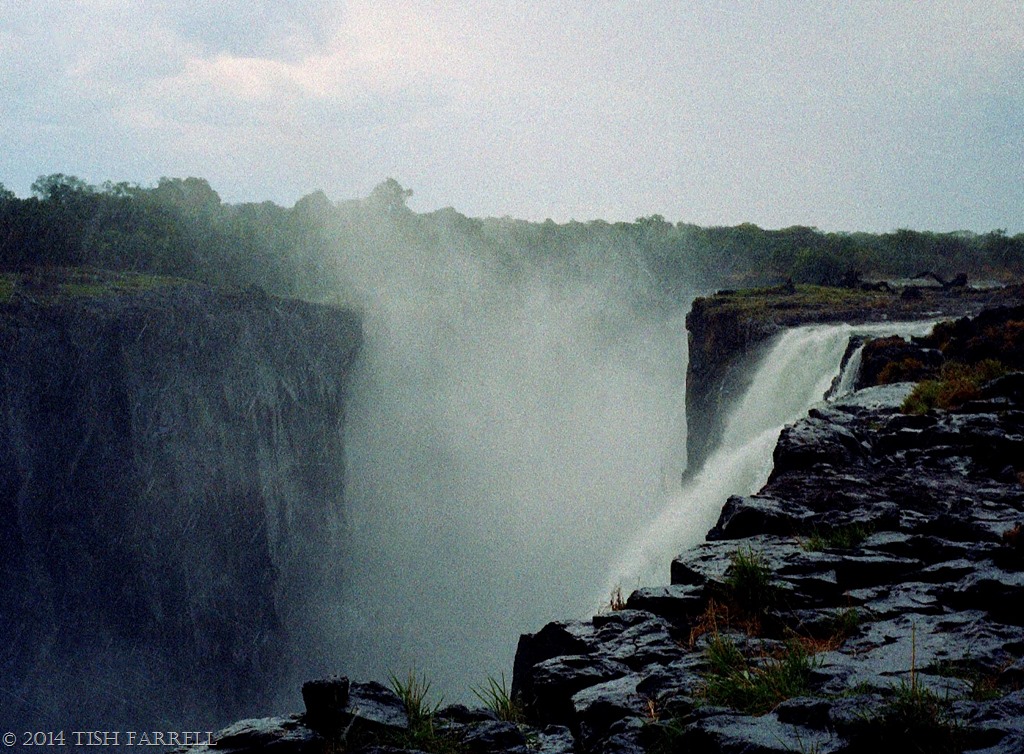
Not much to be seen for the spray coming up, and rain coming down. I took this quick snap, and then held up the sodden cotton wrap that I had been wearing earlier to fend off the sun. As I stood on the knife-edge the sudden gust of wind that filled the wrap was enough to lift me towards the abyss. I stepped back in shock. I’d had more than enough of Mosi-oa-Tunya (the smoke that thunders). So had the boy. Soon he was sprinting away without even waiting for a tip, and that really had me worried. What did he know that we didn’t? We slipped and slid, back the way we had come. More phantom elephants. More imaginary flash floods. More getting lost in outcrops of giant boulders. It seemed a long, long way back to the hotel.
It was not until several months later that we finally got to see the Falls, this time from the Zimbabwe side. On this occasion we only got drenched from the spray, while I took yet another wet and misty photograph, but thankfully avoided all inclination to hang-glide.

copyright 2014 Tish Farrell
Related:
Daily Post Photo Challenge: adventure for more bloggers’ photo-adventures
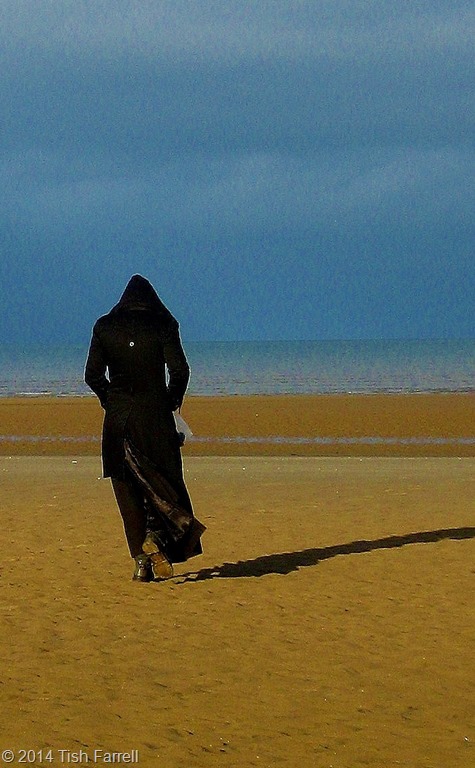
This photo was taken on Boxing Day, on Anglesey – a bright and windy winter’s day in Wales.
Go to:
Weekly Photo Challenge: Contrasts for more contrasts
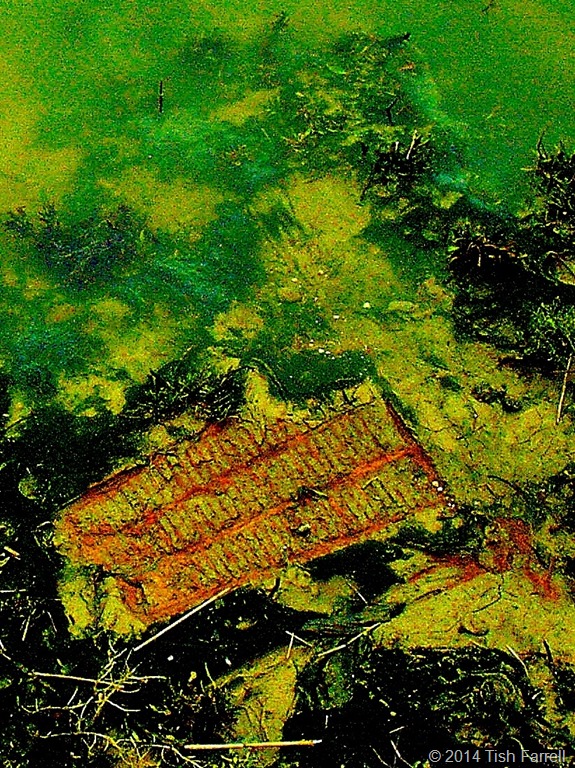
Is it a portent, a glimpse of the future where the ubiquitous mall/consumer-outoftown-outlet is no more. Gone. No more shops. For here we have a ‘fossilized’ supermarket trolley, aka shopping cart, its erstwhile frame decomposed in a muddy creek beside a Strood retail park. These sorry remains were caught in a happenstance moment – after shopping of course – and just as the tidal River Medway was on the ebb. Poor old trolley. No more two-for-one thrill; no more down-the-aisles rush to load up the sugar-laden cargo. And so, ex-trolley, may Mammon bless your squeaky, little wheels – now sadly dissolved in Kentish coastal effluent…
copyright 2014 Tish Farrell
Daily Post Photo Challenge: Split-second story
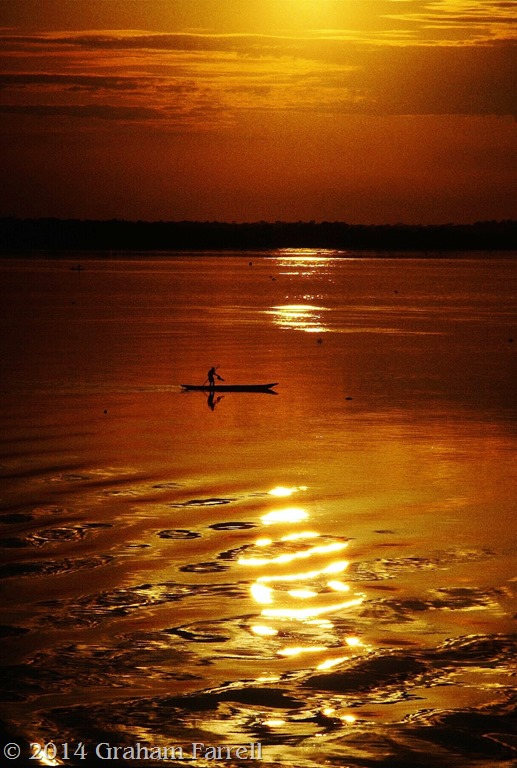
Related:
A Word A Week: Boat (up the Congo)
Here are the links for other bloggers’ photos and stories:
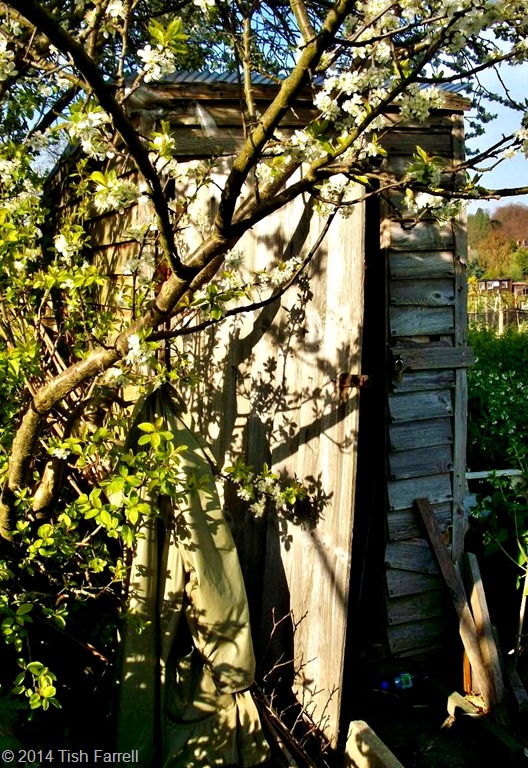
Well the old shed has made it through another year. A couple of bits have fallen off, but last year’s application of internal bracing by the Team Leader, aka Graham, has kept its tendency to list in an easterly direction in check. Would that we all had such a bracing. Over the winter it housed a poor mummified mouse, and snails still go to roost in there. I’m not showing you the inside, though. You definitely do not want to see in there.
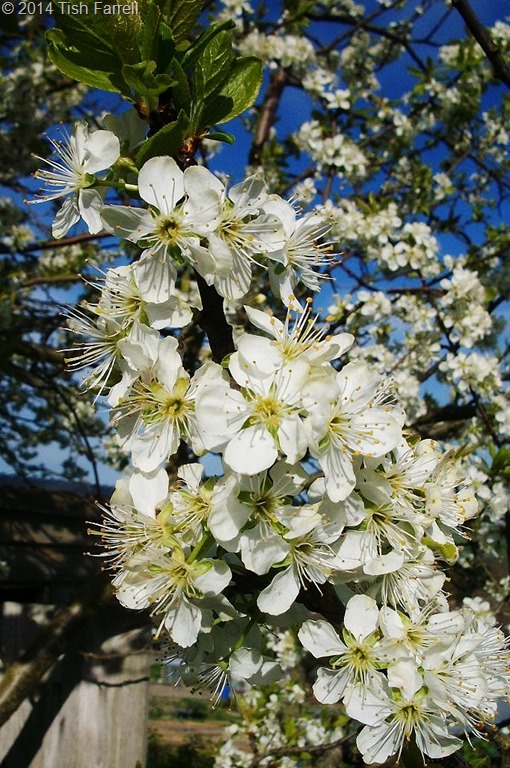
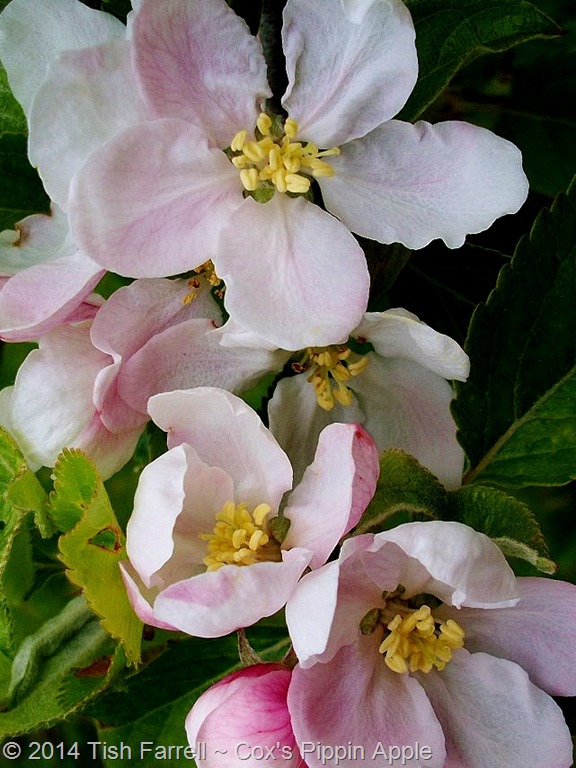
Instead, here is the ancient greengage tree with its delicate blossom. Already I’m wondering if it will give us some fruit this year. Greengages are notoriously temperamental, and after the magnificent crop in my first year of allotmenting that had us, and all our friends and relations, dribbling with delight over bucket loads of luscious harvest, it has borne very little. That was seven years ago. Maybe this year is the year then.
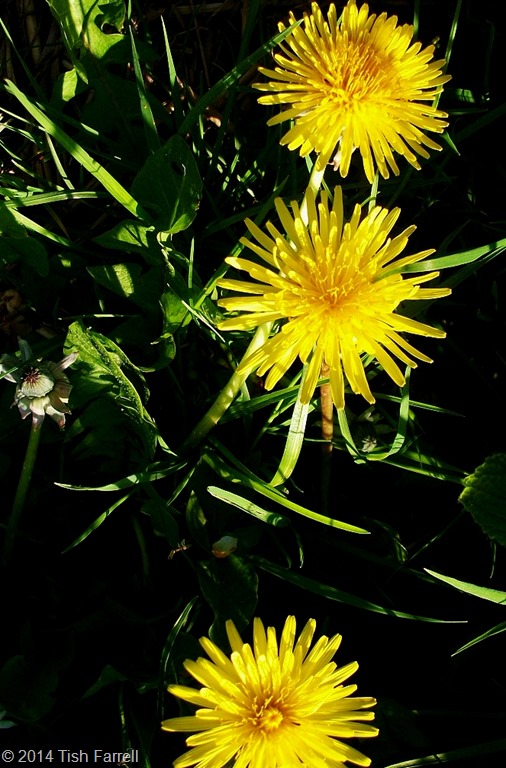
There are loads of jobs to do, not least digging. The endlessly wet autumn and winter meant that winter digging was impossible, so there has been much to catch up on. Meanwhile the weeds are literally having a field day, which makes this the the season of dandelion beheading. (Sorry, dandelions). They are sprouting up all along the paths between everyone’s plots, and I’m afraid I find great satisfaction in slicing off these cheery faces with my strimmer. Their replacements are anyway there the next day, beaming vigorously.
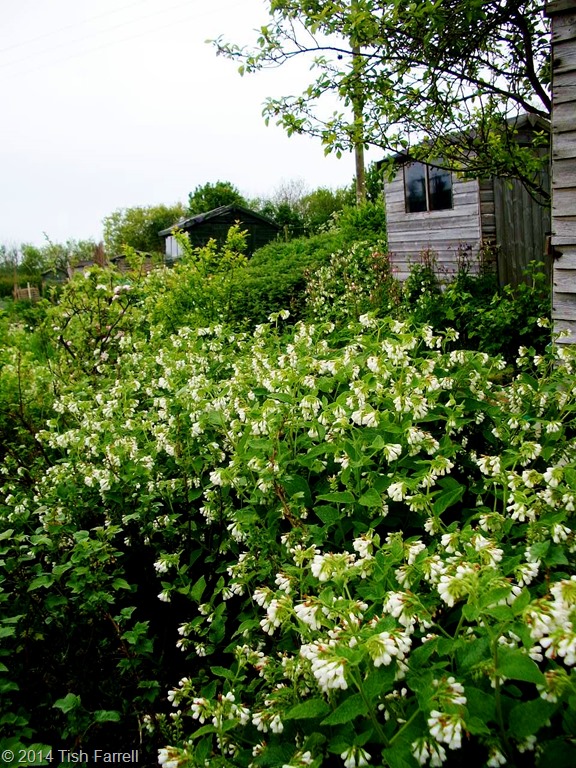
Then there is the comfrey forest to manage. This plant I crop and cherish. You cannot have too much of it, and it obligingly grows itself in a huge clump beside the shed. If you cut it down after flowering, it will grow again and again during the summer.
Comfrey, as I have mentioned before, is the organic gardener’s dream plant. It comes in other shades, pink to purple through blue. Its ability to mine otherwise inaccessible nutrients from the soil (dynamic accumulation I believe this is called) and repurpose them in its foliage make it an endless source of cost-free fertilizer. It is one of the reasons why you can’t look in my shed. I do my brewing in there. And no. It’s not what you think.
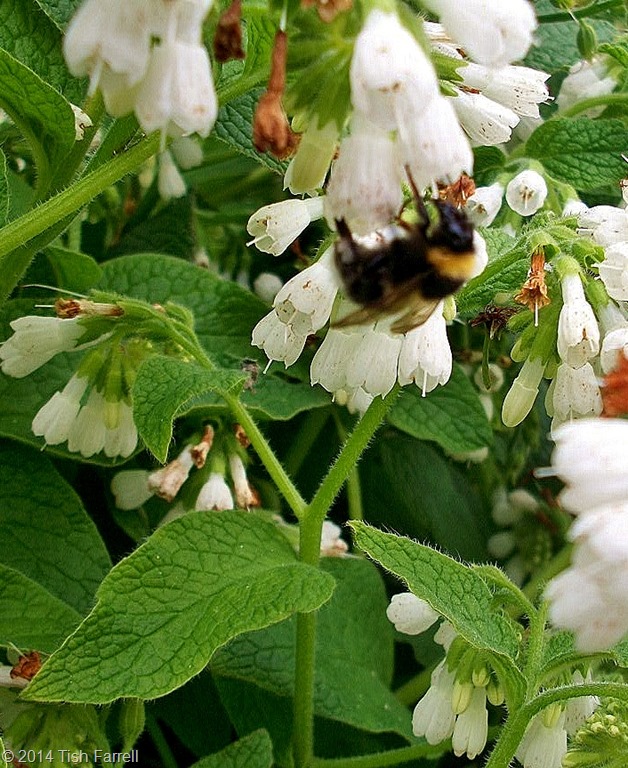
For those who missed an earlier post on this, I stuff old compost bags with the comfrey’s top growth, seal them with clothes pegs, cut a hole in the corner of each bag, and prop it over a bucket and wait. In the warmth of the shed the vegetation soon rots down, giving out a dark and evil looking liquid that collects in the buckets. This stuff is pretty smelly, although nowhere near as pungent as the slimy residue left in the bag, which then ends up on the compost heap. The liquid I decant into old plastic bottles, and use as a feed through the growing season. It is 3 times richer in potassium that farmyard manure, but it must be diluted 1 part comfrey essence to 15 parts water.
The blurry bee above would not stay still for the shot, but that’s another good thing about comfrey. Bees like it. As I took this, I spotted at least 4 different kinds: a honey bee and three bumbles of varying liveries and sizes. Having written of the dire things that are happening to bees, it’s heartening to see so many at the allotment doing their work. Thank you, bees.
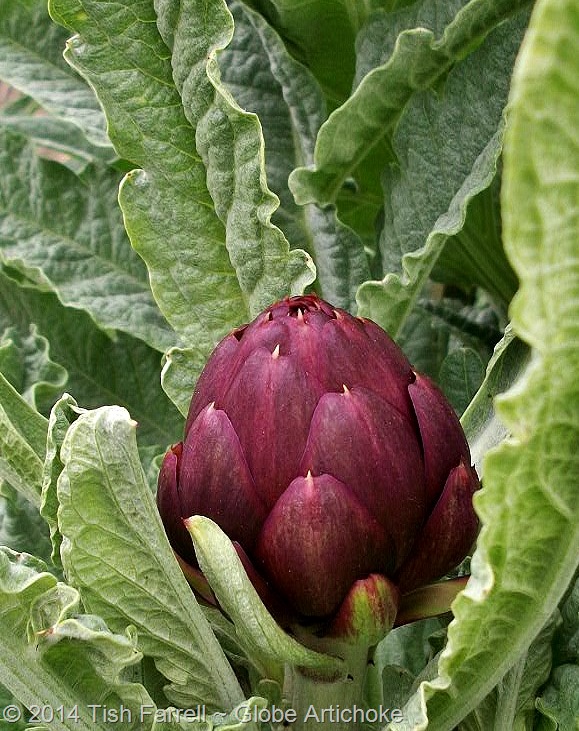
The mild winter has meant that many crops simply kept going without dying back. Yesterday I noticed that my globe artichokes have already made globes almost big enough to eat. In May? What is going on? But thank you, artichokes.
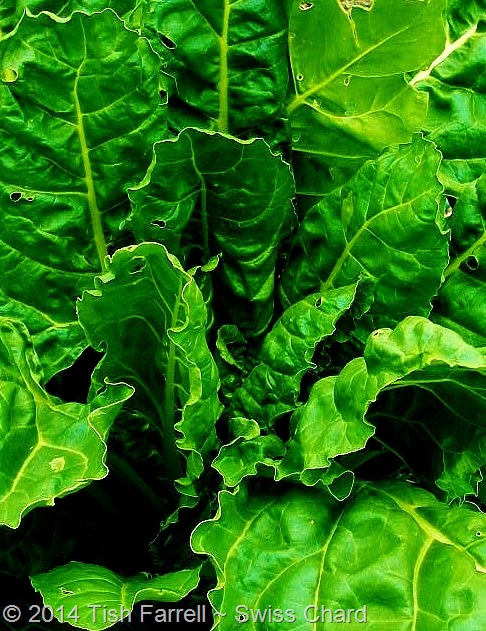
The Swiss Chard has been magnificent too and kept us going through the winter with fresh new leaves. It is only now going to seed. Nor did I sow it in the first place. It seeded itself around my plot from my neighbours’ plot. Thank you, Pete and Kate.
And now you can look at my Red Duke of York spuds, their foliage just pushing through the soil. I love the purple flush on the new growth.

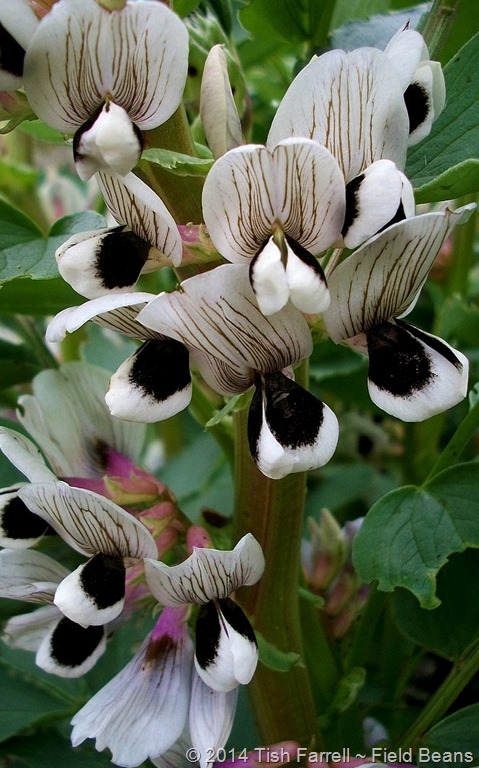
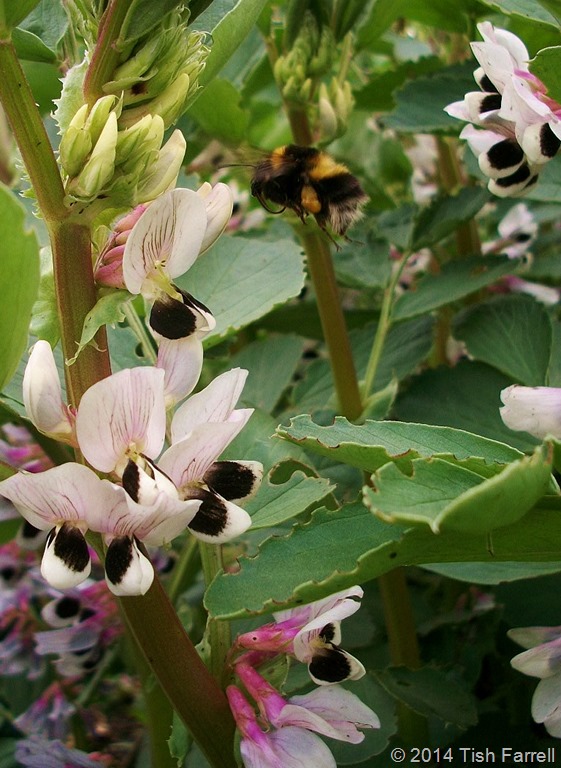
And next are my over-wintered field beans (rather like broad beans I am told, but smaller and tastier). This is the first year I have tried them. The metre tall stems are covered in blossom from tip to root, and the scent is glorious. The bees are busy here too.
*
And last but not least, the strawberries are flowering like crazy…

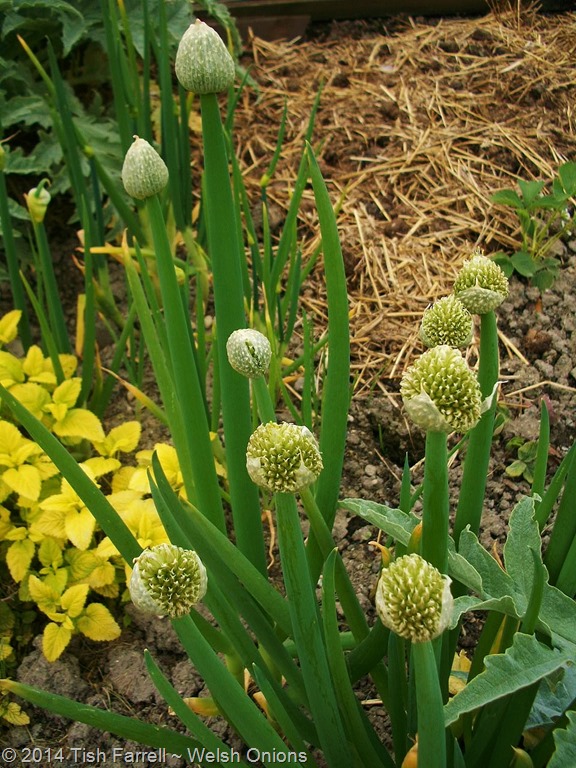
And the Welsh Onions are bursting into bloom beside the Lemon Balm, although I’m not sure whether I should be stopping them from doing this. On the other hand they will look rather splendid as the flowers open, and of course make lots more seed.
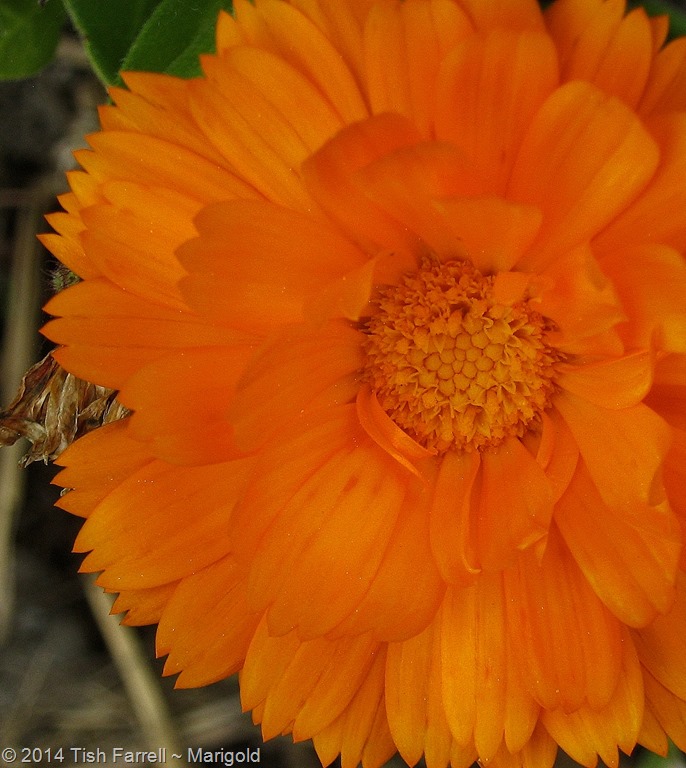
And finally, the brightest face of all at the allotment, other than mine after too much digging. This is yet another lovely plant that grows itself up there with no help from me, and flowers into the winter. Its petals are lovely in salads, and it makes a good herbal tea that is said to improve pretty much any condition. I can believe it. Simply looking at this flower does you good: the orange goes right through your eyes and into your immune system. A big hand then, for the marigold. TARRAAAAH!
© 2014 Tish Farrell
Please go to all these places for lots more brilliant stories:
Ailsa’s Travel Challenge ~ Close-up
DP Weekly Photo Challenge ~ Spring
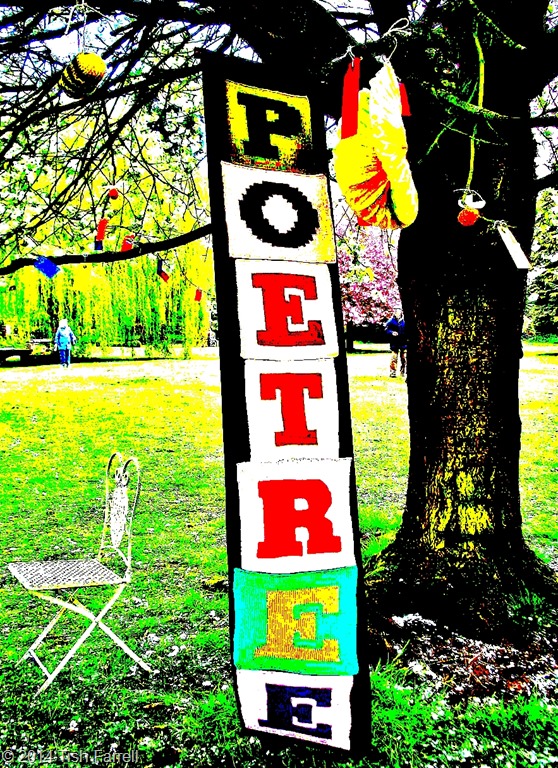
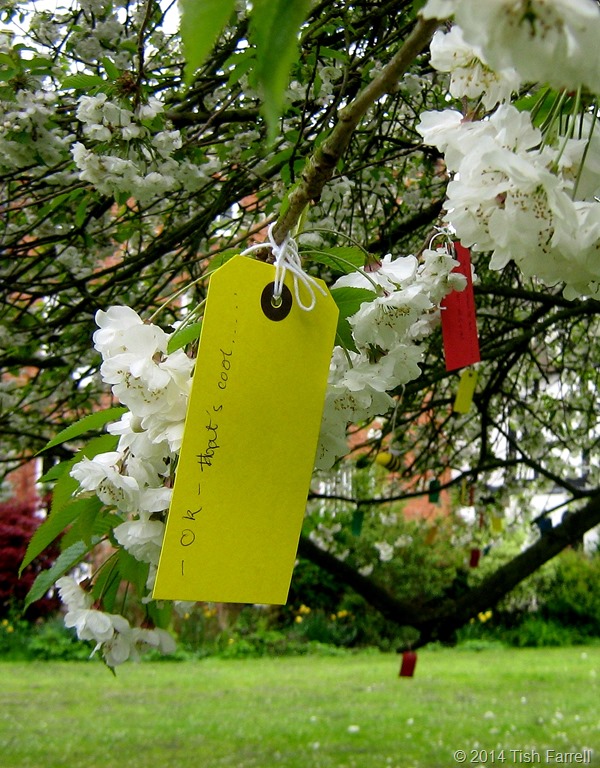
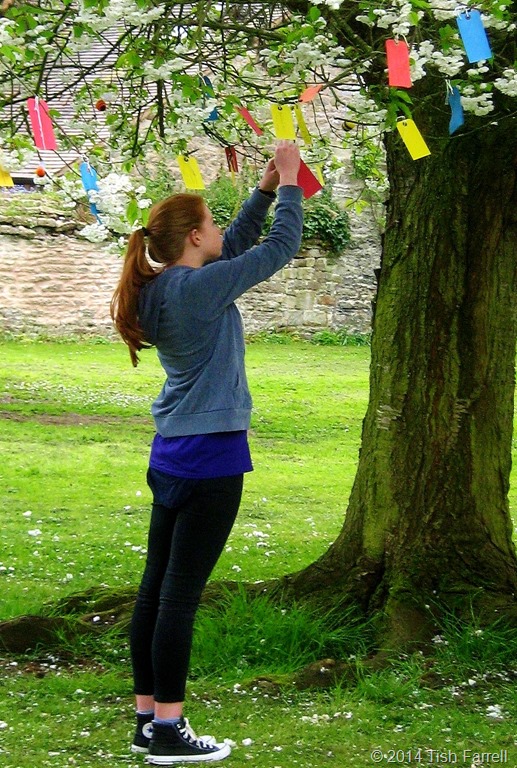
These letters are knitted (I think I was responsible for the red ‘E’) and here they are adorning the cherry tree on the Church Green. This is the Wenlock Poetry Festival’s ‘Poetree’ (artistic licence rendered photo-wise) and, during this now annual April event, everyone may compose, or write verses from their favourite poem on a luggage tag and hang it on the tree for others to read.
This year the tree has joined in the general creativity by bursting into bloom. In previous years it has been quite bare.
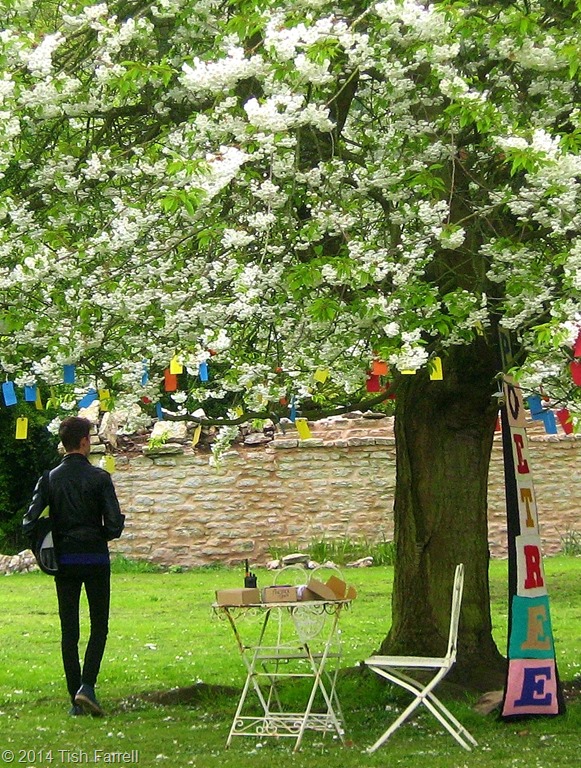
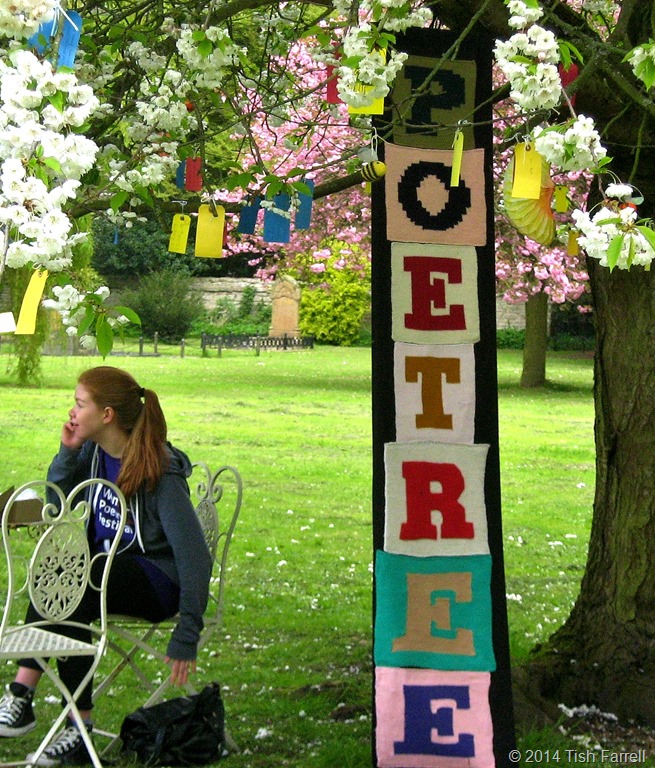
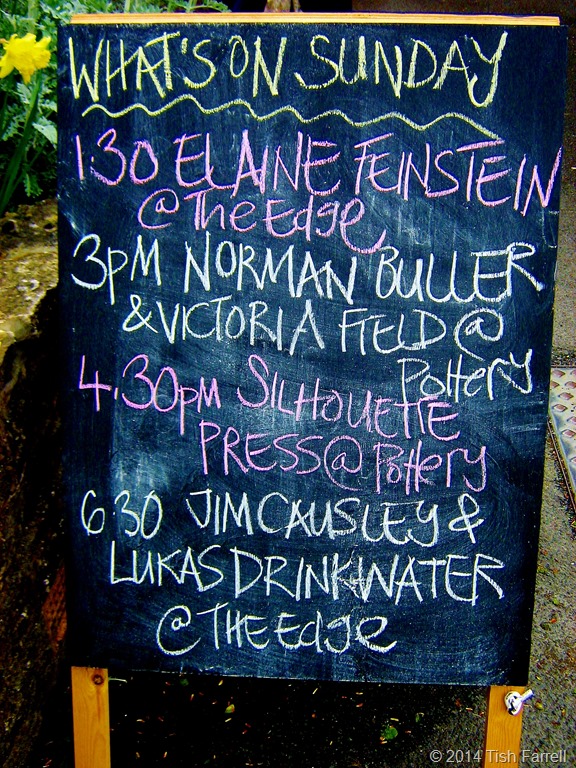
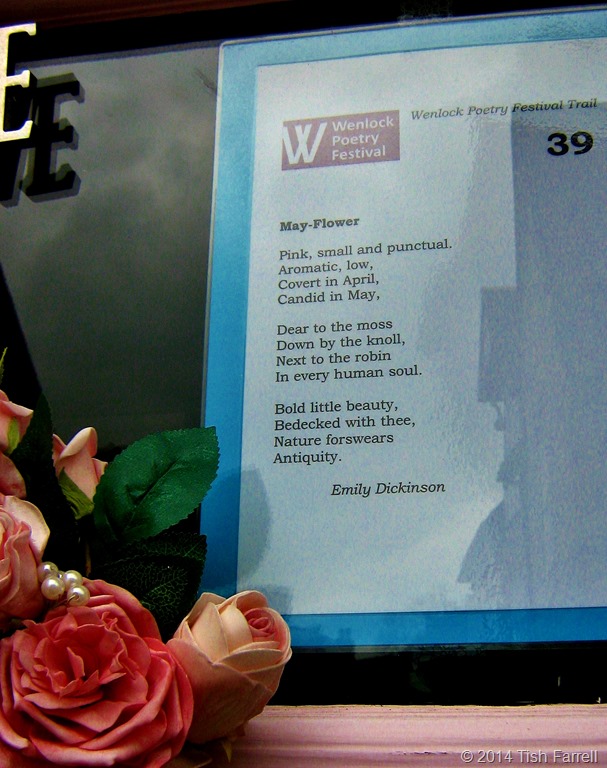
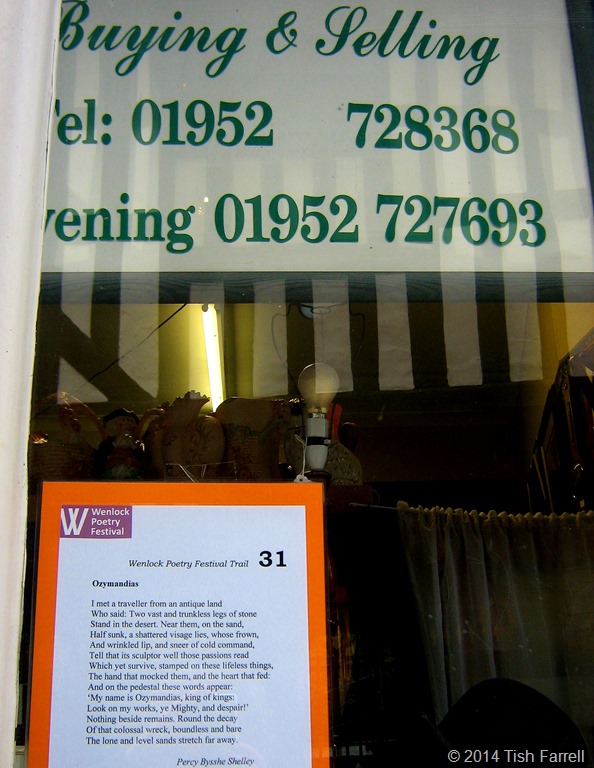
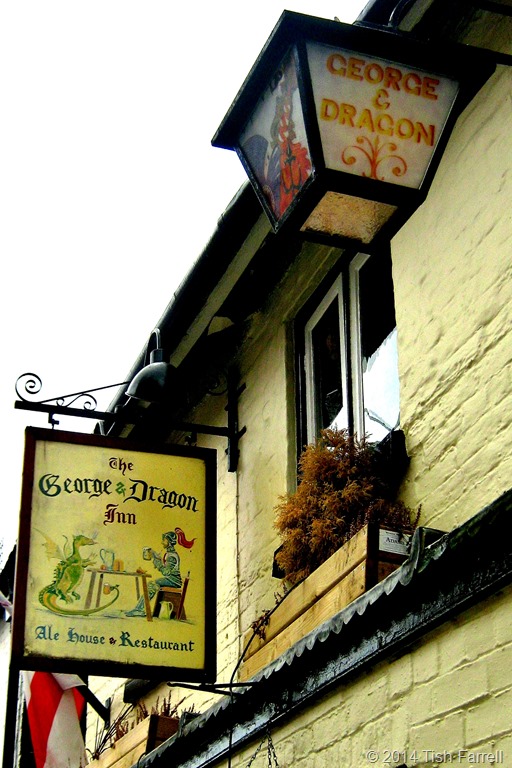
The festival embraces the entire town, using venues at Wenlock Pottery, Methodist Church, the George and Dragon Pub, Tea on the Square Cafe, and The Edge Arts Centre. Besides the three-day programme of readings, talks and workshops with top British poets, there are verses to be found all over the place. Nearly all the shop windows host one, and they include works by local amateurs as well as the more famous.
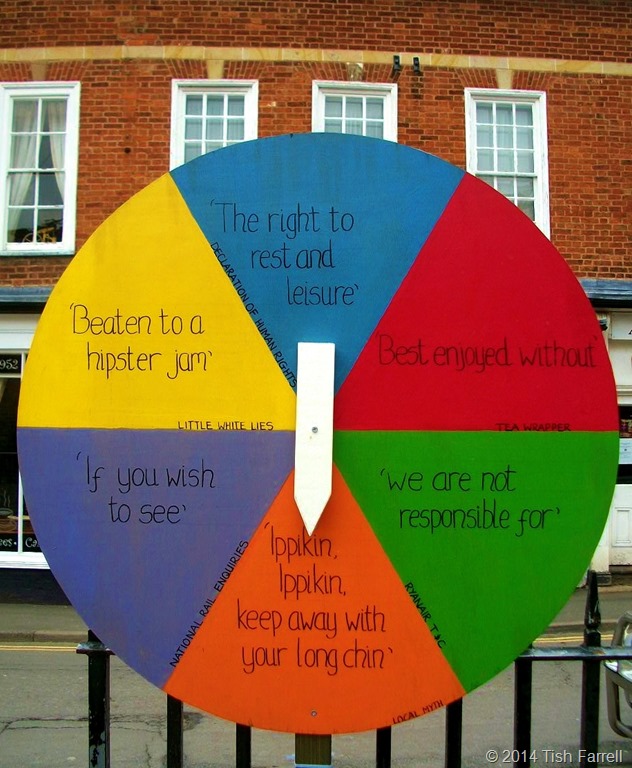
And then there are the ten Dada Poetry Orienteering spinners (including 2 mystery ones) sited about the town. They comprise phrases culled from printed matter – from the Declaration of Human Rights to a tea wrapper. Visit some or all and, with random spins of the pointer, create an on-the-spot composition.
And when inspiration needs a further boost, then there are refreshments on hand, not only at the Poetry Café in the Priory Hall, but at the town’s ancient inns, and traditional tea rooms.

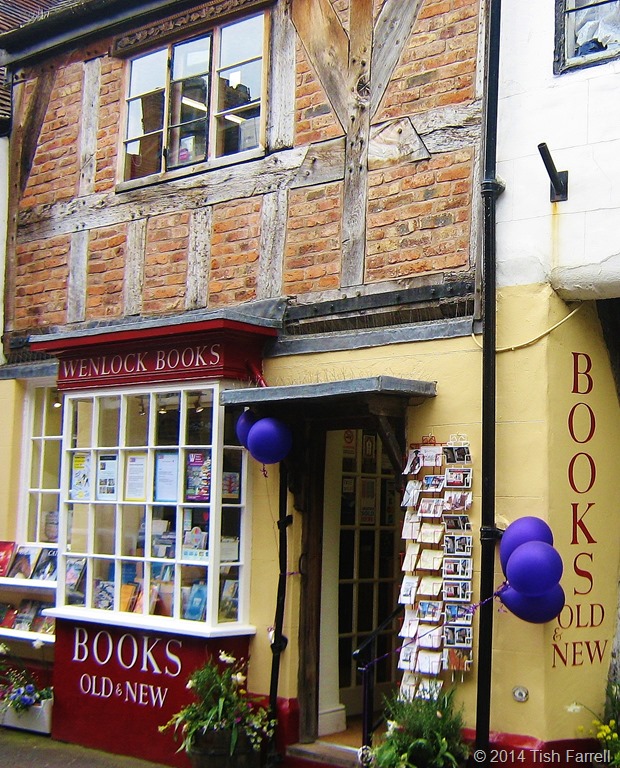
And here we come to the heart of the festival, the town’s famously much loved independent book shop, Wenlock Books. Its owner, Anna Dreda, has been the primary driving force behind the festival, enticing, Carol Ann Duffy, Britain’s Poet Laureate, to be the festival’s founding patron. The festival is now in its fifth year, and involves the efforts of many dedicated volunteers who put in many months of work to ensure its continuing success.
And so for a small town of less than 3,000 people, we are astonishingly well-lettered, and much of this is down to Anna, who throughout the year (and quite apart from the poetry festival) lures young and old into her lovely shop to take part in reading groups, listen to stories being read, or chat with authors. Coffee and biscuits are ever on offer, and sometimes even a Tea and Toast Breakfast. Last year, too, Anna was invited to meet the Queen during a celebration of British contemporary poetry.

Anna Dreda of Wenlock Books
*
Sadly, you have just missed this year’s festival, but now that you’ve glimpsed a little of what’s on offer in Much Wenlock, check out the festival website below and make a date for next April. But before you leave, a few more views of lettered Wenlock:
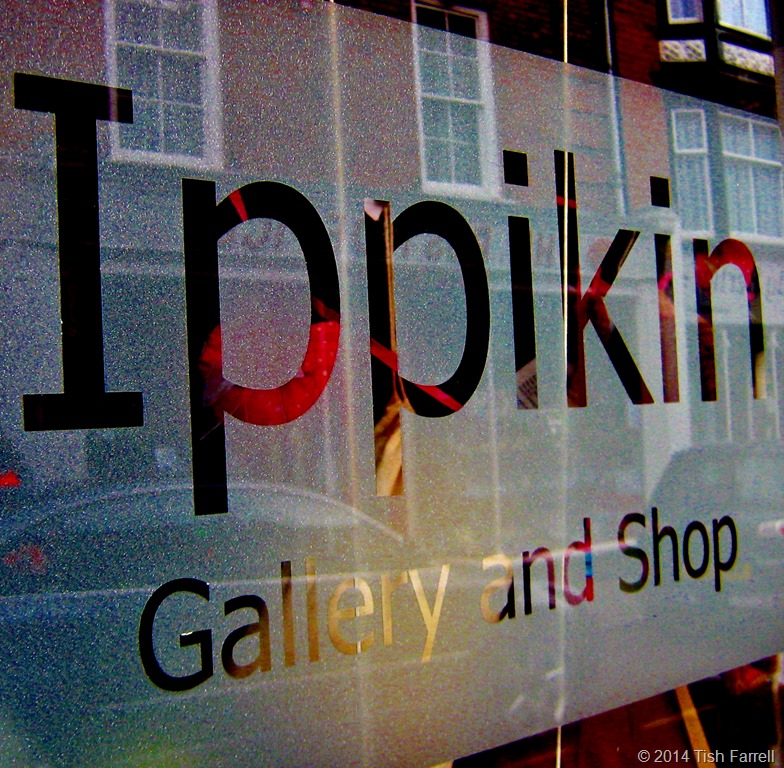
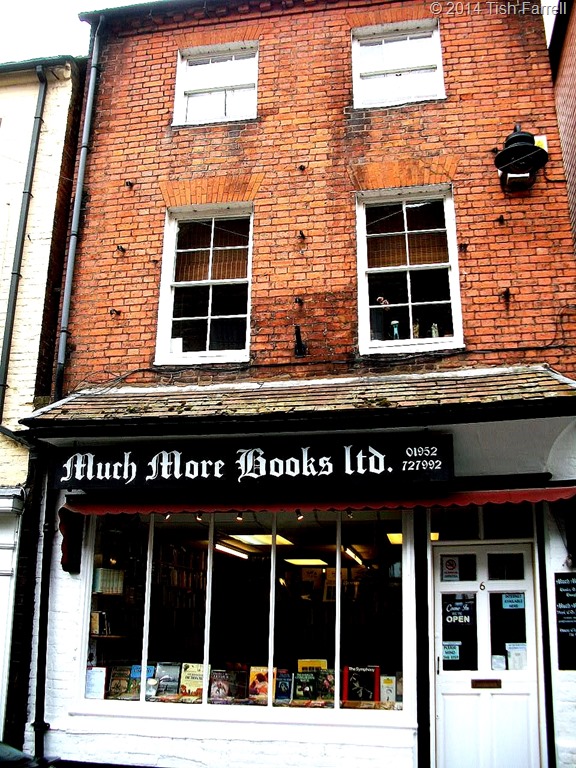

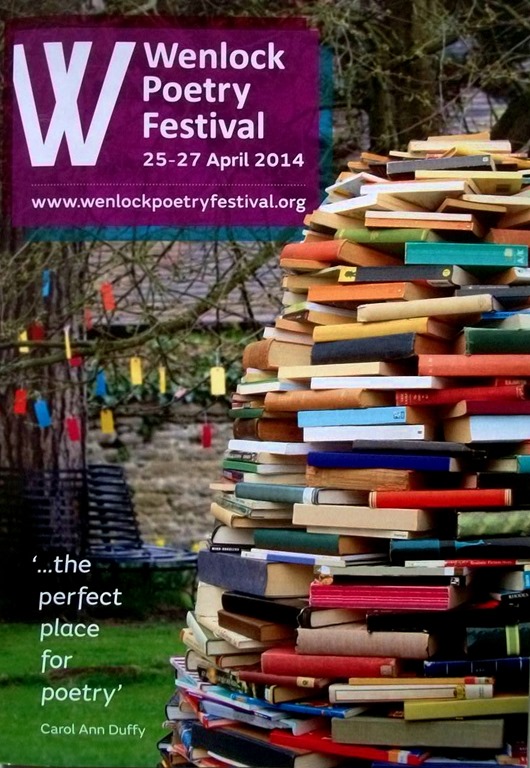
See you at the sixth Wenlock Poetry Festival 2015
Related:
Go to Daily Post Weekly Photo Challenge for more LETTERS
“Then the earth itself rose up to mourn the bloodshed—this rising up in grief is Uluru.”
Norbert C Brockman Encyclopedia of Sacred Places
*
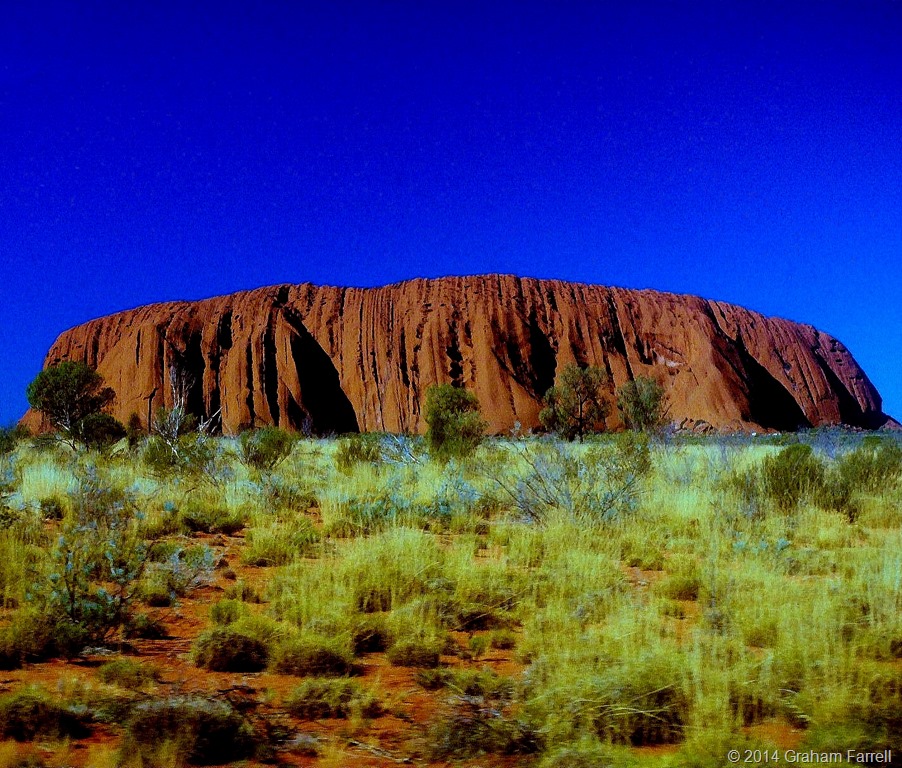
This striking eruption of earthly sorrow is only one of the stories that the Anangu people of Australia’s Northern Territory tell about the origin of Uluru (also known as Ayers Rock). Uluru is a sacred place in their tribal land. It is now part of the Uluru-Kata Tjuta National Park, which since 1985 has been jointly managed by the Australian Government and the Anangu people. In Brockman’s version of the origin story he says that back in the time of ancestral spirits, two tribes were invited to a feast. But on the way, the guests became captivated by a group of Sleepy Lizard Women and lingered at a waterhole where Uluru now stands. The party hosts took umbrage at their guests’ nonappearance and, feeling insulted, sang evil into the mud they were moulding until it sprang to life as the dingo. Next, a terrible battle broke out and all the tribal leaders were killed. The spilling of their blood caused Uluru to rise up.
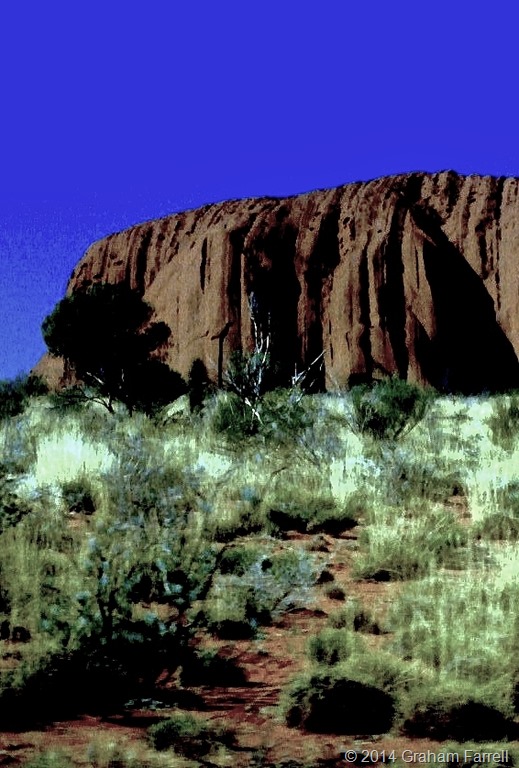
Geologists will of course give another explanation. They will say that Uluru is an inselberg, literally an island mountain, a sandstone dome that is the sole remnant after the slow erosion of a mountain range. Tourist guides will tell you that it is Australia’s most famous natural landmark, that it rises over 300 metres above the flat desert scrub, that the tough trek to the top is 1.6 km, and the walk around the base over 9 kilometres.
As I write these facts and figures, I feel myself becoming irritated. Surely they are not the point. I begin to see a little of why the Anangu people do not want people scrabbling all over the place. Come there, by all means, they say. But do not climb. Watch and listen. This is the place where several songlines intersect, and where many sacred ceremonies are performed. It is filled with great meaning and resonance.
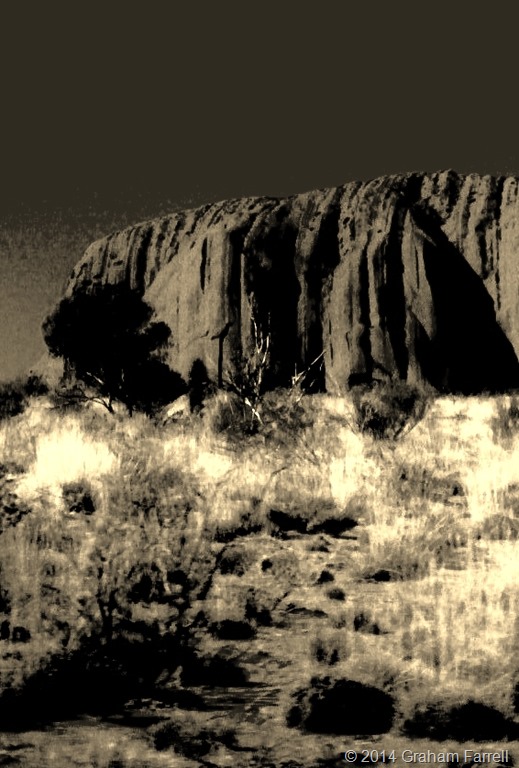
Genetic studies have shown that Australia’s indigenous people arrived in that land some 50,000 years ago. In all that vast expanse of time, and until the arrival of Europeans, their cultural view was presumably uninterrupted. They lived a hunter-gathering life well fitted to a demanding environment. There were people living around Uluru 10,000 years ago. What to European newcomers appeared utterly undeveloped and primitive, was rich in metaphor and codes of conduct. And if I have rightly understood what the Anangu people say (see the links below), then physical reality, metaphor, and time itself are meshed as one. Past, present and future are all part of the becoming that began with the first ancestral spirits.

In the beginning, then, the earth was flat and featureless. Next came the spirit ancestors who took the forms of people and animals. In their wanderings across the surface of the world, they instigated acts of both creation and destruction. These brought into being the physical landscapes we see today. They are journeys of becoming, iwara or songlines, and through them was engendered the law, tjukurpa (chook-orr-pa). These are ethical pathways, ways of being and doing that honour the interconnectedness of all things; the relationships between plants, animals, humans and the land itself. The law is remembered and passed on by elders to the rightful inheritors through song, art, stories and ceremonies.
One can see, then, why the Anangu people might feel that the word ‘dreamtime’ does not do justice to the meaning of tjukurpa (law). To the European mind the term suggests something fey and otherworldly. Yet in the physical sense Anangu law is absolutely worldly; it is about showing responsibility towards the land and all living things; honouring existence. This, I would suggest, is the kind of moral geography that we ‘Rich-Worlders’ could do well to acquire—and PDQ? Our trail of destruction across the planet speaks for itself. Our presumption of being ‘on top’ in the civilization stakes is more than a little flawed. We forgot a few hundred years ago to leave only our footprints.
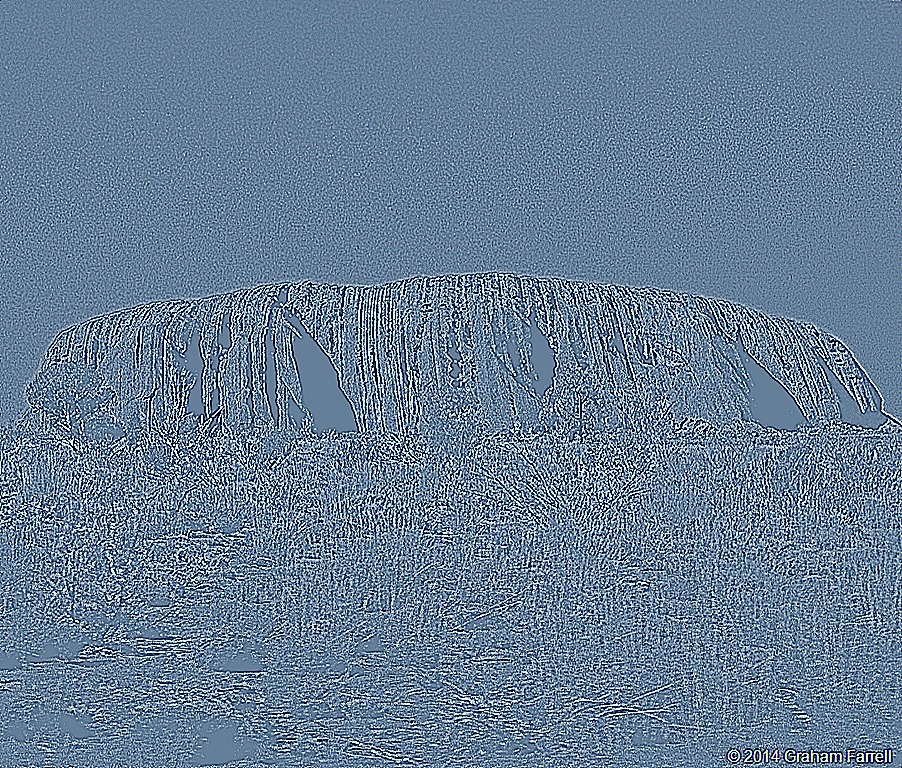
For more about Anangu culture go HERE and HERE and HERE
copyright 2014 Tish Farrell


