Look Out! Granny’s Nightcaps Are Blowing All Over The Woods

P1050184

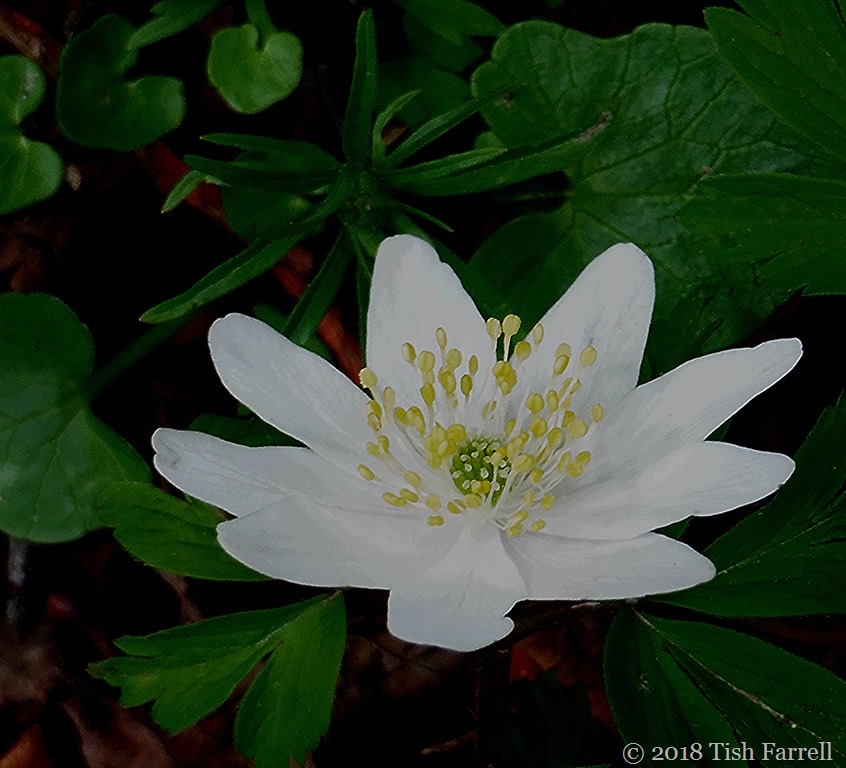
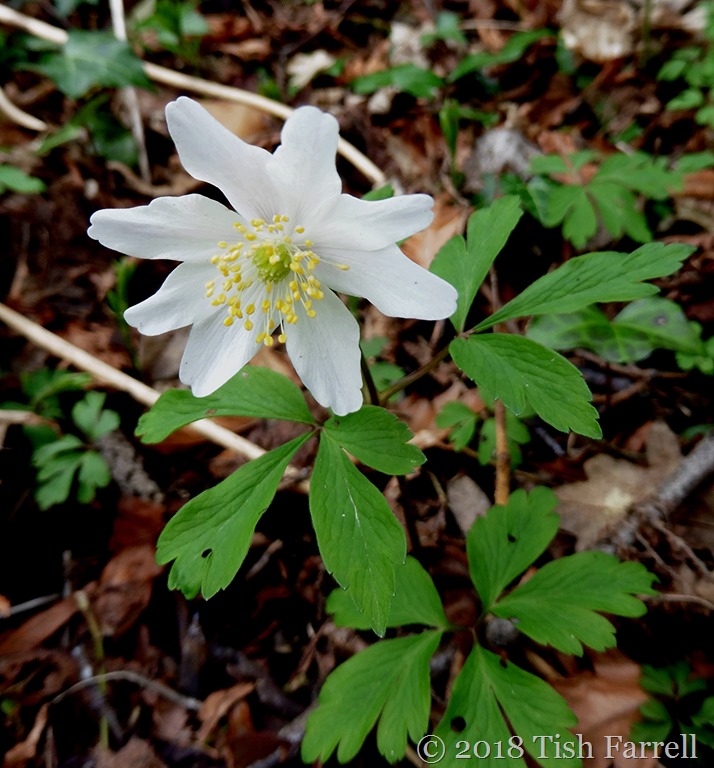
Wood Anemone . Anemone nemorosa . Windflower . Grandmother’s Nightcap

*

I hadn’t meant to go wild flower hunting. I was only intending a quick dash along the old railway embankment beside the Linden Walk. A bunch of wild garlic leaves was the objective. They had started appearing soon after the second snow, and I’ve been cropping them on and off since early February. Now all the shady ground either side the former track bed is carpeted in clumps of lush, green, garlicky leaves.

I’ve found that chopping them into a jar and steeping them for a week or so in unfiltered cider vinegar makes for a delicious salad dressing ingredient. You can also treat this as a general spring tonic – a dessert spoonful in a big glass of water. The leaves are also good in a pesto sauce instead of basil, and you can chop them with abandon into soups, curries and casseroles. When they start to flower, you can use the tiny white florets too.

Anyway, as I picking my way through the undergrowth I came upon the wood anemones creating their own little galaxies under the lime trees. They are one of the loveliest of our spring flowers, and their presence is an indicator of ancient woodland. In his Flora Britannica, Richard Mabey also says they do not seed, but their roots spread very slowly in dappled shade. If you spend some time with them, you will see how they turn their faces always towards the sun. Less appealingly, their foliage is said to have the musky odour of foxes, though I can’t say I noticed any such smell when I sniffed the leaves.

P1050168

copyright 2018 Tish Farrell

Life After Death But Perhaps Not In The Way We Usually Consider It?

I know many people do not care for them, but I like graveyards. In my teenage years many moons ago we lived next to one – an unassuming village sort with a few brooding yews and a small plain church presiding. It had one tunelessly doleful bell which was very trying to the nerves of us Ashfords come Sunday morning. My father, who was a godless soul as far as I know, took to mowing the grass around the nextdoor graves. This was after he had deeply offended the vicar by mowing our own lawn during evensong.

Pa was deaf and had switched off his hearing aid and so presumably had missed the Sunday evening bell tolling, although this is hard to believe. Anyway, around seven on a summer’s evening he was happily whizzing over the grass with a very noisy flymo only to be fruitlessly hallooed over the church wall by the vicar who had worked himself up into a whirlwind of white cassock.

I think it was me who spotted the poor man waving his arms, trying to catch Pa’s attention. It was a bit embarrassing. Ma tut-tutted. We all knew that Pa was a bit obsessive-compulsive when it came to grass-mowing. But all was smoothed over in the end.

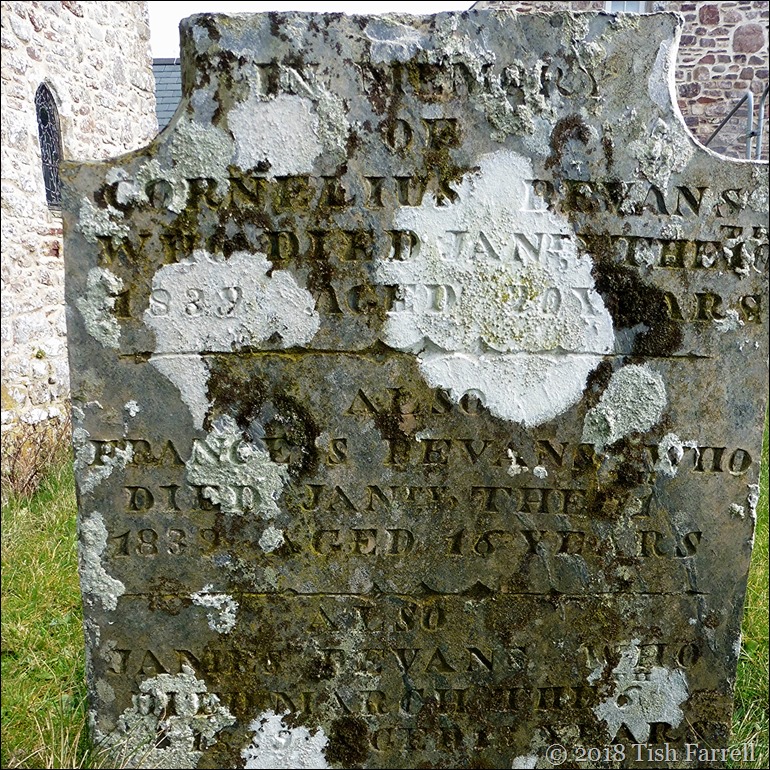
Anyway, to get back to graveyards. Here I am posting some photo details of St. Bride’s churchyard memorials (See earlier post The Little Church By The Sea.) I’m including them for a very important reason. While we were away at St. Bride’s I happened to read an article by Harriet Carty in April’s The World of Interiors magazine. Harriet Carty is an environmental scientist who lives in Shropshire and she is also director of a non-religious charity called Caring For God’s Acre. My interest was thus piqued on several fronts. This is what the organisation says about itself and what it does:

There are about 20,000 burial grounds in the UK and they contain a fantastic wealth of biodiversity and history. They are refuges for wildlife and stepping stones of habitat within our increasingly nature deprived landscape.

And…

Burial grounds are unrivalled for the wealth of built heritage and social history they contain. We encourage appropriate management of heritage and the appreciation and surveying of monuments. Good management of a site creates a haven for wildlife without losing accessibility to the built heritage.

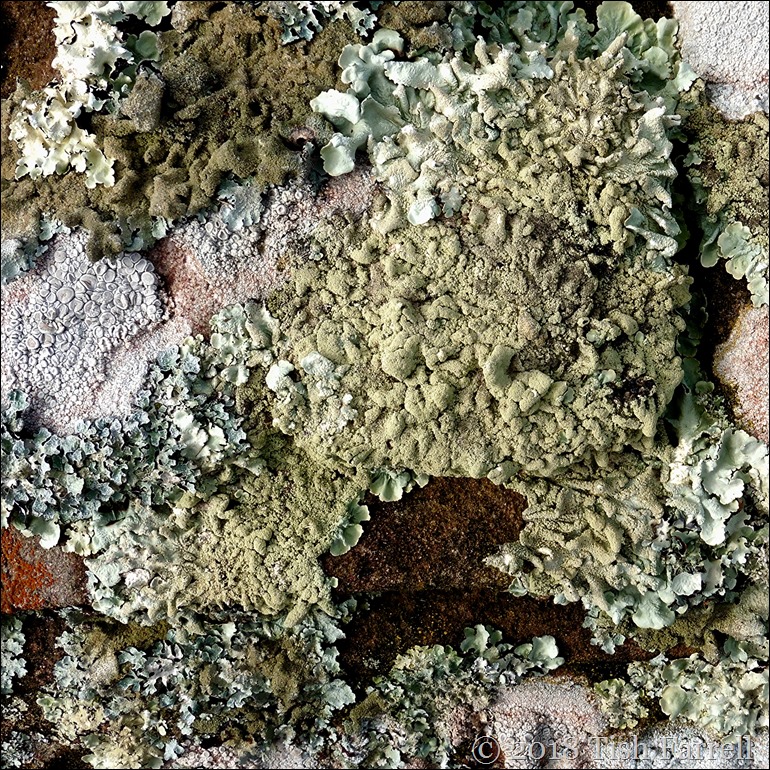
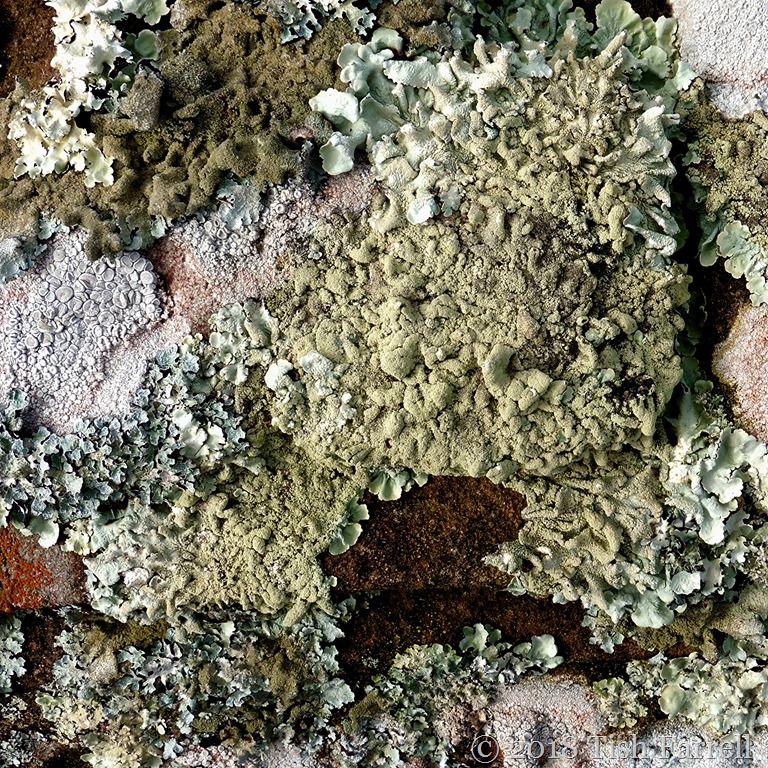
In the article Harriet also mentions lichens in particular, saying how churchyards provide  sanctuaries for one third of the 2,000 species found in Britain – the stone walls and memorials being ‘ideal hosts for these slow-growing colonies.’

 

P1040670sq

P1040686

P1040673 square

P1040669

I don’t know much about lichens, apart from their presence indicating unpolluted air,  but I would say there are a good few species on these stones. Of course lichens are not the only life forms to have found protecting spaces in graveyards. There may be slow worms, voles, nesting birds, toads, bees and butterflies. There’s also the social history too. So much may be gleaned about past communities from their memorials. Over the next four years Caring for God’s Acre will establish a national data base, listing all the natural and man-made treasures in the nation’s burial grounds. A fascinating project. But most of all I find it very heartening that new life thrives on and around the monuments to those humans who have left the living world. I like it that even on ground dedicated to the dead, the circle of life turns ever on.


Squaring the Circle #March22  Circles in squares and squares in squares are happening all month over at Becky’s

In which  #SixGoPottyInPembrokeWithCockapooPuppy – holiday snaps #4

copyright 2018 Tish Farrell

The More Things Change…

IMG_4948

The come-hither finery can be safely shed: the insect lure has done its work, leaving the fruit capsule primed and fattening; its contents – miniscule parcels of poppies-to-be – busy ripening, waiting on sun and wind to complete the enterprise. Nature in action. Where would we be without it?


Daily Post Photo Challenge: delta – i.e. an image showing transition, or the passage of time

The Changing Seasons: April And the Alien Invasion?

IMG_4369

All right I’m a gardener, and maybe a tad prone to persecution mania on the pest front, but this month it’s been wall to wall dandelions, and no sign of the invasion letting up. Not only are they EVERYWHERE, and especially out in force at the allotment, but they are also showing signs of mutating into mega-weeds, some as big as palm trees. OK. Perhaps not quite that big. But I can see what they’re plotting: world domination in Much Wenlock.

All means of defence seem puny before the onslaught. I’ve tried mowing, hoeing, beheading, excising. Even resorted to engaging in dialogue of the non-expletive variety. But it’s no go. So I thought I’d shoot the varmints instead – photo-wise naturally. And of course, they really are very beautiful – whether in flower or gone to seed – and also so very perfectly designed for maximum coverage of planet Earth.

The one thing I’ve forgotten to do this year is eat some of them – young leaves in salad and for a system-cleansing tea, roots dry-roasted  to make quite a passable coffee that also has health benefits, flowers deep fried as fritters (though I’ve not tried this). And now that I’m seeing them in a more kindly light, and established a little perspective, I’m ready to post a less fraught compilation of April shots taken on and around the allotment.

IMG_4375

IMG_4386

IMG_4378

IMG_4394

IMG_4391

IMG_4385

IMG_4382

P1070674


The Changing Seasons: April 2017 Please visit Max at Cardinal Guzman to see Oslo in April and other bloggers’ offerings.

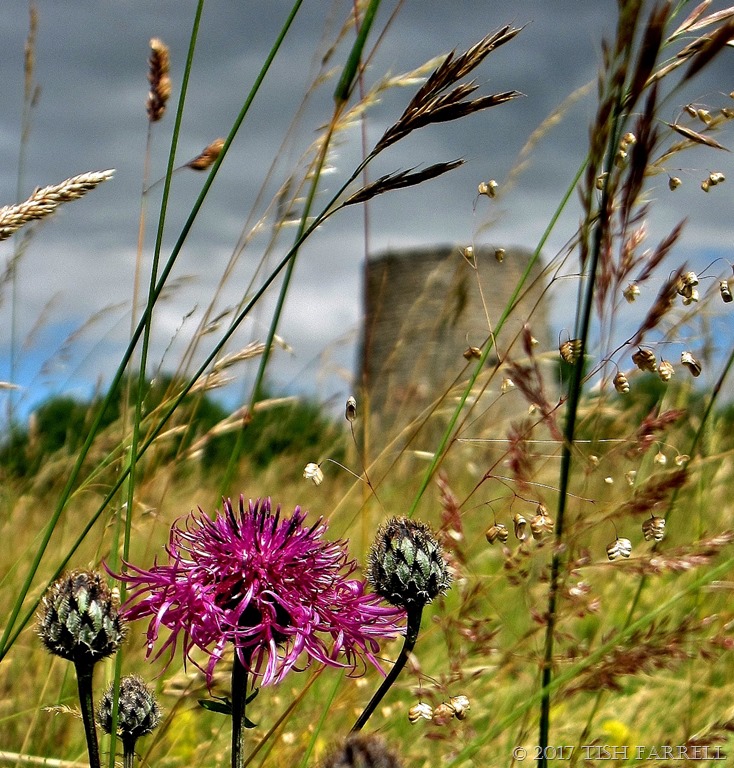
A Matter of Focus ~ Fond Thoughts Of High Summer On Windmill Hill With Greater Knapweed And Assorted Grasses


It’s blowing a frigid gale in Wenlock today; Met Office warnings of 60-80 mph winds as Storm Doris comes tearing through. What a woman! Talk about flighty.

First thing this morning I had to dash outdoors in my nightie to rescue the sweet pea seedlings: they were being blown out of their pots. Not only that, the freshly open daffodils were all askew, and the garden canes whipped off the shed wall into giant Pick-Up-Sticks.  Phew and phew. Just TOO much wind.

So it’s good to think about warmer weather, of lying in the grass on Windmill Hill, and peering at things botanical with the sun on my head. So thank you, Paula, for this week’s Thursday’s Special.

Focus is the watch word, however we care to interpret it,  and it has had me happily trawling through summer days in my own version of A la recherche de temps perdu. Which also reminds me that Marcel Proust used to do his writing in bed. Today, with all the draughts, and in places where we never knew we had them before, this is a very tempting prospect. So I’m wondering if He Who Recycles Pallets Builds Walls And Binds Books would mind delivering sustenance at regular intervals to the office bed where I might huddle under the duvet with my laptop. Seems unlikely somehow.

Here’s another shot of the knapweed, this one well and truly open for business along with assorted small bugs:

IMG_2072

Watching The Clock: Black & White Sunday

100_5549

Talk about conflicting interests. When I’m at work on my allotment I continuously wage war on dandelions. They are shown no mercy, bar resorting to pesticides. And yes, I know they are very helpful plants – the roots plunging deep into the soil strata and releasing otherwise inaccessible nutrients into the topsoil.

On the other hand, on the way to the allotment, camera to hand, I have a lot of time for them. They are of course in the farmer’s field, and not on my plot, which helps to foster a little appreciation. I find their seed-head ‘clocks’ endlessly photogenic. Looked at closely, they have a mysterious and mesmerizing quality: the perfect design of their parachutes, each one programmed for relentlessly unavoidable procreation.

And so, even as I feel my spade-hand twitching towards a ruthless uprooting, I’m also thinking ‘live and let live’. There are other good reasons to love dandelions. I’ve mentioned in earlier posts that these plants possess great therapeutic qualities. Herbalists have long used the roots for healing liver conditions, while the leaves and flowers act more on the kidneys (not for nothing is the dandelion’s country name piss-in-the-bed.) You can use the young leaves in salads, while the roasted roots make a passable coffee. Meanwhile, the dandelion in the photo is also auditioning for a special effects role in Star Trek.

Black & White Sunday

Where Trees Grow Calm ~ Thursday’s Special

P1050997 (2)

Here’s another place I never tire of photographing – the Linden Walk. Not only is it lovely of itself, but it also leads to Windmill Hill, that other object of my snapping affections. I took this photo yesterday with the leaves whisking off the trees. It was too windy for those addicting musky smells of autumn leaf litter, and the delicious summer scent of lime tree flowers was only a memory (until next year of course).

But whatever the weather or time of year, this lime tree avenue is always a very soothing place to walk. Its other-worldly quality takes you out of yourself: a pathway to another dimension perhaps? Doubtless the town’s  physician, Doctor Penny Brookes, who planted the trees in 1869 was well aware of the calming properties of lime trees since he was also a Padua-trained herbalist.

When made into a tea, the blossoms have a sedative effect. This was a recommended therapy during World War 2 (Richard Mabey Flora Britannica).

But in the absence of linden flower tea, here’s the lovely second movement ‘Petals’ from Takashi Yoshimatsu’s Piano Concerto Memo Flora;  Kyoko Tabe piano:


Post inspired as ever by Paula at Lost in Translation  Please pay her a visit. CALM is today’s watchword.

Over My Garden Fence This Morning

IMG_1827

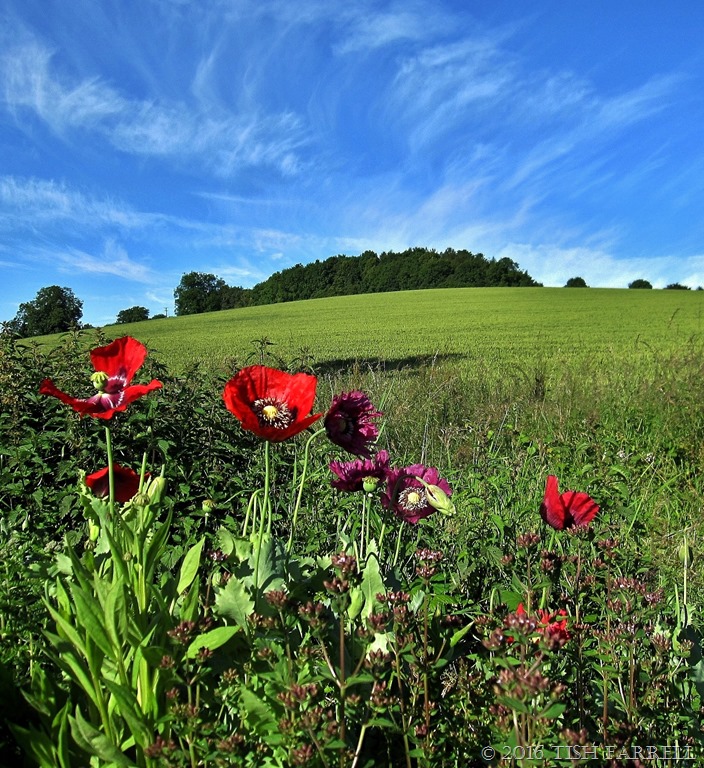
We didn’t invite them, but this crowd of opium poppies showed up anyway, pushing in behind the garden fence along with several other blooming gate-crashers. There’s a whole bunch more behind the garden shed. Papaver somniferum – the sleep bearing poppy, Asian in origin but now naturalised in Britain on waste ground and in field margins. And in case you are wondering, in our cool climate it does not produce the latex from which opium is derived. Better to get high by looking at them. And what a cheering sight it is on a Monday morning. So poppies, we’re glad you came. Please feel free to make yourselves at home here.

IMG_1803

IMG_1811

For more 4th July blooming visit Cee at Flower of the Day.

Over The Garden Fence At Sunset Yesterday

P1040528

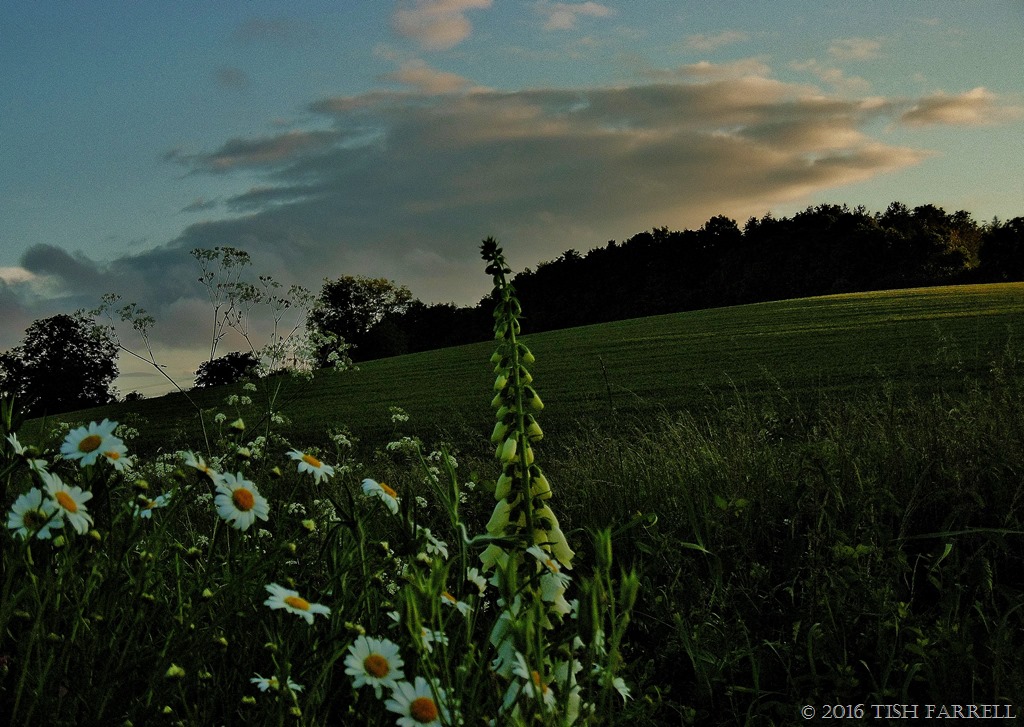
After tropical days in Wenlock we now have rain and more rain. There were showers between downpours for most of yesterday, and only at the last lap, as it was about to set, did the sun coming bursting hotly through the clouds. I caught its last beams here before it disappeared behind Wenlock Edge.

With all the sudden rain the wheat in the field behind our house is growing before our very eyes. So is our wildflower garden along the fence below it. Seen here are Moon Daisies (also known as Oxeye Daisy, Dog Daisy and Moonpenny). I love that last name. And keeping company with the daisies is one stately white foxglove, with a spray of cow parsley or Queen Anne’s Lace in the background.

According to Richard Mabey’s Flora Britannica  cow parsley (a member of the carrot family) has a whole lexicon of country names – some obvious, others not so. So here we go with a few more: Fairy Lace,  Spanish Lace, Mother die, Step-mother, Badman’s oatmeal, Blackman’s tobacco, Kecksie, and Rabbit meat.

And as for the foxglove, it was also known as Fairy Gloves and Fairy Bells. It has long been used as a herbal remedy that at times proved more killing than curing. And of course until recent times a compound version of  the toxin found in foxglove leaves was the drug of choice for various heart conditions.

It is anyway one of my favourite plants. I like the way it grows itself around the garden and crops up in a variety of subtle shades from white to purple, although it perhaps looks a little sinister, looming here in the failing light across Townsend Meadow.


*

Posted for:

Mundane Monday #63 at Jithin’s PhoTraBlogger