Foxgloves Over The Garden Fence ~ After And Before


100_5911 - Copy (2)

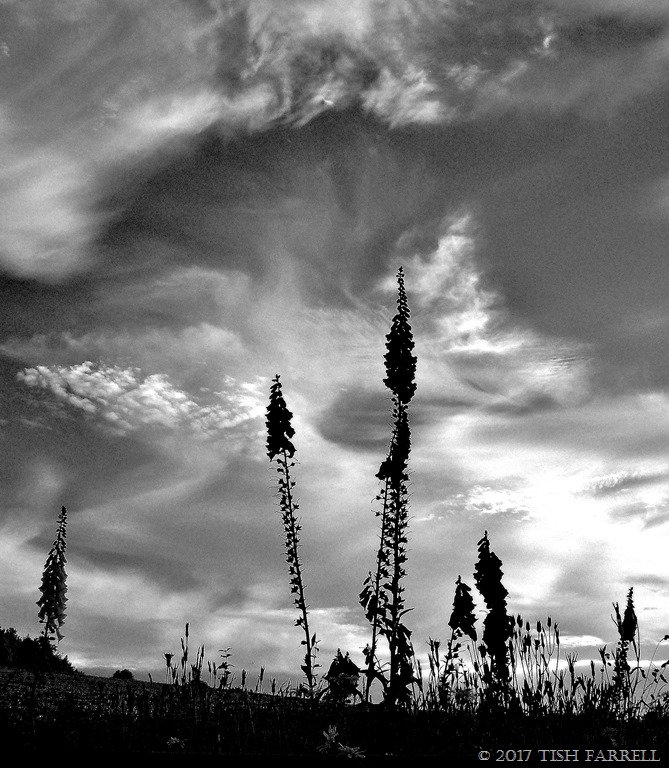
This Sunday at Lost in Translation, Paula asks us to show her a black and white version of a colour original. This summer shot was taken from the back of our house looking towards Wenlock Edge as the sun  was going down.

Just over the garden fence we have a strip of ground that grows itself each year – mostly self-seeded foxgloves, columbine, corn cockle, moon daisies and opium poppies along with some perennial lemon balm, spearmint and oregano. It’s a treat waiting to see what will happen there every summer. Just thinking of this brightens a rather gloomy January day here in Shropshire.

Now here’s the original colour shot:100_5911 - Copy (2) - Copy

And now I can’t resist posting some more transformations in and around Much Wenlock. Clearly, some work better than others, but in any event, as Paula says, it helps one to see with fresh eyes:

P1000380 - Copy

P1000380 - Copy (2)

P1030046 (2)

P1030046 (2) - Copy

100_7046 - Copy

100_7046 - Copy

Early Morning On Menai Strait

P1060515

I like the notion that everything is moving in this apparently static image: time, tide, clouds, shadows, light, the ash tree, me. And maybe even the mountains across the water.


Photo snapped in Dynamic Monochrome setting. For a very finely composed rendition of the theme ‘passage’ visit Paula at:

Black & White Sunday: Passage

Traces of the Past ~ Tools Of My Grandfather’s Trade

P1060192 - Copy

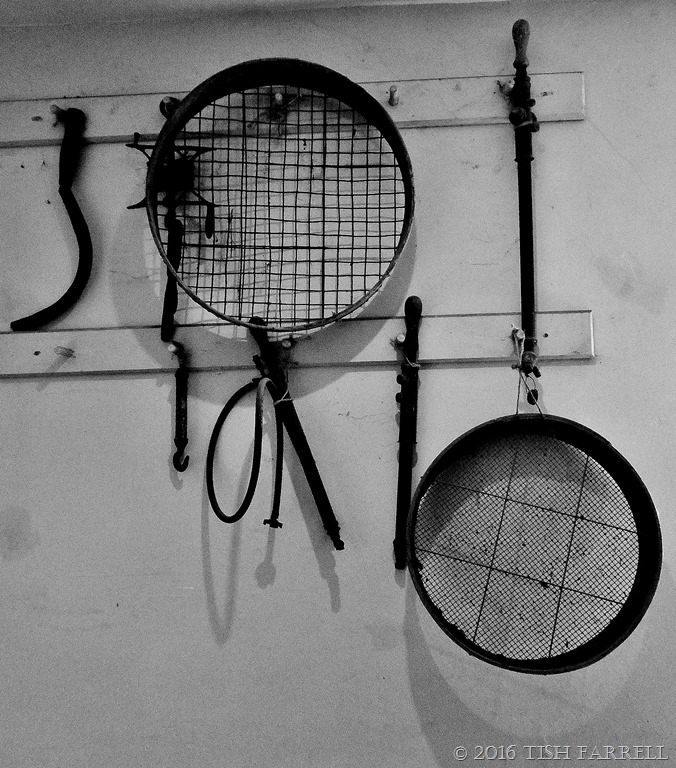
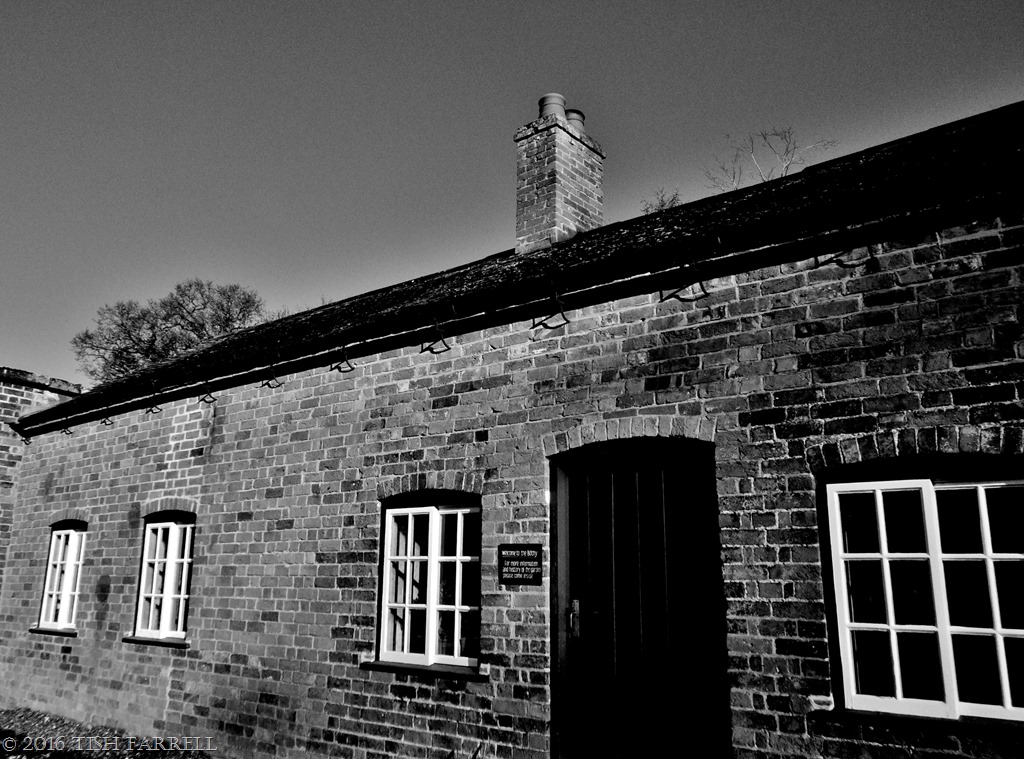
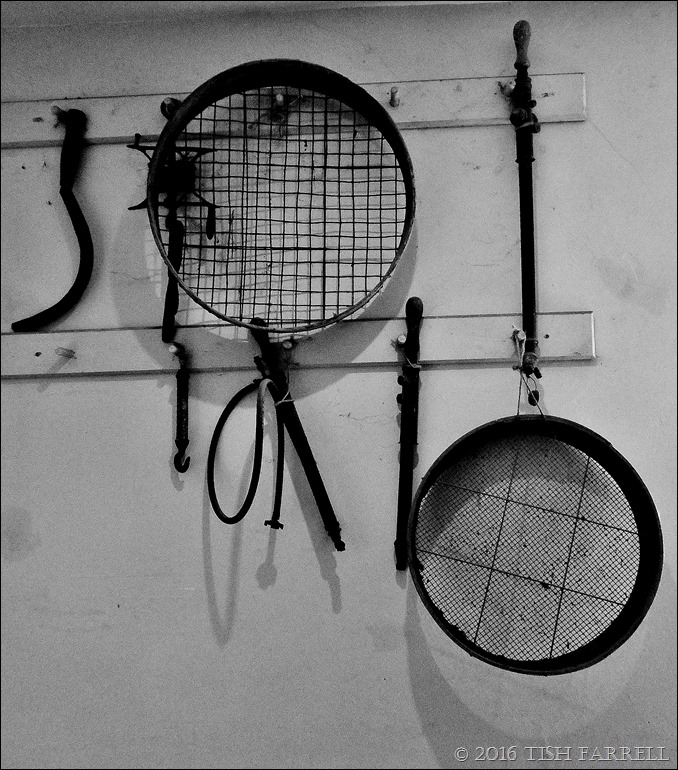
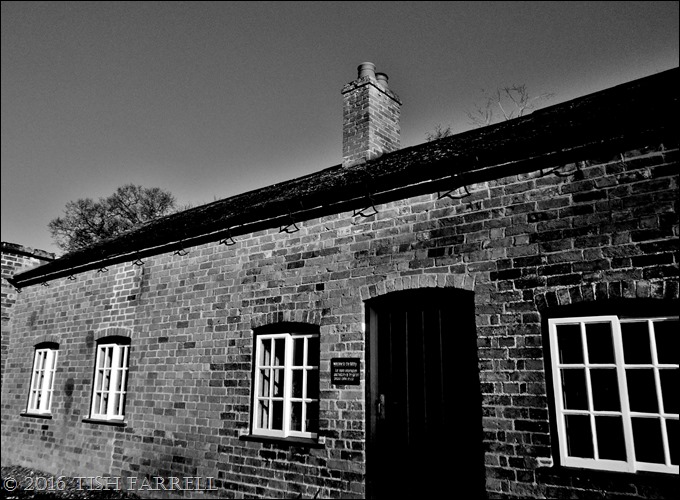
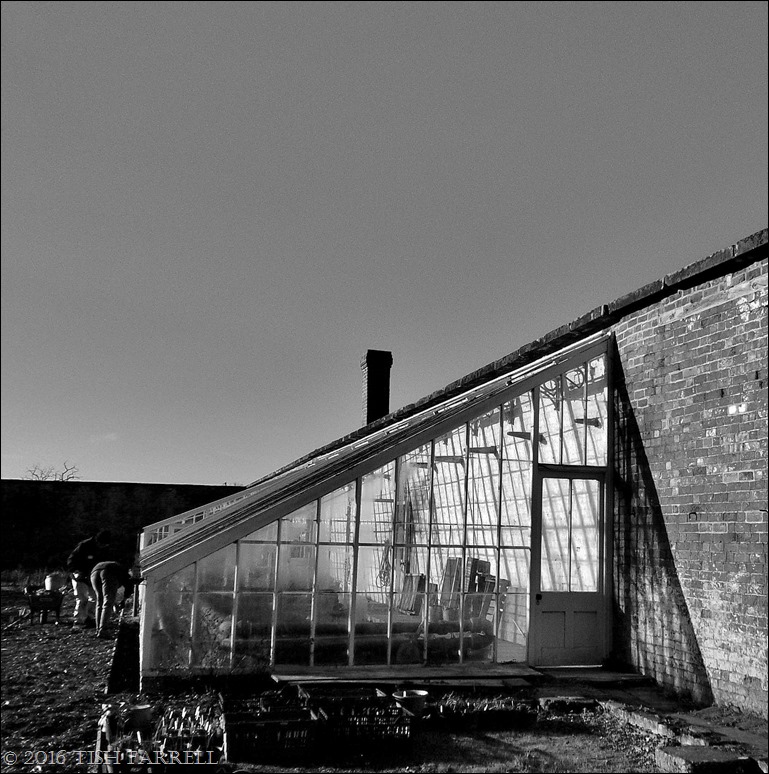
I hasten to say these are not my grandfather’s actual tools, but when I spotted this gardening paraphernalia in the gardeners’ bothy in the walled garden at Attingham Park yesterday,  I instantly thought of Charlie Ashford. He was head gardener at Redhurst Manor in Surrey from around 1921. I have written about him in the Tales from the Walled Garden. The links are at the end.

Attingham is one of Shropshire’s grandest stately homes, once home of the Berwick family, but now in the care of the National Trust. I did have photos of the house, taken on an earlier visit, but the computer seems to have eaten them, and yesterday the walled garden was my only objective. There has been a monumental restoration project going on there since 2008, and this was our first visit. (Always the same with places on the doorstep.)

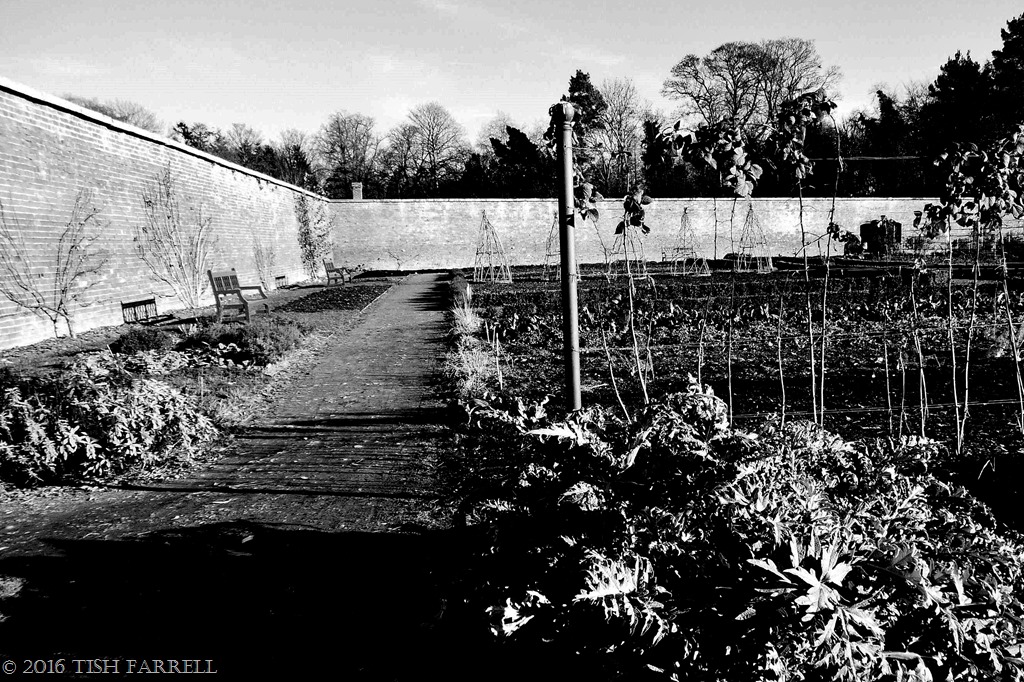
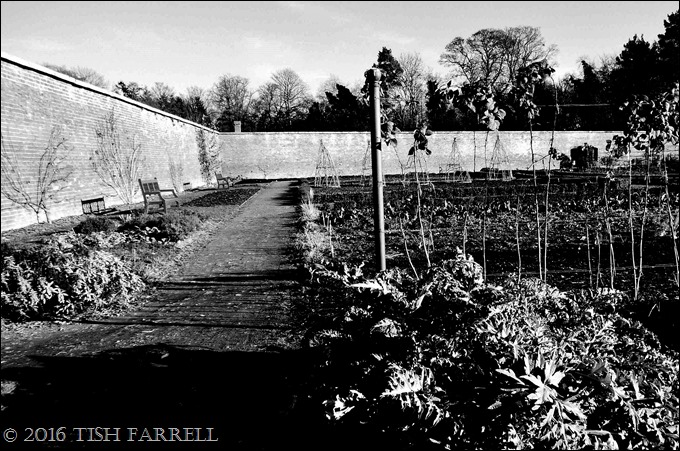
I think this is probably the hugest walled garden I have ever seen, and I truly cannot imagine why one household would need to produce quite so much food for itself even if it did include feeding all the servants. Here is one corner:
P1060183

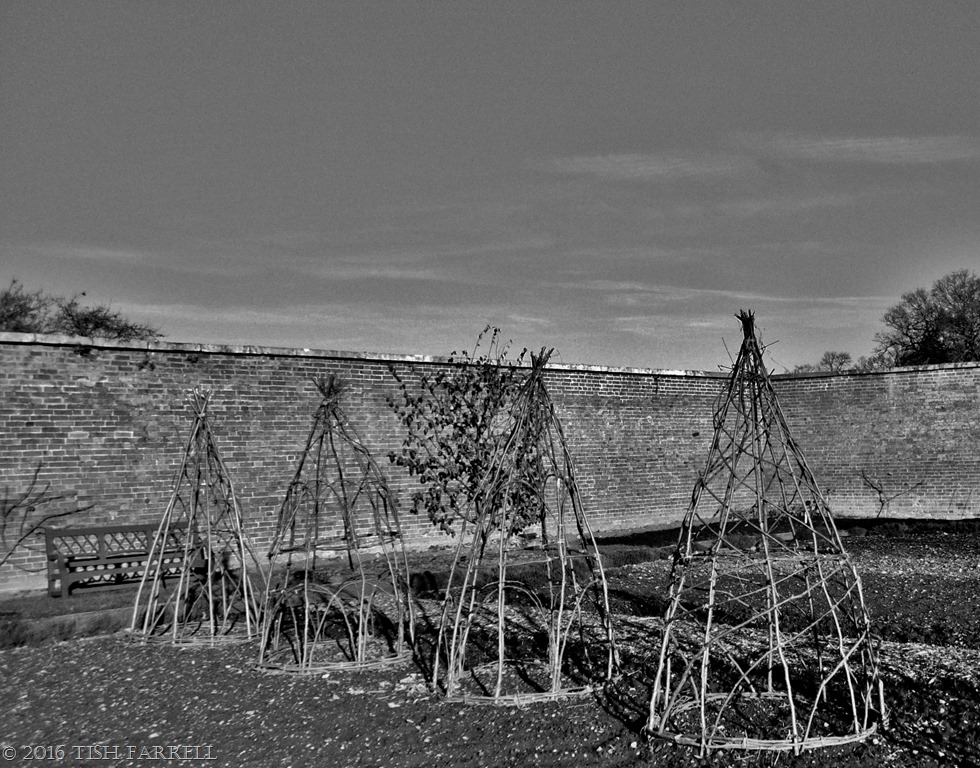
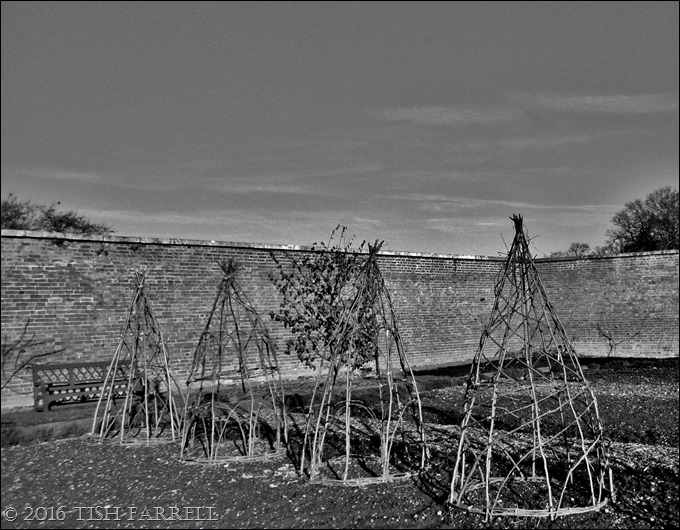
And yes, it was perverse to chose December for our first visit – a time when there is hardly anything growing. However, I was very taken with the climbing bean frames, just visible towards the back wall. Here’s a better view. I think they’re made from hazel whips. Ideal for sweet peas too.
P1060181

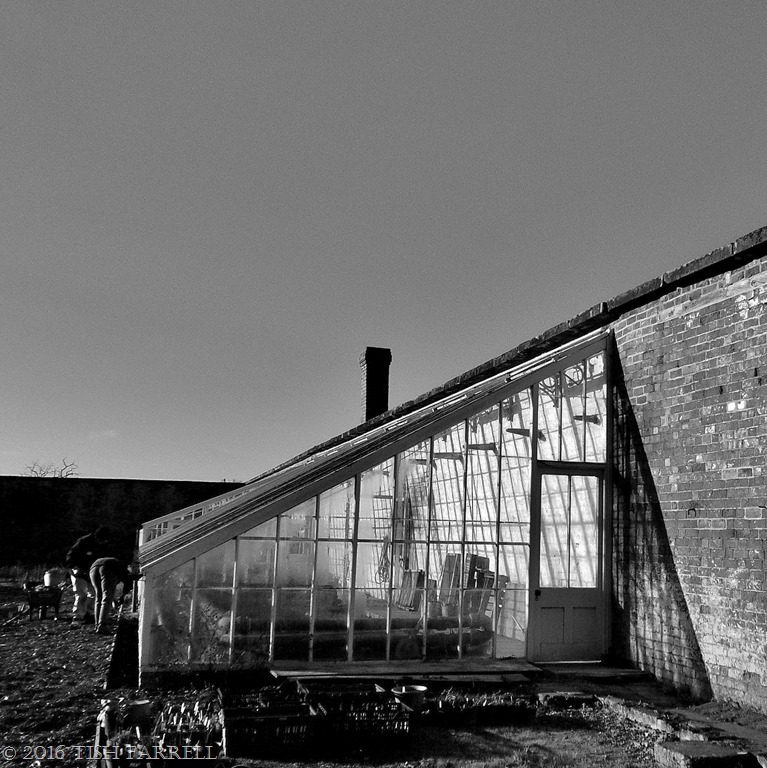
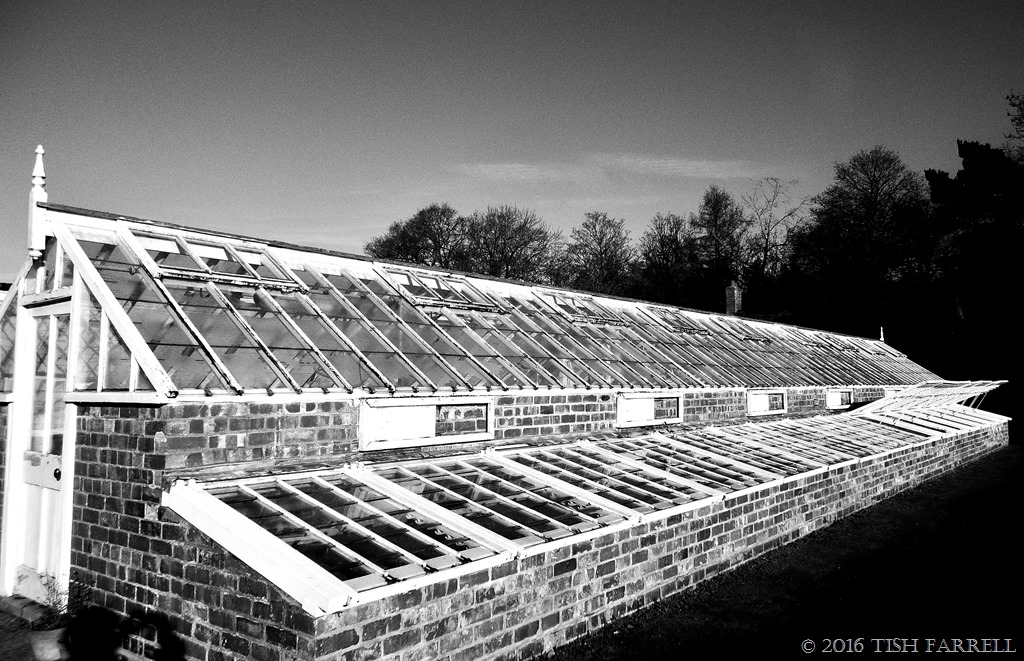
The path  around them leads to an adjoining much smaller walled garden. This is where we found the gardeners’ bothy, cold frames and glass houses, hot beds and hot walls – the kind of territory wherein my grandfather spent much of his working life:
P1060188

P1060189

P1060186

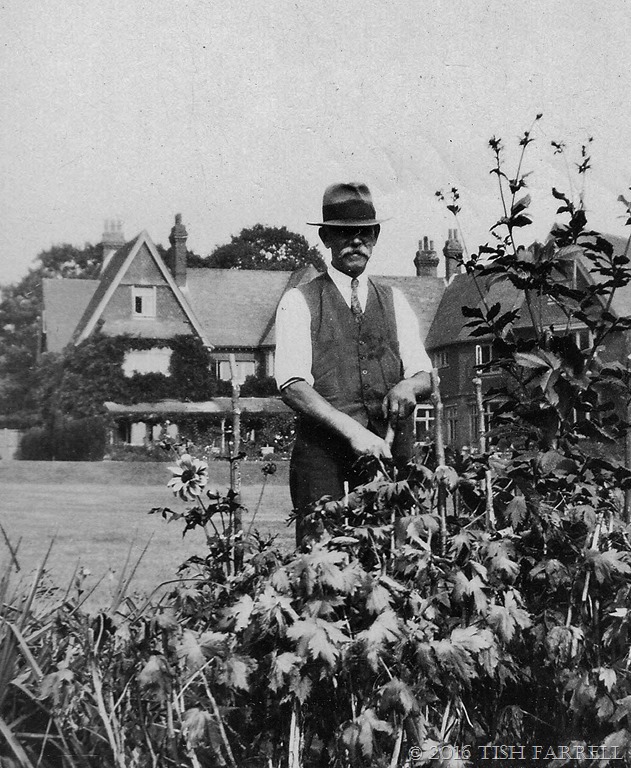
Charlie Ashford served his apprenticeship in an establishment as grand as Attingham. The position of head gardener was akin to the role of butler within the house. The training was long and there was a strict hierarchy of under-gardeners and garden boys. Redhurst, though, was a much less grand affair – a modest country manor by comparison. You can see it in the background in the next photo – grandfather in the dahlia and delphinium bed. IMG_0012
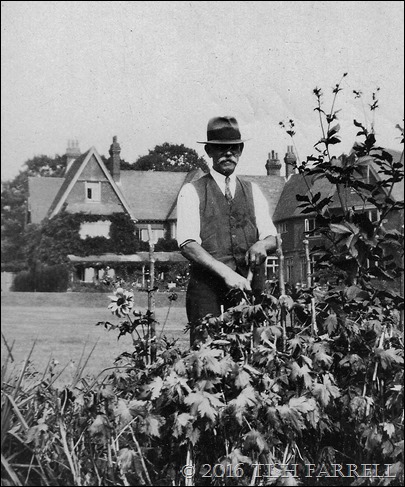
And here’s a glimpse of his working life from one of the talks his daughter, my Aunt Evelyn, gave to her gardening club. She was born in the gardener’s cottage at Redhurst and spent her earliest years in the garden there. I’ve posted excerpts before, but this is a longer version:

Imagine that we are standing in the holy of holies, my father’s potting shed. It was not all that large and the space was taken up with deep shelving on three sides of the shed. There was a door into the kitchen yard and another into the garden itself. On the back of one door were three large coat hooks to take the jackets that my father needed and also his green baize apron. On the other door hung his clean alpaca jacket which was worn when he went into the house, a dust coat to be used in the fruit room and his leather pruning apron with its thick, left-handed coarse leather glove sticking out of the pocket. These garments comprised his head gardener’s uniform; there was almost a ritual about putting them on for the various tasks.

My father’s own tools were hung in neat and spotless order on hooks to the left of the garden door. He insisted on clean tools and, after every task, the men had to be sure to wash, and then rub dry on old sacking any tool that had got even the slightest bit dirty. A little spot of oil was rubbed into the spades and trowels and forks until the metal shone. Wooden handles were treated with linseed oil which was thoroughly worked in. Only then could the tools be stored away. That is why probably to this day I am still using a well worn spade and fork that belonged to my father. There have been times when, if in a hurry I have hung my spade up dirty, I have gone scurrying back to give it at list ‘a lick and a promise’. I can almost hear my father saying, ‘That won’t do, miss. Dirty tools make bad workmen.’

The potting shed was filled with a wonderful mixture of smells of the sort you find in a ‘20s hardware store. Tarred string was the main one. Then there was the strange jungly smell of the raffia hanks hanging on the door. It suggested faraway places. There was bone meal, fish meal, sulphate of ammonia, Clays fertilizer, Fullers Earth, Hoof and Horn – everything to help bring in good crops – and all stored in wooden bins with brass bands and rivets and a wooden bushel or half-bushel measure on top.

*

There was the annual ritual of sowing seeds for vegetables, preparing the asparagus beds, pruning and shaping the fruit trees, getting the cold frames ready, going over the tennis courts to prepare them for the summer season. There would be glass to replace in the long glass-houses or hot houses. The herbaceous beds required a lot of work in autumn: overgrown plant clumps to be carefully split and replanted, all to be mulched with well rotted manure from the stable yard, or a sweeter mixture of well rotted compost and peat for plants that did not like manure.

Wages were low, and hours were very long, but there were seldom any complaints. Early in the year one man would be set the task of planting out young tomato plants in one section of the glass house. In another section another worker might be potting up seedling chrysanthemums. And so the cycle of work went on.

Dad had his own specialist greenhouse in which he grew plants for the house. Primulas were a particular speciality but he was careful to see that whichever of his men was put to work here that he was not allergic to the plants. Primulas can secrete a substance from the leaves that causes a painful and persistent rash not unlike shingles.

The kitchen garden was walled on three sides by a wall at least eight feet high. On the south side was some rustic fencing over which climbed roses, clematis and honeysuckle – all in a tumbling profusion that looked natural, but was carefully managed throughout the year.

Much of the equipment that the men used was made on the estate. There were sturdy wooden wheelbarrows made in the wood yard behind the stables. The wheels turning at a touch with never a squeak allowed. On busy grass cutting days an extra section fitted onto the top of the largest barrows so that the men could trundle the piles of cut grass away to the ‘frame yard’ to be spread on compost heaps there. Here there was also a long low open shed in which all the mowers were kept: a hand mower for paths and border edges; a small motor mower for the terraces and the little lawn areas; a large sit-on mower for the long stretches of lawn and the rough grass places; and a huge wide mower with a heavy roller, which a horse from the home farm used to pull across the beautifully kept lawn at the front of the house.

Cucumbers were also grown in the cold frames and never cheek by jowl with tomatoes in the hot house. It was a job for two men getting the frames ready early in spring. The frames were built of brick with solid wooden supports or runners to hold the strongly built wooden lights. When I was older I could just about help my father to open or shut the frames. It was important to keep the cucumbers at just the right heat and to give them sufficient ventilation. Grown like this they always tasted succulent. This was not surprising as they were grown in a deep, deep bed of well rotted stable manure mixed with peat and compost and leaves – anything to make the mixture ‘hot’.

Thinking back on the work done in those gardens everything had its use and nothing was wasted – especially time.

At the big house, it was important that gardeners should maintain a succession of lovely flowers – all year if possible, and especially those with scents. As soon as anything special bloomed, like Winter Jasmine or Viburnum fragrans, a spray or two went into the house early in the morning for madam’s breakfast tray, or the desk in the Major’s study. This was quite a ritual. Into the house we would go, but not into kitchen because that was Cook’s domain. We go around the house and in through a side door and into the Butler’s Pantry. Here Johnny the Butler ruled supreme. When we arrived with Dad’s offering for the day, the exchange would go something like this.

“What have got today then, Charlie? Do you want two silver holders or one cut glass?”

“Oh, I think two silvers, please, Johnny. I’ve got some fine sprays of Winter Jasmine.”

Then Dad would take the delicate sprays from the shallow basket that he always used and arranged them in the vases with great artistry. Thanks for such offerings reached him without fail: “Please tell Ashford that the flowers were just what madam likes. The colours matched her dress today.”

Evelyn Ashford Gibbings

Tales from the walled garden

Tales from the walled garden ~ back to the potting shed

Tales from the walled garden ~ when Alice met Charlie

Tales from the walled garden ~ more about Alice

*

Black & White Sunday ~ Traces of the Past

The Old Quarry At Middleton Top, Derbyshire

P1050679

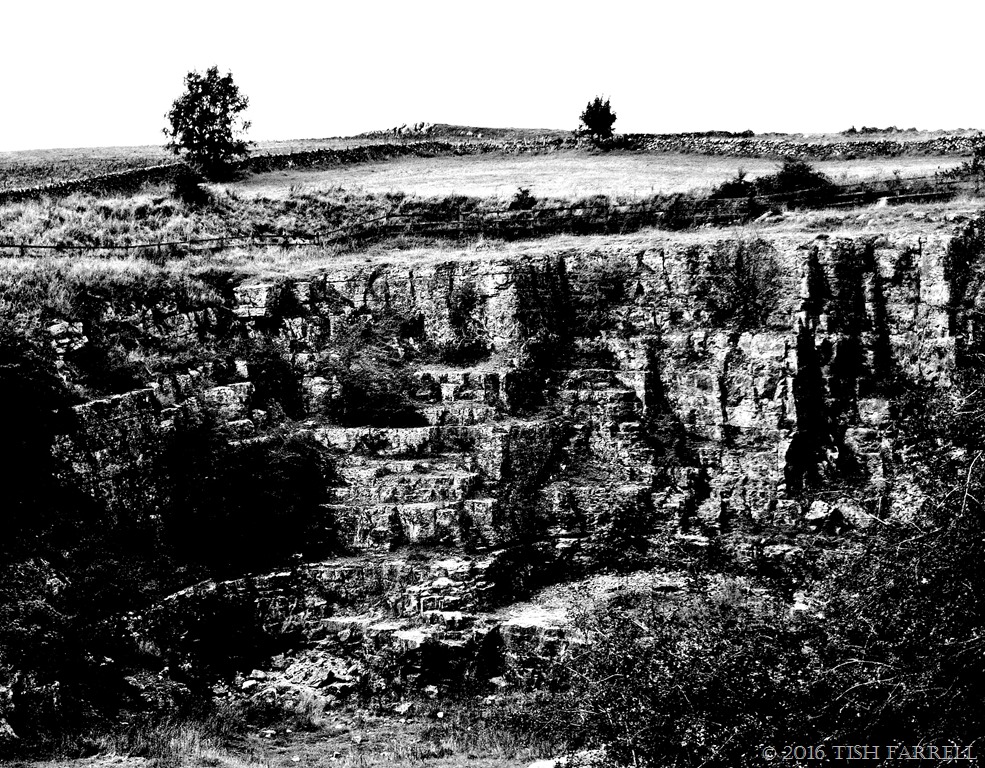
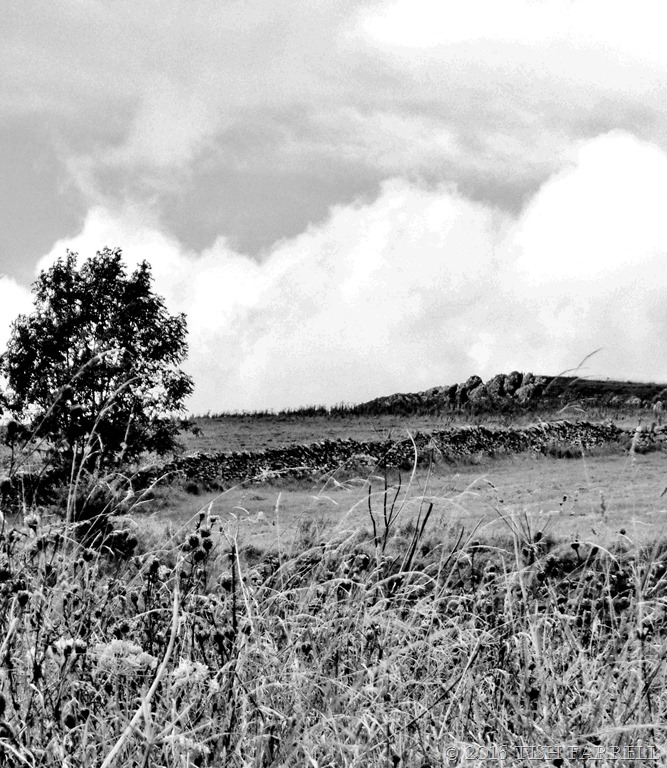
With today’s images I’m having a complete change in mood from yesterday’s full-colour Wenlock Edge vistas. These Middeton Top photos were taken in September during our brief stay in Derbyshire.

As you can see, the light was flat and dull. I thought colour photos probably wouldn’t work, but decided to try out my camera’s monochrome setting. (And yes a tripod might have helped.) The result, to my eye, looks rather like a lugubrious nineteenth century (if not older) engraving – quite a fitting outcome I’m thinking for this old Industrial Age quarry.

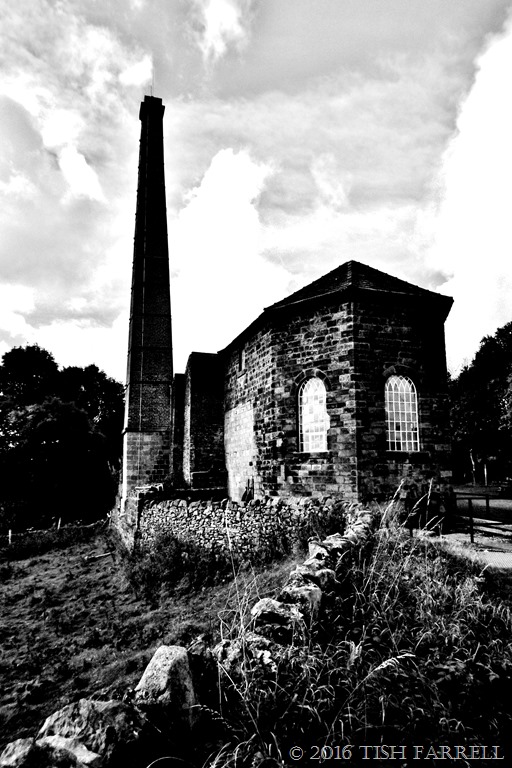
Middleton Top is anyway a dramatic spot. The quarry lies beside the old Cromford and High Peak Railway Line now part of the fabulous High Peak Trail. There is also an impressively long and steep inclined plane (1 in 8) and the 1829 steam winding engine that once hauled wagons up the hill is still there within its dark-stone engine house.

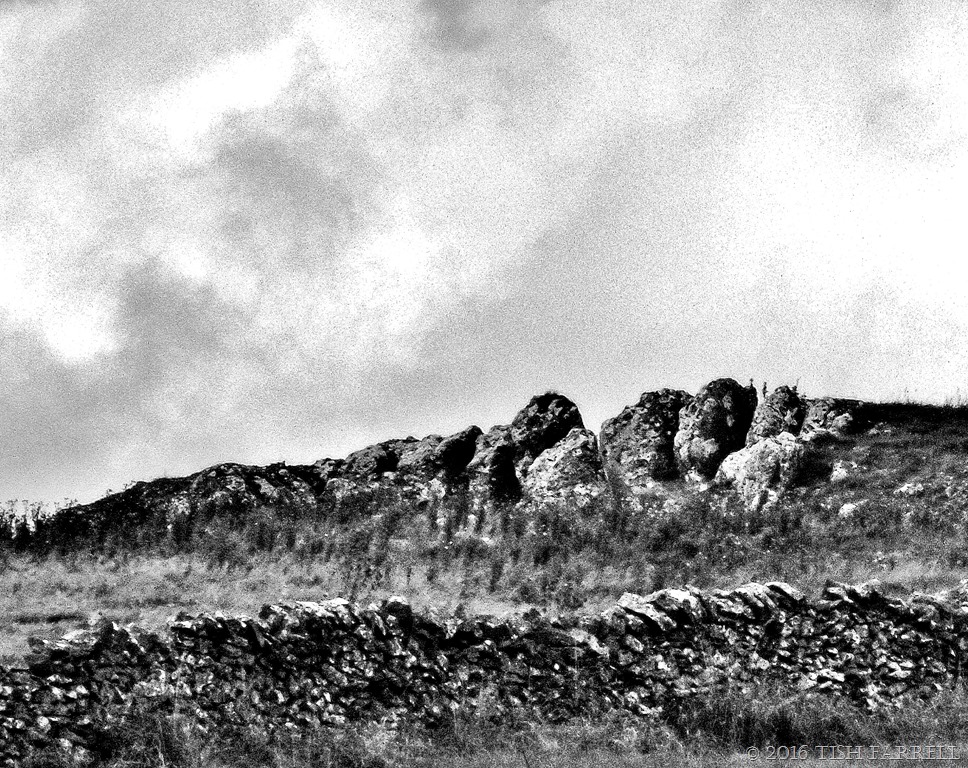
I always find quarries very disturbing places, the landscape hacked and blasted. Also the limestone in this part of the world seems to loom oddly – even on dull days. Up on the skyline between the two small trees you can just see a cluster of boulders; they caught my eye for this very reason. I also thought I spotted a raven there, but it flew off before I could organise myself with the binoculars. Instead, I went for maximun zoom on the Lumix and ended up with this ‘charcoal sketch’ effect. Also a bit unsettling. You will have to imagine the raven. Or a Wuthering Heights moment displaced from Yorkshire.P1050680

P1050682

And I couldn’t end without including a photo of the steam-winding engine house: an important piece of Britain’s industrial archaeological landscape. The engine is still in working order and has demonstration open days, though sadly no longer powered by steam. There’s a video HERE.

P1050673


Black & White Sunday

Return To Windmill Hill: Black & White Sunday

P1010981

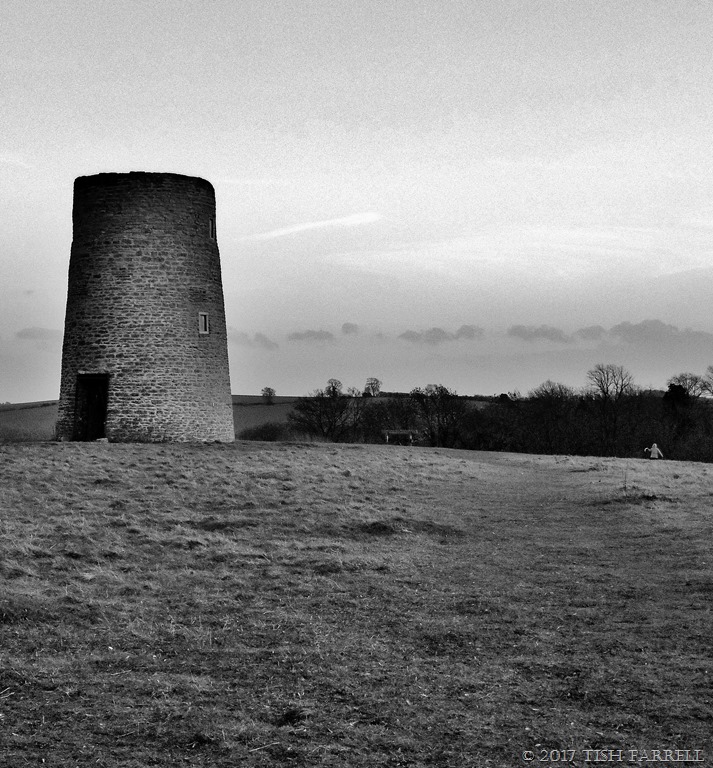
This week at Black & White Sunday Paula says choose our own topic. So here is one of my favourite subjects, and one that I realize has been totally neglected for ages and ages. (Meg at Twelve Months in Warsaw  has pointed out – once or twice – that my penchant for snapping this particular local Wenlock landmark is somewhat akin to Monet’s repetitive haystack renditions). Ah well. Another OCD trait to admit to – along with obsessive compulsive compost-making. Also my other slight obsession is to use my camera’s monochrome setting in poor light conditions just to see what will happen. Here I was lucky to catch the last gasp of sunset before it slipped behind Wenlock Edge.

Black & White Sunday

Expressions Of Power ~ Secular And Spiritual?

P1050703 - Copy (2)

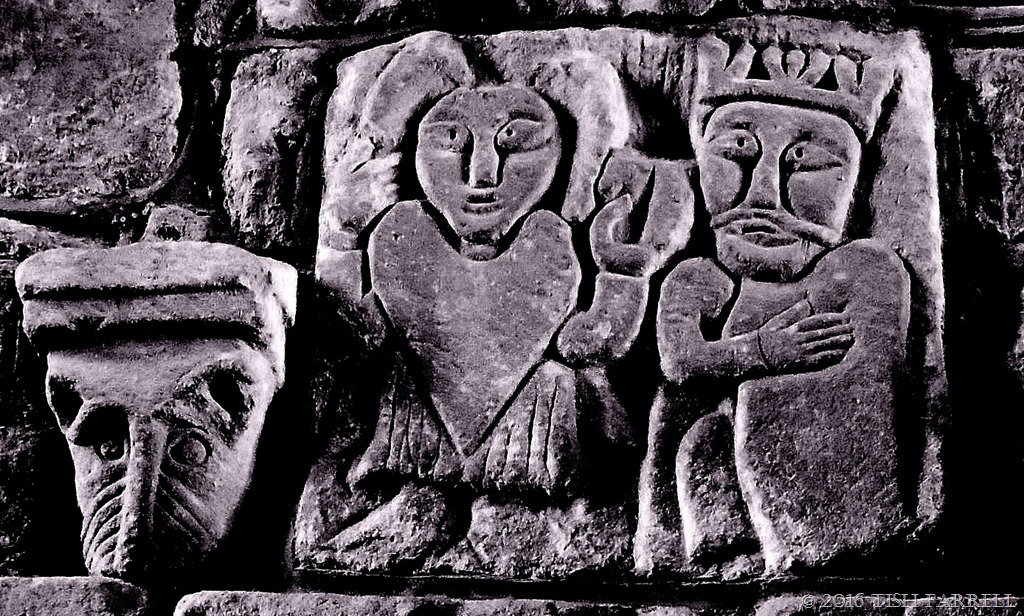
These Saxon carvings in Wirksworth’s St. Mary’s Church in the Derbyshire Peak District are around 1,300 years old. They appear to have been randomly placed in the walls during the rebuilding of the church during the thirteenth century. Nothing more is known about them, or of their precise age and origins.

At the time they were carved, Wirksworth, located in the English East Midlands, was part of the great Saxon kingdom of Mercia, whose kings and sub-kings held dominion over most of England between AD 600 – 900. i.e. until the Vikings arrived and spoiled it all with the imposition of Danelaw.

Mercia also included my West Midlands home county of Shropshire and, though seventy odd miles apart, it turns out that Saxon, and indeed later, Wirksworth has much in common with Much Wenlock; so much so, I think the towns should be twinned.

One of the Mercian kings’ cunning strategies to cement their power over their extensive territory was the spreading of Christianity, and the setting up of religious foundations and church minsters on their royal estates. These were ruled by abbesses, kings’ daughters and noble women who had been thoroughly educated for the job.

In Much Wenlock we have Milburga, daughter of King Merewald  who ruled over the Wenlock dual monastic house (monks and nuns) from around 680 AD. Her sisters and mother also had charge of religious houses across Mercia, and this function further included the management of the considerable estates and the resources that went with them.

The spread of Christianity across Mercia had its beginnings some thirty years earlier when Elchfrida (also Alchfliad), daughter of King Oswui of Northumbria married Peada, son of Penda, the last great pagan king of Mercia. According to Bede, Oswui had murdered Penda, and the later marriage of his daughter to Penda’s son was part of a peace treaty between Northumberland and Mercia, conditional on Mercia adopting the new faith. Elchfrida thus travelled south into Mercia with an entourage that included missionary priests, and it is supposed that one of them, Betti, founded the church at Wirksworth in 653 AD.

Which brings me back to the Saxon carvings. We clearly have a king. And so perhaps also his queen? It would be nice to give them names – say, Elchfrida and Peada? On the other hand the looks they are giving us are a little disturbing; Sphinx-like, enigmatic; as if they know something they cannot now reveal. Even the wild boar that has been popped in beside them by the thirteenth century mason re-cyclers looks to have something worrying on his mind.

But there is a post-script to this story. It would seem that not long after the marriage, Elchfrida betrayed her king, which led to his murder. For a brief time, then, her father King Oswui held sway over Mercia, until the uprising of 658 AD when another of Penda’s sons, Wulfhere, restored Mercian authority. It makes one wonder if Elchfrida, Christian or not, wasn’t a double agent all along. I wonder what became of her.

Wulfhere apparently went on to implement the ‘dynastic power and faith’ model with the founding of Repton Abbey near Derby. Here he installed his daughter Werburgh (later sanctified like Much Wenlock’s St. Milburga) as the first abbess. So here we have yet another example of ‘Princess Power’ Saxon-style – of royal women extending and consolidating the temporal power of their fathers through the exercise of spiritual authority.

Back in Wirksworth a document from 835 AD indicates that at this time the Wirksworth township was under the jurisdiction of Abbess Cynewaru. But there was serious trouble afoot. It seems she was being forced to cede some of her land holdings to Duke Humbert of Tamworth. She was especially afraid that this would compromise the sending of a gift of lead, valued at 300 shillings, which she made every year to Christ Church, Canterbury. (Wirksworth had been an important lead-mining area since Roman times).  Just to make sure that Duke Humbert knows where his duty lies, and who has the upper hand spiritually speaking, she proclaims in the charter that ‘if anyone should take away this my gift from Christ Church, Canterbury, may he be smitten with perpetual anathema, and may the devil possess him as one of his own.’

Fascinating stuff all this power-wielding.

copyright 2016 Tish Farrell


Black & White Sunday: Expression

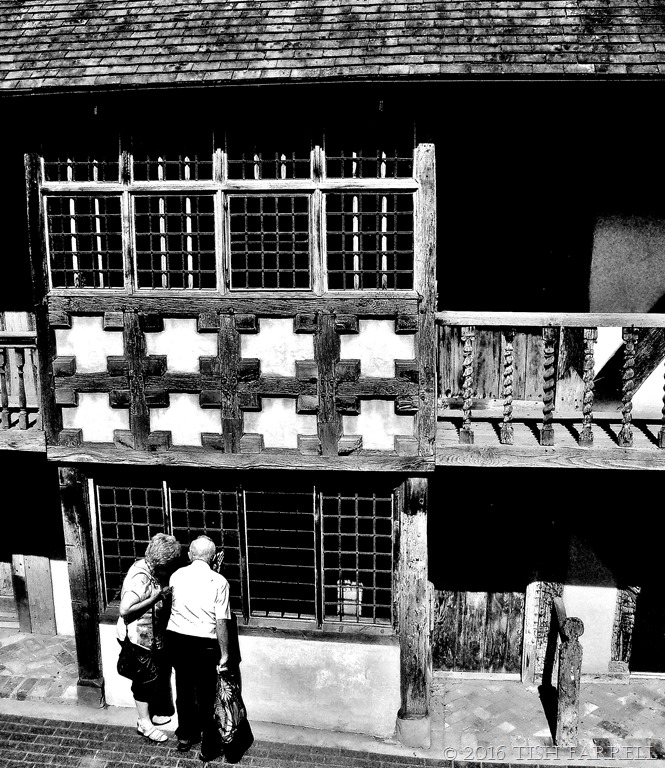
Two Being Nosy On The High Street ~ As Caught By Nosy Writer ~ (That Would Be Me)

100_6264

I do it myself of course when I’m walking along Much Wenlock High Street. The windows of Raynald’s Mansion are just too tempting for those disposed to be nosy. There are always interesting artifacts and pieces of unusual antique furniture inside. The place appears to be some kind of shop, but it is never open. The extraordinary timbered facade, built in 1682, was apparently a later addition to a fifteenth century hall. The Victoria County History for Shropshire rather sniffily suggests that this kind of construction was both crude and ‘old hat’ for a time when everyone who had money was going in for smart townhouse frontages in brick and stone. But  never mind the architectural snobbery. It is still one of the town’s most picturesque buildings. There are also said to be ghostly apparitions at these windows. Just the job for Halloween. I must look out for them the next time I’m out and about on the High Street.

 copyright 2016 Tish Farrell

Black & White Sunday: Couple(s)

Spirit of the Past: Black & White Sunday

holiday 029

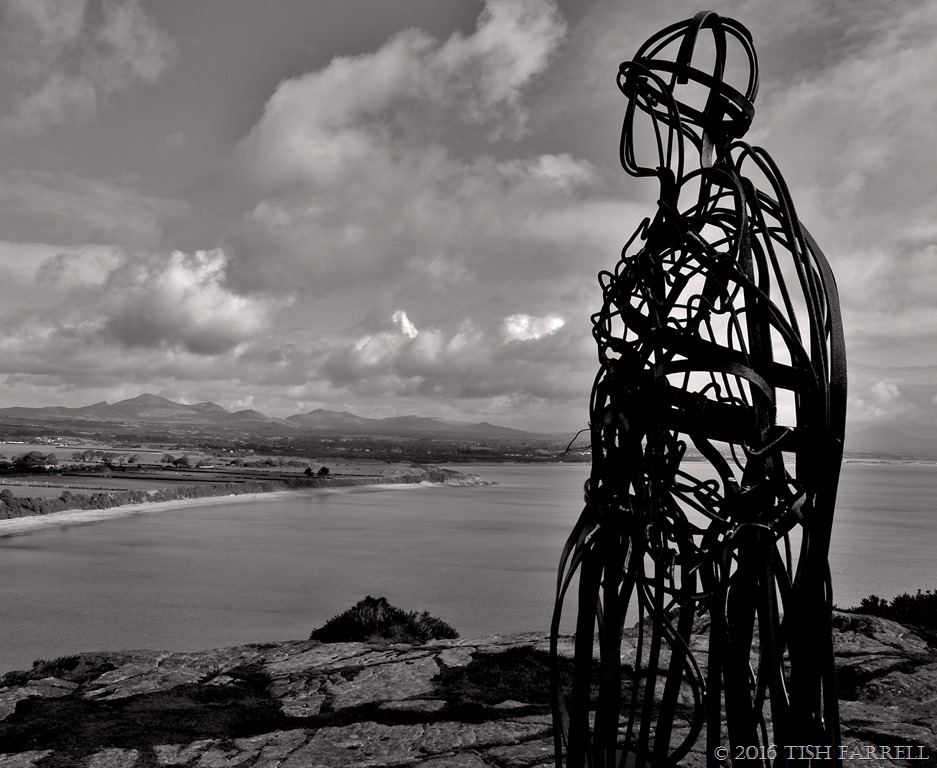
I’ve written about the Iron Man of Llanbedrog in other posts. (Personally I think it could be a woman – Boudica perhaps, the last of Britain’s Celtic warrior women). I’ve also posted variously edited versions of this shot before, but not this one exactly. This week at Black & White Sunday, Paula is reprising the popular Traces of the Past challenge, and I thought that although this iron figure is not especially old, everything about it speaks of the ancient Celtic spirit. And of course there are the ‘rocks of ages’ just visible in the distant mountain range of Snowdonia. In many senses, then, Wales is an old, old land, and the traces of the past are everywhere across the landscape.
 *

You can read more of the Iron Man’s story at Warrior Wind-Singer Of Llyn

Power Lines: But Who Has The Power?

P1030628

P1030649

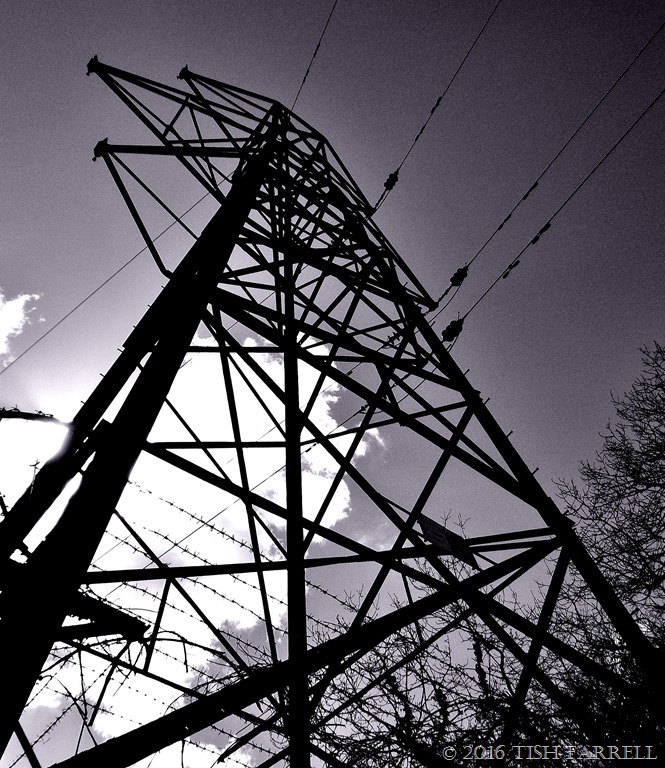
I suppose we English take the presence of electricity pylons for granted. They march across our countryside enabling us to make toast and boil the kettle, watch TV and keep the packs of supermarket frozen peas frozen,  to heat our homes and charge the appliances we think we can’t live without – cell phones, tablets, laptops, cameras.

It makes me wonder though – how much power we actually need, and just when we might get around to deploying clean, renewable energy sources. Next stop fracking.

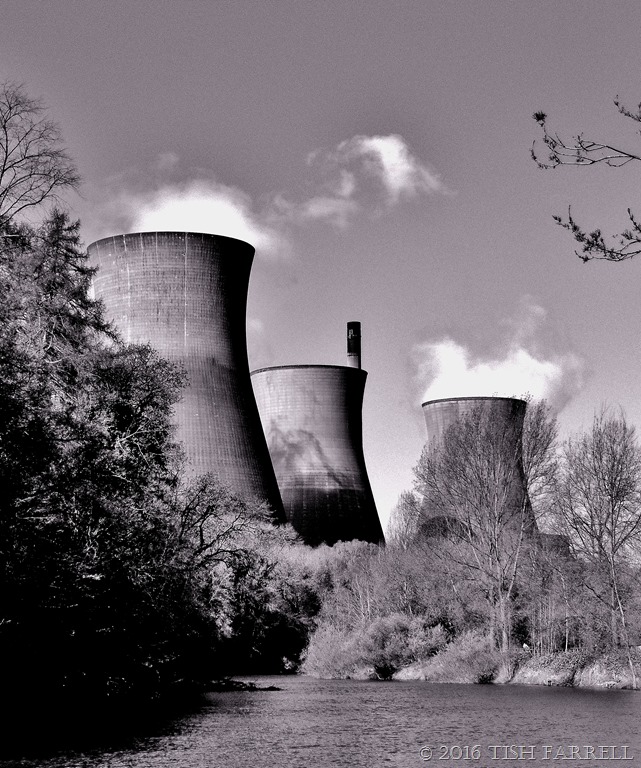
These particular pylons dominate the fields around Benthall Hall above the Severn Gorge, and until last year transmitted energy generated at the now decommissioned Ironbridge Power Station.  I’m not sure how our lights stay on these days, or who to ask about it – which to me suggests a worrying situation.

We regard the provision of electricity as our natural right, while at the same time rarely considering how little personal power we have in how it is produced and delivered. We probably don’t know who owns it – this absolutely essential resource. The same applies to that other absolute necessity – the clean water that pours from our taps. So I’m also wondering if we haven’t surrendered too much power – blithely assuming that the corporate owners (whoever and wherever in the world they are) will always act in our best interest and give us what we need?

P1010072


This week at Black & White Sunday Paula asks us to show her ‘towering’.