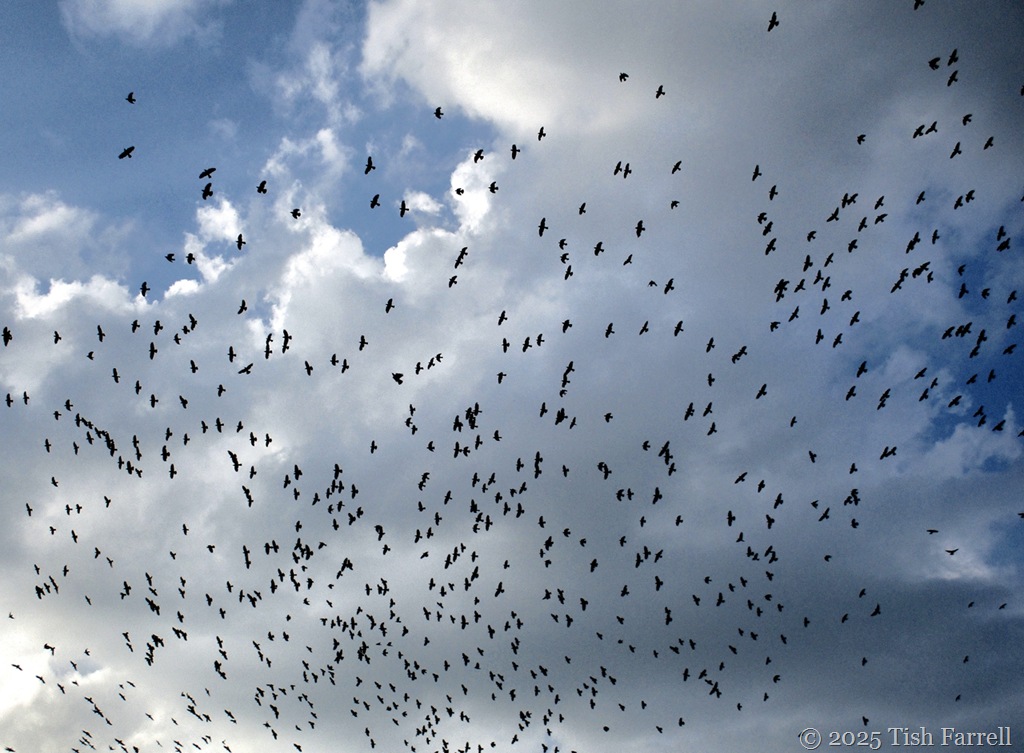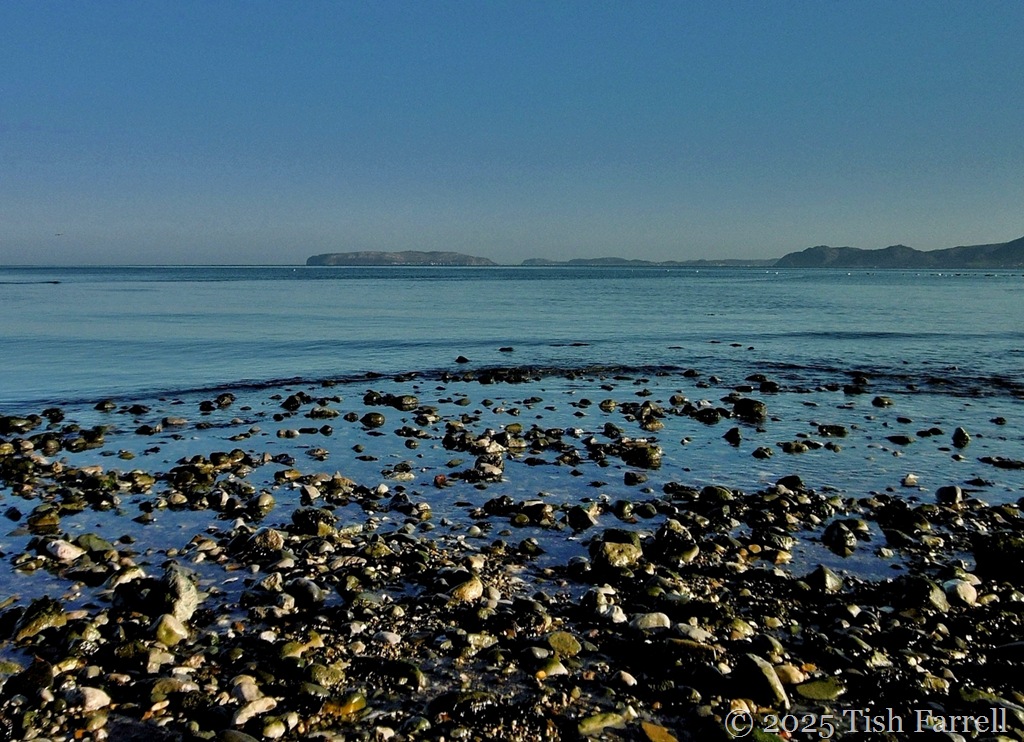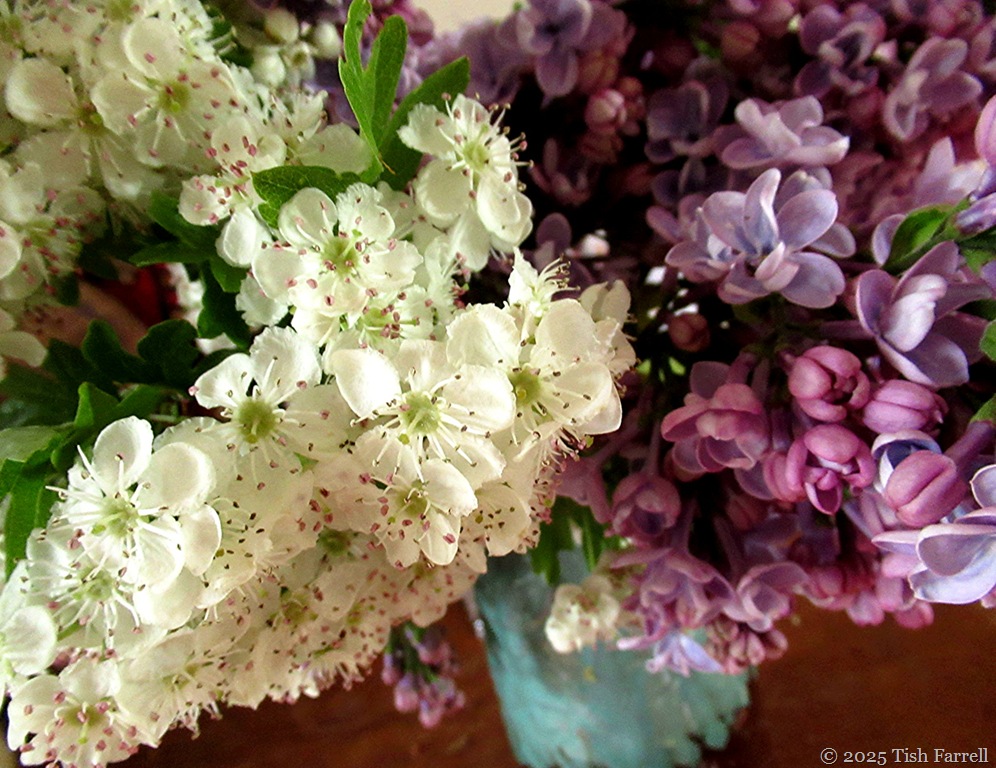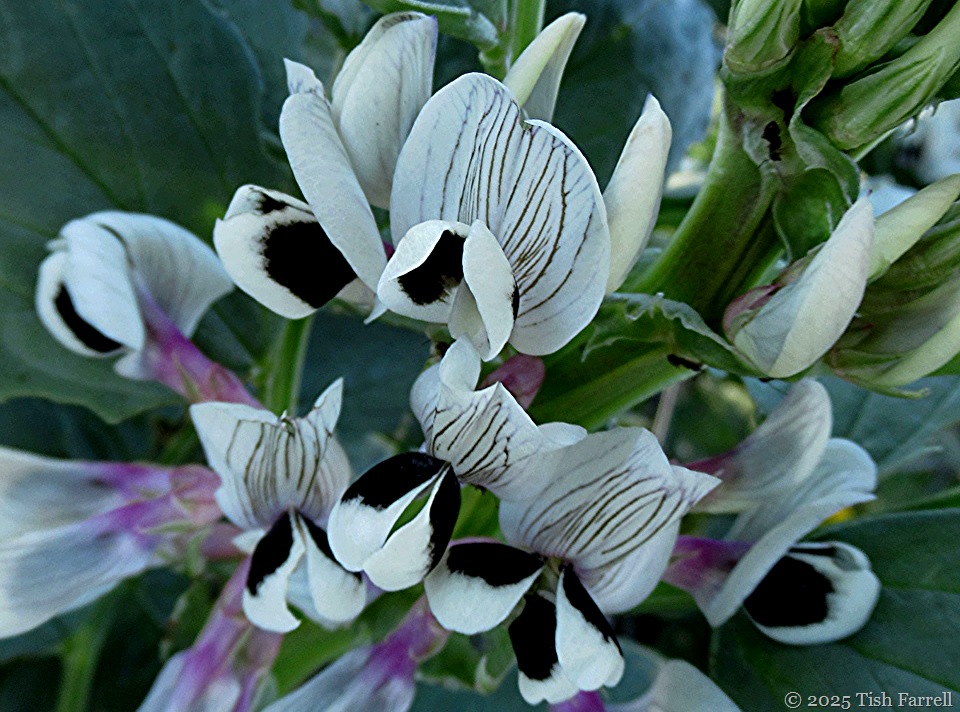
We’ve Been Having Blue Sky Days…

IMG_7302 blue

*

They arrived with the spring equinox on March 20th…

IMG_7303 blue

*

… days hot in the sun, but ice-cold in shade, as if the air came straight off a snow field…

IMG_7307 blue

*

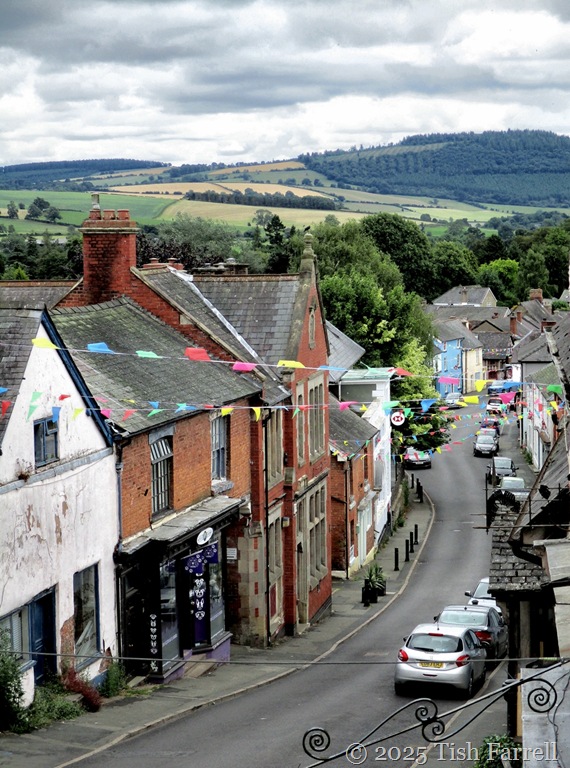
…yet so enlivening, it had us one day walking (instead of driving) to the builders’ merchants on the edge of town…

…spotting, as we went, wild cherry blossom, the bright white blackthorn that is everywhere in drifts on farm hedgerows, and then the distant green of wheat fields and fresh grassland.

IMG_7311 blue

*

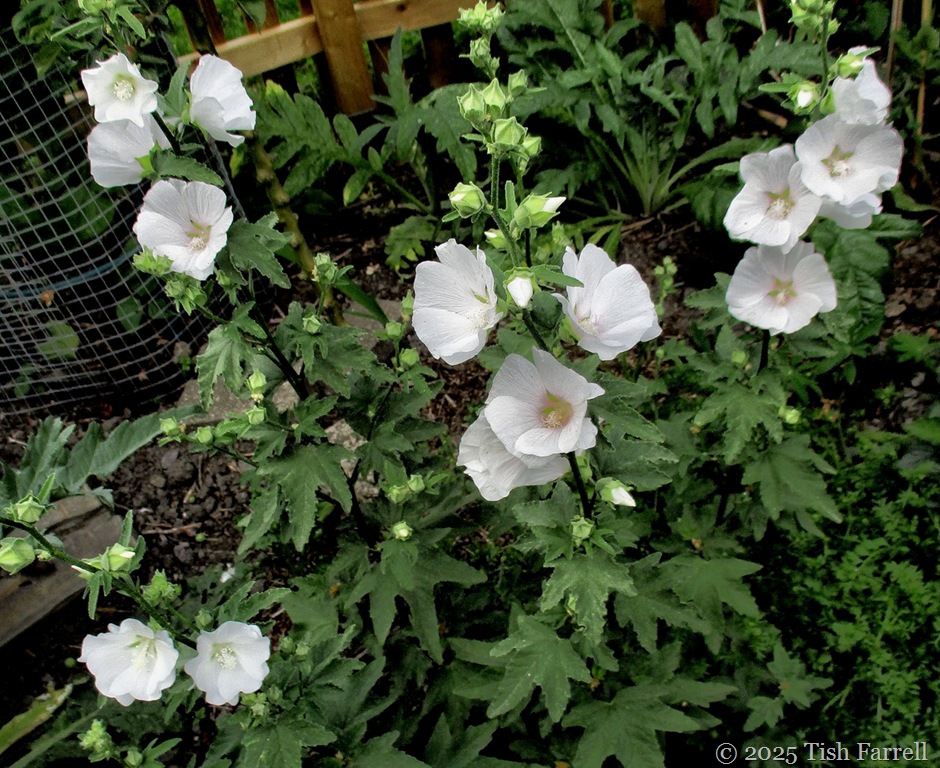
Meanwhile, the town lanes and gardens have been aglow with magnolias, daffodils, pussy willow, forsythia, camellias, fire-red japonica…

IMG_7300 blue

IMG_7284

IMG_7287 blue

IMG_7326 blue

…and the cherry plum by the house has day by day been turning from pink to bronze, as blossom flutters off and gives way to leaves.

*

And so the Shropshire countryside has been drowsing in a haze of vernal glamour: an earth dream of a perfect spring come to life.

The blue sky days turned into weeks, three to be exact. Long enough for us to grow used to blissful weather, to think it ours forever.

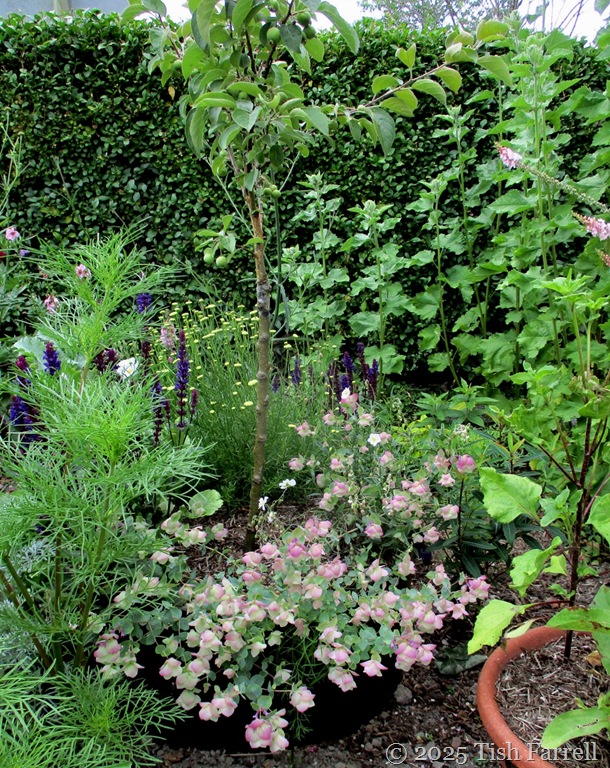
In the garden, our faces turned often to the sun, we noted the little pear tree begin to flower…

IMG_7317 blue

*

…and the old apple tree by the compost bin burst with buds…

IMG_7361

…that then begin to open…

IMG_7366

*

…just in time for Sunday’s full moon and a complete change in the weather…

IMG_7372

*

Today there is grey sky, racing rain clouds and a piercing wind that gusts down the chimneys. It feels like winter when we walk to the shops, clad in sweaters, quilted coats and woolly hats. We’re cast adrift in seasonal confusion. Bereft. Abandoned by spring. How could she do this when we so loved the sun, the light, the crisp air?

Ah, well.  The weather people say the wind should lessen tomorrow, all but doubling temperatures from 6 to a soaring 11 degrees C. There might also be a view of the sun on Easter Sunday morning, but little to see in the following week. Instead, there will be rain, of which this gardener and the nation’s farmers are much in need. So it goes. All chop and change. Perhaps blue sky spring will be back in May.

copyright 2025 Tish Farrell

Lens-Artists: abandoned  This week Anne sets us the topic ‘abandoned’. Please see her post for more serious cases of abandonment.

Weather’s Untamed Ways…

IMG_6969 ed

…from heavenly ethereal to eerily supernatural:

IMG_7161ed

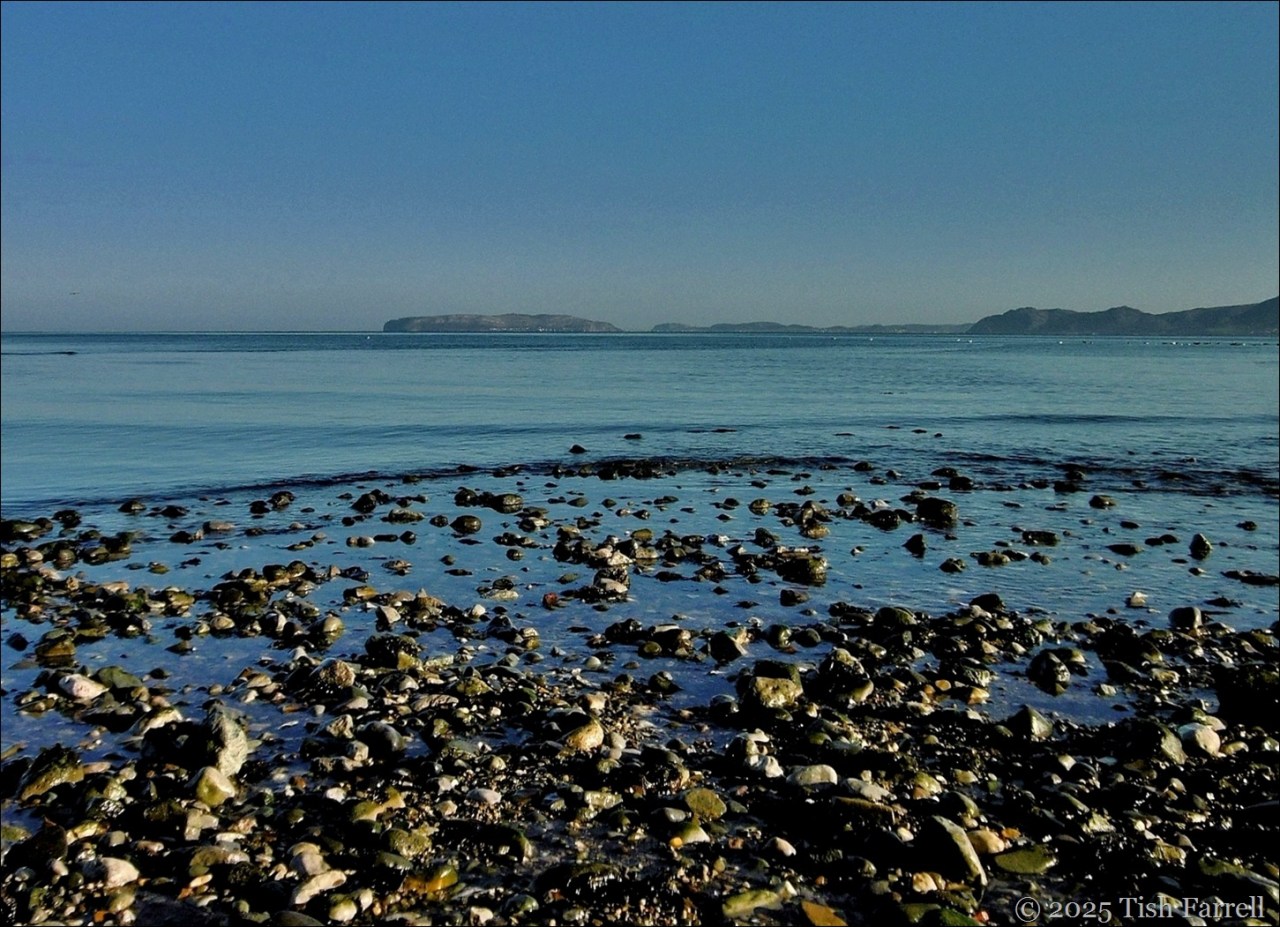
Herewith some recent views across the Menai Strait – from the island of Anglesey above Beaumaris to the Welsh mainland.

We’ve just returned from a week’s stay on Ynys Mon. It was our first March visit to the island, our usual time-slot being late December, and our arrival coincided with both the spring equinox and a spring tide. In fact we had never seen the low tides so low. When the sea went out, sand banks never glimpsed before, became exposed.

You can just make them out in the first photo.  This reminded me of the tales of the Roman invasion of Anglesey around 60 CE and how Governor Suetonius Paulinus equipped his army with flat bottomed boats to deal with the uncertain depths across the strait. But it is possible, too, that there are/were low-tide paths, known only to locals. Perhaps Suetonius Paulinus found himself an informer. The conquest anyway was bloody: the object to smash the power of the Celtic tribes’ druid priests who made their last stand on the island.

There’s more about this at an earlier post: Island of Old Ghosts.

For the mystically or meditatively inclined, you can see how weather watching can enthral; you never know what may happen next; all the elemental forces conspiring: the ever changing light, coastal winds, cycles of convection and condensation, the lunar-solar ebb and flow of tidal waters.

So much weather in a week on this tiny corner of the planet. We had hot sun, biting winds, cloudless blue skies, deep gloom, rain (though not so much for Wales), drizzle, mist, stormy and glass glittering seas.
IMG_7159ed

Late one afternoon we watched, with some sense of awe, as this white cloud moved low along the mainland shore, spilling out like dry ice till it reached the Great Orme headland.

And then one evening…

IMG_6971ed2

*

At other times the mainland looked gauzy. It could be a mirage. Or there again it reminded me of the magic painting books we had as children – the wash of colours emerging from the empty page.

IMG_6967ed

IMG_7184ed

Copyright 2025 Tish Farrell


Lens-Artists: Wild  This week Egidio at Through Brazilian Eyes wants to know what wild means to us. Go see what wild means to him.

Catching The Light And Finding Home

IMG_6923 cherry plum sunset

I took the header photo on March 11th, the last rays of sun over Shropshire-out-of-Wales, lighting up the first sprigs of cherry plum blossom. I have only recently identified this tree: Prunus cerasifera nigra – a native species that lives just over the hedge outside our kitchen window. Every day now, and especially when we sit down to eat, we are watching it with special attention. For it seems this tree, which I had started off disliking (for reasons explained below) has become a household treasure, albeit one ‘borrowed’ from the roadside verge next door.

When we planned the kitchen extension (to replace an ageing conservatory attached to our newly bought old house) we did not think too much about the view. The site was tight, constrained by planning regulations, conservation area considerations and an overgrown hedge (although it has been cut back), and so we assumed our new big window would mostly look out on sprawling holly and hawthorn.

But now we find we also have a tree-view. And though I’m not so keen on pink, I cannot deny its loveliness, and especially at sunset. For this was another unplanned aspect: the only possible position for the window meant it faces due west.

IMG_6907ed

Two weeks ago the branches were still black and bare, a skeleton mesh against wintery skies. One week ago, with the sudden sunny spell, if we looked hard, we could spot tiny slivers of pink on breaking buds. This week we have the first blossom, a good two weeks later than last year, when our February 24th view through the landing window looked like this:

IMG_4676

So much for all the talk of this spring being sooner and warmer etc etc than other springs. Not so in Bishop’s Castle. After the week of warmish weather, the polar vortex is now rolling out cold, cold air day after day, and the cherry plum’s impulse to flower feels arrested somehow. But then that’s alright. A slow flowering will be just fine.

*

Last spring, as the building work progressed we watched the blossom cloud give way to foliage production. Next we had a dense, dark, rustling canopy, the leaves almost black at first sight, and not very pleasing. When viewed from outside, the tree cast a pool of deep gloom over the garden steps which  I found depressing. But then come August and the kitchen all but done, we found ourselves sitting down to supper with an unexpected light show.

IMG_6006

kitchen window

*

Two months on – and another unexpected view – a November snowfall and an abstract work that made me think of Jackson Pollock’s  Autumn Rhythm, which I think we once encountered in the New York Met, where we’d gone to escape an unanticipated May heatwave.

IMG_6474ed

And so in our new home, with passing moments, hours, days, and months, (two years in August), we are coming to know our closest neighbour, the cherry plum. Its fruits are said to be edible and good for jam. I managed to discover a single one last year. It was deep red and round, bigger than a cherry, with a firm skin that seemed to scrunch when I bit into it. It had a sweet-and-sour taste that made me think of Chinese plum sauce. Back then I did not know about its eating potential, and anyway I think the tree has grown too tall for elder scrumping  forays.

But never mind. It has anyway inspired me to think more kindly about our horrid hedge, and how to deal with some ugly gaps just beyond the window. I’ve discovered cherry plums are good for hedging so I’ve recently planted three white flowered saplings, hoping that (in the not too distant future?) the blossom will cheer both us and passing neighbours. And maybe there’ll be fruit too – for us and the birds.

There are other bonuses of course. When I was out on the far side of the hedge preparing the ground for planting, there was much chatting with locals who wanted to know what I was up to. And indeed, why I’d come to live in Bishop’s Castle, and where was I before. All good questions and a good start too to feeling, after a few unsettled years, that we’ve at last come home.

IMG_6902ed

Lens-Artists: Life’s Changes This week Anne sets us a theme rich in possibility. Interpret it as you may, but first see her post for an inspiring tale of personal development.

Spring!

IMG_6806ed

Or is it?

February in Britain often teases, bringing us a sudden mild and sunny day, as it did last Saturday, followed by bone biting winds (today). Countryman poet, John Clare 1793-1864, wrote a poem about February fickleness. I probably mentioned this time last year. It’s worth a read.

So: we have crocus and snowdrops, and the odd daffodil. Also hellebores, both waning and waxing. On the garden steps the winter pansies still thrive, although all but blustered out of their pot.

IMG_6787ed

IMG_6795

We have only a small scatter of snowdrops in the Farrell domain, but everywhere else about the town, in gardens, under lane-side walls and hedges there are drifts and drifts. Reinforcements, then, needed at The Gables for next year.

IMG_6822ed

At the top of the garden steps the dark hellebore has just begun to flower. Very striking when the sun catches it. Meanwhile, in the pot below, Hellebore Christmas Carol is winding down after a three month performance. Although having said that, this morning I noticed there are new buds forming beneath the gone-to-seed blooms.

IMG_6832

*

The clump of tiny crocus at the top of this post popped up this week by the front gate. Most welcoming of them. This particular variety also seems to be growing in every Bishop’s Castle garden. And of course there are the chunkier sorts too, a whole host in fact spotted in the grounds of the Wintles eco-houses:

IMG_6796

IMG_6801ed

*

Outside the kitchen window (on the far side of our horrid hedge) the ornamental cherry tree is now displaying the faintest haze of plum coloured buds. They will be candy floss pink when they open. Not a favourite colour, but still a sight to look forward to against a blue spring sky.

IMG_6808

And talking of the horrid hedge, those of you who follow my gardening pursuits will know that last year I was doing battle with it: untangling swathes of ivy, pulling out decayed hawthorn branches, unpicking very prickly vegetation that had knitted itself into a chicken wire fence running the length of the back garden, whingeing about the forest of saplings – ash, sycamore and elder that had grown amongst the holly, privet, weigela and hawthorn, all of which meaning you pretty much need a chainsaw to keep it in check.

In an ideal world I would have it dug out and replanted with wildlife-human friendly species. In fact, looking at 1990s photos of it, I don’t think it was ever deliberately planted as a hedge: more a case of boundary holly trees and shrubs suckering up together with arboreal interlopers and encasing a very rotten field fence.

But then a few weeks ago I had a notion. I discovered I could buy individual wild hedging plants and so fill in gaps between existing thickets. We have now popped in bird cherry, field maple and briar rose whips. We also have a more substantial hornbeam still to plant on the sunny side of the biggest gap created by our recent building work.

My hope is that, as the new plants become established (well trained of course), we can then cut back the main stems of the ash, sycamore and overgrown weigela, encouraging them to sprout more usefully (and manageably) from the base. That’s the plan anyway. One for the long term, methinks.

And apart from this, and in rare dry spells, my other betwixt-winter-spring gardening pursuit has involved digging out the compost bin. Last year I’d filled it with dug up lawn. And oh, what lovely stuff it’s become. I can’t tell you how happy it makes me – a lovely big pile of crumbly dirt. Perhaps enough for two raised beds.

Time to start some seed sowing then…

IMG_6809

copyright 2025 Tish Farrell

*

IMG_6807header

The Tenacity Of Small Things

IMG_6788

*

A persistency of pansies

I am truly astonished by the hardiness of pansies. They must have been bred with anti-freeze in their roots and shoots. Their structure is anyway so puny and fleshy; easily crushed by clumsy humans. So how can they still be flowering?

The pansy in the photo is much tinier in real life, less than one inch across, and so tending more towards the wild heartsease, Viola tricolor ,  which grows in upland summer meadows.

Sister Jo gave me three little pots around the end of September. I planted them out in a larger pot and they have been sitting on the garden steps ever since, already into their fifth month of flowering. And not once have they failed. Not when they were buried in snow for several days. Or subjected to hard January frosts night after night. Or buffeted by gale force winds. Or beaten by downpours.

It’s true they look mangled after a frost, but as the day warms, they perk themselves up as if it had never happened. Bless their little pansy faces.

IMG_6597 ed

After the December snow and frost

*

A hurrah of hellebores

And cheering on the pansies comes the hellebore – a Christmas Carol gift from best chum Les. Since mid December it too has flowered its socks off in a pot by the back door where we can see it. So heartening on dull winter days when it’s too icy to venture outside: there it’s been, day after day. And according to the horticultural sites on the internet, it may well carry on till spring, which at the moment it looks like doing.

IMG_6596

*

And now in the front garden, pushing up through frosty soil come miniature crocus, their stems no thicker than a darning needle. They are scattered everywhere and seem to be tiny seedlings rather than the offspring of corms; not a garden phenomenon I’d come across before we moved into The Gables. On gloomy days when they are closed up tight, you can hardly see them. But when the sun shines, the little flowers open wide. Spring is on the way, they say.

They’re nothing if not optimistic little specimens.

 IMG_6777

A cheerfulness of crocuses. Or maybe croculetti.


Swahili Geometry: Once In Lamu’s Stone Town

img479sq

Long ago when we lived in Kenya, we spent one Christmas on the Indian Ocean island of Lamu – a never-to-be forgotten, all too brief safari.  We stayed in the roof-top quarters of an ancient merchant’s house in Shela Village, a thatched eyrie that, being open on three sides, allowed to us eavesdrop on all our neighbours. It was breezy too, the natural air conditioning more than welcome in December’s steamy heat.

Our first view of Stone Town, Lamu’s main settlement, was on Boxing Day when we were taken on a dhow trip out to the reef. It was a good introduction, sailing along the entire quay, hints of Sinbad magic.

img483 ed

img469ed

Lamu’s Stone Town is one of the best preserved Swahili towns on the East African coast, lived in for over 700 years. It is not one of the earliest by any means, nor the finest, but it has its own particular history as a one-time city state, ruled by its own sultan. Its wealth back then was built on the seasonal dhow trade with Arab seafarers. Now its residents make their living from tourism, fishing, boat building and farming. It is also a place of pilgrimage. Lamu is devoutly Muslim, and each year holds a five-day Maulid festival, celebrating the birth of the prophet, Muhammad.

For more about the Swahili people here’s a segment from an earlier post:

“You could say that Swahili culture was born of the monsoon winds, from the human drive to trade and of prevailing weather. For two thousand years Arab merchants plied East Africa’s Indian Ocean shores, from Mogadishu (Somalia) to the mouth of the Limpopo River (Mozambique), arriving with the north easterly Kaskazi, departing on the south easterly Kusi. They came in great wooden cargo dhows, bringing dates, frankincense, wheat, dried fish, Persian chests, rugs, silks and jewels which they traded with Bantu farmers in exchange for the treasures of Africa: ivory, leopard skins, rhinoceros horn, ambergris, tortoise shell, mangrove poles and gold.

By 700 AD many Arab merchants  were beginning to settle permanently on the East African seaboard, and the earliest mosques so far discovered date from around this time. These new colonists would have married the daughters of their Bantu trading hosts and doubtless used these new local connections to expand their trading opportunities. Soon the African farming settlements were expanding into cosmopolitan port towns. Itinerant merchants and their crews would also have had plenty of chances to get to know the local girls. The weather served this purpose too. Between August and November the trade winds fail. Voyaging captains would thus put in to a known safe haven to wait for good winds. And while this was not a time to be idle, since boats had to be beached and the crew put to cleaning and sealing the underwater timbers with a paste of beef fat and lime, three months was a long time to be ashore and far from home… continues HERE

img595sq

Main Street, Stone Town

*

#GeometricJanuary

img479 header

Gordon Russell Furniture Designer 1892-1980: Pioneering Geometry

IMG_4406sq

*

“I want to make decent furniture for ordinary people.”

Gordon Russell was a design pioneer—a furniture designer, maker, calligrapher, entrepreneur, educator, and advocate of accessible, well-crafted design. Educated in the Arts and Crafts tradition of the Cotswolds, he believed that good design profoundly impacts people’s lives. His great skill lay in bridging the gap between hand and machine, craft and design, theory and practice, landscape and architecture.

Gordon Russell Design Museum

Most people visit Broadway, in the heart of England’s Cotswolds, to wander along its main street of old houses of amber coloured stone and peer in the windows of gift shops. It is very much a tourist trap. But if you happen to wander down a side street past the olde worlde fish ‘n chip shop and continue on to the CO-OP supermarket you will find a little a gem of a museum.

It’s a place that celebrates the work of a very extraordinary man, a man who believed that good design uplifted the spirits, and that everyone should have them uplifted by the everyday things in their homes.

IMG_4426ed

*

Gordon Russell’s connection with furniture making and, in particular with the traditional skills of Cotswold makers, began in 1904 when his father moved the family from London and bought The Lygon Arms. Sydney Russell was intent on creating a fine country hotel (which it still is today) and furnishing it with antique pieces restored or mended in his own workshop. At sixteen, Gordon left school and began to learn his own craft and create his own designs alongside skilled artisans in the family workshop.

IMG_4326

Then came the Great War. Gordon volunteered and served as an officer in the Worcestershire Regiment. Very remarkably, he survived Passchendaele, Ypres and the Somme and was awarded a military cross. Somehow, he translated the horror of all he must have witnessed into a driving determination to create beautiful work of enduring value.

You will have to forgive the not so good photos. The museum is so small, so filled with exhibits, and there were the inevitable spot lights.

IMG_4392ed

IMG_4398ed

This chest of drawers was commissioned by erstwhile British prime minister, Lloyd George. It is made from a holly tree that had blown down in his garden. The carcase is lined with Honduras mahogany. The handles are made from forged non-rust iron. It was made in 1928.

*

Gordon Russell’s belief that everyone should be able to afford good furniture came to the fore during World War Two.

IMG_4408ed

Throughout the war, Gordon played a major public role. Appointed by the government to lead the design panel for manufacturing utility furniture, he faced the challenge of coordinating hundreds of small workshops to produce standard furniture for those who had lost homes to bombing or were newly married. Despite material shortages, Gordon ensured the furniture was well-designed and well-made, with much of it still in use today. For his contributions, Gordon was awarded a CBE. In 1944, he joined Board of Trade discussions to establish a national body promoting higher standards of industrial design, leading to a significant post-war role.

Gordon Russell Design Museum

This is where some personal Farrell interest comes in.  We have a catalogue utility piece. Once given as a wedding gift to the Farrell parents when they married after the war, it much later lingered under many layers of green paint in their garage. Then Graham decided to give it an overhaul. It was in the Sheinton Street kitchen for years where I overlooked the fact that the drawers and doors no longer shut properly. Then, moving it to The Gables, we found it wouldn’t fit at all in the new kitchen. We started agonising over getting rid of it, (and yes, I know this might be surprising to some) and so I was very pleased when I found it would fit in the main bedroom, where it’s actually quite useful if unlikely. And I’m attached to it even more now that I know something about the man responsible for furnishing the homes of bombed out, impoverished post-war Britons.

If you want to know more about Gordon Russell and see far better photos of his designs, please go to the museum link above. It’s a very excellent website.

IMG_6770ed

*

There’s a rather smarter version of our sideboard in V & A collection. It was apparently first made by Heal & Son between 1942-1946. You can see the V & A example:

https://collections.vam.ac.uk/item/O123774/sideboard-heal-and-son/sideboard-heal–son/

#GeometricJanuary   Day 26

Evolutionary Geometry?

P1070061 Darwin

Some of you may have seen this sculpture here before, known variously as the Shrewsbury Slinky, or by its actual title The Quantum Leap. It sits between the River Severn and a busy traffic system, sited on a narrow slice of public space, not large enough to be called a park.

The architectural designers, Pearce and Lal, describe it as a piece of geo-tectonic sculpture, inspired through “the influence of objects and materials central to the development of Darwin’s thought: rock, fossils, zoology…” It was commissioned by the Shrewsbury and Atcham Borough Council to commemorate the 2009 bicentenary of Charles Darwin’s birth.

100_5782 Darwin

100_5791 Dawin

And the reason it’s here?

Charles Darwin was born and brought up in Shrewsbury. His father, Robert Darwin was a wealthy doctor and financier, son of physician and free-thinker Erasmus Darwin. His mother Susannah was the daughter of famous potter, Josiah Wedgwood. A family, then, much used to serious thinking, unafraid to challenge established boundaries and in many domains.

Charles lived at The Mount, a grand house built by his parents, across the Welsh Bridge (glimpsed in the photo above), and so not far from Quantum Leap. He spent his early years exploring the 7-acre family garden, as well as discovering plant and animal life in the countryside all around. He would later claim that he could not help but be a naturalist.

After attending the local Unitarian School, he transferred as a boarder to the prestigious Shrewsbury School (founded in 1552 by Edward VI), which in Charles’ day occupied the building that is now the town’s main library. Outside the entrance is the late Victorian tribute to the man who would go on to write On the Origin of Species, the astonishing (horrifying to some) work that addressed and consolidated his years of careful observations and research.

100_5382sq

At sixteen, Charles left Shrewsbury to follow his older brother, Erasmus, to Edinburgh Medical School, where he lingered for two years, largely disinterested in studying medicine. An angry father then sent him to Christ’s College, Cambridge where he was to study for an arts degree as a prelude to becoming a country parson. This plan did not work out either. The influences and contacts met with at Cambridge led to his taking up a self-funded position as naturalist aboard HMS Beagle on an expedition tasked with survey work across the southern hemisphere. He was 22 and the voyage lasted five years. When he returned he had tomes of notes and extensive collections of mammals, birds and plants. So began the concentrated work of study, classification and cataloguing.

*

But what about The Quantum Leap?

Like many others, I’m not really sure what to make of it. I see the connections with dinosaur fossils, the DNA double helix, but the concrete used to cast the blades is unappealing; the whole effect ‘heavy-handed’ somehow.  However, I do like the way it curves through different planes, although at the same time find myself wondering how the initial plan might have translated with more finesse into bronze or iron. Looking at the Anish Kapoor C-Curve posted earlier this week, I’m wondering what marvellously sympathetic creation he might have come up with, had he been given the brief.

One of the most obvious problems is the siting. It’s a piece of public art that has not only NOT been given enough space to speak for itself, but has been sited on the edge of the town centre where most people will not see it. A commemorative work left largely unseen and at the cost of one million pounds! At which point words fail me, so I’ll leave you with more photos and see what you think about it.

P1070810 darwin

100_5777

#GeometricJanuary  Day 24

100_5792Darwin header 2

Of Wind Towers: Geometry, Art & Science Combined

76 sq

Wind towers – the low-tech means to bring relief from desert heat waves. This one belongs to the restored Sheik Saeed Al Maktoum House on Dubai Creek, built in 1894 by the ruling Al Maktoum family. It is now a museum and, if I remember rightly, the only surviving example of Dubai’s historic grand houses.

78 sq

*

A perfect fusion of aesthetics, science and simplicity of function: this is how they work.

The capped tower has a port that opens towards the prevailing wind. Some towers are multi-directional, their vents opened and closed as appropriate. Air is drawn into the living quarters below, its movement providing the cooling effect.

When there is no wind, the tower acts as a chimney, venting hot air from the interior.

Persian architect-engineers devised this elegant air-conditioning system two thousand years ago, although it is said the Ancient Egyptians had something similar. More sophisticated versions involved installing a canal, qanat, under the building. Where this method was used, the wind tower vents were opened away from the prevailing wind. The system then pulled cooling air up from the canal.

Persian architectural techniques arrived in Dubai in the 19th century along with the development of the pearl fishing industry which gave rise to the settlement along the Creek.

*

Astonishingly, this technology could be scaled down to a demountable, flat-pack desert nomad version.

80 ed

Here we have a reconstructed example of a portable Bedouin wind tower, made of cloth stretched on a wooden frame. (As seen in the courtyard of the Dubai Fort Museum).

But while it scores on movability, there were problems if it was erected too close to the cooking hearth. Once alight it turned into an actual chimney and became a serious fire hazard.

75 resized

Creek-side view of the Maktoum house, an un-rigged dhow beside it

*

#GeometricJanuary  Day 23

Reflective Geometry: C Curve By Anish Kapoor

Anish Kapoor sq

Here’s one from the photo archive. I was reminded of it by today’s very chilly sunshiny morning. It’s a work by Indian sculptor, Anish Kapoor, and called C-Curve. We came upon this fabulous creation by chance after a visit to Kensington Palace, a piece of happenstance that made it all the more wonderful: Looking Glass Land made manifest.

Not only were there the reflections to ponder on, but also the responses of other passersby to enjoy.

And yet to think the work itself was utterly engineered, the unforgiving edges and surfaces of highly polished steel. It’s stunningly paradoxical. And there was more. When you walked around to the concave face you could have your world turned upside down:

Anish Kapoor concave view

*

And then back again:

100_1453 - Copy

More about Anish Kapoor and lots more geometry HERE

#GeometricJanuary Day 22

Anish Kapoor header