Inside Autumn

Inside Autumn by Nomzi Kumalo. Please take joy in the work of this wonderful poet

Nomzi Kumalo's avatarNOMZI KUMALO

Multicoloured leaves along the street in a hill
Wood soaked and sweetened by the rain falling
Merciful water dripping onto quiet pavements
Dribbling slippery down the tarred thirsty road

A neutral sky where the air harbours no pressure
The rooftops and local windows leaking domestic
An uninspired dog lays heavy by an entrance hall
When there is nothing to do is there nothing to do

Flattened tired carpets still pretend to be luxury
Inside wooden walls of the same old thing again
Sometimes the coffee steaming will hold comfort
One of those days without a name to label it by

Forgotten picture frames capture some yesterdays
Glossy managed smiles and gestures from parties
The trolls and magnets and broken love messages
Settled into grown up life and ways of escaping it

The stale kitchen mood meets a crisp autumn air
Spring long dead visits the city to play some tricks

View original post 22 more words

Portmeirion: Pastiche in pastel?

100_4693

Cee’s challenge this week instantly conjured vivid childhood impressions – of Edinburgh Rock, those tartan packs of sugar sticks that delivered instant tooth decay in soft shades of lemon, apricot and rose; my long-lost, but once treasured set of Lakeland crayons whose red plastic wallet held so many delicious colours of mauve and blue, and Portmeirion, the Welsh cliff-top confection of architect Clough Williams-Ellis. All three come in colours that, even now, I long to bite into. Bizarre, I know. Anyway, I have already written about Portmeirion HERE. But now for some more soft-hued scenes of an Italianate village and its ever surprising setting on the rugged North Wales coast. It is a place that has fascinated me for fifty years. It is also the place where The Prisoner, the cult TV series of the late 1960s starring Patrick McGoohan, was filmed. Devotees still gather there. Curiouser and curiouser…(allusion to Alice in Wonderland fully intended).

100_4695

100_4715

100_4633

100_4716

IMG_0669

holiday 098

Cee’s fun foto challenge: soft pastels

Now that summer’s done, we take the Dol Idris Path…

IMG_1768

The other day I decided we should take a short break in Wales as we did this time last year. Back then we went to the Llyn Peninsula. On Thursday we headed further south, to Dolgellau in Gwynedd in north-west Wales. It’ is well under a two-hour drive from home, but given that the local guidebook states that the town ‘enjoys’ 70 inches of rain a year, it might seem a perverse choice of holiday destination, and especially in the autumn. All I can say was we were very lucky. For four whole days the weather was fine, the sun often hot, and when it did rain, it did so while we slept. What could be better?

Dolgellau (Dol-gethl-eye) is an ancient market town, once prosperous as a centre of the wool trade.  Today, agriculture, especially sheep and cattle rearing are still important, but tourism has now become a mainstay. And for those who relish outdoor pursuits of every kind, then this part of Wales has pretty much everything on offer, and all set in the most stunning mountain landscapes.

Perhaps the most dominant feature in this locality is Cadair Idris, seen here in its lower reaches from the Dôl Idris Path, a few miles outside the town.

IMG_1753

*

IMG_1729

The mountain is 893 metres (2,930 feet) high, and there are several routes to the summit, but the most direct one strikes off  almost vertically from the Dôl Idris Path, which itself is a short, level route created for those who wish to stroll on the horizontal. (That would be us). So we were not tempted to take the winding stairway up the hillside, this despite its splendid setting beside a roaring waterfall. We had read the guidebook and learned that those steps mark the start of 3.8 kilometre (2.4 mile) ever-upwards haul that includes a 300 metre (1,000 feet) cliff scree face. It would take five hours to go there and back, and besides which, there was also the legend to consider. This says that anyone who spends the night on the mountain will wake up either  mad or a  poet.

We couldn’t risk it, not even for a brainstorm of bardic eloquence. Instead we took photos, but only after we had visited the tea-room and eaten chicken curry and rice (me) and a bacon sandwich (G) while watching nut hatches on the bird feeder outside the window. (All Farrell safaris must include tea rooms, coffee houses and restaurants). Also, while we were there, we viewed the cartoon about Idris the Giant, who uses the mountain as his armchair (cadair) while gazing up at the stars. And finally, we peered uncertainly at the bat-cam video that mistily revealed to us rare and roosting horseshoe bats who live in the tea room roof space. Bats in the attic. That was  somehow pleasing too.

IMG_1725

*

IMG_1731

*

IMG_1715

IMG_1714

The food in the cafe was really rather good, but once back on the path we found still other diversions. There was the spotting of bat boxes in the trees. Apparently 9 species are catered for. I didn’t discover the exact purpose of the boxes – emergency roosts for dirty-stop-out bats caught out in the daylight while still far from  home?

IMG_1722

More curiously, at the foot of the mountain path, we found the ruined remains of Idris soft drinks company’s research laboratory.  And yes, it does look more like a barn. It is hard to imagine that, in its day, a cutting-edge business empire based on non-alcoholic fizzy drinks, had its  roots  in an isolated valley below Cadair Idris. The company even went on to supersede Schweppes as the sole soft drinks purveyor to HM Queen Victoria.

Dolgellau 076

Im19190726ILN-Idris[1]

The founder of the company, a successful Welsh chemist called Thomas Howell Williams, began the laboratory in 1873. The Temperance Movement was gathering momentum at this time, and the production of cheap, non-alcoholic, and (apparently) healthy drinks was welcomed.  Why Williams chose this site in particular is not exactly clear, but he was so impressed by the mountain’s splendour that he changed his name by deed poll to Thomas Idris. He also became known as The Ginger Beer Man, and all these years on, Idris Fiery Ginger Beer is still produced, albeit under the Britvic label.

In the 1980s the Idris family gave the land to the Snowdonia National Park Authority and, in the last few years, a flat, circular path of just over a kilometre has been created to cater for all who wish to enjoy what remains of the Idris parkland domain. There is an ornamental lake with wild balsam on its margins, specimen trees dotted here and there, a fish ladder and weir to examine, secluded tables for picnics, a chestnut tree avenue, streams to walk by, and of course the tea room for the scones and carrot cake we didn’t have the first time round.

On our slow wandering we did not see the buzzards, kites or peregrine falcons noted on the tea room’s  recent ‘bird sightings’ board, but it was a fine walk on a fine autumn day, and so thank you Mr. Idris for your gift to the nation – to Wales that is, and thence to the United Kingdom that derives only the greatest benefit from the sum of its peripheral lands’ magnificent places.

copyright 2014 Tish Farrell

IMG_1734

IMG_1754

IMG_1763

*

Dolgellau 105

Flickr Comments: N words

This post was also inspired by Jo’s Monday Walk : Fountains Abbey

The Man from Much Wenlock: Meet Ken Milner

It is a privilege to know Ken Milner, a gentle creative man with deep rooted sensibilities for the past in and around Much Wenlock. He is a treasure house of information on country lore, on the families who have lived for generations below Wenlock Edge, and on the novels of Shropshire writer Mary Webb which, incidentally, he only learned to read at the age of thirty five. He built the house you can see in the video, and he created this beautiful garden which brings joy to all who see it. Graham passes it twice a day, driving to and from work. It is a floral threshold between the town and Wenlock Edge.

Ken also paints, makes sculptures, and is a poet and storyteller. Here, though, is his living creation – his garden. The video content was created by Ken and Wenlock poet, Paul Francis, and the whole filmed by  Silva Productions, a Midlands production company. You are in for a treat.


https://www.youtube.com/watch?v=23lgFSQzvTw


#WenlockEdge

Flickr Comments: M words

Night-time Plea in Nice: Come Rescue Me…?

by day there was a green parrot in the cage

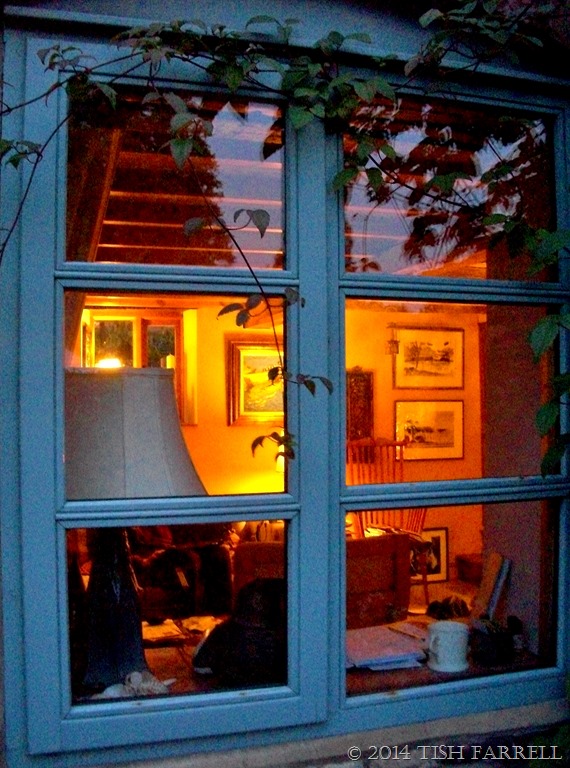
There are so many enticing shop windows to gaze at in Nice – everything from brightly coloured marzipan sweets to exquisite oriental teapots. This window, however, was most disturbing. The more so, since it was just across the street from our hotel.

I think of this as my ‘David Lynch photo’. It seems to have about it more than a hint of that director’s very weird but somehow compelling TV series Twin Peaks. By day,  the window on Nice’s Rue de Rivoli (just up from the swish Negresco Hotel where we weren’t staying) was scarcely noticeable. Only at night, when dimly lit from within and without, did it take on ‘a reality’ (though I hesitate to explore this further) and you could see more clearly what was inside. It seemed to be a dry cleaners, but there was also a lonely parrot in a large cage, and an assortment of wedding  gear arrayed on a wigless bride, and many large-brimmed sun hats. This girl, though, was surely yearning for rescue. Perhaps she is still. Any heroes out there?

copyright 2014 Tish Farrell

Ailsa’s Travel Theme: Inviting

DP photo challenge: nighttime


Thursday’s Special: looking at the sky over Wenlock Edge

IMG_1390 (2)

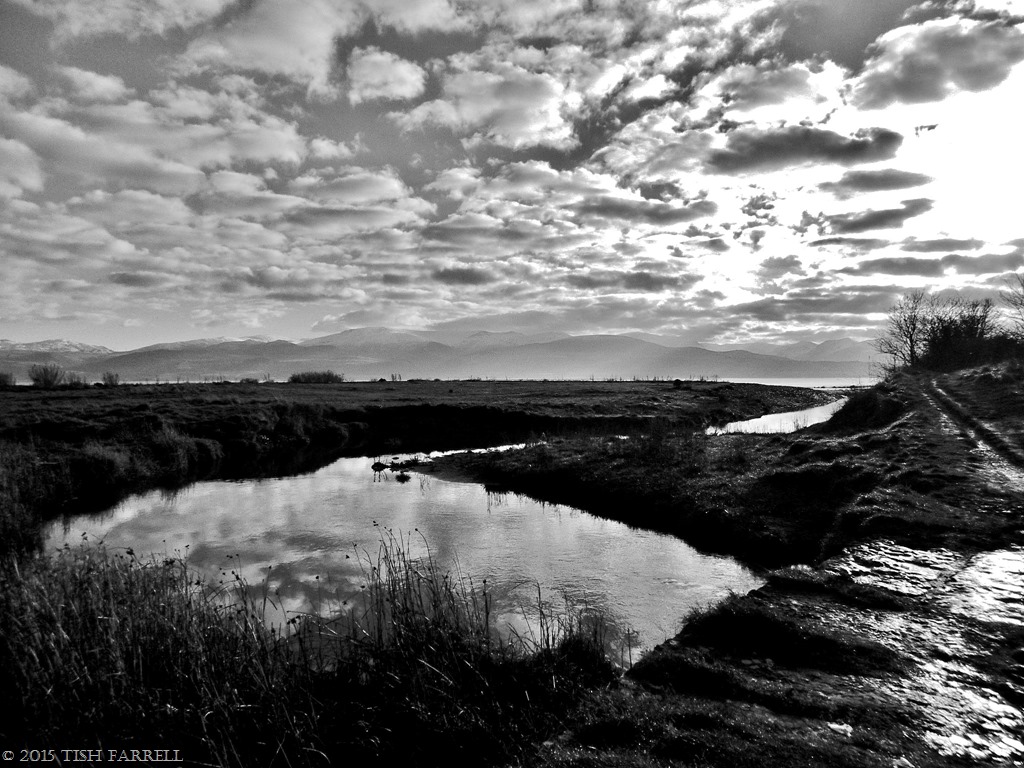
Is it just me, or are our skies growing more interesting in terms of light and cloud formation? I know I spend more time these days looking upwards. Behind our house on Sheinton Street the farmland rises in a series of scarps till it reaches the tree line on Wenlock Edge. Thereafter the ground falls away through hanging woodland. It is quite a drop and means we view the weather higher up somehow, always beyond a series of false horizons. The light and cloud change every minute of the day. You can lose hours simply watching.

This week Paula suggests we post portraits of one kind or another. Here, then, are some sky portraits taken over Townsend Field and Wilmore Hill. You may imagine, too, the frequent exchange that takes place between G and me as we move about the house and garden: I say. Have you seen the sky?

100_5995

100_5659

100_5845

100_5872

100_6382

Lost in Translation Thursday’s Special

#WenlockEdge

Rhinos: strong but oh so vulnerable

Scan-140827-0009jpeg

The poaching of rhinos for their horn is a truly abhorrent trade, and shows humans at their worst, not only in terms of wanton cruelty, but also for their gross stupidity in believing that the horn a) makes a nice macho handle for their dagger, or b) does a single thing for their sexual performance. I do not wish to be sexist, but we are talking of the male of the species here.

However, while we are blaming recent decades of poaching for big game loss, it is worth remembering that some truly monumental decimation took place in countries like Kenya under colonial rule, and by the kind of aristocratic settler who considered East Africa their own personal hunting ground; this to the exclusion of the people whose land it had been for generations, and who then became labelled poachers if they were caught hunting for the pot.

John Hunter, was but one of many white hunters who worked both on his own account as a safari leader, and as a game clearance officer for the government. He began his hunting career around 1910 after quitting his job as a guard on the Mombasa railway. In an article in LIFE magazine 12 July 1952 he begins by saying:

When I first came to Kenya the game covered the plains as far as man could see. I hunted lions where towns now stand, and shot elephants from the engine of the first railroad to cross the country. In the span of my 65 years the jungles have turned to farmland and savage tribes have become factory workers. I have had a little to do with this change myself; for the government employed me to clear dangerous beasts out of areas that were opened to cultivation.This was in a day’s work for me; yet I have always been a sportsman.

John A Hunter(1887 – 1963)

*

His career tally for elephants killed is 1,400, but when it comes to rhinos, he holds the world record. Over a two-day period he was responsible for 1,000 rhino deaths, the slaughter taking place in the Makindu area of Ukambani, about a hundred miles south of Nairobi. The land, and rather poor land at that, was wanted by the authorities for the resettlement of the Akamba people. But the scale of the killing goes to show how plentiful these animals once were.

When John Hunter came to retire in 1958, it was to the small hotel he had built at Hunter’s Lodge, Makindu. I have written about the place in other posts; we practically lived there in ‘92. The story goes that successive owners had long given up trying to keep the roadside hotel sign upright. Always, the locals said, some avenging rhino would come and flatten it. Whether this was a real or a spirit rhino, no one said, but there were certainly no rhinos in sight when we were there.

Today in Kenya there are several private reserves where small numbers of black and white rhinos live out their lives with round-the-clock ranger-guards. At the time when the top photo was taken, the white rhino concerned inhabited, with several others, a secluded part of a Maasai-owned group ranch. It is hoped that initiatives such as these will keep the species viable, but it is by no means certain. It is anyway a dangerous job for the men in the photo below. These days poachers come well armed with automatic weapons. It takes great bravery and strength of character to protect the world’s wildlife out in the bush. So three cheers for the rangers wherever they are working on this, WORLD RHINO DAY. These men and women deserve all our  praise and support. It is only a shame that their diligent protection continues to be needed.

Scan-140809-0037

Anti-poaching team in a private reserve in Northern Kenya

*

copyright 2014 Tish Farrell

For a South African perspective on the state of rhinodom see De Wets Wild, always a blog worth visiting for its wonderful wildlife photos.

And for an Indian view, Sriram Janak’s wonderful blog.

Ailsa’s travel theme: strong for more strong stories


Endurance in Central African Republic

Scan-140829-0058jpeg - Copy

There’s a story here. You have to look carefully though. This is very much a happenstance shot, taken by Graham from a moving overland truck many years ago. In the truck, alongside him, were a bunch of young Australians and New Zealanders. You may picture a row of enquiring, youthful, fair-skinned faces looking out on this scene. It is hard to imagine what the locals made of this passing vision of alien hobo humanity. The Central African Republic (CAR) has never been a common tourist destination. It certainly is not these days.

In  the late nineteenth century occupying French colonisers apparently tried to turn the country into a cotton plantation. It did not work. Ever since independence in 1960, all has been shaky. For the past decade the people of CAR have been caught up in bloody bush wars, these apparently ethnic based and factional: Christian versus Muslim. Neighbouring Chad to the north is implicated. As in the Democratic Republic of Congo, CAR’s neighbour to the south, this is a beautiful land stuffed with riches: uranium, crude oil, gold, diamonds, and valuable hardwoods. There is also good farm land and hydro-power potential. Yet its people are also among the world’s poorest. As in DRC, it is necessary to ask the question ‘Who benefits?’ to find out exactly why this state of things persists in the 21st century.


…forest either side the red dirt road, rolling hills, coffee bushes, pawpaw tees, kapok trees, bananas, innumerable  mangoes and desolate villages…people waving  and smiling, but also some half-heartedly thrown stones and raised fists from the kids…

from G’s Overland Diary

*

You can make a guess that a good part of the answer will involve a chain of traded commodities that reaches us in the industrialized nations, for we are the end-users and buyers. By some means or other, arms will be going the other way. For this is the nature of the rich world’s (largely unseen) relationship with African territories. In the past it was the cropping of humans for slaves, and the cropping of elephants for tusks to make drawing-room piano keys, and balls for the billiard table games of civilized gentlemen. Today, it is the minerals that are craved, and at any cost. The trade keeps unscrupulous African potentates in power. They pillage resources from neighbouring countries to sell to the so-called developed world (is this us?). And so we have the carnage.

Until 1997 France maintained a military force in CAR; senior French politicians are said to have acquired diamond and gold interests in the country during the ‘80s and ‘90s. Thereafter, fearing a power vacuum, Paris funded French-speaking African nations to provide a peacekeeping force there (BBC news page). Today, French forces are back as part of the UN peacekeeping mission. Their fellow peacekeepers are Rwandans, and these two forces do not see eye to eye either (The New Republic). However you look at it, the country is a bloody  mess. Once the Pandora’s Box of vested interest by multiple players has been opened, it is hard work to restore any vestige of order. We see this in the Middle East too.

Scan-140829-0058jpeg - Copy

And so back to this photograph. The girl’s wave is wistful as she looks directly at us. Frozen in the moment is her wondering about life elsewhere. The mother, though, knows better. She looks steadfastly away, eyes focused on some other reality. Her stance suggests proud forbearance, feet planted firmly on the earth, her piece of earth, weight evenly distributed. The arms that encircle the baby are sure, composed, protecting, not clinging. She is doing what women do in Africa – endure. Perhaps she is enduring still. Most likely not.

copyright 2014 Tish Farrell

DP photo challenge: endurance

For more about conflict resources