All right I confess. I’m a fraud. I call myself a writer, but in reality I move soil. Year in and year out I move soil. It has become my lot in life – not only on the home front with The Man In My House Who Keeps Having Ground Moving Notions, but also on my own time up at the allotment. How did this happen? Was this the plan I had for myself?
This time last year we were busy shifting ten tons of gunky green Silurian clay and the junk of builders past, removing a huge and hideous waist-high flower bed outside our back door. We had lived with it for ten years, but finally it had to go. Ground Moving Man, then became Wall and Steps Building Man – using traditional mortar and the old bricks and limestone lying around to place to build a much neater, narrower raised border, and safer steps to the top of the garden. (Our cottage is built into a bank). The effort was as momentous, as it was cunning. The Wall and Step Builder had devised a way of dismantling the old steps in tandem with building the new ones so that we always had access to the upper quarters of our small domain, and thence my path to the allotment. Hats off to you, sir!
Here are views of the work as it proceeded.
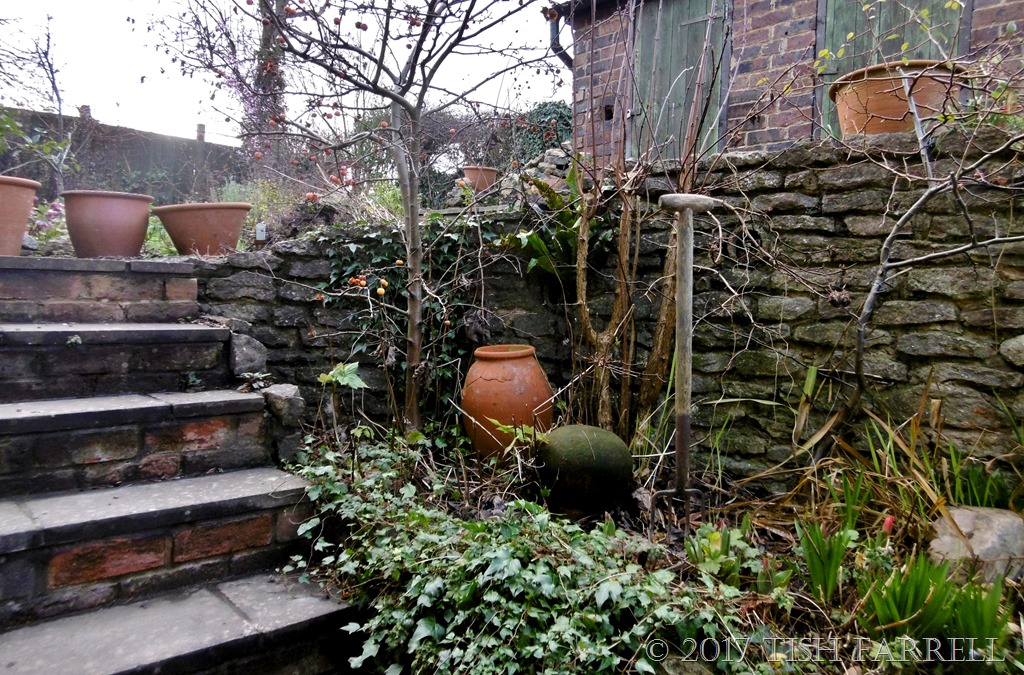
A wintery before:
*
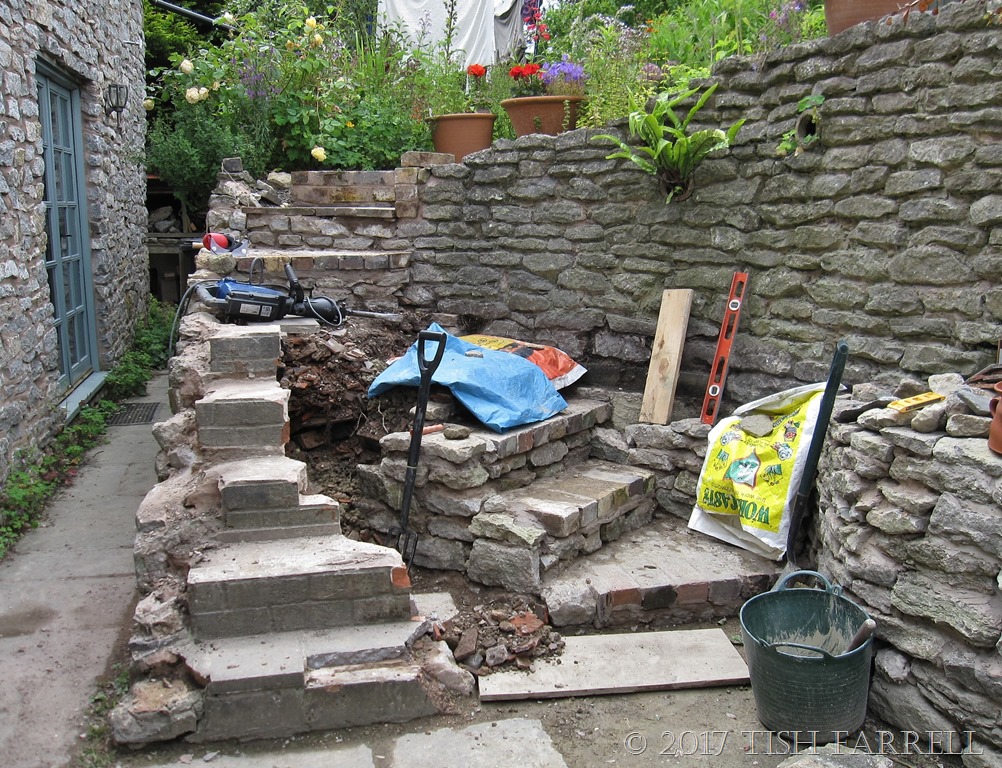
During the synchronised step demolition and rebuilding (pretty good work for a retired plant pathologist):
*
After – a bit heavy on the limestone perhaps, but we had it on site, which is always a bonus when you live on a road where deliveries can be tricky:
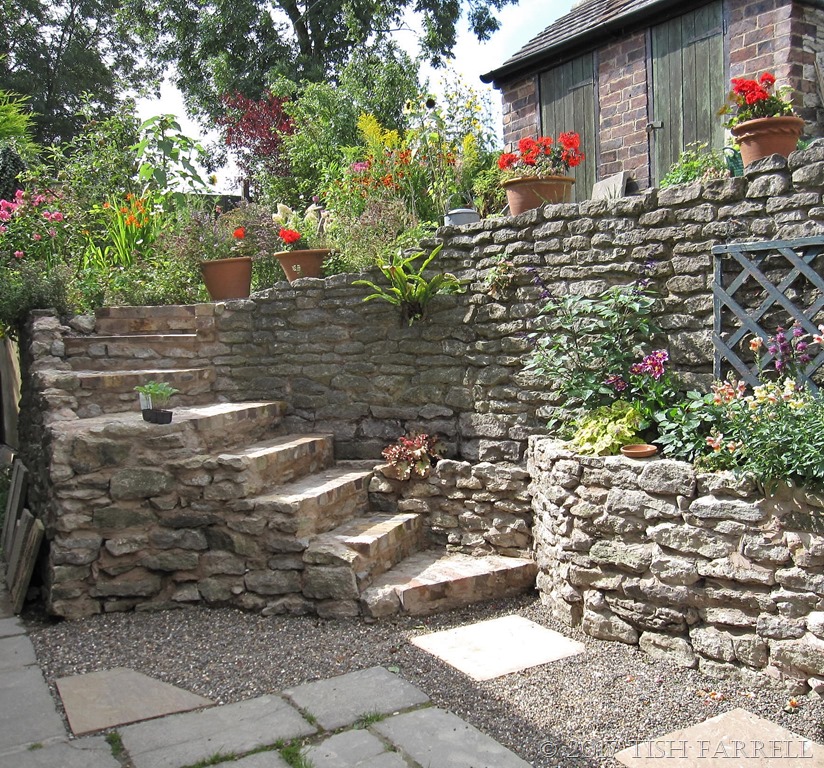
Most of the clay spoil and erstwhile builders’ rubble that had been hidden behind the steps and in the bed was barrowed round the front of the house and tipped into a Hippo Bag. This natty item is sent through the post in return for some loot. You fill it with 1.5 tonnes of stuff, and then a truck comes and cranes it away. Ideal for people who live on a busy main road, and have no room for a big skip. We had several of these handy mega bags.
Meanwhile up at the allotment I was dismantling a forty-year old allotmenteers’ spoil heap the size of Everest, and using the substance, which only vaguely resembled compost, to make new raised beds and terraces on my polytunnel plot. I shifted probably sixty barrow loads, and all with the aim of creating (ultimately) a NO DIG gardening system. I know this may sound mad.
The year before I had started clearing the plot by slicing off the neglected, weed-choked surface and piling the turves into pallet bins in the hopes that one day they would decompose into something usable. This was in no way compatible with the principles of NO DIG, but was my quick and dirty method of checking the buttercup, couch grass, and dandelion infestation. After learning the error of my ways early last spring, I gave it up for covering the remaining uncleared ground in layers of cardboard, and tipping a good six inches of spoil heap soil on the top. He Who Builds Walls and Steps then knocked up a few raised beds. (Those of you who come here often will know all this.)
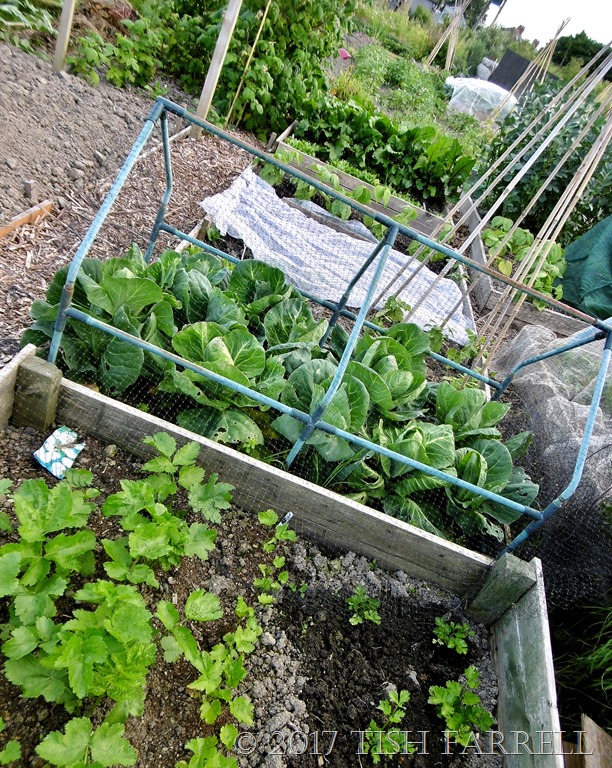
This year I find that ants have been busy in the horrid heap of weedy turves, and the ensuing soil is usable, so am now repatriating it to the areas whence I cleared it two years earlier. So good on the ants, but more earth moving required.
Meanwhile, the notions of NO DIG, also require the seasonal application of deep layers of compost to the surface of all beds. The only problem with this is making enough compost. You need tons and tons. However, last autumn I made an effort and amassed material in bins and heaps all over my two plots – wherever there was space in fact. And now these need digging out, or at least turning.
NO DIG, it seems, does not mean the end of wielding forks and spades – not by a long chalk. So there we have it – ‘my days’ career’ as a young Kenyan farm wife once described to me her life of endlessly hauling things about.
And back on the home front this year we have already dug up the front lawn and replanted the bank beside the road. And we have dug up the back lawn and moved more soil so He Who Builds can now branch out into shed construction, though we did at least have two strong young men come and lay the paved concrete slab from which said edifice will arise. I am told it will have a curved roof.
The arrival of the shed will next dictate the remodelling of the back garden flower beds. All of which makes me feel as if my life is founded on shifting ground; the strata beneath my feet in perpetual motion and always needing to be somewhere else, and in some other shape. Perhaps one day all the earth in my vicinity will be in the places where we actually want it – no more moving required. Then perhaps I can give up the fraudulent writer posture and finish off a book or two; return to mental heaving and lugging, re-shaping and visualising, create the content and structure exactly as I want it – and all this without heft of spade or putting on my wellies. Perhaps…

copyright 2017 Tish Farrell