One Word Photo Challenge: Seafoam

Scan-130428-0024

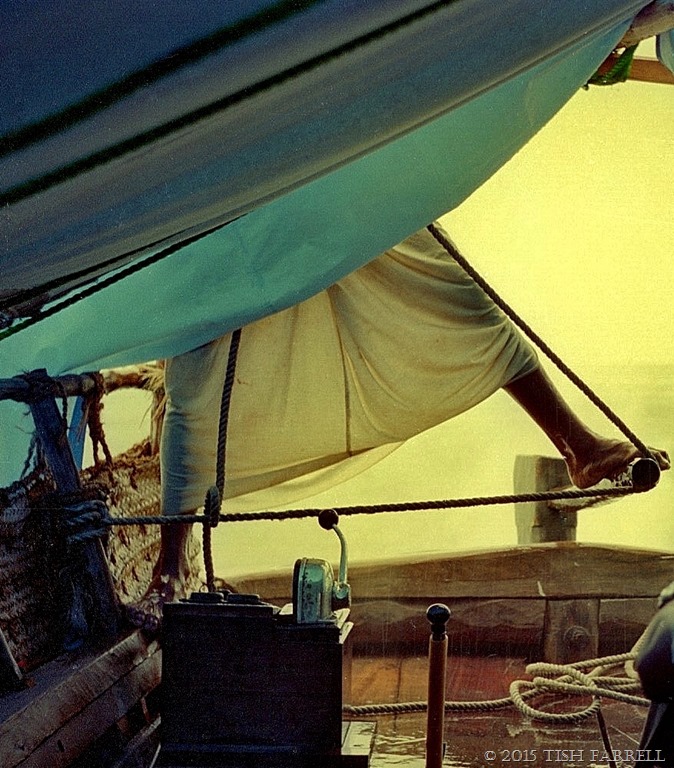
Here are some more Lamu photos (see previous post). Some of you will have seen the top one before, but it is one of my favourites, and I thought the colour of awning fits with Jennifer Nichole Wells’ one word seafoam challenge. It is a colour that I anyway associate with the Indian Ocean. This shot was taken on a dhow taxi in the middle of a tropical downpour. It was December, the monsoon season, and we had just flown in to the little local airport on Manda Island. The strait between the two islands looked suddenly grey and forbidding. It seemed strangely cold too in the midst of the hot season, and not the best start to our four-day Christmas break from Nairobi.

195

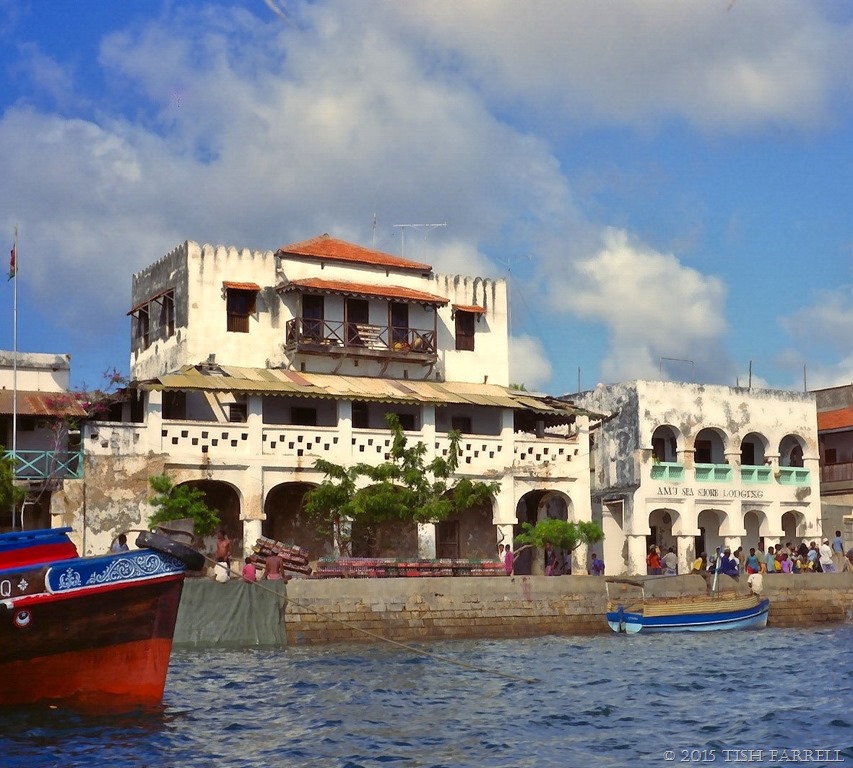
But then the rain passed. This is the waterfront of Lamu stone town, one of the best surviving Swahili settlements on the Indian Ocean seaboard, and a world heritage site. You will have to look harder here for the gentle shade of seafoam.

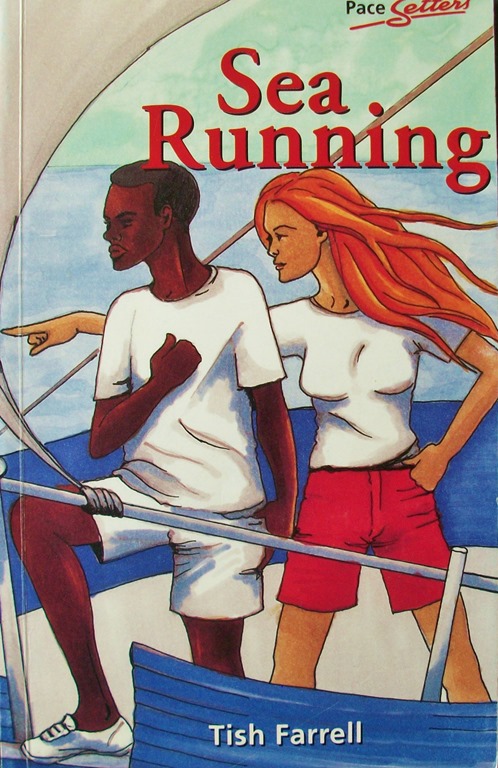
Lamu is a captivating place. I was so impressed by our four days there that I wrote a teen novel, Sea Running,  published by Macmillan Pacesetters for the African children’s literature market. It’s a good yarn about drug runners and first love. It also has a splash of seafoam on the cover.

100_3649 - Copy

For more posts on Lamu:

Dhow-dreaming

The Swahili

Christmas on Lamu

Scaling the Heights: Great Zimbabwe

Great Zimbabwe -Tish inside the walls of Great Zimbabwe

Between the walls of the Great Enclosure. The wall behind me dates from the 1400s, the one in front with its less skilled brickwork dates from the 1200s AD.

For more about the amazing Middle Ages kingdoms of Southern Africa please see:

Abandoned: Great Zimbabwe


Scale


Stripes and High Rises: Diversity

park 11

You could say that Nairobi’s game park begins where the city stops. It is the only city in the world with a natural, unenclosed wildlife reserve on its peripheries: wilderness and urban sprawl side by side. There  is of course an electric fence along the urban perimeter to divide  man from beast, but the city is always pressing against the boundary. To the south the park is open to the Athi and Kapiti Plains to allow migrating herbivores such as wildebeest (there are a couple in the background) to come and go. These grasslands are important feeding grounds in the wet season, and so it is essential for the health and wildlife diversity of the park that the southern corridor remains open.  When we left Nairobi in 2000 there were fears that  it  would soon be closed by encroaching farmers, and community initiatives were being devised to avoid this.

By African game park standards the park is very small, 117 square kilometres, but it supports a breath-taking array of animals – lions, cheetahs, leopards, rhino, all the antelopes, and a host of small game. Only elephants are absent. The birdlife is equally diverse with over 500 species. And despite the proximity of the city, there still are wild places where the  high rises cannot be seen on the skyline. 

There is also another kind of diversity in this photo: the zebra’s stripes. Every individual has its own livery. Once when we were on a game drive on a private ranch in Zambia, our very tipsy guide was insistent that we grasp this fact. “Every zebra’s butticles have different markings,” he declaimed, “so their offspring know how to recognise their mamas.” I have been grateful ever since for that gift of the word  ‘butticle’.

copyright 2015 Tish Farrell

Lost in Translation: Diversity

Wind-blown: Thursday’s Special

172

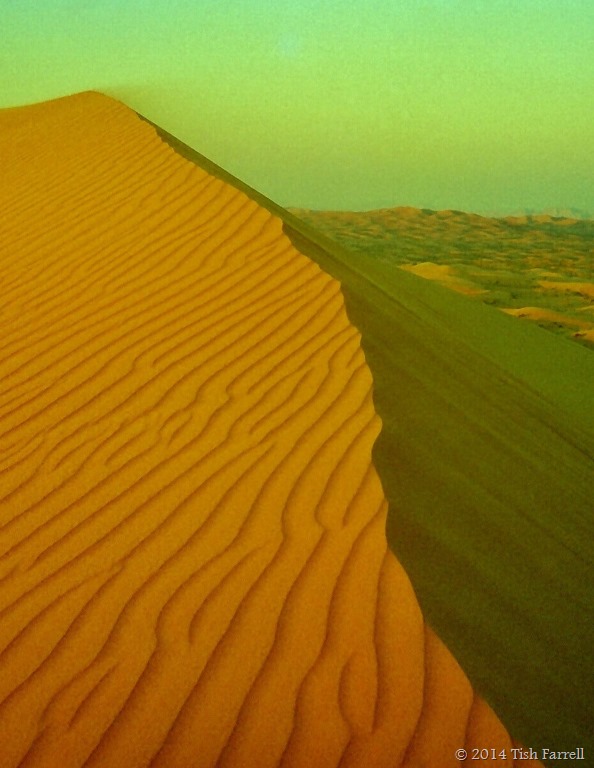
I have always loved the desert. One sits down on a desert sand dune, sees nothing, hears nothing. Yet through the silence something throbs, and gleams…
Antoine de Saint-Exupéry, The Little Prince


We lived in Kenya during the late Moi years, the last days of the one-party state. By then the President was feeling under threat from external pressure to democratise, and whenever the President felt threatened, the crime rate rocketed – white collar crime that is, AK47 operations such as car-jacking that especially targeted expatriate aid workers, and organised by people whose elitist way of life was also at stake. There were episodes of ethnic clashes thrown in for good measure, stirred up in the same quarter. A German forestry consultant was murdered on his front doorstep for complaining about some bigwig chopping down Mount Kenya’s forests to grow hash.


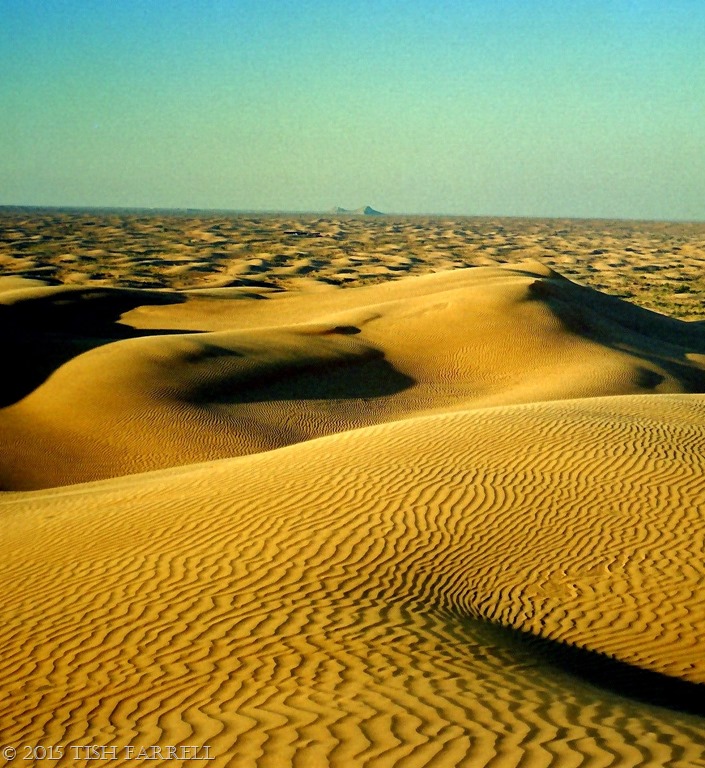
In some ways it was fascinating to observe the bloody devices by which some people cling to power – and by fascinating I mean in the way you might stand frozen, staring into the headlights of an oncoming car. It was stressful then, and especially as election time approached, and so one year we decided we’d had enough, and needed a break. We went to Dubai. While we were there we spent a night out in the desert. You will appreciate the bliss we felt, standing alone in all that emptiness, seeing for miles, and with not one thing on the horizon to trigger our internal security scanners. A landscape arranged by the wind, timeless and mysterious, and with a welcome absence of humans.

© 2015 Tish Farrell

Paula’s Thursday’s Special: Arranged

A Long Road from Makindu

010

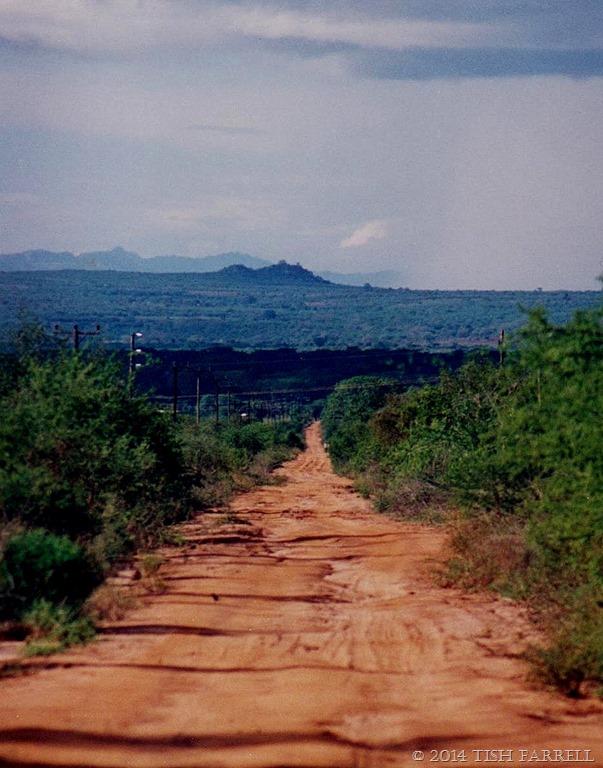
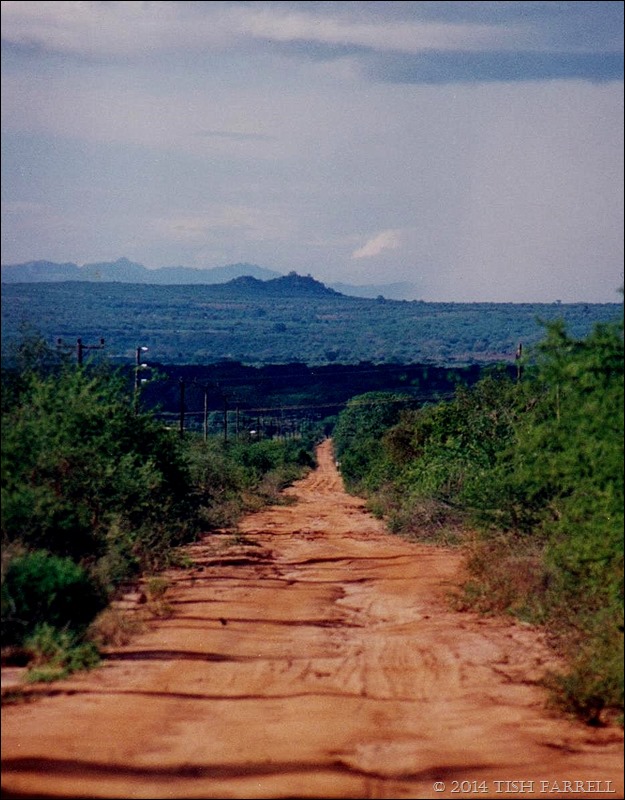
This long dirt road leads from Kenya’s Nairobi-Mombasa Highway to the National Range Research Station at Kiboko, about 100 miles south of Nairobi. The Range Station is a colonial relic, which (if I remember correctly) took over the land of a failed white settler sisal plantation. In more recent times, Kenyan scientists, both at the Range Station and the nearby Kenya Agricultural Research Institute field station, have been continuing the work begun there by British agricultural officers in the early 20th century. The emphasis, as then, has been on trialling crop varieties and developing livestock husbandry techniques to improve the lot of the people who live in this drought-prone region  – the Maasai pastoralists to the west, and the Akamba agro-pastoralists to the east and north.

The Range Station has been monitoring rainfall patterns for over 90 years. When it does rain, it occurs in two seasons – the long rains from March to May, and the short rains from October to December. But the fact is Kenya’s climate is  becoming drier, and it is  marginal regions such as these that are hardest hit. In the ‘90s when we were living in Kenya and Graham was regularly working in this area, it hardly seemed to rain at all. One Christmas I remember driving past roadside stands of maize that were blowing away to dust.

In pre-colonial times, and for several hundred years before the British arrived in East Africa, the indigenous peoples had their own methods of dealing with disaster: they simply moved somewhere else. This was usually to other quarters in their large clan territories, or to places where they extended kinship ties. They would then stay with better off relatives until the hazard had passed. Those who had been ‘taken in’ would be expected to reciprocate should the need arise. This was how things worked. It was pragmatic, and flexible. The migrants would then return to their own homes when they could.

The colonising British,  indoctrinated as they were with feudal-capitalist notions of land ownership, could not cope with such fluid community practices. Once the colonial administration had begun to encourage large-scale farming by European settlers, they felt obliged to establish fixed boundaries around tribal territories so that native land could not be sold to, or settled by the European incomers. It was seen as protecting “native interests.” The only problem was these officially designated boundaries did not take into account local emergency refuge strategies, or indeed many other traditional coping measures that involved moving somewhere else.

Today, and this is perhaps surprising to many outsiders, much of Kenya’s rural population still lives on ancestral land within these former tribal reserves. With little hope of acquiring new land, people’s clan and family holdings have been sub-divided, fathers to sons, down the generations,  often leaving the ground depleted, eroded, and/or wholly insufficient to support family needs.

This in turn has created a situation of migrant labour, where village men travel to the city to work. They rent a room in one of the slums, and live away from home for most of the year while their wives remain in their homeland, cultivating the farm plot as best they can, and rearing the children. The social issues that arise from this kind of fragmented family living do not need to be spelled out.

Now, on top of everything else, there are the effects of climate change to deal with, both globally and locally created. Competition for fertile land and water sources is critical in many places. In this context, then, the British system of land ownership remains one of the toxic legacies of colonialism.  At independence Crown Land became State Land, and so nothing much changed in the title deed/ownership department, apart from much grabbing of state-owned land by officials. It is hard to know how to unpick it all. We have all heard about Robert Mugabe’s attempts to do so in Zimbabwe.

As for the ordinary small holder farmer, they might not be physically confined to their reserves as they were under British rule, but if their land there can no longer support their families, then there is little choice but to trek up the highway to Nairobi and join the swelling millions of slum dwellers who eke out a living there.

However you look at it, this is a long, hard road .

001_thumb[1]

The Nairobi-Mombasa Highway, Makindu District, in the 1990s, looking north towards Nairobi. It has been much improved since our day, but plans to turn this  major trans-African route into a dual carriageway appear to have stalled.

copyright 2014 Tish Farrell


You can read more about what we were doing in Kenya here:

Looking for Smut on Kenya’s Highland Farms


For more long and winding roads travel over to Ed’s place at Sunday Stills.

Medina of Marrakesh

Scan-140829-0052jpeg

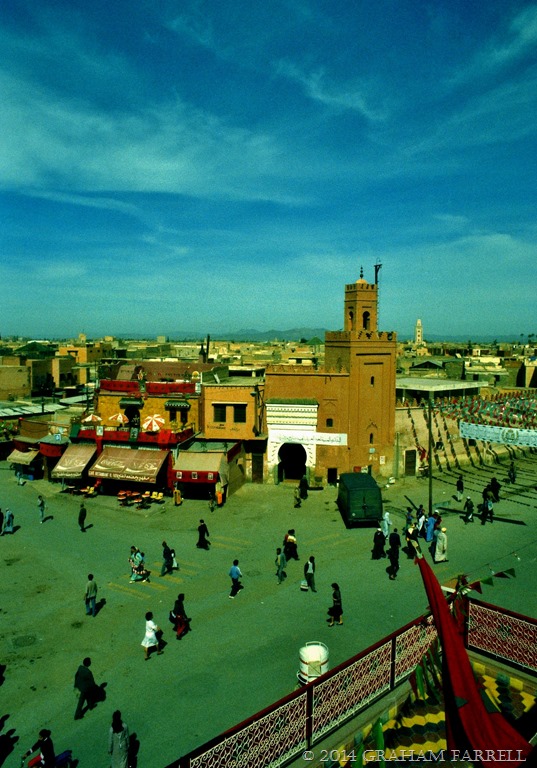
Medina of Marrakesh, Morocco a UNESCO world heritage site

This is one of my favourite photographs from the Team Leader’s, aka Graham’s long ago Africa overland trip. Even the clouds are conspiring to draw the viewer’s eye to the gateway. Click the link underneath the photo to find out more about this fascinating place.

DP Photo Challenge: converge

“Photos are visual spaces where shapes and lines, objects, and people come together.”

 Ailsa’s Travel Challenge: above

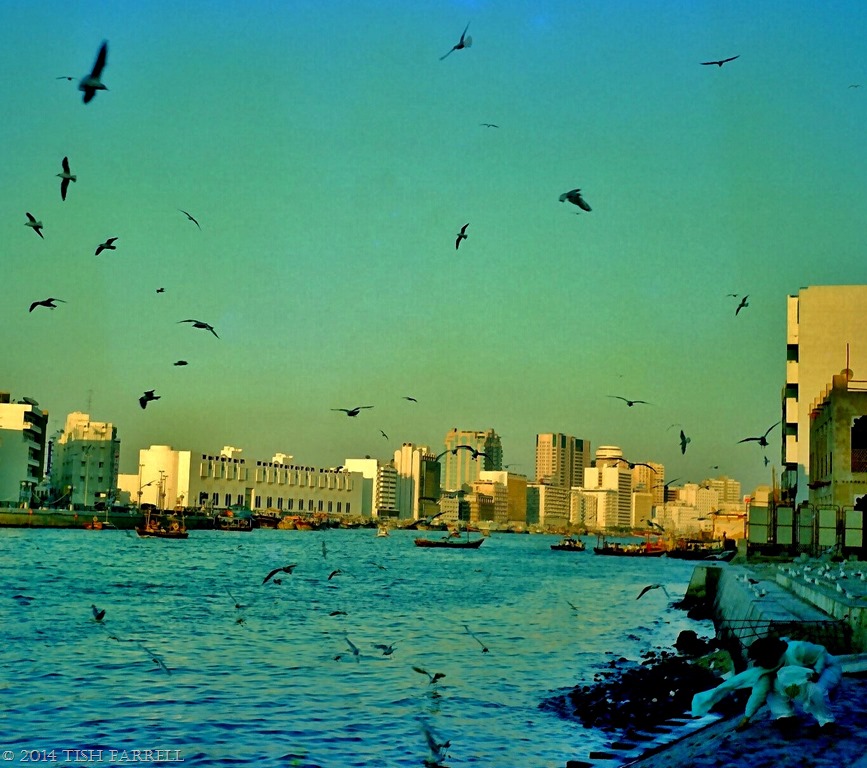
Thursday’s Special: Feeding the Birds on Dubai Creek

2

Following Paula’s lead in her Thursday’s Special slot, I’ve also found a bird photo to illustrate photo 101’s theme of ‘swarm’.  The mood here is  obviously very different from Paula’s dramatic shot; not so much suspenseful, more twilight tristesse.

copyright 2014 Tish Farrell