Shadows And Silhouettes

P1040281 cr

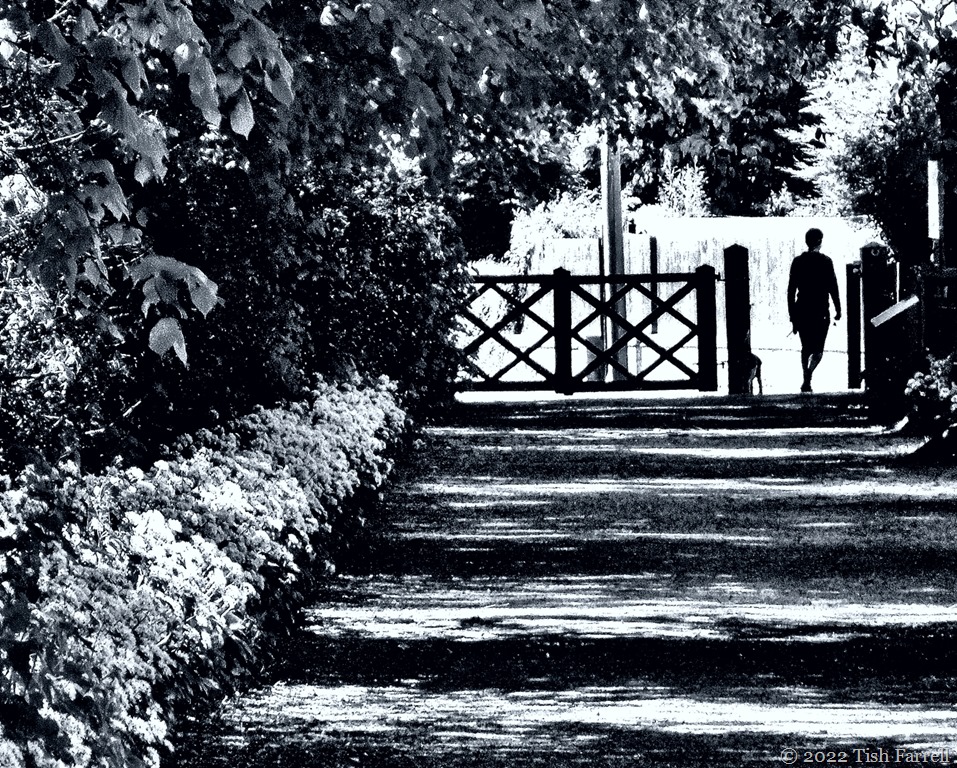
Herewith a reprise of some favourite monochrome shots from the Much Wenlock archive. The header is the entrance to the Linden Walk, which several of you (Jude especially) will well remember.

The next photo was taken on the shadowy cutting of the old railway line that runs alongside the Linden walk: top-lit horse chestnut leaves…

horse chestnut leaves

*

Next, a former back garden view of foxgloves: sun setting over the fence…

P1080211re

*

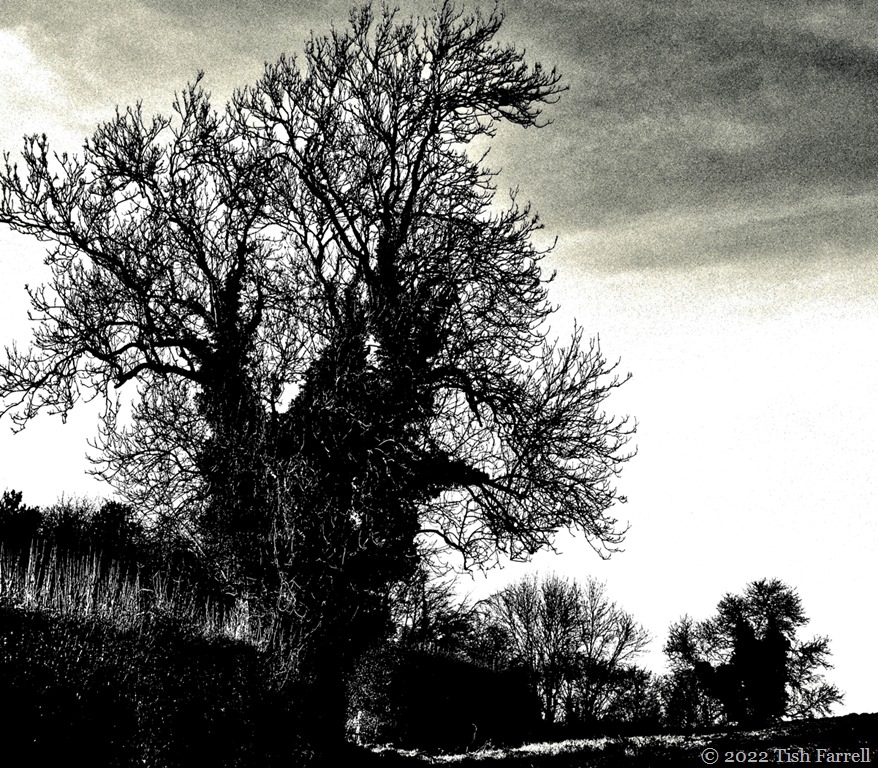
A couple of wintery scenes now. First the ivy clad ash trees in Townsend Meadow:

P1000348ed

*

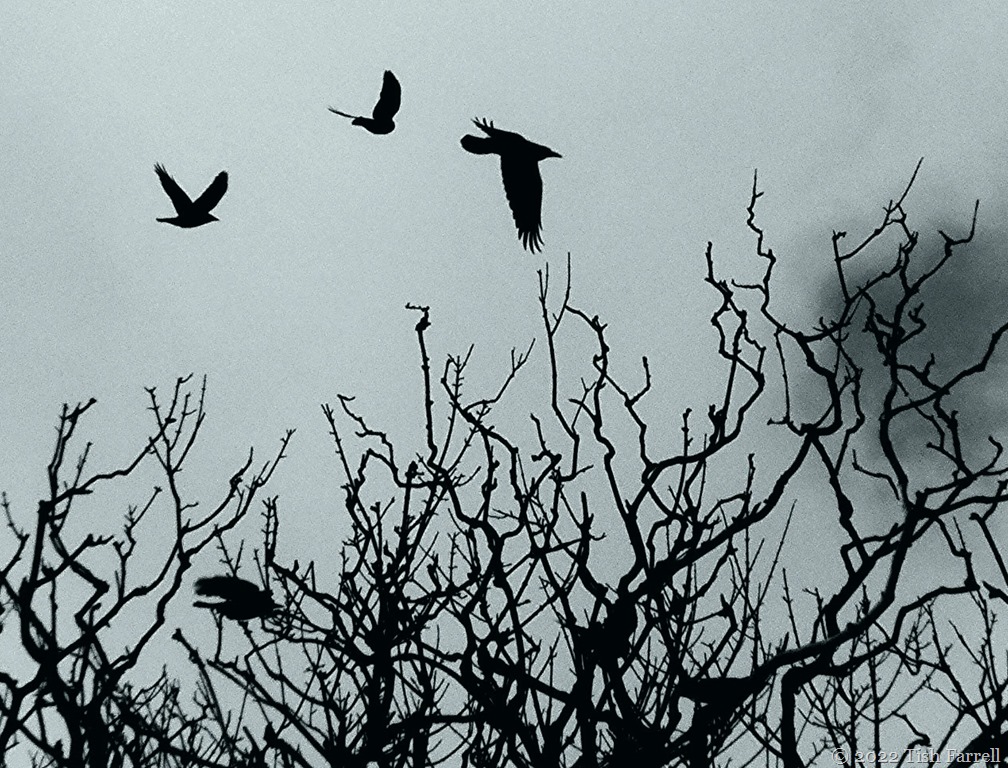
…and twilight over Rookery Wood: one rook (centre) and several jackdaws:

P1040737

Shadows & Silhouettes  Dawn at The Day After is this week’s host at Leanne’s Monochrome Madness

The Changing Seasons ~ This Was July ‘24

IMG_5817ed

Here in Bishop’s Castle, as in many parts of Great Britain, much of July was cool and overcast – more autumn than summer. The garden, however, carried on oblivious, although there was an obvious shortage of bees, hover flies, butterflies and other insects.

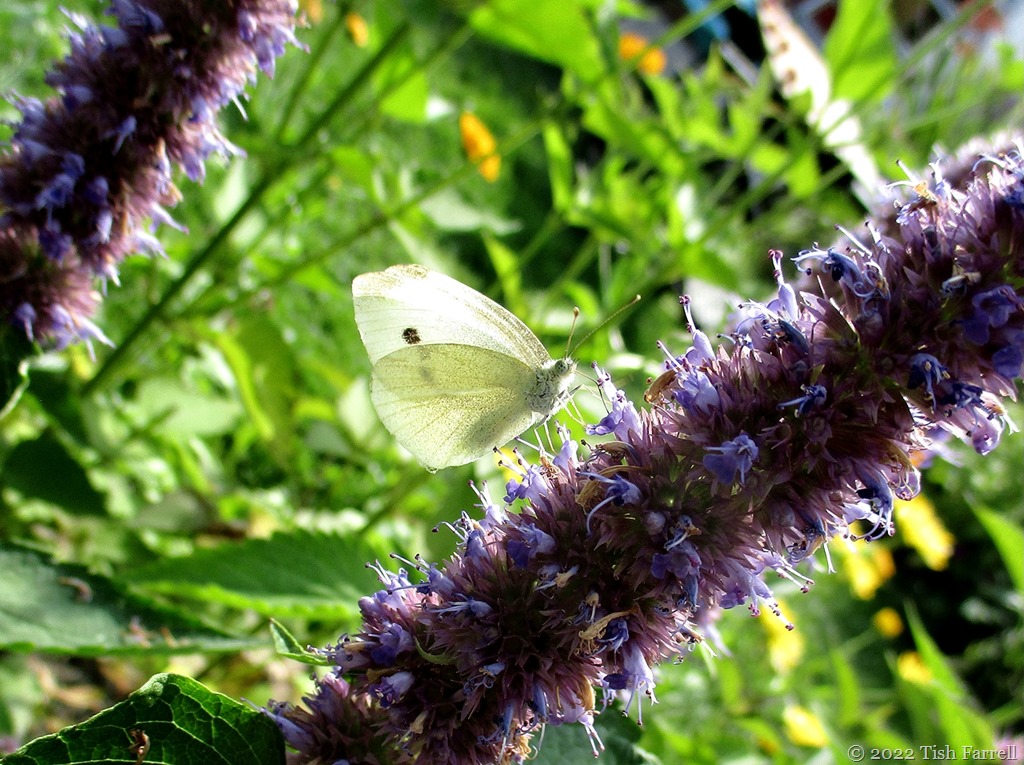
But then just on the last lap, summer happened. And not heat waves either; simply days of pleasing warmth  which certainly brought out the bees. And then whole flocks of cabbage white butterflies flew  in, wafting round the garden, dozens at a time, homing in on cabbages and nasturtiums to lay their eggs. I’ve given up chasing them away.

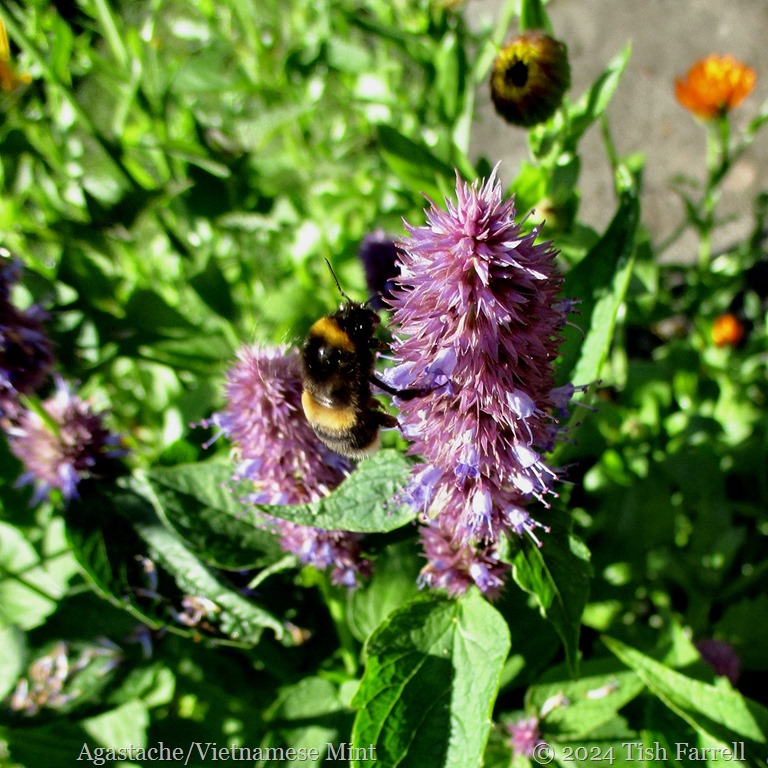
They also like to feed on the agastache (Vietnamese Mint), a perennial I’ve grown from seed this spring. The bees love it too. So I’m glad I planted out all the many seedlings that germinated, as well as giving some away. It’s a stately plant with purple-mauve plumes and leaves that smell of aniseed.

cabbage white 2

*

The switch to warm days has made all the lettuce bolt, but we’re still eating some of them. As ever, I have failed to organise a seasonal flow, so there will be a gap in salad content for a time. Instead, I’m picking the young leaves of Swiss Chard, a second crop which I’ve managed this time to protect from nibbling pigeons. There are also herbs – dill, basil, and lots of coriander and chives, and wild rocket (about to bolt) and masses of developing leeks which are good in salads.

But best of all, the runner beans are beginning to set, so I must keep an eye on them. They often fool me by producing the first crop near the ground inside the canes, where they can’t be seen.

IMG_5893

IMG_5854ed

IMG_5841

IMG_5847ed

IMG_5761ed

IMG_5639

*

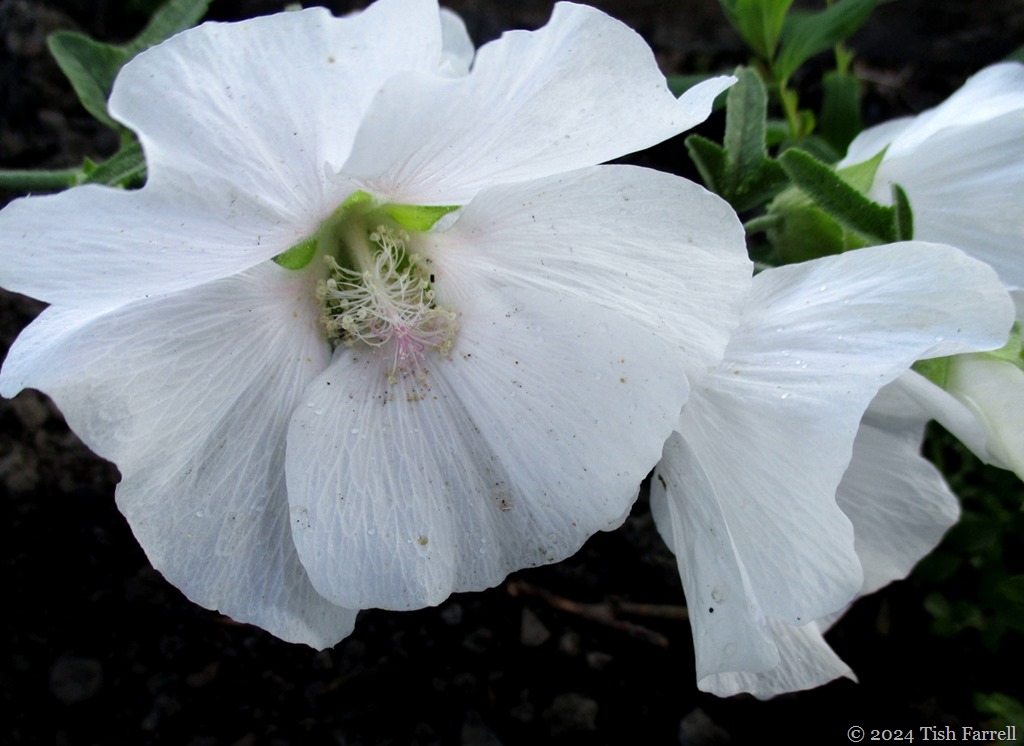
And then this lovely mallow has started to flower…

IMG_5795ed

*

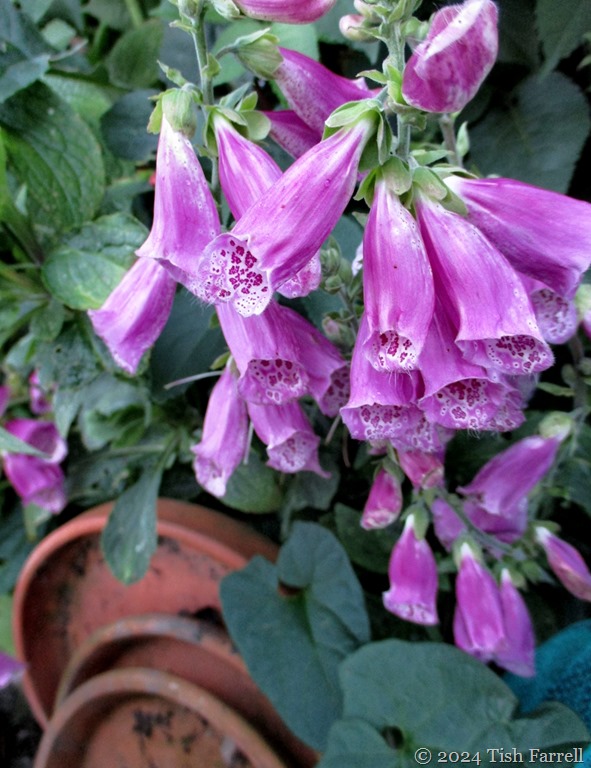
And there’s been a second flush of foxgloves…

IMG_5801ed

*

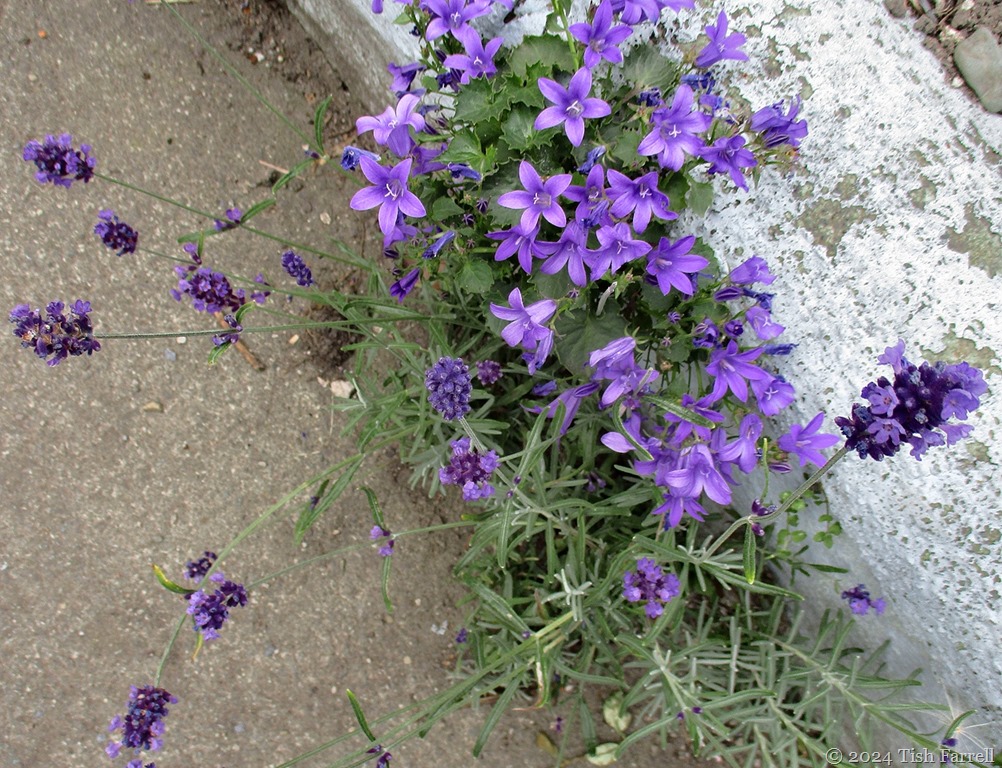
And then I noticed a happy partnership (growing out of the concrete on the front path) campanula and lavender perfectly arranged…

IMG_5859ed

*

And finally, in amongst the ongoing building work and general domestic confusion…

IMG_5867

*

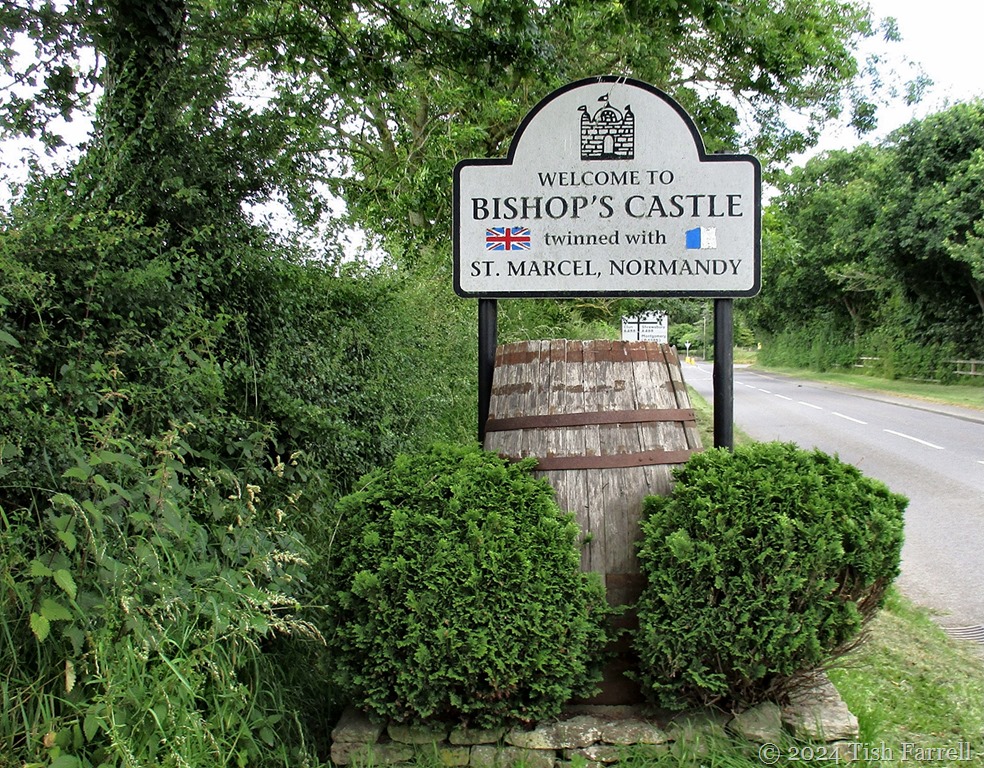
…we take note that it is was a year last July when we exchanged contracts on The Gables and began planning our move to Bishop’s Castle…

IMG_5577

And in case you’re wondering about the big beer barrel, the town is famous for its historic pub and brewery The Three Tuns Inn, serving folk since 1642. Just one of many good reasons to settle here. The beer is delicious. Cheers!

IMG_5817header

The Changing Seasons: July 2024  Hosted by Ju Lyn and by Brian at Bushboys World

Six On Saturday: On Random Gardening

IMG_5631

Starting a new garden is always exciting; daunting too. And our particular garden, being a hundred years old, had traces of many a planting disaster venture. More recently, though, all had been overgrown, and invaded by rampant phygelius (Cape fuchsia), ground elder, vagrant raspberries, bindweed and Spanish bluebells. The two front garden beds (south-east facing) were covered with concrete slabs and Spanish bluebells.

Most of it had to go.

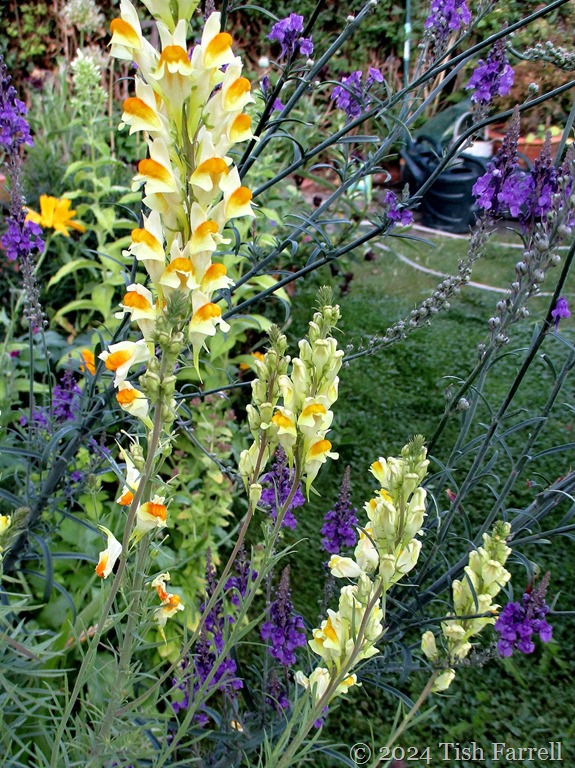
1: Because we’d had to rent between selling one house and buying another, I’d brought only a handful of plants from our Much Wenlock garden. Among them was yellow toadflax (Linaria vulgaris), a favourite flower since childhood when I’d first seen it lighting up the verges of the Shropshire Hills. I’d grown it from seed, bought on-line from Jekka’s Herbs. Now, by some pleasing accident, it seems to have grown up with some purple toadflax.

IMG_5791ed

*

When we moved into The Gables, just under a year ago, my most pressing concern was vegetable growing. I knew we would miss the produce from my allotment plots of 16 years (if not the heavy labour), so tackling the most weed-infested areas to make beds for food crops was my first priority. My thinking here was that these beds would be cleared every year, so repeat ground elder and bluebells wouldn’t be quite the same bother they would be in shrub or herbaceous borders.

I made a start last summer, but then the following months were mostly too wet and cold for gardening. And then in spring the house roof had to be taken off and rebuilt. And then the building work on the rear extension began, all of which saw parts of my territory invaded, first by a mountain of broken roof tiles and battens and then by piles of construction materials. There were times, too, when I couldn’t reach the projected vegetable plots in the back garden, it being uphill from the house, other than by climbing a ladder. All of which means that bed making efforts were piecemeal and, in the end, things (vegetables, herbaceous perennials, herbs, developing shrubs) were planted out wherever there was a space at the time.

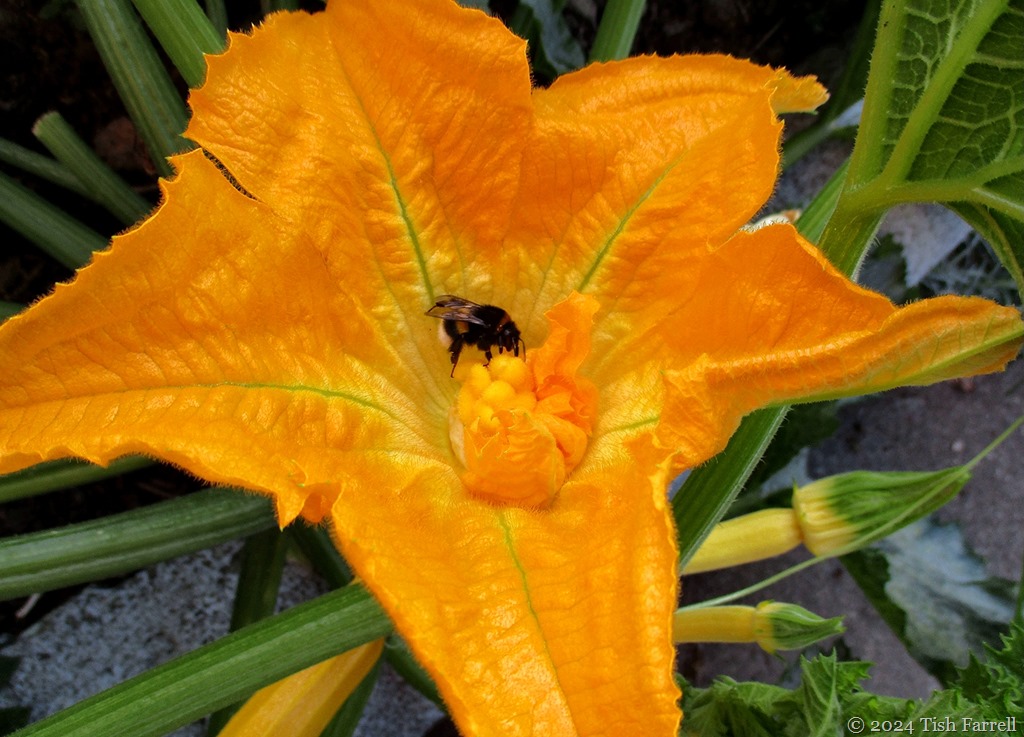
2: But it’s all alright. Everything is growing all over the place. I have yellow courgettes at the front door, which is actually quite handy…

IMG_5826ed

*

3: The front garden bed is also yielding some very nice Charlotte potatoes (despite going in very late). The building debris and old mortar from the lifted slabs seem to have provided some good drainage in our heavy-ish soil:

IMG_5679

*

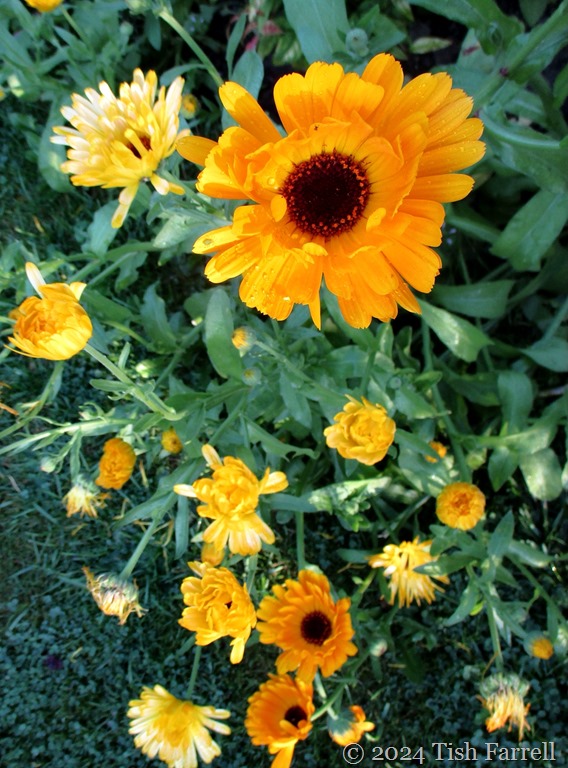
4: In the spring I’d sown some marigold (calendula) seeds, obtained from the Bishop’s Castle seed bank (local growers’ donations) and they’d germinated prolifically. So I planted them out all over the garden, front and back, because you can’t beat marigolds for their spirit-lifting qualities. And now we have masses of golden heads, which of course are edible too:

IMG_5817

IMG_5808ed

*

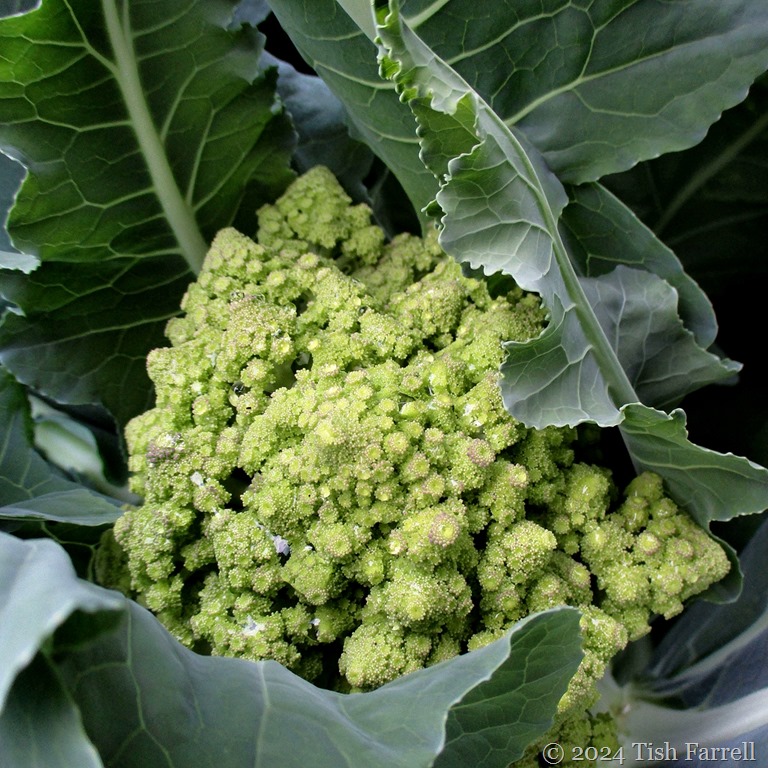
5: And on the eating front, since spring we’ve done rather well with all manner of greens, but most particularly the Romanesco cauliflowers, which I haven’t grown before. They are much sweeter than white caulis, and if you cut them and leave the stalk, they sometimes produce more sprouts. They don’t need much cooking either.IMG_5574

*

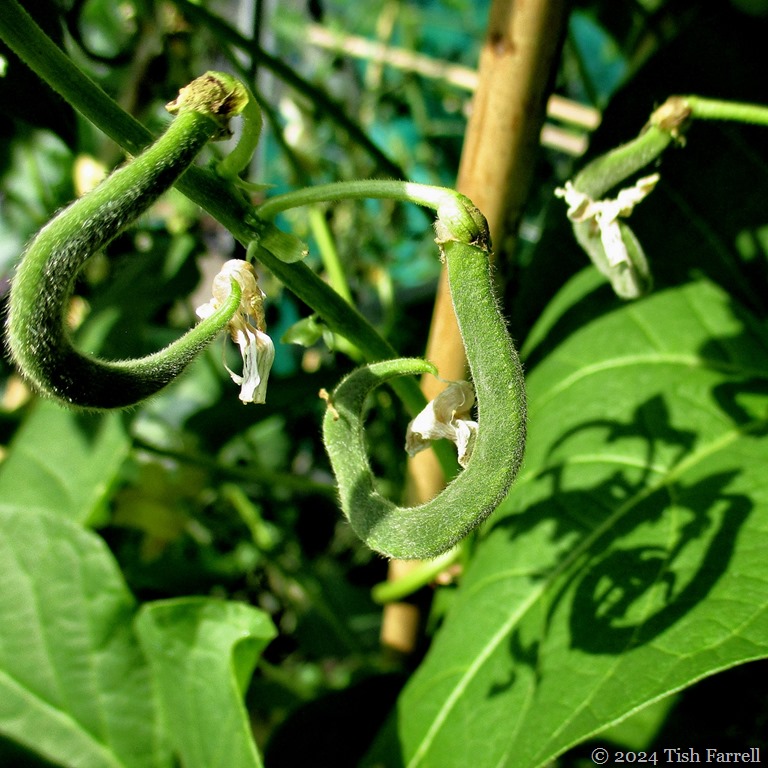
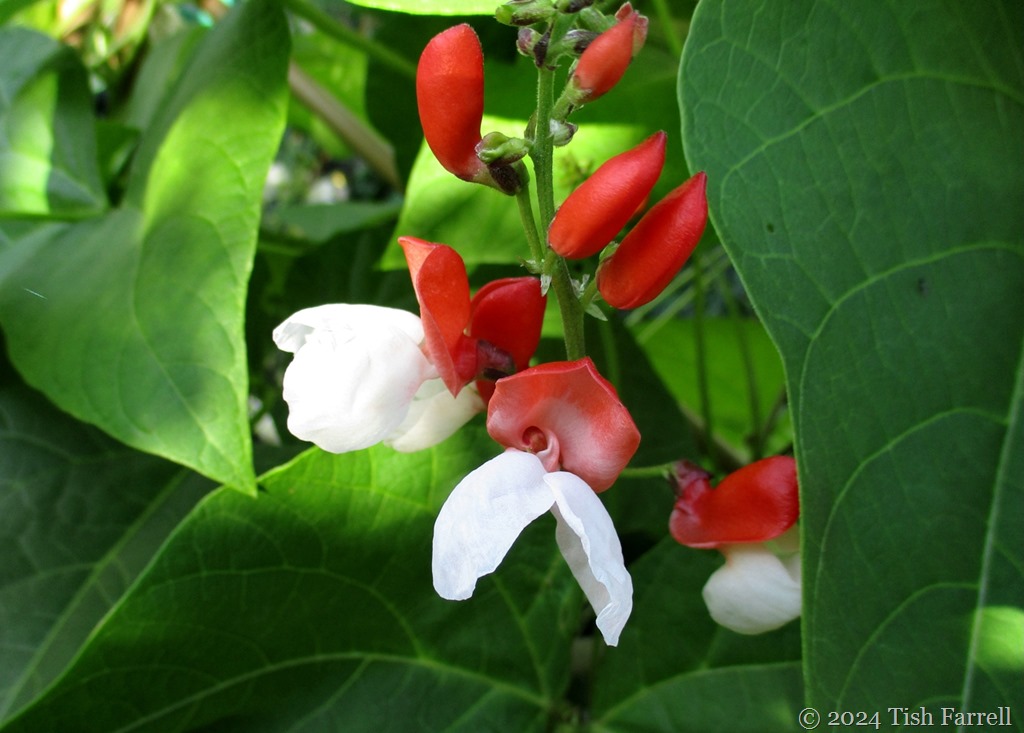
6: But best of all, are signs that the runner beans are thriving. I have three varieties growing together: Emergo (white flowers), Painted Lady (red and white as in featured photo), and St. George (red):

IMG_5800

IMG_5774ed

*

I mean to say, what could be lovelier than this Painted Lady bean flower. And then to think: there will be beans!

*

Six on Saturday  Jim at Garden Ruminations is the host. Please pay him and his splendid garden a visit.

Two By Two

P1060365 - Copy

P1060368

This week at Lens-Artists, Elizabeth of Albatz Travel Adventures has us thinking about diptychs. This is what she says:

“A diptych is two images placed in proximity to one another, forming a pair. To make a successful pairing there should be several things in common, and something very different, contrasting.”

Please see her post for a range of inspiring examples.

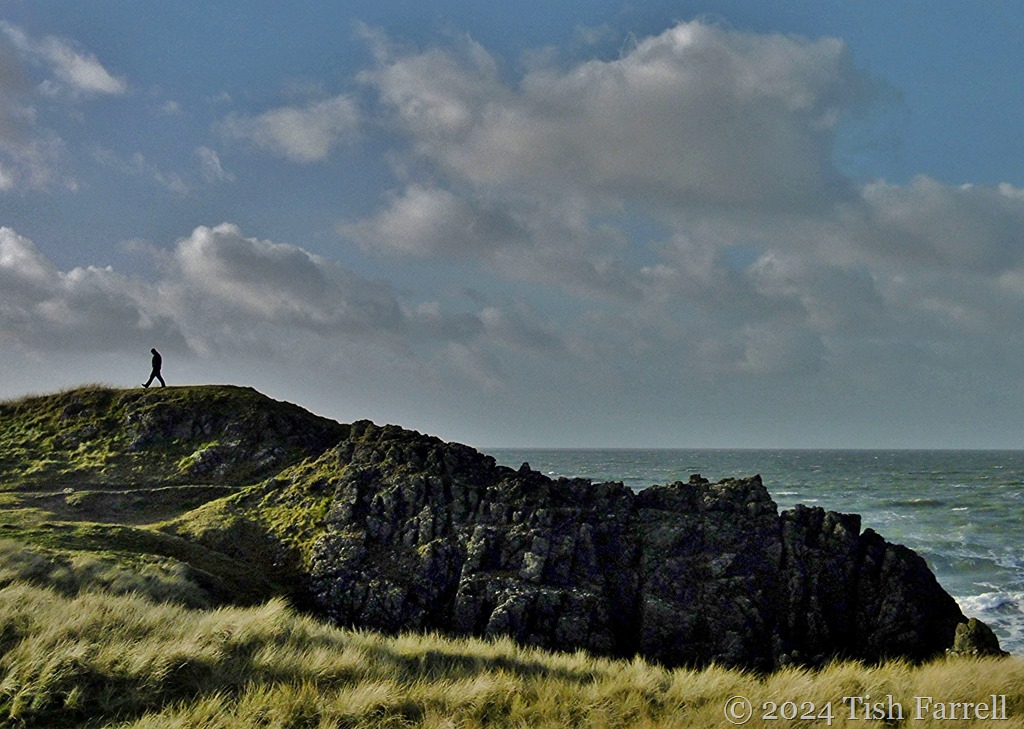
My header pair is perhaps a bit daft, but it appeals to my sense of humour: man ruminates deeply on the ebb and flow of the Celtic Sea.

Man makes up mind: enough is enough.

Location: Anglesey, North Wales.

*

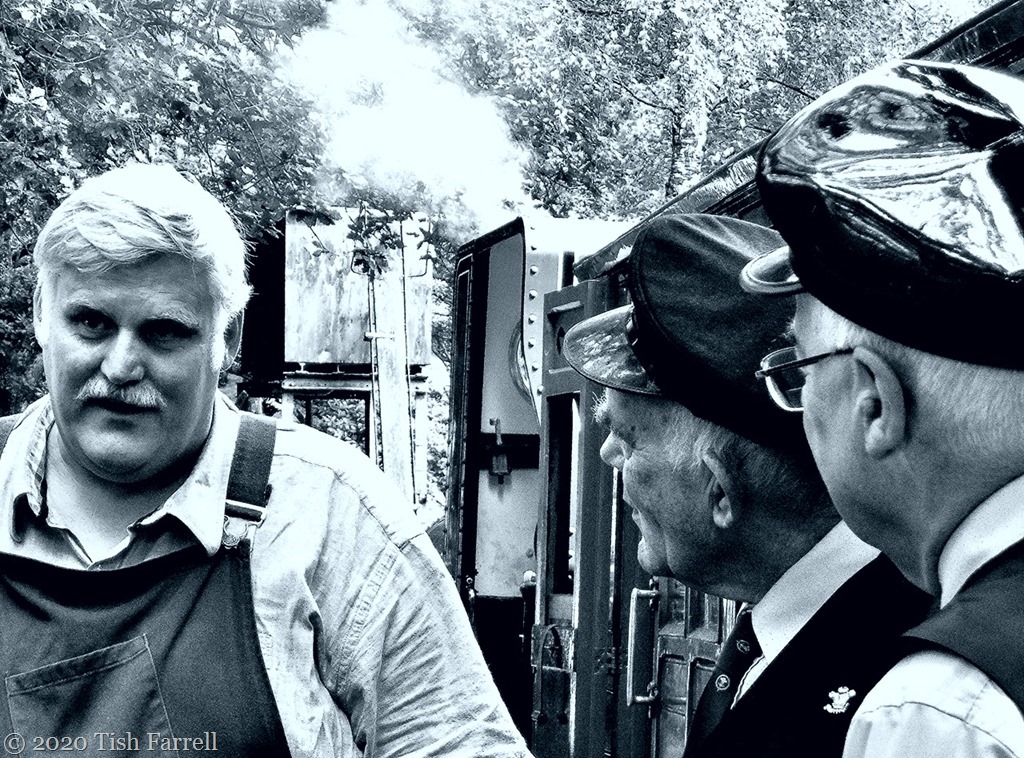
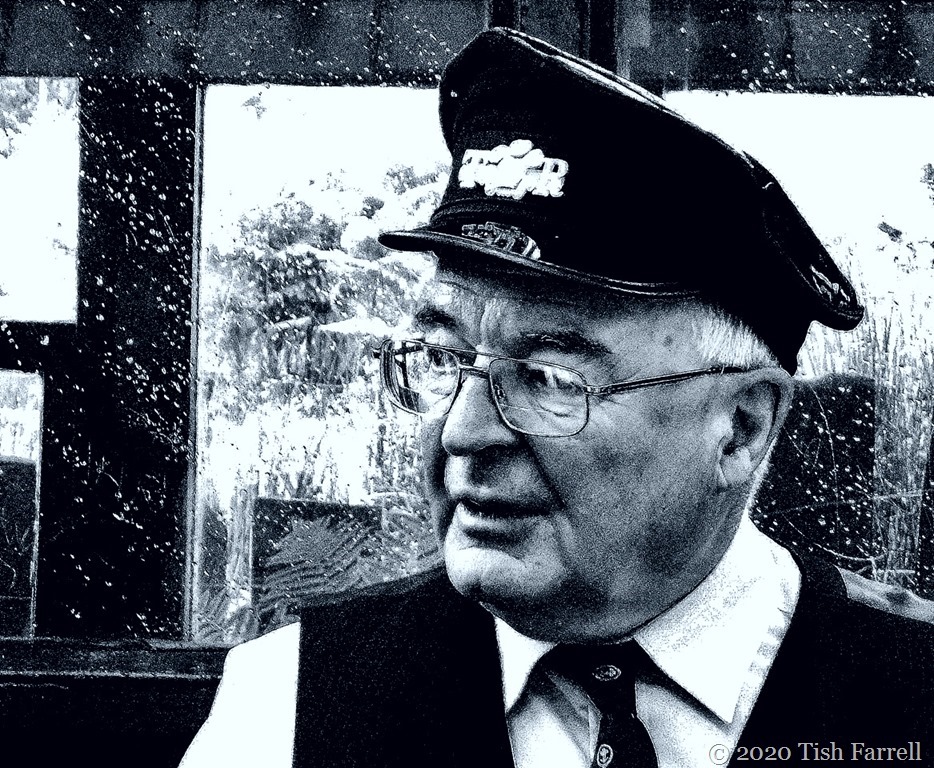
The next pair also has a Welsh location, taken on the Tallyllyn Steam Railway. Some of the enthusiastic volunteers who help run the trains:

Tallyllyn

p1040806

*

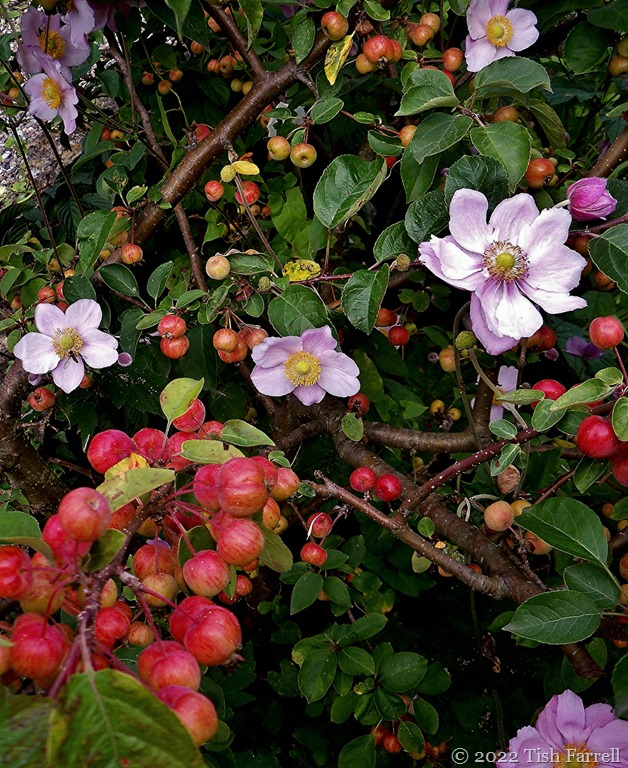
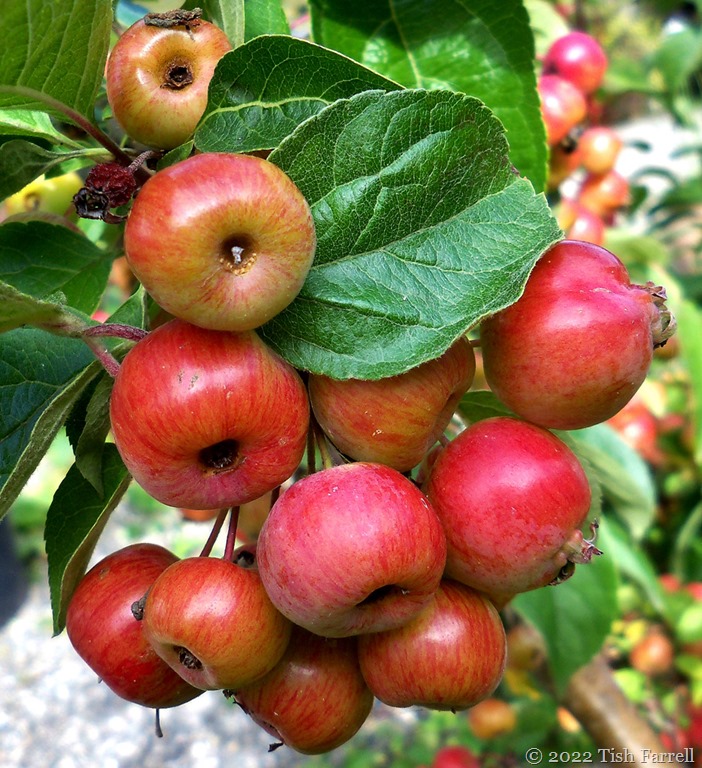
Crab Apple Tree (with Japanese anemones) in our old Wenlock garden:

100_7062

100_7068

*

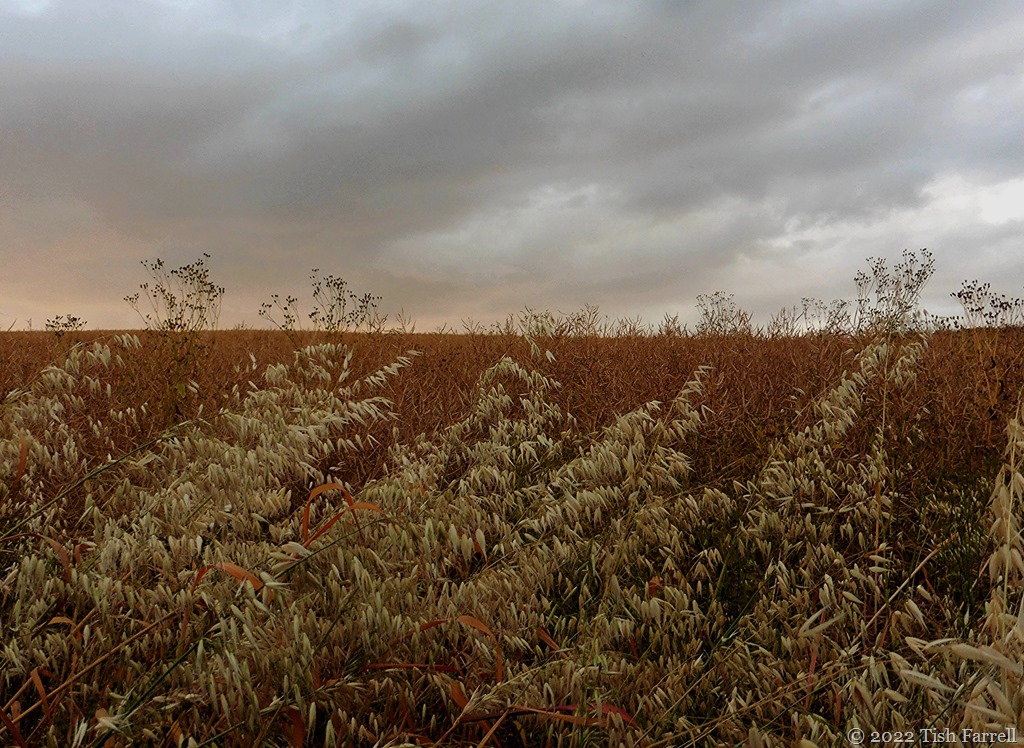
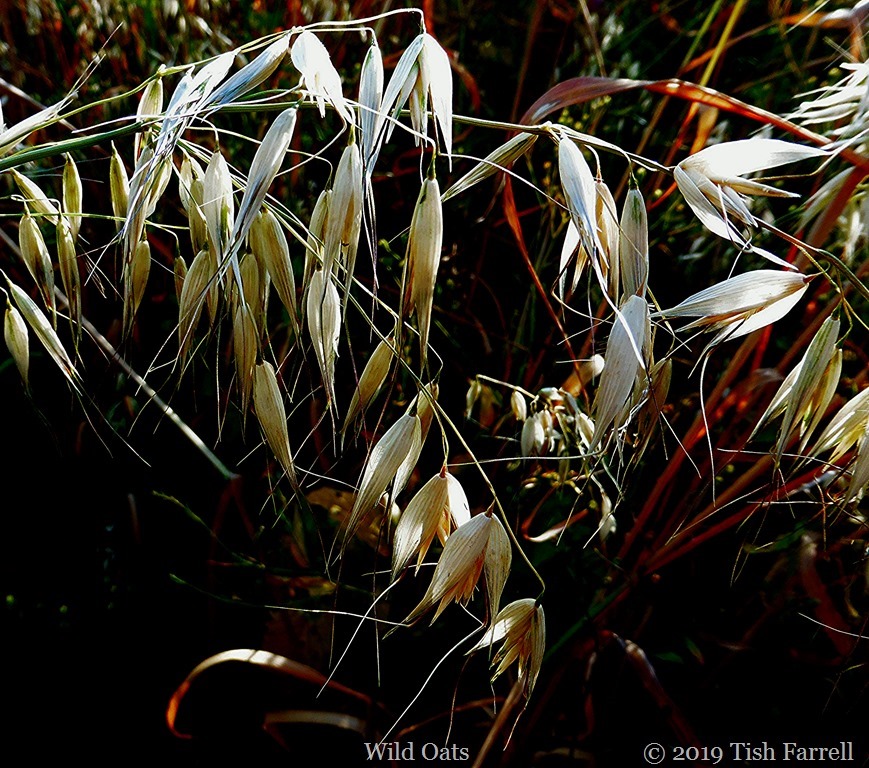
Townsend Meadow, Much Wenlock and a fine crop of wild oats:

P1070611

p1070625

*

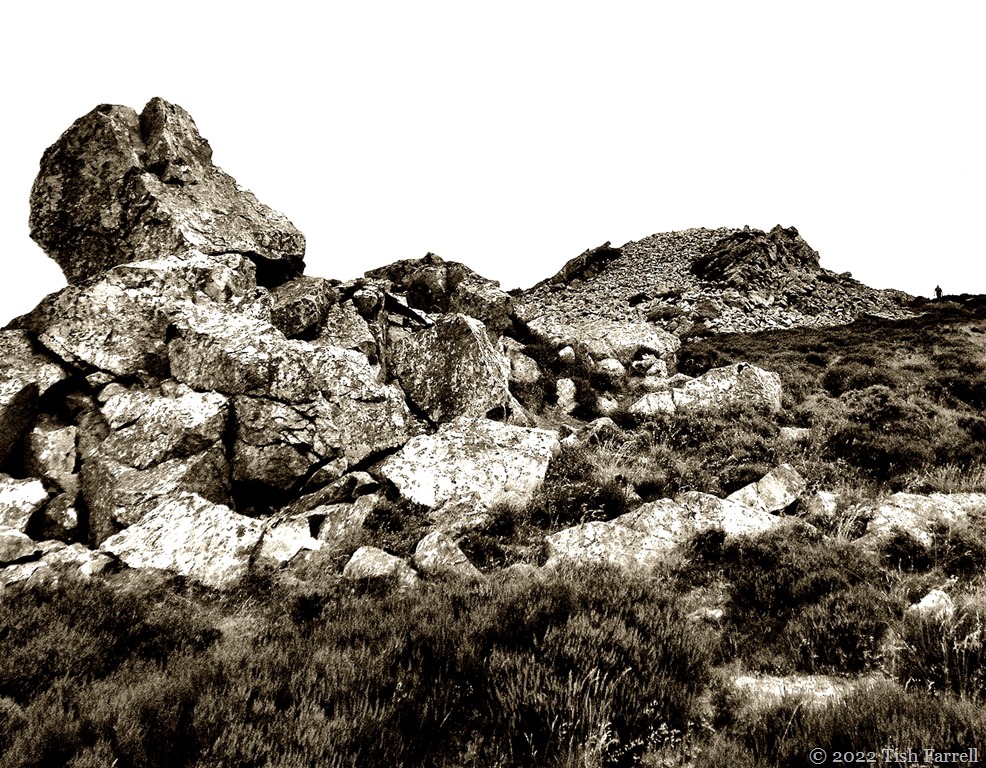
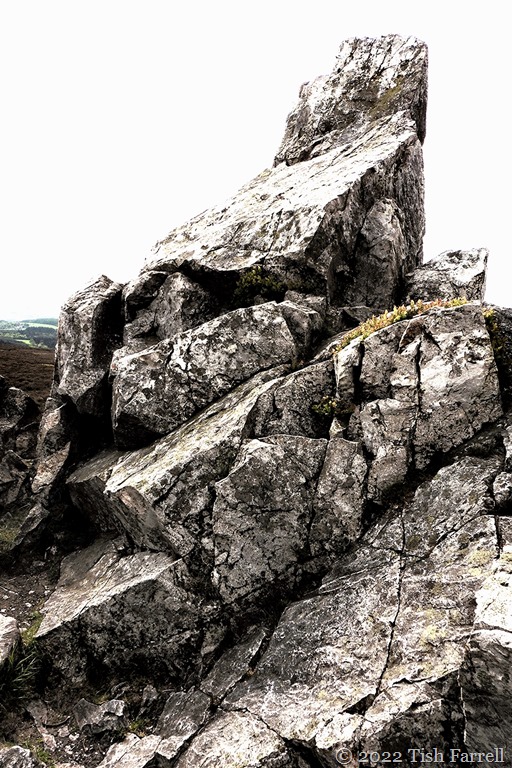
Up in the Shropshire Hills: the Stiperstones

P1080552sepia

P1060001dia

*

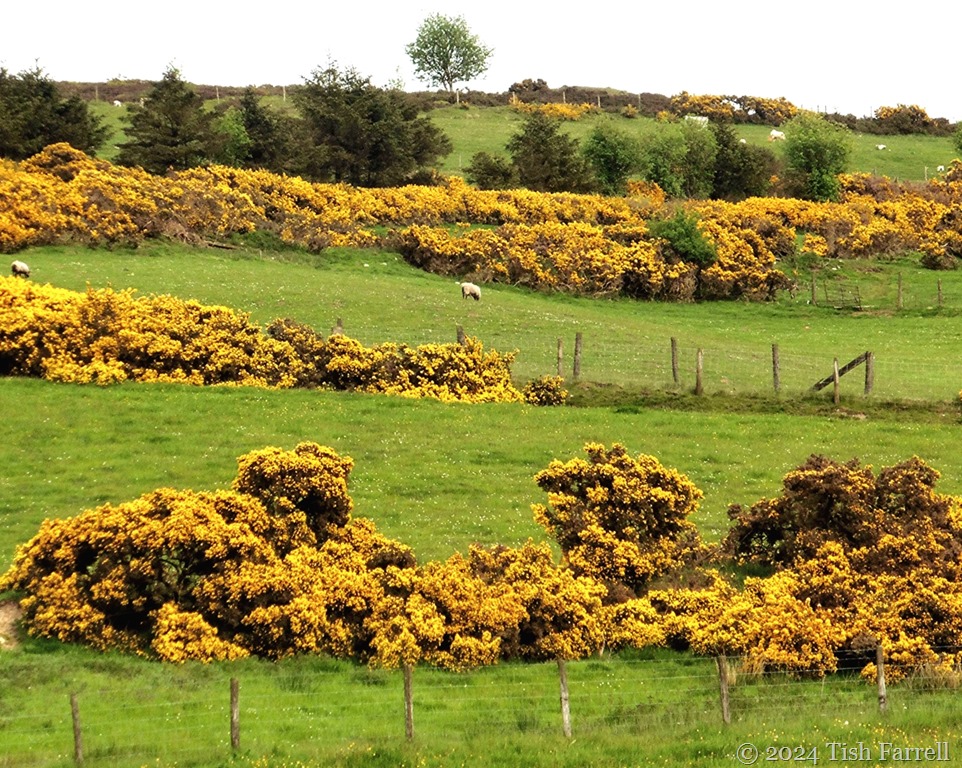
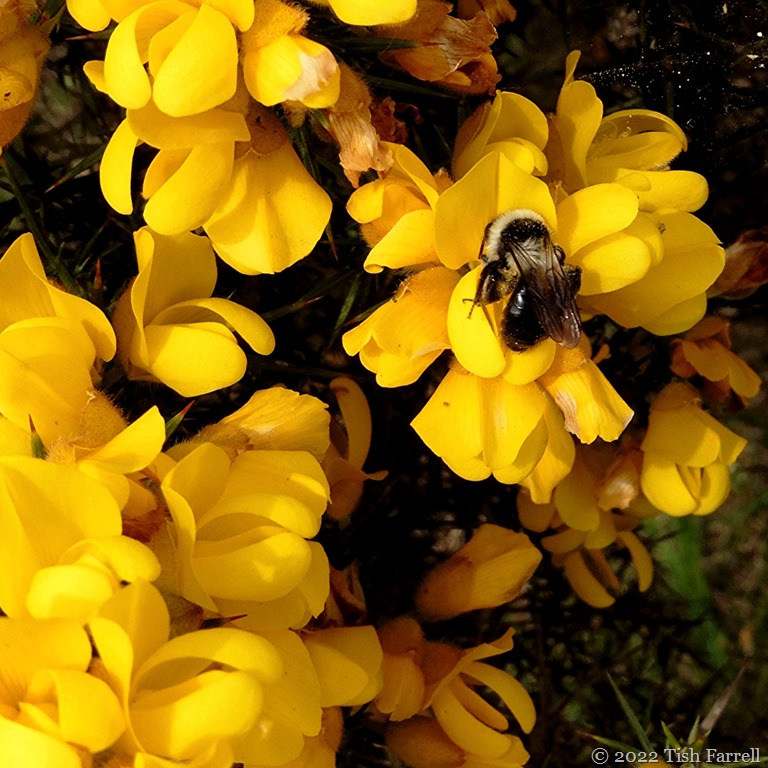
Also on the Stiperstones – fields of gorse, once widely cropped for winter animal fodder; these days, more valuable to bees and other insects:

P1060009

P1060017sq

*

And finally some light and shadow. Leaves – back lit and top lit:

img_0580

img_0568

Lens-Artists: Perfect Pairs

A Spot Of Garden Flamenco?

IMG_5746

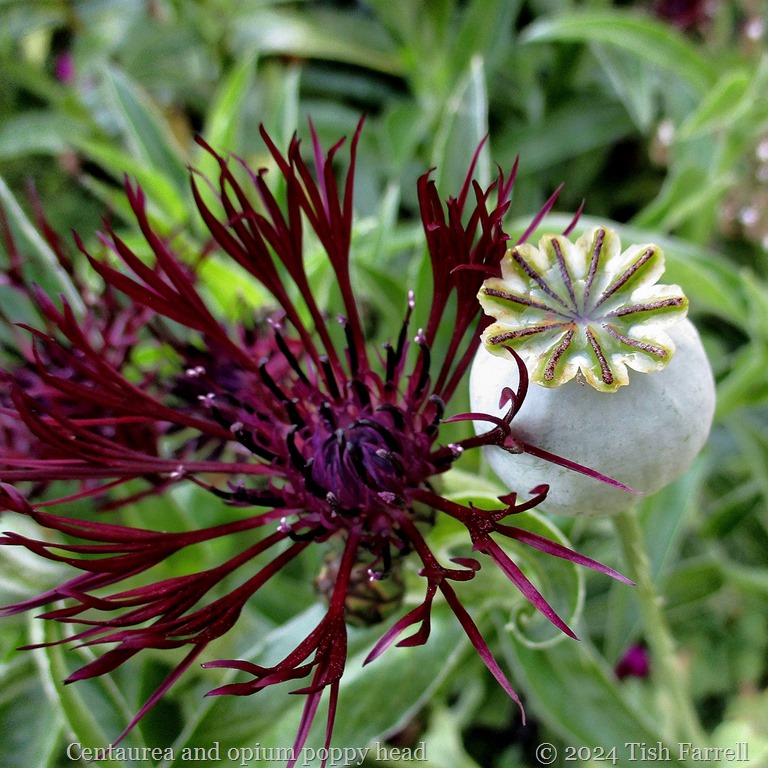
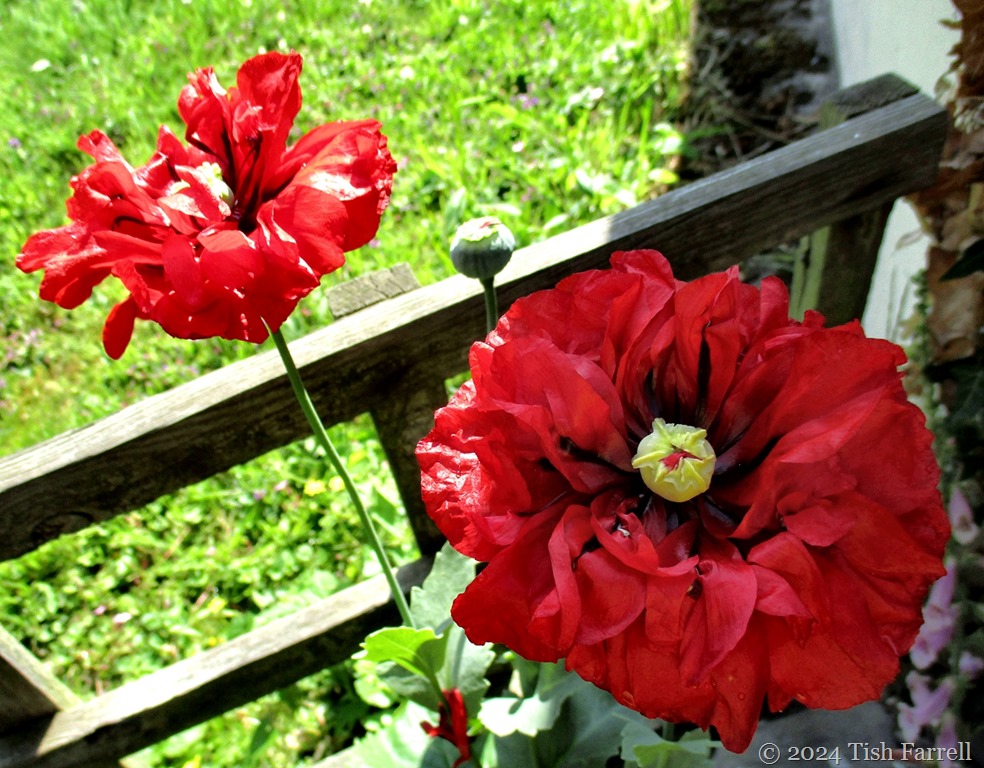
We have visitors, blown in from who knows where. All over the garden too. And what a show they’re giving us with their fiery frills and flounces. Papaver somniferum, the sleep-inducing opium poppy.

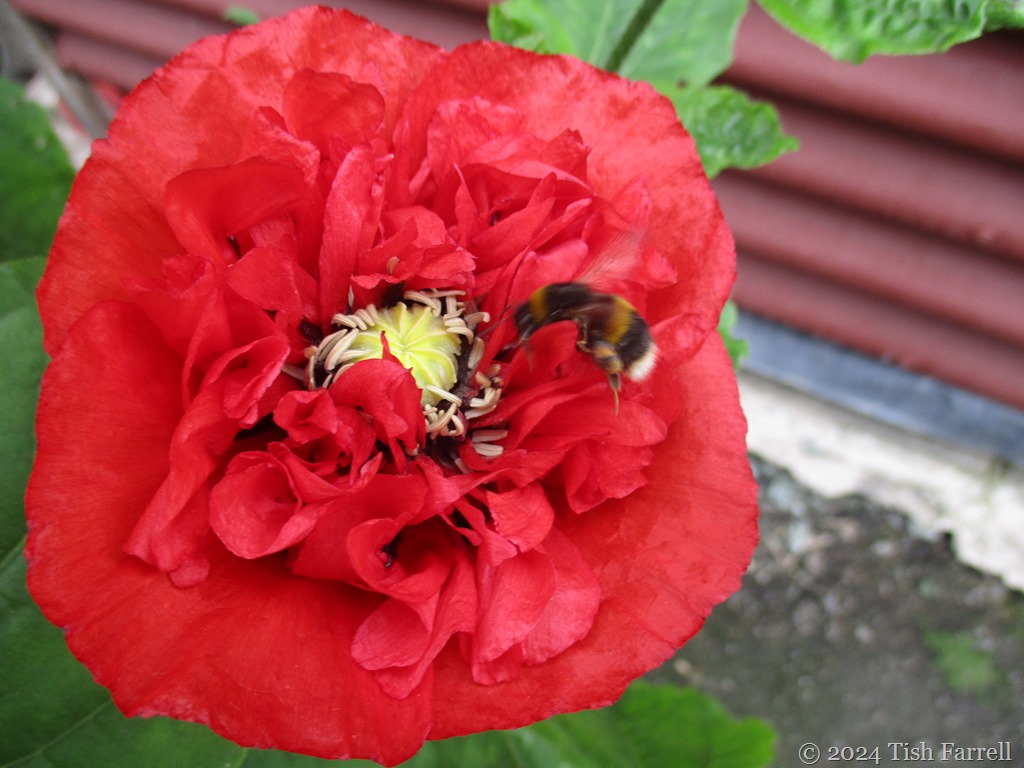
The bumble bees have been mightily excited by the poppies’ presence; their behaviour far from somnolent. In fact I witnessed much unseemly rummaging through floral petticoats as they hoovered round the creamy anthers.

IMG_5671

IMG_5672ed

*

Elsewhere in the garden there are more hot colours, this time courtesy of the Bishop’s Castle seed bank. This is a wonderful community venture whereby local gardeners donate flower and vegetable seeds. You can help yourself to the contents of the tray which lives upstairs in the Town Hall council chamber, and leave a donation to the seed bank.

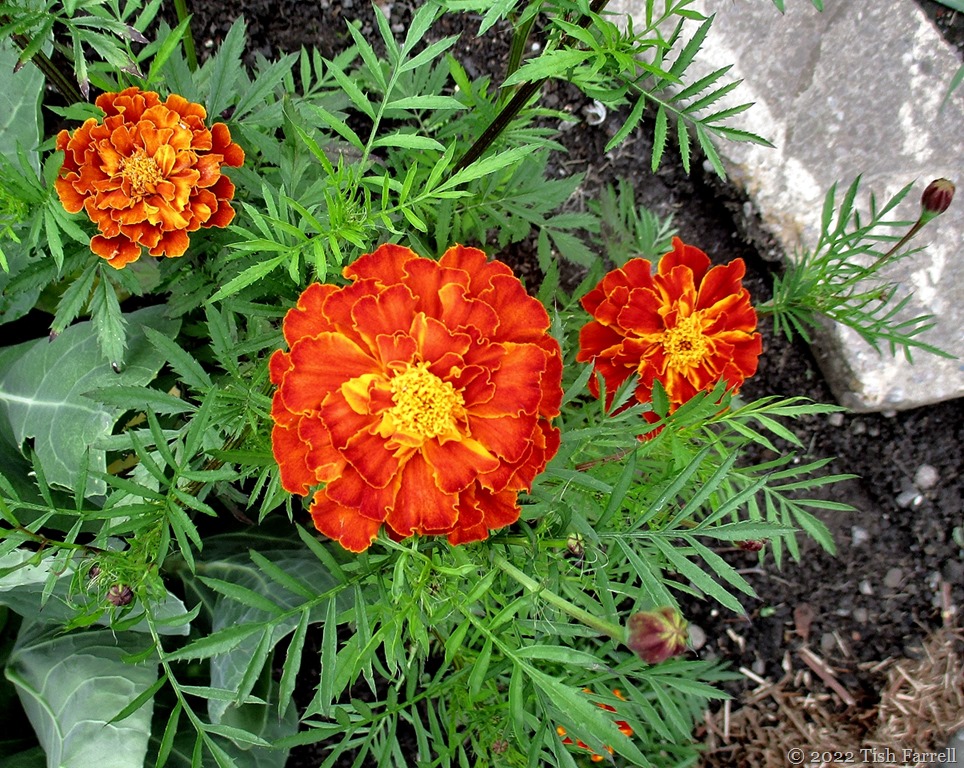
These French Marigolds were grown to protect the carrots. Their minty-lemony scent camouflages the carroty smell so fooling carrot flies that like to lay their eggs in the developing roots. But by some failure of organisation they ended up by the cabbages where they do nothing to dissuade the egg-laying proclivities of cabbage white butterflies.

IMG_5637

*

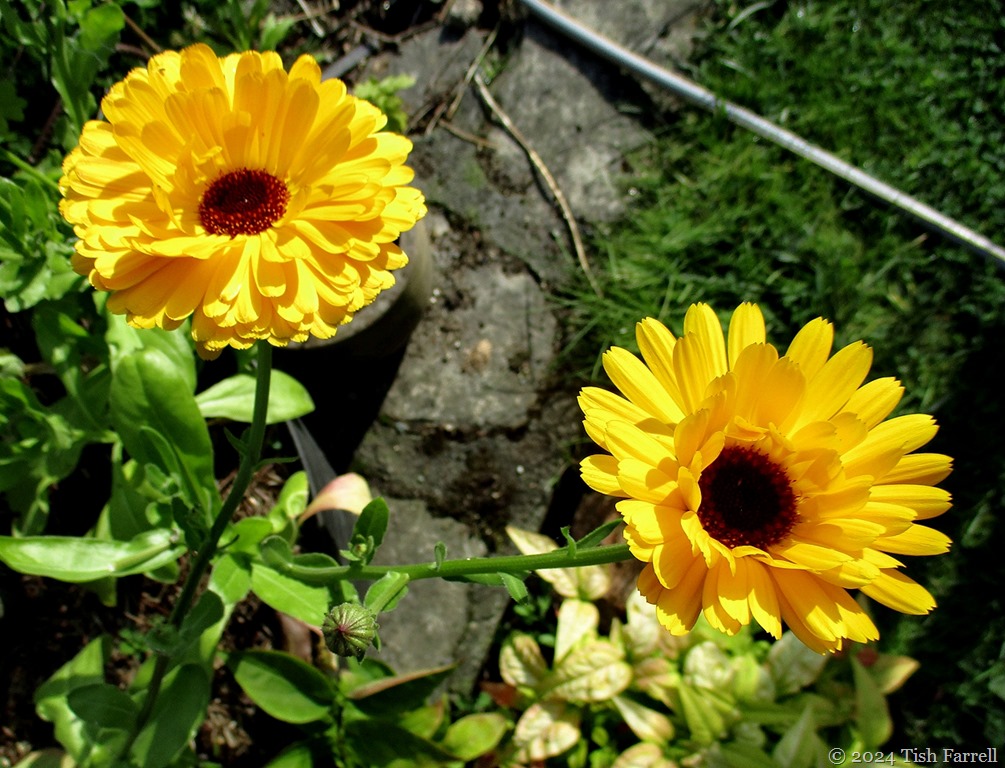
And then there are the seed bank pot marigolds. I’ve planted them out everywhere because I use the petals in salads. They have many beneficial medicinal qualities including a high lutein content which is good for protecting eyesight. Simply to gaze on them might suggest this particular property.

IMG_5735ed

IMG_5708

IMG_5701

Marigold with purple toadflax petals

*

But back to the flamenco. I don’t know about you, but this wild display makes me want to lift up my skirts and dance…

IMG_5747

When The Wall Came Down

IMG_5384

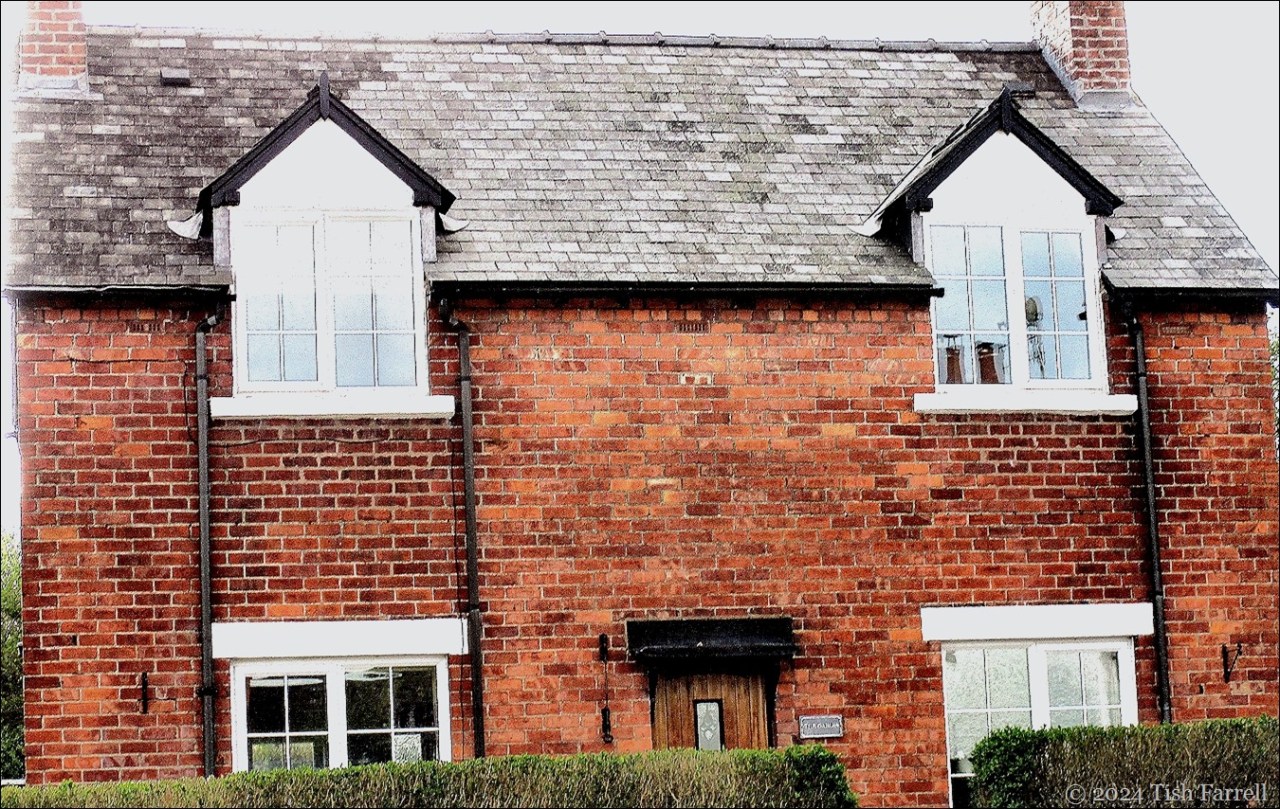
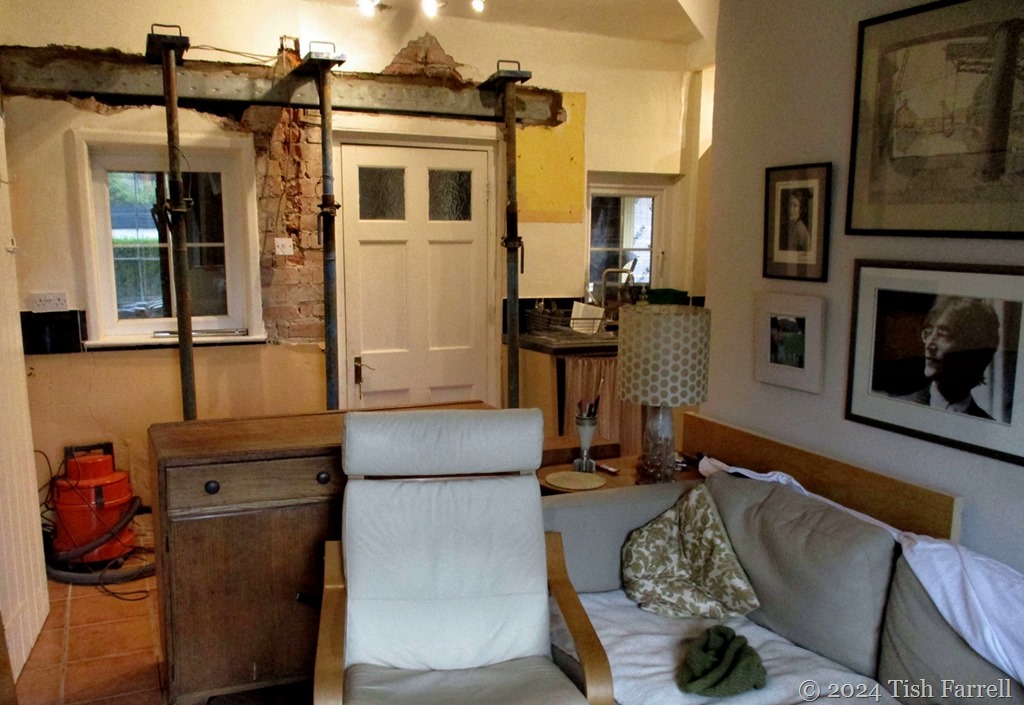
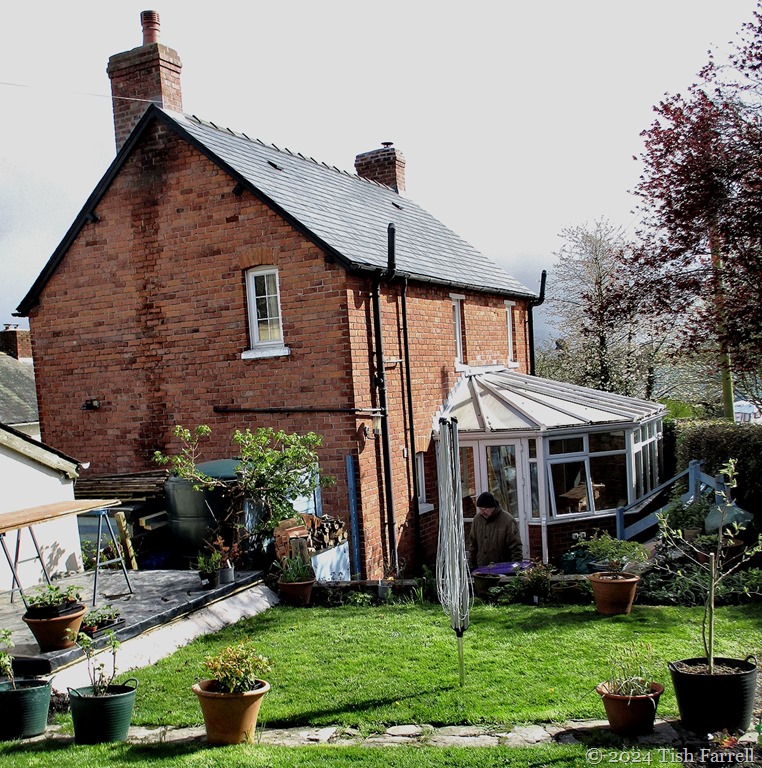
I think this is where I left off with the building work updates: acrow props holding up a third of the rear house wall while two steel beams were put in place. The door you can see was the original back door. When we moved into The Gables almost a year ago it opened onto a large uPVC conservatory, which at 20 years old was a little weary, as ageing plastic structures tend to be.
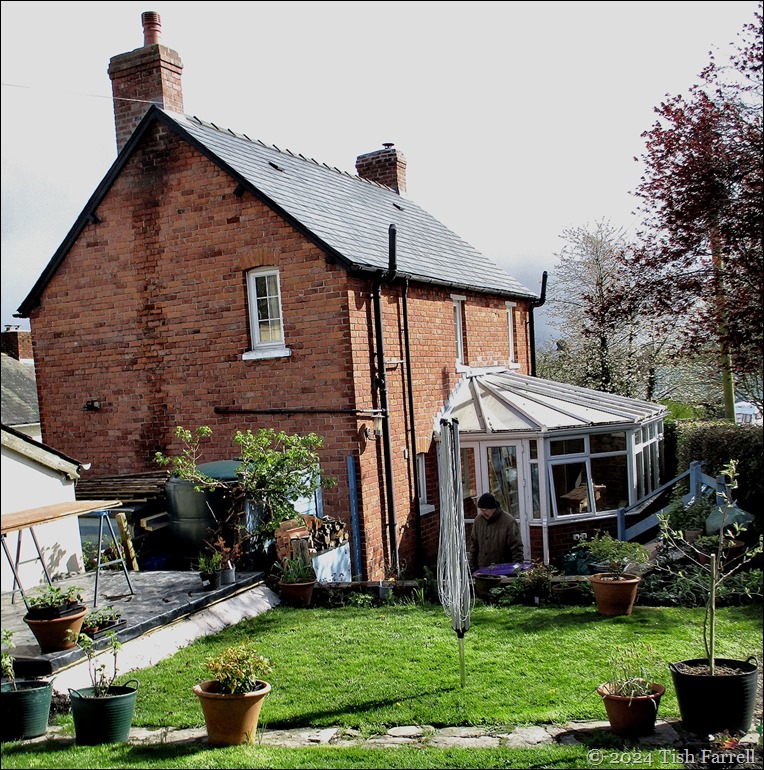
demolition 2

The conservatory that is no more

*

We knew at once it had to be turned into a properly insulated room, ideally a new kitchen-dining-room. And so began the process of having a designer draw up plans and submit them to the local authority for planning permission. That took a few months.

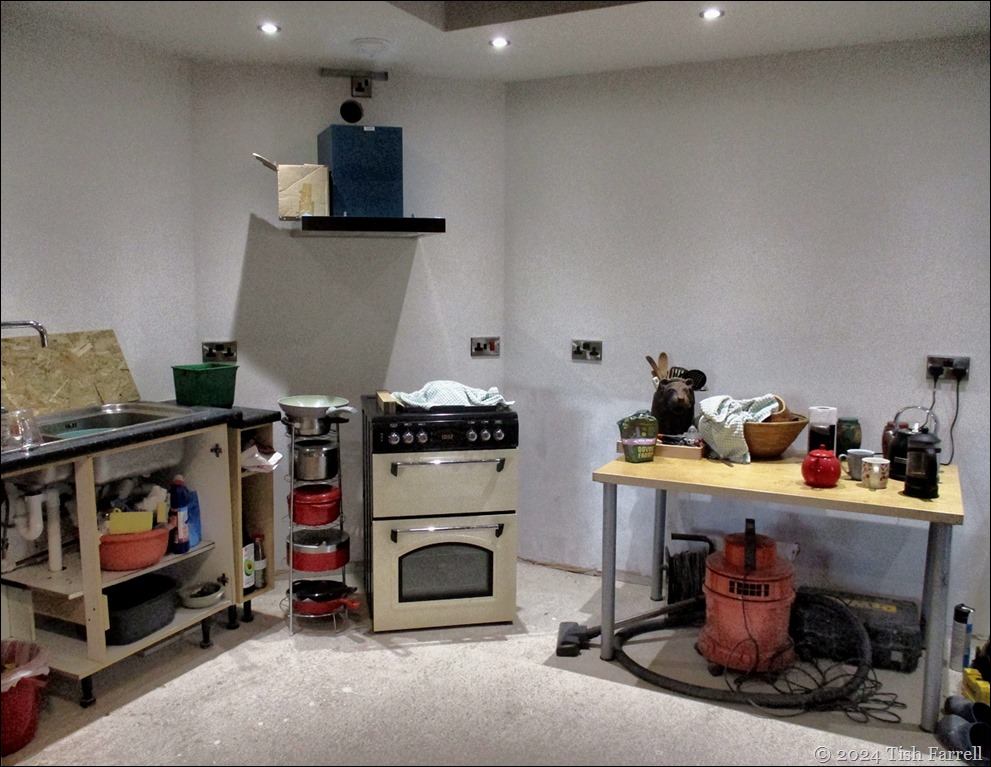
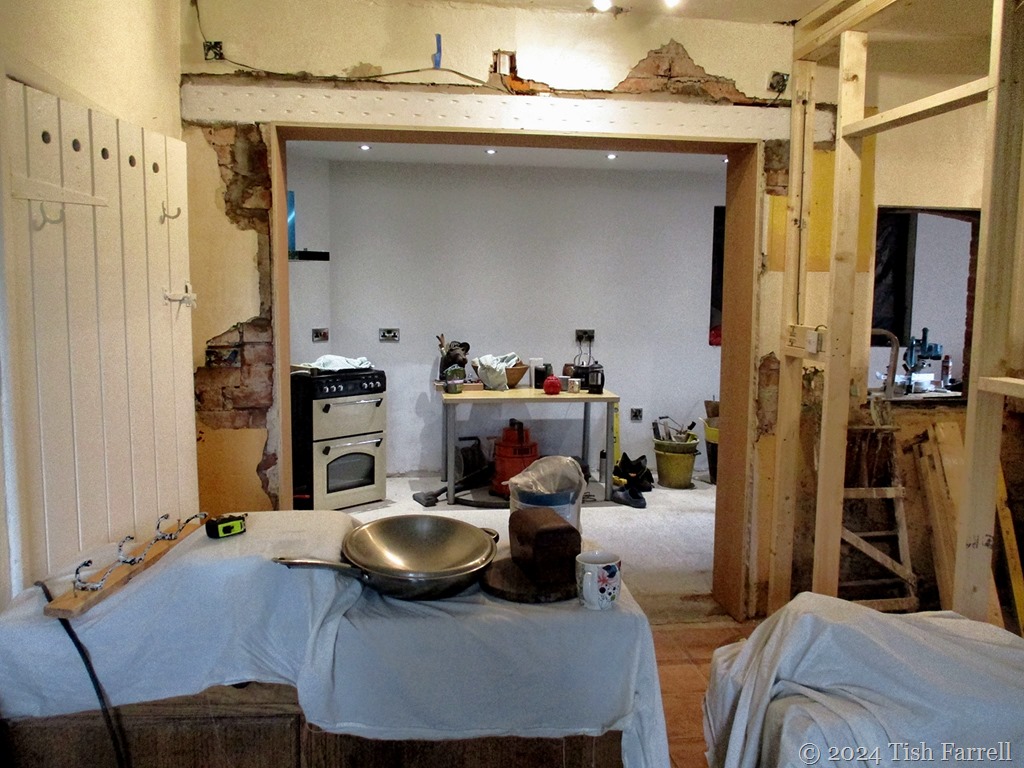
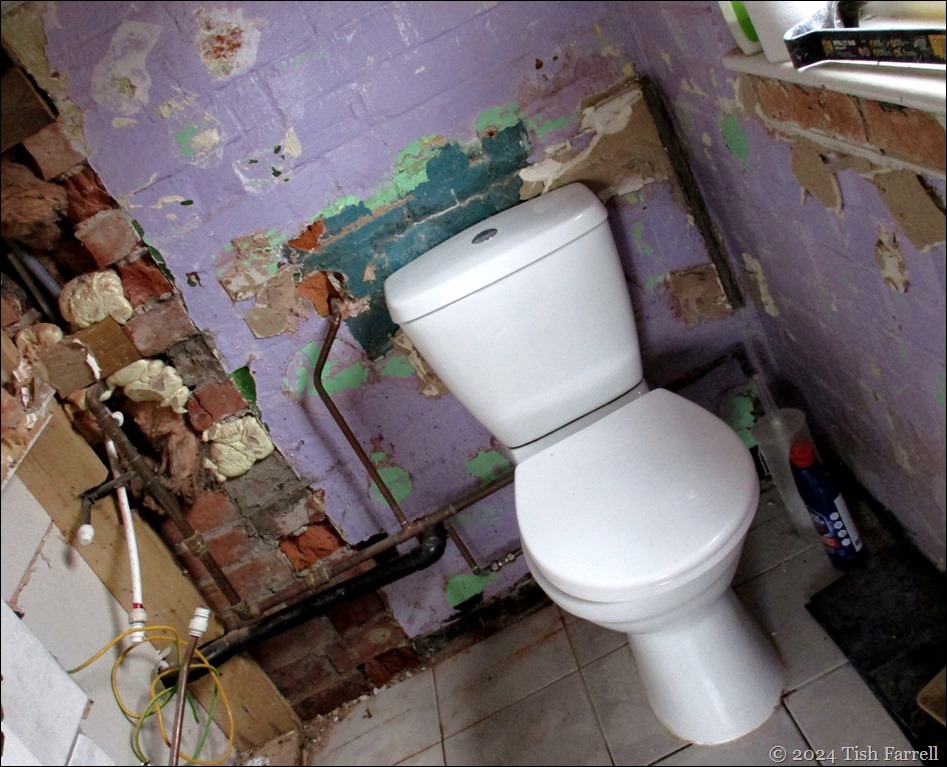
But now the photos. The acrow prop view shows our main sitting-room, looking from front to back of house. (There’s a second smaller sitting-room across the front hallway). Originally, when the house was built in 1922, there was internal wall running behind cupboard, presumably with a door through to a run of two or three narrow rooms. We’re guessing scullery, pantry, W.C. and also boiler room for doing laundry. This last possibility we discovered only two days ago when builder Alan was investigating the plumbing in the downstairs loo of many surprising colours. In the corner (left) he found signs of a small flue that had been re-used for the pipework when the upstairs bathroom was installed. (Tell-tale soot in the cavity).
IMG_5397

*

Anyway, at some point, in more recent times, the big sitting room was extended into the rear rooms to make an ‘L’ shape with a galley kitchen (running off to the right). The far end access to the W.C. was walled up in order to put in a big range cooker, and a new doorway to ablutions installed in the back corner of the smaller front sitting-room (not ideal!)

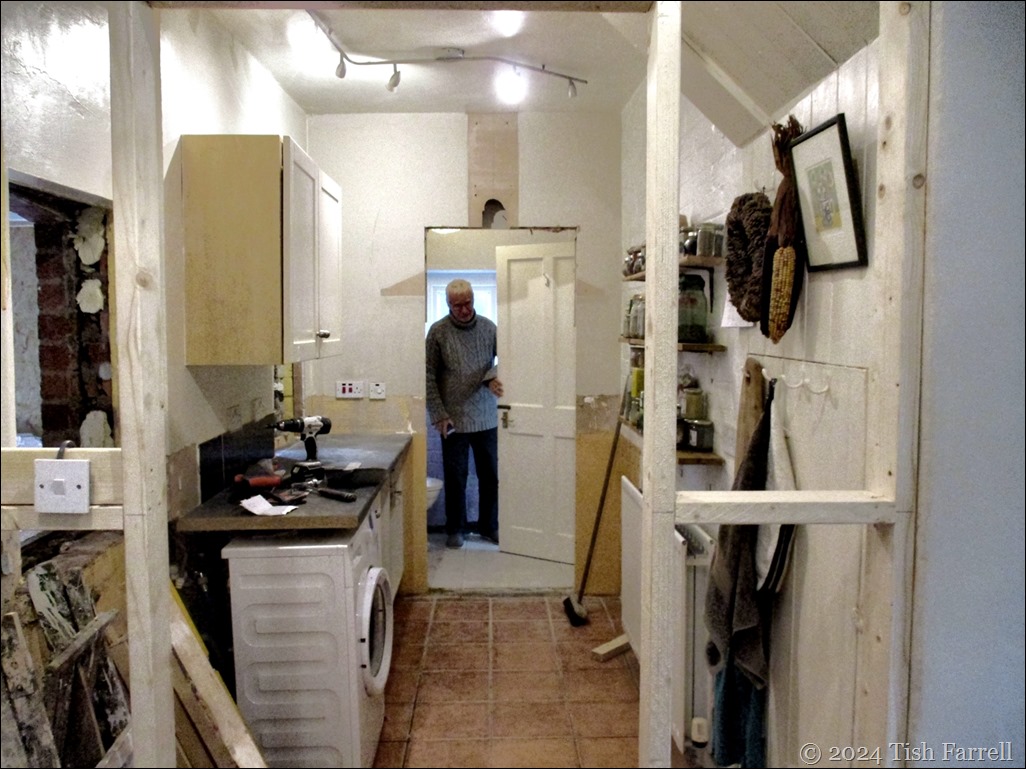
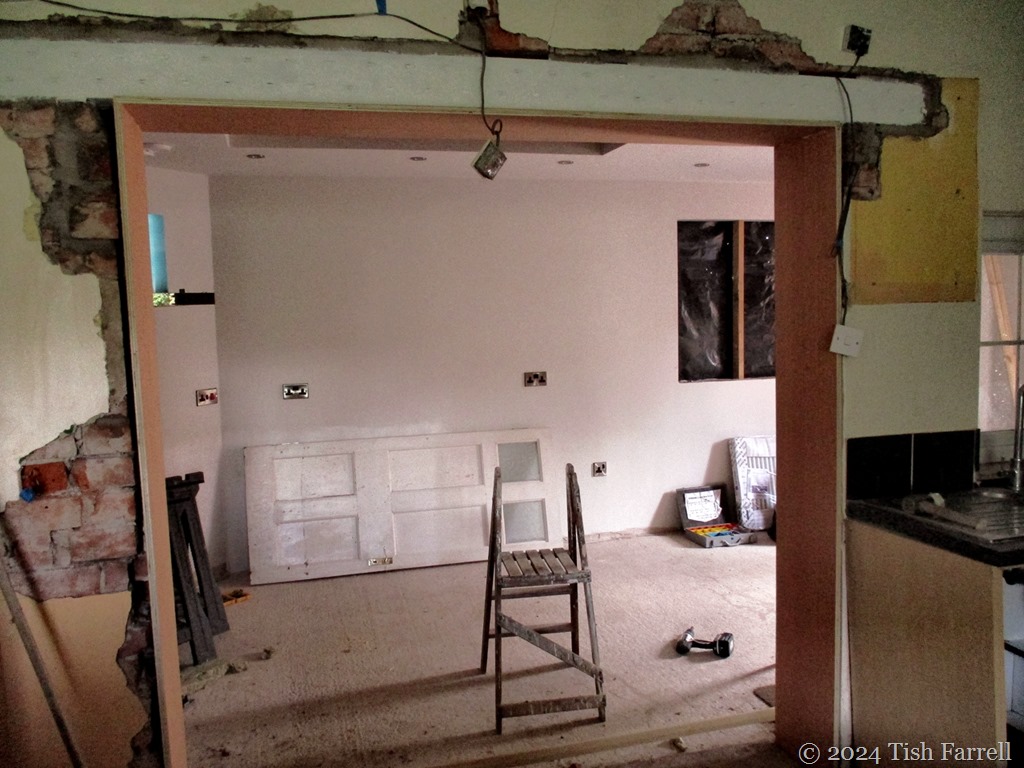
So: we’re knocking out part of the rear wall into the new kitchen extension, and reinstating a wall on the inside right to turn the (until last week) old kitchen into a utility room, and also restoring the door to the cloakroom and blocking up the sitting room access.

IMG_5606

The big knock-through

*

In the meantime, while the internal wall goes up for the utility room, I have makeshift arrangements in the new kitchen. This is currently only a shell awaiting its lantern roof-light, window, French doors, oak floor and kitchen units which are being made by Shepherd Hills, a Mennonite community of craftsmen who have their workshop in the next village.

IMG_5610

*

IMG_5623

*

IMG_5621

*

IMG_5619

Utility room and downstairs cloakroom with restored doorway

*

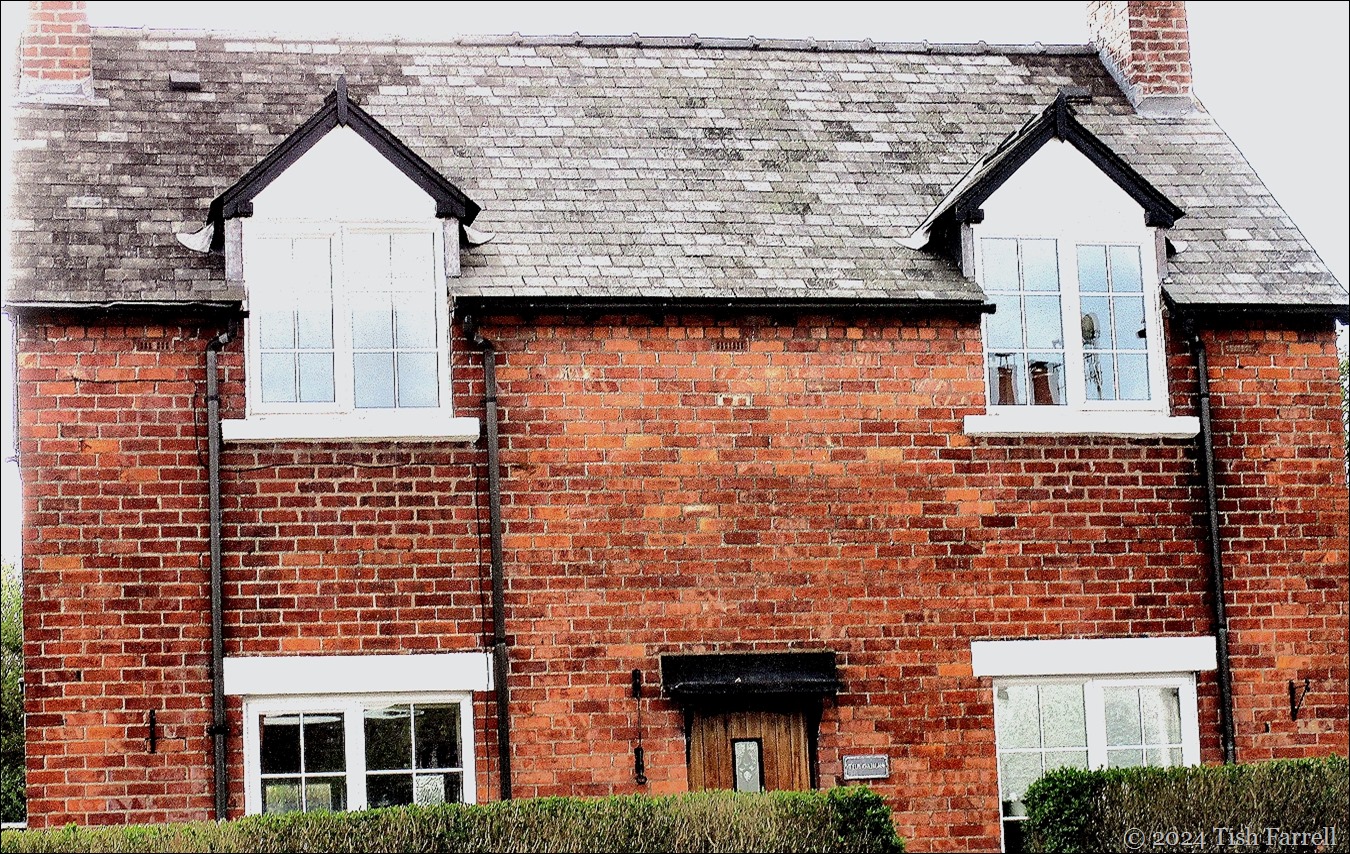
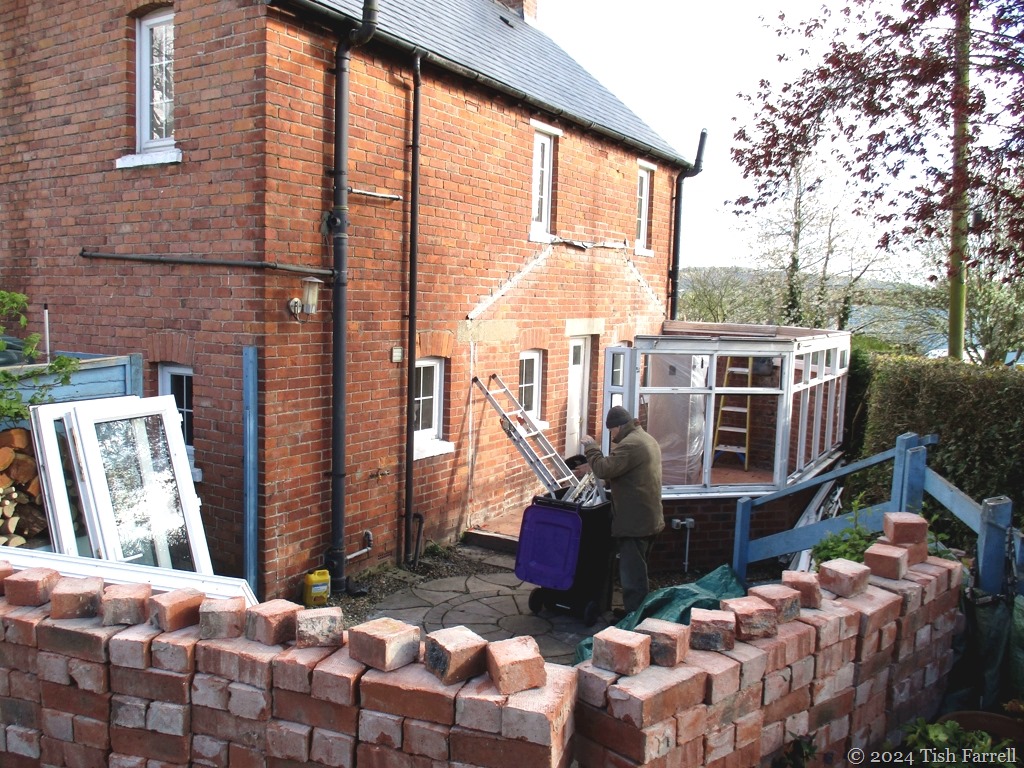
As for the outside, the brickwork is done, but I’m not revealing all until the windows and doors go in. There are always drawbacks with flat-roof extensions, not least the look of them, hence the addition of a lantern roof-light to offset the plainness of the rectangle. It is a difficult space to make the most of, in reality not very big. Nor was there much room to manoeuvre due to the position of the upstairs windows. Most of all, we didn’t want to add anything too fussy to this modest little house.

Looking back to the winter, some of you may remember the wall of bricks, saved by builder Alan from the conservatory demolition. They are now incorporated in the new build.

IMG_4922

*

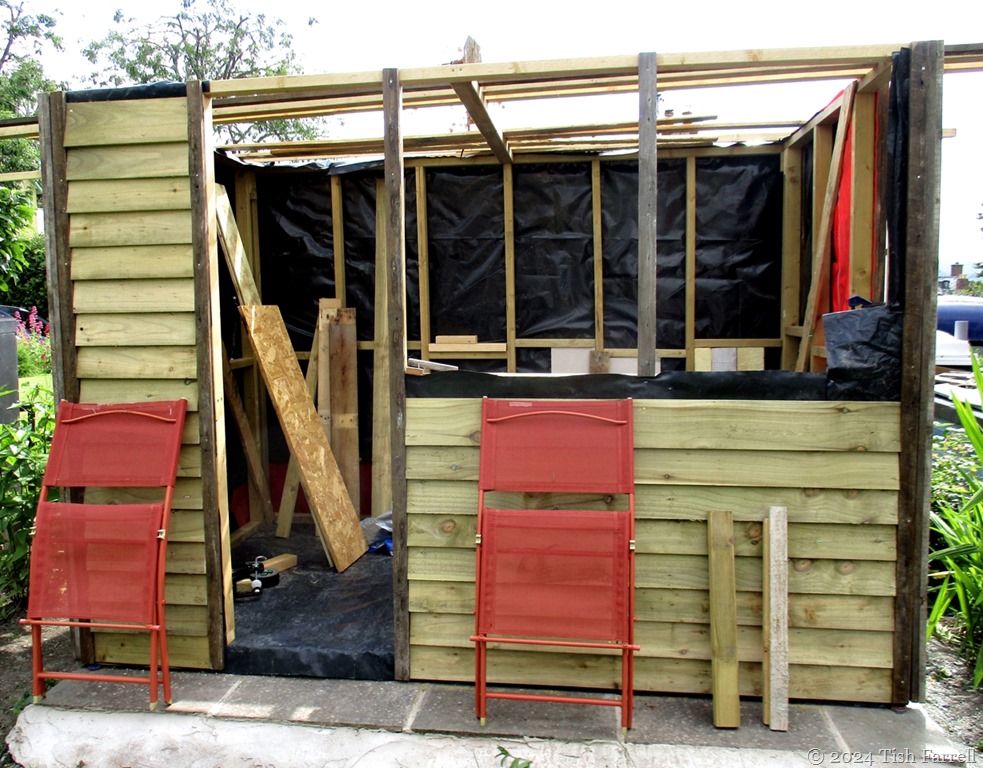
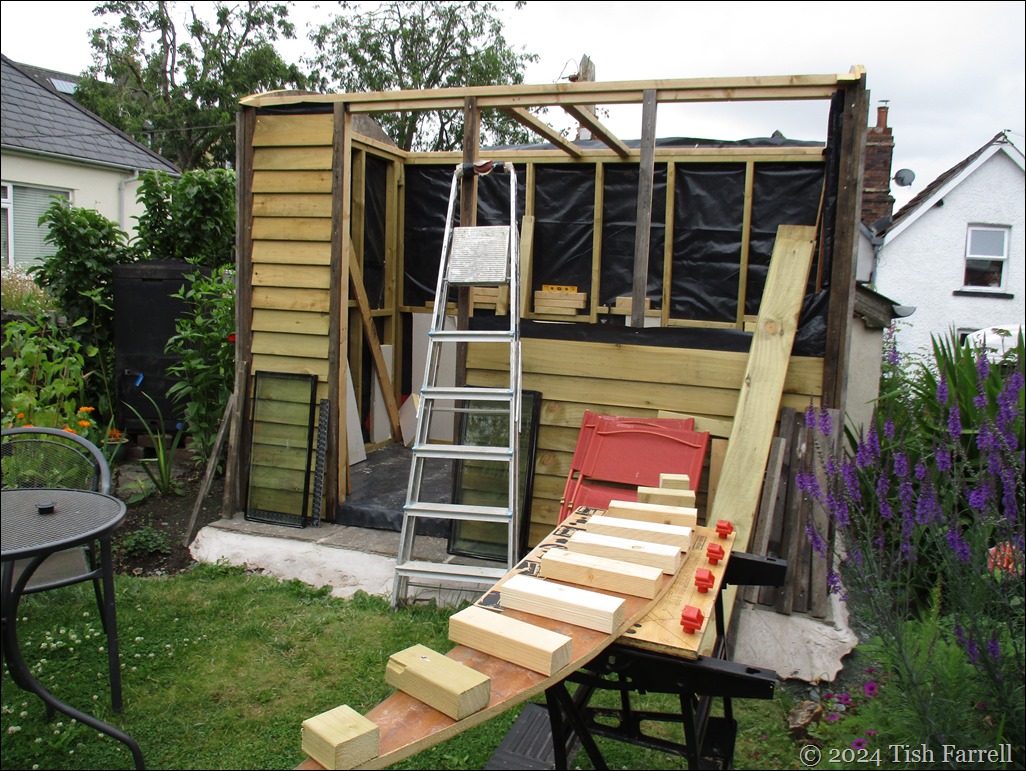
I can also show you our other structure in progress, as in Graham’s shed. He’s building it from scratch, inspired, he tells me, by a Great Western Railway goods waggon. It will thus have a curved roof, and as he’s forgotten how he built the Sheinton Street shed which also had a curved roof, the process is involving much pondering, followed by phases of making and unmaking. You may notice that some of  the hundred year old battens from the rebuilding of the house roof are being repurposed. Also four panes from the old conservatory are going into the window slots.

IMG_5533

IMG_5628

*

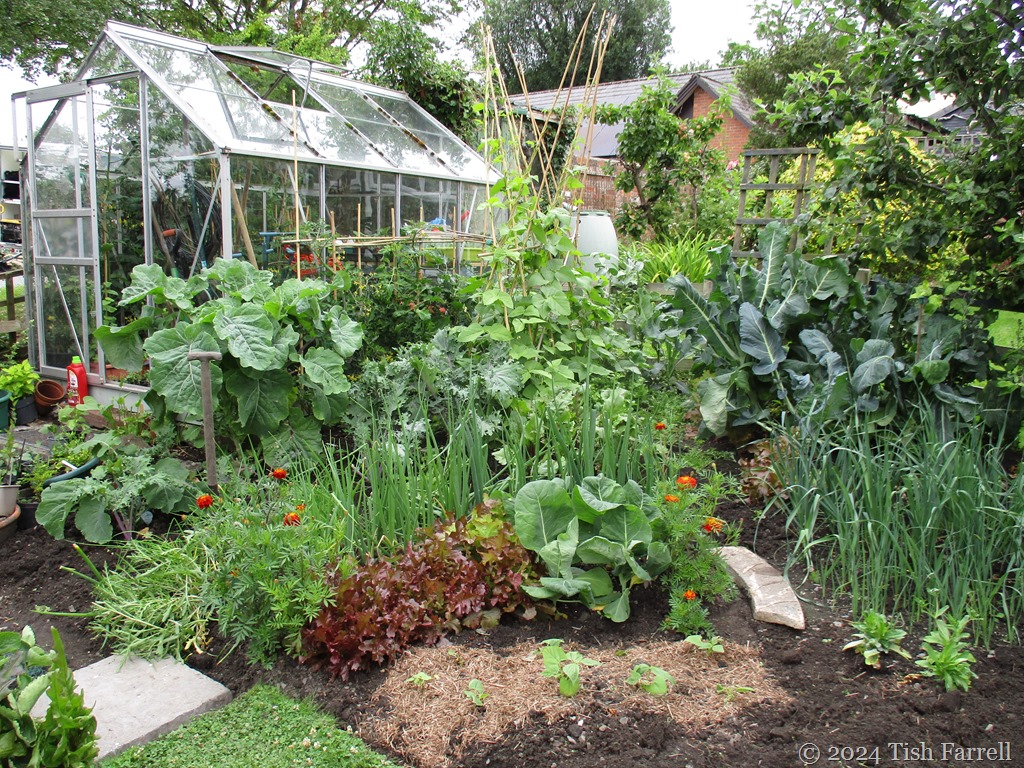
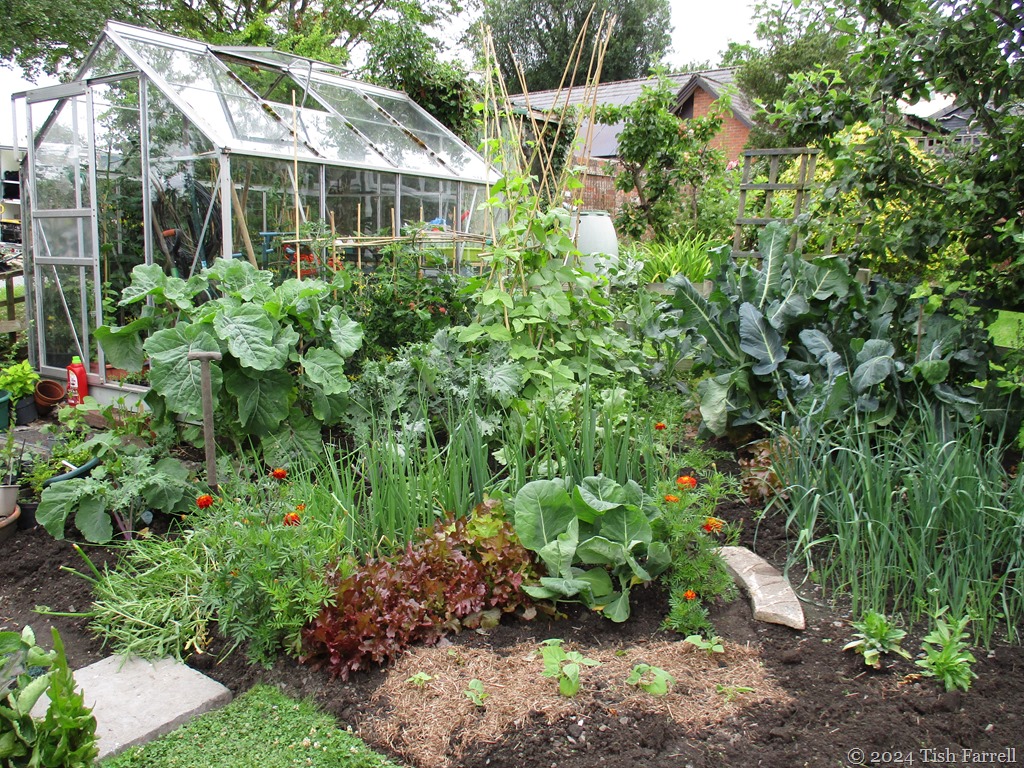
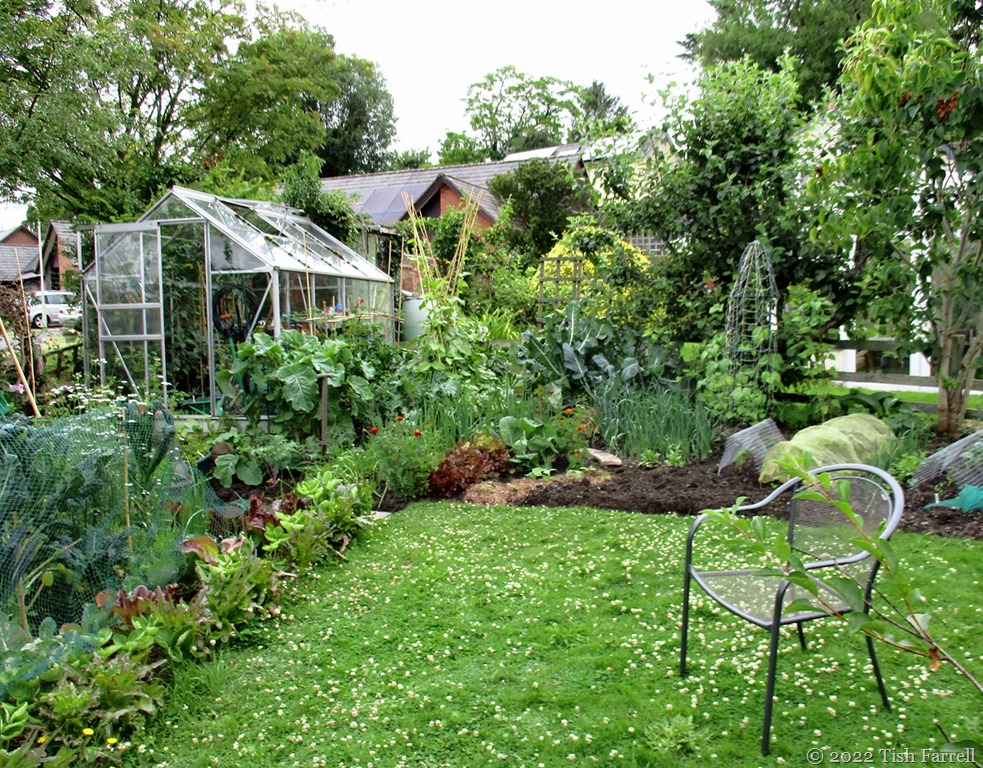
And as for the garden, well, after all the rain, it’s coming along rather vigorously in this interim phase of development (i.e. until the autumn when I might make more of plan that will involve finding homes for all the stuff presently in pots. At the moment I’m more interested in growing food. (On the plot: assorted tomatoes inside and outside the greenhouse, runner beans, Russian kale, perennial kale, onions, leeks, a few beetroot, Romanesco cauliflowers, cabbages and oak leaf lettuce).

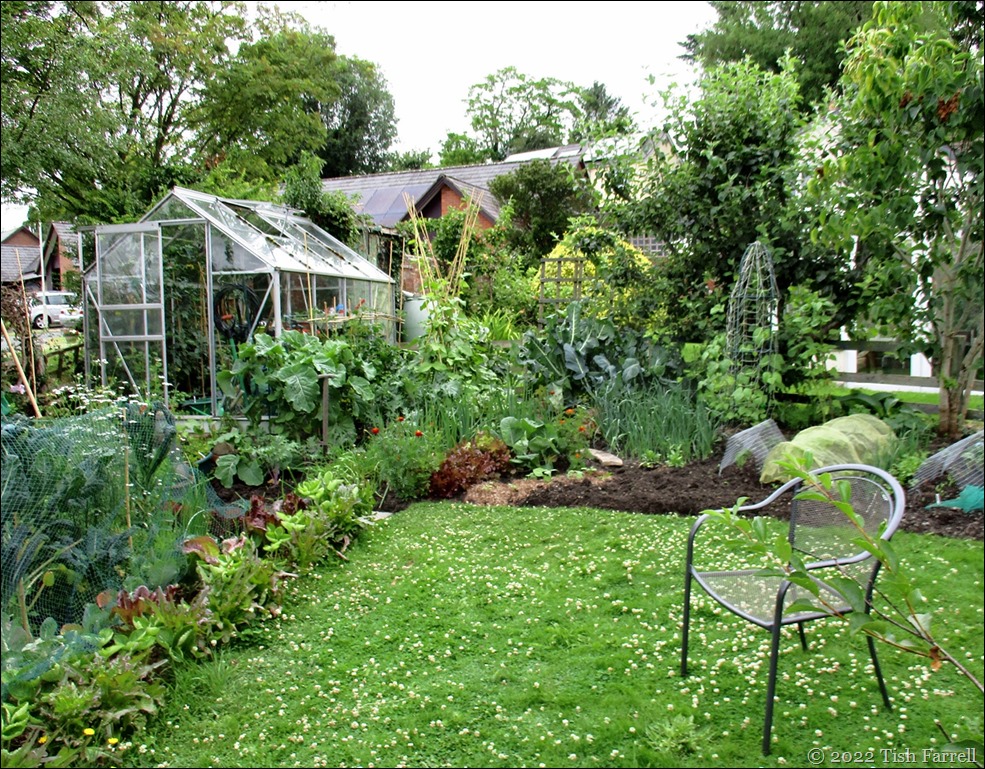
IMG_5631

IMG_5675

*

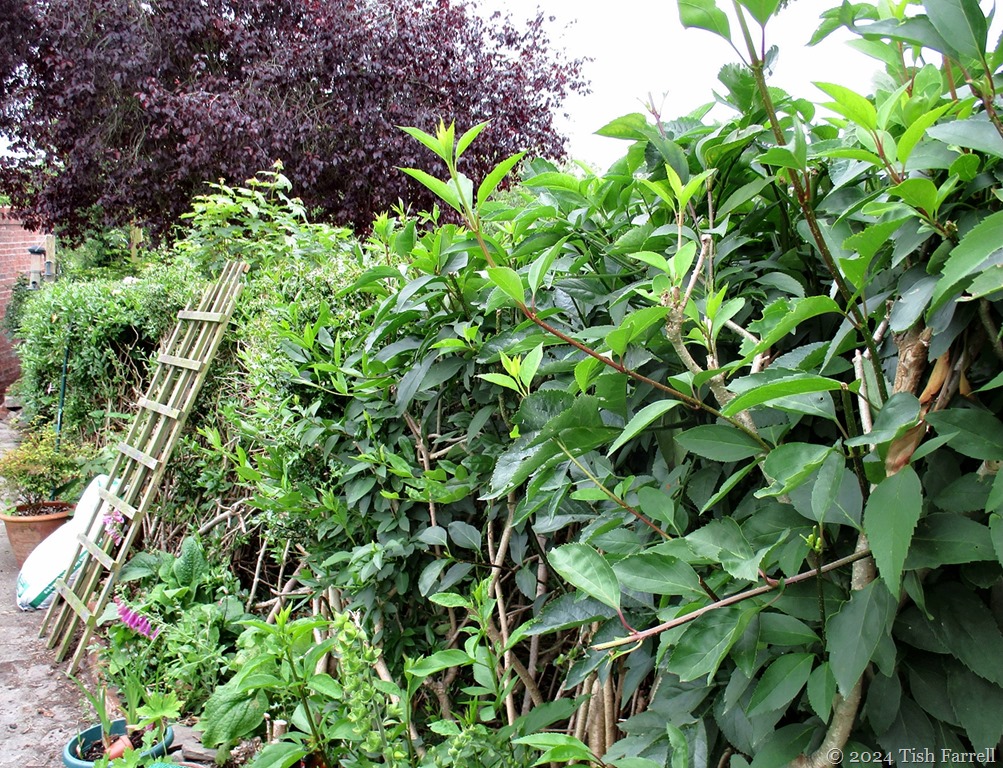
I think I’ve finished digging up the lawn, but there’s still the Hedge of Horrors to sort out, with more chicken wire extraction required, plus the unravelling of weigela, privet, elder, sycamore, ash, holly, hawthorn, ivy and some devilishly prickly berberis.

IMG_5641

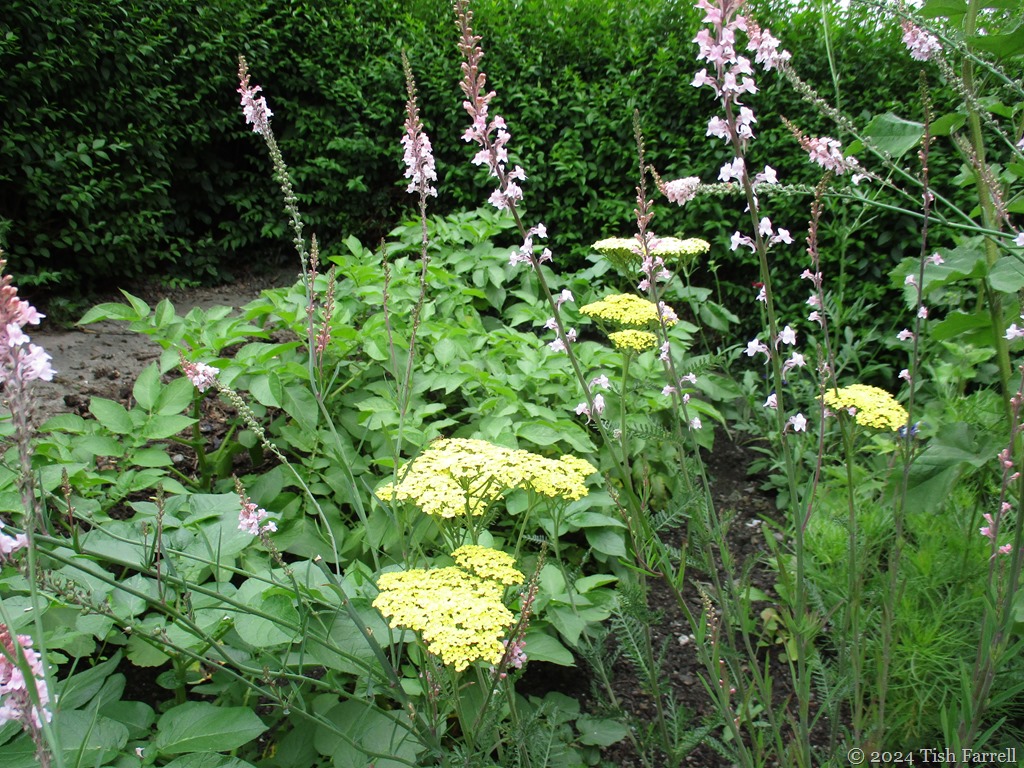
But on the plus side, the sweet corn is growing purposefully in the front garden, as are the Charlotte potatoes amongst the  toadflax and achillea.

IMG_5626

IMG_5625

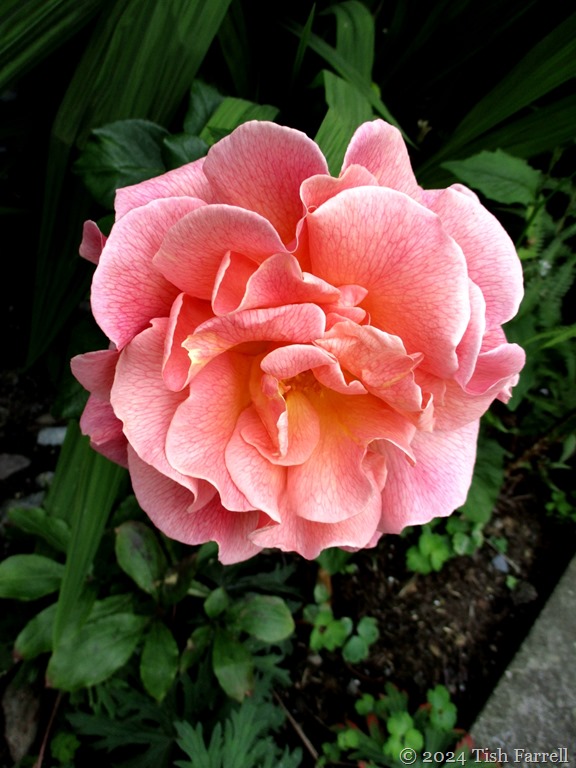
And that’s it for now chez Farrell. I’m leaving you with a single very lovely rose that snook out of the crocosmia thicket this week. It’s scent is delicious and growing by Graham’s shed.

Happy days amid dust and debris.

IMG_5646

header3

Coming Home To Roost

IMG_5480

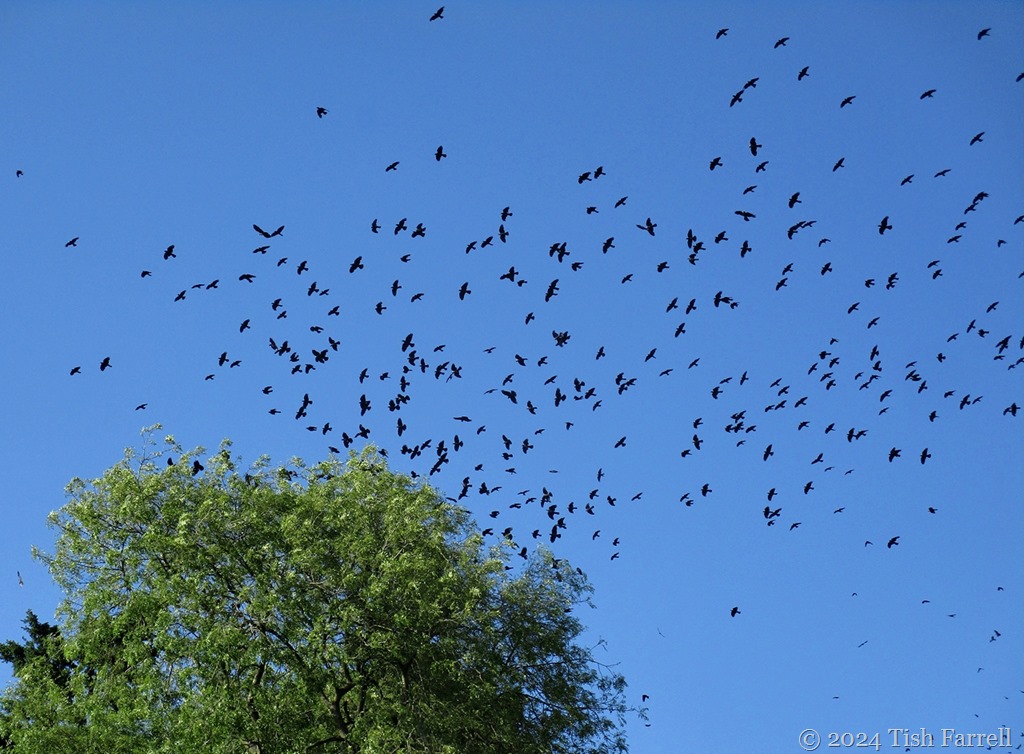
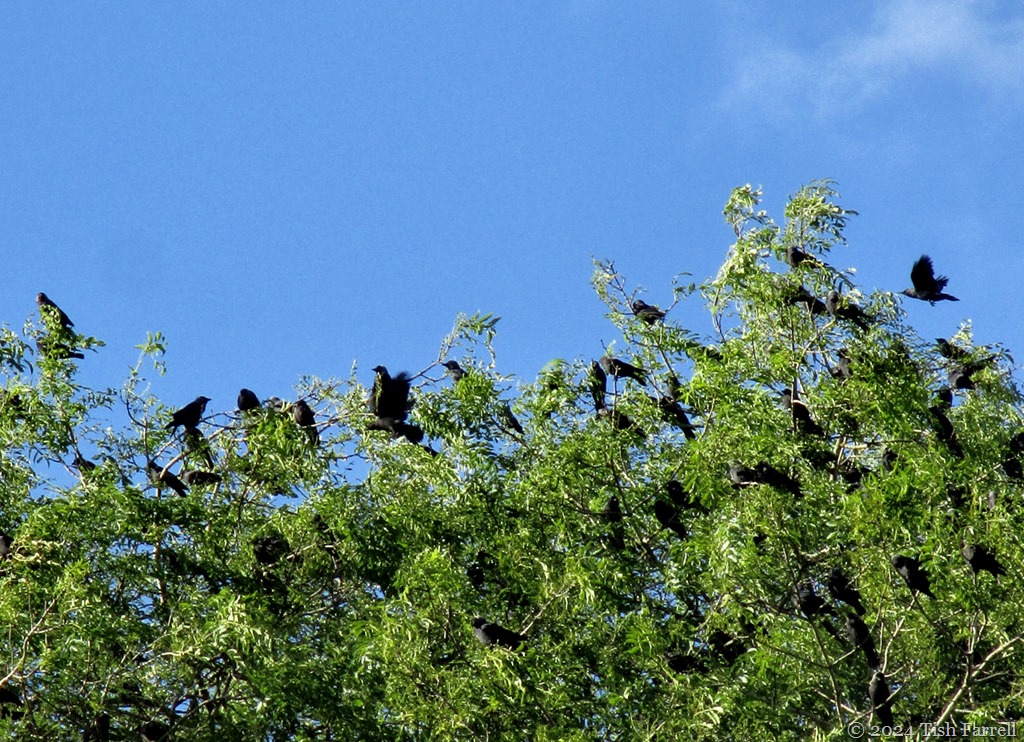
I’ve never lived in a place where there is so much bird busyness in our airspace. Recently, the hundreds of jackdaws that roost in the old ash trees of Bishops Castle’s gardens have started putting on dramatic aerial displays. It usually begins in the treetops with a burst of raucous chaka-chak-chaking and then a huge whoosh that disturbs the air, and all for no reason that this human can discern.

The flocks stream out from their roosts, billowing and swarming over the town. Then there is swirling, dividing, and swarming once more. Not quite the mesmerizing dance of starling murmurations, but almost.

And then, at last, when whatever needed to be sorted out, is, they return to settle once more in the treetops.

jackdaws 3

jackdaws 5

*

This particular tree is on the hillside above our house.

And then, in between the jackdaw shows, there are the red kites to spot – sometimes in pairs, sometimes singly. Again, they cruise above the town and we often have a good view of them while we’re eating lunch. This is one advantage of having our dining table in the sitting room while the new kitchen is being built. There’s a nice big window for sky viewing. And that view of course presently includes the swooping and diving of swifts, swallows and martins.

Meanwhile in the garden we have a regular mob of sparrows who treat the place as their own, dust bathing, trawling the hedges and borders for seeds, doing a spot of aphid grazing on the hollyhocks. There are also blackbird fledglings who appear as soon as I go out to the vegetable patch. They are so hungry they’ve given up being afraid of me, and flutter around my feet as I’m digging, piping loudly for grubs and worms.

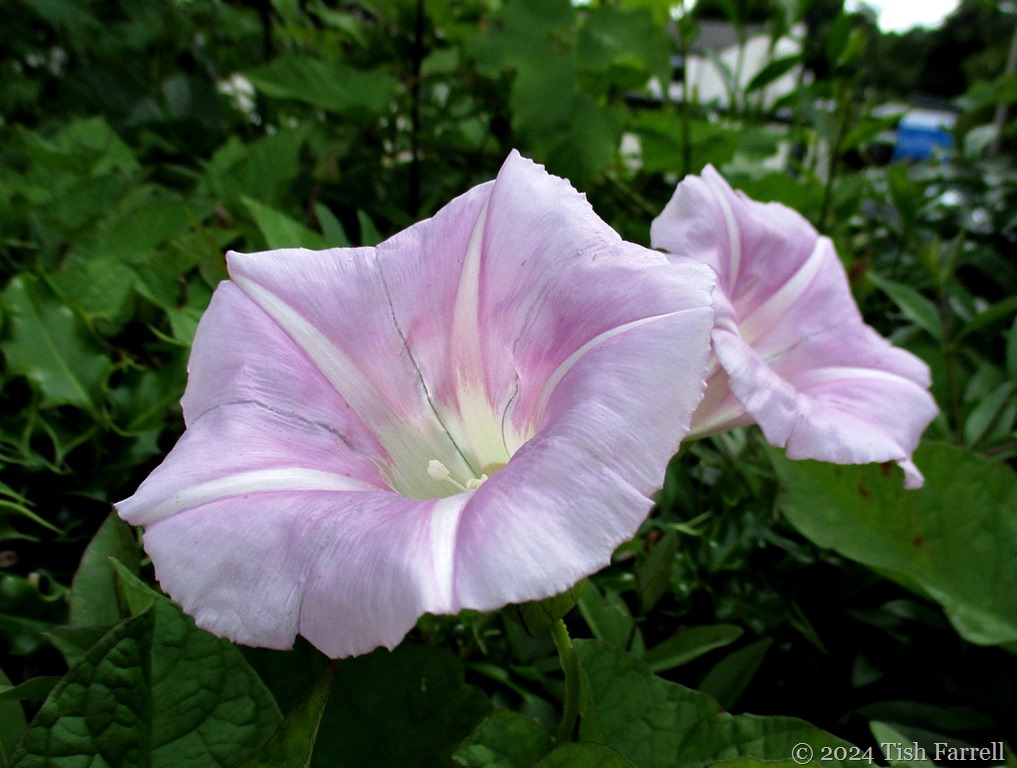
All of which is to say the local birds are presently providing a happy diversion from the mega-disruption in the Farrell roost. The building work goes on and on, but I think we’re over the biggest hump. More of which in the next post. For now a soothing view of a less common sort of bindweed – a perennial weed that in the large flowered version is usually plain white and mostly regarded by this gardener as a flipping nuisance.

IMG_5611

Here in Bishops Castle the hedges, including ours, have been colonised by this pretty pink and white  variety. In fact it’s the one asset in our hedge of horrors, and there’s a lesson here of course. Cue Monty Python’s Always look on the bright side of life and so never mind the hedge that thinks it’s a forest and can’t be tamed till August, or the house that’s full of building debris and occupied by two fuddled humans who no longer know where anything is.
jackdaws header 2

Summer is A Coming In*

IMG_5515

At last we can go outside without our winter layers. Of course being Brits, we’re bound to complain that we’re now too hot. But then I don’t think this mini warmth-wave is set to last beyond a couple of days. Even so, it called a halt to digging up the lawn, which will doubtless resume later in the week when it’s reported to be several degrees cooler.
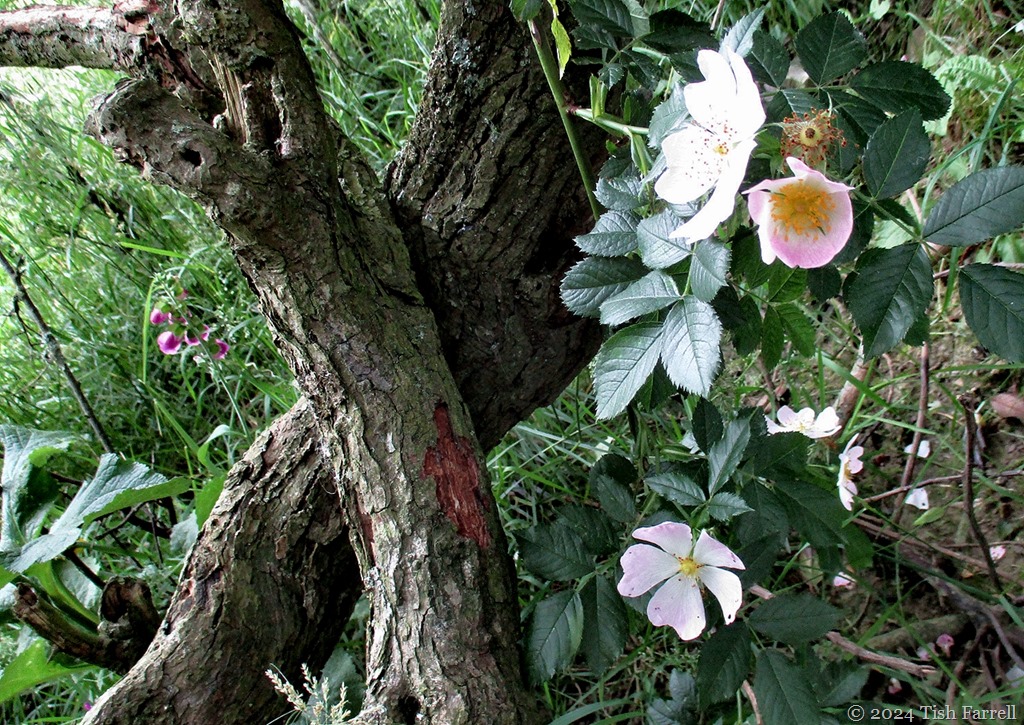
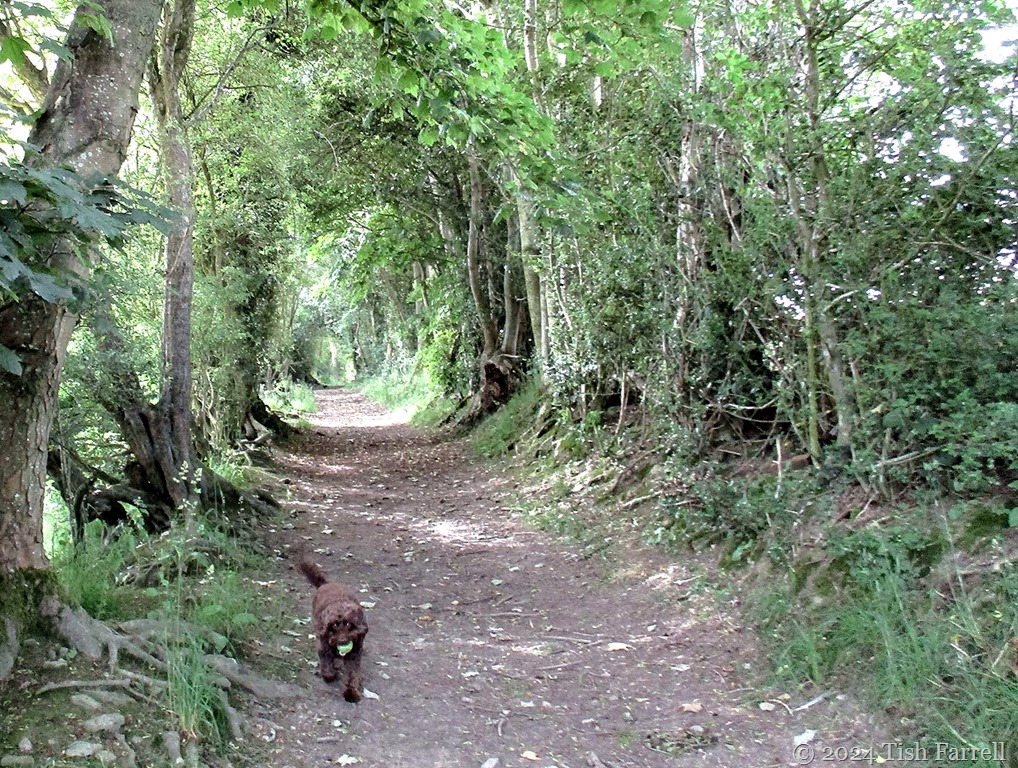
Instead, we meandered along Bishop’s Castle’s green lanes where all is a shadowland of dog roses and foxgloves among aged gnarly roots. The overarching boughs of sycamore, field maple,hawthorn, elder and ash create a sappy coolness.

IMG_5512

Green lanes are a covert feature of the English countryside – unpaved, their one-time hedgerow borders grown up into tree arcades. Some of these byways may be old drovers’ roads. Others are far more ancient, once on trading routes used by Bronze Age and even earlier travellers.

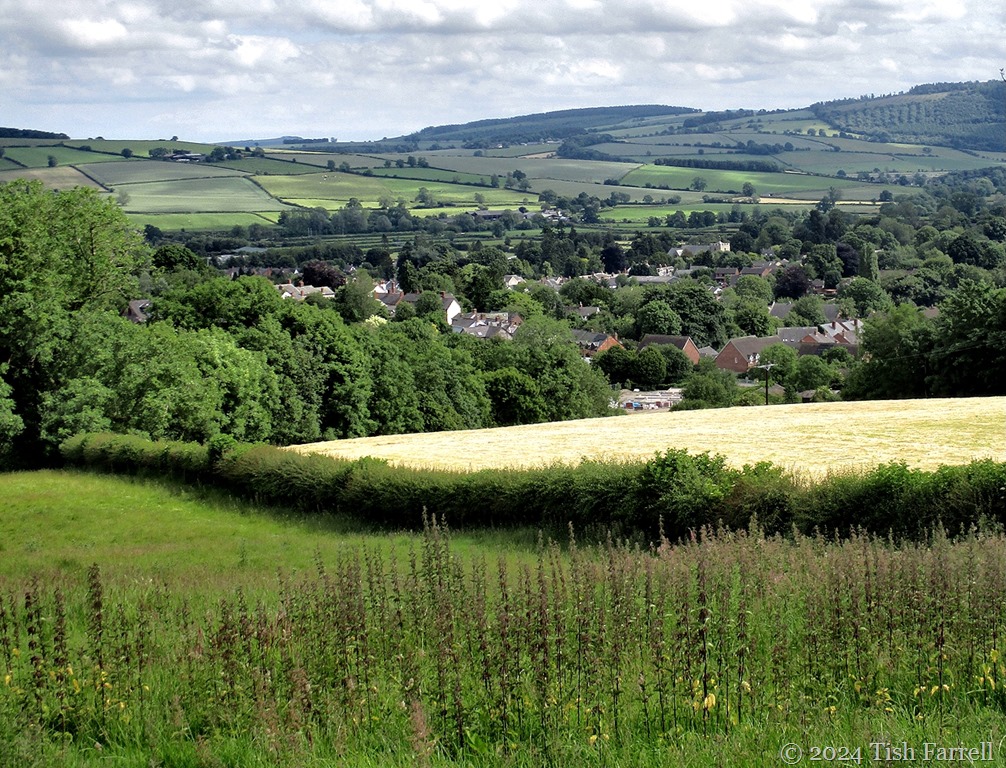
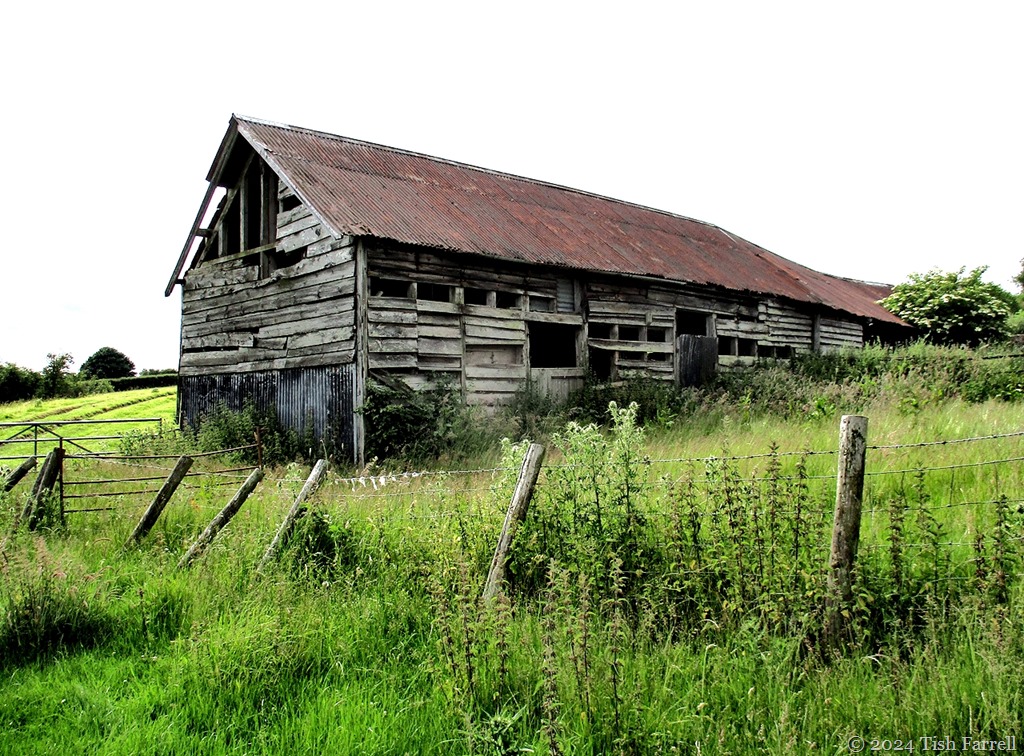
This particular lane takes us up to a high meadow where the grass has been mown for hay. There is an antique barn, settled in scenic decay, and fine hill views all around. Bishops Castle town lies way below, quietly.

IMG_5525

IMG_5523

IMG_5522

IMG_5532

*

* “Summer is icumen in”  a thirteenth century English round, hear it sung here in Middle English

All Burgeoning At The Hurst

sq20

Yesterday felt like summer. It was also ‘open garden’ day at The Hurst, near Clun, a place English-speaking writers, seasoned and aspiring, will know well since it is one of the four ‘homes’ of Arvon, the charity that fosters creative writing through its residential courses, festivals and retreats.

But before Arvon arrived at The Hurst, the other key writerly connection is that it was, until his death, the home of playwright John Osborne (1929-1994). He and his fourth wife, journalist, Helen Dawson, are both buried in the tranquil graveyard of Clun parish church. (See earlier post In the footsteps of the Green Man for photos).

Clun is only a short drive from Bishops Castle – an easy afternoon out then. Others thought so too, and it was pleasing to see how many had come along for homemade cakes and tea, garden rambles and to support the Shropshire Historic Churches Trust, a charity whose grants for repairs and preservation “help keep buildings open not only for worship and community use but also as quiet places for prayer and reflection.”

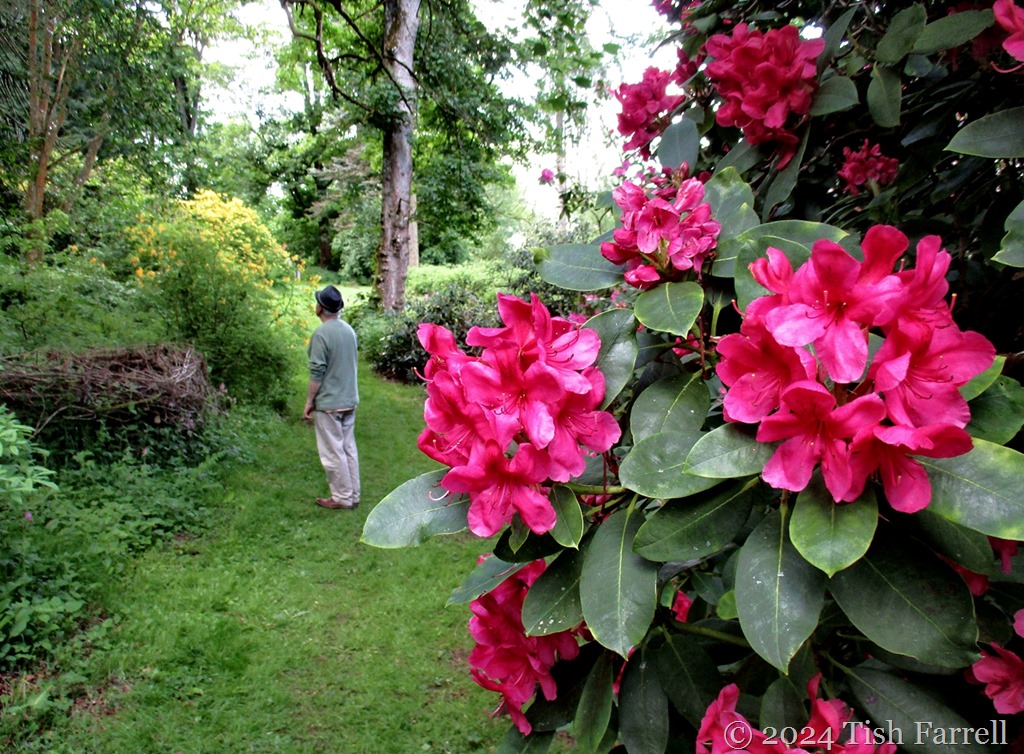
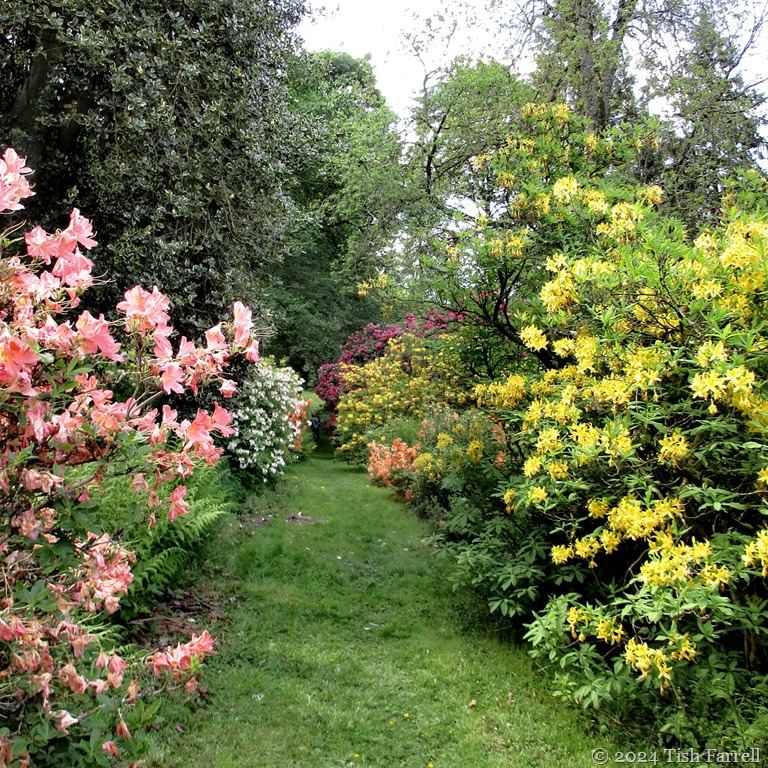
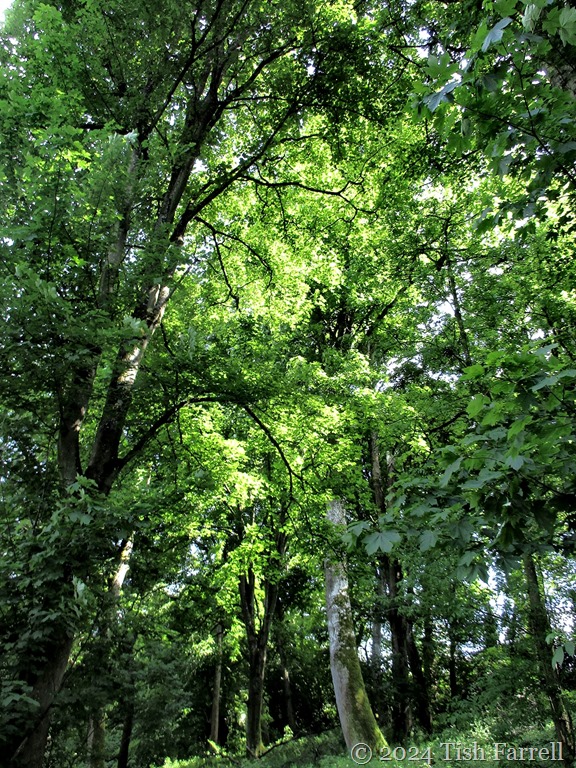
The Hurst sits on a hillside, forest all around, and with grounds that are more arboretum than formal garden. Long grassy avenues  lead you on between azalea and rhododendron borders, while overtopping all, are magnificent, mature trees. Please feel free to wander and enjoy the sun-dappled paths.

IMG_5309

*

IMG_5296

IMG_5292

IMG_5298

IMG_5300

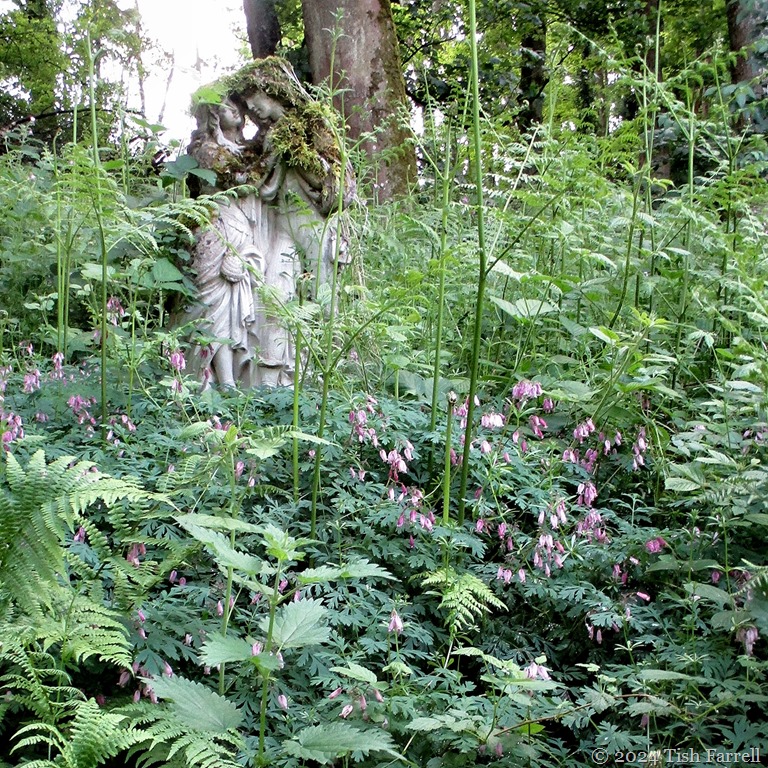
All the lush greenery wafted over us like a tonic. And the mossy lovers above the bank of Dicentra ‘Love Hearts’ raised a smile.

#SquaresRenew  Becky’s May challenge: a daily square format header photo featuring themes of renewal, moving forward, reconstruction and burgeoning.

sq20 header

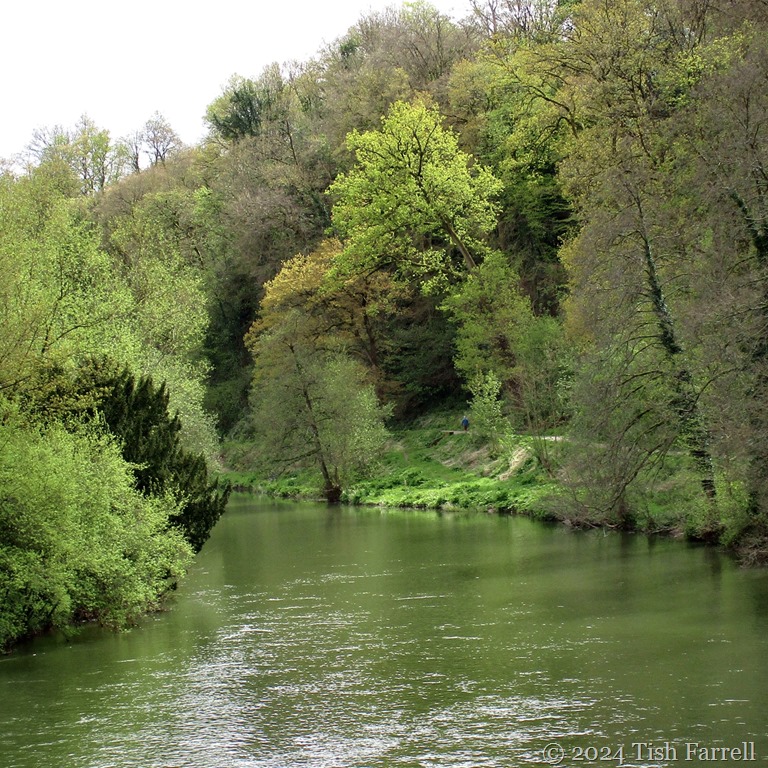
Teeming Green Above Ludlow’s River Teme

IMG_4959ed

The Green Cafe below Ludlow Castle

*

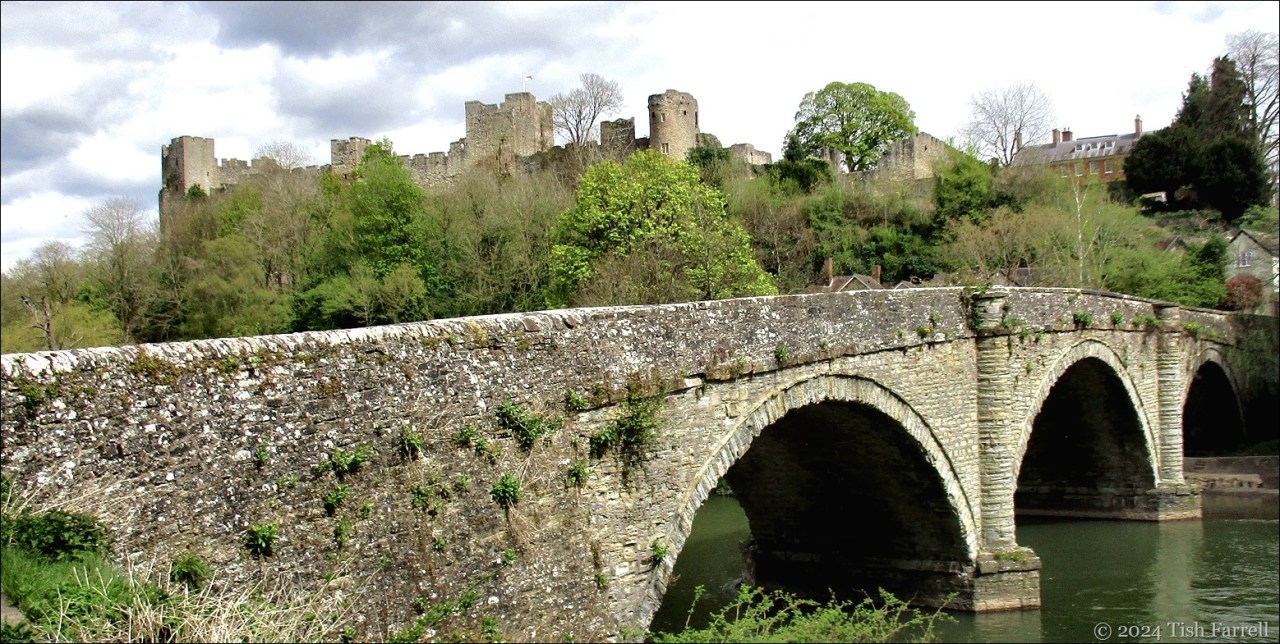
Ludlow is one of Shropshire’s loveliest old market towns, the earliest surviving remains (including parts of the castle) dating from the early Norman period in the 11th century. It’s also one of our favourite places, about 20 miles from Bishops Castle, but we had not visited for ages. And so a couple of weeks ago, when spring was teasing us with the notion that sunny days had returned, we thought it was about time for an outing. A significant lure included thoughts of lunch at The Green Cafe.

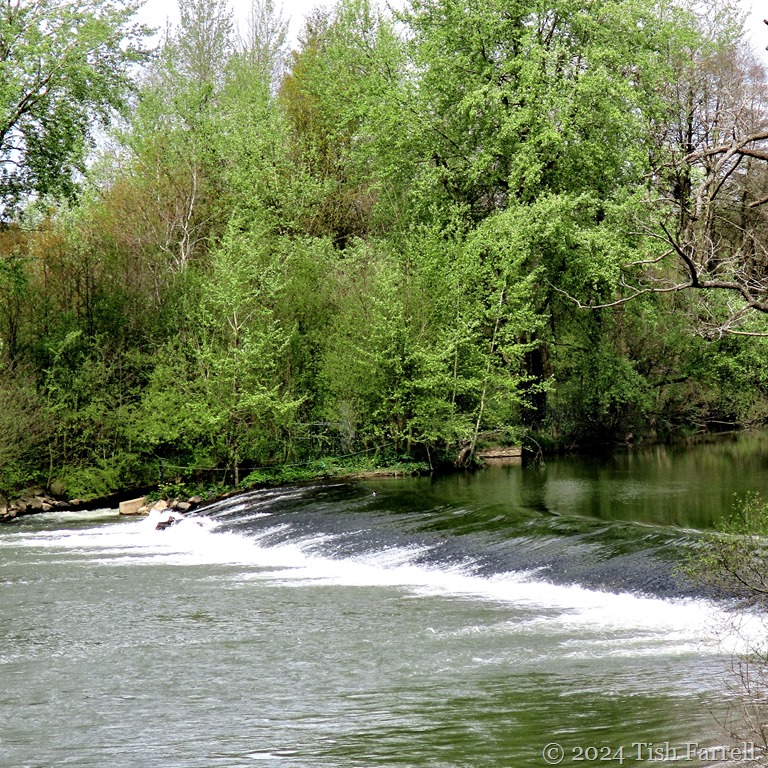
This award-winning little restaurant sits on the riverbank, between Dinham Weir and Dinham Bridge. Ever popular, it has an outdoor terrace, and an inside (compact) dining room. But wherever you choose to sit, you are guaranteed a warm welcome, including with added blankets if it’s cold outside and there are no seats free inside.

IMG_4951

*

The menu is always inventive, dishes coming in large or small versions, and with emphasis on fresh, locally produced ingredients. The cakes and deserts are fabulous, although this time we had no room for them. We’d filled up on smoked salmon with pickles, labneh and mustard yoghurt, plus a dish of roasted tiny new potatoes with aioli sauce. All very delicious. After that, there was nothing left to do, but to wander over Dinham Bridge, look at the views, see spring happening and watch the river flow by.

IMG_4968ed

Going with the flow

*

IMG_4962ed

#SquaresRenew   Every day in May Becky is hosting a square format header photo. The themes are move forward, reconstruct, renew, burgeoning.