Blowing Big Bubbles In Bishop’s Castle ~ Thursday’s Special

100_7331

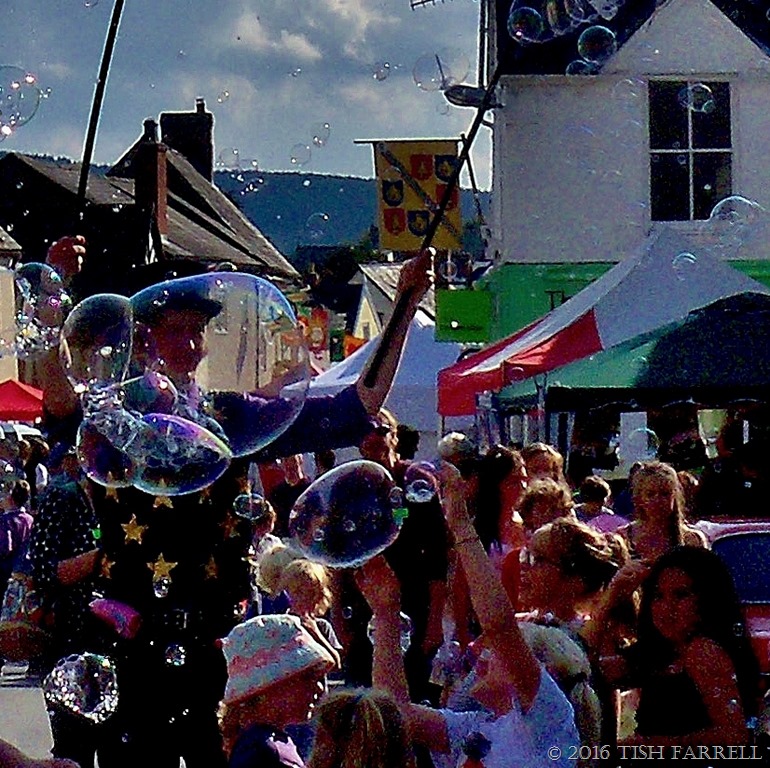
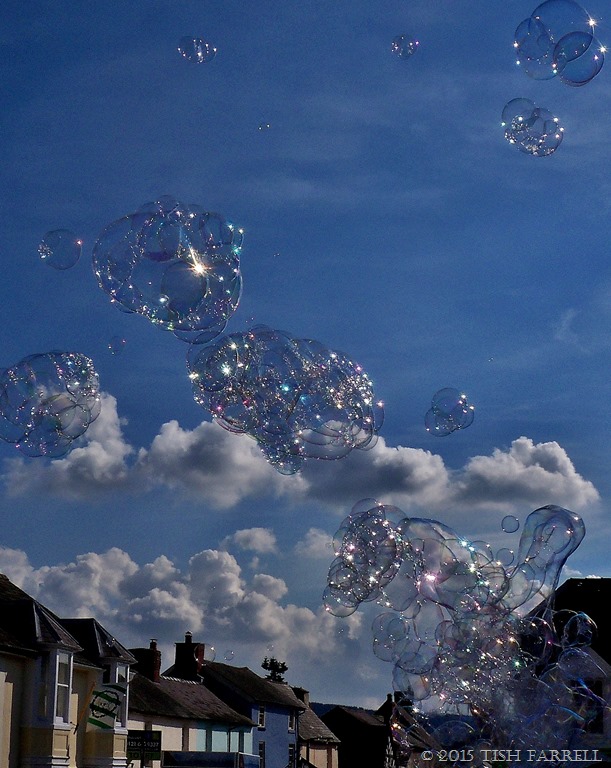
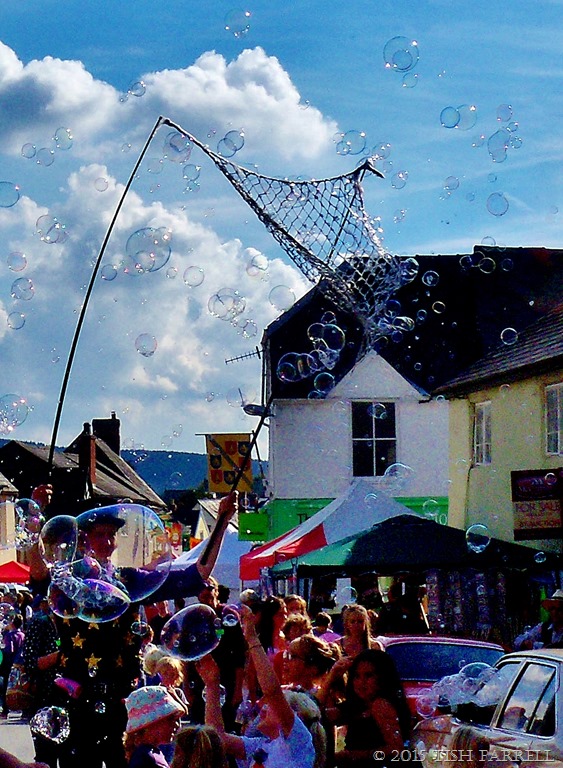
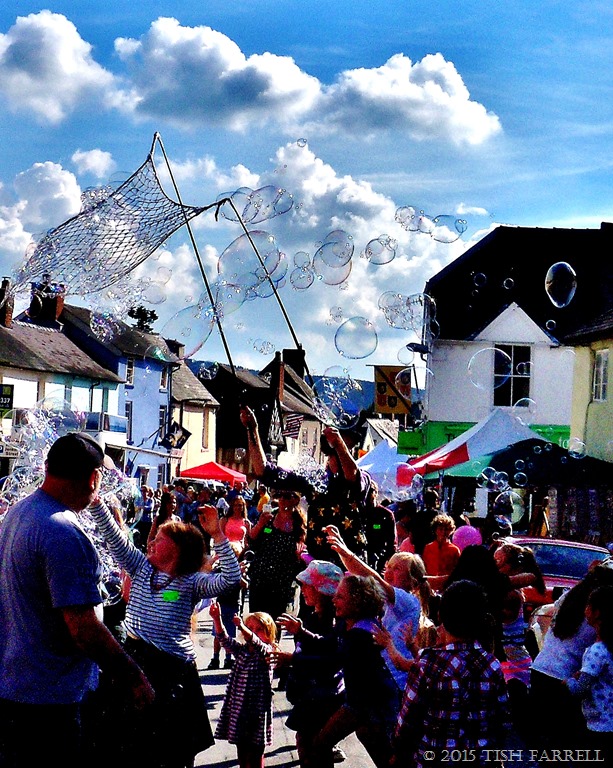
There screams of delight when Tall Will The World’s Tallest Bubbleologist began his magic. In fact it was rather like a bubble-version of the Pied Piper. As long as Tall Will was making bubbles the children were in hot pursuit. Everyone wanted to catch their own bubble. Of course I ran after him too. Never was more high-octane joy created than from Will’s bucket of agitated soap solution.

100_7323

These photos were taken at Bishop’s Castle’s Michaelmas Fair last September. There were all kinds of magic there: it’s that kind of place, with or without the fair. You can see more at Summer Came Back On Saturday And Took Us To The Fair.

*

Paula’s theme this Thursday is ‘inflated’. Please pay her a visit. You won’t be disappointed. Promise!

My treat – today in Ludlow

100_7924

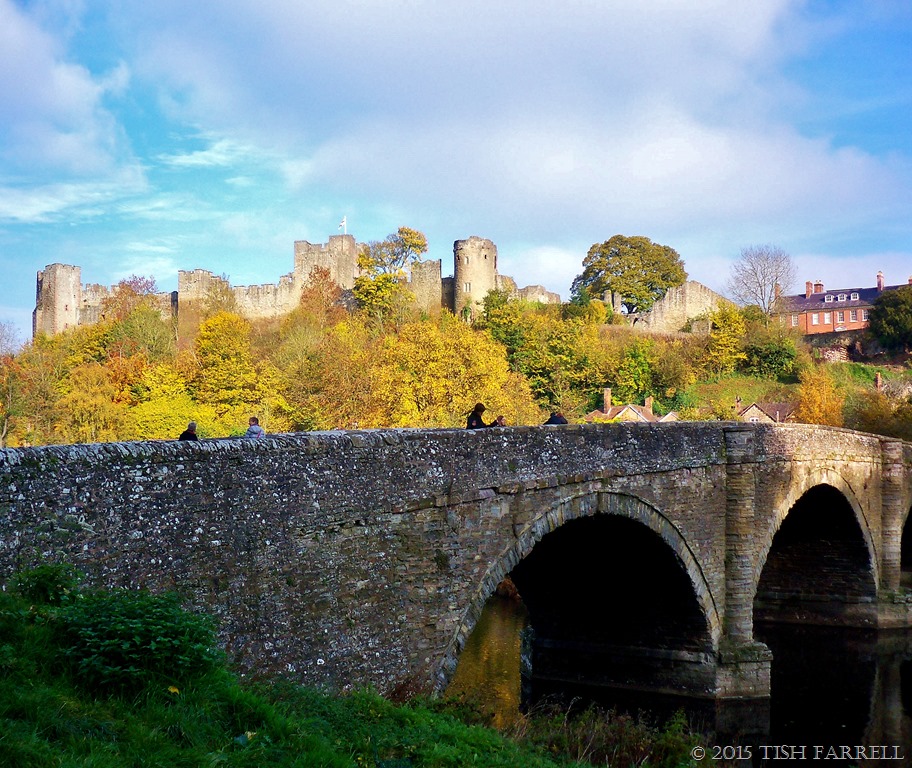
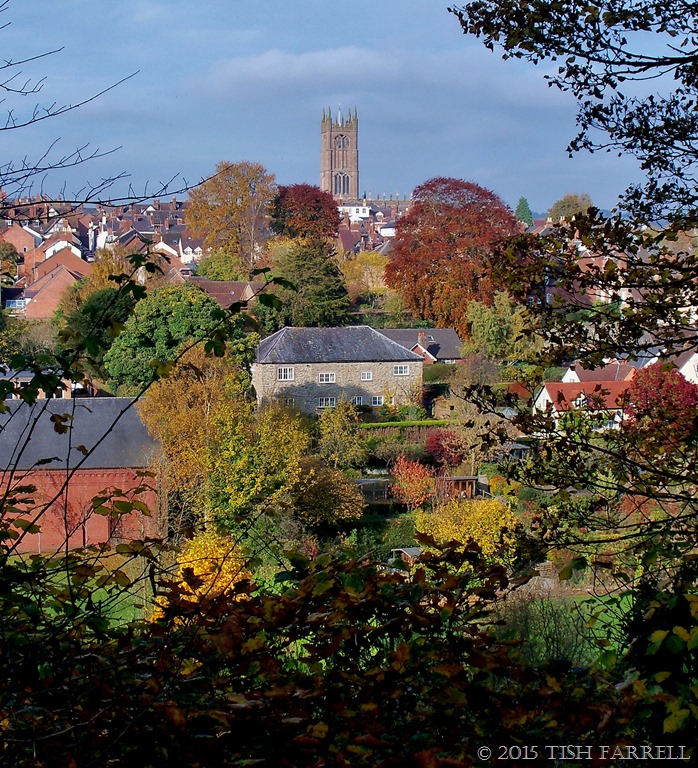
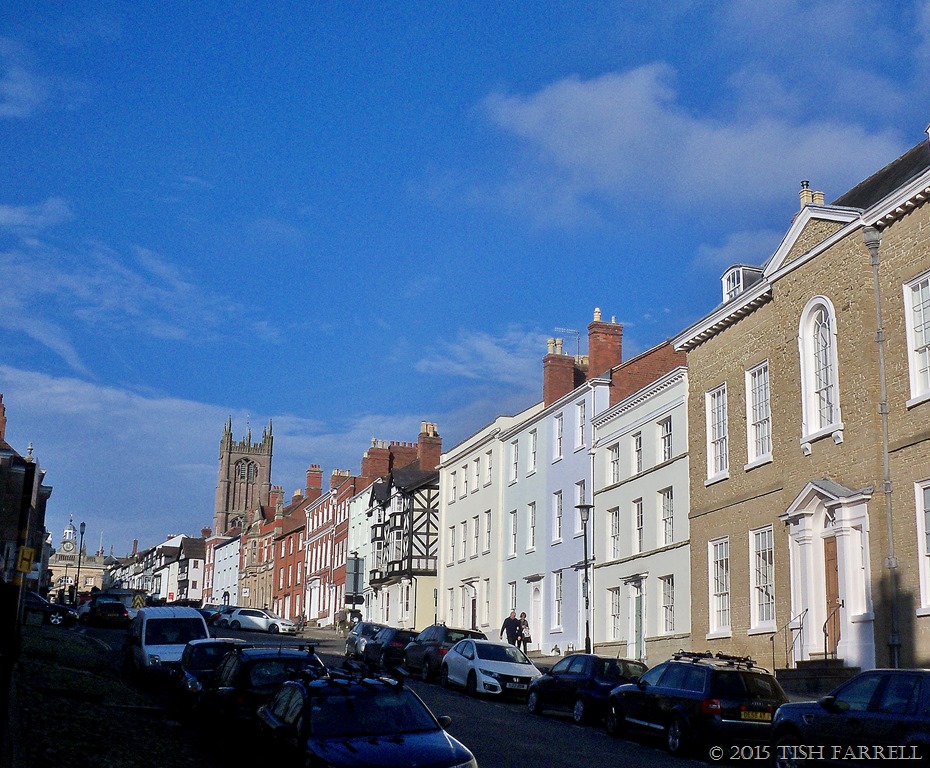
It could have been summer today – warm enough to sit outside without a coat. Well for heavens’ sake, just look at that sky. And what better place for a meander on a dreamy autumn day than Ludlow. It is one of Shropshire’s loveliest towns, and has more antiquity than you can shake a stick at.

The castle, whose ruins dominate the skyline, was begun over a thousand years ago during the Norman Conquest of Britain. It was built to secure the border with Wales, and was one of the first stone castles in the country. Over ensuing centuries it figured in all manner of political machinations including the York v Lancaster Wars of the Roses.  When the Lancastrian side won, the victor, Henry Tudor, shortly to become Henry VII claimed Ludlow Castle. He later gave it to his eldest son, Prince Arthur. In 1501 Arthur and his bride, a fifteen-year-old Katherine of Aragon, came here for their honeymoon.  A year later Arthur was dead. Katherine was then betrothed to Prince Henry, Arthur’s brother, but it wasn’t until 1509 that they were married. By then Henry was king. Their marriage endured for 24 years before things went horribly wrong. And we all know what happened next – Anne Boleyn and some serial beheadings.

So enough history. Here are some more views – my treat to you:

100_7936

100_7940

100_7941

100_7945

100_7949

100_7956
100_7958
100_7963
100_7946

Treat

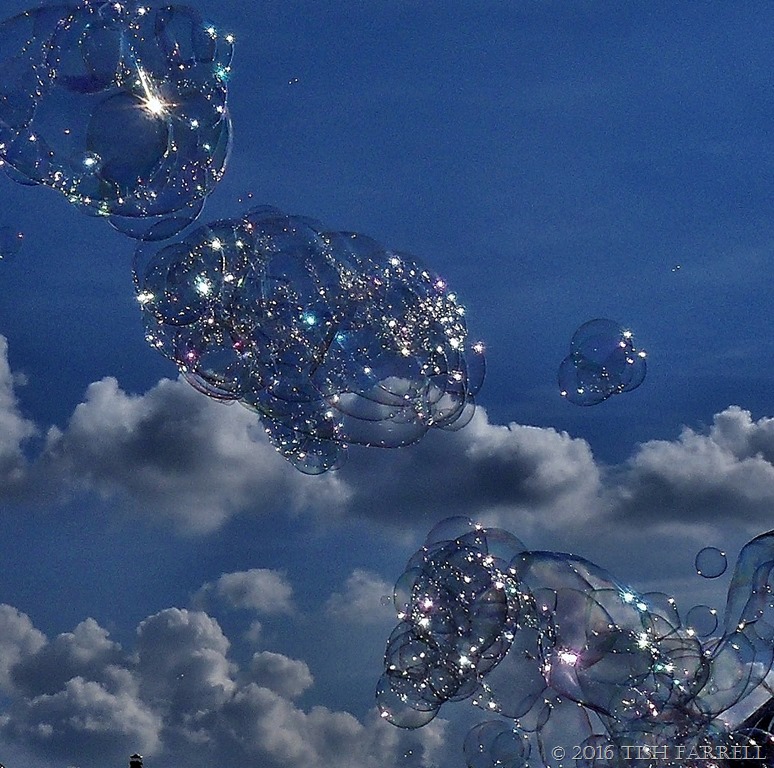
Bubble-heaven or alien invasion?

100_7323

Following on my last post about the Bishop’s Castle Michaelmas Fair I thought more bubbles were called for. Because, well, everyone loves good bubbles, don’t they? They are not something you ‘grow out of’. Also the joy on the faces of the children was a pleasure to behold. With bubbles cascading every which way, the kids were in danger of bursting themselves, so brimming with excitement were they. Clearly hi-tech toys and expensive computer games can’t hold a candle to this kind of high-pitch, high-squeal-n-dash fun. Besides, what can be more magical than rainbow spheres filled with sunlight, and all emerging from something as mundane as a piece of soggy netting and a bucket. (My take on the Daily Post’s photo challenge GRID)

100_7331

Tall Will The World’s Tallest Bubbleologist is the man casting his net filled with soapy water. (He’s six feet ten inches tall by the way). I think he’s a magician. He’s also a mean stilt-walker.

100_7330

100_7320

 
Where’s My backpack travel theme: move

Grid

Connected, on and off the rails: a passion for steam

IMG_1835 - Copy

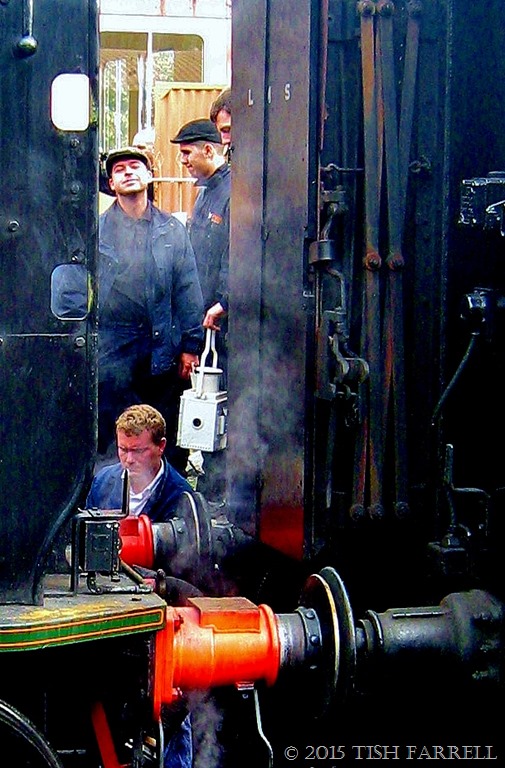
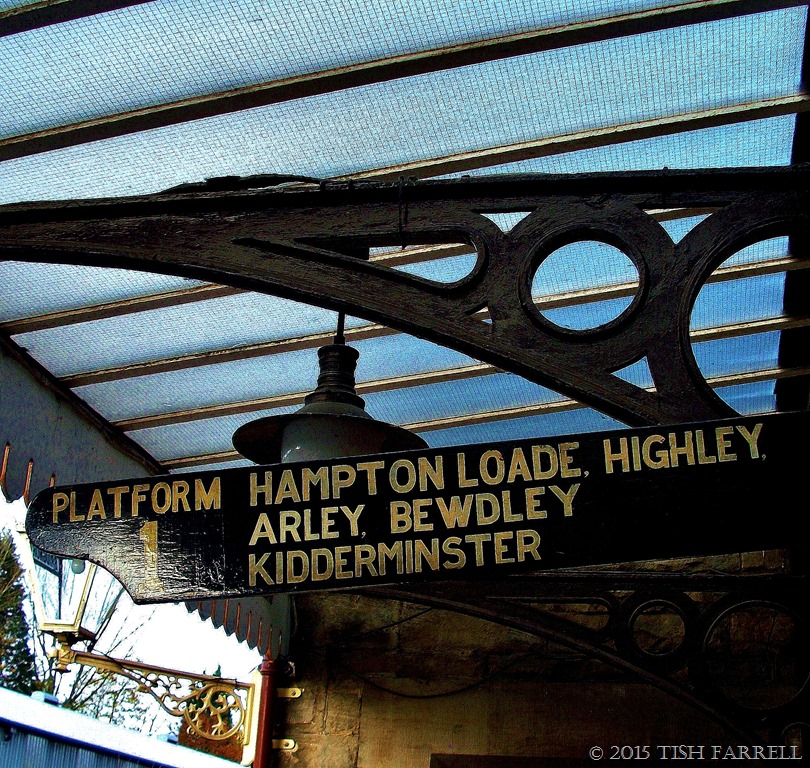
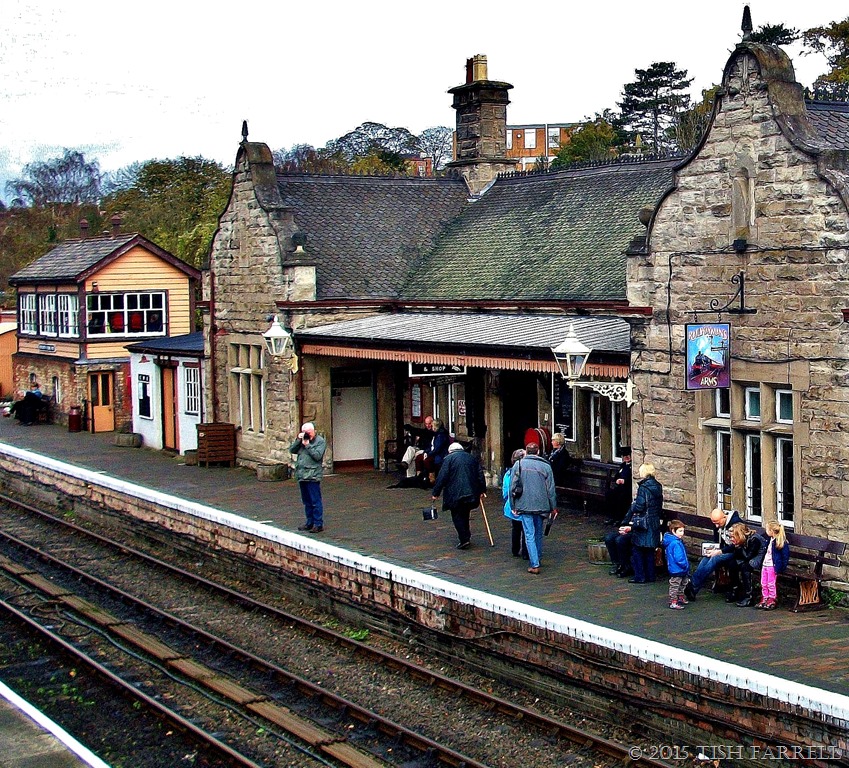
This year Shropshire’s Severn Valley Railway celebrates 50 years as a tourist attraction. That this 16-mile remnant of an 1862 main line railway is still up and running is due to the efforts of several generations of steam engine enthusiasts who lobbied, fund-raised, rescued and restored old rolling stock, and then threw the lot open to a willing public that now loves to spend its spare time watching and riding on steam trains. I mean who wouldn’t want to catch the Santa Special? If you’re up for it, I should tell you that advance booking opens on September 14th.

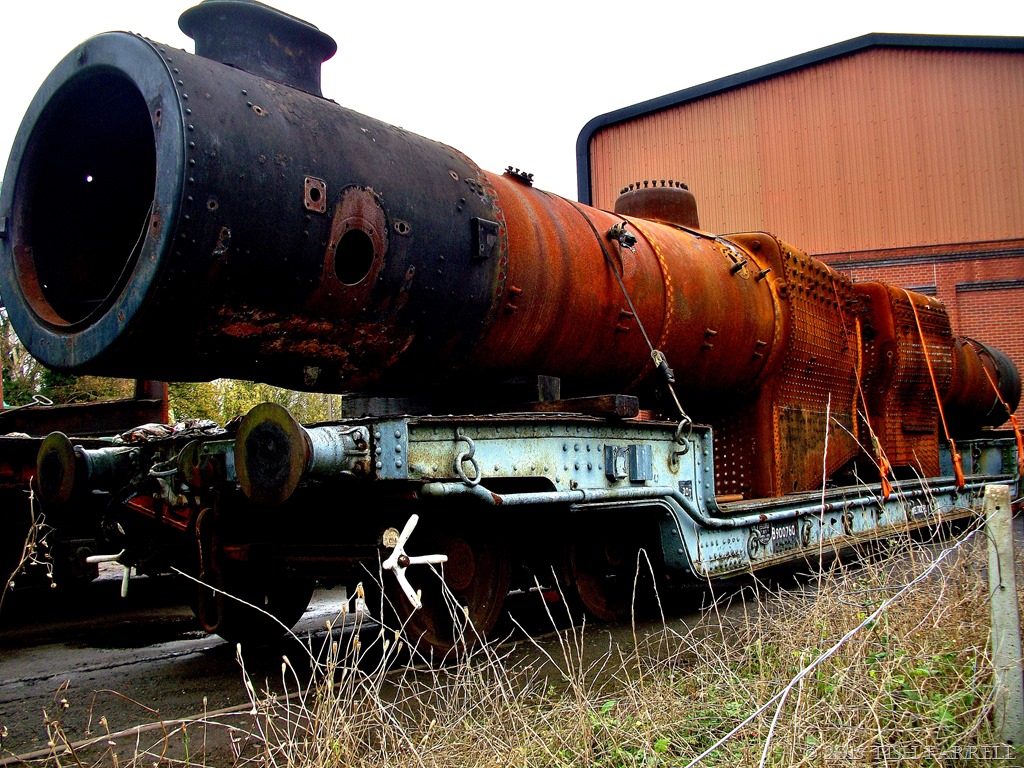
These photos were all taken back in the winter at Bridgnorth Station, our nearest market town, and the railway’s terminus. Graham was there on a mission – to look at rivets. I was just there to savour the steam. Aaaaah. Oh yes, and to take snaps. But perhaps I’d better explain about the rivets.

100_6762

First a little back story. Rewind 153 years…

In 1862 a branch from the original Severn Valley line was built through Much Wenlock. Mainly it served the limestone quarries, but at Whitsuntide, the Great Western Railway put on special trains to bring thousands of spectators to see William Penny Brookes Wenlock Olympian Games. Conveniently, the station was right beside the Linden Field where the games were, and are still held every year.

And because it was Wenlock’s William Penny Brookes who inspired the notion of the modern Olympic Games, and because we are proud Wenlock residents, some time in 2011 Graham had the idea, as a de-stressing pursuit, and as his own celebration of our town’s connection to the 2012 Olympics, to make a gauge 1 model of the  ‘Olympic Special’.

This resulted in the creation of very pleasing passenger carriage, and a goods waggon that was the original practice piece for the enterprise. The superstructures of both were  made from scratch, following some 1860s plans that Graham had unearthed. I don’t remember where he found them. But then came the stumbling block – the locomotive itself.

For this, he would need equipment he did not own, and skills he did not think he possessed. Ever since he has been pondering on how to set about it, egged on by our good neighbour, Roger, who does have handy engineering skills. Part of the on-going pondering included first-hand experience of GWR engine rivets so that Graham could judge the scale of them. And who am I to throw cold water on a chap’s enthusiasm.

Besides, as a child, I spent a lot of time on steam trains, and more specifically waiting to catch one on Crewe Station. And anyone who knows their railway history will know that Crewe Station, built in 1837, is one of the world’s oldest stations, and that its junction was once a thing of railway wonder. So, all in all, I was glad to tag along on the boiler rivet hunt, and thereby have the chance sniff hot coal and engine oil, and look at rust on old locomotive hulks. Graham always claims I was born on the foot plate. And no. My father was not an engine driver.100_6822

100_6813

*

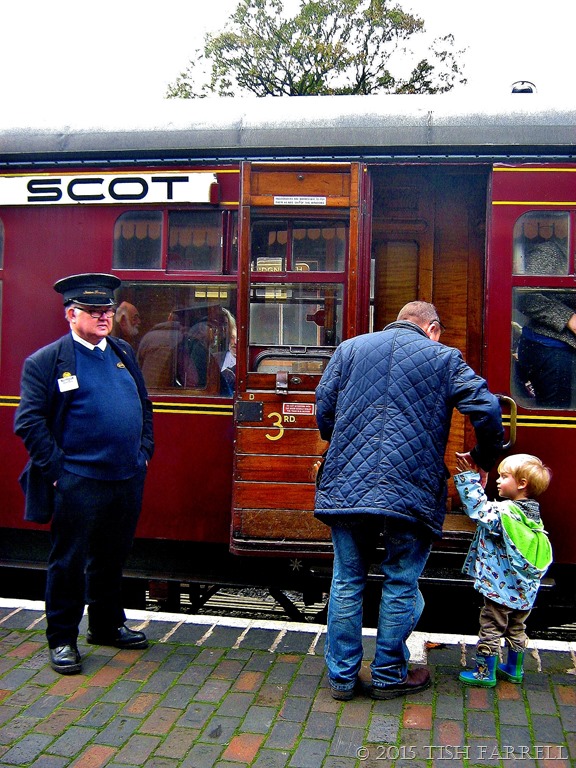
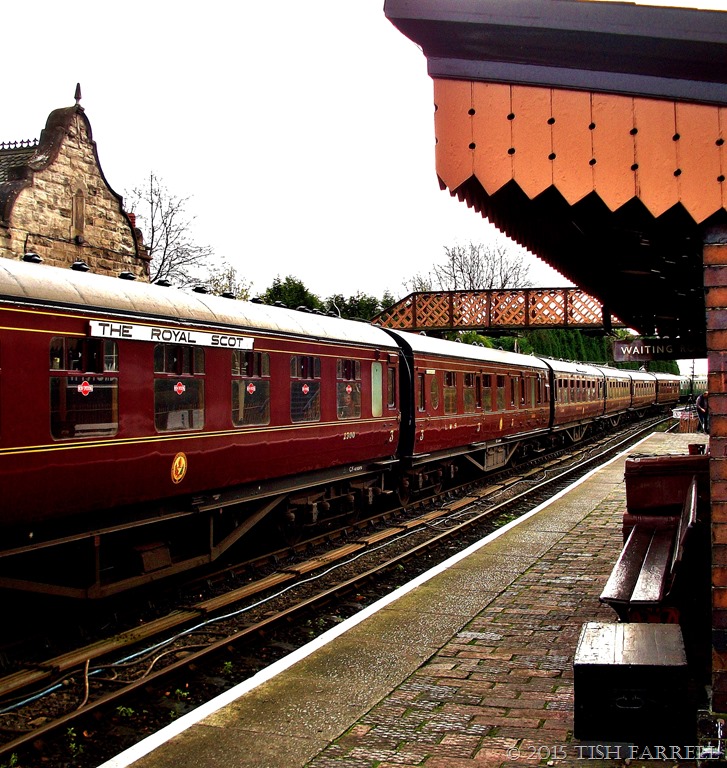
Also it was good to watch the happy voyagers waiting to embark on The Royal Scot…

100_6779

IMG_1846

100_6791

*

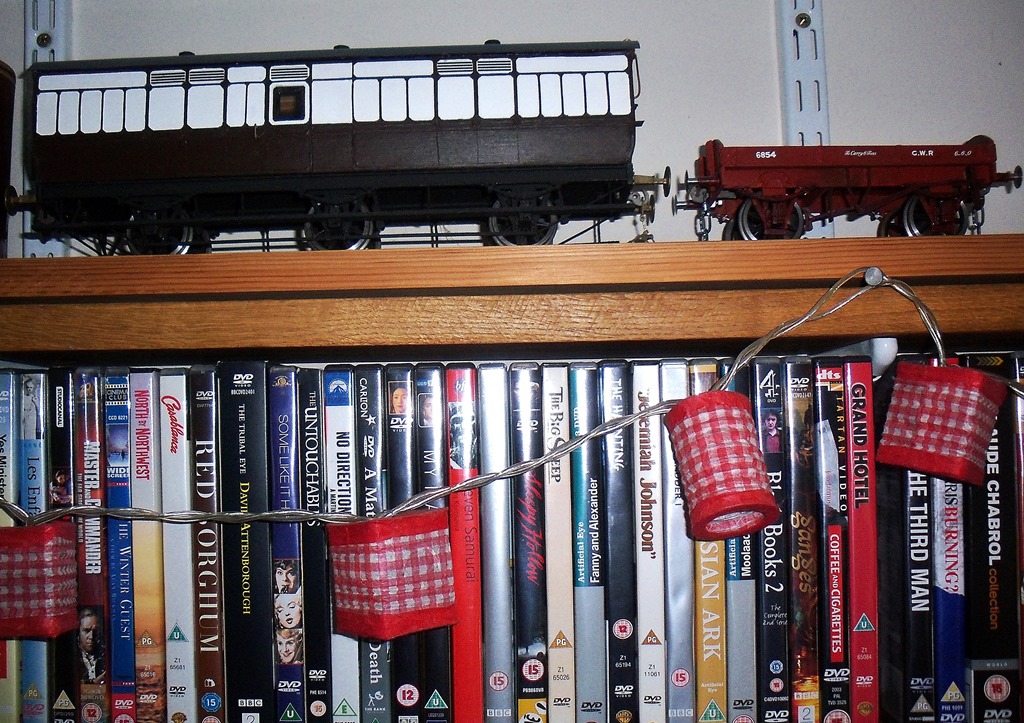
And finally that brings me to the work in progress. It’s sitting over the DVD/CD shelves in the kitchen, waiting for an 1860s vintage locomotive to take it away.  Passengers please take note. This train may not be leaving until the advent of the next Olympic Games. Graham says it’s good to have a deadline…

100_6961

copyright 2015 Tish Farrell

Severn Valley Railway Go here to find out more about the SVR

#SVR #SevernValleyRailway #steamrailways


Connected

Witch-catching in the Shropshire wilds

Naturally, suffering as I do from Out-of-Africa-itis (some of you may just have noticed this)  any mention of ‘wild’ instantly conjures the sweeping Mara grasslands and herds of wildebeeste.  Or scenes of Zambia’s South Luangwa as featured in the last post (here). But then I thought it was time I took more joy in the place where I actually live  and, indeed, grew up – the wonderfully rural county of Shropshire. And for those of you who do not know England, Shropshire is in the Midlands, along the border with Wales. Also as I have mentioned in other posts, this segment of Great Britain was once (400 million years ago) to be found somewhere off East Africa. Shropshire’s rocks are thus among the world’s oldest, and its hills a magnet for geologists from all over the planet.

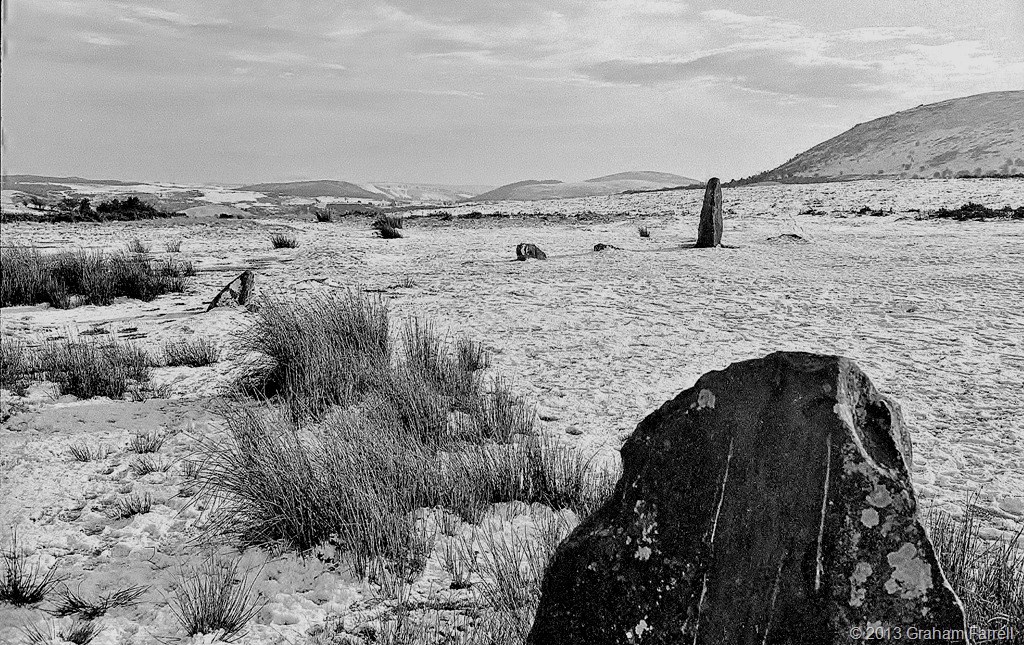
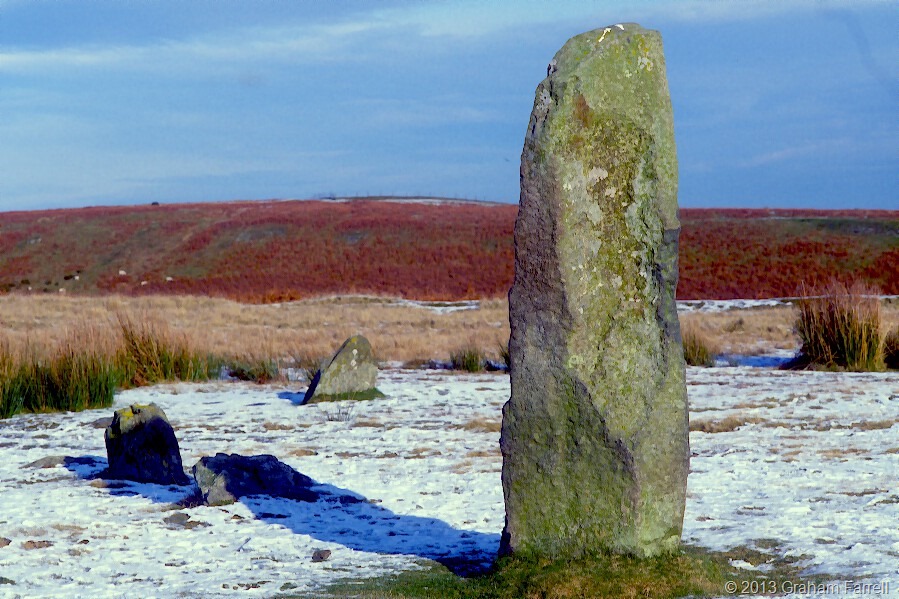
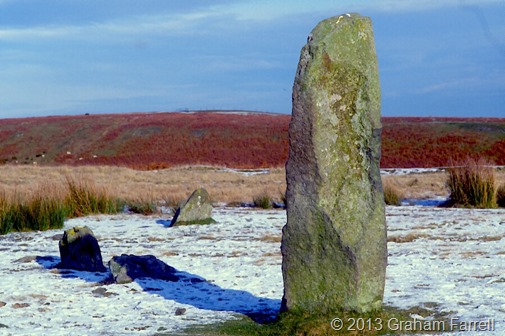
My home county, then, is largely farming country – dairy, sheep, and arable – the population living in scattered small settlements and market towns, many dating back to Roman times and the early Middle Ages. But there are also many wild places, especially up in the hill country overlooking Wales. One such place is Mitchell’s Fold, a Bronze Age stone circle.
Scan-130804-0041

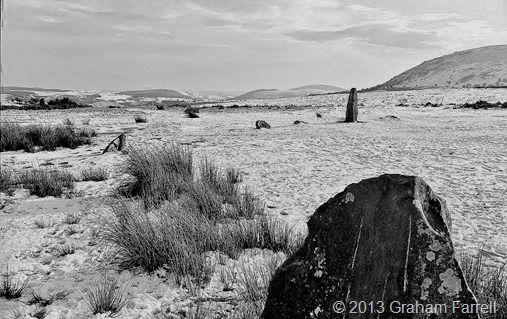
This bleakly sited  monument comes with a strange legend attached – the tale of a wicked witch and a fairy cow. And so one December day Nosy Writer and the Team Leader set off to explore. Winter seemed a good time to go searching for the spirits of the past. The photographs, by the way, are all Graham’s. Nosy Writer said she could not possibly take her gloves off in such frigid conditions.

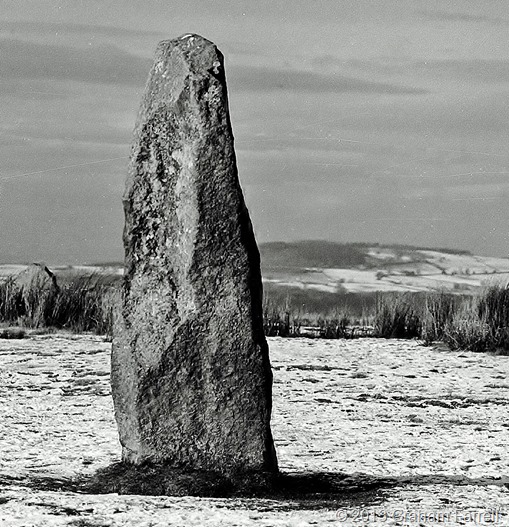
The site itself is near the Welsh Border on Stapeley Hill, south west Shropshire. The stone circle was created between three and four thousand years ago, and originally comprised thirty stones of local dolerite. Today, only fifteen are visible. Some were perhaps re-purposed by subsequent generations; others buried. Often such circles were regarded with superstitious dread, particularly during the Middle Ages.
Scan-130804-0012

In the prehistoric past, though, the place was not so isolated as it appears today. In the vicinity are two other stone circles, although one of these, known as Whetstones was blown up in the 1860s. The other, Hoarstones, was said by locals to be a fairy ring, where on moonlit nights, six ‘fairesses’ would dance. There are also numerous cairns and a long barrow, and, not too far away,  the Bronze Age stone axe factory of Cwm Mawr whose finely carved mace heads were traded far and wide across England and Wales. Of the reasons for this and the other circles, all is shrouded in mystery. All that may be said is that once these upland places were of great importance to the people who laboured to make them.
Scan-130804-0039

But what about the witch-catching story, I hear you ask. Well that I can tell you. It goes like this.

Once, when there was a terrible famine in the district, the fairies took pity on the starving peasants and sent them a snow-white cow. The cow was kept in a circle of stones on Stapeley Hill, and, as with all such gifts, there were strict conditions as to usage. Every person was allowed to milk the cow by turns, but only so long as  the cow was never milked dry, and each person took no more than one pail full.

Everyone followed these instructions, and all went well until the wicked old witch who lived nearby grew envious of the peoples’ good fortune. Why had they not called on her to solve their problems? Her name was Mitchell, and out of sheer spite, she thought up an evil plan.

And so one night, when all honest folks were asleep in their cottages, she approached the cow and began to milk it. The only thing was, the bottom of her bucket was full of holes. She milked and milked until the cow was dry, thus breaking the fairy charm. At once the cow sank into the ground, never to be seen again. But Mitchell did not escape either. She had challenged the forces of good too far and found herself trapped inside the stones. And when the people came next day and saw their fairy cow gone,  and they saw the false pail and pool of wasted milk, they knew exactly what the witch had done. So just to  make sure she never escaped, they walled up old Mitchell inside the stone circle, where she was said to have finally starved to death.
Scan-130804-0008.jpg

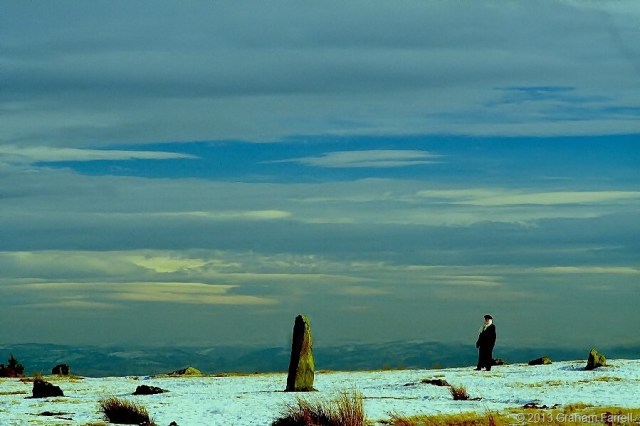
And just in case you are wondering, no, this is not Mitchell’s ghost in the photo, but me, wrapped up in many post-Africa layers. And beyond me, the Welsh hills.

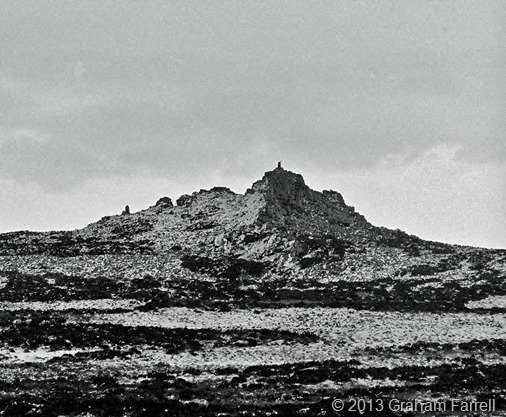
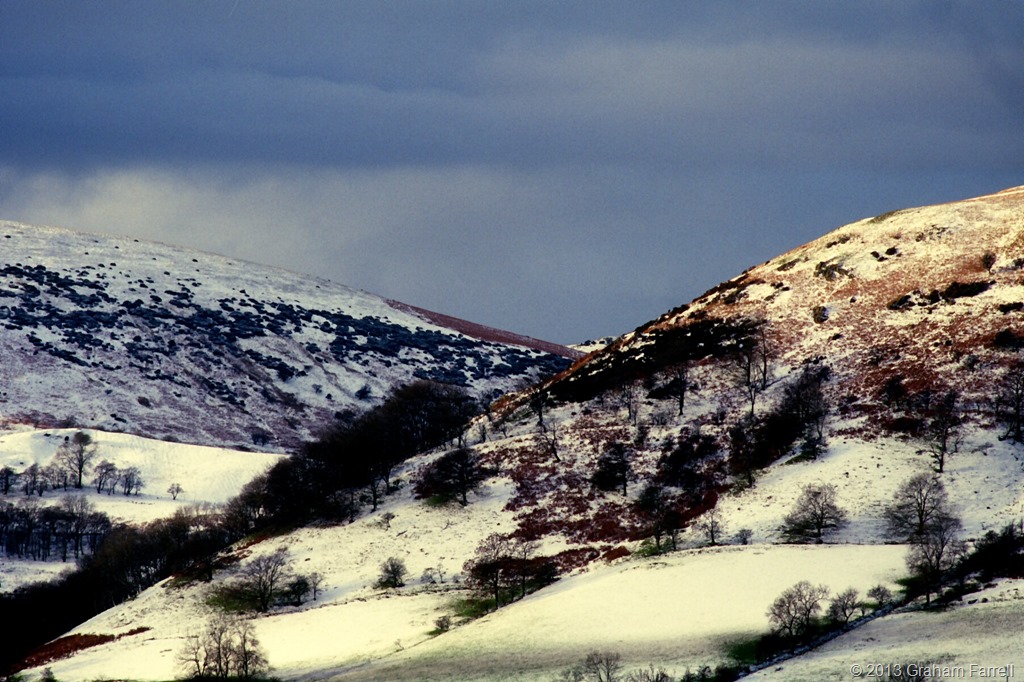
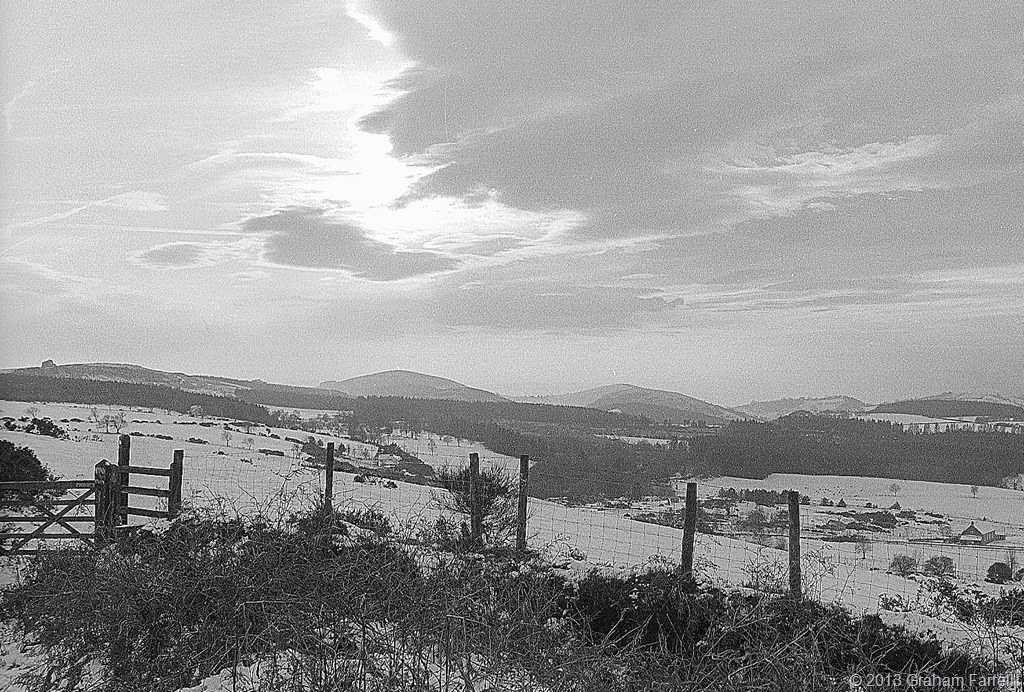
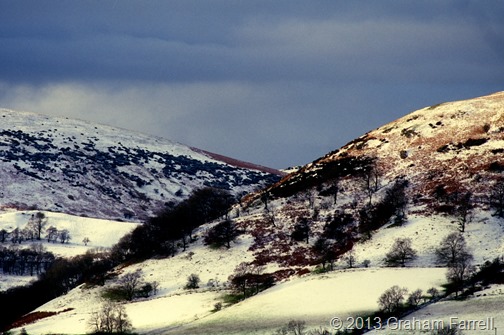
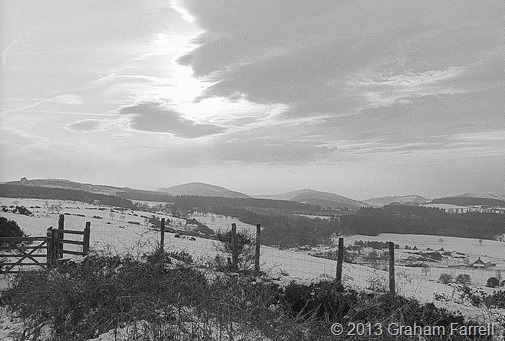
Finally, here are more scenes of Wild Shropshire – in particular, the hills known as the Stiperstones, which featured often in the novels of Shropshire writer, Mary Webb. The last photograph shows one of the Stiperstones’ natural ‘cairns’, just visible from Mitchell’s Fold. These bleak hills also feature in many local legends, but they will have to wait for another post.
Scan-130804-0006

Scan-130804-0018

Scan-130804-0026