Views From The Silurian Sea

IMG_1911

I dare say the farm fields were neither so large nor so orderly when Africa explorer, ‘Livingstone-I-presume’, Henry Morton Stanley  looked out on this Shropshire landscape. For looked at it he would have when he came as a guest to The Abbey home of the Milnes-Gaskells of Much Wenlock. Stanley’s hosts were enthusiastic tour guides and brought all their visitors to Wenlock Edge to admire the view.

Those of you who come here often will know that Wenlock Edge is an 18-mile  limestone ridge that runs across southern Shropshire. It is very much a local landmark, and its geology is of international scientific interest. The Edge as we know it now was formed by the uptilt of fossilized strata that were once the bed of the Silurian Sea.

Some 400 million years ago, this shallow tropical sea, that pre-dated even the advent of fish, and long before terrestrial life had evolved, once lay off East Africa near today’s Comoros Islands. You can find out more about it in an earlier post: Old Stones of Wenlock: Repurposing the Silurian Sea

On Sunday I posted an African landscape. Today is my ‘Out of Africa’ landscape, both of itself (because this chunk of Britain once lay in African waters), and on account of the photographer (that would be me) who has yet to get over leaving that continent.

But it goes to show how landscape intimately affects who we are, both physically and spiritually. It feeds our imagination, and shapes the lives we lead in a multitude of ways. Its resources  may provide the basis for our livelihoods, and will have shaped communities and culture over countless generations before us. If we fail to value it, we will ultimately lose the best of ourselves, our true heritage. In Shropshire we owe great thanks to the National Trust and Shropshire Hills Area Of Outstanding Beauty, organizations that strive to creatively engage and reconnect people with the earth beneath their feet, and the natural beauty around them. More power to their purpose.

copyright 2016 Tish Farrell

*

Day 7 of my Nature Photo Challenge shots. Thanks once more to Anna at Una Vista di San Fermo who started me off on this jaunt.

And view 2 in the Daily Post weekly photo challenge: Landscape
The Monochrome Garden: Dandelion Delight?

100_5540

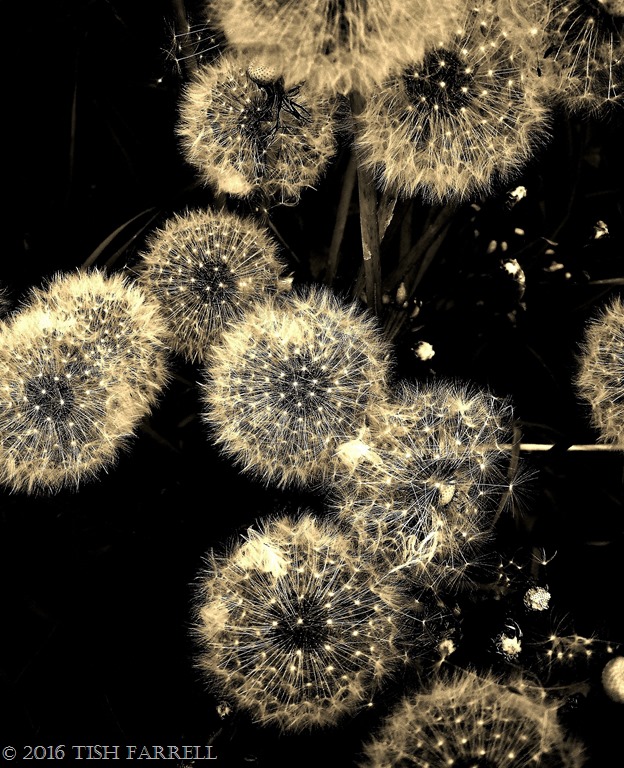
I know most of us gardeners curse dandelions, but don’t they look lovely in sepia? Little constellations. Firework bursts. Spreading those all too viable seed parachutes here, there and everywhere. You can’t keep a good weed down.

But these plants do have their uses too. Young leaves are excellent in salads. Dandelion leaf tea has long been used by herbalists to cleanse the kidneys and lower blood pressure, while the root is mainly a liver remedy, helping to boost the immune system. I do quite like dandelion coffee, perverse as this may sound, although it has to be the real roasted roots, and not the instant stuff, and it’s definitely improved with a sprinkle of raw cacao powder, and a pinch of cinnamon.

The plants of course can develop prodigious root systems. The main tap root drills down into the depths of poor soil, and so helps bring up trapped nutrients. This is one of the reasons why they are so darned difficult to dig up – they are so very busy nourishing the ground. Well that’s their story anyway. I have tried roasting the roots to make my own coffee. Very fiddly. A lot of scrubbing. And then I ate the crunchy roasted bits and didn’t have any left to make coffee. They tasted like root vegetable crisps – weird but vaguely compelling.

And I suppose I have to say  too (somewhat grudgingly) that the flowers’ bright yellow faces are very cheering, although I was a bit cross to find them already grinning at me up at the allotment. In February, for goodness sake? Please give us a break, dandelions. How about a September blooming instead?

Anyway this is my entry for the last week of Jude’s monochrome garden photo challenge. With this particular composition, I’m also thinking a little of Sue Judd’s negative space challenge over at  Paula’s. But please drop in at Jude’s The Earth Laughs In Flowers to see what she and others have been doing with their monochrome compositions. Next Sunday there will be a new  theme: garden wild life, and a chance to show off visiting my reptiles. Yay!

Negative Space In The Mall

100_8969 - Copy (3)

100_8968

100_8964


This week over at Paula’s Black & White Sunday, her guest Sue Judd gives us a fascinating insight into the use of negative space in our compositions. Please go and see what she has to say at: Black & White Sunday: Negative Space

Meanwhile, here are some more of my shopping mall photos. As I mentioned a few posts ago when I showed another version of the second shot, to me the mall is usually a very negative space. I’m also thinking that my metaphorical interpretation of the theme might be rather stronger than my photographic rendering of Sue’s guidelines, but I thought I’d share these rather weird compositions anyway: my study of consumer alienation.

February: Windmill Hill Twilight

There are two Changing Seasons challenges over at  Cardinal Guzman’s.  It’s a monthly challenge and if you want to join in you can find the rules below.

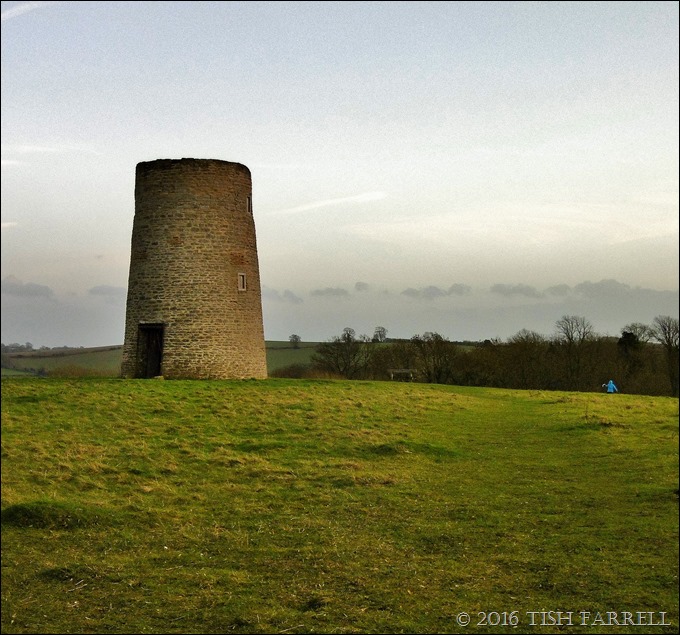
For my February photo I’ve chosen this recent shot of Windmill Hill. I caught it – in this single shot – just as the sun was going down. The landscape is still wintery, but the strange light suggests the possibility of spring. Also the windmill seems more impressive than it usually does in broad daylight. It’s good to see its mysterious side; we actually know very little about how it looked and functioned in this, its 17th century phase, only that it was probably struck by lightning.

Our local archaeologist also thinks it may be standing on or near the site of an ancient trackway, although recent trial excavations have yielded no evidence to support this. But never mind. I anyway like the glimpse (far right) of the swiftly departing small figure in blue. It rather reminds me of Daphne du Maurier’s Don’t Look Now. And yes I know that was set in Venice, but the residual horror is enough to resonate here in Shropshire and so evoke the February chills.

You can see January’s Changing Seasons HERE. In this series I am featuring Windmill Hill and the nearby Linden Field where the world’s first modern Olympian Games were held from the 1850s onwards. The Much Wenlock Games inspired the present day Olympic Movement, a fact that is now recognized. That’s a big claim to fame for our very small town, and I think it’s worth bragging about at every opportunity. Windmill Hill provided a natural auditorium back in Victorian times. Spectators and competitors came from all over Britain, and from the 1860s they could arrive by train, the station conveniently sited beside the Linden Field where most of the events took place.

*

Please visit the Cardinal to see his and others’ changing seasons. And then join in, if not this month, then next.

Here are the Cardinal’s Rules:

«The Changing Seasons 2016» is a blogging challenge with two versions: the original (V1) which is purely photographic and the new version (V2) where you can allow yourself to be more artistic and post a painting, a recipe, a digital manipulation, or simply just one photo that you think represents the month. Anyone with a blog can join this challenge and it’ll run throughout 2016. It doesn’t matter if you couldn’t join the first month(s), late-comers are welcomed. These are the rules, but they’re not written in stone – you can always improvise, mix & match to suit your own liking:

These are the rules for Version 1 (The Changing Seasons V1):

  • Tag your posts with #MonthlyPhotoChallenge and #TheChangingSeasons
  • Each month, post 5-20 photos in a gallery.
  • Don’t use photos from your archive. Only new shots.

These are the rules for Version 2 (The Changing Seasons V2):

  • Tag your posts with #MonthlyPhotoChallenge and #TheChangingSeasons
  • Each month, post one photo (recipe, painting, drawing, whatever) that represents your interpretation of the month.
  • Don’t use archive stuff. Only new material!


Let There Be Light!

P1000558

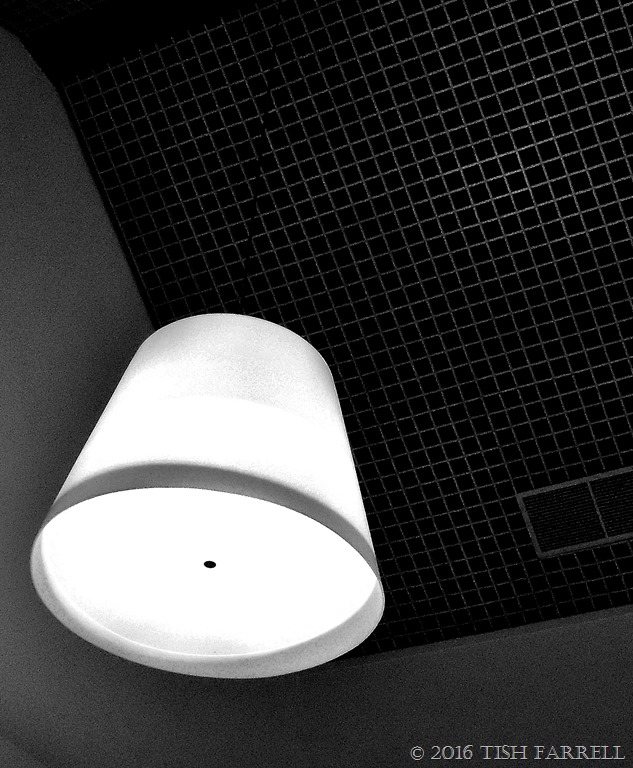
I have to say I’m rather pleased with this offering for Paula’s Black & White Sunday. The theme is ‘light’, and there are several interpretations of it here. The photograph was taken up at the allotment in a break from clearing winter weeds. This electricity pole stands slap in the middle of the back boundary fence, and for some reason I find it rather fascinating.

Please visit Paula at Lost in Translation to see her intriguing lamp-lit composition along with inspirational soundtrack from Keith Jarrett – a real Sunday treat.

Still Life At The Mall?

100_8967

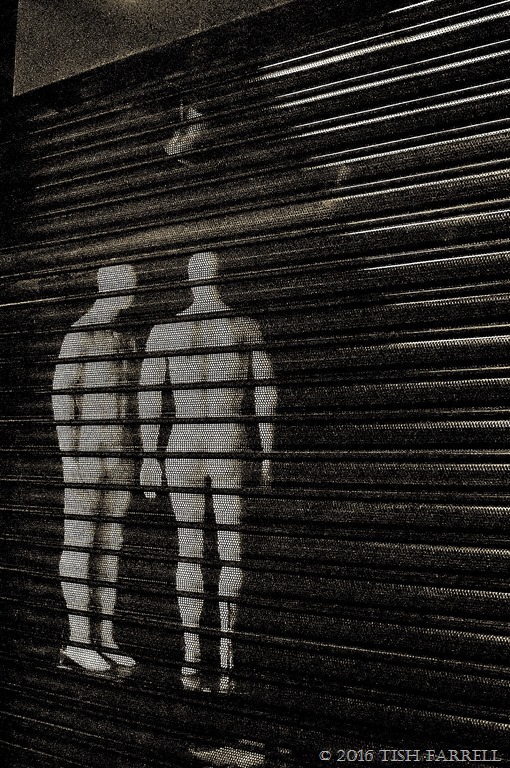
This image sums up how I feel whenever I go into a big shopping mall – soul sucked out, life signs shutting down, a sense of being processed, objectified in the drive to SHOP and SHOP and SHOP. On the other hand, when I came upon this scene through the strangely translucent shutters of a closed-down men’s clothing store I couldn’t have been more delighted. I didn’t have to arrange anything. It was all set out for me. I simply had to pull out my camera. Still life in the mall indeed, although sometimes you have to look hard for it.


Paula’s Black & White Sunday Challenge at Lost in Translation is Still Life. She has come up with a very intriguing take on the theme. Go see.

February: In The Monochrome Garden

P1030162 - Copy (3)Petasites fragrans   winter heliotrope

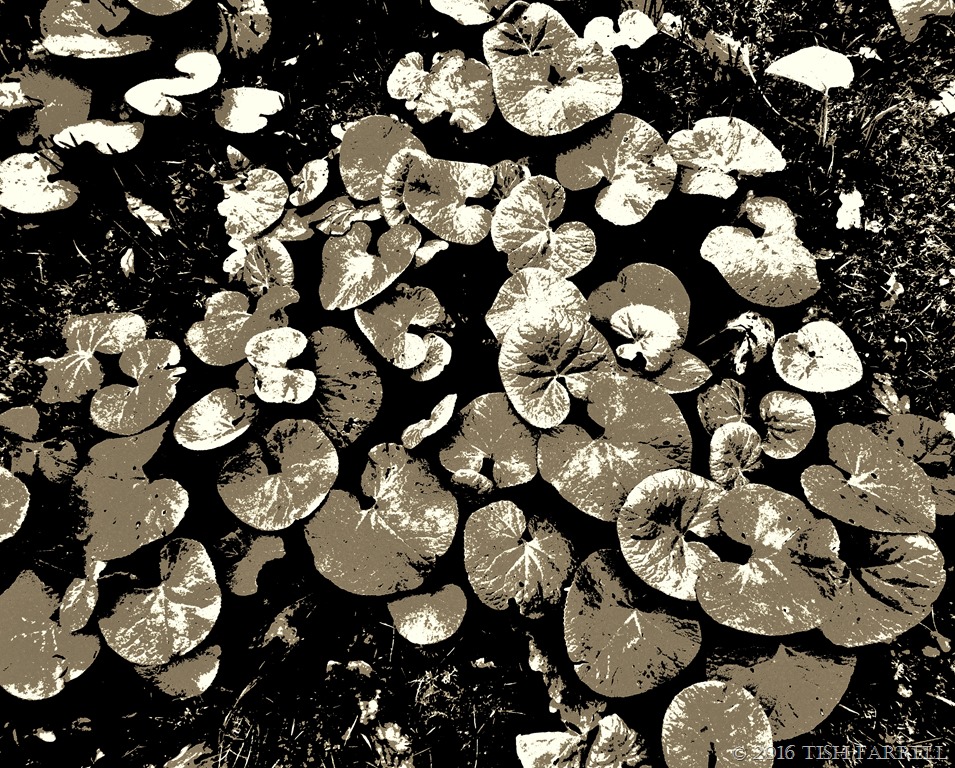
These are the leaves of winter heliotrope, a November to February flowering evergreen that originated in North Africa, and is now considered a wayside weed here in the UK. It has a great tendency to spread and form carpets. On the other hand it does flower when other plants are busy hibernating.  Also the flowers – a fleshy, purple pink – smell of vanilla, and track the sun’s course during the day. And all I can say to that is, this year winter heliotrope must have really had its work cut out. Sun. What sun?

Sometimes the plants make no flowers at all. There were certainly none to be seen on this clump, but then it was growing in deep shadow. The other fascinating thing is that the male and female characteristics appear on entirely separate plants, and it is usually the male flowering variety that we see in the UK.

I must also confess that I’ve learned all this just now. When I took the photograph yesterday in the gardens of Benthall Hall, I thought it was butterbur, a plant that grows in like fashion and has many other similarities of leaf and flower.  It was only when I was editing the shot, that I noticed the leaves looked too smoothly rounded and heart-shaped for butterbur. Next came a quick check on Google, which in turn led to realizing that this was an entirely new plant for me. So thank you, Jude, for setting this particular challenge – and the proposition of using both monochrome and looking for patterns in our chosen garden subject. It was the heart-shaped leaves that attracted my attention. I thought they would make a good design for Valentine’s Day.

For more about this challenge, please go over to Jude’s garden photography blog:

February: Monochrome

And now here is a shot of Benthall Hall, caught before a squall sent us scurrying to the car. P1030167

This sixteenth century home of the Benthall family is just a mile or two up the road from my house in Wenlock. The land on which it stands was once part of Wenlock Priory’s extensive domain, but now the house and grounds belong to the National Trust.

I hadn’t visited the house for years, and this weekend was its first opening of the year. For me, one of the property’s  most fascinating stories is the fact that in the late nineteenth century, the plant hunter, botanist and co-founder of Maw & Co, the world famous decorative tile works, George Maw was a tenant. He planted the gardens with his botanical treasures, and in particular crocus of both the spring and autumn varieties. Botanical images of course inspired many of the Maw’s tile designs that graced public buildings across the world during the Victorian era. Today part of that heritage, including original design catalogues, is on show not far away at the Jackfield Tile Museum in the Ironbridge Gorge. It is well worth a visit if ever you are in Shropshire. But one thing is certain, we will be back to explore George Maw’s garden as the year progresses. Please expect further reports.

copyright 2016  Tish Farrell

On reflection: can there be too much of it?

P1030051

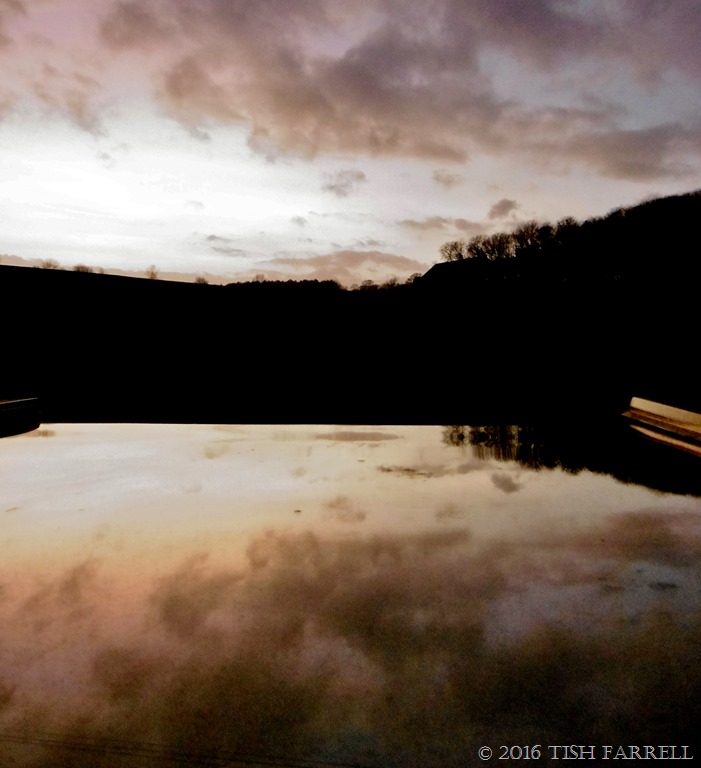
Writers are past masters of diversionary tactics. This particular writer spends a considerable amount of avoiding the work in progress. She is not sure why. But staring out of the window is definitely a popular pastime. On the other hand, who wouldn’t want to stare at a sky like this, the sun going down behind Wenlock Edge.

Then I discovered something really neat as I was trying to snap it. My office has a cabin bed in the corner under the roof light. So I clambered on the bed, and opened the window to the horizontal to give myself a makeshift ‘tripod’. I then set the Lumix to sunset mode and rested it on the back of the window. And this is what happened.

Who’d’ve thought avoiding writing could be this much fun. But there’s a lesson here too. Sometimes we overthink the pieces we are working on. Sometimes we need to loosen up and play. And ask questions. Definitely ask questions. E.g. What would happen if I let my characters think for themselves, and stopped trying to control them? What if I let them go play? What might they not come with? Something magical, diverting, extraordinary? Do I have the nerve to let them go?

copyright 2016 Tish Farrell

The Bees’ Knees In Vibrancy

100_3915

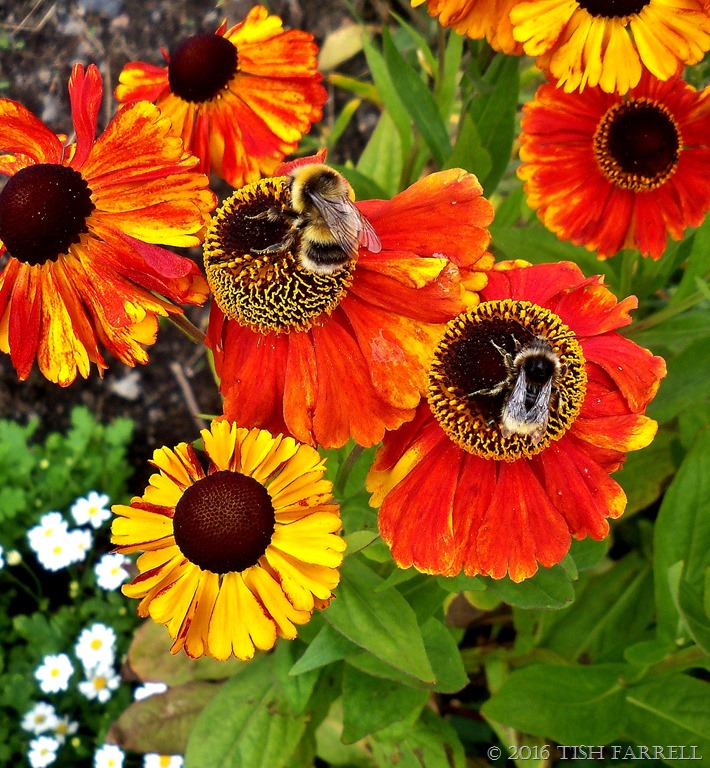
This is one my favourite photos. If you look hard you can even see the bees’ wings vibrating. And yes, for those who come here often, I know I’ve posted it a few times before. But isn’t it joyous – hot red, buzzing bees, sunshine.

And how about bees in the sneeze weeds (aka Heleniums)

100_6719

Or the bee on this sunflower that was growing last summer in a pot by the shed:

100_7053

All of which is to say we need to keep thinking about bees. We cannot do without them. They pollinate many of the plants that provide us with essential foods.  In the northern hemisphere new seeds are coming into the shops, so we can all think about sowing some bee-friendly flowers. You don’t need a garden. A pot of oregano will please them, and make you happy too when you’re making spaghetti sauce.

P1010778

And then sedums will provide a valuable late summer nectar boost for honey bees. There are many varieties of this plant – large and small. They don’t need much attention and will grow in containers too:

100_7435

If you want to find out which plants are bee friendly, there are many bee sites on the web. But for local first-hand information ask your local beekeepers society. There will be one. Meanwhile the Royal Horticultural Society provides some useful guidance if you want to give your life and bee-life lots more buzz.

IN 2016 THINK BEES

Happy Wednesday Wherever You Are

Vibrant

Vibrant: me on Lamu Island far too long ago


Scan-130426-0017

It was a four day trip over Christmas. We’d been living in Kenya for three or so years by then, and another five to go before we would return to the UK for good. Lamu Island  set my imagination alight. Later I began writing a teen adventure aimed at the African schools literature market. It was published by Macmillan in their Pacesetters series around the time we left Kenya in 2000.  It’s still in print, and even if I say so myself, quite a good yarn. I have a feeling my brain cells were a little more vibrant back then. Perhaps they are craving the African light…

100_3649 - Copy

Vibrant