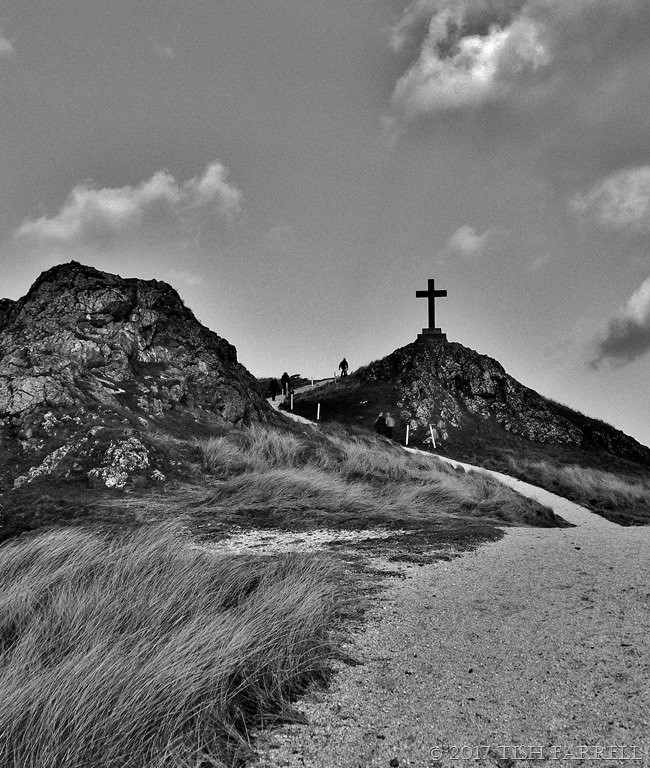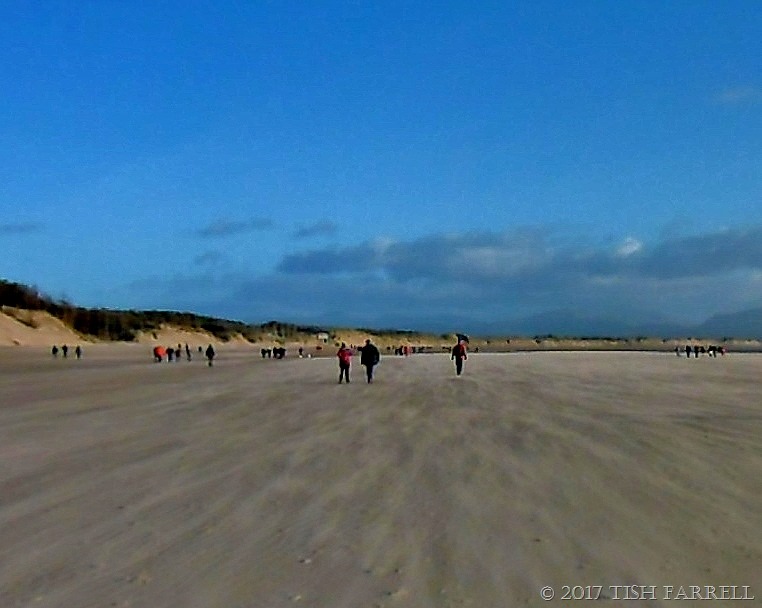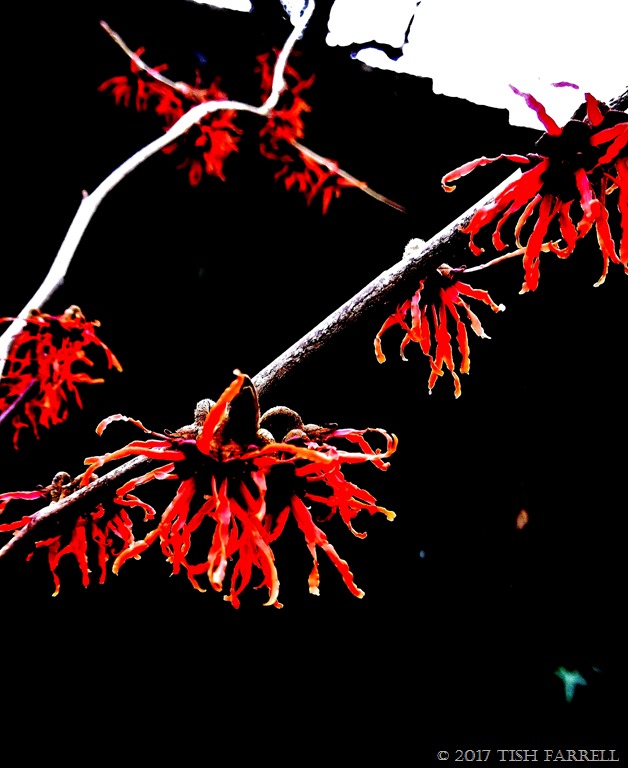
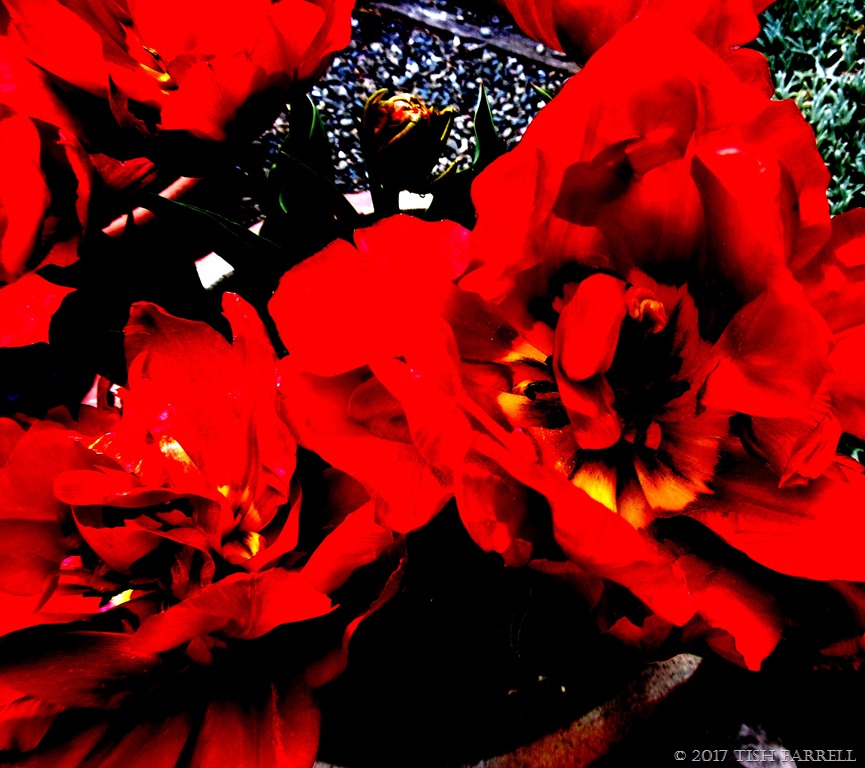
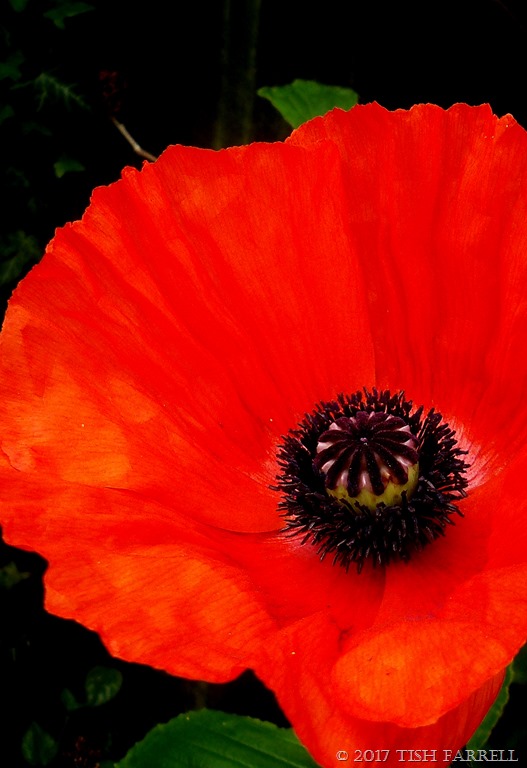
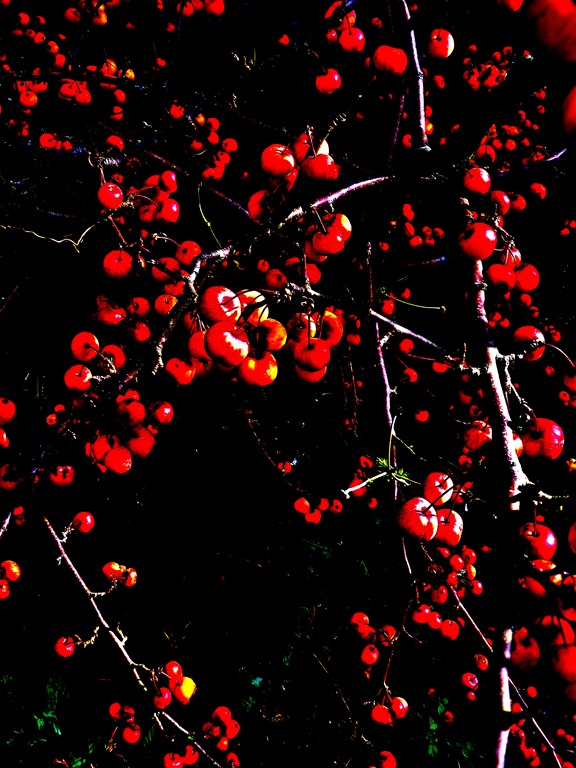
Thursdays Special ~ Les Quatre Saisons En Rouge et Noir

P1000335

P1030851

100_9963

100_8119

From top to bottom: winter witch hazel, spring tulips, summer oriental poppy, autumn crab apples.

*

The flowers on our little witch hazel tree are already brown and shrivelled. It was flowering back in January, and on bleak grey days the ragged clusters of russet petals made it look much like a tree invented by aliens. A welcome sight nonetheless. Otherwise the garden is presently dank and soggy – a scatter of snowdrops and one or two hellebore flowers opening.

But there are other signs of spring – tulips and daffodils shooting up several inches tall, and the oriental poppies making their first leaves. Also the  Evereste crab apple tree which we moved last year, and feared we had killed in the process, is covered in tight little buds; so fingers crossed.

Indoors, I’m fretting to start sowing – packets of seeds, old and new, in piles on the window sills, seed potatoes set out in trays in the conservatory. But it’s all too early to do much outside – the Shropshire soil still too cold and wet for sowing. I’m told by a fellow allotmenteer that the acid test for knowing if the soil is warm enough for growing is to sit on it with your pants down. Yep. Bare bottom pressed to the earth. If you can bear the baring, then it’s OK to plant. But this is not a procedure I could recommend for communal gardens, not unless one’s fellow gardeners are suitably forewarned.

And so, keeping my pants well pulled up, I’m stemming my impatience by starting off globe artichokes, coriander and basil in the kitchen, and nurturing my sweet pea seedlings. They don’t mind the cold conservatory, and probably could go outside now. I shall also sow some leeks in pots, and maybe do the same with beetroot.  And if I were truly organised I could also sort out my seed packets into month order so as not to miss the boat as I did with several things last year.

But it’s all so exciting – another seasons’ round in the offing. More things to learn; more things learned to put into practice. It is, after all, the gardener’s way – to travel hopefully.

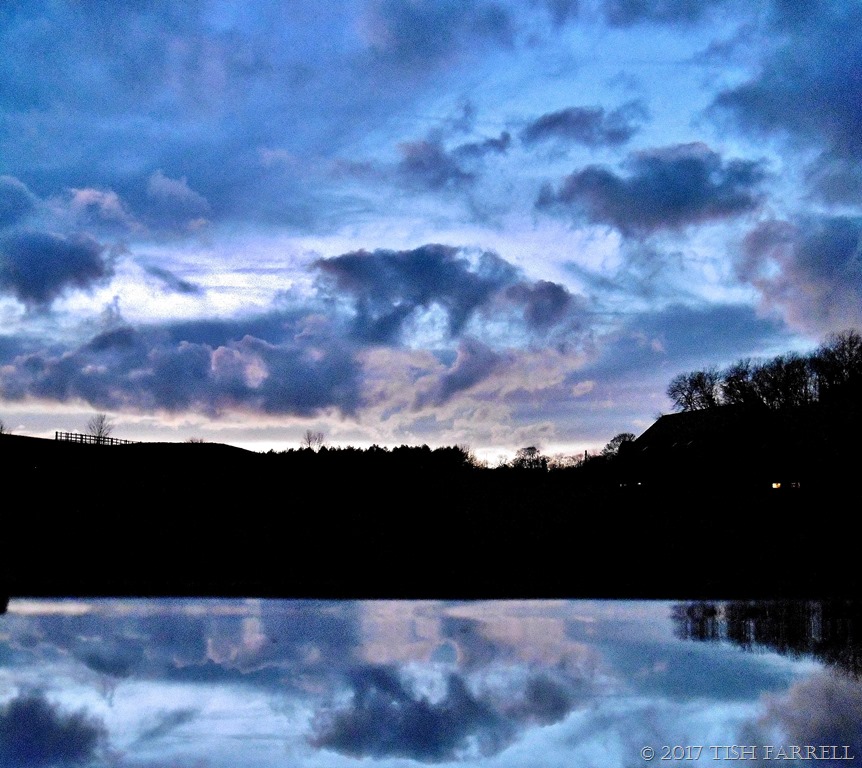
 

Paula’s Thursday’s Special ~ le rouge et le noir

The Solitude Within

Scan-140801-0001 - Copy (2)

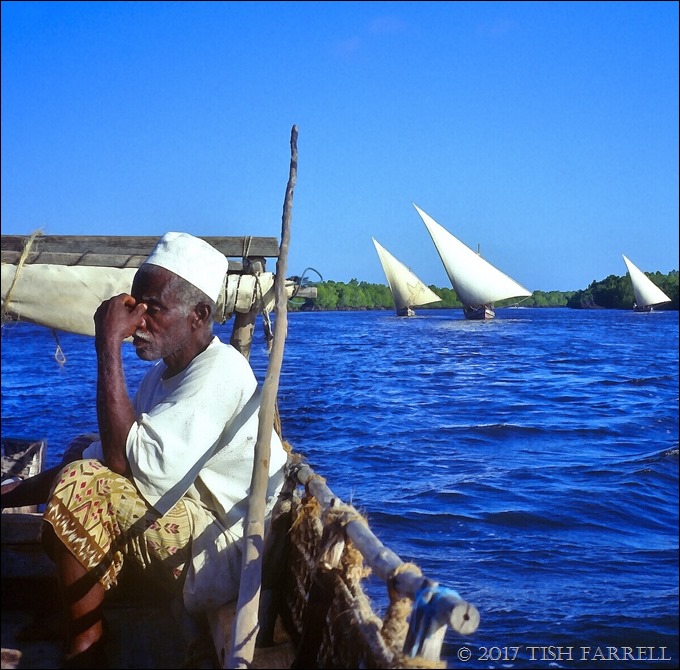
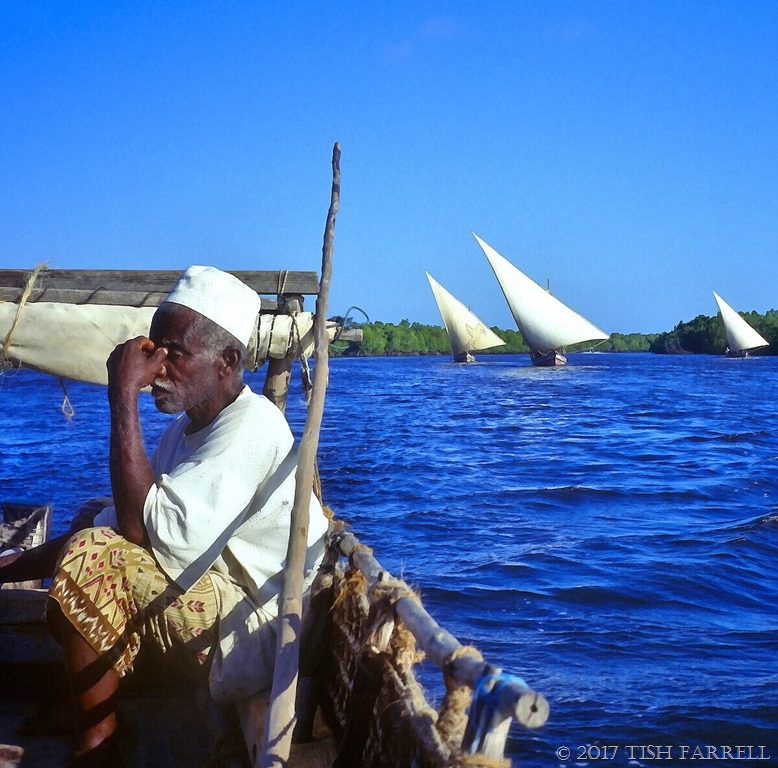
As in the previous post, this is a Christmas photo, but one taken long ago when we were visiting Lamu off the Kenya coast. I’ve posted it before, but make no excuse for showing it again. It is one of my favourite photos, and one caught in a split second with my Olympus Trip. I think the gods of photography were smiling on me.

The gentleman so absorbed is Mzee Lali, the owner of the sailing dhow. He spoke no English, nor said a word to us that I recall on our day trip out to the reef. The conversation was dominated by his nephew, Athman, who, as a speaker of English, Kenya’s official language, could hold a captain’s licence, and so take tourists out on sailing trips.

He told us that Lali was born on Pate, one of the more remote large islands in the Lamu archipelago. He knew everything there was to know about sailing, Athman said. But because he spoke no English he could not take the necessary two and half year captain’s course, and so obtain a licence.

Somehow this photo echoes the dilemma of island elders. They belong to another world in another time.

copyright 2017 Tish Farrell


Weekly Photo Challenge:Solitude

Thursdays Special ~ The Arboreal Position And Why We Can’t Live Without Trees

P1060049

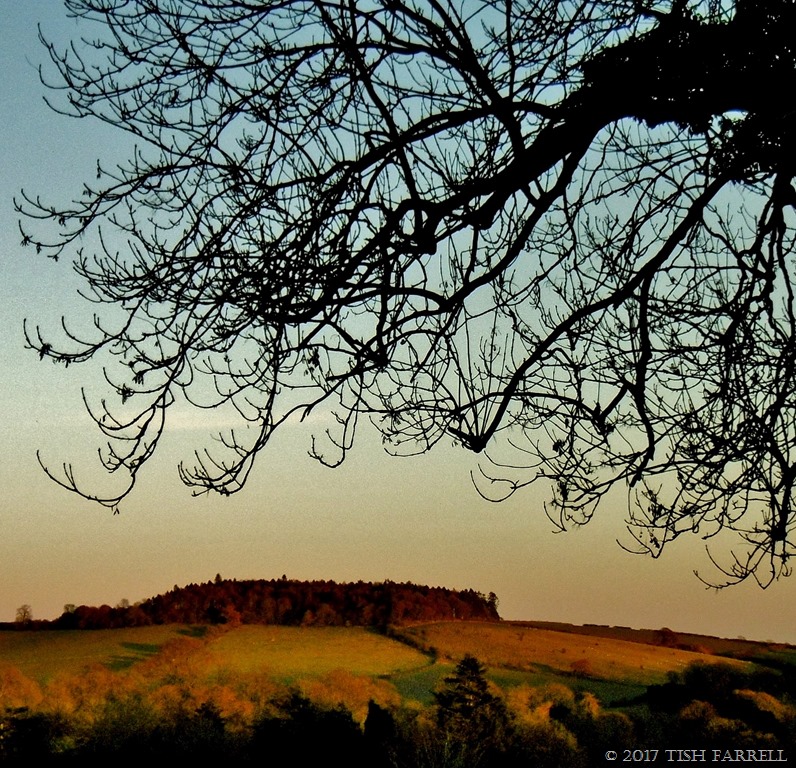
These late day views overlooking Wenlock were taken back in December. Many of the trees, especially the oaks, beeches and field maples, had hung on to their leaves, which in turn were gathering in, and reflecting the winter sun. Looking at these photos now makes me appreciate how well treed we are in our hollow beneath Wenlock Edge, this despite two thousand years of farming.

But then you simply cannot have too many. Our shamanic ancestors were wise in their conception of the world tree at the heart of all existence: trees are essential to our survival. Without them we would have a lot of problems breathing. According to science writer Luis Villazon at the BBC’s Science Focus each of us requires around 740 kilos of oxygen per year, which amounts to 7 or 8 trees’ worth.

But that’s not all. As well as providing us with the air we breathe, trees also stabilize, create and replenish soils. They support biodiversity. They affect the climate including rainfall patterns, and their destruction rapidly leads to desertification and soil erosion. They provide us with many useful products, and in the future we may come to rely on them as a source of essential and cheap medications to which everyone can have ready access.

In the light of all these arboreal gifts, going out and hugging a tree now seems an eminently sane thing to do. In fact I recommend it. At the very least, it will lift the spirits. The tree might like it too.

P1060044


Please visit Paula for her February Pick A Word and be inspired. There is a choice of five prompts, each of which she illustrates superbly: radiating, alimentary, frontal, arboreal, remote.

copyright 2017 Tish Farrell

Giraffes And Other Animals ~ Graceful In Their Own Unique Way

200

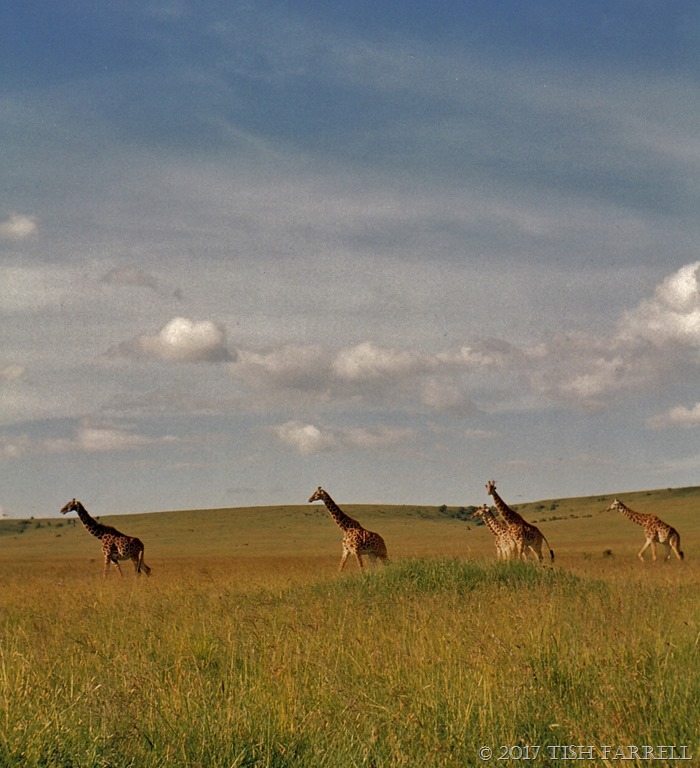
This week’s Daily Post photo prompt induced a ‘long ago when we lived in Africa’ moment, and thus a nostalgic trawl through the old photo files. It was giraffes I first thought of. They may seem an ungainly composite of various creatures, but to see them moving across the plains is a sight that cannot be forgotten. They lilt in time to some inner rhythm of their own. This is more apparent when you see several moving together. And you wonder what is this giraffe music, beyond your hearing, that they stride forth to with such synchronicity?

IMG_0027

Some of the plains’ song you can hear of course – the wheesh of dry grasses, the ceaseless koo-kroo-ing of collared doves, the crickets’ whine. And as you scan the bush country, looking for any signs of wildlife, these are the sounds that fill your head. The sun is hot on your scalp, the light too bright, and the spicy scent of thorn trees too rich for the over-sensitive. But just when you think all the game has gone and there’s nothing more to see, magic happens:

Scan-130429-0031

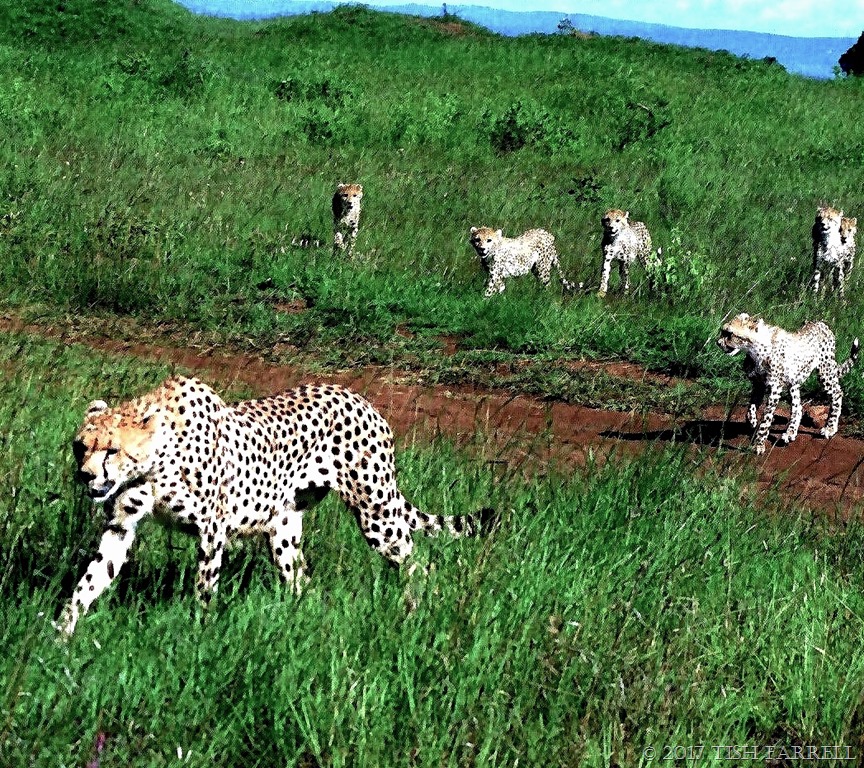
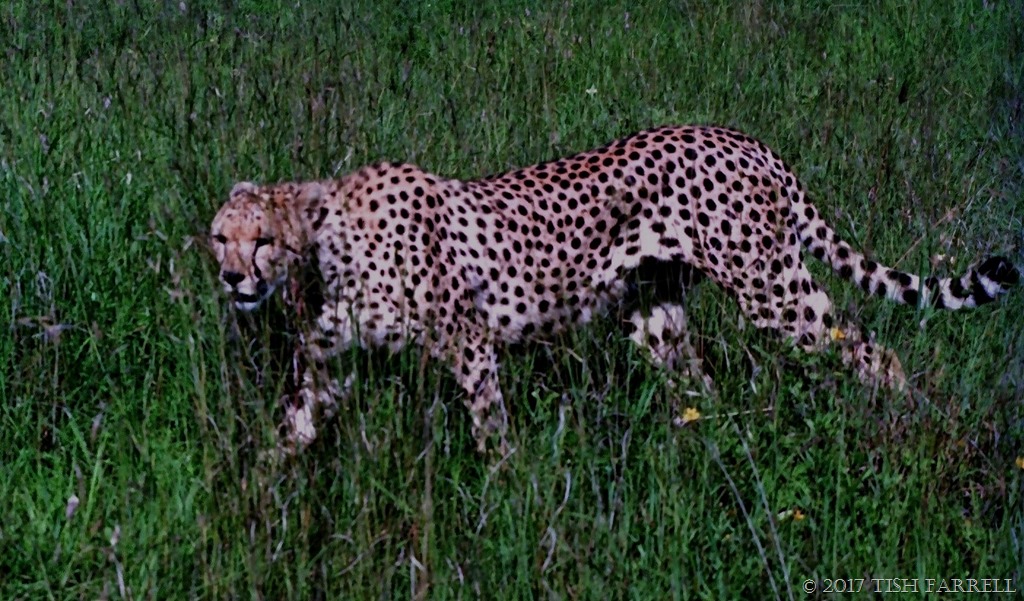
This cheetah mother with six half-grown cubs, walked out of the undergrowth beside the park track. When we stopped the car to watch she didn’t so much as blink at us. It seemed we were the least of her problems. She was trying to make the cubs stay in one place while she went off to hunt. But they were not having it.

IMG

No sooner had mama parked them and moved out sight, than one (there always has to be one) goaded the obedient ones out of the cover that had sheltered them until they all decided to follow.

IMG_0003

In the end, mama gave it up as a bad job, and gathered the offspring and disappeared into the bush. It is a mystery how she had ever managed to rear so many teenage cubs.

These photos, sadly ageing, were all taken in Nairobi National Park, a gem of a park that borders the city. It covers only 46 square miles, but when we lived In Nairobi during the 1990s the wildlife corridor to the south was still open, allowing for seasonal migration. Today there are all kinds of pressures from one of the fastest growing conurbations in Africa – the need for farm land and for better transport links. It’s a thorny issue however you look at it – wildlife versus humans: probably no happy solution; gracefulness seems not to be a natural human trait.

Scan-130429-0032

copyright 2017 Tish Farrell


Daily Post Photo Challenge Graceful

A Sea Full Of Sky

P1060448

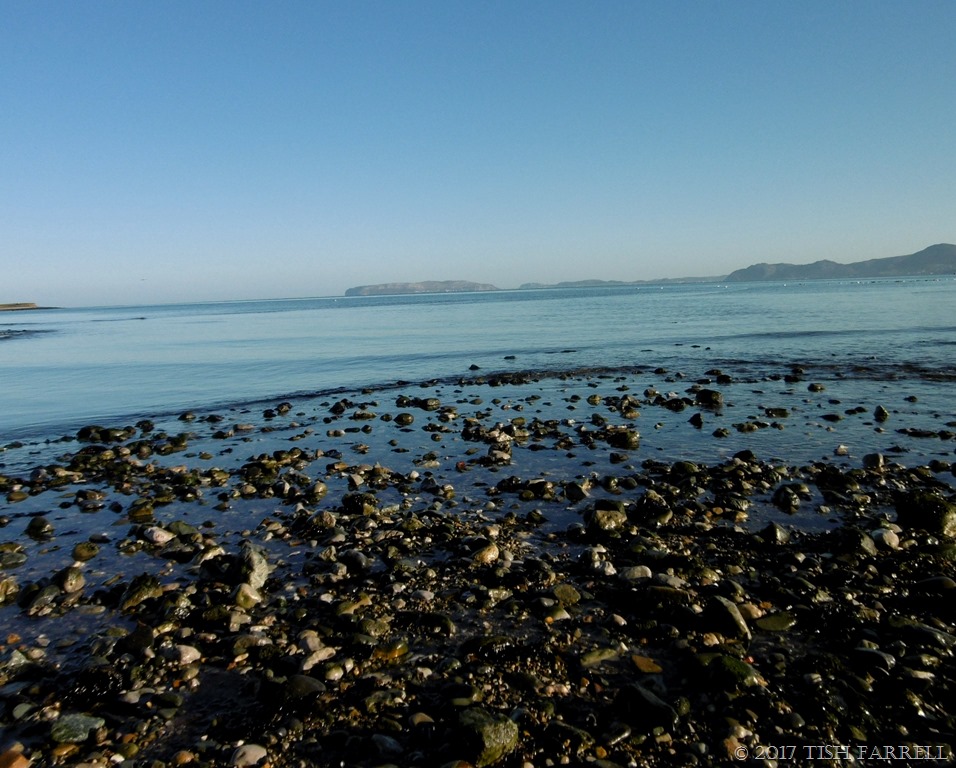
What a blessed scene. We could scarcely believe our eyes – a sea so still, so blue, and sky to match; the Great Orme slumbering on the horizon, and all this happening just last week on the Menai Strait, North Wales.

I love winter beaches whatever the weather, but this vista seemed to awaken a whole new plane of perception. I could see why the Celtic Druids made Ynys Mon their stronghold. You never do know what the light will do next. It is transporting.

The little boy and his dad seem caught up in the magic too. So it’s a good thing that the Great Orme is slumbering; for this Viking name for the limestone headland means sea serpent, and we don’t need him abroad disturbing the tranquillity.

It’s an odd thing, though, about that particular promontory. The weather along the Strait may be foul, but more often than not, there’s a beam of sunlight slanting down on the Great Orme. Perhaps it is all part of an enchantment that keeps the mighty serpent dormant. Sleep on, Great Worm. Dream and dream between sky and sea.

P1060459 - Copy (2)


Thursday’s Special  This week Paula has given us five words to fire up our New Year imaginations. I’m using two of them here – the sea permeated with sky colours, and the limpid waters of Menai Strait. Follow the link to find out more and to see Paula’s fine photos.

Llanddwyn Bound ~ Crossing To The Isle Of Lovers

P1060383

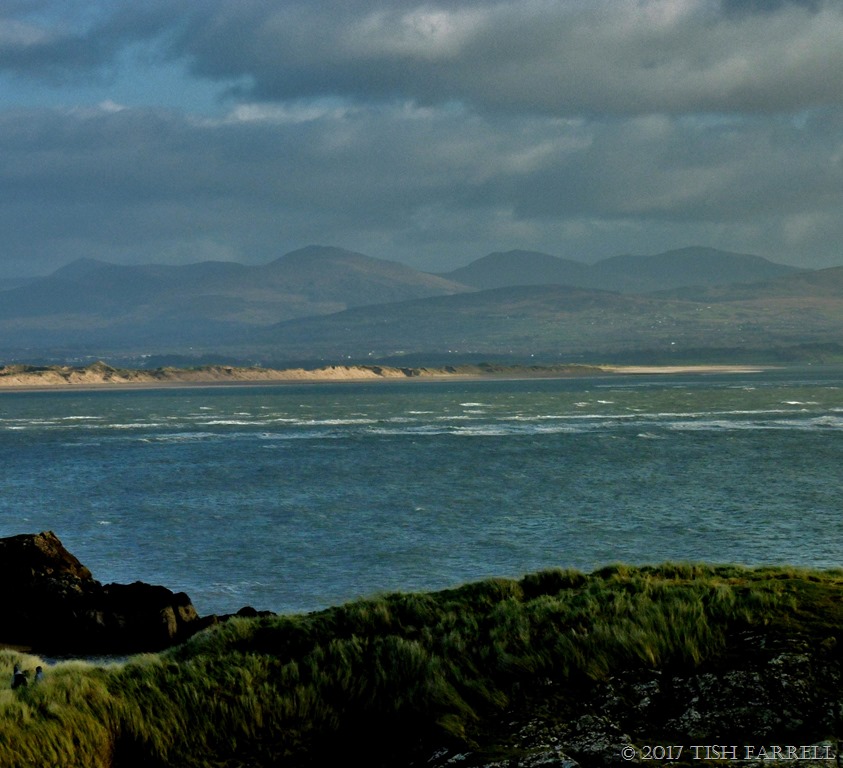
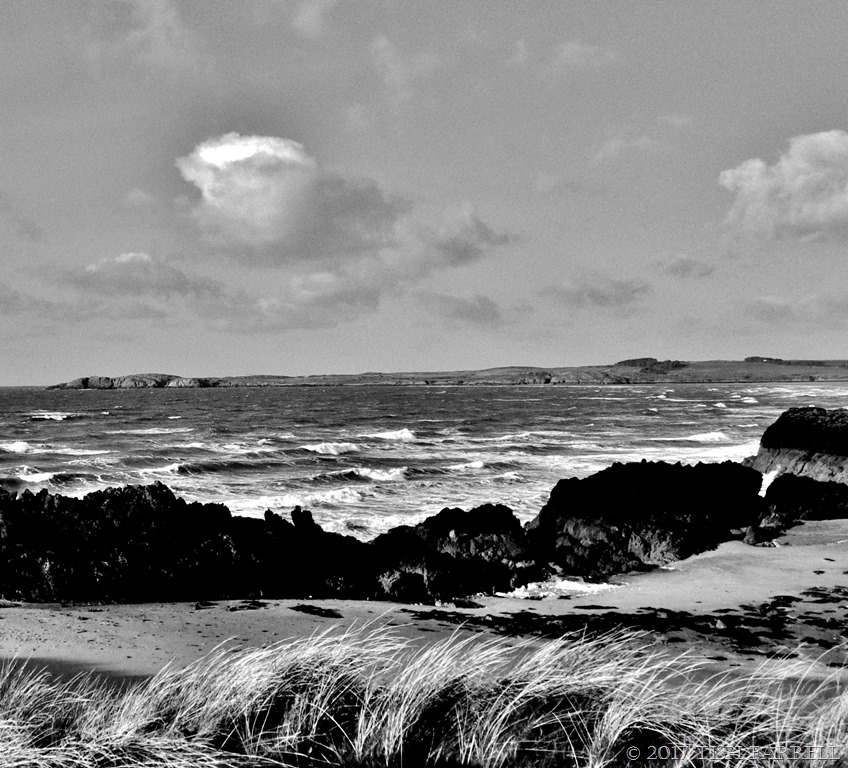
It was blowing a gale, wind like ice on our faces. But that did not stop us – nor a hundred like-minded souls, all intent on the secular pilgrimage of walking off Christmas Day excesses, giving the family dogs a much needed airing, and heading to Llanddwyn Island while the tide was on the ebb. Anyway the sun was out, the light crystal bright, and the mountains of mainland Wales across Menai Strait looking their dreamy best. So why wouldn’t you head for the sea shore.

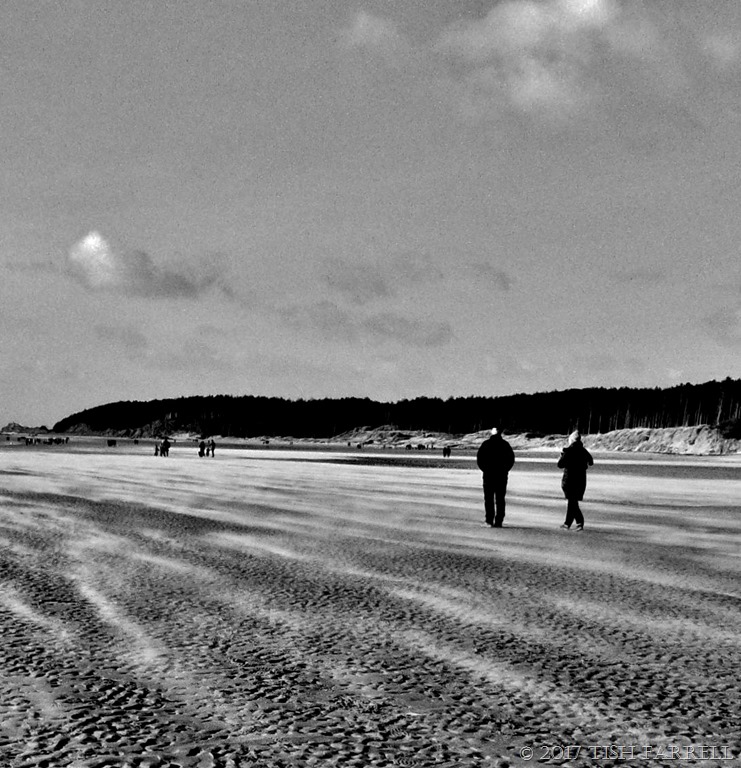
Newborough Beach was positively crowded. Not only that, the sands were coming to meet us as we set off to the island. It was the strangest experience, which along with eyes full of wind-tears played havoc with one’s perceptions. It was rather like going backwards on a forward moving pavement.

P1060353

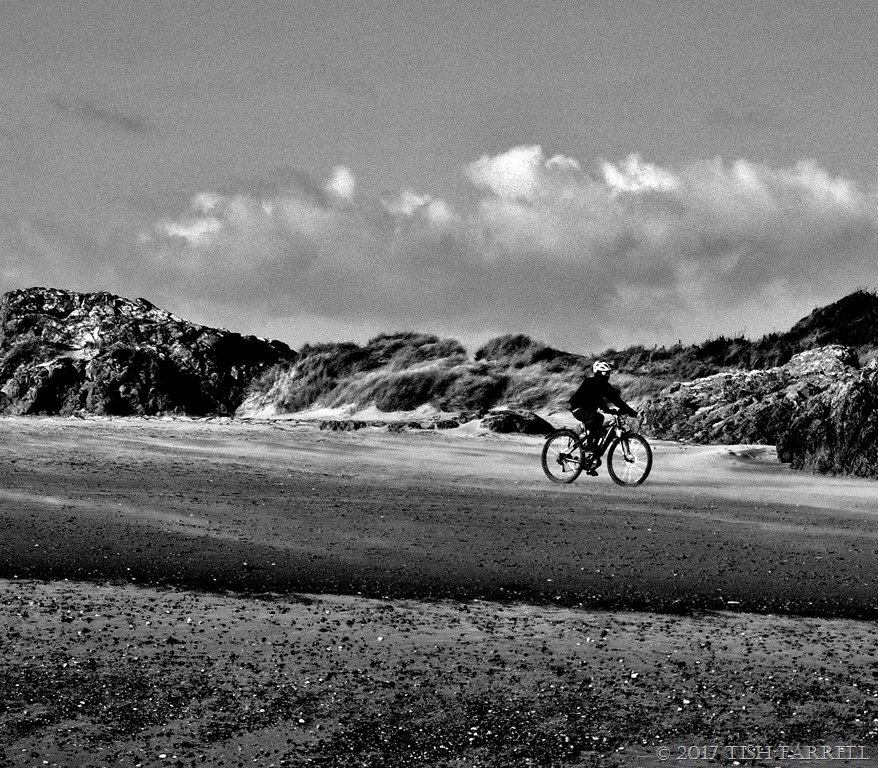
And so at this point, seeing a chap on a bicycle seemed most surreal. But then why not ride your bike on the beach? So much space. No grouchy motorists on your tail. All that sand for a soft (well soft-ish) landing.

P1060354

I’ve written about Llanddwyn (roughly pronounced ‘hlanthwin’) Island before. We were here two years ago, on Christmas Day, but then the tide was too high for us to reach the island.

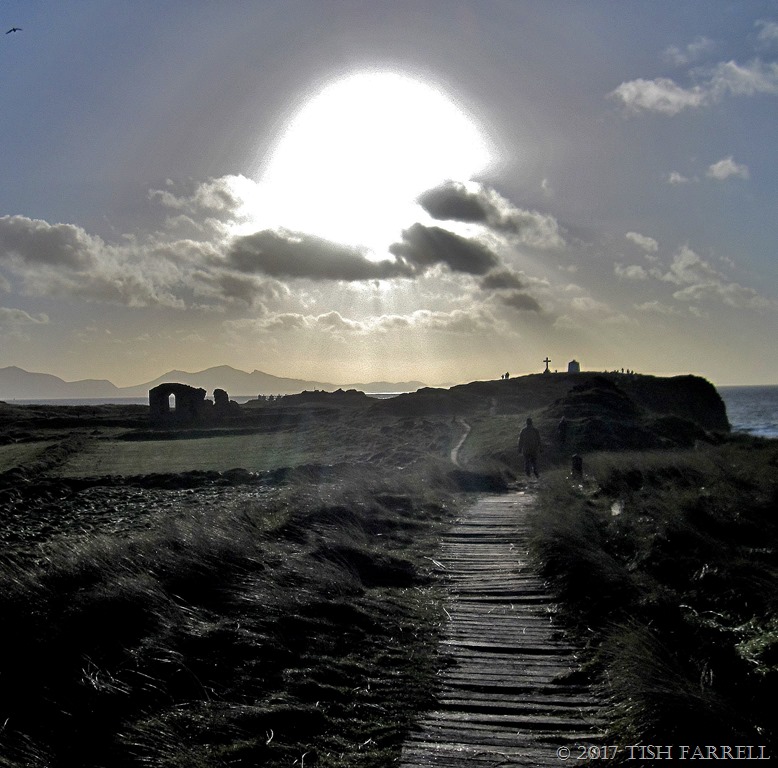
In fact it is not an island at all, but a long, slender peninsula, poking out into the Irish Sea like some dragon’s  tongue. And it was here that St Dwynwen, daughter of a Welsh king, withdrew from the world to form a convent. This was in the fifth century, around the time that Roman rule in Britain was coming to an end. You can read her story at the link above, although there are many versions, and they mostly have to do with spurned or thwarted love, and so are used to explain how she came to be the Welsh patron saint of lovers. Her day is celebrated each year on 25th January.

During the Middle Ages, as poets and pilgrims were drawn to Llanddwyn Island, so the accounts of their visits helped grow  Dwynwen’s reputation for mystical powers of healing and divination. Even her well was said to be inhabited by sacred eels, and through the cunning reading of their movements, you might predict the future. On the other hand, if the waters boiled up during your visit you could be assured of love and good fortune.

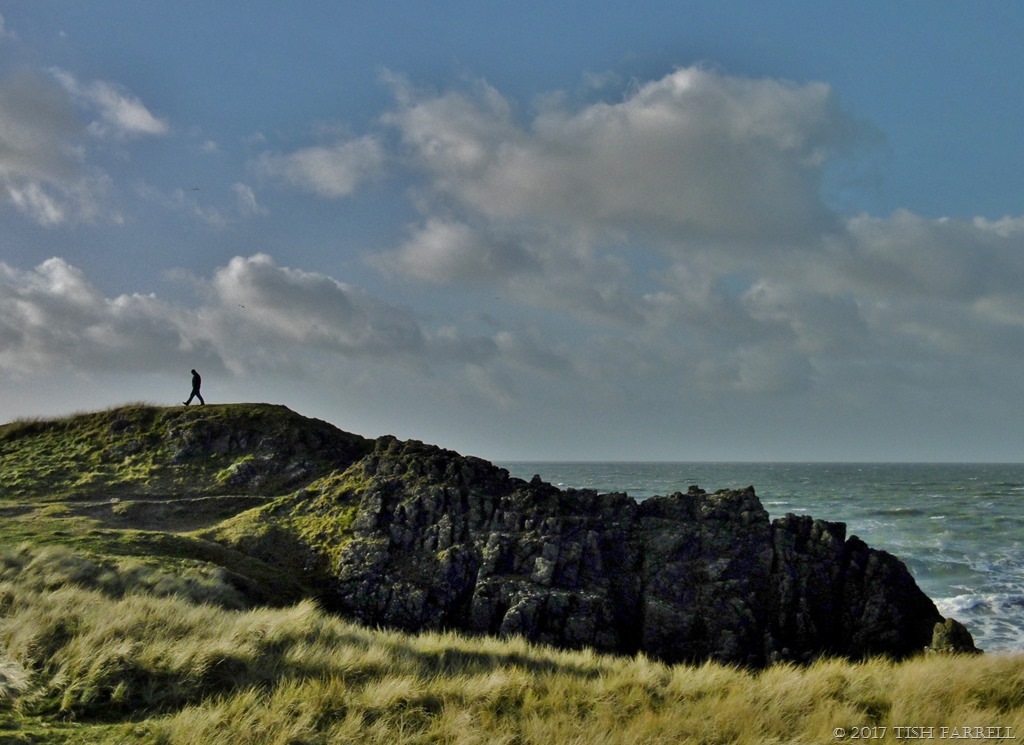
We, however, were not enticed from the path to see this for ourselves. A very pungent odour wafting our way suggested something had died there. Perhaps the sacred eels? Instead we took the cliff path and enjoyed the thrill of stepping out above a stormy sea.

P1060364

P1060368

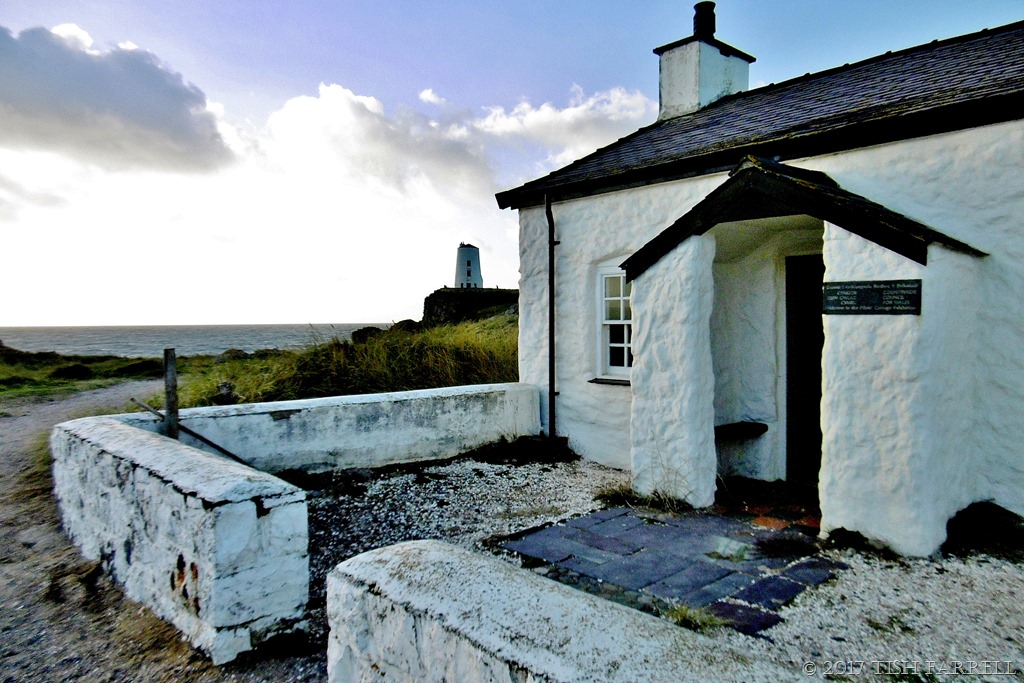
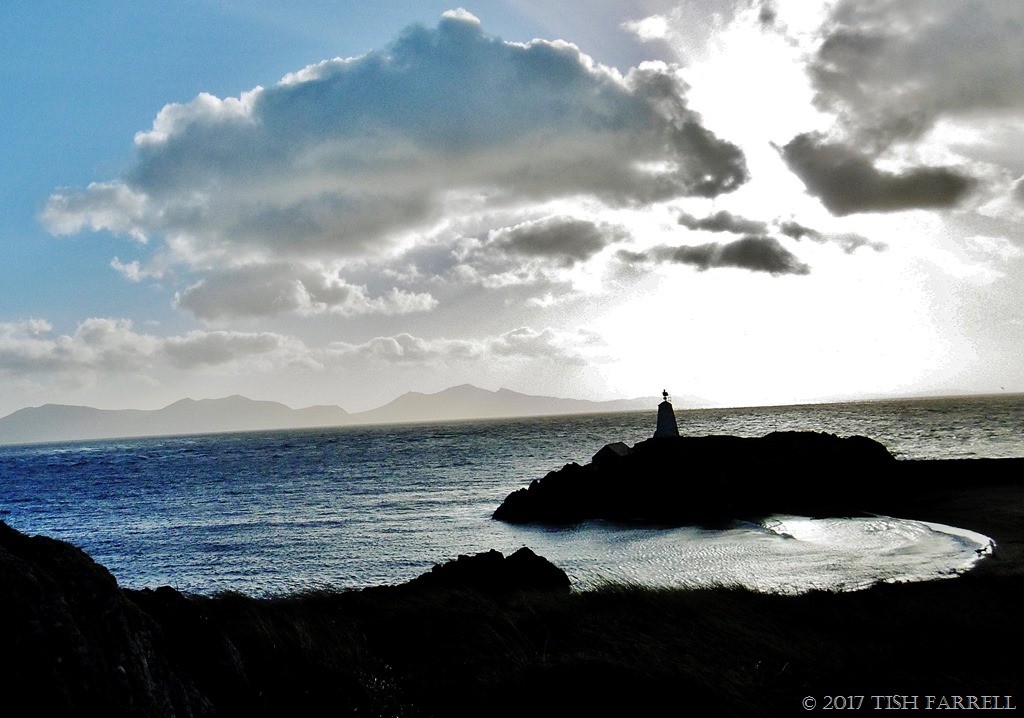
There is anyway much to explore on this small promontory. At every point, as the sea recedes, there are enticing coves – some rocky, some sandy. There are many man-made features too: a Celtic cross of nineteenth century vintage, another marking Dwynwen’s death in 465 C.E. There are the ruins of a Tudor church built on the site of Dwynwen’s own church which she apparently built herself from beach stones, and so doubtless did not stand the test of time and wild Welsh weather. There is also a beacon, a lighthouse and three cottages built for the lighthouse keepers and their families. In the nineteenth century the export of Welsh slate was a thriving industry, and the lighthouse served the slate ships in particular, keeping them off the dangerous Menai Strait sand bars.

P1060394

P1060396

P1060379

On the long walk back up the beach, the wind was behind us. Now we were walking with the moving sand. But it was still a very odd experience.

P1060409

Crossing